

Indisulam targets RNA splicing and metabolism to serve as a therapeutic strategy for high-risk neuroblastoma
Open accessPublished version of a preprint
The DOI matches its Crossref record; 56 of the 56 references it cites were found in a registry or an index.
Abstract
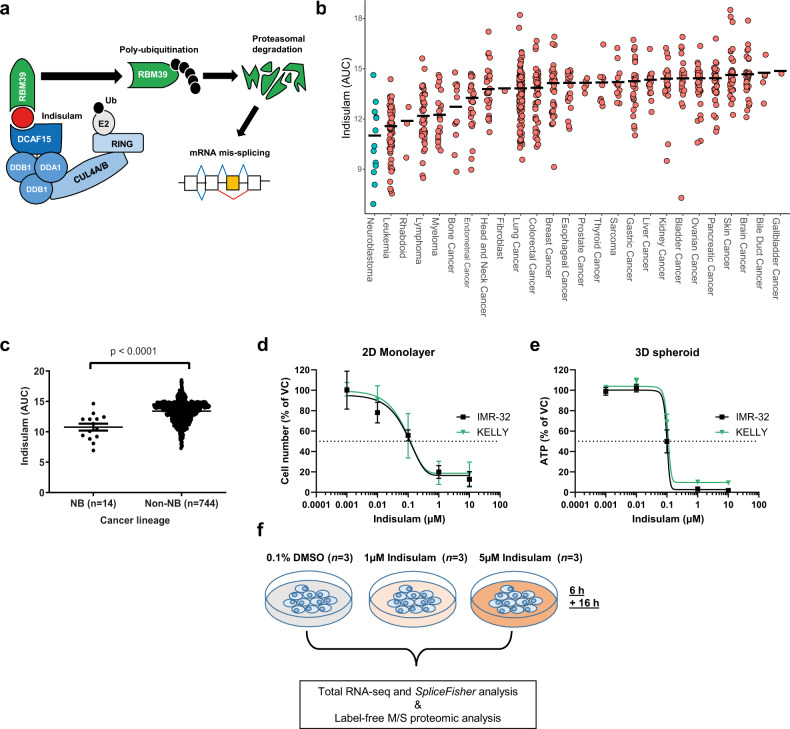
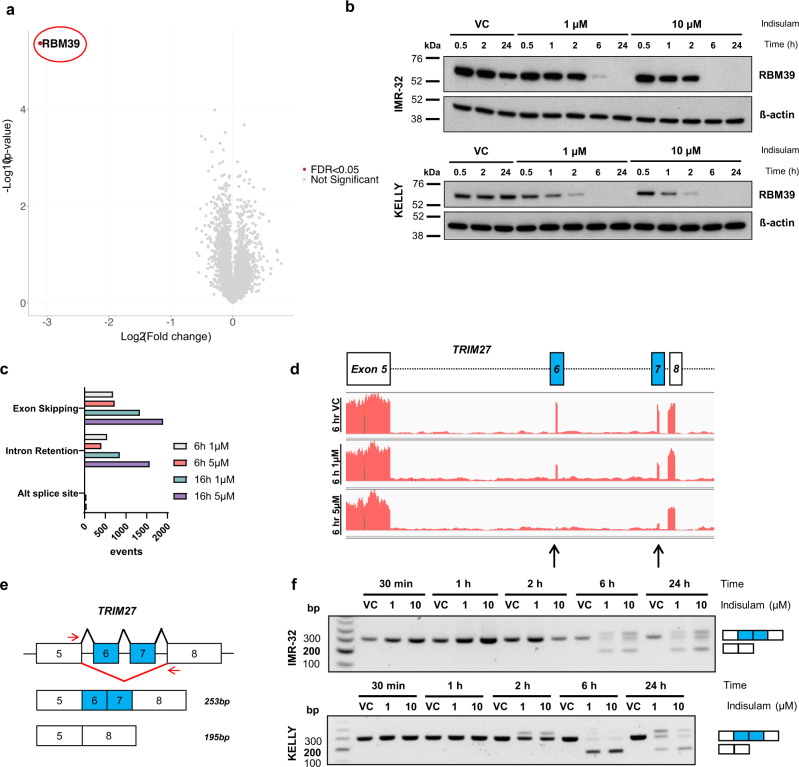
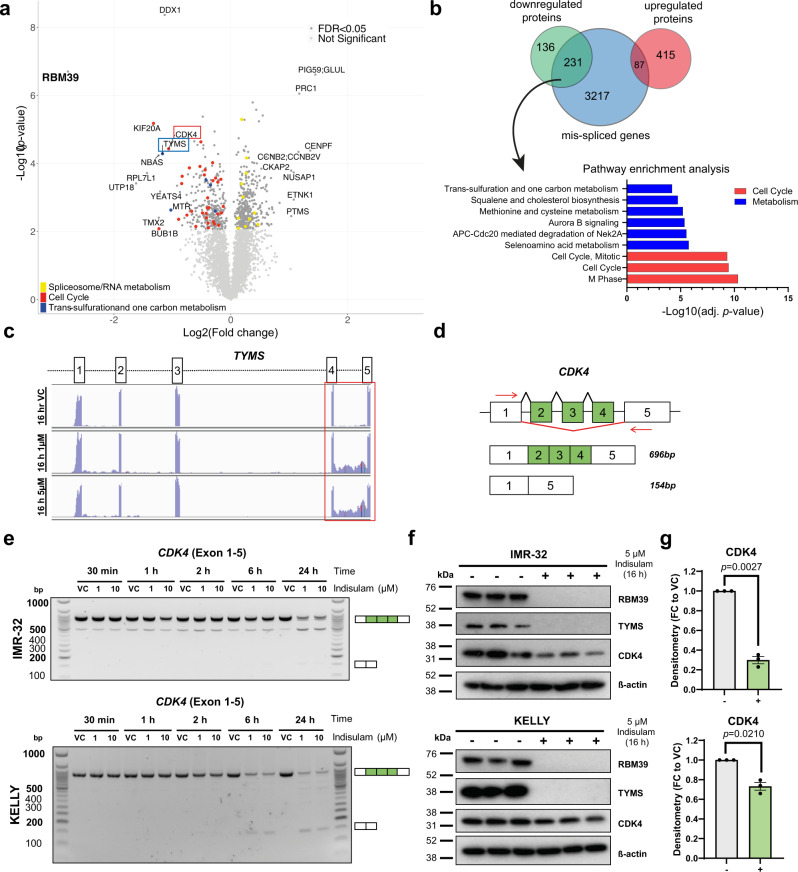
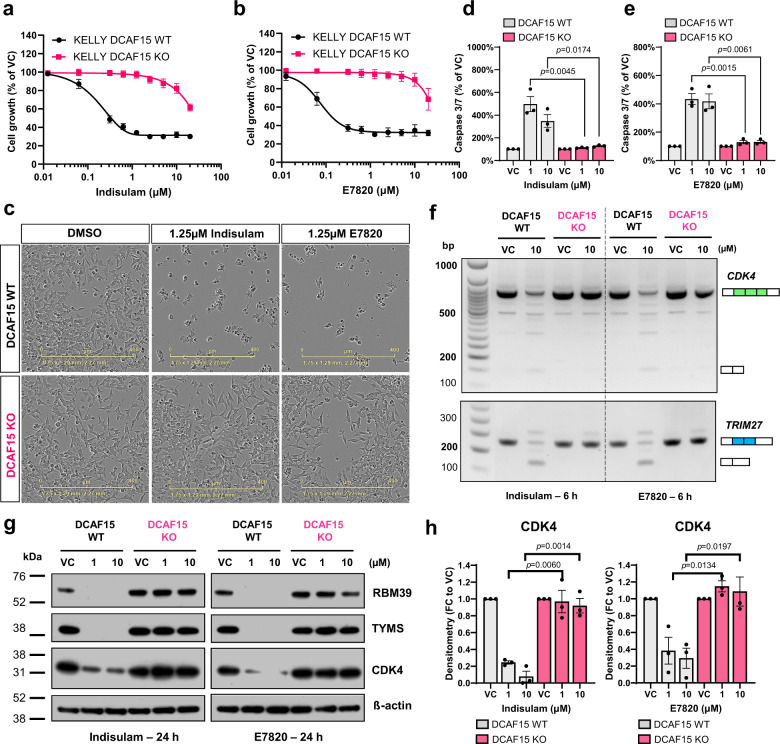
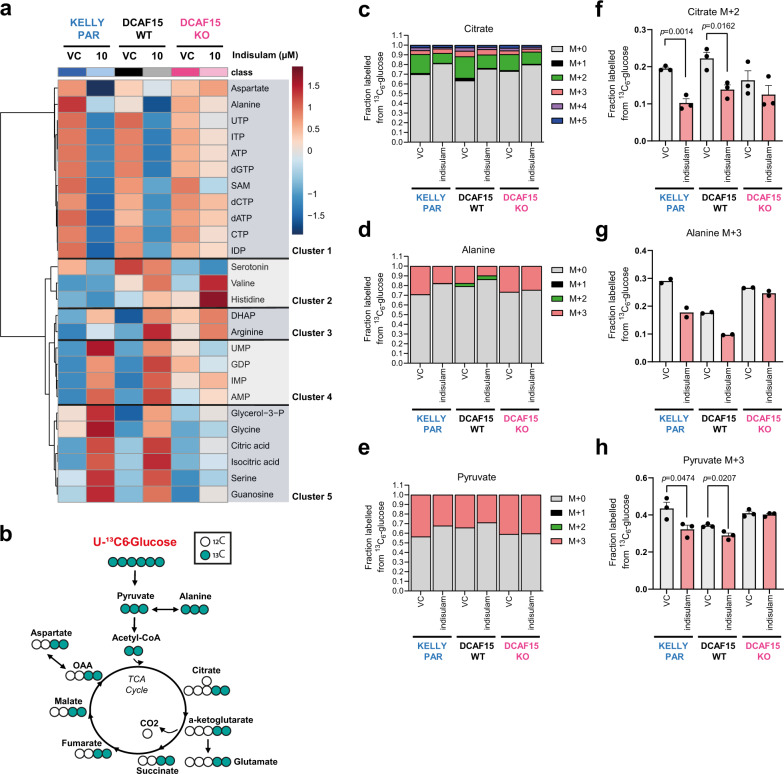
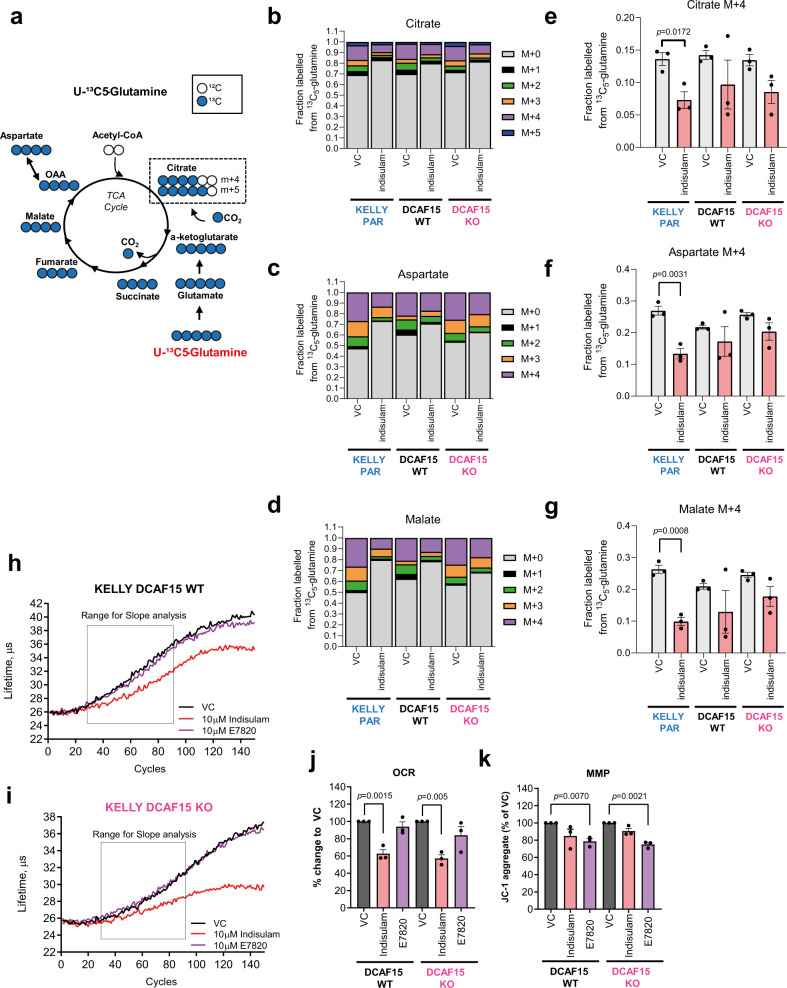
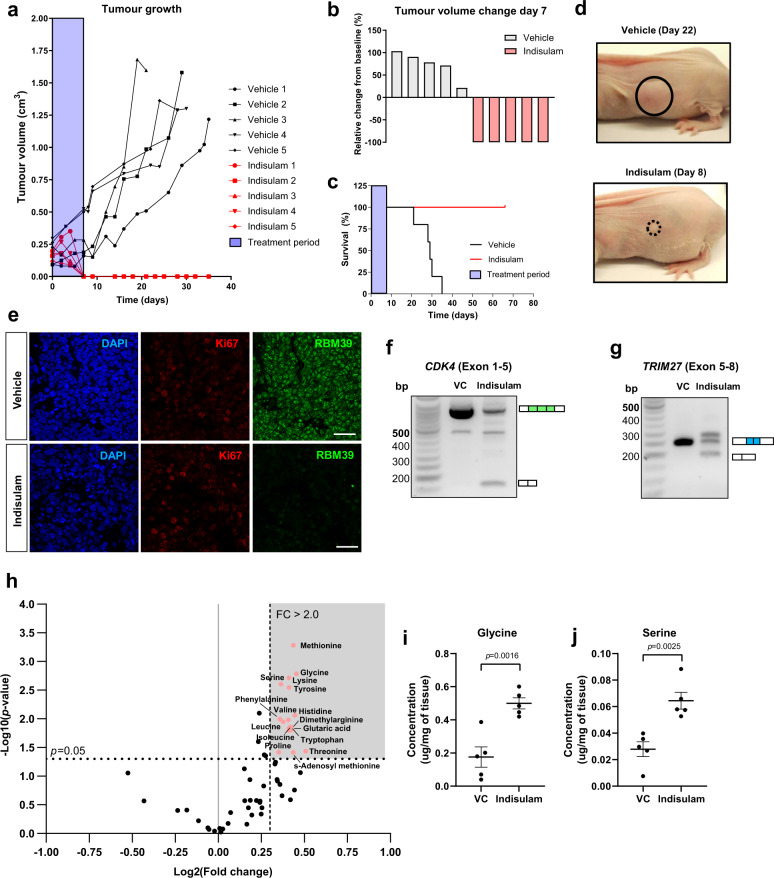
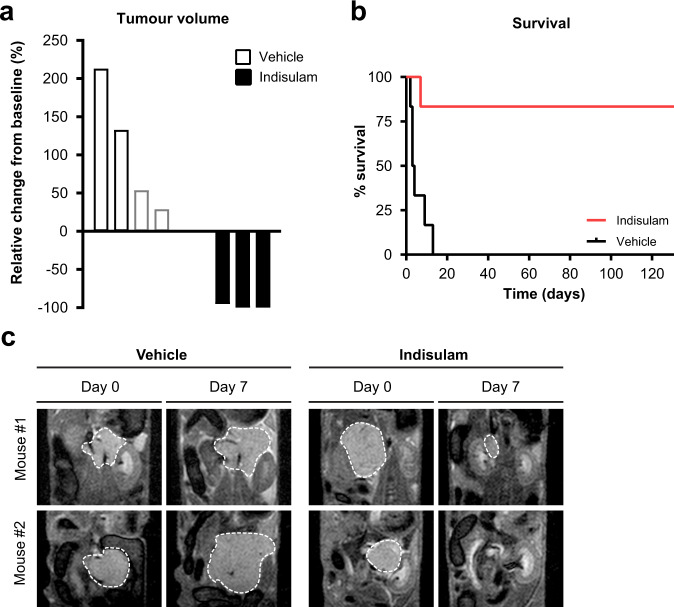
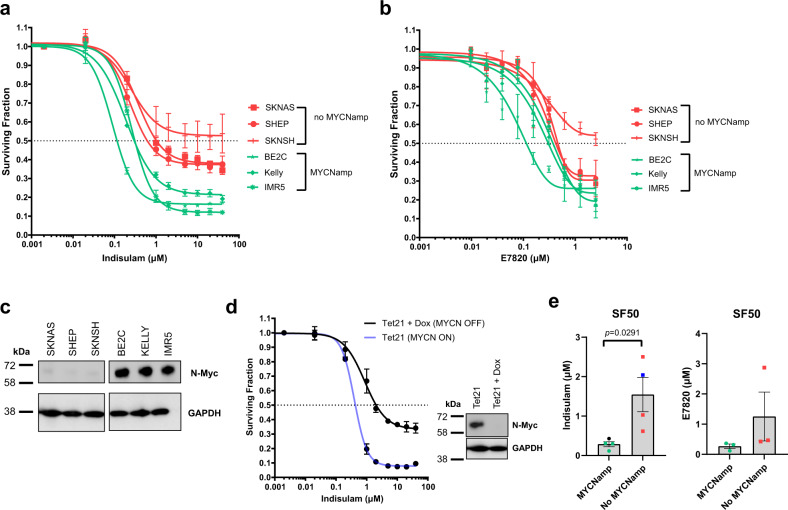
Neuroblastoma is the most common paediatric solid tumour and prognosis remains poor for high-risk cases despite the use of multimodal treatment. Analysis of public drug sensitivity data showed neuroblastoma lines to be sensitive to indisulam, a molecular glue that selectively targets RNA splicing factor RBM39 for proteosomal degradation via DCAF15-E3-ubiquitin ligase. In neuroblastoma models, indisulam induces rapid loss of RBM39, accumulation of splicing errors and growth inhibition in a DCAF15-dependent manner. Integrative analysis of RNAseq and proteomics data highlight a distinct disruption to cell cycle and metabolism. Metabolic profiling demonstrates metabolome perturbations and mitochondrial dysfunction resulting from indisulam. Complete tumour regression without relapse was observed in both xenograft and the Th- MYCN transgenic model of neuroblastoma after indisulam treatment, with RBM39 loss, RNA splicing and metabolic changes confirmed in vivo. Our data show that dual-targeting of metabolism and RNA splicing with anticancer indisulam is a promising therapeutic approach for high-risk neuroblastoma.
Overview
The claims and statistics of this paper haven’t been checked yet.
Free: it reads the open-access text and checks the first 5 claims that cite a source we can check. Create a free account to check every claim.
Integrity signals
Registry
Cites
Statistics
Figures
Verification
Claims the paper makes
The claims and statistics of this paper haven’t been checked yet.
Free: it reads the open-access text and checks the first 5 claims that cite a source we can check. Create a free account to check every claim.
Claims other papers make about this one
Each is checked against this paper’s own text: does it say what the citing paper says it does?
The cited source says what the claim attributes to it.
In the citing paper
“interestingly, correlative transcriptomic and proteomic analyses of indisulam-treated neuroblastoma cell lines revealed an upregulation in proteins involved in RNA processing and spliceosomal components (Nijhuis et al. 2022).”
From From serendipity to strategy: molecular glue degraders in cancer therapeutics (2025) · cites this paper as Nijhuis et al. 2022
Self-check
Percentages, sums and reported differences re-computed from the paper’s own numbers.
The self-check needs the paper’s full text.
Citations
Cites
Gene Expression Omnibus: NCBI gene expression and hybridization array data repository
Edgar, R. (2002) · Nucleic Acids Research · doi:10.1093/nar/30.1.207 · Cited by 13,288
Universal sample preparation method for proteome analysis
Wiśniewski, J. R., Zougman, A., Nagaraj, N., & Mann, M. (2009) · Nature Methods · doi:10.1038/nmeth.1322 · Cited by 8,352 · cited 1×
“Protein samples (50 µg/replicate) were processed using the Filter Aided Sample Preparation protocol 45 .”
Perez-Riverol, Y., Csordas, A., Bai, J., Bernal-Llinares, M., Hewapathirana, S., Kundu, D. J., Inuganti, A., Griss, J., Mayer, G., Eisenacher, M., et al. (2019) · Nucleic Acids Research · doi:10.1093/nar/gky1106 · Cited by 6,693
A Simple Practice Guide for Dose Conversion between Animals and Human
Nair, A., & Jacob, S. (2016) · Journal of Basic and Clinical Pharmacy · doi:10.4103/0976-0105.177703 · Cited by 6,174 · cited 1×
“This dose was chosen guided by other studies 6,32 and based on guidance from Nair & Jacob 48 this equates to a dose of ~105mg m − 2 , which compares favourably to reported tolerated doses in adult humans of 500 – 700mg m − 2 49 .”
MetaboAnalyst 5.0: narrowing the gap between raw spectra and functional insights
Pang, Z., Chong, J., Zhou, G., de Lima Morais, D. A., Chang, L., Barrette, M., Gauthier, C., Jacques, P.-É., Li, S., & Xia, J. (2021) · Nucleic Acids Research · doi:10.1093/nar/gkab382 · Cited by 3,958
Kind, T., Wohlgemuth, G., Lee, D. Y., Lu, Y., Palazoglu, M., Shahbaz, S., & Fiehn, O. (2009) · Analytical Chemistry · doi:10.1021/ac9019522 · Cited by 1,482 · cited 2×
“Metabolites extracts were derivatised using the two-step method of derivatisation: methoxyamination and silylation 42 .”
Guidelines for the welfare and use of animals in cancer research
An ad hoc committee of the National Cancer Research Institute, Workman, P., Aboagye, E. O., Balkwill, F., Balmain, A., Bruder, G., Chaplin, D. J., Double, J. A., Everitt, J., Farningham, D. A. H., et al. (2010) · British Journal of Cancer · doi:10.1038/sj.bjc.6605642 · Cited by 1,442 · cited 1×
“…Welfare and Ethical Review Body (PPL no. 70/7945, later PPL P91E52C32), in compliance with the UK Home Of fi ce Animals (Scienti fi c Procedures) Act 1986, the United Kingdom National Cancer Research Institute guidelines for the welfare of animals in cancer research 46 and the ARRIVE guidelines 47 .”
Correlating chemical sensitivity and basal gene expression reveals mechanism of action
Rees, M. G., Seashore-Ludlow, B., Cheah, J. H., Adams, D. J., Price, E. V., Gill, S., Javaid, S., Coletti, M. E., Jones, V. L., Bodycombe, N. E., et al. (2016) · Nature Chemical Biology · doi:10.1038/nchembio.1986 · Cited by 898 · cited 3×
“We fi rst sought to investigate tumour types that are likely to respond to aryl sulfonamides by probing publicly available databases with measurements of indisulam ef fi cacy across 758 cancer cell lines 24 .”
InfluentialTargeted expression of MYCN causes neuroblastoma in transgenic mice
Weiss, W. A. (1997) · The EMBO Journal · doi:10.1093/emboj/16.11.2985 · Cited by 870 · cited 1×
“These tumours closely recapitulate many of the clinical and genomic features of high-risk neuroblastoma disease 27,28 .”
Stein, S. E. (1999) · Journal of the American Society for Mass Spectrometry · doi:10.1016/s1044-0305(99)00047-1 · Cited by 822 · cited 1×
“Metabolites were assigned using FiehnLib assisted processing in AMDIS 43 and manually assessed using the Gavin package 41 .”
Cited by
Arginine reprograms metabolism in liver cancer via RBM39
Mossmann, D., Müller, C., Park, S., Ryback, B., Colombi, M., Ritter, N., Weißenberger, D., Dazert, E., Coto-Llerena, M., Nuciforo, S., et al. (2023) · Cell · doi:10.1016/j.cell.2023.09.011 · Cited by 293
Arginine: at the crossroads of nitrogen metabolism
Fung, T. S., Ryu, K. W., & Thompson, C. B. (2025) · The EMBO Journal · doi:10.1038/s44318-025-00379-3 · Cited by 134
“Given the critical role of RBM39 in tumorigenesis, a small molecule (indisulam) that targets and degrades RBM39 has been found to be an effective treatment for HCC and other tumor types (Nijhuis et al, 2022; Xu et al, 2021).”
Expanding Chemical Probe Space: Quality Criteria for Covalent and Degrader Probes
Hartung, I. V., Rudolph, J., Mader, M. M., Mulder, M. P. C., & Workman, P. (2023) · Journal of Medicinal Chemistry · doi:10.1021/acs.jmedchem.3c00550 · Cited by 115
Targeting RNA splicing modulation: new perspectives for anticancer strategy?
Lv, X., Sun, X., Gao, Y., Song, X., Hu, X., Gong, L., Li, H., He, M., & Wei, M. (2025) · Journal of Experimental & Clinical Cancer Research · doi:10.1186/s13046-025-03279-w · Cited by 61
Proteomic characterization of post-translational modifications in drug discovery
Zhai, L., Chen, K., Hao, B., & Tan, M. (2022) · Acta Pharmacologica Sinica · doi:10.1038/s41401-022-01017-y · Cited by 59
“Furthermore, Lu et al. applied proximity labeling and a quantitative proteomics approach to confirm that indisulam could indeed enhance the interaction between RBM39 and DCAF15 [167].”
BackgroundInfluentialXu, Y., Spear, S., Ma, Y., Lorentzen, M. P., Gruet, M., McKinney, F., Xu, Y., Wickremesinghe, C., Shepherd, M., McNeish, I. A., et al. (2023) · Cell Reports · doi:10.1016/j.celrep.2023.113307 · Cited by 68
Self-citationTumor and local lymphoid tissue interaction determines prognosis in high-grade serous ovarian cancer
Lu, H., Lou, H., Wengert, G., Paudel, R., Patel, N. R., Desai, S., Crum, B., Linton‐Reid, K., Chen, M., Li, D., et al. (2023) · Cell Reports Medicine · doi:10.1016/j.xcrm.2023.101092 · Cited by 51
Molecular basis of RNA-binding and autoregulation by the cancer-associated splicing factor RBM39
Campagne, S., Jutzi, D., Malard, F., Matoga, M., Romane, K., Feldmüller, M., Colombo, M., Ruepp, M., & Allain, F. H. ‐. (2023) · Nature Communications · doi:10.1038/s41467-023-40254-5 · Cited by 46
Li, F., Aljahdali, I. A. M., & Ling, X. (2022) · International Journal of Molecular Sciences · doi:10.3390/ijms23116206 · Cited by 36
“Meanwhile, these authors further confirmed RBM39 loss, RNA splicing, and metabolic changes in vivo after indisulam treatment [17].”
BackgroundMethodInfluentialGoncharov, A. O., Shender, V. О., Kuznetsova, K. G., Kliuchnikova, A. A., & Moshkovskii, S. A. (2022) · International Journal of Molecular Sciences · doi:10.3390/ijms23095240 · Cited by 34
Jablonowski, C. M., Quarni, W., Singh, S. V., Tan, H., Bostanthirige, D. H., Jin, H., Fang, J., Chang, T., Finkelstein, D., Cho, J., et al. (2024) · eLife · doi:10.7554/elife.90993 · Cited by 45
Lucas, S. C. C., Ahmed, A., Ashraf, S. N., Argyrou, A., Bauer, M. R., Donatis, G. M. D., Demanze, S., Eisele, F., Fusani, L., Hock, A., et al. (2024) · Journal of Medicinal Chemistry · doi:10.1021/acs.jmedchem.3c02136 · Cited by 26
Facilitating the development of molecular glues: Opportunities from serendipity and rational design
Jiang, W., Jiang, Y., Luo, Y., Qiao, W., & Yang, T. (2023) · European Journal of Medicinal Chemistry · doi:10.1016/j.ejmech.2023.115950 · Cited by 24
Kohsaka, S., Yagishita, S., Shirai, Y., Matsuno, Y., Ueno, T., Kojima, S., Ikeuchi, H., Ikegami, M., Kitada, R., Yoshioka, K., et al. (2024) · npj Precision Oncology · doi:10.1038/s41698-024-00610-0 · Cited by 24
“Previous studies have reported that the expression of DCAF15 , a substrate adaptor in the E3 ligase complex for RBM39 degradation, serves as a bio-marker for E7820 17,22 .”
Small molecules modulating RNA splicing: a review of targets and future perspectives
Bouton, L., Ecoutin, A., Malard, F., & Campagne, S. (2024) · RSC Medicinal Chemistry · doi:10.1039/d3md00685a · Cited by 21
Molecular glue degrader for tumor treatment
Hu, Y., Yan, Y., Wang, J., Hou, J., & Lin, Q. (2024) · Frontiers in Oncology · doi:10.3389/fonc.2024.1512666 · Cited by 19
Eléouët, M. P., Lu, C., Zhou, Y., Yang, P. X., Ma, J., & Xu, G. (2022) · Biochimica et Biophysica Acta (BBA) - Gene Regulatory Mechanisms · doi:10.1016/j.bbagrm.2022.194902 · Cited by 19
Alkubaisi, B. O., Shahin, A. I., Zenati, R. A., Ravi, A., Alchami, R., Alkalla, M., Khaled, R., El-Gamal, M. I., & Al‐Tel, T. H. (2023) · ChemMedChem · doi:10.1002/cmdc.202300117 · Cited by 17
Pitolli, C., Marini, A., Guerra, M., Pieraccioli, M., Marabitti, V., Palluzzi, F., Giacò, L., Tamburrini, G., Cecconi, F., Nazio, F., et al. (2023) · Journal of Experimental & Clinical Cancer Research · doi:10.1186/s13046-023-02790-2 · Cited by 20
“Likewise, neuro-blastoma was reported to overexpress the splicing factor RBM39 and to be highly sensitive to Indisulam [54, 55], a drug that promotes RBM39 degradation [34].”
BackgroundJi, T., Yang, Y., Yu, J., Yin, H., Chu, X., Yang, P., Xu, L., Wang, X., Hu, S., Li, Y., et al. (2024) · Journal of Experimental & Clinical Cancer Research · doi:10.1186/s13046-024-03130-8 · Cited by 17
“This finding is similar to previous findings in neuroblastoma [17].”
BackgroundResultInfluentialGomaa, M. S., Gad, W., Hussein, D. A., Pottoo, F. H., Tawfeeq, N., Alturki, M. S., Alfahad, D., Alanazi, R., Salama, I., Aziz, M., et al. (2024) · Pharmaceuticals · doi:10.3390/ph17020189 · Cited by 22
“Another intriguing example is indisulam, which is presently undergoing clinical trials for the treatment of high-risk neuroblastoma, with its anticancer potential initially uncovered through a drug repurposing approach [23].”
BackgroundPreclinical Models of Neuroblastoma—Current Status and Perspectives
Krawczyk, E., & Kitlinska, J. B. (2023) · Cancers · doi:10.3390/cancers15133314 · Cited by 17
RBM39 degrader invigorates innate immunity to eradicate neuroblastoma despite cancer cell plasticity
Singh, S. V., Fang, J., Jin, H., de Velde, L.-A. V., Cortes, A., Chen, J., Natarajan, S., Poon, E., Wu, Q., Morton, C. L., et al. (2025) · Nature Communications · doi:10.1038/s41467-025-63979-x · Cited by 16
“…that indisulam, a “ molecular glue ” drug that selectively recruits RBM39 to the CRL4-DCAF15 E3 ubiquitin ligase (DCAF15) for proteasomal degradation 31,32 , is highly effective against neuroblastoma by inducing a wide range of splicing anomalies that affect a number of essential genes 30,33 .”
Self-citationRezaeianzadeh, O., Asghari, S., Tajbakhsh, M., Khalilpour, A., & Shityakov, S. (2025) · Scientific Reports · doi:10.1038/s41598-025-91113-w · Cited by 14
“Several marketed pharmacological medicines are available having primary sulfonamide as a core active moiety like Apricoxib ( I ) 19 , Gefapixant ( II ) 20 , Indisulam ( III ) 21 , SLC-0111 ( IV ) 22 , Irosustat ( V ) 23 , and SLC-149 ( VI ) 24 , which have shown anticancer properties (Fig.”
Keun, H. C., & Nijhuis, A. M. (2023) · Molecular Cell · doi:10.1016/j.molcel.2023.11.012 · Cited by 11
Self-citationRBM39 Enhances Cholangiocarcinoma Growth Through EZH2-mediated WNT7B/β-catenin Pathway
Liu, N., Zhang, J., Chen, W., Ma, W., & Wu, T. (2024) · Cellular and Molecular Gastroenterology and Hepatology · doi:10.1016/j.jcmgh.2024.101404 · Cited by 12
Monção, C. C. D., Scrideli, C. A., Andrade, A. F., Viapiano, M. S., Carlotti, C. G., Moreno, D. A., Baroni, M., Tone, L. G., & Teixeira, S. A. (2022) · Biomedicines · doi:10.3390/biomedicines11010068 · Cited by 11
YAP/TAZ interacts with RBM39 to confer resistance against indisulam
Ando, T., Okamoto, K., Ueda, Y., Kataoka, N., Shintani, T., Yanamoto, S., Miyauchi, M., & Kajiya, M. (2024) · Oncogenesis · doi:10.1038/s41389-024-00527-0 · Cited by 13
“However, further structural analysis will be required to elucidate how RBM39 interacts with YAP/TAZ to promote their transcriptional activity, and how YAP/TAZ interferes with the complex formation of RBM39, DCAF15, and indisulam, which may yield a new approach that interferes with the interaction between RBM39 and YAP…”
InfluentialJang, J., Kim, J.-Y., & Lee, T. J. (2024) · Genes & Genomics · doi:10.1007/s13258-024-01565-z · Cited by 11
“In vivo experiments supported its potential as an adjuvant therapy for drug-resistant GBMs. Nijhuis (Nijhuis et al. 2022 ) demonstrated the effectiveness of indisulam against neuroblastoma by reducing cell growth, inducing apoptosis, the expression of the AR-V7 splice variant, which is linked to resistance to androgen…”
An intricate rewiring of cancer metabolism via alternative splicing
Temaj, G., Chichiarelli, S., Saha, S., Telkoparan‐Akillilar, P., Nuhii, N., Hadžiselimović, R., & Saso, L. (2023) · Biochemical Pharmacology · doi:10.1016/j.bcp.2023.115848 · Cited by 11
From serendipity to strategy: molecular glue degraders in cancer therapeutics
Darling, S., Bajrami, I., & West, S. C. (2025) · Critical Reviews in Biochemistry and Molecular Biology · doi:10.1080/10409238.2025.2564068 · Cited by 9
“…proteomic analyses of indisulam-treated neuroblastoma cell lines revealed an upregulation in proteins involved in RNA processing and spliceosomal components (Nijhuis et al. 2022). this highlights the adaptability of cancer cells, which can develop compensatory mechanisms to counteract RBM39 loss.”
Lu, C., Li, J., Li, D., Wang, Y., Jiang, X., Ma, J., & Xu, G. (2025) · Acta Pharmacologica Sinica · doi:10.1038/s41401-024-01431-4 · Cited by 9
“…indisulam, E7802, tasisulam, and chlor-oquinoxaline sulfonamide, have been shown to facilitate the selective ubiquitination and subsequent degradation of RBM39 by acting as molecular glues for DCAF15 and RBM39, exhibiting signi fi cant antitumor effects across a variety of cancers [15, 19, 37].”
Zhang, T., Wang, S., Zhou, Y., Jiao, Z., Lu, K., Liu, X., Li, H., Jiang, W., & Zhang, X. (2025) · PLoS Biology · doi:10.1371/journal.pbio.3002846 · Cited by 10
“Recent studies have proven that Indisulam selectively induces proteasomal degradation of RBM39 via DCAF15-E3-ubiquitin ligase complex [33].”
Molecular regulation and therapeutic targeting of MYCN in neuroblastoma: a comprehensive review
Chen, Y., Yang, H., Xiao, L., Yan, N., & Zhang, M. (2025) · Frontiers in Cell and Developmental Biology · doi:10.3389/fcell.2025.1683331 · Cited by 10
Jin, Q., Harris, E. J., Myers, J., Mehmood, R., Cotton, A., Shirnekhi, H. K., Baggett, D. W., Wen, J. Q., Schild, A. B., Bhansali, R. S., et al. (2024) · Blood · doi:10.1182/blood.2024024281 · Cited by 9
Dou, Z., Zhang, X., Su, W., Zhang, T., Ye, F., Chen, X., Zhao, D., Li, Q., Zhang, H., & Di, C. (2022) · Authorea · doi:10.22541/au.166318209.92748997/v1 · Cited by 10
Rupatadine inhibits colorectal cancer cell proliferation through the PIP5K1A/Akt/CDK2 pathway
Jiang, L., Zhang, Z., Luo, Z., Li, L., Yuan, S., Cui, M., He, K., & Xiao, J. (2024) · Biomedicine & Pharmacotherapy · doi:10.1016/j.biopha.2024.116826 · Cited by 9
Molecular glues: A new path to the world of the unattainable
Khaledian, M., Sheikh, H., Babaei, F., Divsalar, A., Gharshasbi, M., Ottmann, C., Haertlé, T., Saboury, A. A., & Rasouli, M. (2025) · International Journal of Biological Macromolecules · doi:10.1016/j.ijbiomac.2025.148861 · Cited by 8
Bojko, J., Kollareddy, M., Szemes, M., Bellamy, J., Poon, E., Moukachar, A., Legge, D., Vincent, E. E., Jones, N., Malik, S., et al. (2024) · Cancer Letters · doi:10.1016/j.canlet.2024.217263 · Cited by 7
“Our study consolidates and extends the links previously made between MYCN activity in neuroblastoma and spliceosomal vulnerability [26,28,47].”
InfluentialSelf-citationSynthesis of an RBM39 Degrader That Downregulates CEP192 and Induces Disorganized Spindle Structures
Lyu, X., Wang, X., Lin, D., Lu, Y., Wang, C., Yan, Z., Wang, Z., Cheng, Y., Cheng, J., Ren, X., et al. (2025) · Journal of Medicinal Chemistry · doi:10.1021/acs.jmedchem.5c00534 · Cited by 7
Xu, O., Zhou, J., Xie, H., & Nie, W. (2025) · Small · doi:10.1002/smll.202503134 · Cited by 7
Chen, Z., Liao, J., Zhu, C., Chang, R., Liang, H., Ding, Z., Huang, Z., Chen, X., Liang, J., & Zhang, B. (2025) · Cancer Research · doi:10.1158/0008-5472.can-25-0523 · Cited by 7
Yang, Y. H., Li, Z., Yang, Y., Xiao, P., He, Z., Zhang, Z., Li, Y., Shi, L., Wang, X., Tao, Y., et al. (2025) · Cell & Bioscience · doi:10.1186/s13578-025-01380-3 · Cited by 6
“[35].”
Wang, T., Liu, L., Fang, J., Jin, H., Natarajan, S., Sheppard, H., Lu, M., Turner, G. H., Confer, T., Johnson, M. D., et al. (2024) · Cancer Research · doi:10.1158/0008-5472.can-24-1142 · Cited by 6
RBM39 Contributes to MGMT Maintenance in Response to Temozolomide-Induced DNA Damage
Khalaj, V., Adams, J. T., AghaAmiri, S., Vargas, S. H., Bateman, T. M., Ghosh, S. C., Momeny, M., & Azhdarinia, A. (2025) · Cancers · doi:10.3390/cancers17223604 · Cited by 5
“…(RBM39 degradation inducer) were obtained from AdooQ ® Bioscience (Irvine, CA, USA) and dissolved in dimethyl sulfoxide (DMSO) at a concentration of 20 mM. Working concentrations for indisulam were chosen per line based on dose–response viability and were consistent with prior literature [32,33].”
Targeting “undruggable” cancer proteins: pharmacological challenges and emerging strategies
Coelho‐Silva, J. L., Parducci, N. S., Carvalho, M. F. L., Vahedian, V., Lima, K., de Almeida, B. O., & Machado‐Neto, J. A. (2026) · Translational Cancer Research · doi:10.21037/tcr-2025-1-2830 · Cited by 5
Coomar, S., Mota, P., Penson, A. V., Schwaller, J., Abdel-Wahab, O. I., & Gillingham, D. G. (2023) · Molecular Cancer Research · doi:10.1158/1541-7786.mcr-22-0541 · Cited by 5
“, CDK4) or DNA repair are being misspliced and downregulated as a result of RBM39 degradation (7, 14).”
BackgroundIndisulam Shows an Anti-Cancer Effect on HPV+ and HPV− Head and Neck Cancer
Hosseini, T. M., Jang, S. S., Bendik, J., & Guo, T. W. (2025) · Cancers · doi:10.3390/cancers17071072 · Cited by 4
“In HPV+ cell lines, RBM39 expression decreased as the indisulam dose concentration increased, an effect also observed in acute myeloid leukemia, cervical, neuroblastoma, and other cancer cell lines [12,15,28,30,31].”
InfluentialMechanically Tunable Hydrogel Microfibers for Biomimetic Tumor Drug Testing
Song, T., Shen, Q., Cheng, Y., Zhi, Y., Liu, G., Ren, H., & Wang, J. (2025) · Advanced Functional Materials · doi:10.1002/adfm.202502840 · Cited by 4
Exon inclusion signatures enable accurate estimation of splicing factor activity
Anglada-Girotto, M., Segura-Morales, C., Moakley, D. F., Zhang, C., Miravet‐Verde, S., Califano, A., & Serrano, L. (2026) · Nature Communications · doi:10.1038/s41467-026-69642-3 · Cited by 4
Liu, J., Zhang, Z., Xu, W., Jia, M., Zeng, X., Wu, C., Fu, Z., Xu, X., Ye, C., Wu, C., et al. (2025) · Blood Advances · doi:10.1182/bloodadvances.2025015815 · Cited by 4
“9 15-19 RBM39 is required for acute myeloid leukemia maintenance through mis-splicing of the HOXA9 target gene.”
RBM39 shapes innate immunity by controlling the expression of key factors of the interferon response
Li, T.-F., Rothhaar, P., Lang, A., Grünvogel, O., Colasanti, O., Olivera-Ugarte, S.-M., Traut, J., Piras, A., Acosta‐Rivero, N., Magalhães, V. G., et al. (2025) · Frontiers in Immunology · doi:10.3389/fimmu.2025.1568056 · Cited by 7
“Comparing with proteomic data, the DEG analysis revealed more factors with signi fi cant fold change and identi fi ed similar gene numbers and pathways as in previous transcriptomic studies, including metabolism and cell division (Figures 5C, D; Supplementary Table S3) (22, 24, 58, 59).”
Enlund, S., Sinha, I., Amor, A. R., Fard, S. S., Tamm, E. P., Jiang, Q., Lundin, V., Nilsson, A., & Holm, F. (2022) · eJHaem · doi:10.1002/jha2.634 · Cited by 4
RBM39 is a potential prognostic biomarker with functional significance in hepatocellular carcinoma
Cui, F., Wang, W., Zhuang, C., He, D., & Wang, P. (2024) · Translational Cancer Research · doi:10.21037/tcr-23-2252 · Cited by 4
“…RBM39 is overexpressed in a wide range of cancers (23), and it has been reported that knockdown of RBM39 reduces the proliferation of cancer cells in AML (10), breast cancer (14), colorectal cancer (16), gastric cancer (24), neuroblastoma (25,26), prostate cancer (27) and multiple myeloma (28).”
RBM39 Promotes Base Excision Repair to Facilitate the Progression of HCC by Stabilising OGG1 mRNA
An, H., Xia, A., Liu, S., Luo, D., Geng, L., Li, B., Sun, B., & Xu, Z. (2025) · Cell Proliferation · doi:10.1111/cpr.70059 · Cited by 3
A Glutathione S-Transferase Pi Molecular Glue Tethers Splicing Factors and Remodels Cell Metabolism
Leace, D. M., Ware, M. L., Murtagh, O. L., Tsai, H.-K., Chang, C., & Hsu, K. (2025) · Journal of the American Chemical Society · doi:10.1021/jacs.5c06951 · Cited by 3
Zhang, Y., Yang, Y., Chen, G., Yin, M., Gao, Y., Li, Y., & Feng, H. (2025) · Journal of Experimental & Clinical Cancer Research · doi:10.1186/s13046-025-03573-7 · Cited by 3
“Recent studies have highlighted the critical role of RNA splicing factors in tumorigenesis and differentiation of NB [14–17].”
GlueFinder: A Data-Driven Framework for the Rational Discovery of Molecular Glues
Skolnick, J., Srinivasan, B., & Zhou, H. (2026) · Journal of Chemical Information and Modeling · doi:10.1021/acs.jcim.5c03232 · Cited by 3
Spliceosome induction is a druggable dependency of RAS-driven senescence and cancer
Wagner, V., Bousset, L., Ascensão-Ferreira, M., Sun, B., Avila, J. E. B., Kaizeler, A., Martins-Silva, R., Rahbari, M., Fernández-Vaquero, M., Haston, S., et al. (2026) · Nature Communications · doi:10.1038/s41467-026-71564-z · Cited by 3
“A similar protocol has been described before 81 .”
Leventić, M., Opačak‐Bernardi, T., Rastija, V., Matić, J., Saftić, D., Ban, Ž., Žinić, M., & Glavaš‐Obrovac, L. (2023) · Molecules · doi:10.3390/molecules28166136 · Cited by 4
Ma, Y., Poon, E., Jin, C., Costa, B. M. D., Xu, Y., Quazi, S., Zourdoumis, N., Wickremesinghe, C., Chesler, L., Keun, H. C., et al. (2026) · Cell Reports · doi:10.1016/j.celrep.2025.116784 · Cited by 2
Self-citationYang, Y., Zhang, Y., Yang, F., Wang, X., Guo, Y., Sun, L., & Li, S. (2026) · Rare Metals · doi:10.1002/rar2.70625 · Cited by 3
State-of-the art in emerging therapeutics for ovarian cancer therapy
Laniti, D. D., & Verma, P. (2025) · Gynecologic Oncology · doi:10.1016/j.ygyno.2025.08.010 · Cited by 2
Network-driven identification of indisulam neo-substrates for targeted protein degradation
Jarnuczak, A. F., Yogev, O., Andres, A., Ashenden, S. K., Cheng, Y., Pachl, F., Zhang, A., Cuomo, M. E., & Jin, M. (2025) · Molecular Omics · doi:10.1039/d5mo00053j · Cited by 2
Self-citationRemarkable Synergy When Combining EZH2 Inhibitors with YM155 Is H3K27me3-Independent
Yang, J., & Davidoff, A. M. (2022) · Cancers · doi:10.3390/cancers15010208 · Cited by 3
Transcriptomic and epigenetic profiling of neuroblastoma states in response to RBM39 degrader
Jin, H., Fang, J., Myers, J., Singh, S. V., & Yang, J. J. J. (2025) · Scientific Data · doi:10.1038/s41597-025-06408-4 · Cited by 2
“We and others further found that indisulam, a “molecular glue” drug that selectively degrades RBM39 protein 21,22 , was exceptionally effective against neuroblastoma 20,23 .”
Alternative Splicing in Lung Adenocarcinoma: From Bench to Bedside
Luo, W., Xu, M., Wong, N., & Ng, C. S. H. (2025) · Cancers · doi:10.3390/cancers17081329 · Cited by 1
BCLAF1 links RNA splicing to ATF4-dependent metabolic adaptation in acute myeloid leukemia
López-Hernández, L., Crowley, S. J., Cea-Sánchez, S., de Arellano, R., Krishnan, N., Toolan-Kerr, P., White, L. S., Ignoti, D., Soto-Hidalgo, E., Gustincich, S., et al. (2026) · Science Advances · doi:10.64898/2026.01.19.700325 · Cited by 1
“(23,24) However, whether splicing dysregulation directly enforces metabolic reprogramming required for leukemic cell survival remains largely unexplored.”
Li, Y., Lu, C., Lu, J., Jiang, H., Li, D., Wang, Y., Xu, G., Wang, X., & Ma, J. (2026) · FEBS Journal · doi:10.1111/febs.70494 · Cited by 1
Zhang, J., Li, Y., Han, H., & Zhang, B. (2026) · Frontiers in Immunology · doi:10.3389/fimmu.2026.1797535 · Cited by 4
Lyu, X., Wang, Z., Shen, Y., Wang, X., Wang, Y., Yu, S., Yang, B., Yan, Z., Zhang, S., Lu, Y., et al. (2026) · European Journal of Medicinal Chemistry · doi:10.1016/j.ejmech.2026.118921 · Cited by 1
The Plethora of RNA–Protein Interactions Model a Basis for RNA Therapies
Dansereau, S. J., Cui, H. L., Dartawan, R., & Sheng, J. (2025) · Genes · doi:10.3390/genes16010048 · Cited by 2
Kamiya, T., Ajiro, M., Oshima, M., Koide, S., Nakajima‐Takagi, Y., Aoyama, K., Tsuchiya, A., Kaito, S., Itokawa, N., Ito, R., et al. (2025) · Blood Cancer Discovery · doi:10.1158/2643-3230.bcd-24-0340 · Cited by 1
Extending the Degradation Toolkit – mRNA Targeting as an Alternative Means to Affect Protein Levels
Ursu, A., Herdy, B., & Osadnik, H. (2022) · Wiley eBooks · doi:10.1002/9783527836208.ch9
Cui, F., Wang, W., Zhuang, C., & Wang, P. (2023) · Research Square · doi:10.21203/rs.3.rs-2750988/v1
Drugs that modulate resistance to antitumor agents
Avendaño, C., & Menéndez, J. C. (2023) · Elsevier eBooks · doi:10.1016/b978-0-12-818549-0.00007-8
Jablonowski, C. M., Quarni, W., Singh, S. V., Tan, H., Bostanthirige, D. H., Jin, H., Fang, J., Chang, T., Finkelstein, D., Cho, J., et al. (2023) · eLife · doi:10.7554/elife.90993.1 · Cited by 1
Jablonowski, C., Quarni, W., Singh, S., et al. (2024) · eLife · doi:10.7554/elife.90993.2.sa1
Jablonowski, C. M., Quarni, W., Singh, S. V., Tan, H., Bostanthirige, D. H., Jin, H., Fang, J., Chang, T., Finkelstein, D., Cho, J., et al. (2024) · eLife · doi:10.7554/elife.90993.2.sa3
Ji, T., Yang, Y., Yu, J., Yin, H., Chu, X., Yang, P., Xu, L., Wang, X., Hu, S., Li, Y., et al. (2024) · Figshare · doi:10.6084/m9.figshare.26753092
Ji, T., Yang, Y., Yu, J., Yin, H., Chu, X., Yang, P., Xu, L., Wang, X., Hu, S., Li, Y., et al. (2024) · Figshare · doi:10.6084/m9.figshare.26753032
Ji, T., Yang, Y., Yu, J., Yin, H., Chu, X., Yang, P., Xu, L., Wang, X., Hu, S., Li, Y., et al. (2024) · Figshare · doi:10.6084/m9.figshare.26753047
Ji, T., Yang, Y., Yu, J., Yin, H., Chu, X., Yang, P., Xu, L., Wang, X., Hu, S., Li, Y., et al. (2024) · Figshare · doi:10.6084/m9.figshare.26753053
Ji, T., Yang, Y., Yu, J., Yin, H., Chu, X., Yang, P., Xu, L., Wang, X., Hu, S., Li, Y., et al. (2024) · Figshare · doi:10.6084/m9.figshare.26753041
Ji, T., Yang, Y., Yu, J., Yin, H., Chu, X., Yang, P., Xu, L., Wang, X., Hu, S., Li, Y., et al. (2024) · Figshare · doi:10.6084/m9.figshare.26753059
Ji, T., Yang, Y., Yu, J., Yin, H., Chu, X., Yang, P., Xu, L., Wang, X., Hu, S., Li, Y., et al. (2024) · Figshare · doi:10.6084/m9.figshare.26753074
Ji, T., Yang, Y., Yu, J., Yin, H., Chu, X., Yang, P., Xu, L., Wang, X., Hu, S., Li, Y., et al. (2024) · Figshare · doi:10.6084/m9.figshare.26753056
Ji, T., Yang, Y., Yu, J., Yin, H., Chu, X., Yang, P., Xu, L., Wang, X., Hu, S., Li, Y., et al. (2024) · Figshare · doi:10.6084/m9.figshare.26753089
Ji, T., Yang, Y., Yu, J., Yin, H., Chu, X., Yang, P., Xu, L., Wang, X., Hu, S., Li, Y., et al. (2024) · Figshare · doi:10.6084/m9.figshare.26753044
Ji, T., Yang, Y., Yu, J., Yin, H., Chu, X., Yang, P., Xu, L., Wang, X., Hu, S., Li, Y., et al. (2024) · Figshare · doi:10.6084/m9.figshare.26753068
Ji, T., Yang, Y., Yu, J., Yin, H., Chu, X., Yang, P., Xu, L., Wang, X., Hu, S., Li, Y., et al. (2024) · Figshare · doi:10.6084/m9.figshare.26753029
Ji, T., Yang, Y., Yu, J., Yin, H., Chu, X., Yang, P., Xu, L., Wang, X., Hu, S., Li, Y., et al. (2024) · Figshare · doi:10.6084/m9.figshare.26753050
Ji, T., Yang, Y., Yu, J., Yin, H., Chu, X., Yang, P., Xu, L., Wang, X., Hu, S., Li, Y., et al. (2024) · Figshare · doi:10.6084/m9.figshare.26753077
Ji, T., Yang, Y., Yu, J., Yin, H., Chu, X., Yang, P., Xu, L., Wang, X., Hu, S., Li, Y., et al. (2024) · Figshare · doi:10.6084/m9.figshare.26753086
Ji, T., Yang, Y., Yu, J., Yin, H., Chu, X., Yang, P., Xu, L., Wang, X., Hu, S., Li, Y., et al. (2024) · Figshare · doi:10.6084/m9.figshare.26753026
Ji, T., Yang, Y., Yu, J., Yin, H., Chu, X., Yang, P., Xu, L., Wang, X., Hu, S., Li, Y., et al. (2024) · Figshare · doi:10.6084/m9.figshare.26753071
Ji, T., Yang, Y., Yu, J., Yin, H., Chu, X., Yang, P., Xu, L., Wang, X., Hu, S., Li, Y., et al. (2024) · Figshare · doi:10.6084/m9.figshare.26753080
Ji, T., Yang, Y., Yu, J., Yin, H., Chu, X., Yang, P., Xu, L., Wang, X., Hu, S., Li, Y., et al. (2024) · Figshare · doi:10.6084/m9.figshare.26753062
Ji, T., Yang, Y., Yu, J., Yin, H., Chu, X., Yang, P., Xu, L., Wang, X., Hu, S., Li, Y., et al. (2024) · Figshare · doi:10.6084/m9.figshare.26753065
Ji, T., Yang, Y., Yu, J., Yin, H., Chu, X., Yang, P., Xu, L., Wang, X., Hu, S., Li, Y., et al. (2024) · Figshare · doi:10.6084/m9.figshare.26753083
Metadata
- Authors
- Nijhuis, A., Sikka, A., Yogev, O., Herendi, L., Balcells, C., Ma, Y., Poon, E., Eckold, C., Valbuena, G. N., Xu, Y., Liu, Y., da Costa, B. M., Gruet, M., Wickremesinghe, C., Benito, A., Kramer, H., Montoya, A., Carling, D., Want, E. J., Jamin, Y., Chesler, L., & Keun, H. C.
- Affiliations
- Imperial College London (GB)
- Institute of Cancer Research (GB)
- Medical Research Council (GB)
- Royal Marsden NHS Foundation Trust (GB)
- Corresponding author
- Keun, Hector C.
- ORCID
- Venue
- Nature Communications
- Published
- 2022-03-16
- Volume
- 13
- Issue
- 1
- Pages
- 1380-1380
- ISSN
- 2041-1723 (ISSN-L)
- PMC
- PMC8927615
- OpenAlex
- W4220788861
- Cited by
- 110
- References
- 56
- Citations by year
- 2026: 18 · 2025: 28 · 2024: 34 · 2023: 20 · 2022: 9
- FWCI
- 13.56
- Type
- journal article
- Language
- en
- Open access
- gold
- doi.org
- Licence
- cc-by
- creativecommons.org/licenses/by/4.0 (tdm)
- creativecommons.org/licenses/by/4.0 (vor)
- Locations
- Nature Communications (publishedVersion, cc-by)
- bioRxiv (Cold Spring Harbor Laboratory) (acceptedVersion)
- PubMed Central (publishedVersion, cc-by)
- PubMed (publishedVersion)
- RePEc: Research Papers in Economics (submittedVersion)
- DOAJ (DOAJ: Directory of Open Access Journals) (submittedVersion, cc-by-sa)
- Spiral (Imperial College London) (submittedVersion, cc-by)
- Funders
- AstraZeneca
- Cancer Research UK (A28278, C1060/A16464, A18339, A16464, C1060, 28278, C34648/A28278, C34648/A18339)
- National Institute for Health and Care Research (C1060/A16464)
- Imperial College London (H2020)
- CHILDREN with CANCER UK (2014/176)
- Horizon 2020 Framework Programme (737978)
- Imperial Experimental Cancer Medicine Centre
- Medical Research Council (C1060/A16464)
- NIHR Imperial Biomedical Research Centre
- H2020 Fast Track to Innovation (737978)
- Topics
- Health Sciences › Medicine › Oncology › Neuroblastoma Research and Treatments
- Life Sciences › Biochemistry, Genetics and Molecular Biology › Molecular Biology › Protein Degradation and Inhibitors
- Health Sciences › Medicine › Clinical Neurology › Neurofibromatosis and Schwannoma Cases
- Keywords
- indisulam, high-risk neuroblastoma, RBM39, RNA splicing, DCAF15, proteasomal degradation, molecular glues, drug repurposing, mitochondrial dysfunction, cellular metabolism, MYCN, splicing errors
- MeSH terms
- N-Myc Proto-Oncogene Protein, Child, Humans, Neoplasm Recurrence, Local, Neuroblastoma, RNA Splicing, Sulfonamides, Cell Line, Tumor, Intracellular Signaling Peptides and Proteins
About these checks
Registry, retraction, Cites and statistics results are computed, not judged, with one exception: a printed reference that no index lists is read once by a model before it counts as a citation error. Claims are extracted by a model and kept only when their quote appears verbatim in the text; each cited source is then checked, with a model’s help, for whether it says what the claim relies on. Those verdicts can be wrong — read the claim’s quote and the cited source before relying on one.
Statistics and arithmetic are recomputed, not judged.
Confidence bands are shown only for fields calibrated on our annotated test set. None is calibrated yet, so no band is shown.
What counts as a claim ›How we measure confidence ›How we check this ›
Are you an author, or do you see a problem with this page? Request a review
Data sources
Bibliographic data: Semantic Scholar, OpenAlex, Crossref.
Contains information from the Semantic Scholar Academic Graph Datasets, made available under the ODC Attribution License (ODC-BY 1.0).
Semantic Scholar’s data is described in: Kinney, R., et al. (2023). The Semantic Scholar Open Data Platform. arXiv:2301.10140.
