

Indisulam targets RNA splicing and metabolism to serve as a therapeutic strategy for high-risk neuroblastoma
Open accessPublished version of a preprint
The DOI matches its Crossref record; 56 of the 56 references it cites were found in a registry or an index.
Abstract
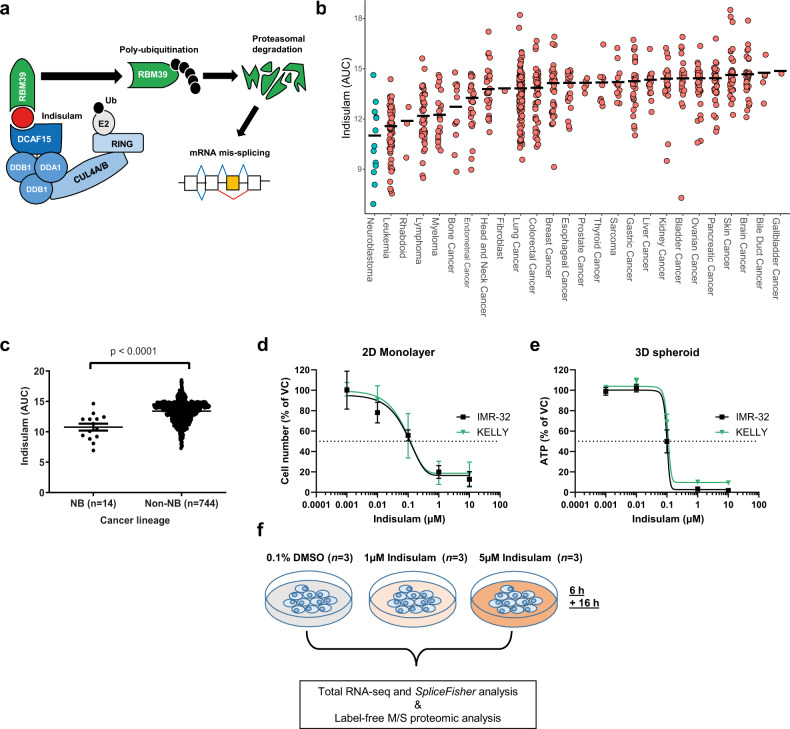
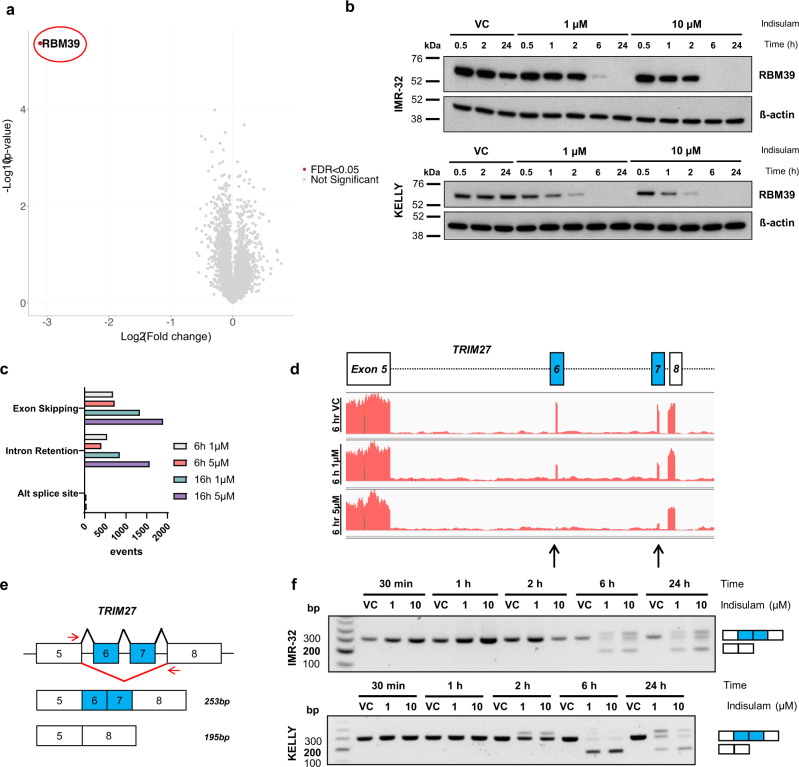
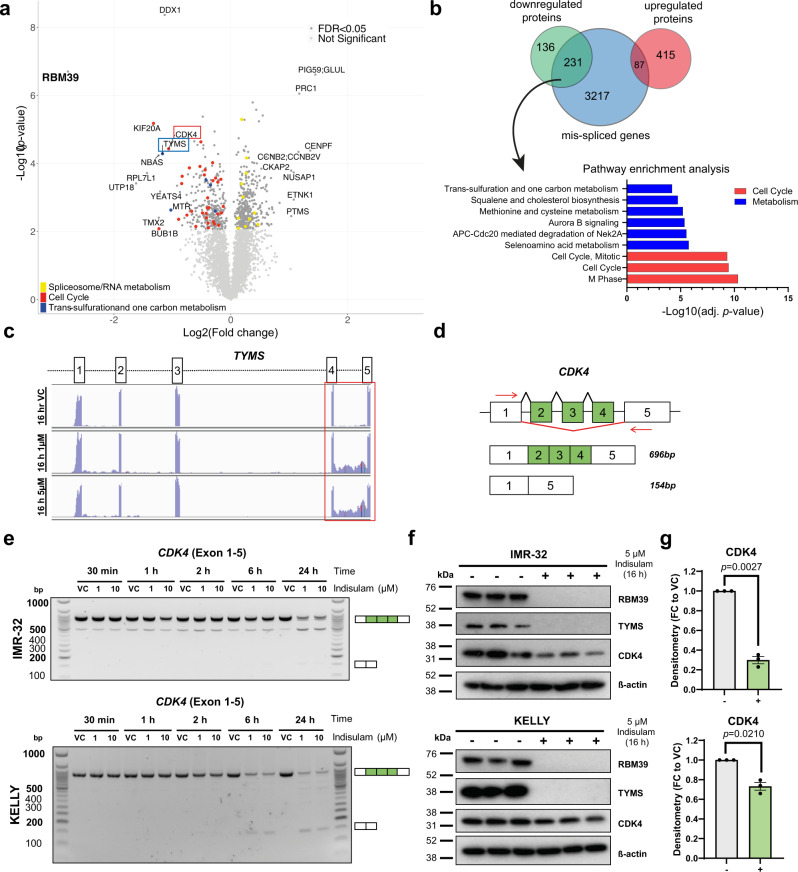
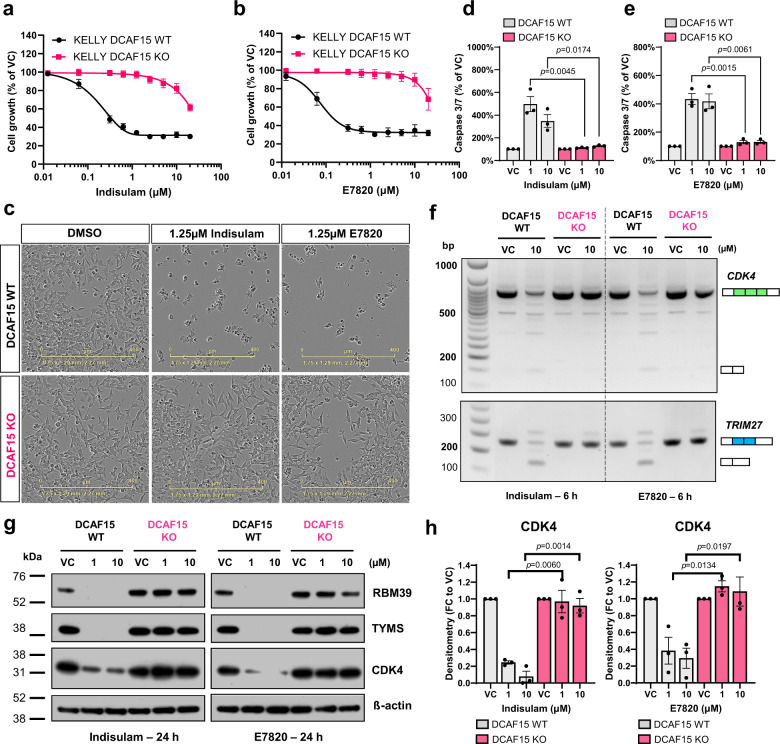
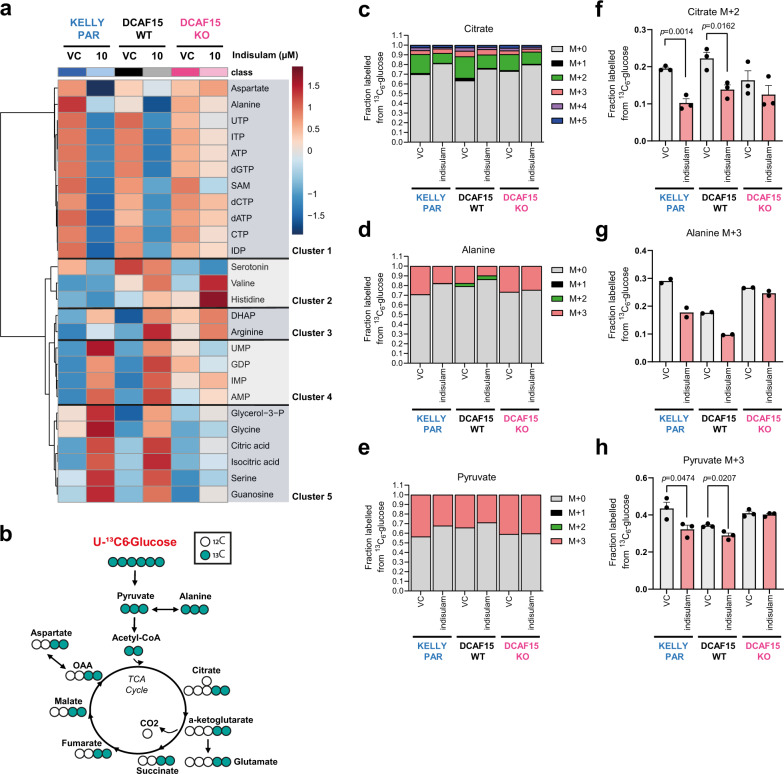
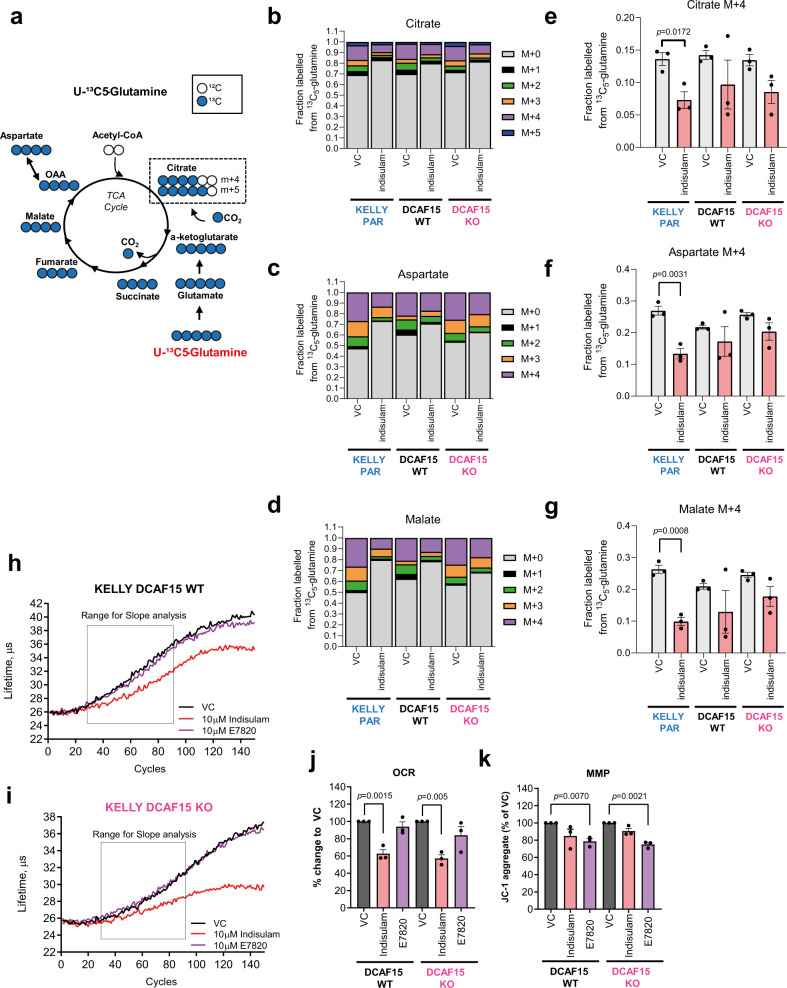
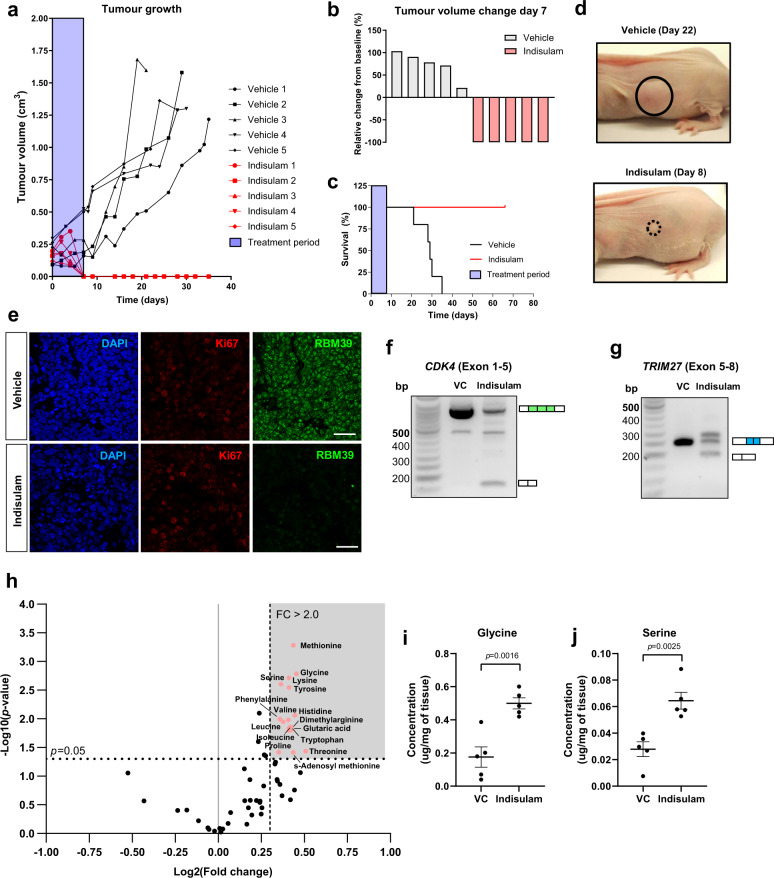
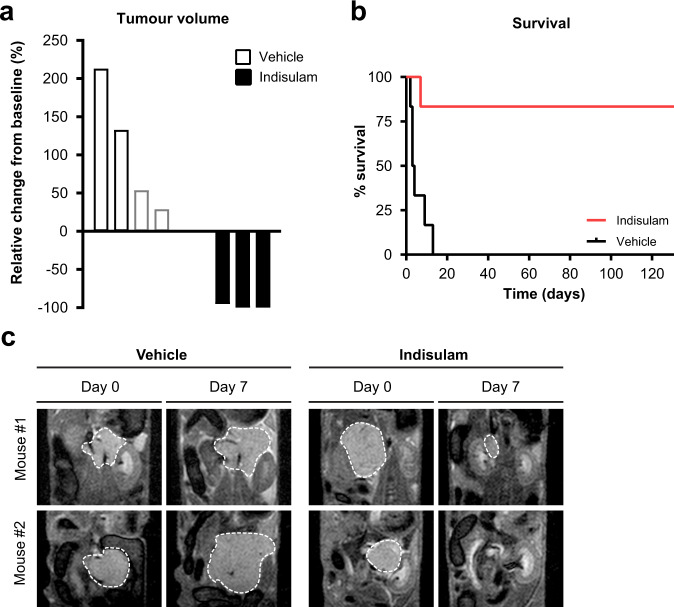
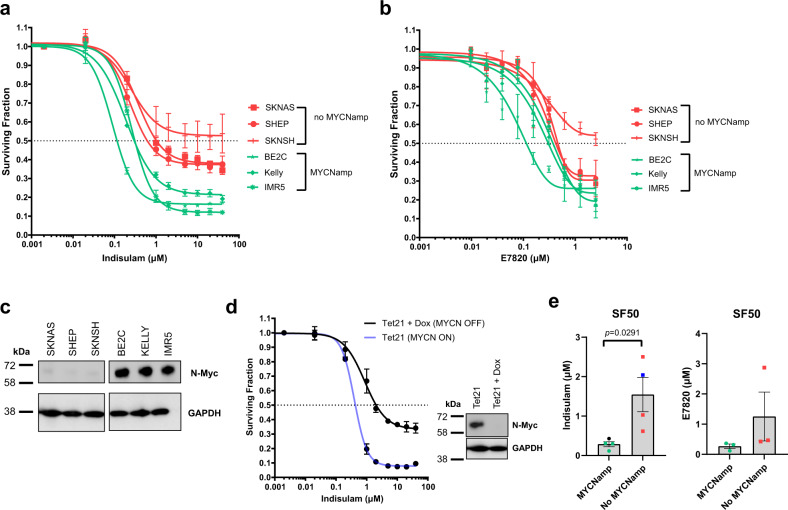
Neuroblastoma is the most common paediatric solid tumour and prognosis remains poor for high-risk cases despite the use of multimodal treatment. Analysis of public drug sensitivity data showed neuroblastoma lines to be sensitive to indisulam, a molecular glue that selectively targets RNA splicing factor RBM39 for proteosomal degradation via DCAF15-E3-ubiquitin ligase. In neuroblastoma models, indisulam induces rapid loss of RBM39, accumulation of splicing errors and growth inhibition in a DCAF15-dependent manner. Integrative analysis of RNAseq and proteomics data highlight a distinct disruption to cell cycle and metabolism. Metabolic profiling demonstrates metabolome perturbations and mitochondrial dysfunction resulting from indisulam. Complete tumour regression without relapse was observed in both xenograft and the Th- MYCN transgenic model of neuroblastoma after indisulam treatment, with RBM39 loss, RNA splicing and metabolic changes confirmed in vivo. Our data show that dual-targeting of metabolism and RNA splicing with anticancer indisulam is a promising therapeutic approach for high-risk neuroblastoma.
Overview
The claims and statistics of this paper haven’t been checked yet.
Free: it reads the open-access text and checks the first 5 claims that cite a source we can check. Create a free account to check every claim.
Integrity signals
Registry
Cites
Statistics
Figures
Verification
Claims the paper makes
The claims and statistics of this paper haven’t been checked yet.
Free: it reads the open-access text and checks the first 5 claims that cite a source we can check. Create a free account to check every claim.
Claims other papers make about this one
Each is checked against this paper’s own text: does it say what the citing paper says it does?
The cited source says what the claim attributes to it.
In the citing paper
“interestingly, correlative transcriptomic and proteomic analyses of indisulam-treated neuroblastoma cell lines revealed an upregulation in proteins involved in RNA processing and spliceosomal components (Nijhuis et al. 2022).”
From From serendipity to strategy: molecular glue degraders in cancer therapeutics (2025) · cites this paper as Nijhuis et al. 2022
Self-check
Percentages, sums and reported differences re-computed from the paper’s own numbers.
The self-check needs the paper’s full text.
Citations
Cites
Gene Expression Omnibus: NCBI gene expression and hybridization array data repository
Edgar, R. (2002) · Nucleic Acids Research · doi:10.1093/nar/30.1.207 · Cited by 13,288
Universal sample preparation method for proteome analysis
Wiśniewski, J. R., Zougman, A., Nagaraj, N., & Mann, M. (2009) · Nature Methods · doi:10.1038/nmeth.1322 · Cited by 8,352 · cited 1×
“Protein samples (50 µg/replicate) were processed using the Filter Aided Sample Preparation protocol 45 .”
Perez-Riverol, Y., Csordas, A., Bai, J., Bernal-Llinares, M., Hewapathirana, S., Kundu, D. J., Inuganti, A., Griss, J., Mayer, G., Eisenacher, M., et al. (2019) · Nucleic Acids Research · doi:10.1093/nar/gky1106 · Cited by 6,693
A Simple Practice Guide for Dose Conversion between Animals and Human
Nair, A., & Jacob, S. (2016) · Journal of Basic and Clinical Pharmacy · doi:10.4103/0976-0105.177703 · Cited by 6,174 · cited 1×
“This dose was chosen guided by other studies 6,32 and based on guidance from Nair & Jacob 48 this equates to a dose of ~105mg m − 2 , which compares favourably to reported tolerated doses in adult humans of 500 – 700mg m − 2 49 .”
MetaboAnalyst 5.0: narrowing the gap between raw spectra and functional insights
Pang, Z., Chong, J., Zhou, G., de Lima Morais, D. A., Chang, L., Barrette, M., Gauthier, C., Jacques, P.-É., Li, S., & Xia, J. (2021) · Nucleic Acids Research · doi:10.1093/nar/gkab382 · Cited by 3,958
Kind, T., Wohlgemuth, G., Lee, D. Y., Lu, Y., Palazoglu, M., Shahbaz, S., & Fiehn, O. (2009) · Analytical Chemistry · doi:10.1021/ac9019522 · Cited by 1,482 · cited 2×
“Metabolites extracts were derivatised using the two-step method of derivatisation: methoxyamination and silylation 42 .”
Guidelines for the welfare and use of animals in cancer research
An ad hoc committee of the National Cancer Research Institute, Workman, P., Aboagye, E. O., Balkwill, F., Balmain, A., Bruder, G., Chaplin, D. J., Double, J. A., Everitt, J., Farningham, D. A. H., et al. (2010) · British Journal of Cancer · doi:10.1038/sj.bjc.6605642 · Cited by 1,442 · cited 1×
“…Welfare and Ethical Review Body (PPL no. 70/7945, later PPL P91E52C32), in compliance with the UK Home Of fi ce Animals (Scienti fi c Procedures) Act 1986, the United Kingdom National Cancer Research Institute guidelines for the welfare of animals in cancer research 46 and the ARRIVE guidelines 47 .”
Correlating chemical sensitivity and basal gene expression reveals mechanism of action
Rees, M. G., Seashore-Ludlow, B., Cheah, J. H., Adams, D. J., Price, E. V., Gill, S., Javaid, S., Coletti, M. E., Jones, V. L., Bodycombe, N. E., et al. (2016) · Nature Chemical Biology · doi:10.1038/nchembio.1986 · Cited by 898 · cited 3×
“We fi rst sought to investigate tumour types that are likely to respond to aryl sulfonamides by probing publicly available databases with measurements of indisulam ef fi cacy across 758 cancer cell lines 24 .”
InfluentialTargeted expression of MYCN causes neuroblastoma in transgenic mice
Weiss, W. A. (1997) · The EMBO Journal · doi:10.1093/emboj/16.11.2985 · Cited by 870 · cited 1×
“These tumours closely recapitulate many of the clinical and genomic features of high-risk neuroblastoma disease 27,28 .”
Stein, S. E. (1999) · Journal of the American Society for Mass Spectrometry · doi:10.1016/s1044-0305(99)00047-1 · Cited by 822 · cited 1×
“Metabolites were assigned using FiehnLib assisted processing in AMDIS 43 and manually assessed using the Gavin package 41 .”
Anticancer sulfonamides target splicing by inducing RBM39 degradation via recruitment to DCAF15
Han, T., Goralski, M., Gaskill, N., Capota, E., Kim, J., Ting, T. C., Xie, Y., Williams, N. S., & Nijhawan, D. (2017) · Science · doi:10.1126/science.aal3755 · Cited by 762 · cited 7×
“Although DCAF15 is a strong determinant for indisulam sensitivity as shown by us and others 14,15 , a recent study suggested that DCAF15 mRNA levels in primary samples of tumour cells of AML patients did not correlate to RBM39 degradation 36 .”
InfluentialImproving bioscience research reporting: the ARRIVE guidelines for reporting animal research
Kilkenny, C., Browne, W. J., Cuthill, I. C., Emerson, M., & Altman, D. G. (2012) · Osteoarthritis and Cartilage · doi:10.1016/j.joca.2012.02.010 · Cited by 728
Improving Bioscience Research Reporting: The ARRIVE Guidelines for Reporting Animal Research
Kilkenny, C., Browne, W., Cuthill, I., Emerson, M., & Altman, D. (2014) · Animals · doi:10.3390/ani4010035 · Cited by 707
Small‐Molecule PROTACS: New Approaches to Protein Degradation
Toure, M., & Crews, C. M. (2016) · Angewandte Chemie International Edition · doi:10.1002/anie.201507978 · Cited by 674
Widespread intron retention in mammals functionally tunes transcriptomes
Braunschweig, U., Barbosa-Morais, N. L., Pan, Q., Nachman, E. N., Alipanahi, B., Gonatopoulos-Pournatzis, T., Frey, B., Irimia, M., & Blencowe, B. J. (2014) · Genome Research · doi:10.1101/gr.177790.114 · Cited by 664 · cited 1×
“Of these 231 transcripts, the majority experienced intron retention (174/231 = 75%), which is in line with the observation that the presence of intron-retained transcripts correlates to reduced protein levels often through nonsense-mediated decay 25 .”
Selective degradation of splicing factor CAPERα by anticancer sulfonamides
Uehara, T., Minoshima, Y., Sagane, K., Sugi, N. H., Mitsuhashi, K. O., Yamamoto, N., Kamiyama, H., Takahashi, K., Kotake, Y., Uesugi, M., et al. (2017) · Nature Chemical Biology · doi:10.1038/nchembio.2363 · Cited by 396 · cited 6×
“Although DCAF15 is a strong determinant for indisulam sensitivity as shown by us and others 14,15 , a recent study suggested that DCAF15 mRNA levels in primary samples of tumour cells of AML patients did not correlate to RBM39 degradation 36 .”
InfluentialDual CDK4/CDK6 Inhibition Induces Cell-Cycle Arrest and Senescence in Neuroblastoma
Rader, J., Russell, M. R., Hart, L. S., Nakazawa, M. S., Belcastro, L. T., Martinez, D., Li, Y., Carpenter, E. L., Attiyeh, E. F., Diskin, S. J., et al. (2013) · Clinical Cancer Research · doi:10.1158/1078-0432.ccr-13-1675 · Cited by 394 · cited 2×
“As MYCN ampli fi ed tumours are more likely to be sensitive to dual CDK4/6 inhibition 33 it is plausible therefore that these may also be more sensitive to CDK4 downregulation downstream of indisulam exposure and RBM39 depletion.”
Journal of The American Society for Mass Spectrometry
(2020) · Journal of the American Society for Mass Spectrometry · doi:10.1007/13361.1879-1123 · Cited by 347
Targeting an RNA-Binding Protein Network in Acute Myeloid Leukemia
Wang, E., Lu, S. X., Pastore, A., Chen, X., Imig, J., Chun-Wei Lee, S., Hockemeyer, K., Ghebrechristos, Y. E., Yoshimi, A., Inoue, D., et al. (2019) · Cancer Cell · doi:10.1016/j.ccell.2019.01.010 · Cited by 338 · cited 2×
“While recent studies in primary AML cells have con fi rmed this responsiveness 31 additional pre-clinical evidence for treatment of neuroblastoma was lacking.”
Discovery of Novel Antitumor Sulfonamides Targeting G1 Phase of the Cell Cycle
Owa, T., Yoshino, H., Okauchi, T., Yoshimatsu, K., Ozawa, Y., Sugi, N. H., Nagasu, T., Koyanagi, N., & Kitoh, K. (1999) · Journal of Medicinal Chemistry · doi:10.1021/jm9902638 · Cited by 322 · cited 2×
“Indisulam (E7070) is one of a class of aryl sulfonamides originally discovered by Eisai through several screens for small molecule inhibitors that block cell cycle progression 3,4 .”
London, W. B., Castel, V., Monclair, T., Ambros, P. F., Pearson, A. D. J., Cohn, S. L., Berthold, F., Nakagawara, A., Ladenstein, R. L., Iehara, T., et al. (2011) · Journal of Clinical Oncology · doi:10.1200/jco.2010.34.3392 · Cited by 318 · cited 1×
“However, the prognosis for high-risk cases remains poor with a high incidence of tumour relapse 1 .”
Improving Bioscience Research Reporting: The ARRIVE Guidelines for Reporting Animal Research
(2012) · Veterinary Clinical Pathology · doi:10.1111/j.1939-165x.2012.00418.x · Cited by 269
Abbate, F., Casini, A., Owa, T., Scozzafava, A., & Supuran, C. T. (2004) · Bioorganic & Medicinal Chemistry Letters · doi:10.1016/j.bmcl.2003.09.062 · Cited by 262
Structural basis of indisulam-mediated RBM39 recruitment to DCAF15 E3 ligase complex
Bussiere, D. E., Xie, L., Srinivas, H., Shu, W., Burke, A., Be, C., Zhao, J., Godbole, A., King, D., Karki, R. G., et al. (2020) · Nature Chemical Biology · doi:10.1038/s41589-019-0411-6 · Cited by 257
Novel sulfonamides as potential, systemically active antitumor agents
Yoshino, H., Ueda, N., Niijima, J., Sugumi, H., Kotake, Y., Koyanagi, N., Yoshimatsu, K., Asada, M., Watanabe, T., Nagasu, T., et al. (1992) · Journal of Medicinal Chemistry · doi:10.1021/jm00091a018 · Cited by 234 · cited 2×
“Indisulam (E7070) is one of a class of aryl sulfonamides originally discovered by Eisai through several screens for small molecule inhibitors that block cell cycle progression 3,4 .”
Dowhan, D. H., Hong, E. P., Auboeuf, D., Dennis, A. P., Wilson, M. M., Berget, S. M., & O'Malley, B. W. (2005) · Molecular Cell · doi:10.1016/j.molcel.2004.12.025 · Cited by 193
Colon, N. C., & Chung, D. H. (2011) · Advances in Pediatrics · doi:10.1016/j.yapd.2011.03.011 · Cited by 180
A software complement to AMDIS for processing GC-MS metabolomic data
Behrends, V., Tredwell, G. D., & Bundy, J. G. (2011) · Analytical Biochemistry · doi:10.1016/j.ab.2011.04.009 · Cited by 159 · cited 2×
“…fl uoroacetamide (MTBSTFA, Thermo Scienti fi c) with 1% tert-butyldimethylchlorosilane (TBDMS, Thermo Scienti fi c) was added and incubated for 1h at 70 °C. In-house protocols adapted from the previous reports 41 were used for GC – MS analysis, a summary is provided here.”
Ren, P., Yue, M., Xiao, D., Xiu, R., Gan, L., Liu, H., & Qing, G. (2015) · The Journal of Pathology · doi:10.1002/path.4429 · Cited by 154 · cited 2×
“…metabolism in neuroblastoma in several ways, including effects to pathways targeted by indisulam by both RBM39-dependent and independent means, such as glutaminolysis 38,39 , lipogenesis, the serine-glycine synthesis and one-carbon metabolic pathway 40 and reactive oxygen species production 38 .”
E7070, a novel sulphonamide agent with potent antitumour activity in vitro and in vivo
Ozawa, Y., Sugi, N. H., Nagasu, T., Owa, T., Watanabe, T., Koyanagi, N., Yoshino, H., Kitoh, K., & Yoshimatsu, K. (2001) · European Journal of Cancer · doi:10.1016/s0959-8049(01)00275-1 · Cited by 132
Fukuoka, K., Usuda, J., Iwamoto, Y., Fukumoto, H., Nakamura, T., Yoneda, T., Narita, N., Saijo, N., & Nishio, K. (2001) · Investigational New Drugs · doi:10.1023/a:1010608317361 · Cited by 112 · cited 2×
“Tumour regression in HCT116 xenografts by indisulam was superior to other anticancer compounds such as 5-FU and Irinotecan 6 , which prompted the investigation of indisulam in Phase I/II clinical trials as an anticancer agent for several advanced solid tumours 7 – 13 .”
Jung, D.-J., Na, S.-Y., Na, D. S., & Lee, J. W. (2002) · Journal of Biological Chemistry · doi:10.1074/jbc.m110417200 · Cited by 112 · cited 2×
“Additionally, RBM39 is known to be a coactivator of transcription factors such as AP-1 and oestrogen receptors (ER) α and β 21 and may also regulate metabolism via activation of the NF-ҡ B/c-Myc pathway 23 .”
Xia, Y., Ye, B., Ding, J., Yu, Y., Alptekin, A., Thangaraju, M., Prasad, P. D., Ding, Z.-C., Park, E. J., Choi, J.-H., et al. (2019) · Cancer Research · doi:10.1158/0008-5472.can-18-3541 · Cited by 108 · cited 1×
“…metabolism in neuroblastoma in several ways, including effects to pathways targeted by indisulam by both RBM39-dependent and independent means, such as glutaminolysis 38,39 , lipogenesis, the serine-glycine synthesis and one-carbon metabolic pathway 40 and reactive oxygen species production 38 .”
RNA‐binding motif protein 39 (RBM39): An emerging cancer target
Xu, Y., Nijhuis, A., & Keun, H. C. (2022) · British Journal of Pharmacology · doi:10.1111/bph.15331 · Cited by 90
Self-citationTalbot, D. C., von Pawel, J., Cattell, E., Yule, S. M., Johnston, C., Zandvliet, A. S., Huitema, A. D. R., Norbury, C. J., Ellis, P., Bosquee, L., et al. (2007) · Clinical Cancer Research · doi:10.1158/1078-0432.ccr-06-0249 · Cited by 81
Poon, E., Liang, T., Jamin, Y., Walz, S., Kwok, C., Hakkert, A., Barker, K. T., Urban‐Wójciuk, Z., Thway, K., Zeid, R., et al. (2020) · Journal of Clinical Investigation · doi:10.1172/jci134132 · Cited by 71 · cited 1×
“Also, we have recently shown that targeting cell cycle proteins (such as CDK2/9) is an increasingly important strategy for therapeutic developments in neuroblastoma 34 .”
Self-citationChesler, L., & Weiss, W. A. (2011) · Seminars in Cancer Biology · doi:10.1016/j.semcancer.2011.09.011 · Cited by 69 · cited 1×
“These tumours closely recapitulate many of the clinical and genomic features of high-risk neuroblastoma disease 27,28 .”
Self-citationMYCN drives glutaminolysis in neuroblastoma and confers sensitivity to an ROS augmenting agent
Wang, T., Liu, L., Chen, X., Shen, Y., Lian, G., Shah, N., Davidoff, A. M., Yang, J. J. J., & Wang, R. (2018) · Cell Death and Disease · doi:10.1038/s41419-018-0295-5 · Cited by 66 · cited 1×
“…metabolism in neuroblastoma in several ways, including effects to pathways targeted by indisulam by both RBM39-dependent and independent means, such as glutaminolysis 38,39 , lipogenesis, the serine-glycine synthesis and one-carbon metabolic pathway 40 and reactive oxygen species production 38 .”
Haddad, R. I., Weinstein, L. J., Wieczorek, T. J., Bhattacharya, N., Raftopoulos, H., Oster, M. W., Zhang, X., Latham, V. M., Costello, R., Faucher, J., et al. (2004) · Clinical Cancer Research · doi:10.1158/1078-0432.ccr-04-0229 · Cited by 65
Global regulation of alternative RNA splicing by the SR-rich protein RBM39
Mai, S., Qu, X., Li, P., Ma, Q., Cao, C., & Liu, X. (2016) · Biochimica et Biophysica Acta (BBA) - Gene Regulatory Mechanisms · doi:10.1016/j.bbagrm.2016.06.007 · Cited by 64 · cited 2×
“RBM39 has been proposed to serve as a pre-mRNA splicing factor 16,20,21 and loss of RBM39 causes alternative splicing defects 22 .”
Raymond, E., ten Bokkel Huinink, W. W., Taïeb, J., Beijnen, J. H., Faivre, S., Wanders, J., Ravic, M., Fumoleau, P., Armand, J. P., & Schellens, J. H. M. (2002) · Journal of Clinical Oncology · doi:10.1200/jco.2002.09.030 · Cited by 60 · cited 2×
“Tumour regression in HCT116 xenografts by indisulam was superior to other anticancer compounds such as 5-FU and Irinotecan 6 , which prompted the investigation of indisulam in Phase I/II clinical trials as an anticancer agent for several advanced solid tumours 7 – 13 .”
Ozawa, Y., Kusano, K., Owa, T., Yokoi, A., Asada, M., & Yoshimatsu, K. (2012) · Cancer Chemotherapy and Pharmacology · doi:10.1007/s00280-012-1844-8 · Cited by 59 · cited 2×
“This dose was chosen guided by other studies 6,32 and based on guidance from Nair & Jacob 48 this equates to a dose of ~105mg m − 2 , which compares favourably to reported tolerated doses in adult humans of 500 – 700mg m − 2 49 .”
MYCN controls an alternative RNA splicing program in high-risk metastatic neuroblastoma
Zhang, S., Wei, J. S., Li, S. Q., Badgett, T. C., Song, Y. K., Agarwal, S., Coarfa, C., Tolman, C., Hurd, L., Liao, H., et al. (2016) · Cancer Letters · doi:10.1016/j.canlet.2015.11.045 · Cited by 58
Punt, C. J. A., Fumoleau, P., van de Walle, B., Faber, M. N., Ravic, M., & Campone, M. (2001) · Annals of Oncology · doi:10.1023/a:1012287111922 · Cited by 57
Loerch, S., Maucuer, A., Manceau, V., Green, M. R., & Kielkopf, C. L. (2014) · Journal of Biological Chemistry · doi:10.1074/jbc.m114.558825 · Cited by 56 · cited 1×
“RBM39 is an SR-rich protein homologous to, and associated with, the key splicing factors U2 auxiliary factor 65 (U2AF65) 16 – 18 and SF3b155 19 .”
UHM–ULM interactions in the RBM39–U2AF65 splicing-factor complex
Stepanyuk, G. A., Serrano, P., Peralta, E., Farr, C. L., Axelrod, H. L., Geralt, M., Das, D., Chiu, H.-J., Jaroszewski, L., Deacon, A. M., et al. (2016) · Acta Crystallographica Section D Structural Biology · doi:10.1107/s2059798316001248 · Cited by 51
Dittrich, C., Dumez, H., Calvert, H., Hanauske, A.-R., Faber, M. N., Wanders, J., Yule, M., Ravic, M., & Fumoleau, P. (2003) · PubMed · doi:10.25405/ncl.34651815 · Cited by 50
François, B., Maroun, J., & Birnboim, H. C. (2007) · British Journal of Cancer · doi:10.1038/sj.bjc.6604020 · Cited by 50 · cited 1×
“As the serine, glycine and one-carbon metabolic pathway is closely linked to pyrimidine metabolism it is plausible that mis-splicing of TYMS activity could explain these observations, although CDK4 loss itself can reduce TYMS expression in a cell cycle independent manner 35 .”
Kang, Y. K., Putluri, N., Maity, S., Tsimelzon, A., Ilkayeva, O., Mo, Q., Lonard, D., Michailidis, G., Sreekumar, A., Newgard, C. B., et al. (2015) · PLOS Genetics · doi:10.1371/journal.pgen.1005116 · Cited by 49 · cited 2×
“Additionally, RBM39 is known to be a coactivator of transcription factors such as AP-1 and oestrogen receptors (ER) α and β 21 and may also regulate metabolism via activation of the NF-ҡ B/c-Myc pathway 23 .”
Terret, C., Zanetta, S., Roche, H. H., Schellens, J. H. M., Faber, M. N., Wanders, J., Ravic, M., & Droz, J. (2003) · European Journal of Cancer · doi:10.1016/s0959-8049(03)00128-x · Cited by 47
Dutta, J., Fan, G., & Gélinas, C. (2008) · Journal of Virology · doi:10.1128/jvi.00903-08 · Cited by 44 · cited 1×
“RBM39 has been proposed to serve as a pre-mRNA splicing factor 16,20,21 and loss of RBM39 causes alternative splicing defects 22 .”
Biomarkers for RBM39 degradation in acute myeloid leukemia
Hsiehchen, D., Goralski, M., Kim, J., Xie, Y., & Nijhawan, D. (2020) · Leukemia · doi:10.1038/s41375-020-0729-9 · Cited by 39 · cited 1×
“Although DCAF15 is a strong determinant for indisulam sensitivity as shown by us and others 14,15 , a recent study suggested that DCAF15 mRNA levels in primary samples of tumour cells of AML patients did not correlate to RBM39 degradation 36 .”
The spliceosome, a potential Achilles heel of MYC-driven tumors
Anczuków, O., & Krainer, A. R. (2015) · Genome Medicine · doi:10.1186/s13073-015-0234-3 · Cited by 32 · cited 1×
“…cation of the transcription factor MYCN , which along with high c-Myc expression is frequently observed in high-risk neuroblastoma, leads to an increased oncogenic transcriptional programme 29 whereby cells may rely more heavily on rapid and correct pre-mRNA processing and alternative splicing 30 .”
Phase I pharmacokinetic and pharmacogenomic study of E7070 administered once every 21 days
Yamada, Y., Yamamoto, N., Shimoyama, T., Horiike, A., Fujisaka, Y., Takayama, K., Sakamoto, T., Nishioka, Y., Yasuda, S., & Tamura, T. (2005) · Cancer Science · doi:10.1111/j.1349-7006.2005.00109.x · Cited by 30 · cited 2×
“Tumour regression in HCT116 xenografts by indisulam was superior to other anticancer compounds such as 5-FU and Irinotecan 6 , which prompted the investigation of indisulam in Phase I/II clinical trials as an anticancer agent for several advanced solid tumours 7 – 13 .”
Siegel-Lakhai, W. S., Zandvliet, A. S., Huitema, A. D. R., Tibben, M. M., Milano, G. A., Girre, V., Dieras, V. C., King, A. D., Richmond, E., Wanders, J., et al. (2008) · British Journal of Cancer · doi:10.1038/sj.bjc.6604300 · Cited by 16 · cited 1×
“This dose was chosen guided by other studies 6,32 and based on guidance from Nair & Jacob 48 this equates to a dose of ~105mg m − 2 , which compares favourably to reported tolerated doses in adult humans of 500 – 700mg m − 2 49 .”
Burgess, D. J. (2012) · Nature Reviews Genetics · doi:10.1038/nrg3364 · Cited by 3
Cited by
Arginine reprograms metabolism in liver cancer via RBM39
Mossmann, D., Müller, C., Park, S., Ryback, B., Colombi, M., Ritter, N., Weißenberger, D., Dazert, E., Coto-Llerena, M., Nuciforo, S., et al. (2023) · Cell · doi:10.1016/j.cell.2023.09.011 · Cited by 293
Arginine: at the crossroads of nitrogen metabolism
Fung, T. S., Ryu, K. W., & Thompson, C. B. (2025) · The EMBO Journal · doi:10.1038/s44318-025-00379-3 · Cited by 134
“Given the critical role of RBM39 in tumorigenesis, a small molecule (indisulam) that targets and degrades RBM39 has been found to be an effective treatment for HCC and other tumor types (Nijhuis et al, 2022; Xu et al, 2021).”
Expanding Chemical Probe Space: Quality Criteria for Covalent and Degrader Probes
Hartung, I. V., Rudolph, J., Mader, M. M., Mulder, M. P. C., & Workman, P. (2023) · Journal of Medicinal Chemistry · doi:10.1021/acs.jmedchem.3c00550 · Cited by 115
Targeting RNA splicing modulation: new perspectives for anticancer strategy?
Lv, X., Sun, X., Gao, Y., Song, X., Hu, X., Gong, L., Li, H., He, M., & Wei, M. (2025) · Journal of Experimental & Clinical Cancer Research · doi:10.1186/s13046-025-03279-w · Cited by 61
Proteomic characterization of post-translational modifications in drug discovery
Zhai, L., Chen, K., Hao, B., & Tan, M. (2022) · Acta Pharmacologica Sinica · doi:10.1038/s41401-022-01017-y · Cited by 59
“Furthermore, Lu et al. applied proximity labeling and a quantitative proteomics approach to confirm that indisulam could indeed enhance the interaction between RBM39 and DCAF15 [167].”
BackgroundInfluential
Metadata
- Authors
- Nijhuis, A., Sikka, A., Yogev, O., Herendi, L., Balcells, C., Ma, Y., Poon, E., Eckold, C., Valbuena, G. N., Xu, Y., Liu, Y., da Costa, B. M., Gruet, M., Wickremesinghe, C., Benito, A., Kramer, H., Montoya, A., Carling, D., Want, E. J., Jamin, Y., Chesler, L., & Keun, H. C.
- Affiliations
- Imperial College London (GB)
- Institute of Cancer Research (GB)
- Medical Research Council (GB)
- Royal Marsden NHS Foundation Trust (GB)
- Corresponding author
- Keun, Hector C.
- ORCID
- Venue
- Nature Communications
- Published
- 2022-03-16
- Volume
- 13
- Issue
- 1
- Pages
- 1380-1380
- ISSN
- 2041-1723 (ISSN-L)
- PMC
- PMC8927615
- OpenAlex
- W4220788861
- Semantic Scholar
- 5bd9a2204733b371de036ddaf19d276f95d81ef8
- Cited by
- 110
- References
- 56
- Citations by year
- 2026: 18 · 2025: 28 · 2024: 34 · 2023: 20 · 2022: 9
- FWCI
- 13.56
- Type
- journal article
- Language
- en
- Open access
- gold
- doi.org
- Licence
- cc-by
- creativecommons.org/licenses/by/4.0 (tdm)
- creativecommons.org/licenses/by/4.0 (vor)
- Locations
- Nature Communications (publishedVersion, cc-by)
- bioRxiv (Cold Spring Harbor Laboratory) (acceptedVersion)
- PubMed Central (publishedVersion, cc-by)
- PubMed (publishedVersion)
- RePEc: Research Papers in Economics (submittedVersion)
- DOAJ (DOAJ: Directory of Open Access Journals) (submittedVersion, cc-by-sa)
- Spiral (Imperial College London) (submittedVersion, cc-by)
- Funders
- AstraZeneca
- Cancer Research UK (A28278, C1060/A16464, A18339, A16464, C1060, 28278, C34648/A28278, C34648/A18339)
- National Institute for Health and Care Research (C1060/A16464)
- Imperial College London (H2020)
- CHILDREN with CANCER UK (2014/176)
- Horizon 2020 Framework Programme (737978)
- Imperial Experimental Cancer Medicine Centre
- Medical Research Council (C1060/A16464)
- NIHR Imperial Biomedical Research Centre
- H2020 Fast Track to Innovation (737978)
- Topics
- Health Sciences › Medicine › Oncology › Neuroblastoma Research and Treatments
- Life Sciences › Biochemistry, Genetics and Molecular Biology › Molecular Biology › Protein Degradation and Inhibitors
- Health Sciences › Medicine › Clinical Neurology › Neurofibromatosis and Schwannoma Cases
- Keywords
- indisulam, high-risk neuroblastoma, RBM39, RNA splicing, DCAF15, proteasomal degradation, molecular glues, drug repurposing, mitochondrial dysfunction, cellular metabolism, MYCN, splicing errors
- MeSH terms
- N-Myc Proto-Oncogene Protein, Child, Humans, Neoplasm Recurrence, Local, Neuroblastoma, RNA Splicing, Sulfonamides, Cell Line, Tumor, Intracellular Signaling Peptides and Proteins
About these checks
Registry, retraction, Cites and statistics results are computed, not judged, with one exception: a printed reference that no index lists is read once by a model before it counts as a citation error. Claims are extracted by a model and kept only when their quote appears verbatim in the text; each cited source is then checked, with a model’s help, for whether it says what the claim relies on. Those verdicts can be wrong — read the claim’s quote and the cited source before relying on one.
Statistics and arithmetic are recomputed, not judged.
Confidence bands are shown only for fields calibrated on our annotated test set. None is calibrated yet, so no band is shown.
What counts as a claim ›How we measure confidence ›How we check this ›
Are you an author, or do you see a problem with this page? Request a review
Data sources
Bibliographic data: Semantic Scholar, OpenAlex, Crossref.
Contains information from the Semantic Scholar Academic Graph Datasets, made available under the ODC Attribution License (ODC-BY 1.0).
Semantic Scholar’s data is described in: Kinney, R., et al. (2023). The Semantic Scholar Open Data Platform. arXiv:2301.10140.
