

Indisulam targets RNA splicing and metabolism to serve as a therapeutic strategy for high-risk neuroblastoma
Open accessPublished version of a preprint
The DOI matches its Crossref record; 56 of the 56 references it cites were found in a registry or an index.
Abstract
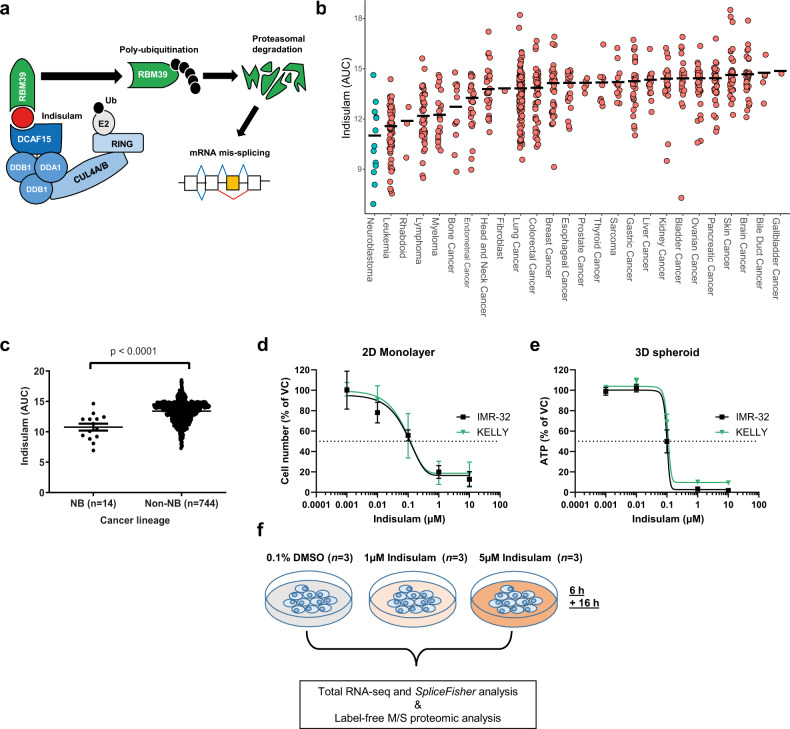
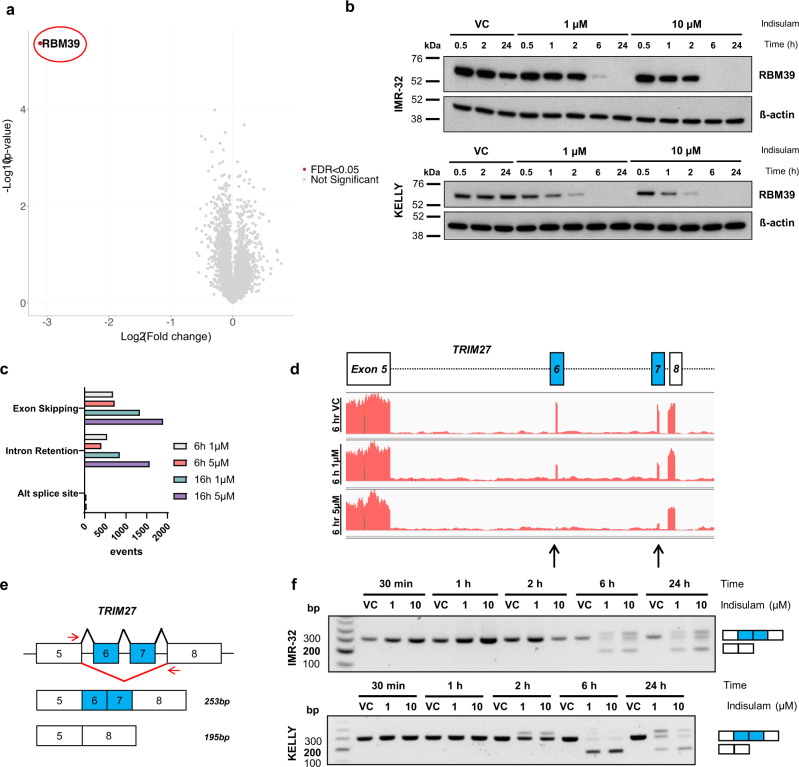
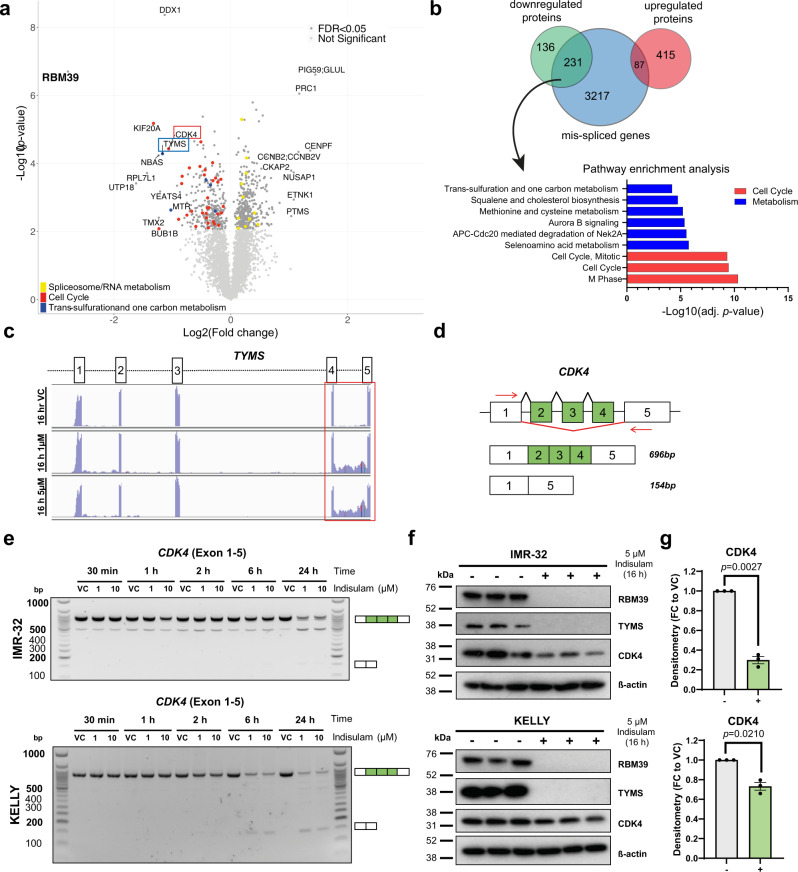
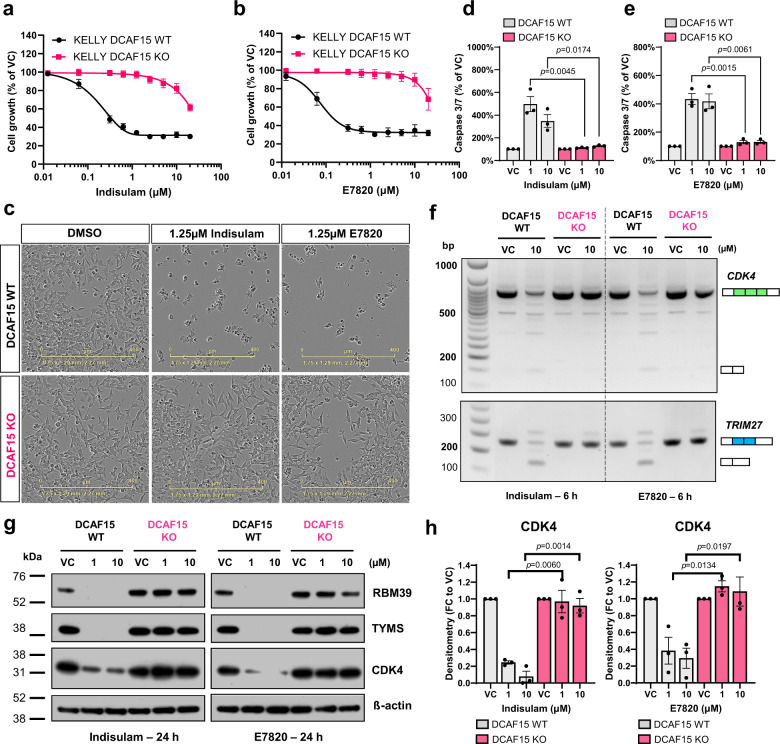
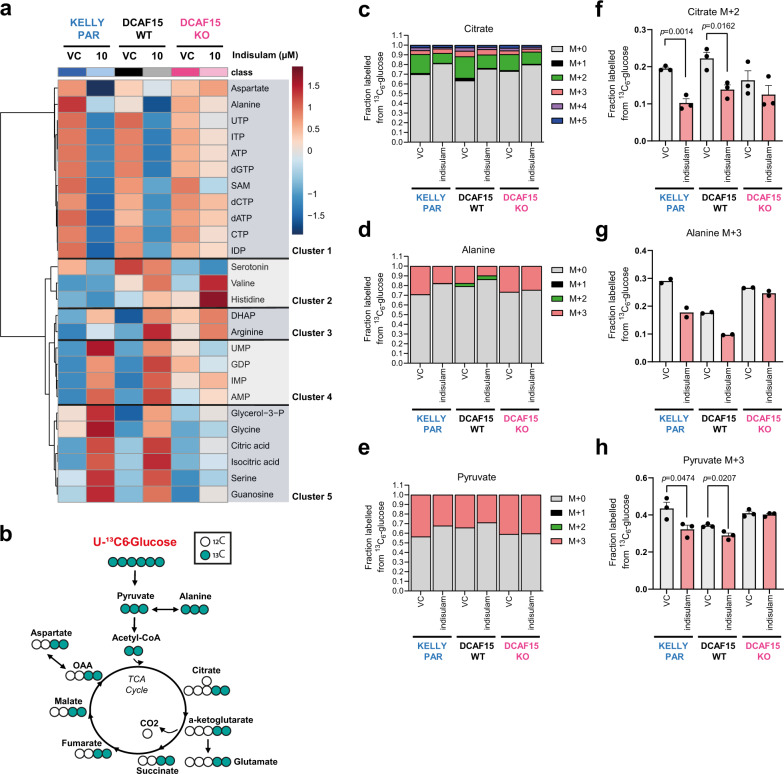
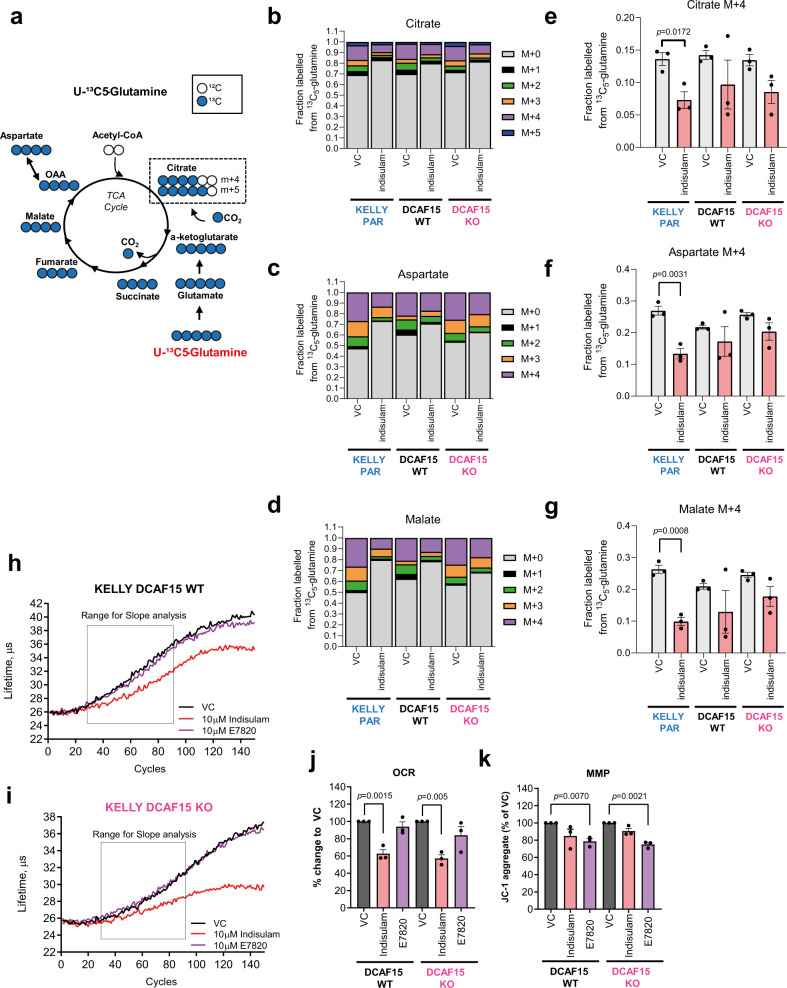
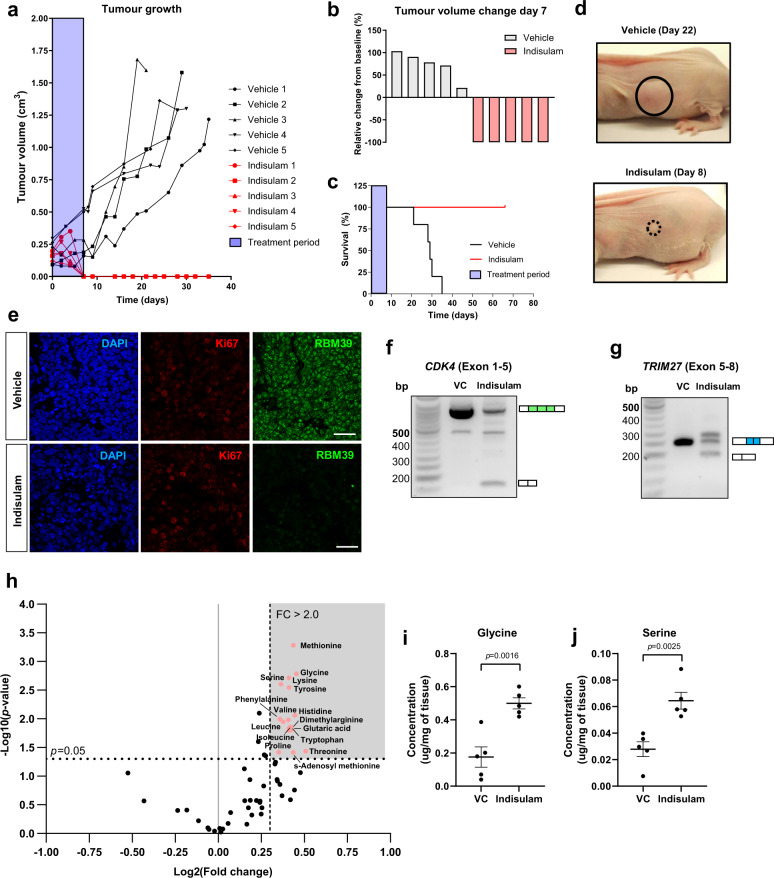
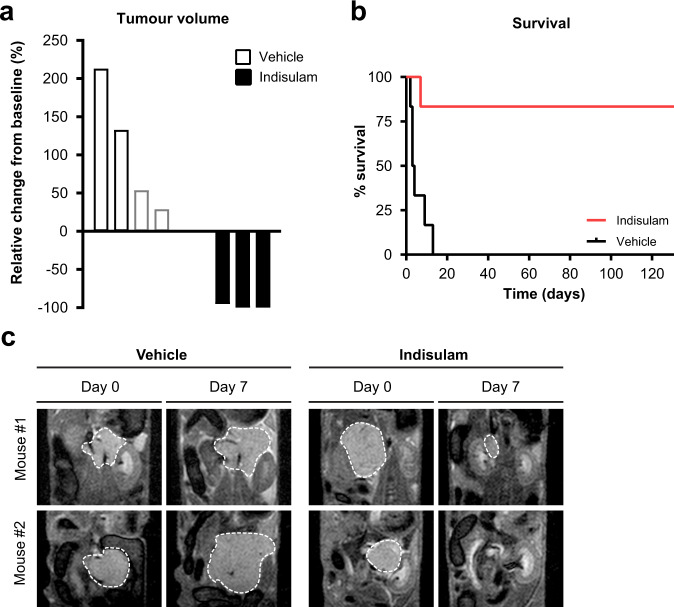
Neuroblastoma is the most common paediatric solid tumour and prognosis remains poor for high-risk cases despite the use of multimodal treatment. Analysis of public drug sensitivity data showed neuroblastoma lines to be sensitive to indisulam, a molecular glue that selectively targets RNA splicing factor RBM39 for proteosomal degradation via DCAF15-E3-ubiquitin ligase. In neuroblastoma models, indisulam induces rapid loss of RBM39, accumulation of splicing errors and growth inhibition in a DCAF15-dependent manner. Integrative analysis of RNAseq and proteomics data highlight a distinct disruption to cell cycle and metabolism. Metabolic profiling demonstrates metabolome perturbations and mitochondrial dysfunction resulting from indisulam. Complete tumour regression without relapse was observed in both xenograft and the Th- MYCN transgenic model of neuroblastoma after indisulam treatment, with RBM39 loss, RNA splicing and metabolic changes confirmed in vivo. Our data show that dual-targeting of metabolism and RNA splicing with anticancer indisulam is a promising therapeutic approach for high-risk neuroblastoma.
Overview
The claims and statistics of this paper haven’t been checked yet.
Free: it reads the open-access text and checks the first 5 claims that cite a source we can check. Create a free account to check every claim.
Integrity signals
Registry
Cites
Statistics
Figures
Verification
Claims the paper makes
The claims and statistics of this paper haven’t been checked yet.
Free: it reads the open-access text and checks the first 5 claims that cite a source we can check. Create a free account to check every claim.
Claims other papers make about this one
Each is checked against this paper’s own text: does it say what the citing paper says it does?
The cited source says what the claim attributes to it.
In the citing paper
“interestingly, correlative transcriptomic and proteomic analyses of indisulam-treated neuroblastoma cell lines revealed an upregulation in proteins involved in RNA processing and spliceosomal components (Nijhuis et al. 2022).”
From From serendipity to strategy: molecular glue degraders in cancer therapeutics (2025) · cites this paper as Nijhuis et al. 2022
Self-check
Percentages, sums and reported differences re-computed from the paper’s own numbers.
The self-check needs the paper’s full text.
Citations
Cites
Gene Expression Omnibus: NCBI gene expression and hybridization array data repository
Edgar, R. (2002) · Nucleic Acids Research · doi:10.1093/nar/30.1.207 · Cited by 13,288
Universal sample preparation method for proteome analysis
Wiśniewski, J. R., Zougman, A., Nagaraj, N., & Mann, M. (2009) · Nature Methods · doi:10.1038/nmeth.1322 · Cited by 8,352 · cited 1×
“Protein samples (50 µg/replicate) were processed using the Filter Aided Sample Preparation protocol 45 .”
Perez-Riverol, Y., Csordas, A., Bai, J., Bernal-Llinares, M., Hewapathirana, S., Kundu, D. J., Inuganti, A., Griss, J., Mayer, G., Eisenacher, M., et al. (2019) · Nucleic Acids Research · doi:10.1093/nar/gky1106 · Cited by 6,693
A Simple Practice Guide for Dose Conversion between Animals and Human
Nair, A., & Jacob, S. (2016) · Journal of Basic and Clinical Pharmacy · doi:10.4103/0976-0105.177703 · Cited by 6,174 · cited 1×
“This dose was chosen guided by other studies 6,32 and based on guidance from Nair & Jacob 48 this equates to a dose of ~105mg m − 2 , which compares favourably to reported tolerated doses in adult humans of 500 – 700mg m − 2 49 .”
MetaboAnalyst 5.0: narrowing the gap between raw spectra and functional insights
Pang, Z., Chong, J., Zhou, G., de Lima Morais, D. A., Chang, L., Barrette, M., Gauthier, C., Jacques, P.-É., Li, S., & Xia, J. (2021) · Nucleic Acids Research · doi:10.1093/nar/gkab382 · Cited by 3,958
Kind, T., Wohlgemuth, G., Lee, D. Y., Lu, Y., Palazoglu, M., Shahbaz, S., & Fiehn, O. (2009) · Analytical Chemistry · doi:10.1021/ac9019522 · Cited by 1,482 · cited 2×
“Metabolites extracts were derivatised using the two-step method of derivatisation: methoxyamination and silylation 42 .”
Guidelines for the welfare and use of animals in cancer research
An ad hoc committee of the National Cancer Research Institute, Workman, P., Aboagye, E. O., Balkwill, F., Balmain, A., Bruder, G., Chaplin, D. J., Double, J. A., Everitt, J., Farningham, D. A. H., et al. (2010) · British Journal of Cancer · doi:10.1038/sj.bjc.6605642 · Cited by 1,442 · cited 1×
“…Welfare and Ethical Review Body (PPL no. 70/7945, later PPL P91E52C32), in compliance with the UK Home Of fi ce Animals (Scienti fi c Procedures) Act 1986, the United Kingdom National Cancer Research Institute guidelines for the welfare of animals in cancer research 46 and the ARRIVE guidelines 47 .”
Correlating chemical sensitivity and basal gene expression reveals mechanism of action
Rees, M. G., Seashore-Ludlow, B., Cheah, J. H., Adams, D. J., Price, E. V., Gill, S., Javaid, S., Coletti, M. E., Jones, V. L., Bodycombe, N. E., et al. (2016) · Nature Chemical Biology · doi:10.1038/nchembio.1986 · Cited by 898 · cited 3×
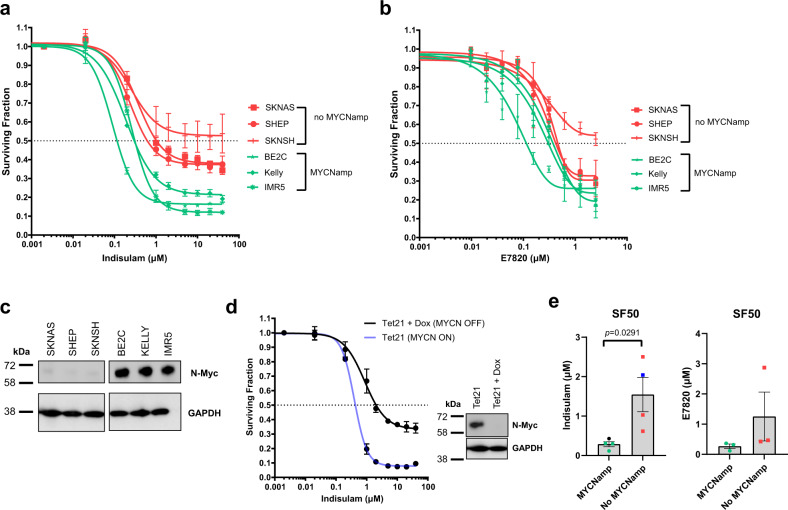
“We fi rst sought to investigate tumour types that are likely to respond to aryl sulfonamides by probing publicly available databases with measurements of indisulam ef fi cacy across 758 cancer cell lines 24 .”
InfluentialTargeted expression of MYCN causes neuroblastoma in transgenic mice
Weiss, W. A. (1997) · The EMBO Journal · doi:10.1093/emboj/16.11.2985 · Cited by 870 · cited 1×
“These tumours closely recapitulate many of the clinical and genomic features of high-risk neuroblastoma disease 27,28 .”
Stein, S. E. (1999) · Journal of the American Society for Mass Spectrometry · doi:10.1016/s1044-0305(99)00047-1 · Cited by 822 · cited 1×
“Metabolites were assigned using FiehnLib assisted processing in AMDIS 43 and manually assessed using the Gavin package 41 .”
Cited by
Arginine reprograms metabolism in liver cancer via RBM39
Mossmann, D., Müller, C., Park, S., Ryback, B., Colombi, M., Ritter, N., Weißenberger, D., Dazert, E., Coto-Llerena, M., Nuciforo, S., et al. (2023) · Cell · doi:10.1016/j.cell.2023.09.011 · Cited by 293
Arginine: at the crossroads of nitrogen metabolism
Fung, T. S., Ryu, K. W., & Thompson, C. B. (2025) · The EMBO Journal · doi:10.1038/s44318-025-00379-3 · Cited by 134
“Given the critical role of RBM39 in tumorigenesis, a small molecule (indisulam) that targets and degrades RBM39 has been found to be an effective treatment for HCC and other tumor types (Nijhuis et al, 2022; Xu et al, 2021).”
Expanding Chemical Probe Space: Quality Criteria for Covalent and Degrader Probes
Hartung, I. V., Rudolph, J., Mader, M. M., Mulder, M. P. C., & Workman, P. (2023) · Journal of Medicinal Chemistry · doi:10.1021/acs.jmedchem.3c00550 · Cited by 115
Targeting RNA splicing modulation: new perspectives for anticancer strategy?
Lv, X., Sun, X., Gao, Y., Song, X., Hu, X., Gong, L., Li, H., He, M., & Wei, M. (2025) · Journal of Experimental & Clinical Cancer Research · doi:10.1186/s13046-025-03279-w · Cited by 61
Proteomic characterization of post-translational modifications in drug discovery
Zhai, L., Chen, K., Hao, B., & Tan, M. (2022) · Acta Pharmacologica Sinica · doi:10.1038/s41401-022-01017-y · Cited by 59
“Furthermore, Lu et al. applied proximity labeling and a quantitative proteomics approach to confirm that indisulam could indeed enhance the interaction between RBM39 and DCAF15 [167].”
BackgroundInfluential
Metadata
- Authors
- Nijhuis, A., Sikka, A., Yogev, O., Herendi, L., Balcells, C., Ma, Y., Poon, E., Eckold, C., Valbuena, G. N., Xu, Y., Liu, Y., da Costa, B. M., Gruet, M., Wickremesinghe, C., Benito, A., Kramer, H., Montoya, A., Carling, D., Want, E. J., Jamin, Y., Chesler, L., & Keun, H. C.
- Affiliations
- Imperial College London (GB)
- Institute of Cancer Research (GB)
- Medical Research Council (GB)
- Royal Marsden NHS Foundation Trust (GB)
- Corresponding author
- Keun, Hector C.
- ORCID
- Venue
- Nature Communications
- Published
- 2022-03-16
- Volume
- 13
- Issue
- 1
- Pages
- 1380-1380
- ISSN
- 2041-1723 (ISSN-L)
- PMC
- PMC8927615
- OpenAlex
- W4220788861
- Semantic Scholar
- 5bd9a2204733b371de036ddaf19d276f95d81ef8
- Cited by
- 110
- References
- 56
- Citations by year
- 2026: 18 · 2025: 28 · 2024: 34 · 2023: 20 · 2022: 9
- FWCI
- 13.56
- Type
- journal article
- Language
- en
- Open access
- gold
- doi.org
- Licence
- cc-by
- creativecommons.org/licenses/by/4.0 (tdm)
- creativecommons.org/licenses/by/4.0 (vor)
- Locations
- Nature Communications (publishedVersion, cc-by)
- bioRxiv (Cold Spring Harbor Laboratory) (acceptedVersion)
- PubMed Central (publishedVersion, cc-by)
- PubMed (publishedVersion)
- RePEc: Research Papers in Economics (submittedVersion)
- DOAJ (DOAJ: Directory of Open Access Journals) (submittedVersion, cc-by-sa)
- Spiral (Imperial College London) (submittedVersion, cc-by)
- Funders
- AstraZeneca
- Cancer Research UK (A28278, C1060/A16464, A18339, A16464, C1060, 28278, C34648/A28278, C34648/A18339)
- National Institute for Health and Care Research (C1060/A16464)
- Imperial College London (H2020)
- CHILDREN with CANCER UK (2014/176)
- Horizon 2020 Framework Programme (737978)
- Imperial Experimental Cancer Medicine Centre
- Medical Research Council (C1060/A16464)
- NIHR Imperial Biomedical Research Centre
- H2020 Fast Track to Innovation (737978)
- Topics
- Health Sciences › Medicine › Oncology › Neuroblastoma Research and Treatments
- Life Sciences › Biochemistry, Genetics and Molecular Biology › Molecular Biology › Protein Degradation and Inhibitors
- Health Sciences › Medicine › Clinical Neurology › Neurofibromatosis and Schwannoma Cases
- Keywords
- indisulam, high-risk neuroblastoma, RBM39, RNA splicing, DCAF15, proteasomal degradation, molecular glues, drug repurposing, mitochondrial dysfunction, cellular metabolism, MYCN, splicing errors
- MeSH terms
- N-Myc Proto-Oncogene Protein, Child, Humans, Neoplasm Recurrence, Local, Neuroblastoma, RNA Splicing, Sulfonamides, Cell Line, Tumor, Intracellular Signaling Peptides and Proteins
About these checks
Registry, retraction, Cites and statistics results are computed, not judged, with one exception: a printed reference that no index lists is read once by a model before it counts as a citation error. Claims are extracted by a model and kept only when their quote appears verbatim in the text; each cited source is then checked, with a model’s help, for whether it says what the claim relies on. Those verdicts can be wrong — read the claim’s quote and the cited source before relying on one.
Statistics and arithmetic are recomputed, not judged.
Confidence bands are shown only for fields calibrated on our annotated test set. None is calibrated yet, so no band is shown.
What counts as a claim ›How we measure confidence ›How we check this ›
Are you an author, or do you see a problem with this page? Request a review
Data sources
Bibliographic data: Semantic Scholar, OpenAlex, Crossref.
Contains information from the Semantic Scholar Academic Graph Datasets, made available under the ODC Attribution License (ODC-BY 1.0).
Semantic Scholar’s data is described in: Kinney, R., et al. (2023). The Semantic Scholar Open Data Platform. arXiv:2301.10140.
