

The DOI matches its Crossref record; 69 of the 70 references it cites were found in a registry or an index, and 1 are not checked yet.
Cas9-induced large deletions and small indels are controlled in a convergent fashion
Open accessPublished version of a preprint
Abstract
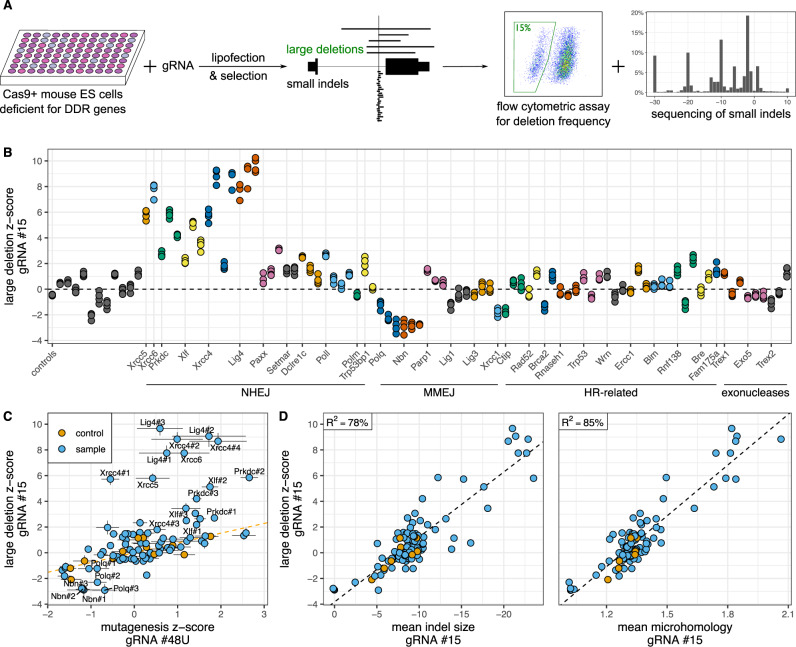
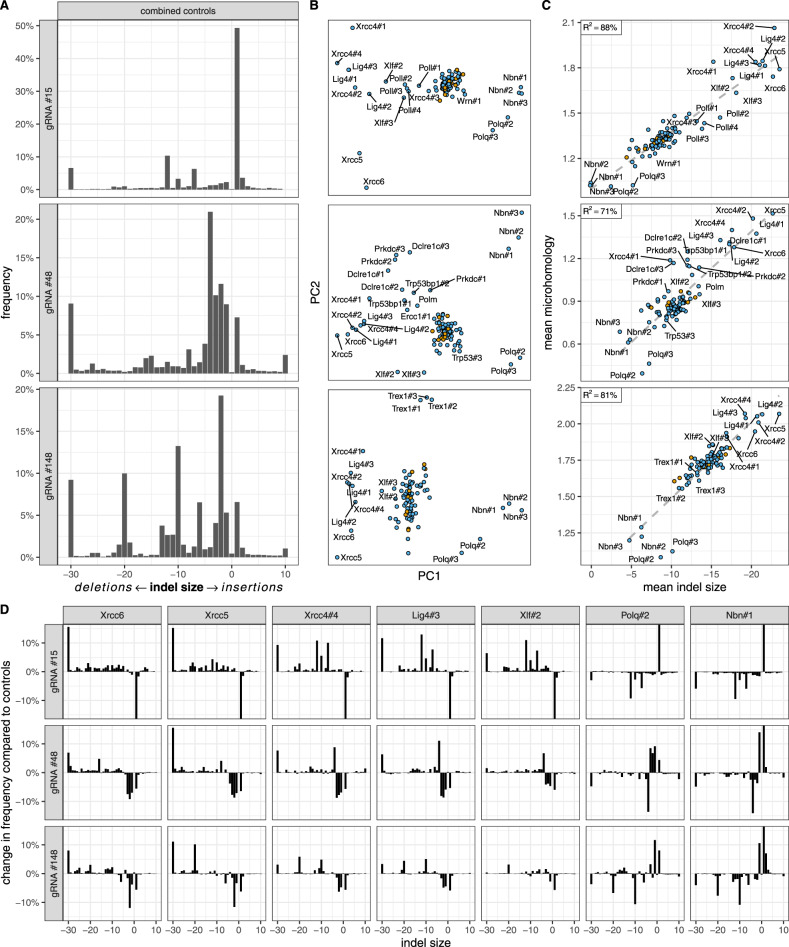
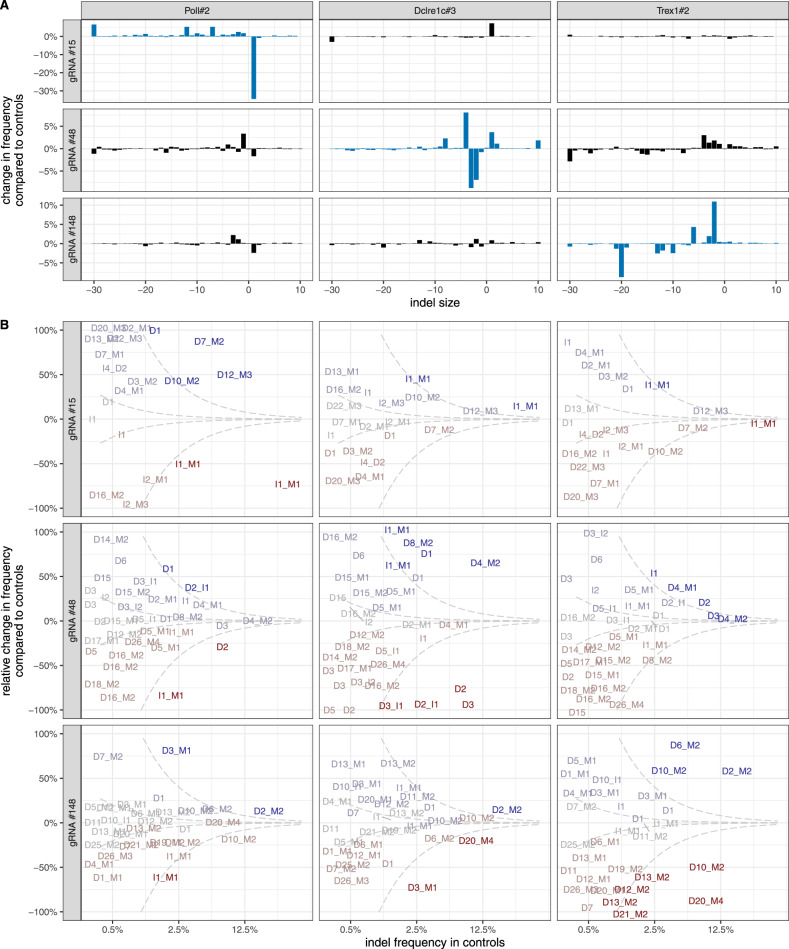
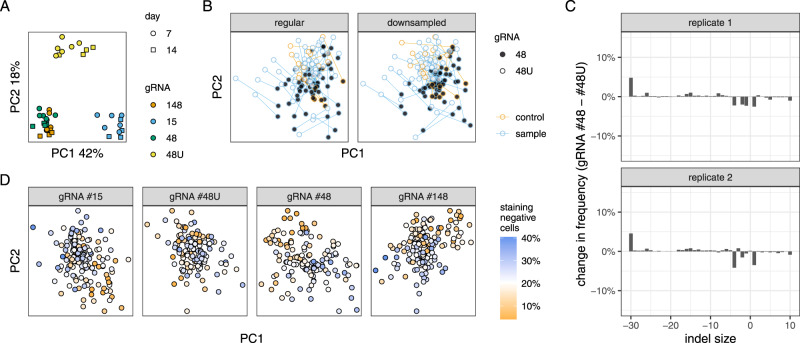
Repair of Cas9-induced double-stranded breaks results primarily in formation of small insertions and deletions (indels), but can also cause potentially harmful large deletions. While mechanisms leading to the creation of small indels are relatively well understood, very little is known about the origins of large deletions. Using a library of clonal NGS-validated mouse embryonic stem cells deficient for 32 DNA repair genes, we have shown that large deletion frequency increases in cells impaired for non-homologous end joining and decreases in cells deficient for the central resection gene Nbn and the microhomology-mediated end joining gene Polq . Across deficient clones, increase in large deletion frequency was closely correlated with the increase in the extent of microhomology and the size of small indels, implying a continuity of repair processes across different genomic scales. Furthermore, by targeting diverse genomic sites, we identified examples of repair processes that were highly locus-specific, discovering a role for exonuclease Trex1. Finally, we present evidence that indel sizes increase with the overall efficiency of Cas9 mutagenesis. These findings may have impact on both basic research and clinical use of CRISPR-Cas9, in particular in conjunction with repair pathway modulation.
Overview
The claims and statistics of this paper haven’t been checked yet.
Run the check — free, no account needed. It reads the open-access text and checks the sources it cites.
Integrity signals
Registry
Cites
Statistics
Figures
Verification
Claims the paper makes
The claims and statistics of this paper haven’t been checked yet.
Run the check — free, no account needed. It reads the open-access text and checks the sources it cites.
Claims other papers make about this one
Each is checked against this paper’s own text: does it say what the citing paper says it does?
The source backs part of the claim, not all of it — or backs it for a different population, condition or comparison.
In the citing paper
“Cell types with deficiencies in DNA damage repair genes are also less suited for Cas9 knockouts due to their increased risk for genomic instability, which is exacerbated by DSB induction.8”
From Adenine base editor for knockout of proteins: A practical guide from design to analysis with updated MultiEditRbatch (2026) · cites this paper as [8]
Experimental — accuracy not yet measured
Self-check
Percentages, sums and reported differences re-computed from the paper’s own numbers.
The self-check needs the paper’s full text.
Citations
Cites
STAR: ultrafast universal RNA-seq aligner
Dobin, A., Davis, C. A., Schlesinger, F., Drenkow, J., Zaleski, C., Jha, S., Batut, P., Chaisson, M., & Gingeras, T. R. (2013) · Bioinformatics · doi:10.1093/bioinformatics/bts635 · Cited by 51,709
Wickham, H., Averick, M., Bryan, J., Chang, W., McGowan, L., François, R., Grolemund, G., Hayes, A., Henry, L., Hester, J., et al. (2019) · Journal of Open Source Software · doi:10.21105/joss.01686 · Cited by 22,138
A Programmable Dual-RNA–Guided DNA Endonuclease in Adaptive Bacterial Immunity
Jinek, M., Chylinski, K., Fonfara, I., Hauer, M., Doudna, J. A., & Charpentier, E. (2012) · Science · doi:10.1126/science.1225829 · Cited by 17,116
In situ click chemistry generation of cyclooxygenase-2 inhibitors
Bhardwaj, A., Kaur, J., Wuest, M., & Wuest, F. (2017) · Nature Communications · doi:10.1038/s41467-016-0009-6 · Cited by 7,448
Programmable editing of a target base in genomic DNA without double-stranded DNA cleavage
Komor, A. C., Kim, Y. B., Packer, M. S., Zuris, J. A., & Liu, D. R. (2016) · Nature · doi:10.1038/nature17946 · Cited by 5,437
Search-and-replace genome editing without double-strand breaks or donor DNA
Anzalone, A. V., Randolph, P. B., Davis, J. R., Sousa, A. A., Koblan, L. W., Levy, J. M., Chen, P. J., Wilson, C., Newby, G. A., Raguram, A., et al. (2019) · Nature · doi:10.1038/s41586-019-1711-4 · Cited by 4,767
DNA targeting specificity of RNA-guided Cas9 nucleases
Hsu, P. D., Scott, D. A., Weinstein, J. A., Ran, F. A., Konermann, S., Agarwala, V., Li, Y., Fine, E. J., Wu, X., Shalem, O., et al. (2013) · Nature Biotechnology · doi:10.1038/nbt.2647 · Cited by 4,741
Kosicki, M., Tomberg, K., & Bradley, A. (2018) · Nature Biotechnology · doi:10.1038/nbt.4192 · Cited by 1,883
Self-citationDNA interrogation by the CRISPR RNA-guided endonuclease Cas9
Sternberg, S. H., Redding, S., Jinek, M., Greene, E. C., & Doudna, J. A. (2014) · Nature · doi:10.1038/nature13011 · Cited by 1,822
Non-homologous DNA end joining and alternative pathways to double-strand break repair
Chang, H. H. Y., Pannunzio, N. R., Adachi, N., & Lieber, M. R. (2017) · Nature Reviews Molecular Cell Biology · doi:10.1038/nrm.2017.48 · Cited by 1,757
CRISPResso2 provides accurate and rapid genome editing sequence analysis
Clement, K., Rees, H. A., Canver, M. C., Gehrke, J. M., Farouni, R., Hsu, J. Y., Cole, M. A., Liu, D. R., Joung, J. K., Bauer, D. E., et al. (2019) · Nature Biotechnology · doi:10.1038/s41587-019-0032-3 · Cited by 1,656
Trex1 prevents cell-intrinsic initiation of autoimmunity
Stetson, D. B., Ko, J. S., Heidmann, T., & Medzhitov, R. (2008) · Cell · doi:10.1016/j.cell.2008.06.032 · Cited by 1,280
Chu, V. T., Weber, T., Wefers, B., Wurst, W., Sander, S., Rajewsky, K., & Kühn, R. (2015) · Nature Biotechnology · doi:10.1038/nbt.3198 · Cited by 1,210
Maruyama, T., Dougan, S. K., Truttmann, M. C., Bilate, A. M., Ingram, J. R., & Ploegh, H. L. (2015) · Nature Biotechnology · doi:10.1038/nbt.3190 · Cited by 1,137
Koike-Yusa, H., Li, Y., Tan, E.-P., Velasco-Herrera, M. D. C., & Yusa, K. (2014) · Nature Biotechnology · doi:10.1038/nbt.2800 · Cited by 1,064
Repair of Strand Breaks by Homologous RecombinationPreprint
Jasin, M., & Rothstein, R. J. (2013) · Cold Spring Harbor Perspectives in Biology · doi:10.1101/cshperspect.a012740 · Cited by 929
Crow, Y. J., Hayward, B. E., Parmar, R., Robins, P., Leitch, A., Ali, M., Black, D. N., van Bokhoven, H., Brunner, H. G., Hamel, B. C. J., et al. (2006) · Nature Genetics · doi:10.1038/ng1845 · Cited by 906
PARP-1 and Ku compete for repair of DNA double strand breaks by distinct NHEJ pathways
Wang, M., Wu, W., Wu, W., Rosidi, B., Zhang, L., Wang, H., & Iliakis, G. E. (2006) · Nucleic Acids Research · doi:10.1093/nar/gkl840 · Cited by 892
Reprogramming human T cell function and specificity with non-viral genome targeting
Roth, T. L., Puig-Saus, C., Yu, R., Shifrut, E., Carnevale, J., Li, P. J., Hiatt, J., Saco, J., Krystofinski, P., Li, H., et al. (2018) · Nature · doi:10.1038/s41586-018-0326-5 · Cited by 839
Chromothripsis and Kataegis Induced by Telomere Crisis
Maciejowski, J., Li, Y., Bosco, N., Campbell, P. J., & de Lange, T. (2015) · Cell · doi:10.1016/j.cell.2015.11.054 · Cited by 675
Targeted gene correction of α1-antitrypsin deficiency in induced pluripotent stem cells
Yusa, K., Rashid, S. T., Strick‐Marchand, H., Varela, I., Liu, P.-Q., Paschon, D. E., Miranda, E., Ordóñez, A., Hannan, N. R. F., Rouhani, F. J., et al. (2011) · Nature · doi:10.1038/nature10424 · Cited by 647
Self-citationMicrohomology-Mediated End Joining: A Back-up Survival Mechanism or Dedicated Pathway?
Sfeir, A., & Symington, L. S. (2015) · Trends in Biochemical Sciences · doi:10.1016/j.tibs.2015.08.006 · Cited by 636
Predictable and precise template-free CRISPR editing of pathogenic variants
Shen, M. W., Arbab, M., Hsu, J. Y., Worstell, D., Culbertson, S. J., Krabbe, O., Cassa, C. A., Liu, D. R., Gifford, D. K., & Sherwood, R. I. (2018) · Nature · doi:10.1038/s41586-018-0686-x · Cited by 569
Predicting the mutations generated by repair of Cas9-induced double-strand breaks
Allen, F., Crepaldi, L., Alsinet, C., Strong, A., Kleshchevnikov, V., Angeli, P. D., Páleníková, P., Khodak, A., Kiselev, V. Y., Kosicki, M., et al. (2018) · Nature Biotechnology · doi:10.1038/nbt.4317 · Cited by 524
Self-citationBoulton, S. J., & Jackson, S. P. (1996) · The EMBO Journal · doi:10.1002/j.1460-2075.1996.tb00890.x · Cited by 502
CRISPR-Cas9 genome editing induces megabase-scale chromosomal truncations
Cullot, G., Boutin, J., Toutain, J., Prat, F., Pennamen, P., Rooryck, C., Teichmann, M., Rousseau, E., Lamrissi-Garcia, I., Guyonnet-Duperat, V., et al. (2019) · Nature Communications · doi:10.1038/s41467-019-09006-2 · Cited by 474
DNA Repair Profiling Reveals Nonrandom Outcomes at Cas9-Mediated Breaks
van Overbeek, M., Capurso, D., Carter, M. M., Thompson, M. S., Frias, E., Russ, C., Reece-Hoyes, J. S., Nye, C., Gradia, S., Vidal, B., et al. (2016) · Molecular Cell · doi:10.1016/j.molcel.2016.06.037 · Cited by 454
Long-term evaluation of AAV-CRISPR genome editing for Duchenne muscular dystrophy
Nelson, C. E., Wu, Y., Gemberling, M. P., Oliver, M. L., Waller, M. A., Bohning, J. D., Robinson-Hamm, J. N., Bulaklak, K., Rivera, R. M. C., Collier, J. H., et al. (2019) · Nature Medicine · doi:10.1038/s41591-019-0344-3 · Cited by 444
RS-1 enhances CRISPR/Cas9- and TALEN-mediated knock-in efficiency
Song, J. W., Yang, D., Xu, J., Zhu, T., Chen, Y. E., & Zhang, J. (2016) · Nature Communications · doi:10.1038/ncomms10548 · Cited by 418
Neutrophils dominate the immune cell composition in non-small cell lung cancer
Kargl, J., Busch, S., Yang, G. H. Y., Kim, K.-H., Hanke, M. L., Metz, H. E., Hubbard, J. J., Lee, S. M., Madtes, D. K., McIntosh, M. W., et al. (2017) · Nature Communications · doi:10.1038/ncomms14381 · Cited by 413
Large deletions induced by Cas9 cleavage
Adikusuma, F., Piltz, S., Corbett, M. A., Turvey, M., McColl, S. R., Helbig, K. J., Beard, M. R., Hughes, J., Pomerantz, R. T., & Thomas, P. Q. (2018) · Nature · doi:10.1038/s41586-018-0380-z · Cited by 371
Mechanism of microhomology-mediated end-joining promoted by human DNA polymerase θ
Kent, T., Chandramouly, G., McDevitt, S., Ozdemir, A. Y., & Pomerantz, R. T. (2015) · Nature Structural & Molecular Biology · doi:10.1038/nsmb.2961 · Cited by 355
CRISPR/Cas9 targeting events cause complex deletions and insertions at 17 sites in the mouse genome
Shin, H. Y., Wang, C., Lee, H., Yoo, K. H., Zeng, X., Kuhns, T. M., Yang, C. M., Mohr, T., Liu, C., & Hennighausen, L. G. (2017) · Nature Communications · doi:10.1038/ncomms15464 · Cited by 317
Renaud, J.-B., Boix, C., Charpentier, M., Cian, A. D., Cochennec, J., Duvernois‐Berthet, E., Perrouault, L., Tesson, L., Edouard, J., Thinard, R., et al. (2016) · Cell Reports · doi:10.1016/j.celrep.2016.02.018 · Cited by 295
Mazur, D. J., & Perrino, F. W. (1999) · Journal of Biological Chemistry · doi:10.1074/jbc.274.28.19655 · Cited by 272
Chen, W., McKenna, A., Schreiber, J., Haeussler, M., Yin, Y., Agarwal, V., Noble, W. S., & Shendure, J. (2019) · Nucleic Acids Research · doi:10.1093/nar/gkz487 · Cited by 216
Yu, A., & McVey, M. (2010) · Nucleic Acids Research · doi:10.1093/nar/gkq379 · Cited by 198
Finak, G., Frelinger, J., Jiang, W., Newell, E. W., Ramey, J., Davis, M. M., Kalams, S. A., Rosa, S. C. D., & Gottardo, R. (2014) · PLoS Computational Biology · doi:10.1371/journal.pcbi.1003806 · Cited by 194
Shou, J., Li, J., Liu, Y., & Wu, Q. (2018) · Molecular Cell · doi:10.1016/j.molcel.2018.06.021 · Cited by 192
Lemos, B. R., Kaplan, A. C., Bae, J. E., Ferrazzoli, A. E., Kuo, J., Anand, R., Waterman, D. P., & Haber, J. E. (2018) · Proceedings of the National Academy of Sciences · doi:10.1073/pnas.1716855115 · Cited by 188
Riesenberg, S., & Maricic, T. (2018) · Nature Communications · doi:10.1038/s41467-018-04609-7 · Cited by 174
A human DNA editing enzyme homologous to the Escherichia coli DnaQ/MutD protein
Höss, M., Robins, P., Naven, T. J. P., Pappin, D., SGOUROS, J. G., & Lindahl, T. L. (1999) · The EMBO Journal · doi:10.1093/emboj/18.13.3868 · Cited by 173
APOBEC3-dependent kataegis and TREX1-driven chromothripsis during telomere crisis
Maciejowski, J., Chatzipli, A., Dananberg, A., Chu, K., Toufektchan, E., Klimczak, L. J., Gordenin, D. A., Campbell, P. J., & de Lange, T. (2020) · Nature Genetics · doi:10.1038/s41588-020-0667-5 · Cited by 167
Mechanistic basis for microhomology identification and genome scarring by polymerase theta
Carvajal-Garcia, J., Cho, J.-E., Carvajal-Garcia, P., Feng, W., Wood, R. D., Sekelsky, J. J., Gupta, G. P., Roberts, S. A., & Ramsden, D. A. (2020) · Proceedings of the National Academy of Sciences · doi:10.1073/pnas.1921791117 · Cited by 164
Strogantsev, R., Krueger, F., Yamazawa, K., Shi, H., Gould, P., Goldman-Roberts, M., McEwen, K., Sun, B., Pedersen, R., & Ferguson-Smith, A. C. (2015) · Genome Biology · doi:10.1186/s13059-015-0672-7 · Cited by 152
Mianné, J., Chessum, L., Kumar, S., Aguilar, C., Codner, G. F., Hutchison, M., Parker, A. J., Mallon, A., Wells, S. E., Simon, M. M., et al. (2016) · Genome Medicine · doi:10.1186/s13073-016-0273-4 · Cited by 138
Stimulation of CRISPR-mediated homology-directed repair by an engineered RAD18 variant
Nambiar, T. S., Billon, P., Diedenhofen, G., Hayward, S. B., Taglialatela, A., Cai, K., Huang, J., Leuzzi, G., Cuella-Martin, R., Palacios, A., et al. (2019) · Nature Communications · doi:10.1038/s41467-019-11105-z · Cited by 138
Development of hRad51–Cas9 nickase fusions that mediate HDR without double-stranded breaks
Rees, H. A., Yeh, W.-H., & Liu, D. R. (2019) · Nature Communications · doi:10.1038/s41467-019-09983-4 · Cited by 129
Schimmel, J., Kool, H., van Schendel, R., & Tijsterman, M. (2017) · EMBO Journal · doi:10.15252/embj.201796948 · Cited by 128
Large dataset enables prediction of repair after CRISPR–Cas9 editing in primary T cells
Leenay, R. T., Aghazadeh, A., Hiatt, J. B., Tse, D. N. C., Roth, T. L., Apathy, R., Shifrut, E., Hultquist, J. F., Krogan, N. J., Wu, Z., et al. (2019) · Nature Biotechnology · doi:10.1038/s41587-019-0203-2 · Cited by 128
Simultaneous precise editing of multiple genes in human cells
Riesenberg, S., Chintalapati, M., Macak, D., Kanis, P., Maričić, T., & Pääbo, S. (2019) · Nucleic Acids Research · doi:10.1093/nar/gkz669 · Cited by 127
Detection of Deleterious On-Target Effects after HDR-Mediated CRISPR Editing
Weisheit, I., Kroeger, J. A., Malik, R., Klimmt, J., Crusius, D., Dannert, A., Dichgans, M., & Paquet, D. (2020) · Cell Reports · doi:10.1016/j.celrep.2020.107689 · Cited by 125
Properties of Deoxyribonuclease III from Mammalian Tissues
Lindahl, T. L., Gally, J. A., & Edelman, G. M. (1969) · Journal of Biological Chemistry · doi:10.1016/s0021-9258(18)94303-6 · Cited by 119
Paulsen, B. S., Mandal, P. K., Frock, R. L., Boyraz, B., Yadav, R., Upadhyayula, S., Gutierrez‐Martinez, P., Ebina, W., Fasth, A. L., Kirchhausen, T. L., et al. (2017) · Nature Biomedical Engineering · doi:10.1038/s41551-017-0145-2 · Cited by 117
Timed inhibition of CDC7 increases CRISPR-Cas9 mediated templated repair
Wienert, B., Nguyen, D. N., Guenther, A., Feng, S. J., Locke, M. N., Wyman, S. K., Shin, J. J., Kazane, K. R., Gregory, G. L., Carter, M., et al. (2020) · Nature Communications · doi:10.1038/s41467-020-15845-1 · Cited by 102
ggCyto: next generation open-source visualization software for cytometry
Van, P. T., Jiang, W., Gottardo, R., & Finak, G. (2018) · Bioinformatics · doi:10.1093/bioinformatics/bty441 · Cited by 90
Non-homologous DNA increases gene disruption efficiency by altering DNA repair outcomes
Richardson, C. D., Ray, G. J., Bray, N., & Corn, J. E. (2016) · Nature Communications · doi:10.1038/ncomms12463 · Cited by 85
Codner, G. F., Mianné, J., Caulder, A., Loeffler, J., Fell, R., King, R., Allan, A. J., Mackenzie, M., Pike, F. J., McCabe, C. V., et al. (2018) · BMC Biology · doi:10.1186/s12915-018-0530-7 · Cited by 84
Rayner, E., Durin, M.-A., Thomas, R. J., Moralli, D., O'Cathail, S. M., Tomlinson, I. P. M., Green, C., & Lewis, A. (2019) · The CRISPR Journal · doi:10.1089/crispr.2019.0006 · Cited by 80
Efficient and rapid generation of large genomic variants in rats and mice using CRISMERE
Birling, M., Schaeffer, L., André, P., Lindner, L., Maréchal, D., Ayadi, A., Sorg, T., Pavlovic, G., & Hérault, Y. (2017) · Scientific Reports · doi:10.1038/srep43331 · Cited by 76
Bidirectional Degradation of DNA Cleavage Products Catalyzed by CRISPR/Cas9
Stephenson, A. A., Raper, A. T., & Suo, Z. (2018) · Journal of the American Chemical Society · doi:10.1021/jacs.7b13050 · Cited by 74
Off‐target assessment of CRISPR ‐ C as9 guiding RNA s in human i PS and mouse ES cells
Tan, E., Li, Y., Velasco‐Herrera, M. D. C., Yusa, K., & Bradley, A. (2014) · genesis · doi:10.1002/dvg.22835 · Cited by 66
Self-citationFrameshifting preserves key physicochemical properties of proteins
Bartonek, L., Braun, D., & Žagrović, B. (2020) · Proceedings of the National Academy of Sciences · doi:10.1073/pnas.1911203117 · Cited by 60
Shi, X., Shou, J., Mehryar, M. M., Li, J., Wang, L., Zhang, M., Huang, H., Sun, X., & Wu, Q. (2019) · Cell Discovery · doi:10.1038/s41421-019-0120-z · Cited by 46
Roidos, P., Sungalee, S., Benfatto, S., Serçin, Ö., Stütz, A. M., Abdollahi, A., Mauer, J., Zenke, F. T., Korbel, J. O., & Mardin, B. R. (2020) · Nature Communications · doi:10.1038/s41467-020-17962-3 · Cited by 43
Efficient scarless genome editing in human pluripotent stem cells
Ikeda, K., Uchida, N., Nishimura, T., White, J., Martin, R. M., Nakauchi, H., Sebastiano, V., Weinberg, K. I., & Porteus, M. H. (2018) · Nature Methods · doi:10.1038/s41592-018-0212-y · Cited by 36
Liang, Z., Sunder, S., Nallasivam, S., & Wilson, T. E. (2016) · Nucleic Acids Research · doi:10.1093/nar/gkw013 · Cited by 35
Dynamics of Indel Profiles Induced by Various CRISPR/Cas9 Delivery Methods
Kosicki, M., Rajan, S. S., Lorenzetti, F. C., Wandall, H. H., Narimatsu, Y., Metzakopian, E., & Bennett, E. (2017) · Progress in molecular biology and translational science · doi:10.1016/bs.pmbts.2017.09.003 · Cited by 34
Self-citationChalony, C. L., Hoffschir, F., Gauthier, L., Gross, J., Biard, D. S. F., Boussin, F. D., & Pennaneach, V. (2012) · Cellular and Molecular Life Sciences · doi:10.1007/s00018-012-0975-8 · Cited by 32
Martin, R. M., Ikeda, K., Uchida, N., Cromer, K., Nishimura, T., Dever, D. P., Camarena, J., Bak, R. O., Laustsen, A., Jakobsen, M. R., et al. (2018) · bioRxiv (Cold Spring Harbor Laboratory) · doi:10.1101/252163 · Cited by 8
Cited by
Sorted by citations
Mechanism, cellular functions and cancer roles of polymerase-theta-mediated DNA end joining
Ramsden, D. A., Carvajal-Garcia, J., & Gupta, G. P. (2021) · Nature Reviews Molecular Cell Biology · doi:10.1038/s41580-021-00405-2 · Cited by 218
Assessing and advancing the safety of CRISPR-Cas tools: from DNA to RNA editing
Tao, J., Bauer, D. E., & Chiarle, R. (2023) · Nature Communications · doi:10.1038/s41467-023-35886-6 · Cited by 232
Wimberger, S., Akrap, N., Firth, M. A., Brengdahl, J., Engberg, S., Schwinn, M. K., Slater, M. R., Lundin, A., Hsieh, P.-P., Li, S., et al. (2023) · Nature Communications · doi:10.1038/s41467-023-40344-4 · Cited by 140
Hunt, J., Samson, C., du Rand, A., & Sheppard, H. M. (2023) · Human Genetics · doi:10.1007/s00439-023-02561-1 · Cited by 141
Dias, J., García, J., Agliardi, G., & Roddie, C. (2024) · Molecular Therapy — Methods & Clinical Development · doi:10.1016/j.omtm.2024.101250 · Cited by 127
Metadata
- Authors
- Kosicki, M., Allen, F., Steward, F., Tomberg, K., Pan, Y., & Bradley, A.
- Affiliations
- Lawrence Berkeley National Laboratory (US)
- Wellcome Sanger Institute (GB)
- University of Cambridge (GB)
- Corresponding author
- Bradley, Allan
- Venue
- Nature Communications
- Published
- 2022-06-14
- Volume
- 13
- Issue
- 1
- Pages
- 3422-3422
- ISSN
- 2041-1723 (ISSN-L)
- PMC
- PMC9197861
- OpenAlex
- W4282823317
- Cited by
- 115
- References
- 69
- Citations by year
- 2026: 27 · 2025: 28 · 2024: 26 · 2023: 26 · 2022: 4
- FWCI
- 7.02
- Type
- journal article
- Language
- en
- Open access
- gold
- doi.org
- Locations
- Nature Communications (publishedVersion, cc-by)
- bioRxiv (Cold Spring Harbor Laboratory) (acceptedVersion, cc-by-nc)
- PubMed Central (publishedVersion, cc-by)
- PubMed (publishedVersion)
- eScholarship (California Digital Library) (submittedVersion, cc-by)
- OSTI OAI (U.S. Department of Energy Office of Scientific and Technical Information) (submittedVersion)
- DOAJ (DOAJ: Directory of Open Access Journals) (submittedVersion)
- Apollo (University of Cambridge) (submittedVersion, cc-by)
- Apollo
- Apollo (cc-by)
- Funders
- Wellcome Trust (098051)
- Topics
- Life Sciences › Biochemistry, Genetics and Molecular Biology › Molecular Biology › CRISPR and Genetic Engineering
- Life Sciences › Biochemistry, Genetics and Molecular Biology › Molecular Biology › DNA Repair Mechanisms
- Life Sciences › Biochemistry, Genetics and Molecular Biology › Molecular Biology › RNA regulation and disease
- Keywords
- large deletions, small insertions and deletions, CRISPR/Cas9 mutagenesis, non-homologous end joining, niobium nitride, DNA polymerase theta, microhomology-mediated end joining, mouse embryonic stem cells
- MeSH terms
- Animals, DNA Repair, Mice, DNA Breaks, Double-Stranded, INDEL Mutation, DNA End-Joining Repair, CRISPR-Cas Systems
About these checks
Registry, retraction, Cites and statistics results are computed, not judged, with one exception: a printed reference that no index lists is read once by a model before it counts as a citation error. Claims are extracted by a model and kept only when their quote appears verbatim in the text; each cited source is then checked, with a model’s help, for whether it says what the claim relies on. Those verdicts can be wrong — read the claim’s quote and the cited source before relying on one.
Statistics and arithmetic are recomputed, not judged.
Confidence bands are shown only for fields calibrated on our annotated test set. None is calibrated yet, so no band is shown.
What counts as a claim ›How we measure confidence ›How we check this ›
Are you an author, or do you see a problem with this page? Request a review
