

The DOI matches its Crossref record; 69 of the 70 references it cites were found in a registry or an index, and 1 are not checked yet.
Cas9-induced large deletions and small indels are controlled in a convergent fashion
Open accessPublished version of a preprint
Abstract
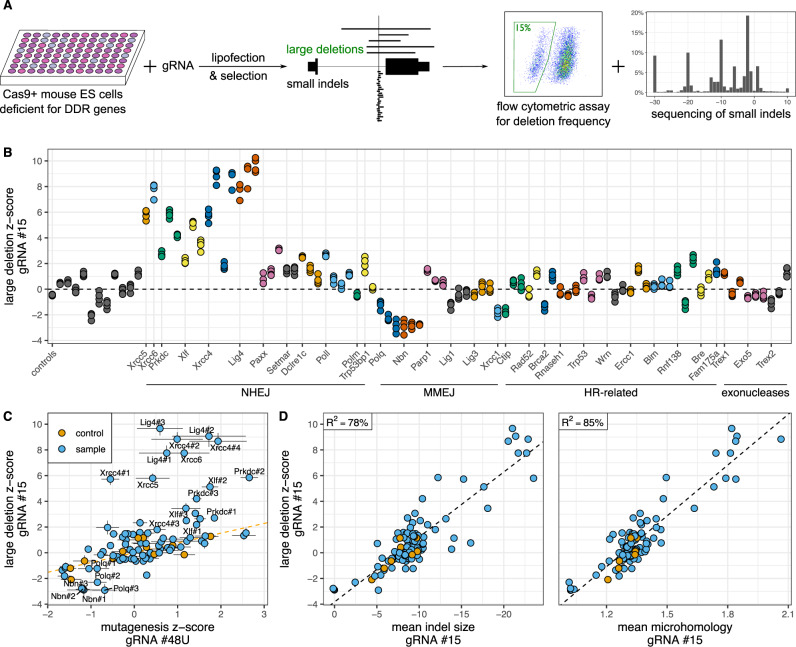
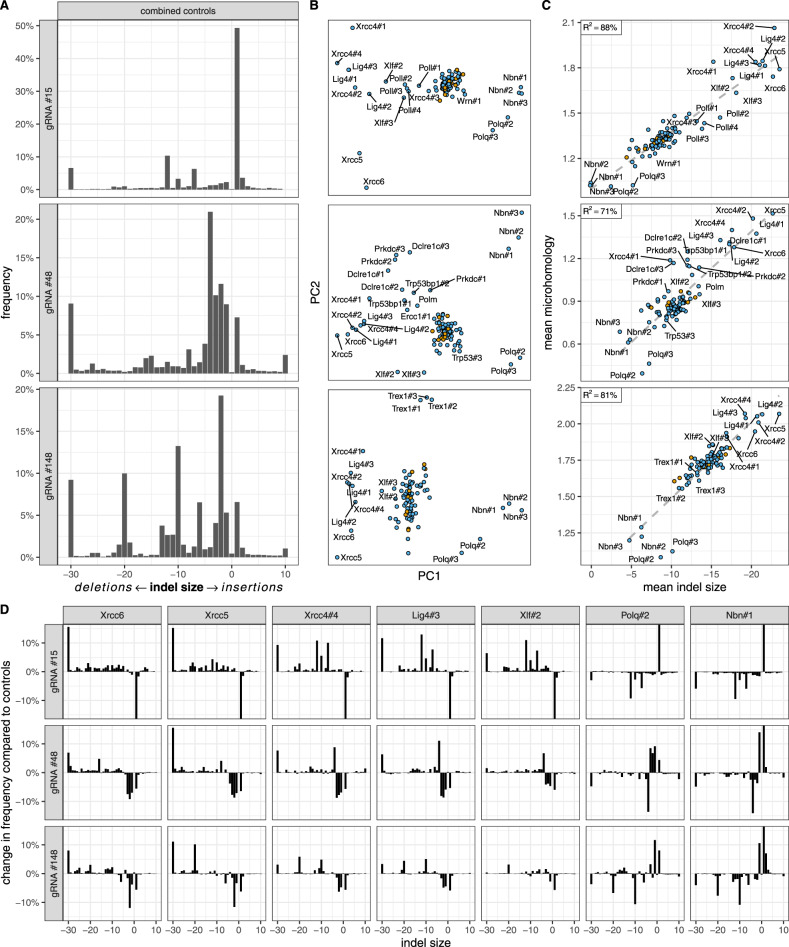
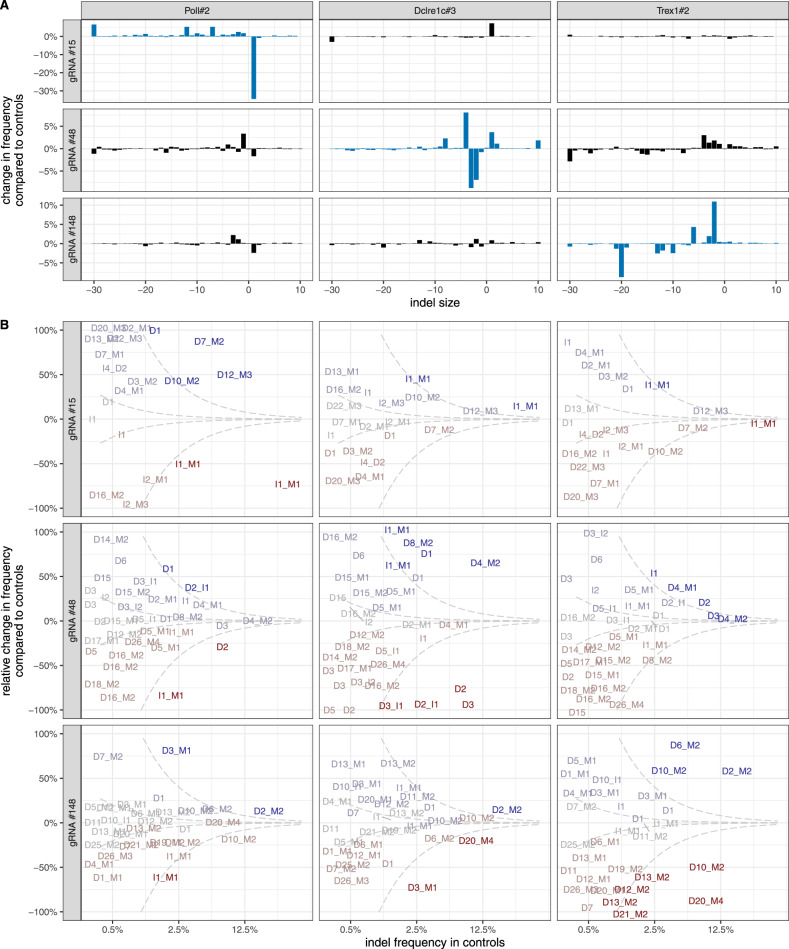
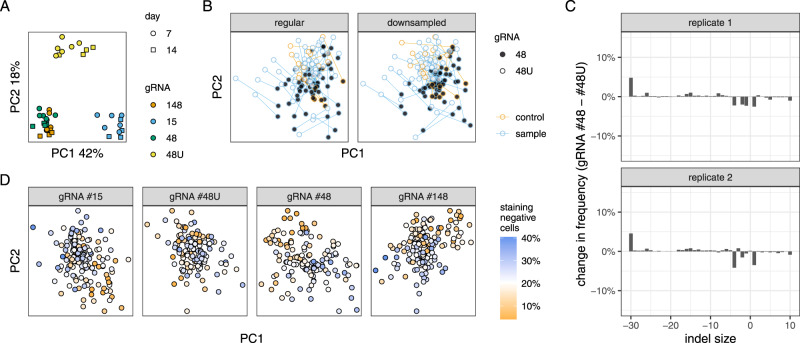
Repair of Cas9-induced double-stranded breaks results primarily in formation of small insertions and deletions (indels), but can also cause potentially harmful large deletions. While mechanisms leading to the creation of small indels are relatively well understood, very little is known about the origins of large deletions. Using a library of clonal NGS-validated mouse embryonic stem cells deficient for 32 DNA repair genes, we have shown that large deletion frequency increases in cells impaired for non-homologous end joining and decreases in cells deficient for the central resection gene Nbn and the microhomology-mediated end joining gene Polq . Across deficient clones, increase in large deletion frequency was closely correlated with the increase in the extent of microhomology and the size of small indels, implying a continuity of repair processes across different genomic scales. Furthermore, by targeting diverse genomic sites, we identified examples of repair processes that were highly locus-specific, discovering a role for exonuclease Trex1. Finally, we present evidence that indel sizes increase with the overall efficiency of Cas9 mutagenesis. These findings may have impact on both basic research and clinical use of CRISPR-Cas9, in particular in conjunction with repair pathway modulation.
Overview
The claims and statistics of this paper haven’t been checked yet.
Run the check — free, no account needed. It reads the open-access text and checks the sources it cites.
Integrity signals
Registry
Cites
Statistics
Figures
Verification
Claims the paper makes
The claims and statistics of this paper haven’t been checked yet.
Run the check — free, no account needed. It reads the open-access text and checks the sources it cites.
Claims other papers make about this one
Each is checked against this paper’s own text: does it say what the citing paper says it does?
The source backs part of the claim, not all of it — or backs it for a different population, condition or comparison.
In the citing paper
“Cell types with deficiencies in DNA damage repair genes are also less suited for Cas9 knockouts due to their increased risk for genomic instability, which is exacerbated by DSB induction.8”
From Adenine base editor for knockout of proteins: A practical guide from design to analysis with updated MultiEditRbatch (2026) · cites this paper as [8]
Experimental — accuracy not yet measured
Self-check
Percentages, sums and reported differences re-computed from the paper’s own numbers.
The self-check needs the paper’s full text.
Citations
Cites
STAR: ultrafast universal RNA-seq aligner
Dobin, A., Davis, C. A., Schlesinger, F., Drenkow, J., Zaleski, C., Jha, S., Batut, P., Chaisson, M., & Gingeras, T. R. (2013) · Bioinformatics · doi:10.1093/bioinformatics/bts635 · Cited by 51,709
Wickham, H., Averick, M., Bryan, J., Chang, W., McGowan, L., François, R., Grolemund, G., Hayes, A., Henry, L., Hester, J., et al. (2019) · Journal of Open Source Software · doi:10.21105/joss.01686 · Cited by 22,138
A Programmable Dual-RNA–Guided DNA Endonuclease in Adaptive Bacterial Immunity
Jinek, M., Chylinski, K., Fonfara, I., Hauer, M., Doudna, J. A., & Charpentier, E. (2012) · Science · doi:10.1126/science.1225829 · Cited by 17,116
In situ click chemistry generation of cyclooxygenase-2 inhibitors
Bhardwaj, A., Kaur, J., Wuest, M., & Wuest, F. (2017) · Nature Communications · doi:10.1038/s41467-016-0009-6 · Cited by 7,448
Programmable editing of a target base in genomic DNA without double-stranded DNA cleavage
Komor, A. C., Kim, Y. B., Packer, M. S., Zuris, J. A., & Liu, D. R. (2016) · Nature · doi:10.1038/nature17946 · Cited by 5,437
Search-and-replace genome editing without double-strand breaks or donor DNA
Anzalone, A. V., Randolph, P. B., Davis, J. R., Sousa, A. A., Koblan, L. W., Levy, J. M., Chen, P. J., Wilson, C., Newby, G. A., Raguram, A., et al. (2019) · Nature · doi:10.1038/s41586-019-1711-4 · Cited by 4,767
DNA targeting specificity of RNA-guided Cas9 nucleases
Hsu, P. D., Scott, D. A., Weinstein, J. A., Ran, F. A., Konermann, S., Agarwala, V., Li, Y., Fine, E. J., Wu, X., Shalem, O., et al. (2013) · Nature Biotechnology · doi:10.1038/nbt.2647 · Cited by 4,741
Kosicki, M., Tomberg, K., & Bradley, A. (2018) · Nature Biotechnology · doi:10.1038/nbt.4192 · Cited by 1,883
Self-citationDNA interrogation by the CRISPR RNA-guided endonuclease Cas9
Sternberg, S. H., Redding, S., Jinek, M., Greene, E. C., & Doudna, J. A. (2014) · Nature · doi:10.1038/nature13011 · Cited by 1,822
Non-homologous DNA end joining and alternative pathways to double-strand break repair
Chang, H. H. Y., Pannunzio, N. R., Adachi, N., & Lieber, M. R. (2017) · Nature Reviews Molecular Cell Biology · doi:10.1038/nrm.2017.48 · Cited by 1,757
Cited by
Sorted by citations
Mechanism, cellular functions and cancer roles of polymerase-theta-mediated DNA end joining
Ramsden, D. A., Carvajal-Garcia, J., & Gupta, G. P. (2021) · Nature Reviews Molecular Cell Biology · doi:10.1038/s41580-021-00405-2 · Cited by 218
Assessing and advancing the safety of CRISPR-Cas tools: from DNA to RNA editing
Tao, J., Bauer, D. E., & Chiarle, R. (2023) · Nature Communications · doi:10.1038/s41467-023-35886-6 · Cited by 232
Wimberger, S., Akrap, N., Firth, M. A., Brengdahl, J., Engberg, S., Schwinn, M. K., Slater, M. R., Lundin, A., Hsieh, P.-P., Li, S., et al. (2023) · Nature Communications · doi:10.1038/s41467-023-40344-4 · Cited by 140
Hunt, J., Samson, C., du Rand, A., & Sheppard, H. M. (2023) · Human Genetics · doi:10.1007/s00439-023-02561-1 · Cited by 141
Dias, J., García, J., Agliardi, G., & Roddie, C. (2024) · Molecular Therapy — Methods & Clinical Development · doi:10.1016/j.omtm.2024.101250 · Cited by 127
Off-target effects in CRISPR-Cas genome editing for human therapeutics: Progress and challenges
Kalter, N., Fuster‐García, C., Silva, A., Ronco-Díaz, V., Roncelli, S., Turchiano, G., Gorodkin, J., Cathomen, T., Benabdellah, K., Lee, C. M., et al. (2025) · Molecular Therapy — Nucleic Acids · doi:10.1016/j.omtn.2025.102636 · Cited by 121
Park, S. H., Cao, M., Pan, Y., Davis, T., Saxena, L., Deshmukh, H., Fu, Y., Treangen, T. J., Sheehan, V., & Bao, G. (2022) · Science Advances · doi:10.1126/sciadv.abo7676 · Cited by 92
Self-citationBiomaterials-mediated CRISPR/Cas9 delivery: recent challenges and opportunities in gene therapy
Dubey, A. K., & Mostafavi, E. (2023) · Frontiers in Chemistry · doi:10.3389/fchem.2023.1259435 · Cited by 96
Potent and uniform fetal hemoglobin induction via base editing
Mayuranathan, T., Newby, G. A., Feng, R., Yao, Y., Mayberry, K. D., Lazzarotto, C. R., Li, Y., Levine, R. M., Nimmagadda, N., Dempsey, E., et al. (2023) · Nature Genetics · doi:10.1038/s41588-023-01434-7 · Cited by 86
Click editing enables programmable genome writing using DNA polymerases and HUH endonucleases
da Silva, J. F., Tou, C. J., King, E. M., Eller, M. L., Rufino‐Ramos, D., Ma, L., Cromwell, C. R., Metović, J., Benning, F. M. C., Chao, L. H., et al. (2024) · Nature Biotechnology · doi:10.1038/s41587-024-02324-x · Cited by 86
Schimmel, J., Muñoz-Subirana, N., Kool, H., van Schendel, R., van der Vlies, S., Kamp, J. A., de Vrij, F. M. S., Kushner, S. A., Smith, G. C. M., Boulton, S. J., et al. (2023) · Cell Reports · doi:10.1016/j.celrep.2023.112019 · Cited by 72
Regulation of cGAS and STING signaling during inflammation and infection
Chauvin, S. D., Stinson, W. A., Platt, D. J., Poddar, S., & Miner, J. J. (2023) · Journal of Biological Chemistry · doi:10.1016/j.jbc.2023.104866 · Cited by 77
Current Bioinformatics Tools to Optimize CRISPR/Cas9 Experiments to Reduce Off-Target Effects
Naeem, M., & Alkhnbashi, O. S. (2023) · International Journal of Molecular Sciences · doi:10.3390/ijms24076261 · Cited by 70
Genetic engineering meets hematopoietic stem cell biology for next-generation gene therapy
Ferrari, S., Valeri, E., Conti, A., Scala, S., Aprile, A., Micco, R. D., Kajaste‐Rudnitski, A., Montini, E., Ferrari, G., Aiuti, A., et al. (2023) · Cell stem cell · doi:10.1016/j.stem.2023.04.014 · Cited by 75
Hwang, G., Lee, S., Oh, M., Kim, S., Habib, O., Jang, H., Kim, H. S., Kim, Y., Kim, C. H., Kim, S., et al. (2024) · Nature Biomedical Engineering · doi:10.1038/s41551-024-01277-5 · Cited by 83
CRISPR nuclease off-target activity and mitigation strategies
Wienert, B., & Cromer, M. K. (2022) · Frontiers in Genome Editing · doi:10.3389/fgeed.2022.1050507 · Cited by 66
On- and off-target effects of paired CRISPR-Cas nickase in primary human cells
Klermund, J., Rhiel, M., Köcher, T., Chmielewski, K. O., Bischof, J., Andrieux, G., el Gaz, M., Hainzl, S., Boerries, M., Cornu, T. I., et al. (2024) · Molecular Therapy · doi:10.1016/j.ymthe.2024.03.006 · Cited by 65
Recent advances in therapeutic gene-editing technologies
Liu, D., Cao, D., & Han, R. (2025) · Molecular Therapy · doi:10.1016/j.ymthe.2025.03.026 · Cited by 70
The contribution of DNA repair pathways to genome editing and evolution in filamentous pathogens
Huang, J. T., & Cook, D. E. (2022) · FEMS Microbiology Reviews · doi:10.1093/femsre/fuac035 · Cited by 57
Sankaranarayanan, G., Coghlan, A., Driguez, P., Lotkowska, M. E., Sanders, M. J., Holroyd, N. E., Tracey, A., Berriman, M., & Rinaldi, G. (2020) · Wellcome Open Research · doi:10.12688/wellcomeopenres.16031.1 · Cited by 40
Recent applications, future perspectives, and limitations of the CRISPR-Cas system
Park, S.-J., Lee, G. E., Cho, S. M., & Choi, E.-H. (2025) · Molecular Therapy — Nucleic Acids · doi:10.1016/j.omtn.2025.102634 · Cited by 45
Cell cycle arrest and p53 prevent ON-target megabase-scale rearrangements induced by CRISPR-Cas9
Cullot, G., Boutin, J., Fayet, S., Prat, F., Rosier, J., Cappellen, D., Lamrissi‐Garcia, I., Pennamen, P., Bouron, J., Amintas, S., et al. (2023) · Nature Communications · doi:10.1038/s41467-023-39632-w · Cited by 37
Gene editing without ex vivo culture evades genotoxicity in human hematopoietic stem cells
Zeng, J., Nguyen, M. A., Liu, P., da Silva, L. F., Levesque, S., Lin, L. Y., Justus, D. G., Petri, K., Clement, K., Porter, S. N., et al. (2024) · Cell stem cell · doi:10.1016/j.stem.2024.11.001 · Cited by 36
The Generic Risks and the Potential of SDN-1 Applications in Crop Plants
Kawall, K. (2021) · Plants · doi:10.3390/plants10112259 · Cited by 28
Wu, L., Jiang, S., Shi, M., Yuan, T., Li, Y., Huang, P., Li, Y., Zuo, E., Zhou, C., & Sun, Y. (2024) · Genome biology · doi:10.1186/s13059-024-03434-0 · Cited by 28
Removal of TREX1 activity enhances CRISPR–Cas9-mediated homologous recombination
Karasu, M. E., Toufektchan, E., Chen, Y., Albertelli, A., Cullot, G., Maciejowski, J., & Corn, J. E. (2024) · Nature Biotechnology · doi:10.1038/s41587-024-02356-3 · Cited by 27
Lipo-Xenopeptide Polyplexes for CRISPR/Cas9 based Gene editing at ultra-low dose
Germer, J., Lessl, A.-L., Pöhmerer, J., Grau, M., Weidinger, E., Höhn, M., Yazdi, M., Cappelluti, M. A., Lombardo, A., Lächelt, U., et al. (2024) · Journal of Controlled Release · doi:10.1016/j.jconrel.2024.04.037 · Cited by 25
Yuan, B., Bi, C., Tian, Y., Wang, J., Jin, Y., Alsayegh, K. N., Tehseen, M., Yi, G., Zhou, X., Shao, Y., et al. (2024) · BMC Biology · doi:10.1186/s12915-024-01896-z · Cited by 26
Molecular mechanisms of extrachromosomal circular DNA formation
Eugen-Olsen, R. A. B., Hariprakash, J. M., Oestergaard, V. H., & Regenberg, B. (2025) · Nucleic Acids Research · doi:10.1093/nar/gkaf122 · Cited by 22
Park, S. H., Cao, M., & Bao, G. (2023) · Current Opinion in Biomedical Engineering · doi:10.1016/j.cobme.2023.100478 · Cited by 18
The interplay of DNA repair context with target sequence predictably biases Cas9-generated mutations
Pallaseni, A., Peets, E. M., Girling, G., Crepaldi, L., Kuzmin, I., Moor, M., Muñoz-Subirana, N., Schimmel, J., Serçin, Ö., Mardin, B. R., et al. (2024) · Nature Communications · doi:10.1038/s41467-024-54566-7 · Cited by 18
Self-citationAccelerating Diverse Cell-Based Therapies Through Scalable Design
Peterman, E. L., Ploessl, D. S., & Galloway, K. E. (2024) · Annual Review of Chemical and Biomolecular Engineering · doi:10.1146/annurev-chembioeng-100722-121610 · Cited by 17
Richardson, R. R., Steyert, M. R., Khim, S. N., Crutcher, G. W., Brandenburg, C., Robertson, C. D., Romanowski, A. J., Inen, J., Altas, B., & Poulopoulos, A. (2023) · The CRISPR Journal · doi:10.1089/crispr.2023.0036 · Cited by 14
Ghazaly, E. A., Sajic, M., Rantell, K. R., McBlane, J. W., Johnston, J. D., Niewiarowska, A., Butler, A. S., & Cole, S. (2024) · Current Issues in Molecular Biology · doi:10.3390/cimb46080485 · Cited by 19
Mathews, E. W., Coffey, S. R., Gärtner, A., Belgrad, J., Bragg, R. M., O’Reilly, D., Cantle, J. P., McHugh, C. A., Summers, A., Fentz, J., et al. (2025) · Nature Communications · doi:10.1038/s41467-025-64936-4 · Cited by 14
Toward precise CRISPR DNA fragment editing and predictable 3D genome engineering
Wu, Q., & Shou, J. (2020) · Journal of Molecular Cell Biology · doi:10.1093/jmcb/mjaa060 · Cited by 15
DNA Damage and Repair in Eye Diseases
Sohn, J., Lee, S. E., & Shim, E.-Y. (2023) · International Journal of Molecular Sciences · doi:10.3390/ijms24043916 · Cited by 14
Gene Therapy for Hemoglobinopathies
Lidonnici, M. R., Scaramuzza, S., & Ferrari, G. (2023) · Human Gene Therapy · doi:10.1089/hum.2023.138 · Cited by 15
Engineering adeno-associated viral vectors for CRISPR/Cas based in vivo therapeutic genome editing
Moyo, B., Brown, L. B. C., Khondaker, I., & Bao, G. (2025) · Biomaterials · doi:10.1016/j.biomaterials.2025.123314 · Cited by 13
Prime Editing: Mechanistic Insights and DNA Repair Modulation
Mentani, A., Maresca, M., & Shiriaeva, A. (2025) · Cells · doi:10.3390/cells14040277 · Cited by 13
Engineering structural variants to interrogate genome function
Koeppel, J., Weller, J., Vanderstichele, T., & Parts, L. (2024) · Nature Genetics · doi:10.1038/s41588-024-01981-7 · Cited by 12
A Critical Analysis of the Usage of Dimensionality Reduction in Four Domains
Cashman, D., Keller, M. S., Jeon, H., Kwon, B. C., & Wang, Q. (2025) · IEEE Transactions on Visualization and Computer Graphics · doi:10.1109/tvcg.2025.3567989 · Cited by 11
CRISPR-Cas attack of HIV-1 proviral DNA can cause unintended deletion of surrounding cellular DNA
Liu, Y., Binda, C. S., Berkhout, B., & Das, A. T. (2023) · Journal of Virology · doi:10.1128/jvi.01334-23 · Cited by 13
Advancing Precision Medicine: Recent Innovations in Gene Editing Technologies
Abhijith, K., & Thangavel, S. (2025) · Advanced Science · doi:10.1002/advs.202410237 · Cited by 13
Breaking enhancers to gain insights into developmental defects
Armendariz, D. A., Sundarrajan, A., & Hon, G. C. (2023) · eLife · doi:10.7554/elife.88187 · Cited by 9
Basalova, N. A., Illarionova, M. E., Никитична, С. М., Vigovskiy, M. A., Tolstoluzhinskaya, A., Primak, A. L., Сергеевна, Ч. Е., Chechekhin, V. I., Karagyaur, M. N., & Efimenko, A. Y. (2023) · Non-Coding RNA · doi:10.3390/ncrna9050049 · Cited by 10
Tei, C., Hata, S., Mabuchi, A., Okuda, S., Ito, K. K., Genova, M., Fukuyama, M., Yamamoto, S., Chinen, T., Toyoda, A., et al. (2025) · Communications Biology · doi:10.1038/s42003-025-08187-5 · Cited by 10
DNA polymerases in precise and predictable CRISPR/Cas9-mediated chromosomal rearrangements
Mehryar, M. M., Shi, X., Li, J., & Wu, Q. (2023) · BMC Biology · doi:10.1186/s12915-023-01784-y · Cited by 9
Epigenetic editing for autosomal dominant neurological disorders
Waldo, J. J., Halmai, J. A. N. M., & Fink, K. D. (2024) · Frontiers in Genome Editing · doi:10.3389/fgeed.2024.1304110 · Cited by 8
Riesenberg, S., Kanis, P., Karlić, R., & Maričić, T. (2025) · Nature Communications · doi:10.1038/s41467-025-59947-0 · Cited by 11
Induced pluripotent stem cell technology in bone biology
Kidwai, F. K., CANALIS, E. M., & Robey, P. G. (2023) · Bone · doi:10.1016/j.bone.2023.116760 · Cited by 9
White, N., Chalk, J. A., Hu, Y., Pins, S. M., Joseph, C. R., Antoniou, P., Wimberger, S., Svensson, S., Caetano-Silva, S. P., Mudde, A. C. A., et al. (2025) · Nature Communications · doi:10.1038/s41467-025-65182-4 · Cited by 7
From gene editing to tumor eradication: The CRISPR revolution in cancer therapy
Ali, A., Azmat, U., Khatoon, A., Akbar, K., Murtaza, B., Ji, Z., Irshad, U., & Su, Z. (2025) · Progress in Biophysics and Molecular Biology · doi:10.1016/j.pbiomolbio.2025.04.003 · Cited by 10
CRISPR Genome Editing in Personalized Therapy for Oral and Maxillofacial Diseases: A Scoping Review
Dziedzic, A. M., Kubina, R., Skonieczna, M., Madej, M., Fiegler-Rudol, J., Abid, M. F., Nadhim, D., & Tanasiewicz, M. (2025) · Biomedicines · doi:10.3390/biomedicines13112745 · Cited by 6
Mazzaferro, E., Mújica, E., Zhang, H., Emmanouilidou, A., Jenseit, A., Evcimen, B., Metzendorf, C., Dethlefsen, O., Loos, R. J. F., Vienberg, S. G., et al. (2025) · Scientific Reports · doi:10.1038/s41598-025-89823-2 · Cited by 8
Rodent models of tumours of the central nervous system
Brandner, S. (2024) · Molecular Oncology · doi:10.1002/1878-0261.13729 · Cited by 5
The CRISPR-Cas9 System Is Used to Edit the Autoimmune Regulator Gene in Vitro and in Vivo
Tanaka, P. P., Monteiro, C. J., Duarte, M. J., Oliveira, E. D., Monteleone-Cassiano, A. C., Mascarenhas, R. S., Vieira-Machado, M. C., Matos, A. A., de Brito, L. A., Oliveira, A. O., et al. (2025) · Advances in experimental medicine and biology · doi:10.1007/978-3-031-77921-3_10 · Cited by 5
Boutin, J., Fayet, S., Marin, V. T. W., Bergès, C., Riandière, M., Toutain, J., Lamrissi‐Garcia, I., Thibault, C., Cappellen, D., Dabernat, S., et al. (2026) · Nature Communications · doi:10.1038/s41467-025-68177-3 · Cited by 8
Siles, L., & Pomares, E. (2025) · Molecular Therapy Nucleic Acids · doi:10.1016/j.omtn.2025.102482 · Cited by 4
A mutational scar-based genome-wide map of DNA double-strand break repair
Barazas, M., van Schendel, R., & Tijsterman, M. (2026) · Nature Communications · doi:10.1038/s41467-026-72744-7 · Cited by 8
Qureshi, A., & Connolly, J. B. (2023) · Malaria Journal · doi:10.1186/s12936-023-04665-5 · Cited by 5
Yuan, B., Bi, C., Wang, J., Jin, Y., Alsayegh, K. N., Tehseen, M., Yi, G., Hamdan, S. M., Huang, Y., & Li, M. (2022) · bioRxiv (Cold Spring Harbor Laboratory) · doi:10.1101/2022.11.16.516713 · Cited by 4
Applications of genome editing technologies in the treatment of human diseases
Alshorman, J., Mehran, M. J., Tembo, K. M., Mostafavi, N., Bolideei, M., & Wang, Y. L. (2026) · Gene Therapy · doi:10.1038/s41434-026-00627-z · Cited by 3
Samson, C., du Rand, A., Hunt, J., Whitford, W., Jacobsen, J. C., & Sheppard, H. M. (2024) · Journal of the Royal Society of New Zealand · doi:10.1080/03036758.2024.2347968 · Cited by 5
Mutational signature catalogue (MUSIC) of DNA double-strand break repairPreprint
Barazas, M., van Schendel, R., & Tijsterman, M. (2025) · bioRxiv · doi:10.1101/2025.04.29.650617 · Cited by 3
Eaton, E. J., Wick, B. J., Chacón, J. S., Wang, A. J., Kluesner, M., Barnes, J. T., Kar, B., Wang, M., Johnson, M. J., Skeate, J. G., et al. (2026) · Molecular Therapy Nucleic Acids · doi:10.1016/j.omtn.2026.102908 · Cited by 2
“7,8 While single or double nucleotide indels often cause frameshifts that effectively disrupt gene function, indels in multiples of three may preserve the open reading frame, leaving protein function intact.”
Jin, X., Wu, X., Song, J., Luo, M., Ye, Q., Ren, C., Li, S., Li, M., Hu, M., An, Y., et al. (2025) · Molecular Therapy · doi:10.1016/j.ymthe.2025.12.012 · Cited by 3
Optimized CRISPR-Cas9 system for efficient engineering of ecDNA in cancer cells
Sugimoto, Y., Kachi, T., Watanabe, Y., Kubokawa, M., Ogami, K., KAWAMATA, M., Yoshino, S., & Suzuki, H. I. (2026) · Nucleic Acids Research · doi:10.1093/nar/gkag005 · Cited by 3
The evolving role of cytokines for CAR-T cell manufacturing and beyond
Guaza-Lasheras, M., Nimmerfroh, J., Schwarz, D., de Gruijl, T. D., Hartmann, J., Klein, C., Laubli, H. P., Lotem, M., Mittelstaet, J., Paget, C., et al. (2026) · Nature Biomedical Engineering · doi:10.1038/s41551-026-01703-w · Cited by 3
Base editing for precision therapeutics
Regmi, M., Ma, K., Bi, C., Zhang, X., Zhao, D., Yu, L., Huihui, Y., Wang, N., & Yang, C. (2026) · Cell Genomics · doi:10.1016/j.xgen.2026.101298 · Cited by 2
Preclinical development of genome editing to treat Duchenne muscular dystrophy by exon skipping
Padmaswari, M. H., Agrawal, S., & Nelson, C. E. (2025) · Journal of Neuromuscular Diseases · doi:10.1177/22143602251326993 · Cited by 2
Novel CRISPR/Cas9-Based Approaches for Quantitative Study of DSB Repair Mechanics
Smirnov, A. V., & Yunusova, A. (2025) · Biochemistry (Moscow) · doi:10.1134/s0006297924601813 · Cited by 2
Efficient genome editing in Pseudomonas syringae pv. actinidiae using the CRISPR/FnCas12a system
Gou, Z., Wang, Y., Qin, C., Yan, F., Du, X., Xu, Z., Zhu, B., Liu, P., Zhou, H., & Chen, G. (2025) · Molecular Horticulture · doi:10.1186/s43897-025-00180-0 · Cited by 2
Yang, Q., Abebe, J. S., Mai, M., Rudy, G., Kim, S. Y., Devinsky, O., & Long, C. (2023) · bioRxiv (Cold Spring Harbor Laboratory) · doi:10.1101/2023.01.10.523496 · Cited by 2
Tanaka, P. P., Monteiro, C. J., Duarte, M. J., Oliveira, E. D., Monteleone-Cassiano, A. C., Mascarenhas, R. S., Vieira-Machado, M. C., Matos, A. A., de Brito, L. A., Oliveira, A. O., et al. (2023) · bioRxiv (Cold Spring Harbor Laboratory) · doi:10.1101/2023.10.13.562266 · Cited by 2
Carman, L. E., Samulevich, M. L., & Aneskievich, B. J. (2025) · Methods in molecular biology · doi:10.1007/7651_2025_616 · Cited by 1
Romanowski, J. S., Myles, K. M., & Adelman, Z. N. (2026) · Nucleic Acids Research · doi:10.1093/nar/gkaf1532 · Cited by 1
Complex HBB gene editing outcomes revealed by a fluorescent reporter cell model
Karsenty, C. L., Betancourth, D., Cao, M., Pham, Q.-K., Park, S. H., & Bao, G. (2026) · Molecular Therapy — Nucleic Acids · doi:10.1016/j.omtn.2026.102854 · Cited by 1
Bridging science and hope: the evolving story of gene therapy for neuromuscular diseases
Wein, N., & Barthélémy, F. (2026) · Frontiers in Cell and Developmental Biology · doi:10.3389/fcell.2026.1765367 · Cited by 1
Predicting Mutations Generated by Cas9, Base Editing, and Prime Editing in Mammalian Cells
Weller, J., Pallaseni, A., Koeppel, J., & Parts, L. (2023) · The CRISPR Journal · doi:10.1089/crispr.2023.0016 · Cited by 1
T4 DNA polymerase prevents deleterious on-target DNA damage and enhances precise CRISPR editing
Yang, Q., Abebe, J. S., Mai, M., Rudy, G., Kim, S. Y., Devinsky, O., & Long, C. (2024) · The EMBO Journal · doi:10.1038/s44318-024-00158-6 · Cited by 4
Fukuda, N., Soga, K., Taguchi, C., Narushima, J., Sakata, K., Kato, R., Yoshiba, S., Shibata, N., & Kondo, K. (2024) · Journal of Biological Chemistry · doi:10.1016/j.jbc.2024.107695 · Cited by 1
Sinaga, D. S., Huang, P.-Y., Huang, C., Lu, C.-A., & Huang, L. (2025) · Applied Microbiology and Biotechnology · doi:10.1007/s00253-025-13549-4 · Cited by 1
Yang, Q., Abebe, J. S., Mai, M., Konishi, C. T., Devinsky, O., & Long, C. (2025) · SSRN Electronic Journal · doi:10.1101/2025.01.29.635575 · Cited by 1
Role of DNA damage and repair in chronic eye diseases
Gaisina, G. O., Luchnikova, Y. A., Khrushcheva, A. V., Rufullayeva, L. H., Tagirova, R. R., Mamedli, S. E., Lyashok, M. Y., Smorodova, S. Y., Boriskina, P. A., Vatulin, D. A., et al. (2023) · Clinical Medicine (Russian Journal) · doi:10.30629/0023-2149-2023-101-9-10-474-482
Understanding genetic heterogeneity in gene-edited hematopoietic stem cell products
Becker, H., & Yamazaki, S. (2023) · Experimental Hematology · doi:10.1016/j.exphem.2023.11.007 · Cited by 1
Genetically Engineered Foods and Health Benefits
Cholin, S., Kulkarni, C. C., & Chandan, B. M. (2024) · Springer eBooks · doi:10.1007/978-981-97-3261-6_17
Zheng, W., Yu, L., Wang, G., Cao, S., Ho, K.-L., Song, J., Cheng, C., Ho, J. W. K., Liu, X., Wu, M., et al. (2024) · bioRxiv (Cold Spring Harbor Laboratory) · doi:10.1101/2024.11.08.622621
Sezgin, Y., Snyder, G., Saljoughian, N., Maguire, C. T., Gökalp, E. E., Jaganathan, D., D'Ambrosio, E. S., Özeş, B., Wheeler, G. L., Kelly, B., et al. (2025) · bioRxiv (Cold Spring Harbor Laboratory) · doi:10.1101/2025.05.29.641201
Linked selection of insertions and deletions in coding regions of the great tit genomePreprint
Chen, Y., Wilcox, J. J. S., & Gossmann, T. I. (2025) · bioRxiv (Cold Spring Harbor Laboratory) · doi:10.1101/2025.09.26.678803
Intellectual Property, New Genomic Technologies And Plant Innovation: Clearing Innovation PathwaysPreprint
Valtere, L., Sherkow, J. S., & Minssen, T. (2025) · SSRN Electronic Journal · doi:10.2139/ssrn.5646170
Yuan, B., Bi, C., Tian, Y., Wang, J., Jin, Y., Alsayegh, K. N., Tehseen, M., Yi, G., Zhou, X., Shao, Y., et al. (2024) · Figshare · doi:10.6084/m9.figshare.26714065
Mehryar, M. M., Shi, X., Li, J., & Wu, Q. (2024) · Figshare · doi:10.6084/m9.figshare.26651508
Yuan, B., Bi, C., Tian, Y., Wang, J., Jin, Y., Alsayegh, K. N., Tehseen, M., Yi, G., Zhou, X., Shao, Y., et al. (2024) · Figshare · doi:10.6084/m9.figshare.25720308
Yuan, B., Bi, C., Tian, Y., Wang, J., Jin, Y., Alsayegh, K. N., Tehseen, M., Yi, G., Zhou, X., Shao, Y., et al. (2024) · Figshare · doi:10.6084/m9.figshare.25720174
Mehryar, M. M., Shi, X., Li, J., & Wu, Q. (2024) · Figshare · doi:10.6084/m9.figshare.26651502
Mehryar, M. M., Shi, X., Li, J., & Wu, Q. (2024) · Figshare · doi:10.6084/m9.figshare.24779402
Mehryar, M. M., Shi, X., Li, J., & Wu, Q. (2024) · Figshare · doi:10.6084/m9.figshare.26651505
Mehryar, M. M., Shi, X., Li, J., & Wu, Q. (2023) · Figshare · doi:10.6084/m9.figshare.24779210
Indel pattern-guided repair mapping reveals genome-wide DNA repair networks in CRISPR/Cas9 editing
Wan, Y., Zhao, X., Lin, X., Wang, L., Ai, X., Jiang, J., Han, L., Huang, D., Du, H., & Huang, L. (2026) · Nucleic Acids Research · doi:10.1093/nar/gkag260
Metadata
- Authors
- Kosicki, M., Allen, F., Steward, F., Tomberg, K., Pan, Y., & Bradley, A.
- Affiliations
- Lawrence Berkeley National Laboratory (US)
- Wellcome Sanger Institute (GB)
- University of Cambridge (GB)
- Corresponding author
- Bradley, Allan
- Venue
- Nature Communications
- Published
- 2022-06-14
- Volume
- 13
- Issue
- 1
- Pages
- 3422-3422
- ISSN
- 2041-1723 (ISSN-L)
- PMC
- PMC9197861
- OpenAlex
- W4282823317
- Cited by
- 115
- References
- 69
- Citations by year
- 2026: 27 · 2025: 28 · 2024: 26 · 2023: 26 · 2022: 4
- FWCI
- 7.02
- Type
- journal article
- Language
- en
- Open access
- gold
- doi.org
- Locations
- Nature Communications (publishedVersion, cc-by)
- bioRxiv (Cold Spring Harbor Laboratory) (acceptedVersion, cc-by-nc)
- PubMed Central (publishedVersion, cc-by)
- PubMed (publishedVersion)
- eScholarship (California Digital Library) (submittedVersion, cc-by)
- OSTI OAI (U.S. Department of Energy Office of Scientific and Technical Information) (submittedVersion)
- DOAJ (DOAJ: Directory of Open Access Journals) (submittedVersion)
- Apollo (University of Cambridge) (submittedVersion, cc-by)
- Apollo
- Apollo (cc-by)
- Funders
- Wellcome Trust (098051)
- Topics
- Life Sciences › Biochemistry, Genetics and Molecular Biology › Molecular Biology › CRISPR and Genetic Engineering
- Life Sciences › Biochemistry, Genetics and Molecular Biology › Molecular Biology › DNA Repair Mechanisms
- Life Sciences › Biochemistry, Genetics and Molecular Biology › Molecular Biology › RNA regulation and disease
- Keywords
- large deletions, small insertions and deletions, CRISPR/Cas9 mutagenesis, non-homologous end joining, niobium nitride, DNA polymerase theta, microhomology-mediated end joining, mouse embryonic stem cells
- MeSH terms
- Animals, DNA Repair, Mice, DNA Breaks, Double-Stranded, INDEL Mutation, DNA End-Joining Repair, CRISPR-Cas Systems
About these checks
Registry, retraction, Cites and statistics results are computed, not judged, with one exception: a printed reference that no index lists is read once by a model before it counts as a citation error. Claims are extracted by a model and kept only when their quote appears verbatim in the text; each cited source is then checked, with a model’s help, for whether it says what the claim relies on. Those verdicts can be wrong — read the claim’s quote and the cited source before relying on one.
Statistics and arithmetic are recomputed, not judged.
Confidence bands are shown only for fields calibrated on our annotated test set. None is calibrated yet, so no band is shown.
What counts as a claim ›How we measure confidence ›How we check this ›
Are you an author, or do you see a problem with this page? Request a review
