

Land use change and carbon emissions of a transformation to timber cities
Open accessThe DOI matches its Crossref record; 73 of the 76 references it cites were found in a registry or an index, and 3 are not checked yet.
Abstract
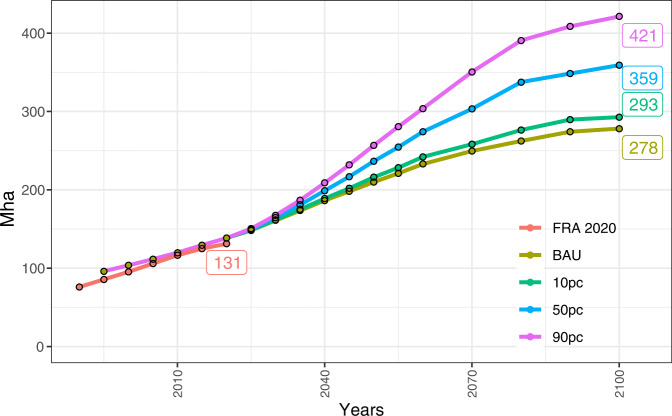
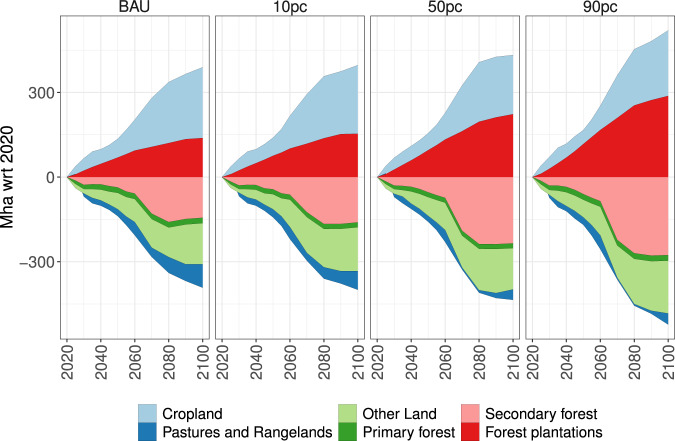
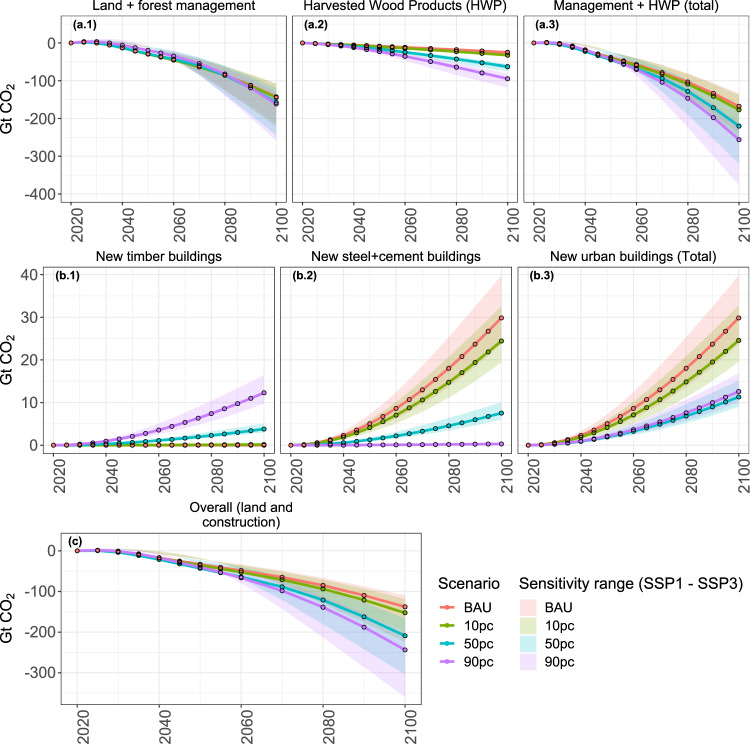
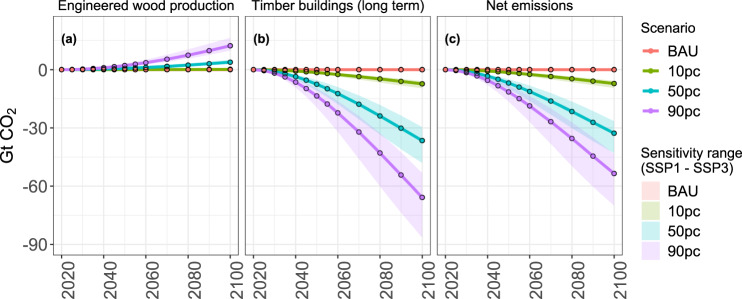
Using engineered wood for construction has been discussed for climate change mitigation. It remains unclear where and in which way the additional demand for wooden construction material shall be fulfilled. Here we assess the global and regional impacts of increased demand for engineered wood on land use and associated CO 2 emissions until 2100 using an open-source land system model. We show that if 90% of the new urban population would be housed in newly built urban mid-rise buildings with wooden constructions, 106 Gt of additional CO 2 could be saved by 2100. Forest plantations would need to expand by up to 149 Mha by 2100 and harvests from unprotected natural forests would increase. Our results indicate that expansion of timber plantations for wooden buildings is possible without major repercussions on agricultural production. Strong governance and careful planning are required to ensure a sustainable transition to timber cities even if frontier forests and biodiversity hotspots are protected.
Overview
The claims and statistics of this paper haven’t been checked yet.
Free: it reads the open-access text and checks the first 5 claims that cite a source we can check. Create a free account to check every claim.
Integrity signals
Registry
Cites
Statistics
Figures
Verification
Claims the paper makes
The claims and statistics of this paper haven’t been checked yet.
Free: it reads the open-access text and checks the first 5 claims that cite a source we can check. Create a free account to check every claim.
Claims other papers make about this one
Each is checked against this paper’s own text: does it say what the citing paper says it does?
The cited source says what the claim attributes to it.
In the citing paper
“Global analyses of mass timber products show the GHG mitigation potential of wood use in buildings (16) and their impacts on land use change (41), but high-resolution, spatially explicit understandings of various combinations of wood use and forest plantation management have not been fully explored.”
From Climate-smart forestry through innovative wood products and commercial afforestation and reforestation on marginal land (2023) · cites this paper as [41]
Self-check
Percentages, sums and reported differences re-computed from the paper’s own numbers.
The self-check needs the paper’s full text.
Citations
Cites
Ultrastructural Characterization of the Lower Motor System in a Mouse Model of Krabbe Disease
Cappello, V., Marchetti, L., Parlanti, P., Landi, S., Tonazzini, I., Cecchini, M., Piazza, V., & Gemmi, M. (2016) · Scientific Reports · doi:10.1038/s41598-016-0001-8 · Cited by 13,097
U1 snRNP regulates cancer cell migration and invasion in vitro
Oh, J.-M., Venters, C. C., Di, C., Pinto, A. M., Wan, L., Younis, I., Cai, Z., Arai, C., So, B. R., Duan, J., et al. (2020) · Nature Communications · doi:10.1038/s41467-019-13993-7 · Cited by 7,157
Riahi, K., van Vuuren, D. P., Kriegler, E., Edmonds, J., O’Neill, B. C., Fujimori, S., Bauer, N., Calvin, K., Dellink, R., Fricko, O., et al. (2017) · Global Environmental Change · doi:10.1016/j.gloenvcha.2016.05.009 · Cited by 6,607
Self-citationYang (2021) · doi:10.1038/s41598-020-79139-8 · Cited by 5,035
Griscom, B. W., Adams, J., Ellis, P. W., Houghton, R. A., Lomax, G., Miteva, D. A., Schlesinger, W. H., Shoch, D., Siikamäki, J. V., Smith, P., et al. (2017) · Proceedings of the National Academy of Sciences · doi:10.1073/pnas.1710465114 · Cited by 3,481
Forest disturbances under climate change
Seidl, R., Thom, D., Kautz, M., Martin-Benito, D., Peltoniemi, M., Vacchiano, G., Wild, J., Ascoli, D., Petr, M., Honkaniemi, J., et al. (2017) · Nature Climate Change · doi:10.1038/nclimate3303 · Cited by 2,878
Self-citationGreening of the Earth and its drivers
Zhu, Z., Piao, S., Myneni, R. B., Huang, M., Zeng, Z., Canadell, J. G., Ciais, P., Sitch, S., Friedlingstein, P., Arneth, A., et al. (2016) · Nature Climate Change · doi:10.1038/nclimate3004 · Cited by 2,779
Classifying drivers of global forest loss
Curtis, P. G., Slay, C. M., Harris, N. L., Tyukavina, A., & Hansen, M. C. (2018) · Science · doi:10.1126/science.aau3445 · Cited by 2,340
Dynamics of global forest area: Results from the FAO Global Forest Resources Assessment 2015
Keenan, R. J., Reams, G. A., Achard, F., de Freitas, J. V., Grainger, A., & Lindquist, E. (2015) · Forest Ecology and Management · doi:10.1016/j.foreco.2015.06.014 · Cited by 1,656
The dominant role of semi-arid ecosystems in the trend and variability of the land CO 2 sink
Ahlström, A., Raupach, M. R., Schurgers, G., Smith, B., Arneth, A., Jung, M., Reichstein, M., Canadell, J. G., Friedlingstein, P., Jain, A. K., et al. (2015) · Science · doi:10.1126/science.aaa1668 · Cited by 1,471
Research works printed but not linked: 5
- Carle J Holmgren P Wood from planted forests Forest Products J. 2008 58 6
- Adhikari S Quesada H Bond B Hammett T Potential of hardwood lumber in cross laminated timber in North America: a CLT manufacturer’s perspective Mass Timber Construction J. 2020 3 1 9
- Glavinić IU Boko I Torić N Vranković JL Application of hardwood for glued laminated timber in Europe J. Croation Assoc. Civil Eng. 2020 72 607 616
- IPCC. Climate change 2021: The physical science basis. in Intergovernmental Panel on Climate Change (IPCC) (Cambridge University Press, 2007).
- Organschi, A., Ruff, A., Oliver, C. D., Carbone, C. & Herrmann, E. Timber city: Growing an urban carbon sink with glue, screws, and cellulose fiber. in World Conference on Timber Engineering (WCTE) 2016, 5612–5621 (WCTE, 2016).
Cited by
Thermochemical conversion of biomass: Potential future prospects
Wang, Y., & Wu, J. J. (2023) · Renewable and Sustainable Energy Reviews · doi:10.1016/j.rser.2023.113754 · Cited by 259
“To achieve carbon benefit, the carbon generated by displacing fossil fuels must overtake the carbon sequestration forgone directly and indirectly by land-use change [17,18].”
Building materials could store more than 16 billion tonnes of CO 2 annually
Van Roijen, E., Miller, S. A., & Davis, S. J. (2025) · Science · doi:10.1126/science.adq8594 · Cited by 112
Demand-side strategies key for mitigating material impacts of energy transitions
Creutzig, F., Simões, S. G., Leipold, S., Berrill, P., Azevedo, I., Edelenbosch, O. Y., Fishman, T., Haberl, H., Hertwich, E. G., Krey, V., et al. (2024) · Nature Climate Change · doi:10.1038/s41558-024-02016-z · Cited by 135
“However, large-scale use of bio-based materials in construction raises important trade-offs with other ecosystem services; it would also imply the expansion of forestry to nearly 150 Mha by 2100 41 .”
Limited quantity and quality of steel supply in a zero-emission future
Watari, T., Hata, S., Nakajima, K., & Nansai, K. (2023) · Nature Sustainability · doi:10.1038/s41893-022-01025-0 · Cited by 100
County-level land use carbon emissions in China: Spatiotemporal patterns and impact factors
Liu, C., Hu, S., Wu, S. Q., Song, J., & Li, H. (2024) · Sustainable Cities and Society · doi:10.1016/j.scs.2024.105304 · Cited by 108
Timber Construction as a Solution to Climate Change: A Systematic Literature Review
Tūpėnaitė, L., Kanapeckienė, L., Naimavičienė, J., Kaklauskas, A., & Gečys, T. (2023) · Buildings · doi:10.3390/buildings13040976 · Cited by 130
Cost-effectiveness of natural forest regeneration and plantations for climate mitigation
Busch, J., Bukoski, J. J., Cook‐Patton, S. C., Griscom, B. W., Kaczan, D. J., Potts, M. D., Yi, Y., & Vincent, J. R. (2024) · Nature Climate Change · doi:10.1038/s41558-024-02068-1 · Cited by 124
“…reality, large changes in the supply of wood products, such as those modelled here, would decrease prices and thus dampen the increase in plantation area unless counterbalanced by corresponding increases in demand, for example a shift in construction materials from cement or steel to timber 83,84 .”
A climate-induced tree species bottleneck for forest management in Europe
Wessely, J., Essl, F., Fiedler, K., Gattringer, A., Hülber, B., Ignateva, O., Moser, D., Rammer, W., Dullinger, S., & Seidl, R. (2024) · Nature Ecology & Evolution · doi:10.1038/s41559-024-02406-8 · Cited by 125
Substantial and increasing global losses of timber-producing forest due to wildfires
Bousfield, C. G., Lindenmayer, D. B., & Edwards, D. P. (2023) · Nature Geoscience · doi:10.1038/s41561-023-01323-y · Cited by 99
Forest aging limits future carbon sink in China
Leng, Y., Li, W., Ciais, P., Sun, M., Zhu, L., Yue, C., Chang, J., Yao, Y., Zhang, Y., Zhou, J., et al. (2024) · One Earth · doi:10.1016/j.oneear.2024.04.011 · Cited by 93
Substantial terrestrial carbon emissions from global expansion of impervious surface area
Qiu, L., He, J., Yue, C., Ciais, P., & Zheng, C. (2024) · Nature Communications · doi:10.1038/s41467-024-50840-w · Cited by 85
“Using business-as-usual techniques to expand impervious surface areas for this anticipated urban growth will cause additional carbon losses 35 .”
MethodPrasittisopin, L., Tuvayanond, W., Kang, T. H. ‐., & Kaewunruen, S. (2025) · Resources · doi:10.3390/resources14020021 · Cited by 98
“It is reported that in 2017, cement and concrete production accounted for approximately 5–8% of greenhouse gas emissions worldwide, with an annual CO 2 output of 2.2 Gt [42,43].”
InfluentialAssessing global urban CO2 removal
Mendez, Q. R., Fuss, S., Lück, S., & Creutzig, F. (2024) · Nature Cities · doi:10.1038/s44284-024-00069-x · Cited by 73
Wang, Q., Yang, C.-H., Wang, M., Zhao, L. F., Zhao, Y.-C., Zhang, Q., & Zhang, C. (2023) · Journal of Cleaner Production · doi:10.1016/j.jclepro.2023.137415 · Cited by 61
Modeling Low Energy Demand Futures for Buildings: Current State and Research Needs
Mastrucci, A., Niamir, L., Boza‐Kiss, B., Bento, N., Wiedenhofer, D., Streeck, J., Pachauri, S., Wilson, C., Chatterjee, S., Creutzig, F., et al. (2023) · Annual Review of Environment and Resources · doi:10.1146/annurev-environ-112321-102921 · Cited by 103
“This option has a high mitigation potential but requires expansion of timber plantations (65), resulting in complex trade-offs with other land uses for food, feed, and fuels as well as ecosystem conservation (66).”
BackgroundOverview of Land Use and Land Cover Change and Its Impacts on Natural Resources
Mir, Y. H., Mir, S. A., Ganie, M. A., Bhat, J. A., Shah, A. M., Mushtaq, M., & Irshad, I. (2025) · Sustainable development and biodiversity · doi:10.1007/978-981-96-2413-3_5 · Cited by 97
Barriers and opportunities of fast-growing biobased material use in buildings
Göswein, V., Arehart, J. H., Phan-huy, C., Pomponi, F., & Habert, G. (2022) · Buildings and Cities · doi:10.5334/bc.254 · Cited by 73
Ye, F., Wei, H., Xiao, Y., Berardi, U., Quaranta, G., & Demartino, C. (2025) · Renewable and Sustainable Energy Reviews · doi:10.1016/j.rser.2025.115872 · Cited by 83
Strategies for robust renovation of residential buildings in Switzerland
Galimshina, A., Moustapha, M., Hollberg, A., Lasvaux, S., Sudret, B., & Habert, G. (2024) · Nature Communications · doi:10.1038/s41467-024-46305-9 · Cited by 68
“Contrary to most studiesfocusingon structuraltimber construction 55 andshowing the limit of current availability 56 or the necessary land use changes to operate to grow timber cities 57 , renovation with bio-based material has much less land use consequences.”
Optimizing green and gray infrastructure planning for sustainable urban development
van Oorschot, J., Slootweg, M., Remme, R. P., Sprecher, B., & van der Voet, E. (2024) · npj Urban Sustainability · doi:10.1038/s42949-024-00178-5 · Cited by 70
“Mishra et al. 53 suggest that a worldwide increase in wooden buildings, up to 90% of new constructions from 2020 to 2100, is feasible if agricultural land productivity is doubled 53 .”
Thakur, T. K., Swamy, S. L., Thakur, A., Mishra, A., Bakshi, S., Kumar, A., Altaf, M. M., & Kumar, R. (2023) · Journal of Environmental Management · doi:10.1016/j.jenvman.2023.119809 · Cited by 59
Self-citationDoes expanding wood use in construction and textile markets contribute to climate change mitigation?
Hurmekoski, E., Kunttu, J., Heinonen, T., Pukkala, T., & Peltola, H. M. (2023) · Renewable and Sustainable Energy Reviews · doi:10.1016/j.rser.2023.113152 · Cited by 75
Huang, J., Han, W., Zhang, Z., Ning, S., & Zhang, X. (2024) · Land Use Policy · doi:10.1016/j.landusepol.2024.107055 · Cited by 58
Building Material and the Climate: Constructing a New Future
United Nations Environment Programme (2023) · United Nations Environment Programme eBooks · doi:10.59117/20.500.11822/43293 · Cited by 348
Is tree planting an effective strategy for climate change mitigation?
Kirschbaum, M. U. F., Cowie, A. L., Peñuelas, J., Smith, P., Conant, R. T., Sage, R. F., Brandão, M., Cotrufo, M. F., Luo, Y., Way, D. A., et al. (2024) · Science of The Total Environment · doi:10.1016/j.scitotenv.2023.168479 · Cited by 53
“The C sequestered in sustainably managed plantations can be retained for many decades in harvested wood products, including in engineered structural timber products in mid-rise buildings (Himes and Busby, 2020; Mishra et al., 2022).”
BackgroundCarbon footprint of the construction sector is projected to double by 2050 globally
Li, C., Pradhan, P., Chen, G. Q., Kropp, J. P., & Schellnhuber, H. J. (2025) · Communications Earth & Environment · doi:10.1038/s43247-025-02840-x · Cited by 93
“Traditional construction machinery is often unsuitable for bio-based materials, requiring different handling techniques 36 .”
Self-citationPramreiter, M., Nenning, T., Huber, C., Müller, U., Kromoser, B., Mayencourt, P., & Konnerth, J. (2023) · Sustainable materials and technologies · doi:10.1016/j.susmat.2023.e00728 · Cited by 64
Fan, M., Wang, Z., & Xue, Z. (2024) · Ecological Informatics · doi:10.1016/j.ecoinf.2024.102567 · Cited by 50
Araújo, V. A. D., Aguiar, F. D. S., Jardim, P. I. L. G., Mascarenhas, F. J. R., Marini, L. J., Aquino, V. B. D. M., dos Santos, H. F., Panzera, T. H., Lahr, F. A. R., & Christoforo, A. L. (2023) · Forests · doi:10.3390/f14020264 · Cited by 64
Pauliuk, S., Carrer, F., Heeren, N., & Hertwich, E. G. (2024) · Journal of Industrial Ecology · doi:10.1111/jiec.13557 · Cited by 48
Predicting building energy consumption in urban neighborhoods using machine learning algorithms
Jiang, Q. M., Huang, C., Wu, Z., Yao, J., Wang, J., Liu, X., & Qiao, R. (2024) · Frontiers of Urban and Rural Planning · doi:10.1007/s44243-024-00032-3 · Cited by 42
“To meet the goals of the Paris Agreement, the scientific community has united in efforts to combat global warming of 1.5 degrees Celsius (Mishra et al., 2022; Morfeldt & Johansson, 2022; Slameršak et al., 2022).”
InfluentialClimate change will exacerbate land conflict between agriculture and timber production
Bousfield, C. G., Morton, O., & Edwards, D. P. (2024) · Nature Climate Change · doi:10.1038/s41558-024-02113-z · Cited by 55
“Global timber demand is expected to rise by between 54% and 200% by 2050 3,4 , driven by increasing urbanization and the need to replace carbon-intensive construction materials, such as steel or concrete 5 , as many nations move towards net-zero economies.”
Zhang, B., Lan, K., Harris, T. B., Ashton, M. S., & Yao, Y. (2023) · Proceedings of the National Academy of Sciences · doi:10.1073/pnas.2221840120 · Cited by 36
Yang, D., Luan, W., Li, Y., Zhang, Z., & Tian, C. (2023) · Journal of Environmental Management · doi:10.1016/j.jenvman.2023.117536 · Cited by 40
Hirata, A., Ohashi, H., Hasegawa, T., Fujimori, S., Takahashi, K., Tsuchiya, K., & Matsui, T. (2024) · Communications Earth & Environment · doi:10.1038/s43247-024-01433-4 · Cited by 50
“Extensiveexpectations toHWPascarbonsequestrationmayalsocausedeforestationofnatural forests 34 , which may in turn cause biodiversity decline.”
Net-Zero Embodied Carbon in Buildings with Today’s Available Technologies
Watari, T., Yamashita, N., & Serrenho, A. C. (2024) · Environmental Science & Technology · doi:10.1021/acs.est.3c04618 · Cited by 42
“Churkina et al. (2020) 10 and Mishra et al. (2022) 11 explore the potential of deeper decarbonization and suggest that buildings can become “carbon sinks” by using timber instead of steel and concrete.”
BackgroundWhole life carbon quantification of the built environment: Case study Ireland
Hegarty, R. O., & Kinnane, O. (2022) · Building and Environment · doi:10.1016/j.buildenv.2022.109730 · Cited by 41
Yao, Y., & Zhang, B. (2025) · Environmental Science & Technology · doi:10.1021/acs.est.4c09510 · Cited by 48
Wiedenhofer, D., Streeck, J., Wiese, F., Verdolini, E., Mastrucci, A., Ju, Y., Boza‐Kiss, B., Min, J., Norman, J., Wieland, H., et al. (2025) · Annual Review of Environment and Resources · doi:10.1146/annurev-environ-111523-102441 · Cited by 48
Ibrahim, R. A., İnan, H., & Fahim, I. S. (2023) · Scientific Reports · doi:10.1038/s41598-023-47817-y · Cited by 37
“With natural forests unable to recover quickly enough to restore supply, the wood products industry today faces a scarcity of raw wood required for manufacturing, resulting in a raw material shortage 23 .”
BackgroundThe potential for storing carbon by harvested wood products
Zhao, J., Wei, X., & Li, L. (2022) · Frontiers in Forests and Global Change · doi:10.3389/ffgc.2022.1055410 · Cited by 38
Optimization of Spatial Land Use Patterns with Low Carbon Target: A Case Study of Sanmenxia, China
Li, L., Chen, Z., & Wang, S. (2022) · International Journal of Environmental Research and Public Health · doi:10.3390/ijerph192114178 · Cited by 32
Long, Y.-Q., Song, Q., Huang, B.-J., Zeng, X., & Wu, H. (2024) · Resources, Conservation and Recycling · doi:10.1016/j.resconrec.2024.107642 · Cited by 26
Prospective life cycle assessment of titanium powder atomization
Spreafico, C. (2024) · Journal of Cleaner Production · doi:10.1016/j.jclepro.2024.143104 · Cited by 30
Sustainable land systems in the Anthropocene: Navigating the global land squeeze
Erb, K., Matej, S., Haberl, H., & Gingrich, S. (2024) · One Earth · doi:10.1016/j.oneear.2024.06.011 · Cited by 36
Kouchaki‐Penchah, H., Bahn, O., Vaillancourt, K., Moreau, L., Thiffault, É., & Levasseur, A. (2023) · Environmental Science & Technology · doi:10.1021/acs.est.3c00644 · Cited by 33
Relative benefits of allocating land to bioenergy crops and forests vary by region
Melnikova, I., Ciais, P., Tanaka, K., Vuichard, N., & Boucher, O. (2023) · Communications Earth & Environment · doi:10.1038/s43247-023-00866-7 · Cited by 41
Unused housing in urban China and its carbon emission impact
Zheng, H., Zhang, R., Yin, X., & Wu, J. R. (2025) · Nature Communications · doi:10.1038/s41467-025-57217-7 · Cited by 38
“…ef fi ciency ” perspective, which seeks to reduce the carbon emission intensity associated with the life cycle of residential buildings through measures such as construction material substitution during the materialization stage 3,4 and energy ef fi ciency improvement during the operation stage 5,6 .”
Impact of the EU biodiversity strategy for 2030 on the EU wood-based bioeconomy
Fulvio, F. D., Snäll, T., Lauri, P., Forsell, N., Mönkkönen, M., Burgas, D., Blattert, C., Eyvindson, K., Caicoya, A. T., Vergarechea, M., et al. (2025) · Global Environmental Change · doi:10.1016/j.gloenvcha.2025.102986 · Cited by 25
Wu, J., & Li, K. (2024) · Environmental Sciences Europe · doi:10.1186/s12302-024-01000-w · Cited by 26
Global land and carbon consequences of mass timber products
Lan, K., Favero, A., Yao, Y., Mendelsohn, R. O., & Wang, S.-H. (2025) · Nature Communications · doi:10.1038/s41467-025-60245-y · Cited by 33
“It is not clear that the previous literature distinguished high-productivity versus marginal productive lands within each ecosystem 12 .”
InfluentialLi, J., Huang, Y., Liang, H., He, L., Du, H., Zhu, J., Zheng, B., & Wan, W. (2025) · Sustainable Cities and Society · doi:10.1016/j.scs.2025.106831 · Cited by 24
Hou, J., Wu, X., Li, Z., Li, X., Liao, Y., Li, L., Luo, S., Wu, Y., & Qing, Y. (2024) · Advanced Functional Materials · doi:10.1002/adfm.202314559 · Cited by 25
Cheng, Y., Geng, X., & Tian, W. (2024) · Applied Energy · doi:10.1016/j.apenergy.2024.124791 · Cited by 25
Norouzi, M., HADDAD, A. N., Jiménez, L., Mohajerani, M., & Boer, D. T. (2025) · Renewable Energy · doi:10.1016/j.renene.2025.122476 · Cited by 30
Forster, E. J., Styles, D., & Healey, J. R. (2025) · Nature Communications · doi:10.1038/s41467-025-58463-5 · Cited by 26
“There are important product substitution GWP bene fi ts of using wood (e.g. in construction), and C stored in HWP can provide a C sink 27,52 .”
Understanding the benefits and challenges of harvested wood products in response to climate change
Xue, M., Dai, M., Li, H., Deng, H., Wang, S., Sun, M., & Wang, Y. (2024) · Resources Conservation and Recycling · doi:10.1016/j.resconrec.2024.107739 · Cited by 23
Multiscale interface engineering enables strong and water resistant wood bonding
Zhang, S., Koskela, S., Meinhard, H., Penttilä, P. A., Awais, M., Linder, M. B., Wang, S., & Rautkari, L. (2025) · Nature Communications · doi:10.1038/s41467-025-63239-y · Cited by 27
“Indeed, global urbandevelopmenthasbeenincreasinglytransitioningtowardtimber, and the current projections predict that by 2050, timber-based buildings could store up to 20 gigatons of carbon 4,5 .”
Bodirsky, B. L., Beier, F., Humpenöder, F., Leip, D., Crawford, M., Chen, D. M.-C., von Jeetze, P., Springmann, M., Soergel, B., Nicholls, Z., et al. (2025) · Nature Food · doi:10.1038/s43016-025-01268-y · Cited by 45
Self-citationSchulte, M., Jonsson, R., Eggers, J., Hammar, T., Stendahl, J., & Hansson, P. (2023) · Journal of Cleaner Production · doi:10.1016/j.jclepro.2023.138487 · Cited by 23
Landscape ecological risk assessment and its driving factors in the Weihe River basin, China
Chang, S., Wei, Y., Dai, Z., Xu, W. H., Wang, X., Duan, J., Zou, L., Zhao, G., Ren, X., & Feng, Y. (2024) · Journal of Arid Land · doi:10.1007/s40333-024-0013-3 · Cited by 19
“Global changes have triggered numerous ecological and environmental issues, which have been increasingly concerned by the international community (Mishra et al., 2022).”
Huang, B., & He, B. (2025) · Urban Climate · doi:10.1016/j.uclim.2025.102360 · Cited by 20
Napiontek, J., Fishman, T., Pichler, P., Heintz, J. L., & Weisz, H. (2025) · Resources Conservation and Recycling · doi:10.1016/j.resconrec.2024.108117 · Cited by 20
Grubinger, S., Coops, N. C., & O’Neill, G. A. (2023) · Global Change Biology · doi:10.1111/gcb.16855 · Cited by 18
“Planted forests, while essential for meeting the growing global demand for timber (Mishra et al., 2022; Morland et al., 2018), also provide opportunities for understanding the effects of climate change on locally adapted species.”
BackgroundLi, R., Wang, Z., Li, Y., & Wu, T. (2025) · Ecological Indicators · doi:10.1016/j.ecolind.2025.113243 · Cited by 17
Fischer, L., & Losacker, S. (2025) · Environmental Innovation and Societal Transitions · doi:10.1016/j.eist.2025.100996 · Cited by 22
Can future cities grow a carbon storage equal to forests?
Talvitie, I., Kinnunen, A., Amiri, A., & Junnila, S. (2023) · Environmental Research Letters · doi:10.1088/1748-9326/acc677 · Cited by 23
Estimating the material intensity of wooden residential houses in Finland
Nasiri, B., Kaasalainen, T., & Hughes, M. (2023) · Resources Conservation and Recycling · doi:10.1016/j.resconrec.2023.107142 · Cited by 22
Projecting spatial interactions between global population and land use changes in the 21st century
Yang, D., Luan, W., & Zhang, X. (2023) · npj Urban Sustainability · doi:10.1038/s42949-023-00131-y · Cited by 24
Global risk of wildfire across timber production systems
Bousfield, C. G., Morton, O., Lindenmayer, D. B., Pellegrini, A. F. A., Hethcoat, M. G., & Edwards, D. P. (2025) · Nature Communications · doi:10.1038/s41467-025-59272-6 · Cited by 26
“(Remarks to the Author) Article “Global risk of wildfire across timber production systems” deals with a very interesting topic.”
Souaid, C., ten Caat, N., Meijer, A., & Visscher, H. J. (2024) · Building and Environment · doi:10.1016/j.buildenv.2024.111285 · Cited by 20
Nenning, T., Tockner, A., Konnerth, J., Gindl‐Altmutter, W., Grabner, M., Hansmann, C., Lux, S., & Pramreiter, M. (2024) · Construction and Building Materials · doi:10.1016/j.conbuildmat.2024.135448 · Cited by 17
Nasiri, B., Roy, S., & Hughes, M. (2025) · European Journal of Wood and Wood Products · doi:10.1007/s00107-024-02170-3 · Cited by 16
“Current construction practices, using conventional materials like concrete and steel, result in substantial CO 2 emissions (Mishra et al. 2022).”
Modeling wood product carbon flows in southern us pine plantations: implications for carbon storage
Puls, S. J., Cook, R. L., Baker, J. S., Rakestraw, J. L., & Trlica, A. (2024) · Carbon Balance and Management · doi:10.1186/s13021-024-00254-4 · Cited by 15
“Also much of the literature surrounding HWP carbon storage is focused on silvicultural management regimes that produce saw logs and on longer-lasting products, such as housing and buildings [6].”
BackgroundKarakurt, C., Şenol, A. F., & Demiral, N. Ç. (2025) · Advanced Powder Technology · doi:10.1016/j.apt.2025.104946 · Cited by 15
The booming non-food bioeconomy drives large share of global land-use emissions
Wang, S., Chen, B., Sun, Z., Long, X., Xue, M., Yu, H., Sun, M., & Wang, Y. (2023) · Global Environmental Change · doi:10.1016/j.gloenvcha.2023.102760 · Cited by 16
Effect of targeted acetylation on wood–water interactions at high moisture states
Fredriksson, M., Digaitis, R., Engqvist, J., & Thybring, E. E. (2023) · Cellulose · doi:10.1007/s10570-023-05678-8 · Cited by 14
“Building with wood can lower the carbon footprint of the building sector as well as store carbon in the built environment (Churkina et al. 2020; Mishra et al. 2022).”
Gunawan, H., Mulyanto, B., Suharti, S., Subarudi, S., Ekawati, S., Karlina, E., Pratiwi, P., Yeny, I., Nurlia, A., Effendi, R., et al. (2024) · Forest Science and Technology · doi:10.1080/21580103.2024.2347902 · Cited by 46
“Some pressures on forest land run dynamically based on the land use land use change on forestry (LULUCF) in the field influenced by both natural and anthropogenic influences, with substantial implications for eco-system dynamics and carbon storage potential (Mishra et al. 2022).”
BackgroundSpreafico, C., Kokare, S., & Godina, R. (2025) · Environmental Impact Assessment Review · doi:10.1016/j.eiar.2025.108111 · Cited by 17
Current Market Landscape and Industry Voices in Key Timber Construction Markets
Yan, L., Klingner, R., Al‐Qudsi, A., Chen, H., & Dand, J. A. (2025) · Buildings · doi:10.3390/buildings15183381 · Cited by 15
European bioeconomy strategies could better integrate sustainability agendas
Warchold, A., Li, J., & Pradhan, P. (2025) · Sustainability Science · doi:10.1007/s11625-025-01752-1 · Cited by 21
“Using engineered wood for urban construction could save up to 106 gigatonnes (Gt) of greenhouse gas emissions by 2100 while meeting demand through expanded timber plantations without significantly impacting agriculture (Mishra et al. 2022).”
The suitability of common reed (Phragmites australis) for load-bearing structural materials
Albrecht, K., Neudecker, F., Veigel, S., Bodner, S. C., Kečkéš, J., & Gindl‐Altmutter, W. (2023) · Journal of Materials Science · doi:10.1007/s10853-023-08996-1 · Cited by 18
The carbon footprint of future engineered wood construction in Montreal
Meyer, F., Elliot, T. R., Craig, S., & Goldstein, B. P. (2024) · Environmental Research Infrastructure and Sustainability · doi:10.1088/2634-4505/ad2153 · Cited by 19
“Likewise, Churkina et al found that a timber structured five story residential building may store up to 186 kg of carbon m − 2 [23], with other groups noting a three-times savings in emissions when substituting EW for other materials [24].”
BackgroundMinimizing trade-offs and maximizing synergies for a just bioeconomy transition
Ruml, A., Chen, C., Kubitza, C., Kernecker, M. L., Grossart, H., Hoffmann, M., Holz, M., Wessjohann, L. A., Lotze‐Campen, H., & Dubbert, M. (2025) · Energy Research & Social Science · doi:10.1016/j.erss.2025.104089 · Cited by 21
“When properly managed, this process creates a carbon cycle that results in a net reduction in overall emissions compared to burning fossil fuels [66,67].”
Self-citationGlobal wood harvest is sufficient for climate-friendly transitions to timber cities
Yayla, A., Mason, A. R., Wang, J., van Ewijk, S., & Myers, R. J. (2025) · Nature Sustainability · doi:10.1038/s41893-025-01605-w · Cited by 19
“…the predominant wood type for construction timber products due to its easier-to-process material properties, the lower availability of machinery suitable for processing hardwood 16 and the biological limitations of some hardwood species (for example, low durability due to reaction to moisture).”
InfluentialCarbon stock projection for four major forest plantation species in Japan
Egusa, T., Nakahata, R., Neumann, M., & Kumagai, T. (2024) · The Science of The Total Environment · doi:10.1016/j.scitotenv.2024.172241 · Cited by 14
“C storage through the promotion of high-and medium-rise wooden buildings is one of the most promising methods to reduce atmospheric CO 2 concentrations for climate mitigation (Churkina et al., 2020; Mishra et al., 2022).”
MethodMazzoni, F., & Losacker, S. (2024) · Progress in Economic Geography · doi:10.1016/j.peg.2024.100023 · Cited by 16
Biocities with wood and bamboo: A path to low-carbon urbanization for greener societies
Araújo, V. A. D., Mascarenhas, F. J. R., Laleicke, P. F., Kutnar, A., Dias, A. M. P. G., van de Kuilen, J.-W., Hubbe, M. A., Lahr, F. A. R., & Christoforo, A. L. (2025) · Renewable and Sustainable Energy Reviews · doi:10.1016/j.rser.2025.116257 · Cited by 14
The relevance of cut-stone to strategies for low-carbon buildings
de Toldi, T., & Pestre, T. (2023) · Buildings and Cities · doi:10.5334/bc.278 · Cited by 17
Carbon emission causal discovery and multi-step forecasting for global cities
Liang, X., & Li, X. (2024) · Cities · doi:10.1016/j.cities.2024.104881 · Cited by 13
Alejandre, E. M., Koskamp, G., van de Leur, M., Wandl, A., & van Timmeren, A. (2024) · Journal of Cleaner Production · doi:10.1016/j.jclepro.2024.144273 · Cited by 15
Industrial sector pathways to a well-below 2 °C world: A global integrated assessment perspective
Zanon-Zotin, M., Baptista, L. B., Rochedo, P., Szklo, A. S., & Schaeffer, R. (2024) · Applied Energy · doi:10.1016/j.apenergy.2024.125173 · Cited by 16
Fiorini, A. C. O., Rochedo, P., Angelkorte, G. B., Diuana, F. A., Império, M., Carvalho, L. S., Morais, T. N., Vasquez-Arroyo, E., & Schaeffer, R. (2023) · Journal of Integrative Environmental Sciences · doi:10.1080/1943815x.2023.2239323 · Cited by 12
“However, the use of BII has become increasingly widespread in the IAM community (Chrysafi et al. 2022; Soergel et al. 2021; Mishra et al. 2022).”
BackgroundCradle to gate environmental impact assessment of the Iranian forestry operations
Kouchaki‐Penchah, H., Moaf, A. J., Kougir-Chegini, Z., & Lang, M. N. (2023) · Environmental Impact Assessment Review · doi:10.1016/j.eiar.2023.107183 · Cited by 12
Cerullo, G. R., Worthington, T. A., Brancalion, P. H. S., Brandão, J., d’Albertas, F., Eyres, A., Swinfield, T., Edwards, D. P., & Balmford, A. P. (2024) · Global Change Biology · doi:10.1111/gcb.17208 · Cited by 14
Chen, C., Fan, Q., Zhou, H., Hao, X., Xu, J., Zhou, Q., Tu, D., Ou, R., & Wang, Q. (2024) · Construction and Building Materials · doi:10.1016/j.conbuildmat.2024.139014 · Cited by 16
Climate and Socioeconomic Impacts on Maine's Forests Under Alternative Future Pathways
Zhao, J., Daigneault, A., Weiskittel, A. R., & Wei, X. (2023) · Ecological Economics · doi:10.1016/j.ecolecon.2023.107979 · Cited by 11
Timely deployment of best-in-class technologies to enable development and decarbonise construction
Dunant, C. F., Hafez, H., Marsh, A., Miller, S. A., Röck, M., Schmidt, W., Scrivener, K. L., & Zunino, F. (2025) · Nature Communications · doi:10.1038/s41467-025-67489-8 · Cited by 14
“Additionally, factors such as the role of land-use changes and proper forestry management can impact carbon bene fi ts 59 .”
Bildirici, M. E., & Ersin, Ö. Ö. (2024) · Environmental Science and Pollution Research · doi:10.1007/s11356-024-33489-2 · Cited by 13
“Various factors with relations to cement production include urbanization and the land-use change (Mishra et al. 2022; Zhou et al. 2021), which contribute to CO 2 emissions.”
BackgroundLi, Q., & Zhang, P. (2024) · Sustainability · doi:10.3390/su16187985 · Cited by 10
Metadata
- Authors
- Mishra, A., Humpenöder, F., Churkina, G., Reyer, C. P. O., Beier, F., Bodirsky, B. L., Schellnhuber, H. J., Lotze-Campen, H., & Popp, A.
- Affiliations
- Leibniz Association (DE)
- World Vegetable Center (TW)
- Corresponding author
- Mishra, Abhijeet
- ORCID
- Venue
- Nature Communications
- Published
- 2022-08-30
- Volume
- 13
- Issue
- 1
- Pages
- 4889-4889
- ISSN
- 2041-1723 (ISSN-L)
- PMC
- PMC9427734
- OpenAlex
- W4293582167
- Cited by
- 279
- References
- 71
- Citations by year
- 2026: 47 · 2025: 84 · 2024: 86 · 2023: 54 · 2022: 8
- FWCI
- 23.11
- Type
- journal article
- Language
- en
- Open access
- gold
- doi.org
- Licence
- cc-by
- creativecommons.org/licenses/by/4.0 (tdm)
- creativecommons.org/licenses/by/4.0 (vor)
- Locations
- Nature Communications (publishedVersion, cc-by)
- PubMed Central (publishedVersion, cc-by)
- PubMed (publishedVersion)
- RePEc: Research Papers in Economics (submittedVersion)
- DOAJ (DOAJ: Directory of Open Access Journals) (submittedVersion, cc-by-sa)
- edoc Publication server (Humboldt University of Berlin) (submittedVersion, cc-by)
- Publication Database PIK (Potsdam Institute for Climate Impact Research (PIK)) (submittedVersion, cc-by)
- edoc Publication server (Humboldt University of Berlin) (cc-by)
- Funders
- Bundesministerium für Bildung und Forschung (01LA1809A)
- Leibniz-Gemeinschaft (SAW-2016-PIK-1)
- EC | Horizon 2020 Framework Programme (821124, 821471, 821010, 776479)
- Deutsche Bundesstiftung Umwelt
- Topics
- Life Sciences › Agricultural and Biological Sciences › Forestry › Forest Management and Policy
- Physical Sciences › Environmental Science › Global and Planetary Change › Land Use and Ecosystem Services
- Physical Sciences › Environmental Science › Environmental Engineering › Environmental Impact and Sustainability
- Keywords
- engineered wood products, land use change, CO2 emissions, forest plantations, urban housing, mid-rise buildings, climate change mitigation, agricultural production, biodiversity hotspots
- MeSH terms
- Carbon, Carbon Dioxide, Cities, Conservation of Natural Resources, Forests
About these checks
Registry, retraction, Cites and statistics results are computed, not judged, with one exception: a printed reference that no index lists is read once by a model before it counts as a citation error. Claims are extracted by a model and kept only when their quote appears verbatim in the text; each cited source is then checked, with a model’s help, for whether it says what the claim relies on. Those verdicts can be wrong — read the claim’s quote and the cited source before relying on one.
Statistics and arithmetic are recomputed, not judged.
Confidence bands are shown only for fields calibrated on our annotated test set. None is calibrated yet, so no band is shown.
What counts as a claim ›How we measure confidence ›How we check this ›
Are you an author, or do you see a problem with this page? Request a review
Data sources
Bibliographic data: Semantic Scholar, OpenAlex, Crossref.
Contains information from the Semantic Scholar Academic Graph Datasets, made available under the ODC Attribution License (ODC-BY 1.0).
Semantic Scholar’s data is described in: Kinney, R., et al. (2023). The Semantic Scholar Open Data Platform. arXiv:2301.10140.
