

Proteomic characterization of gastric cancer response to chemotherapy and targeted therapy reveals potential therapeutic strategies
Open accessThe DOI matches its Crossref record; 100 of the 101 references it cites were found in a registry or an index.
Abstract
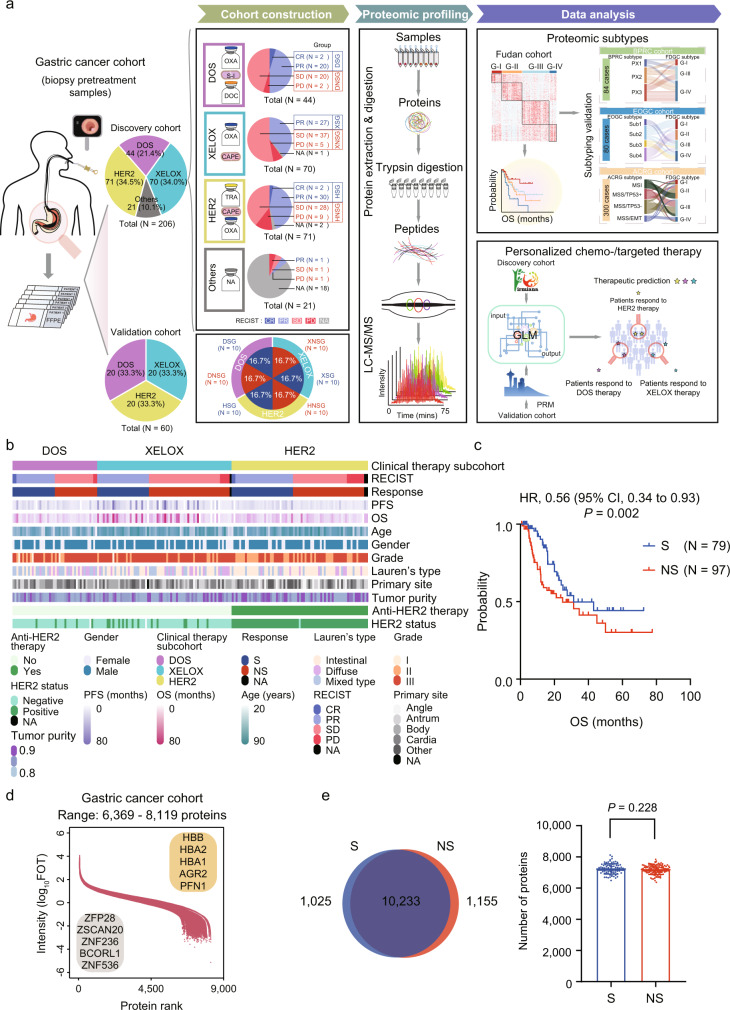
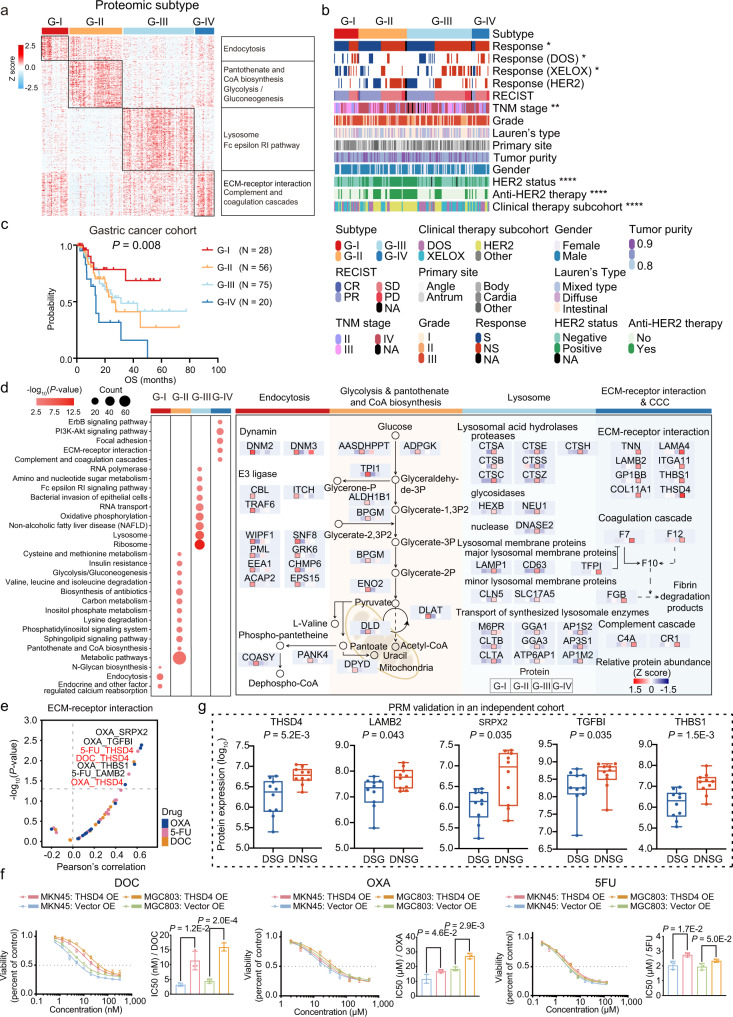
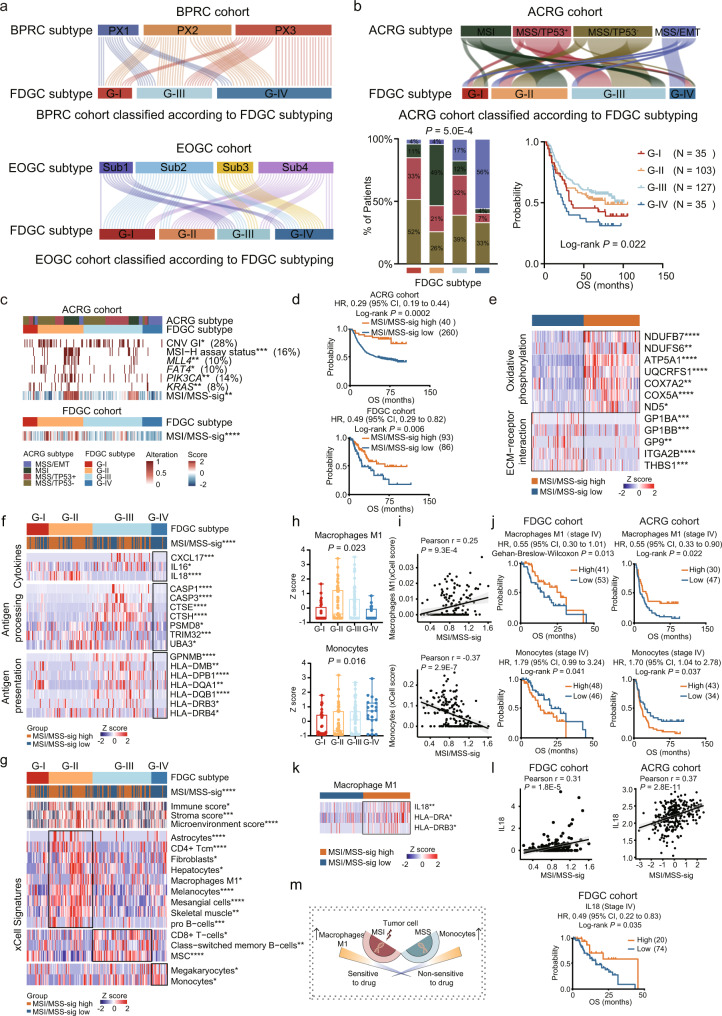
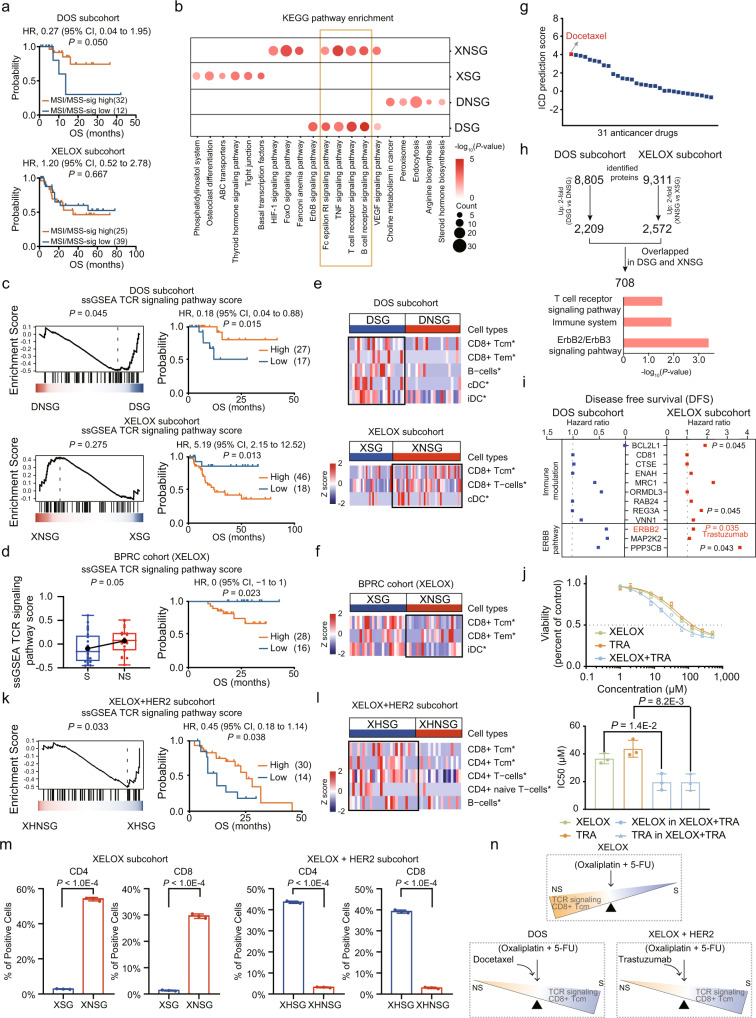
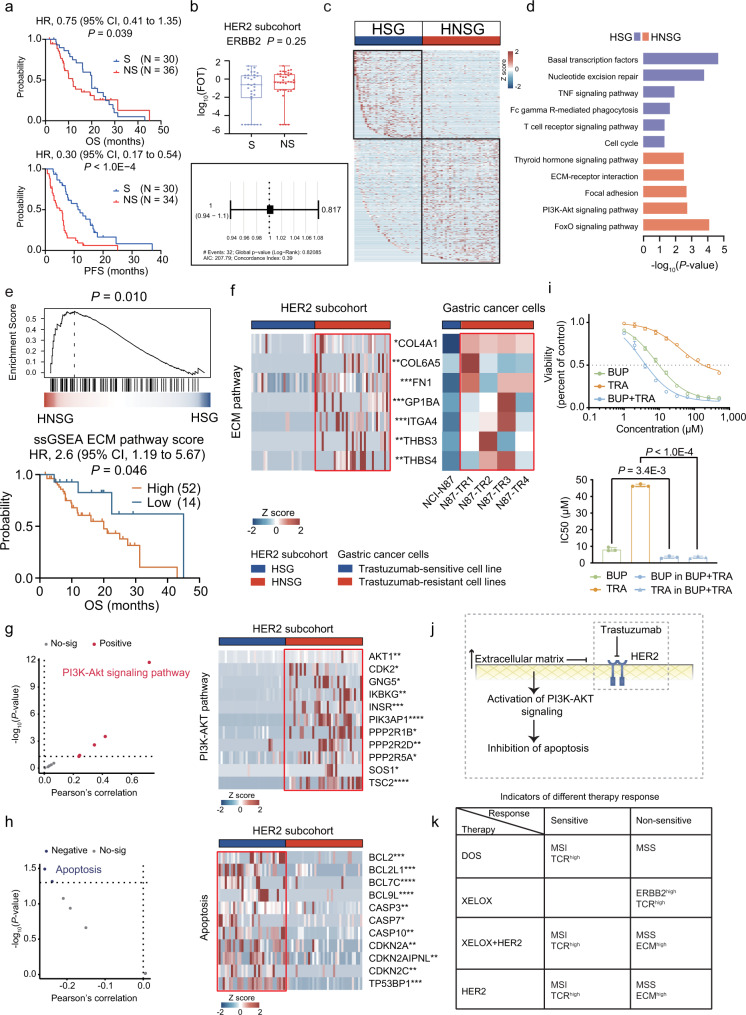
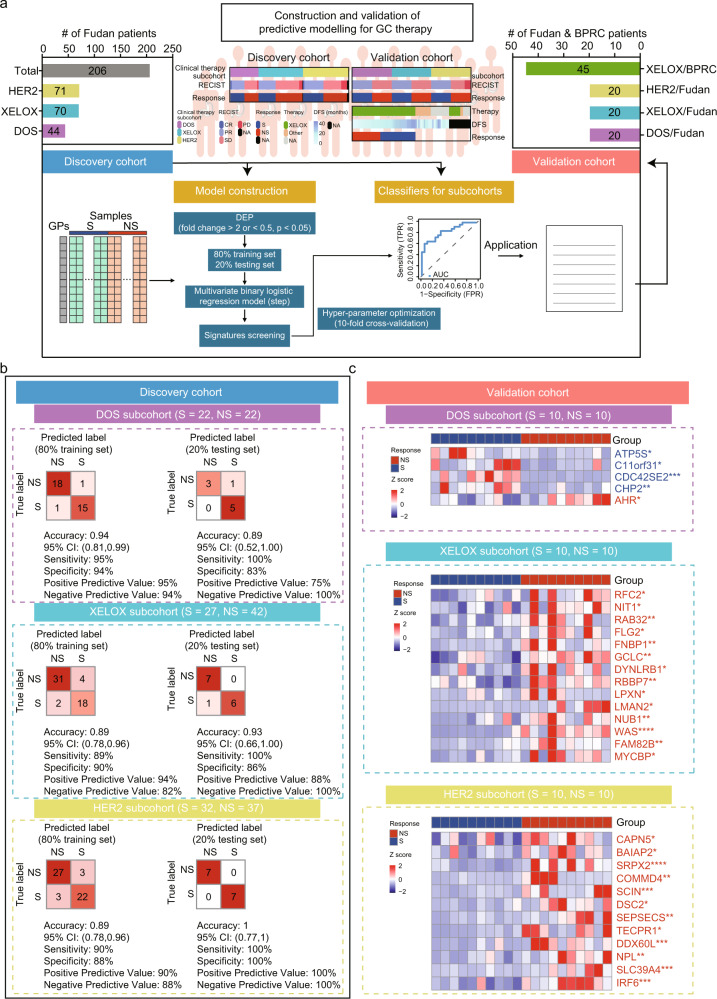
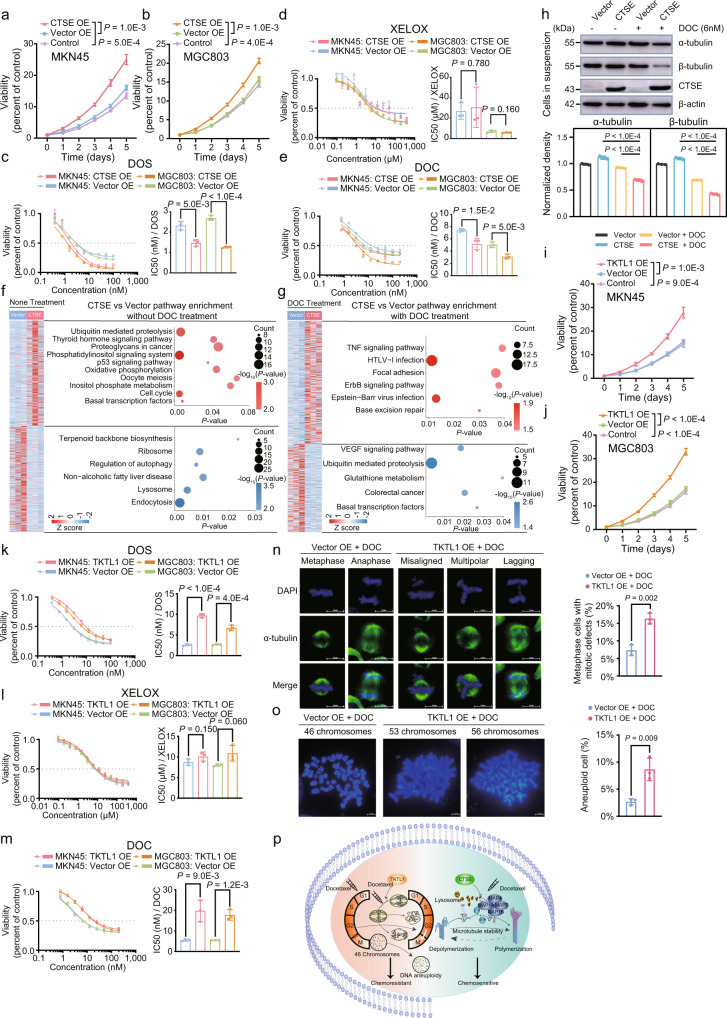
Chemotherapy and targeted therapy are the major treatments for gastric cancer (GC), but drug resistance limits its effectiveness. Here, we profile the proteome of 206 tumor tissues from patients with GC undergoing either chemotherapy or anti-HER2-based therapy. Proteome-based classification reveals four subtypes (G-I-G-IV) related to different clinical and molecular features. MSI-sig high GC patients benefit from docetaxel combination treatment, accompanied by anticancer immune response. Further study reveals patients with high T cell receptor signaling respond to anti-HER2-based therapy; while activation of extracellular matrix/PI3K-AKT pathway impair anti-tumor effect of trastuzumab. We observe CTSE functions as a cell intrinsic enhancer of chemosensitivity of docetaxel, whereas TKTL1 functions as an attenuator. Finally, we develop prognostic models with high accuracy to predict therapeutic response, further validated in an independent validation cohort. This study provides a rich resource for investigating the mechanisms and indicators of chemotherapy and targeted therapy in GC.
Overview
The claims and statistics of this paper haven’t been checked yet.
Free: it reads the open-access text and checks the first 5 claims that cite a source we can check. Create a free account to check every claim.
Integrity signals
Registry
Cites
Statistics
Figures
Verification
Claims the paper makes
The claims and statistics of this paper haven’t been checked yet.
Free: it reads the open-access text and checks the first 5 claims that cite a source we can check. Create a free account to check every claim.
Claims other papers make about this one
Each is checked against this paper’s own text: does it say what the citing paper says it does?
The cited source says what the claim attributes to it.
In the citing paper
“Besides, highly expressed extracellular matrix proteins (THSD4, SRPX2, TGFBI, THBS1, and LAMB2) can serve as indicators to predict drug resistance.”
From Bioinformatics Analysis and Validation of Potential Markers Associated with Prediction and Prognosis of Gastric Cancer (2024) · cites this paper as [72]
The cited source says what the claim attributes to it.
In the citing paper
“Interestingly, increased expression of MSI-sig CTSE enhances the effectiveness of DOS therapy but not of XELOX therapy.”
From Bioinformatics Analysis and Validation of Potential Markers Associated with Prediction and Prognosis of Gastric Cancer (2024) · cites this paper as [72]
The cited source says what the claim attributes to it.
In the citing paper
“Meanwhile, TKTL1 is negatively associated with the sensitivity of patients to DOS therapy.”
From Bioinformatics Analysis and Validation of Potential Markers Associated with Prediction and Prognosis of Gastric Cancer (2024) · cites this paper as [72]
The cited source says what the claim attributes to it.
In the citing paper
“The expression of one of the ECM proteins, THSD4, was closely relevant to worse survival and associated with chemosensitivity (involving 5-FU, oxaliplatin, and docetaxel) in GC cell lines.”
From Bioinformatics Analysis and Validation of Potential Markers Associated with Prediction and Prognosis of Gastric Cancer (2024) · cites this paper as [72]
The cited source says what the claim attributes to it.
In the citing paper
“They also found PI3K-AKT signaling pathway had potential relevance to the ECM proteins (COL4A1, COL6A5, FN1, GP1BA, ITGA4, THBS3, and THBS4), and downregulation of apoptosis correlated proteins (BCL2, BCL2L1, CASP3, CASP7, and CDKN2A), suggesting the synergistic efficacy of PI3K-AKT inhibitor combined with anti-HER2 targeted agents.”
From Bioinformatics Analysis and Validation of Potential Markers Associated with Prediction and Prognosis of Gastric Cancer (2024) · cites this paper as [72]
Self-check
Percentages, sums and reported differences re-computed from the paper’s own numbers.
The self-check needs the paper’s full text.
Citations
Cites
Subramanian, A., Tamayo, P., Mootha, V. K., Mukherjee, S., Ebert, B. L., Gillette, M. A., Paulovich, A., Pomeroy, S. L., Golub, T. R., Lander, E. S., et al. (2005) · Proceedings of the National Academy of Sciences · doi:10.1073/pnas.0506580102 · Cited by 53,625
KEGG: Kyoto Encyclopedia of Genes and Genomes
Kanehisa, M. (2000) · Nucleic Acids Research · doi:10.1093/nar/28.1.27 · Cited by 37,077
clusterProfiler: an R Package for Comparing Biological Themes Among Gene Clusters
Yu, G., Wang, L.-G., Han, Y., & He, Q.-Y. (2012) · OMICS: A Journal of Integrative Biology · doi:10.1089/omi.2011.0118 · Cited by 36,259 · cited 1×
“8E-11 MSI/MSS-sig high (93) MSI/MSS-sig low (86)”
KEGG: Kyoto Encyclopedia of Genes and Genomes
Ogata, H., Goto, S., Sato, K., Fujibuchi, W., Bono, H., & Kanehisa, M. (1999) · Nucleic Acids Research · doi:10.1093/nar/27.1.29 · Cited by 31,232
New response evaluation criteria in solid tumours: revised RECIST guideline (version 1.1)
Eisenhauer, E. A., Therasse, P., Bogaerts, J., Schwartz, L. H., Sargent, D., Ford, R., Dancey, J., Arbuck, S., Gwyther, S., Mooney, M., et al. (2009) · European Journal of Cancer · doi:10.1016/j.ejca.2008.10.026 · Cited by 29,534
Comprehensive molecular characterization of human colon and rectal cancer
The Cancer Genome Atlas Network (2012) · Nature · doi:10.1038/nature11252 · Cited by 8,499
Universal sample preparation method for proteome analysis
Wiśniewski, J. R., Zougman, A., Nagaraj, N., & Mann, M. (2009) · Nature Methods · doi:10.1038/nmeth.1322 · Cited by 8,352
The Cancer Cell Line Encyclopedia enables predictive modelling of anticancer drug sensitivity
Barretina, J., Caponigro, G., Stransky, N., Venkatesan, K., Margolin, A. A., Kim, S., Wilson, C. J., Lehár, J., Kryukov, G. V., Sonkin, D., et al. (2012) · Nature · doi:10.1038/nature11003 · Cited by 7,950
Estimating the global cancer incidence and mortality in 2018: GLOBOCAN sources and methods
Ferlay, J., Colombet, M., Soerjomataram, I., Mathers, C., Parkin, D. M., Piñeros, M., Znaor, A., & Bray, F. (2019) · International Journal of Cancer · doi:10.1002/ijc.31937 · Cited by 7,553
Bang, Y.-J., Van Cutsem, E., Feyereislova, A., Chung, H. C., Shen, L., Sawaki, A., Lordick, F., Ohtsu, A., Omuro, Y., Satoh, T., et al. (2010) · The Lancet · doi:10.1016/s0140-6736(10)61121-x · Cited by 7,302
Cited by
Zhong, Q., Xiao, X., Qiu, Y., Xu, Z., Chen, C., Chong, B., Zhao, X., Hai, S., Li, S., An, Z., et al. (2023) · MedComm · doi:10.1002/mco2.261 · Cited by 442
Potential of Copper and Copper Compounds for Anticancer Applications
Ji, P., Wang, P., Chen, H., Xu, Y., Ge, J., Tian, Z., & Yan, Z. (2023) · Pharmaceuticals · doi:10.3390/ph16020234 · Cited by 162
“About 80% of gastric cancer patients are diagnosed in the middle and advanced stages, which is very difficult to treat [57].”
BackgroundBottom-Up Proteomics: Advancements in Sample Preparation
Duong, V., & Lee, H. (2023) · International Journal of Molecular Sciences · doi:10.3390/ijms24065350 · Cited by 163
Tumour‐associated macrophages in gastric cancer: From function and mechanism to application
Li, J., Sun, J., Zeng, Z., Liu, Z., Ma, M., Zheng, Z., He, Y., & Kang, W. (2023) · Clinical and Translational Medicine · doi:10.1002/ctm2.1386 · Cited by 97
Matsuoka, T., & Yashiro, M. (2024) · International Journal of Molecular Sciences · doi:10.3390/ijms25115880 · Cited by 83
“Beyond these studies, many researchers have sought other surrogate molecular classifications of GC to detect biomarkers and validate therapeutic prediction based on various analyses, including epigenome, proteome, metabolome, immunity, and tumor mutational burden [56,72,79–87].”
BackgroundMethodOoki, A., Osumi, H., Yoshino, K., & Yamaguchi, K. (2024) · Gastric Cancer · doi:10.1007/s10120-024-01523-4 · Cited by 81
Wei, R., Song, J., Liu, C., Zhao, Z., Liu, X., Yamamoto, M., Tsukamoto, T., Nomura, S., Liu, F., Wang, Y., et al. (2025) · Cancer Letters · doi:10.1016/j.canlet.2025.217475 · Cited by 64
Self-citationProteogenomics of clear cell renal cell carcinoma response to tyrosine kinase inhibitor
Zhang, H., Bai, L., Wu, X., Tian, X., Feng, J., Wu, X., Shi, G., Pei, X., Lyu, J., Yang, G., et al. (2023) · Nature Communications · doi:10.1038/s41467-023-39981-6 · Cited by 40
“The same MBR strategy was also implemented in the published study 61,62 .”
Self-citationLi, Y., Wang, B., Yang, W., Ma, F., Zou, J., Li, K., Tan, S., Feng, J., Wang, Y., Qin, Z., et al. (2024) · Nature Communications · doi:10.1038/s41467-024-44911-1 · Cited by 39
Self-citationThe Pentose Phosphate Pathway: From Mechanisms to Implications for Gastrointestinal Cancers
Qiao, J., Yu, Z., Zhou, H., Wang, W., Wu, H., & Ye, J. (2025) · International Journal of Molecular Sciences · doi:10.3390/ijms26020610 · Cited by 36
“TKTL1 is a biomarker for the poor prognosis of GC patients, and an elevated expression of TKTL1 in patients is associated with reduced chemosensitivity to docetaxel, oxaliplatin, and S-1 [24–26].”
Trip, D. S. L., van Oostrum, M., Memon, D., Frommelt, F., Baptista, D., Panneerselvam, K., Bradley, G., Licata, L., Hermjakob, H., Orchard, S. E., et al. (2025) · Nature Biotechnology · doi:10.1038/s41587-025-02659-z · Cited by 48
Molecular Classifications in Gastric Cancer: A Call for Interdisciplinary Collaboration
del Arco, C. D., Fernández‐Aceñero, M. J., & Ortega, L. M. (2024) · International Journal of Molecular Sciences · doi:10.3390/ijms25052649 · Cited by 39
Chen, Y., Cai, G., Jiang, J., He, C., Chen, Y., Ding, Y., Lü, J., Zhao, W., Yang, Y., Zhang, Y., et al. (2023) · Gastric Cancer · doi:10.1007/s10120-023-01379-0 · Cited by 26
“1 3 external cohorts, Ge-2018 [9] (n = 82) and Li-2022 [11] cohort (n = 86).”
BackgroundInfluentialBai, Z., Wang, H., Han, J., An, J., Yang, Z., & Mo, X. (2024) · Scientific Reports · doi:10.1038/s41598-024-82233-w · Cited by 26
Li, Y., Wang, B., Ma, F., Jiang, D., Wang, Y., Li, K., Tan, S., Feng, J., Wang, Y., Qin, Z., et al. (2023) · Cell Reports Medicine · doi:10.1016/j.xcrm.2023.101311 · Cited by 31
Self-citationResearch advances in the molecular classification of gastric cancer
Shi, D., Yang, Z., Cai, Y., Li, H., Lin, L., Wu, D., Zhang, S., & Guo, Q. (2024) · Cellular Oncology · doi:10.1007/s13402-024-00951-9 · Cited by 30
“…high T-cell receptor signaling respond to anti-HER2-based therapy, whereas activation of the extracellular matrix/PI3K-AKT pathway impairs the anti-tumor effect of trastuzumab [ 106]. but due to primary or acquired resistance to trastuzumab, only a subset of patients benefit from this treatment.”
BackgroundTeng, F., Zhang, J., Huang, Y., Xu, W., Liu, W., Sun, L., Yan, M., Wu, J., Wang, R., Yang, S., et al. (2025) · Cell Reports Medicine · doi:10.1016/j.xcrm.2025.102238 · Cited by 35
Self-citationDrug innovation via integration of traditional Chinese and Western medicine
Li, Z., Yang, L., Kong, L., Sun, H. J., Sun, Y., Chen, X., Yin, F., Yan, G., & Wang, X. (2025) · Science of Traditional Chinese Medicine · doi:10.1097/st9.0000000000000070 · Cited by 23
Li, J., Zhang, W., Chen, L., Wang, X., Liu, J., Huang, Y., Qi, H., Chen, L., Wang, T., & Li, Q. (2024) · Biochimica et Biophysica Acta (BBA) - Reviews on Cancer · doi:10.1016/j.bbcan.2024.189225 · Cited by 20
Xie, X., Zhang, J., Sun, L., Xu, S., Ma, S. S., Wang, H., Li, X., Xiang, Q., Cui, L., & Liang, X. (2025) · Journal of Controlled Release · doi:10.1016/j.jconrel.2025.02.019 · Cited by 21
Proteogenomic characterization of skull-base chordoma
Zhang, Q., Xu, Z., Han, R., Wang, Y., Ye, Z., Zhu, J., Cai, Y., Zhang, F., Zhao, J., Yao, B., et al. (2024) · Nature Communications · doi:10.1038/s41467-024-52285-7 · Cited by 17
Self-citationWu, J., Lu, J., Chen, Q., Chen, H., Zheng, Y., & Cheng, M. (2024) · Frontiers in Pharmacology · doi:10.3389/fphar.2024.1494131 · Cited by 17
Th1 cells inducing IFNγ response improves immunotherapy efficacy in gastric cancer
Cao, Q., Xue, R., Zhang, N., & Yunnan Baiyao Group, K. 6. (2023) · Chinese Journal of Cancer Research · doi:10.21147/j.issn.1000-9604.2023.03.08 · Cited by 18
Mebendazole targets essential proteins in glucose metabolism leading gastric cancer cells to death
da Silva, E. L., Mesquita, F. P., Aragão, D. R., Portilho, A. J. D. S., Marinho, A. D., de Oliveira, L. L. B., Lima, L. B., de Moraes, M. E. A., Souza, P. F. N., & Montenegro, R. C. (2023) · Toxicology and Applied Pharmacology · doi:10.1016/j.taap.2023.116630 · Cited by 16
A review on trends in development and translation of omics signatures in cancer
Ma, W., Tang, W., Kwok, J. S.-L., Tong, A. H. Y., Lo, C. W. S., Chu, A. T.-W., Chung, B. H., & Hong Kong Genome Project (2024) · Computational and Structural Biotechnology Journal · doi:10.1016/j.csbj.2024.01.024 · Cited by 16
Kwon, H. J., Park, Y., Nam, S. K., Kang, E., Kim, K., Jeong, I., Kwak, Y., Yoon, J., Kim, T., Lee, K., et al. (2023) · Cancer Medicine · doi:10.1002/cam4.5769 · Cited by 14
Geerts, J., van der Zijden, C. J., van der Sluis, P. C., Spaander, M. C. W., Nieuwenhuijzen, G. A. P., Rosman, C., van Laarhoven, H. W. M., Verhoeven, R. H. A., Wijnhoven, B. P. L., Lagarde, S. M., et al. (2024) · Cancers · doi:10.3390/cancers16071291 · Cited by 16
“In addition to Lauren histological subtype, studies have shown that other molecular subtypes could affect response to chemotherapy [28,29].”
BackgroundApplications and advances of multi-omics technologies in gastrointestinal tumors
Liu, Y., Gao, F., Cheng, Y., Qi, L., & Yu, H. (2025) · Frontiers in Medicine · doi:10.3389/fmed.2025.1630788 · Cited by 21
Self-citationMarni, R., Malla, M., Chakraborty, A., & Malla, R. R. (2023) · Life Sciences · doi:10.1016/j.lfs.2023.121534 · Cited by 10
Qin, Z., Jiang, D., Yu, Z., Li, L., Xu, W., Xu, C., Song, Q., Sun, X., Li, L., Guo, W., et al. (2025) · Science Translational Medicine · doi:10.1126/scitranslmed.adt0214 · Cited by 13
Self-citationXu, H., Fu, X., Liu, B., Weng, S., Guo, C., Quan, L., Liu, L., Wang, L., Xing, Z., Cheng, Q., et al. (2023) · iScience · doi:10.1016/j.isci.2023.107871 · Cited by 7
“Due to the high tumor heterogeneity and invasiveness of GC, the AJCC staging system alone for clinical supervision and treatment decisionmaking no longer satisfies the demand for patient benefit.(21)With the development of immunology andmolecular biology, PD-1/PD-L1-based ICPs havemanifested resounding success inmulti…”
Yang, B., Li, W., Xu, Z., Li, W., & Hu, G. (2025) · Biochimica et Biophysica Acta (BBA) - Molecular Basis of Disease · doi:10.1016/j.bbadis.2025.167688 · Cited by 7
Omics Approaches for Algal Applications
Faisal, S., Dixit, D., Elsayed, M., & Behera, D. P. (2023) · Springer eBooks · doi:10.1007/978-3-031-42026-9_12 · Cited by 10
Repurposing serotonergic drugs for gastric cancer: induction of apoptosis in vitro
Abedini, F., Amjadi, O., & Ahangari, G. (2025) · Molecular Biology Reports · doi:10.1007/s11033-025-10474-7 · Cited by 7
Harnessing technologies to unravel gastric cancer heterogeneity
Wang, Y., Jin, R. U., Xu, J., Lin, D., Sun, Z.-Y. J., Xu, Y., Li, Q. K., & Zhang, H. (2025) · Trends in cancer · doi:10.1016/j.trecan.2025.04.011 · Cited by 8
Self-citationComputational theranostics strategy for pancreatic ductal adenocarcinoma
Kamble, P., Varma, T., Kumar, R., & Garg, P. (2025) · Molecular Diversity · doi:10.1007/s11030-025-11241-3 · Cited by 8
Jiang, J., Li, D., Li, F., Li, H., Zhang, X., & Feng, L. (2024) · Molecular and Cellular Biochemistry · doi:10.1007/s11010-024-05138-2 · Cited by 6
Self-citationTransforming Gastric Biopsy Diagnostics: Integrating Omics Technologies and Artificial Intelligence
Alwahaibi, N. (2026) · Biomedicines · doi:10.3390/biomedicines14020407 · Cited by 6
SUMOylation is enriched in the nuclear matrix and required for chromosome segregation
Chen, Z., Luo, J., Zhang, Y., Zheng, S., Zhang, H., Huang, Y., Wong, J., & Li, J. (2023) · Journal of Biological Chemistry · doi:10.1016/j.jbc.2023.105547 · Cited by 7
Bisht, V. S., Kumar, D., Najar, M. A., Giri, K., Kaur, J., Prasad, T. S. K., & Ambatipudi, K. (2024) · Journal of Proteomics · doi:10.1016/j.jprot.2024.105319 · Cited by 7
Kos, M., Bojarski, K., Mertowska, P., Mertowski, S., Tomaka, P., Dziki, Ł. A., & Grywalska, E. (2024) · Cells · doi:10.3390/cells13201708 · Cited by 5
“The development of advanced immune profiling methods, such as flow cytometry, RNA sequencing, or proteomic techniques, enables detailed analysis of subpopulations of immunocompetent cells, and currently such studies are also conducted on tissue ma-Cells terial [70–72].”
MethodAn atlas of protein-protein associations of human tissues prioritizes candidate disease genesPreprint
Trip, D. S. L., van Oostrum, M., Memon, D., Frommelt, F., Baptista, D., Panneerselvam, K., Bradley, G., Licata, L., Hermjakob, H., Orchard, S. E., et al. (2024) · bioRxiv (Cold Spring Harbor Laboratory) · doi:10.1101/2024.05.15.594301 · Cited by 5
Dendrobin A inhibits gastric cancer: Mechanistic insights supported by integrated evidence
Fan, Y., Chen, Y., Lü, W., Shi, K., Zhao, Y., Zhang, C., Shen, Z., Zheng, S., & Jie, W. (2025) · Phytomedicine · doi:10.1016/j.phymed.2025.157215 · Cited by 6
Xu, S., Yu, K., Liu, L., Wang, Q., Wu, X., Chen, Y., Li, G., Zhang, X., Wei, B., Fu, Z., et al. (2025) · Advanced Science · doi:10.1002/advs.202513086 · Cited by 5
Self-citationNakamura, A., Mashima, T., Lee, J., Inaba, S., Kawata, N., Morino, S., Kumagai, K., Yamaguchi, K., & Seimiya, H. (2024) · Biochemical and Biophysical Research Communications · doi:10.1016/j.bbrc.2024.150108 · Cited by 5
Wu, H., Shu, W., Ding, Y., Li, Q., Li, N., Wang, Q., Chen, Y., Han, Y., Huang, D., & Jiang, H. (2025) · BMC Cancer · doi:10.1186/s12885-025-14805-6 · Cited by 4
“Immunohistochemistry (IHC) of the T-cell marker CD4 + was performed on GC patients who received XELOX therapy to evaluate TILs at Fudan University [66].”
Seo, W. J., Kim, K. T., Jang, Y. J., Choi, Y. Y., & Kim, J. (2025) · Scientific Reports · doi:10.1038/s41598-025-19515-4 · Cited by 4
Xiao, N., Lu, H., Zeng, S., Yan, H., Yang, Q., Sheng, L., Chen, B., Xu, Y., Zhang, J., Xie, J., et al. (2026) · Frontiers in Immunology · doi:10.3389/fimmu.2026.1764497 · Cited by 3
“These differentially expressed proteins might serve as disease biomarkers, drug targets, molecules in key signaling pathways, or key factors in understanding speci fi c biological processes (8 – 10).”
Identification of Serum Biomarkers to Monitor Therapeutic Response in Intestinal-Type Gastric Cancer
Dagley, L. F., Yousef, J. M., Preaudet, A., Loving, A., Webb, A. I., Ernst, M., & Putoczki, T. L. (2024) · International Journal of Molecular Sciences · doi:10.3390/ijms25063129 · Cited by 3
“…such as Tpp2, which is implicated in cellular division and apoptosis and is significantly increased in squamous cell carcinomas [43], while C1s1 and Gp1ba have been linked to fibroblasts and matrix in other solid tumor types [44,45], suggesting matrix remodeling may occur following treatment.”
Zhang, J., Xiong, A., Yang, Y., Cao, Y., Yang, M., Su, C., Lei, M., Chen, Y., Shen, X., Wang, P., et al. (2025) · Journal of Proteome Research · doi:10.1021/acs.jproteome.4c01067 · Cited by 4
Association of proteomics with lymph node metastasis in early gastric cancer patients
Yan, B., Dong, X., Wu, Z.-Z., Chen, D., Jiang, W., Cheng, J., Chen, G., & Yan, J. (2025) · Biochimica et Biophysica Acta (BBA) - Molecular Basis of Disease · doi:10.1016/j.bbadis.2025.167773 · Cited by 3
Zou, J., Chen, S., Liu, W., Wang, Y., Zheng, D., Sun, W., Xu, S., Wei, W., & Wang, S. (2025) · Nanoscale Horizons · doi:10.1039/d5nh00344j · Cited by 8
Self-citationDeng, Z., Guo, J., Xiong, Z., Zhong, B., Huang, D., Xu, H., Chen, S., & Lian, L. (2025) · Current Oncology · doi:10.3390/curroncol32090480 · Cited by 2
“This characteristic divergence may lead to differential responses to therapies, including adjuvant chemotherapy (AC) [14].”
Wei, X.-X., Sang, Z.-T., Hou, Y.-J., YU, W.-W., Xu, J., Jiang, Q.-Y., Hsu, Y.-C., Nickel, D. M., Feng, Q.-X., Sun, N.-N., et al. (2025) · Abdominal Radiology · doi:10.1007/s00261-025-05354-4 · Cited by 2
Self-citationSi, H., Du, D., Jiao, C., Lin, W., Li, Q., Wang, Y., Li, L., & Tang, B. (2026) · Analytical Chemistry · doi:10.1021/acs.analchem.5c06130 · Cited by 4
Self-citationHu, X., Zhao, K., Shi, Y., Liu, Z., & Sun, Y. (2026) · Frontiers in Immunology · doi:10.3389/fimmu.2026.1765095 · Cited by 3
Lv, S., & Zhu, C. (2024) · Elsevier eBooks · doi:10.1016/b978-0-323-95513-3.00015-0 · Cited by 4
Xu, S., Wang, G., Feng, Y., Huang, L., Yang, Z., Zhang, Y., Dong, J., Wang, Y., & Liu, N. (2025) · Microchemical Journal · doi:10.1016/j.microc.2025.113578 · Cited by 1
Self-citationHou, Z., Wang, Z., Yang, F., Han, X., Li, L., & Liu, H. (2025) · Molecular Oncology · doi:10.1002/1878-0261.70097 · Cited by 1
Plasma Proteomic of Adolescent Idiopathic Scoliosis
Lyu, J., Zhang, T., Ji, T., Xu, Z., Shao, X., Bai, L., Tan, S., Zhang, Y., Yang, J., Ding, C., et al. (2025) · Molecular & Cellular Proteomics · doi:10.1016/j.mcpro.2025.101486 · Cited by 1
Self-citationLiu, Q. L., Yin, H., Wang, Z., Shen, Q., Zhao, J., & Xie, X. (2026) · PeerJ · doi:10.7717/peerj.20517 · Cited by 3
Self-citationChen, Q., Zhao, R., Qi, T., Pu, J., Li, R., Li, M., Pan, T., & Xie, H. (2026) · Biomedical Optics Express · doi:10.1364/boe.590614 · Cited by 1
“Current clinical technologies such as gastroscopy, ultrasound endoscopy, X-ray, and MRI are commonly utilized for stomach examination and auxiliary diagnosis [6–10].”
Zhang, H., Feng, J., Zhu, M., Shi, T., & Xi, Q. (2026) · Journal of Translational Medicine · doi:10.1186/s12967-026-07995-5 · Cited by 1
Self-citationYu, Y., Liu, D., Xie, J., Feng, Z., Huang, X., Li, H., Xie, Y., & Zhou, X. (2025) · Journal of Cancer · doi:10.7150/jca.104221 · Cited by 1
“Emerging treatments such as neoadjuvant therapy, immunotherapy, and targeted therapy have provided additional options for patients[4-7].”
Role of YWHAG in cell proliferation in gastric cancerPreprint
Li, Y., Yang, L., Gu, Y., Li, J., Li, X., & Wu, S. S. (2023) · Research Square · doi:10.21203/rs.3.rs-3667504/v1
Self-citationYan, J., Liu, B., Li, S., Cheng, K., Yang, Y., Liu, M., Li, Z., Wang, H., Huo, Z., & Zhang, Z. (2024) · Research Square · doi:10.21203/rs.3.rs-4218534/v1
Emerging Technologies for Epigenetic Drug Discovery
(2024) · Royal Society of Chemistry eBooks · doi:10.1039/9781837674916-part2
Mass Spectrometry and Chemical Biology Approaches for Deconvoluting Epigenetic Targets
Burton, A. J., Hamza, G. M., Iannetta, A. A., Miele, E., & Zhang, A. X. (2024) · Royal Society of Chemistry eBooks · doi:10.1039/9781837674916-00050
Wu, H., Shu, W., Ding, Y., Li, Q., Li, N., Wang, Q., Chen, Y., Han, Y., Huang, D., & Jiang, H. (2024) · Research Square · doi:10.21203/rs.3.rs-4989092/v1
Hu, K., Hasegawa, K., & Zhou, G. (2024) · Translational Cancer Research · doi:10.21037/tcr-2024-2374
“In contrast, CTSE promotes resistance by degrading the extracellular matrix (21) and remodeling the tumor microenvironment (22), thereby limiting the penetration of chemotherapeutic drugs.”
Identification and validation of LY6H and GRM3 as candidate biomarkers for Glioma-related epilepsy
Zhang, Z., Huang, J., Lin, C., & Liang, R. (2025) · Scientific Reports · doi:10.1038/s41598-025-97333-4
Self-citationLin, J., Wu, L., & Zhao, Z. (2025) · Frontiers in Oncology · doi:10.3389/fonc.2025.1597187
Tan, L., Xiang, J., Lu, Y., & Zhong, X. (2025) · Discover Oncology · doi:10.1007/s12672-025-03787-3
Abedini, F., Amjadi, P., & Ahangari, G. (2025) · Cytotechnology · doi:10.1007/s10616-025-00890-9
“TCGA data analysis identified 5-HTR3A among 20 hub genes associated with GC, with potential implications for immunotherapy (Wang et al. 2022).”
Zhang, C., Xu, B., Yu, T., He, F., Hang, F., & Qian, W. (2026) · Medicine · doi:10.1097/md.0000000000046963
“[48,49] As a reliable biomarker, CTSE has also been utilized to develop an enzyme-activatable aggregation-induced-emission probe for the diagnosis of pancreatic cancer.”
Hu, C., Shin, S.-Y., Wang, Y., Chen, C., Liu, P., Busuttil, R. A., Wu, Y., McLean, C. A., Shi, H., Kwok, T., et al. (2026) · EBioMedicine · doi:10.1016/j.ebiom.2026.106154
“However, pathological assessment in the Fudan cohort 24 revealed a higher proportion of membrane-localised ERBB2 expression and ERBB2 amplification in the EMT subgroup (P = 0.013, Chi-square test; Fig.”
InfluentialSelf-citationThe role of gut microbiota in the development, diagnosis, and treatment of gastric cancer
Hu, M., Xiao, Y., Zhang, X., Guo, J., Shen, T., Wang, Y., Deng, J., & Liu, D. Y. (2026) · Folia Microbiologica · doi:10.1007/s12223-026-01442-0
Self-citationProteome profiles of esophageal squamous cell carcinoma tie mitochondrial complex I to immunotherapy
Ma, F., Li, Y., Xiang, C., Wang, B., Lv, J., Shang, Z., Zhang, W., Qin, Z., Pu, Y., Li, K., et al. (2026) · EMBO Molecular Medicine · doi:10.1038/s44321-026-00413-9
“To investigate whether ESCC mitochondrial complex I affects the ef fi cacy of anti-PD1 immunotherapy in vivo, we utilized the well-established AKR murine ESCC model (Jiang et al, 2024; Opitz et al, 2002).”
InfluentialSelf-citationHong, W.-Q., Hu, R.-H., Jiang, X.-H., & Zhang, S. (2026) · Journal of Gastrointestinal Cancer · doi:10.1007/s12029-026-01556-1
“Such characteristic divergence may be the primary reason for the less chemo-sensitivity and limited chemotherapy benefits [ 8, 35].”
Shen, Z., 郑晶晶, Chen, Y., 刘军伟, Li, M., & Shi, H. (2026) · Molecular Biology Reports · doi:10.1007/s11033-026-12927-z
Metadata
- Authors
- Li, Y., Xu, C., Wang, B., Xu, F., Ma, F., Qu, Y., Jiang, D., Li, K., Feng, J., Tian, S., Wu, X., Wang, Y., Liu, Y., Qin, Z., Liu, Y., Qin, J., Song, Q., Zhang, X., Sujie, A., Huang, J., Liu, T., Shen, K., Zhao, J.-Y., Hou, Y., & Ding, C.
- Affiliations
- Fudan University (CN)
- Henan Normal University (CN)
- Shanghai Medical College of Fudan University (CN)
- Shanghai Jiao Tong University (CN)
- Corresponding author
- Liu, Tianshu
- Shen, Kuntang
- Zhao, Jian-Yuan
- Hou, Yingyong
- Ding, Chen
- ORCID
- Venue
- Nature Communications
- Published
- 2022-09-29
- Volume
- 13
- Issue
- 1
- Pages
- 5723-5723
- ISSN
- 2041-1723 (ISSN-L)
- PMC
- PMC9522856
- OpenAlex
- W4297998181
- Semantic Scholar
- 17b26eea11f117f95bf263a15b82d7f19fc50eb5
- Cited by
- 80
- References
- 101
- Citations by year
- 2026: 13 · 2025: 29 · 2024: 23 · 2023: 15
- FWCI
- 10.81
- Type
- journal article
- Language
- en
- Update notices
- correction (2022-11-08)
- Open access
- gold
- doi.org
- Licence
- cc-by
- creativecommons.org/licenses/by/4.0 (tdm)
- creativecommons.org/licenses/by/4.0 (vor)
- Locations
- Nature Communications (publishedVersion, cc-by)
- PubMed Central (publishedVersion, cc-by)
- PubMed (publishedVersion)
- RePEc: Research Papers in Economics (submittedVersion)
- DOAJ (DOAJ: Directory of Open Access Journals) (submittedVersion)
- Funders
- Shanghai Science and Technology Development Foundation (19MC1911000)
- National Natural Science Foundation of China (31972933, 2018YFA0507501, 2016YFA0502500, 19MC1911000, 2017SHZDZX01, 31700682, 31770886)
- China Postdoctoral Science Foundation (2017SHZDZX01, 2020T130114, 2019M651268)
- Science and Technology Commission of Shanghai Municipality (2020YFE0201600, 2017SHZDZX01)
- National Key Research and Development Program of China (2017YFA0505102, 2020YFE0201600, 2016YFA0502500, 2018YFA0507501, 2017YFC0908404, 2018YFE0201603, 2017SHZDZX01, 2017YFA0505101)
- Topics
- Health Sciences › Medicine › Oncology › Gastric Cancer Management and Outcomes
- Physical Sciences › Chemistry › Spectroscopy › Advanced Proteomics Techniques and Applications
- Life Sciences › Biochemistry, Genetics and Molecular Biology › Cancer Research › Ferroptosis and cancer prognosis
- Keywords
- gastric cancer, proteomic profiling, chemotherapy response, targeted therapy, HER2-targeted therapy, trastuzumab, docetaxel, drug resistance, tumor subtypes, T cell receptor signaling, extracellular matrix, PI3K/Akt signaling, TKTL1, chemosensitivity, prognostic model, treatment response prediction
- MeSH terms
- Trastuzumab, Docetaxel, Humans, Receptors, Antigen, T-Cell, Stomach Neoplasms, Transketolase, Phosphatidylinositol 3-Kinases, Proteome, Proteomics, Proto-Oncogene Proteins c-akt
About these checks
Registry, retraction, Cites and statistics results are computed, not judged, with one exception: a printed reference that no index lists is read once by a model before it counts as a citation error. Claims are extracted by a model and kept only when their quote appears verbatim in the text; each cited source is then checked, with a model’s help, for whether it says what the claim relies on. Those verdicts can be wrong — read the claim’s quote and the cited source before relying on one.
Statistics and arithmetic are recomputed, not judged.
Confidence bands are shown only for fields calibrated on our annotated test set. None is calibrated yet, so no band is shown.
What counts as a claim ›How we measure confidence ›How we check this ›
Are you an author, or do you see a problem with this page? Request a review
Data sources
Bibliographic data: Semantic Scholar, OpenAlex, Crossref.
Contains information from the Semantic Scholar Academic Graph Datasets, made available under the ODC Attribution License (ODC-BY 1.0).
Semantic Scholar’s data is described in: Kinney, R., et al. (2023). The Semantic Scholar Open Data Platform. arXiv:2301.10140.
