

Generalizable spelling using a speech neuroprosthesis in an individual with severe limb and vocal paralysis
Open accessThe DOI matches its Crossref record; 48 of the 48 references it cites were found in a registry or an index.
Abstract
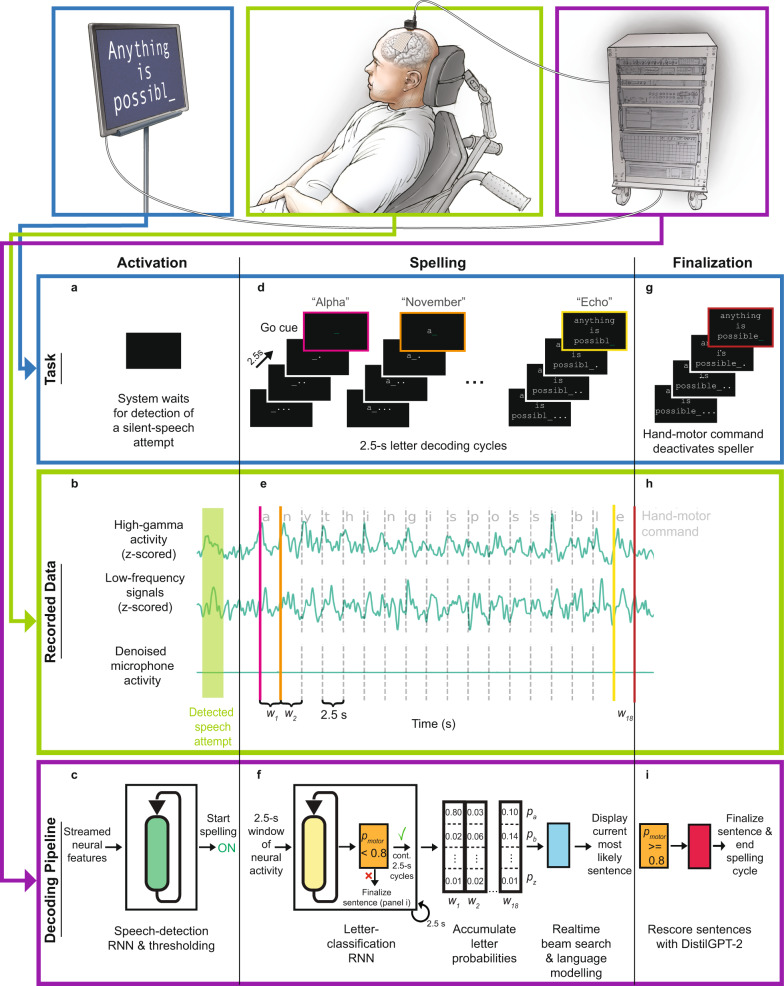
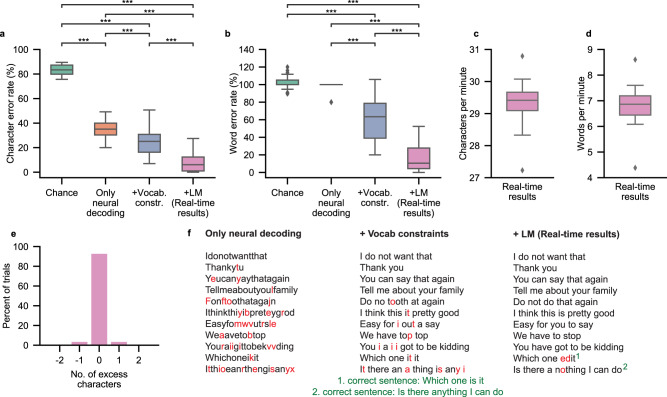
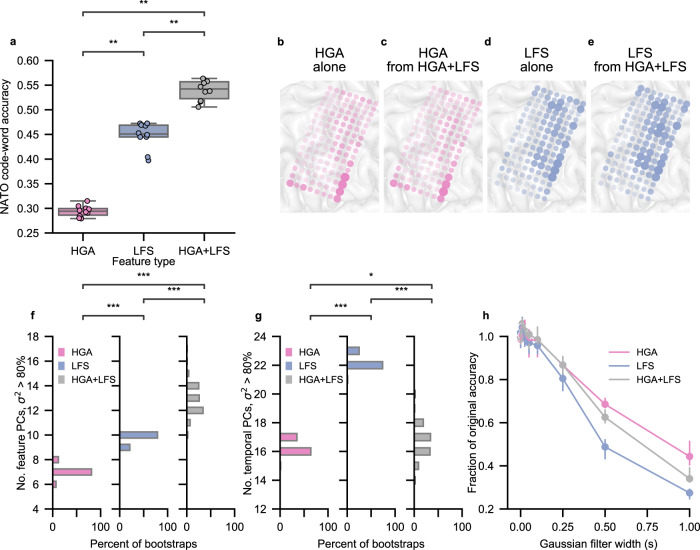
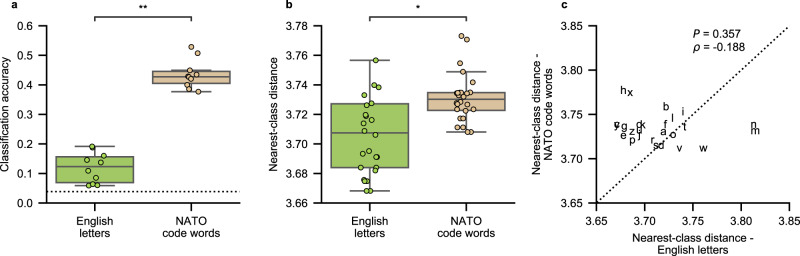
Neuroprostheses have the potential to restore communication to people who cannot speak or type due to paralysis. However, it is unclear if silent attempts to speak can be used to control a communication neuroprosthesis. Here, we translated direct cortical signals in a clinical-trial participant (ClinicalTrials.gov; NCT03698149) with severe limb and vocal-tract paralysis into single letters to spell out full sentences in real time. We used deep-learning and language-modeling techniques to decode letter sequences as the participant attempted to silently spell using code words that represented the 26 English letters (e.g. “alpha” for “a”). We leveraged broad electrode coverage beyond speech-motor cortex to include supplemental control signals from hand cortex and complementary information from low- and high-frequency signal components to improve decoding accuracy. We decoded sentences using words from a 1,152-word vocabulary at a median character error rate of 6.13% and speed of 29.4 characters per minute. In offline simulations, we showed that our approach generalized to large vocabularies containing over 9,000 words (median character error rate of 8.23%). These results illustrate the clinical viability of a silently controlled speech neuroprosthesis to generate sentences from a large vocabulary through a spelling-based approach, complementing previous demonstrations of direct full-word decoding.
Overview
The claims and statistics of this paper haven’t been checked yet.
Free: it reads the open-access text and checks the first 5 claims that cite a source we can check. Create a free account to check every claim.
Integrity signals
Registry
Cites
Statistics
Figures
Verification
Claims the paper makes
The claims and statistics of this paper haven’t been checked yet.
Free: it reads the open-access text and checks the first 5 claims that cite a source we can check. Create a free account to check every claim.
Claims other papers make about this one
Each is checked against this paper’s own text: does it say what the citing paper says it does?
The source backs part of the claim, not all of it — or backs it for a different population, condition or comparison.
In the citing paper
“These results show that functional speech-decoding performance can be achieved after a relatively short period of data collection compared to that of our previous work1,3 and is likely to continue to improve with more data.”
From A high-performance neuroprosthesis for speech decoding and avatar control (2023) · cites this paper as [3]
Experimental — accuracy not yet measuredThe source backs part of the claim, not all of it — or backs it for a different population, condition or comparison.
In the citing paper
“Initial efforts to decode text from the brain activity ofa person with anarthria during attempted speech had various limitations, including slow decoding rates and small vocabulary sizes1,3.”
From A high-performance neuroprosthesis for speech decoding and avatar control (2023) · cites this paper as [3]
Experimental — accuracy not yet measuredThe source backs part of the claim, not all of it — or backs it for a different population, condition or comparison.
In the citing paper
“During 14 days of data collection shortly after device implantation, we achieved high-performance text decoding, exceeding communication speeds of previous BCIs by a factor of 4 or more1,3,9”
From A high-performance neuroprosthesis for speech decoding and avatar control (2023) · cites this paper as [3]
Experimental — accuracy not yet measuredThe source backs part of the claim, not all of it — or backs it for a different population, condition or comparison.
In the citing paper
“an additional safeguard is to use a speech-detection algorithm to gate any decoding process, which is highly successful in correctly identifying volitional attempts of users to overtly and silently speak12,120.”
From The speech neuroprosthesis (2024) · cites this paper as [120]
Experimental — accuracy not yet measuredThe source backs part of the claim, not all of it — or backs it for a different population, condition or comparison.
In the citing paper
“Transfer learning, either between individuals108 or different types of speech within the same individual120, may also be used to expedite decoder training.”
From The speech neuroprosthesis (2024) · cites this paper as [120]
Experimental — accuracy not yet measured
6 more claims about this paper
Create a free account to see every claim other papers make about this one.
Self-check
Percentages, sums and reported differences re-computed from the paper’s own numbers.
The self-check needs the paper’s full text.
Citations
Cites
Adam: A Method for Stochastic Optimization
Kingma, D. P., & Ba, J. (2014) · arXiv · doi:10.48550/arxiv.1412.6980 · Cited by 98,946
Learning Phrase Representations using RNN Encoder–Decoder for Statistical Machine Translation
Cho, K., van Merrienboer, B., Gulcehre, C., Bahdanau, D., Bougares, F., Schwenk, H., & Bengio, Y. (2014) · Proceedings of the 2014 Conference on Empirical Methods in Natural Language Processing (EMNLP) · doi:10.3115/v1/d14-1179 · Cited by 25,545
Deep Inside Convolutional Networks: Visualising Image Classification Models and Saliency Maps
Simonyan, K., Vedaldi, A., & Zisserman, A. (2013) · arXiv · doi:10.48550/arxiv.1312.6034 · Cited by 5,370 · cited 2×
“To compute electrode contributions using data recorded during the isolated-target task, we computed the derivative of the classifier’s loss function with respect to the input features across time as in Simonyan et al.(28), yielding ameasure of howmuch the predicted model outputs were affected by small changes to the i…”
MethodInstant neural control of a movement signal
Serruya, M. D., Hatsopoulos, N. G., Paninski, L., Fellows, M. R., & Donoghue, J. P. (2002) · Nature · doi:10.1038/416141a · Cited by 1,409
High-performance brain-to-text communication via handwriting
Willett, F. R., Avansino, D. T., Hochberg, L. R., Henderson, J. M., & Shenoy, K. V. (2021) · Nature · doi:10.1038/s41586-021-03506-2 · Cited by 1,024
Partially overlapping neural networks for real and imagined hand movements.
Gerardin, E. (2000) · Cerebral Cortex · doi:10.1093/cercor/10.11.1093 · Cited by 930
Speech synthesis from neural decoding of spoken sentences
Anumanchipalli, G. K., Chartier, J., & Chang, E. F. (2019) · Nature · doi:10.1038/s41586-019-1119-1 · Cited by 883
Self-citationChebyshev Approximation for Nonrecursive Digital Filters with Linear Phase
Parks, T., & McClellan, J. (1972) · IEEE Transactions on Circuit Theory · doi:10.1109/tct.1972.1083419 · Cited by 772
Functional organization of human sensorimotor cortex for speech articulation
Bouchard, K. E., Mesgarani, N., Johnson, K., & Chang, E. F. (2013) · Nature · doi:10.1038/nature11911 · Cited by 686
Self-citationNeuroprosthesis for Decoding Speech in a Paralyzed Person with Anarthria
Moses, D. A., Metzger, S. L., Liu, J. R., Anumanchipalli, G. K., Makin, J. G., Sun, P. F., Chartier, J., Dougherty, M. E., Liu, P. M., Abrams, G. M., et al. (2021) · New England Journal of Medicine · doi:10.1056/nejmoa2027540 · Cited by 582
Self-citation
Research works printed but not linked: 1
- 47. About the Oxford 3000 and 5000 word lists at Oxford Learner's Dictionaries. Oxford University Press. https://www. oxfordlearnersdictionaries.com/us/about/wordlists/ oxford3000-5000.
Cited by
Items 101–190 of 190
Comparison metrics and power trade-offs for BCI motor decoding circuit design
Saad, J., Evans, A., Jaoui, I., Roux-Sibillon, V., Hardy, E., & Anghel, L. (2025) · Frontiers in Human Neuroscience · doi:10.3389/fnhum.2025.1547074 · Cited by 5
Electronic Neurons for a New Learning Paradigm
Wang, Z., Wang, J., Shi, X., Zhu, Z., Chen, P., & Peng, H. (2023) · Advanced Healthcare Materials · doi:10.1002/adhm.202203247 · Cited by 5
Ail, B. E., Ramele, R., Gambini, J., & Santos, J. M. (2024) · Brain Sciences · doi:10.3390/brainsci14080836 · Cited by 5
AI Ethics, the Neuralink Enigma, and Statistical Inference as the Anticlimax of Machiavelli’s Prince
de Araújo, A. F. M. (2024) · Digital Society · doi:10.1007/s44206-024-00122-1 · Cited by 4
Assessing Language Disorders using Artificial Intelligence: a Paradigm ShiftPreprint
Themistocleous, C. K., Tsapkini, K., & Kokkinakis, D. (2023) · arXiv (Cornell University) · doi:10.48550/arxiv.2305.20046 · Cited by 4
Text Generation of Speech Imagery Based on an Enhanced CTA-BiLSTM Model Utilizing EEG Signals
Pan, H., Chu, X., Miao, R., Wang, M., Wang, Y., & Li, Z. (2025) · IEEE Transactions on Consumer Electronics · doi:10.1109/tce.2025.3557912 · Cited by 3
Artificial intelligence for brain-to-speech decoding in paralysis: a systematic review
Belfrouh, S., Salmam, F. Z., Errattahi, R., Hanine, M., Obidallah, W. J., & Alhulayyil, H. A. (2026) · BMC Medical Informatics and Decision Making · doi:10.1186/s12911-026-03552-8 · Cited by 3
Brain-Computer Interface Technologies, the Autistic Mirroring, and Twins’ Death: Autonomy and Ethos
de Araújo, A. F. M. (2024) · Journal of Technology in Behavioral Science · doi:10.1007/s41347-024-00446-2 · Cited by 3
Using data from cue presentations results in grossly overestimating semantic BCI performance
Rybář, M., Poli, R., & Daly, I. P. (2024) · Scientific Reports · doi:10.1038/s41598-024-79309-y · Cited by 3
Guo, Y., Li, G., Xie, C., & Sun, Q. (2025) · International Conference on Artificial Intelligence, Internet and Digital Economy (ICAID) · doi:10.1109/icaid65275.2025.11034615 · Cited by 3
Csapó, T. G., Arthur, F. V., Nagy, P., & Boncz, Á. (2023) · Workshop on Speech, Music and Mind (SMM) · doi:10.21437/smm.2023-4 · Cited by 3
E2H: A Two-Stage Non-Invasive Neural Signal Driven Humanoid Robotic Whole-Body Control FrameworkPreprint
Duan, Y., Zhang, Q., Zhou, J., Sun, J., Jiang, X., Cao, J., Wang, J., Yang, Y., Zhao, W. H., Han, G., et al. (2024) · arXiv (Cornell University) · doi:10.48550/arxiv.2410.02141 · Cited by 3
Do EEG Foundation Models Transfer to Speech? A Benchmark on Overt and Imagined Speech DecodingPreprint
Khanday, O. M., Ticha, M. B. B., Belfrouh, S., Ouellet, M., & Gonzalez-Lopez, J. A. (2026) · arXiv (Cornell University) · doi:10.48550/arxiv.2607.27268 · Cited by 3
Decoding Single and Paired Phonemes Using 7T Functional MRI
Vitória, M. A., Fernandes, F. G., van den Boom, M., Ramsey, N. F., & Raemaekers, M. A. H. (2024) · Brain Topography · doi:10.1007/s10548-024-01034-6 · Cited by 2
Impact of Temporal Precision on Speech Synthesis Accuracy From Electrocorticographic Brain Signals
Rabbani, Q., Fifer, M. S., Crone, N. E., & Moro-Velázquez, L. (2025) · IEEE International Conference on Acoustics Speech and Signal Processing · doi:10.1109/icassp49660.2025.10888813 · Cited by 2
Speech mode classification from electrocorticography: transfer between electrodes and participants
de Borman, A., Wittevrongel, B., Dyck, B. V., Rooy, K. V., Carrette, E., Meurs, A., Roost, D. V., & Hulle, M. M. V. (2025) · Journal of Neural Engineering · doi:10.1088/1741-2552/adf2de · Cited by 2
Restoring communication with speech brain–computer interfaces
Prakash, P. R., Luo, S., Crone, N. E., & Slutzky, M. W. (2025) · Elsevier eBooks · doi:10.1016/b978-0-443-24824-5.00015-6 · Cited by 2
Wu, X., Hu, K., Fu, Z., & Zhang, D. (2025) · Imaging Neuroscience · doi:10.1162/imag.a.146 · Cited by 2
Personalized supervised and unsupervised intracranial sleep decoding during deep brain stimulation
Smyth, C., Anjum, M. F., Zhang, J., Yao, J., Abbasi-Asl, R., Starr, P. A., & Little, S. J. (2026) · npj Digital Medicine · doi:10.1038/s41746-026-02368-0 · Cited by 2
SENSE: Efficient EEG-to-Text via Privacy-Preserving Semantic Retrieval
Murhekar, A., Liu, C., Mishra, A., Roychowdhury, S., & Gwizdka, J. (2026) · INTERNATIONAL CONFERENCE ON MULTIMODAL INTERACTION · doi:10.1145/3776574.3831225 · Cited by 2
An ultra-sensitive humidity sensor for silent speech intelligent recognition
yang, H., Zhang, Q., Chen, S., Liu, S., Chen, S., Guo, Q., Chen, G., Liu, X., Zhou, N., Li, W., et al. (2026) · International Journal of Extreme Manufacturing · doi:10.1088/2631-7990/ae6c6e · Cited by 2
Full‐Stack Architectures for Intelligent Brain‐Computer Interfaces
Lee, H. K., Kim, H. B., Park, S. U., Joo, J., Min, J., Lee, G., Kang, J. Y., Jeong, H., Yoo, J., & Won, S. M. (2026) · Advanced Science · doi:10.1002/advs.75838 · Cited by 2
Swanson, E., Dohle, E., Bashford, L., Horsfall, H. L., Jovanovic, L., Muirhead, W. R., & Brannigan, J. (2026) · Journal of Neural Engineering · doi:10.1088/1741-2552/ae7694 · Cited by 2
An Interpretable and Generalizable Speech Detector Based on a CNN-LSTM Framework
Wan, Z., Wu, Y., Ticha, M. B. B., Godais, G. L., Kahane, P., Chabardès, S., Chen, W., Zhang, S., & Yvert, B. (2024) · IEEE International Conference on Acoustics Speech and Signal Processing · doi:10.1109/icassp48485.2024.10445835 · Cited by 2
Bioconvergence: Bridging Science and Nature to Shape Tomorrow
Siragusa, N., & Matz, L. (2024) · Springer eBooks · doi:10.1007/978-3-031-61593-1_1 · Cited by 2
A High-Performance Neuroprosthesis for Speech Decoding and Avatar Control
Littlejohn, K. T., Metzger, S. L., Silva, A. B., Moses, D. A., Seaton, M. P., Wang, R., Dougherty, M. E., Liu, J. R., Wu, P., Berger, M. A., et al. (2025) · Springer briefs in electrical and computer engineering · doi:10.1007/978-3-031-80497-7_3 · Cited by 2
Self-citationSelf-paced silent speech brain-computer interface for device control
Luo, S., Angrick, M., Coogan, C. G., Candrea, D. N., Wyse‐Sookoo, K., Schippers, A., Ganji, R., Milsap, G., Anderson, W. S., Gordon, C. R., et al. (2026) · Communications Biology · doi:10.1101/2025.04.09.25325542 · Cited by 2
Sun, Q., Merino, E. C., Dyck, B. V., Yang, Y., He, J., & Hulle, M. M. V. (2025) · doi:10.36227/techrxiv.176592065.57408366/v1 · Cited by 2
Wang, F., Chen, Y., Wang, P., Gong, A., Xu, J., & Fu, Y. (2026) · Scientific Data · doi:10.1038/s41597-026-06708-3 · Cited by 2
A Surgical Planning Pipeline for Human Implantable Brain-Computer InterfacesPreprint
Hadar, P., Li, J., Coughlin, B. F., Munoz, W., Hsueh, B., Williams, Z. M., Yee, S., Rapalino, O., Brandman, D. M., Stavisky, S. D., et al. (2026) · medRxiv · doi:10.64898/2026.02.01.26345325 · Cited by 2
Low-Power Feature Extraction for BCI Applications Using Approximate Continuous Wavelet Transform
Saad, J., Evans, A., Miro-Panades, I., Aksenova, T., & Anghel, L. (2025) · International Winter Conference on Brain-Computer Interface (BCI) · doi:10.1109/bci65088.2025.10931272 · Cited by 1
Real-time Open-vocabulary Sentence Decoding from MEG Signals Using Transformers
Luo, K. (2024) · International Conference on Image Processing, Computer Vision and Machine Learning (ICICML) · doi:10.1109/icicml63543.2024.10957766 · Cited by 1
New Applications of Neurotechnologies for Neurological Disorders
Orsborn, A. L., Pirondini, E., Capogrosso, M., Gaunt, R. A., & Stavisky, S. D. (2025) · Springer eBooks · doi:10.1007/978-3-031-89307-0_25 · Cited by 1
Recreating Neural Activity During Speech Production with Language and Speech Model Embeddings
Khanday, O. M., Esteban, P. R. S., Lone, Z. A., Ouellet, M., & González, J. A. (2025) · Interspeech (USB) · doi:10.21437/interspeech.2025-1400 · Cited by 1
Learning discrete neural latent spaces for high-performance speech decoding
Jia, Y., Lian, Q., Wang, L., Wang, Y., & Qi, Y. (2025) · Journal of Neural Engineering · doi:10.1088/1741-2552/ae2ccd · Cited by 1
Reliable AI Platform for Monitoring BCI Caused Brain Injury and Providing Real‐Time Protection
He, C., Ding, Y., Rabczuk, T., & Ding, C. (2025) · Advanced Science · doi:10.1002/advs.202506747 · Cited by 1
Word classification across speech modes from low-density electrocorticography signals
de Borman, A., Dyck, B. V., Rooy, K. V., Carrette, E., Meurs, A., Roost, D. V., & Hulle, M. M. V. (2026) · Journal of Neural Engineering · doi:10.1088/1741-2552/ae3a1b · Cited by 1
UGR-MINDVOICE: A multimodal EEG-audio dataset for overt and covert Iberian Spanish speech production
Cortina, I. V., Khanday, O. M., Ouellet, M., Pérez-Córdoba, J. L., Esteban, P. R.-S., Miccoli, L., Galdón, A., Granados, G. O., & González, J. A. (2026) · Computer Speech & Language · doi:10.1016/j.csl.2026.101964 · Cited by 1
Brain-to-Speech: Prosody Feature Engineering and Transformer-Based Reconstruction
Al-Radhi, M. S., Németh, G., Tchechmedjiev, A., & Xu, B. (2026) · Springer eBooks · doi:10.1007/978-3-032-10561-5_16 · Cited by 1
Yang, L., Sun, Q., Dyck, B. V., Merino, E. C., & Hulle, M. M. V. (2026) · Lirias · doi:10.48550/arxiv.2605.10337 · Cited by 1
Xu, R., Huang, X., Chen, Z., Mohamed, H. A., He, X., Lu, F., Ou, Y., Li, G., & Zhang, K. (2026) · Cellular and Molecular Neurobiology · doi:10.1007/s10571-026-01758-y · Cited by 1
van Balen, B., van Grunsven, J., IJsselsteijn, W. A., Ramsey, N. F., & Vansteensel, M. J. (2026) · Neuroethics · doi:10.1007/s12152-026-09660-6 · Cited by 1
Huang, C., Liu, Z., Peng, Y., & Kong, W. (2026) · International Joint Conference on Artificial Intelligence · doi:10.24963/ijcai.2026/402 · Cited by 1
A neural code for generative speech production in human Wernicke’s area
Silva, A. B., Leonard, M. K., Hullett, P. W., Levy, D. F., Wang, C., Xu, D., Bhaya-Grossman, I., & Chang, E. F. (2026) · Science · doi:10.1126/science.aef8963 · Cited by 1
Self-citationReducing power requirements for high-accuracy decoding in iBCIs
Karpowicz, B. M., Bhaduri, B., Nason, S. R., Jacques, B. G., Ali, Y. H., Flint, R. D., Bechefsky, P. H., Hochberg, L. R., Yong, N. A., Slutzky, M. W., et al. (2024) · Journal of Neural Engineering · doi:10.1088/1741-2552/ad88a4 · Cited by 1
The Odyssey of Robots: From Fictional Narratives to Revolutionary Healthcare Solutions
Rana, A., Raut, A., Samantaray, S., & Dutta, D. (2025) · Smart innovation, systems and technologies · doi:10.1007/978-981-96-0143-1_1 · Cited by 1
Sub-scalp EEG for sensorimotor brain–computer interface
Mahoney, T., Grayden, D. B., & John, S. E. (2025) · Journal of Neural Engineering · doi:10.1088/1741-2552/ade9f1 · Cited by 1
Fonseca De Araujo, J. (2023) · Apollo (University of Cambridge) · doi:10.17863/cam.109624 · Cited by 1
Al-Radhi, M. S., Németh, G., & Gerazov, B. (2025) · arXiv (Cornell University) · doi:10.48550/arxiv.2508.03166 · Cited by 1
Semantic-Aware Decoding of Covert Inner Speech: A Multimodal EEG–EMG–Audio FrameworkPreprint
Ahmadi, H., Santamaría-Vázquez, E., Mesin, L., & Hornero, R. (2026) · Research Square · doi:10.21203/rs.3.rs-9365678/v1 · Cited by 1
Neural decoding of speech using deep neural ensemblesPreprint
Yoon, S., Avansino, D. T., Madugula, S. S., Levin, A. D., Fan, C., Meschede-Krasa, B., Singh, A., Vo, C., Hahn, N. V., Card, N. S., et al. (2026) · bioRxiv (Cold Spring Harbor Laboratory) · doi:10.64898/2026.06.02.729705 · Cited by 1
Non-Invasive Brain-to-Text BCIs: Phoneme-Level Sentence Reconstruction from MEGPreprint
Vélez, A., Ru, L., Ahmadi, B., Principe, J., & Babajani-Feremi, A. (2026) · Research Square · doi:10.21203/rs.3.rs-9916752/v1 · Cited by 1
Brain-to-Language Decoding: Paradigms, Signals, Methods, Evaluation, Practical Use and BeyondPreprint
Yang, Y., Duan, Y., Liu, C., Wang, Y., Zhou, X., Lin, C.-T., & Zhang, Y. (2026) · arXiv (Cornell University) · doi:10.48550/arxiv.2609.27650 · Cited by 1
ANA Investigates Disruptive Technologies: Neuroethics Role in Advancing Innovation
Samudralwar, R. D., Jagolino-Cole, A. L., Goss, A., & Rommelfanger, K. S. (2023) · Annals of Neurology · doi:10.1002/ana.26607
Friedrich, E. V. C., Neuper, C., & Scherer, R. (2023) · Frontiers in Human Neuroscience · doi:10.3389/fnhum.2023.1280095
Corticography and human intracranial neurophysiology
Zhao, L., Khambhati, A. N., Hullett, P. W., & Chang, E. F. (2024) · Elsevier eBooks · doi:10.1016/b978-0-12-820480-1.00156-x
Self-citationArtificial organs, tissues, and support systems
Tashiro, H., Popović, M. B., Dobrev, I., & Terasawa, Y. (2024) · Elsevier eBooks · doi:10.1016/b978-0-443-13862-1.00009-6
Human Enhancements und Patentrecht
Vetter, S. (2024) · Mohr Siebeck eBooks · doi:10.1628/978-3-16-163203-7
An Adaptive Embedded Platform to Enable Real-Time Brain Motor Decoding
Saad, J., Evans, A., Roux-Sibillon, V., Miro-Panades, I., Aksenova, T., & Anghel, L. (2025) · International Conference on Distributed Computing in Smart Systems and the Internet of Things (DCOSS-IoT) · doi:10.1109/dcoss-iot65416.2025.00019
Zock, M., Kentaro, I., & Yuan, Z. (2025) · HAL
Fase-spatiale beamforming voor het decoderen van bewegingsaanzet geëvoceerde visuele potentialen
Libert, A. (2024) · Lirias
Αποκωδικοποίηση αντίληψης ομιλίας από μη-επεμβατικές εγγραφές εγκεφάλου
Ποσταντζόγλου, Δ. Π., & Ποσταντζόγλου, Δ. Π. (2024) · University of Thessaly Institutional Repository (University of Thessaly)
Murken, M., & Feldhaus, M. (2025) · Verlag Julius Klinkhardt eBooks · doi:10.35468/6186-02
Decoding non-invasive brain activity with novel deep-learning approachesPreprint
Csáky, R. (2025) · arXiv (Cornell University) · doi:10.48550/arxiv.2510.24733
Ticha, M. B. B., Ran, X., Saldanha, G., Godais, G. L., Roussel, P., Aubert, M., Fontanell, A., Costecalde, T., Struber, L., Karakas, S., et al. (2025) · arXiv (Cornell University) · doi:10.48550/arxiv.2512.04618
Huang, Y., Sui, L., Zhan, L., Wang, C., Guo, Z., Li, Y., & Wu, X. (2026) · arXiv (Cornell University) · doi:10.48550/arxiv.2601.01782
de Oliveira, S. M. (2024) · LA Referencia (Red Federada de Repositorios Institucionales de Publicaciones Científicas)
EEG Foundation Model Improves Online Directional Motor Imagery Brain-computer Interface ControlPreprint
Karrenbach, M., Wang, H., Johnson, Z., Ding, Y., & He, B. (2026) · bioRxiv (Cold Spring Harbor Laboratory) · doi:10.64898/2026.03.24.714020
Reconstruction of overt speech from Electrocorticographic (ECoG) data using deep neural networks
Ticha, M. B. B. (2025) · theses.fr (ABES) · doi:10.70675/12c589a0z38bdz4a87zbe17zc60eac7a3e60
Patashov, D., Liu, L. H., Tominaga, J., Nakajima, K., Miyanaga, H., Tsunematsu, S., Kato, T., Tanaka, K., & Sakai, H. (2026) · Annals of Biomedical Engineering · doi:10.1007/s10439-026-04093-x
Neural Reconstruction in Disorders of Consciousness: Prospects and Emerging Challenges
Kolisnyk, M., Rankaduwa, S., Gupta, G., Kazazian, K., Debicki, D., & Owen, A. M. (2026) · The Neuroscientist · doi:10.1177/10738584261434939
SYNAPSE: Neuro-Symbolic Visual Thought-to-Text Decoding via Topological Semantic Denoising
Murhekar, A., & Mishra, A. (2026) · Findings of the Association for Computational Linguistics: EMNLP (Findings of EMNLP) · doi:10.18653/2026.findings-emnlp.1131
Dong, P., Song, Y., Li, Y., Djurić, P. M., & Yao, S. (2026) · Soft Science · doi:10.20517/ss.2026.38
Decoding Turn-Taking State Transitions in Conversational Speech from Motor Cortex Ensemble Activity
Brown, D. E., Wairagkar, M., Iacobacci, C., Okorokova, E. V., Singer-Clark, T., Card, N. S., Hochberg, L. R., Brandman, D. M., & Stavisky, S. D. (2025) · International IEEE/EMBS Conference on Neural Engineering · doi:10.1109/ner61569.2025.11588941
Vera, L. Z., & López, J. A. G. (2026) · arXiv (Cornell University) · doi:10.48550/arxiv.2607.26751 · Cited by 1
A Real-Time GUI Platform for Neural Signal Transmission: Design, Resource Profiling, and Usability
Alzubaidi, L. H. J., Farjami, Y., & Beni, M. A. (2026) · International Journal of Computer Information Systems and Industrial Management Applications · doi:10.70917/ijcisim-2026-3951
A Streaming Brain-to-Voice Neuroprosthesis to Restore Naturalistic Communication
Cho, C. J., Littlejohn, K. T., Liu, J. R., Silva, A. B., Yu, B., Anderson, V. R., Kurtz-Miott, C. M., Brosler, S., Kashyap, A., Hallinan, I. P., et al. (2026) · Springer briefs in electrical and computer engineering · doi:10.1007/978-3-032-25828-1_5
Self-citationTCFnet: Temporal-frequency hybrid MetaFormer with multi-stage training for neural tracking of speech
Li, D., Huang, S., Zeng, Z., Jin, Z., Wang, Z., & Yang, H. (2026) · Pattern Recognition · doi:10.1016/j.patcog.2026.114591
DRDNet: a dual-view representation decoupling network for handwriting imagery EEG classification
Li, Z., Wang, F., Lu, H., Luo, R., Li, T. W., Zhao, L., & Fu, Y. (2026) · Journal of Neural Engineering · doi:10.1088/1741-2552/ae9bef
A Multimodal Affective Mandarin Protocol for Non-Invasive Brain-to-Text and Emotion-State Decoding
Chongliang, Z., Quanhong, C., Che, J., Che, J., Na, L., Wang, Z., Zhou, Q., & Tan, H. (2026) · International Conference on Image Processing, Multimedia Technology and Machine Learning (IPMML) · doi:10.1109/ipmml71439.2026.11682577
Speech Brain-Computer Interfaces: A New Pathway for Restoring Communication in Anarthria
Deng, L., Li, F., & Song, M. (2026) · Neuroscience Bulletin · doi:10.1007/s12264-026-01722-2
Semantic-aware decoding of covert inner speech: A multimodal EEG–EMG–audio framework
Ahmadi, H., Santamaría-Vázquez, E., Mesin, L., & Hornero, R. (2026) · Biomedical Signal Processing and Control · doi:10.1016/j.bspc.2026.111527
Huggins, J. E., Mattia, D., Aarnoutse, E. J., Allison, B. Z., Berezutskaya, J., Bianchi, L., Chavarriaga, R., Corsi, M., Dean, H., Fernandes, F., et al. (2026) · Research in Biomedical Engineering and Technology · doi:10.1080/29960355.2026.2731643
From Neurons to Conversation: Speech Brain-Computer InterfacesPreprint
Khajehnejad, M., Habibollahi, F., Boccato, T., Sousa, M., Olak, M., Sheiban, F. J., & Ferrante, M. (2026) · arXiv (Cornell University) · doi:10.48550/arxiv.2609.36736
Babos, S., & Varga, S. (2026) · Zenodo (CERN European Organization for Nuclear Research) · doi:10.5281/zenodo.23077663
Brain–computer interfaces for neurorehabilitation: Applications in children
Singh, S., Pomeraniec, I. J., Qiu, L., & Cajigas, I. (2026) · Elsevier eBooks · doi:10.1016/b978-0-443-23540-5.00011-4
Scaling Neural Motor Decoding via Decoupled Behavioral PretrainingPreprint
Lachi, D., Arora, V., Mahato, S. P., Andre, A., & Dyer, E. L. (2026) · arXiv (Cornell University) · doi:10.48550/arxiv.2611.08263
Wallner, J. J., Angrick, M., Luo, S., Candrea, D. N., Crone, N. E., & Krusienski, D. J. (2026) · Journal of Neural Engineering · doi:10.1088/1741-2552/aec049
Kostick, K. M., & Hurley, M. E. (2026) · AJOB Neuroscience · doi:10.1080/21507740.2026.2758916
Metadata
- Authors
- Metzger, S. L., Liu, J. R., Moses, D. A., Dougherty, M. E., Seaton, M. P., Littlejohn, K. T., Chartier, J., Anumanchipalli, G. K., Tu-Chan, A., Ganguly, K., & Chang, E. F.
- Affiliations
- University of California, San Francisco (US)
- Corresponding author
- Chang, Edward F.
- ORCID
- Venue
- Nature Communications
- Published
- 2022-11-08
- Volume
- 13
- Issue
- 1
- Pages
- 6510-6510
- ISSN
- 2041-1723 (ISSN-L)
- PMC
- PMC9643551
- OpenAlex
- W4308523455
- Semantic Scholar
- 57c6fbd74dfc7609ed511f0b2d5c4102aa7fc8d6
- Cited by
- 153
- References
- 46
- Citations by year
- 2026: 32 · 2025: 48 · 2024: 44 · 2023: 29
- FWCI
- 15.59
- Type
- journal article
- Language
- en
- Open access
- gold
- doi.org
- Licence
- cc-by
- creativecommons.org/licenses/by/4.0 (tdm)
- creativecommons.org/licenses/by/4.0 (vor)
- Locations
- Nature Communications (publishedVersion, cc-by)
- PubMed Central (publishedVersion, cc-by)
- PubMed (publishedVersion)
- RePEc: Research Papers in Economics (submittedVersion)
- DOAJ (DOAJ: Directory of Open Access Journals) (submittedVersion, cc-by-sa)
- eScholarship (California Digital Library) (submittedVersion, cc-by)
- Funders
- U.S. Department of Health & Human Services | National Institutes of Health (U01 DC018671-01A1)
- William K Bowes, Jr Foundation
- Topics
- Life Sciences › Neuroscience › Cognitive Neuroscience › EEG and Brain-Computer Interfaces
- Life Sciences › Neuroscience › Cellular and Molecular Neuroscience › Neuroscience and Neural Engineering
- Life Sciences › Neuroscience › Cognitive Neuroscience › Tactile and Sensory Interactions
- Keywords
- silent speech, limb paralysis, deep learning, language models
- MeSH terms
- Humans, Language, Paralysis, Speech, Speech Perception, Vocabulary
About these checks
Registry, retraction, Cites and statistics results are computed, not judged, with one exception: a printed reference that no index lists is read once by a model before it counts as a citation error. Claims are extracted by a model and kept only when their quote appears verbatim in the text; each cited source is then checked, with a model’s help, for whether it says what the claim relies on. Those verdicts can be wrong — read the claim’s quote and the cited source before relying on one.
Statistics and arithmetic are recomputed, not judged.
Confidence bands are shown only for fields calibrated on our annotated test set. None is calibrated yet, so no band is shown.
What counts as a claim ›How we measure confidence ›How we check this ›
Are you an author, or do you see a problem with this page? Request a review
Data sources
Bibliographic data: Semantic Scholar, OpenAlex, Crossref.
Contains information from the Semantic Scholar Academic Graph Datasets, made available under the ODC Attribution License (ODC-BY 1.0).
Semantic Scholar’s data is described in: Kinney, R., et al. (2023). The Semantic Scholar Open Data Platform. arXiv:2301.10140.
