

Generalizable spelling using a speech neuroprosthesis in an individual with severe limb and vocal paralysis
Open accessThe DOI matches its Crossref record; 48 of the 48 references it cites were found in a registry or an index.
Abstract
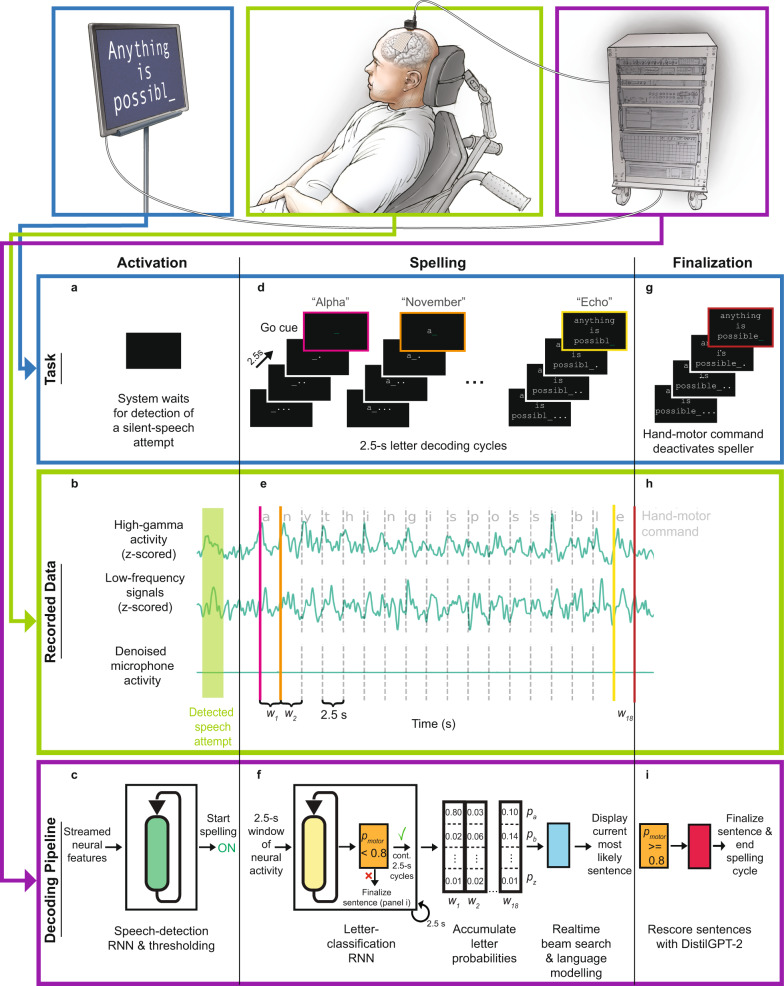
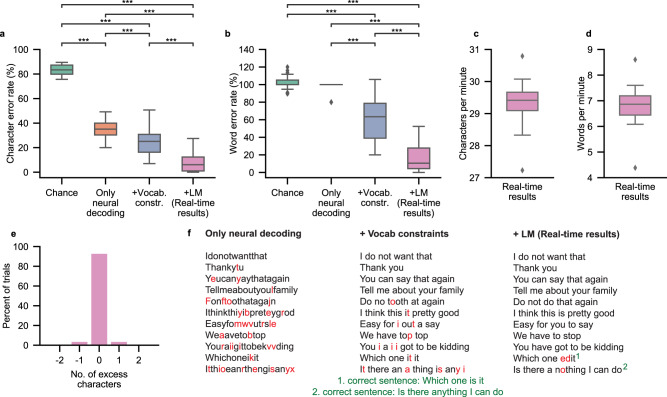
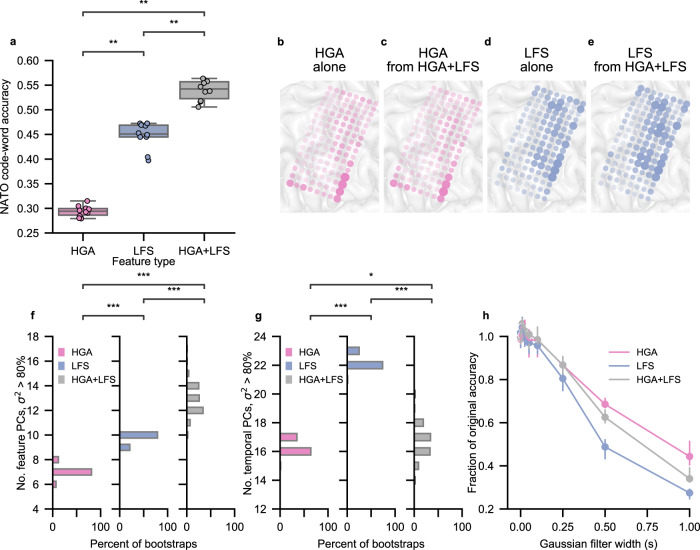
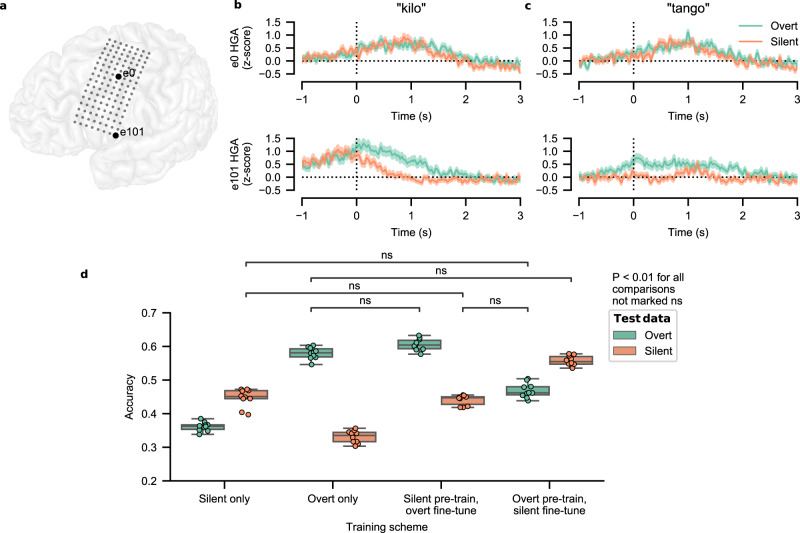
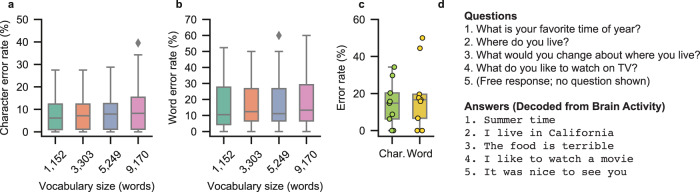
Neuroprostheses have the potential to restore communication to people who cannot speak or type due to paralysis. However, it is unclear if silent attempts to speak can be used to control a communication neuroprosthesis. Here, we translated direct cortical signals in a clinical-trial participant (ClinicalTrials.gov; NCT03698149) with severe limb and vocal-tract paralysis into single letters to spell out full sentences in real time. We used deep-learning and language-modeling techniques to decode letter sequences as the participant attempted to silently spell using code words that represented the 26 English letters (e.g. “alpha” for “a”). We leveraged broad electrode coverage beyond speech-motor cortex to include supplemental control signals from hand cortex and complementary information from low- and high-frequency signal components to improve decoding accuracy. We decoded sentences using words from a 1,152-word vocabulary at a median character error rate of 6.13% and speed of 29.4 characters per minute. In offline simulations, we showed that our approach generalized to large vocabularies containing over 9,000 words (median character error rate of 8.23%). These results illustrate the clinical viability of a silently controlled speech neuroprosthesis to generate sentences from a large vocabulary through a spelling-based approach, complementing previous demonstrations of direct full-word decoding.
Overview
The claims and statistics of this paper haven’t been checked yet.
Free: it reads the open-access text and checks the first 5 claims that cite a source we can check. Create a free account to check every claim.
Integrity signals
Registry
Cites
Statistics
Figures
Verification
Claims the paper makes
The claims and statistics of this paper haven’t been checked yet.
Free: it reads the open-access text and checks the first 5 claims that cite a source we can check. Create a free account to check every claim.
Claims other papers make about this one
Each is checked against this paper’s own text: does it say what the citing paper says it does?
The source backs part of the claim, not all of it — or backs it for a different population, condition or comparison.
In the citing paper
“These results show that functional speech-decoding performance can be achieved after a relatively short period of data collection compared to that of our previous work1,3 and is likely to continue to improve with more data.”
From A high-performance neuroprosthesis for speech decoding and avatar control (2023) · cites this paper as [3]
Experimental — accuracy not yet measuredThe source backs part of the claim, not all of it — or backs it for a different population, condition or comparison.
In the citing paper
“Initial efforts to decode text from the brain activity ofa person with anarthria during attempted speech had various limitations, including slow decoding rates and small vocabulary sizes1,3.”
From A high-performance neuroprosthesis for speech decoding and avatar control (2023) · cites this paper as [3]
Experimental — accuracy not yet measuredThe source backs part of the claim, not all of it — or backs it for a different population, condition or comparison.
In the citing paper
“During 14 days of data collection shortly after device implantation, we achieved high-performance text decoding, exceeding communication speeds of previous BCIs by a factor of 4 or more1,3,9”
From A high-performance neuroprosthesis for speech decoding and avatar control (2023) · cites this paper as [3]
Experimental — accuracy not yet measuredThe source backs part of the claim, not all of it — or backs it for a different population, condition or comparison.
In the citing paper
“an additional safeguard is to use a speech-detection algorithm to gate any decoding process, which is highly successful in correctly identifying volitional attempts of users to overtly and silently speak12,120.”
From The speech neuroprosthesis (2024) · cites this paper as [120]
Experimental — accuracy not yet measuredThe source backs part of the claim, not all of it — or backs it for a different population, condition or comparison.
In the citing paper
“Transfer learning, either between individuals108 or different types of speech within the same individual120, may also be used to expedite decoder training.”
From The speech neuroprosthesis (2024) · cites this paper as [120]
Experimental — accuracy not yet measured
6 more claims about this paper
Create a free account to see every claim other papers make about this one.
Self-check
Percentages, sums and reported differences re-computed from the paper’s own numbers.
The self-check needs the paper’s full text.
Citations
Cites
Adam: A Method for Stochastic Optimization
Kingma, D. P., & Ba, J. (2014) · arXiv · doi:10.48550/arxiv.1412.6980 · Cited by 98,946
Learning Phrase Representations using RNN Encoder–Decoder for Statistical Machine Translation
Cho, K., van Merrienboer, B., Gulcehre, C., Bahdanau, D., Bougares, F., Schwenk, H., & Bengio, Y. (2014) · Proceedings of the 2014 Conference on Empirical Methods in Natural Language Processing (EMNLP) · doi:10.3115/v1/d14-1179 · Cited by 25,545
Deep Inside Convolutional Networks: Visualising Image Classification Models and Saliency Maps
Simonyan, K., Vedaldi, A., & Zisserman, A. (2013) · arXiv · doi:10.48550/arxiv.1312.6034 · Cited by 5,370 · cited 2×
“To compute electrode contributions using data recorded during the isolated-target task, we computed the derivative of the classifier’s loss function with respect to the input features across time as in Simonyan et al.(28), yielding ameasure of howmuch the predicted model outputs were affected by small changes to the i…”
MethodInstant neural control of a movement signal
Serruya, M. D., Hatsopoulos, N. G., Paninski, L., Fellows, M. R., & Donoghue, J. P. (2002) · Nature · doi:10.1038/416141a · Cited by 1,409
High-performance brain-to-text communication via handwriting
Willett, F. R., Avansino, D. T., Hochberg, L. R., Henderson, J. M., & Shenoy, K. V. (2021) · Nature · doi:10.1038/s41586-021-03506-2 · Cited by 1,024
Partially overlapping neural networks for real and imagined hand movements.
Gerardin, E. (2000) · Cerebral Cortex · doi:10.1093/cercor/10.11.1093 · Cited by 930
Speech synthesis from neural decoding of spoken sentences
Anumanchipalli, G. K., Chartier, J., & Chang, E. F. (2019) · Nature · doi:10.1038/s41586-019-1119-1 · Cited by 883
Self-citationChebyshev Approximation for Nonrecursive Digital Filters with Linear Phase
Parks, T., & McClellan, J. (1972) · IEEE Transactions on Circuit Theory · doi:10.1109/tct.1972.1083419 · Cited by 772
Functional organization of human sensorimotor cortex for speech articulation
Bouchard, K. E., Mesgarani, N., Johnson, K., & Chang, E. F. (2013) · Nature · doi:10.1038/nature11911 · Cited by 686
Self-citationNeuroprosthesis for Decoding Speech in a Paralyzed Person with Anarthria
Moses, D. A., Metzger, S. L., Liu, J. R., Anumanchipalli, G. K., Makin, J. G., Sun, P. F., Chartier, J., Dougherty, M. E., Liu, P. M., Abrams, G. M., et al. (2021) · New England Journal of Medicine · doi:10.1056/nejmoa2027540 · Cited by 582
Self-citation
Research works printed but not linked: 1
- 47. About the Oxford 3000 and 5000 word lists at Oxford Learner's Dictionaries. Oxford University Press. https://www. oxfordlearnersdictionaries.com/us/about/wordlists/ oxford3000-5000.
Cited by
A high-performance neuroprosthesis for speech decoding and avatar control
Metzger, S. L., Littlejohn, K. T., Silva, A. B., Moses, D. A., Seaton, M. P., Wang, R., Dougherty, M. E., Liu, J. R., Wu, P., Berger, M. A., et al. (2023) · Nature · doi:10.1038/s41586-023-06443-4 · Cited by 522
Self-citationAn Accurate and Rapidly Calibrating Speech Neuroprosthesis
Card, N. S., Wairagkar, M., Iacobacci, C., Hou, X., Singer-Clark, T., Willett, F. R., Kunz, E. M., Fan, C., Vahdati Nia, M., Deo, D. R., et al. (2024) · New England Journal of Medicine · doi:10.1056/nejmoa2314132 · Cited by 268
An accurate and rapidly calibrating speech neuroprosthesis
Card, N. S., Wairagkar, M., Iacobacci, C., Hou, X., Singer-Clark, T., Willett, F. R., Kunz, E. M., Fan, C., Vahdati Nia, M., Deo, D. R., et al. (2023) · doi:10.1101/2023.12.26.23300110 · Cited by 244
“We reduced the WER to 2.5% by session 15, and 1% by session 17.”
BackgroundInfluentialDecoding speech perception from non-invasive brain recordings
Défossez, A., Caucheteux, C., Rapin, J., Kabeli, O., & King, J.-R. (2023) · Nature Machine Intelligence · doi:10.1038/s42256-023-00714-5 · Cited by 215
“To reach the performance obtained with clinical recordings [7, 8, 37, 52, 59, 61, 66, 93], decoding intended communication will thus require addressing several challenges.”
BackgroundMethodInfluentialNon-Invasive Brain-Computer Interfaces: State of the Art and Trends
Edelman, B. J., Zhang, S., Schalk, G., Brunner, P., Müller-Putz, G., Guan, C., & He, B. (2025) · IEEE Reviews in Biomedical Engineering · doi:10.1109/rbme.2024.3449790 · Cited by 170
“These arrays provide detailed multi-unit activity (MUA) from hundreds of recording sites and have enabled the control of robotic arms, patients’ own arms, and speech decoding [30], [31], [32], [33], [34].”
A streaming brain-to-voice neuroprosthesis to restore naturalistic communication
Littlejohn, K. T., Cho, C. J., Liu, J. R., Silva, A. B., Yu, B., Anderson, V. R., Kurtz-Miott, C. M., Brosler, S., Kashyap, A., Hallinan, I. P., et al. (2025) · Nature Neuroscience · doi:10.1038/s41593-025-01905-6 · Cited by 133
Self-citationThe state of clinical trials of implantable brain–computer interfaces
Patrick-Krueger, K. M., Burkhart, I., & Contreras-Vidal, J. L. (2024) · Nature Reviews Bioengineering · doi:10.1038/s44222-024-00239-5 · Cited by 125
Neuroprosthetics: from sensorimotor to cognitive disorders
Gupta, A., Vardalakis, N., & Wagner, F. B. (2023) · Communications Biology · doi:10.1038/s42003-022-04390-w · Cited by 121
Silva, A. B., Littlejohn, K. T., Liu, J. R., Moses, D. A., & Chang, E. F. (2024) · Nature Reviews Neuroscience · doi:10.1038/s41583-024-00819-9 · Cited by 103
“learning, either between individuals 108 or different types of speech within the same individual 120 , may also be used to expedite decoder training.”
InfluentialSelf-citationLuo, S., Angrick, M., Coogan, C., Candrea, D. N., Wyse‐Sookoo, K., Shah, S., Rabbani, Q., Milsap, G. W., Weiss, A. R., Anderson, W. S., et al. (2023) · Advanced Science · doi:10.1002/advs.202304853 · Cited by 90
Decoding motor plans using a closed-loop ultrasonic brain–machine interface
Griggs, W. S., Norman, S. L., Deffieux, T., Segura, F., Osmanski, B.-F., Chau, G., Christopoulos, V., Liu, C. Y., Tanter, M., Shapiro, M. G., et al. (2023) · Nature Neuroscience · doi:10.1038/s41593-023-01500-7 · Cited by 91
Approaches of wearable and implantable biosensor towards of developing in precision medicine
Ghazizadeh, E., Naseri, Z., Deigner, H.-P., Rahimi, H., & Altıntaş, Z. (2024) · Frontiers in Medicine · doi:10.3389/fmed.2024.1390634 · Cited by 91
Representation of internal speech by single neurons in human supramarginal gyrus
Wandelt, S. K., Bjånes, D. A., Pejsa, K., Lee, B., Liu, C., & Andersen, R. A. (2024) · Nature Human Behaviour · doi:10.1038/s41562-024-01867-y · Cited by 74
Silva, A. B., Liu, J. R., Metzger, S. L., Bhaya-Grossman, I., Dougherty, M. E., Seaton, M. P., Littlejohn, K. T., Tu-Chan, A., Ganguly, K., Moses, D. A., et al. (2024) · Nature Biomedical Engineering · doi:10.1038/s41551-024-01207-5 · Cited by 67
Self-citationBergeron, D., Iorio‐Morin, C., Bonizzato, M., Lajoie, G., Gaucher, N. O., Racine, É., & Weil, A. G. (2023) · Journal of Child Neurology · doi:10.1177/08830738231167736 · Cited by 61
Electrocorticogram (ECoG): Engineering Approaches and Clinical Challenges for Translational Medicine
Moon, H., Kwon, J., Eun, J., Chung, C. K., Kim, J. S., Chou, N., & Kim, S. (2024) · Advanced Materials Technologies · doi:10.1002/admt.202301692 · Cited by 59
A wireless subdural-contained brain–computer interface with 65,536 electrodes and 1,024 channels
Jung, T., Zeng, N., Fabbri, J. D., Eichler, G., Li, Z., Zabeh, E., Das, A., Willeke, K. F., Wingel, K., Dubey, A., et al. (2025) · Nature Electronics · doi:10.1038/s41928-025-01509-9 · Cited by 59
Evaluating EEG-to-text models through noise-based performance analysis
Jo, H., Yang, Y., Han, J., Duan, Y., Xiong, H., & Lee, W. H. (2025) · Scientific Reports · doi:10.1038/s41598-025-29587-x · Cited by 56
Noninvasive decoding of typed sentences from human brain activity
Levy, J., Zhang, M., Pinet, S., Rapin, J., Banville, H. J., d’Ascoli, S., & King, J.-R. (2026) · Nature Neuroscience · doi:10.1038/s41593-026-02303-2 · Cited by 55
Restoring Speech Using Brain–Computer Interfaces
Stavisky, S. D. (2025) · Annual Review of Biomedical Engineering · doi:10.1146/annurev-bioeng-110122-012818 · Cited by 52
Feng, X., Feng, X., Qin, B., & Liu, T. (2023) · IEEE Transactions on Neural Systems and Rehabilitation Engineering · doi:10.1109/tnsre.2023.3314642 · Cited by 51
Natraj, N., Seko, S., Abiri, R., Miao, R., Yan, H., Graham, Y., Tu-Chan, A., Chang, E. F., & Ganguly, K. (2025) · Cell · doi:10.1016/j.cell.2025.02.001 · Cited by 48
Self-citationDirect speech reconstruction from sensorimotor brain activity with optimized deep learning models
Berezutskaya, J., Freudenburg, Z. V., Vansteensel, M. J., Aarnoutse, E. J., Ramsey, N. F., & van Gerven, M. A. J. (2023) · Journal of Neural Engineering · doi:10.1088/1741-2552/ace8be · Cited by 42
“This has been done with certain success especially when language models are used to correct decoding mistakes in continuous speech [33, 35].”
Direct Speech Reconstruction from Sensorimotor Brain Activity with Optimized Deep Learning Models
Berezutskaya, J., Freudenburg, Z. V., Vansteensel, M. J., Aarnoutse, E. J., Ramsey, N. F., & van Gerven, M. A. J. (2022) · doi:10.1101/2022.08.02.502503 · Cited by 42
Canny, E., Vansteensel, M. J., van der Salm, S. M. A., Müller-Putz, G., & Berezutskaya, J. (2023) · Journal of NeuroEngineering and Rehabilitation · doi:10.1186/s12984-023-01272-y · Cited by 42
UniCoRN: Unified Cognitive Signal ReconstructioN bridging cognitive signals and human language
Xi, N., Zhao, S., Wang, H., Liu, C., Qin, B., & Liu, T. (2023) · Proceedings of the conference - Association for Computational Linguistics. Meeting · doi:10.18653/v1/2023.acl-long.741 · Cited by 42
Elon Musk’s Neuralink brain chip: what scientists think of first human trial
Drew, L. (2024) · Nature · doi:10.1038/d41586-024-00304-4 · Cited by 41
Goering, S., Brown, A. I., & Klein, E. P. (2024) · The Hastings Center Report · doi:10.1002/hast.1566 · Cited by 39
The 2022 yearbook of Neurorestoratology
Huang, H., Bach, J. R., Sharma, H. S., Saberi, H., Jeon, S. R., Guo, X., Shetty, A. K., Hawamdeh, Z. M., Sharma, A., Wild, K. V., et al. (2023) · Journal of Neurorestoratology · doi:10.1016/j.jnrt.2023.100054 · Cited by 38
Wu, S., Bhadra, K., Giraud, A., & Marchesotti, S. (2024) · Brain Sciences · doi:10.3390/brainsci14030196 · Cited by 38
Long-term independent use of an intracortical brain–computer interface for speech and cursor control
Card, N. S., Singer-Clark, T., Peracha, H., Iacobacci, C., Hou, X., Wairagkar, M., Fogg, Z., Offenberg, E. C., Hochberg, L. R., Stavisky, S. D., et al. (2026) · Nature Medicine · doi:10.1038/s41591-026-04414-6 · Cited by 39
Deep Speech Synthesis from MRI-Based Articulatory Representations
Wu, P., Li, T., Lu, Y., Zhang, Y., Lian, J., Black, A. W., Goldstein, L. M., Watanabe, S., & Anumanchipalli, G. K. (2023) · Interspeech (USB) · doi:10.21437/interspeech.2023-2316 · Cited by 37
Self-citationLarge-scale foundation models and generative AI for BigData neuroscience
Wang, R., & Chen, Z. S. (2024) · Neuroscience Research · doi:10.1016/j.neures.2024.06.003 · Cited by 34
pIGLET : Safe harbor landing sites for reproducible and efficient transgenesis in zebrafish
Lalonde, R. L., Wells, H. H., Kemmler, C. L., Nieuwenhuize, S., Lerma, R., Burger, A., & Mosimann, C. (2024) · Science Advances · doi:10.1126/sciadv.adn6603 · Cited by 33
Bhadra, K., Giraud, A., & Marchesotti, S. (2025) · Communications Biology · doi:10.1038/s42003-025-07464-7 · Cited by 33
Candrea, D. N., Shah, S., Luo, S., Angrick, M., Rabbani, Q., Coogan, C. G., Milsap, G., Nathan, K., Wester, B. A., Anderson, W. S., et al. (2024) · Communications Medicine · doi:10.1038/s43856-024-00635-3 · Cited by 32
Harnessing electroencephalography connectomes for cognitive and clinical neuroscience
Zhang, Y., & Chen, Z. S. (2025) · Nature Biomedical Engineering · doi:10.1038/s41551-025-01442-4 · Cited by 31
Dohle, E., Swanson, E., Jovanović, L., Yusuf, S., Thompson, L., Horsfall, H. L., Muirhead, W. R., Bashford, L., & Brannigan, J. (2025) · Advanced Science · doi:10.1002/advs.202501912 · Cited by 31
Acoustic Inspired Brain-to-Sentence Decoder for Logosyllabic Language
Feng, C., Cao, L., Wu, D., Zhang, E., Wang, T., Jiang, X., Zhou, C., Chen, J., Wu, H., Lin, S., et al. (2025) · Cyborg and Bionic Systems · doi:10.34133/cbsystems.0257 · Cited by 30
Wyse‐Sookoo, K., Luo, S., Candrea, D. N., Schippers, A., Tippett, D. C., Wester, B. A., Fifer, M. S., Vansteensel, M. J., Ramsey, N. F., & Crone, N. E. (2024) · Journal of Neural Engineering · doi:10.1088/1741-2552/ad5c02 · Cited by 27
Neural control of lexical tone production in human laryngeal motor cortex
Lu, J., Li, Y., Zhao, Z., Liu, Y., Zhu, Y., Mao, Y., Wu, J., & Chang, E. F. (2023) · Nature Communications · doi:10.1038/s41467-023-42175-9 · Cited by 26
Self-citationLanguage follows a distinct mode of extra-genomic evolution
Bickel, B., Giraud, A., Zuberbühler, K., & van Schaik, C. P. (2024) · Physics of Life Reviews · doi:10.1016/j.plrev.2024.08.003 · Cited by 27
Invasive Brain–Computer Interface for Communication: A Scoping Review
Khan, S., Kallis, L., Mee, H., Hadwe, S. E., Barone, D. G., Hutchinson, P. J., & Kolias, A. G. (2025) · Brain Sciences · doi:10.3390/brainsci15040336 · Cited by 24
Materials and devices for high‐density, high‐throughput micro‐electrocorticography arrays
Xie, Y., Peng, Y., Guo, J., Liu, M., Zhang, B., Yin, L., Ding, H., & Sheng, X. (2024) · Fundamental Research · doi:10.1016/j.fmre.2024.01.016 · Cited by 24
de Borman, A., Wittevrongel, B., Dauwe, I., Carrette, E., Meurs, A., Roost, D. V., Boon, P., & Hulle, M. M. V. (2024) · Communications Biology · doi:10.1038/s42003-024-06518-6 · Cited by 24
Speech sequencing in the human precentral gyrus
Liu, J. R., Zhao, L., Hullett, P. W., & Chang, E. F. (2025) · Nature Human Behaviour · doi:10.1038/s41562-025-02250-1 · Cited by 23
Self-citationBrain‐Controlled Augmented Hearing for Spatially Moving Conversations in Multi‐Talker Environments
Choudhari, V., Han, C., Bickel, S., Mehta, A. D., Schevon, C. A., McKhann, G. M., & Mesgarani, N. (2024) · Advanced Science · doi:10.1002/advs.202401379 · Cited by 23
Ahmed, B., Khan, S., Lim, H., & Ku, J. H. (2025) · Electronics · doi:10.3390/electronics14030491 · Cited by 23
Synthesizing Speech by Decoding Intracortical Neural Activity from Dorsal Motor Cortex
Wairagkar, M., Hochberg, L. R., Brandman, D. M., & Stavisky, S. D. (2023) · 2023 11th International IEEE/EMBS Conference on Neural Engineering (NER) · doi:10.1109/ner52421.2023.10123880 · Cited by 22
Transfer learning via distributed brain recordings enables reliable speech decoding
Singh, A., Thomas, T. M., Li, J., Hickok, G. S., Pitkow, X., & Tandon, N. (2025) · Nature Communications · doi:10.1038/s41467-025-63825-0 · Cited by 23
Wang, S., Song, X., Song, X., Gu, Y., Cong, Z., Shen, Y., & Yu, L. (2026) · Nano-Micro Letters · doi:10.1007/s40820-025-02042-2 · Cited by 23
Lim, M. J. R., Lo, Y. T., Tan, Y. Y., Lin, H.-Y., Wang, Y., Tan, D., Wang, E., Ma, Y. Y. N., Ng, J. J. W., Jefree, R. A., et al. (2025) · Journal of Neural Engineering · doi:10.1088/1741-2552/adb88e · Cited by 21
Restoring rapid natural bimanual typing with a neuroprosthesis after paralysis
Jude, J. J., Levi-Aharoni, H., Acosta, A. J., Allcroft, S., Nicolas, C., Lacayo, B. E., Card, N. S., Wairagkar, M., Levin, A. D., Brandman, D. M., et al. (2026) · Nature Neuroscience · doi:10.1038/s41593-026-02218-y · Cited by 19
Active dissociation of intracortical spiking and high gamma activity
Lei, T., Scheid, M. R., Flint, R. D., Glaser, J. I., & Slutzky, M. W. (2026) · Nature · doi:10.1038/s41586-026-10331-y · Cited by 19
Schroeder, M. L., Sherafati, A., Ulbrich, R. L., Wheelock, M. D., Svoboda, A. M., Klein, E. D., George, T. G., Tripathy, K., Culver, J. P., & Eggebrecht, A. T. (2023) · NeuroImage · doi:10.1016/j.neuroimage.2023.120190 · Cited by 19
Meng, K., Goodarzy, F., Kim, E., Park, Y. J., Kim, J. S., Cook, M. J., Chung, C. K., & Grayden, D. B. (2023) · Journal of Neural Engineering · doi:10.1088/1741-2552/ace7f6 · Cited by 17
Review of Neural Interfaces: Means for Establishing Brain–Machine Communication
Khuntia, P. K., & Manivannan, P. V. (2023) · SN Computer Science · doi:10.1007/s42979-023-02160-x · Cited by 17
Towards Predictive Communication: The Fusion of Large Language Models and Brain–Computer Interface
Carìa, A. (2025) · Sensors · doi:10.3390/s25133987 · Cited by 17
Yang, X., Xiong, X., Li, X., Lian, Q., Zhu, J., Zhang, J., Qi, Y., & Wang, Y. (2024) · IEEE Transactions on Neural Systems and Rehabilitation Engineering · doi:10.1109/tnsre.2024.3492191 · Cited by 15
Brain-to-text decoding with context-aware neural representations and large language models
Li, J., Le, T., Fan, C., Chen, M., & Shlizerman, E. (2025) · Journal of Neural Engineering · doi:10.1088/1741-2552/adfab1 · Cited by 15
Progress, challenges and future of linguistic neural decoding with deep learning
Wang, Y., Liu, H., Wang, Y., Xuan, C., Hou, Y., Feng, S., Liu, H., Liao, Y., & Wang, Y. (2025) · Communications Biology · doi:10.1038/s42003-025-08511-z · Cited by 15
Advances in flexible high-density microelectrode arrays for brain-computer interfaces
Ban, S., Chong, D., Kwon, J., Lee, S., Huang, Y., Yoo, S., & Yeo, W. (2025) · Biosensors and Bioelectronics · doi:10.1016/j.bios.2025.118102 · Cited by 15
NeuGPT: Unified multi-modal Neural GPTPreprint
Yang, Y., Duan, Y., Jo, H., Zhang, Q., Xu, R., Jones, Ō. P., Hu, X., Lin, C., & Xiong, H. (2024) · arXiv (Cornell University) · doi:10.48550/arxiv.2410.20916 · Cited by 15
Recommendations for promoting user agency in the design of speech neuroprostheses
Sankaran, N., Moses, D., Chiong, W., & Chang, E. F. (2023) · Frontiers in Human Neuroscience · doi:10.3389/fnhum.2023.1298129 · Cited by 14
Self-citationMachine-Learning Methods for Speech and Handwriting Detection Using Neural Signals: A Review
Sen, O., Sheehan, A. M., Raman, P. R., Khara, K. S., Khalifa, A., & Chatterjee, B. (2023) · Sensors · doi:10.3390/s23125575 · Cited by 14
The ethical significance of user-control in AI-driven speech-BCIs: a narrative review
van Stuijvenberg, O. C., Samlal, D. P. S., Vansteensel, M. J., Broekman, M. L. D., & Jongsma, K. R. (2024) · Frontiers in Human Neuroscience · doi:10.3389/fnhum.2024.1420334 · Cited by 13
Tankus, A., Stern, E., Klein, G., Kaptzon, N., Nash, L., Marziano, T., Shamia, O., Gurevitch, G., Bergman, L., Goldstein, L., et al. (2024) · Neurosurgery · doi:10.1227/neu.0000000000003068 · Cited by 13
Hemed, N. M., & Melosh, N. A. (2023) · Advanced Drug Delivery Reviews · doi:10.1016/j.addr.2023.114723 · Cited by 13
Time-Masked Transformers with Lightweight Test-Time Adaptation for Neural Speech Decoding
Feghhi, E., Kaasyap, S., Hadidi, N., & Kao, J. C. (2025) · neural information processing systems · doi:10.52202/085713-3112 · Cited by 12
Ottenhoff, M. C., Verwoert, M., Goulis, S., Wagner, L., van Dijk, J. P., Kubben, P., & Herff, C. (2024) · Journal of Neural Engineering · doi:10.1088/1741-2552/ad851c · Cited by 12
DMF2Mel: A Dynamic Multiscale Fusion Network for EEG-Driven Mel Spectrogram Reconstruction
Fan, C., Zhang, S., Zhang, J., Liu, E., Li, X., Zhao, G., & Lv, Z. (2025) · ACM International Conference on Multimedia (ACM MM) · doi:10.1145/3746027.3755501 · Cited by 11
Neural Spelling: A Spell-Based BCI System for Language Neural Decoding
Jiang, X., Zhou, C., Duan, Y., Zhao, Z., Chang, Y.-C., Do, T., & Lin, C. (2026) · IEEE Transactions on Biomedical Engineering · doi:10.1109/tbme.2026.3691322 · Cited by 11
Leinders, S., Aarnoutse, E. J., Branco, M. P., Freudenburg, Z. V., Geukes, S. H., Schippers, A., Verberne, M. S. W., van den Boom, M., van der Vijgh, B. H., Crone, N. E., et al. (2026) · Scientific Reports · doi:10.1038/s41598-026-44228-7 · Cited by 10
Towards Ultrasound Tongue Image prediction from EEG during speech production
Csapó, T. G., Arthur, F. V., Nagy, P., & Boncz, Á. (2023) · Interspeech (USB) · doi:10.21437/interspeech.2023-40 · Cited by 10
Schippers, A., Vansteensel, M. J., Freudenburg, Z. V., & Ramsey, N. F. (2024) · doi:10.1101/2024.01.21.23300437 · Cited by 9
Object-directed action representations are componentially built in parietal cortex
Caglar, L. R., Walbrin, J., Akwayena, E., Almeida, J., & Mahon, B. Z. (2025) · Proceedings of the National Academy of Sciences · doi:10.1073/pnas.2421032122 · Cited by 9
Implantable Neural Speech Decoders: Recent Advances, Future Challenges
Jhilal, S., Marchesotti, S., Thirion, B., Soudrie, B., Giraud, A., & Mandonnet, E. (2025) · Neurorehabilitation and neural repair · doi:10.1177/15459683251369468 · Cited by 9
Zhou, J., Duan, Y., Zhao, Z., Chang, Y., Wang, Y., Do, T., & Lin, C. (2024) · doi:10.1145/3688862.3689109 · Cited by 9
Overt speech decoding from cortical activity: a comparison of different linear methods
Godais, G. L., Roussel, P., Bocquelet, F., Aubert, M., Kahane, P., Chabardès, S., & Yvert, B. (2023) · Frontiers in Human Neuroscience · doi:10.3389/fnhum.2023.1124065 · Cited by 9
Machine learning decoding of single neurons in the thalamus for speech brain-machine interfaces
Tankus, A., Rosenberg, N., Ben-Hamo, O., Stern, E., & Strauss, I. (2024) · Journal of Neural Engineering · doi:10.1088/1741-2552/ad4179 · Cited by 9
Generative AI for brain-computer interfaces decoding: Advances, challenges and future
Guo, Y., Ren, G., Ma, S., Zhou, J., Al-Nashash, H. A., Jolfaei, A., Zhang, Z., Li, G., Li, Y., Hu, Y., et al. (2026) · The Innovation Medicine · doi:10.59717/j.xinn-med.2026.100193 · Cited by 8
Cernera, S., Gemicioglu, T., Berezutskaya, J., Csáky, R., Verwoert, M., Polyakov, D., Papadopoulos, S., Spagnolo, V., Gonzalez-Astudillo, J., Kumar, S., et al. (2025) · Journal of Neural Engineering · doi:10.1088/1741-2552/adb335 · Cited by 8
de Araújo, A. F. M. (2024) · AI and Ethics · doi:10.1007/s43681-024-00471-0 · Cited by 8
van Balen, B. (2025) · Phenomenology and the Cognitive Sciences · doi:10.1007/s11097-024-10044-5 · Cited by 9
Don’t put words in my mouth: speech perception can falsely activate a brain-computer interface
Schippers, A., Vansteensel, M. J., Freudenburg, Z. V., Luo, S., Crone, N. E., & Ramsey, N. F. (2025) · Journal of NeuroEngineering and Rehabilitation · doi:10.1186/s12984-025-01689-7 · Cited by 8
Shared latent representations of speech production for cross-patient speech decoding
Spalding, Z., Duraivel, S., Rahimpour, S., Wang, C., Barth, K. J., Schmitz, C., Lad, S. P., Friedman, A. H., Southwell, D. G., Viventi, J., et al. (2026) · Nature Communications · doi:10.1038/s41467-026-75455-1 · Cited by 7
Cai, X., Xu, Z., Liu, J., Wang, R., & Wu, Y. (2024) · Engineering · doi:10.1016/j.eng.2024.12.012 · Cited by 7
Self-citationSilva, A. B., Liu, J. R., Anderson, V. R., Kurtz-Miott, C. M., Hallinan, I. P., Littlejohn, K. T., Brosler, S., Tu-Chan, A., Ganguly, K., Moses, D. A., et al. (2025) · Journal of Neural Engineering · doi:10.1088/1741-2552/adf50e · Cited by 7
Self-citationSpeech Neurophysiology in Realistic Contexts: Big Hype or Big Leap?
Liberto, G. M. D., & Ip, E. Y. J. (2026) · European Journal of Neuroscience · doi:10.1111/ejn.70496 · Cited by 7
Highly Generalizable Spelling Using a Silent-Speech BCI in a Person with Severe Anarthria
Metzger, S. L., Liu, J. R., Moses, D. A., Dougherty, M. E., Seaton, M. P., Littlejohn, K. T., Chartier, J., Anumanchipalli, G. K., Tu-Chan, A., Ganguly, K., et al. (2024) · Springer briefs in electrical and computer engineering · doi:10.1007/978-3-031-49457-4_3 · Cited by 7
Self-citationKlee, D., Memmott, T., & Oken, B. (2024) · Signals · doi:10.3390/signals5010002 · Cited by 7
Iterative alignment discovery of speech-associated neural activity
Rabbani, Q., Shah, S., Milsap, G., Fifer, M. S., Heřmanský, H., & Crone, N. E. (2024) · Journal of Neural Engineering · doi:10.1088/1741-2552/ad663c · Cited by 7
Li, W., Zou, H., Yang, B., Xiao, L., Liu, S., Chen, Z., Xie, L., Zhu, W., Zhao, X. Q., Wang, L., et al. (2025) · Small Methods · doi:10.1002/smtd.202501471 · Cited by 6
Simultaneous speech and gesture decoding for multimodal communication in paralysis
Brosler, S., Liu, J. R., Silva, A. B., Hallinan, I. P., Kurtz-Miott, C. M., Wilker, J. D., Tu-Chan, A., Ganguly, K., & Chang, E. F. (2026) · Nature Neuroscience · doi:10.1038/s41593-026-02446-2 · Cited by 6
Self-citationRaghavan, V., O’Sullivan, J., Herrero, J. L., Bickel, S., Mehta, A. D., & Mesgarani, N. (2024) · Imaging Neuroscience · doi:10.1162/imag_a_00148 · Cited by 6
Ho, T. L., Xue, W., See, M. K., Chan, D., Tsang, A. C. O., Mak, C. H., Wong, S., & Lee, M. W. (2025) · Surgical Practice · doi:10.1111/1744-1633.70002 · Cited by 6
Angrick, M., Luo, S., Rabbani, Q., Joshi, S. R., Candrea, D. N., Milsap, G., Gordon, C. R., Rosenblatt, K. R., Clawson, L., Maragakis, N. J., et al. (2025) · Journal of Neural Engineering · doi:10.1088/1741-2552/ae0965 · Cited by 6
Fernandes, F. G., Raemaekers, M. A. H., Freudenburg, Z. V., & Ramsey, N. F. (2024) · Journal of Neural Engineering · doi:10.1088/1741-2552/ad4178 · Cited by 7
Guggisberg, A. G., Siebner, H. R., Lundell, H., Madsen, M. A. J., Madsen, K. H., Wiggermann, V., Mégevand, P., Proix, T., Dalal, S. S., Grouiller, F., et al. (2025) · Clinical Neurophysiology · doi:10.1016/j.clinph.2025.2110942 · Cited by 5
The effect of perceived auditory feedback on speech Brain-Computer Interface decoding performance
Schippers, A., Berezutskaya, J., Vansteensel, M. J., Freudenburg, Z. V., Crone, N. E., & Ramsey, N. F. (2025) · Clinical Neurophysiology · doi:10.1016/j.clinph.2025.2111403 · Cited by 6
Metadata
- Authors
- Metzger, S. L., Liu, J. R., Moses, D. A., Dougherty, M. E., Seaton, M. P., Littlejohn, K. T., Chartier, J., Anumanchipalli, G. K., Tu-Chan, A., Ganguly, K., & Chang, E. F.
- Affiliations
- University of California, San Francisco (US)
- Corresponding author
- Chang, Edward F.
- ORCID
- Venue
- Nature Communications
- Published
- 2022-11-08
- Volume
- 13
- Issue
- 1
- Pages
- 6510-6510
- ISSN
- 2041-1723 (ISSN-L)
- PMC
- PMC9643551
- OpenAlex
- W4308523455
- Semantic Scholar
- 57c6fbd74dfc7609ed511f0b2d5c4102aa7fc8d6
- Cited by
- 153
- References
- 46
- Citations by year
- 2026: 32 · 2025: 48 · 2024: 44 · 2023: 29
- FWCI
- 15.59
- Type
- journal article
- Language
- en
- Open access
- gold
- doi.org
- Licence
- cc-by
- creativecommons.org/licenses/by/4.0 (tdm)
- creativecommons.org/licenses/by/4.0 (vor)
- Locations
- Nature Communications (publishedVersion, cc-by)
- PubMed Central (publishedVersion, cc-by)
- PubMed (publishedVersion)
- RePEc: Research Papers in Economics (submittedVersion)
- DOAJ (DOAJ: Directory of Open Access Journals) (submittedVersion, cc-by-sa)
- eScholarship (California Digital Library) (submittedVersion, cc-by)
- Funders
- U.S. Department of Health & Human Services | National Institutes of Health (U01 DC018671-01A1)
- William K Bowes, Jr Foundation
- Topics
- Life Sciences › Neuroscience › Cognitive Neuroscience › EEG and Brain-Computer Interfaces
- Life Sciences › Neuroscience › Cellular and Molecular Neuroscience › Neuroscience and Neural Engineering
- Life Sciences › Neuroscience › Cognitive Neuroscience › Tactile and Sensory Interactions
- Keywords
- silent speech, limb paralysis, deep learning, language models
- MeSH terms
- Humans, Language, Paralysis, Speech, Speech Perception, Vocabulary
About these checks
Registry, retraction, Cites and statistics results are computed, not judged, with one exception: a printed reference that no index lists is read once by a model before it counts as a citation error. Claims are extracted by a model and kept only when their quote appears verbatim in the text; each cited source is then checked, with a model’s help, for whether it says what the claim relies on. Those verdicts can be wrong — read the claim’s quote and the cited source before relying on one.
Statistics and arithmetic are recomputed, not judged.
Confidence bands are shown only for fields calibrated on our annotated test set. None is calibrated yet, so no band is shown.
What counts as a claim ›How we measure confidence ›How we check this ›
Are you an author, or do you see a problem with this page? Request a review
Data sources
Bibliographic data: Semantic Scholar, OpenAlex, Crossref.
Contains information from the Semantic Scholar Academic Graph Datasets, made available under the ODC Attribution License (ODC-BY 1.0).
Semantic Scholar’s data is described in: Kinney, R., et al. (2023). The Semantic Scholar Open Data Platform. arXiv:2301.10140.
