

The unprecedented Pacific Northwest heatwave of June 2021
Open accessPublished version of a preprint
The DOI matches its Crossref record; 100 of the 104 references it cites were found in a registry or an index.
Abstract
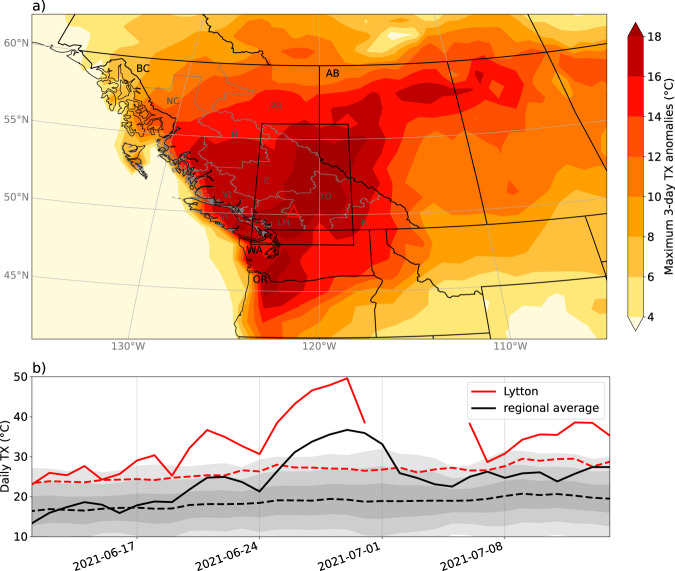
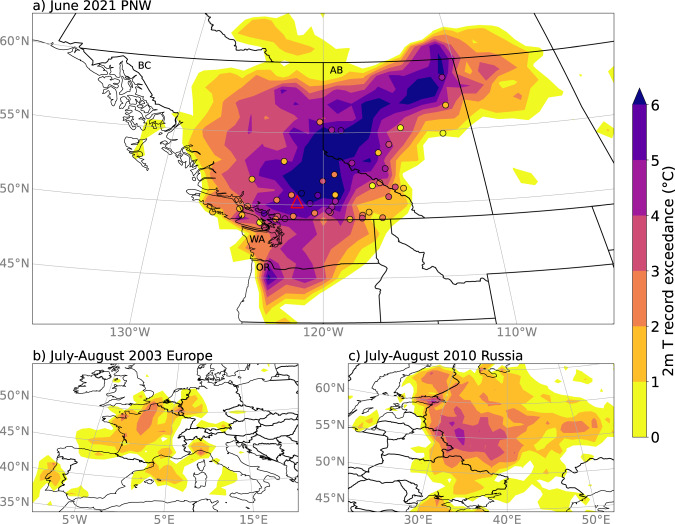
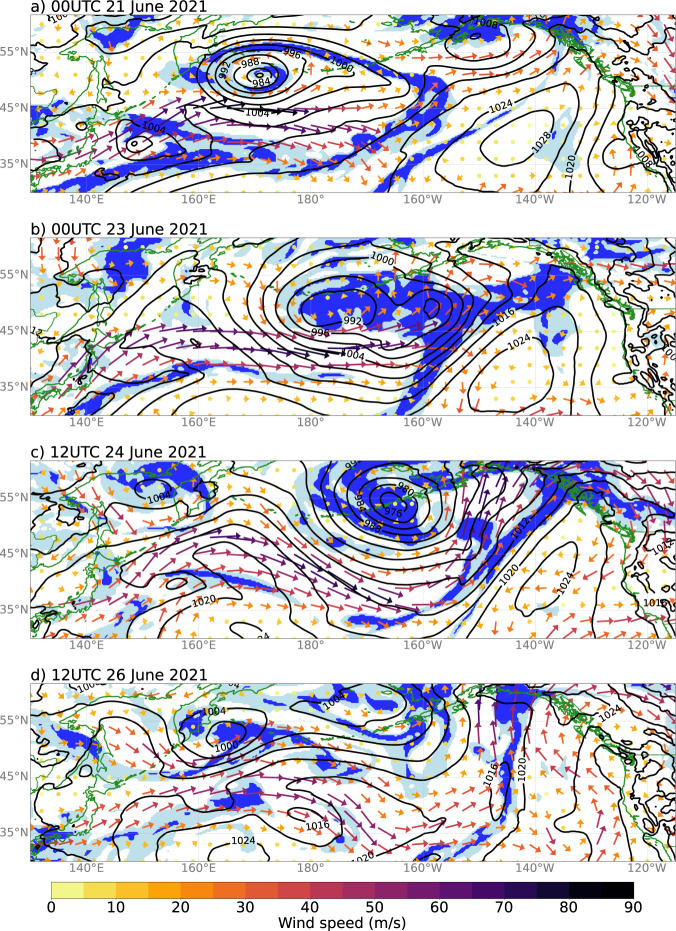
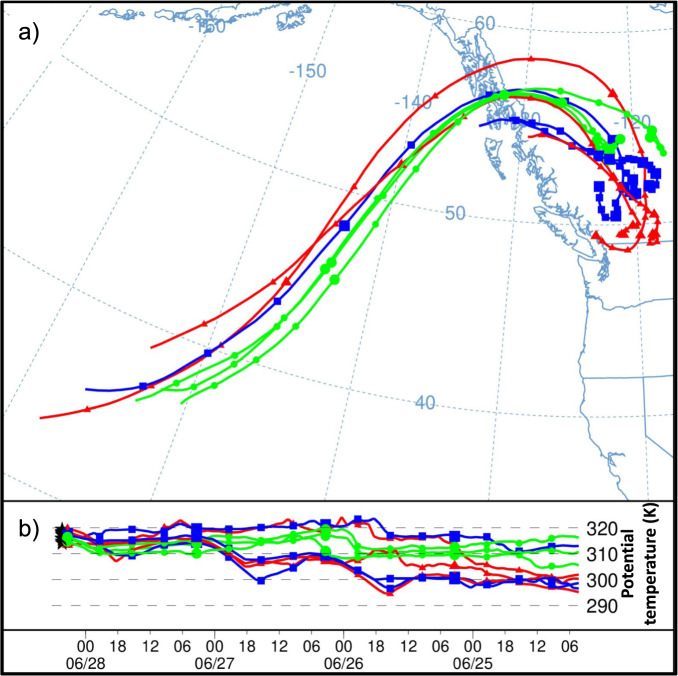
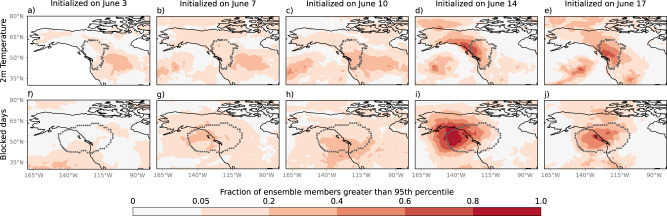
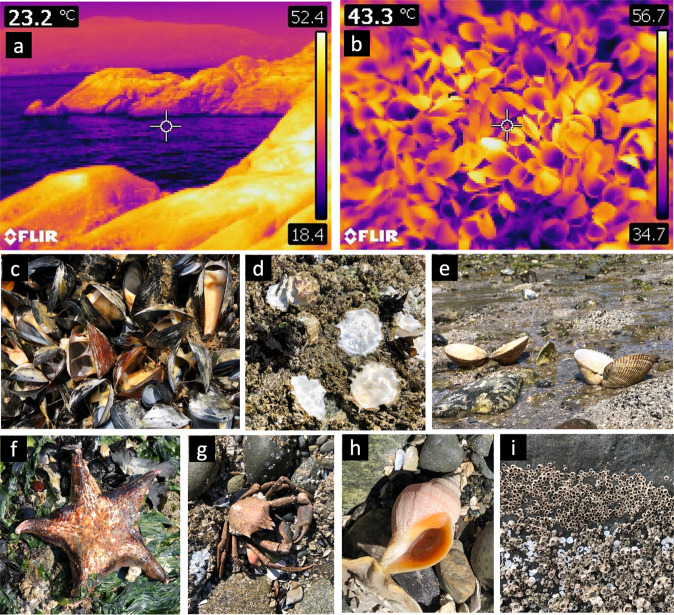
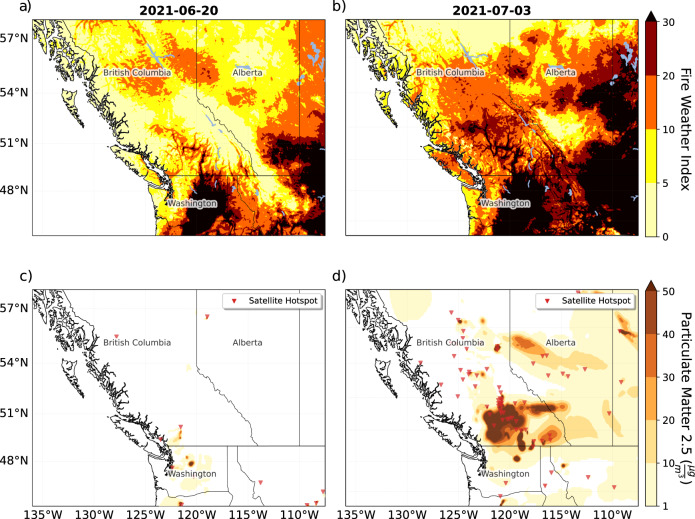
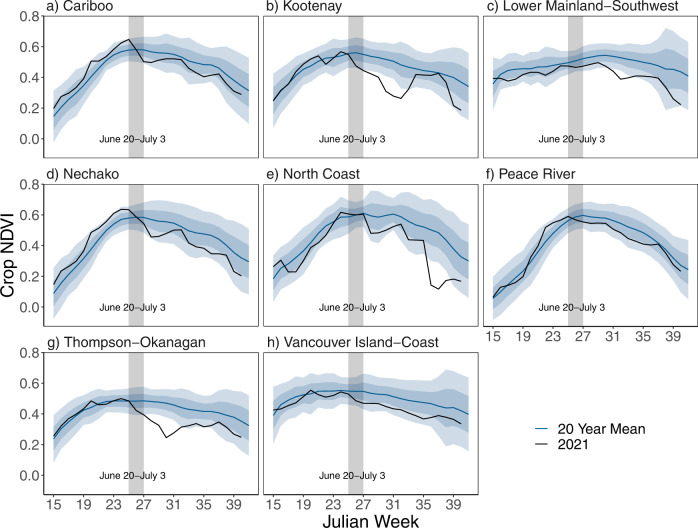
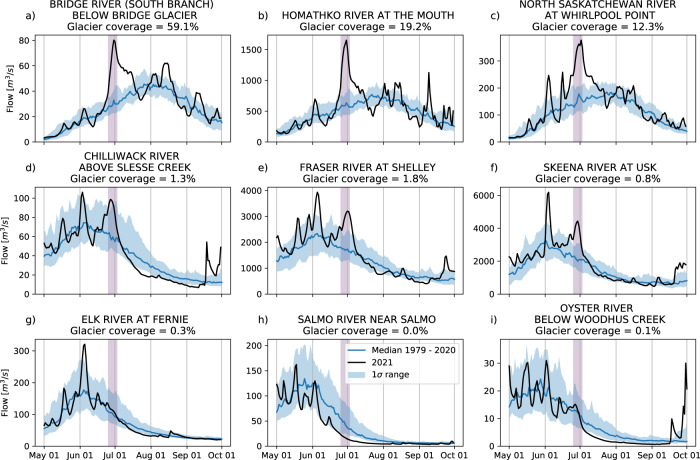
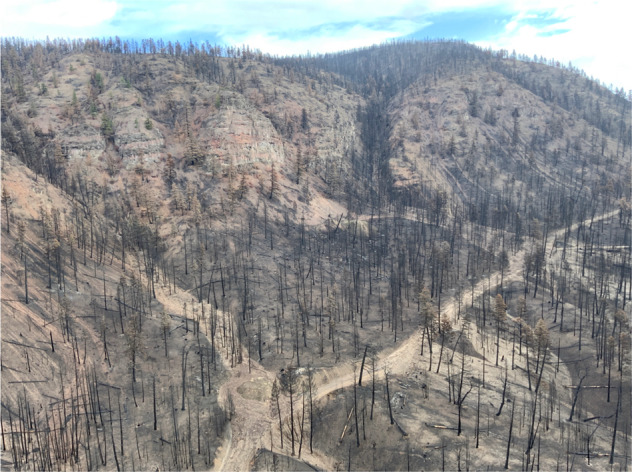
In late June 2021 a heatwave of unprecedented magnitude impacted the Pacific Northwest region of Canada and the United States. Many locations broke all-time maximum temperature records by more than 5 °C, and the Canadian national temperature record was broken by 4.6 °C, with a new record temperature of 49.6 °C. Here, we provide a comprehensive summary of this event and its impacts. Upstream diabatic heating played a key role in the magnitude of this anomaly. Weather forecasts provided advanced notice of the event, while sub-seasonal forecasts showed an increased likelihood of a heat extreme with lead times of 10-20 days. The impacts of this event were catastrophic, including hundreds of attributable deaths across the Pacific Northwest, mass-mortalities of marine life, reduced crop and fruit yields, river flooding from rapid snow and glacier melt, and a substantial increase in wildfires—the latter contributing to landslides in the months following. These impacts provide examples we can learn from and a vivid depiction of how climate change can be so devastating.
Overview
The claims and statistics of this paper haven’t been checked yet.
Free: it reads the open-access text and checks the first 5 claims that cite a source we can check. Create a free account to check every claim.
Integrity signals
Registry
Cites
Statistics
Figures
Verification
Claims the paper makes
The claims and statistics of this paper haven’t been checked yet.
Free: it reads the open-access text and checks the first 5 claims that cite a source we can check. Create a free account to check every claim.
Self-check
Percentages, sums and reported differences re-computed from the paper’s own numbers.
The self-check needs the paper’s full text.
Citations
Cites
Hersbach, H., Bell, B., Berrisford, P., Hirahara, S., Horányi, A., Muñoz‐Sabater, J., Nicolas, J., Peubey, C., Radu, R., Schepers, D., et al. (2020) · Quarterly Journal of the Royal Meteorological Society · doi:10.1002/qj.3803 · Cited by 31,882
NOAA’s HYSPLIT Atmospheric Transport and Dispersion Modeling System
Stein, A. F., Draxler, R. R., Rolph, G. D., Stunder, B. J. B., Cohen, M. D., & Ngan, F. (2015) · Bulletin of the American Meteorological Society · doi:10.1175/bams-d-14-00110.1 · Cited by 6,597
ERA5-Land: a state-of-the-art global reanalysis dataset for land applications
Muñoz-Sabater, J., Dutra, E., Agustí-Panareda, A., Albergel, C., Arduini, G., Balsamo, G., Boussetta, S., Choulga, M., Harrigan, S., Hersbach, H., et al. (2021) · Earth System Science Data · doi:10.5194/essd-13-4349-2021 · Cited by 5,540
Influence of extreme weather disasters on global crop production
Lesk, C., Rowhani, P., & Ramankutty, N. (2016) · Nature · doi:10.1038/nature16467 · Cited by 3,883
Nonlinear temperature effects indicate severe damages to U.S. crop yields under climate change
Schlenker, W., & Roberts, M. J. (2009) · Proceedings of the National Academy of Sciences · doi:10.1073/pnas.0906865106 · Cited by 3,420
ERA5 hourly data on single levels from 1940 to present
C3S (2018) · European Centre for Medium-Range Weather Forecasts · doi:10.24381/cds.adbb2d47 · Cited by 2,550
A Description of the Advanced Research WRF Model Version 4
Skamarock, W. C., Klemp, J. B., Dudhia, J., Gill, D. O., Liu, Z., Berner, J., Wang, W., Powers, J. G., Duda, M. G., Barker, D. M., et al. (2019) · doi:10.5065/1dfh-6p97 · Cited by 2,164
Death toll exceeded 70,000 in Europe during the summer of 2003
Robine, J.-M., Cheung, S. L. K., Le Roy, S., Van Oyen, H., Griffiths, C., Michel, J.-P., & Herrmann, F. R. (2007) · Comptes Rendus. Biologies · doi:10.1016/j.crvi.2007.12.001 · Cited by 2,127
Real-time Environmental Applications and Display sYstem: READY
Rolph, G., Stein, A., & Stunder, B. (2017) · Environmental Modelling & Software · doi:10.1016/j.envsoft.2017.06.025 · Cited by 2,093
Evidence linking Arctic amplification to extreme weather in mid‐latitudes
Francis, J. A., & Vavrus, S. J. (2012) · Geophysical Research Letters · doi:10.1029/2012gl051000 · Cited by 1,808
Research works printed but not linked: 8
- Henderson SB McLean KE Lee MJ Kosatsky T Extreme heat events are public health emergencies BC Med. J. 2021 63 366 367
- British Columbia Coroners Service. Extreme heat and human mortality: a review of heat-related deaths in B.C. in summer 2021. https://www2.gov.bc.ca/assets/gov/birth-adoption-death-marriage-and-divorce/deaths/coroners-service/death-review-panel/extreme_heat_death_review_panel_report.pdf (2022).
- Lau, C.-A. et al. Hydro-geomorphic effects of the November 2021 atmospheric rivers on infrastructure in Southwestern British Columbia. In: Geohazards 8: Proceedings of the 8th Canadian Conference on Geotechnique and Natural Hazards. Quebec, Canada (2022).
- Rex DFBlocking Action in the middle troposphere and its effect upon regional climate - part I Tellus 1950 2 196 211
- Multnomah County. Preliminary Review on Excessive Heat Deaths. https://multco-web7-psh-files-usw2.s3-us-west-2.amazonaws.com/s3fs-public/preliminary_review-heat_deaths-07-14-21_2.pdf (2021).
- Warner J Twomey S The production of cloud nuclei by cane fires and the effect on cloud droplet concentration J. Atmos. Sci. 1967 24 704 706 · doi:10.1175/1520-0469(1967)024
- Roznik M Boyd M Porth L Improving crop yield estimation by applying higher resolution satellite NDVI imagery and high-resolution cropland masks Remote Sens. Appl. Soc. Environ. 2022 25 100693
- BC Ministry of Forests, Lands, Natural Resource Operations and Rural Development (n.d.). 2021 burn severity mapping. Accessed on November 1, 2022 (2021).
Cited by
Items 501–560 of 560
When natural disasters occur in unexpected places
Murray‐Tuite, P. M., Small, M., Sianko, N., Balidemaj, V., Charles, J., Islam, M. B., & Shen, J. (2026) · Kontakt · doi:10.32725/kont.2026.040
Wu, H., Yang, Q., Feng, Y., Wu, X., Liu, H., Li, Y., & Xu, C. (2026) · Journal of Hydrology Regional Studies · doi:10.1016/j.ejrh.2026.103663
Extreme Weather Hazards in Canada: A Comparative Assessment for Extreme Heat, Wildfires, and Storms
Gholami, F. (2026) · Spectrum Research Repository (Concordia University)
Wuelfing, S. M. (2026) · DigitalCommons - CalPoly (California State Polytechnic University)
Historical records reveal how Canada’s weather has changed over the centuries
Slonosky, V. (2026) · The Conversation · doi:10.64628/aam.ueuencfg6
Projected Exposure of Canadian Children to Rare, High‐Severity Heatwaves Under Continued Warming
Zaerpour, M., Taleghanidoozdoozan, S., Steele, B. J., Hatami, S., Xu, L. L., Papalexiou, S. M., & Helldén, D. (2026) · GeoHealth · doi:10.1029/2026gh001873
“…reached 49.6°C in Lytton, British Columbia, caused about 619 heat‐related deaths—the deadliest weather event in Canadian history—and exposed major gaps in preparedness, including inadequate cooling infrastructure and protection (Henderson et al., 2022; Jain et al., 2024; White et al., 2023).”
InfluentialGallardo, R. K., Ma, X., DeVetter, L. W., & Galinato, S. P. (2026) · HortTechnology · doi:10.21273/horttech05863-26
Lee, J. S. F., Crim, R., Ryan, S. K., Allen, B., Dalthorp, R., Tobin, E. D., Sheriff, J. T., Poretsky, R. S., & Pierce, M. L. (2026) · Aquaculture Research · doi:10.1155/are/9950593
Tracing the space-time causal origins of Earth system extremesPreprint
Pérez‐Carrasquilla, J. S., Nichol, J. J., Robledo, V., Bull, D., Dagon, K., Evans, M. N., & Molina, M. J. (2026) · arXiv (Cornell University) · doi:10.48550/arxiv.2607.10033
Conditional attribution and socioeconomic exposure of the March 2026 North America early heatwave
Faranda, D., Zanchi, M., Yiou, P., Chericoni, M., Vrac, M., Tang, H., Dafis, S., Mengaldo, G., & Alberti, T. (2026) · Environmental Research Letters · doi:10.1088/1748-9326/ae870d
Temperature Dynamics in a Small Pacific Northwest Estuary and its Sloughs
Conley, M. M., Lerczak, J. A., Waldbusser, G. G., & Fewings, M. R. (2026) · Estuaries and Coasts · doi:10.1007/s12237-026-01775-6
“A notable heatwave occurred in the Pacific Northwest in late June 2021 (White et al., 2023 ), but impacts on estuary temperature were limited.”
Chamorro, J. D., & Hofmann, G. E. (2026) · Marine Biology · doi:10.1007/s00227-026-04832-7
“…but also extreme anomalous disturbance events such as marine heatwaves (MHWs) (Oliver et al. 2021 ) threaten to push species past physiological and ecological tolerance windows leading to ecosystem level impacts (Smale et al. critical habitat (Harley 2008 ; Miner et al. 2021 ; White et al. 2023 ).”
Yang, C., Malarvizhi, A. S., Huang, Q., Yu, M., Chidananda, R., Pourhomayoun, M., Roberts, J., Chang, G. W., Hasheminassab, S., Llewellyn, G., et al. (2026) · International Journal of Digital Earth · doi:10.1080/17538947.2026.2738488
Open Access International Human Rights Law
Wallace, S., James, C., Moranduzzo, E., Gregory, C., Tongue, Z. L., Trispiotis, I., Yaqub, N., & Herzog, N. (2026) · doi:10.63560/ihrl89654
Griffin, R. A., Ern, R., Clark, T. D., Kuchenmüller, L., Hoots, E. C., Jutfelt, F., & Blewett, T. A. (2026) · Journal of Experimental Marine Biology and Ecology · doi:10.1016/j.jembe.2026.152215
Winter warm spells in the pyrenees: synoptic drivers and snowmelt impacts (1960–2024)
Bonsoms, J., & Serrano‐Notivoli, R. (2026) · Atmospheric Research · doi:10.1016/j.atmosres.2026.109245
Gu, X., Wang, S., Guan, Y., Zhang, X., Li, L., Luo, S., Wang, R., Li, J., Wu, X., Luo, C., et al. (2026) · The Innovation Geoscience · doi:10.59717/j.xinn-geo.2026.100250
Murray, A., Lesnikowski, A., Henstra, D., & Wachsmuth, D. (2026) · Regional Environmental Change · doi:10.1007/s10113-026-02647-2
“The same year, the town of Lytton experienced the highest temperature ever recorded in Canada (49.6 ℃ ), followed by a catastrophic wildfire several days later that destroyed most of the town (White et al. 2023).”
InfluentialChaudhry, U., & Jue, A. L. (2026) · Journal of Behavioral and Applied Management · doi:10.21818/001c.166105
“…climate risk refers to the direct financial and operational impacts arising from acute or chronic climate - related events. including extreme weather such as floods, hurricanes, wildfires, heatwaves, and storms that damage physical assets and disrupt operations (NOAA, 2022; White et al., 2023).”
Subseasonal Prediction of the Wintertime North Pacific Blocking in AI‐Based Weather Models
Hwang, J., Deng, Y., Yook, S., & You, Z. (2026) · Journal of Geophysical Research Atmospheres · doi:10.1029/2026jd046695
“Droughts or heatwaves (i.e., warm anomalies) can be intensified around the center of blocking due to clear skies, enhanced subsiding motion, and atmosphere‐land interaction (Barriopedro et al., 2023; Domeisen et al., 2023; Rousi et al., 2023; Schaller et al., 2018; White et al., 2023).”
A Water Budget Evaluation of a Tile-Drain-Fed Irrigation Pond in the Willamette Valley, Oregon, USA
Bain, N. G., Ochoa, C. G., Godwin, D. C., Tomasek, A., & Singh, A. (2026) · Hydrology · doi:10.3390/hydrology13080211
“Heatwaves are also expected to intensify, and their effects on crop yield decline were observed during the June 2021 heatwave [8].”
Measuring up: Assessing the Progress in Water Demand Management in British Columbia, Canada
Chireh, V. K., & Honey‐Rosés, J. (2026) · Environments · doi:10.3390/environments13080445
“The province is also experiencing abnormally high temperatures during the summer months (up to 46.6 ◦ C in 2021), leading to unprecedented heat waves and increased water demand for cleaning and cooling [18,19].”
InfluentialSummer North Pacific intraseasonal waves drive North American air temperatures and heat extremes
Du, L., Lu, R., Luo, S., Zhu, C., & Yan, Y. (2026) · Atmospheric Research · doi:10.1016/j.atmosres.2026.109255
Recent globally synchronous seasonal warm events unprecedented since 850 CE
Duan, J., Hao, F., Zhou, Y., Chen, S., Wang, A., Xiao, C., Ljungqvist, F. C., Dong, B., Luterbacher, J., Stott, P. A., et al. (2026) · Nature Communications · doi:10.1038/s41467-026-76985-4
Qiu, Y., Famiglietti, J. S., Niu, G., & Behrangi, A. (2026) · Research Square · doi:10.21203/rs.3.rs-10699846/v1
One heatwave, many definitions: Implications for global building performance analysis
Abolhassani, S. S., Sedaghat, A., Sailor, D. J., & Amaripadath, D. (2026) · Building and Environment · doi:10.1016/j.buildenv.2026.115125 · Cited by 1
Han, R., Zhuang, Y., & Gao, M. C. (2026) · Environmental Research Letters · doi:10.1088/1748-9326/ae9b24
Kranabetter, J. M., & Philpott, T. J. (2026) · Mycorrhiza · doi:10.1007/s00572-026-01307-x
“Our assessment of these P. menziesii stands came soon after an extreme and ecologically damaging heatwave in 2021 (White et al. 2023 ; Baum et al. 2026 ).”
Temperature sensitivity of pyrrhotite-driven metavanadate bioreduction in groundwater
Tang, Y., Wang, S., Wang, D., Li, J., & Yan, W. (2026) · Environmental Research · doi:10.1016/j.envres.2026.125571
How well do reanalysis datasets capture the onset dates of extreme temperature events in China?
Zhou, P., Wu, Y., Li, Z., Yang, Y., Zhang, C., 李, 丹., Xie, S., Wu, L., & Zhong, K. (2026) · Meteorology and Atmospheric Physics · doi:10.1007/s00703-026-01198-9
“For example, the earlier onset of extreme high and low temperatures makes it difficult for people to adapt to sudden temperature changes, thereby increasing the mortality rate (Smith and Sheridan 2019; White et al. 2023).”
Ahmed, N., Long, J., Kim, J., Liu, L., Diab, E. I., Voogt, J., Wang, J., & Lee, J. (2026) · International Journal of Disaster Risk Reduction · doi:10.1016/j.ijdrr.2026.106404
Wall, S. A., Moffett, K. B., Patton, A., Leshchinsky, B., Wilcox, A. C., Sanders, M. A., Chang, H., & Roering, J. J. (2026) · International Journal of Wildland Fire · doi:10.1071/wf25206
Rainfall selectivity in large dry heatwave events across the contiguous United States
Shi, Y., Dai, W., Xu, X., Zhi, Y., Zhang, X., Chen, Y., & Fu, W. (2026) · Journal of Hydrology · doi:10.1016/j.jhydrol.2026.136320
The impact of acute heat exposure on the heat shock response (HSR) between males and females
Andrade, M. J. (2026) · Brock University Digital Repository (Brock University)
Climate change increases emergency department visits for heat-related illness in the United States
Young, M., Dahl, K. A., & Saha, S. (2026) · Climatic Change · doi:10.1007/s10584-026-04247-9
“These conditions resulted in at least 183 deaths in Oregon and Washington, and a significant increase in the rate of HRI-ED visits across the region (White et al. 2023).”
Pérez‐Alarcón, A., Nieto, R., & Gimeno, L. (2026) · doi:10.5194/egusphere-2026-5144
Gandhi, R. K. (2023) · The Atrium (University of Guelph)
Bazlen, K., Buster, G., Benton, B., North, L., Baring, A., Turner, D. D., Wells, E., & Vimmerstedt, L. J. (2026) · arXiv (Cornell University) · doi:10.48550/arxiv.2609.12228
“For example, the maximum temperature of 56°C recorded in the Northwest region occurred on 29 June 2021 at station UR058 operated by Union Pacific Railroad with data provided by MesoWest, during the peak of a record-breaking regional heatwave (MesoWest 2026; Werth et al. 2011; White et al. 2023).”
Dolores-Tesillos, E., Martius, O., & Quinting, J. (2025) · Repository KITopen (Karlsruhe Institute of Technology) · doi:10.5445/ir/1000181572
Adapting the emergency management enterprise to manage the climate emergency: a critical review
Preston, B. L., Krovetz, A., & Clark‐Ginsberg, A. (2026) · Climate Risk Management · doi:10.1016/j.crm.2026.100885
Extreme North American heatwaves in 1941 and 2021 drove widespread but contrasting impacts
Anderson, S., & Chartrand, S. (2026) · Communications Earth & Environment · doi:10.1038/s43247-026-04055-0
Self-citationTemperature-responded microbial vanadium(V) reduction under a global warming scenario in aquifers
Lü, J., Zhang, B., Zhang, H., Kong, Q., Li, J., & Zhang, J. (2026) · Journal of Hazardous Materials · doi:10.1016/j.jhazmat.2026.143692
Narayanan, A., Rezaali, M., Keellings, D. J., & Lopez‐Quintero, C. (2026) · Environmental Research Climate · doi:10.1088/2752-5295/aeab03
“In June 2021, a heat dome of unprecedented magnitude struck the Pacific Northwest, an event made virtually impossible without anthropogenic climate change, coinciding with a multi-year drought that had primed landscapes for wildfire (Philip et al 2022, White et al 2023).”
Research Priorities for Robust Climate Assessments in the United States
Kenney, M. A., Kopp, R. E., Samaras, C., Alberti, M., Angell, S. Y., Burney, J. A., Cunliff, C., Duffy‐Anderson, J. T., Fischer, L. W., Frey, S. D., et al. (2026) · Bulletin of the American Meteorological Society · doi:10.1175/bams-d-26-0305.1
Heatwaves drive rapid snowmelt and disrupt streamflow in the western United States
Guo, H., & He, S. (2026) · Environmental Research Letters · doi:10.1088/1748-9326/aeac3a
“These heatwaves pose a significant threat to both human society and natural ecosystems (White et al 2023, Bhattarai et al 2024).”
Developing an action and research agenda to address extreme heat in the Pacific Northwest
Moore, A., Smith, M. H., Brown, C., Haggerty, B., Iyaz, D., Kramer, B., Schwandt, M., Singh, J., Straight, M., Errett, N. A., et al. (2026) · Environmental Research Communications · doi:10.1088/2515-7620/aeac9f
“[ 6] The 1 in 1000 year event was identified as highly anomalous, [7] but projections indicate that extreme heat events (EHEs) similar in magnitude will have a greater chance of occurrence in the future under high land use and emissions scenarios [8].”
Assessing heat dome effects on forest dynamics in the Pacific Northwest using Planet imagery
John, A., Pradhan, K., Case, M. J., Ettinger, A. K., & Lambers, J. H. R. (2026) · GIScience & Remote Sensing · doi:10.1080/15481603.2026.2728824
Atténuation culturellement pertinente des risques liés aux feux de forêt en Eeyou Istchee
Proulx, G. (2026) · Depositum (Université du Québec en Abitibi-Témiscamingue)
Roemer, F. E., Fischer, E. M., Noyelle, R., & Knutti, R. (2026) · Weather and Climate Dynamics · doi:10.5194/wcd-7-1919-2026
“The importance of anticipating future unprecedented events has been further highlighted by recent extreme events such as the 2021 Pacific North West heatwave, which broke previous temperature records by almost 5 K (Bartusek et al., 2022; White et al., 2023; Fleishman et al., 2025).”
Recent extreme heatwaves are no match for future events
Aglas-Leitner, P., Perkins-Kirkpatrick, S., Brunner, L., Undorf, S., Aglas-Leitner, F., Fischer, E., & Stone, D. (2026) · Nature Communications · doi:10.1038/s41467-026-76809-5
Fitch, A., Chen, K., Kelley, S., Strickland, M. J., Coughenouer, C., Sagebiel, J., Holmes, H. A., & Darrow, L. A. (2026) · International Journal of Disaster Risk Reduction · doi:10.1016/j.ijdrr.2026.106472
Admasu, L. M., White, R. H., & Orsi, A. (2026) · Environmental Research Letters · doi:10.1088/1748-9326/aeb436
“Persistent warm extremes can lead to human health issues and mortality [1, 2], affect photosynthesis and cause plant damage and mortality [3, 4], lead to reduced agricultural yields [5, 6], reduced worker productivity [7], loss of marine life [8], and compounded events like wildfires [8, 9].”
Self-citationRobust identification of impactful boreal summer anticyclones
Vakrat, E., & Kushner, P. J. (2026) · Weather and Climate Extremes · doi:10.1016/j.wace.2026.100962
Ranked Right, Sized Wrong: Ensemble Spread Fails Silently at Streamflow ExtremesPreprint
Gallant, J., & Wilson, T. (2026) · arXiv (Cornell University) · doi:10.48550/arxiv.2610.20947
“This region is characterized by large hydroclimatic variability [25] with a dense streamflow gauge network [26] and well-documented occurrences of extreme events in recent years [27].”
BİNGÖL, A. P. D. S. D. &. A. P. D. B. V. (2026) · Bidge Yayınları eBooks · doi:10.70269/8hjja2utp45q
Coll-Orduña, I. (2026) · Forensic Science Medicine and Pathology · doi:10.1007/s12024-026-01383-7
Si, M., Li, Z.-L., Liu, X., Chen, R., Jiang, Y., Shen, P., Ma, C., He, J., & Tang, B. (2026) · International Journal of Applied Earth Observation and Geoinformation · doi:10.1016/j.jag.2026.105668
Loverock, L. B., Mezzini, S., Carl, S., Berch, S. M., Hannam, K. D., Jones, M. D., & Durall, D. M. (2026) · Mycorrhiza · doi:10.1007/s00572-026-01324-w
Buoy data show a nearly 2 °C warming in coastal water off Qingdao from January 2010 to August 2025
Luo, Z., Changhua, L., 杨德周, Zhang, K., Xu, L., Li, Y., Liu, X., Wang, X., & Yin, B. (2026) · Journal of Marine Systems · doi:10.1016/j.jmarsys.2026.104333
Conder, J., Hovel, W., Knowlen, M., Rosen, G. H., & Word, J. (2026) · Elsevier eBooks · doi:10.1016/b978-0-443-45846-0.00020-4
Metadata
- Authors
- White, R. H., Anderson, S., Booth, J. F., Braich, G., Draeger, C., Fei, C., Harley, C. D. G., Henderson, S. B., Jakob, M., Lau, C.-A., Mareshet Admasu, L., Narinesingh, V., Rodell, C., Roocroft, E., Weinberger, K. R., & West, G.
- Affiliations
- University of British Columbia (CA)
- The Graduate Center, CUNY (US)
- BGC Engineering (Canada) (CA)
- NOAA Geophysical Fluid Dynamics Laboratory (US)
- BC Hydro (Canada) (CA)
- Corresponding author
- White, Rachel H.
- ORCID
- Venue
- Nature Communications
- Published
- 2023-02-09
- Volume
- 14
- Issue
- 1
- Pages
- 727-727
- ISSN
- 2041-1723 (ISSN-L)
- PMC
- PMC9910268
- OpenAlex
- W4319733471
- Semantic Scholar
- c28e132d96907544640d1ea8be24562422fa1811
- Cited by
- 435
- References
- 104
- Citations by year
- 2026: 108 · 2025: 153 · 2024: 116 · 2023: 58
- FWCI
- 48.88
- Type
- journal article
- Language
- en
- Open access
- gold
- doi.org
- Licence
- cc-by
- creativecommons.org/licenses/by/4.0 (tdm)
- creativecommons.org/licenses/by/4.0 (vor)
- Locations
- Nature Communications (publishedVersion, cc-by)
- PubMed Central (publishedVersion, cc-by)
- PubMed (publishedVersion)
- DOAJ (DOAJ: Directory of Open Access Journals) (submittedVersion, cc-by-sa)
- NOAA Institutional Repository (submittedVersion)
- Funders
- Gouvernement du Canada | Natural Sciences and Engineering Research Council of Canada (RGPIN-2020-05783, RGPIN-2016-05441)
- NSERC Doctoral Scholarship
- Alberta Innovates (2019F163R)
- Health Canada and the BC Climate Preparedness and Adaptation Strategy
- Gouvernement du Canada | Natural Resources Canada
- BC Hydro
- Mitacs
- Topics
- Physical Sciences › Environmental Science › Global and Planetary Change › Climate variability and models
- Physical Sciences › Earth and Planetary Sciences › Atmospheric Science › Meteorological Phenomena and Simulations
- Physical Sciences › Environmental Science › Global and Planetary Change › Climate Change and Environmental Impact
- Keywords
- 2021 Pacific Northwest heatwave, extreme heat, temperature records, diabatic heating, subseasonal forecasting, heat-related mortality, crop yield loss, forest fires, landslides, climate change impacts
About these checks
Registry, retraction, Cites and statistics results are computed, not judged, with one exception: a printed reference that no index lists is read once by a model before it counts as a citation error. Claims are extracted by a model and kept only when their quote appears verbatim in the text; each cited source is then checked, with a model’s help, for whether it says what the claim relies on. Those verdicts can be wrong — read the claim’s quote and the cited source before relying on one.
Statistics and arithmetic are recomputed, not judged.
Confidence bands are shown only for fields calibrated on our annotated test set. None is calibrated yet, so no band is shown.
What counts as a claim ›How we measure confidence ›How we check this ›
Are you an author, or do you see a problem with this page? Request a review
Data sources
Bibliographic data: Semantic Scholar, OpenAlex, Crossref.
Contains information from the Semantic Scholar Academic Graph Datasets, made available under the ODC Attribution License (ODC-BY 1.0).
Semantic Scholar’s data is described in: Kinney, R., et al. (2023). The Semantic Scholar Open Data Platform. arXiv:2301.10140.
