

The unprecedented Pacific Northwest heatwave of June 2021
Open accessPublished version of a preprint
The DOI matches its Crossref record; 100 of the 104 references it cites were found in a registry or an index.
Abstract
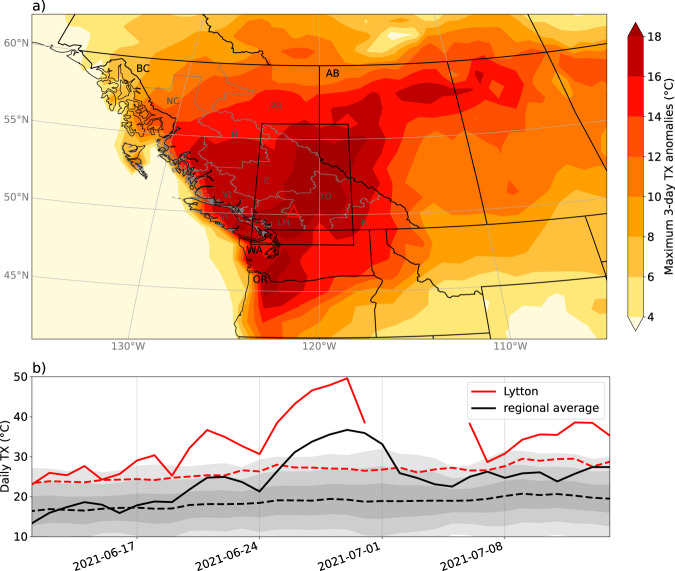
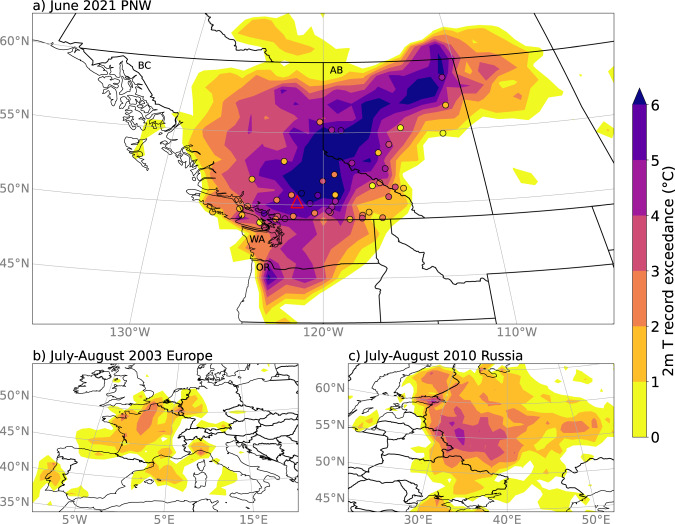
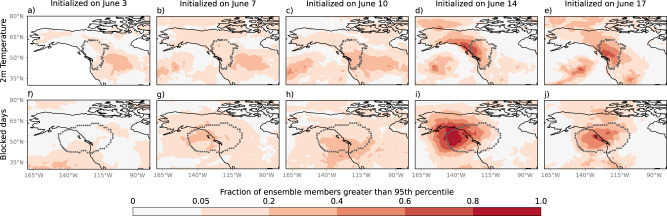
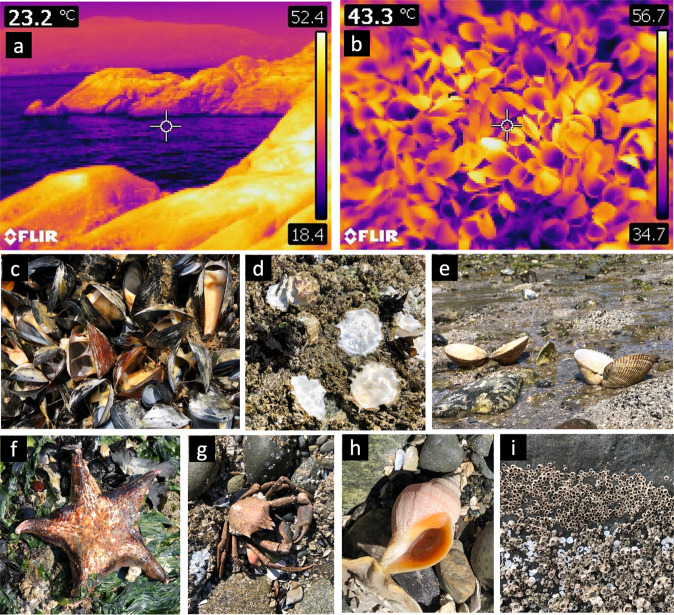
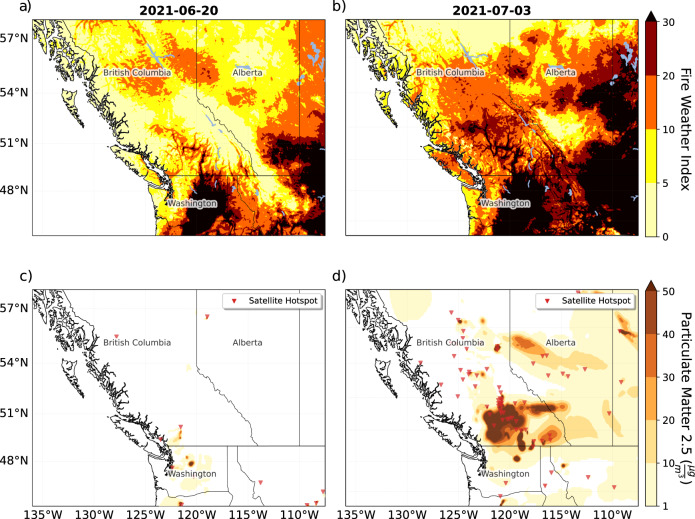
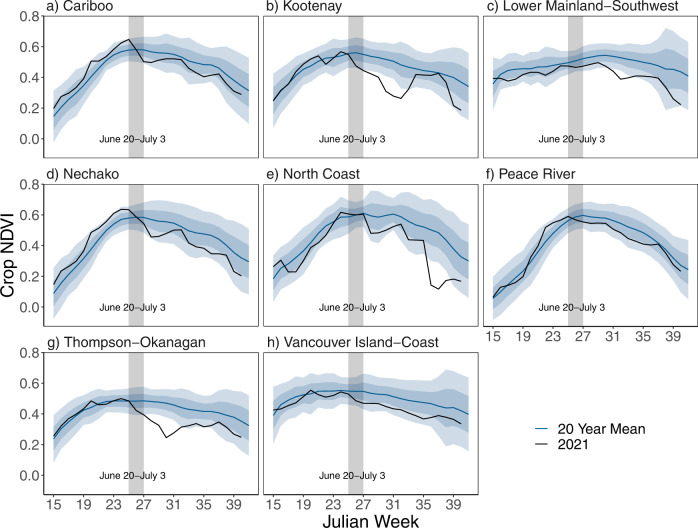
In late June 2021 a heatwave of unprecedented magnitude impacted the Pacific Northwest region of Canada and the United States. Many locations broke all-time maximum temperature records by more than 5 °C, and the Canadian national temperature record was broken by 4.6 °C, with a new record temperature of 49.6 °C. Here, we provide a comprehensive summary of this event and its impacts. Upstream diabatic heating played a key role in the magnitude of this anomaly. Weather forecasts provided advanced notice of the event, while sub-seasonal forecasts showed an increased likelihood of a heat extreme with lead times of 10-20 days. The impacts of this event were catastrophic, including hundreds of attributable deaths across the Pacific Northwest, mass-mortalities of marine life, reduced crop and fruit yields, river flooding from rapid snow and glacier melt, and a substantial increase in wildfires—the latter contributing to landslides in the months following. These impacts provide examples we can learn from and a vivid depiction of how climate change can be so devastating.
Overview
The claims and statistics of this paper haven’t been checked yet.
Free: it reads the open-access text and checks the first 5 claims that cite a source we can check. Create a free account to check every claim.
Integrity signals
Registry
Cites
Statistics
Figures
Verification
Claims the paper makes
The claims and statistics of this paper haven’t been checked yet.
Free: it reads the open-access text and checks the first 5 claims that cite a source we can check. Create a free account to check every claim.
Self-check
Percentages, sums and reported differences re-computed from the paper’s own numbers.
The self-check needs the paper’s full text.
Citations
Cites
Hersbach, H., Bell, B., Berrisford, P., Hirahara, S., Horányi, A., Muñoz‐Sabater, J., Nicolas, J., Peubey, C., Radu, R., Schepers, D., et al. (2020) · Quarterly Journal of the Royal Meteorological Society · doi:10.1002/qj.3803 · Cited by 31,882
NOAA’s HYSPLIT Atmospheric Transport and Dispersion Modeling System
Stein, A. F., Draxler, R. R., Rolph, G. D., Stunder, B. J. B., Cohen, M. D., & Ngan, F. (2015) · Bulletin of the American Meteorological Society · doi:10.1175/bams-d-14-00110.1 · Cited by 6,597
ERA5-Land: a state-of-the-art global reanalysis dataset for land applications
Muñoz-Sabater, J., Dutra, E., Agustí-Panareda, A., Albergel, C., Arduini, G., Balsamo, G., Boussetta, S., Choulga, M., Harrigan, S., Hersbach, H., et al. (2021) · Earth System Science Data · doi:10.5194/essd-13-4349-2021 · Cited by 5,540
Influence of extreme weather disasters on global crop production
Lesk, C., Rowhani, P., & Ramankutty, N. (2016) · Nature · doi:10.1038/nature16467 · Cited by 3,883
Nonlinear temperature effects indicate severe damages to U.S. crop yields under climate change
Schlenker, W., & Roberts, M. J. (2009) · Proceedings of the National Academy of Sciences · doi:10.1073/pnas.0906865106 · Cited by 3,420
ERA5 hourly data on single levels from 1940 to present
C3S (2018) · European Centre for Medium-Range Weather Forecasts · doi:10.24381/cds.adbb2d47 · Cited by 2,550
A Description of the Advanced Research WRF Model Version 4
Skamarock, W. C., Klemp, J. B., Dudhia, J., Gill, D. O., Liu, Z., Berner, J., Wang, W., Powers, J. G., Duda, M. G., Barker, D. M., et al. (2019) · doi:10.5065/1dfh-6p97 · Cited by 2,164
Death toll exceeded 70,000 in Europe during the summer of 2003
Robine, J.-M., Cheung, S. L. K., Le Roy, S., Van Oyen, H., Griffiths, C., Michel, J.-P., & Herrmann, F. R. (2007) · Comptes Rendus. Biologies · doi:10.1016/j.crvi.2007.12.001 · Cited by 2,127
Real-time Environmental Applications and Display sYstem: READY
Rolph, G., Stein, A., & Stunder, B. (2017) · Environmental Modelling & Software · doi:10.1016/j.envsoft.2017.06.025 · Cited by 2,093
Evidence linking Arctic amplification to extreme weather in mid‐latitudes
Francis, J. A., & Vavrus, S. J. (2012) · Geophysical Research Letters · doi:10.1029/2012gl051000 · Cited by 1,808
Research works printed but not linked: 8
- Henderson SB McLean KE Lee MJ Kosatsky T Extreme heat events are public health emergencies BC Med. J. 2021 63 366 367
- British Columbia Coroners Service. Extreme heat and human mortality: a review of heat-related deaths in B.C. in summer 2021. https://www2.gov.bc.ca/assets/gov/birth-adoption-death-marriage-and-divorce/deaths/coroners-service/death-review-panel/extreme_heat_death_review_panel_report.pdf (2022).
- Lau, C.-A. et al. Hydro-geomorphic effects of the November 2021 atmospheric rivers on infrastructure in Southwestern British Columbia. In: Geohazards 8: Proceedings of the 8th Canadian Conference on Geotechnique and Natural Hazards. Quebec, Canada (2022).
- Rex DFBlocking Action in the middle troposphere and its effect upon regional climate - part I Tellus 1950 2 196 211
- Multnomah County. Preliminary Review on Excessive Heat Deaths. https://multco-web7-psh-files-usw2.s3-us-west-2.amazonaws.com/s3fs-public/preliminary_review-heat_deaths-07-14-21_2.pdf (2021).
- Warner J Twomey S The production of cloud nuclei by cane fires and the effect on cloud droplet concentration J. Atmos. Sci. 1967 24 704 706 · doi:10.1175/1520-0469(1967)024
- Roznik M Boyd M Porth L Improving crop yield estimation by applying higher resolution satellite NDVI imagery and high-resolution cropland masks Remote Sens. Appl. Soc. Environ. 2022 25 100693
- BC Ministry of Forests, Lands, Natural Resource Operations and Rural Development (n.d.). 2021 burn severity mapping. Accessed on November 1, 2022 (2021).
Cited by
Items 101–200 of 560
Contrasting Intraurban Signatures of Humid and Dry Heatwaves over Southern California
Shreevastava, A., Raymond, C., & Hulley, G. (2023) · Journal of Applied Meteorology and Climatology · doi:10.1175/jamc-d-22-0149.1 · Cited by 17
An, B., Yu, Y., Hewitt, H. T., Wu, P., Furtado, K., Liu, H., Lin, P., Luan, Y., & Chen, K. (2023) · Climate Dynamics · doi:10.1007/s00382-023-06862-z · Cited by 16
“It is a challenge for climate modellers to realistically capture the structure, variability and long-term trends of the KE in order to assess climate risks and to predict extreme events such as the July-2021 Henan floods (Huang et al. 2022) and the unprecedented Pacific Northwest heatwave of June-2021 (White et al. 20…”
BackgroundTalke, S. A., Jay, D. A., & Diefenderfer, H. L. (2023) · Hydrology and earth system sciences · doi:10.5194/hess-27-2807-2023 · Cited by 16
Extreme Weather Events and the Energy Sector in 2021
Añel, J. A., Pérez-Souto, C., Bayo‐Besteiro, S., Prieto-Godino, L., Bloomfield, H., Troccoli, A., de, L., & de la Torre, L. (2024) · Weather Climate and Society · doi:10.1175/wcas-d-23-0115.1 · Cited by 16
Heatwave‐mediated decreases in phytoplankton quality negatively affect zooplankton productivity
Kim, J. O., Dimitriou, A., Forster, I. P., & Tseng, M. (2024) · Functional Ecology · doi:10.1111/1365-2435.14530 · Cited by 16
Déry, S. J., Martins, E. G., Owens, P. N., & Petticrew, E. L. (2024) · Communications Earth & Environment · doi:10.1038/s43247-024-01407-6 · Cited by 17
Three-dimensional analysis reveals diverse heat wave types in Europe
Lhotka, O., & Kyselý, J. (2024) · Communications Earth & Environment · doi:10.1038/s43247-024-01497-2 · Cited by 16
“The most notable recent events include the 2021 Western North American heat wave 4 , the 2022 heat wave in Eastern China 5 , and the 2022 Western European heat wave 6 .”
Heatwave Location Changes in Relation to Rossby Wave Phase Speed
Wicker, W., Harnik, N., Pyrina, M., & Domeisen, D. I. V. (2024) · Geophysical Research Letters · doi:10.1029/2024gl108159 · Cited by 18
Mechanisms for Marine–Terrestrial Compound Heatwaves in Southern China and Adjacent Oceans
Hu, J., & Chen, Y. (2024) · 气象学报:英文版 · doi:10.1007/s13351-024-3220-0 · Cited by 15
Widespread ecological responses and cascading effects of the 2021 western North American heatwave
Baum, J. K., Slein, M. A., Garen, J. C., Sang, Z., Emry, S., Goodwin, K. J. A., Collins, C. G., Lewthwaite, J., Tseng, M., Michaletz, S. T., et al. (2026) · Nature Ecology & Evolution · doi:10.1038/s41559-026-02987-6 · Cited by 15
“This suggests that the heatwave, by melting the snowpack earlier and faster than normal, led to an early-summer surge in water levels in snowmelt streams and a late-summer deficit, corroborating the qualitative analysis of White et al. 32 .”
Self-citationDheed: an ERA5 based global database of compound dry and hot extreme events from 1950 to 2023
Weynants, M., Ji, C., Linscheid, N., Weber, U., Mahecha, M. D., & Gans, F. (2025) · Earth system science data · doi:10.5194/essd-17-6621-2025 · Cited by 17
Ren, J., & Zhong, L. (2025) · Results in Engineering · doi:10.1016/j.rineng.2025.108544 · Cited by 17
The 2021 heatwave was less rare in Western Canada than previously thought
Malinina, E., & Gillett, N. P. (2024) · Weather and Climate Extremes · doi:10.1016/j.wace.2024.100642 · Cited by 19
Climate change unevenly affects the dependence of multiple climate-related hazards in China
Zong, X., Yin, Y., & Yin, M. (2024) · npj Climate and Atmospheric Science · doi:10.1038/s41612-024-00614-4 · Cited by 15
“Recent extreme events worldwide also indicate that wild fi re risk easily reaches the extreme threshold under the in fl uence of compound hot-drought events 5,8 .”
Karamperidou, C. (2024) · Communications Earth & Environment · doi:10.1038/s43247-024-01687-y · Cited by 17
Public responses to heatwaves in Chinese cities: A social media-based geospatial modelling approach
Dou, M., Wang, Y., Qiao, M., Wang, D., Gong, J., & Gu, Y. (2024) · International Journal of Applied Earth Observation and Geoinformation · doi:10.1016/j.jag.2024.104205 · Cited by 25
Cleland, S. E., Paul, N., Coker, E. S., & Henderson, S. B. (2025) · ACS ES&T Air · doi:10.1021/acsestair.4c00219 · Cited by 16
Self-citationIdentifying summer energy poverty and public health risks in a temperate climate
Chen, Z., O’Sullivan, K. C., Dohig, R. K., Pierse, N., Jiang, T., Riva, M., & Das, R. R. (2025) · Climate Risk Management · doi:10.1016/j.crm.2025.100698 · Cited by 20
Hydraulics and Structural Mechanics Jointly Shape Root‐to‐Leaf Scaling of Xylem Conduit Traits
Simovic, M., & Michaletz, S. T. (2025) · Plant Cell & Environment · doi:10.1111/pce.15660 · Cited by 14
Dynamics of localized extreme heatwaves in the mid‐latitude atmosphere: A conceptual examination
Rostami, M., Severino, L. G., Petri, S., & Hariri, S. (2023) · Atmospheric Science Letters · doi:10.1002/asl.1188 · Cited by 14
Giuliani, N., Wegher, M., Asensio, D., Zanotelli, D., Andreotti, C., & Tagliavini, M. (2025) · Environmental and Experimental Botany · doi:10.1016/j.envexpbot.2025.106161 · Cited by 16
Comparing Local Versus Hemispheric Perspectives of Extreme Heat Events
Loon, S. V., & Thompson, D. W. J. (2023) · Geophysical Research Letters · doi:10.1029/2023gl105246 · Cited by 14
Beach day or deadly heatwave? Content analysis of media images from the 2021 Heat Dome in Canada
Tetzlaff, E. J., Goulet, N., Yapici, N., Gorman, M., Richardson, G. R. A., Enright, P. M., & Kenny, G. P. (2024) · Climatic Change · doi:10.1007/s10584-024-03713-6 · Cited by 13
“Beyond the devastating health impacts of the EHE, there were also mass mortality of marine life, reduced crop and fruit yields, river flooding from rapid snow and glacier melt, and a substantial increase in devastating wildfires across the region (White et al. 2023 ).”
Xi, Y., Wettstein, Z. S., Kshirsagar, A. V., Liu, Y., Zhang, D., Hang, Y., & Rappold, A. G. (2024) · Kidney International Reports · doi:10.1016/j.ekir.2024.07.015 · Cited by 13
Yucel, S. G., & Schwanen, T. (2025) · Global Environmental Change · doi:10.1016/j.gloenvcha.2025.103026 · Cited by 16
Temporally Compound Heatwave and Its Interaction With Urban Heat Island Over Mainland China
Zhang, L., Liao, W., Chen, X., Cheng, S., & Yang, J. (2025) · Earth s Future · doi:10.1029/2025ef006490 · Cited by 13
“In late June 2021, an unprecedented HW struck British Columbia, Canada, resulting in a 31% reduction in spring wheat production, a 30% decrease in barley, and a 21% decline in canola yields (White et al., 2023).”
Jeong, D. I., Yu, B., & Cannon, A. J. (2023) · Geophysical Research Letters · doi:10.1029/2023gl105964 · Cited by 13
“This extreme event had catastrophic impacts, such as deaths, marine life mortalities, crop losses, river flooding, wildfires, and landslides (White et al., 2023).”
BackgroundMethodGuo, X., Weinberger, K. R., Tamburic, L., Peters, C., & McLeod, C. (2024) · Scandinavian Journal of Work Environment & Health · doi:10.5271/sjweh.4179 · Cited by 13
“Many locations experienced prolonged and intense extreme hot weather, including British Columbia (BC) in Canada, and Washington and Oregon in the US (1).”
BackgroundSelf-citationSibley, A. M., Still, C. J., Gregory, M., Harrington, C. A., Shaw, D. C., Ferrari, N. C., Dye, A. W., Schulze, M., Howe, G. T., Rupp, D. E., et al. (2025) · Global Change Biology · doi:10.1111/gcb.70571 · Cited by 12
“Spatial variations in temperature anomalies during the event have been widely documented (e.g., White et al. 2023), and it is known that heat stress may be amplified or dampened by canopy position, canopy structure, aspect, and topographic position (De Frenne et al. 2021; Dobrowski 2011).”
Deadly heat stress conditions are already occurring
Perkins-Kirkpatrick, S. E., Gregory, C. H., Vanos, J., Baldwin, J. W., Staudmyer, H., Guzmán-Echavarría, G., & Jay, O. (2026) · Nature Communications · doi:10.1038/s41467-026-70485-1 · Cited by 17
“3, 5; “ Methods ” ).”
Tetzlaff, E. J., Goulet, N., Gorman, M., Ioannou, L. G., & Kenny, G. P. (2023) · Healthcare · doi:10.3390/healthcare11172423 · Cited by 12
“Context: The 2021 Heat Dome Between 24 June and 4 July 2021, the ‘2021 Heat Dome’ (an extreme heat event) engulfed western Canada, primarily affecting British Columbia, Alberta, and regions of the Northwest Territories, Yukon, Saskatchewan, Manitoba, and northwest Ontario [29].”
BackgroundInfluentialSearching for the Most Extreme Temperature Events in Recent History
Cattiaux, J., Ribes, A., & Thompson, V. (2023) · Bulletin of the American Meteorological Society · doi:10.1175/bams-d-23-0095.1 · Cited by 12
Baier, K., Rubel, M., & Stohl, A. (2023) · Geophysical Research Letters · doi:10.1029/2023gl105865 · Cited by 12
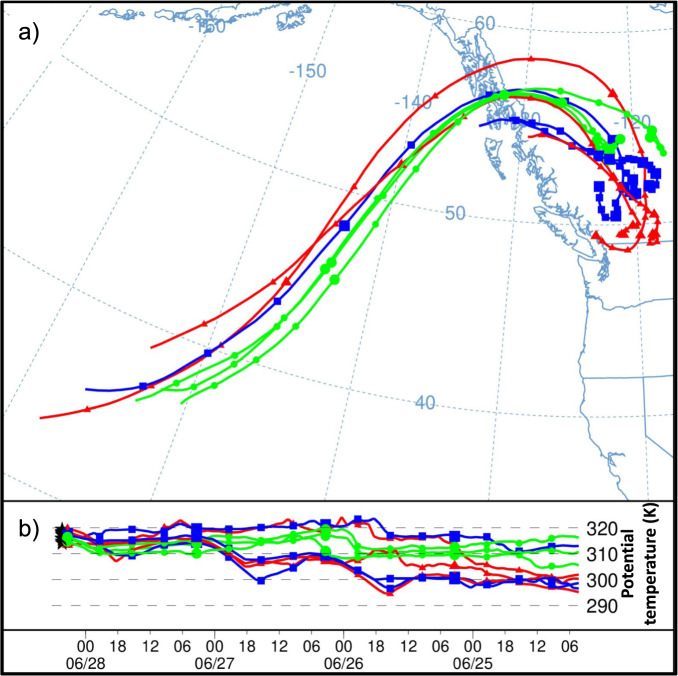
“Several studies have employed Lagrangian back trajectories to study the PNW21 event, showing that the air arriving over PNW had its origin over the (sub)tropical sea southeast of China (e.g., Oertel et al., 2023; Röthlisberger & Papritz, 2023; Schumacher et al., 2022; White et al., 2023).”
BackgroundMethodInfluentialExtreme water level changes in global lakes revealed by altimetry satellites since the 2000s
Bai, B., Mu, L., Ma, C., Chen, G., & Tan, Y. (2024) · International Journal of Applied Earth Observation and Geoinformation · doi:10.1016/j.jag.2024.103694 · Cited by 15
Jeong, D. I., Yu, B., & Cannon, A. J. (2024) · Earth s Future · doi:10.1029/2024ef004541 · Cited by 12
“Consequently, the 2021 heatwave caused significant impacts, including fatalities, marine life casualties, agricultural setbacks, river inundation, wildfires, infrastructure disruptions, and landslides (White et al., 2023).”
InfluentialLo, S., Chen, C., Hsu, H., Shih, M.-F., & Liang, H. (2023) · Weather and Climate Extremes · doi:10.1016/j.wace.2023.100576 · Cited by 14
Precipitation in Northwestern Mexico: daily extreme events
Vega-Camarena, J. P., Castillo, L., & Farfán, L. M. (2023) · Theoretical and Applied Climatology · doi:10.1007/s00704-023-04789-3 · Cited by 11
“Unusual climate anomalies, resulting in floods (Pedrozo-Acuña et al. 2014), droughts (Stahle et al. 2016), heat waves (White et al. 2023), frost (Cortés-Ramos et al. 2021), and so on, can cause considerable losses in population and infrastructure.”
Escalating threat of human-perceived heatwaves in Brazil
Ballarin, A. S., de Oliveira, P. T. S., Uchôa, J. G. S. M., Lima, C., Zaerpour, M., Godoy, M. R. V., Neto, A. A. M., Papalexiou, S. M., & Wendland, E. C. (2024) · Environmental Research Communications · doi:10.1088/2515-7620/ad9140 · Cited by 11
Systematic Review of Post-Wildfire Landslides
Akosah, S., & Gratchev, I. (2025) · GeoHazards · doi:10.3390/geohazards6010012 · Cited by 12
Korfmacher, M., Hartwell, C., Hill, K., Matthews-Trigg, N., Hess, J. J., Nori‐Sarma, A., Wellenius, G. A., & Errett, N. A. (2025) · BMJ Open · doi:10.1136/bmjopen-2024-089093 · Cited by 11
“43 Emergency medical systems (EMS) and health-care providers experienced long wait times, overheated testing equipment and surges of ED patients, 44 45 even as the COVID-19 pandemic restrictions were lessening in Washington.”
Physical processes leading to extreme day-to-day temperature change – Part 1: Present-day climate
Hamal, K., & Pfahl, S. (2025) · Weather and Climate Dynamics · doi:10.5194/wcd-6-879-2025 · Cited by 11
Lubis, S. W., Harrop, B. E., Lu, J., Leung, L.-Y. R., Chen, Z., Huang, C. S. Y., & Omrani, N. (2025) · Nature Communications · doi:10.1038/s41467-025-64672-9 · Cited by 11
Scientists’ warning on technology
Tomlinson, B., Torrance, A. W., & Ripple, W. J. (2023) · Journal of Cleaner Production · doi:10.1016/j.jclepro.2023.140074 · Cited by 13
Tetzlaff, E. J., Cassan, C., Goulet, N., Gorman, M., Hogya, B., & Kenny, G. P. (2024) · American Journal of Industrial Medicine · doi:10.1002/ajim.23576 · Cited by 11
Parkes, M. W., Déry, S. J., Owens, P. N., Petticrew, E. L., & Booth, B. P. (2024) · PLOS Water · doi:10.1371/journal.pwat.0000263 · Cited by 11
Scrosati, R. A., & Cameron, N. M. (2023) · Diversity · doi:10.3390/d15060750 · Cited by 11
Kong, J. C., Zhao, Y., Gao, K., Strebel, D., Carmeliet, J., & Lei, C. (2024) · Environmental Research Letters · doi:10.1088/1748-9326/ad7d1e · Cited by 10
“Extreme heat-related risks have been reported in several regions, including Canada and the United States [7], the United Kingdom [8], China [9], Australia [10], and Europe [11].”
A hybrid approach for skillful multiseasonal prediction of winter North Pacific blocking
Park, M., Johnson, N. C., Hwang, J., & Jia, L. (2024) · npj Climate and Atmospheric Science · doi:10.1038/s41612-024-00767-2 · Cited by 10
Characteristics of Climate Change in Poyang Lake Basin and Its Impact on Net Primary Productivity
Yang, Y., Wu, C., An, T., & Yu, G. (2024) · Sustainability · doi:10.3390/su16219420 · Cited by 11
Factors affecting heat resilience of drone honey bees (Apis mellifera) and their sperm
McAfee, A., Metz, B. N., Connor, P., Du, K., Allen, C. W., Frausto, L. A., Swenson, M. P., Phillips, K. S., Julien, M., Rempel, Z., et al. (2025) · PLoS ONE · doi:10.1371/journal.pone.0317672 · Cited by 10
Intensifying heatwave events affect snow phenology over the Tibetan Plateau
Deng, G., Zhang, T., Liu, X., He, Y., Chen, H., Shen, Q., Chen, Q., & Tang, Z. (2025) · Journal of Hydrology · doi:10.1016/j.jhydrol.2025.133293 · Cited by 10
Clark, D. G., Liang, K. E., Cheng, I., Ford, J. D., & Gossack-Keenan, K. L. (2025) · The Lancet Planetary Health · doi:10.1016/s2542-5196(25)00075-0 · Cited by 10
Duan, S. Q., McKinnon, K. A., & Simpson, I. R. (2025) · Earth s Future · doi:10.1029/2025ef006216 · Cited by 10
Shan, L., Wang, N., Duan, F., Zhang, S., Duan, L., Zhang, Q., Zhu, L., Wang, S., Jiang, J., Ma, Y., et al. (2025) · Environmental Research · doi:10.1016/j.envres.2025.122976 · Cited by 16
Gaps and ways forward in atmospheric blocking and extreme weather research
Lei, W., Lu, J., Breeden, M. L., Chen, G., Henderson, S. A., Narinesingh, V., Simpson, I. R., Woollings, T. J., Hu, Y., & Lubis, S. W. (2026) · Nature Communications · doi:10.1038/s41467-026-70487-z · Cited by 13
Self-citationVilla, D., Lee, S. H., Bianchi, C., Carvallo, J. P., Azaroff, I., Mammoli, A. A., & Schostek, T. (2023) · Science and Technology for the Built Environment · doi:10.1080/23744731.2023.2279467 · Cited by 11
“Such extreme temperatures severely stress critical infrastructure and jointly affect mutually dependent systems such as the electric grid, gas pipe-lines, and buildings (White et al. 2023; Lee, Maron, and Mostafavi 2022).”
BackgroundModeling the Streamflow Response to Heatwaves Across Glacierized Basins in Southwestern Canada
Anderson, S., & Radić, V. (2023) · Water Resources Research · doi:10.1029/2023wr035428 · Cited by 10
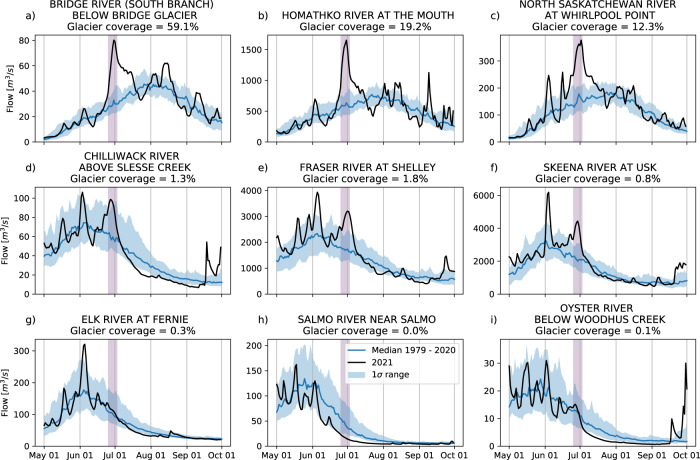
“…lower than normal streamflows in part due to the earlier melt-out of snow driven by the heatwave, while basins with glacier coverage experienced streamflows that were within the historical normal range in part due to the compensation from glacier runoff through summer (White et al., 2023).”
BackgroundSelf-citationPersistence of fish populations to longer, more intense, and more frequent mass mortality events
Langangen, Ø., & Durant, J. M. (2024) · Global Change Biology · doi:10.1111/gcb.17251 · Cited by 10
Yoon, L., Belotti, G., Stern, R., White, K., Mohajeri, A., Zhou, A., Miranda, E. R., Siao, E., Le, T., Masuda, J. R., et al. (2025) · Environmental Research Health · doi:10.1088/2752-5309/ada6f4 · Cited by 13
“Studies [12, 56] show that areas with lower socioeconomic status have higher rates of heat-related morbidity and mortality, and these areas in metro Vancouver—as is the case in many other regions—are often neighbourhoods with higher populations of racialized people and immigrants.”
Two different perspectives on heatwaves within the Lagrangian framework
Mayer, A., & Wirth, V. (2025) · Weather and Climate Dynamics · doi:10.5194/wcd-6-131-2025 · Cited by 15
“(cid:48) 21) yields the following new decomposition:”
Heat Wave Trends in Canadian Regions
Kirchmeier‐Young, M. C., Li, G., Wan, H., & Zhang, X. (2025) · ATMOSPHERE-OCEAN · doi:10.1080/07055900.2025.2521501 · Cited by 10
“Heat waves have consequences for public health in terms of increased mortality and morbidity (Campbell et al., 2018), with the 2021 heat wave in western Canada (White et al., 2023) serving as a grim example.”
Increased global subseasonal whiplash by future BSISO behavior
Cheng, T. F., Wang, B., Liu, F., Chen, G., & Lu, M. (2025) · Science Advances · doi:10.1126/sciadv.adv6355 · Cited by 10
“The combined effect of the two extremes on society, economy, agriculture, and ecology can be far greater than the individual ones ( 60 , 61 ).”
Buster, G., Cox, J., Benton, B., & King, R. (2025) · Urban Climate · doi:10.1016/j.uclim.2025.102603 · Cited by 10
Sinha, D., Rajulapati, C. R., & Crawford, A. D. (2025) · Earth s Future · doi:10.1029/2025ef006104 · Cited by 11
“In the recent past of June 2021, heatwaves with record‐breaking temperatures had drastic impacts on the ecosystem in Canada (White et al., 2023).”
Asian-Australian monsoon as a mediator on North American surface air temperature anomalies
Zhou, T., & Wu, Z. (2024) · Atmospheric Research · doi:10.1016/j.atmosres.2024.107427 · Cited by 9
Lemus-Canovas, M., Ciuró, E. M., Cearreta-Innocenti, T., Serrano‐Notivoli, R., & Royé, D. (2024) · Urban Climate · doi:10.1016/j.uclim.2024.102019 · Cited by 10
Schuster, M., Krüger, J., & Lueg, R. (2025) · PLoS ONE · doi:10.1371/journal.pone.0318166 · Cited by 11
Canadian climate data portals: A comparative analysis from a user perspective
Lavoie, J., Caron, L., Logan, T., & Barrow, E. (2024) · Climate Services · doi:10.1016/j.cliser.2024.100471 · Cited by 9
Changing climate risks for high-value tree fruit production across the United States
Preston, S., Rajagopalan, K., Yourek, M. A., Kalcsits, L., & Singh, D. (2024) · Environmental Research Letters · doi:10.1088/1748-9326/ad90f4 · Cited by 8
“The record-breaking 2021 Northwest heat-wave in the U.S., damaged and reduced yields of several crops across the Northwest (White et al 2023).”
Recent Extreme Cold Waves are Likely Not to Happen Again This Century
Ribes, A., Robin, Y., Tessiot, O., & Cattiaux, J. (2025) · Bulletin of the American Meteorological Society · doi:10.1175/bams-d-24-0013.1 · Cited by 12
Southern, M. D., Kumar, M., & Blauer, J. M. (2025) · Plants · doi:10.3390/plants14050750 · Cited by 8
Guo, Y., Mirrezaei, M. A., Sorooshian, A., & Arellano, A. F. (2025) · Atmospheric chemistry and physics · doi:10.5194/acp-25-5591-2025 · Cited by 10
Hawkins, S. J., O’Shaughnessy, K. A., Branch, G. M., Airoldi, L., Bray, S., Brooks, P. R., Burrows, M. T., Castilla, J. C., Crowe, T. P., Davies, T. W., et al. (2025) · Marine Pollution Bulletin · doi:10.1016/j.marpolbul.2025.118214 · Cited by 8
Georgoulis, I., Giantsis, I. Α., Michaelidis, B., Papadopoulos, D. K., Lattos, A., Katselis, G. N., & Feidantsis, K. G. (2025) · Marine Pollution Bulletin · doi:10.1016/j.marpolbul.2025.118569 · Cited by 8
Constructing extreme heatwave storylines with differentiable climate models
Whittaker, T., & Luca, A. D. (2026) · Weather and Climate Dynamics · doi:10.5194/wcd-7-393-2026 · Cited by 14
“…event due to its well-documented synoptic drivers, and its prevalence in extreme event studies (Lucarini et al., 2023; Fischer et al., 2023; White et al., 2023; Philip et al., 2022) We use the automatic differentiation feature of the NeuralGCM model to optimize perturbed initial…”
Managing extremes in the Anthropocene: a causal, stochastic physics approach
Kaluarachchi, S., & Alila, Y. (2025) · Frontiers in Environmental Science · doi:10.3389/fenvs.2025.1643416 · Cited by 8
Cameron, N. M., Scrosati, R. A., & Valdivia, N. (2023) · Community Ecology · doi:10.1007/s42974-023-00171-5 · Cited by 8
“…species continue to be lost due to anthropogenic factors (Fields & Silbiger, 2022; Lamy et al., 2020; O’Brien et al., 2021; Ravaglioli et al., 2021; White et al., 2023), as restoration efforts will be most efficient when based on knowledge on how different foundation species affect associated…”
Reflections on a Century of Extreme Heat Event‐Related Mortality Reporting in Canada
Yoon, L., Richardson, G. R. A., & Gorman, M. (2024) · GeoHealth · doi:10.1029/2023gh000895 · Cited by 8
“…for which populations died across past EHEs in Canada is important for helping health authorities at all levels to better target evidence‐based interventions, and thereby effectively reduce vulnerability and increase adaptive capacity of Canadians to extreme heat. and White et al. (2022).”
Simpson, E., Ianson, D., Kohfeld, K. E., Franco, A. C., Covert, P. A., Davelaar, M., & Perreault, Y. (2024) · Biogeosciences · doi:10.5194/bg-21-1323-2024 · Cited by 10
Gareau, T. P., Gao, L., & Gareau, B. J. (2024) · PLOS Climate · doi:10.1371/journal.pclm.0000350 · Cited by 8
Som, S., Gallo, L., Sunder, A., Demus, J., Domingues, T. F., Wistrom, C., Gu, L., Tcherkez, G. G. B., & Niinemets, Ü. (2024) · Plant Cell & Environment · doi:10.1111/pce.15124 · Cited by 8
Han, J., Singh, V. P., Kwon, H., & Kim, T. (2025) · Journal of Hydrology · doi:10.1016/j.jhydrol.2025.133166 · Cited by 8
Jeong, D. I., Yu, B., & Cannon, A. J. (2025) · Climate Dynamics · doi:10.1007/s00382-025-07669-w · Cited by 8
“It integrates observations from various sources, including sat-ellites, ground-based stations, and weather stations, using an advanced numerical weather prediction modelling sys-tem (Bell et al. 2021 ; Keller and Wahl 2021).”
Koh, J., Steinfeld, D., & Martius, O. (2025) · Proceedings of the Royal Society A Mathematical Physical and Engineering Sciences · doi:10.1098/rspa.2024.0763 · Cited by 11
Sang, Z., & Hamann, A. (2023) · Remote Sensing · doi:10.3390/rs15082162 · Cited by 8
Boudreault, J., McLean, K. E., & Henderson, S. B. (2025) · EBioMedicine · doi:10.1016/j.ebiom.2025.105788 · Cited by 10
Self-citationJia, Z., Lin, T., Liu, Y., Geng, H., Zhang, J., Zheng, Y., Guo, X., Lin, M., Yuan, C., Liu, W., et al. (2025) · Urban Climate · doi:10.1016/j.uclim.2025.102649 · Cited by 7
Lin, X., (10972400), Z. L., Li, J., He, S., & Wu, Y. (2026) · ACS Nano · doi:10.1021/acsnano.5c16540 · Cited by 7
Kim, D. W., Lee, S., Clark, J. P., & Feldstein, S. B. (2023) · npj Climate and Atmospheric Science · doi:10.1038/s41612-023-00522-z · Cited by 7
Noormohammadi, A., Mokhtari, A., Vosoughi, M., Dargahi, A., & Fazlzadeh, M. (2025) · Applied Water Science · doi:10.1007/s13201-025-02550-x · Cited by 7
“An example is the advent of machine intelligence, notably deep learning (DL), which signifies a new era of groundwater models (Zhan et al. 2024; Haggerty 2023; Reichstein et al. 2019; Hu et al. 2018; Sun and Scanlon 2019; White et al. 2023; Wang, et al. 2023).”
Cardiac responses to environmental heat exposure in young and older adults
Foster, J., McKenna, Z. J., Sarma, S., MacNamara, J. P., Belval, L. N., Watso, J. C., Atkins, W. C., Jarrard, C. P., & Crandall, C. G. (2025) · Journal of Applied Physiology · doi:10.1152/japplphysiol.00917.2024 · Cited by 7
May, M., & Tomanek, L. (2023) · Comparative Biochemistry and Physiology Part B Biochemistry and Molecular Biology · doi:10.1016/j.cbpb.2023.110902 · Cited by 7
Marine heatwaves impact mortality of triploid Pacific oysters
Manahan, D. T. (2023) · Global Change Biology · doi:10.1111/gcb.16980 · Cited by 7
Kennedy, A. M., Tsakonas, K., Berman-Hatch, F., Conradi, S., Thaysen, M., Gillespie, M. A., & Gislason, M. (2024) · Frontiers in Public Health · doi:10.3389/fpubh.2024.1309186 · Cited by 8
Anderson, S., & Chartrand, S. (2024) · Environmental Research Letters · doi:10.1088/1748-9326/ad7ede · Cited by 7
“Yet, our results do not suggest that record-breaking streamflow responses cannot occur under climate change, as recent observations have proven (Queen et al 2021, McEvoy and Hatchett 2023, White et al 2023).”
Self-citationWinter Storm Uri, Mortality, and Health Care Use of Nursing Home Residents
Downer, B. G., Holland, A., Li, S., & Xu, H. (2025) · JAMA Network Open · doi:10.1001/jamanetworkopen.2025.4111 · Cited by 6
Heatwaves Over the Indian Subcontinent: Mechanisms, Variability and Sources
Gupta, P., Dubey, A. K., Bhatla, R., Payra, S., & Verma, S. (2025) · Earth Systems and Environment · doi:10.1007/s41748-025-00669-0 · Cited by 6
Refine Extreme Hot Day Predictions With the Sea Surface Temperature Tendency
Hui, T., Zhu, Z., Ling, F., & Wang, B. (2025) · Geophysical Research Letters · doi:10.1029/2025gl116339 · Cited by 7
“…of extreme heatwaves, North America has witnessed a marked escalation in the frequency and intensity of wildfires, affecting millions of acres of land and leading to extensive property destruction, ecological degradation, deteriorated air quality, and severe haze pollution (White et al., 2023).”
Malik, J., Wei, M., & Hong, T. (2025) · Building and Environment · doi:10.1016/j.buildenv.2025.113877 · Cited by 6
Estimating return periods for extreme events in climate models through Ensemble Boosting
Bloin-Wibe, L., Noyelle, R., Humphrey, V., Beyerle, U., Knutti, R., & Fischer, E. M. (2025) · Weather and Climate Dynamics · doi:10.5194/wcd-6-1147-2025 · Cited by 9
“Several methods have been developed to overcome this sampling challenge For example, climate model Large Ensembles constitute a brute-force approach to the problem of sampling extreme events, and have been used to describe heatwave dynamics quantitatively (Suarez-Gutierrez et al., 2018; Schaller et…”
Metadata
- Authors
- White, R. H., Anderson, S., Booth, J. F., Braich, G., Draeger, C., Fei, C., Harley, C. D. G., Henderson, S. B., Jakob, M., Lau, C.-A., Mareshet Admasu, L., Narinesingh, V., Rodell, C., Roocroft, E., Weinberger, K. R., & West, G.
- Affiliations
- University of British Columbia (CA)
- The Graduate Center, CUNY (US)
- BGC Engineering (Canada) (CA)
- NOAA Geophysical Fluid Dynamics Laboratory (US)
- BC Hydro (Canada) (CA)
- Corresponding author
- White, Rachel H.
- ORCID
- Venue
- Nature Communications
- Published
- 2023-02-09
- Volume
- 14
- Issue
- 1
- Pages
- 727-727
- ISSN
- 2041-1723 (ISSN-L)
- PMC
- PMC9910268
- OpenAlex
- W4319733471
- Semantic Scholar
- c28e132d96907544640d1ea8be24562422fa1811
- Cited by
- 435
- References
- 104
- Citations by year
- 2026: 108 · 2025: 153 · 2024: 116 · 2023: 58
- FWCI
- 48.88
- Type
- journal article
- Language
- en
- Open access
- gold
- doi.org
- Licence
- cc-by
- creativecommons.org/licenses/by/4.0 (tdm)
- creativecommons.org/licenses/by/4.0 (vor)
- Locations
- Nature Communications (publishedVersion, cc-by)
- PubMed Central (publishedVersion, cc-by)
- PubMed (publishedVersion)
- DOAJ (DOAJ: Directory of Open Access Journals) (submittedVersion, cc-by-sa)
- NOAA Institutional Repository (submittedVersion)
- Funders
- Gouvernement du Canada | Natural Sciences and Engineering Research Council of Canada (RGPIN-2020-05783, RGPIN-2016-05441)
- NSERC Doctoral Scholarship
- Alberta Innovates (2019F163R)
- Health Canada and the BC Climate Preparedness and Adaptation Strategy
- Gouvernement du Canada | Natural Resources Canada
- BC Hydro
- Mitacs
- Topics
- Physical Sciences › Environmental Science › Global and Planetary Change › Climate variability and models
- Physical Sciences › Earth and Planetary Sciences › Atmospheric Science › Meteorological Phenomena and Simulations
- Physical Sciences › Environmental Science › Global and Planetary Change › Climate Change and Environmental Impact
- Keywords
- 2021 Pacific Northwest heatwave, extreme heat, temperature records, diabatic heating, subseasonal forecasting, heat-related mortality, crop yield loss, forest fires, landslides, climate change impacts
About these checks
Registry, retraction, Cites and statistics results are computed, not judged, with one exception: a printed reference that no index lists is read once by a model before it counts as a citation error. Claims are extracted by a model and kept only when their quote appears verbatim in the text; each cited source is then checked, with a model’s help, for whether it says what the claim relies on. Those verdicts can be wrong — read the claim’s quote and the cited source before relying on one.
Statistics and arithmetic are recomputed, not judged.
Confidence bands are shown only for fields calibrated on our annotated test set. None is calibrated yet, so no band is shown.
What counts as a claim ›How we measure confidence ›How we check this ›
Are you an author, or do you see a problem with this page? Request a review
Data sources
Bibliographic data: Semantic Scholar, OpenAlex, Crossref.
Contains information from the Semantic Scholar Academic Graph Datasets, made available under the ODC Attribution License (ODC-BY 1.0).
Semantic Scholar’s data is described in: Kinney, R., et al. (2023). The Semantic Scholar Open Data Platform. arXiv:2301.10140.
