

The unprecedented Pacific Northwest heatwave of June 2021
Open accessPublished version of a preprint
The DOI matches its Crossref record; 100 of the 104 references it cites were found in a registry or an index.
Abstract
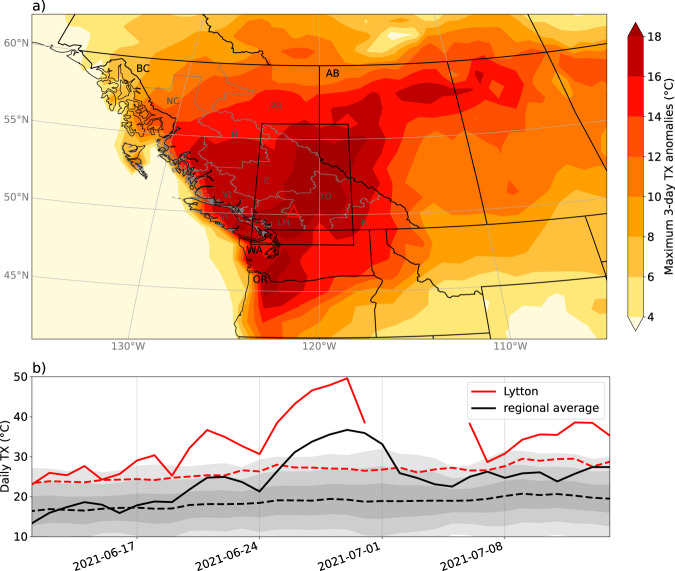
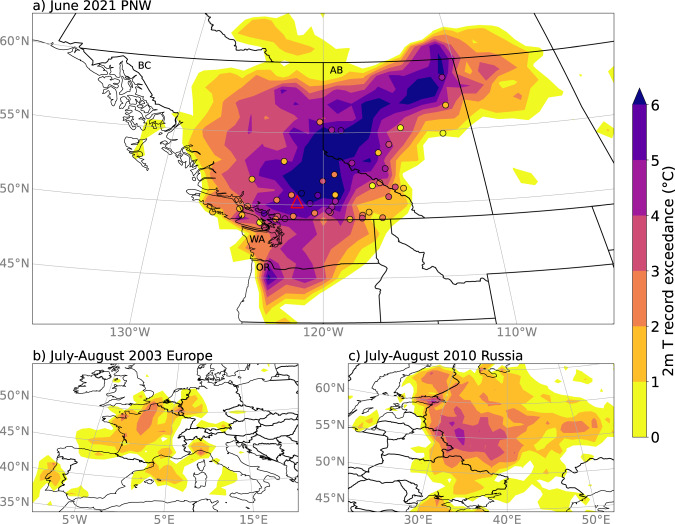
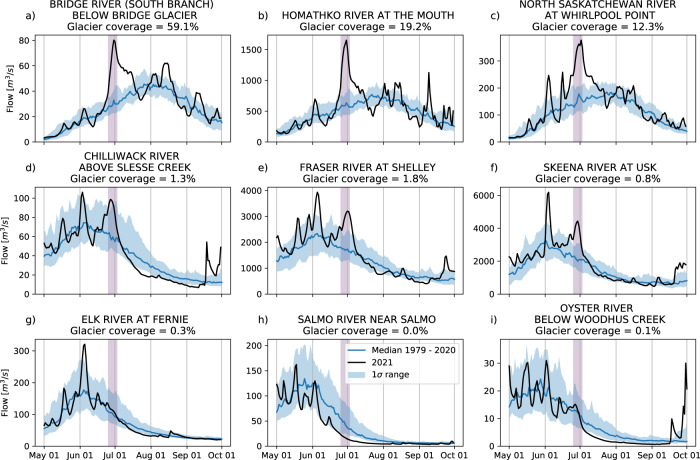
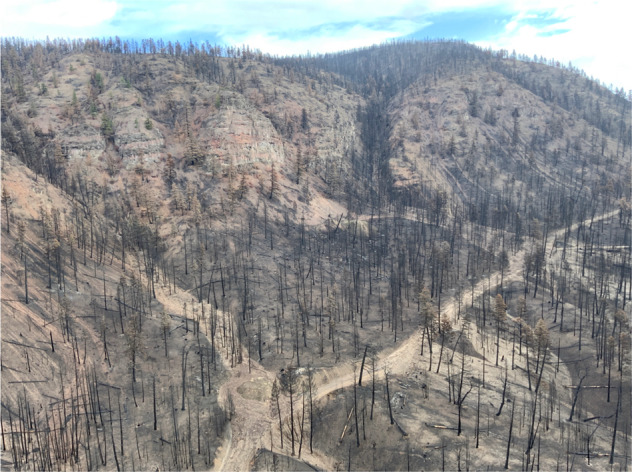
In late June 2021 a heatwave of unprecedented magnitude impacted the Pacific Northwest region of Canada and the United States. Many locations broke all-time maximum temperature records by more than 5 °C, and the Canadian national temperature record was broken by 4.6 °C, with a new record temperature of 49.6 °C. Here, we provide a comprehensive summary of this event and its impacts. Upstream diabatic heating played a key role in the magnitude of this anomaly. Weather forecasts provided advanced notice of the event, while sub-seasonal forecasts showed an increased likelihood of a heat extreme with lead times of 10-20 days. The impacts of this event were catastrophic, including hundreds of attributable deaths across the Pacific Northwest, mass-mortalities of marine life, reduced crop and fruit yields, river flooding from rapid snow and glacier melt, and a substantial increase in wildfires—the latter contributing to landslides in the months following. These impacts provide examples we can learn from and a vivid depiction of how climate change can be so devastating.
Overview
The claims and statistics of this paper haven’t been checked yet.
Free: it reads the open-access text and checks the first 5 claims that cite a source we can check. Create a free account to check every claim.
Integrity signals
Registry
Cites
Statistics
Figures
Verification
Claims the paper makes
The claims and statistics of this paper haven’t been checked yet.
Free: it reads the open-access text and checks the first 5 claims that cite a source we can check. Create a free account to check every claim.
Self-check
Percentages, sums and reported differences re-computed from the paper’s own numbers.
The self-check needs the paper’s full text.
Citations
Cites
Hersbach, H., Bell, B., Berrisford, P., Hirahara, S., Horányi, A., Muñoz‐Sabater, J., Nicolas, J., Peubey, C., Radu, R., Schepers, D., et al. (2020) · Quarterly Journal of the Royal Meteorological Society · doi:10.1002/qj.3803 · Cited by 31,882
NOAA’s HYSPLIT Atmospheric Transport and Dispersion Modeling System
Stein, A. F., Draxler, R. R., Rolph, G. D., Stunder, B. J. B., Cohen, M. D., & Ngan, F. (2015) · Bulletin of the American Meteorological Society · doi:10.1175/bams-d-14-00110.1 · Cited by 6,597
ERA5-Land: a state-of-the-art global reanalysis dataset for land applications
Muñoz-Sabater, J., Dutra, E., Agustí-Panareda, A., Albergel, C., Arduini, G., Balsamo, G., Boussetta, S., Choulga, M., Harrigan, S., Hersbach, H., et al. (2021) · Earth System Science Data · doi:10.5194/essd-13-4349-2021 · Cited by 5,540
Influence of extreme weather disasters on global crop production
Lesk, C., Rowhani, P., & Ramankutty, N. (2016) · Nature · doi:10.1038/nature16467 · Cited by 3,883
Nonlinear temperature effects indicate severe damages to U.S. crop yields under climate change
Schlenker, W., & Roberts, M. J. (2009) · Proceedings of the National Academy of Sciences · doi:10.1073/pnas.0906865106 · Cited by 3,420
ERA5 hourly data on single levels from 1940 to present
C3S (2018) · European Centre for Medium-Range Weather Forecasts · doi:10.24381/cds.adbb2d47 · Cited by 2,550
A Description of the Advanced Research WRF Model Version 4
Skamarock, W. C., Klemp, J. B., Dudhia, J., Gill, D. O., Liu, Z., Berner, J., Wang, W., Powers, J. G., Duda, M. G., Barker, D. M., et al. (2019) · doi:10.5065/1dfh-6p97 · Cited by 2,164
Death toll exceeded 70,000 in Europe during the summer of 2003
Robine, J.-M., Cheung, S. L. K., Le Roy, S., Van Oyen, H., Griffiths, C., Michel, J.-P., & Herrmann, F. R. (2007) · Comptes Rendus. Biologies · doi:10.1016/j.crvi.2007.12.001 · Cited by 2,127
Real-time Environmental Applications and Display sYstem: READY
Rolph, G., Stein, A., & Stunder, B. (2017) · Environmental Modelling & Software · doi:10.1016/j.envsoft.2017.06.025 · Cited by 2,093
Evidence linking Arctic amplification to extreme weather in mid‐latitudes
Francis, J. A., & Vavrus, S. J. (2012) · Geophysical Research Letters · doi:10.1029/2012gl051000 · Cited by 1,808
Research works printed but not linked: 8
- Henderson SB McLean KE Lee MJ Kosatsky T Extreme heat events are public health emergencies BC Med. J. 2021 63 366 367
- British Columbia Coroners Service. Extreme heat and human mortality: a review of heat-related deaths in B.C. in summer 2021. https://www2.gov.bc.ca/assets/gov/birth-adoption-death-marriage-and-divorce/deaths/coroners-service/death-review-panel/extreme_heat_death_review_panel_report.pdf (2022).
- Lau, C.-A. et al. Hydro-geomorphic effects of the November 2021 atmospheric rivers on infrastructure in Southwestern British Columbia. In: Geohazards 8: Proceedings of the 8th Canadian Conference on Geotechnique and Natural Hazards. Quebec, Canada (2022).
- Rex DFBlocking Action in the middle troposphere and its effect upon regional climate - part I Tellus 1950 2 196 211
- Multnomah County. Preliminary Review on Excessive Heat Deaths. https://multco-web7-psh-files-usw2.s3-us-west-2.amazonaws.com/s3fs-public/preliminary_review-heat_deaths-07-14-21_2.pdf (2021).
- Warner J Twomey S The production of cloud nuclei by cane fires and the effect on cloud droplet concentration J. Atmos. Sci. 1967 24 704 706 · doi:10.1175/1520-0469(1967)024
- Roznik M Boyd M Porth L Improving crop yield estimation by applying higher resolution satellite NDVI imagery and high-resolution cropland masks Remote Sens. Appl. Soc. Environ. 2022 25 100693
- BC Ministry of Forests, Lands, Natural Resource Operations and Rural Development (n.d.). 2021 burn severity mapping. Accessed on November 1, 2022 (2021).
Cited by
Items 301–400 of 560
More active and severe heatwaves in the Northern Hemisphere during La Niña developing summers
Lo, S., Hsu, H., Chang, Y., & Liang, H. (2025) · Weather and Climate Extremes · doi:10.1016/j.wace.2025.100824 · Cited by 2
Liang, Y., Kirchmeier‐Young, M. C., & Zhang, X. (2025) · Earth s Future · doi:10.1029/2025ef006073 · Cited by 2
Kim, S.-H., Min, S., An, S., Kim, M., Park, H., Park, J., Park, D. R., Sung, H. M., Byun, Y., & Boo, K. (2025) · npj Climate and Atmospheric Science · doi:10.1038/s41612-025-01277-5 · Cited by 2
Greiner, C. M., Barber, J. S., Donatuto, J. L., Poe, M. R., Williams, S.-Q. J., Loomis, L., & Campbell, W. L. (2025) · Journal of Integrative Environmental Sciences · doi:10.1080/1943815x.2025.2573346 · Cited by 3
“Furthermore, stress from increasingly common events like atmospheric heatwaves (White et al. 2023) has resulted in mass mortality events of intertidal bivalves and led to prolonged closures of certain beaches to clam harvest, including those on the Swinomish Reservation (Raymond et al. 2022, 2024).”
A climate indicator dashboard for communicating climate change in the Okanagan Valley of B.C.
Schira, S., Sears, A. W., & Fyke, J. (2025) · Climate Services · doi:10.1016/j.cliser.2025.100631 · Cited by 2
Heat waves associated with higher methane emissions from dairy manure: A 6-year study
VanderZaag, A., Baldé, H., Flesch, T. K., Hung, C., & Wagner‐Riddle, C. (2025) · Agricultural and Forest Meteorology · doi:10.1016/j.agrformet.2025.110980 · Cited by 2
Garrison, V. H., Li, J., McLaughlin, J., Ravesloot, H., & Shcheglovitova, M. (2026) · Journal of Urban Affairs · doi:10.1080/07352166.2025.2513972 · Cited by 3
“The 2021 heat wave in western North America was estimated to be a 1-in-1,000-year event (White et al., 2023) and was estimated to lead to the deaths of 1,000 or more people, including six public housing residents in Multnomah County, Oregon (County, 2022).”
Agentic AI can help hospitals prepare for unprecedented weather
Gish, M., & Rapaport, C. (2026) · npj Digital Medicine · doi:10.1038/s41746-026-02391-1 · Cited by 2
Cheng, S., Zuo, J., Nie, Y., Yuan, J., Huang, H., & He, L. (2026) · Climate Dynamics · doi:10.1007/s00382-026-08050-1 · Cited by 2
“Previous studies have demonstrated that operational S2S models exhibit reasonable capability in predicting extreme heat events at 7–10-day lead times (Hsu et al. 2020; Xie et al. 2020; White et al. 2023; Xiao et al. 2024).”
The Role of Near Solstice Solar Radiation on the Pacific Northwest Heatwave of June 2021
Ndoping, S., Robson, J., Admasu, L. M., Chui, T. C.-Y., Howard, R., & White, R. H. (2026) · Geophysical Research Letters · doi:10.1029/2025gl119909 · Cited by 3
“This heatwave impacted infrastructure, ecosystems, human health and mortality, and the agricultural and economic sectors (White et al., 2023).”
InfluentialSelf-citationTan, H., Zhu, Z., Li, T., & Wang, B. (2026) · Climate Dynamics · doi:10.1007/s00382-026-08100-8 · Cited by 2
Lembo, V., Messori, G., Faranda, D., Gálfi, V. M., Graversen, R. G., & Pons, F. (2026) · Weather and Climate Dynamics · doi:10.5194/wcd-7-453-2026 · Cited by 2
Health Insurance As Climate Adaptation: A Practical Framework
Gould, C. F., Tsou, A.-C., Puliady, S., & McMenamin, S. B. (2026) · Health Affairs · doi:10.1377/hlthaff.2025.01670 · Cited by 2
Chen, X., HUANG, C.-F., Hao, F. A. N., Liu, Y., & Da-Bang, J. (2026) · Advances in Climate Change Research · doi:10.1016/j.accre.2026.05.011 · Cited by 3
Huang, J., Li, X., Wang, L., Wang, X., Li, S., & Zhang, F. (2026) · Natural Hazards · doi:10.1007/s11069-026-08252-0 · Cited by 2
“Hoegh-Guldberg et al. (2018) and White et al. (2023 ) argued that the intensification of climate warming was likely to exacerbate the frequency, duration, and severity of CHTDEs, with increasingly profound and persistent socio-environmental consequences for ecosystems, agricultural systems, and…”
Oceanic heat sources exacerbate continental heatwaves
Wang, G., Zhang, Q., Slater, L. J., Woolway, R. I., Sun, F., Noy, I., Zhang, L., Singh, V. P., Xu, C.-Y., Li, J., et al. (2026) · One Earth · doi:10.1016/j.oneear.2026.101716 · Cited by 2
Tracing atmospheric heat and moisture pathways to understand compound drought–heatwave events
Gimeno, L., Nieto, R., Eiras‐Barca, J., Sorí, R., Stojanovic, M., Pérez‐Alarcón, A., Fernández‐Alvarez, J. C., Gimeno‐Sotelo, L., Coll‐Hidalgo, P., Alvarez‐Socorro, G., et al. (2026) · Weather and Climate Extremes · doi:10.1016/j.wace.2026.100923 · Cited by 2
Who Prepares and Why? Drivers of Disaster Preparedness in Squamish, Canada
Nicholas, J., Donovan, A. R., & Oppenheimer, C. (2026) · International Journal of Disaster Risk Science · doi:10.1007/s13753-026-00756-4 · Cited by 2
“A 2020 wildfire triggered evacuations of over 100 people in the Squamish area (Parisien et al. 2023), and the 2021 extreme “heat dome” produced record temperatures of up to 43 °C in Squamish (White et al. 2023).”
Nie, Y., Sengupta, A., Baño‐Medina, J., Moore, B., & Monache, L. D. (2026) · Geophysical Research Letters · doi:10.1029/2026gl123505 · Cited by 2
“The first case study examines a record‐breaking heatwave over WNA during late June 2021 (White et al., 2023), characterized by 2‐m air temperature (T2m) anomalies exceeding 15–20°C under a strong upper‐level ridge (Figure 1a).”
Hotz, B., Wernli, H., Röthlisberger, M., & Noyelle, R. (2026) · Weather and Climate Dynamics · doi:10.5194/wcd-7-1875-2026 · Cited by 2
Terando, A. J., Gao, P., Kupfer, J. A., Young, K. S., & Hiers, J. K. (2024) · Global Environmental Change Advances · doi:10.1016/j.gecadv.2024.100007 · Cited by 2
Liu, X., Saravanan, R., Fu, D., Chang, P., Patricola, C. M., & O'Brien, T. A. (2024) · Geophysical Research Letters · doi:10.1029/2024gl108160 · Cited by 2
“Previous studies (Emerton et al., 2022; Lin et al., 2022; White et al., 2023) have highlighted the capabilities of weather forecast systems in predicting the 2021 WNA heat wave event.”
InfluentialTaylor, N. G., Häkkinen, H., Butler, J., Petrovan, S. O., Sutherland, W. J., & Pettorelli, N. (2024) · Conservation Science and Practice · doi:10.1111/csp2.13219 · Cited by 2
“Recent heatwaves in North America have been associated with mass mortality of intertidal invertebrates (White et al., 2023) and seabirds (Jones et al., 2018).”
Monthly macroalgal surveys reveal a diverse and dynamic community in an urban intertidal zone
Schenk, S., Supratya, V. P., Martone, P. T., & Parfrey, L. W. (2025) · Botany · doi:10.1139/cjb-2024-0109 · Cited by 2
Detecting extreme event-driven causality
Yu, S., Huang, Y., & Fu, Z. (2025) · Chaos Solitons & Fractals · doi:10.1016/j.chaos.2025.117138 · Cited by 2
Prevailing Climate Patterns for Concurrent High Temperature and Low Precipitation Days in Canada
Rajulapati, C. R., Crawford, A. D., Papalexiou, S. M., & Stroeve, J. C. (2025) · Geophysical Research Letters · doi:10.1029/2025gl118662 · Cited by 2
“An exceptional example of this was the record‐ breaking 2021 heatwave in British Columbia (Neal et al., 2022; White et al., 2023).”
The Impact of Climate Change on Extreme Events for Operation and Closure of Tailings Facilities
Trottier, M. O., Franklin, K., Portocarrero, J., Dufault, D., & Millar, R. (2023) · cIRcle (University of British Columbia) · doi:10.14288/1.0438154 · Cited by 2
Yang, J., Lu, M., Liu, A., Cheng, T. F., Pan, Y., Gao, M., Dai, L., Li, S., Deng, W., Feng, X., et al. (2026) · Advances in Atmospheric Sciences · doi:10.1007/s00376-025-5256-1 · Cited by 4
Beggs, P. J. (2025) · Nature Climate Change · doi:10.1038/s41558-025-02395-x · Cited by 2
Hauck, M., Csapek, G., Kramer, K., Schmidt, O., Lucas, Y., Popp, L., Szafranek, L., & Dulamsuren, C. (2026) · bioRxiv (Cold Spring Harbor Laboratory) · doi:10.64898/2026.05.17.725742 · Cited by 2
“During heat waves in the native range of P. menziesii in western North America, air temperatures of 45 °C have already been recorded and even been exceeded (White et al. 2023; Leuschner & Meinzer 2024).”
Raap, M. R., Gurney‐Smith, H., Dudas, S. E., Pearce, C. M., Leong, J. S., Sutherland, B. J. G., & Koop, B. F. (2026) · FACETS · doi:10.1139/facets-2025-0154 · Cited by 1
Analytical Model for the Higher Order Moments of Midlatitude Atmospheric Temperature Distributions
Kircher, K. I., Proistosescu, C., & Sriver, R. L. (2025) · Geophysical Research Letters · doi:10.1029/2024gl111626 · Cited by 1
“…to the free troposphere (e.g., Byrne, 2021; Y. Zhang & Boos, 2023), diabatic heating associated with vertical motion during heat‐dome events (e.g., R. H. White et al., 2023) and the effects of coupling to the land surface and soil moisture (e.g., Seneviratne et al., 2010; Zeppetello et al., 2022).”
Patterns of heatwaves in Lake Taihu based on BP neural network and remote sensing inversion
Yifan, Y., Yue, L., Jianming, D., Yingcheng, L., Guangwei, Z., & Boqiang, Q. (2025) · Journal of Lake Sciences · doi:10.18307/2025.0341 · Cited by 1
Choi, Y.-B., & Kim, Y. (2025) · Process Safety and Environmental Protection · doi:10.1016/j.psep.2025.107581 · Cited by 3
On the mean precipitation characteristics of North American heatwaves
Anderson, S., & Chartrand, S. (2025) · Environmental Research Water · doi:10.1088/3033-4942/adf6cf · Cited by 1
Self-citationTian, Y., Liu, J., Huang, Y., Gentine, P., & Kornhuber, K. (2026) · Science Advances · doi:10.1126/sciadv.aeh9111 · Cited by 1
Dynamics and model representation of the boreal spring subseasonal variability over North America
Hwang, J., You, Z., He, J., & Deng, Y. (2025) · Climate Dynamics · doi:10.1007/s00382-025-07859-6 · Cited by 1
“In summer, a clear sky with enhanced downward short-wave radiation over an anticy-clonic circulation center increases the daily maximum surface temperature in the region (e.g., Pfhal and Wernli 2012; Dong et al. 2018; White et al. 2023; Coumou et al. 2014).”
Capturing Unseen Spatial Heat Extremes Through Dependence‐Aware Generative Modeling
Liu, X., Peng, X., Yan, S., Chen, Y., Zhang, D., Niu, Z., Wang, H., & He, X. (2026) · Earth s Future · doi:10.1029/2026ef008861 · Cited by 1
“Events like the 2021 Pacific Northwest heatwave, which shattered previous records by up to 5°C and exceeded earlier statistical upper bounds derived from limited records, illustrate how such extremes can occur unexpectedly (Thompson et al., 2023; White et al., 2023).”
Subseasonal Prediction Skill of Winter Quasi‐Stationary Waves in the Northern Hemisphere
Admasu, L. M., & White, R. H. (2025) · Journal of Geophysical Research Atmospheres · doi:10.1029/2025jd043337 · Cited by 1
“This is evident in a forecast analysis done for the 2021 Pacific Northwest heat wave event that showed models were able to predict a strong blocking at 10 days lead time, but struggled to correctly identify the location of the block at these longer lead times (R. H. White et al., 2023).”
Self-citationLindstrom, S. C., Lemay, M. A., Janusson, C., Starko, S., Hind, K. R., & Martone, P. T. (2025) · Botany · doi:10.1139/cjb-2025-0003 · Cited by 1
High-resolution monitoring of Salish Sea estuarine communities through participatory science
Rubinoff, B. G., Grason, E. W., McDonald, P. S., & Watkins, L. (2025) · Frontiers in Marine Science · doi:10.3389/fmars.2025.1584193 · Cited by 1
Bi, P., Chen, X., Pan, Z., Gao, R., Pan, F., Men, J., Huang, N., Zhang, F., Huang, Z., Yang, R., et al. (2025) · Journal of Geographical Sciences · doi:10.1007/s11442-025-2412-6 · Cited by 2
Lu, R. X., Ibrahim, A. A., Rueppell, O., Plettner, E., & Pernal, S. F. (2025) · Scientific Reports · doi:10.1038/s41598-025-23935-7 · Cited by 1
Mehta, M. (2025) · American Journal of Health-System Pharmacy · doi:10.1093/ajhp/zxaf309 · Cited by 1
Parasites of the hermit crab Pagurus hirsutiusculus; distribution, prevalence, and thermal ecology
Abbott, M. H., Harley, C. D. G., Martell, H. A., Janusson, C., Lemay, M. A., & Gehman, A.-L. M. (2025) · PLoS ONE · doi:10.1371/journal.pone.0335145 · Cited by 1
“Following the 2021 Western North American heat dome event [37], we also revisited some of the sites we had visited just prior to or during this weather event in order to examine whether an extreme heatwave affected parasite prevalence in the intertidal zone.”
Self-citationSimin, G. P., Wang, J., Park, E., Tran, D. D., & Sun, X. (2025) · Environmental Research Communications · doi:10.1088/2515-7620/ae20e0 · Cited by 1
Regish, A. M., O’Donnell, M. J., Letcher, B. H., Lambert, T. D., Hall, D. J., & McCormick, S. D. (2025) · Conservation Physiology · doi:10.1093/conphys/coaf082 · Cited by 1
Suhui, L., Hao, L., Yaxin, J., & Longfei, C. (2024) · LA Referencia (Red Federada de Repositorios Institucionales de Publicaciones Científicas) · doi:10.1590/s0034-759020250106 · Cited by 1
Impact of Asian Summer Monsoon on the 2021 Pacific Northwest Heatwave: Can It? Did It?
Xu, P., Screen, J. A., Wang, L., Woollings, T., Fan, H., Patterson, M., & Dong, Z. (2025) · Geophysical Research Letters · doi:10.1029/2025gl117205 · Cited by 3
“…events, the PNW heatwave is thought to have resulted from an optimal combination of multiple factors (Mo et al., 2022; Neal et al., 2022; Overland, 2021; Schumacher et al., 2022; White et al., 2023), with the Asian summer monsoon playing a critical role (Lin et al., 2022; Qian et al., 2022).”
Bai, X., Loikith, P. C., Kalashnikov, D. A., Bigalke, S., Liu, P., & Singh, D. (2025) · Climate Dynamics · doi:10.1007/s00382-025-07961-9 · Cited by 1
“7f) that resulted in record-shattering temperatures across the Pacific Northwest (White et al. 2023; Baier et al. 2023; Schumacher during El Niño summers (Fig.”
Influential“Paris at 50 degrees Celsius”: How can Paris adapt to heatwaves?
Kainuma, M., Ishikawa, T., Kawarasaki, S., Blanchard, A., Take, K., & Mori, H. (2025) · Sustainability Science · doi:10.1007/s11625-025-01781-w · Cited by 1
Rita, Y. L., Papalexiou, S. M., Li, Y., ELSHORBAGY, A. A., & Schuster‐Wallace, C. J. (2026) · Plant-Environment Interactions · doi:10.1002/pei3.70107 · Cited by 1
Sensitivity of a temperate sea anemone and its algal symbionts to thermal extremes
Johnston, S. L., & Harley, C. D. G. (2026) · Marine Ecology Progress Series · doi:10.3354/meps15145 · Cited by 1
Self-citationWang, X., Hu, L., Zhang, S., Hong, S., Zhu, Z., Hu, G., & Jia, G. (2026) · Climate · doi:10.3390/cli14040083 · Cited by 1
Impact of Organic Aminoethoxyvinylglycine Formulation on Pre- and Postharvest Apple Ripening
Ortega‐Salazar, I., & Torres, C. A. (2026) · HortScience · doi:10.21273/hortsci19332-26 · Cited by 1
Measuring transit riders’ heat exposure and mitigation during the 2021 Vancouver heatwave
Shaver, H., Liu, L., Ahmed, N., Long, J., Voogt, J., Diab, E. I., Wang, J., & Lee, J. (2026) · Transportation Research Part D Transport and Environment · doi:10.1016/j.trd.2026.105398 · Cited by 3
Zuo, Z., Li, Z., Ng, E. Y. Y., Ren, C., & Fung, J. C. H. (2026) · Weather and Climate Extremes · doi:10.1016/j.wace.2026.100907 · Cited by 2
Ajulo, H., Emeto, T. I., Alele, F. O., & Adegboye, O. A. (2026) · Geographical Analysis · doi:10.1111/gean.70042 · Cited by 1
A climatology of heat domes over North America
Loikith, P. C., Bigalke, S., Taylor, G. P., Kalashnikov, D. A., Singh, D., & Laverty, A. L. (2026) · Weather and Climate Extremes · doi:10.1016/j.wace.2026.100913 · Cited by 1
Dual regimes of North American heatwaves and their future change
Yeo, J., Ha, K., Kam, J., Chung, E., Kim, D., & Franzke, C. L. E. (2026) · Weather and Climate Extremes · doi:10.1016/j.wace.2026.100912 · Cited by 1
Tabassum, A., Park, K., Hong, S., & Baik, J. (2026) · Urban Climate · doi:10.1016/j.uclim.2026.102945 · Cited by 1
Physical processes leading to extreme day-to-day temperature change – Part 2: Future climate change
Hamal, K., & Pfahl, S. (2026) · Weather and Climate Dynamics · doi:10.5194/wcd-7-1009-2026 · Cited by 1
Summer heatwaves and travel behaviour adaptation in temperate climate conditions
Yucel, S. G. (2026) · Applied Geography · doi:10.1016/j.apgeog.2026.104085 · Cited by 1
Denny, M. W., & Dowd, W. W. (2026) · Philosophical Transactions of the Royal Society B Biological Sciences · doi:10.1098/rstb.2024.0381 · Cited by 1
Cell‐based crop phenotyping for future climates
Shabala, S. N., Yun, P., Chen, Z., Zhou, M. M., Yu, M., & Bazihizina, N. (2026) · New Phytologist · doi:10.1111/nph.71397 · Cited by 1
Karamperidou, C. (2026) · NATO science for peace and security series. C, Environmental security · doi:10.1007/978-3-032-13170-6_11 · Cited by 1
Age-specific exposure to human-induced increases in humid heat
Pietroiusti, R., Fischer, E. M., Stuart-Smith, R. F., Harrington, L. J., Brimicombe, C., Mengel, M., Savaresi, A., Adelman, S., & Thiery, W. (2026) · Science Advances · doi:10.1126/sciadv.aeb3232 · Cited by 1
“This means that 3 ([3 to 3.1]) times more younger people compared to older people are experiencing this additional amount of heat stress exposure (Fig.”
InfluentialLi, Z., Lü, J., & Liu, Y. (2026) · Weather and Climate Dynamics · doi:10.5194/wcd-7-1821-2026 · Cited by 1
Research Priorities for Robust Climate Assessments in the United States
Kenney, M. A., Kopp, R. E., Samaras, C., Alberti, M., Angell, S. Y., Burney, J. A., Cunliff, C., Duffy‐Anderson, J. T., Fischer, L. W., Frey, S. D., et al. (2026) · Earth s Future · doi:10.1029/2025ef007336 · Cited by 1
Earlier and faster heatwave onset on land under a warming climate
Xu, W., Wu, D., Ciais, P., Wang, Y., Huang, M., Yuan, W., & Liu, J. (2026) · Nature Climate Change · doi:10.1038/s41558-026-02762-2 · Cited by 2
Wetland loss amplifies regional heat exposure: insights from the 2023 Southeast Asia heatwave
Liu, C., Hiraga, Y., Mbugua, J., Hokson, J. A., & Kazama, S. (2026) · Frontiers in Climate · doi:10.3389/fclim.2026.1843008 · Cited by 1
Bhalekar, D. G., Gorthi, S., Khot, L. R., & Keller, M. (2026) · Precision Agriculture · doi:10.1007/s11119-026-10478-8 · Cited by 1
Applying Climate Science to Climate Change and Extreme Weather Events
Vavrus, S. J., Puz, A., Kruse, S., & Patz, J. A. (2024) · Oxford University Press eBooks · doi:10.1093/oso/9780197683293.003.0002 · Cited by 4
Wind-Mediated Dispersal of Beet Leafhoppers and Pine Pollen in Southern Idaho
Strausbaugh, C. A., Wenninger, E. J., Jackson, L. K., & Vincill, E. D. (2024) · PhytoFrontiers™ · doi:10.1094/phytofr-06-24-0073-sc · Cited by 1
Wu, Q., Li, Q., Zhang, T., Sun, X., Yang, S., & Hu, X. (2025) · Journal of Climate · doi:10.1175/jcli-d-24-0421.1 · Cited by 2
Listening to Fire Knowledges in and around the Okanagan Valley
Burr, J. (2023) · BC Studies: The British Columbian Quarterly · doi:10.14288/bcs.no220.198357 · Cited by 1
Performance of current canola (Brassica napus) hybrids under future rainfed production management
Rita, Y. L., Abdelmoaty, H., Li, Y., & Papalexiou, S. M. (2025) · Journal of Agriculture and Food Research · doi:10.1016/j.jafr.2025.102574 · Cited by 1
Unsettling an image: Behind the BC Studies conference poster
Black, K. (2017) · VIUSpace (Vancouver Island University Library) · doi:10.25316/9njt-s245 · Cited by 1
Construction of an urban cold island network under the perspective of local climate zonesPreprint
Yang, J., Cai, X., Zhang, Y., Xiao, X., Xia, J. C., & Tian, L. (2024) · Research Square · doi:10.21203/rs.3.rs-4200691/v1 · Cited by 1
Challenges for shellfish aquaculture in Mediterranean coastal areas
Fernández‐Tejedor, M. (2023) · UPCommons institutional repository (Universitat Politècnica de Catalunya) · doi:10.5821/dissertation-2117-409435 · Cited by 1
Kornhuber, K., Coumou, D., Petri, S., Osprey, S., & Rahmstorf, S. (2024) · Environmental Research Letters · doi:10.1088/1748-9326/ad95a5 · Cited by 1
Transgenerational Plasticity as a Mechanism of Thermal Adaptation in Petrolithses cinctipes
Pruett, L. R. (2025) · doi:10.46569/ws859r89h · Cited by 1
Shelke, P. B., & Renwick, J. A. (2025) · Research Square · doi:10.21203/rs.3.rs-7450441/v1 · Cited by 1
How does an AI Weather Model Learn to Forecast Extreme Weather?Preprint
Baiman, R., Barnes, E. A., & Mahesh, A. (2025) · arXiv (Cornell University) · doi:10.48550/arxiv.2509.10639 · Cited by 1
Hinrichs, D. M., Patterson, C. M., Turcu, A., Holt, S. D., Innes, S. G., & Kooyers, N. J. (2025) · bioRxiv (Cold Spring Harbor Laboratory) · doi:10.64898/2025.12.02.689336 · Cited by 2
“However, there was also a substantial heat dome event during the 2021 growing season [55] that had devastating consequences on many target populations [49] and prevented many of the source seedlings from producing seed (Table S12).”
Stern, R. N. (2023) · cIRcle (University of British Columbia) · doi:10.14288/1.0437201 · Cited by 4
Fit for Purpose Power Outage Datasets: On using EAGLE-I and IEEE for Reliability StudiesPreprint
Wan, H., Burleyson, C., Caswell, H., Donaldson, D. L., Jones, T., & Voisin, N. (2026) · SSRN Electronic Journal · doi:10.2139/ssrn.6321019 · Cited by 1
Cozian, B. (2023) · theses.fr (ABES) · doi:10.70675/d39811deza793z4f74za66eze84cdefc4532 · Cited by 1
Chishtie, F. A., Brunet, D., White, R. H., Michelson, D., Jiang, J., Lucas, V., Ruboonga, E., Imaash, S., Westland, M., Chui, T., et al. (2024) · arXiv · doi:10.48550/arxiv.2411.13496
“These advancements are particularly relevant for regions like British Columbia, where extreme HW events have profound public health, economic, and ecological implications [3, 4].”
Self-citationTuel, A. (2023) · doi:10.5194/egusphere-2022-1478-ac1
Tuel, A. (2023) · doi:10.5194/egusphere-2022-1478-ac2
Aucun répit pour les services d’urgence
Varner, C. E. (2023) · Canadian Medical Association Journal · doi:10.1503/cmaj.230719-f
Radical Urban Natures: Mitigating Urban Heat with Nature-Based Techniques in Portland, Oregon
Day-Melgar, H. (2023) · PDXScholar (Portland State University) · doi:10.15760/etd.3610 · Cited by 2
Visualizing Severe Weather Events Using JPSS ATMS and VIIRS SDR Data within the ICVS Framework
Yan, B., Huang, J., Porter, W., Liang, D., Sun, N., Zhou, L., Liu, Q., & Kalluri, S. N. V. (2023) · IEEE International Geoscience and Remote Sensing Symposium (IGARSS) · doi:10.1109/igarss52108.2023.10282534
“Many locations broke all-time maximum temperature records by more tha n 5 °C, and the Canadian national temperature record was broken by 4.6 °C, with a new record temperature of 49.6 °C [13].”
BackgroundInfluentialRahimi, S., Huang, L., Norris, J., et al. (2023) · Geoscientific model development · doi:10.5194/gmd-2023-162-cec1
Experimental velocity profile distribution characterization of mountain rivers
Marin‐Esteve, B. (2023) · UPCommons institutional repository (Universitat Politècnica de Catalunya) · doi:10.5821/dissertation-2117-400819
Blount, K. (2024) · Hydrology and earth system sciences · doi:10.5194/hess-2023-296-ac4
Bad science and good intentions prevent effective climate actionPreprint
Taylor, G., Wadhams, P., Visioni, D., Goreau, T., Field, L. A., & Kuswanto, H. (2024) · EarthArXiv (California Digital Library) · doi:10.31223/x58107
Metadata
- Authors
- White, R. H., Anderson, S., Booth, J. F., Braich, G., Draeger, C., Fei, C., Harley, C. D. G., Henderson, S. B., Jakob, M., Lau, C.-A., Mareshet Admasu, L., Narinesingh, V., Rodell, C., Roocroft, E., Weinberger, K. R., & West, G.
- Affiliations
- University of British Columbia (CA)
- The Graduate Center, CUNY (US)
- BGC Engineering (Canada) (CA)
- NOAA Geophysical Fluid Dynamics Laboratory (US)
- BC Hydro (Canada) (CA)
- Corresponding author
- White, Rachel H.
- ORCID
- Venue
- Nature Communications
- Published
- 2023-02-09
- Volume
- 14
- Issue
- 1
- Pages
- 727-727
- ISSN
- 2041-1723 (ISSN-L)
- PMC
- PMC9910268
- OpenAlex
- W4319733471
- Semantic Scholar
- c28e132d96907544640d1ea8be24562422fa1811
- Cited by
- 435
- References
- 104
- Citations by year
- 2026: 108 · 2025: 153 · 2024: 116 · 2023: 58
- FWCI
- 48.88
- Type
- journal article
- Language
- en
- Open access
- gold
- doi.org
- Licence
- cc-by
- creativecommons.org/licenses/by/4.0 (tdm)
- creativecommons.org/licenses/by/4.0 (vor)
- Locations
- Nature Communications (publishedVersion, cc-by)
- PubMed Central (publishedVersion, cc-by)
- PubMed (publishedVersion)
- DOAJ (DOAJ: Directory of Open Access Journals) (submittedVersion, cc-by-sa)
- NOAA Institutional Repository (submittedVersion)
- Funders
- Gouvernement du Canada | Natural Sciences and Engineering Research Council of Canada (RGPIN-2020-05783, RGPIN-2016-05441)
- NSERC Doctoral Scholarship
- Alberta Innovates (2019F163R)
- Health Canada and the BC Climate Preparedness and Adaptation Strategy
- Gouvernement du Canada | Natural Resources Canada
- BC Hydro
- Mitacs
- Topics
- Physical Sciences › Environmental Science › Global and Planetary Change › Climate variability and models
- Physical Sciences › Earth and Planetary Sciences › Atmospheric Science › Meteorological Phenomena and Simulations
- Physical Sciences › Environmental Science › Global and Planetary Change › Climate Change and Environmental Impact
- Keywords
- 2021 Pacific Northwest heatwave, extreme heat, temperature records, diabatic heating, subseasonal forecasting, heat-related mortality, crop yield loss, forest fires, landslides, climate change impacts
About these checks
Registry, retraction, Cites and statistics results are computed, not judged, with one exception: a printed reference that no index lists is read once by a model before it counts as a citation error. Claims are extracted by a model and kept only when their quote appears verbatim in the text; each cited source is then checked, with a model’s help, for whether it says what the claim relies on. Those verdicts can be wrong — read the claim’s quote and the cited source before relying on one.
Statistics and arithmetic are recomputed, not judged.
Confidence bands are shown only for fields calibrated on our annotated test set. None is calibrated yet, so no band is shown.
What counts as a claim ›How we measure confidence ›How we check this ›
Are you an author, or do you see a problem with this page? Request a review
Data sources
Bibliographic data: Semantic Scholar, OpenAlex, Crossref.
Contains information from the Semantic Scholar Academic Graph Datasets, made available under the ODC Attribution License (ODC-BY 1.0).
Semantic Scholar’s data is described in: Kinney, R., et al. (2023). The Semantic Scholar Open Data Platform. arXiv:2301.10140.
