

Desmoplastic stroma restricts T cell extravasation and mediates immune exclusion and immunosuppression in solid tumors
Open accessPublished version of a preprint
The DOI matches its Crossref record; 61 of the 63 references it cites were found in a registry or an index.
Abstract
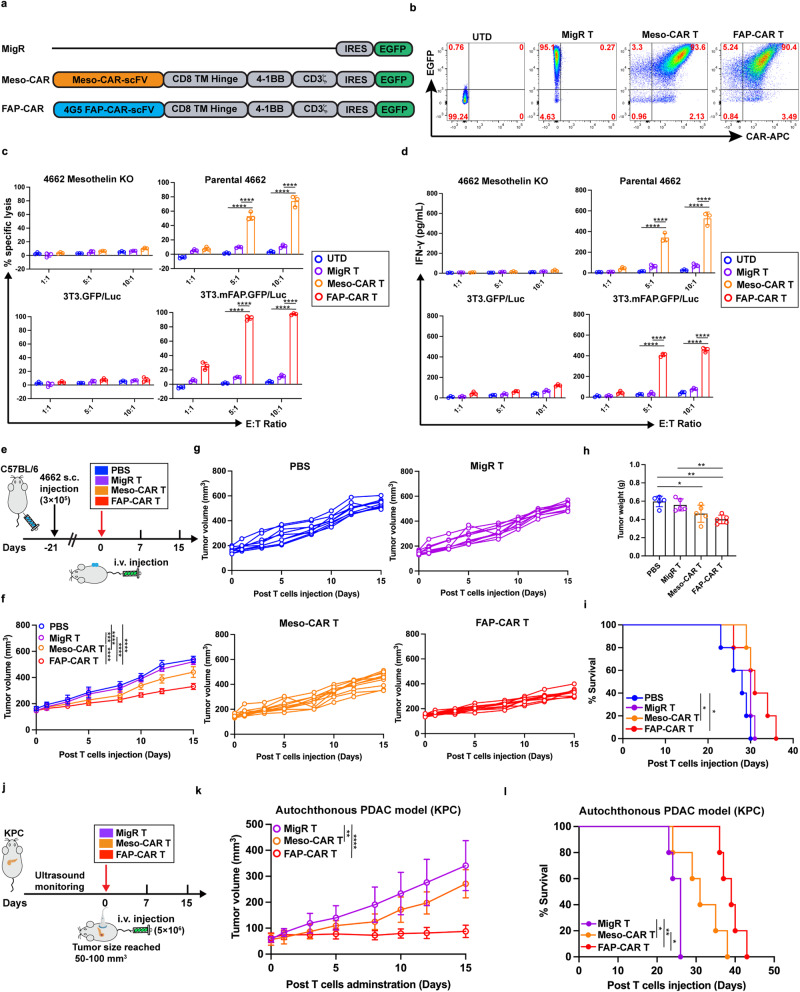
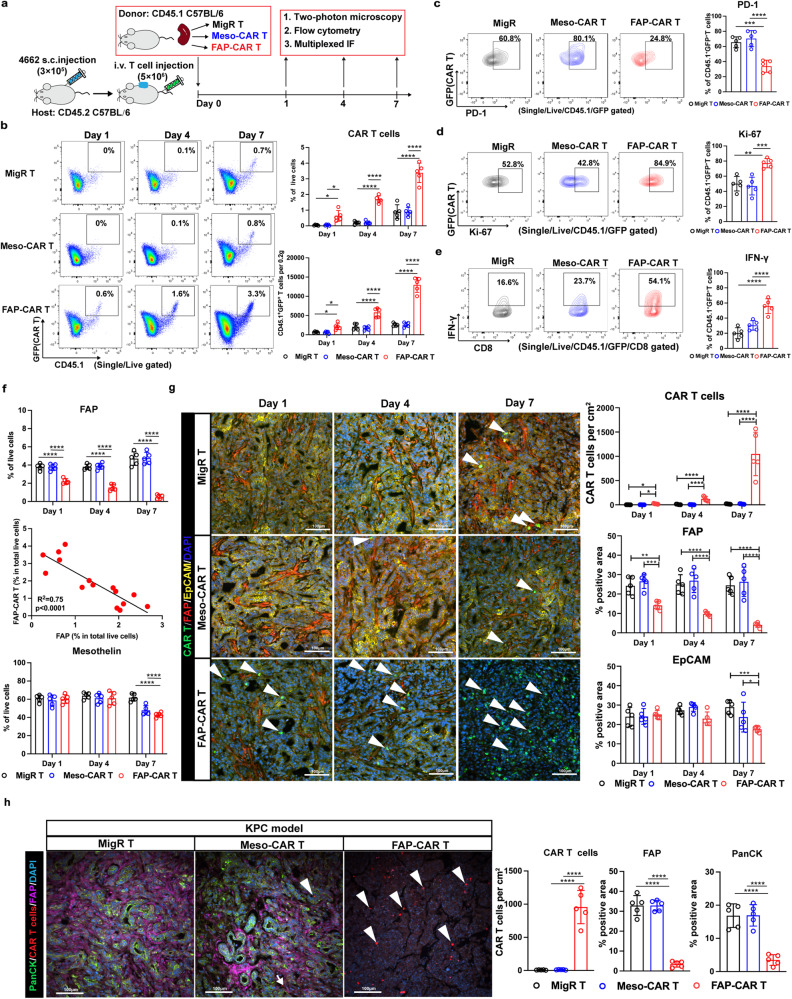
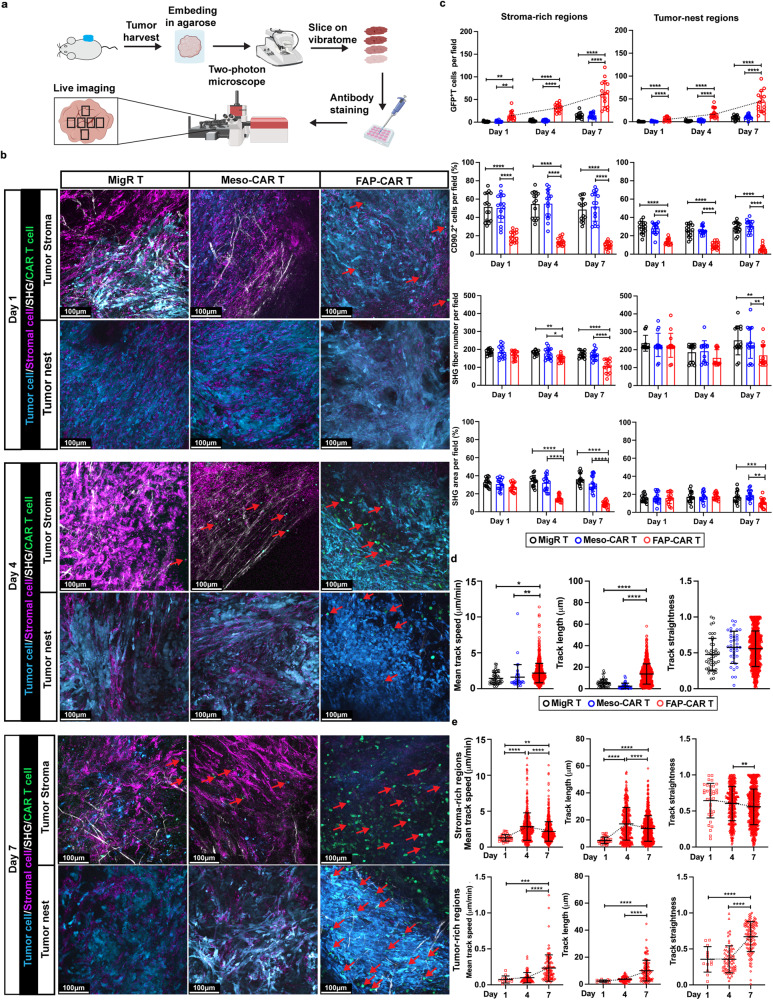
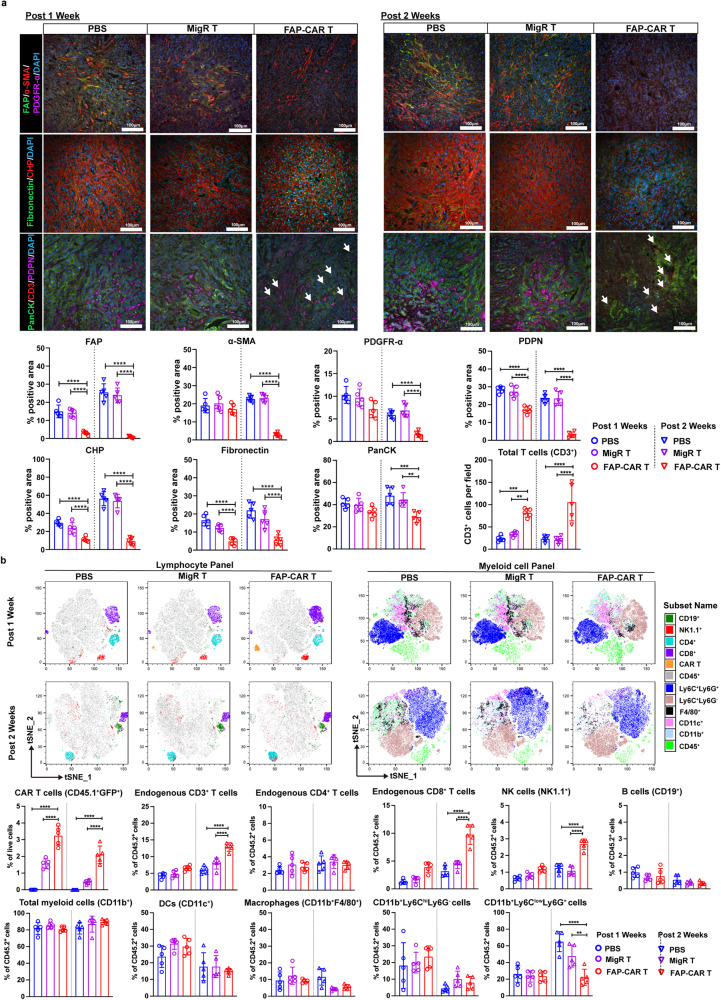
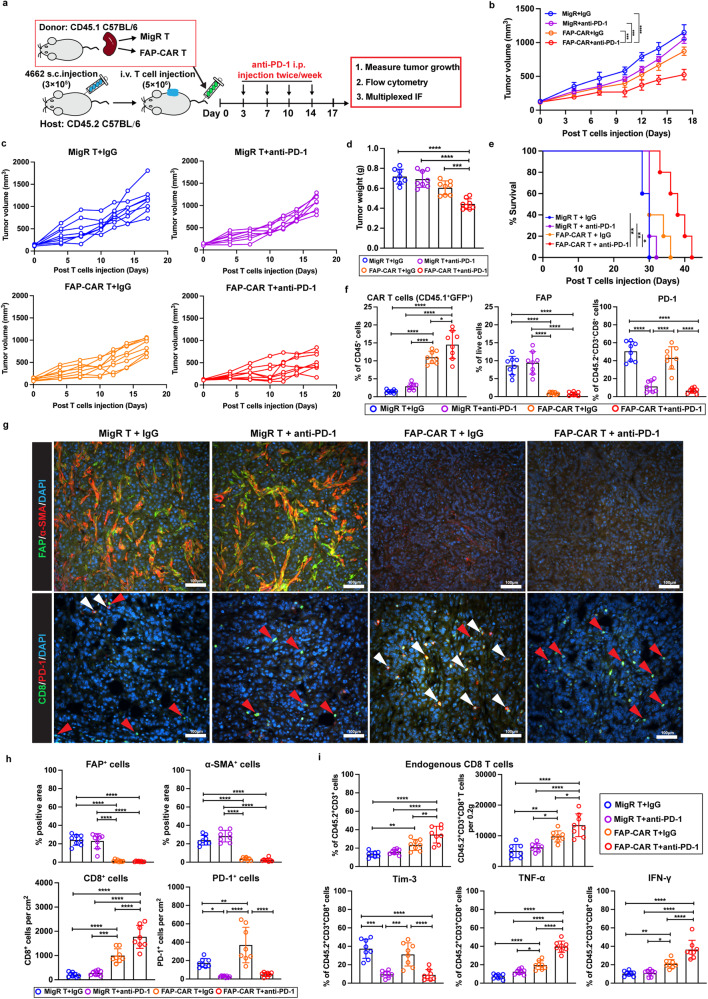
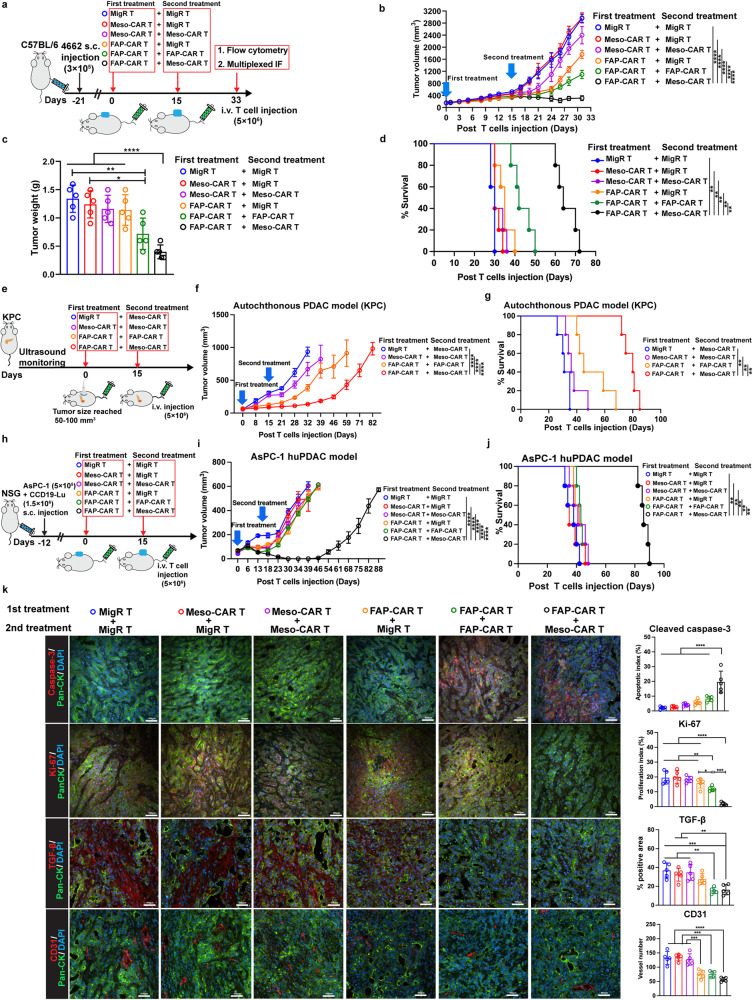
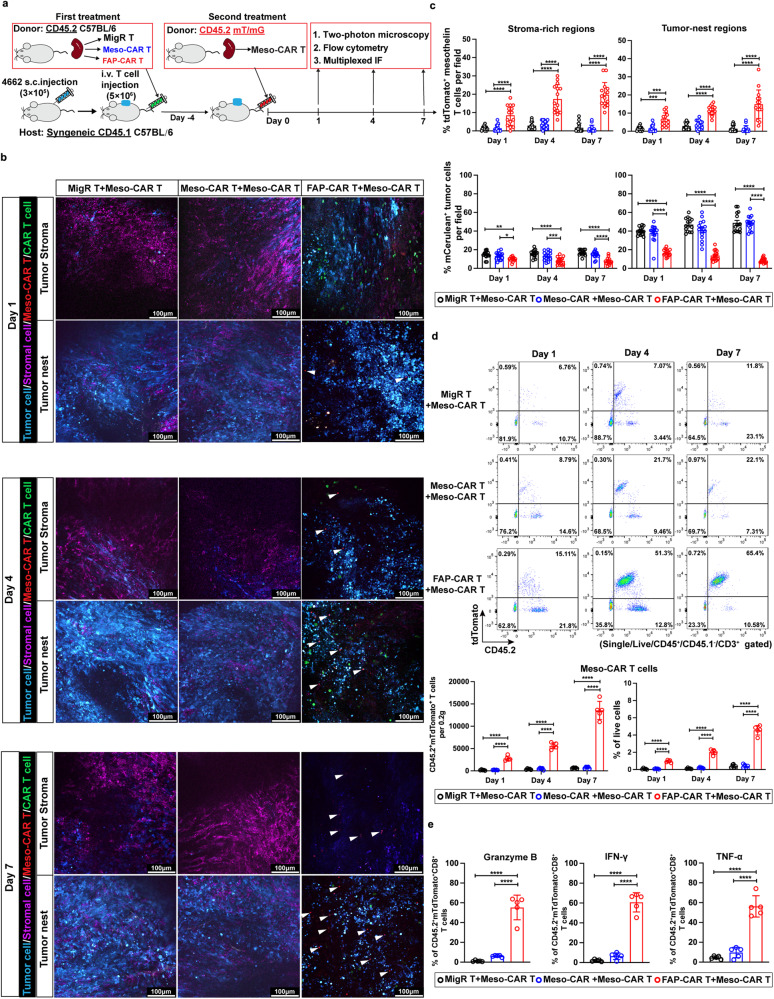
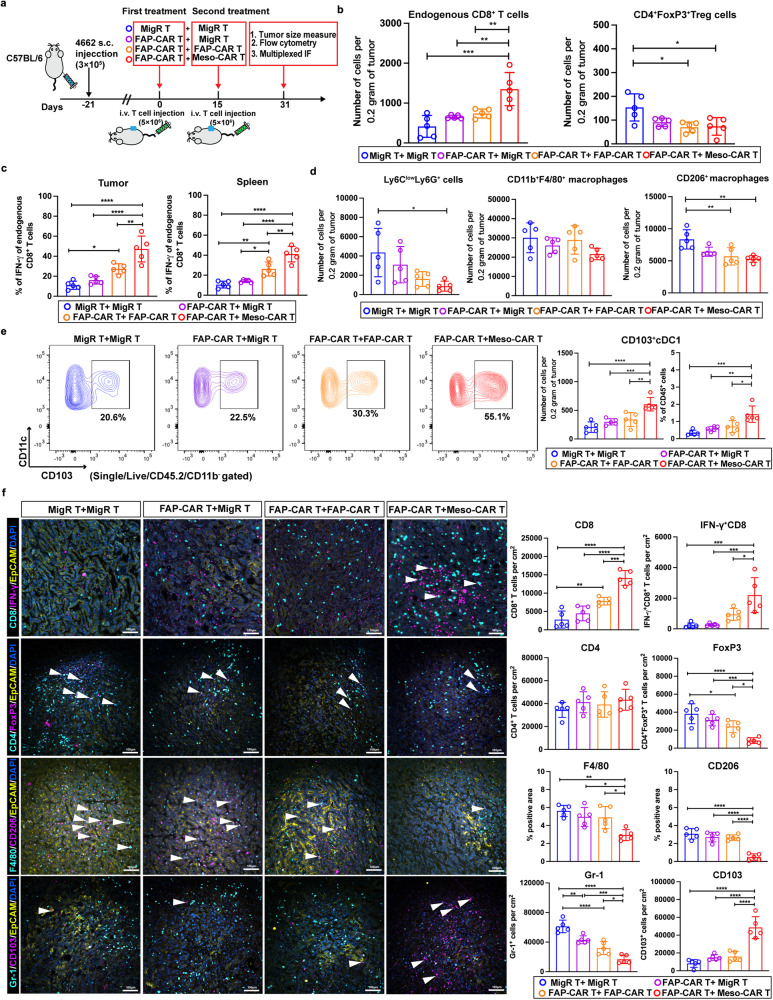
The desmoplastic stroma in solid tumors presents a formidable challenge to immunotherapies that rely on endogenous or adoptively transferred T cells, however, the mechanisms are poorly understood. To define mechanisms involved, here we treat established desmoplastic pancreatic tumors with CAR T cells directed to fibroblast activation protein (FAP), an enzyme highly overexpressed on a subset of cancer-associated fibroblasts (CAFs). Depletion of FAP + CAFs results in loss of the structural integrity of desmoplastic matrix. This renders these highly treatment-resistant cancers susceptible to subsequent treatment with a tumor antigen (mesothelin)-targeted CAR T cells and to anti-PD-1 antibody therapy. Mechanisms include overcoming stroma-dependent restriction of T cell extravasation and/or perivascular invasion, reversing immune exclusion, relieving T cell suppression, and altering the immune landscape by reducing myeloid cell accumulation and increasing endogenous CD8 + T cell and NK cell infiltration. These data provide strong rationale for combining tumor stroma- and malignant cell-targeted therapies to be tested in clinical trials.
Overview
The claims and statistics of this paper haven’t been checked yet.
Free: it reads the open-access text and checks the first 5 claims that cite a source we can check. Create a free account to check every claim.
Integrity signals
Registry
Cites
Statistics
Figures
Verification
Claims the paper makes
The claims and statistics of this paper haven’t been checked yet.
Free: it reads the open-access text and checks the first 5 claims that cite a source we can check. Create a free account to check every claim.
Claims other papers make about this one
Each is checked against this paper’s own text: does it say what the citing paper says it does?
The source backs part of the claim, not all of it — or backs it for a different population, condition or comparison.
In the citing paper
“Immunosuppressive cell types, such as TAMs, regulatory T cells, MDSCs, and cancer-associated fibroblasts (CAFs) play key roles in establishing an immunosuppressive environment in the TME and interfering with cytotoxic T cell activation (Wang et al., 2023; Xiao et al., 2023).”
From Microphysiological systems as models for immunologically ‘cold’ tumors (2024) · cites this paper as Xiao et al., 2023
Experimental — accuracy not yet measured
Self-check
Percentages, sums and reported differences re-computed from the paper’s own numbers.
The self-check needs the paper’s full text.
Citations
Cites
Rahib, L., Smith, B. D., Aizenberg, R., Rosenzweig, A. B., Fleshman, J. M., & Matrisian, L. M. (2014) · Cancer Research · doi:10.1158/0008-5472.can-14-0155 · Cited by 7,094
A framework for advancing our understanding of cancer-associated fibroblasts
Sahai, E., Astsaturov, I., Cukierman, E., DeNardo, D. G., Egeblad, M., Evans, R. M., Fearon, D., Greten, F. R., Hingorani, S. R., Hunter, T., et al. (2020) · Nature Reviews Cancer · doi:10.1038/s41568-019-0238-1 · Cited by 3,863
Self-citationHingorani, S. R., Wang, L., Multani, A. S., Combs, C., Deramaudt, T. B., Hruban, R. H., Rustgi, A. K., Chang, S., & Tuveson, D. A. (2005) · Cancer Cell · doi:10.1016/j.ccr.2005.04.023 · Cited by 2,609
Elyada, E., Bolisetty, M., Laise, P., Flynn, W. F., Courtois, E. T., Burkhart, R. A., Teinor, J. A., Belleau, P., Biffi, G., Lucito, M. S., et al. (2019) · Cancer Discovery · doi:10.1158/2159-8290.cd-19-0094 · Cited by 2,241
Top 10 Challenges in Cancer Immunotherapy
Hegde, P. S., & Chen, D. S. (2020) · Immunity · doi:10.1016/j.immuni.2019.12.011 · Cited by 2,238 · cited 1×
“These peri-tumoral T cells are subject to immune suppression 22,23 and this tumor exclusionphenomenonappearstocontributetothelimitedef fi cacyof adoptively transferred TAA-targeted CAR T cells 22,24,25 .”
Feig, C., Jones, J. O., Kraman, M., Wells, R. J. B., Deonarine, A., Chan, D. S., Connell, C. M., Roberts, E. W., Zhao, Q., Caballero, O. L., et al. (2013) · Proceedings of the National Academy of Sciences · doi:10.1073/pnas.1320318110 · Cited by 2,100
Immune checkpoint inhibitors: recent progress and potential biomarkers
Darvin, P., Toor, S. M., Sasidharan Nair, V., & Elkord, E. (2018) · Experimental & Molecular Medicine · doi:10.1038/s12276-018-0191-1 · Cited by 2,035 · cited 1×
“Immunotherapies that rely on endogenous or adoptively transferred T cells have proven to be challenging in treating solid tumors 1 – 3 .”
The tumor microenvironment at a glance
Balkwill, F. R., Capasso, M., & Hagemann, T. (2012) · Journal of Cell Science · doi:10.1242/jcs.116392 · Cited by 1,857 · cited 1×
“This ex vivo imaging system overcomes two intrinsic challenges of in situ liveimaging of PDAC tumors: (1) limited imaging depth resulting from dense stroma, and (2) breathing motion artifacts that limit intravital live imaging 31, (32).”
Clinical and therapeutic relevance of cancer-associated fibroblasts
Chen, Y., McAndrews, K. M., & Kalluri, R. (2021) · Nature Reviews Clinical Oncology · doi:10.1038/s41571-021-00546-5 · Cited by 1,230
Immunological hallmarks of stromal cells in the tumour microenvironment
Turley, S. J., Cremasco, V., & Astarita, J. L. (2015) · Nature Reviews Immunology · doi:10.1038/nri3902 · Cited by 1,140 · cited 19×
“We further demonstrated that the level of TGF-β , which is critical in translating signals from ECM and/or stiffness to initiate and facilitate the fi brotic process and immunosuppression 47,48 , was down-regulated by FAP-CAR T cells administration, partially supporting the broad remodeling of fi brotic TME, including s…”
Influential
Cited by
CAR T cell therapy for patients with solid tumours: key lessons to learn and unlearn
Albelda, S. M. (2024) · Nature Reviews Clinical Oncology · doi:10.1038/s41571-023-00832-4 · Cited by 517
Self-citationCurrent and future immunotherapeutic approaches in pancreatic cancer treatment
Farhangnia, P., Khorramdelazad, H., Nickho, H., & Delbandi, A.-A. (2024) · Journal of Hematology & Oncology · doi:10.1186/s13045-024-01561-6 · Cited by 229
Current challenges and therapeutic advances of CAR-T cell therapy for solid tumors
Chen, T. R., Wang, M., Chen, Y., & Liu, Y. (2024) · Cancer Cell International · doi:10.1186/s12935-024-03315-3 · Cited by 186
Zheng, S., Wang, W., Shen, L., Yao, Y., Xia, W., & Ni, C. (2024) · Experimental Hematology & Oncology · doi:10.1186/s40164-024-00543-1 · Cited by 163
“Recently, prior administration of FAP-CAR T cells has shown improved efficacy for subsequent tumor antigen (mesothelin)-targeted CAR T cells or anti-PD-1 antibody therapy [247].”
BackgroundInfluentialBeyond the blood: expanding CAR T cell therapy to solid tumors
Uslu, U., & June, C. H. (2025) · Nature Biotechnology · doi:10.1038/s41587-024-02446-2 · Cited by 162
“…targeting fibroblast activation protein (FAP) can disrupt the tumor stroma by eradicating FAP-expressing cancer-associated fibroblasts 68,69 This renders solid tumors more susceptible to subsequent treatments, such as tumor antigen-targeted CAR T cell infusions or immune checkpoint blockade 69 .”
Self-citationCAR-T cells in solid tumors: Challenges and breakthroughs
Escobar, G., Berger, T. R., & Maus, M. V. (2025) · Cell Reports Medicine · doi:10.1016/j.xcrm.2025.102353 · Cited by 162
“59 The second strategy, performed in our lab, engineered mesothelin-targeting CAR-T cells to secrete a CD3/FAP TCE, efficiently redirecting CAR + and bystander T cells against FAP-expressing CAFs.”
Linke, J. A., Munn, L. L., & Jain, R. K. (2024) · Nature reviews. Cancer · doi:10.1038/s41568-024-00745-z · Cited by 134
den Eynde, A. V., Gehrcken, L., Verhezen, T., Lau, H. W., Hermans, C., Lambrechts, H. A. J., Flieswasser, T., Quatannens, D., Roex, G., Zwaenepoel, K., et al. (2024) · Journal of Hematology & Oncology · doi:10.1186/s13045-024-01525-w · Cited by 118
The next generation of immunotherapies for lung cancers
Zhao, S., Zhao, H., Yang, W., & Zhang, L. (2025) · Nature Reviews Clinical Oncology · doi:10.1038/s41571-025-01035-9 · Cited by 115
“FAP is an enzyme highly expressed in CAFs, and depletion of CAFs by FAP-targeted CAR T cells can reverse resistance to mesothelin-directed CAR T cell and anti-PD-(L)1 antibodies in preclinical models 181 .”
Advances in targeting tumor microenvironment for immunotherapy
Wang, L., Zhang, L., Zhang, Z., Wu, P., Zhang, Y., & Chen, X. (2024) · Frontiers in Immunology · doi:10.3389/fimmu.2024.1472772 · Cited by 111
The diversity of CD8+ T cell dysfunction in cancer and viral infection
Galluzzi, L., Smith, K. N., Liston, A., & Garg, A. D. (2025) · Nature reviews. Immunology · doi:10.1038/s41577-025-01161-6 · Cited by 106
“Finally, both TAM-enriched and pro-fibrotic niches have been associated with various forms of CD8 + T cell hypofunction, via mechanisms that include metabolic, cytokine-mediated and/or contact-dependent immunosuppression 224,225 , physical or vascular exclusion 226–228 and T cell killing 84,229 .”
Simula, L., Fumagalli, M., Vimeux, L., Rajnpreht, I., Icard, P., Birsen, G., An, D., Pendino, F., Rouault, A., Bercovici, N., et al. (2024) · Nature Communications · doi:10.1038/s41467-024-46377-7 · Cited by 105
Emerging role of immune cells as drivers of pulmonary fibrosis
Mutsaers, S. E., Miles, T., Prêle, C. M., & Hoyne, G. F. (2023) · Pharmacology & Therapeutics · doi:10.1016/j.pharmthera.2023.108562 · Cited by 96
Peyraud, F., Guégan, J., Rey, C., Lara, O., Odin, O., Castillo, M. D., Vanhersecke, L., Coindre, J., Clot, E., Brunet, M., et al. (2025) · Cell Reports Medicine · doi:10.1016/j.xcrm.2025.101934 · Cited by 91
Microenvironmental regulation of solid tumour resistance to CAR T cell therapy
Lamplugh, Z. L., Wellhausen, N., June, C. H., & Fan, Y. (2025) · Nature reviews. Immunology · doi:10.1038/s41577-025-01229-3 · Cited by 87
“However, CAF depletion via FAP-targeted CAR T cells likely also mitigates stroma-dependent restrictions on T cell extravasation and perivascular invasion, thereby reversing immune exclusion 137 .”
Self-citationThe fibroinflammatory response in cancer
Xiao, Z., & Puré, E. (2025) · Nature reviews. Cancer · doi:10.1038/s41568-025-00798-8 · Cited by 74
“FAP + CAFs are an indicator of poor prognosis across a wide variety of human solid tumour types, and depletion of FAP + CAFs inhibited tumour growth and metastasis in mouse models of various tumour types, including PDAC, lung cancer and mesothelioma 162–164 (Fig.”
InfluentialSelf-citationYu, H., Li, J., Peng, S., Liu, Q., Chen, D., He, Z., Xiang, J., & Wang, B. (2024) · Cancer Letters · doi:10.1016/j.canlet.2024.217385 · Cited by 69
Synthetic Biology‐Based Engineering Cells for Drug Delivery
Yi, W., Hu, S., Qian, X., Yan, W., & Li, Y. (2025) · Exploration · doi:10.1002/exp.20240095 · Cited by 67
“Using CAR-T to destroy cancer-associated fibroblasts also promotes T cells and anti-tumor drugs into tumors [89].”
Self-citationProspects and challenges of CAR-T cell therapy combined with ICIs
Lv, Y., Luo, X., Xie, Z., Qiu, J.-Y., Yang, J., Deng, Y., Long, R., Tang, G., Zhang, C., & Zuo, J. (2024) · Frontiers in Oncology · doi:10.3389/fonc.2024.1368732 · Cited by 66
“The solid tumors in mouse animal models rapidly regressed and CAR-T cells showed enhanced anti-tumor immune effects (46).”
BackgroundClinical immunotherapy in pancreatic cancer
Ye, X., Yu, Y., Zheng, X., & Ma, H. (2024) · Cancer Immunology Immunotherapy · doi:10.1007/s00262-024-03632-6 · Cited by 62
Breaking the stromal barrier in pancreatic cancer: Advances and challenges
Chakkera, M., Foote, J. B., Farran, B., & Nagaraju, G. P. (2023) · Biochimica et Biophysica Acta (BBA) - Reviews on Cancer · doi:10.1016/j.bbcan.2023.189065 · Cited by 58
Cao, Z., Meng, Z., Li, J., Tian, Y., Lu, L., Wang, A., Huang, J., Wang, J., Sun, J., Chen, L., et al. (2025) · Cell Reports Medicine · doi:10.1016/j.xcrm.2025.102017 · Cited by 56
You, Q., Wu, G., Li, H., Liu, J., Cao, F., Ding, L., Liang, F., Zhou, B., Ma, L., Zhu, L., et al. (2025) · Nature Nanotechnology · doi:10.1038/s41565-025-01952-x · Cited by 56
“Myeloid cells and cancer-associated fibroblasts within the TME have been reported to be mainly associated with tumour immune suppression, which can also promote tumour cell growth and progression through various pathways 26–30 .”
Ouyang, P., Zhang, J., He, X., Yang, C., Zeng, D., & Xu, D. (2025) · Frontiers in Immunology · doi:10.3389/fimmu.2025.1661545 · Cited by 54
Cancer-on-a-chip for precision cancer medicine
Liu, L., Wang, H., Chen, R., Song, Y., Wei, W., Baek, D. S. H., Gillin, M., Kurabayashi, K., & Chen, W. (2025) · Lab on a Chip · doi:10.1039/d4lc01043d · Cited by 52
Li, Y., Huan, C., Sun, H., Zhang, W., Guo, Z., Li, C., Yao, J., Zhang, Z., Yu, S., Dong, Q., et al. (2025) · Advanced Science · doi:10.1002/advs.202514661 · Cited by 50
Self-citationTargeting Cancer‐Associated Fibroblasts: Eliminate or Reprogram?
Yamazaki, M., & Ishimoto, T. (2025) · Cancer Science · doi:10.1111/cas.16443 · Cited by 46
Ash, S., Orha, R., Mole, H., Dinesh-Kumar, M., Lee, S. P., Turrell, F. K., & Isacke, C. M. (2024) · Journal for ImmunoTherapy of Cancer · doi:10.1136/jitc-2023-008608 · Cited by 43
Wu, Y., Chen, W., Deng, J., Zhou, X., Chen, J., Yang, Z., Cao, X., Liu, J., Tan, Q., Zhou, E., et al. (2025) · Journal of Controlled Release · doi:10.1016/j.jconrel.2025.113998 · Cited by 43
Al-Hilal, T. A., Chrysovergi, M.-A., Grasberger, P. E., Liu, F., Auernheimer, V., Zhou, Y., Xiao, Z., Duque, M. A. L., Santos, A., Islam, T., et al. (2025) · Nature Cell Biology · doi:10.1038/s41556-025-01697-8 · Cited by 43
Self-citationLi, A., Zhang, T., Zhang, X., Xu, Z., Liu, H. F., Yuan, M., Wei, X., Zhu, Y., Tu, W., Jiang, X., et al. (2024) · ACS Nano · doi:10.1021/acsnano.3c09316 · Cited by 42
Angeli, S., Neophytou, C., Kalli, M., Stylianopoulos, T., & Mpekris, F. (2025) · Frontiers in Cell and Developmental Biology · doi:10.3389/fcell.2025.1564626 · Cited by 42
Subclonal immune evasion in non-small cell lung cancer
Dijkstra, K. K., Vendramin, R., Karagianni, D., Witsen, M., Gálvez‐Cancino, F., Hill, M. S., Foster, K. A., Barbè, V., Angelova, M., Hynds, R. E., et al. (2025) · Cancer Cell · doi:10.1016/j.ccell.2025.06.012 · Cited by 42
Clinical and molecular dissection of CAR T cell resistance in pancreatic cancer
Aznar, M. A., Good, C. R., Barber-Rotenberg, J. S., Agarwal, S., Wilson, W. V., Watts, A., Zhang, Z., Gonzales, D. M., Donahue, G., Hwang, W.-T., et al. (2025) · Cell Reports Medicine · doi:10.1016/j.xcrm.2025.102301 · Cited by 40
Self-citationZhang, Y., Zhou, J., Wang, Y., Wu, Y., Li, Y., Wang, B., Liu, G., Gong, Q., Luo, K., & Jing, J. (2025) · Journal of Controlled Release · doi:10.1016/j.jconrel.2025.113606 · Cited by 37
Self-citationWang, K., Jiang, M., Li, T., Liu, Y., Zong, Q., Xu, Q., Ullah, I., Chen, Y., Xue, W., & Yuan, Y. (2024) · Advanced Materials · doi:10.1002/adma.202402322 · Cited by 36
Amit, U., Uslu, U., Verginadis, I. I., Kim, M. M., Motlagh, S. A. O., Diffenderfer, E. S., Assenmacher, C., Bicher, S., Atoche, S. J., Ben‐Josef, E., et al. (2024) · Proceedings of the National Academy of Sciences · doi:10.1073/pnas.2403002121 · Cited by 36
“The resilient, highly desmoplastic stroma surrounding PDAC presents a dual challenge, as a physical barrier impeding CAR T cell infiltration into the tumor site and fostering an immunosuppressive microenvironment (15, 16).”
Self-citationAi, J., Li, H., Zhang, M., Liu, J., Liu, L., & Sun, C. (2025) · International Journal of Biological Sciences · doi:10.7150/ijbs.121356 · Cited by 38
“This phenomenon, in which CAFs play a central role, is closely associated with the development of a desmoplastic reaction [22, 25], in which CAFs play a central role.”
Microbial metabolites and their influence on the tumor microenvironment
Duan, H., Xu, B., Luo, P., Chen, T., & Zou, J. (2025) · Frontiers in Immunology · doi:10.3389/fimmu.2025.1675677 · Cited by 35
“As such, MDSCs are considered core mediators of immune suppression within the TME (14, 15).”
InfluentialPhenotypic and spatial heterogeneity of CD8+ tumour infiltrating lymphocytes
Sun, Y., Yinwang, E., Wang, S., Wang, Z., Wang, F., Xue, Y., Zhang, W., Zhao, S., Mou, H., Chen, S., et al. (2024) · Molecular Cancer · doi:10.1186/s12943-024-02104-w · Cited by 34
“…in a recent study on murine PDAC models dismantled the desmoplastic stroma and dispersed the associated immunosuppressive environment, allowing full engagement of ICB-reprogrammable endogenous CD8 + T cells and CAR-T cells targeting tumour-associated antigen (Meso-CAR-T) with tumour cells [249].”
BackgroundLi, X., Chen, T., Li, X., Zhang, H., Li, Y., Zhang, S., Luo, S., & Zheng, T. (2024) · Experimental Hematology and Oncology · doi:10.1186/s40164-024-00564-w · Cited by 33
“Ellen Puré et al.. designed FAP-CAR-T cells capable of targeting FAP in the TME [167].”
BackgroundSelf-citationExtracellular matrix re-normalization to improve cold tumor penetration by oncolytic viruses
Soko, G. F., Kosgei, B. K., Meena, S. S., Ng, Y. J., Liang, H., Zhang, B., Liu, Q., Xu, T., Hou, X., & Han, R. P. S. (2025) · Frontiers in Immunology · doi:10.3389/fimmu.2024.1535647 · Cited by 33
Pereira, B., Ritchie, S., Chambers, C. R., Gordon, K. A., Magenau, A., Murphy, K. J., Nobis, M., Tyma, V. M., Liew, Y. F., Lucas, M. C., et al. (2024) · Science Advances · doi:10.1126/sciadv.adl1197 · Cited by 31
“…context of syngeneic mouse models of PDAC via immunotherapy or an antitumor vaccine approach, as others have done with matrix targets such as prolyl isomerase ( 81 ), microfibril-associated protein 5 (MFAP5) ( 82 ), CXCL12/fibroblast activation protein ( 83 ), and focal adhesion kinase ( 22 , 84 ).”
Yang, D. D., Macmorland, W., & Arnold, J. N. (2025) · Frontiers in Immunology · doi:10.3389/fimmu.2025.1643941 · Cited by 30
“A key challenge is the scarcity of bona fi de TAAs that are entirely absent on healthy tissues and uniformly expressed across all tumor cells (150, 151).”
InfluentialAnand, S., Vikramdeo, K. S., Sudan, S. K., Sharma, A., Acharya, S., Khan, M. A., Singh, S., & Singh, A. P. (2023) · Cancer and Metastasis Reviews · doi:10.1007/s10555-023-10153-8 · Cited by 29
“Further, MYB-promoted desmoplasia could also restrict immune cell infiltration and/or may be inhibitory to their proliferation and survival within the tumor microenvironment [114, 115].”
Li, Z. Y., Zheng, W., Liu, Y., Cao, R., Wei, J., & Jia, H. (2025) · Journal of Experimental & Clinical Cancer Research · doi:10.1186/s13046-025-03555-9 · Cited by 29
Tran, T. M., Thakuri, B. K. C., Nurmukhambetova, S. T., Lee, J., Hu, P., Tran, N. Q., Steimle, B. L., Dash, P., & Schneider, D. (2024) · Journal for ImmunoTherapy of Cancer · doi:10.1136/jitc-2023-008261 · Cited by 28
Growth Hormone Action as a Target in Cancer: Significance, Mechanisms, and Possible Therapies
Basu, R., Boguszewski, C. L., & Kopchick, J. J. (2024) · Endocrine Reviews · doi:10.1210/endrev/bnae030 · Cited by 28
Cancer-Associated Fibroblast Heterogeneity in Malignancy with Focus on Oral Squamous Cell Carcinoma
Arebro, J., Lee, C.-M., Bennewith, K. L., & Garnis, C. (2024) · International Journal of Molecular Sciences · doi:10.3390/ijms25021300 · Cited by 28
Giurini, E. F., Ralph, O. G., Pappas, S. G., & Gupta, K. H. (2024) · Molecular Cancer Therapeutics · doi:10.1158/1535-7163.mct-24-0311 · Cited by 26
“Mesothelin (MSLN) positive 4662 PDAC tumors treated with FAP-CAR-T experienced effective depletion of FAP+ CAFs followed by reduced collagen remodeling and fibronectin within the stroma (39).”
Advances and obstacles of T cell-based immunotherapy in gynecological malignancies
Zhao, X., Ran, J., Li, S., & Chen, J. (2025) · Molecular Cancer · doi:10.1186/s12943-025-02411-w · Cited by 25
“Stromal barriers, such as dense extracellular matrices and fibroblasts, further impede T cell penetration and infiltration [52–55].”
Heterogeneity and plasticity of cancer-associated fibroblasts
Pramod, S., Lavon, H., Scherz‐Shouval, R., & Sherman, M. H. (2026) · Nature Cancer · doi:10.1038/s43018-026-01146-x · Cited by 25
Mechanoimmunology in the solid tumor microenvironment
Golo, M., Newman, P. L. H., Kempe, D., & Biro, M. (2024) · Biochemical Society Transactions · doi:10.1042/bst20231427 · Cited by 25
Lin, S., Liu, H., Lv, L., Jin, G.-Y., Xiang, X., Yu, B., Su, Y., Zhang, S., Wang, Z., Yang, Z., et al. (2025) · Bioactive Materials · doi:10.1016/j.bioactmat.2025.10.001 · Cited by 24
“…strong systemic antitumor effects in preclinical models, but they commonly remain constrained by key issues in desmoplastic solid tumors: a dense, CAFs-rich ECM reduces sonosensitizer penetration and impedes effector immune cell infiltration — even when systemic immunity is activated [14,51].”
Self-citationDesmoplasia in cervical cancer is associated with a more aggressive tumor phenotype
Wolf, B., Weydandt, L., Dornhöfer, N., Hiller, G. G. R., Höhn, A. K., Nel, I., Jain, R. K., Horn, L., & Aktas, B. (2023) · Scientific Reports · doi:10.1038/s41598-023-46340-4 · Cited by 24
“In addition, a more fibrotic tumor microenvironment can cause immunosuppression, characterized by reduced infiltration of cytotoxic lymphocytes into the tumor 13–15 .”
Kraxner, A., Braun, F., Cheng, W., Yang, T.-H. O., Pipaliya, S. V., Cañamero, M., Andersson, E. K., Harring, S. V., Dziadek, S., Bröske, A.-M. E., et al. (2024) · Frontiers in Immunology · doi:10.3389/fimmu.2024.1352632 · Cited by 24
Kim, K. T., Lee, M. H., Shin, S., Cho, I., Kuk, J. C., Yun, J., & Choi, Y. Y. (2024) · Gastric Cancer · doi:10.1007/s10120-024-01567-6 · Cited by 25
“The presence of desmoplastic stroma, a feature of various CAF subtypes, hinders T cell penetration and promotes immune exclusion, thereby diminishing the efficacy of ICB therapies [18].”
Li, F., Gao, C., Huang, Y., Qiao, Y., Xu, H., Liu, S., & Wu, H. (2025) · International Journal of Biological Sciences · doi:10.7150/ijbs.108803 · Cited by 24
“Fibroblast activation protein (FAP) is a specific marker on the surfaces of CAFs, and its high expression on CAFs makes it an ideal target for CAR-T cell therapy [79].”
Zhong, W., Qin, Z., Yu, Z., Yang, J., Yan, D., Engel, N. W., Sheppard, N. C., Yi, F., Radhakrishnan, R., Xu, X., et al. (2025) · Nature Cancer · doi:10.1038/s43018-025-00949-8 · Cited by 23
Self-citationWu, X., Wang, Y., Li, Y., & Hu, W. (2025) · Frontiers in Nuclear Medicine · doi:10.3389/fnume.2025.1737443 · Cited by 22
Self-citationGaebler, D., Hachey, S. J., & Hughes, C. C. W. (2024) · Frontiers in Bioengineering and Biotechnology · doi:10.3389/fbioe.2024.1462293 · Cited by 22
Nair, H. B. B., Nair, A., Liu, Y., Dileep, K. V., Subramani, R., Lakshmanaswamy, R., Viswanadhapalli, S., Sareddy, G. R., Batra, S. K., & Vadlamudi, R. K. (2026) · Cancer Letters · doi:10.1016/j.canlet.2026.218258 · Cited by 24
Engines of change: Nonmuscle myosin II in mechanobiology
Garrido-Casado, M., Asensio-Juárez, G., Talayero, V. C., & Vicente‐Manzanares, M. (2024) · Current Opinion in Cell Biology · doi:10.1016/j.ceb.2024.102344 · Cited by 20
Huang, B., Zheng, S., Sudarshan, K., Mukkamala, R., Srinivasarao, M., Sardesai, T., Yang, X., Chu, H., & Low, P. S. (2025) · Frontiers in Immunology · doi:10.3389/fimmu.2025.1539265 · Cited by 20
Minini, M., Avveduto, G., Becharef, S., Meunier--Thaens, M., Lekbaby, B., Pérez-Lanzón, M., Machado, A., Guilbert, T., Lesieur, J., Renault, G., et al. (2025) · Hepatology · doi:10.1097/hep.0000000000001545 · Cited by 19
Barriers and Strategies to Enhance CAR ‐T Cell Infiltration in Solid Tumours: A Systematic Review
Zhang, Y., Sun, H., Zhao, L., Zhao, N., 陈政良, He, L., Guo, Z., & Yu, J. (2026) · Immunology · doi:10.1111/imm.70094 · Cited by 19
“Similarly, tumours in the peritoneal cavity, pancreas and bone possess distinct stromal or vascular architectures that hinder immune-cell entry, whereas lung and liver tumours—despite high immune-cell flux—may be subject to rapid clearance or cellular sequestration [173–175].”
Bajbouj, K., Xiao, Z., Todd, L., Huang, L., Papp, T. E., Halilovic, F., Ramani, J., Bao, Y., Butcher, M., Bot, A., et al. (2026) · Cancer Immunology Research · doi:10.1158/2326-6066.cir-25-0663 · Cited by 19
Self-citationOkuyama, K., Tsuchiya, M., Debnath, K. C., Islam, S., & Yanamoto, S. (2025) · Therapeutic Advances in Medical Oncology · doi:10.1177/17588359251317144 · Cited by 19
Advances in Vaccine-Based Therapies for Pancreatic Cancer
McMillan, M. T., & Soares, K. C. (2025) · Journal of Gastrointestinal Cancer · doi:10.1007/s12029-025-01165-4 · Cited by 19
“This stroma may act as a physical barrier, impeding immune cell access to the tumor and releasing factors that impair the proliferation, function, and infiltration of cytotoxic anti-tumor immune cells [9].”
Zhang, Q., Dou, M., Su, X., Yu, Z., Wei, B., Zhu, L. F., Zhang, J., & Wang, H. (2025) · Collagen and Leather · doi:10.1186/s42825-025-00197-7 · Cited by 19
“Among these, the extravasation of immune cells plays a pivotal role in targeting and eliminating solid tumors [101].”
Engineering self-propelled tumor-infiltrating CAR T cells using synthetic velocity receptorsPreprint
Johnston, A. C., Alicea, G. M., Lee, C., Patel, P. V., Hanna, E. A., Vaz, E., Forjaz, A., Wan, Z., Nair, P. R., Lim, Y., et al. (2023) · bioRxiv (Cold Spring Harbor Laboratory) · doi:10.1101/2023.12.13.571595 · Cited by 19
“Another effort aimed to target and deplete cancer-associated fibroblasts in the stroma that surrounds the tumor 17 .”
BackgroundMethodInfluentialB7-H3 in the tumor microenvironment: Implications for CAR T cell therapy in pediatric solid tumors
Jansen, L., Wienke, J., Molkenbur, R., Rössig, C., & Meissner, R. (2025) · Cancer and Metastasis Reviews · doi:10.1007/s10555-025-10294-y · Cited by 19
“In syngeneic mouse models of solid cancers, CAR T cells targeting a surface marker expressed on CAFs, fibroblast activation protein (FAP), allowed effective subsequent tumor-directed CAR T cell therapy [130].”
Gemcitabine-Vitamin E Prodrug-Loaded Micelles for Pancreatic Cancer Therapy
Pereira‐Silva, M., Miranda-Pastoriza, D., Díaz-Gómez, L. A., Sotelo, E., Paiva‐Santos, A. C., Veiga, F., Concheiro, Á., & Alvarez‐Lorenzo, C. (2024) · Pharmaceutics · doi:10.3390/pharmaceutics16010095 · Cited by 18
“The complex PDAC pathological frameworks include a desmoplastic stroma barrier surrounding PDAC cells [3], composed of cancer-associated fibroblasts, a collagen-enriched extracellular matrix, and a low fraction of immune cells.”
BackgroundLuo, Y., Fu, H., & Yu, C. (2025) · Frontiers in Pharmacology · doi:10.3389/fphar.2025.1593380 · Cited by 18
“Depletion of FAP+ CAFs enhances T cell in fi ltration in the tumor (Xiao et al., 2023).”
Heterocellular crosstalk and architecture of the pancreatic tumour microenvironment
Arnold, F., Vecchio, A. D., Hussain, Z., & Sherman, M. H. (2026) · Nature reviews. Cancer · doi:10.1038/s41568-025-00905-9 · Cited by 17
Niu, W., Wang, B., Zhang, Y., Wang, C., Cao, J., Li, J., He, Y., & Lei, P. (2024) · Frontiers in Immunology · doi:10.3389/fimmu.2024.1433679 · Cited by 18
Meng, S., Hara, T., Sato, T., Tatekawa, S., Arao, Y., Saito, Y., Hirai, T., Motooka, D., Rennie, S., Satoh, T., et al. (2025) · Scientific Reports · doi:10.1038/s41598-025-31128-5 · Cited by 16
Zhang, Z., Cui, D., Wang, H., Wu, L., & Liu, X. (2026) · Cancer Immunology Immunotherapy · doi:10.1007/s00262-025-04278-8 · Cited by 17
“Targeting FAP can disrupt these processes, thereby enhancing CAR-T cell infiltration and efficacy in solid tumors [145].”
Zhao, Y., Qin, C., Chen, L., Li, Z., Zhao, B., Li, T., Zhang, X., & Wang, W. (2024) · Biochimica et Biophysica Acta (BBA) - Reviews on Cancer · doi:10.1016/j.bbcan.2024.189183 · Cited by 16
In Vivo CAR-T Therapies—A New Era of Programmable Immunity
Pierini, S., Qureshi, R., Pustylnikov, S., Bartosh, Z., & Akimova, T. (2026) · International Journal of Molecular Sciences · doi:10.3390/ijms27041737 · Cited by 16
“…tumor stroma through expression of enzymes such as heparanase [241] and hyaluronidase [242], CARs directed against fibroblast activation protein [243,244], and CAR-T cells engineered to secrete immunostimulatory cytokines [10,245], all of which aim to enhance tumor accessibility and immune…”
Li, J.-P., Liu, Y., Wang, S., Lu, Z., Ye, Q., Zhou, J., Zou, X., & Chen, Y.-G. (2024) · International Immunopharmacology · doi:10.1016/j.intimp.2024.112666 · Cited by 15
Self-citationCAR-T cell technologies that interact with the tumour microenvironment in solid tumours
Taylor, C. A., Glover, M., & Maher, J. F. (2024) · Expert Review of Clinical Immunology · doi:10.1080/1744666x.2024.2380894 · Cited by 15
“Accordingly, the combination of FAP-specific CAR T-cells with CAR T-cells directed against tumor-associated antigens EphA2 [107], Nectin-4 [112], BCMA [93], Mesothelin [113,115], or Claudin 18.2 [114] have all been used to achieve additive therapeutic effects.”
InfluentialComprehensive macro and micro views on immune cells in ischemic heart disease
Zhao, Y., Tan, M., Yin, Y., Zhang, J., Song, Y., Li, H., Lin, Y., Jin, Y., Wu, Z., Yang, T., et al. (2024) · Cell Proliferation · doi:10.1111/cpr.13725 · Cited by 15
“208 Therefore, for ischemic heart disease, a typical cardiovascular disease, we considered FAP-targeted modulation as a strategy for CAR-T-cell therapy for myocardial tissue fibrosis after myocardial infarction.”
The potential of γδ CAR and TRuC T cells: An unearthed treasure
Schamel, W. W. A., Zintchenko, M., Nguyen, T. D., Fehse, B., Briquez, P. S., & Minguet, S. (2024) · European Journal of Immunology · doi:10.1002/eji.202451074 · Cited by 15
“CARs have also been designed to detect cancer-associated fibroblasts by targeting the fibroblast-activated protein [87, 88].”
Tian, Y., Liu, C., Yang, W., Li, X., Zhang, M., Xiong, Y., Ren, X., Ma, Z., Jin, X., Wu, Y., et al. (2024) · Cancer Immunology Immunotherapy · doi:10.1007/s00262-024-03767-6 · Cited by 15
Microphysiological systems as models for immunologically ‘cold’ tumors
Gaebler, D., Hachey, S. J., & Hughes, C. C. W. (2024) · Frontiers in Cell and Developmental Biology · doi:10.3389/fcell.2024.1389012 · Cited by 14
“Immunosuppressive cell types, such as TAMs, regulatory T cells, MDSCs, and cancer-associated fi broblasts (CAFs) play key roles in establishing an immunosuppressive environment in the TME and interfering with cytotoxic T cell activation (Wang et al., 2023; Xiao et al., 2023).”
BackgroundThe reactive stroma response regulates the immune landscape in prostate cancer
Thomas, R., Jerome, J. M., Krieger, K. L., Ashraf, N., & Rowley, D. R. (2024) · Journal of Translational Genetics and Genomics · doi:10.20517/jtgg.2024.15 · Cited by 14
Zhang, T., Zhou, Y., Wu, Y. H., Shi, M., Sun, W., & Wang, R. (2025) · Scientific Reports · doi:10.1038/s41598-025-97233-7 · Cited by 14
The mechanisms and countermeasures for CAR-T cell expansion and persistence deficiency
Bao, Y.-T., Lv, M., Huang, X., & Zhao, X. (2025) · Cancer Letters · doi:10.1016/j.canlet.2025.217771 · Cited by 14
Interleukin-17 family in health and immune diseases: From origin to clinical implications
Deng, G., Guo, M., Fan, J., Wang, W., Jiang, M., & Zhang, C. (2025) · Neural Regeneration Research · doi:10.4103/nrr.nrr-d-25-00026 · Cited by 14
“Conversely, adoptive T-cell therapy utilizing tumor-specific Th17 cells was shown to activate tumor-specific CD8 + T cells, thereby suppressing tumor progression (Xiao et al., 2023).”
Shen, Y., Zheng, Z., Hu, X., Zhou, Z., Xu, Y., Wang, S., Yu, S., He, X., & Xu, X. (2025) · Theranostics · doi:10.7150/thno.114892 · Cited by 14
“While studies have attempted to degrade the tumor ECM using drugs or molecules, or combined mechanical therapy with immune checkpoint inhibition to restore TME abnormalities in breast cancer mice [21, 22], these approaches carry risks of systemic toxicity and complications from off-target effects.”
Gas-based therapeutics and delivery platforms in cancer immunotherapy
Nguyen, V.-A. T., Huang, C., & Chen, Y. (2025) · Advanced Drug Delivery Reviews · doi:10.1016/j.addr.2025.115746 · Cited by 15
Contemporary Approaches to Immunotherapy of Solid Tumors
Kuznetsova, A. V., Glukhova, K. А., Попова, О. П., Beletsky, I. P., & Aa, I. (2024) · Cancers · doi:10.3390/cancers16122270 · Cited by 14
“…to a pro-tumorigenic environment, providing structural support for tumor cells and promoting angiogenesis; additionally, it suppresses immune cell infiltration, preventing the destruction of cancer cells and making them more resistant to chemotherapy, radiation therapy, and immunotherapy [11–13].”
BackgroundXia, Y., Ma, J., Yang, X., Liu, D., Zhu, Y., Zhao, Y., Fei, X., Xu, D., & Dai, J. (2024) · Cancers · doi:10.3390/cancers16071434 · Cited by 13
“Aside from those previously reported immune-suppressive factors, such as hypoxia and acidification, the function of CD8 + T cells has been found to be under the regulation of spatial determinants [6,11,14–18].”
BackgroundCollagen turnover biomarkers to predict outcome of patients with biliary cancer
Kaps, L., Genc, M. A., Moehler, M. H., Grabbe, S., Schattenberg, J. M., Schuppan, D., Pedersen, R. S., Karsdal, M. A., Mildenberger, P. C., Maderer, A., et al. (2025) · BMC Gastroenterology · doi:10.1186/s12876-025-03645-0 · Cited by 13
Stromal fibrin shapes immune infiltration landscape of pancreatic ductal adenocarcinoma
Karim, M., Hasan, M. M., Kim, S. H., Azam, Z., Wahab, R., Islam, T., Alam, F., Kim, Y.-J., Bae, D., Roy, S., et al. (2025) · Biomaterials · doi:10.1016/j.biomaterials.2025.123280 · Cited by 13
Ma, C., Teoh, H. K., Zhao, Y., Wang, Y., Zhao, J., Liu, Y., Zhao, C., & Ong, H. T. (2026) · Frontiers in Immunology · doi:10.3389/fimmu.2026.1760782 · Cited by 13
“In TNBC, high CD8 + TIL density correlates with improved outcomes and immunotherapy sensitivity (22, 24 – 26), whereas ER + tumors typically exhibit sparse in fi ltration and limited immunogenicity.”
Carbon-Based Nanoarchitectonics in Advancing Cardiac Tissue Bioprinting: A Review
Dixit, M., Shrestha, L. K., Ariga, K., & Pati, F. (2024) · ACS Applied Nano Materials · doi:10.1021/acsanm.4c04441 · Cited by 13
Wang, S., Li, W., Li, J., Guo, Z., Chen, J., & Hu, Z. (2025) · International Journal of Cancer · doi:10.1002/ijc.70117 · Cited by 12
“110,111 This stromal barrier, combined with aberrant vascular architecture — characterized by deficient pericyte coverage and malformed high endothelial venules — creates antigen-negative sanctuaries that evade immune surveillance.”
Kucukcelebi, S., Land, F. R. V. ‘., van der Burg, S. H., Eskens, F. A. L. M., Homs, M. Y. V., Willemsen, M., Schoonhoven, A. O.-V., Rozendaal, N. E. M., Fellah, A., Vadgama, D., et al. (2025) · Nature Communications · doi:10.1038/s41467-025-66092-1 · Cited by 13
“Since a dense desmoplastic stroma (including collagen fi bers) has been proposed as one of the main contributors to immune exclusion in PDAC 41 , Mitazalimab-mediated stromalysis might have contributed to the increased intratumoral T cell presence.”
Metadata
- Authors
- Xiao, Z., Todd, L., Huang, L., Noguera-Ortega, E., Lu, Z., Huang, L., Kopp, M., Li, Y., Pattada, N., Zhong, W., Guo, W., Scholler, J., Liousia, M., Assenmacher, C.-A., June, C. H., Albelda, S. M., & Puré, E.
- Affiliations
- University of Pennsylvania (US)
- Corresponding author
- Puré, Ellen
- ORCID
- Venue
- Nature Communications
- Published
- 2023-08-22
- Volume
- 14
- Issue
- 1
- Pages
- 5110-5110
- ISSN
- 2041-1723 (ISSN-L)
- PMC
- PMC10444764
- OpenAlex
- W4386067114
- Cited by
- 272
- References
- 63
- Citations by year
- 2026: 110 · 2025: 94 · 2024: 59 · 2023: 9
- FWCI
- 33.03
- Type
- journal article
- Language
- en
- Open access
- gold
- doi.org
- Licence
- cc-by
- creativecommons.org/licenses/by/4.0 (tdm)
- creativecommons.org/licenses/by/4.0 (vor)
- Locations
- Nature Communications (publishedVersion, cc-by)
- bioRxiv (Cold Spring Harbor Laboratory) (acceptedVersion, cc-by-nc-nd)
- PubMed Central (publishedVersion, cc-by)
- PubMed (publishedVersion)
- PubMed Central (submittedVersion, cc-by-nc-nd)
- RePEc: Research Papers in Economics (submittedVersion)
- DOAJ (DOAJ: Directory of Open Access Journals) (submittedVersion, cc-by-sa)
- Funders
- Cancer Research Institute (CRI4168)
- University of Pennsylvania (P30 DK050306, P30CA016520)
- Abramson Cancer Center (P30CA016520)
- National Institutes of Health (CA016520, T35OD010919)
- National Cancer Institute (CA016520, P01CA066726, P01CA217805, P30CA016520)
- National Institute of Diabetes and Digestive and Kidney Diseases (P30DK050306)
- Topics
- Health Sciences › Medicine › Oncology › Cancer Immunotherapy and Biomarkers
- Health Sciences › Medicine › Oncology › Pancreatic and Hepatic Oncology Research
- Life Sciences › Biochemistry, Genetics and Molecular Biology › Biochemistry › Peptidase Inhibition and Analysis
- Keywords
- desmoplastic stroma, T cell extravasation, immune exclusion, immunosuppression, solid tumors, pancreatic cancer, chimeric antigen receptor T cells, fibroblast activation protein, cancer-associated fibroblasts, mesothelin, anti-PD-1 therapy, tumor microenvironment, NK cell infiltration, CD8+ T cells, combination therapy
About these checks
Registry, retraction, Cites and statistics results are computed, not judged, with one exception: a printed reference that no index lists is read once by a model before it counts as a citation error. Claims are extracted by a model and kept only when their quote appears verbatim in the text; each cited source is then checked, with a model’s help, for whether it says what the claim relies on. Those verdicts can be wrong — read the claim’s quote and the cited source before relying on one.
Statistics and arithmetic are recomputed, not judged.
Confidence bands are shown only for fields calibrated on our annotated test set. None is calibrated yet, so no band is shown.
What counts as a claim ›How we measure confidence ›How we check this ›
Are you an author, or do you see a problem with this page? Request a review
Data sources
Bibliographic data: Semantic Scholar, OpenAlex, Crossref.
Contains information from the Semantic Scholar Academic Graph Datasets, made available under the ODC Attribution License (ODC-BY 1.0).
Semantic Scholar’s data is described in: Kinney, R., et al. (2023). The Semantic Scholar Open Data Platform. arXiv:2301.10140.
