

Desmoplastic stroma restricts T cell extravasation and mediates immune exclusion and immunosuppression in solid tumors
Open accessPublished version of a preprint
The DOI matches its Crossref record; 61 of the 63 references it cites were found in a registry or an index.
Abstract
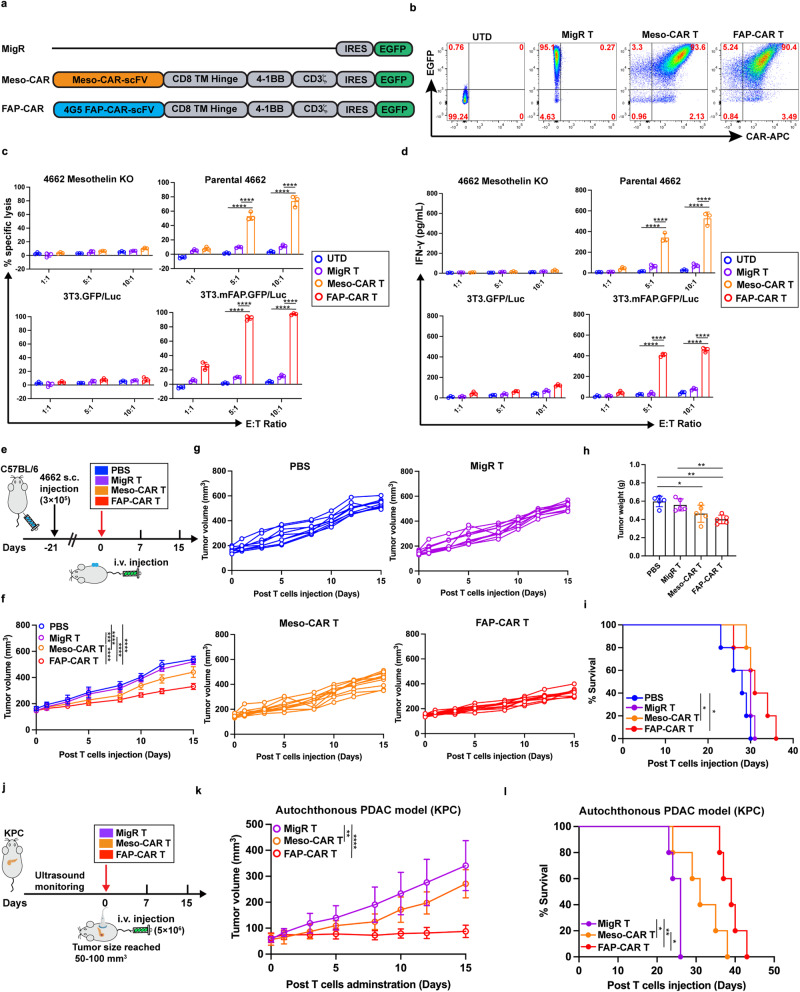
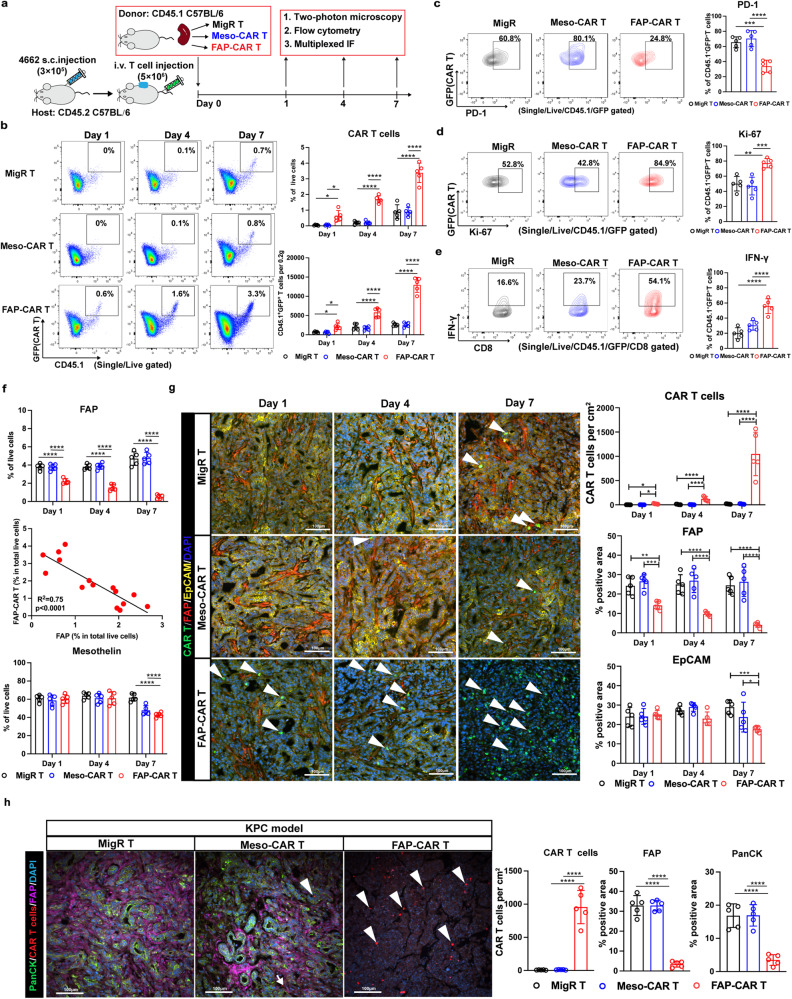
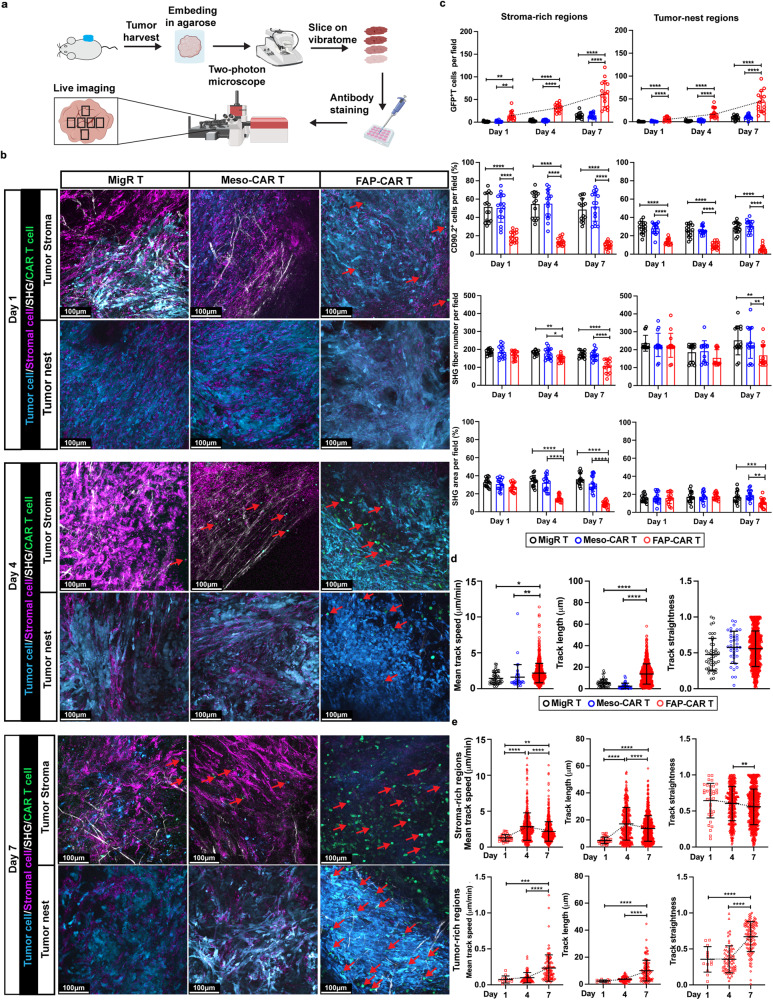
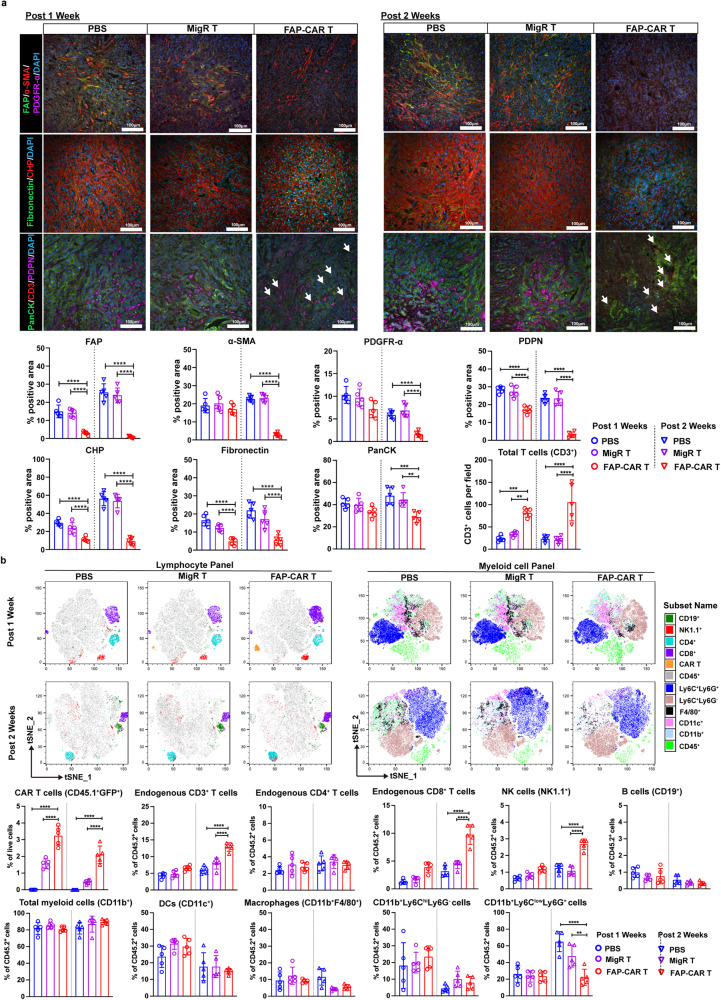
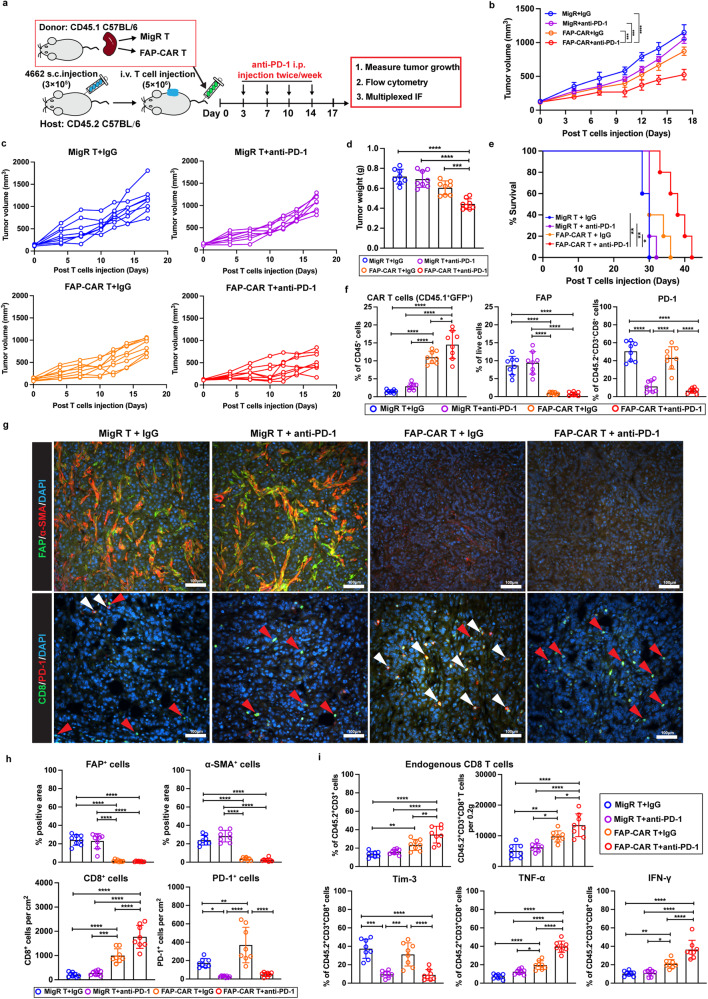
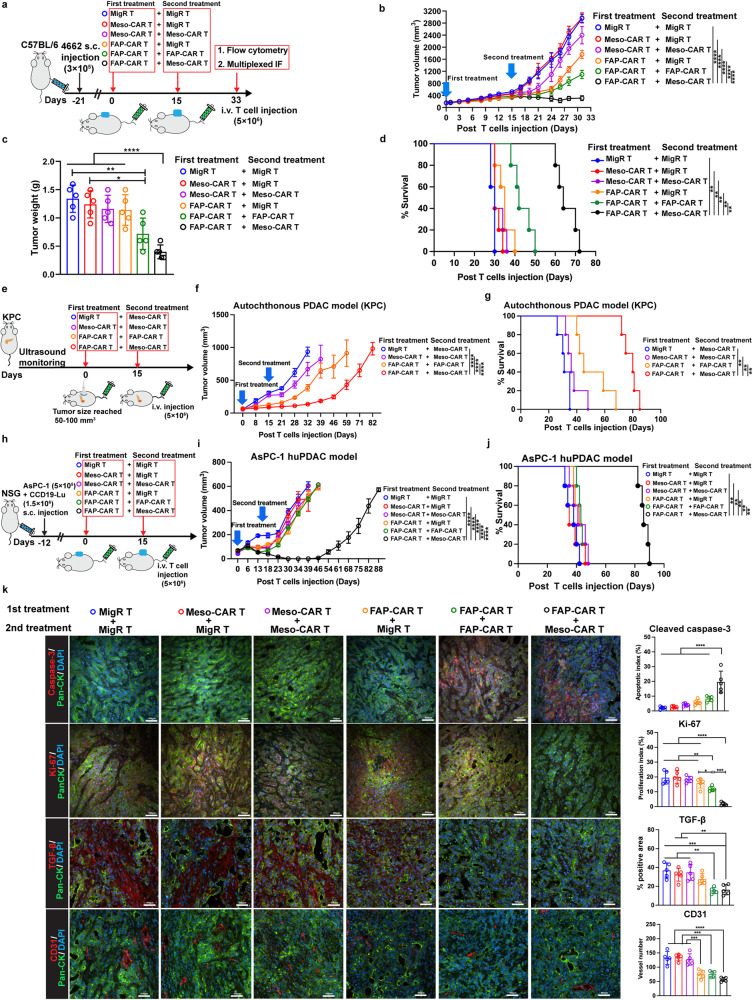
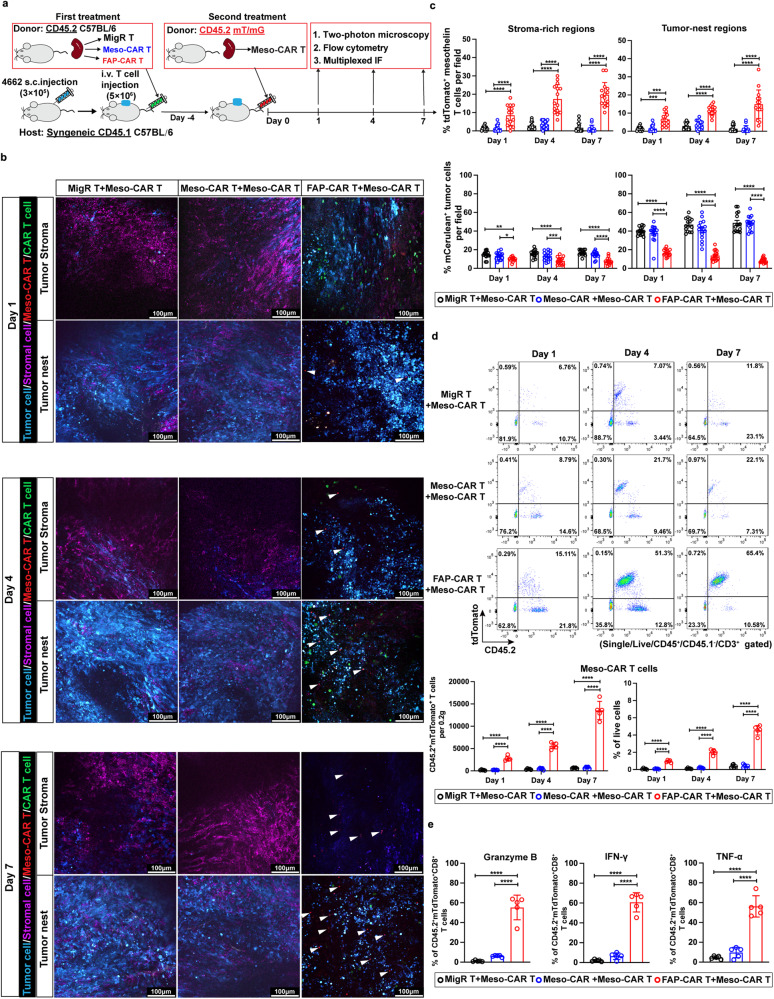
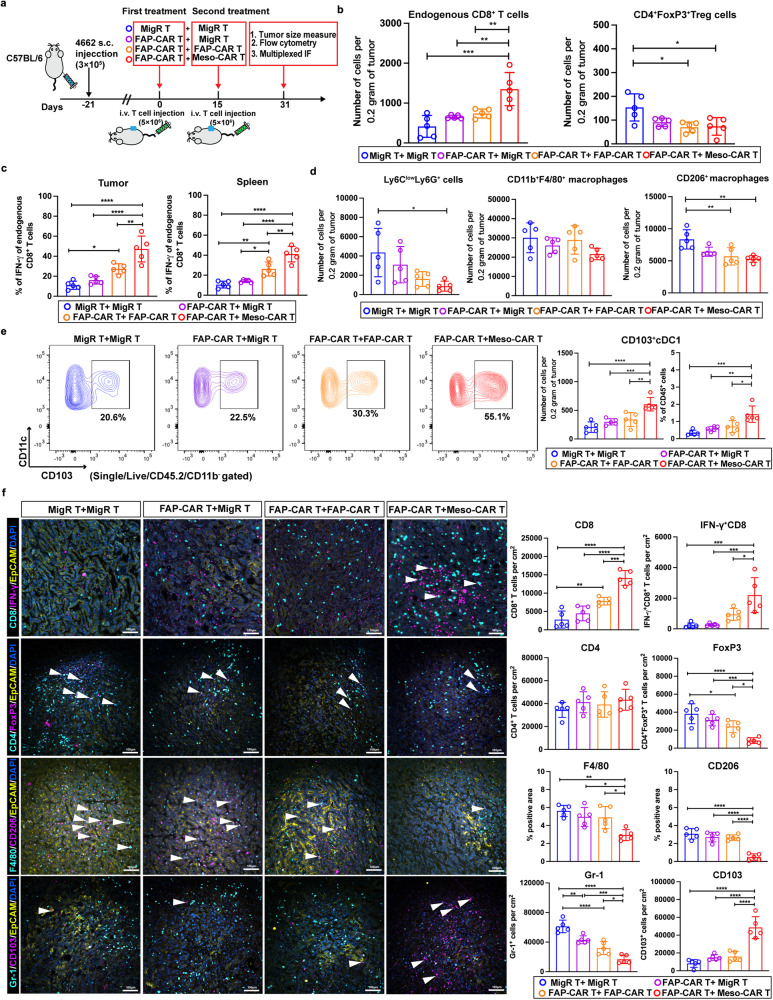
The desmoplastic stroma in solid tumors presents a formidable challenge to immunotherapies that rely on endogenous or adoptively transferred T cells, however, the mechanisms are poorly understood. To define mechanisms involved, here we treat established desmoplastic pancreatic tumors with CAR T cells directed to fibroblast activation protein (FAP), an enzyme highly overexpressed on a subset of cancer-associated fibroblasts (CAFs). Depletion of FAP + CAFs results in loss of the structural integrity of desmoplastic matrix. This renders these highly treatment-resistant cancers susceptible to subsequent treatment with a tumor antigen (mesothelin)-targeted CAR T cells and to anti-PD-1 antibody therapy. Mechanisms include overcoming stroma-dependent restriction of T cell extravasation and/or perivascular invasion, reversing immune exclusion, relieving T cell suppression, and altering the immune landscape by reducing myeloid cell accumulation and increasing endogenous CD8 + T cell and NK cell infiltration. These data provide strong rationale for combining tumor stroma- and malignant cell-targeted therapies to be tested in clinical trials.
Overview
The claims and statistics of this paper haven’t been checked yet.
Free: it reads the open-access text and checks the first 5 claims that cite a source we can check. Create a free account to check every claim.
Integrity signals
Registry
Cites
Statistics
Figures
Verification
Claims the paper makes
The claims and statistics of this paper haven’t been checked yet.
Free: it reads the open-access text and checks the first 5 claims that cite a source we can check. Create a free account to check every claim.
Claims other papers make about this one
Each is checked against this paper’s own text: does it say what the citing paper says it does?
The source backs part of the claim, not all of it — or backs it for a different population, condition or comparison.
In the citing paper
“Immunosuppressive cell types, such as TAMs, regulatory T cells, MDSCs, and cancer-associated fibroblasts (CAFs) play key roles in establishing an immunosuppressive environment in the TME and interfering with cytotoxic T cell activation (Wang et al., 2023; Xiao et al., 2023).”
From Microphysiological systems as models for immunologically ‘cold’ tumors (2024) · cites this paper as Xiao et al., 2023
Experimental — accuracy not yet measured
Self-check
Percentages, sums and reported differences re-computed from the paper’s own numbers.
The self-check needs the paper’s full text.
Citations
Cites
Rahib, L., Smith, B. D., Aizenberg, R., Rosenzweig, A. B., Fleshman, J. M., & Matrisian, L. M. (2014) · Cancer Research · doi:10.1158/0008-5472.can-14-0155 · Cited by 7,094
A framework for advancing our understanding of cancer-associated fibroblasts
Sahai, E., Astsaturov, I., Cukierman, E., DeNardo, D. G., Egeblad, M., Evans, R. M., Fearon, D., Greten, F. R., Hingorani, S. R., Hunter, T., et al. (2020) · Nature Reviews Cancer · doi:10.1038/s41568-019-0238-1 · Cited by 3,863
Self-citationHingorani, S. R., Wang, L., Multani, A. S., Combs, C., Deramaudt, T. B., Hruban, R. H., Rustgi, A. K., Chang, S., & Tuveson, D. A. (2005) · Cancer Cell · doi:10.1016/j.ccr.2005.04.023 · Cited by 2,609
Elyada, E., Bolisetty, M., Laise, P., Flynn, W. F., Courtois, E. T., Burkhart, R. A., Teinor, J. A., Belleau, P., Biffi, G., Lucito, M. S., et al. (2019) · Cancer Discovery · doi:10.1158/2159-8290.cd-19-0094 · Cited by 2,241
Top 10 Challenges in Cancer Immunotherapy
Hegde, P. S., & Chen, D. S. (2020) · Immunity · doi:10.1016/j.immuni.2019.12.011 · Cited by 2,238 · cited 1×
“These peri-tumoral T cells are subject to immune suppression 22,23 and this tumor exclusionphenomenonappearstocontributetothelimitedef fi cacyof adoptively transferred TAA-targeted CAR T cells 22,24,25 .”
Feig, C., Jones, J. O., Kraman, M., Wells, R. J. B., Deonarine, A., Chan, D. S., Connell, C. M., Roberts, E. W., Zhao, Q., Caballero, O. L., et al. (2013) · Proceedings of the National Academy of Sciences · doi:10.1073/pnas.1320318110 · Cited by 2,100
Immune checkpoint inhibitors: recent progress and potential biomarkers
Darvin, P., Toor, S. M., Sasidharan Nair, V., & Elkord, E. (2018) · Experimental & Molecular Medicine · doi:10.1038/s12276-018-0191-1 · Cited by 2,035 · cited 1×
“Immunotherapies that rely on endogenous or adoptively transferred T cells have proven to be challenging in treating solid tumors 1 – 3 .”
The tumor microenvironment at a glance
Balkwill, F. R., Capasso, M., & Hagemann, T. (2012) · Journal of Cell Science · doi:10.1242/jcs.116392 · Cited by 1,857 · cited 1×
“This ex vivo imaging system overcomes two intrinsic challenges of in situ liveimaging of PDAC tumors: (1) limited imaging depth resulting from dense stroma, and (2) breathing motion artifacts that limit intravital live imaging 31, (32).”
Clinical and therapeutic relevance of cancer-associated fibroblasts
Chen, Y., McAndrews, K. M., & Kalluri, R. (2021) · Nature Reviews Clinical Oncology · doi:10.1038/s41571-021-00546-5 · Cited by 1,230
Immunological hallmarks of stromal cells in the tumour microenvironment
Turley, S. J., Cremasco, V., & Astarita, J. L. (2015) · Nature Reviews Immunology · doi:10.1038/nri3902 · Cited by 1,140 · cited 19×
“We further demonstrated that the level of TGF-β , which is critical in translating signals from ECM and/or stiffness to initiate and facilitate the fi brotic process and immunosuppression 47,48 , was down-regulated by FAP-CAR T cells administration, partially supporting the broad remodeling of fi brotic TME, including s…”
Influential
Cited by
Items 101–200 of 328
Decoding osteosarcoma from heterogeneity to precision therapy
Xu, Y., Bai, Y., Yang, F., Yang, B., Huang, Z., Su, L., & Peng, K. (2025) · Discover Oncology · doi:10.1007/s12672-025-04256-7 · Cited by 12
“• LOXL2 inhibitors, Fibroblast Activation Protein (FAP)-targeted CAR-T cells, and integrin antagonists are used to disrupt tumor-stroma interactions and improve drug delivery [148, 149].”
Mariniello, A., & Migliorini, D. (2026) · iScience · doi:10.1016/j.isci.2025.114609 · Cited by 13
“72 Notably, the results of a small phase I pilot trial of intrapleural injection of FAP-targeting CAR-T cells proved safe and feasible in three patients affected by pleural mesothelioma.”
MYC at the tumor–immune interface: mechanisms of immune escape and immunotherapy resistance
González-Larreategui, Í., Martin, M. C., Casacuberta‐Serra, S., & Soucek, L. (2026) · Frontiers in Immunology · doi:10.3389/fimmu.2026.1738440 · Cited by 12
The tumor ecosystem: Rewiring an open, systemically integrated network for therapeutic gain
Chiodelli, P., Papait, A., Agoni, L., Quaglia, F., Silini, A. R., & Parolini, O. (2026) · Biomedicine & Pharmacotherapy · doi:10.1016/j.biopha.2026.119047 · Cited by 12
Lupsa, N., Héninger, E., Ding, A. B., Sánchez‐de‐Diego, C., Vietor, K. J., Reese, S. R., LeBeau, A. M., Kosoff, D., Beebe, D. J., Kerr, S. C., et al. (2026) · International Journal of Molecular Sciences · doi:10.3390/ijms27031585 · Cited by 12
“Several FAP-targeted agents have shown promise in limiting tumor growth in preclinical murine models, including FAP + -CAR T cell-mediated targeting of desmoplastic pancreatic tumors [90] that are associated with reversal of immune exclusion and sensitized tumors to anti-PD-1 therapy.”
Wang, X., Wang, J., Wang, Q., Ding, G., Huang, Y., & Feng, Y. (2026) · Journal of Experimental & Clinical Cancer Research · doi:10.1186/s13046-026-03656-z · Cited by 13
“Beyond VEGF, chemokine axes that regulate immune trafficking are also targeted; CXCL12, which retains T cells in the stroma and limits tumor penetration, is being addressed through CXCR4 inhibitors in trials aimed at enhancing immunotherapy [95].”
Liu, J., Abikenari, M. A., Annagiri, S., Ha, J. H., Nageeb, G., Sjöholm, M., Velazhahan, V., Medikonda, R. T., Choi, J. H., Li, G., et al. (2026) · Journal of Neuro-Oncology · doi:10.1007/s11060-026-05497-4 · Cited by 13
Cancer-associated fibroblasts: Recent advances and therapeutic implications
Paraskeva, C., Stavropoulou, A., & Koliaraki, V. (2025) · Current Opinion in Cell Biology · doi:10.1016/j.ceb.2025.102601 · Cited by 11
Ye, J., Suizu, F., Yamakawa, K., Mukai, Y., Yoneyama, H., Kondo, J., Kato, M., Nishiyama, A., Yahagi, N., & Kadota, K. (2024) · Molecular Therapy Oncology · doi:10.1016/j.omton.2024.200812 · Cited by 11
Looi, C.-K., Loo, E.-M., Lim, H.-C., Chew, Y.-L., Chin, K., Cheah, S., Goh, B. H., & Mai, C. (2024) · Frontiers in Immunology · doi:10.3389/fimmu.2024.1484535 · Cited by 11
Chen, X., Liu, Q., Yu, B., Cen, Y., Liu, Y., Tang, Y., Guo, N., Wang, T., & Li, S. (2025) · Nano Today · doi:10.1016/j.nantod.2025.102667 · Cited by 11
Mastrogiovanni, M., Donnadieu, E., Pathak, R., & Bartolo, V. D. (2024) · Biology · doi:10.3390/biology13110860 · Cited by 10
“These defects are likely to reduce human T cells’ ability to infiltrate tumors and eliminate them, thus contributing to the cancer onset in FAP patients.”
The Immune Landscape and Its Potential for Immunotherapy in Advanced Biliary Tract Cancer
Santoso, A., Levink, I. J. M., Pihlak, R., & Chau, I. (2024) · Current Oncology · doi:10.3390/curroncol32010024 · Cited by 10
“(MHC-I) molecules The highly desmoplastic extracellular matrix (ECM), formed by CAFs, in BTC plays an important role in the suppression of the anti-tumor response by T-cells physically blocking immune cell infiltration [16]. their cell surface.”
CD36 as a Therapeutic Target in Tumor Microenvironment and Lipid Metabolism
Li, J., Chen, J., Yang, G., Zhang, S., Li, P., & Ye, L. (2025) · Anti-Cancer Agents in Medicinal Chemistry · doi:10.2174/0118715206353634241111113338 · Cited by 10
Chen, X., Liu, Q., Cen, Y., Yu, B., Liu, Y., Zhang, W., Li, J., Tang, Y., Miao, Y., Guo, N., et al. (2025) · Advanced Functional Materials · doi:10.1002/adfm.202423200 · Cited by 10
O’Neill, A., Zakaria, N., Egan, H., Treacy, O., Hogan, A. M., O'Dwyer, M. E., Hynes, S. O., & Ryan, A. E. (2025) · European Journal of Immunology · doi:10.1002/eji.70000 · Cited by 12
“Hypersialylation is frequently observed in cancer and is associated with immunologically “cold” tumours, characterised by poor immune infiltration, resistance to anti-cancer therapies, and disease progression [24–27].”
Pelt, S. N. V., White, M. T., Tat, C. L., Hooper, D., Talbot, L. J., McKenna, M. K., Fernandes, R., Rooney, C. M., & Omer, B. A. (2025) · Cancer Immunology Research · doi:10.1158/2326-6066.cir-25-0149 · Cited by 10
Nano-enabled strategies for targeted immunotherapy in gastrointestinal cancers
Chen, C., Li, J., Hua, X., Deng, T., & Zhang, Z. (2025) · Frontiers in Immunology · doi:10.3389/fimmu.2025.1653829 · Cited by 11
Advanced strategies in improving the immunotherapeutic effect of CAR‐T cell therapy
Wang, M., Jia, L., Dai, X., & Zhang, X. (2024) · Molecular Oncology · doi:10.1002/1878-0261.13621 · Cited by 10
“…which proved the feasibility of generating the GMCSF knockout CAR-T to treat CRS. Researchers have recently developed strategies to target cancer-associated fibroblasts (CAF) in tumor microenvironments to overcome physical barriers and effectively enable CAR-T cells to infiltrate tumor sites [25].”
Wang, Q., Peng, R., Qi, H., Xu, R., Liu, W., Meng, F., Du, S., Yu, L., Wei, J., Liu, F., et al. (2024) · MedComm · doi:10.1002/mco2.618 · Cited by 10
CAR T cells in solid tumors and metastasis: paving the way forward
Sirini, C., Rossi, L., Moresco, M. A., & Casucci, M. (2024) · Cancer and Metastasis Reviews · doi:10.1007/s10555-024-10213-7 · Cited by 10
“For example, in a highly desmoplastic preclinical pancreatic ductal adenocarcinoma (PDAC) model, CAR T cells targeting of FAP + CAFs disrupted the physical barrier created by CAFs, enabling increased infiltration of anti-mesothelin CAR T cells and leading to improved tumor control [97].”
Relaxin-2-secreting CAR-T cells exhibit enhanced efficacy in stromal-rich xenograft tumors
Ogawa, H., Ekawa, T., Mizote, Y., Akazawa, T., & Tahara, H. (2025) · Frontiers in Immunology · doi:10.3389/fimmu.2025.1506204 · Cited by 10
Pereira, F. C., Zheng, Q., Hicks, J. L., Roy, S., Jones, T., Pomper, M. G., Antony, L., Meeker, A. K., Yegnasubramanian, S., Marzo, A. M. D., et al. (2025) · Pathology · doi:10.1016/j.pathol.2024.12.637 · Cited by 9
The hypoxic ECM and neutrophils in MIBC immunotherapy resistance
Child, F., Lunj, S., Gough, J. E., Humphries, M. J., Biolatti, L. V., Hoskin, P., Choudhury, A., & Quiles, C. G. (2025) · Nature Reviews Urology · doi:10.1038/s41585-025-01092-w · Cited by 9
Epigenetic modulation to overcome immune suppression in pancreatic cancer
Drndakova, L., Juhasikova, L., Hlavenova, I., Buociková, V., Durdiakova, S., Mego, M., Buc, M., & Smolková, B. (2026) · Clinical Epigenetics · doi:10.1186/s13148-026-02081-5 · Cited by 9
Emerging roles for tumor stroma in antigen presentation and anti-cancer immunity
Papadas, A., Huang, Y., Cicala, A., Dou, Y., Fields, M., Gibbons, A., Hong, D., Lagal, D. J., Quintana, V., Rizo, A., et al. (2023) · Biochemical Society Transactions · doi:10.1042/bst20221083 · Cited by 9
Zhong, R., Zhang, Y., Qiu, W., Zhang, K., Feng, Q., Cao, X., Huang, Q., Zhang, Y., Guo, Y., Guo, J., et al. (2024) · International Journal of Biological Sciences · doi:10.7150/ijbs.102744 · Cited by 9
“Prior studies suggested that the state of the extracellular matrix may influence immune cell infiltration [72, 73].”
Zheng, Y., Shao, W., Ge, T., Ge, S., Jia, R., Yang, L., & Zhuang, A. (2025) · Pigment Cell & Melanoma Research · doi:10.1111/pcmr.70005 · Cited by 9
Mechanisms and measures to modulate T cell trafficking for amplified and tolerogenic immunity
Lu, Y., Liu, X., & You, J. (2023) · Nano Today · doi:10.1016/j.nantod.2023.102129 · Cited by 9
Lahusen, A., Lutz, M. P., Fang, R., Kirchner, M., Albus, S., Kluck, K., Karthaus, M., Schwarzer, A., Siegler, G. M., Kleger, A., et al. (2025) · Molecular Cancer · doi:10.1186/s12943-025-02406-7 · Cited by 8
“The PDAC TiME is predominantly immunosuppressive, marked by a dense desmoplastic stroma that impedes effector T ‐ cell infiltration and fosters the accumulation of e.g., regulatory T-cells [22, 23].”
Qiao, Y., Yin, H., Zhang, Y., Zhang, J., & Dong, Q. (2025) · Frontiers in Immunology · doi:10.3389/fimmu.2025.1585858 · Cited by 8
“In addition, dense matrix environment can substantially exacerbate T-cell exhaustion and impair antitumor immunity (151, 152).”
Mimicking Gastric Cancer Collagen Reorganization with Decellularized ECM-Based Scaffolds
Corro, N. B., Alarcón, S., Astroza, Á., González‐Stegmaier, R., & Añazco, C. C. (2025) · Biology · doi:10.3390/biology14081067 · Cited by 8
“In fact, the porous, ran-Biology domly oriented collagen meshwork becomes thick and linearized, reducing interstitial pore size from 10–50 µ m to 1–10 µ m in tumors [92].”
Zhao, L., Zhang, Y., Yang, X., Chen, T., Liu, J., & Guo, Z. (2025) · Cancer Immunology Immunotherapy · doi:10.1007/s00262-025-04167-0 · Cited by 8
Optimising CAR T therapy for the treatment of solid tumors
Mobark, N., Hull, C., & Maher, J. F. (2024) · Expert Review of Anticancer Therapy · doi:10.1080/14737140.2024.2421194 · Cited by 8
“Moreover, the highly desmoplastic nature of the stroma is some tumors presents a major obstacle to CAR T cell extravasation and migration [64].”
Yi, J., Quji, S., Guo, L., Chai, Z., Kong, X., & Meng, J. (2025) · Cellular Immunology · doi:10.1016/j.cellimm.2025.105026 · Cited by 8
Chang, S., Chen, Q., Guan, G., Zhao, M., Ding, G., Yuan, Y., Sun, Y., Yan, F., Ma, X., Chen, G., et al. (2025) · ACS Nano · doi:10.1021/acsnano.5c10776 · Cited by 7
Chantzoura, E., Altman-Sharoni, E., Michelet, X., Popis, M. C., Niedzielska, M., Joshi, B. P., Masakayan, R., Rubí-Sans, G., Addis, S., Keith, J. G., et al. (2025) · Cancer Immunology Research · doi:10.1158/2326-6066.cir-25-0349 · Cited by 7
Cancer-associated fibroblasts in non-small cell lung cancer therapy: Challenges and opportunities
Deng, S., Li, Y., Peng, L., Li, J., & Zhang, L. (2026) · Biochimica et Biophysica Acta (BBA) - Reviews on Cancer · doi:10.1016/j.bbcan.2026.189568 · Cited by 7
Self-citationDesmoplasia and therapeutic resistance in pancreatic ductal adenocarcinoma
Ghanwatkar, Y., Ramanathan, R., & Mahato, R. I. (2026) · Cancer Letters · doi:10.1016/j.canlet.2026.218618 · Cited by 7
Shen, L., Schaefer, A., Huckaby, J. T., Wolf, W., & Lai, S. K. (2025) · Theranostics · doi:10.7150/thno.103372 · Cited by 7
“By the time treatment can be initiated, NSCLC already possess a highly immunosuppressive TME [10] as well as a dense stromal barrier [11], both contributing to making NSCLC tumors highly refractory to available treatments, including checkpoint inhibitors [12] and CAR-T therapies [13].”
Clock pathway inhibitor overcomes tumor immune-exclusion via regulation of fibrocyte differentiation
Mitsuhashi, A., Koyama, K., Ogino, H., Matsuo, R., Nguyen, N. T., Yabuki, Y., Ozaki, R., Tsukazaki, Y., Morita, Y., Yoshida, A., et al. (2025) · npj Precision Oncology · doi:10.1038/s41698-025-01066-6 · Cited by 7
“T cells targeting FAP-positive cells eliminated CAFs and enhanced the in fi ltration of tumor antigen-recognizing CAR-T cells in tumor foci 32 .”
Cao, L., Tang, D., Yu, Z., Shen, Y., Wang, Y., Li, Y., Chen, J., Liu, Z., Yin, J., Xiao, H., et al. (2024) · Advanced Functional Materials · doi:10.1002/adfm.202403225 · Cited by 7
Self-citationRaufi, A. G., Pellicciotta, I., Palermo, C. F., Sastra, S. A., Chen, A., Alouani, E. L., Maurer, H. C., May, M. S., Iuga, A. C., Rabadán, R., et al. (2023) · bioRxiv (Cold Spring Harbor Laboratory) · doi:10.1101/2023.12.24.573257 · Cited by 7
“To this end, targeting signaling pathways directly responsible for T-cell exclusion, such as the CXCL12-CXCR4 axis, is of particular interest [17, 18].”
BackgroundSunami, Y., Bai, R., Friedrichs, J., Ronellenfitsch, U., Kleeff, J. H., & Rebelo, A. (2024) · Journal of Gastrointestinal Oncology · doi:10.21037/jgo-24-374 · Cited by 6
“…of FAP targeting strategies with e.g., novel selective FAP inhibitors, such as FAPI-04, FAPI-46 (59), FAPI-74 (60) as well as 3BP-3940 (61), molecular imaging with 68Ga-FAPI-positron emission tomography/computed tomography (PET/CT) (59), and chimeric antigen receptor (CAR) T cells therapy (62).”
Stepanechko, M., Gamache, A., Padilla, F. R., Nemshick, M., Kitelinger, L. E., Conarroe, C. A., DeWitt, M. R., Hossack, J. A., & Bullock, T. N. J. (2025) · IEEE Transactions on Biomedical Engineering · doi:10.1109/tbme.2025.3568594 · Cited by 6
“Desmoplastic stroma is a hallmark of PDAC [2] that can interfere with chemotherapy delivery [3], [4] and restrict infiltration of cytotoxic T cells and NK cells [5].”
Bhattacharya, P., Linnenbach, A. J., South, A. P., Martinez‐Outschoorn, U., Curry, J., Johnson, J. M., Harshyne, L. A., Mahoney, M. G., Luginbuhl, A., & Vadigepalli, R. (2025) · PLoS Computational Biology · doi:10.1371/journal.pcbi.1013127 · Cited by 6
Zhang, Q., Tan, Y., Liang, Q., Gu, L., Shi, Y. X., Huang, Y., Li, X., Qi, J., Peng, C., Wang, H., et al. (2025) · Developmental Cell · doi:10.1016/j.devcel.2025.07.010 · Cited by 6
Raftery, N. B., Ward, M. P., Ravi, N., Reynolds, J. V., Elliott, J. A., & Donohoe, C. L. (2025) · Cancers · doi:10.3390/cancers17243987 · Cited by 6
“This fibrotic ECM and the resulting immune cell exclusion can drive the spatial heterogeneity of expression of markers, such as PD-L1, thereby creating immunologically “cold” areas that are resistant to an immune checkpoint blockade [52].”
Overcoming intratumoral transport barriers: Advances in local immunotherapy delivery platforms
Deeson, M. A., Chua, C. Y. X., & Grattoni, A. (2026) · Advanced Drug Delivery Reviews · doi:10.1016/j.addr.2026.115888 · Cited by 7
CAFs Defang NK Cells to Promote Breast Cancer Immunosuppression
Sherman, M. H. (2025) · Cancer Discovery · doi:10.1158/2159-8290.cd-25-0512 · Cited by 5
Vyhnánková, S., Lacina, L., Chovanec, M., Plzák, J., Smetana, K., Netušil, J., Kolář, M., & Šindelka, R. (2025) · International Journal of Molecular Sciences · doi:10.3390/ijms26188844 · Cited by 5
“This makes tumours more susceptible to consequent anti-PD-1 antibody-based therapy [150].”
Chen, H., Huang, Y., Yin, S., Li, C., & Zhang, F. (2025) · Biochimica et Biophysica Acta (BBA) - Reviews on Cancer · doi:10.1016/j.bbcan.2025.189463 · Cited by 5
ASMase Activation in Ultrasound-Stimulated Radiation Enhancement Using MRI-Guided Focused Ultrasound
Petchiny, T. N., Sharma, D., Giles, A., Leong, K. X., Yang, W., Sannachi, L., Alberico, D., & Czarnota, G. J. (2025) · Cells · doi:10.3390/cells14201618 · Cited by 5
“In immunocompetent settings, T cells can exert indirect anti-proliferative effects through cytokine release (e.g., IFN-γ ), immune editing, and pressure on resistant tumour subpopulations [50,51].”
Armstrong, A., van der Plancke, G., Nishiguchi, S., Salas‐Benito, D., Bouffard, A. A., Goncalves, S., Merce, A. T., Kelly, C., Birocchi, F., Park, S., et al. (2025) · Clinical Cancer Research · doi:10.1158/1078-0432.ccr-25-2907 · Cited by 5
Harnessing the power of cancer-associated fibroblasts to revolutionize pancreatic cancer treatment
Shen, J., Wu, R., Yin, T., Wang, Q., & Nie, L.-M. (2025) · Cancer Biology and Medicine · doi:10.20892/j.issn.2095-3941.2025.0288 · Cited by 5
“Depletion of FAP+ CAFs has been shown to remodel the ECM, which in turn enhances T-cell infiltration and alleviates T-cell suppression 20 .”
Single-cell omics in tumor lymph node metastasis: mechanisms and therapeutic implications
Liu, X., Meng, X., Liu, Z., Cao, L., Gan, L., & He, Y. (2026) · Molecular Cancer · doi:10.1186/s12943-026-02585-x · Cited by 5
“In pancreatic cancer, the desmoplastic stroma driven by FAP + CAFs further restricts perivascular T cell infiltration and extravasation, a barrier that can only be specifically disrupted by FAP-targeted CAR-T cells [108].”
Neuro-tumor-immune crosstalk in pancreatic cancer: Mechanisms and therapeutic insights
Jin, J., He, B., Wang, X., Zhang, Y., You, H., Mo, S., Guo, D., & Shi, S. (2026) · Biochimica et Biophysica Acta (BBA) - Reviews on Cancer · doi:10.1016/j.bbcan.2026.189575 · Cited by 5
Cancer-associated fibroblast subtypes differentially modulate natural killer cells in cancer
Rodrigues, L. N., Munir, H., Arrazola, I. T., Gaida, M. M., Eckert, C., Boulanger, J., Ferreira, A. C. F., McKenzie, A. N. J., & Shields, J. D. (2026) · Cell Reports · doi:10.1016/j.celrep.2026.117527 · Cited by 6
“57 In line with this, transwell assays indicated that pancreatic fibroblasts and mixed CAF populations attract NK cells, but TGF-β -myCAF-like fibroblasts promoted NK cell migration less efficiently.”
Wang, R., Zhang, Z., Du, J., Chen, J., Teng, Y., Wang, Q., Wu, Z., Yang, T., & Jiang, H. (2026) · International Journal of Nanomedicine · doi:10.2147/ijn.s603425 · Cited by 6
Migration of immune cells in tumors and inflammation: molecular mechanisms and therapeutic targets
Lu, Y., Shao, D., Xiao, Y., Jiang, Y., & Shao, Z. (2026) · Signal Transduction and Targeted Therapy · doi:10.1038/s41392-026-02851-w · Cited by 5
Dorjkhorloo, G., Erkhem‐Ochir, B., Shiraishi, T., Sohda, M., Okami, H., Yamaguchi, A., Shioi, I., Komine, C., Nakazawa, N., Ozawa, N., et al. (2024) · Oncology Letters · doi:10.3892/ol.2024.14237 · Cited by 5
Sabu, A., Yang, Y., Sarma, R. R., Ramesan, L., Lin, Y.-H., & Chiu, H. (2025) · Biomaterials Advances · doi:10.1016/j.bioadv.2025.214677 · Cited by 4
Zhang, Y. N., Wang, W. N., Liu, G. Q., Wang, L. N., Zhang, X., Mei, J., & Yang, K. N. (2025) · Frontiers in Bioscience-Landmark · doi:10.31083/fbl45052 · Cited by 4
Mao, Q., Cai, H., Chen, M., Xiao, A., Jiao, H., Jia, F., Ma, J., Fan, J., Liu, J., Zhang, K., et al. (2026) · ACS Nano · doi:10.1021/acsnano.5c16809 · Cited by 4
Tang, H., Shi, Y., Ge, Q., Wang, R., Yang, J., Zhu, Y., Liu, S., & Xu, W. (2026) · Journal of Hematology & Oncology · doi:10.1186/s13045-026-01814-6 · Cited by 4
“Function-ally, myCAFs orchestrate deposition and remodeling of the ECM, creating a dense fibrotic stroma that acts as a physical barrier to immune cell infiltration [26, 27].”
Engineered Cellular Therapies for the Treatment of Thoracic Cancers
Erickson, S. M., Manning, B. M., Kumar, A., & Patel, M. R. (2024) · Cancers · doi:10.3390/cancers17010035 · Cited by 4
“One type of stromal cell present in the TME, cancer-associated fibroblasts (CAFs) are one of the cell types responsible for production of this matrix and have thus been identified as a target to improve the efficacy of cell therapies [155,167].”
Nguyen, T. H., Zhang, J., Hipp, J., Chhor, G., Griffin, M., Le, N., Kartik, D., Zhang, Y., Mirzadeh, M., Varao, J., et al. (2026) · Communications Medicine · doi:10.1038/s43856-026-01809-x · Cited by 4
Mason, N. J. (2024) · Journal of the American Veterinary Medical Association · doi:10.2460/javma.24.02.0113 · Cited by 4
“30 In these instances, however, it may not be required or desir - able to have long-term persistence of FAP–CAR-T cells.”
CAR-T cell therapy for patients with extramedullary multiple myeloma:Opportunities and challenges
Wang, Y., Hu, X., Du, J., & Liu, B. (2025) · European Journal of Cancer · doi:10.1016/j.ejca.2025.115374 · Cited by 3
Mabuchi, S., Komura, N., Nakamura, H., Maeda, M., Yokoi, T., Koyama, S., & Ueda, T. (2025) · Journal of Gynecologic Oncology · doi:10.3802/jgo.2026.37.e13 · Cited by 3
“Previous investigations have shown that CD8 + T lymphocytes exclusion occurred in patients with fibroblast-and collagen rich tumors, mainly due to the restriction of CD8 + T lymphocytes extravasation [31,32].”
Microenvironment of Solid Tumors
Korneenko, T. V., Pestov, N. B., Shakhparonov, M. I., & Barlev, N. A. (2025) · Frontiers in Bioscience-Landmark · doi:10.31083/fbl36940 · Cited by 3
“This allows treatments like mesothelin-targeted CAR-T cells and anti-PD-1 antibody therapy to be more effective, as T cells gain easier access to the cancer cells [ 210] (also recently reviewed in [211]).”
Ruan, R., Dai, X., Zhang, L., Xiong, J., Yao, Y., & Deng, J. (2025) · Biochemical and Biophysical Research Communications · doi:10.1016/j.bbrc.2025.152841 · Cited by 3
CDKN1A and cellular senescence are associated with immune resistance in advanced lung adenocarcinoma
Wang, S., Duan, F., Fu, S., Cui, P. L., Shi, Y., Zhang, L., Mi, X., Xu, Y., Wang, G., Cai, S., et al. (2025) · Clinical and Experimental Medicine · doi:10.1007/s10238-025-01926-2 · Cited by 3
“Previous studies suggested that stroma could restrict T cell infiltration and mediate immunosuppression in tumors [53, 54].”
Qian, H., He, Y., Deng, C.-Q., Ao-di, W., Ma, Y.-X., Zhuang, H., Chen, S., Li, Y., Chen, S., Zhang, X.-W., et al. (2026) · Acta Pharmacologica Sinica · doi:10.1038/s41401-025-01680-x · Cited by 3
Self-citationShojaei, S., Sani, M., Azarpira, N., Latifi, M., & Sani, F. (2026) · Stem Cell Research & Therapy · doi:10.1186/s13287-026-04993-8 · Cited by 3
“Unlike blood cancers, solid tumors have an immunosuppressive environment with stromal cells, TAMs, MDSCs, Tregs, and dense ECM, which hinder T-cell migration, survival, and cytotoxicity [54–57].”
Ma, R., Xiao, Y., Zhu, W., Chen, H., Feng, Y., Cheng, Y., & Guan, J. (2026) · Translational Oncology · doi:10.1016/j.tranon.2026.102939 · Cited by 3
Kumar, A., Dwivedi, D., Ghosh, N., Gopalakrishnan, K., Rahamathulla, M., Ahmed, M. M., Nair, C., Singh, D., Singh, R., & Das, U. (2026) · Molecular Immunology · doi:10.1016/j.molimm.2026.08.008 · Cited by 3
Wang, C., Niu, X., Xia, T., Wang, P., Wang, Y., Zhang, Z., Zhang, J., Ju, S., & Xiao, Z. (2025) · Clinical Cancer Research · doi:10.1158/1078-0432.ccr-24-3765 · Cited by 3
Self-citationAntsiferova, M. A., Berrera, M., Zagdoun, A.-C., Raauf, M., Nguyen, T. T., Murgia, C., Appelt, B., Trumpfheller, C., Gasser, S., Pilet, S., et al. (2025) · OncoImmunology · doi:10.1080/2162402x.2025.2489815 · Cited by 3
“19 Finally, this provides further motivation to the development of novel treatments for pancreatic cancer by re-invigorating the immune response by combining several approaches.”
Xiang, J., Wen, X., Wang, R., Wang, J., Peng, X., Wang, Y., Liang, N., Cao, D., Chen, X. S., Zhu, Z., et al. (2026) · Journal of Nuclear Medicine · doi:10.2967/jnumed.126.272007 · Cited by 3
FAM111B Overexpression and Immune Cell Infiltration: Implications for Ovarian Cancer Immunotherapy
Li, W., Wei, F., Zhou, T., Feng, L., & Zhang, L. (2025) · Biomedicines · doi:10.3390/biomedicines13061295 · Cited by 2
“Furthermore, the results of bioinformatics analysis show that FAM111B was negatively correlated with stroma score values associated with immune suppression [17,18].”
Sasse, R. (2025) · Advances in Redox Research · doi:10.1016/j.arres.2025.100139 · Cited by 2
Delsignore, M., Cassinari, G., Revello, S., Cerbone, L., Grosso, F., Arsura, M., & Porta, C. (2025) · Cancers · doi:10.3390/cancers17244020 · Cited by 3
Smith, J. P., Nkulikiyimana, G. C., Cao, H., Chen, W., Kallakury, B., Kwagyan, J., Duttargi, A., & Weinberg, B. A. (2026) · Pharmaceutics · doi:10.3390/pharmaceutics18030379 · Cited by 2
“Remodeling the PDAC TME enhances therapeutic efficacy by overcoming the dense desmo-plastic stroma, which otherwise inhibits the infiltration of cytotoxic T lymphocytes and restricts the penetration of therapeutic agents [12,13].”
Chen, D., Liu, Y., Shi, D., Li, S., Wang, Y., Wang, Q., Feng, T., Pei, S., Wang, Y., Zhang, Y., et al. (2026) · Nature Communications · doi:10.1038/s41467-026-71819-9 · Cited by 3
Li, H., Yan, J., Liu, Y., Tao, X., Guo, K., & Zhang, J. (2026) · Frontiers in Bioengineering and Biotechnology · doi:10.3389/fbioe.2026.1797270 · Cited by 2
“This platform further supports attribution of functional impairment to dominant inhibitory circuits and testing whether combinatorial blockade of these pathways meaningfully enhances CAR-T cytotoxic activity (Xiao et al., 2023).”
Advancing precision medicine in pancreatic cancer using novel biomarkers and clinical targets
Murthy, D., Seyhan, A. A., den Hollander, P., Lu, S., Kuburich, N. A., Gould, C., Karam, A., Sun, K., Schupp, P. G., Safran, H., et al. (2026) · Molecular Aspects of Medicine · doi:10.1016/j.mam.2026.101476 · Cited by 3
Advanced 3D cancer models for analyzing tumor-immune cell interaction and therapeutic response
Jeevanandan, S. P., Reidy, E., Clegg, J., Curvello, R., Ryan, A. E., & Loessner, D. (2026) · Molecular Cancer · doi:10.1186/s12943-026-02681-y · Cited by 2
“On the other hand, colorectal, pancreatic and ovarian cancers are ‘cold’ tumors characterised by a low immune cell infiltration, lack of immune response, and low levels of PD-L1 [88, 89].”
Wang, C., Ma, W., Wang, X., Xu, Y., & Huang, S. (2026) · Cytokine & Growth Factor Reviews · doi:10.1016/j.cytogfr.2026.05.004 · Cited by 2
Rejinold, N. S., Jin, G., & Choy, J. (2026) · ACS Omega · doi:10.1021/acsomega.6c00998 · Cited by 2
Zhang, J. Z., Huang, Y., Zhang, M., Lou, J., Zhang, S., Zhao, S., Song, Z., Zhang, K., Jiang, T., & Zhang, G. (2026) · Cells · doi:10.3390/cells15131198 · Cited by 2
“TAMs in fibrotic septa need to adapt to low-exchange environments caused by dense stroma and low permeability [159], whereas TAMs at necrotic borders also face metabolic disruption and oxidative stress accumulation [94].”
Zhan, L., Chen, Y., Hu, J., Wang, C., Liu, H., Yao, D., & Wang, D. (2026) · Advanced Materials · doi:10.1002/adma.74089 · Cited by 2
Resistance to CAR-based cell therapy: Mechanisms and overcoming strategies
Sha, S., Pang, X.-Y., Wang, N., Wang, Y., Zhang, C., Guo, Z., Du, Z., Li, L., Liu, N., & Qu, L. (2026) · Drug Resistance Updates · doi:10.1016/j.drup.2026.101452 · Cited by 2
Anh, D. X. T., & Tateno, H. (2026) · Advanced Biology · doi:10.1002/adbi.70152 · Cited by 2
“Through suppression of T ‑cell infiltration and effector function, secretion of immunosuppressive mediators, remodeling of the extracellular matrix, and reinforcement of stromal barriers, TAMs play a critical role in sustaining immune evasion [ 66 ].”
Zhang, Z., Deng, T., Zhou, W., & Tan, X. (2026) · Frontiers in Immunology · doi:10.3389/fimmu.2026.1914878 · Cited by 2
“Accumulating evidence indicates that mechanical properties play critical roles in tumor immune recognition by shaping T-cell engagement with tumor cells and determining the ef fi ciency of cytotoxic responses (122, 123).”
Challenges and strategies in relation to effective CAR-T cell immunotherapy for solid tumors
Yuan, G., Ye, M., Zhang, Y., & Zeng, X. (2024) · Medical Oncology · doi:10.1007/s12032-024-02310-y · Cited by 2
“CAR-T which specifically recognizes FAP can lead to the depletion of CAF, which destroys the structural integrity of solid tumors [13–15].”
Comparative morphology of tumour microenvironment in claudin-low and claudin-high breast cancers
Yadav, R., Sharma, A., Dahiya, D., Bal, A., & Bhatia, A. (2024) · Pathology - Research and Practice · doi:10.1016/j.prp.2024.155502 · Cited by 2
Mechanism of Tumor Growth and Metastasis
Dias, F. C. R., Oliveira, J. B., Pinheiro, B. S. S., Pacheco, H. F. M., Rodrigues, J. G., Fernandes, J. L. F., & Gomes, M. D. L. M. (2024) · Interdisciplinary cancer research · doi:10.1007/16833_2024_406 · Cited by 2
Gao, H., Qu, L., Li, M., Guan, X., Zhang, S., Deng, X., Wang, J., & Xing, F. (2025) · International Journal of Biological Macromolecules · doi:10.1016/j.ijbiomac.2025.139829 · Cited by 2
Stathopoulou, C., Zhao, M., Jiang, Q., Hong, J., Bian, J., Venugopalan, A., Zhang, J., Ho, M., & Hassan, R. (2026) · Scientific Reports · doi:10.1038/s41598-026-76125-4 · Cited by 2
Metadata
- Authors
- Xiao, Z., Todd, L., Huang, L., Noguera-Ortega, E., Lu, Z., Huang, L., Kopp, M., Li, Y., Pattada, N., Zhong, W., Guo, W., Scholler, J., Liousia, M., Assenmacher, C.-A., June, C. H., Albelda, S. M., & Puré, E.
- Affiliations
- University of Pennsylvania (US)
- Corresponding author
- Puré, Ellen
- ORCID
- Venue
- Nature Communications
- Published
- 2023-08-22
- Volume
- 14
- Issue
- 1
- Pages
- 5110-5110
- ISSN
- 2041-1723 (ISSN-L)
- PMC
- PMC10444764
- OpenAlex
- W4386067114
- Semantic Scholar
- b17dc325bb43e5a2f6e315972b253f6c34a0dca2
- Cited by
- 272
- References
- 63
- Citations by year
- 2026: 110 · 2025: 94 · 2024: 59 · 2023: 9
- FWCI
- 33.03
- Type
- journal article
- Language
- en
- Open access
- gold
- doi.org
- Licence
- cc-by
- creativecommons.org/licenses/by/4.0 (tdm)
- creativecommons.org/licenses/by/4.0 (vor)
- Locations
- Nature Communications (publishedVersion, cc-by)
- bioRxiv (Cold Spring Harbor Laboratory) (acceptedVersion, cc-by-nc-nd)
- PubMed Central (publishedVersion, cc-by)
- PubMed (publishedVersion)
- PubMed Central (submittedVersion, cc-by-nc-nd)
- RePEc: Research Papers in Economics (submittedVersion)
- DOAJ (DOAJ: Directory of Open Access Journals) (submittedVersion, cc-by-sa)
- Funders
- Cancer Research Institute (CRI4168)
- University of Pennsylvania (P30 DK050306, P30CA016520)
- Abramson Cancer Center (P30CA016520)
- National Institutes of Health (CA016520, T35OD010919)
- National Cancer Institute (CA016520, P01CA066726, P01CA217805, P30CA016520)
- National Institute of Diabetes and Digestive and Kidney Diseases (P30DK050306)
- Topics
- Health Sciences › Medicine › Oncology › Cancer Immunotherapy and Biomarkers
- Health Sciences › Medicine › Oncology › Pancreatic and Hepatic Oncology Research
- Life Sciences › Biochemistry, Genetics and Molecular Biology › Biochemistry › Peptidase Inhibition and Analysis
- Keywords
- desmoplastic stroma, T cell extravasation, immune exclusion, immunosuppression, solid tumors, pancreatic cancer, chimeric antigen receptor T cells, fibroblast activation protein, cancer-associated fibroblasts, mesothelin, anti-PD-1 therapy, tumor microenvironment, NK cell infiltration, CD8+ T cells, combination therapy
About these checks
Registry, retraction, Cites and statistics results are computed, not judged, with one exception: a printed reference that no index lists is read once by a model before it counts as a citation error. Claims are extracted by a model and kept only when their quote appears verbatim in the text; each cited source is then checked, with a model’s help, for whether it says what the claim relies on. Those verdicts can be wrong — read the claim’s quote and the cited source before relying on one.
Statistics and arithmetic are recomputed, not judged.
Confidence bands are shown only for fields calibrated on our annotated test set. None is calibrated yet, so no band is shown.
What counts as a claim ›How we measure confidence ›How we check this ›
Are you an author, or do you see a problem with this page? Request a review
Data sources
Bibliographic data: Semantic Scholar, OpenAlex, Crossref.
Contains information from the Semantic Scholar Academic Graph Datasets, made available under the ODC Attribution License (ODC-BY 1.0).
Semantic Scholar’s data is described in: Kinney, R., et al. (2023). The Semantic Scholar Open Data Platform. arXiv:2301.10140.
