

Desmoplastic stroma restricts T cell extravasation and mediates immune exclusion and immunosuppression in solid tumors
Open accessPublished version of a preprint
The DOI matches its Crossref record; 61 of the 63 references it cites were found in a registry or an index.
Abstract
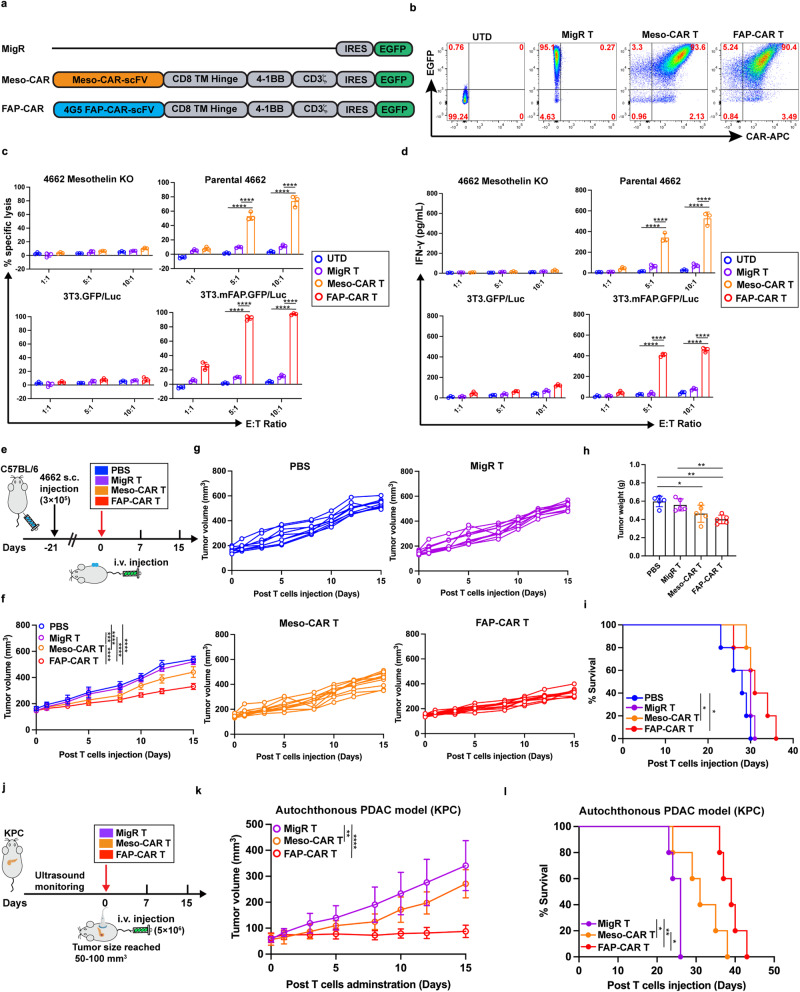
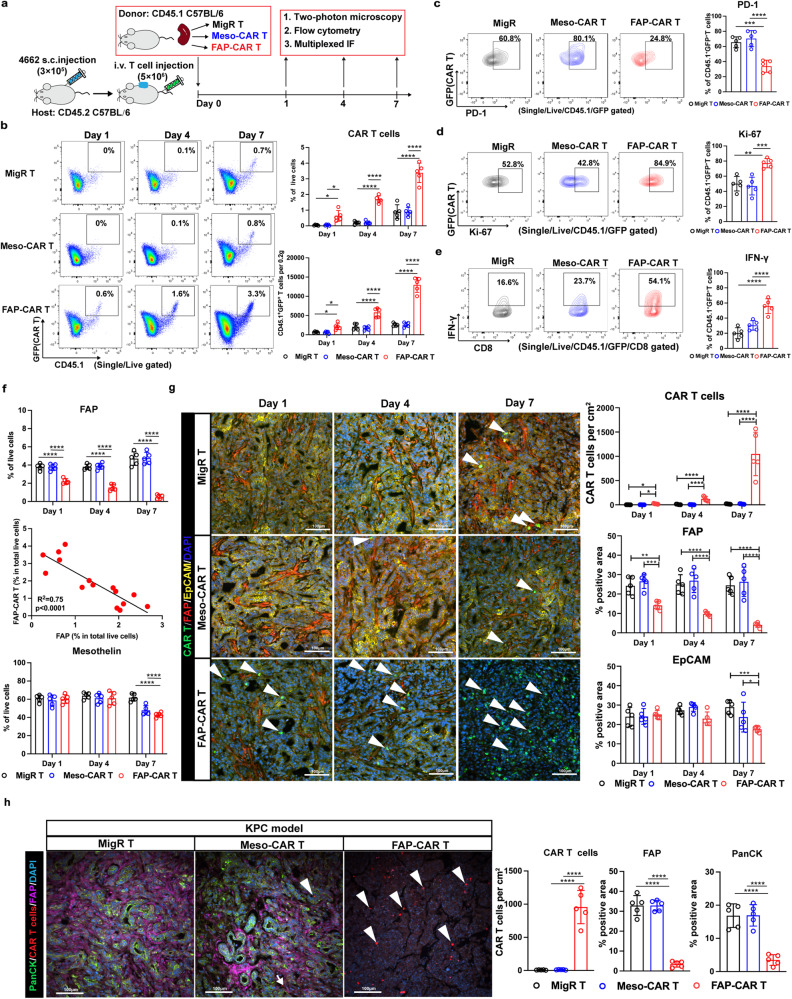
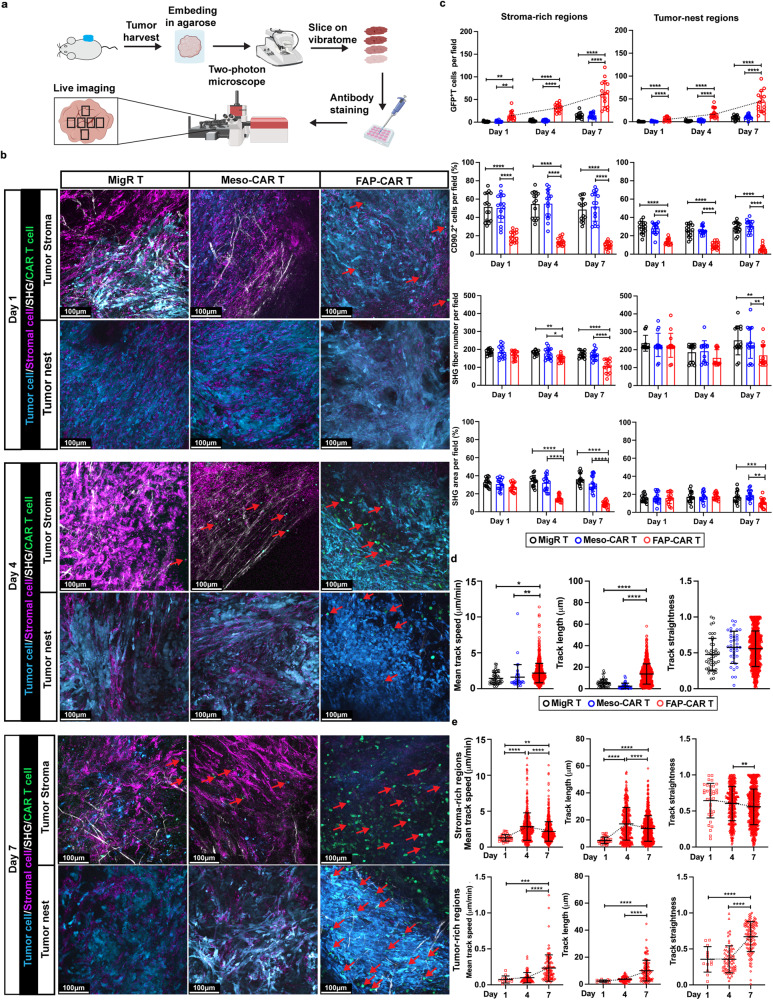
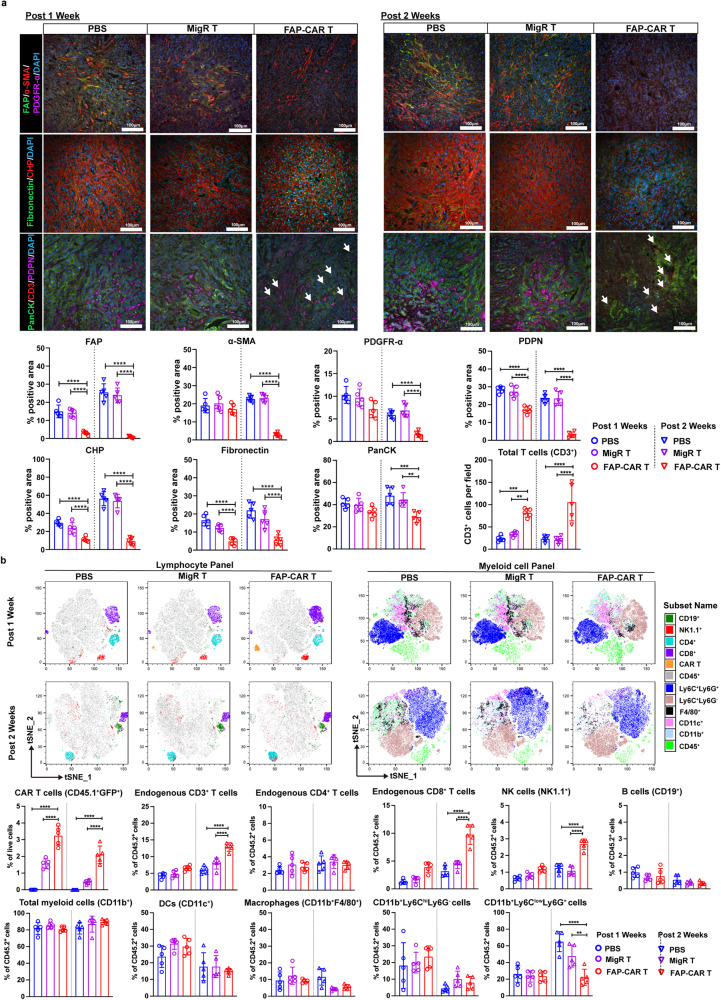
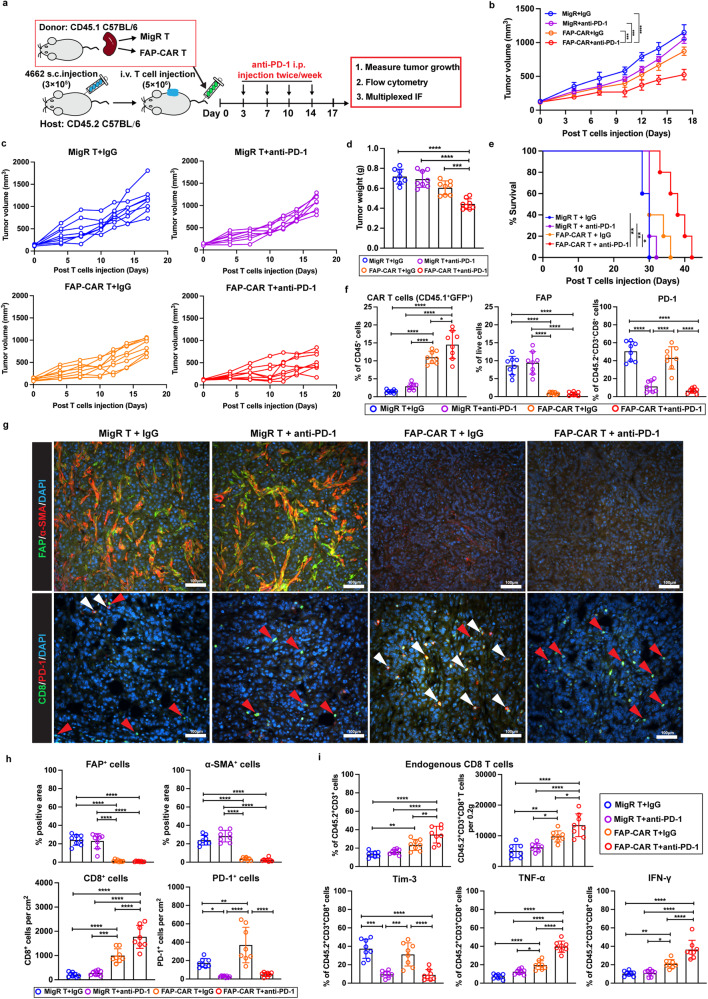
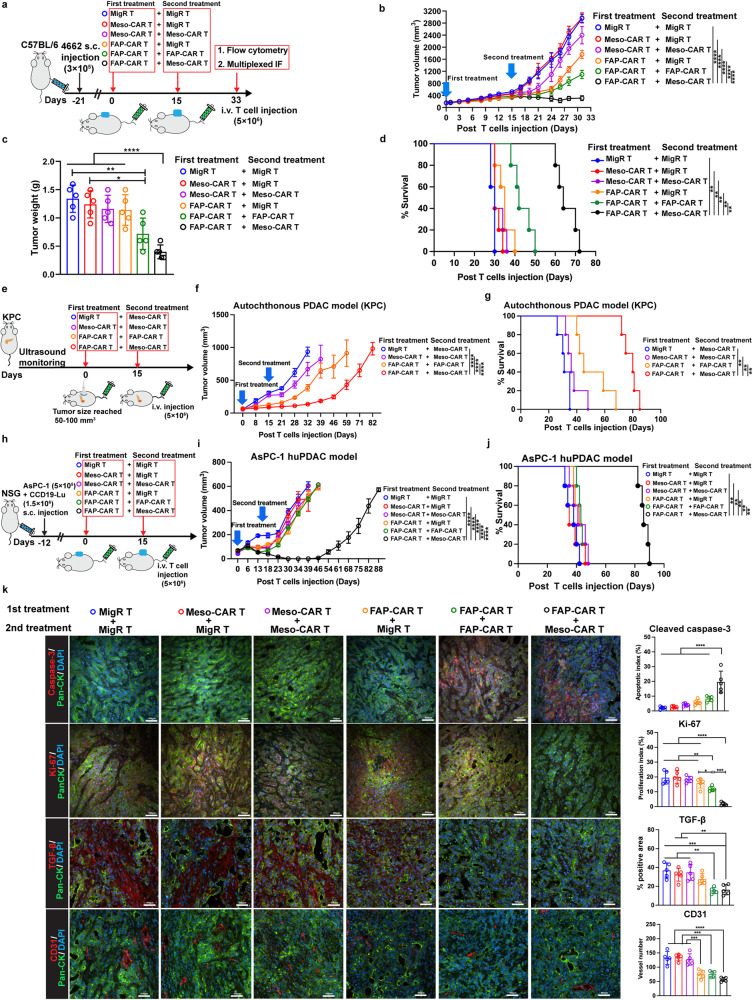
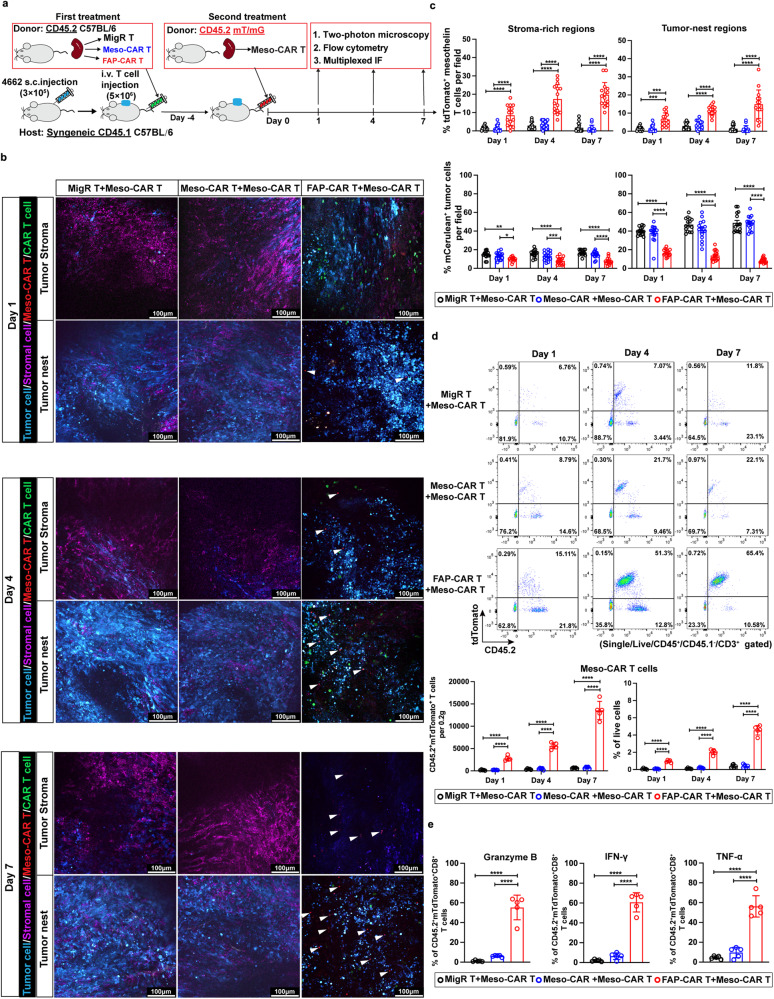
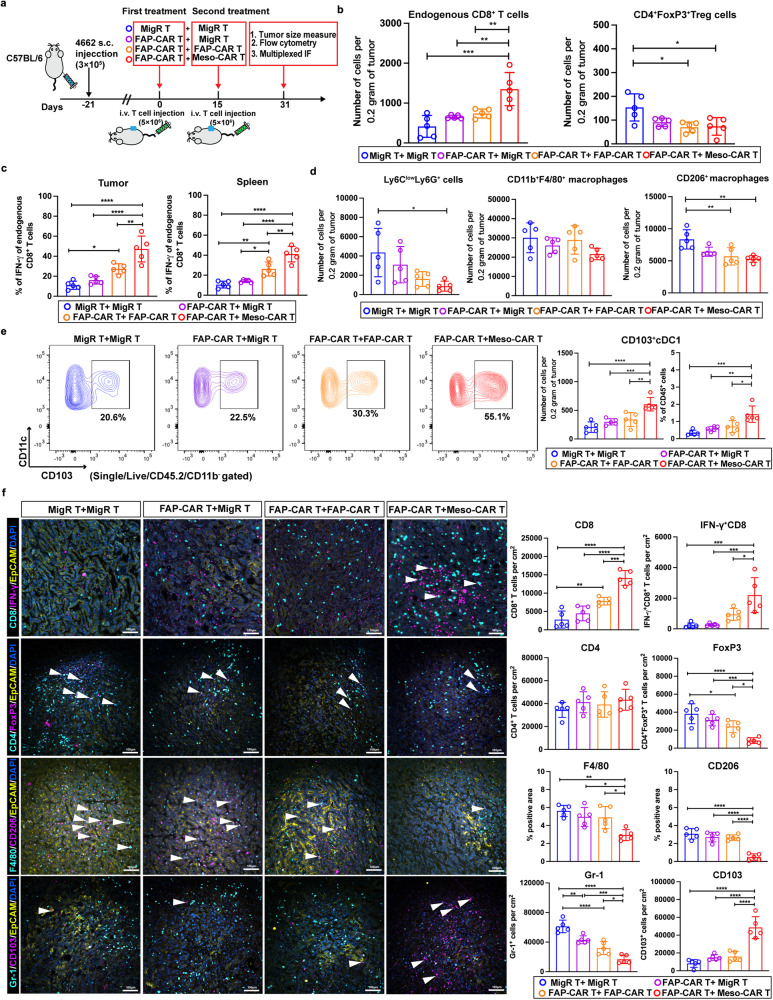
The desmoplastic stroma in solid tumors presents a formidable challenge to immunotherapies that rely on endogenous or adoptively transferred T cells, however, the mechanisms are poorly understood. To define mechanisms involved, here we treat established desmoplastic pancreatic tumors with CAR T cells directed to fibroblast activation protein (FAP), an enzyme highly overexpressed on a subset of cancer-associated fibroblasts (CAFs). Depletion of FAP + CAFs results in loss of the structural integrity of desmoplastic matrix. This renders these highly treatment-resistant cancers susceptible to subsequent treatment with a tumor antigen (mesothelin)-targeted CAR T cells and to anti-PD-1 antibody therapy. Mechanisms include overcoming stroma-dependent restriction of T cell extravasation and/or perivascular invasion, reversing immune exclusion, relieving T cell suppression, and altering the immune landscape by reducing myeloid cell accumulation and increasing endogenous CD8 + T cell and NK cell infiltration. These data provide strong rationale for combining tumor stroma- and malignant cell-targeted therapies to be tested in clinical trials.
Overview
The claims and statistics of this paper haven’t been checked yet.
Free: it reads the open-access text and checks the first 5 claims that cite a source we can check. Create a free account to check every claim.
Integrity signals
Registry
Cites
Statistics
Figures
Verification
Claims the paper makes
The claims and statistics of this paper haven’t been checked yet.
Free: it reads the open-access text and checks the first 5 claims that cite a source we can check. Create a free account to check every claim.
Claims other papers make about this one
Each is checked against this paper’s own text: does it say what the citing paper says it does?
The source backs part of the claim, not all of it — or backs it for a different population, condition or comparison.
In the citing paper
“Immunosuppressive cell types, such as TAMs, regulatory T cells, MDSCs, and cancer-associated fibroblasts (CAFs) play key roles in establishing an immunosuppressive environment in the TME and interfering with cytotoxic T cell activation (Wang et al., 2023; Xiao et al., 2023).”
From Microphysiological systems as models for immunologically ‘cold’ tumors (2024) · cites this paper as Xiao et al., 2023
Experimental — accuracy not yet measured
Self-check
Percentages, sums and reported differences re-computed from the paper’s own numbers.
The self-check needs the paper’s full text.
Citations
Cites
Rahib, L., Smith, B. D., Aizenberg, R., Rosenzweig, A. B., Fleshman, J. M., & Matrisian, L. M. (2014) · Cancer Research · doi:10.1158/0008-5472.can-14-0155 · Cited by 7,094
A framework for advancing our understanding of cancer-associated fibroblasts
Sahai, E., Astsaturov, I., Cukierman, E., DeNardo, D. G., Egeblad, M., Evans, R. M., Fearon, D., Greten, F. R., Hingorani, S. R., Hunter, T., et al. (2020) · Nature Reviews Cancer · doi:10.1038/s41568-019-0238-1 · Cited by 3,863
Self-citationHingorani, S. R., Wang, L., Multani, A. S., Combs, C., Deramaudt, T. B., Hruban, R. H., Rustgi, A. K., Chang, S., & Tuveson, D. A. (2005) · Cancer Cell · doi:10.1016/j.ccr.2005.04.023 · Cited by 2,609
Elyada, E., Bolisetty, M., Laise, P., Flynn, W. F., Courtois, E. T., Burkhart, R. A., Teinor, J. A., Belleau, P., Biffi, G., Lucito, M. S., et al. (2019) · Cancer Discovery · doi:10.1158/2159-8290.cd-19-0094 · Cited by 2,241
Top 10 Challenges in Cancer Immunotherapy
Hegde, P. S., & Chen, D. S. (2020) · Immunity · doi:10.1016/j.immuni.2019.12.011 · Cited by 2,238 · cited 1×
“These peri-tumoral T cells are subject to immune suppression 22,23 and this tumor exclusionphenomenonappearstocontributetothelimitedef fi cacyof adoptively transferred TAA-targeted CAR T cells 22,24,25 .”
Feig, C., Jones, J. O., Kraman, M., Wells, R. J. B., Deonarine, A., Chan, D. S., Connell, C. M., Roberts, E. W., Zhao, Q., Caballero, O. L., et al. (2013) · Proceedings of the National Academy of Sciences · doi:10.1073/pnas.1320318110 · Cited by 2,100
Immune checkpoint inhibitors: recent progress and potential biomarkers
Darvin, P., Toor, S. M., Sasidharan Nair, V., & Elkord, E. (2018) · Experimental & Molecular Medicine · doi:10.1038/s12276-018-0191-1 · Cited by 2,035 · cited 1×
“Immunotherapies that rely on endogenous or adoptively transferred T cells have proven to be challenging in treating solid tumors 1 – 3 .”
The tumor microenvironment at a glance
Balkwill, F. R., Capasso, M., & Hagemann, T. (2012) · Journal of Cell Science · doi:10.1242/jcs.116392 · Cited by 1,857 · cited 1×
“This ex vivo imaging system overcomes two intrinsic challenges of in situ liveimaging of PDAC tumors: (1) limited imaging depth resulting from dense stroma, and (2) breathing motion artifacts that limit intravital live imaging 31, (32).”
Clinical and therapeutic relevance of cancer-associated fibroblasts
Chen, Y., McAndrews, K. M., & Kalluri, R. (2021) · Nature Reviews Clinical Oncology · doi:10.1038/s41571-021-00546-5 · Cited by 1,230
Immunological hallmarks of stromal cells in the tumour microenvironment
Turley, S. J., Cremasco, V., & Astarita, J. L. (2015) · Nature Reviews Immunology · doi:10.1038/nri3902 · Cited by 1,140 · cited 19×
“We further demonstrated that the level of TGF-β , which is critical in translating signals from ECM and/or stiffness to initiate and facilitate the fi brotic process and immunosuppression 47,48 , was down-regulated by FAP-CAR T cells administration, partially supporting the broad remodeling of fi brotic TME, including s…”
Influential
Cited by
Items 201–300 of 328
Advancements in Artificial Cell Preparation and Biomedical Applications
Liu, J., Pan, Y., Liu, Z., Qi, Y., & Huang, Y. (2025) · Macromolecular Bioscience · doi:10.1002/mabi.202500052 · Cited by 1
Rao, M., Ruan, R., Xiong, J., & Deng, J. (2025) · Current Medicinal Chemistry · doi:10.2174/0109298673376656250602095713 · Cited by 1
Advances in nanotechnology-augmented T cell-based novel cancer immunotherapies
He, X., Du, J., Zeng, L., Tong, F., Ma, J., Zeng, N., Hu, C., Gao, H., & Zhang, J. (2025) · Nano Research · doi:10.26599/nr.2025.94908299 · Cited by 1
Dual targeting of CD155 augments the antitumor efficacy of ROR1-CAR-T cells in ovarian cancer
Ye, Y., Liu, T., Cheng, C., Wang, H., Shen, J., He, X., & Xu, S. (2026) · Cancer Immunology Immunotherapy · doi:10.1007/s00262-025-04283-x · Cited by 1
Hoang, T. A., Khan, S. M., & Sacher, A. (2026) · The Oncologist · doi:10.1093/oncolo/oyaf431 · Cited by 1
Xia, X., Xia, Z., & Yu, L. (2026) · Current Issues in Molecular Biology · doi:10.3390/cimb48030282 · Cited by 1
“…and stromal immunoregulatory signaling (e.g., TGF-β -associated programs), may create molecular and physical barriers to T-cell trafficking/infiltration and promote immune exclusion, which may partially explain the limited efficacy of checkpoint blockade in unselected CRPC populations [34,35].”
Focused ultrasound for enhancing cell-based immunotherapies in neuro-oncology
Sherlock, T., Thede, A. T., & Sheybani, N. (2026) · Neuro-Oncology Advances · doi:10.1093/noajnl/vdag080 · Cited by 1
Spatiotemporal immune dynamics in lung cancer progression and treatment
Wong, C. K., & Hamid, M. A. (2026) · Breathe · doi:10.1183/20734735.0335-2025 · Cited by 1
“Temporal transitions can directly alter the spatial distribution of immune cells, leading to changes in exclusion of infiltration [19, 20].”
Hong, S., Moon, D., Hwang, S., Lee, M., Cho, D., & Song, J. M. (2026) · Theranostics · doi:10.7150/thno.125194 · Cited by 1
“This well-characterized mechanism of immune cell extravasation has been extensively studied and is known to facilitate immune cell infiltration of solid tumors [23].”
Li, H., Yang, Q. T., Zhang, R., Mao, Y., Li, X., Zhang, Z., Chen, Y., Zou, F., Lei, C. L., Wang, P., et al. (2026) · npj Precision Oncology · doi:10.1038/s41698-026-01458-2 · Cited by 1
Froghi, S., Klampatsa, A., & Davidson, B. R. (2026) · Frontiers in Immunology · doi:10.3389/fimmu.2026.1757504 · Cited by 1
Mutant-Selective T-cell Receptor Therapy for Solid Tumors
Parry, S. R., Jang, C., Leal, A., & Punekar, S. R. (2026) · Molecular Cancer Therapeutics · doi:10.1158/1535-7163.mct-23-0894 · Cited by 1
Wang, S. Q., Wang, D., Zhou, Y.-N., Li, W., Sun, G., Cao, L., Feng, C., Chen, Y., Shao, C., Gui, Q., et al. (2026) · Experimental Hematology and Oncology · doi:10.1186/s40164-026-00783-3 · Cited by 1
“A preclinical study employing FAP-directed CAR-T cells demonstrated that selective depletion of FAP ⁺ stromal populations effectively overcame desmoplastic barriers in pancreatic tumors, reshaped the immune landscape, and enhanced the infiltration of endogenous CD8 ⁺ T cells and NK cells [172].”
Rearming mesenchymal stem cells with engineering strategies to combat cancer
Yu, T., Jin, S., Xu, R., Zhang, Y., & Wang, X. (2026) · Frontiers in Immunology · doi:10.3389/fimmu.2026.1845224 · Cited by 1
“…elevated interstitial pressure, and immune exclusion frequently converge to create a translational bottleneck in which therapeutic agents fail to reach the relevant intratumoral compartments in suf fi cient amounts or cannot be retained long enough to exert durable biological effects (226, 227).”
Lucia, S. E., Hong, S., Abdi, R., & Kim, P. (2026) · Cancer Cell International · doi:10.1186/s12935-026-04363-7 · Cited by 1
“…of PDAC vascular biology but also establishes a framework for diverse future applications such as longitudinal efficacy monitoring of novel therapeutics and longitudinal visualization of unique PDAC tumor microenvironment including desmoplastic reactions and suppressed immune processes [34–37].”
Saikia, T., Das, S., Rajak, P., & Kalita, J. M. (2026) · International Immunopharmacology · doi:10.1016/j.intimp.2026.117032 · Cited by 1
Targeting FAP/CAFs to rewire immune-excluded and resistant tumor niches
Wang, Y., Zhao, Y., Zhou, C., & Wang, Y. (2026) · Frontiers in Pharmacology · doi:10.3389/fphar.2026.1812674 · Cited by 1
“Together, these processes create a three-layer exclusion architecture: a mechanical barrier that limits transport, a chemokine barrier that misdirects immune-cell trafficking, and a signaling barrier that suppresses immune activation (Xiao et al., 2023).”
Tao, Z., Zhou, Z., Wu, Y., & Hu, J. (2026) · International Journal of Oncology · doi:10.3892/ijo.2026.5903 · Cited by 1
“Mechanistically, the elimination of FAP + CAFs inhibits tumor growth by disrupting the structural integrity of the desmoplastic matrix and enhancing the infiltration of endog‑ enous CD8 + T and NK cells (106).”
Challenges of CAR-T Therapy in Solid Tumors: Immune Exclusion and Treatment Resistance
Liu, S. (2026) · BIO Web of Conferences · doi:10.1051/bioconf/202624001012 · Cited by 1
Scholler, J., Song, A., Deshmukh, M., Song, D., Gabunia, K., Ji, M., Liu, S., Fan, T., Gulendran, G., June, C. H., et al. (2026) · Frontiers in Immunology · doi:10.3389/fimmu.2026.1805950 · Cited by 1
Self-citationXu, Y., Zhang, C., Ji, Z., Liu, C., Cai, L., Wang, C., Liao, H., Wen, Y., Chi, L., Li, C., et al. (2026) · Research · doi:10.34133/research.1372 · Cited by 1
“When effector immune cells are present in the tumor stroma, even if they possess cytotoxic killing functions, they cannot exert cytotoxic effects within the tumor, leading to tumor immune escape [ 39 ].”
Chakraborty, D., Kundu, S., Rawal, S. K., & Mani, S. (2026) · Immunologic Research · doi:10.1007/s12026-026-09806-x · Cited by 1
Wan, P. K.-T., Cheng, R., Johnson, D., Lee, C., Wu, S., Mian, A., Hazini, A., Moradi, S., Friesen, K., Caviezel, F., et al. (2026) · Molecular Cancer · doi:10.1186/s12943-026-02732-4 · Cited by 1
“The Hypoxia stroma-rich tumours [37], we perfused specimens (supplementary Table 1 for clinical details) with oxygenated, nutrient-supplemented venous (portal) and arterial blood under physiological pressures and flows (Fig.”
Tan, X., Fan, M., Li, Y., Wang, G., Li, H., Okoli, E. M., Shao, Y., Xu, G., & Xu, Z. (2026) · Aggregate · doi:10.1002/agt2.70410 · Cited by 1
Self-citationGao, S., Song, Y., Qiao, Y., Gao, Z., Ma, J., Huo, B., Li, S., & Cao, M. (2026) · Drug Design Development and Therapy · doi:10.2147/dddt.s620950 · Cited by 1
“86,87 Furthermore, CAFs can induce immune exclusion through mechanisms beyond ECM deposition, such as secreting factors that disrupt lymphocyte function-associated antigen-1 (LFA-1)-ICAM-1 interactions necessary for T-cell transendothelial migration.”
Advances, challenges, and innovative strategies of CAR-T cell therapy in pancreatic cancer
Xiao, R.-Y., Jiang, Y.-F., Zhao, W., Wang, Q.-Q., Huang, Y., Li, X.-Y., Xiao, Y.-J., Yao, H., & Dai, R.-W. (2026) · Biomarker Research · doi:10.1186/s40364-026-00978-0 · Cited by 1
“Xiao et al. [84]. further demonstrated mechanistically that depletion of FAP-positive CAFs using FAP-targeted CAR-T cells disrupted the integrity of dense desmoplastic stroma and rendered previously treatment-resistant tumors responsive to MSLN-targeted CAR-T This design enables CAR-T cells to…”
Wang, Y., Liu, A., Liang, Z., Yun, Y., 贾赤宇, Wu, Y., & Luo, Z. (2026) · Chemical Engineering Journal · doi:10.1016/j.cej.2026.180955 · Cited by 1
Mai, Y., Wang, Z., Wang, J., Song, M., Xiang, T., He, Y., Chang, A. H., & Zhang, Y. (2026) · Experimental Hematology and Oncology · doi:10.1186/s40164-026-00822-z · Cited by 1
“FAP-targeted CAR-T cells can remodel the ECM and alleviate CAF-mediated immune evasion, and have demonstrated anti-tumor activity across multiple tumor models [326, 327].”
Zhou, L., He, J., Hu, Z., Li, H., & Li, J. (2024) · Aging · doi:10.18632/aging.206088 · Cited by 1
Invasion status stratifies the composition of the human pancreatic cancer perineural nichePreprint
Hussain, Z., Yarlagadda, D. V. K., Li, Q., Tezcan, N., Stupakov, P., Sadatrezaei, G., Wong, R. J., Massagué, J., Tarcan, Z. C., Baştürk, O., et al. (2026) · bioRxiv (Cold Spring Harbor Laboratory) · doi:10.64898/2026.08.05.743048 · Cited by 1
Tumor Microenvironment Role in Cancer Immunotherapy Response
Silva, J. C., Xavier, F. C. D. A., & Carrera, M. (2024) · Interdisciplinary cancer research · doi:10.1007/16833_2024_391
Harnessing the chimeric antigen receptor engineered cells in gastrointestinal cancer immunotherapy
Dadvand, A., Nooroulahi, M., Matin, S., & Faghfuri, E. (2025) · International Immunopharmacology · doi:10.1016/j.intimp.2025.115321
Catacalos-Goad, C., Goad, D. W., Holbrook, M. C., Krueger, Q. A., Wilson, I. M., Hajjar, M. A., & Grdzelishvili, V. Z. (2025) · Molecular Therapy Oncology · doi:10.1016/j.omton.2025.201089
A hybrid multiscale model for predicting CAR-T therapy outcomes in solid tumors
Nikmaneshi, M. R., & Munn, L. L. (2026) · Scientific Reports · doi:10.1038/s41598-026-50412-6
“1, reveals that the T cells accumulate primarily in perivascular and peripheral tumor regions, leading to non-uniform intratumoral infiltration and overall low HF values—patterns commonly observed in solid tumors 2,58–60 .”
Immune cell dynamics in irradiated gliomas
Agardy, D. A. (2025) · heiDOK (Heidelberg University) · doi:10.11588/heidok.00035920
den Eynde, A. V., Gehrcken, L., Verhezen, T., Lau, H. W., Hermans, C., Lambrechts, H. A. J., Flieswasser, T., Quatannens, D., Roex, G., Zwaenepoel, K., et al. (2024) · Figshare · doi:10.6084/m9.figshare.26675738
Biomechanics of cancer cell motility
Isomursu, A. (2024) · UTUPub (University of Turku)
Taking “Multiple Shots on Goal” with an Armed Invariant NK Cell Approach
Albelda, S. Μ. (2026) · Cancer Immunology Research · doi:10.1158/2326-6066.cir-25-1344
Self-citationTransforming role of cancer associated fibroblasts: From therapeutic barriers to promising targets
Chang, J., Yu, X., Xiong, N., Zhu, M., Yang, C., Zhao, Wang, C., Wang, S., Ye, Y., & Shen, Z. (2026) · Critical Reviews in Oncology/Hematology · doi:10.1016/j.critrevonc.2026.105143
Hasan, T. G., Saad, M. A., Allen, D., van Bergen, T. D., Morala, J. N., Roberts, H. J., Mai, Z., Chandrasekhara, V., Wang, K. K., Maytin, E. V., et al. (2026) · Research Square · doi:10.21203/rs.3.rs-8912367/v1
From Immunobiology to Clinical Application: Tumor-Infiltrating Lymphocytes in Melanoma
Mokos, M., & Šitum, M. (2026) · Journal of Personalized Medicine · doi:10.3390/jpm16030147
Wang, T., Rong, C., Sun, G., & Wang, Y. (2026) · Journal for ImmunoTherapy of Cancer · doi:10.1136/jitc-2025-014672
Review Article: The Extracellular Matrix as a Barrier for CAR-T Cell Therapy in Solid Tumors
Revach, O. (2026) · Critical Reviews™ in Oncogenesis · doi:10.1615/critrevoncog.2026063896
Song, Y., Li, R., Han, L., Liu, W., & Bu, X. (2026) · Gastrointestinal Tumors · doi:10.48130/git-0026-0007
Natural Killer Cell‐Based Immunotherapy in HCC
Che, L., Xie, X., Yang, X., Zhu, S., & Zhou, Y. (2026) · Immunology · doi:10.1111/imm.70141
“HCC is encased within a dense desmoplastic stroma, comprising cancer-associated fibroblasts (CAFs) and abundant extracellular matrix, forming a formidable physical barrier limiting CAR-NK infiltration [29].”
Zhang, Y., Zhang, Y., You, J., Lu, Z., & Zhao, T. (2026) · Frontiers in Immunology · doi:10.3389/fimmu.2026.1786697
Self-citationLiu, Q., Chen, H., Le, J., Xu, Y., Li, X., Zhang, A., Chen, Y., Qin, J.-J., & Qian, X. (2026) · Research Square · doi:10.21203/rs.3.rs-9321051/v1
Liu, Y., Xiong, C., Huang, G., Xu, M., Li, J., Zhou, M., Liang, F., & Chen, R. (2026) · Journal of Translational Medicine · doi:10.1186/s12967-026-08160-8
“Here the bottle-neck lies upstream, where endothelial barriers or a dense ECM physically block T cells extravasation [6, 68, 73, 81].”
Suita, Y., Ang, L. S., Brasel, K., Morris, S. M., Girard, E. J., Williams, A. M., Chen, S. C., Blumenthal, I., Hottmann, N. M., Heusser, J., et al. (2026) · bioRxiv (Cold Spring Harbor Laboratory) · doi:10.64898/2026.05.27.728355
Liao, Y., Hou, H., Xu, Y., & Li, J. (2026) · The Analyst · doi:10.1039/d6an00311g
Patient-Specific Vascularized Lung Tumor Organoids for Tumor-Immune ProfilingPreprint
Natesh, N. R., Maity, S., Kikani, R., Perikamana, S. M., Cho, G., Angel, N., Ji, Z., & Varghese, S. (2026) · bioRxiv (Cold Spring Harbor Laboratory) · doi:10.64898/2026.06.01.729448
Ferrero, V., Mazo, T., Don, J. A., Barotto, N. N., Moreira‐Espinoza, M. J., Pairola, M., Rivoira, M. A., Rodríguez, V. A., Fernández-Zapico, M. E., & Pasqualini, M. E. (2026) · European Journal of Nutrition · doi:10.1007/s00394-026-03978-w
Common subtypes of CAFs and their research progress in immune evasion of colorectal cancer
Huang, P., Huo, H., (45629), Y. Y., Li, T., Fei, Y., Hu, K., Li, H., Wang, J., Weng, Z., & Du, Q. (2026) · Cytokine · doi:10.1016/j.cyto.2026.157173
Immune-driven stromal inflammation in pancreatic cancer within a microfluidic platform
Viso, M. E., Rajkumar, K., Bianchi, A., Suthar, B., Kumar, N., Oliver, D., Collins, M. A., Datta, J., & Agarwal, A. (2026) · Biofabrication · doi:10.1088/1758-5090/ae7b09
He, J., Cao, Y., Liu, Y., Zhang, X., Ji, J., Wang, H., Song, Y., Zhang, Q., & Cao, L. (2026) · International Journal of Molecular Sciences · doi:10.3390/ijms27125259
The emerging role of oncolytic virotherapy in genitourinary malignancies
Baboghlian, J., Vohra, J., Assoni, L., Folguieri, M. S., Rocha, G. Z., Amorim, J. H., Shariat, S. F., & Reis, L. O. (2026) · Frontiers in Cell and Developmental Biology · doi:10.3389/fcell.2026.1830852
“Tumor-associated fibroblasts frequently overexpress fibroblast-activating protein, thereby promoting the formation of a dense collagen-rich extracellular matrix that functions as a physical barrier and impairs immune cell infiltration into the tumor microenvironment (Xiao et al., 2023).”
Identification of immune‐infiltrated and stroma‐enriched subtypes in HER2+ breast cancer
Yang, Y., Zeng, W., Wei, X., Li, J., Chen, X., Zhou, Z., Yang, B., Li, J., & Li, L. (2026) · Clinical and Translational Discovery · doi:10.1002/ctd2.70169
Xiang, X., Lv, L., Lin, S., (36670), X. Z., Yao, H., Zhang, L. L., Wu, S., Lv, S., Miao, Y., Wang, K., et al. (2026) · Advanced Functional Materials · doi:10.1002/adfm.76675
Kveliashvili, T., Didava, G., Burkadze, G., & Kepuladze, S. (2026) · World Journal of Oncology · doi:10.14740/wjon2771
“This pattern is consistent with immune exclusion, a phenomenon described in several solid tumors where cytotoxic lymphocytes accumulate at the tumor–stroma interface but fail to effectively penetrate tumor tissue [8].”
Challenges of CAR-T Therapy in Solid Tumors: Immune Exclusion and Treatment Resistance
Liu, S. (2026) · Springer Link (Chiba Institute of Technology) · doi:10.1051/bioconf/202624001012/pdf
Yang, J., Feng, Z., Fu, J., Huang, J., Wang, S., & Li, L. (2026) · International Journal of Nanomedicine · doi:10.2147/ijn.s615500
Luo, H., Cao, D., Ma, M., Lu, X., & Wang, J. (2026) · International Journal of Pharmaceutics X · doi:10.1016/j.ijpx.2026.100597
“…solid stress, elevates interstitial fluid pressure, and compresses blood vessels, creating a series of pathological barriers that impede the penetration of cytotoxic T cells into the tumor parenchyma – a phenomenon contributing to tumor immune exclusion (Chen et al., 2019; Xiao et al., 2023).”
Li, Y., Zeng, C., He, S., Xiao, Q., Liu, Y., Shu, X., Xie, X., Lu, Y., Huihui, F., Li, J., et al. (2026) · Journal of Translational Medicine · doi:10.1186/s12967-026-08563-7
“…barriers to T cell infiltration, but also enhanced the antitumor activity of Meso-CAR T cells and PD-1 (Programmed cell death protein 1) antibodies, accompanied by increased recruitment of CD8 ⁺ T cells and NK cells, reduced immunosuppressive myeloid cells, and decreased TGF-βlevels [78].”
Self-citationHuang, M., Wang, K. X., Gao, R., Shao, Q., Liu, Y. L., Li, F., & Li, L. (2026) · Small · doi:10.1002/smll.74605
Blood immune profiling predicts surgical anatomy and facial nerve outcome in Vestibular Schwannoma
Yan, C., Zhou, Q., Pei, Z., Wu, X., Fang, C., Yao, J., Shan, Q., Zhu, Z., Wang, Y., Gu, L., et al. (2026) · Journal of Neuro-Oncology · doi:10.1007/s11060-026-05710-4
Barnes, R., Cummings, K. L., Lanfranca, M. P., Rodriguez, A. B., Stasiak, K., Ludewig, B., Dolatshahi, S., & Engelhard, V. H. (2026) · Frontiers in Immunology · doi:10.3389/fimmu.2026.1857037 · Cited by 1
Perineural Invasion, Pain and Immunosuppression Across Solid Tumours
Dybcio, P., Kuraś, A., Dyrka, M., Iwaszko, M., Pec, J., Kleinrok, J., & Korolczuk, A. (2026) · Current Oncology · doi:10.3390/curroncol33070434
Modeling rare melanoma subtypes: mechanisms, microenvironments and translational opportunities
Meng, Q., Yan, F., You, C., Xu, R., Jing, T., Ni, D., Hou, C., Xu, D., Liu, S., Guo, F., et al. (2026) · Frontiers in Oncology · doi:10.3389/fonc.2026.1832600
“…a typical “ cold tumor ” phenotype: effector immune cells such as CD8 + T cells and NK cells are minimally in fi ltrated in tumor tissues, while the proportions of immunosuppressive cells including regulatory T cells (Tregs) and myeloid-derived suppressor cells (MDSCs) are elevated (65 – 67).”
Mechanisms, optimization strategies, and salvage options for CAR-T cell therapy
Wu, B., Wang, J., Zou, Q., Cai, J., Zhang, Y., Zhong, Q., Bai, B., Liu, F., Cao, Y., Li, P., et al. (2026) · Biomarker Research · doi:10.1186/s40364-026-00974-4
“In solid tumors, however, additional matrix-remod-eling strategies may be required, such as CAR-T targeting cancer-associated fibroblasts [40].”
Chen, A. L., Sun, W., Zhao, Y., Sun, D., Meng, T., Qi, Y., Jiang, F., Sun, J., Gao, Z., & Yu, D. (2026) · Advanced Science · doi:10.1002/advs.76673
CAR T Cell Therapy in Lung Cancer: Overcoming Tumor Microenvironment-Mediated Barriers
Liu, L., Liang, D., Wang, C., Li, J., Tang, J., Li, W., & Yu, X. (2026) · International Journal of Biological Sciences · doi:10.7150/ijbs.131261
“…[96] IL-2 axis-tuned CAR designs [94] MDSCs Recruitment blockade: CXCR2/CCR2/CCR5 axis inhibitors or Abs [97–99] CAF-CXCL12 axis disruption [100] HDAC/DNMT inhibitors [101] 1,25(OH) D [102] Depletion: CD33-directed depletion (gemtuzumab ozogamicin) [103] TRAIL-R2/DR5 agonism (DS-8273a)…”
Onyekweli, S. O., Omoruyi, G. O., Akintayo, C. O., & Olaniyi, K. S. (2026) · Oncoscience · doi:10.18632/oncoscience.666
“Lo and colleagues demonstrated that FAP-targeting CAR-T cells disrupt tumor-promoting desmoplasia [79], and Xiao and colleagues subsequently showed that FAP-CAR pretreatment enables subsequent mesothelin-CAR-T and anti-PD-1 efficacy by removing the physical barrier to T-cell infiltration [80].”
CAR-T in solid tumors: Obstacles and potential strategies
Ding, Z., Li, Y., & Huang, M. (2026) · Acta Pharmaceutica Sinica B · doi:10.1016/j.apsb.2026.07.047
Self-citationLowenstein, P. R., Varela, M. L., Kast, H., West, M. E. J., Rose, M., Visñuk, D. P., Springer, M., Raghuram, S., Zhu, Z., Wang, Y., et al. (2026) · Research Square · doi:10.21203/rs.3.rs-10472790/v1
Golinelli, G., Fan, T., Gabunia, K., Wilson, W. V., Assenmacher, C., Xu, H. N., Gonzalves, D., Castelli, S., Reff, J., Mai, D. H., et al. (2026) · Cytotherapy · doi:10.1016/j.jcyt.2026.102977
Self-citationHe, F., Zhu, X., Wang, X., Ju, X., Wu, F., Di, W., Su, S., & Huang, H. (2026) · Pharmacological Research · doi:10.1016/j.phrs.2026.108368
Lean, F. Z. X., Tibbles, M. L., Hulme, B., Erles, K., Pittaway, R., Pittaway, C., Priestnall, S. L., Castillo, S. P., & Hardas, A. (2026) · Veterinary oncology. · doi:10.1186/s44356-026-00074-3
“CAF-derived extracellular matrix deposition, mediated by transforming growth factor β (TGFβ) signaling, can create a dense physical barrier to T-cell infiltration, thereby limiting effective host anti-tumor immune responses [55, 56].”
Rethinking PDAC: from immunological silence to therapeutic opportunity
Kali, S. K., Ramesh, R. P. G., Alam, A., Fernández-Cabezudo, M. J., Al-Awadhi, A. M., Kishore, U., & al-Ramadi, B. K. (2026) · Frontiers in Immunology · doi:10.3389/fimmu.2026.1909191
“These stromal cells physically block effector CD8 + T cells from interacting with tumor cells and promote immune evasion by secreting immunosuppressive chemokines and cytokines, including CXCL12, IL-6, and TGF-b (15, 16).”
Spatial ecotype in tumor immune exclusion: from spatial architecture to therapeutic strategies
Ying, M., Zhang, L., Jia, M., Sun, X., Su, Y., Liu, C., Gong, M., Sun, T., & Zhang, B. (2026) · Molecular Cancer · doi:10.1186/s12943-026-02766-8 · Cited by 1
“However, because of limited contact with tumor cells, they cannot achieve effective immunosurveillance and tumor clearance [1, 47, 48].”
Boutier, H., Feldmann, A., & Bachmann, M. P. (2026) · International Journal of Molecular Sciences · doi:10.3390/ijms27167425
“To further enhance therapeutic efficacy, several studies have explored CAR-based approaches that simultaneously target tumor cells and the tumor stroma (Table 1) [82,83,88,91,98,99,105,106,108].”
InfluentialChen, S., Wu, Y., Rao, G., Tong, W., Huo, J., Huang, G., Sun, W., Li, S., Li, C., Hu, S., et al. (2026) · British Journal of Cancer · doi:10.1038/s41416-026-03588-7
Zhao, X., Kong, W., Jiang, Y., & Sui, F. (2026) · Cellular Oncology · doi:10.1007/s13402-026-01281-8
Saydawi, A., MADANIEH, S., Echeverria, S. L., Gill, A., Modha, S., Emin, B. E., Haider, W., Almaalouli, B., & Shanshal, M. M. (2026) · Cancers · doi:10.3390/cancers18172725
“…or stromal exclusion of T-cells, whereby dense desmoplastic stroma or aberrant tumor vasculature limits T-cell trafficking into the tumor core independent of antigen expression, represents an additional common mechanism relevant across the TCE platform and is included in Table 5 accordingly [68].”
Li, Y., Luo, C., & Li, D. (2026) · Journal of Gastrointestinal Oncology · doi:10.21037/jgo-2026-0398
“Xiao et al. demonstrated that the dense extracellular matrix (ECM) network constructed by FAP + CAFs physically restricts effector T cells from entering the tumor nest, corroborating this hypothesis (17).”
InfluentialSelf-citationDalani, T., Jerry, W. K. H., Wu, J., Fang, X., Feng, T., Xie, F., Huang, M., Liang, Y., To, K. F., Kang, W., et al. (2026) · Cancers · doi:10.3390/cancers18172802
“Xiao et al. revealed that a denser stroma reduces T-cell penetration to the tumor mass [46].”
Wang, P., Huang, S., Chen, W., Tao, G., Shen, Y., & Shi, X. (2026) · Human Mutation · doi:10.1155/humu/9549681
Liu, W., Wu, W., Chen, S., Chen, K., & Li, X. (2026) · Cells · doi:10.3390/cells15171589
“This https://doi.org/10.3390/cells15171589 pattern raises the possibility that Cluster 3 may represent a stromal-rich, immune-excluded phenotype, in which senescence-associated stromal and extracellular matrix remodelling may restrict effective immune infiltration [52,53].”
InfluentialCAR T-cells for the treatment of CNS malignancies
Kisamore, C. A., Owolabi, P. J., Kisamore, C. O., & Walker, W. H. (2026) · Frontiers in Immunology · doi:10.3389/fimmu.2026.1891659
“The stroma is characterized by a desmoplastic ECM that limit the in fi ltrative capacity of CAR T-cells (149).”
Jiang, C., Tang, M., Guo, M., Shang, Q., Chen, Q., An, X., Xie, J., Zheng, K., Feng, B., & Wang, F. (2026) · Science Advances · doi:10.1126/sciadv.aee2120
“Moreover, dense physical barriers—including tumor-associated fibroblast (CAF) networks and dysfunctional vasculature—impede CAR-T cell tumor penetration ( 14 , 15 ).”
Spatial Treg niches and the therapeutic reprogramming of tumour tolerance in cancer
Bautista, J., Delgado, M. D. C., Viteri-Recalde, J., Benítez-Núñez, M., Ramírez-Sánchez, D., & López-Cortés, A. (2026) · Frontiers in Cell and Developmental Biology · doi:10.3389/fcell.2026.1921036
“…without efficiently reaching malignant cells, consistent with studies showing that stromal TGF β programmes, matrix-rich CAF barriers and desmoplastic perivascular compartments can prevent T-cell penetration into tumour nests (Mariathasan et al., 2018; Grout et al., 2022; Xiao et al., 2023).”
Endothelin receptor blockade potentiates adoptive T cell and CAR T cell therapiesPreprint
Papagregoriou, C., Mpekris, F., Yoon, J., Kastrappis, G., Lytridou, A. A., Thrasyvoulou, M., Symeonidis, K., Pitsillidou, C., Neophytou, C., Panagi, M., et al. (2026) · bioRxiv (Cold Spring Harbor Laboratory) · doi:10.64898/2026.09.02.748239
“These include tumour-intrinsic mechanisms 17–19 , stromal 20,21 and vascular barriers 22–25 , immunosuppressive features of the tumour microenvironment ranging from soluble mediators such as TGF-β 26,27 to immune checkpoint pathways such as PD-1/PD-L1 and CTLA-4 28–30 , together with factors that…”
赵灿灿, Zeng, C., Huang, J., Shen, J., Zhou, J., Li, D., 方世武, Zeng, M., Zhu, Q., Tang, Q., et al. (2026) · European Journal of Radiology · doi:10.1016/j.ejrad.2026.113228
Chen, J., Du, Y., Niu, J., Zhu, W., Xiao, Y., Li, L., Fan, D., & Zhang, H. (2026) · International Immunopharmacology · doi:10.1016/j.intimp.2026.117371
Mechanism and clinical relevance of metabolic-immune cross-talk in pancreatic tumor microenvironment
Malik, J. A., Jatavath, M., Fishel, M. L., Bhatia, R., & Gautam, S. K. (2026) · Cytokine & Growth Factor Reviews · doi:10.1016/j.cytogfr.2026.08.005
Jiang, M., Zhang, K., Li, M., Yao, J., Shi, R., Sun, C., Rodríguez, R. A., Lin, Z., Meng, J., Wang, Z., et al. (2026) · Molecular Cancer · doi:10.1186/s12943-026-02784-6
Yang, Y., Liu, X., Ding, J., Xu, J., Zhang, J., Zhang, H., Zhang, W., Li, S., Lü, Z., Su, R., et al. (2026) · Advanced Science · doi:10.1002/advs.77691
“Many solid tumors possess dense stromal structures that both hinder immune cell infiltration and restrict cytokine diffusion [ 7 ].”
Metadata
- Authors
- Xiao, Z., Todd, L., Huang, L., Noguera-Ortega, E., Lu, Z., Huang, L., Kopp, M., Li, Y., Pattada, N., Zhong, W., Guo, W., Scholler, J., Liousia, M., Assenmacher, C.-A., June, C. H., Albelda, S. M., & Puré, E.
- Affiliations
- University of Pennsylvania (US)
- Corresponding author
- Puré, Ellen
- ORCID
- Venue
- Nature Communications
- Published
- 2023-08-22
- Volume
- 14
- Issue
- 1
- Pages
- 5110-5110
- ISSN
- 2041-1723 (ISSN-L)
- PMC
- PMC10444764
- OpenAlex
- W4386067114
- Semantic Scholar
- b17dc325bb43e5a2f6e315972b253f6c34a0dca2
- Cited by
- 272
- References
- 63
- Citations by year
- 2026: 110 · 2025: 94 · 2024: 59 · 2023: 9
- FWCI
- 33.03
- Type
- journal article
- Language
- en
- Open access
- gold
- doi.org
- Licence
- cc-by
- creativecommons.org/licenses/by/4.0 (tdm)
- creativecommons.org/licenses/by/4.0 (vor)
- Locations
- Nature Communications (publishedVersion, cc-by)
- bioRxiv (Cold Spring Harbor Laboratory) (acceptedVersion, cc-by-nc-nd)
- PubMed Central (publishedVersion, cc-by)
- PubMed (publishedVersion)
- PubMed Central (submittedVersion, cc-by-nc-nd)
- RePEc: Research Papers in Economics (submittedVersion)
- DOAJ (DOAJ: Directory of Open Access Journals) (submittedVersion, cc-by-sa)
- Funders
- Cancer Research Institute (CRI4168)
- University of Pennsylvania (P30 DK050306, P30CA016520)
- Abramson Cancer Center (P30CA016520)
- National Institutes of Health (CA016520, T35OD010919)
- National Cancer Institute (CA016520, P01CA066726, P01CA217805, P30CA016520)
- National Institute of Diabetes and Digestive and Kidney Diseases (P30DK050306)
- Topics
- Health Sciences › Medicine › Oncology › Cancer Immunotherapy and Biomarkers
- Health Sciences › Medicine › Oncology › Pancreatic and Hepatic Oncology Research
- Life Sciences › Biochemistry, Genetics and Molecular Biology › Biochemistry › Peptidase Inhibition and Analysis
- Keywords
- desmoplastic stroma, T cell extravasation, immune exclusion, immunosuppression, solid tumors, pancreatic cancer, chimeric antigen receptor T cells, fibroblast activation protein, cancer-associated fibroblasts, mesothelin, anti-PD-1 therapy, tumor microenvironment, NK cell infiltration, CD8+ T cells, combination therapy
About these checks
Registry, retraction, Cites and statistics results are computed, not judged, with one exception: a printed reference that no index lists is read once by a model before it counts as a citation error. Claims are extracted by a model and kept only when their quote appears verbatim in the text; each cited source is then checked, with a model’s help, for whether it says what the claim relies on. Those verdicts can be wrong — read the claim’s quote and the cited source before relying on one.
Statistics and arithmetic are recomputed, not judged.
Confidence bands are shown only for fields calibrated on our annotated test set. None is calibrated yet, so no band is shown.
What counts as a claim ›How we measure confidence ›How we check this ›
Are you an author, or do you see a problem with this page? Request a review
Data sources
Bibliographic data: Semantic Scholar, OpenAlex, Crossref.
Contains information from the Semantic Scholar Academic Graph Datasets, made available under the ODC Attribution License (ODC-BY 1.0).
Semantic Scholar’s data is described in: Kinney, R., et al. (2023). The Semantic Scholar Open Data Platform. arXiv:2301.10140.
