

Surpassing millisecond coherence in on chip superconducting quantum memories by optimizing materials and circuit design
Open accessThe DOI matches its Crossref record; 78 of the 78 references it cites were found in a registry or an index.
Abstract
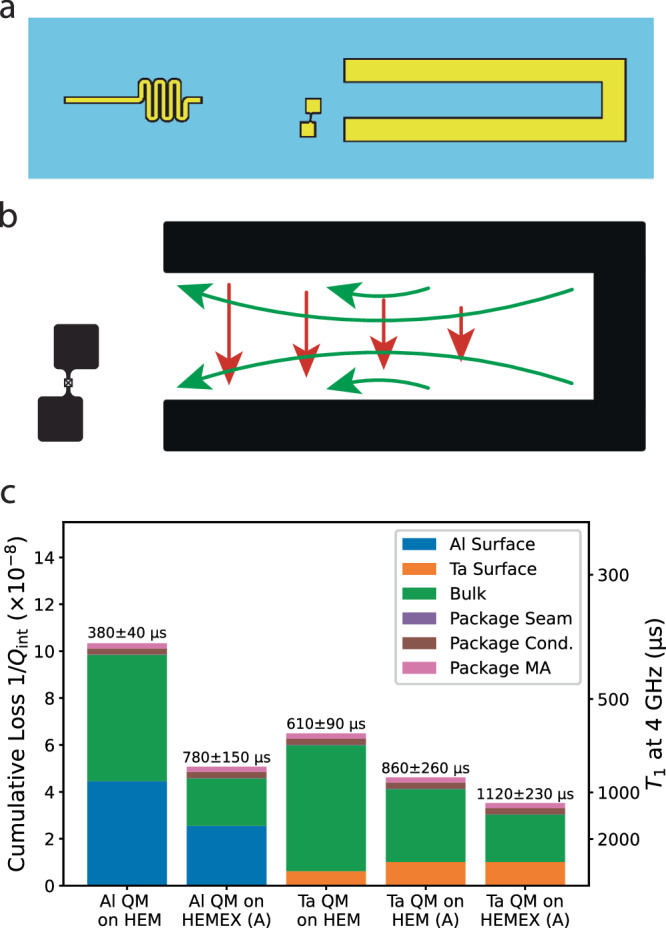
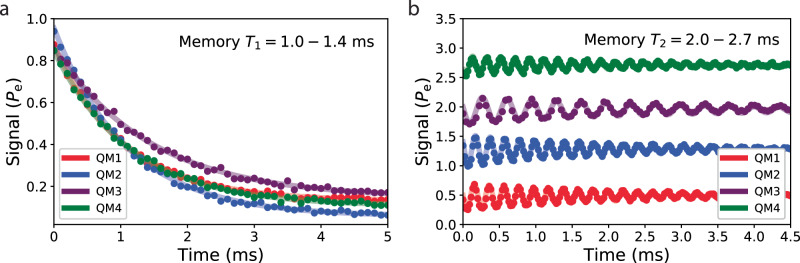
The performance of superconducting quantum circuits for quantum computing has advanced tremendously in recent decades; however, a comprehensive understanding of relaxation mechanisms does not yet exist. In this work, we utilize a multimode approach to characterizing energy losses in superconducting quantum circuits, with the goals of predicting device performance and improving coherence through materials, process, and circuit design optimization. Using this approach, we measure significant reductions in surface and bulk dielectric losses by employing a tantalum-based materials platform and annealed sapphire substrates. With this knowledge we predict the relaxation times of aluminum- and tantalum-based transmon qubits, and find that they are consistent with experimental results. We additionally optimize device geometry to maximize coherence within a coaxial tunnel architecture, and realize on-chip quantum memories with single-photon Ramsey times of 2.0 − 2.7 ms, limited by their energy relaxation times of 1.0 − 1.4 ms. These results demonstrate an advancement towards a more modular and compact coaxial circuit architecture for bosonic qubits with reproducibly high coherence.
Overview
The claims and statistics of this paper haven’t been checked yet.
Free: it reads the open-access text and checks the first 5 claims that cite a source we can check. Create a free account to check every claim.
Integrity signals
Registry
Cites
Statistics
Figures
Verification
Claims the paper makes
The claims and statistics of this paper haven’t been checked yet.
Free: it reads the open-access text and checks the first 5 claims that cite a source we can check. Create a free account to check every claim.
Self-check
Percentages, sums and reported differences re-computed from the paper’s own numbers.
The self-check needs the paper’s full text.
Citations
Cites
Quantum supremacy using a programmable superconducting processor
Arute, F., Arya, K., Babbush, R., Bacon, D., Bardin, J. C., Barends, R., Biswas, R., Boixo, S., Brandao, F. G. S. L., Buell, D. A., et al. (2019) · Nature · doi:10.1038/s41586-019-1666-5 · Cited by 7,720
Charge-insensitive qubit design derived from the Cooper pair box
Koch, J., Yu, T. M., Gambetta, J., Houck, A. A., Schuster, D. I., Majer, J., Blais, A., Devoret, M. H., Girvin, S. M., & Schoelkopf, R. J. (2007) · Physical Review A · doi:10.1103/physreva.76.042319 · Cited by 3,351 · cited 1×
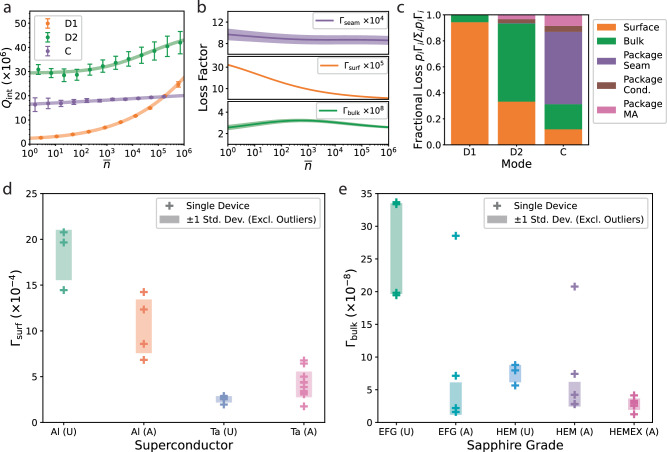
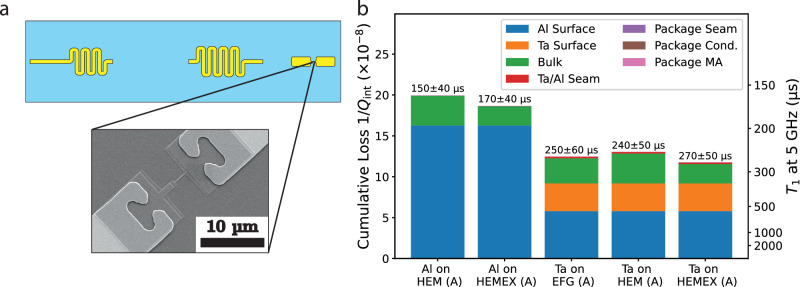
“Lossesin the tripole striplinecan bedescribedusing ageneralized energy participation ratio model 25,44,55 : where Q int is the total internal quality factor of the resonator, ω is the resonance frequency, and T 1 is the energy decay time.”
BackgroundSelf-citationSurface codes: Towards practical large-scale quantum computation
Fowler, A. G., Mariantoni, M., Martinis, J. M., & Cleland, A. N. (2012) · Physical Review A · doi:10.1103/physreva.86.032324 · Cited by 3,059 · cited 1×
“However, the realization of a practical quantum computer requires far higher gate fi delities 17,18 , which necessitate further mitigation of decoherence mechanisms in quantum circuits.”
BackgroundHardware-efficient variational quantum eigensolver for small molecules and quantum magnets
Kandala, A., Mezzacapo, A., Temme, K., Takita, M., Brink, M., Chow, J. M., & Gambetta, J. M. (2017) · Nature · doi:10.1038/nature23879 · Cited by 2,982
Superconducting Qubits: Current State of Play
Kjaergaard, M., Schwartz, M. E., Braumüller, J., Krantz, P., Wang, J. I.-J., Gustavsson, S., & Oliver, W. D. (2020) · Annual Review of Condensed Matter Physics · doi:10.1146/annurev-conmatphys-031119-050605 · Cited by 1,544 · cited 1×
“The emergenceofsuperconducting qubits as a promising platformfor quantum computing has been facilitated by over two decades of steady improvements to coherence and gate fi delity 1 .”
BackgroundSuperconducting Qubits: Current State of PlayPreprint
Kjærgaard, M., Schwartz, M. E., Braumüller, J., Krantz, P., Wang, J. I.-J., Gustavsson, S., & Oliver, W. D. (2020) · DSpace@MIT (Massachusetts Institute of Technology) · Cited by 1,192
Demonstration of two-qubit algorithms with a superconducting quantum processor
DiCarlo, L., Chow, J. M., Gambetta, J. M., Bishop, L. S., Johnson, B. R., Schuster, D. I., Majer, J., Blais, A., Frunzio, L., Girvin, S. M., et al. (2009) · Nature · doi:10.1038/nature08121 · Cited by 1,172 · cited 1×
“This has enabled the demonstration of many milestones, including quantum error correction or mitigation 2 – 9 , quantum algorithms 10,11 , quantum simulations 12 – 15 , and quantum supremacy 16 using large numbers of qubits.”
Self-citationSuppressing quantum errors by scaling a surface code logical qubit
Google Quantum, A. I., Acharya, R., Aleiner, I., Allen, R., Andersen, T. I., Ansmann, M., Arute, F., Arya, K., Asfaw, A., Atalaya, J., et al. (2023) · Nature · doi:10.1038/s41586-022-05434-1 · Cited by 1,103
Scalable Quantum Simulation of Molecular Energies
O’Malley, P. J. J., Babbush, R., Kivlichan, I. D., Romero, J., McClean, J. R., Barends, R., Kelly, J., Roushan, P., Tranter, A., Ding, N., et al. (2016) · Physical Review X · doi:10.1103/physrevx.6.031007 · Cited by 1,059 · cited 1×
“This has enabled the demonstration of many milestones, including quantum error correction or mitigation 2 – 9 , quantum algorithms 10,11 , quantum simulations 12 – 15 , and quantum supremacy 16 using large numbers of qubits.”
Paik, H., Schuster, D. I., Bishop, L. S., Kirchmair, G., Catelani, G., Sears, A. P., Johnson, B. R., Reagor, M. J., Frunzio, L., Glazman, L. I., et al. (2011) · Physical Review Letters · doi:10.1103/physrevlett.107.240501 · Cited by 1,054 · cited 1×
“Additionally, dramatic improvements have also been achieved by modifying circuit geometry to reduce sensitivity to loss, an approach that has given rise to 3D transmon qubits 40 and cavity-based quantum memories with millisecond coherence times 41 – 43 .”
BackgroundSelf-citation
Cited by
Millisecond lifetimes and coherence times in 2D transmon qubits
Bland, M. P., Bahrami, F., Martinez, J. G. C., Prestegaard, P. H., Smitham, B. M., Joshi, A., Hedrick, E., Kumar, S., Yang, A., Pakpour‐Tabrizi, A. C., et al. (2025) · Nature · doi:10.1038/s41586-025-09687-4 · Cited by 214
Hybrid Oscillator-Qubit Quantum Processors: Simulating Fermions, Bosons, and Gauge Fields
Crane, E., Smith, K. C., Tomesh, T., Eickbusch, A., Martyn, J. M., Kühn, S., Funcke, L., DeMarco, M. A., Chuang, I. L., Wiebe, N., et al. (2026) · Physical Review X · doi:10.1103/s5bn-z4jq · Cited by 100
Advancements in superconducting quantum computing
Jiang, Y.-Y., Deng, C., Fan, H., Li, B.-Y., Sun, L., Tan, X., Wang, W., Xue, G., Yan, F., Yu, H., et al. (2025) · National Science Review · doi:10.1093/nsr/nwaf246 · Cited by 85
“The references are [17 ,22 ,24 –29 ] for the transmon qubits, [30 –33 ] for the fluxonium qubits and [34 – 37 ] for the bosonic qubits. modes [22 ] and spontaneous emission [23 ].”
Quantum error correction of qudits beyond break-even
Brock, B. L., Singh, S., Eickbusch, A., Sivak, V. V., Ding, A. Z., Frunzio, L., Girvin, S. M., & Devoret, M. H. (2025) · Nature · doi:10.1038/s41586-025-08899-y · Cited by 64
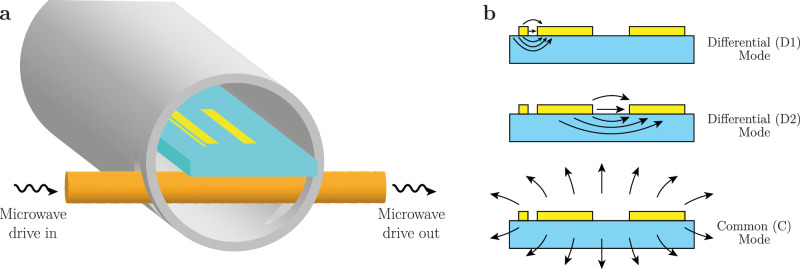
“22 and consists of a tantalum transmon 38,39 dispersively coupled to a three-dimensional superconducting microwave cavity 40 , as shown in Fig.”
Self-citationQuantum control of an oscillator with a Kerr-cat qubit
Ding, A. Z., Brock, B. L., Eickbusch, A., Koottandavida, A., Frattini, N., Cortiñas, R. G., Joshi, V. R., de Graaf, S. J., Chapman, B. J., Ganjam, S., et al. (2025) · Nature Communications · doi:10.1038/s41467-025-60352-w · Cited by 57
“On the sapphire substrate we fabricated tantalum-based superconducting circuits 48,49 , which capacitively couple to the 3D cavities via waveguide tunnels.”
Self-citationEliminating Surface Oxides of Superconducting Circuits with Noble Metal Encapsulation
Chang, R., Shumiya, N., McLellan, R. A., Zhang, Y., Bland, M. P., Bahrami, F., Mun, J., Zhou, C., Kisslinger, K., Cheng, G., et al. (2025) · Physical Review Letters · doi:10.1103/physrevlett.134.097001 · Cited by 54
Self-citationHigh-frequency dispersive readout of a superconducting qubitPreprint
Kurilovich, P. D., Connolly, T., Bøttcher, C. G. L., Weiss, D. K., Hazra, S., Joshi, V. R., Ding, A. Z., Nho, H., Diamond, S., Kurilovich, V. D., et al. (2025) · arXiv (Cornell University) · doi:10.48550/arxiv.2501.09161 · Cited by 51
Self-citationDing, C., Federico, M. D., Hatridge, M. J., Houck, A., Leger, S., Martinez, J. G. C., Miao, C., Schuster, D., Stefanazzi, L., Stoughton, C., et al. (2024) · Physical Review Research · doi:10.1103/physrevresearch.6.013305 · Cited by 47
Self-citationA mechanical quantum memory for microwave photons
Bozkurt, A., Golami, O., Yu, Y., Tian, H., & Mirhosseini, M. (2025) · Nature Physics · doi:10.1038/s41567-025-02975-w · Cited by 43
“Consequently, state-of-the-art circuit quantum acousto-dynamics systems can obtain only storage times that are shorter than those of the best electrical systems 23–25 .”
Ultracoherent superconducting cavity-based multiqudit platform with error-resilient controlPreprint
Kim, T., Roy, T., You, X., Li, A. C. Y., Lamm, H., Pronitchev, O., Bal, M., Garattoni, S., Crisa, F., Bafia, D., et al. (2025) · arXiv (Cornell University) · doi:10.48550/arxiv.2506.03286 · Cited by 42
Self-citationA high-efficiency elementary network of interchangeable superconducting qubit devices
Mollenhauer, M., Irfan, A., Cao, X., Mandal, S., & Pfaff, W. (2025) · Nature Electronics · doi:10.1038/s41928-025-01404-3 · Cited by 42
“The hardware design used in our work readily provides the modular scaling of leading architectures for fault-tolerant quantum computing with bosonic encodings in high-Q cavities 28–34 .”
de Graaf, S. J., Xue, S. H., Chapman, B. J., Teoh, J. D., Tsunoda, T., Winkel, P., Garmon, J. W. O., Chang, K. M., Frunzio, L., Puri, S., et al. (2025) · npj Quantum Information · doi:10.1038/s41534-024-00944-4 · Cited by 39
Self-citationAcceptor-Induced Bulk Dielectric Loss in Superconducting Circuits on Silicon
Zhang, Z.-H., Godeneli, K., He, J., Odeh, M., Zhou, H., Meesala, S., & Sipahigil, A. (2024) · Physical Review X · doi:10.1103/physrevx.14.041022 · Cited by 36
Low-loss superconducting resonators fabricated from tantalum films grown at room temperature
Marcaud, G., Perello, D., Chen, C., Umbarkar, E. A., Weiland, C. R., Gao, J., Díez, S., Ly, V., Mahuli, N., D’Souza, N., et al. (2025) · Communications Materials · doi:10.1038/s43246-025-00897-x · Cited by 33
Characterization of Drive-Induced Unwanted State Transitions in Superconducting Circuits
Dai, W., Hazra, S., Weiss, D. K., Kurilovich, P. D., Connolly, T., Babla, H. K., Singh, S., Joshi, V. R., Ding, A. Z., Parakh, P. D., et al. (2026) · Physical Review X · doi:10.1103/zdpg-mhpc · Cited by 34
Self-citationFull characterization of measurement-induced transitions of a superconducting qubitPreprint
Connolly, T., Kurilovich, P. D., Kurilovich, V. D., Bøttcher, C. G. L., Hazra, S., Dai, W., Ding, A. Z., Joshi, V. R., Nho, H., Diamond, S., et al. (2025) · arXiv (Cornell University) · doi:10.48550/arxiv.2506.05306 · Cited by 31
Self-citationTowards simulating fluid flows with quantum computing
Bharadwaj, S. S., & Sreenivasan, K. R. (2025) · Sadhana · doi:10.1007/s12046-024-02660-3 · Cited by 30
Tantalum airbridges for scalable superconducting quantum processors
Bu, K., Huai, S., Zhang, Z., Li, D., Li, Y., Hu, J., Yang, X., Dai, M., Cai, T., Zheng, Y.-C., et al. (2025) · npj Quantum Information · doi:10.1038/s41534-025-00972-8 · Cited by 29
Low-loss lumped-element inductors made from granular aluminum
Gupta, V., Winkel, P., Thakur, N., van Vlaanderen, P., Wang, Y., Ganjam, S., Frunzio, L., & Schoelkopf, R. J. (2025) · Physical Review Applied · doi:10.1103/physrevapplied.23.054067 · Cited by 28
Self-citationQuasiparticle Dynamics in a Superconducting Qubit Irradiated by a Localized Infrared Source
Benevides, R., Drimmer, M., Bisson, G., Adinolfi, F., von Lüpke, U., Doeleman, H. M., Catelani, G., & Chu, Y. (2024) · Physical Review Letters · doi:10.1103/physrevlett.133.060602 · Cited by 25
The effect of niobium thin film structure on losses in superconducting circuits
Drimmer, M., Telkamp, S., Fischer, F. L., Rodrigues, I. C., Todt, C., Křížek, F., Kriegner, D., Müller, C., Wegscheider, W., & Chu, Y. (2025) · Materials for Quantum Technology · doi:10.1088/2633-4356/ae1347 · Cited by 25
Shaping photons: Quantum information processing with bosonic cQED
Copetudo, A., Fontaine, C. Y., Valadares, F., & Gao, Y. Y. (2024) · Applied Physics Letters · doi:10.1063/5.0183022 · Cited by 24
Chayanun, L., Biznárová, J., Zeng, L. J., Malmberg, P., Nylander, A., Osman, A., Rommel, M., Tam, P. L., Olsson, E., Delsing, P., et al. (2024) · APL Quantum · doi:10.1063/5.0208140 · Cited by 23
Roadmap on nanoscale superconductivity for quantum technologies
Dobrovolskiy, O. V., Suderow, H., Tafuri, F., Black‐Schaffer, A. M., Lado, J. L., Sudbø, A., Stornaioulo, D., Li, C., Böhmer, A. E., Tran, L. M., et al. (2025) · Superconductor Science and Technology · doi:10.1088/1361-6668/ae3030 · Cited by 20
Nonreciprocal interaction and entanglement between two superconducting qubits
Ren, Y.-M., Pan, X.-F., Yao, X.-Y., Huo, X.-W., Zheng, J.-C., Hei, X.-L., Qiao, Y.-F., & Li, P.-B. (2025) · Physical Review Research · doi:10.1103/213q-sqxf · Cited by 20
Tominaga, Y., Shirai, S., Hishida, Y., Terai, H., & Noguchi, A. (2025) · EPJ Quantum Technology · doi:10.1140/epjqt/s40507-025-00367-w · Cited by 18
“Hybrid designs aim to combine the high Q i of 3D designs with the scalability of 2D structures [21, 22], where these resonators have essentially planar structures with additional 3D characteristics.”
An engineering guide to superconducting quantum circuit shielding
Malevannaya, E. I., Polozov, V. I., Ivanov, А. I., Matanin, A. R., Smirnov, N. S., Echeistov, V. V., Moskalev, D. O., Mikhalin, D. A., Shirokov, D. E., Panfilov, Y. V., et al. (2025) · Applied Physics Reviews · doi:10.1063/5.0250262 · Cited by 18
All-nitride superconducting qubits based on atomic layer deposition
Wang, D., Wu, Y., Pieczulewski, N. A., Garg, P., Pace, M. C. C., Bøttcher, C. G. L., Mazumder, B., Muller, D. A., & Tang, H. X. (2026) · Nature Materials · doi:10.1038/s41563-025-02448-8 · Cited by 18
“Although the predominant loss mechanisms in ALDmon remain unresolved, improvements in substrate quality, NbN dry etching and device packaging are expected to further enhance qubit coherence 10,50,51 .”
A cascaded random access quantum memory
Li, Z., Gupta, E., Zhao, F., Banerjee, R., Lu, Y., Roy, T., Oriani, A., Vrajitoarea, A., Chakram, S., & Schuster, D. (2026) · Nature Physics · doi:10.1038/s41567-026-03418-w · Cited by 17
Self-citationControlled-squeeze gate in superconducting quantum circuits
Grosso, N. F. D., Cortiñas, R. G., Villar, P. I., Lombardo, F. C., & Paz, J. P. (2025) · Physical Review A · doi:10.1103/physreva.111.042606 · Cited by 18
Vortex motion induced losses in tantalum resonators
Bahrami, F., Bland, M. P., Shumiya, N., Chang, R., Hedrick, E., McLellan, R. A., Crowley, K. D., Dutta, A., Horn, L. B.-V., Iguchi, Y., et al. (2026) · Physical review. B./Physical review. B · doi:10.1103/4ny9-9n5b · Cited by 17
Lemonde, M.-A., Lachance-Quirion, D., Duclos-Cianci, G., Frattini, N., Hopfmueller, F., Gauvin-Ndiaye, C., Lemyre, J. C., & St-Jean, P. (2024) · arXiv (Cornell University) · doi:10.48550/arxiv.2409.05813 · Cited by 17
Hao, Z., Shaw, T., Hatefipour, M., Strickland, W. M., Elfeky, B. H., Langone, D., Shabani, J., & Shankar, S. (2024) · Applied Physics Letters · doi:10.1063/5.0205053 · Cited by 16
Pritchard, P. G., & Rondinelli, J. M. (2025) · Physical Review Applied · doi:10.1103/6wyt-fxjg · Cited by 16
Universal bound on microwave dissipation in superconducting circuits
Charpentier, T., Khvalyuk, A. V., Ioffe, L. B., Feigel’man, M. V., Roch, N., & Sacépé, B. (2026) · Science Advances · doi:10.1126/sciadv.aed3922 · Cited by 16
“Taken together, these challenges make reaching the ultimate coherence limit extremely demanding for multi-qubit architectures.”
Krypton-sputtered tantalum films for scalable high-performance quantum devices
Olszewski, M. W., Kong, L., Reinhardt, S., Tong, D., Du, X., Gianluca, G. D., Lu, H., Roy, S., Zhang, L., Biedron, A. B., et al. (2026) · Nature Materials · doi:10.1038/s41563-026-02718-z · Cited by 15
High-quality superconducting tantalum resonators with beta phase defects
Dhundhwal, R., Duan, H., Brauch, L., Arabi, S., Fuchs, D., Haghighirad, A. A., Welle, A., Scharwaechter, F., Pal, S., Scheffler, M., et al. (2025) · Applied Physics Letters · doi:10.1063/5.0302324 · Cited by 15
“The underlying cause for the coherence a) thomas.reisinger@kit.edu improvement in Ta devices remains a matter of intensive research and is most likely multi-faceted 20 .”
Scalable Architecture for Dark Photon Searches: Superconducting-Qubit Proof of Principle
Kang, R., Hu, Q. P., Cai, X., Yu, W., Zhou, J., Rong, X., & Du, J. (2025) · Physical Review Letters · doi:10.1103/9p1t-vc9j · Cited by 14
“D cavities with quality factors of several million and superconducting qubits with relaxation time of several milliseconds have been experimentally achieved, here we choose the conservative values Q c = 2 × 10 4 , T 1 = 50 µ s and T ∗ 2 = 100 µ s considering the yield [43–48].”
Fast microwave-driven two-qubit gates between fluxonium qubits with a transmon coupler
Singh, S., Huang, E. Y., Hu, J., Yilmaz, F., Zwanenburg, M. F. S., Kumaravadivel, P., Wang, S., Stefanski, T. V., & Andersen, C. K. (2026) · Physical Review Applied · doi:10.1103/yxf3-jtx5 · Cited by 14
“Additionally, dielectric losses are known to limit the coherence times of transmons [36, 37].”
Spectral signature of high-order photon processes enhanced by Cooper-pair pairing
Smith, W. C., Borgognoni, A., Villiers, M., Roverc’h, E., Palomo, J. M., Delbecq, M. R., Kontos, T., Campagne-Ibarcq, P., Douçot, B., & Leghtas, Z. (2025) · Nature Communications · doi:10.1038/s41467-025-62047-8 · Cited by 13
Advances in Josephson Junction Materials and Processes Toward Practical Quantum Computing
Kim, H. L., Jang, G., Jin, S., An, J., Shin, H., Shin, H., Luo, J., Hashim, A., Siddiqi, I. A., Kim, Y., et al. (2026) · Advanced Science · doi:10.1002/advs.78427 · Cited by 12
Improving the performance of transmon qubits with fluorine-based surface treatments
Gingras, M., Niedzielski, B. M., Grossklaus, K. A., Miller, D., Contipelli, F., Azar, K., Burkhart, L., Calusine, G., Davis, D., Pinero, R. D., et al. (2026) · Physical Review Applied · doi:10.1103/x1gl-mx6f · Cited by 12
On the Efficacy of Surface Codes in Compensating for Radiation Events in Superconducting Devices
Vallero, M., Casagranda, G., Vella, F., & Rech, P. (2024) · International Conference for High Performance Computing, Networking, Storage and Analysis (SC) · doi:10.1109/sc41406.2024.00075 · Cited by 12
Growth and structure of alpha-Ta films for quantum circuit integration
Alegria, L. D., Abelson, A., Kim, E., Im, S., Voyles, P. M., Lordi, V., DuBois, J. L., & Rosen, Y. J. (2025) · Journal of Applied Physics · doi:10.1063/5.0245710 · Cited by 11
Mapping the positions of Two-Level-Systems on the surface of a superconducting transmon qubit
Lisenfeld, J., Händel, A. K., Daum, E., Berlitz, B., Bilmes, A., & Ustinov, A. V. (2026) · npj Quantum Information · doi:10.1038/s41534-026-01272-5 · Cited by 11
“The experimental progress currently relies on laborious experiments searching for better materialsandimprovingfabricationprocedures 14,17 – 19 .”
Olszewski, M. W., Paustian, J. T., Banerjee, T., Lu, H., Ortiz, J. L. R., Nguyen, N., Okubo, K., Pant, R. K., Biedron, A. B., Ralph, D. C., et al. (2026) · Applied Physics Letters · doi:10.1063/5.0325435 · Cited by 11
Fat-Tree QRAM: A High-Bandwidth Shared Quantum Random Access Memory for Parallel Queries
Xu, S., Lu, A., & Ding, Y. (2025) · International Conference on Architectural Support for Programming Languages and Operating Systems (ASPLOS) · doi:10.1145/3676641.3716256 · Cited by 11
Angular Momentum Entanglement Mediated By General Relativistic Frame Dragging
Lantaño, T. B., Petruzziello, L., Huelga, S. F., & Plenio, M. B. (2026) · Quantum · doi:10.22331/q-2026-03-24-2042 · Cited by 10
Autonomous Stabilization of Remote Entanglement in a Cascaded Quantum Network
Irfan, A., Singirikonda, K., Yao, M., Lingenfelter, A., Mollenhauer, M., Cao, X., Clerk, A. A., & Pfaff, W. (2026) · Physical Review X · doi:10.1103/z6zz-vw5q · Cited by 10
Middey, S., Bhattacharya, N., Nevgi, R., Joshi, S. C., & Dey, S. (2026) · Advances in Physics X · doi:10.1080/23746149.2026.2646243 · Cited by 10
“Similarly, material improvements are now recognized as potent methods for enhancing superconducting qubit lifetimes and coherence times [9].”
Characterization of nanostructural imperfections in superconducting quantum circuits
Alghadeer, M., Fasciati, S. D., Cao, S., Piscitelli, M., Spink, M. C., Hopkinson, D. G., Danaie, M., Speller, S. C., Leek, P., & Bakr, M. S. (2025) · Materials for Quantum Technology · doi:10.1088/2633-4356/aded66 · Cited by 10
Synthetic High Angular Momentum Spin Dynamics in a Microwave Oscillator
Roy, S., Senanian, A., Wang, C. S., Wetherbee, O. C., Zhang, L., Cole, B., Larson, C. P., Yelton, E., Arora, K., McMahon, P. L., et al. (2025) · Physical Review X · doi:10.1103/physrevx.15.021009 · Cited by 9
“These approaches achieved SNAP gates with duration near 2 π/χ , which for χ ∼ MHz would allow for operations in around 0.1% of the decay time of state of the art oscillators [41].”
BackgroundInfluentialZhu, S., You, X., Alyanak, U., Bal, M., Crisa, F., Garattoni, S., Lunin, A., Pilipenko, R., Murthy, A. A., Romanenko, A., et al. (2025) · Physical Review Applied · doi:10.1103/x4ny-17lk · Cited by 9
Digital-analog simulations of Schrödinger cat states in the Dicke-Ising model
Shapiro, D. S., Weber, Y., Bode, T., Wilhelm, F. K., & Bagrets, D. (2025) · Physical Review A · doi:10.1103/wbp6-y3vd · Cited by 9
Fast Z Z -free entangling gates for superconducting qubits assisted by a driven resonator
Huang, Z., Kim, T.-Y., Roy, T., Lu, Y., Romanenko, A., Zhu, S., & Grassellino, A. (2024) · Physical Review Applied · doi:10.1103/physrevapplied.22.034007 · Cited by 10
Self-citationThin-film quartz for high-coherence piezoelectric phononic crystal resonators
Emser, A. L., Metzger, C., Rose, B. C., & Lehnert, K. W. (2024) · Physical Review Applied · doi:10.1103/physrevapplied.22.064032 · Cited by 8
Extension of coherence time beyond breakeven point using only drives and dissipation
Sun, L., Xu, Y., Zhou, Y., Hua, Z., Wang, W., Zhou, J., Chen, Z.-J., de Paula, L. Z., Jie, Q.-X., Xue, G., et al. (2026) · Nature Physics · doi:10.48550/arxiv.2509.22191 · Cited by 8
Systematic Construction of Time-Dependent Hamiltonians for Microwave-Driven Josephson Circuits
Lu, Y., Zhao, T., Vallières, A., Smith, K. C., Weiss, D., You, X., Zhang, Y., Ganjam, S., Maiti, A., Garmon, J. W. O., et al. (2026) · PRX Quantum · doi:10.1103/4kfd-kqdg · Cited by 8
Self-citationDielectric loss due to charged-defect acoustic phonon emission
Turiansky, M. E., & de Walle, C. G. V. (2024) · APL Quantum · doi:10.1063/5.0205532 · Cited by 8
Entanglement Request Scheduling in Quantum Datacenter Networks
Vista, F., DiAdamo, S., Kaur, E., Shapourian, H., & Nejabati, R. (2025) · IEEE Network · doi:10.1109/mnet.2025.3532847 · Cited by 8
A transmon qubit realized by exploiting the superconductor-insulator transitionPreprint
Bøttcher, C. G. L., Önder, D. E., Connolly, T., Zhao, J., Kvande, C. I., Wang, D. Q., Kurilovich, P. D., Vaitiekėnas, S., Glazman, L. I., Tang, H.-Z., et al. (2025) · arXiv (Cornell University) · doi:10.48550/arxiv.2510.19983 · Cited by 8
“[57].”
Is Circuit Depth Accurate for Comparing Quantum Circuit Runtimes?
Tremba, M., Hovland, P., & Liu, J. (2025) · IEEE International Conference on Quantum Computing and Engineering (QCE) · doi:10.1109/qce65121.2025.00049 · Cited by 7
“Besides its usual applications to tasks like gate calibration and error mitigation [6], [35], circuit scheduling can also be used to measure circuit runtime.”
Bell, L., Wang, Y., Smith, K. C., Liu, Y., Dumitrescu, E., & Girvin, S. M. (2025) · PRX Quantum · doi:10.1103/1496-tlmm · Cited by 7
Self-citationParasitic two-level systems in merged-element transmon qubits
Daum, E., Berlitz, B., Deck, S., Ustinov, A. V., & Lisenfeld, J. (2026) · Physical Review Applied · doi:10.1103/g3nf-fp61 · Cited by 7
Superconducting quantum memory with a suspended coaxial resonator
Krayzman, L., Lei, C. U., Ganjam, S., Teoh, J. D., Frunzio, L., & Schoelkopf, R. J. (2024) · Applied Physics Letters · doi:10.1063/5.0203906 · Cited by 6
Self-citationSuperconducting-qubit gates robust to parameter fluctuations
Wright, E. M., Damme, L. V., Glaser, N. J., Devra, A., Roy, F., Englhardt, J., Bruckmoser, N., Koch, L., Marx, A., Schirk, J., et al. (2026) · Physical Review Applied · doi:10.1103/tf39-n6s3 · Cited by 6
Agarwal, A., Lindoy, L. P., Lall, D., de Graaf, S. E., Lindström, T., & Rungger, I. (2025) · arXiv (Cornell University) · doi:10.48550/arxiv.2505.23622 · Cited by 6
“In superconducting qubits [6–8] typical coherence times have increased from 1 − 10 µ s in the late 2000’s [6] to > 100 µ s coherence times available in publicly accessible devices today [9], and even greater than 1 ms coherence times in certain qubits [10, 11].”
Beta Tantalum Transmon Qubits with Quality Factors Approaching 10 MillionPreprint
Joshi, A., Jindal, A., Prestegaard, P. H., Bahrami, F., Hedrick, E., Bland, M. P., Gerg, T., Cheng, G., Yao, N., Cava, R. J., et al. (2026) · arXiv (Cornell University) · doi:10.48550/arxiv.2603.13174 · Cited by 6
Lumped-element broadband SNAIL parametric amplifier with on-chip pump filter for multiplexed readout
Joshi, V., Hazra, S., Ding, A. Z., Miano, A., Dai, W., Umasankar, G., Koottandavida, A., Liu, G., Frunzio, L., & Devoret, M. (2025) · Physical Review Applied · doi:10.1103/5l86-pw21 · Cited by 5
Self-citationMetamaterials in superconducting and cryogenic quantum technologies
Krasnok, A. (2026) · Applied Physics Reviews · doi:10.1063/5.0282013 · Cited by 5
A Mathematical Structure for Amplitude-Mixing Error-Transparent Gates for Binomial Codes
Wetherbee, O. C., Roy, S., Royer, B., & Fatemi, V. (2025) · Quantum · doi:10.22331/q-2025-10-21-1890 · Cited by 5
Reducing TLS loss in tantalum CPW resonators using titanium sacrificial layers
Degnan, Z., Chiu, C.-C., Chen, Y., Sommers, D., Abdurakhimov, L. V., Zhu, L., Fedorov, A., & Jacobson, P. A. (2026) · Applied Physics Reviews · doi:10.1063/5.0324744 · Cited by 5
“…a superconducting material has led to major advances in the coherence times of super-conducting quantum processors and internal quality factors of superconducting resonators, 9–14 including recent demonstrations of 2D transmon qubits with energy relaxation times ( T 1 ) exceeding 1.6 milliseconds.”
InfluentialRhenium as a material platform for long-lived transmon qubits
Wang, Y., Ganjam, S., Narra, I., Frunzio, L., & Schoelkopf, R. J. (2026) · PRX Quantum · doi:10.1103/2dpj-3nsv · Cited by 4
Self-citationQuantifying surface losses in superconducting aluminum microwave resonators
Hedrick, E., Bahrami, F., Pakpour‐Tabrizi, A. C., Joshi, A., Rahman, Q. R., Yang, A., Chang, R., Bland, M. P., Jindal, A., Cheng, G., et al. (2026) · MRS Bulletin · doi:10.1557/s43577-026-01147-2 · Cited by 4
“Superconducting circuits are a leading platform for the realization of quantum processors and have achieved several landmark demonstrations, including beyond-threshold quantum error correction [3–8], long-lived quantum memories [9–11], and quantum simulation [12–15].”
Birkhölzer, Y. A., Park, A. S., Schnitzer, N., Kaaret, J. Z., Gregory, B. Z., Kraay, T. A., Schwaigert, T., Barone, M. R., Faeth, B. D., Hensling, F. V. E., et al. (2026) · APL Materials · doi:10.1063/5.0322051 · Cited by 4
Bound State in the Continuum and Multiple Atom State Transfer Applications in a Waveguide QED Setup
Anonymous, Zhang, X., Weng, M., Qian, B., Liu, H. D., Xing, H., Lü, X.-Y., & Wang, Z. (2026) · Physical Review Letters · doi:10.1103/y1rg-p9hx · Cited by 4
Effective reflection mode measurement for hanger-coupled microwave resonators
Pitten, J. R., Materise, N., Syong, W.-R., Ortiz, J. L. R., Bennett, D. A., & McRae, C. R. (2025) · Physical Review A · doi:10.1103/71lw-rsrj · Cited by 4
On-demand shaped-photon emission based on a parametrically modulated qubit
Li, X., Li, S., Zhao, S.-L., Mei, Z.-Y., He, Y., Deng, C.-L., Liu, Y., Liu, Y.-J., Liang, G.-H., Wang, J., et al. (2025) · Physical Review Applied · doi:10.1103/physrevapplied.23.024019 · Cited by 4
Zou, J., Cai, W., Wang, J.-Q., Zhu, Z.-X., Jie, Q.-X., Xu, X., Wang, W., Guo, G., Sun, L., & Zou, C. (2025) · arXiv (Cornell University) · doi:10.48550/arxiv.2511.10407 · Cited by 4
Quantum Computing in Discrete- and Continuous-Variable ArchitecturesPreprint
Singh, S. (2025) · arXiv (Cornell University) · doi:10.48550/arxiv.2507.01146 · Cited by 4
The waves-in-space Purcell effect for superconducting qubitsPreprint
Patel, P., Xia, M., Zhou, C., Lu, P., Cao, X., Yusuf, I. G., Repicky, J., & Hatridge, M. J. (2025) · arXiv (Cornell University) · doi:10.48550/arxiv.2503.11644 · Cited by 4
“As an example, we consider the case of a one-dimensional transmission line cavity with a qubit at one end (the most common configuration in 2D [4, 8, 16, 17] and qubit-in-tube [18, 19] experiments).”
InfluentialSelf-citationUltra-high Q-factor superconducting tantalum resonators on 300 mm Si wafersPreprint
Acharya, R., Lozano, D. P., Ivanov, T., Massar, S., Vrancken, C., Canvel, Y., Li, Y., Vadiraj, A. M., Damme, J. V., Aghaeimeibodi, S., et al. (2026) · arXiv (Cornell University) · doi:10.48550/arxiv.2606.10719 · Cited by 4
Constructing and characterising anharmonic potentials in a harmonic oscillatorPreprint
Fontaine, C., Somani, M., Yu, K., Loke, M. C., Schwinger, J., Fong, P.-T., Huang, N.-N., Copetudo, A., Bakr, M., Lau, H.-K., et al. (2026) · arXiv (Cornell University) · doi:10.48550/arxiv.2609.02405 · Cited by 4
“[52], patterned in a tantalum film on sapphire and housed in a waveguide within a machined high-purity aluminium package.”
Coherence-mediated quantum thermometry in a hybrid circuit quantum electrodynamics architecture
Zhu, S., You, X., Romanenko, A., & Grassellino, A. (2026) · Physical review. B./Physical review. B · doi:10.1103/sj7j-1s6b · Cited by 3
Cheng, Y.-T., Wan, H.-W., Yan, W.-J., Young, L. B., Lin, Y. H., Lai, K.-H., Chen, W.-S., Cheng, C.-K., Chen, K. H. M., Pi, T., et al. (2026) · APL Quantum · doi:10.1063/5.0301974 · Cited by 3
“Analyzing dielectric losses at various interfaces concludes that imperfections at the SC film/substrate interface significantly increase TLS losses, which have been mitigated through improved substrate cleanness 2, 10, 12, 29, 30, 31, 32, 33 .”
Tantalum alloy–based resonators for quantum information systems
Yang, C., Bahrami, F., Cheng, G., Feldman, M. M., Liu, T., Shumiya, N., Yao, N., Lyon, S. A., Houck, A., de Leon, N. P., et al. (2026) · Proceedings of the National Academy of Sciences · doi:10.1073/pnas.2519940123 · Cited by 3
Toward Large Nonradiating Qubits: When Quantum Engineering Meets Photonics
Basharin, A. A. (2026) · Advanced Quantum Technologies · doi:10.1002/qute.202500587 · Cited by 3
Robust multimode superconducting circuit optimized for quantum information processing
Garcia-Azorin, P., Cárdenas-López, F. A., Huber, G. B. P., Romero, G., Werninghaus, M., Motzoi, F., Filipp, S., & Sanz, M. (2026) · Physical Review Applied · doi:10.1103/ksnb-vhsl · Cited by 3
Fan, Y., Liu, Y., Liu, Y., Peng, W., Wu, Y., Mu, G., & Lin, Z. (2025) · Physica C Superconductivity · doi:10.1016/j.physc.2025.1354652 · Cited by 3
Synthetic fractional flux quanta in a ring of superconducting qubits
Chirolli, L., Polo, J., Catelani, G., & Amico, L. (2025) · Physical Review Research · doi:10.1103/d3rk-kh1k · Cited by 3
Room temperature pure α-phase tantalum films on sapphire for superconducting qubits
Bu, K., Zong, Z., Zhang, Z., Ma, X., Shao, M., Li, D., Li, Y., Hu, J., Huai, S., An, S., et al. (2025) · Superconductor Science and Technology · doi:10.1088/1361-6668/adaaa8 · Cited by 3
Lang, S., Eisele, I., Weber, J., Schewski, A., Music, E., Maiwald, A., Hahn, M., Zahn, D., Luo, Z., Nebrich, L., et al. (2026) · Nanomaterials · doi:10.3390/nano16100569 · Cited by 3
High-throughput bidirectional electro-optic transduction assessed with a practical quantum capacityPreprint
Urmey, M. D., Dickson, S., Adachi, K., Mittal, S., Talamo, L. G., Kyle, A., Frattini, N., Lin, S.-L., Lehnert, K. W., & Regal, C. A. (2025) · arXiv (Cornell University) · doi:10.48550/arxiv.2507.09873 · Cited by 3
“Current state-of-the-art lifetimes in super-conducting architectures are approximately 1 ms using physical qubits [1, 2] and error-corrected bosonic encodings [3], and 300 µ s using logical encodings of many physical qubits [4].”
Speed limits of two-qutrit gatesPreprint
Basyildiz, B., Gong, Z., & Ashhab, S. (2025) · arXiv (Cornell University) · doi:10.48550/arxiv.2510.07742 · Cited by 3
Design of Advanced Readout and System-on-Chip Analog Circuits for Quantum ChipPreprint
Salmanogli, A., Zandi, H., Poshti, M. E. T., Eskandari, M. H., Zencir, E., & Akbari, M. (2025) · arXiv (Cornell University) · doi:10.48550/arxiv.2506.16361 · Cited by 3
Design and Operation of Wafer-Scale Packages Containing >500 Superconducting QubitsPreprint
Kennedy, O. W., Ahmad, W., Armstrong, R., Awawdeh, A., Bose, A., Crawford, K. G., Danilin, S., David, W. D., Maazouz, H. E., Hayton, D. J., et al. (2026) · arXiv (Cornell University) · doi:10.48550/arxiv.2602.12773 · Cited by 3
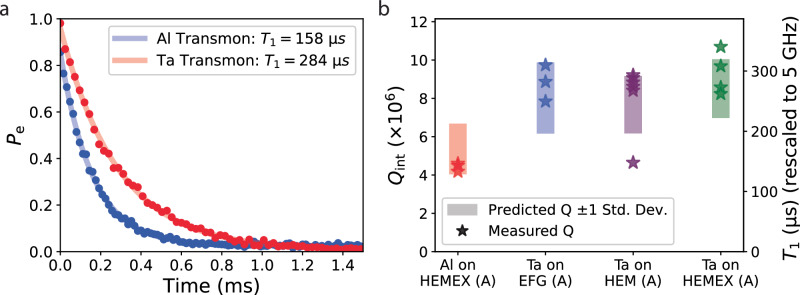
“Using best-in-class loss tangents from aluminium on sapphire [11, 58] we find T 1 times similar to the best qubits measured here.”
Bosonic Cyclic Codes: Trading Stabilizers for Gaussian Non-Clifford Phase GatesPreprint
Wetherbee, O. C., Xu, Y., Albert, V. V., Royer, B., & Fatemi, V. (2026) · arXiv (Cornell University) · doi:10.48550/arxiv.2606.11010 · Cited by 3
Fast CZ gate via energy-level engineering in superconducting qubits with a tunable coupler
Yuan, B., Zhang, C., Han, C., Wang, S., Xu, P., Sun, H., Mu, Q., Wang, L., Zhao, B., Wang, W., et al. (2026) · Physical Review A · doi:10.1103/kc8w-nvnn · Cited by 2
Spatially Resolved Optical Responses of a Superconducting Nanowire Microwave Resonator
Hirotsuru, R., Kurokawa, H., Takaki, K., Terai, H., & Kosaka, H. (2026) · Physical Review Letters · doi:10.1103/fnfl-xjrz · Cited by 2
“Microwave–optical quantum transducers [13, 14, 17–25] suffer from pump-light leakage during quantum frequency conversion [20, 26, 27].”
A Framework for Dynamic Quantum Circuit Execution: Balancing Effectiveness and Efficiency
Chen, F., Fu, H., Zhu, M., Zhang, C., Xie, W., & Li, X.-Y. (2025) · IEEE Transactions on Computer-Aided Design of Integrated Circuits and Systems · doi:10.1109/tcad.2025.3626447 · Cited by 2
“…algorithms, it is necessary to build an essential compilation infrastructure that will become increasingly practical as quantum hardware evolves—either through significantly extended coherence times [21], [22], [23] or the development of low-latency classical control systems [24], [25], [26].”
Metadata
- Authors
- Ganjam, S., Wang, Y., Lu, Y., Banerjee, A., Lei, C. U., Krayzman, L., Kisslinger, K., Zhou, C., Li, R., Jia, Y., Liu, M., Frunzio, L., & Schoelkopf, R. J.
- Affiliations
- Yale University (US)
- Brookhaven National Laboratory (US)
- Corresponding author
- Ganjam, Suhas
- Schoelkopf, Robert J.
- ORCID
- Venue
- Nature Communications
- Published
- 2024-05-01
- Volume
- 15
- Issue
- 1
- Pages
- 3687-3687
- ISSN
- 2041-1723 (ISSN-L)
- PMC
- PMC11063213
- OpenAlex
- W4396544828
- Semantic Scholar
- 45a42553ef140e2954d0e172d4c6e6e7064d8416
- Cited by
- 93
- References
- 77
- Citations by year
- 2026: 41 · 2025: 43 · 2024: 9
- FWCI
- 13.70
- Type
- journal article
- Language
- en
- Open access
- gold
- doi.org
- Licence
- cc-by
- creativecommons.org/licenses/by/4.0 (tdm)
- creativecommons.org/licenses/by/4.0 (vor)
- Locations
- Nature Communications (publishedVersion, cc-by)
- PubMed Central (publishedVersion, cc-by)
- PubMed (publishedVersion)
- OSTI OAI (U.S. Department of Energy Office of Scientific and Technical Information) (submittedVersion)
- RePEc: Research Papers in Economics (submittedVersion)
- DOAJ (DOAJ: Directory of Open Access Journals) (submittedVersion, cc-by-sa)
- Funders
- U.S. Department of Defense (W911NF1810212, and W911-NF-23-1-0051)
- U.S. Department of Energy (DE‐SC0012704, SC0012704.)
- Yale University
- Office of Science (DE-SC-0012704, SC0012704)
- Army Research Office (W911-NF-23-1-0051)
- Brookhaven National Laboratory (SC0012704, DE- SC0012704)
- Topics
- Physical Sciences › Physics and Astronomy › Atomic and Molecular Physics, and Optics › Quantum Information and Cryptography
- Physical Sciences › Engineering › Electrical and Electronic Engineering › Superconducting and THz Device Technology
- Physical Sciences › Computer Science › Artificial Intelligence › Quantum Computing Algorithms and Architecture
- Keywords
- quantum coherence, transmon qubits, energy relaxation, dielectric loss, tantalum, sapphire substrate, bosonic qubits, device geometry optimization
About these checks
Registry, retraction, Cites and statistics results are computed, not judged, with one exception: a printed reference that no index lists is read once by a model before it counts as a citation error. Claims are extracted by a model and kept only when their quote appears verbatim in the text; each cited source is then checked, with a model’s help, for whether it says what the claim relies on. Those verdicts can be wrong — read the claim’s quote and the cited source before relying on one.
Statistics and arithmetic are recomputed, not judged.
Confidence bands are shown only for fields calibrated on our annotated test set. None is calibrated yet, so no band is shown.
What counts as a claim ›How we measure confidence ›How we check this ›
Are you an author, or do you see a problem with this page? Request a review
Data sources
Bibliographic data: Semantic Scholar, OpenAlex, Crossref.
Contains information from the Semantic Scholar Academic Graph Datasets, made available under the ODC Attribution License (ODC-BY 1.0).
Semantic Scholar’s data is described in: Kinney, R., et al. (2023). The Semantic Scholar Open Data Platform. arXiv:2301.10140.
