

Mechanically induced correlated errors on superconducting qubits with relaxation times exceeding 0.4 ms
Open accessThe DOI matches its Crossref record; 76 of the 76 references it cites were found in a registry or an index.
Abstract
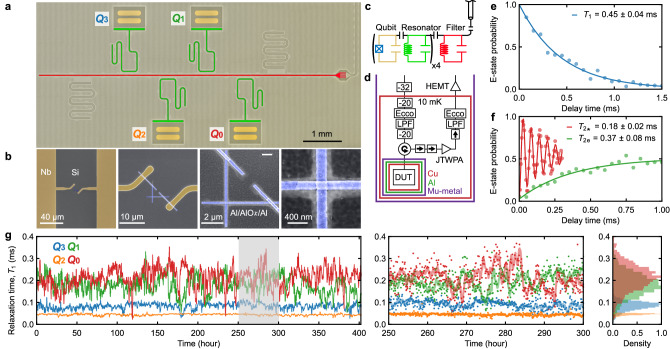
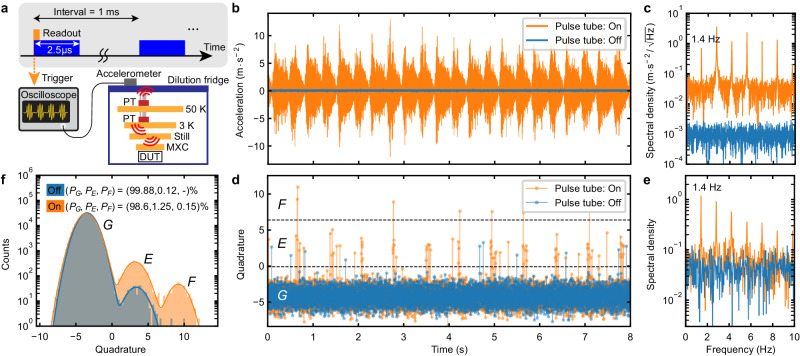
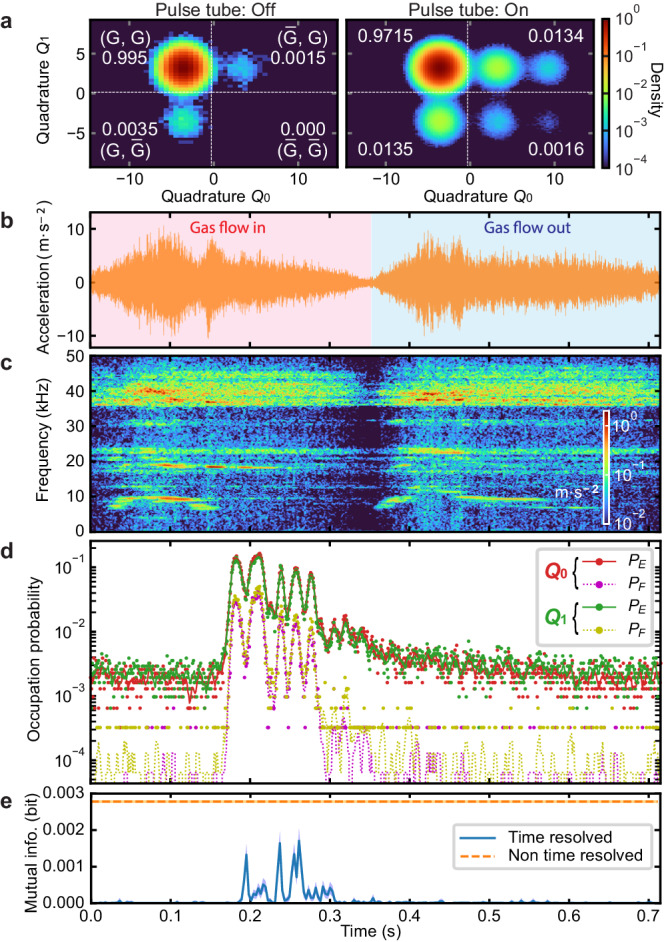
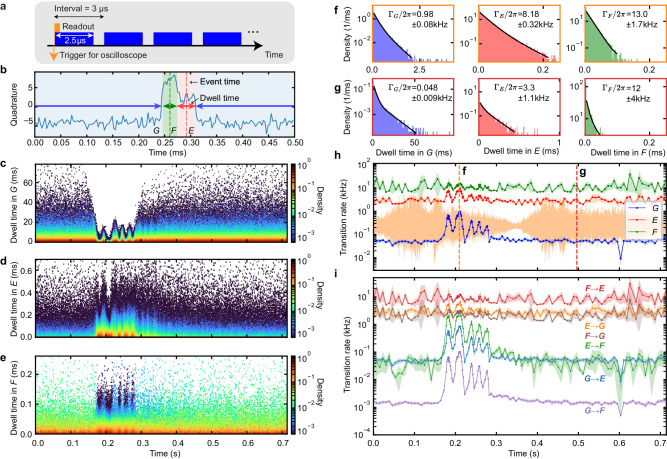
Superconducting qubits are among the most advanced candidates for achieving fault-tolerant quantum computing. Despite recent significant advancements in the qubit lifetimes, the origin of the loss mechanism for state-of-the-art qubits is still subject to investigation. Furthermore, the successful implementation of quantum error correction requires negligible correlated errors between qubits. Here, we realize long-lived superconducting transmon qubits that exhibit fluctuating lifetimes, averaging 0.2 ms and exceeding 0.4 ms – corresponding to quality factors above 5 million and 10 million, respectively. We then investigate their dominant error mechanism. By introducing novel time-resolved error measurements that are synchronized with the operation of the pulse tube cooler in a dilution refrigerator, we find that mechanical vibrations from the pulse tube induce nonequilibrium dynamics in highly coherent qubits, leading to their correlated bit-flip errors. Our findings not only deepen our understanding of the qubit error mechanisms but also provide valuable insights into potential error-mitigation strategies for achieving fault tolerance by decoupling superconducting qubits from their mechanical environments.
Overview
The claims and statistics of this paper haven’t been checked yet.
Free: it reads the open-access text and checks the first 5 claims that cite a source we can check. Create a free account to check every claim.
Integrity signals
Registry
Cites
Statistics
Figures
Verification
Claims the paper makes
The claims and statistics of this paper haven’t been checked yet.
Free: it reads the open-access text and checks the first 5 claims that cite a source we can check. Create a free account to check every claim.
Claims other papers make about this one
Each is checked against this paper’s own text: does it say what the citing paper says it does?
The source backs part of the claim, not all of it — or backs it for a different population, condition or comparison.
In the citing paper
“The advantage of this fabrication technique is the possibility for in situ fabrication of the JJ and minimal etch damage to achieve high-coherence qubits of up to hundreds of microseconds19–22.”
From Advanced CMOS manufacturing of superconducting qubits on 300 mm wafers (2024) · cites this paper as [21]
Experimental — accuracy not yet measured
Self-check
Percentages, sums and reported differences re-computed from the paper’s own numbers.
The self-check needs the paper’s full text.
Citations
Cites
Quantum supremacy using a programmable superconducting processor
Arute, F., Arya, K., Babbush, R., Bacon, D., Bardin, J. C., Barends, R., Biswas, R., Boixo, S., Brandao, F. G. S. L., Buell, D. A., et al. (2019) · Nature · doi:10.1038/s41586-019-1666-5 · Cited by 7,720 · cited 11×
“By using the relationship between the signal-to-noise ratio in single-shot qubit readout and the readout-induced qubit dephasing, we con fi rm that our microwave measurement achieves a quantum ef fi ciency of η > 0.2 (see Supplementary Note 5).”
InfluentialSurface codes: Towards practical large-scale quantum computation
Fowler, A. G., Mariantoni, M., Martinis, J. M., & Cleland, A. N. (2012) · Physical Review A · doi:10.1103/physreva.86.032324 · Cited by 3,059
Superconducting quantum circuits at the surface code threshold for fault tolerance
Barends, R., Kelly, J., Megrant, A., Veitia, A., Sank, D., Jeffrey, E., White, T. C., Mutus, J., Fowler, A. G., Campbell, B., et al. (2014) · Nature · doi:10.1038/nature13171 · Cited by 1,733 · cited 12×
“By using the relationship between the signal-to-noise ratio in single-shot qubit readout and the readout-induced qubit dephasing, we con fi rm that our microwave measurement achieves a quantum ef fi ciency of η > 0.2 (see Supplementary Note 5).”
InfluentialSuperconducting Qubits: Current State of Play
Kjaergaard, M., Schwartz, M. E., Braumüller, J., Krantz, P., Wang, J. I.-J., Gustavsson, S., & Oliver, W. D. (2020) · Annual Review of Condensed Matter Physics · doi:10.1146/annurev-conmatphys-031119-050605 · Cited by 1,544 · cited 12×
“By using the relationship between the signal-to-noise ratio in single-shot qubit readout and the readout-induced qubit dephasing, we con fi rm that our microwave measurement achieves a quantum ef fi ciency of η > 0.2 (see Supplementary Note 5).”
InfluentialMicrowave photonics with superconducting quantum circuits
Gu, X., Kockum, A. F., Miranowicz, A., Liu, Y.-X., & Nori, F. (2017) · Physics Reports · doi:10.1016/j.physrep.2017.10.002 · Cited by 1,307
Superconducting Qubits: Current State of PlayPreprint
Kjærgaard, M., Schwartz, M. E., Braumüller, J., Krantz, P., Wang, J. I.-J., Gustavsson, S., & Oliver, W. D. (2020) · DSpace@MIT (Massachusetts Institute of Technology) · Cited by 1,192
Suppressing quantum errors by scaling a surface code logical qubit
Google Quantum, A. I., Acharya, R., Aleiner, I., Allen, R., Andersen, T. I., Ansmann, M., Arute, F., Arya, K., Asfaw, A., Atalaya, J., et al. (2023) · Nature · doi:10.1038/s41586-022-05434-1 · Cited by 1,103
Strong Quantum Computational Advantage Using a Superconducting Quantum Processor
Wu, Y., Bao, W.-S., Cao, S., Chen, F., Chen, M.-C., Chen, X., Chung, T.-H., Deng, H., Du, Y., Fan, D., et al. (2021) · Physical Review Letters · doi:10.1103/physrevlett.127.180501 · Cited by 1,059 · cited 2×
“Note that we show the spectral density of the absolute value of the raw vibrational data to capture the pulse tube repetition frequency (see Supplementary Note 7).”
Self-citationPaik, H., Schuster, D. I., Bishop, L. S., Kirchmair, G., Catelani, G., Sears, A. P., Johnson, B. R., Reagor, M. J., Frunzio, L., Glazman, L. I., et al. (2011) · Physical Review Letters · doi:10.1103/physrevlett.107.240501 · Cited by 1,054
Decoherence in Josephson Qubits from Dielectric Loss
Martinis, J. M., Cooper, K. B., McDermott, R., Steffen, M., Ansmann, M., Osborn, K. D., Cicak, K., Oh, S., Pappas, D. P., Simmonds, R. W., et al. (2005) · Physical Review Letters · doi:10.1103/physrevlett.95.210503 · Cited by 838 · cited 1×
“Indeed, such characterizations have revealed dominant loss mechanisms and sources of fl uctuations in superconducting qubits, such as surface dielectric loss 30 , TLSs 26,31 – 33 , nonequilibrium quasiparticles 34,35 , and ionizing radiation 36 – 38 .”
Cited by
Millisecond lifetimes and coherence times in 2D transmon qubits
Bland, M. P., Bahrami, F., Martinez, J. G. C., Prestegaard, P. H., Smitham, B. M., Joshi, A., Hedrick, E., Kumar, S., Yang, A., Pakpour‐Tabrizi, A. C., et al. (2025) · Nature · doi:10.1038/s41586-025-09687-4 · Cited by 214
Tuokkola, M., Sunada, Y., Kivijärvi, H., Albanese, J., Grönberg, L., Kaikkonen, J.-P., Vesterinen, V., Govenius, J., & Möttönen, M. (2025) · Nature Communications · doi:10.1038/s41467-025-61126-0 · Cited by 132
Quantum control of a cat qubit with bit-flip times exceeding ten seconds
Réglade, U., Bocquet, A., Gautier, R., Cohen, J., Marquet, A., Albertinale, E., Pankratova, N., Hallén, M., Rautschke, F., Sellem, L.-A., et al. (2024) · Nature · doi:10.1038/s41586-024-07294-3 · Cited by 80
Superconducting microwave cavities and qubits for quantum information systems
Krasnok, A., Dhakal, P., Fedorov, A., Frigola, P., Kelly, M., & Kutsaev, S. (2024) · Applied Physics Reviews · doi:10.1063/5.0155213 · Cited by 79
Advanced CMOS manufacturing of superconducting qubits on 300 mm wafers
Van Damme, J., Massar, S., Acharya, R., Ivanov, T., Perez Lozano, D., Canvel, Y., Demarets, M., Vangoidsenhoven, D., Hermans, Y., Lai, J. G., et al. (2024) · Nature · doi:10.1038/s41586-024-07941-9 · Cited by 63
Mitigation of interfacial dielectric loss in aluminum-on-silicon superconducting qubits
Biznárová, J., Osman, A., Rehnman, E., Chayanun, L., Križan, C., Malmberg, P., Rommel, M., Warren, C., Delsing, P., Yurgens, A., et al. (2024) · npj Quantum Information · doi:10.1038/s41534-024-00868-z · Cited by 77
Spring, P., Milanovic, L., Sunada, Y., Wang, S., van Loo, A. F., Tamate, S., & Nakamura, Y. (2025) · PRX Quantum · doi:10.1103/prxquantum.6.020345 · Cited by 94
Synchronous detection of cosmic rays and correlated errors in superconducting qubit arrays
Harrington, P. M., Li, M., Hays, M., Pontseele, W. V. D., Mayer, D., Pinckney, H. D., Contipelli, F., Gingras, M., Niedzielski, B. M., Stickler, H., et al. (2025) · Nature Communications · doi:10.1038/s41467-025-61385-x · Cited by 85
Marxer, F., Mrożek, J., Andersson, J., Abdurakhimov, L. V., Ádám, J., Bergholm, V., Beriwal, R., Chan, C. F., Dahl, S., Das, S. R., et al. (2026) · PRX Quantum · doi:10.1103/n86s-2b88 · Cited by 69
Non-Markovian dynamics of a superconducting qubit in a phononic bandgap
Odeh, M., Godeneli, K., Li, E., Tangirala, R., Zhou, H., Zhang, X., Zhang, Z.-H., & Sipahigil, A. (2025) · Nature Physics · doi:10.1038/s41567-024-02740-5 · Cited by 66
Low-Energy Backgrounds in Solid-State Phonon and Charge Detectors
Baxter, D., Essig, R., Hochberg, Y., Kaznacheeva, M., von Krosigk, B., Reindl, F., Romani, R. K., & Wagner, F. (2025) · Annual Review of Nuclear and Particle Science · doi:10.1146/annurev-nucl-121423-100849 · Cited by 42
Thermometry based on a superconducting qubit
Lvov, D. S., Lemzyakov, S. A., Ankerhold, E., Peltonen, J. T., & Pekola, J. P. (2025) · Physical Review Applied · doi:10.1103/physrevapplied.23.054079 · Cited by 40
A high-efficiency elementary network of interchangeable superconducting qubit devices
Mollenhauer, M., Irfan, A., Cao, X., Mandal, S., & Pfaff, W. (2025) · Nature Electronics · doi:10.1038/s41928-025-01404-3 · Cited by 42
“A more mature design that preserves state-of-the-art coherence times 34,47–50 would enable intermodule gate infidelities approaching 10 −3 (Fig.”
Quantum collective motion of macroscopic mechanical oscillators
Chegnizadeh, M., Scigliuzzo, M., Youssefi, A., Kono, S., Guzovskii, E., & Kippenberg, T. J. (2024) · Science · doi:10.1126/science.adr8187 · Cited by 34
Self-citationMencia, R., Lin, W.-J., Cho, H., Vavilov, M., & Manucharyan, V. (2024) · PRX Quantum · doi:10.1103/prxquantum.5.040318 · Cited by 28
Entangling Schrödinger’s cat states by bridging discrete- and continuous-variable encoding
Hoshi, D., Nagase, T., Kwon, S., Iyama, D., Kamiya, T., Fujii, S., Mukai, H., Ahmed, S., Kockum, A. F., Watabe, S., et al. (2025) · Nature Communications · doi:10.1038/s41467-025-56503-8 · Cited by 31
Quantum control of a cat-qubit with bit-flip times exceeding ten secondsPreprint
Réglade, U., Bocquet, A., Gautier, R., Cohen, J., Marquet, A., Albertinale, E., Pankratova, N., Hallén, M., Rautschke, F., Sellem, L.-A., et al. (2023) · arXiv (Cornell University) · doi:10.48550/arxiv.2307.06617 · Cited by 25
Correlated Quasiparticle Poisoning from Phonon-Only Events in Superconducting Qubits
Yelton, E., Larson, C. P., Dodge, K., Okubo, K., & Plourde, B. L. T. (2025) · Physical Review Letters · doi:10.1103/h65v-ttbw · Cited by 28
Novel qubits in hybrid semiconductor–superconductor nanostructures
Pita‐Vidal, M., Souto, R. S., Goswami, S., Andersen, C. K., Katsaros, G., Shabani, J., & Aguado, R. (2026) · Physics Reports · doi:10.1016/j.physrep.2026.10.002 · Cited by 21
Tantalum airbridges for scalable superconducting quantum processors
Bu, K., Huai, S., Zhang, Z., Li, D., Li, Y., Hu, J., Yang, X., Dai, M., Cai, T., Zheng, Y.-C., et al. (2025) · npj Quantum Information · doi:10.1038/s41534-025-00972-8 · Cited by 29
Simulating open quantum systems with giant atoms
Chen, G., & Kockum, A. F. (2025) · Quantum Science and Technology · doi:10.1088/2058-9565/adb2bd · Cited by 23
Universal bound on microwave dissipation in superconducting circuits
Charpentier, T., Khvalyuk, A. V., Ioffe, L. B., Feigel’man, M. V., Roch, N., & Sacépé, B. (2026) · Science Advances · doi:10.1126/sciadv.aed3922 · Cited by 16
“These mechanisms include dielectric losses [11], non-equilibrium quasiparticles [12–15], magnetic vortices [16–19], radiative losses [8–10], and, more recently, mechanical vibrations [20] or substrate piezoelectricity [21, 22].”
Identifying materials-level sources of performance variation in superconducting transmon qubits
Murthy, A. A., Bal, M., Bedzyk, M. J., Cansizoglu, H., Chan, R. K., Chandrasekhar, V., Crisa, F., Datta, A., Deng, Y., Diaz, C. D. M., et al. (2026) · Applied Physics Reviews · doi:10.1063/5.0299931 · Cited by 18
Mansfield, E. S., Seegerer, S., Vesanen, P. T., Echavarria, J., Farooqi, M. N., Mete, B., & Schulz, L. B. (2025) · International Conference for High Performance Computing, Networking, Storage and Analysis (SC) · doi:10.1145/3731599.3767551 · Cited by 18
Theory of quasiparticle generation by microwave drives in superconducting qubits
Chowdhury, S., Hays, M., Jha, S., Serniak, K., Orlando, T. P., Grover, J. A., & Oliver, W. D. (2025) · Physical Review Applied · doi:10.1103/xpxb-d9xd · Cited by 13
Applications of Superconductor–Normal Metal Interfaces
Lemzyakov, S. A., Karimi, B., Nakamura, S., Lvov, D. S., Upadhyay, R., Satrya, C. D., Chen, Z.-Y., Subero, D., Chang, Y., Wang, L. B., et al. (2024) · Journal of Low Temperature Physics · doi:10.1007/s10909-024-03144-8 · Cited by 13
Krypton-sputtered tantalum films for scalable high-performance quantum devices
Olszewski, M. W., Kong, L., Reinhardt, S., Tong, D., Du, X., Gianluca, G. D., Lu, H., Roy, S., Zhang, L., Biedron, A. B., et al. (2026) · Nature Materials · doi:10.1038/s41563-026-02718-z · Cited by 15
Efficient Decoupling of a Nonlinear Qubit Mode from Its Environment
Pfeiffer, F., Werninghaus, M., Schweizer, C., Bruckmoser, N., Koch, L., Glaser, N. J., Huber, G. B. P., Bunch, D., Haslbeck, F. X., Knudsen, M., et al. (2024) · Physical Review X · doi:10.1103/physrevx.14.041007 · Cited by 15
Fast Universal Entangling Gate for Superconducting Quantum ComputersPreprint
AbuGhanem, M., Homid, A. H., Hendy, A. S., Obada, A. ‐. F., & Eleuch, H. (2024) · SSRN Electronic Journal · doi:10.2139/ssrn.4726035 · Cited by 14
In Situ Benchmarking of Fault-Tolerant Quantum Circuits: Clifford Circuits
Anonymous, Hangleiter, D., Bluvstein, D., Lukin, M. D., & Gullans, M. J. (2026) · PRX Quantum · doi:10.1103/ghn4-8y96 · Cited by 13
Interface-sensitive microwave loss in superconducting tantalum films sputtered on c-plane sapphire
McFadden, A., Larson, T. F. Q., Gill, S., Dixit, A. V., Simmonds, R., Lecocq, F., Oh, J., & Zhou, L. W. (2025) · Physical Review Materials · doi:10.1103/lwn1-fznb · Cited by 16
“…have benefited from improvements in measurement setup, device design, layout [3,4], and more recently advances in materials used to form the capacitor metal, where state-of-the-art transmon coherence times have been demonstrated using aluminum (Al) [5], niobium (Nb) [6,7], and tantalum (Ta) [8].”
Universal Pulses for Superconducting Qudit Ladder Gates
Li, B., Cárdenas-López, F. A., Lupaşcu, A., & Motzoi, F. (2025) · PRX Quantum · doi:10.1103/9dxw-4c7y · Cited by 15
“…that improvement of the coherence times could be possible by implementing different fabrication techniques such as surface error mitigation [70, 71], changing the Niobium with Tantalum as the base superconductor [72, 73] or mitigating the mi-cromotion of the circuitry [74], among other techniques.”
Chang, C. W. S., van Loo, A. F., Hung, C.-C., Zhou, Y., Gnandt, C., Tamate, S., & Nakamura, Y. (2025) · Physical Review Applied · doi:10.1103/qhl6-cz2z · Cited by 9
Real-Time Adaptive Tracking of Fluctuating Relaxation Rates in Superconducting Qubits
Berritta, F., Benestad, J., Krzywda, J. A., Krause, O., Marciniak, M. A., Krøjer, S., Warren, C., Hogedal, E., Nylander, A., Ahmad, I., et al. (2026) · Physical Review X · doi:10.1103/gk1b-stl3 · Cited by 23
“Our adaptive Bayesian technique could be employed for simultaneous relaxation time estimations across multiple qubits [18, 60], to investigate temporal and spatial correlations at significantly higher frequency bandwidths than previously achieved.”
Spectral signature of high-order photon processes enhanced by Cooper-pair pairing
Smith, W. C., Borgognoni, A., Villiers, M., Roverc’h, E., Palomo, J. M., Delbecq, M. R., Kontos, T., Campagne-Ibarcq, P., Douçot, B., & Leghtas, Z. (2025) · Nature Communications · doi:10.1038/s41467-025-62047-8 · Cited by 13
“Our results open a new regime of high-order photon interactions in microwave quantum optics.”
Transmon Qubit Modeling and Characterization for Dark Matter Search
Moretti, R., Labranca, D., Campana, P., Carobene, R., Gobbo, M., Castellanos-Beltran, M. A., Olaya, D. I., Hopkins, P. F., Banchi, L., Borghesi, M., et al. (2025) · IEEE Transactions on Quantum Engineering · doi:10.1109/tqe.2025.3633176 · Cited by 12
Benchmarking the quality of multiplexed qubit readout beyond assignment fidelity
Giovanni, A. D., Aasen, A. S., Lisenfeld, J., Gärttner, M., Rotzinger, H., & Ustinov, A. V. (2025) · Physical Review Applied · doi:10.1103/dpft-lxtx · Cited by 8
Integration of Through‐Sapphire Substrate Machining with Superconducting Quantum Processors
Acharya, N., Armstrong, R., Balaji, Y., Crawford, K. G., Gates, J. C., Gow, P. C., Kennedy, O. W., Pothuraju, R. D., Shahbazi, K., & Shelly, C. D. (2025) · Advanced Materials · doi:10.1002/adma.202411780 · Cited by 13
Surface-Morphology-Assisted Trapping of Strongly Coupled Electron-on-Neon Charge States
Zheng, K., Song, X., & Murch, K. W. (2025) · Physical Review Letters · doi:10.1103/8v7d-53x7 · Cited by 6
Beta Tantalum Transmon Qubits with Quality Factors Approaching 10 MillionPreprint
Joshi, A., Jindal, A., Prestegaard, P. H., Bahrami, F., Hedrick, E., Bland, M. P., Gerg, T., Cheng, G., Yao, N., Cava, R. J., et al. (2026) · arXiv (Cornell University) · doi:10.48550/arxiv.2603.13174 · Cited by 6
Quantum Acoustics with Tunable Nonlinearity in the Superstrong Coupling Regime
Scigliuzzo, M., Peyruchat, L., Marabini, R. M., Becker, C., Jouanny, V., Delsing, P., & Scarlino, P. (2026) · PRX Quantum · doi:10.1103/rk3m-dnwp · Cited by 5
“Moreover, with improved fabrication techniques—such as surface cleaning prior to qubit deposition [66]—the internal loss rate of the trans-mon could be reduced down to κ tr / 2 π = 300 kHz [16], as assumed in our simulations.”
Self-citationMetamaterials in superconducting and cryogenic quantum technologies
Krasnok, A. (2026) · Applied Physics Reviews · doi:10.1063/5.0282013 · Cited by 5
Scalable quantum simulator with an extended gate set in giant atoms
Chen, G., & Kockum, A. F. (2025) · Quantum · doi:10.22331/q-2026-01-30-1992 · Cited by 7
Distinguishing types of correlated errors in superconducting qubits
Binney, H. P., Pinckney, H. D., Azar, K., Harrington, P. M., Jha, S., Li, M., Yang, J., Contipelli, F., Pinero, R. D., Gingras, M., et al. (2026) · Physical Review Applied · doi:10.1103/j235-47t6 · Cited by 6
“Other studies have shown that the vibrations from the PT can cause correlated qubit errors and disrupt qubit coherence [15].”
InfluentialDecoherence of surface phonons in a quantum acoustic system
Undershute, C., Kitzman, J. M., Mikolas, C. A., & Pollanen, J. (2025) · Physical Review A · doi:10.1103/physreva.111.012615 · Cited by 5
Efficient preparation of high-dimensional hybrid entangled states in circuit quantum electrodynamics
Lv, W.-C., Zhao, W., Wang, Y., Kang, Y., Feng, W., Zhang, G., Yu, L. Z., Yang, C., & Su, Q.-P. (2025) · Physical Review Applied · doi:10.1103/physrevapplied.23.054037 · Cited by 5
Kerschbaum, M., Wagner, F., Ognjanović, U., Vio, G., Knapp, K., Zanuz, D. C., Flasby, A., Panah, M. B., Wallraff, A. J., & Besse, J.-C. (2026) · arXiv (Cornell University) · doi:10.48550/arxiv.2602.05806 · Cited by 6
Youssefi, A., Chegnizadeh, M., Scigliuzzo, M., & Kippenberg, T. J. (2025) · Physical Review Applied · doi:10.1103/q5bc-y54w · Cited by 5
“High coherence superconducting circuits are traditionally realized in aluminum [44], niobium [45, 46] and more recently tantalum [47, 48].”
Self-citationLoss Mechanisms of Epitaxial NbN Coplanar Waveguide Resonators on an MgO Substrate
Watanabe, K., Kutsuma, H., Kim, S., & Yamashita, T. (2024) · IEEE Transactions on Applied Superconductivity · doi:10.1109/tasc.2024.3513276 · Cited by 4
Controlled- Z gates with giant atoms in structured waveguides
Rieck, W., Soro, A., Kockum, A. F., & Chen, G. (2026) · Physical Review A · doi:10.1103/yfm3-qmqq · Cited by 2
Dynamic modeling of 3He Sorption pumps for dilution refrigerators
Qin, L., Ni, F., & Cao, H. (2025) · Applied Thermal Engineering · doi:10.1016/j.applthermaleng.2025.127999 · Cited by 3
Sato, R., & Matsumura, Y. (2025) · IOP Conference Series Materials Science and Engineering · doi:10.1088/1757-899x/1327/1/012049 · Cited by 2
“Particularly in the field of physics and chemistry, where mechanical vibration can adversely affect evaluation results [1]-[3] , PT cryocoolers are extensively used due to their ability to minimize such vibrations.”
Effect of multiqubit correlated noise on surface-code thresholds
Wang, S., Yan, Y., Xia, Z., & Wang, X. (2025) · Physical Review A · doi:10.1103/hjqn-lyh2 · Cited by 4
Self-citationZhang, D.-X., Ni, J.-H., Zhang, Y., Yu, L. Z., Kang, Y., Su, Q.-P., & Yang, C. (2025) · Chinese Journal of Physics · doi:10.1016/j.cjph.2025.11.035 · Cited by 2
Evaluating radiation impact on transmon qubits in above and underground facilities
Dominicis, F. D., Roy, T., Mariani, A., Bal, M., Bonomo, C., Casali, N., Colantoni, I., Crisa, F., Cruciani, A., Ferroni, F., et al. (2026) · EPJ Quantum Technology · doi:10.1140/epjqt/s40507-026-00490-2 · Cited by 5
Brace, N., D’Addabbo, A., D'Eramo, S., Fu, S. H., Hurst, M. T., O'Donnell, T., Petti, S., Sharma, V., Surukuchi, P. T., Torres, A., et al. (2026) · Journal of Instrumentation · doi:10.1088/1748-0221/21/04/p04050 · Cited by 2
“Furthermore, they present a growing challenge for the usage of DDRs in quantum sensing and quantum computing applications [18, 19].”
Wang, S., Xia, Z., Yan, Y., & Wang, X. (2026) · npj Quantum Information · doi:10.1038/s41534-026-01276-1 · Cited by 3
Self-citationQuantum metrology based on superconducting qubits
Kolosvetov, A., Gusarov, N., Slepnev, V., Perelshtein, M., Sevriuk, V., Gubaydullin, A. R., & Vinokur, V. M. (2026) · npj Quantum Information · doi:10.1038/s41534-026-01285-0 · Cited by 2
“Current state-of-the-art transmon 24,25 and fl uxonium 26,27 qubits exhibit coherence times reaching millisecond scales, primarily limited by intrinsic 1/ f noise 28 – 30 , which pre-dominantlyarisesfromtwo-levelsystems(TLS) 31 .”
InfluentialParameter optimization for the unimon qubit
Duda, R., Hyyppä, E., Mukkula, O., Vadimov, V., & Möttönen, M. (2025) · Physical Review Research · doi:10.1103/7yvd-z6hk · Cited by 2
“The fabrication of the first unimon qubits did not utilize state-of-the-art fabrication recipes [17, 63], and hence fabrication improvements have the potential to reduce the dielectric losses.”
Numerical study of a novel needle valve as the double inlet for 4 K pulse tube refrigerators
Zhang, Y., Liu, X., & Pan, C. (2025) · Flow Measurement and Instrumentation · doi:10.1016/j.flowmeasinst.2025.103021 · Cited by 1
Superconducting quantum circuit technology based on nitride superconductors
Terai, H., Kim, S., Pham, D., Mima, S., Hishida, Y., Shirai, S., Noguchi, A., Roppongi, M., Matsuura, K., Fuse, T., et al. (2026) · Applied Physics Express · doi:10.35848/1882-0786/ae72ea · Cited by 4
Ni, J.-H., Lv, W.-C., Zhang, D.-X., Bin, L., Zhang, Y., Yu, Y., Su, Q.-P., & Yang, C. (2025) · Chinese Journal of Physics · doi:10.1016/j.cjph.2025.01.040 · Cited by 1
Mediating high-order photon-photon interactions by Cooper-pair pairing
Borgognoni, A. (2024) · theses.fr (ABES) · doi:10.70675/9f2d9a93z1349z479bz973azd46699aa2d1f · Cited by 1
Development of Superconducting Qubits Based on Nitride Superconductors
Terai, H., Kim, S., Yamashita, T., Inomata, K., & Semba, K. (2025) · Vacuum and Surface Science · doi:10.1380/vss.68.137
Zhang, Q., Bin, L., Zhang, Y., Kong, W.-H., Ni, J.-H., Yu, L. Z., Kang, Y., Su, Q.-P., & Yang, C. (2026) · Physical Review A · doi:10.1103/g2nv-9cy7
Coherence Development at IQM Quantum Computers
Steggles, M., Rebello, A., Takmakov, I., Guthrie, A., Zhu, L., Karis, A., Frieiro, A. G., Mylläri, T., Takala, E., Abdurakhimov, L. V., et al. (2026) · Communications in computer and information science · doi:10.1007/978-3-032-13855-2_29
Fault-tolerant threshold of quantum circuit under correlated noise
Wang, Z.-Y. (2026) · Communications in Theoretical Physics · doi:10.1088/1572-9494/ae4b15
“It is therefore necessary to account for correlated noise affecting both the control and target qubits when modeling quantum system evolution, especially in two-qubit gate operations [ 26, 27 ] .”
Achieving speedup in Dark Matter search experiments with a transmon-based NISQ algorithmPreprint
Moretti, R., Campana, P., Carobene, R., Cattaneo, A., Gobbo, M., Labranca, D., Borghesi, M., Faverzani, M., Ferri, E., Gamba, S., et al. (2026) · arXiv (Cornell University) · doi:10.48550/arxiv.2603.03157
“For signals in the transmon band, τ DM ∼ O (100) µ s, similar to the coherence times of state-of-the-art transmon devices [16–18].”
Quantum control of a cat-qubit with macroscopic bit-flip times
Réglade, U. (2024) · theses.fr (ABES) · doi:10.70675/e7668ef7z8a9ez4febz83b5z90dbee9cc472
Kong, J., Wang, D., Wang, X., & Cao, H. (2026) · Journal of Materials Chemistry A · doi:10.1039/d6ta02875f
Self-citationParticle Physics Driven by Quantum Technology - Quantum Simulations and Quantum SensingPreprint
Bloch, I. M., Carena, M., Chen, Y., Li, X., Li, Y.-Y., & Shu, J. (2026) · arXiv (Cornell University) · doi:10.48550/arxiv.2609.20500 · Cited by 1
Metadata
- Authors
- Kono, S., Pan, J., Chegnizadeh, M., Wang, X., Youssefi, A., Scigliuzzo, M., & Kippenberg, T. J.
- Affiliations
- École Polytechnique Fédérale de Lausanne (CH)
- Corresponding author
- Kono, Shingo
- Kippenberg, Tobias J.
- Venue
- Nature Communications
- Published
- 2024-05-10
- Volume
- 15
- Issue
- 1
- Pages
- 3950-3950
- ISSN
- 2041-1723 (ISSN-L)
- PMC
- PMC11087564
- OpenAlex
- W4396799032
- Cited by
- 50
- References
- 76
- Citations by year
- 2026: 12 · 2025: 29 · 2024: 9
- FWCI
- 7.38
- Type
- journal article
- Language
- en
- Open access
- gold
- doi.org
- Licence
- cc-by
- creativecommons.org/licenses/by/4.0 (tdm)
- creativecommons.org/licenses/by/4.0 (vor)
- Locations
- Nature Communications (publishedVersion, cc-by)
- PubMed Central (publishedVersion, cc-by)
- PubMed (publishedVersion)
- RePEc: Research Papers in Economics (submittedVersion)
- DOAJ (DOAJ: Directory of Open Access Journals) (submittedVersion, cc-by-sa)
- Infoscience (Ecole Polytechnique Fédérale de Lausanne) (submittedVersion, cc-by-nc-nd)
- Funders
- National Science Foundation (51NF40-185902, 204927)
- European Commission (101033361)
- École Polytechnique Fédérale de Lausanne
- Schweizerischer Nationalfonds zur Förderung der Wissenschaftlichen Forschung (51NF40, 185902, 204927)
- Horizon 2020 Framework Programme (EU‐H2020, 835329)
- National Center of Competence in Research Quantum Science and Technology (185902, 51NF40-185902)
- H2020 European Research Council (835329)
- Topics
- Physical Sciences › Physics and Astronomy › Atomic and Molecular Physics, and Optics › Quantum Information and Cryptography
- Physical Sciences › Computer Science › Artificial Intelligence › Quantum Computing Algorithms and Architecture
- Physical Sciences › Physics and Astronomy › Atomic and Molecular Physics, and Optics › Mechanical and Optical Resonators
- Keywords
- superconducting qubits, transmon qubits, correlated errors, bit-flip errors, qubit relaxation time, mechanical vibration, pulse tube refrigerator, dilution refrigerator, nonequilibrium dynamics, error mitigation, fault-tolerant quantum computing, quality factor
About these checks
Registry, retraction, Cites and statistics results are computed, not judged, with one exception: a printed reference that no index lists is read once by a model before it counts as a citation error. Claims are extracted by a model and kept only when their quote appears verbatim in the text; each cited source is then checked, with a model’s help, for whether it says what the claim relies on. Those verdicts can be wrong — read the claim’s quote and the cited source before relying on one.
Statistics and arithmetic are recomputed, not judged.
Confidence bands are shown only for fields calibrated on our annotated test set. None is calibrated yet, so no band is shown.
What counts as a claim ›How we measure confidence ›How we check this ›
Are you an author, or do you see a problem with this page? Request a review
Data sources
Bibliographic data: Semantic Scholar, OpenAlex, Crossref.
Contains information from the Semantic Scholar Academic Graph Datasets, made available under the ODC Attribution License (ODC-BY 1.0).
Semantic Scholar’s data is described in: Kinney, R., et al. (2023). The Semantic Scholar Open Data Platform. arXiv:2301.10140.
