

Mechanically induced correlated errors on superconducting qubits with relaxation times exceeding 0.4 ms
Open accessThe DOI matches its Crossref record; 76 of the 76 references it cites were found in a registry or an index.
Abstract
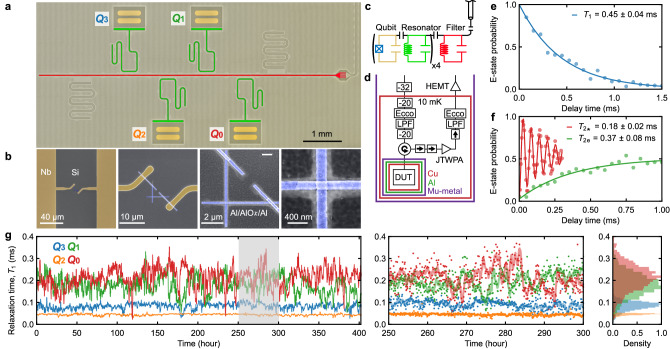
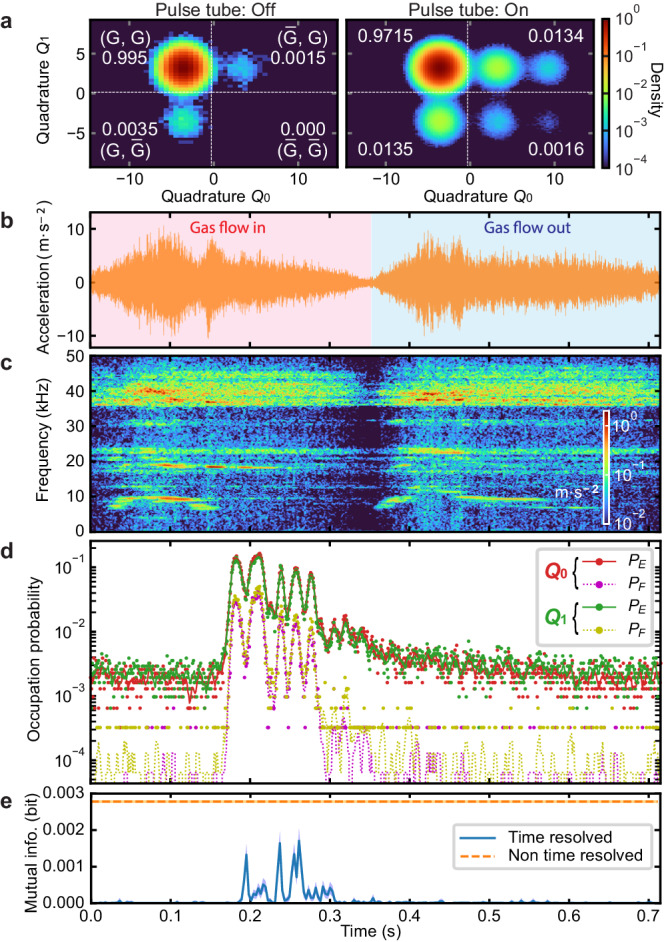
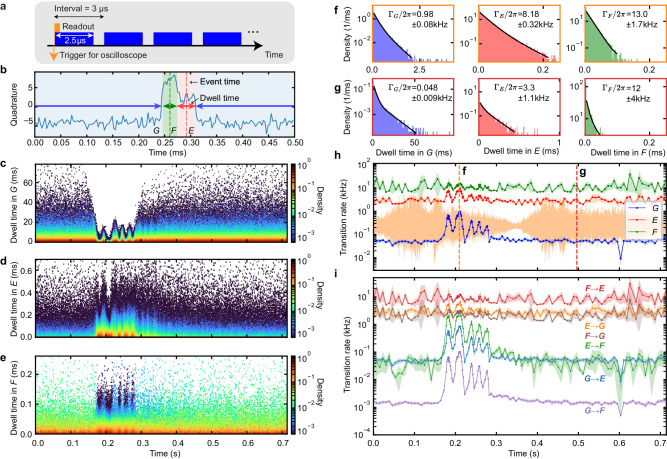
Superconducting qubits are among the most advanced candidates for achieving fault-tolerant quantum computing. Despite recent significant advancements in the qubit lifetimes, the origin of the loss mechanism for state-of-the-art qubits is still subject to investigation. Furthermore, the successful implementation of quantum error correction requires negligible correlated errors between qubits. Here, we realize long-lived superconducting transmon qubits that exhibit fluctuating lifetimes, averaging 0.2 ms and exceeding 0.4 ms – corresponding to quality factors above 5 million and 10 million, respectively. We then investigate their dominant error mechanism. By introducing novel time-resolved error measurements that are synchronized with the operation of the pulse tube cooler in a dilution refrigerator, we find that mechanical vibrations from the pulse tube induce nonequilibrium dynamics in highly coherent qubits, leading to their correlated bit-flip errors. Our findings not only deepen our understanding of the qubit error mechanisms but also provide valuable insights into potential error-mitigation strategies for achieving fault tolerance by decoupling superconducting qubits from their mechanical environments.
Overview
The claims and statistics of this paper haven’t been checked yet.
Free: it reads the open-access text and checks the first 5 claims that cite a source we can check. Create a free account to check every claim.
Integrity signals
Registry
Cites
Statistics
Figures
Verification
Claims the paper makes
The claims and statistics of this paper haven’t been checked yet.
Free: it reads the open-access text and checks the first 5 claims that cite a source we can check. Create a free account to check every claim.
Claims other papers make about this one
Each is checked against this paper’s own text: does it say what the citing paper says it does?
The source backs part of the claim, not all of it — or backs it for a different population, condition or comparison.
In the citing paper
“The advantage of this fabrication technique is the possibility for in situ fabrication of the JJ and minimal etch damage to achieve high-coherence qubits of up to hundreds of microseconds19–22.”
From Advanced CMOS manufacturing of superconducting qubits on 300 mm wafers (2024) · cites this paper as [21]
Experimental — accuracy not yet measured
Self-check
Percentages, sums and reported differences re-computed from the paper’s own numbers.
The self-check needs the paper’s full text.
Citations
Cites
Quantum supremacy using a programmable superconducting processor
Arute, F., Arya, K., Babbush, R., Bacon, D., Bardin, J. C., Barends, R., Biswas, R., Boixo, S., Brandao, F. G. S. L., Buell, D. A., et al. (2019) · Nature · doi:10.1038/s41586-019-1666-5 · Cited by 7,720 · cited 11×
“By using the relationship between the signal-to-noise ratio in single-shot qubit readout and the readout-induced qubit dephasing, we con fi rm that our microwave measurement achieves a quantum ef fi ciency of η > 0.2 (see Supplementary Note 5).”
InfluentialSurface codes: Towards practical large-scale quantum computation
Fowler, A. G., Mariantoni, M., Martinis, J. M., & Cleland, A. N. (2012) · Physical Review A · doi:10.1103/physreva.86.032324 · Cited by 3,059
Superconducting quantum circuits at the surface code threshold for fault tolerance
Barends, R., Kelly, J., Megrant, A., Veitia, A., Sank, D., Jeffrey, E., White, T. C., Mutus, J., Fowler, A. G., Campbell, B., et al. (2014) · Nature · doi:10.1038/nature13171 · Cited by 1,733 · cited 12×
“By using the relationship between the signal-to-noise ratio in single-shot qubit readout and the readout-induced qubit dephasing, we con fi rm that our microwave measurement achieves a quantum ef fi ciency of η > 0.2 (see Supplementary Note 5).”
InfluentialSuperconducting Qubits: Current State of Play
Kjaergaard, M., Schwartz, M. E., Braumüller, J., Krantz, P., Wang, J. I.-J., Gustavsson, S., & Oliver, W. D. (2020) · Annual Review of Condensed Matter Physics · doi:10.1146/annurev-conmatphys-031119-050605 · Cited by 1,544 · cited 12×
“By using the relationship between the signal-to-noise ratio in single-shot qubit readout and the readout-induced qubit dephasing, we con fi rm that our microwave measurement achieves a quantum ef fi ciency of η > 0.2 (see Supplementary Note 5).”
InfluentialMicrowave photonics with superconducting quantum circuits
Gu, X., Kockum, A. F., Miranowicz, A., Liu, Y.-X., & Nori, F. (2017) · Physics Reports · doi:10.1016/j.physrep.2017.10.002 · Cited by 1,307
Superconducting Qubits: Current State of PlayPreprint
Kjærgaard, M., Schwartz, M. E., Braumüller, J., Krantz, P., Wang, J. I.-J., Gustavsson, S., & Oliver, W. D. (2020) · DSpace@MIT (Massachusetts Institute of Technology) · Cited by 1,192
Suppressing quantum errors by scaling a surface code logical qubit
Google Quantum, A. I., Acharya, R., Aleiner, I., Allen, R., Andersen, T. I., Ansmann, M., Arute, F., Arya, K., Asfaw, A., Atalaya, J., et al. (2023) · Nature · doi:10.1038/s41586-022-05434-1 · Cited by 1,103
Strong Quantum Computational Advantage Using a Superconducting Quantum Processor
Wu, Y., Bao, W.-S., Cao, S., Chen, F., Chen, M.-C., Chen, X., Chung, T.-H., Deng, H., Du, Y., Fan, D., et al. (2021) · Physical Review Letters · doi:10.1103/physrevlett.127.180501 · Cited by 1,059 · cited 2×
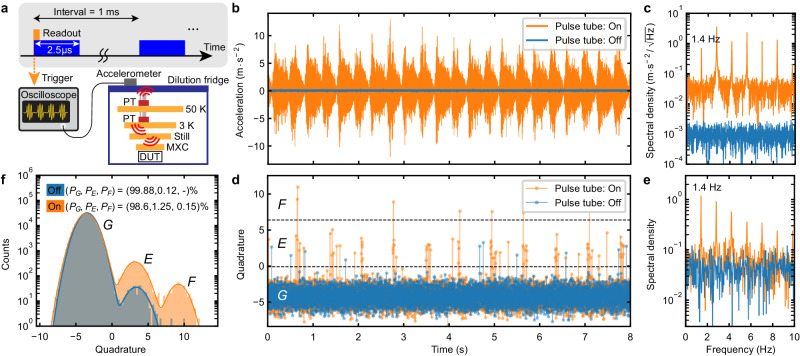
“Note that we show the spectral density of the absolute value of the raw vibrational data to capture the pulse tube repetition frequency (see Supplementary Note 7).”
Self-citationPaik, H., Schuster, D. I., Bishop, L. S., Kirchmair, G., Catelani, G., Sears, A. P., Johnson, B. R., Reagor, M. J., Frunzio, L., Glazman, L. I., et al. (2011) · Physical Review Letters · doi:10.1103/physrevlett.107.240501 · Cited by 1,054
Decoherence in Josephson Qubits from Dielectric Loss
Martinis, J. M., Cooper, K. B., McDermott, R., Steffen, M., Ansmann, M., Osborn, K. D., Cicak, K., Oh, S., Pappas, D. P., Simmonds, R. W., et al. (2005) · Physical Review Letters · doi:10.1103/physrevlett.95.210503 · Cited by 838 · cited 1×
“Indeed, such characterizations have revealed dominant loss mechanisms and sources of fl uctuations in superconducting qubits, such as surface dielectric loss 30 , TLSs 26,31 – 33 , nonequilibrium quasiparticles 34,35 , and ionizing radiation 36 – 38 .”
A near–quantum-limited Josephson traveling-wave parametric amplifier
Macklin, C., O’Brien, K., Hover, D., Schwartz, M. E., Bolkhovsky, V., Zhang, X., Oliver, W. D., & Siddiqi, I. (2015) · Science · doi:10.1126/science.aaa8525 · Cited by 821 · cited 6×
“To achieve nearly quantum-limited microwave measurement, we amplify micro-wavebackground noise interactingwiththequbit device by the JTWPA and the HEMT ampli fi er in the dilution refrigerator, followed by another ampli fi cation, demodulation, and digital sampling at room temperature.”
InfluentialRealizing repeated quantum error correction in a distance-three surface code
Krinner, S., Lacroix, N., Remm, A., Di Paolo, A., Genois, E., Leroux, C., Hellings, C., Lazar, S., Swiadek, F., Herrmann, J., et al. (2022) · Nature · doi:10.1038/s41586-022-04566-8 · Cited by 686
(2013) · Cambridge University Press eBooks · doi:10.1017/cbo9781139034807 · Cited by 655
Building logical qubits in a superconducting quantum computing system
Gambetta, J. M., Chow, J. M., & Steffen, M. (2017) · npj Quantum Information · doi:10.1038/s41534-016-0004-0 · Cited by 622
The flux qubit revisited to enhance coherence and reproducibility
Yan, F., Gustavsson, S., Kamal, A., Birenbaum, J., Sears, A. P., Hover, D., Gudmundsen, T. J., Rosenberg, D., Samach, G., Weber, S., et al. (2016) · Nature Communications · doi:10.1038/ncomms12964 · Cited by 587
Place, A. P. M., Rodgers, L. V. H., Mundada, P., Smitham, B. M., Fitzpatrick, M., Leng, Z., Premkumar, A., Bryon, J., Vrajitoarea, A., Sussman, S., et al. (2021) · Nature Communications · doi:10.1038/s41467-021-22030-5 · Cited by 563
Towards understanding two-level-systems in amorphous solids: insights from quantum circuits
Müller, C., Cole, J. H., & Lisenfeld, J. (2019) · Reports on Progress in Physics · doi:10.1088/1361-6633/ab3a7e · Cited by 508 · cited 3×
“On the other hand, TLSs couple to a qubit via their electric dipole-dipole interactions while couplingtoaphononicbathviatheirstrainpotential 40 .”
Hybrid quantum systems with circuit quantum electrodynamics
Clerk, A. A., Lehnert, K. W., Bertet, P., Petta, J. R., & Nakamura, Y. (2020) · Nature Physics · doi:10.1038/s41567-020-0797-9 · Cited by 456
Fast Accurate State Measurement with Superconducting Qubits
Jeffrey, E., Sank, D., Mutus, J. Y., White, T. C., Kelly, J., Barends, R., Chen, Y., Chen, Z., Chiaro, B., Dunsworth, A., et al. (2014) · Physical Review Letters · doi:10.1103/physrevlett.112.190504 · Cited by 449 · cited 1×
“To realize multiplexed dispersive readout, all the qubits are individually coupled to λ /4 readout resonators with different resonance frequencies around 7 GHz, sharing a λ /2 Purcell fi lter 51 .”
Decoherence benchmarking of superconducting qubits
Burnett, J. J., Bengtsson, A., Scigliuzzo, M., Niepce, D., Kudra, M., Delsing, P., & Bylander, J. (2019) · npj Quantum Information · doi:10.1038/s41534-019-0168-5 · Cited by 384 · cited 6×
“Indeed, such characterizations have revealed dominant loss mechanisms and sources of fl uctuations in superconducting qubits, such as surface dielectric loss 30 , TLSs 26,31 – 33 , nonequilibrium quasiparticles 34,35 , and ionizing radiation 36 – 38 .”
InfluentialSelf-citationTowards practical quantum computers: transmon qubit with a lifetime approaching 0.5 milliseconds
Wang, C., Li, X., Xu, H., Li, Z., Wang, J., Yang, Z., Mi, Z., Liang, X., Su, T., Yang, C., et al. (2022) · npj Quantum Information · doi:10.1038/s41534-021-00510-2 · Cited by 377
Towards understanding two-level-systems in amorphous solids - insights from quantum circuits
Müller, C., Cole, J. H., & Lisenfeld, J. (2024) · Figshare · Cited by 362
Surface participation and dielectric loss in superconducting qubits
Wang, C., Axline, C., Gao, Y. Y., Brecht, T., Chu, Y., Frunzio, L., Devoret, M. H., & Schoelkopf, R. J. (2015) · Applied Physics Letters · doi:10.1063/1.4934486 · Cited by 340 · cited 1×
“Indeed, such characterizations have revealed dominant loss mechanisms and sources of fl uctuations in superconducting qubits, such as surface dielectric loss 30 , TLSs 26,31 – 33 , nonequilibrium quasiparticles 34,35 , and ionizing radiation 36 – 38 .”
Coherent suppression of electromagnetic dissipation due to superconducting quasiparticles
Pop, I. M., Geerlings, K., Catelani, G., Schoelkopf, R. J., Glazman, L. I., & Devoret, M. H. (2014) · Nature · doi:10.1038/nature13017 · Cited by 332 · cited 1×
“However, similar phenomena are observed in various superconducting qubit systems, potentially linked to none-quilibrium quasiparticle dynamics 55 – 57 .”
Fluctuations of Energy-Relaxation Times in Superconducting Qubits
Klimov, P. V., Kelly, J., Chen, Z., Neeley, M., Megrant, A., Burkett, B., Barends, R., Arya, K., Chiaro, B., Chen, Y., et al. (2018) · Physical Review Letters · doi:10.1103/physrevlett.121.090502 · Cited by 328 · cited 6×
“Indeed, such characterizations have revealed dominant loss mechanisms and sources of fl uctuations in superconducting qubits, such as surface dielectric loss 30 , TLSs 26,31 – 33 , nonequilibrium quasiparticles 34,35 , and ionizing radiation 36 – 38 .”
InfluentialRealization of an Error-Correcting Surface Code with Superconducting Qubits
Zhao, Y., Ye, Y., Huang, H.-L., Zhang, Y., Wu, D., Guan, H., Zhu, Q., Wei, Z., He, T., Cao, S., et al. (2022) · Physical Review Letters · doi:10.1103/physrevlett.129.030501 · Cited by 321
Self-citationEngineering high-coherence superconducting qubits
Siddiqi, I. (2021) · Nature Reviews Materials · doi:10.1038/s41578-021-00370-4 · Cited by 311 · cited 1×
“…errors in superconducting qubits are dom-inantly limited by their coherence 4,5,14 , considerable efforts towards improvements in the qubit lifetimes have been made using insights from diverse fi elds 15 , ranging from classical and quantum circuit engineering 16 – 20 to material science 21 – 25 .”
Dispersive regime of circuit QED: Photon-dependent qubit dephasing and relaxation rates
Boissonneault, M., Gambetta, J. M., & Blais, A. (2009) · Physical Review A · doi:10.1103/physreva.79.013819 · Cited by 304 · cited 1×
“We attribute such increases to the readout-induced state fl ip 60 .”
Fast reset and suppressing spontaneous emission of a superconducting qubit
Reed, M. D., Johnson, B. R., Houck, A. A., DiCarlo, L., Chow, J. M., Schuster, D. I., Frunzio, L., & Schoelkopf, R. J. (2010) · Applied Physics Letters · doi:10.1063/1.3435463 · Cited by 285 · cited 1×
“…errors in superconducting qubits are dom-inantly limited by their coherence 4,5,14 , considerable efforts towards improvements in the qubit lifetimes have been made using insights from diverse fi elds 15 , ranging from classical and quantum circuit engineering 16 – 20 to material science 21 – 25 .”
Estimating the errors on measured entropy and mutual information
Roulston, M. S. (1999) · Physica D: Nonlinear Phenomena · doi:10.1016/s0167-2789(98)00269-3 · Cited by 281 · cited 1×
“53.”
Rapid High-fidelity Multiplexed Readout of Superconducting Qubits
Heinsoo, J., Andersen, C. K., Remm, A., Krinner, S., Walter, T., Salathé, Y., Gasparinetti, S., Besse, J.-C., Potočnik, A., Wallraff, A., et al. (2018) · Physical Review Applied · doi:10.1103/physrevapplied.10.034040 · Cited by 276
High-Coherence Fluxonium Qubit
Nguyen, L. B., Lin, Y.-H., Somoroff, A., Mencia, R., Grabon, N., & Manucharyan, V. E. (2019) · Physical Review X · doi:10.1103/physrevx.9.041041 · Cited by 261
Correlated charge noise and relaxation errors in superconducting qubits
Wilen, C. D., Abdullah, S., Kurinsky, N. A., Stanford, C., Cardani, L., D’Imperio, G., Tomei, C., Faoro, L., Ioffe, L. B., Liu, C. H., et al. (2021) · Nature · doi:10.1038/s41586-021-03557-5 · Cited by 246 · cited 1×
“More recently, it hasbeen reported thatthe absorption of ionizing radiation generates high-energy phonons in a qubit substrate, which leads to nonequilibrium quasiparticles, causing correlated charge-parity switching 28 and energy relaxations 29 of superconducting qubits.”
Measurement and control of quasiparticle dynamics in a superconducting qubit
Wang, C., Gao, Y. Y., Pop, I. M., Vool, U., Axline, C., Brecht, T., Heeres, R. W., Frunzio, L., Devoret, M. H., Catelani, G., et al. (2014) · Nature Communications · doi:10.1038/ncomms6836 · Cited by 230 · cited 2×
“Indeed, such characterizations have revealed dominant loss mechanisms and sources of fl uctuations in superconducting qubits, such as surface dielectric loss 30 , TLSs 26,31 – 33 , nonequilibrium quasiparticles 34,35 , and ionizing radiation 36 – 38 .”
Impact of ionizing radiation on superconducting qubit coherence
Vepsäläinen, A. P., Karamlou, A. H., Orrell, J. L., Dogra, A. S., Loer, B., Vasconcelos, F., Kim, D. K., Melville, A. J., Niedzielski, B. M., Yoder, J. L., et al. (2020) · Nature · doi:10.1038/s41586-020-2619-8 · Cited by 230
Hot Nonequilibrium Quasiparticles in Transmon Qubits
Serniak, K., Hays, M., de Lange, G., Diamond, S., Shankar, S., Burkhart, L. D., Frunzio, L., Houzet, M., & Devoret, M. H. (2018) · Physical Review Letters · doi:10.1103/physrevlett.121.157701 · Cited by 225 · cited 1×
“Indeed, such characterizations have revealed dominant loss mechanisms and sources of fl uctuations in superconducting qubits, such as surface dielectric loss 30 , TLSs 26,31 – 33 , nonequilibrium quasiparticles 34,35 , and ionizing radiation 36 – 38 .”
Coherence and Decay of Higher Energy Levels of a Superconducting Transmon Qubit
Peterer, M. J., Bader, S. J., Jin, X., Yan, F., Kamal, A., Gudmundsen, T. J., Leek, P. J., Orlando, T. P., Oliver, W. D., & Gustavsson, S. (2015) · Physical Review Letters · doi:10.1103/physrevlett.114.010501 · Cited by 206 · cited 1×
“This can be explained by readout-induced higher-order transitions 58 or auxiliary mode-assisted two-photon transitions 59 .”
Sank, D., Chen, Z., Khezri, M., Kelly, J., Barends, R., Campbell, B., Chen, Y., Chiaro, B., Dunsworth, A., Fowler, A., et al. (2016) · Physical Review Letters · doi:10.1103/physrevlett.117.190503 · Cited by 203 · cited 1×
“This can be explained by readout-induced higher-order transitions 58 or auxiliary mode-assisted two-photon transitions 59 .”
High-Fidelity, High-Scalability Two-Qubit Gate Scheme for Superconducting Qubits
Xu, Y., Chu, J., Yuan, J., Qiu, J., Zhou, Y., Zhang, L., Tan, X., Yu, Y., Liu, S., Li, J., et al. (2020) · Physical Review Letters · doi:10.1103/physrevlett.125.240503 · Cited by 196 · cited 1×
“Since the physical errors in superconducting qubits are dom-inantly limited by their coherence 4,5,14 , considerable efforts towards improvements in the qubit lifetimes have been made using insights from diverse fi elds 15 , ranging from classical and quantum circuit engineering 16 – 20 to material…”
Protecting superconducting qubits from radiation
Córcoles, A. D., Chow, J. M., Gambetta, J. M., Rigetti, C., Rozen, J. R., Keefe, G. A., Beth Rothwell, M., Ketchen, M. B., & Steffen, M. (2011) · Applied Physics Letters · doi:10.1063/1.3658630 · Cited by 193 · cited 1×
“Never-theless, our characterization does not cover the frequency range for infrared photons, which are more sensitive to a small mechanical displacement in microwave components and can induce a qubit decay by breaking Cooper pairs 61 .”
Resolving catastrophic error bursts from cosmic rays in large arrays of superconducting qubits
McEwen, M., Faoro, L., Arya, K., Dunsworth, A., Huang, T., Kim, S., Burkett, B., Fowler, A., Arute, F., Bardin, J. C., et al. (2022) · Nature Physics · doi:10.1038/s41567-021-01432-8 · Cited by 193 · cited 2×
“The quasi-particles are quickly cooled down to the lowest energy level above the superconducting energy gap, remaining there for several tens of mil-liseconds before recombining into Cooper pairs 29,34 .”
Material matters in superconducting qubits
Murray, C. E. (2021) · Materials Science and Engineering R Reports · doi:10.1016/j.mser.2021.100646 · Cited by 173 · cited 1×
“…errors in superconducting qubits are dom-inantly limited by their coherence 4,5,14 , considerable efforts towards improvements in the qubit lifetimes have been made using insights from diverse fi elds 15 , ranging from classical and quantum circuit engineering 16 – 20 to material science 21 – 25 .”
Impact of ionizing radiation on superconducting qubit coherence
Vepsäläinen, A. P., Karamlou, A. H., Orrell, J. L., Dogra, A. S., Loer, B., Vasconcelos, F., Kim, D. K., Melville, A. J., Niedzielski, B. M., Yoder, J., et al. (2020) · RePEc: Research Papers in Economics · Cited by 171
Quantum non-demolition detection of an itinerant microwave photon
Kono, S., Koshino, K., Tabuchi, Y., Noguchi, A., & Nakamura, Y. (2018) · Nature Physics · doi:10.1038/s41567-018-0066-3 · Cited by 169 · cited 1×
“A fi nite thermal photon noise would affect the estimated quantum ef fi ciency 68 , which we can safely assume is quite small given the heavily attenuated, fi ltered, and isolated input and output lines.”
Self-citationObservation of directly interacting coherent two-level systems in an amorphous material
Lisenfeld, J., Grabovskij, G. J., Müller, C., Cole, J. H., Weiss, G., & Ustinov, A. V. (2015) · Nature Communications · doi:10.1038/ncomms7182 · Cited by 167 · cited 1×
“Finally,bothachangeinthestrain 63 and the saturation of the TLS bath 64 can alterthe coupling between the qubit and the TLSs, leading to a fl uctuation in the qubit decay rate to the phononic bath.”
Reducing the impact of radioactivity on quantum circuits in a deep-underground facility
Cardani, L., Valenti, F., Casali, N., Catelani, G., Charpentier, T., Clemenza, M., Colantoni, I., Cruciani, A., D’Imperio, G., Gironi, L., et al. (2021) · Nature Communications · doi:10.1038/s41467-021-23032-z · Cited by 163 · cited 1×
“Indeed, such characterizations have revealed dominant loss mechanisms and sources of fl uctuations in superconducting qubits, such as surface dielectric loss 30 , TLSs 26,31 – 33 , nonequilibrium quasiparticles 34,35 , and ionizing radiation 36 – 38 .”
Electric field spectroscopy of material defects in transmon qubits
Lisenfeld, J., Bilmes, A., Megrant, A., Barends, R., Kelly, J., Klimov, P., Weiss, G., Martinis, J. M., & Ustinov, A. V. (2019) · npj Quantum Information · doi:10.1038/s41534-019-0224-1 · Cited by 160 · cited 1×
“Indeed, such characterizations have revealed dominant loss mechanisms and sources of fl uctuations in superconducting qubits, such as surface dielectric loss 30 , TLSs 26,31 – 33 , nonequilibrium quasiparticles 34,35 , and ionizing radiation 36 – 38 .”
Suppressing relaxation in superconducting qubits by quasiparticle pumping
Gustavsson, S., Yan, F., Catelani, G., Bylander, J., Kamal, A., Birenbaum, J., Hover, D., Rosenberg, D., Samach, G., Sears, A. P., et al. (2016) · Science · doi:10.1126/science.aah5844 · Cited by 145
Strain Tuning of Individual Atomic Tunneling Systems Detected by a Superconducting Qubit
Grabovskij, G. J., Peichl, T., Lisenfeld, J., Weiss, G., & Ustinov, A. V. (2012) · Science · doi:10.1126/science.1226487 · Cited by 140
Reducing the impact of radioactivity on quantum circuits in a deep-underground facility
Cardani, L., Valenti, F., Casali, N., Catelani, G., Charpentier, T., Clemenza, M., Colantoni, I., Cruciani, A., D’Imperio, G., Gironi, L., et al. (2021) · Repository KITopen (Karlsruhe Institute of Technology) · doi:10.5445/ir/1000133546 · Cited by 137
Martinis, J. M. (2021) · npj Quantum Information · doi:10.1038/s41534-021-00431-0 · Cited by 133 · cited 1×
“On one hand, high-energy phonons break Cooper pairs, resulting in nonequilibrium quasiparticles in the qubit electrodes 41,62 .”
Systematic improvements in transmon qubit coherence enabled by niobium surface encapsulation
Bal, M., Murthy, A. A., Zhu, S., Crisa, F., You, X., Huang, Z., Roy, T., Lee, J., Zanten, D. V., Pilipenko, R., et al. (2024) · npj Quantum Information · doi:10.1038/s41534-024-00840-x · Cited by 128 · cited 2×
“In addition, morecoherent superconducting qubits aremoresensitive to small changes in their environments 25 , imposing a challenge on their scalability.”
Boutin, S., Toyli, D. M., Venkatramani, A. V., Eddins, A., Siddiqi, I., & Blais, A. (2017) · Physical Review Applied · doi:10.1103/physrevapplied.8.054030 · Cited by 113
Bogoliubov quasiparticles in superconducting qubits
Glazman, L. I., & Catelani, G. (2021) · SciPost Physics Lecture Notes · doi:10.21468/scipostphyslectnotes.31 · Cited by 107
Osman, A., Simon, J., Bengtsson, A., Kosen, S., Krantz, P., P. Lozano, D., Scigliuzzo, M., Delsing, P., Bylander, J., & Fadavi Roudsari, A. (2021) · Applied Physics Letters · doi:10.1063/5.0037093 · Cited by 87 · cited 1×
“As the metal-substrate interfaceof the Al fi lm fabricated by a lift-off process can not be as clean as that of the Nb fi lm directly sputtered on the silicon substrate, we minimize the area of the Al electrodes and bandage patches 50 to reduce the energy participation ratio in the interface (see Fig.”
Self-citationSuppressing relaxation in superconducting qubits by quasiparticle pumpingPreprint
Gustavsson, S., Yan, F., Catelani, G., Bylander, J., Kamal, A., Birenbaum, J., Hover, D. J., Rosenberg, D., Samach, G., Sears, A., et al. (2016) · DSpace@MIT (Massachusetts Institute of Technology) · Cited by 79
Gordon, R. T., Murray, C. E., Kurter, C., Sandberg, M., Hall, S. A., Balakrishnan, K., Shelby, R. M., Wacaser, B. A., Stabile, A., Sleight, J. W., et al. (2022) · Applied Physics Letters · doi:10.1063/5.0078785 · Cited by 72 · cited 2×
“Our observations con fi rm that coherence improvements are still possible with widely employed superconducting material systems involving Al/AlO x /Al Josephson junctions and Nb electrodes fabricated on a silicon substrate 20 .”
Phonon engineering of atomic-scale defects in superconducting quantum circuits
Chen, M., Owens, J. C., Putterman, H., Schäfer, M., & Painter, O. J. (2024) · Science Advances · doi:10.1126/sciadv.ado6240 · Cited by 72
Two-Level-System Dynamics in a Superconducting Qubit Due to Background Ionizing Radiation
Thorbeck, T., Eddins, A., Lauer, I., McClure, D. T., & Carroll, M. (2023) · PRX Quantum · doi:10.1103/prxquantum.4.020356 · Cited by 70 · cited 1×
“Indeed, such characterizations have revealed dominant loss mechanisms and sources of fl uctuations in superconducting qubits, such as surface dielectric loss 30 , TLSs 26,31 – 33 , nonequilibrium quasiparticles 34,35 , and ionizing radiation 36 – 38 .”
Titanium Nitride Film on Sapphire Substrate with Low Dielectric Loss for Superconducting Qubits
Deng, H., Song, Z., Gao, R., Xia, T., Bao, F., Jiang, X., Ku, H.-S., Li, Z., Ma, X., Qin, J., et al. (2023) · Physical Review Applied · doi:10.1103/physrevapplied.19.024013 · Cited by 66
Non-Markovian dynamics of a superconducting qubit in a phononic bandgap
Odeh, M., Godeneli, K., Li, E., Tangirala, R., Zhou, H., Zhang, X., Zhang, Z.-H., & Sipahigil, A. (2025) · Nature Physics · doi:10.1038/s41567-024-02740-5 · Cited by 66
Vibrations on pulse tube based Dry Dilution Refrigerators for low noise measurements
Olivieri, E., Billard, J., Jésus, M. D., Juillard, A., & Leder, A. (2017) · Nuclear Instruments and Methods in Physics Research Section A Accelerators Spectrometers Detectors and Associated Equipment · doi:10.1016/j.nima.2017.03.045 · Cited by 58 · cited 1×
“4ms,respectively,andreport a new source of correlated bit-fl ip errors, caused by mechanical bursts generated bythe pulse tubecooler of a dry dilutionrefrigerator 39 .”
Kalra, R., Laucht, A., Dehollain, J. P., Bar, D., Freer, S., Simmons, S., Muhonen, J. T., & Morello, A. (2016) · Review of Scientific Instruments · doi:10.1063/1.4959153 · Cited by 49 · cited 3×
“Next, we verify that the mechanical vibrations do not affect the microwave environment around the qubit frequencies, although they could cause a tribo-electric effect, generating low-frequency electrical noise in cables and degrading the coherence of a spin qubit 47 .”
Simultaneous Monitoring of Fluxonium Qubits in a Waveguide
Kou, A., Smith, W. C., Vool, U., Pop, I. M., Sliwa, K. M., Hatridge, M., Frunzio, L., & Devoret, M. (2018) · Physical Review Applied · doi:10.1103/physrevapplied.9.064022 · Cited by 40
Acoustic spectral hole-burning in a two-level system ensemble
Andersson, G., Bilobran, A. L. O., Scigliuzzo, M., de Lima, M. M., Cole, J. H., & Delsing, P. (2021) · npj Quantum Information · doi:10.1038/s41534-020-00348-0 · Cited by 40 · cited 1×
“Finally,bothachangeinthestrain 63 and the saturation of the TLS bath 64 can alterthe coupling between the qubit and the TLSs, leading to a fl uctuation in the qubit decay rate to the phononic bath.”
Self-citationBreaking the trade-off between fast control and long lifetime of a superconducting qubit
Kono, S., Koshino, K., Lachance-Quirion, D., van Loo, A. F., Tabuchi, Y., Noguchi, A., & Nakamura, Y. (2020) · Nature Communications · doi:10.1038/s41467-020-17511-y · Cited by 40 · cited 1×
“Since the qubits are well cooled down to their ground states in our experimental setup, the effective intrinsic losses due to the qubit excitations are negligible 65 .”
Self-citationVibrational and thermal noise reduction for cryogenic detectors
Pirro, S., Alessandrello, A., Brofferio, C., Bucci, C., Cremonesi, O., Coccia, E., Fiorini, E., Fafone, V., Giuliani, A., Nucciotti, A., et al. (2000) · Nuclear Instruments and Methods in Physics Research Section A Accelerators Spectrometers Detectors and Associated Equipment · doi:10.1016/s0168-9002(99)01376-5 · Cited by 38 · cited 2×
“…sensitivity of superconducting qubits, including the use of a suspended qubit substrate with phononic crystal structures 42 – 44 and sample packages that employ both mechanical isolation and thermal conductivity 45,46 , in order to isolate superconducting qubits from mechanical vibrations.”
Vibration decoupling system for massive bolometers in dry cryostats
Maisonobe, R., Billard, J., Jésus, M. D., Juillard, A., Misiak, D., Olivieri, E., Sayah, S., & Vagneron, L. (2018) · Journal of Instrumentation · doi:10.1088/1748-0221/13/08/t08009 · Cited by 27 · cited 2×
“…sensitivity of superconducting qubits, including the use of a suspended qubit substrate with phononic crystal structures 42 – 44 and sample packages that employ both mechanical isolation and thermal conductivity 45,46 , in order to isolate superconducting qubits from mechanical vibrations.”
Microwave Packaging for Superconducting Qubits
Lienhard, B., Braumüller, J., Woods, W. H., Rosenberg, D., Calusine, G., Weber, S. J., Vepsäläinen, A. P., O’Brien, K. P., Orlando, T. P., Gustavsson, S., et al. (2019) · IEEE MTT-S International Microwave Symposium digest · doi:10.1109/mwsym.2019.8701119 · Cited by 24 · cited 1×
“There is an air gap designed under the chip on the sample table to increase the frequency of spurious chip modes well above our working frequencies 66 .”
Breaking the trade-off between fast control and long lifetime of a superconducting qubit
Kono, S., Koshino, K., Lachance-Quirion, D., van Loo, A. F., Tabuchi, Y., Noguchi, A., & Nakamura, Y. (2020) · RePEc: Research Papers in Economics · Cited by 24
Self-citationVibration control for mechanical cryocoolers
Cao, H. (2022) · Cryogenics · doi:10.1016/j.cryogenics.2022.103595 · Cited by 24
Acoustic spectral hole-burning in a two-level system ensemble
(340896), G. A., (20072967), A. B., (20072970), M. S., et al. (2024) · Figshare · Cited by 21
Protecting superconducting qubits from phonon mediated decay
Rosen, Y. J., Horsley, M. A., Harrison, S. E., Holland, E. T., Chang, A. S. P., Bond, T., & DuBois, J. L. (2019) · Applied Physics Letters · doi:10.1063/1.5096182 · Cited by 19 · cited 2×
“…to mitigate the mechanical sensitivity of superconducting qubits, including the use of a suspended qubit substrate with phononic crystal structures 42 – 44 and sample packages that employ both mechanical isolation and thermal conductivity 45,46 , in order to isolate superconducting qubits from…”
Dry dilution refrigerator with pulse tube shutoff option
Uhlig, K. (2023) · Cryogenics · doi:10.1016/j.cryogenics.2023.103649 · Cited by 16 · cited 2×
“Moreover, these fi ndings suggest future strategies for fault-tolerant superconducting quantum computing, including the development of acoustically shielded super-conducting devices 42 – 44 , mechanical shock-resilient sample packaging 45,46 , and a vibration-free dilution refrigerator 47 – 49 .”
Compact vacuum-gap transmon qubits: Selective and sensitive probes for superconductor surface losses
Žemlička, M., Redchenko, E. S., Peruzzo, M., Hassani, F., Trioni, A., Barzanjeh, S., & Fink, J. M. (2023) · Physical Review Applied · doi:10.1103/physrevapplied.20.044054 · Cited by 15 · cited 1×
“However, similar phenomena are observed in various superconducting qubit systems, potentially linked to none-quilibrium quasiparticle dynamics 55 – 57 .”
Non-Markovian dynamics of a superconducting qubit in a phononic bandgapPreprint
Odeh, M., Godeneli, K., Li, E., et al. (2023) · arXiv (Cornell University) · doi:10.48550/arxiv.2312.01031 · Cited by 2
Cited by
Millisecond lifetimes and coherence times in 2D transmon qubits
Bland, M. P., Bahrami, F., Martinez, J. G. C., Prestegaard, P. H., Smitham, B. M., Joshi, A., Hedrick, E., Kumar, S., Yang, A., Pakpour‐Tabrizi, A. C., et al. (2025) · Nature · doi:10.1038/s41586-025-09687-4 · Cited by 214
Tuokkola, M., Sunada, Y., Kivijärvi, H., Albanese, J., Grönberg, L., Kaikkonen, J.-P., Vesterinen, V., Govenius, J., & Möttönen, M. (2025) · Nature Communications · doi:10.1038/s41467-025-61126-0 · Cited by 132
Quantum control of a cat qubit with bit-flip times exceeding ten seconds
Réglade, U., Bocquet, A., Gautier, R., Cohen, J., Marquet, A., Albertinale, E., Pankratova, N., Hallén, M., Rautschke, F., Sellem, L.-A., et al. (2024) · Nature · doi:10.1038/s41586-024-07294-3 · Cited by 80
Superconducting microwave cavities and qubits for quantum information systems
Krasnok, A., Dhakal, P., Fedorov, A., Frigola, P., Kelly, M., & Kutsaev, S. (2024) · Applied Physics Reviews · doi:10.1063/5.0155213 · Cited by 79
Advanced CMOS manufacturing of superconducting qubits on 300 mm wafers
Van Damme, J., Massar, S., Acharya, R., Ivanov, T., Perez Lozano, D., Canvel, Y., Demarets, M., Vangoidsenhoven, D., Hermans, Y., Lai, J. G., et al. (2024) · Nature · doi:10.1038/s41586-024-07941-9 · Cited by 63
Metadata
- Authors
- Kono, S., Pan, J., Chegnizadeh, M., Wang, X., Youssefi, A., Scigliuzzo, M., & Kippenberg, T. J.
- Affiliations
- École Polytechnique Fédérale de Lausanne (CH)
- Corresponding author
- Kono, Shingo
- Kippenberg, Tobias J.
- Venue
- Nature Communications
- Published
- 2024-05-10
- Volume
- 15
- Issue
- 1
- Pages
- 3950-3950
- ISSN
- 2041-1723 (ISSN-L)
- PMC
- PMC11087564
- OpenAlex
- W4396799032
- Cited by
- 50
- References
- 76
- Citations by year
- 2026: 12 · 2025: 29 · 2024: 9
- FWCI
- 7.38
- Type
- journal article
- Language
- en
- Open access
- gold
- doi.org
- Licence
- cc-by
- creativecommons.org/licenses/by/4.0 (tdm)
- creativecommons.org/licenses/by/4.0 (vor)
- Locations
- Nature Communications (publishedVersion, cc-by)
- PubMed Central (publishedVersion, cc-by)
- PubMed (publishedVersion)
- RePEc: Research Papers in Economics (submittedVersion)
- DOAJ (DOAJ: Directory of Open Access Journals) (submittedVersion, cc-by-sa)
- Infoscience (Ecole Polytechnique Fédérale de Lausanne) (submittedVersion, cc-by-nc-nd)
- Funders
- National Science Foundation (51NF40-185902, 204927)
- European Commission (101033361)
- École Polytechnique Fédérale de Lausanne
- Schweizerischer Nationalfonds zur Förderung der Wissenschaftlichen Forschung (51NF40, 185902, 204927)
- Horizon 2020 Framework Programme (EU‐H2020, 835329)
- National Center of Competence in Research Quantum Science and Technology (185902, 51NF40-185902)
- H2020 European Research Council (835329)
- Topics
- Physical Sciences › Physics and Astronomy › Atomic and Molecular Physics, and Optics › Quantum Information and Cryptography
- Physical Sciences › Computer Science › Artificial Intelligence › Quantum Computing Algorithms and Architecture
- Physical Sciences › Physics and Astronomy › Atomic and Molecular Physics, and Optics › Mechanical and Optical Resonators
- Keywords
- superconducting qubits, transmon qubits, correlated errors, bit-flip errors, qubit relaxation time, mechanical vibration, pulse tube refrigerator, dilution refrigerator, nonequilibrium dynamics, error mitigation, fault-tolerant quantum computing, quality factor
About these checks
Registry, retraction, Cites and statistics results are computed, not judged, with one exception: a printed reference that no index lists is read once by a model before it counts as a citation error. Claims are extracted by a model and kept only when their quote appears verbatim in the text; each cited source is then checked, with a model’s help, for whether it says what the claim relies on. Those verdicts can be wrong — read the claim’s quote and the cited source before relying on one.
Statistics and arithmetic are recomputed, not judged.
Confidence bands are shown only for fields calibrated on our annotated test set. None is calibrated yet, so no band is shown.
What counts as a claim ›How we measure confidence ›How we check this ›
Are you an author, or do you see a problem with this page? Request a review
Data sources
Bibliographic data: Semantic Scholar, OpenAlex, Crossref.
Contains information from the Semantic Scholar Academic Graph Datasets, made available under the ODC Attribution License (ODC-BY 1.0).
Semantic Scholar’s data is described in: Kinney, R., et al. (2023). The Semantic Scholar Open Data Platform. arXiv:2301.10140.
