

Gut Microbiome Wellness Index 2 enhances health status prediction from gut microbiome taxonomic profiles
Open accessThe DOI matches its Crossref record; 51 of the 51 references it cites were found in a registry or an index.
Abstract
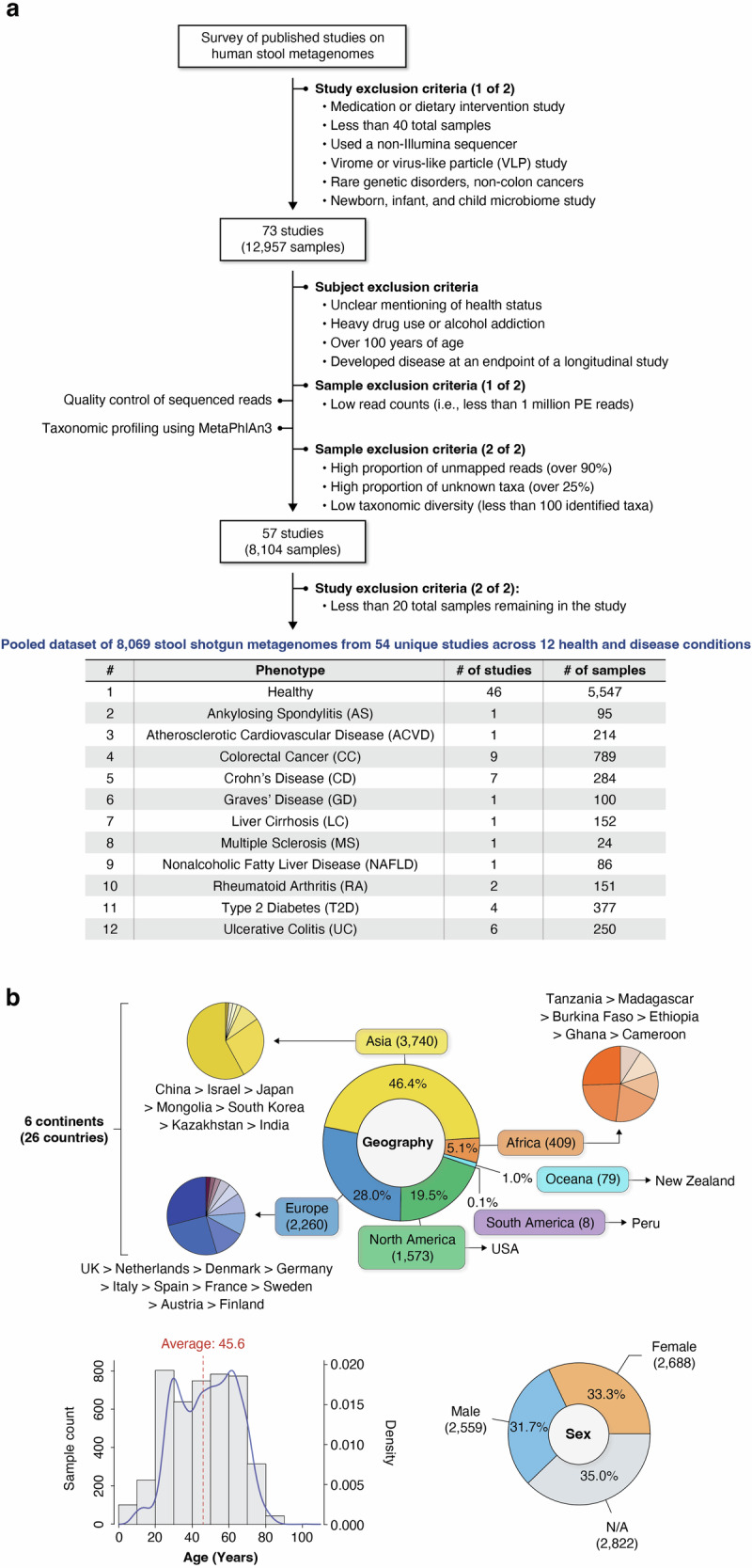
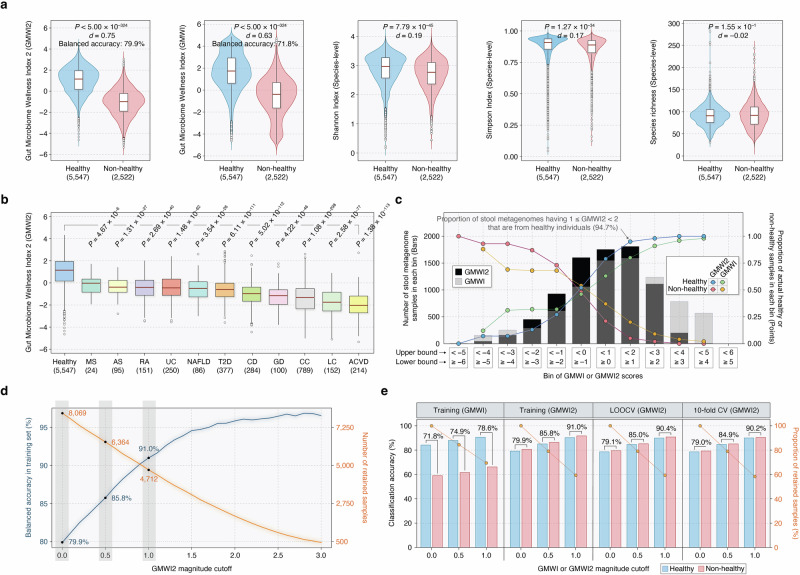
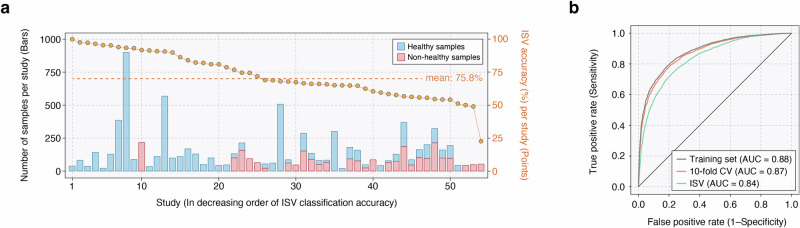
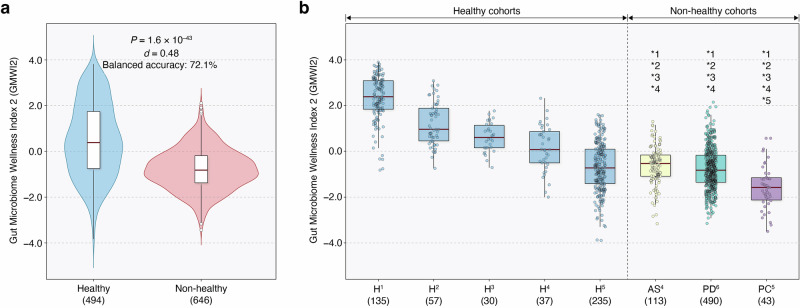
Recent advancements in translational gut microbiome research have revealed its crucial role in shaping predictive healthcare applications. Herein, we introduce the Gut Microbiome Wellness Index 2 (GMWI2), an enhanced version of our original GMWI prototype, designed as a standardized disease-agnostic health status indicator based on gut microbiome taxonomic profiles. Our analysis involves pooling existing 8069 stool shotgun metagenomes from 54 published studies across a global demographic landscape (spanning 26 countries and six continents) to identify gut taxonomic signals linked to disease presence or absence. GMWI2 achieves a cross-validation balanced accuracy of 80% in distinguishing healthy (no disease) from non-healthy (diseased) individuals and surpasses 90% accuracy for samples with higher confidence (i.e., outside the "reject option"). This performance exceeds that of the original GMWI model and traditional species-level α-diversity indices, indicating a more robust gut microbiome signature for differentiating between healthy and non-healthy phenotypes across multiple diseases. When assessed through inter-study validation and external validation cohorts, GMWI2 maintains an average accuracy of nearly 75%. Furthermore, by reevaluating previously published datasets, GMWI2 offers new insights into the effects of diet, antibiotic exposure, and fecal microbiota transplantation on gut health. Available as an open-source command-line tool, GMWI2 represents a timely, pivotal resource for evaluating health using an individual's unique gut microbial composition.
Overview
The claims and statistics of this paper haven’t been checked yet.
Free: it reads the open-access text and checks the first 5 claims that cite a source we can check. Create a free account to check every claim.
Integrity signals
Registry
Cites
Statistics
Figures
Verification
Claims the paper makes
The claims and statistics of this paper haven’t been checked yet.
Free: it reads the open-access text and checks the first 5 claims that cite a source we can check. Create a free account to check every claim.
Claims other papers make about this one
Each is checked against this paper’s own text: does it say what the citing paper says it does?
In the citing paper
“These differences enabled GMWI2 to outperform GMHI and achieve a higher dysbiosis classification accuracy of up to 90%.202”
From Gut dysbiosis in oncology: a risk factor for immunoresistance (2026) · doi:10.1038/s41422-025-01212-6 · cites this paper as [202]
Self-check
Percentages, sums and reported differences re-computed from the paper’s own numbers.
The self-check needs the paper’s full text.
Citations
Cites
Trimmomatic: a flexible trimmer for Illumina sequence data
Bolger, A. M., Lohse, M., & Usadel, B. (2014) · Bioinformatics · doi:10.1093/bioinformatics/btu170 · Cited by 65,548
Fast gapped-read alignment with Bowtie 2
Langmead, B., & Salzberg, S. L. (2012) · Nature Methods · doi:10.1038/nmeth.1923 · Cited by 56,400
Dietary Modulation of the Human Colonic Microbiota: Introducing the Concept of Prebiotics
Gibson, G. R., & Roberfroid, M. B. (1995) · The Journal of Nutrition · doi:10.1093/jn/125.6.1401 · Cited by 7,667 · cited 1×
“Overall,our fi ndingsstrengthen the evidence for the well-established bene fi ts of dietary fi ber on health 27 – 29 .”
Multi-omics of the gut microbial ecosystem in inflammatory bowel diseases
Lloyd-Price, J., Arze, C., Ananthakrishnan, A. N., Schirmer, M., Avila-Pacheco, J., Poon, T. W., Andrews, E., Ajami, N. J., Bonham, K. S., Brislawn, C. J., et al. (2019) · Nature · doi:10.1038/s41586-019-1237-9 · Cited by 3,143
Microbiome Datasets Are Compositional: And This Is Not Optional
Gloor, G. B., Macklaim, J. M., Pawlowsky-Glahn, V., & Egozcue, J. J. (2017) · Frontiers in Microbiology · doi:10.3389/fmicb.2017.02224 · Cited by 3,044
Personalized nutrition by prediction of glycemic responses
Zeevi, D., Korem, T., Zmora, N., Israeli, D., Rothschild, D., Weinberger, A., Ben-Yacov, O., Lador, D., Avnit-Sagi, T., Lotan-Pompan, M., et al. (2015) · Cell · doi:10.1016/j.cell.2015.11.001 · Cited by 2,929 · cited 1×
“Recent research into the human gut microbiome has highlighted its potential to inform the development of innovative tools for predictive healthcare 32 – 37 .”
Beghini, F., McIver, L. J., Blanco-Míguez, A., Dubois, L., Asnicar, F., Maharjan, S., Mailyan, A., Manghi, P., Scholz, M., Thomas, A. M., et al. (2021) · eLife · doi:10.7554/elife.65088 · Cited by 2,303
Health benefits of dietary fiber
Anderson, J. W., Baird, P., Davis Jr, R. H., Ferreri, S., Knudtson, M., Koraym, A., Waters, V., & Williams, C. L. (2009) · Nutrition Reviews · doi:10.1111/j.1753-4887.2009.00189.x · Cited by 2,239
Tackling the widespread and critical impact of batch effects in high-throughput data
Leek, J. T., Scharpf, R. B., Bravo, H. C., Simcha, D., Langmead, B., Johnson, W. E., Geman, D., Baggerly, K., & Irizarry, R. A. (2010) · Nature Reviews Genetics · doi:10.1038/nrg2825 · Cited by 2,196
MetaPhlAn2 for enhanced metagenomic taxonomic profiling
Truong, D. T., Franzosa, E. A., Tickle, T. L., Scholz, M., Weingart, G., Pasolli, E., Tett, A., Huttenhower, C., & Segata, N. (2015) · Nature Methods · doi:10.1038/nmeth.3589 · Cited by 2,185 · cited 1×
“Additionally, GMWI2 uses MetaPhlAn3 16 instead of MetaPhlAn2 17 for taxonomic pro fi ling, leveraging an extensively expanded marker database for a more comprehensive and accurate characterization of microbial taxa ( “ Methods ” section).”
FastQ Screen: A tool for multi-genome mapping and quality control
Wingett, S. W., & Andrews, S. (2018) · F1000Research · doi:10.12688/f1000research.15931.1 · Cited by 2,171
Tutorial: a guide to performing polygenic risk score analyses
Choi, S. W., Mak, T. S.-H., & O’Reilly, P. F. (2020) · Nature Protocols · doi:10.1038/s41596-020-0353-1 · Cited by 1,946
Blundell, J. E., Baker, J. L., Boyland, E., Blaak, E., Charzewska, J., de Henauw, S., Frühbeck, G., Gonzalez-Gross, M., Hebebrand, J., Holm, L., et al. (2017) · Obesity Facts · doi:10.1159/000455952 · Cited by 1,945
Wirbel, J., Pyl, P. T., Kartal, E., Zych, K., Kashani, A., Milanese, A., Fleck, J. S., Voigt, A. Y., Palleja, A., Ponnudurai, R., et al. (2019) · Nature Medicine · doi:10.1038/s41591-019-0406-6 · Cited by 1,373
Dynamics of the human gut microbiome in inflammatory bowel disease
Halfvarson, J., Brislawn, C. J., Lamendella, R., Vázquez-Baeza, Y., Walters, W. A., Bramer, L. M., D'Amato, M., Bonfiglio, F., McDonald, D., Gonzalez, A., et al. (2017) · Nature Microbiology · doi:10.1038/nmicrobiol.2017.4 · Cited by 1,204
Linking the Human Gut Microbiome to Inflammatory Cytokine Production Capacity
Schirmer, M., Smeekens, S. P., Vlamakis, H., Jaeger, M., Oosting, M., Franzosa, E. A., ter Horst, R., Jansen, T., Jacobs, L., Bonder, M. J., et al. (2016) · Cell · doi:10.1016/j.cell.2016.10.020 · Cited by 1,157
Recovery of gut microbiota of healthy adults following antibiotic exposure
Palleja, A., Mikkelsen, K. H., Forslund, S. K., Kashani, A., Allin, K. H., Nielsen, T., Hansen, T. H., Liang, S., Feng, Q., Zhang, C., et al. (2018) · Nature Microbiology · doi:10.1038/s41564-018-0257-9 · Cited by 875 · cited 1×
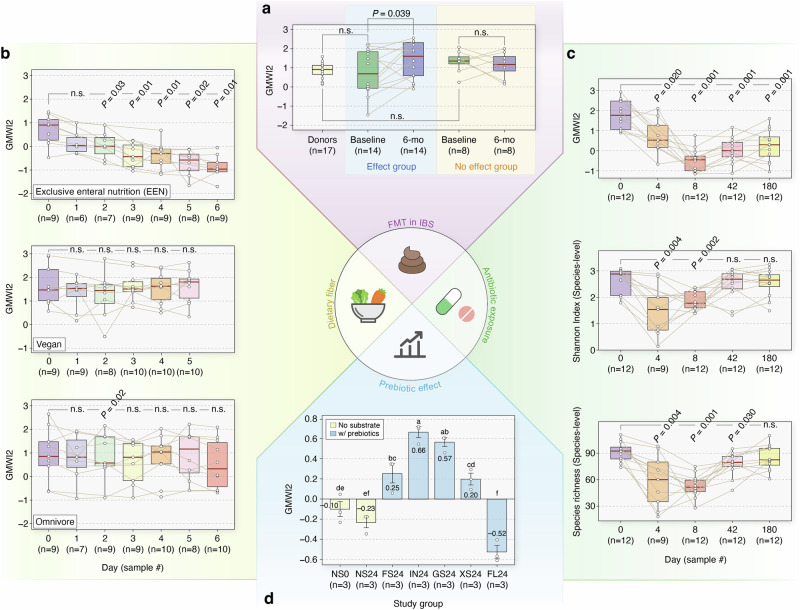
“For the third study 30 , we calculated GMWI2 for stool metagen-omes from twelve healthy young adults who underwent a 4-day exposure with broad-spectrum antibiotics (meropenem, gentamicin, and vancomycin).”
Environmental factors shaping the gut microbiome in a Dutch population
Gacesa, R., Kurilshikov, A., Vich Vila, A., Sinha, T., Klaassen, M. A. Y., Bolte, L. A., Andreu-Sánchez, S., Chen, L., Collij, V., Hu, S., et al. (2022) · Nature · doi:10.1038/s41586-022-04567-7 · Cited by 735 · cited 1×
“Since its original publication in 2020, GMWI has been utilized in studies investigating the impact of environmental 12 and genetic/socioeconomic 13 factors on the human gut microbiome, as well as in identifying a ‘ Longevous Gut Microbiota Signature ’ species set 13 .”
Gut microbiome pattern reflects healthy ageing and predicts survival in humans
Wilmanski, T., Diener, C., Rappaport, N., Patwardhan, S., Wiedrick, J., Lapidus, J., Earls, J. C., Zimmer, A., Glusman, G., Robinson, M., et al. (2021) · Nature Metabolism · doi:10.1038/s42255-021-00348-0 · Cited by 675
Machine Learning Meta-analysis of Large Metagenomic Datasets: Tools and Biological Insights
Pasolli, E., Truong, D. T., Malik, F., Waldron, L., & Segata, N. (2016) · PLOS Computational Biology · doi:10.1371/journal.pcbi.1004977 · Cited by 659 · cited 1×
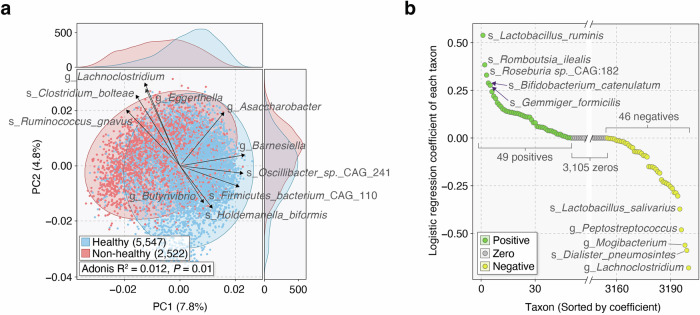
“Additionally, including gut microbial information from all taxonomic ranks could uncover more features that accurately predict host phenotypes 14,15 .”
Longitudinal Multi-omics Reveals Subset-Specific Mechanisms Underlying Irritable Bowel Syndrome
Mars, R. A. T., Yang, Y., Ward, T., Houtti, M., Priya, S., Lekatz, H. R., Tang, X., Sun, Z., Kalari, K. R., Korem, T., et al. (2020) · Cell · doi:10.1016/j.cell.2020.08.007 · Cited by 456
Ananthakrishnan, A. N., Luo, C., Yajnik, V., Khalili, H., Garber, J. J., Stevens, B. W., Cleland, T., & Xavier, R. J. (2017) · Cell Host & Microbe · doi:10.1016/j.chom.2017.04.010 · Cited by 451
Mou, Y., Du, Y., Zhou, L., Yue, J., Hu, X., Liu, Y., Chen, S., Lin, X., Zhang, G., Xiao, H., et al. (2022) · Frontiers in Immunology · doi:10.3389/fimmu.2022.796288 · Cited by 432 · cited 8×
“3a and Supplementary Data 5).”
InfluentialA wellness study of 108 individuals using personal, dense, dynamic data clouds
Price, N. D., Magis, A. T., Earls, J. C., Glusman, G., Levy, R., Lausted, C., McDonald, D. T., Kusebauch, U., Moss, C. L., Zhou, Y., et al. (2017) · Nature Biotechnology · doi:10.1038/nbt.3870 · Cited by 427 · cited 1×
“…GMWI2 into a larger decision network alongside other biomeasurements (e.g., multi-omics, wearables) and AI models has the potential to open exciting possibilities for healthy aging 43 and preventative health screening and wellness programs 44,45 , driven by insights from the gut microbiome.”
Gut microbiome composition may be an indicator of preclinical Alzheimer’s disease
Ferreiro, A. L., Choi, J., Ryou, J., Newcomer, E. P., Thompson, R., Bollinger, R. M., Hall-Moore, C., Ndao, I. M., Sax, L., Benzinger, T. L. S., et al. (2023) · Science Translational Medicine · doi:10.1126/scitranslmed.abo2984 · Cited by 356 · cited 1×
“Here, stool samples were collected before the exposure, and then again at 4, 8, 42, and 180 days post-intervention.”
A predictive index for health status using species-level gut microbiome profiling
Gupta, V. K., Kim, M., Bakshi, U., Cunningham, K. Y., Davis, J. M., Lazaridis, K. N., Nelson, H., Chia, N., & Sung, J. (2020) · Nature Communications · doi:10.1038/s41467-020-18476-8 · Cited by 338 · cited 3×
“Asinourpreviouswork 10 ,wede fi ne “ healthy ” subjectsasthosewithout reported diseases or abnormal body weight conditions (i.e., classi fi ed as underweight, overweight, or obese based on reported BMI), whereas “ non-healthy ” subjects are those con fi rmed to have a clinical diagnosis of any disease.”
Self-citationZhou, X., Baumann, R., Gao, X., Mendoza, M., Singh, S., Katz Sand, I., Xia, Z., Cox, L. M., Chitnis, T., Yoon, H., et al. (2022) · Cell · doi:10.1016/j.cell.2022.08.021 · Cited by 319 · cited 8×
“3a and Supplementary Data 5).”
InfluentialRole of dietary fiber in the recovery of the human gut microbiome and its metabolome
Tanes, C., Bittinger, K., Gao, Y., Friedman, E. S., Nessel, L., Roy Paladhi, U., Chau, L., Panfen, E., Fischbach, M. A., Braun, J., et al. (2021) · Cell Host & Microbe · doi:10.1016/j.chom.2020.12.012 · Cited by 305
Hjorth, M. F., Blædel, T., Bendtsen, L. Q., Lorenzen, J. K., Holm, J. B., Kiilerich, P., Roager, H. M., Kristiansen, K., Larsen, L. H., & Astrup, A. (2019) · International Journal of Obesity · doi:10.1038/s41366-018-0093-2 · Cited by 259
Morton, J. T., Jin, D.-M., Mills, R. H., Shao, Y., Rahman, G., McDonald, D., Zhu, Q., Balaban, M., Jiang, Y., Cantrell, K., et al. (2023) · Nature Neuroscience · doi:10.1038/s41593-023-01361-0 · Cited by 221
Classification with reject option
Herbei, R., & Wegkamp, M. H. (2006) · Canadian Journal of Statistics · doi:10.1002/cjs.5550340410 · Cited by 201
Algorithmic fairness in computational medicine
Xu, J., Xiao, Y., Wang, W. H., Ning, Y., Shenkman, E. A., Bian, J., & Wang, F. (2022) · eBioMedicine · doi:10.1016/j.ebiom.2022.104250 · Cited by 170 · cited 1×
“Lastly, this study highlights the importance of extensive data sharing in fostering robust machine learning applications, and in demonstrating resilience to batch effects and biases 22,38 – 40 .”
Role of dietary fiber in promoting immune health—An EAACI position paper
Venter, C., Meyer, R. W., Greenhawt, M., Pali‐Schöll, I., Nwaru, B., Roduit, C., Untersmayr, E., Adel‐Patient, K., Agache, I., Agostoni, C., et al. (2022) · Allergy · doi:10.1111/all.15430 · Cited by 159 · cited 1×
“Overall,our fi ndingsstrengthen the evidence for the well-established bene fi ts of dietary fi ber on health 27 – 29 .”
Human-Associated Microbial Signatures: Examining Their Predictive Value
Knights, D., Parfrey, L. W., Zaneveld, J., Lozupone, C., & Knight, R. (2011) · Cell Host & Microbe · doi:10.1016/j.chom.2011.09.003 · Cited by 156 · cited 1×
“Additionally, including gut microbial information from all taxonomic ranks could uncover more features that accurately predict host phenotypes 14,15 .”
Challenges in fecal donor selection and screening for fecal microbiota transplantation: A review
Woodworth, M. H., Carpentieri, C., Sitchenko, K. L., & Kraft, C. S. (2017) · Gut Microbes · doi:10.1080/19490976.2017.1286006 · Cited by 149 · cited 6×
“Among the participants, 14 reported symptom relief after FMT ( “ Effect ” group), while 8 did not experience symptom relief ( “ No Effect ” group) despite both groups demonstrating a signi fi cant increase in species richness at six months following FMT ( P < 0.05, one-sided Wilcoxon signed-rank test; Supplementary Fig.”
InfluentialMolecular signatures from omics data: From chaos to consensus
Sung, J., Wang, Y., Chandrasekaran, S., Witten, D. M., & Price, N. D. (2012) · Biotechnology Journal · doi:10.1002/biot.201100305 · Cited by 141 · cited 2×
“1a and “ Methods ” section), in general, it is crucial to validate any classi fi cation model on datasets of varying sample sizes 19 .”
Self-citationToward an improved definition of a healthy microbiome for healthy aging
Ghosh, T. S., Shanahan, F., & O’Toole, P. W. (2022) · Nature Aging · doi:10.1038/s43587-022-00306-9 · Cited by 139 · cited 1×
“…GMWI2 into a larger decision network alongside other biomeasurements (e.g., multi-omics, wearables) and AI models has the potential to open exciting possibilities for healthy aging 43 and preventative health screening and wellness programs 44,45 , driven by insights from the gut microbiome.”
Multi-omics microsampling for the profiling of lifestyle-associated changes in health
Shen, X., Kellogg, R., Panyard, D. J., Bararpour, N., Castillo, K. E., Lee-McMullen, B., Delfarah, A., Ubellacker, J., Ahadi, S., Rosenberg-Hasson, Y., et al. (2023) · Nature Biomedical Engineering · doi:10.1038/s41551-022-00999-8 · Cited by 115 · cited 1×
“…GMWI2 into a larger decision network alongside other biomeasurements (e.g., multi-omics, wearables) and AI models has the potential to open exciting possibilities for healthy aging 43 and preventative health screening and wellness programs 44,45 , driven by insights from the gut microbiome.”
Gut microbial determinants of clinically important improvement in patients with rheumatoid arthritis
Gupta, V. K., Cunningham, K. Y., Bakshi, U., Hur, B., Huang, H., Warrington, K. J., Taneja, V., Myasoedova, E., Davis, J. M., & Sung, J. (2021) · Genome Medicine · doi:10.1186/s13073-021-00957-0 · Cited by 101
Self-citationClassification with reject option in gene expression data
Hanczar, B., & Dougherty, E. R. (2008) · Bioinformatics · doi:10.1093/bioinformatics/btn349 · Cited by 96
Gut microbiota predicts body fat change following a low-energy diet: a PREVIEW intervention study
Jian, C., Silvestre, M. P., Middleton, D., Korpela, K., Jalo, E., Broderick, D. T. J., de Vos, W. M., Fogelholm, M., Taylor, M. W., Raben, A., et al. (2022) · Genome Medicine · doi:10.1186/s13073-022-01053-7 · Cited by 95 · cited 1×
“Recent research into the human gut microbiome has highlighted its potential to inform the development of innovative tools for predictive healthcare 32 – 37 .”
Longitudinal Multi-omics Reveals Subset-Specific Mechanisms Underlying Irritable Bowel Syndrome
Mars, R. A. T., Yang, Y., Ward, T., Houtti, M., Priya, S., Lekatz, H. R., Tang, X., Sun, Z., Kalari, K. R., Korem, T., et al. (2020) · Cell · doi:10.1016/j.cell.2020.10.040 · Cited by 68
Xu, Q., Wu, C., Zhu, Q. R., Gao, R., Lu, J., Valles‐Colomer, M., Zhu, J., Yin, F., Huang, L., Ding, L., et al. (2022) · Nature Aging · doi:10.1038/s43587-022-00193-0 · Cited by 64 · cited 1×
“Since its original publication in 2020, GMWI has been utilized in studies investigating the impact of environmental 12 and genetic/socioeconomic 13 factors on the human gut microbiome, as well as in identifying a ‘ Longevous Gut Microbiota Signature ’ species set 13 .”
Goll, R., Johnsen, P. H., Hjerde, E., Diab, J., Valle, P. C., Hilpusch, F., & Cavanagh, J. P. (2020) · Gut Microbes · doi:10.1080/19490976.2020.1794263 · Cited by 59 · cited 1×
“Using data from the fi rst study 23 , we analyzed stool metagenomes from 22 individuals with irritable bowel syndrome (IBS) before and six months after receiving fecal microbiota transplantation (FMT) from two healthy donors.”
Framework for rational donor selection in fecal microbiota transplant clinical trials
Duvallet, C., Zellmer, C., Panchal, P., Budree, S., Osman, M., & Alm, E. J. (2019) · PLOS ONE · doi:10.1371/journal.pone.0222881 · Cited by 57
Penalized regression and model selection methods for polygenic scores on summary statistics
Pattee, J. W., & Pan, W. (2020) · PLoS Computational Biology · doi:10.1371/journal.pcbi.1008271 · Cited by 42 · cited 1×
“Hence, GMWI2 essentially uses linear regression for its predictions, resembling polygenetic risk score models in statistical genetics 20,21 .”
Lee, D. H., Seong, H., Chang, D., Gupta, V. K., Kim, J., Cheon, S., Kim, G., Sung, J., & Han, N. S. (2023) · npj Science of Food · doi:10.1038/s41538-023-00195-1 · Cited by 42 · cited 2×
“However, unlike the GMWI2 results, traditional α - diversity metrics (Shannon Index, species richness, species evenness, and inverseSimpson ’ s Index) were reported tohave signi fi cantly lower values in all prebiotic treatment groups compared to the NS0 group ( P 0.05) 31 .”
InfluentialSelf-citationParsana, P., Amend, S. R., Hernandez, J. R., Pienta, K. J., & Battle, A. J. (2017) · BMC Cancer · doi:10.1186/s12885-017-3413-3 · Cited by 35
Multi-study Integration of Brain Cancer Transcriptomes Reveals Organ-Level Molecular Signatures
Sung, J., Kim, P., Ma, S., Funk, C. C., Magis, A. T., Wang, Y., Hood, L., Geman, D., & Price, N. D. (2013) · PLoS Computational Biology · doi:10.1371/journal.pcbi.1003148 · Cited by 20 · cited 1×
“Lastly, this study highlights the importance of extensive data sharing in fostering robust machine learning applications, and in demonstrating resilience to batch effects and biases 22,38 – 40 .”
Self-citationMeasuring the Effect of Inter-Study Variability on Estimating Prediction Error
Ma, S., Sung, J., Magis, A. T., Wang, Y., Geman, D., & Price, N. D. (2014) · PLoS ONE · doi:10.1371/journal.pone.0110840 · Cited by 19 · cited 2×
“Lastly, this study highlights the importance of extensive data sharing in fostering robust machine learning applications, and in demonstrating resilience to batch effects and biases 22,38 – 40 .”
Self-citationChang, D., Gupta, V. K., Hur, B., Cunningham, K. Y., & Sung, J. (2023) · Bioinformatics · doi:10.1093/bioinformatics/btad061 · Cited by 5 · cited 2×
“…of healthy (i.e., self-reported absence of a disease or disease-related symptoms) and non-healthy (i.e., patients with a clinical diagnosis of a disease) are consistent with those used in our previous studies 10,11 , as the current work represents a continuous re fi nement of our previous method.”
Self-citation
Cited by
Clinical translation of microbiome research
Gilbert, J. A., Azad, M. B., Bäckhed, F., Blaser, M. J., Byndloss, M. X., Chiu, C. Y., Chu, H., Dugas, L. R., Elinav, E., Gibbons, S. M., et al. (2025) · Nature Medicine · doi:10.1038/s41591-025-03615-9 · Cited by 124
“Statistical and machine learning approaches can be used to identify latent microbial factors that predict or diagnose health or disease based on associations 1 , allowing for the development of microbiota wellbeing indices 2 .”
Marco, M. L., Cunningham, M., Bischoff, S. C., Clarke, G. A., Delzenne, N. M., Lewis, J., Meisel, M., Merenstein, D. J., O’Toole, P. W., Staudacher, H. M., et al. (2026) · Nature Reviews Gastroenterology & Hepatology · doi:10.1038/s41575-026-01176-x · Cited by 58
Toward a health-associated core keystone index for the human gut microbiome
Goel, A., Shete, O., Goswami, S., Samal, A., C.B., L., Kedia, S., Ahuja, V., O’Toole, P. W., Shanahan, F., & Ghosh, T. S. (2025) · Cell Reports · doi:10.1016/j.celrep.2025.115378 · Cited by 37
Zhang, Z., Yang, Z., Lin, S., Jiang, S., Zhou, X., Li, J., Lü, W., & Zhang, J. (2025) · Gut Microbes · doi:10.1080/19490976.2025.2520407 · Cited by 31
“The Gut Microbiome Wellness Index 2 (GMWI) was calculated based on the method described by Chang et al. 17 Specifically, the quality control steps included: i) the removal of overrepresented sequences using FastQC software; ii) the elimination of human DNA contaminants using Bowtie2 software; and…”
InfluentialJamerlan, A., An, S. S. A., & Hulme, J. (2025) · Gut Microbes · doi:10.1080/19490976.2025.2486518 · Cited by 40
“54 Clinical studies and pre-clinical models have been conducted to better understand the relationship between alterations in gut microbial populations and AD development.”
Metadata
- Authors
- Chang, D., Gupta, V. K., Hur, B., Cobo-López, S., Cunningham, K. Y., Han, N. S., Lee, I., Kronzer, V. L., Teigen, L. M., Karnatovskaia, L. V., Longbrake, E. E., Davis, J. M., Nelson, H., & Sung, J.
- Affiliations
- University of Minnesota (US)
- Mayo Clinic (US)
- San Diego State University (US)
- Chungbuk National University (KR)
- Yonsei University (KR)
- Yale University (US)
- Corresponding author
- Sung, Jaeyun
- ORCID
- Venue
- Nature Communications
- Published
- 2024-08-28
- Volume
- 15
- Issue
- 1
- Pages
- 7447-7447
- ISSN
- 2041-1723 (ISSN-L)
- PMC
- PMC11358288
- OpenAlex
- W4401945686
- Cited by
- 50
- References
- 51
- Citations by year
- 2026: 26 · 2025: 23 · 2024: 1
- FWCI
- 6.81
- Type
- journal article
- Language
- en
- Open access
- gold
- doi.org
- Licence
- cc-by-nc-nd
- creativecommons.org/licenses/by-nc-nd/4.0 (tdm)
- creativecommons.org/licenses/by-nc-nd/4.0 (vor)
- Locations
- Nature Communications (publishedVersion, cc-by-nc-nd)
- PubMed Central (publishedVersion, cc-by-nc-nd)
- PubMed (publishedVersion)
- RePEc: Research Papers in Economics (publishedVersion)
- DOAJ (DOAJ: Directory of Open Access Journals) (publishedVersion)
- Funders
- U.S. Department of Health & Human Services | National Institutes of Health (UL1TR002377)
- Minnesota Partnership for Biotechnology and Medical Genomics Center for Individualized Medicine, Mayo Clinic
- Topics
- Life Sciences › Biochemistry, Genetics and Molecular Biology › Molecular Biology › Gut microbiota and health
- Health Sciences › Dentistry › Periodontics › Oral microbiology and periodontitis research
- Physical Sciences › Environmental Science › Ecology › Microbial Community Ecology and Physiology
- Keywords
- gut microbiota, health prediction, disease prediction, stool metagenomics, alpha diversity, external validation, antibiotic exposure, fecal microbiota transplantation, open source tools
- MeSH terms
- Gastrointestinal Microbiome, Bacteria, Feces, Female, Health Status, Humans, Metagenome
About these checks
Registry, retraction, Cites and statistics results are computed, not judged, with one exception: a printed reference that no index lists is read once by a model before it counts as a citation error. Claims are extracted by a model and kept only when their quote appears verbatim in the text; each cited source is then checked, with a model’s help, for whether it says what the claim relies on. Those verdicts can be wrong — read the claim’s quote and the cited source before relying on one.
Statistics and arithmetic are recomputed, not judged.
Confidence bands are shown only for fields calibrated on our annotated test set. None is calibrated yet, so no band is shown.
What counts as a claim ›How we measure confidence ›How we check this ›
Are you an author, or do you see a problem with this page? Request a review
Data sources
Bibliographic data: Semantic Scholar, OpenAlex, Crossref.
Contains information from the Semantic Scholar Academic Graph Datasets, made available under the ODC Attribution License (ODC-BY 1.0).
Semantic Scholar’s data is described in: Kinney, R., et al. (2023). The Semantic Scholar Open Data Platform. arXiv:2301.10140.
