

Cholangiocarcinoma PDHA1 succinylation suppresses macrophage antigen presentation via alpha-ketoglutaric acid accumulation
Open accessThe DOI matches its Crossref record; 78 of the 81 references it cites were found in a registry or an index.
Abstract
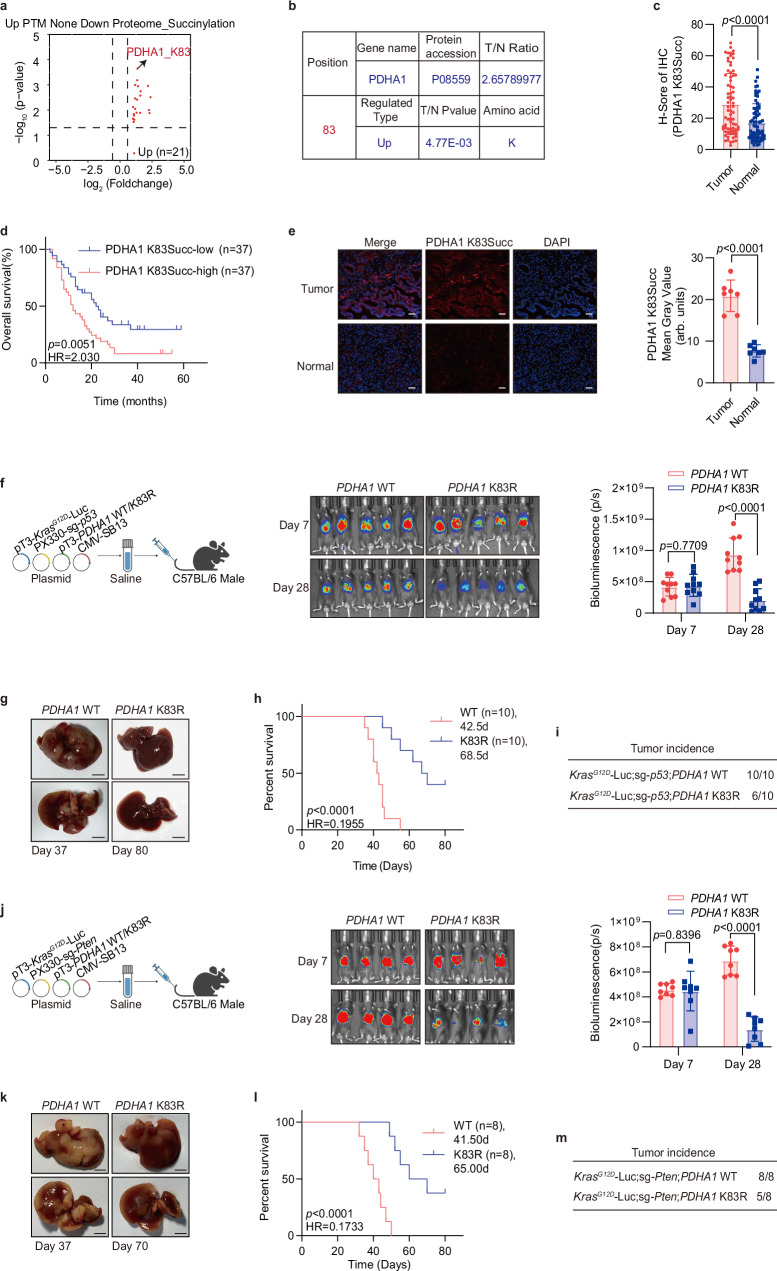
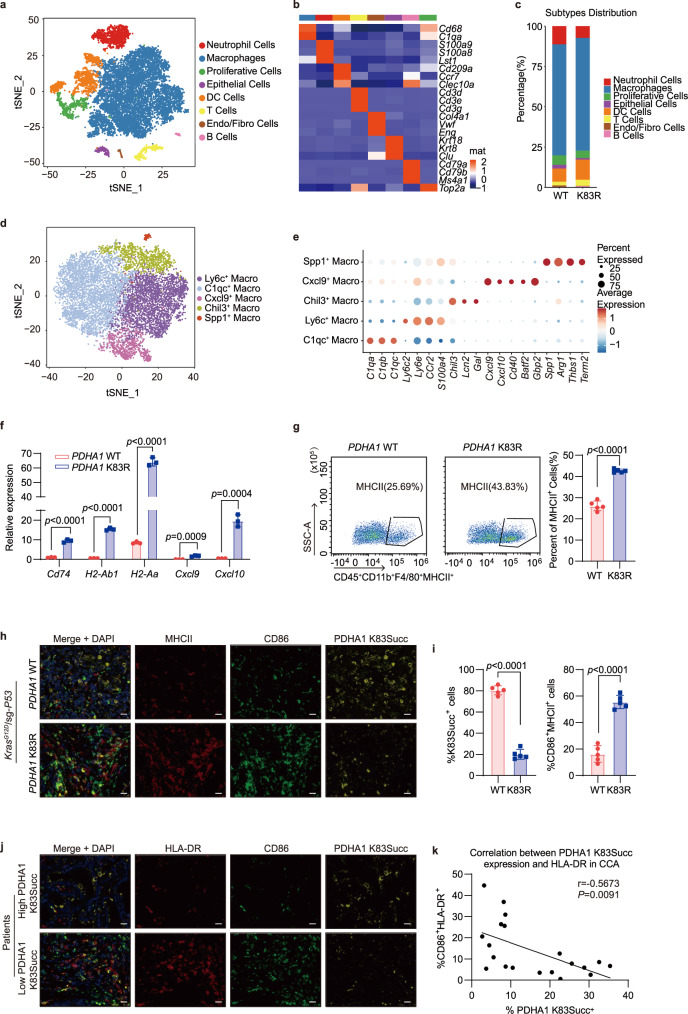
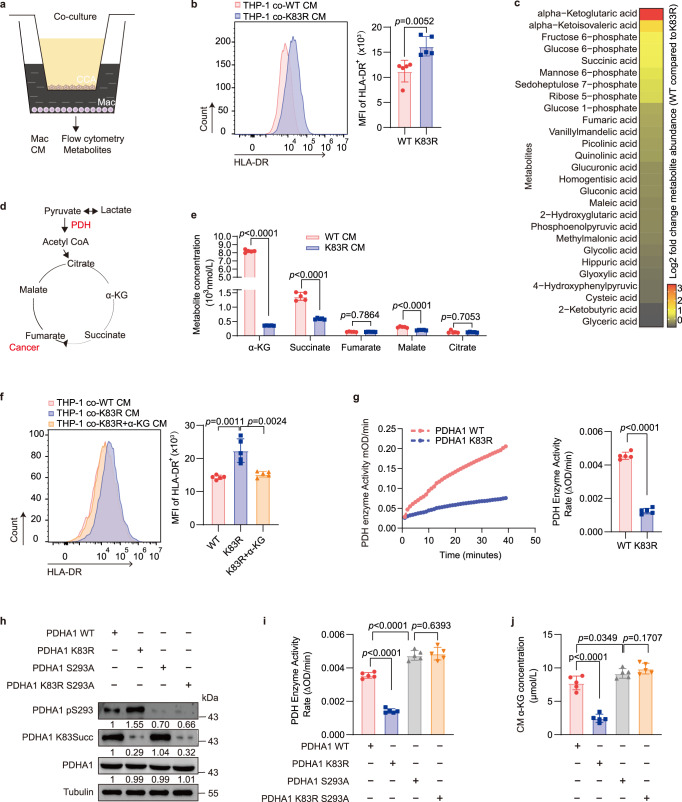
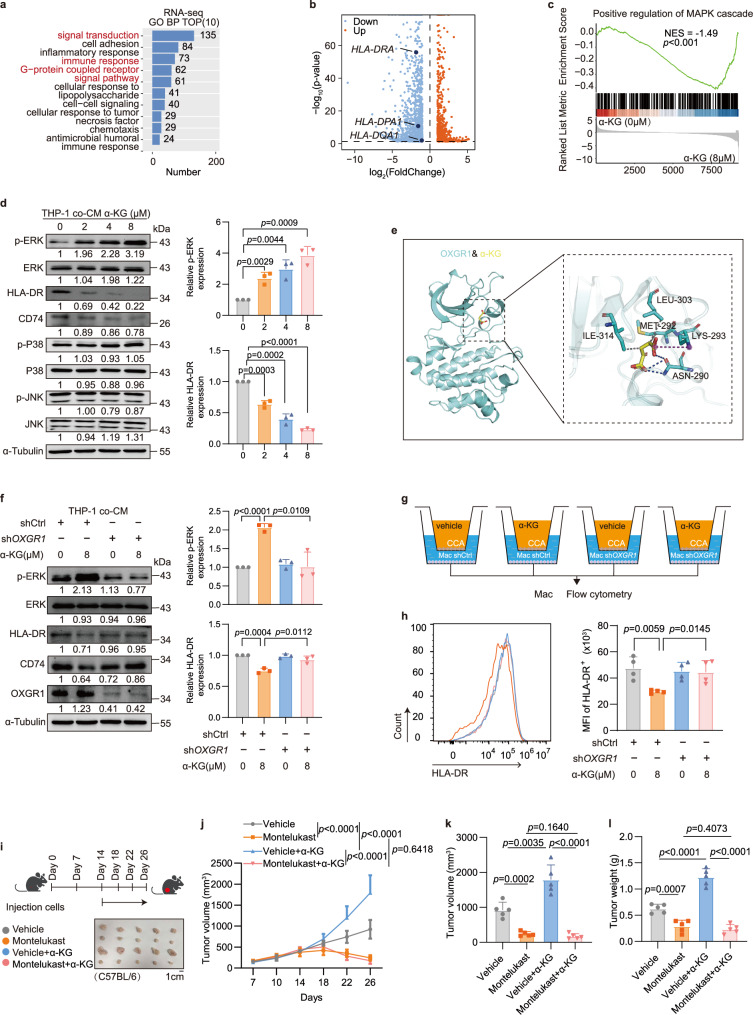
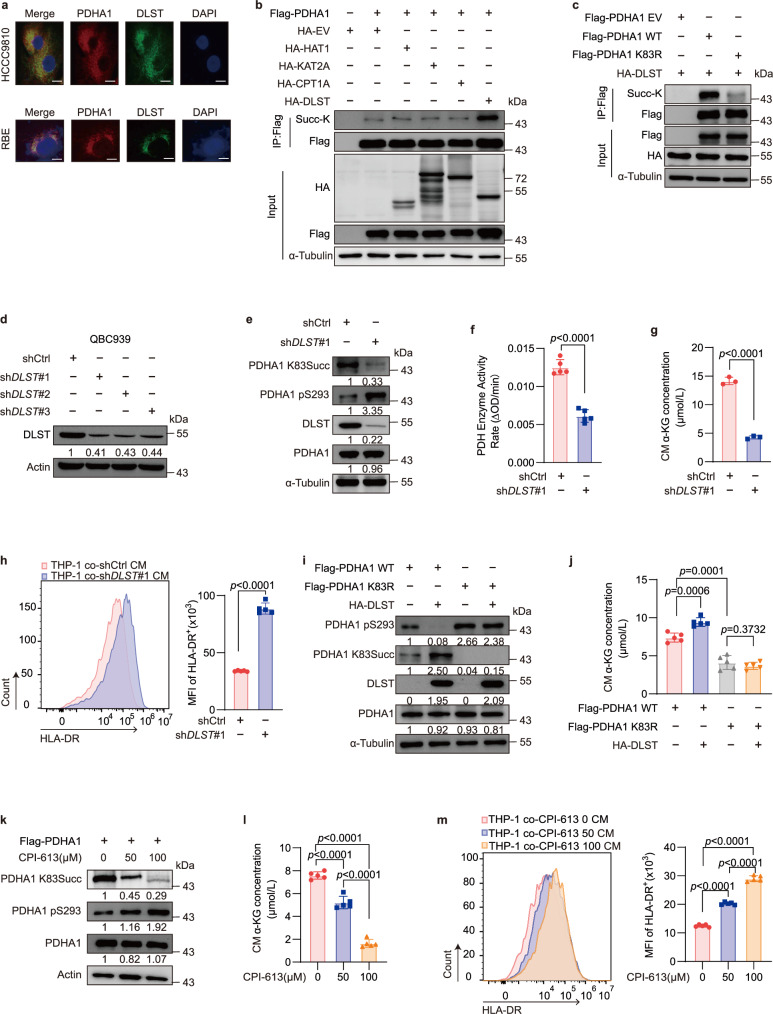
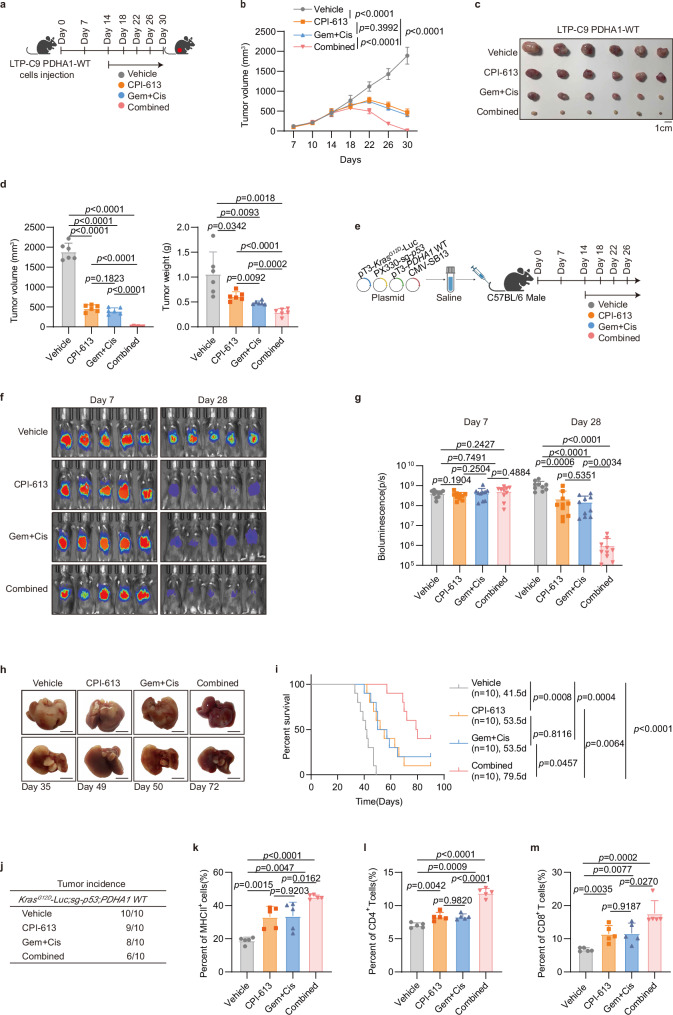
Gemcitabine combined with cisplatin is the first-line chemotherapy for advanced cholangiocarcinoma, but drug resistance remains a challenge, leading to unsatisfactory therapeutic effect. Here, we elucidate the possibility of chemotherapy regimens sensitized by inhibiting succinylation in patients with cholangiocarcinoma from the perspective of post-translational modification. Our omics analysis reveals that succinylation of PDHA1 lysine 83, a key enzyme in the tricarboxylic acid cycle, alters PDH enzyme activity, modulates metabolic flux, and leads to alpha-ketoglutaric acid accumulation in the tumor microenvironment. This process activates the OXGR1 receptor on macrophages, triggering MAPK signaling and inhibiting MHC-II antigen presentation, which promotes immune escape and tumor progression. Moreover, we show that inhibiting PDHA1 succinylation with CPI-613 enhances the efficacy of gemcitabine and cisplatin. Targeting PDHA1 succinylation may be a promising strategy to improve treatment outcomes in cholangiocarcinoma and warrants further clinical exploration. Succinylation, a posttranslational modification on lysine residues, is involved in tumor progression. Here, authors show that PDHA1 K83 succinylation is involved in cholangiocarcinoma tumorigenesis through regulation of macrophage antigen presentation in the tumor microenvironment
Overview
The claims and statistics of this paper haven’t been checked yet.
Free: it reads the open-access text and checks the first 5 claims that cite a source we can check. Create a free account to check every claim.
Integrity signals
Registry
Cites
Statistics
Figures
Verification
Claims the paper makes
The claims and statistics of this paper haven’t been checked yet.
Free: it reads the open-access text and checks the first 5 claims that cite a source we can check. Create a free account to check every claim.
Claims other papers make about this one
Each is checked against this paper’s own text: does it say what the citing paper says it does?
In the citing paper
“Moreover, high PDHA1 succinylation is associated with poor survival, and in mice, CD8+ T-cell depletion reversed the protumoral effects of PDHA1 succinylation [218].”
From Inflammation and immunity in liver homeostasis and disease: a nexus of hepatocytes, nonparenchymal cells and immune cells (2025) · doi:10.1038/s41423-025-01313-7 · cites this paper as [218]
Self-check
Percentages, sums and reported differences re-computed from the paper’s own numbers.
The self-check needs the paper’s full text.
Citations
Cites
AutoDock Vina 1.2.0: New Docking Methods, Expanded Force Field, and Python Bindings
Eberhardt, J., Santos-Martins, D., Tillack, A. F., & Forli, S. (2021) · Journal of Chemical Information and Modeling · doi:10.1021/acs.jcim.1c00203 · Cited by 7,546
The emerging hallmarks of cancer metabolism
Pavlova, N. N., & Thompson, C. B. (2016) · Cell Metabolism · doi:10.1016/j.cmet.2015.12.006 · Cited by 5,926 · cited 1×
“A functional TCA cycle depends on the continuous and balanced replenishment of its key metabolites, many of which exit the mitochondria to act as precursors for biosynthesis or to participate in signaling pathways 37,39 .”
The Gene Ontology (GO) database and informatics resource
Gene Ontology Consortium (2004) · Nucleic Acids Research · doi:10.1093/nar/gkh036 · Cited by 4,579
Cisplatin plus Gemcitabine versus Gemcitabine for Biliary Tract Cancer
Valle, J., Wasan, H., Palmer, D. H., Cunningham, D., Anthoney, A., Maraveyas, A., Madhusudan, S., Iveson, T., Hughes, S., Pereira, S. P., et al. (2010) · New England Journal of Medicine · doi:10.1056/nejmoa0908721 · Cited by 4,406
A guide to immunometabolism for immunologists
O'Neill, L. A. J., Kishton, R. J., & Rathmell, J. (2016) · Nature Reviews Immunology · doi:10.1038/nri.2016.70 · Cited by 3,315
The Human Serum Metabolome (HUSERMET) Consortium, Dunn, W. B., Broadhurst, D., Begley, P., Zelena, E., Francis-McIntyre, S., Anderson, N., Brown, M., Knowles, J. D., Halsall, A., et al. (2011) · Nature Protocols · doi:10.1038/nprot.2011.335 · Cited by 3,294
Fundamentals of Cancer Metabolism
DeBerardinis, R. J., & Chandel, N. S. (2016) · Science Advances · doi:10.1126/sciadv.1600200 · Cited by 3,013 · cited 1×
“Endogenous metabolites are implicated in modulating cellular processes, such as immune homeostasis and tumor development 20,21 .”
RSeQC: quality control of RNA-seq experiments
Wang, L., Wang, S., & Li, W. (2012) · Bioinformatics · doi:10.1093/bioinformatics/bts356 · Cited by 2,788
Metabolic reprogramming and cancer progression
Faubert, B., Solmonson, A., & DeBerardinis, R. J. (2020) · Science · doi:10.1126/science.aaw5473 · Cited by 2,740 · cited 2×
“Metabolic reprogramming, a hallmark of cancer, is intricately linkedtopost-translationalmodi fi cations(PTMs) 5,6 .”
Molecular Mechanisms That Influence the Macrophage M1–M2 Polarization Balance
Wang, N., Liang, H., & Zen, K. (2014) · Frontiers in Immunology · doi:10.3389/fimmu.2014.00614 · Cited by 1,980
Hydrodynamics-based transfection in animals by systemic administration of plasmid DNA
Liu, F., Song, Y. K., & Liu, D. (1999) · Gene Therapy · doi:10.1038/sj.gt.3300947 · Cited by 1,727
Metabolic Pathways in Immune Cell Activation and Quiescence
Pearce, E. L., & Pearce, E. J. (2013) · Immunity · doi:10.1016/j.immuni.2013.04.005 · Cited by 1,692 · cited 1×
“Increasing evidence indicates that metabolic reprogramming is linked to the polarization state of macrophages,and TCA cycle as wellas its endogenous metabolites are vital in M1/M2 macrophage activation 23 – 29 .”
Lampropoulou, V., Sergushichev, A., Bambouskova, M., Nair, S., Vincent, E. E., Loginicheva, E., Cervantes-Barragan, L., Ma, X., Huang, S. C.-C., Griss, T., et al. (2016) · Cell Metabolism · doi:10.1016/j.cmet.2016.06.004 · Cited by 1,541
α-ketoglutarate orchestrates macrophage activation through metabolic and epigenetic reprogramming
Liu, P.-S., Wang, H., Li, X., Chao, T., Teav, T., Christen, S., Di Conza, G., Cheng, W.-C., Chou, C.-H., Vavakova, M., et al. (2017) · Nature Immunology · doi:10.1038/ni.3796 · Cited by 1,264 · cited 1×
“It has been reported that α -KG produced by glutamine promotes M2 polarization via the Jmjd3 signaling pathway and inhibits M1 macrophage function in an HDAC-dependent manner by suppressing the NF-κ Bpathway 65 .”
Self-citationWiklund, S., Johansson, E., Sjöström, L., Mellerowicz, E. J., Edlund, U., Shockcor, J. P., Gottfries, J., Moritz, T., & Trygg, J. (2008) · Analytical Chemistry · doi:10.1021/ac0713510 · Cited by 1,233
Kelley, R. K., Ueno, M., Yoo, C., Finn, R. S., Furuse, J., Ren, Z., Yau, T., Klümpen, H.-J., Chan, S. L., Ozaka, M., et al. (2023) · The Lancet · doi:10.1016/s0140-6736(23)00727-4 · Cited by 1,169
Mitochondria are the powerhouses of immunity
Mills, E. L., Kelly, B., & O'Neill, L. A. J. (2017) · Nature Immunology · doi:10.1038/ni.3704 · Cited by 1,161
Identification of lysine succinylation as a new post-translational modification
Zhang, Z., Tan, M., Xie, Z., Dai, L., Chen, Y., & Zhao, Y. (2011) · Nature Chemical Biology · doi:10.1038/nchembio.495 · Cited by 1,027
Brindley, P. J., Bachini, M., Ilyas, S. I., Khan, S. A., Loukas, A., Sirica, A. E., Teh, B. T., Wongkham, S., & Gores, G. J. (2021) · Nature Reviews Disease Primers · doi:10.1038/s41572-021-00300-2 · Cited by 841
Okusaka, T., Nakachi, K., Fukutomi, A., Mizuno, N., Ohkawa, S., Funakoshi, A., Nagino, M., Kondo, S., Nagaoka, S., Funai, J., et al. (2010) · British Journal of Cancer · doi:10.1038/sj.bjc.6605779 · Cited by 744
Citric Acid Cycle and Role of its Intermediates in Metabolism
Akram, M. (2014) · Cell Biochemistry and Biophysics · doi:10.1007/s12013-013-9750-1 · Cited by 741
SIRT5 Regulates the Mitochondrial Lysine Succinylome and Metabolic Networks
Rardin, M. J., He, W., Nishida, Y., Newman, J. C., Carrico, C., Danielson, S. R., Guo, A., Gut, P., Sahu, A. K., Li, B., et al. (2013) · Cell Metabolism · doi:10.1016/j.cmet.2013.11.013 · Cited by 713
AutoDockFR: Advances in Protein-Ligand Docking with Explicitly Specified Binding Site Flexibility
Ravindranath, P. A., Forli, S., Goodsell, D. S., Olson, A. J., & Sanner, M. F. (2015) · PLOS Computational Biology · doi:10.1371/journal.pcbi.1004586 · Cited by 691
CXCL9:SPP1 macrophage polarity identifies a network of cellular programs that control human cancers
Bill, R., Wirapati, P., Messemaker, M., Roh, W., Zitti, B., Duval, F., Kiss, M., Park, J. C., Saal, T. M., Hoelzl, J., et al. (2023) · Science · doi:10.1126/science.ade2292 · Cited by 663
A key role for mitochondrial gatekeeper pyruvate dehydrogenase in oncogene-induced senescence
Kaplon, J., Zheng, L., Meissl, K., Chaneton, B., Selivanov, V. A., Mackay, G., van der Burg, S. H., Verdegaal, E. M. E., Cascante, M., Shlomi, T., et al. (2013) · Nature · doi:10.1038/nature12154 · Cited by 633 · cited 1×
“PDHA1 catalyzes the conversion of pyruvate to acetyl-CoA, thereby linking glycolysis with the TCA cycle 14,15 .”
Targeting immunometabolism as an anti-inflammatory strategy
Pålsson-McDermott, E. M., & O’Neill, L. A. J. (2020) · Cell Research · doi:10.1038/s41422-020-0291-z · Cited by 577
Wu, J.-Y., Huang, T.-W., Hsieh, Y.-T., Wang, Y.-F., Yen, C.-C., Lee, G.-L., Yeh, C.-C., Peng, Y.-J., Kuo, Y.-Y., Wen, H.-T., et al. (2020) · Molecular Cell · doi:10.1016/j.molcel.2019.10.023 · Cited by 535
Li, X., Jiang, Y., Meisenhelder, J., Yang, W., Hawke, D. H., Zheng, Y., Xia, Y., Aldape, K., He, J., Hunter, T., et al. (2016) · Molecular Cell · doi:10.1016/j.molcel.2016.02.009 · Cited by 508
Self-citationValle, J. W., Furuse, J., Jitlal, M., Beare, S., Mizuno, N., Wasan, H., Bridgewater, J., & Okusaka, T. (2014) · Annals of Oncology · doi:10.1093/annonc/mdt540 · Cited by 391
Carrico, C., Meyer, J. G., He, W., Gibson, B. W., & Verdin, E. (2018) · Cell Metabolism · doi:10.1016/j.cmet.2018.01.016 · Cited by 331 · cited 2×
“Acyltransferases play a signi fi cant role in succinylation by coupling acyl-CoA to substrates, which may facilitate lysine acylation as a secondary reaction 9 .”
Itaconate and itaconate derivatives target JAK1 to suppress alternative activation of macrophages
Runtsch, M. C., Angiari, S., Hooftman, A., Wadhwa, R., Zhang, Y., Zheng, Y., Spina, J. S., Ruzek, M. C., Argiriadi, M. A., McGettrick, A. F., et al. (2022) · Cell Metabolism · doi:10.1016/j.cmet.2022.02.002 · Cited by 323
Self-citationIoka, T., Kanai, M., Kobayashi, S., Sakai, D., Eguchi, H., Baba, H., Seo, S., Taketomi, A., Takayama, T., Yamaue, H., et al. (2023) · Journal of Hepato-Biliary-Pancreatic Sciences · doi:10.1002/jhbp.1219 · Cited by 249
Alistar, A., Morris, B. B., Desnoyer, R., Klepin, H. D., Hosseinzadeh, K., Clark, C., Cameron, A., Leyendecker, J., D'Agostino, R., Topaloglu, U., et al. (2017) · The Lancet Oncology · doi:10.1016/s1470-2045(17)30314-5 · Cited by 233
Self-citationSHMT2 Desuccinylation by SIRT5 Drives Cancer Cell Proliferation
Yang, X., Wang, Z., Li, X., Liu, B., Liu, M., Liu, L., Chen, S., Ren, M., Wang, Y., Yu, M., et al. (2018) · Cancer Research · doi:10.1158/0008-5472.can-17-1912 · Cited by 232
Self-citationCorrecting mass isotopomer distributions for naturally occurring isotopes
Van Winden, W. A., Wittmann, C., Heinzle, E., & Heijnen, J. J. (2002) · Biotechnology and Bioengineering · doi:10.1002/bit.10393 · Cited by 229
Phosphorylation of PDHA by AMPK Drives TCA Cycle to Promote Cancer Metastasis
Cai, Z., Li, C.-F., Han, F., Liu, C., Zhang, A., Hsu, C.-C., Peng, D., Zhang, X., Jin, G., Rezaeian, A.-H., et al. (2020) · Molecular Cell · doi:10.1016/j.molcel.2020.09.018 · Cited by 227
Self-citationTong, Y., Guo, D., Lin, S.-H., Liang, J., Yang, D., Ma, C., Shao, F., Li, M., Yu, Q., Jiang, Y., et al. (2021) · Molecular Cell · doi:10.1016/j.molcel.2021.04.002 · Cited by 207
Li, W., Li, F., Zhang, X., Lin, H.-K., & Xu, C. (2021) · Signal Transduction and Targeted Therapy · doi:10.1038/s41392-021-00825-8 · Cited by 198
Chen, J., Guccini, I., Di Mitri, D., Brina, D., Revandkar, A., Sarti, M., Pasquini, E., Alajati, A., Pinton, S., Losa, M., et al. (2018) · Nature Genetics · doi:10.1038/s41588-017-0026-3 · Cited by 194
KrasG12D and p53 Mutation Cause Primary Intrahepatic Cholangiocarcinoma
O'Dell, M. R., Li Huang, J., Whitney-Miller, C. L., Deshpande, V., Rothberg, P., Grose, V., Rossi, R. M., Zhu, A. X., Land, H., Bardeesy, N., et al. (2012) · Cancer Research · doi:10.1158/0008-5472.can-11-3596 · Cited by 192
Liu, Z., Gan, L., Zhang, T., Ren, Q., & Sun, C. (2018) · Journal of Pineal Research · doi:10.1111/jpi.12455 · Cited by 181
Cheng, J., Yan, J., Liu, Y., Shi, J., Wang, H., Zhou, H., Zhou, Y., Zhang, T., Zhao, L., Meng, X., et al. (2023) · Cell Metabolism · doi:10.1016/j.cmet.2023.04.017 · Cited by 177
Self-citationShi, G.-M., Huang, X.-Y., Wu, D., Sun, H.-C., Liang, F., Ji, Y., Chen, Y., Yang, G.-H., Lu, J.-C., Meng, X.-L., et al. (2023) · Signal Transduction and Targeted Therapy · doi:10.1038/s41392-023-01317-7 · Cited by 161
Self-citationMartin-Serrano, M. A., Kepecs, B., Torres-Martin, M., Bramel, E. R., Haber, P. K., Merritt, E., Rialdi, A., Param, N. J., Maeda, M., Lindblad, K. E., et al. (2023) · Gut · doi:10.1136/gutjnl-2021-326514 · Cited by 152
Hepatobiliary Cancers, Version 2.2014
Benson, A. B., D'Angelica, M. I., Abrams, T. A., Are, C., Bloomston, M., Chang, D. T., Clary, B. M., Covey, A. M., Ensminger, W. D., Iyer, R. V., et al. (2014) · Journal of the National Comprehensive Cancer Network · doi:10.6004/jnccn.2014.0112 · Cited by 146
Li, X., Zhang, C., Zhao, T., Su, Z., Li, M., Hu, J., Wen, J., Shen, J., Wang, C., Pan, J., et al. (2020) · Journal of Experimental & Clinical Cancer Research · doi:10.1186/s13046-020-01681-0 · Cited by 146
Self-citationGibson, G. E., Xu, H., Chen, H., Chen, W., Denton, T. T., & Zhang, S. (2015) · Journal of Neurochemistry · doi:10.1111/jnc.13096 · Cited by 137 · cited 1×
“It was thought that these complexes may interact in the mitochondria so it would be possible for the DSLT of OGDHc to succinylate PDHA1 52 .”
Epigenetic control of MHC class II expression in tumor-associated macrophages by decoy receptor 3
Chang, Y.-C., Chen, T.-C., Lee, C.-T., Yang, C.-Y., Wang, H.-W., Wang, C.-C., & Hsieh, S.-L. (2008) · Blood · doi:10.1182/blood-2007-12-130609 · Cited by 126
SUCLG2 Regulates Mitochondrial Dysfunction through Succinylation in Lung Adenocarcinoma
Hu, Q., Xu, J., Wang, L., Yuan, Y., Luo, R., Gan, M., Wang, K., Zhao, T., Wang, Y., Han, T., et al. (2023) · Advanced Science · doi:10.1002/advs.202303535 · Cited by 117
Self-citationPardee, T. S., Anderson, R. G., Pladna, K. M., Isom, S., Ghiraldeli, L. P., Miller, L. D., Chou, J. W., Jin, G., Zhang, W., Ellis, L. R., et al. (2018) · Clinical Cancer Research · doi:10.1158/1078-0432.ccr-17-2282 · Cited by 113
Self-citationPark, M. Y., Ha, S. E., Kim, H. H., Bhosale, P. B., Abusaliya, A., Jeong, S. H., Park, J., Heo, J., & Kim, G. S. (2022) · Molecules · doi:10.3390/molecules27123782 · Cited by 108
Philip, P. A., Buyse, M. E., Alistar, A. T., Lima, C. M., Luther, S., Pardee, T. S., & Cutsem, E. V. (2019) · Future Oncology · doi:10.2217/fon-2019-0209 · Cited by 100
Integrated compensatory network is activated in the absence of NCC phosphorylation
Grimm, P. R., Lazo-Fernandez, Y., Delpire, E., Wall, S. M., Dorsey, S. G., Weinman, E. J., Coleman, R., Wade, J. B., & Welling, P. A. (2015) · Journal of Clinical Investigation · doi:10.1172/jci78558 · Cited by 98
Bénit, P., Letouzé, É., Rak, M., Aubry, L., Burnichon, N., Favier, J., Gimenez‐Roqueplo, A., & Rustin, P. (2014) · Biochimica et Biophysica Acta (BBA) - Bioenergetics · doi:10.1016/j.bbabio.2014.03.013 · Cited by 98
Yuan, Y., Xu, P., Jiang, Q., Cai, X., Wang, T., Peng, W., Sun, J., Zhu, C., Zhang, C., Yue, D., et al. (2020) · The EMBO Journal · doi:10.15252/embj.2019103304 · Cited by 88 · cited 1×
“Exercise-induced α -KG, through stimulation of muscle hypertrophy and lipid breakdown via the OXGR1 receptor 66 , suggests that cancer-derived α -KG might also activate the macrophage surface receptor OXGR1.”
Self-citationZeng, Y., Song, J., Wang, D., Huang, Z., Zhang, C., Sun, Y., Shu, G., Xiong, Y., Guan, K., Ye, D., et al. (2023) · Journal of Clinical Investigation · doi:10.1172/jci160463 · Cited by 87
Liu, M., Chen, Y., Wang, S., Zhou, H., Feng, D., Wei, J., Shi, X., Wu, L., Zhang, P., Yang, H., et al. (2020) · Shock · doi:10.1097/shk.0000000000001333 · Cited by 80
Deng, L., Jiang, A., Zeng, H., Peng, X., & Song, L. (2022) · Frontiers in Pharmacology · doi:10.3389/fphar.2022.947372 · Cited by 64
Yao, Y., Xu, Q., Kwon, M.-J., Matta, R., Liu, Y., Hong, S.-C., & Chang, C.-H. (2006) · The Journal of Immunology · doi:10.4049/jimmunol.177.1.70 · Cited by 62
Butyrate induces apoptosis by activating PDC and inhibiting complex I through SIRT3 inactivation
Xu, S., Liu, C.-X., Xu, W., Huang, L., Zhao, J.-Y., & Zhao, S.-M. (2017) · Signal Transduction and Targeted Therapy · doi:10.1038/sigtrans.2016.35 · Cited by 60
The requirement for pyruvate dehydrogenase in leukemogenesis depends on cell lineage
Jun, S., Mahesula, S., Mathews, T. P., Martin-Sandoval, M. S., Zhao, Z., Piskounova, E., & Agathocleous, M. (2021) · Cell Metabolism · doi:10.1016/j.cmet.2021.07.016 · Cited by 59
Role of succinylation modification in thyroid cancer and breast cancer.
Mu, R., Ma, Z., Lu, C., Wang, H., Cheng, X., Tuo, B., Fan, Y., Liu, X., & Li, T. (2021) · American Journal of Cancer Research · Cited by 51
Targeting succinylation-mediated metabolic reprogramming as a potential approach for cancer therapy
Liu, Z., Wang, R., Wang, Y., Duan, Y., & Zhan, H. (2023) · Biomedicine & Pharmacotherapy · doi:10.1016/j.biopha.2023.115713 · Cited by 47
Ruiz, N. P. E., Mohan, V., Wu, J., Scott, S. A., Kreamer, M., Benej, M., Golias, T., Papandreou, I., & Denko, N. C. (2021) · Cancer & Metabolism · doi:10.1186/s40170-021-00275-4 · Cited by 46
Changing Landscape of Systemic Therapy in Biliary Tract Cancer
Woods, E., Le, D. T., Jakka, B. K., & Manne, A. (2022) · Cancers · doi:10.3390/cancers14092137 · Cited by 46
Yu, S., Ding, L., Liang, D., & Luo, L. (2018) · Molecular Oral Microbiology · doi:10.1111/omi.12241 · Cited by 44
Lysine butyrylation of HSP90 regulated by KAT8 and HDAC11 confers chemoresistance
He, Y., Zheng, C., Yang, J., Li, S., Xu, T., Wei, X., Chen, W., Jiang, Z., Xu, J.-J., Zhang, G., et al. (2023) · Cell Discovery · doi:10.1038/s41421-023-00570-y · Cited by 35
Self-citationA glimpse into novel acylations and their emerging role in regulating cancer metastasis
Shi, H., Cui, W., Qin, Y., Chen, L., Yu, T., & Lv, J. (2024) · Cellular and Molecular Life Sciences · doi:10.1007/s00018-023-05104-z · Cited by 35
Ma, Q.-Z., Zeng, Q.-M., Wang, K., Qian, M., Li, J., Wang, H., Zhang, H., Jiang, J., Chen, Z., & Huang, W. (2024) · International Journal of Molecular Sciences · doi:10.3390/ijms25021057 · Cited by 29
Chen, J., Guccini, I., Mitri, D. D., Brina, D., & Alimonti, A. (2017) · Annals of Oncology · doi:10.1093/annonc/mdx390.054 · Cited by 24
Osman, A. M., & Loveren, H. V. (2011) · Toxicological Sciences · doi:10.1093/toxsci/kfr333 · Cited by 23
Cholangiocarcinoma: State‐of‐the‐art knowledge and challenges
Bañales, J. M., Cardinale, V., Macı́as, R. I. R., Andersen, J. B., Braconi, C., Carpino, G., Alvaro, D., & Calvisi, D. F. (2019) · Liver International · doi:10.1111/liv.14101 · Cited by 21
CXCL9:SPP1 macrophage polarity identifies a network of cellular programs that control human cancers.
Bill, R., Wirapati, P., Messemaker, M., Roh, W., Zitti, B., Duval, F., Kiss, M., Park, J. C., Saal, T. M., Hoelzl, J., et al. (2023) · Open Access CRIS of the University of Bern · doi:10.48350/185211 · Cited by 21
Cevatemre, B., Ulukaya, E., Dere, E., Dilege, Ş., & Açılan, C. (2022) · Frontiers in Cell and Developmental Biology · doi:10.3389/fcell.2021.738916 · Cited by 20
Li, M., Chen, Q., Zhou, M., Li, X., Wang, Z., & Wang, J. (2024) · ACS Biomaterials Science & Engineering · doi:10.1021/acsbiomaterials.4c01702 · Cited by 14
Self-citationGuerrero, A., Visniauskas, B., Cárdenas, P., Figueroa, S., Vivanco, J., Salinas-Parra, N., Araos, P., Nguyen, Q., Kassan, M., Amador, C., et al. (2021) · Frontiers in Cardiovascular Medicine · doi:10.3389/fcvm.2021.644797 · Cited by 10
Dong, X., Zhang, Z., Zhang, Q., Chen, L., Cao, G., Liu, C., Song, T., Lu, W., & Zhang, W. (2022) · Journal of Cancer Research and Clinical Oncology · doi:10.1007/s00432-022-04166-z · Cited by 10
Self-citationCárdenas, P., Núñez-Allimant, C., Silva, K., Cid-Salinas, C., León, A. C., Vallotton, Z., Lorca, R. A., de Oliveira, L. C. G., Casarini, D. E., Céspedes, C., et al. (2024) · International Journal of Molecular Sciences · doi:10.3390/ijms251810045 · Cited by 8
Research works printed but not linked: 1
- Wu, J. Y. et al. Cancer-derived succinate promotes macrophage polarization and cancer metastasis via succinate receptor. Mol. Cell. 77, 213-227.e5 (2020). · DOI · Paper page
Cited by
(2025) · doi:10.1038/s41423-025-01313-7 · Cited by 97
Metabolic reprogramming in cancer: signaling pathways and therapeutic targets
Dong, S., & Lei, X. (2026) · Molecular Cancer · doi:10.1186/s12943-026-02582-0 · Cited by 40
Metabolic Reprogramming: A Crucial Contributor to Anticancer Drug Resistance
Zhu, Y., Yan, W., Tong, L., Yang, J., Ge, S., Fan, J., Jia, R., & Wen, X. (2025) · MedComm · doi:10.1002/mco2.70358 · Cited by 38
Hu, S., Heng, H., Yang, F., Wang, M., Liu, G., Xiang, Y., & Miao, H. (2025) · Frontiers in Immunology · doi:10.3389/fimmu.2025.1735873 · Cited by 33
Cancer drug response and resistance: molecular mechanisms and combating strategies
Cheng, X., Xu, M., Wei, J., & Cao, C. (2026) · Signal Transduction and Targeted Therapy · doi:10.1038/s41392-026-02924-w · Cited by 20
Metadata
- Authors
- Zhang, N., Sun, L., Zhou, S., Ji, C., Cui, T., Chu, Q., Ye, J., Liang, S., Ma, K., Liu, Y., Li, X., Guo, X., Zhang, W., Gu, X., Cheng, C., Zha, Q., Tao, S., Zhang, Y., Chu, J., Wu, C., Zhang, Y., Wang, J., Liu, Y., & Liu, L.
- Affiliations
- First Affiliated Hospital of Harbin Medical University (CN)
- University of Science and Technology of China (CN)
- Sun Yat-sen University Cancer Center (CN)
- Jining First People's Hospital (CN)
- Harbin Medical University (CN)
- Corresponding author
- Liu, Yufeng
- Wang, Jiabei
- ORCID
- Venue
- Nature Communications
- Published
- 2025-04-03
- Volume
- 16
- Issue
- 1
- Pages
- 3177-3177
- ISSN
- 2041-1723 (ISSN-L)
- PMC
- PMC11968997
- OpenAlex
- W4409149833
- Cited by
- 34
- References
- 81
- Citations by year
- 2026: 22 · 2025: 12
- FWCI
- 31.79
- Type
- journal article
- Language
- en
- Open access
- gold
- doi.org
- Licence
- cc-by-nc-nd
- creativecommons.org/licenses/by-nc-nd/4.0 (tdm)
- creativecommons.org/licenses/by-nc-nd/4.0 (vor)
- Locations
- Nature Communications (publishedVersion, cc-by-nc-nd)
- PubMed Central (publishedVersion, cc-by-nc-nd)
- PubMed (publishedVersion)
- RePEc: Research Papers in Economics (submittedVersion)
- DOAJ (DOAJ: Directory of Open Access Journals) (submittedVersion, cc-by-sa)
- Funders
- National Natural Science Foundation of China (No.82102705, No. U19A2008, No. U19A2008, No.82272787, No.82373232, No.82473189, No.82303259)
- Topics
- Health Sciences › Medicine › Surgery › Cholangiocarcinoma and Gallbladder Cancer Studies
- Life Sciences › Immunology and Microbiology › Immunology › Immune cells in cancer
- Life Sciences › Biochemistry, Genetics and Molecular Biology › Cancer Research › Cancer, Hypoxia, and Metabolism
- Keywords
- cholangiocarcinoma, PDHA1, lysine succinylation, macrophage antigen presentation, MHC class II, MAPK signaling, tumor immune evasion, CPI-613, gemcitabine, cisplatin, drug resistance, TCA cycle, tumor microenvironment, post-translational modification
- MeSH terms
- Gemcitabine, Animals, Bile Duct Neoplasms, Cisplatin, Deoxycytidine, Female, Humans, Ketoglutaric Acids, Macrophages, Male, Protein Processing, Post-Translational, Antigen Presentation, Cholangiocarcinoma, Cell Line, Tumor, Mice, Tumor Microenvironment
About these checks
Registry, retraction, Cites and statistics results are computed, not judged, with one exception: a printed reference that no index lists is read once by a model before it counts as a citation error. Claims are extracted by a model and kept only when their quote appears verbatim in the text; each cited source is then checked, with a model’s help, for whether it says what the claim relies on. Those verdicts can be wrong — read the claim’s quote and the cited source before relying on one.
Statistics and arithmetic are recomputed, not judged.
Confidence bands are shown only for fields calibrated on our annotated test set. None is calibrated yet, so no band is shown.
What counts as a claim ›How we measure confidence ›How we check this ›
Are you an author, or do you see a problem with this page? Request a review
Data sources
Bibliographic data: Semantic Scholar, OpenAlex, Crossref.
Contains information from the Semantic Scholar Academic Graph Datasets, made available under the ODC Attribution License (ODC-BY 1.0).
Semantic Scholar’s data is described in: Kinney, R., et al. (2023). The Semantic Scholar Open Data Platform. arXiv:2301.10140.
