

T cell toxicity induced by tigecycline binding to the mitochondrial ribosome
Open accessPublished version of a preprint
The DOI matches its Crossref record; 68 of the 68 references it cites were found in a registry or an index.
Abstract
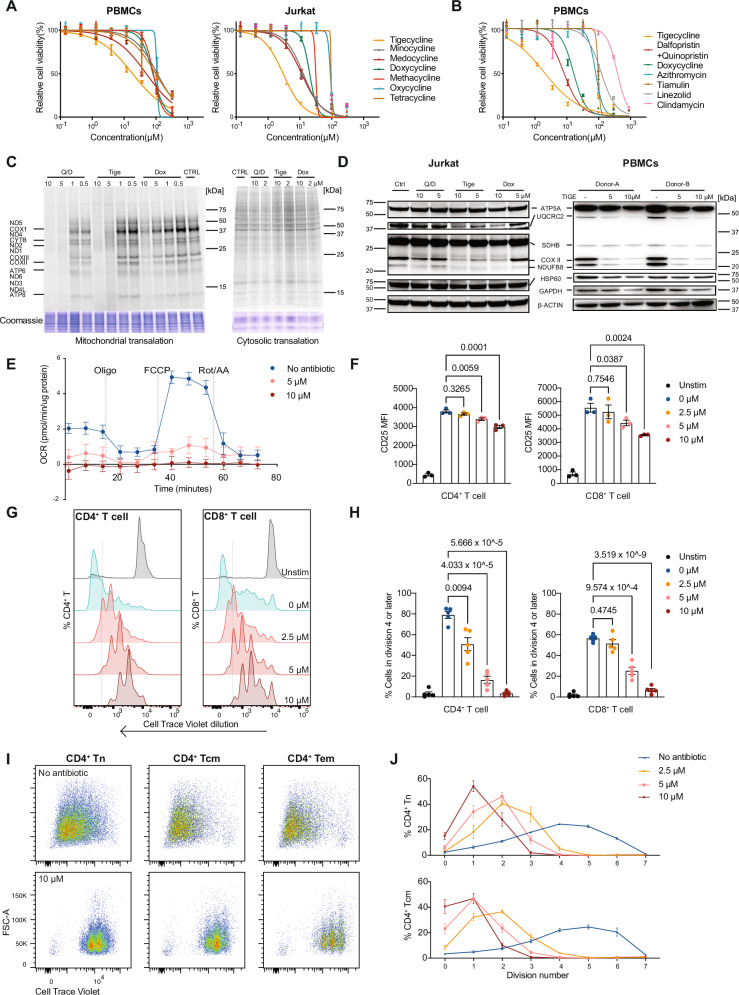
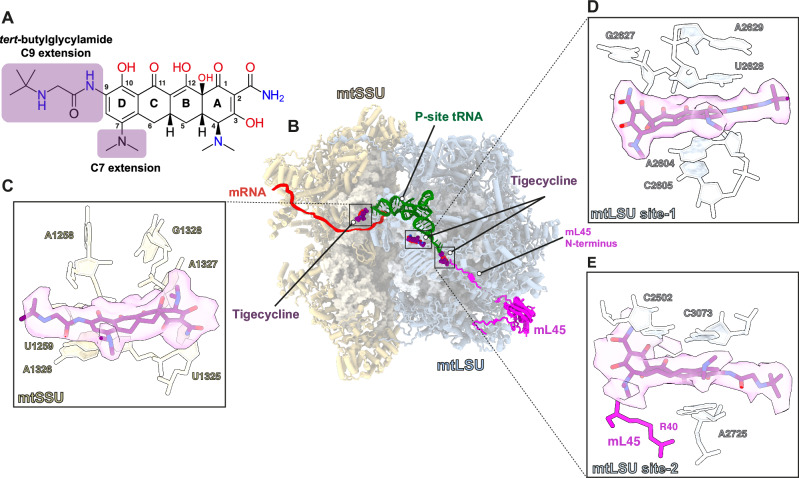
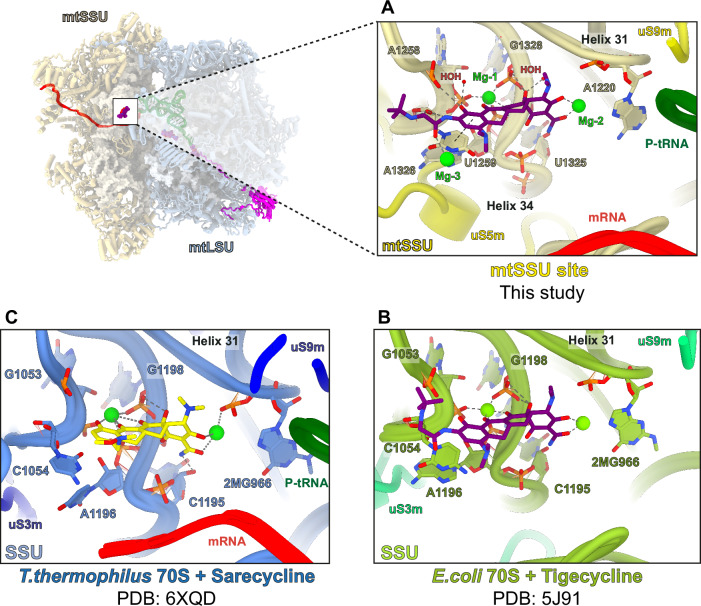
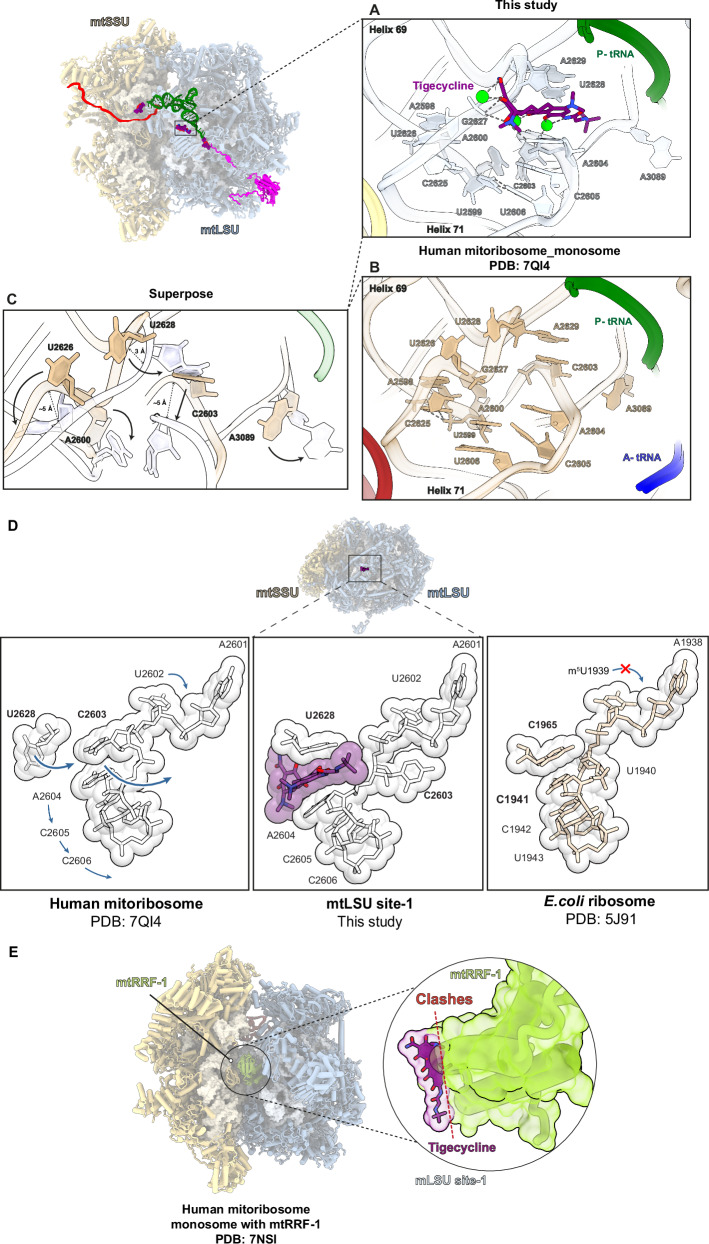
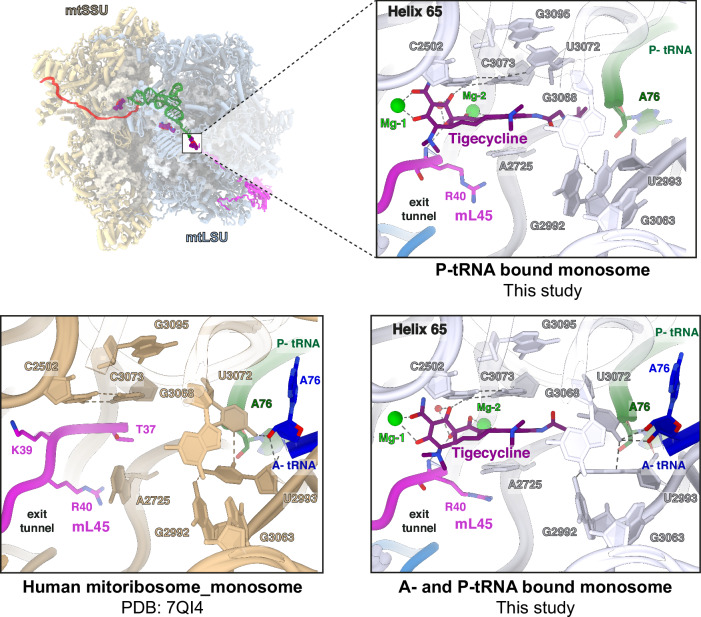
Tetracyclines are essential bacterial protein synthesis inhibitors under continual development to combat antibiotic resistance yet suffer from unwanted side effects. Mitoribosomes - responsible for generating oxidative phosphorylation (OXPHOS) subunits - share structural similarities with bacterial machinery and may suffer from cross-reactivity. Since lymphocytes rely upon OXPHOS upregulation to establish immunity, we set out to assess the impact of ribosome-targeting antibiotics on human T cells. We find tigecycline, a third-generation tetracycline, to be the most cytotoxic compound tested. In vitro, 5–10 μM tigecycline inhibits mitochondrial but not cytosolic translation, mitochondrial complex I, III and IV expression, and curtails the activation and expansion of unique T cell subsets. By cryo-EM, we find tigecycline to occupy three sites on T cell mitoribosomes. In addition to the conserved A-site found in bacteria, tigecycline also attaches to the peptidyl transferase center of the large subunit. Furthermore, a third, distinct binding site on the large subunit, aligns with helices analogous to those in bacteria, albeit lacking methylation in humans. The data provide a mechanism to explain part of the anti-inflammatory effects of these drugs and inform antibiotic design.
Overview
The claims and statistics of this paper haven’t been checked yet.
Free: it reads the open-access text and checks the first 5 claims that cite a source we can check. Create a free account to check every claim.
Integrity signals
Registry
Cites
Statistics
Figures
Verification
Claims the paper makes
The claims and statistics of this paper haven’t been checked yet.
Free: it reads the open-access text and checks the first 5 claims that cite a source we can check. Create a free account to check every claim.
Claims other papers make about this one
Each is checked against this paper’s own text: does it say what the citing paper says it does?
The cited source says what the claim attributes to it.
In the citing paper
“Apart from bacterial ribosomes, a C:C non-canonical base pair is also found in the exact same location in the human 55S mitochondrial ribosome, and recent studies demonstrated that Tigecycline, a third-generation tetracycline, can bind at this site and potently inhibit mito-ribosomal protein translation31,32.”
From Dual site targeting of the bacterial 70S ribosome by tetracyclines (2026) · cites this paper as [32]
Self-check
Percentages, sums and reported differences re-computed from the paper’s own numbers.
The self-check needs the paper’s full text.
Citations
Cites
Features and development of Coot
Emsley, P., Lohkamp, B., Scott, W. G., & Cowtan, K. (2010) · Acta Crystallographica Section D Biological Crystallography · doi:10.1107/s0907444910007493 · Cited by 29,915
MolProbity : all-atom structure validation for macromolecular crystallography
Chen, V. B., Arendall, W. B., Headd, J. J., Keedy, D. A., Immormino, R. M., Kapral, G. J., Murray, L. W., Richardson, J. S., & Richardson, D. C. (2010) · Acta Crystallographica Section D Biological Crystallography · doi:10.1107/s0907444909042073 · Cited by 14,115
cryoSPARC: algorithms for rapid unsupervised cryo-EM structure determination
Punjani, A., Rubinstein, J. L., Fleet, D. J., & Brubaker, M. A. (2017) · Nature Methods · doi:10.1038/nmeth.4169 · Cited by 11,626
UCSF ChimeraX: Structure visualization for researchers, educators, and developers
Pettersen, E. F., Goddard, T. D., Huang, C. C., Meng, E. C., Couch, G. S., Croll, T. I., Morris, J. H., & Ferrin, T. E. (2021) · Protein Science · doi:10.1002/pro.3943 · Cited by 9,514
REFMAC 5 for the refinement of macromolecular crystal structures
Murshudov, G. N., Skubák, P., Lebedev, A. A., Pannu, N. S., Steiner, R. A., Nicholls, R. A., Winn, M. D., Long, F., & Vagin, A. A. (2011) · Acta Crystallographica Section D Biological Crystallography · doi:10.1107/s0907444911001314 · Cited by 8,317
Liebschner, D., Afonine, P. V., Baker, M. L., Bunkóczi, G., Chen, V. B., Croll, T. I., Hintze, B., Hung, L.-W., Jain, S., McCoy, A. J., et al. (2019) · Acta Crystallographica Section D Structural Biology · doi:10.1107/s2059798319011471 · Cited by 7,953
MolProbity: More and better reference data for improved all‐atom structure validation
Williams, C. J., Headd, J. J., Moriarty, N. W., Prisant, M. G., Videau, L. L., Deis, L. N., Verma, V., Keedy, D. A., Hintze, B. J., Chen, V. B., et al. (2018) · Protein Science · doi:10.1002/pro.3330 · Cited by 4,599
Chopra, I., & Roberts, M. (2001) · Microbiology and Molecular Biology Reviews · doi:10.1128/mmbr.65.2.232-260.2001 · Cited by 4,517 · cited 1×
“Tetracyclines (such as doxycycline) are characterized by a four-ring core structure 23 .”
Mitochondrial DNA stress primes the antiviral innate immune response
West, A. P., Khoury-Hanold, W., Staron, M., Tal, M. C., Pineda, C. M., Lang, S. M., Bestwick, M., Duguay, B. A., Raimundo, N., MacDuff, D. A., et al. (2015) · Nature · doi:10.1038/nature14156 · Cited by 1,975 · cited 1×
“Naive lymphocytes fundamentally depend upon OXPHOS to power clonal expansion 9 – 12 , which if inhibited can affect the effector-memory response 6 – 9 .”
Real-time cryo-electron microscopy data preprocessing with Warp
Tegunov, D., & Cramer, P. (2019) · Nature Methods · doi:10.1038/s41592-019-0580-y · Cited by 1,332
Brodersen, D. E., Clemons, W. M., Carter, A. P., Morgan-Warren, R. J., Wimberly, B. T., & Ramakrishnan, V. (2000) · Cell · doi:10.1016/s0092-8674(00)00216-6 · Cited by 950 · cited 1×
“C) 26 – 33 .”
Scharping, N. E., Menk, A. V., Moreci, R. S., Whetstone, R. D., Dadey, R. E., Watkins, S. C., Ferris, R. L., & Delgoffe, G. M. (2016) · Immunity · doi:10.1016/j.immuni.2016.07.009 · Cited by 848 · cited 1×
“Naive lymphocytes fundamentally depend upon OXPHOS to power clonal expansion 9 – 12 , which if inhibited can affect the effector-memory response 6 – 9 .”
Tetracyclines: Nonantibiotic properties and their clinical implications
Sapadin, A. N., & Fleischmajer, R. (2006) · Journal of the American Academy of Dermatology · doi:10.1016/j.jaad.2005.10.004 · Cited by 768
Scharping, N. E., Menk, A. V., Moreci, R. S., Whetstone, R. D., Dadey, R. E., Watkins, S. C., Ferris, R. L., & Delgoffe, G. M. (2016) · Immunity · doi:10.1016/j.immuni.2016.08.009 · Cited by 706
Inhibition of Mitochondrial Translation as a Therapeutic Strategy for Human Acute Myeloid Leukemia
Škrtić, M., Sriskanthadevan, S., Jhas, B., Gebbia, M., Wang, X., Wang, Z., Hurren, R., Jitkova, Y., Gronda, M., Maclean, N., et al. (2011) · Cancer Cell · doi:10.1016/j.ccr.2011.10.015 · Cited by 678
UCSF ChimeraX : Structure Visualization for Researchers, Educators, and Developers
Pettersen, E. F., Goddard, T. D., Huang, C. C., Meng, E. C., Couch, G. S., Croll, T. I., Morris, J. H., & Ferrin, T. E. (2020) · Apollo (University of Cambridge) · doi:10.17863/cam.57077 · Cited by 617
Kuntz, E. M., Baquero, P., Michie, A. M., Dunn, K., Tardito, S., Holyoake, T. L., Helgason, G. V., & Gottlieb, E. (2017) · Nature Medicine · doi:10.1038/nm.4399 · Cited by 546
Moullan, N., Mouchiroud, L., Wang, X., Ryu, D., Williams, E. G., Mottis, A., Jovaisaite, V., Frochaux, M. V., Quiros, P. M., Deplancke, B., et al. (2015) · Cell Reports · doi:10.1016/j.celrep.2015.02.034 · Cited by 470
JLigand: a graphical tool for the CCP 4 template-restraint library
Lebedev, A. A., Young, P., Isupov, M. N., Moroz, O. V., Vagin, A. A., & Murshudov, G. N. (2012) · Acta Crystallographica Section D Biological Crystallography · doi:10.1107/s090744491200251x · Cited by 429
Tan, H., Yang, K., Li, Y., Shaw, T. I., Wang, Y., Blanco, D. B., Wang, X., Cho, J.-H., Wang, H., Rankin, S., et al. (2017) · Immunity · doi:10.1016/j.immuni.2017.02.010 · Cited by 372
Targeting metabolism to regulate immune responses in autoimmunity and cancer
Patel, C. H., Leone, R. D., Horton, M. R., & Powell, J. D. (2019) · Nature Reviews Drug Discovery · doi:10.1038/s41573-019-0032-5 · Cited by 306
Inhibition of Mammalian Mitochondrial Protein Synthesis by Oxazolidinones
McKee, E. E., Ferguson, M., Bentley, A. T., & Marks, T. A. (2006) · Antimicrobial Agents and Chemotherapy · doi:10.1128/aac.01411-05 · Cited by 270
The Development of Third-Generation Tetracycline Antibiotics and New Perspectives
Rusu, A., & Buta, E. L. (2021) · Pharmaceutics · doi:10.3390/pharmaceutics13122085 · Cited by 210
Jenner, L., Starosta, A. L., Terry, D. S., Mikolajka, A., Filonava, L., Yusupov, M., Blanchard, S. C., Wilson, D. N., & Yusupova, G. (2013) · Proceedings of the National Academy of Sciences · doi:10.1073/pnas.1216691110 · Cited by 204 · cited 1×
“Based onbacterialstudies, it isestablishedthat tigecycline speci fi cally targets the head region of the SSU and competes with the binding of A-site tRNA, in a similar manner observed for other tetracycline derivatives 27 .”
rRNA Binding Sites and the Molecular Mechanism of Action of the Tetracyclines
Chukwudi, C. U. (2016) · Antimicrobial Agents and Chemotherapy · doi:10.1128/aac.00594-16 · Cited by 204
Root of the Tree: The Significance, Evolution, and Origins of the Ribosome
Bowman, J. C., Petrov, A. S., Frenkel-Pinter, M., Penev, P. I., & Williams, L. D. (2020) · Chemical Reviews · doi:10.1021/acs.chemrev.9b00742 · Cited by 197
The Pharmacokinetic and Pharmacodynamic Profile of Tigecycline
Meagher, A. K., Ambrose, P. G., Grasela, T. H., & Ellis‐Grosse, E. J. (2005) · Clinical Infectious Diseases · doi:10.1086/431674 · Cited by 188
Mechanism of membrane-tethered mitochondrial protein synthesis
Itoh, Y., Andréll, J., Choi, A., Richter, U., Maiti, P., Best, R. B., Barrientos, A., Battersby, B. J., & Amunts, A. (2021) · Science · doi:10.1126/science.abe0763 · Cited by 162
Unique features of mammalian mitochondrial translation initiation revealed by cryo-EM
Kummer, E., Leibundgut, M., Rackham, O., Lee, R. G., Boehringer, D., Filipovska, A., & Ban, N. (2018) · Nature · doi:10.1038/s41586-018-0373-y · Cited by 139
Barnhill, A. E., Brewer, M. T., & Carlson, S. A. (2012) · Antimicrobial Agents and Chemotherapy · doi:10.1128/aac.00678-12 · Cited by 138
Mitochondrial translation is required for sustained killing by cytotoxic T cells
Lisci, M., Barton, P. R., Randzavola, L. O., Ma, C. Y., Marchingo, J. M., Cantrell, D. A., Paupe, V., Prudent, J., Stinchcombe, J. C., & Griffiths, G. M. (2021) · Science · doi:10.1126/science.abe9977 · Cited by 125
Oxazolidinones Inhibit Cellular Proliferation via Inhibition of Mitochondrial Protein Synthesis
Nagiec, E. E., Wu, L., Swaney, S. M., Chosay, J. G., Ross, D., Brieland, J. K., & Leach, K. L. (2005) · Antimicrobial Agents and Chemotherapy · doi:10.1128/aac.49.9.3896-3902.2005 · Cited by 120
Role of Mitochondria in Cancer Immune Evasion and Potential Therapeutic Approaches
Klein, K., He, K., Younes, A. I., Barsoumian, H. B., Chen, D., Ozgen, T., Mosaffa, S., Patel, R. R., Gu, M., Novaes, J., et al. (2020) · Frontiers in Immunology · doi:10.3389/fimmu.2020.573326 · Cited by 117
The influence of tetracyclines on T cell activation
Kloppenburg, M., Verweij, C. L., Miltenburg, A. M. M., Verhoeven, A. J., Daha, M. R., Dijkmans, B. A. C., & Breedveld, F. C. (2008) · Clinical and Experimental Immunology · doi:10.1111/j.1365-2249.1995.tb03864.x · Cited by 116
Arenz, S., Bock, L. V., Graf, M., Innis, C. A., Beckmann, R., Grubmüller, H., Vaiana, A. C., & Wilson, D. N. (2016) · Nature Communications · doi:10.1038/ncomms12026 · Cited by 113
Li, Y., Cheng, Y., Consolato, F., Schiano, G., Chong, M., Pietzner, M., Nguyen, N., Scherer, N., Biggs, M., Kleber, M., et al. (2022) · HAL · doi:10.1172/jci · Cited by 107
Structural conservation of antibiotic interaction with ribosomes
Paternoga, H., Crowe-McAuliffe, C., Bock, L. V., Koller, T. O., Morici, M., Beckert, B., Myasnikov, A. G., Grubmüller, H., Nováček, J., & Wilson, D. N. (2023) · Nature Structural & Molecular Biology · doi:10.1038/s41594-023-01047-y · Cited by 94 · cited 1×
“Extensive studies in bacterial systems have shown that high concentrations of antibiotics may result in secondary binding sites in in vitro experiments, which may not be physiologically relevant 43 .”
Almeida, L., Dhillon-LaBrooy, A., Castro, C. N., Adossa, N., Carriche, G. M., Guderian, M., Lippens, S., Dennerlein, S., Hesse, C., Lambrecht, B. N., et al. (2021) · Immunity · doi:10.1016/j.immuni.2020.11.001 · Cited by 90
Tetracycline Antibiotics Induce Host-Dependent Disease Tolerance to Infection
Colaço, H. G., Barros, A., Neves‐Costa, A., Seixas, E., Pedroso, D. C. S., Velho, T. R., Willmann, K. L., Faísca, P., Grabmann, G., Yi, H., et al. (2020) · Immunity · doi:10.1016/j.immuni.2020.09.011 · Cited by 89
Fever supports CD8 + effector T cell responses by promoting mitochondrial translation
O’Sullivan, D., Stanczak, M. A., Villa, M., Uhl, F. M., Corrado, M., Geltink, R. I. K., Sanin, D. E., Apostolova, P., Rana, N., Edwards-Hicks, J., et al. (2021) · Proceedings of the National Academy of Sciences · doi:10.1073/pnas.2023752118 · Cited by 81
Inhibition of mitochondrial translation suppresses glioblastoma stem cell growth
Sighel, D., Notarangelo, M., Aibara, S., Re, A., Ricci, G., Guida, M., Soldano, A., Adami, V., Ambrosini, C., Broso, F., et al. (2021) · Cell Reports · doi:10.1016/j.celrep.2021.109024 · Cited by 76
Self-citationTetracenomycin X inhibits translation by binding within the ribosomal exit tunnel
Osterman, I. A., Wieland, M., Maviza, T. P., Lashkevich, K. A., Lukianov, D. A., Komarova, E. S., Zakalyukina, Y. V., Buschauer, R., Shiriaev, D. I., Leyn, S. A., et al. (2020) · Nature Chemical Biology · doi:10.1038/s41589-020-0578-x · Cited by 75 · cited 2×
“7) 30,38 .”
Tetracyclines promote survival and fitness in mitochondrial disease models
Perry, E. A., Bennett, C. F., Luo, C., Balsa, E., Jedrychowski, M. P., O’Malley, K. E., Latorre‐Muro, P., Ladley, R. P., Reda, K., Wright, P. M., et al. (2021) · Nature Metabolism · doi:10.1038/s42255-020-00334-y · Cited by 64
Structural basis of translation termination, rescue, and recycling in mammalian mitochondria
Kummer, E., Schubert, K., Schönhut, T., Scaiola, A., & Ban, N. (2021) · Molecular Cell · doi:10.1016/j.molcel.2021.03.042 · Cited by 64
Hu, B., & Guo, Y. (2018) · Biochemical and Biophysical Research Communications · doi:10.1016/j.bbrc.2018.12.127 · Cited by 58
Zhang, Z., Morgan, C. E., Bonomo, R. A., & Yu, E. W. (2021) · mBio · doi:10.1128/mbio.01031-21 · Cited by 58
Cocozaki, A. I., Altman, R. B., Huang, J., Buurman, E. T., Kazmirski, S. L., Doig, P., Prince, D. B., Blanchard, S. C., Cate, J. H. D., & Ferguson, A. D. (2016) · Proceedings of the National Academy of Sciences · doi:10.1073/pnas.1605127113 · Cited by 56
Inhibition of mitochondrial translation effectively sensitizes renal cell carcinoma to chemotherapy
Wang, B., Ao, J., Yu, D., Rao, T., Ruan, Y., & Yao, X. (2017) · Biochemical and Biophysical Research Communications · doi:10.1016/j.bbrc.2017.06.115 · Cited by 51
Sarecycline interferes with tRNA accommodation and tethers mRNA to the 70S ribosome
Batool, Z., Lomakin, I. B., Polikanov, Y. S., & Bunick, C. G. (2020) · Proceedings of the National Academy of Sciences · doi:10.1073/pnas.2008671117 · Cited by 50
Tetracycline-induced mitohormesis mediates disease tolerance against influenza
Mottis, A., Li, T. Y., Alam, G. E., Rapin, A., Katsyuba, E., Liaskos, D., D’Amico, D., Harris, N. L., Grier, M. C., Mouchiroud, L., et al. (2022) · Journal of Clinical Investigation · doi:10.1172/jci151540 · Cited by 50
Structural Characterization of an Alternative Mode of Tigecycline Binding to the Bacterial Ribosome
Schedlbauer, A., Kaminishi, T., Ochoa-Lizarralde, B., Dhimole, N., Zhou, S., López-Alonso, J. P., Connell, S. R., & Fucini, P. (2015) · Antimicrobial Agents and Chemotherapy · doi:10.1128/aac.04895-14 · Cited by 45
Itoh, Y., Singh, V., Khawaja, A., Naschberger, A., Nguyen, M. D., Rorbach, J., & Amunts, A. (2022) · eLife · doi:10.7554/elife.77460 · Cited by 39
Self-citationSingh, V., Itoh, Y., Del’Olio, S., Hassan, A., Naschberger, A., Flygaard, R. K., Nobe, Y., Izumikawa, K., Aibara, S., Andréll, J., et al. (2024) · Nature Communications · doi:10.1038/s41467-024-48163-x · Cited by 38
Self-citationNicholson, D., Edwards, T. A., O'Neill, A. J., & Ranson, N. A. (2020) · Structure · doi:10.1016/j.str.2020.08.004 · Cited by 30
The innate immune DNA sensor cGAS: A membrane, cytosolic, or nuclear protein?
Gekara, N. O., & Jiang, H. (2019) · Science Signaling · doi:10.1126/scisignal.aax3521 · Cited by 29
Mito-FUNCAT-FACS reveals cellular heterogeneity in mitochondrial translation
Kimura, Y., Saito, H., Osaki, T., Ikegami, Y., Wakigawa, T., Ikeuchi, Y., & Iwasaki, S. (2022) · RNA · doi:10.1261/rna.079097.122 · Cited by 29
Pleiotropic effects of antibiotics on T cell metabolism and T cell-mediated immunity
Franz, T. J., Negele, J., Bruno, P., Böttcher, M., Mitchell-Flack, M., Reemts, L., Krone, A., Mougiakakos, D., Müller, A. J., Zautner, A. E., et al. (2022) · Frontiers in Microbiology · doi:10.3389/fmicb.2022.975436 · Cited by 28
Distinct mechanisms of the human mitoribosome recycling and antibiotic resistance
Koripella, R. K., Deep, A., Agrawal, E. K., Keshavan, P., Banavali, N. K., & Agrawal, R. K. (2021) · Nature Communications · doi:10.1038/s41467-021-23726-4 · Cited by 26
Lomakin, I. B., Devarkar, S. C., Patel, S., Grada, A., & Bunick, C. G. (2023) · Nucleic Acids Research · doi:10.1093/nar/gkad103 · Cited by 25
Tetracenomycin X sequesters peptidyl-tRNA during translation of QK motifs
Leroy, E. C., Perry, T. N., Renault, T. T., & Innis, C. A. (2023) · Nature Chemical Biology · doi:10.1038/s41589-023-01343-0 · Cited by 22 · cited 2×
“This was recently demonstrated for TcmX, where it was shown to sequester the 3 ′ adenosine of peptidyl-tRNA Lys in the nascent polypeptide exit tunnel of the ribosome upon translation of a QK motif 40 .”
Tigecycline Penetration into Skin and Soft Tissue
Stein, G. E., Smith, C. L., Missavage, A. E., Saunders, J. P., Nicolau, D. P., Battjes, S. M., & Kepros, J. P. (2011) · Surgical Infections · doi:10.1089/sur.2011.022 · Cited by 21
Structural basis for differential inhibition of eukaryotic ribosomes by tigecycline
Li, X., Wang, M., Denk, T., Buschauer, R., Li, Y., Beckmann, R., & Cheng, J. (2024) · Nature Communications · doi:10.1038/s41467-024-49797-7 · Cited by 21 · cited 1×
“Together, these data provide a molecular mechanism to explain part of the anti-in fl ammatory effects of tetracyclines, informing antibiotic and OXPHOS inhibitor design 52 .”
Zhang, J., Koolmeister, C., Han, J., Filograna, R., Hanke, L., Ádori, M., Sheward, D. J., Teifel, S., Gopalakrishna, S., Shao, Q., et al. (2023) · JCI Insight · doi:10.1172/jci.insight.167656 · Cited by 20
Self-citationClonal Expansion of T Cells in Abdominal Aortic Aneurysm: A Role for Doxycycline as Drug of Choice?
Kroon, A. M., & Taanman, J. (2015) · International Journal of Molecular Sciences · doi:10.3390/ijms160511178 · Cited by 18
Mitoribosome Profiling from Human Cell Culture: A High Resolution View of Mitochondrial Translation
Pearce, S. F., Cipullo, M., Chung, B., Brierley, I., & Rorbach, J. (2020) · Methods in molecular biology · doi:10.1007/978-1-0716-0834-0_14 · Cited by 18
Self-citationAlmeida, L., Dhillon-LaBrooy, A., Castro, C. F. G., et al. (2019) · bioRxiv (Cold Spring Harbor Laboratory) · doi:10.1101/832956 · Cited by 10
Singh, V., Itoh, Y., Del’Olio, S., Hassan, A. H., Naschberger, A., Flygaard, R. K., Nobe, Y., Izumikawa, K., Aibara, S., Andréll, J., et al. (2023) · bioRxiv (Cold Spring Harbor Laboratory) · doi:10.1101/2023.05.24.542018 · Cited by 10
Self-citationMito-FUNCAT-FACS reveals cellular heterogeneity in mitochondrial translationPreprint
Kimura, Y., Saito, H., Osaki, T., et al. (2022) · bioRxiv (Cold Spring Harbor Laboratory) · doi:10.1101/2022.01.03.474764 · Cited by 3
Cited by
Mitochondrial Transfer Between Cancer and T Cells: Implications for Immune Evasion
Chun, S., An, J. Y., & Kim, M. S. (2025) · Antioxidants · doi:10.3390/antiox14081008 · Cited by 27
Mechanisms and disease relevance of mitochondrial translation in humans
Richter‐Dennerlein, R., Dopico, X. C., & Rorbach, J. (2026) · Nature Reviews Molecular Cell Biology · doi:10.1038/s41580-026-00948-2 · Cited by 16
Self-citationENOblock synergizes with colistin to treat Acinetobacter baumannii infections
Panadero, I. M., Rodríguez, A. M., Hidalgo, A. R., de la Cruz, M., Sánchez, P., Tomás‐Gallardo, L., Samernate, T., Senćanski, M., Glišić, S., Genilloud, O., et al. (2025) · EMBO Molecular Medicine · doi:10.1038/s44321-025-00331-2 · Cited by 7
Hassan, S. N., & Ahmad, F. (2025) · European Journal of Pharmacology · doi:10.1016/j.ejphar.2025.178258 · Cited by 3
Atypical Tetracyclines Promote Longevity and Ferroptotic Neuroprotection via Translation Attenuation
Clay, K. J., Sánchez-Alavez, M., Newman, I., Na, N., Espinoza, A. P. V., To, A., Saad, S., Cline, H. T., & Petrascheck, M. (2026) · Aging Cell · doi:10.1111/acel.70587 · Cited by 3
Metadata
- Authors
- Shao, Q., Khawaja, A., Nguyen, M. D., Singh, V., Zhang, J., Liu, Y., Nordin, J., Adori, M., Axel Innis, C., Castro Dopico, X., & Rorbach, J.
- Affiliations
- Karolinska Institutet (SE)
- Corresponding author
- Rorbach, Joanna
- ORCID
- Venue
- Nature Communications
- Published
- 2025-05-01
- Volume
- 16
- Issue
- 1
- Pages
- 4080-4080
- ISSN
- 2041-1723 (ISSN-L)
- PMC
- PMC12045974
- OpenAlex
- W4410007480
- Cited by
- 16
- References
- 68
- Citations by year
- 2026: 12 · 2025: 4
- FWCI
- 4.78
- Type
- journal article
- Language
- en
- Open access
- gold
- doi.org
- Licence
- cc-by
- creativecommons.org/licenses/by/4.0 (tdm)
- creativecommons.org/licenses/by/4.0 (vor)
- Locations
- Nature Communications (publishedVersion, cc-by)
- Research Square (acceptedVersion, cc-by)
- PubMed Central (publishedVersion, cc-by)
- PubMed (publishedVersion)
- RePEc: Research Papers in Economics (submittedVersion)
- DOAJ (DOAJ: Directory of Open Access Journals) (submittedVersion, cc-by-sa)
- Funders
- Knut och Alice Wallenbergs Stiftelse
- Vetenskapsrådet
- Karolinska Institutet
- Topics
- Life Sciences › Biochemistry, Genetics and Molecular Biology › Molecular Biology › RNA and protein synthesis mechanisms
- Life Sciences › Biochemistry, Genetics and Molecular Biology › Molecular Biology › Mitochondrial Function and Pathology
- Life Sciences › Immunology and Microbiology › Immunology › Immunotoxicology and immune responses
- Keywords
- tigecycline, tetracycline, mitochondrial ribosome, T cell toxicity, oxidative phosphorylation, mitochondrial translation, peptidyl transferase center, antibiotic binding sites, T cell activation, antibiotic design, antibiotic resistance
- MeSH terms
- Mitochondrial Ribosomes, Tigecycline, Anti-Bacterial Agents, Binding Sites, Humans, Minocycline, Mitochondria, Oxidative Phosphorylation, T-Lymphocytes, Protein Biosynthesis, Cryoelectron Microscopy
About these checks
Registry, retraction, Cites and statistics results are computed, not judged, with one exception: a printed reference that no index lists is read once by a model before it counts as a citation error. Claims are extracted by a model and kept only when their quote appears verbatim in the text; each cited source is then checked, with a model’s help, for whether it says what the claim relies on. Those verdicts can be wrong — read the claim’s quote and the cited source before relying on one.
Statistics and arithmetic are recomputed, not judged.
Confidence bands are shown only for fields calibrated on our annotated test set. None is calibrated yet, so no band is shown.
What counts as a claim ›How we measure confidence ›How we check this ›
Are you an author, or do you see a problem with this page? Request a review
Data sources
Bibliographic data: Semantic Scholar, OpenAlex, Crossref.
Contains information from the Semantic Scholar Academic Graph Datasets, made available under the ODC Attribution License (ODC-BY 1.0).
Semantic Scholar’s data is described in: Kinney, R., et al. (2023). The Semantic Scholar Open Data Platform. arXiv:2301.10140.
