

The DOI matches its Crossref record; 8 of the 8 references it cites were found in a registry or an index.
The role of gene duplication and paralog specialisation in the evolution of the mammalian PRPS complex
Open accessPublished version of a preprint
Abstract
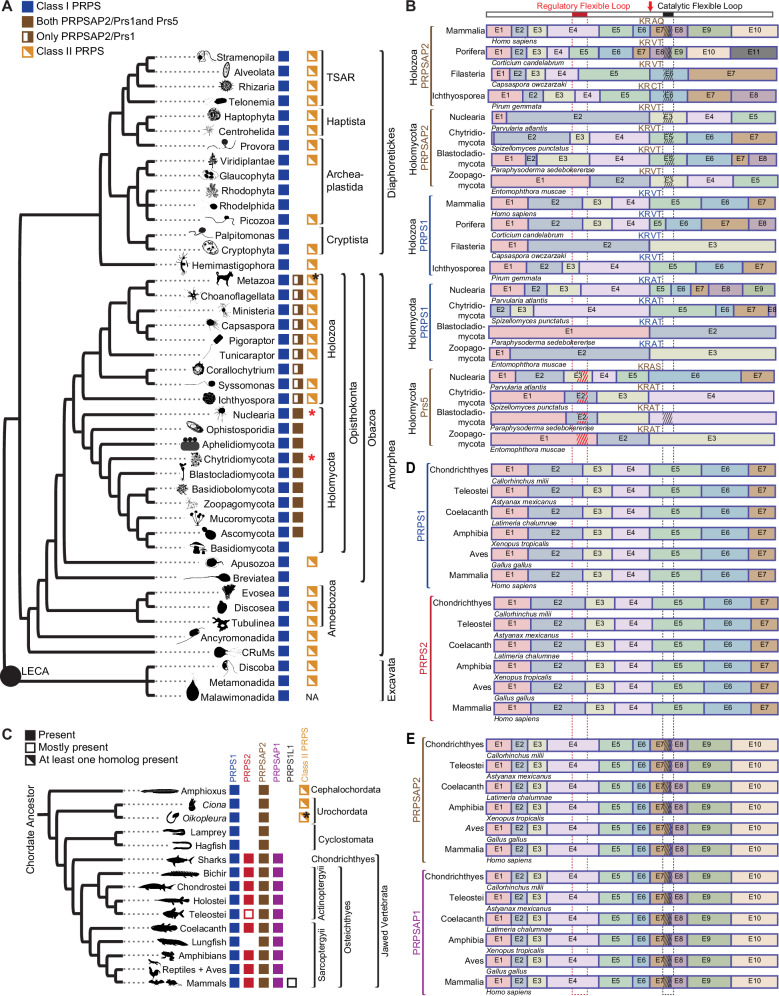
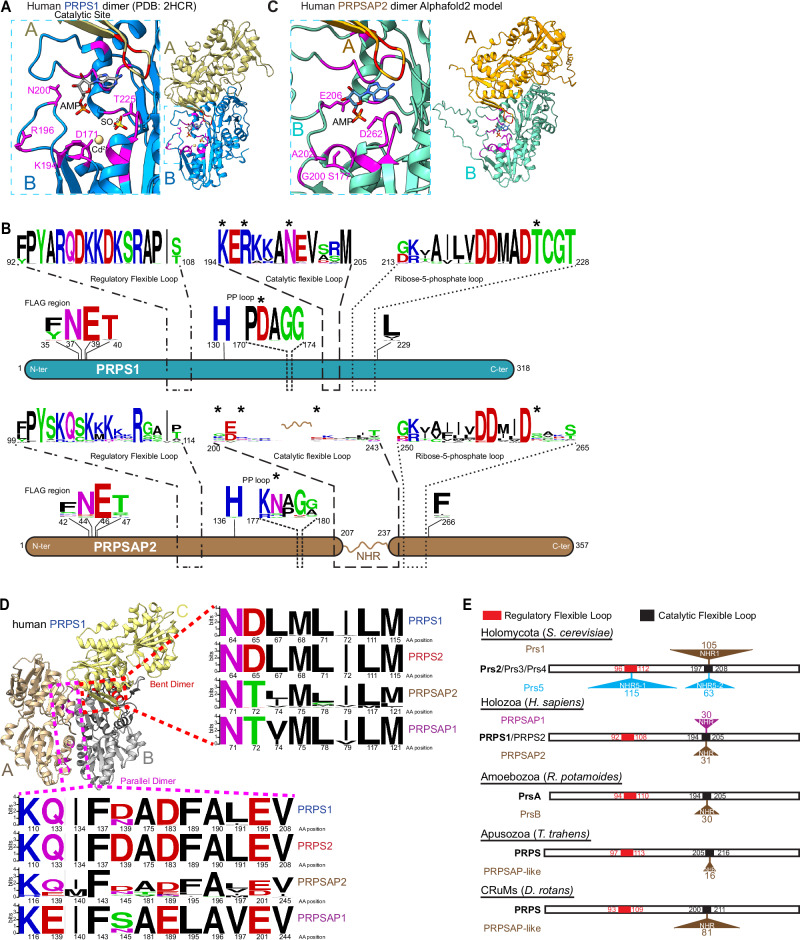
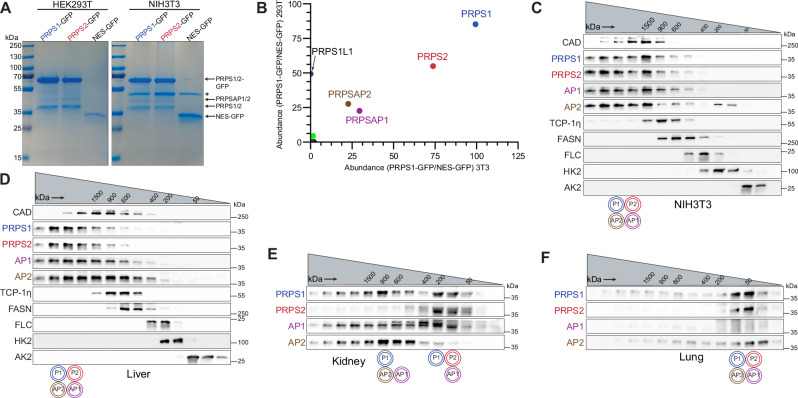
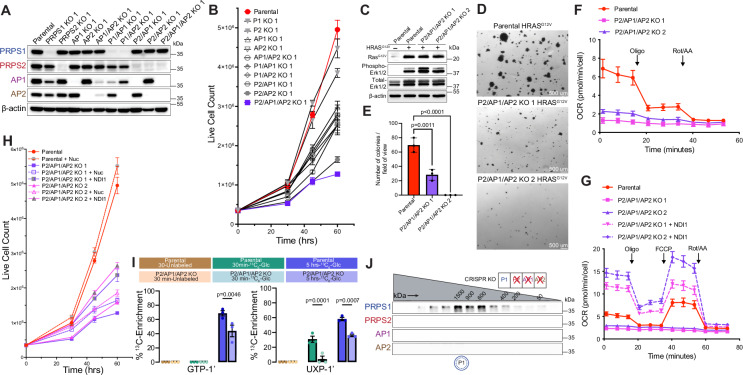
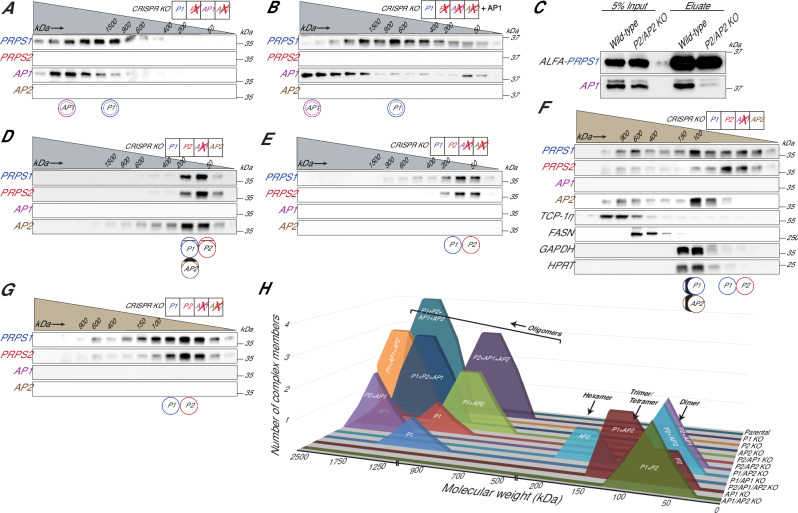
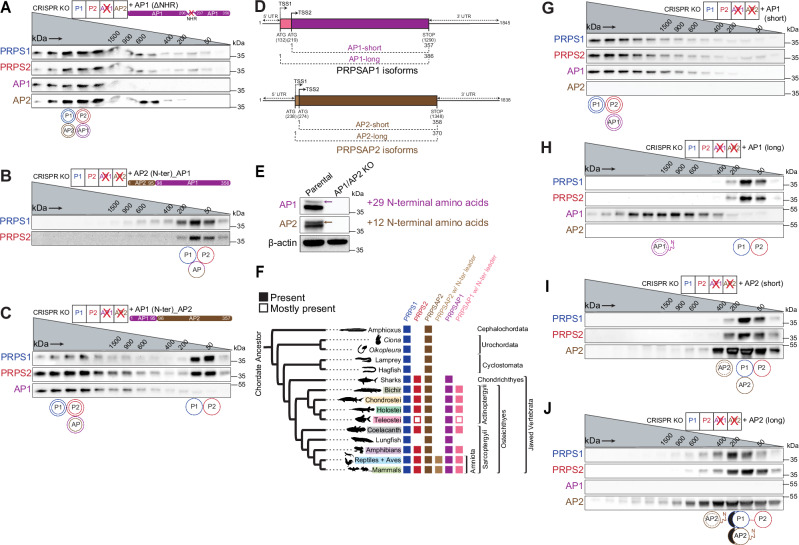
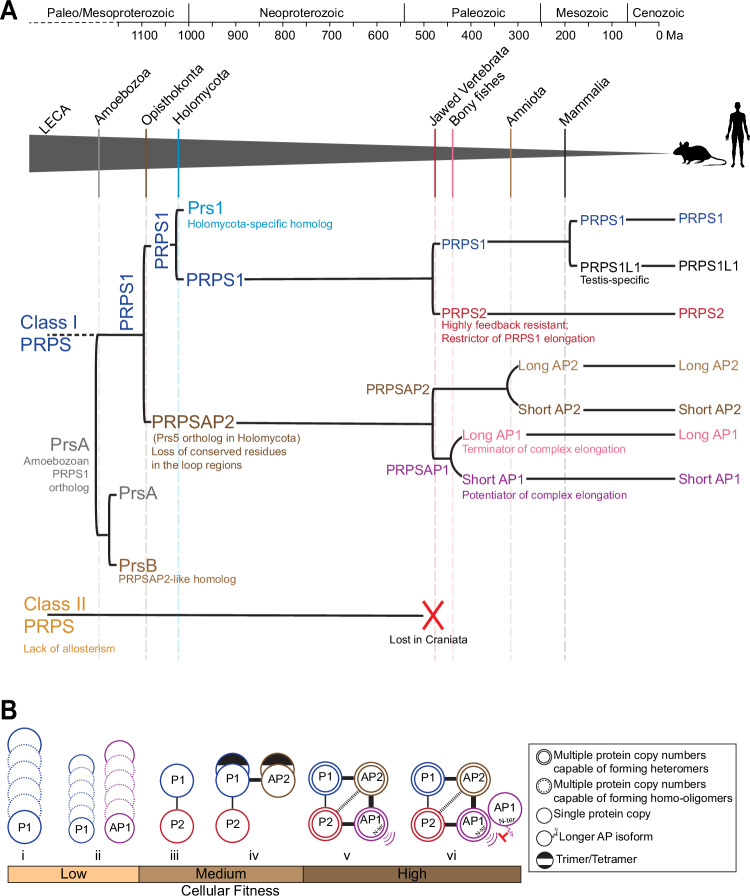
The phosphoribosyl pyrophosphate synthetase (PRPS) enzyme catalyzes a chokepoint reaction in nucleotide production, making it essential for life. Here, we show that the presence of multiple PRPS-encoding genes is a hallmark trait of eukaryotes, and we find that gains or losses of paralogs are associated with major branching events in the eukaryotic tree. We pinpoint the evolutionary origins and define the individual roles for each of the mammalian PRPS paralogs, which we demonstrate work together as a heterogeneous multicomponent complex. Employing isogenic cells representing all viable individual or combinatorial assembly states, we dissect the basic organizational principles of the enzyme complex and characterize the emergent properties responsible for paralog specialization, including new modes of regulation that govern complex assembly and activity in vivo. Collectively, our study demonstrates how evolution has transformed a single PRPS enzyme into a biochemical complex endowed with novel functional and regulatory features that fine-tune mammalian metabolism.
Overview
The claims and statistics of this paper haven’t been checked yet.
Run the check — free, no account needed. It reads the open-access text and checks the sources it cites.
Integrity signals
Registry
Cites
Statistics
Figures
Verification
Claims the paper makes
The claims and statistics of this paper haven’t been checked yet.
Run the check — free, no account needed. It reads the open-access text and checks the sources it cites.
Self-check
Percentages, sums and reported differences re-computed from the paper’s own numbers.
The self-check needs the paper’s full text.
Citations
Cites
Highly accurate protein structure prediction with AlphaFold
Jumper, J., Evans, R., Pritzel, A., Green, T., Figurnov, M., Ronneberger, O., Tunyasuvunakool, K., Bates, R., Žídek, A., Potapenko, A., et al. (2021) · Nature · doi:10.1038/s41586-021-03819-2 · Cited by 43,764
The energetics of genome complexity.
Lane, N., & Martin, W. (2010) · Nature · doi:10.1038/nature09486 · Cited by 1,289
Solving the structure of human H ferritin by genetically engineering intermolecular crystal contacts
Lawson, D. M., Artymiuk, P. J., Yewdall, S. J., Smith, J. M. A., Livingstone, J. C., Treffry, A., Luzzago, A., Levi, S., Arosio, P., Cesareni, G., et al. (1991) · Nature · doi:10.1038/349541a0 · Cited by 777
Metabolic determinants of cancer cell sensitivity to glucose limitation and biguanides
Birsoy, K., Possemato, R., Lorbeer, F. K., Bayraktar, E. C., Thiru, P., Yucel, B., Wang, T., Chen, W. W., Clish, C. B., & Sabatini, D. M. (2014) · Nature · doi:10.1038/nature13110 · Cited by 710
Strassert, J. F. H., Irisarri, I., Williams, T. A., & Burki, F. (2021) · Nature Communications · doi:10.1038/s41467-021-22044-z · Cited by 298
Cunningham, J. T., Moreno, M. V., Lodi, A., Ronen, S. M., & Ruggero, D. (2014) · Cell · doi:10.1016/j.cell.2014.03.052 · Cited by 260
Dating early animal evolution using phylogenomic data
Dohrmann, M., & Wörheide, G. (2017) · Scientific Reports · doi:10.1038/s41598-017-03791-w · Cited by 217
The Origin of Metazoan Multicellularity: A Potential Microbial Black Swan Event
Ruiz-Trillo, I., Kin, K., & Casacuberta, E. (2023) · Annual Review of Microbiology · doi:10.1146/annurev-micro-032421-120023 · Cited by 36
Research works printed but not linked: 87
- Moody, E. R. R. et al. The nature of the last universal common ancestor and its impact on the early Earth system. Nat. Ecol. Evol. 1, 13 (2024).
- Crapitto, A. J., Campbell, A., Harris, A. & Goldman, A. D. A consensus view of the proteome of the last universal common ancestor. Ecol. Evol. 12, e8930 (2022). · DOI
- Feng, J.-M., Tian, H.-F. & Wen, J.-F. Origin and evolution of the eukaryotic SSU processome revealed by a comprehensive genomic analysis and implications for the origin of the nucleolus. Genome Biol. Evol. 5, 2255–2267 (2013). · DOI
- Kornberg, A., Lieberman, I. & Simms, E. S. Enzymatic synthesis and properties of 5-phosphoribosylpyrophosphate. J. Biol. Chem. 215, 389–402 (1955). · DOI
- Hove-Jensen, B. et al. Phosphoribosyl diphosphate (PRPP): biosynthesis, enzymology, utilization, and metabolic significance. Microbiol. Mol. Biol. Rev. 81, e00040–16 (2017). · DOI
- Eriksen, T. A., Kadziola, A., Bentsen, A. K., Harlow, K. W. & Larsen, S. Structural basis for the function of Bacillus subtilis phosphoribosyl-pyrophosphate synthetase. Nat. Struct. Biol. 7, 303–308 (2000). · DOI
- Timofeev, V. I. et al. Three-dimensional structure of phosphoribosyl pyrophosphate synthetase from E. coli at 2.71 Å resolution. Crystallogr. Rep. 61, 44–54 (2016). · DOI
- Li, S., Lu, Y., Peng, B. & Ding, J. Crystal structure of human phosphoribosylpyrophosphate synthetase 1 reveals a novel allosteric site. Biochem. J. 401, 39–47 (2007). · DOI
- Krath, B. N., Eriksen, T. A., Poulsen, T. S. & Hove-Jensen, B. Cloning and sequencing of cDNAs specifying a novel class of phosphoribosyl diphosphate synthase in Arabidopsis thaliana. Biochim. Biophys. Acta 1430, 403–408 (1999). · DOI
- Krath, B. N. & Hove-Jensen, B. Organellar and cytosolic localization of four phosphoribosyl diphosphate synthase isozymes in spinach. Plant Physiol. 119, 497–506 (1999). · DOI
- Sculaccio, S. A. et al. Sugarcane phosphoribosyl pyrophosphate synthetase: molecular characterization of a phosphate-independent PRS. Plant Mol. Biol. Rep. 26, 301–315 (2008). · DOI
- Rashid, N., Morikawa, M. & Imanaka, T. Gene cloning and characterization of recombinant ribose phosphate pyrophosphokinase from a hyperthermophilic archaeon. J. Ferment. Bioeng. 83, 412–418 (1997). · DOI
- Kadziola, A. et al. Novel Class III phosphoribosyl diphosphate synthase: structure and properties of the tetrameric, phosphate-activated, non-allosterically inhibited enzyme from Methanocaldococcus jannaschii. J. Mol. Biol. 354, 815–828 (2005). · DOI
- Cherney, M. M., Cherney, L. T., Garen, C. R. & James, M. N. G. The structures of Thermoplasma volcanium phosphoribosyl pyrophosphate synthetase bound to ribose-5-phosphate and ATP analogs. J. Mol. Biol. 413, 844–856 (2011). · DOI
- Andersen, R. W., Leggio, L. L., Hove-Jensen, B. & Kadziola, A. Structure of dimeric, recombinant Sulfolobus solfataricus phosphoribosyl diphosphate synthase: a bent dimer defining the adenine specificity of the substrate ATP. Extremophiles 19, 407–415 (2015). · DOI
- Becker, M. A. et al. Cloning of cDNAs for human phosphoribosylpyrophosphate synthetases 1 and 2 and X chromosome localization of PRPS1 and PRPS2 genes. Genomics 8, 555–561 (1990). · DOI
- Taira, M. et al. A human testis-specific mRNA for phosphoribosylpyrophosphate synthetase that initiates from a non-AUG codon. J. Biol. Chem. 265, 16491–16497 (1990). · DOI
- Ishizuka, T. et al. Cloning and sequencing of human complementary DNA for the phosphoribosylpyrophosphate synthetase-associated protein 39. Biochim. Biophys. Acta (BBA) - Gene Struct. Expr. 1306, 27–30 (1996). · DOI
- Katashima, R. et al. Molecular cloning of a human cDNA for the 41-kDa phosphoribosylpyrophosphate synthetase-associated protein1. Biochim. Biophys. Acta (BBA) - Gene Struct. Expr. 1396, 245–250 (1998). · DOI
- Becker, M. A., Meyer, L. J., Huisman, W. H., Lazar, C. & Adams, W. B. Human erythrocyte phosphoribosylpyrophosphate synthetase. Subunit analysis and states of subunit association. J. Biol. Chem. 252, 3911–3918 (1977). · DOI
- Kita, K., Otsuki, T., Ishizuka, T. & Tatibana, M. Rat liver phosphoribosyl pyrophosphate synthetase: existence of the purified enzyme as heterogeneous aggregates and identification of the catalytic subunit. J. Biochem. 105, 736–741 (1989). · DOI
- Tatibana, M. et al. Mammalian phosphoribosyl-pyrophosphate synthetase. Adv. Enzym. Regul. 35, 229–249 (1995). · DOI
- Hove-Jensen, B., Harlow, K. W., King, C. J. & Switzer, R. L. Phosphoribosylpyrophosphate synthetase of Escherichia coli. Properties of the purified enzyme and primary structure of the prs gene. J. Biol. Chem. 261, 6765–6771 (1986). · DOI
- Donini, S. et al. Biochemical and structural investigations on phosphoribosylpyrophosphate synthetase from Mycobacterium smegmatis. PLoS ONE 12, e0175815 (2017). · DOI
- Pei, W. et al. Additive reductions in zebrafish PRPS1 activity result in a spectrum of deficiencies modeling several human PRPS1-associated diseases. Sci. Rep. 6, 29946 (2016). · DOI
- Carter, A. T. et al. PRS1 is a key member of the gene family encoding phosphoribosylpyrophosphate synthetase in Saccharomyces cerevisiae. Mol. Gen. Genet. 254, 148–156 (1997). · DOI
- Burki, F., Roger, A. J., Brown, M. W. & Simpson, A. G. B. The new tree of eukaryotes. Trends Ecol. Evol. 35, 43–55 (2020). · DOI · Paper page
- Merényi, Z. et al. Genomes of fungi and relatives reveal delayed loss of ancestral gene families and evolution of key fungal traits. Nat. Ecol. Evol. 7, 1221–1231 (2023). · DOI
- Williamson, K. et al. A robustly rooted tree of eukaryotes reveals their excavate ancestry. Nature 640, 974–981 (2025). · DOI
- Ohno, S. Evolution by Gene Duplication (Springer-Verlag, New York, 1970). · DOI · Paper page
- Yu, D. et al. Hagfish genome elucidates vertebrate whole-genome duplication events and their evolutionary consequences. Nat. Ecol. Evol. 8, 519–535 (2024). · DOI
- Chen, P. et al. Crystal and EM structures of human phosphoribosyl pyrophosphate synthase I (PRS1) provide novel insights into the disease-associated mutations. PLoS ONE 10, e0120304 (2015). · DOI
- Hvorecny, K. L., Hargett, K., Quispe, J. D. & Kollman, J. M. Human PRPS1 filaments stabilize allosteric sites to regulate activity. Nat. Struct. Mol. Biol. 30, 391–402 (2023). · DOI
- Lu, G.-M. et al. Structural basis of human PRPS2 filaments. Cell Biosci. 13, 100 (2023). · DOI
- Switzer, R. L. Regulation and mechanism of phosphoribosylpyrophosphate synthetase. 3. Kinetic studies of the reaction mechanism. J. Biol. Chem. 246, 2447–2458 (1971). · DOI
- Switzer, R. L. & Sogin, D. C. Regulation and mechanism of phosphoribosylpyrophosphate synthetase. V. Inhibition by end products and regulation by adenosine diphosphate. J. Biol. Chem. 248, 1063–1073 (1973). · DOI
- Hove-Jensen, B., Bentsen, A.-K. K. & Harlow, K. W. Catalytic residues Lys197 and Arg199 of Bacillus subtilis phosphoribosyl diphosphate synthase. FEBS J. 272, 3631–3639 (2005). · DOI
- Al-Maawali, A. et al. Prenatal growth restriction, retinal dystrophy, diabetes insipidus and white matter disease: expanding the spectrum of PRPS1-related disorders. Eur. J. Hum. Genet 23, 310–316 (2015). · DOI
- Hu, H.-H. et al. Filamentation modulates allosteric regulation of PRPS. eLife 11, e79552 (2022). · DOI
- Taira, M., Iizasa, T., Yamada, K., Shimada, H. & Tatibana, M. Tissue-differential expression of two distinct genes for phosphoribosyl pyrophosphate synthetase and existence of the testis-specific transcript. Biochim. Biophys. Acta (BBA) - Gene Struct. Expr. 1007, 203–208 (1989). · DOI
- Hove-Jensen, B. Heterooligomeric phosphoribosyl diphosphate synthase of Saccharomyces cerevisiae: combinatorial expression of the five PRS genes in Escherichia coli. J. Biol. Chem. 279, 40345–40350 (2004). · DOI
- Ugbogu, E. A., Schweizer, L. M. & Schweizer, M. Contribution of model organisms to investigating the far-reaching consequences of PRPP metabolism on human health and well-being. Cells 11, 1909 (2022). · DOI
- Gaglio, D. et al. Oncogenic K-Ras decouples glucose and glutamine metabolism to support cancer cell growth. Mol. Syst. Biol. 7, 523 (2011). · DOI · Paper page
- MacMillan, A. C. et al. PRPS activity tunes redox homeostasis in Myc-driven lymphoma. Redox Biol. 103649, 2213–2317 (2025).
- Zhang, Y. et al. Upregulation of antioxidant capacity and nucleotide precursor availability suffices for oncogenic transformation. Cell Metab. 33, 94–109.e8 (2021). · DOI
- Seo, B. B., Matsuno-Yagi, A. & Yagi, T. Modulation of oxidative phosphorylation of human kidney 293 cells by transfection with the internal rotenone-insensitive NADH-quinone oxidoreductase (NDI1) gene of Saccharomyces cerevisiae. Biochim. Biophys. Acta 1412, 56–65 (1999). · DOI
- Banani, S. F., Lee, H. O., Hyman, A. A. & Rosen, M. K. Biomolecular condensates: organizers of cellular biochemistry. Nat. Rev. Mol. Cell Biol. 18, 285–298 (2017). · DOI
- Lane, N. How energy flow shapes cell evolution. Curr. Biol. 30, R471–R476 (2020). · DOI
- Tawfik, D. S. Loop grafting and the origins of enzyme species. Science 311, 475–476 (2006). · DOI
- Gunasekaran, K., Ma, B. & Nussinov, R. Triggering loops and enzyme function: identification of loops that trigger and modulate movements. J. Mol. Biol. 332, 143–159 (2003). · DOI
- Tokuriki, N. & Tawfik, D. S. Protein dynamism and evolvability. Science 324, 203–207 (2009). · DOI
- Sinha, S. C. & Smith, J. L. The PRT protein family. Curr. Opin. Struct. Biol. 11, 733–739 (2001). · DOI
- Jing, X. et al. Cell-cycle-dependent phosphorylation of PRPS1 fuels nucleotide synthesis and promotes tumorigenesis. Cancer Res. 79, 4650–4664 (2019). · DOI
- Zhang, F. et al. Arginylation regulates purine nucleotide biosynthesis by enhancing the activity of phosphoribosyl pyrophosphate synthase. Nat. Commun. 6, 7517 (2015). · DOI
- Qian, X. et al. Conversion of PRPS hexamer to monomer by AMPK-mediated phosphorylation inhibits nucleotide synthesis in response to energy stress. Cancer Discov. 8, 94–107 (2018). · DOI
- Nosal, J. M., Switzer, R. L. & Becker, M. A. Overexpression, purification, and characterization of recombinant human 5-phosphoribosyl-1-pyrophosphate synthetase isozymes I and II. J. Biol. Chem. 268, 10168–10175 (1993). · DOI
- Markert, C. L. & Møller, F. Multiple forms of enzymes: tissue, ontogenetic, and species specific patterns. Proc. Natl Acad. Sci. USA45, 753–763 (1959). · DOI
- Sarnesto, A., Linder, N. & Raivio, K. O. Organ distribution and molecular forms of human xanthine dehydrogenase/xanthine oxidase protein. Lab. Invest. 74, 48–56 (1996).
- Fondy, T. P. & Kaplan, N. O. Structural and functional properties of the H and M subunits of lactic dehydrogenases. Ann. N. Y. Acad. Sci. 119, 888–904 (1965). · DOI
- Fernandes, P. M., Kinkead, J., McNae, I., Michels, P. A. M. & Walkinshaw, M. D. Biochemical and transcript level differences between the three human phosphofructokinases show optimisation of each isoform for specific metabolic niches. Biochem. J. 477, 4425–4441 (2020). · DOI
- Tran, D. H. et al. De novo and salvage purine synthesis pathways across tissues and tumors. Cell 187, 3602–3618.e20 (2024). · DOI · Paper page
- Sperling, O., Eilam, G., Sara, P.-B. & De Vries, A. Accelerated erythrocyte 5-phosphoribosyl-1-pyrophosphate synthesis. A familial abnormality associated with excessive uric acid production and gout. Biochem. Med. 6, 310–316 (1972). · DOI
- Zoref, E., De Vries, A. & Sperling, O. Mutant feedback-resistant phosphoribosylpyrophosphate synthetase associated with purine overproduction and gout. Phosphoribosylpyrophosphate and purine metabolism in cultured fibroblasts. J. Clin. Invest. 56, 1093–1099 (1975). · DOI
- de Brouwer, A. P. M. et al. PRPS1 mutations: four distinct syndromes and potential treatment. Am. J. Hum. Genet. 86, 506–518 (2010). · DOI
- Becker, M. A., Taylor, W., Smith, P. R. & Ahmed, M. Overexpression of the normal phosphoribosylpyrophosphate synthetase 1 isoform underlies catalytic superactivity of human phosphoribosylpyrophosphate synthetase *. J. Biol. Chem. 271, 19894–19899 (1996). · DOI
- Altschul, S. F., Gish, W., Miller, W., Myers, E. W. & Lipman, D. J. Basic local alignment search tool. J. Mol. Biol. 215, 403–410 (1990). · DOI · Paper page
- Leinonen, R., Sugawara, H. & Shumway, M. The sequence read archive. Nucleic Acids Res. 39, D19 (2011). · DOI
- Martin, F. J. et al. Ensembl 2023. Nucleic Acids Res. 51, D933–D941 (2023). · DOI
- Sievers, F. et al. Fast, scalable generation of high-quality protein multiple sequence alignments using Clustal Omega. Mol. Syst. Biol. 7, 539 (2011). · DOI
- Edgar, R. C. MUSCLE: multiple sequence alignment with high accuracy and high throughput. Nucleic Acids Res. 32, 1792–1797 (2004). · DOI · Paper page
- Crooks, G. E., Hon, G., Chandonia, J.-M. & Brenner, S. E. WebLogo: a Sequence Logo Generator. Genome Res. 14, 1188–1190 (2004). · DOI
- Chen, Y. et al. MetaLogo: a heterogeneity-aware sequence logo generator and aligner. Brief. Bioinform. 23, bbab591 (2022). · DOI
- Šali, A. & Blundell, T. L. Comparative protein modelling by satisfaction of spatial restraints. J. Mol. Biol. 234, 779–815 (1993). · DOI · Paper page
- Pettersen, E. F. et al. UCSF chimeraX: structure visualization for researchers, educators, and developers. Protein Sci. 30, 70–82 (2021). · DOI
- Mirdita, M. et al. ColabFold: making protein folding accessible to all. Nat. Methods 19, 679–682 (2022). · DOI · Paper page
- Götzke, H. et al. The ALFA-tag is a highly versatile tool for nanobody-based bioscience applications. Nat. Commun. 10, 4403 (2019). · DOI
- Lee, L., Kelly, R. E., Pastra-Landis, S. C. & Evans, D. R. Oligomeric structure of the multifunctional protein CAD that initiates pyrimidine biosynthesis in mammalian cells. Proc. Natl. Acad. Sci. USA 82, 6802–6806 (1985). · DOI
- Gestaut, D., Limatola, A., Joachimiak, L. & Frydman, J. The ATP-powered gymnastics of TRiC/CCT: an asymmetric protein folding machine with a symmetric origin story. Curr. Opin. Struct. Biol. 55, 50–58 (2019). · DOI
- Chirala, S. S., Jayakumar, A., Gu, Z.-W. & Wakil, S. J. Human fatty acid synthase: role of interdomain in the formation of catalytically active synthase dimer. Proc. Natl. Acad. Sci. USA 98, 3104–3108 (2001). · DOI
- Enroth, C. et al. Crystal structures of bovine milk xanthine dehydrogenase and xanthine oxidase: structure-based mechanism of conversion. Proc. Natl. Acad. Sci. USA 97, 10723–10728 (2000). · DOI · Paper page
- Ismail, S. A. & Park, H. W. Structural analysis of human liver glyceraldehyde-3-phosphate dehydrogenase. Acta Crystallogr. D. Biol. Crystallogr. 61, 1508–1513 (2005). · DOI
- Shi, W. et al. The 2.0 Å structure of human hypoxanthine-guanine phosphoribosyltransferase in complex with a transition-state analog inhibitor. Nat. Struct. Mol. Biol. 6, 588–593 (1999). · DOI
- Uhlén, M. et al. Proteomics. Tissue-based map of the human proteome. Science 347, 1260419 (2015). · DOI · Paper page
- Schneider, C. A., Rasband, W. S. & Eliceiri, K. W. NIH Image to ImageJ: 25 years of image analysis. Nat. Methods 9, 671–675 (2012). · DOI · Paper page
- Fan, T. W.-M., Lane, A. N., Higashi, R. M. & Yan, J. Stable isotope resolved metabolomics of lung cancer in a SCID mouse model. Metabolomics 7, 257–269 (2011). · DOI
- Wishart, D. S. et al. HMDB 5.0: the human metabolome database for 2022. Nucleic Acids Res. 50, D622–D631 (2022). · DOI
- Ulrich, E. L. et al. BioMagResBank. Nucleic Acids Res. 36, D402–D408 (2008). · DOI
Metadata
- Authors
- Karki, B. R., MacMillan, A. C., Vicente-Muñoz, S., Greis, K. D., Romick, L. E., & Cunningham, J. T.
- Affiliations
- University of Cincinnati (US)
- Cincinnati Children's Hospital Medical Center (US)
- Corresponding author
- Cunningham, John T.
- ORCID
- Venue
- Nature Communications
- Published
- 2025-07-08
- Volume
- 16
- Issue
- 1
- Pages
- 6076-6076
- ISSN
- 2041-1723 (ISSN-L)
- PMC
- PMC12238573
- OpenAlex
- W4412102667
- Cited by
- 11
- References
- 8
- Citations by year
- 2026: 7 · 2025: 4
- FWCI
- 3.31
- Type
- journal article
- Language
- en
- Open access
- gold
- doi.org
- Locations
- Nature Communications (publishedVersion, cc-by)
- bioRxiv (Cold Spring Harbor Laboratory) (acceptedVersion, cc-by)
- PubMed Central (publishedVersion, cc-by)
- PubMed (publishedVersion)
- PubMed Central (submittedVersion, cc-by)
- DOAJ (DOAJ: Directory of Open Access Journals) (submittedVersion, cc-by-sa)
- Funders
- U.S. Department of Health & Human Services | NIH | National Cancer Institute (R01CA230904)
- U.S. Department of Health & Human Services | NIH | National Institute of General Medical Sciences (R35GM133561)
- U.S. Department of Health & Human Services | National Institutes of Health (S10OD026717)
- Topics
- Life Sciences › Biochemistry, Genetics and Molecular Biology › Molecular Biology › Biochemical and Molecular Research
- Life Sciences › Biochemistry, Genetics and Molecular Biology › Molecular Biology › RNA and protein synthesis mechanisms
- Life Sciences › Biochemistry, Genetics and Molecular Biology › Molecular Biology › Genomics and Phylogenetic Studies
- Keywords
- phosphoribosylpyrophosphate synthetase, gene duplication, complex assembly, nucleotide synthesis, eukaryotic evolution, isogenic cell lines, enzyme regulation, mammalian metabolism
About these checks
Registry, retraction, Cites and statistics results are computed, not judged, with one exception: a printed reference that no index lists is read once by a model before it counts as a citation error. Claims are extracted by a model and kept only when their quote appears verbatim in the text; each cited source is then checked, with a model’s help, for whether it says what the claim relies on. Those verdicts can be wrong — read the claim’s quote and the cited source before relying on one.
Statistics and arithmetic are recomputed, not judged.
Confidence bands are shown only for fields calibrated on our annotated test set. None is calibrated yet, so no band is shown.
What counts as a claim ›How we measure confidence ›How we check this ›
Are you an author, or do you see a problem with this page? Request a review
How to cite
Cite CoChat for the checks on this page, and the paper for its own findings.
- This page
- CoChat. (2026). Citation check: The role of gene duplication and paralog specialisation in the evolution of the mammalian PRPS complex. https://app.cochat.ai/papers/10.1038/s41467-025-61216-z
- The paper
- Karki, B. R., MacMillan, A. C., Vicente-Muñoz, S., Greis, K. D., Romick, L. E., & Cunningham, J. T. (2025). The role of gene duplication and paralog specialisation in the evolution of the mammalian PRPS complex. Nature Communications. https://doi.org/10.1038/s41467-025-61216-z
