

Engineered exosomes with KrasG12D specific siRNA in pancreatic cancer: a phase I study with immunological correlates
Open accessThe DOI matches its Crossref record; 42 of the 42 references it cites were found in a registry or an index.
Abstract
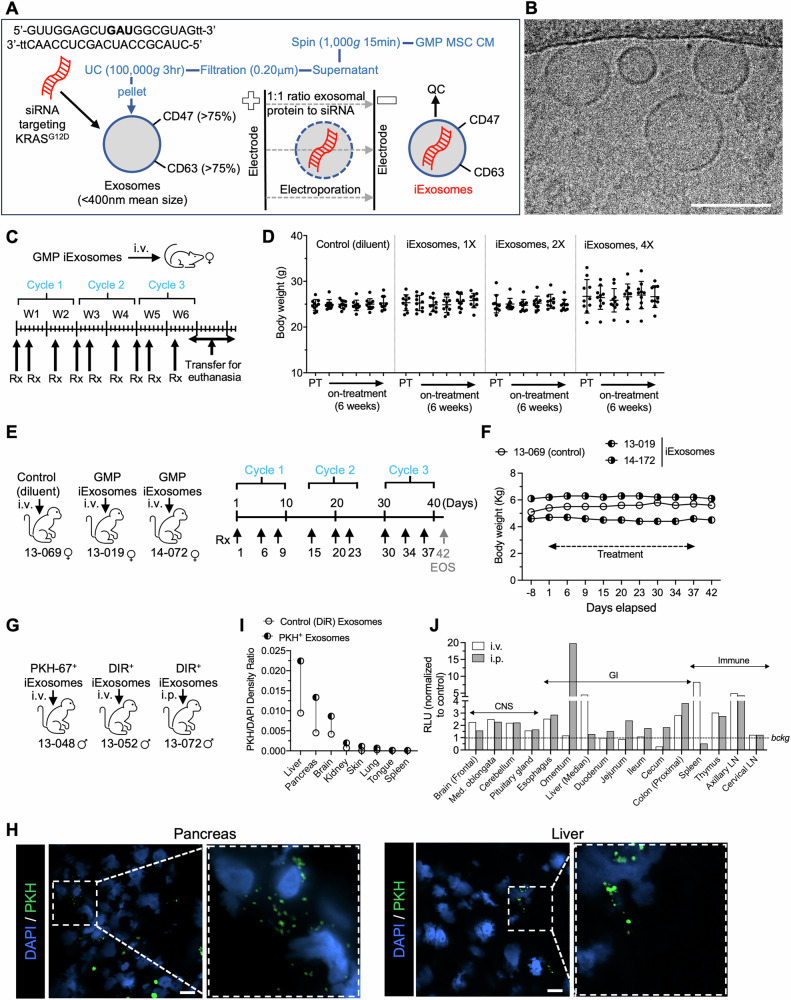
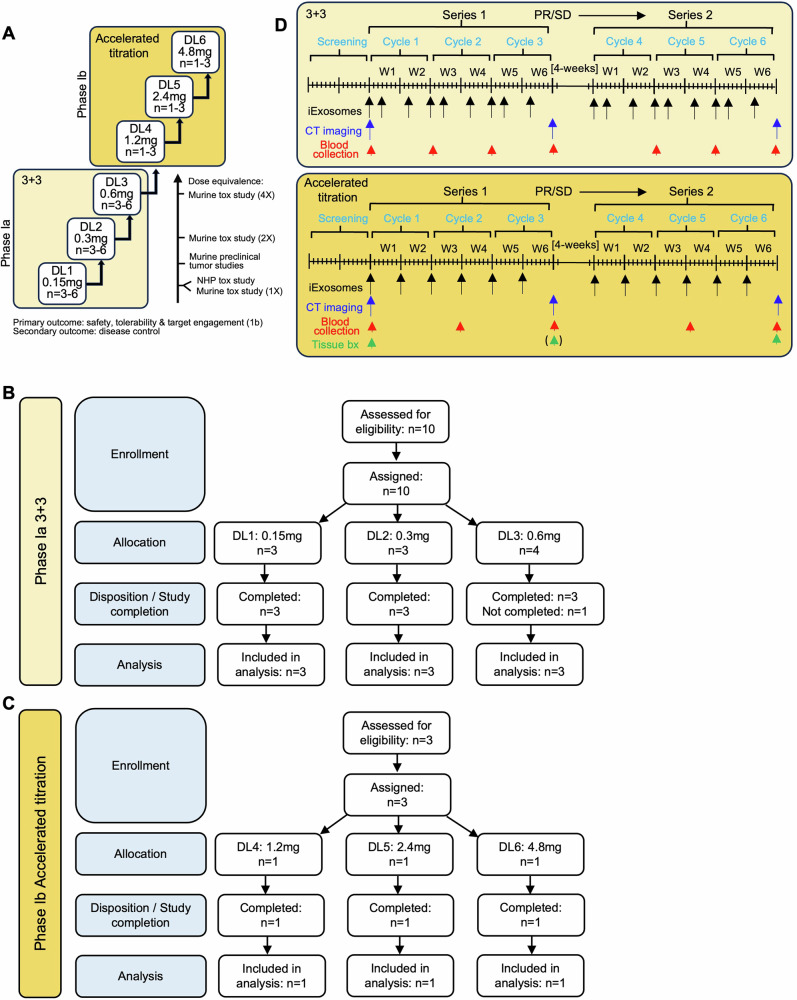
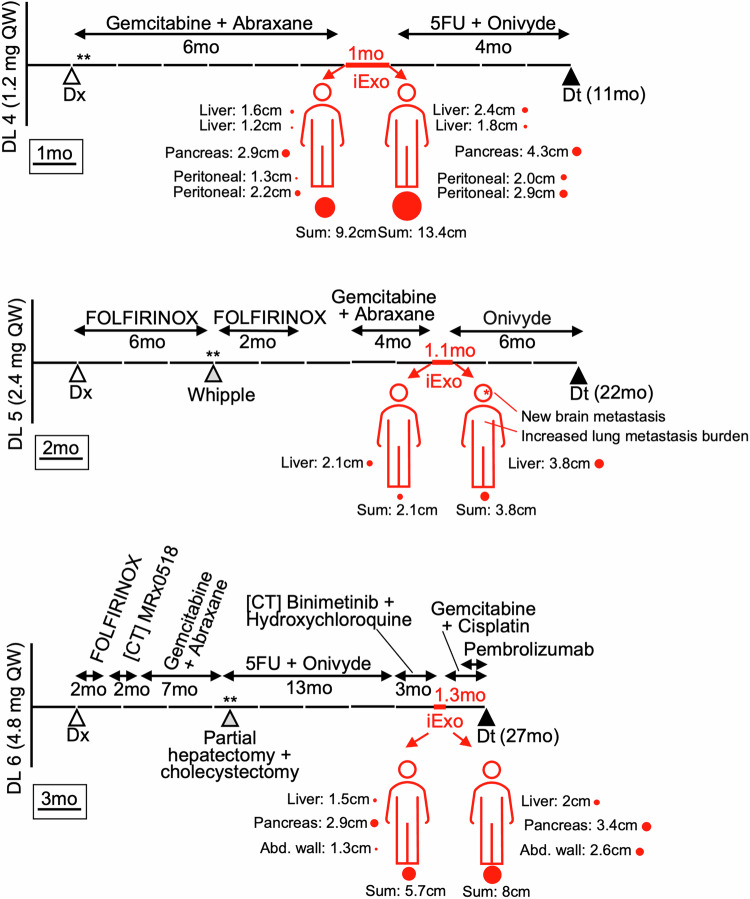
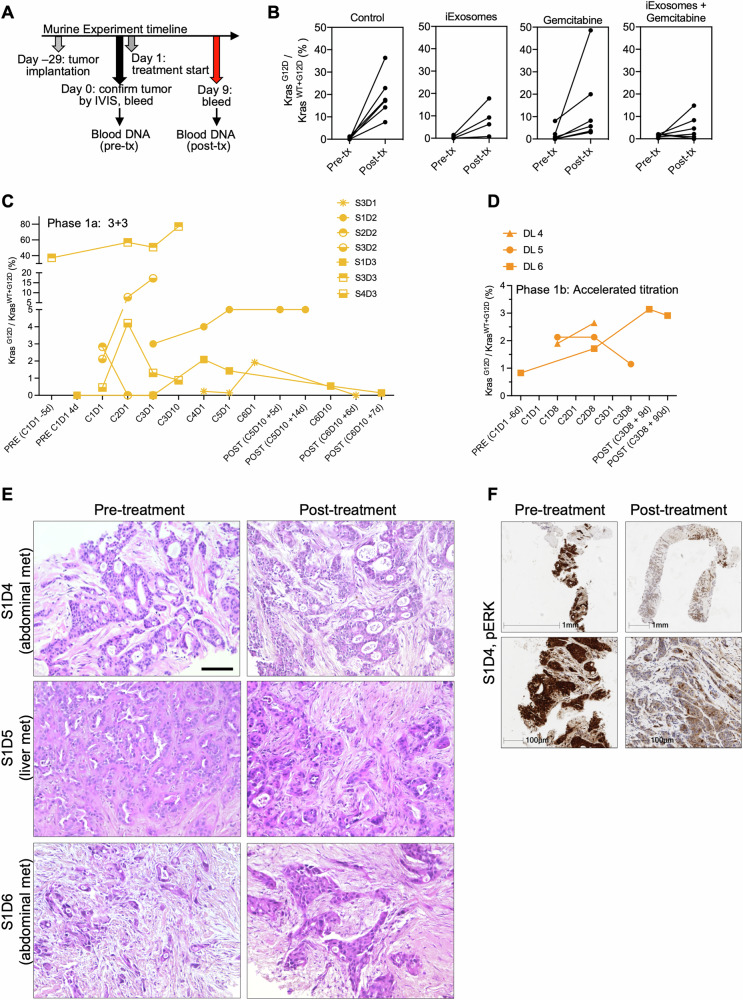
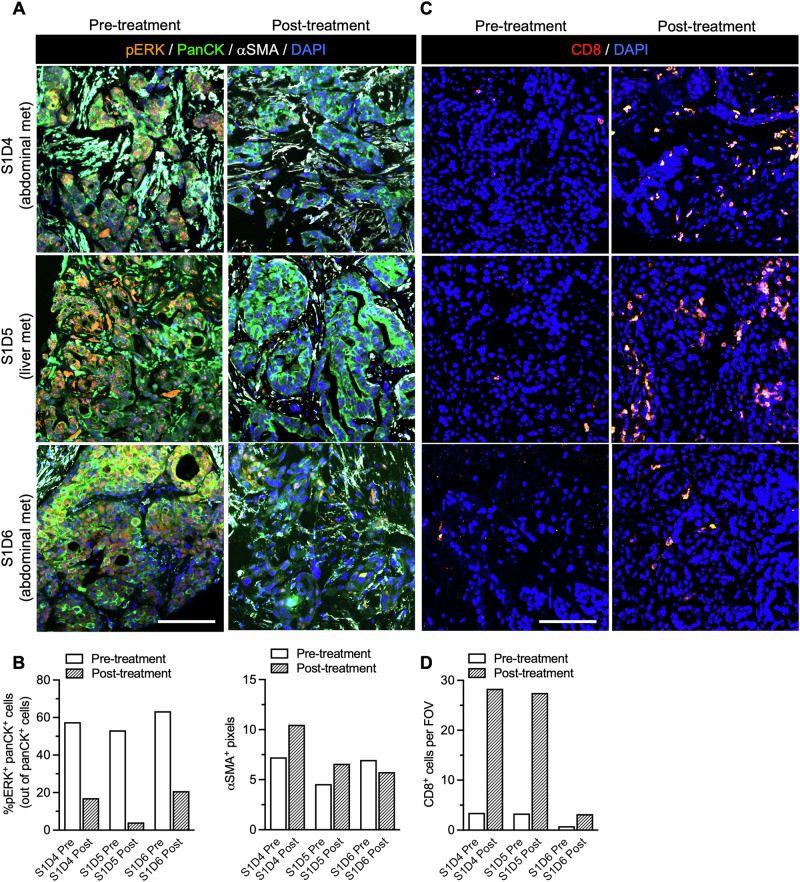
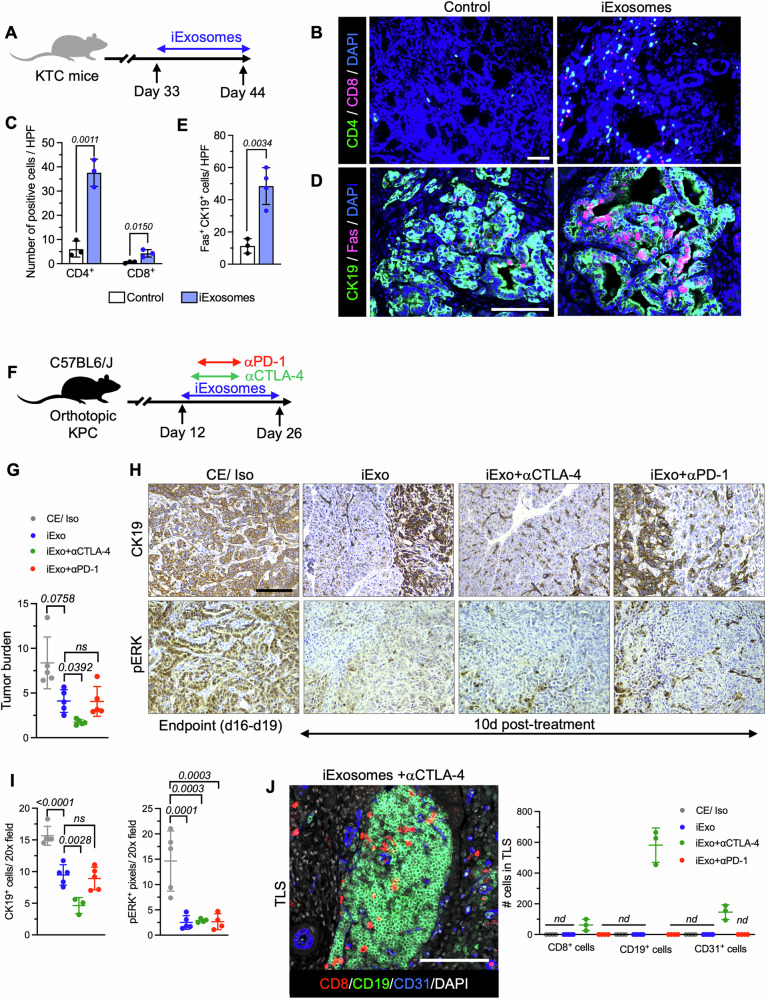
Oncogenic KRAS is amongst the key genetic drivers for initiation and maintenance of pancreatic ductal adenocarcinoma (PDAC). Here, we show that engineered exosomes with KrasG12D specific siRNA (iExoKrasG12D) reveal a biodistribution in pancreas with negligible toxicity in preclinical studies in mice and Rhesus macaques. Clinical testing of iExoKrasG12D in the iEXPLORE (iExoKrasG12D in Pancreatic Cancer) Phase I study employed a non-randomized single-arm classical 3 + 3 dose escalation design (Phase Ia), followed by an accelerated titration design (Phase Ib) (NCT03608631). The primary outcomes included safety, tolerability and target engagement, and the secondary outcomes aimed to assess disease control. Patients with advanced metastatic disease were enrolled after failure of multiple lines of therapy. iExoKrasG12D therapy was well-tolerated: the primary outcomes were met with iExoKrasG12D showing no dose-limiting toxicity. The maximum tolerated dose was not reached even at the highest dose. In some cases, iExoKrasG12D therapy was associated with stable disease response (secondary outcome). Downregulation of KRASG12D DNA and suppression of phospho-Erk was documented together with an increase in intratumoral CD8+ T cells following treatment. The CD8+ T cell recruitment priming by iExoKrasG12D informed on potential efficacy of immune checkpoint therapy and lead to validation testing in preclinical PDAC models. Combination therapy of iExoKrasG12D and anti-CTLA-4 antibodies, but not anti-PD1, revealed robust pre-clinical anti-tumor efficacy via FAS mediated CD8+ T cell anti-tumor activity. This first-in-human, precision medicine clinical trial and supporting preclinical functional studies offer new insights into priming of immunotherapy by oncogenic Kras inhibitor for future opportunistic combination therapy for PDAC patients. iExoKrasG12D are engineered exosomes for the delivery of siRNA targeting KRASG12D. Here the authors describe the results of a phase I trial of iExoKrasG12D in patients with metastatic pancreatic cancer, reporting safety and clinical activity, as well as immunological correlates informing on tumor immune microenvironment reprograming and future combination with immune checkpoint inhibitors.’
Overview
The claims and statistics of this paper haven’t been checked yet.
Free: it reads the open-access text and checks the first 5 claims that cite a source we can check. Create a free account to check every claim.
Integrity signals
Registry
Cites
Statistics
Figures
Verification
Claims the paper makes
The claims and statistics of this paper haven’t been checked yet.
Free: it reads the open-access text and checks the first 5 claims that cite a source we can check. Create a free account to check every claim.
Claims other papers make about this one
Each is checked against this paper’s own text: does it say what the citing paper says it does?
The cited source says what the claim attributes to it.
In the citing paper
“Additional emerging modalities include RNA-targeted therapeutics, antisense oligonucleotides, siRNA-based suppression [65,66], neoantigen vaccines [67,68], and adoptive T-cell therapies targeting mutant KRAS-derived epitopes [69,70].”
From Precision Targeting of KRAS-Mutant Cancers: Beyond G12C Toward G12D and Pan-RAS Therapeutic Strategies (2026) · cites this paper as [66]
Self-check
Percentages, sums and reported differences re-computed from the paper’s own numbers.
The self-check needs the paper’s full text.
Citations
Cites
The biology , function , and biomedical applications of exosomes
Kalluri, R., & LeBleu, V. S. (2020) · Science · doi:10.1126/science.aau6977 · Cited by 10,770
Self-citationSiegel, R. L., Kratzer, T. B., Giaquinto, A. N., Sung, H., & Jemal, A. (2025) · CA: A Cancer Journal for Clinicians · doi:10.3322/caac.21871 · Cited by 3,060
EMAN2: An extensible image processing suite for electron microscopy
Tang, G., Peng, L., Baldwin, P. R., Mann, D. S., Jiang, W., Rees, I., & Ludtke, S. J. (2007) · Journal of Structural Biology · doi:10.1016/j.jsb.2006.05.009 · Cited by 2,994
Self-citationÖzdemir, B. C., Pentcheva-Hoang, T., Carstens, J. L., Zheng, X., Wu, C.-C., Simpson, T. R., Laklai, H., Sugimoto, H., Kahlert, C., Novitskiy, S. V., et al. (2014) · Cancer Cell · doi:10.1016/j.ccr.2014.04.005 · Cited by 2,681
Self-citationExosomes facilitate therapeutic targeting of oncogenic KRAS in pancreatic cancer
Kamerkar, S., LeBleu, V. S., Sugimoto, H., Yang, S., Ruivo, C. F., Melo, S. A., Lee, J. J., & Kalluri, R. (2017) · Nature · doi:10.1038/nature22341 · Cited by 2,639
Self-citationPreinvasive and invasive ductal pancreatic cancer and its early detection in the mouse
Hingorani, S. R., Petricoin, E. F., Maitra, A., Rajapakse, V., King, C., Jacobetz, M. A., Ross, S., Conrads, T. P., Veenstra, T. D., Hitt, B. A., et al. (2003) · Cancer Cell · doi:10.1016/s1535-6108(03)00309-x · Cited by 2,471
Self-citationPancreatic cancer genomes reveal aberrations in axon guidance pathway genes
Initiative, A. P. C. G., Biankin, A. V., Waddell, N., Kassahn, K. S., Gingras, M.-C., Muthuswamy, L. B., Johns, A. L., Miller, D. K., Wilson, P. J., Patch, A.-M., et al. (2012) · Nature · doi:10.1038/nature11547 · Cited by 2,058
Self-citationOncogenic Kras maintains pancreatic tumors through regulation of anabolic glucose metabolism
Ying, H., Kimmelman, A. C., Lyssiotis, C. A., Hua, S., Chu, G. C., Fletcher-Sananikone, E., Locasale, J. W., Son, J., Zhang, H., Coloff, J. L., et al. (2012) · Cell · doi:10.1016/j.cell.2012.01.058 · Cited by 2,043
Tertiary lymphoid structures in the era of cancer immunotherapy
Sautès-Fridman, C., Petitprez, F., Calderaro, J., & Fridman, W. H. (2019) · Nature reviews. Cancer · doi:10.1038/s41568-019-0144-6 · Cited by 1,884 · cited 1×
“…including B cells, CD8 + T cells, a newly developing vasculature with endothelial venules and antigen presenting cells 24 – 26 , is frequently associated with favorable responses to immunotherapy in the context of cancers such as melanoma, non-small cell lung carcinomas and better prognosis 25,26 .”
The biology and function of exosomes in cancer
Kalluri, R. (2016) · Journal of Clinical Investigation · doi:10.1172/jci81135 · Cited by 1,849
Self-citationKRAS G12C Inhibition with Sotorasib in Advanced Solid Tumors
Hong, D. S., Fakih, M. G., Strickler, J. H., Desai, J., Durm, G. A., Shapiro, G. I., Falchook, G. S., Price, T. J., Sacher, A., Denlinger, C. S., et al. (2020) · New England Journal of Medicine · doi:10.1056/nejmoa1917239 · Cited by 1,733
Tertiary lymphoid structures in cancer
Schumacher, T. N., & Thommen, D. S. (2022) · Science · doi:10.1126/science.abf9419 · Cited by 1,142
MSC-derived exosomes: a novel tool to treat therapy-refractory graft-versus-host disease
Kordelas, L., Rebmann, V, Ludwig, A.-K., Radtke, S., Ruesing, J., Doeppner, T. R., Epple, M., Horn, P. A., Beelen, D. W., & Giebel, B. (2014) · Leukemia · doi:10.1038/leu.2014.41 · Cited by 1,084
Chambers, C. A., Kuhns, M. S., Egen, J. G., & Allison, J. P. (2001) · Annual Review of Immunology · doi:10.1146/annurev.immunol.19.1.565 · Cited by 998
EZH2: a novel target for cancer treatment
Duan, R., Du, W., & Guo, W. (2020) · Journal of Hematology & Oncology · doi:10.1186/s13045-020-00937-8 · Cited by 926
KRAS: The Critical Driver and Therapeutic Target for Pancreatic Cancer
Waters, A. M., & Der, C. J. (2018) · Cold Spring Harbor Perspectives in Medicine · doi:10.1101/cshperspect.a031435 · Cited by 875
Generation and testing of clinical-grade exosomes for pancreatic cancer
Mendt, M., Kamerkar, S., Sugimoto, H., McAndrews, K. M., Wu, C.-C., Gagea, M., Yang, S., Blanko, E. V. R., Peng, Q., Ma, X., et al. (2018) · JCI Insight · doi:10.1172/jci.insight.99263 · Cited by 792
Self-citationClinical applications of stem cell-derived exosomes
Tan, F., Li, X., Wang, Z., Li, J., Shahzad, K., & Zheng, J. (2024) · Signal Transduction and Targeted Therapy · doi:10.1038/s41392-023-01704-0 · Cited by 708
Rahemtulla, A., Fung-Leung, W. P., Schilham, M. W., Kündig, T. M., Sambhara, S. R., Narendran, A., Arabian, A., Wakeham, A., Paige, C. J., Zinkernagel, R. M., et al. (1991) · Nature · doi:10.1038/353180a0 · Cited by 684
Vanhersecke, L., Brunet, M., Guégan, J.-P., Rey, C., Bougouin, A., Cousin, S., Le Moulec, S., Besse, B., Loriot, Y., Larroquette, M., et al. (2021) · Nature Cancer · doi:10.1038/s43018-021-00232-6 · Cited by 632
Biological functions of mesenchymal stem cells and clinical implications
Naji, A., Eitoku, M., Favier, B., Deschaseaux, F., Rouas-Freiss, N., & Suganuma, N. (2019) · Cellular and Molecular Life Sciences · doi:10.1007/s00018-019-03125-1 · Cited by 624
Mesenchymal stromal/stem cell (MSC)-Derived exosomes in clinical trials
Lotfy, A., AboQuella, N. M., & Wang, H. (2023) · Stem Cell Research & Therapy · doi:10.1186/s13287-023-03287-7 · Cited by 482
Di Caro, G., Bergomas, F., Grizzi, F., Doni, A., Bianchi, P., Malesci, A., Laghi, L., Allavena, P., Mantovani, A., & Marchesi, F. (2014) · Clinical Cancer Research · doi:10.1158/1078-0432.ccr-13-2590 · Cited by 386
Sautès-Fridman, C., Lawand, M., Giraldo, N. A., Kaplon, H., Germain, C., Fridman, W. H., & Dieu-Nosjean, M.-C. (2016) · Frontiers in Immunology · doi:10.3389/fimmu.2016.00407 · Cited by 379
Blecher-Gonen, R., Barnett-Itzhaki, Z., Jaitin, D., Amann-Zalcenstein, D., Lara-Astiaso, D., & Amit, I. (2013) · Nature Protocols · doi:10.1038/nprot.2013.023 · Cited by 292
Mahadevan, K. K., McAndrews, K. M., LeBleu, V. S., Yang, S., Lyu, H., Li, B., Sockwell, A. M., Kirtley, M. L., Morse, S. J., Moreno Diaz, B. A., et al. (2023) · Cancer Cell · doi:10.1016/j.ccell.2023.07.002 · Cited by 258
Self-citationYang, S., Che, S. P. Y., Kurywchak, P., Tavormina, J. L., Gansmo, L. B., Correa de Sampaio, P., Tachezy, M., Bockhorn, M., Gebauer, F., Haltom, A. R., et al. (2017) · Cancer Biology & Therapy · doi:10.1080/15384047.2017.1281499 · Cited by 248 · cited 1×
“The setting of detection limit used was the same as previously reported 41 .”
Self-citationDey, P., Li, J., Zhang, J., Chaurasiya, S., Strom, A., Wang, H., Liao, W.-T., Cavallaro, F., Denz, P., Bernard, V., et al. (2020) · Cancer Discovery · doi:10.1158/2159-8290.cd-19-0297 · Cited by 213 · cited 1×
“We and others also reported on the role of oncogenic Kras in shaping the suppressive metabolic and immune tumor microenvironment of PDAC 8 – 10 generating hypotheses for possible synergistic opportunities with immunotherapies.”
Self-citationTherapeutic Features and Updated Clinical Trials of Mesenchymal Stem Cell (MSC)-Derived Exosomes
Lee, B.-C., Kang, I., & Yu, K.-R. (2021) · Journal of Clinical Medicine · doi:10.3390/jcm10040711 · Cited by 189
Lightner, A. L., Sengupta, V., Qian, S., Ransom, J. T., Suzuki, S., Park, D. J., Melson, T. I., Williams, B. P., Walsh, J. J., & Awili, M. (2023) · CHEST Journal · doi:10.1016/j.chest.2023.06.024 · Cited by 183
Deng, Y., Xia, X., Zhao, Y., Zhao, Z., Martinez, C., Yin, W., Yao, J., Hang, Q., Wu, W., Zhang, J., et al. (2021) · Nature Communications · doi:10.1038/s41467-021-27349-7 · Cited by 157
Réjiba, S., Wack, S., Aprahamian, M., & Hajri, A. (2007) · Cancer Science · doi:10.1111/j.1349-7006.2007.00506.x · Cited by 89
Mahadevan, K. K., LeBleu, V. S., Ramirez, E. V., Chen, Y., Li, B., Sockwell, A. M., Gagea, M., Sugimoto, H., Sthanam, L. K., Tampe, D., et al. (2023) · Developmental Cell · doi:10.1016/j.devcel.2023.07.025 · Cited by 73
Self-citationTargeting the undruggable oncogenic KRAS: the dawn of hope
Asimgil, H., Ertetik, U., Çevik, N. C., Ekizce, M., Doğruöz, A., Gökalp, M., Sever, E. A., Istvánffy, R., Friess, H., Ceyhan, G. O., et al. (2022) · JCI Insight · doi:10.1172/jci.insight.153688 · Cited by 66
Kapoor, K. S., Kong, S., Sugimoto, H., Guo, W., Boominathan, V., Chen, Y., Biswal, S. L., Terlier, T., McAndrews, K. M., & Kalluri, R. (2024) · ACS Nano · doi:10.1021/acsnano.3c12556 · Cited by 58
Self-citationDual Role of MSC-Derived Exosomes in Tumor Development
Zhao, R., Chen, X., Song, H., Bie, Q., & Zhang, B. (2020) · Stem Cells International · doi:10.1155/2020/8844730 · Cited by 54
Genetics and biology of pancreatic ductal adenocarcinoma
Ying, H., Kimmelman, A. C., Bardeesy, N. M., Kalluri, R., Maitra, A., & DePinho, R. A. (2024) · Genes & Development · doi:10.1101/gad.351863.124 · Cited by 48
Self-citationGenetic disruption of oncogenic Kras sensitizes lung cancer cells to Fas receptor-mediated apoptosis
Mou, H., Moore, J., Malonia, S. K., Li, Y., Ozata, D. M., Hough, S., Song, C.-Q., Smith, J. L., Fischer, A., Weng, Z., et al. (2017) · Proceedings of the National Academy of Sciences · doi:10.1073/pnas.1620861114 · Cited by 46 · cited 1×
“Mechanistically, the regulation of Fas by Kras G12D inhibition in pancreatic cancer cells included epigenetic remodeling, implicating methylation of the histones and recruitment of transcriptional repressor at the promoter site 6,21,22 .”
Wajapeyee, N., Malonia, S. K., Palakurthy, R. K., & Green, M. R. (2013) · Genes & Development · doi:10.1101/gad.227413.113 · Cited by 40
Lehmann, J. M., Thelen, M., Kreer, C., Schran, S., Garcia-Marquez, M. A., Cisic, I., Siepmann, K., Hagen, E. M., Eckel, H. N. C., Lohneis, P., et al. (2024) · Cancer Immunology Research · doi:10.1158/2326-6066.cir-24-0299 · Cited by 23
Novel Therapies for Pancreatic Cancer
Chung, V., Mizrahi, J. D., & Pant, S. (2024) · JCO Oncology Practice · doi:10.1200/op.24.00279 · Cited by 23
Self-citationAguirre, A. J., Stanger, B. Z., & Maitra, A. (2024) · Cancer Research · doi:10.1158/0008-5472.can-24-1926 · Cited by 18
Self-citation
Cited by
80 years of extracellular vesicles: from discovery to clinical translation
Li, Q., Ding, Y., Shi, Y., Qiu, C., Lei, L., Li, S., Zhu, Z., Zheng, J., Qin, C., Wang, K., et al. (2026) · Extracellular Vesicles and Circulating Nucleic Acids · doi:10.20517/evcna.2025.161 · Cited by 88
The status of extracellular vesicles as drug carriers and therapeutics
Chaudhari, A. P., Budayr, O. M., Bonacquisti, E. E., Kussatz, C. C., Bannon, M. S., Law, K. J., Liu, Y., Bolton, M. L., Glassman, P. M., Huang, L., et al. (2026) · Nature Reviews Bioengineering · doi:10.1038/s44222-026-00405-x · Cited by 63
Bioengineering of extracellular vesicles with scaffold proteins for drug delivery
Zhang, C., Wu, Y., Wang, Y., Yao, C., Ma, M., Li, J., & Wu, Q. (2026) · Journal of Nanobiotechnology · doi:10.1186/s12951-026-04142-6 · Cited by 22
“…clinical studies, such as those involving siRNA-loaded EVs, employed total EV protein content and defined stoichiometry between vesicles and nucleic acid payloads as pragmatic release metrics, highlighting the need for mechanism-informed yet operationally feasible quantitation strategies [350].”
Cui, J., Jiang, K., Li, W., Ni, S., Zong, H., Du, J., He, Y., Liu, Z., Kong, G., Zhang, Y., et al. (2026) · Nature Medicine · doi:10.1038/s41591-026-04538-9 · Cited by 16
“Preclinical studies have similarly demonstrated that suppression of oncogenic KRAS leads to decreased circulating mutant KRAS DNA levels, correlating with tumor response 32 .”
KRAS-targeted therapies in cancer: novel approaches and overcoming resistance
Tang, D., Kroemer, G., & Kang, R. (2025) · BMJ Oncology · doi:10.1136/bmjonc-2025-000946 · Cited by 16
Metadata
- Authors
- Kalluri, V. S., Smaglo, B. G., Mahadevan, K. K., Kirtley, M. L., McAndrews, K. M., Mendt, M., Yang, S., Maldonado, A. S., Sugimoto, H., Salvatierra, M. E., Solis Soto, L. M., Haymaker, C., Finch, R., Gagea, M., Fluty, A. C., Ludtke, S. J., Jack Lee, J., Jain, A. K., Varadhachary, G., Shroff, R. T., Maitra, A., Shpall, E., Pant, S., & Kalluri, R.
- Affiliations
- The University of Texas MD Anderson Cancer Center (US)
- Baylor College of Medicine (US)
- University of Arizona Cancer Center (US)
- Corresponding author
- Kalluri, Valerie S.
- ORCID
- Kalluri, Valerie S.
- Smaglo, Brandon G.
- Mahadevan, Krishnan K.
- Kirtley, Michelle L.
- McAndrews, Kathleen M.
- Mendt, Mayela
- Yang, Sujuan
- Sugimoto, Hikaru
- Salvatierra, Maria E.
- Solis Soto, Luisa M.
- Haymaker, Cara
- Gagea, Mihai
- Fluty, Adam C.
- Ludtke, Steven J.
- Jack Lee, J.
- Jain, Abhinav K.
- Shroff, Rachna T.
- Maitra, Anirban
- Shpall, Elizabeth
- Pant, Shubham
- Kalluri, Raghu
- Venue
- Nature Communications
- Published
- 2025-09-30
- Volume
- 16
- Issue
- 1
- Pages
- 8696-8696
- ISSN
- 2041-1723 (ISSN-L)
- PMC
- PMC12485160
- OpenAlex
- W4414651339
- Cited by
- 70
- References
- 41
- Citations by year
- 2026: 66 · 2025: 4
- FWCI
- 20.92
- Type
- journal article
- Language
- en
- Open access
- gold
- doi.org
- Licence
- cc-by-nc-nd
- creativecommons.org/licenses/by-nc-nd/4.0 (tdm)
- creativecommons.org/licenses/by-nc-nd/4.0 (vor)
- Locations
- Nature Communications (publishedVersion, cc-by-nc-nd)
- Europe PMC (PubMed Central) (publishedVersion, cc-by-nc-nd)
- PubMed (publishedVersion)
- PubMed Central (publishedVersion, cc-by-nc-nd)
- Digital Commons-TMC (Texas Medical Center) (submittedVersion)
- DOAJ (DOAJ: Directory of Open Access Journals) (submittedVersion, cc-by-sa)
- Funders
- Cancer Prevention and Research Institute of Texas (RP190602)
- National Institutes of Health (1r35gm151999-01)
- University of Texas MD Anderson Cancer Center
- National Cancer Institute (R35CA263815)
- National Institute of General Medical Sciences (R35GM151999, R01GM080139)
- Topics
- Life Sciences › Biochemistry, Genetics and Molecular Biology › Molecular Biology › Extracellular vesicles in disease
- Life Sciences › Biochemistry, Genetics and Molecular Biology › Molecular Biology › RNA Interference and Gene Delivery
- Health Sciences › Medicine › Oncology › Pancreatic and Hepatic Oncology Research
- Keywords
- engineered exosomes, siRNA delivery, KRAS G12D, pancreatic ductal adenocarcinoma, exosome biodistribution, CD8+ T cells, tumor immune microenvironment, precision medicine, metastatic pancreatic cancer, safety and tolerability
- MeSH terms
- Aged, Animals, Female, Humans, Male, Middle Aged, Pancreatic Neoplasms, Proto-Oncogene Proteins p21(ras), CD8-Positive T-Lymphocytes, Carcinoma, Pancreatic Ductal, RNA, Small Interfering, Cell Line, Tumor, Mice, Exosomes
About these checks
Registry, retraction, Cites and statistics results are computed, not judged, with one exception: a printed reference that no index lists is read once by a model before it counts as a citation error. Claims are extracted by a model and kept only when their quote appears verbatim in the text; each cited source is then checked, with a model’s help, for whether it says what the claim relies on. Those verdicts can be wrong — read the claim’s quote and the cited source before relying on one.
Statistics and arithmetic are recomputed, not judged.
Confidence bands are shown only for fields calibrated on our annotated test set. None is calibrated yet, so no band is shown.
What counts as a claim ›How we measure confidence ›How we check this ›
Are you an author, or do you see a problem with this page? Request a review
Data sources
Bibliographic data: Semantic Scholar, OpenAlex, Crossref.
Contains information from the Semantic Scholar Academic Graph Datasets, made available under the ODC Attribution License (ODC-BY 1.0).
Semantic Scholar’s data is described in: Kinney, R., et al. (2023). The Semantic Scholar Open Data Platform. arXiv:2301.10140.
