

The alkenes Z9-C29 and Z9-C31 function as quorum-sensing pheromones stimulating worker reproduction in the bumble bee Bombus terrestris
Open accessThe DOI matches its Crossref record; 75 of the 75 references it cites were found in a registry or an index.
Abstract
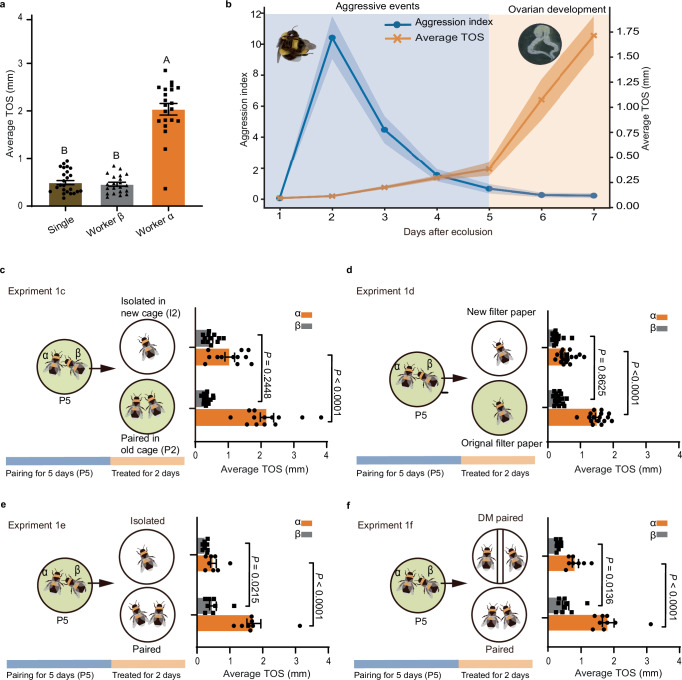
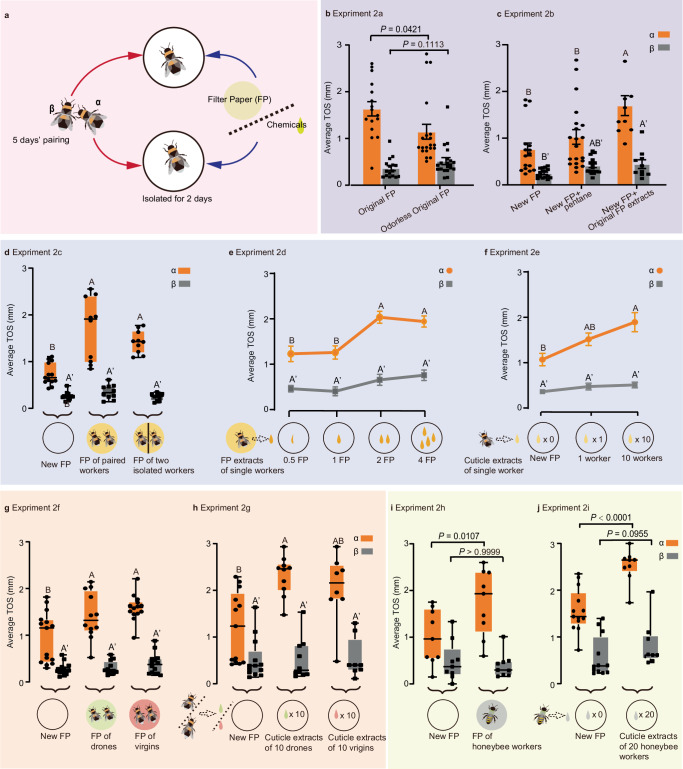
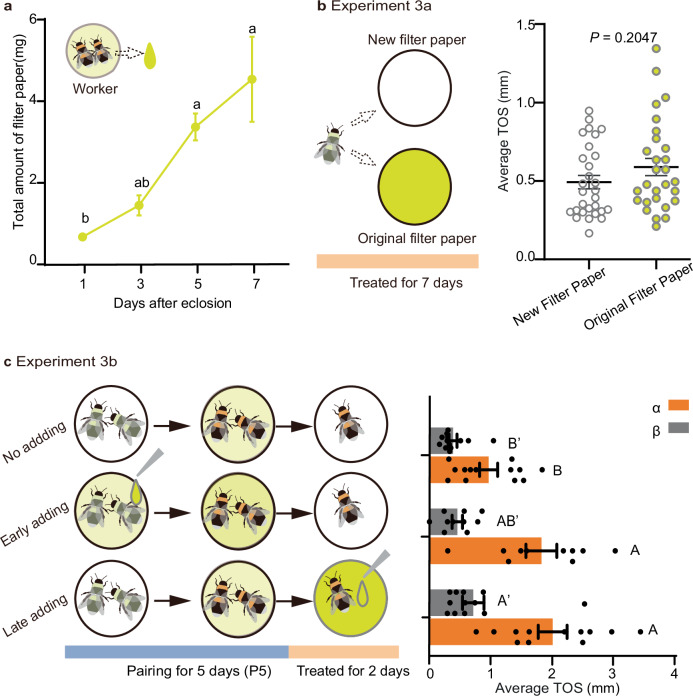
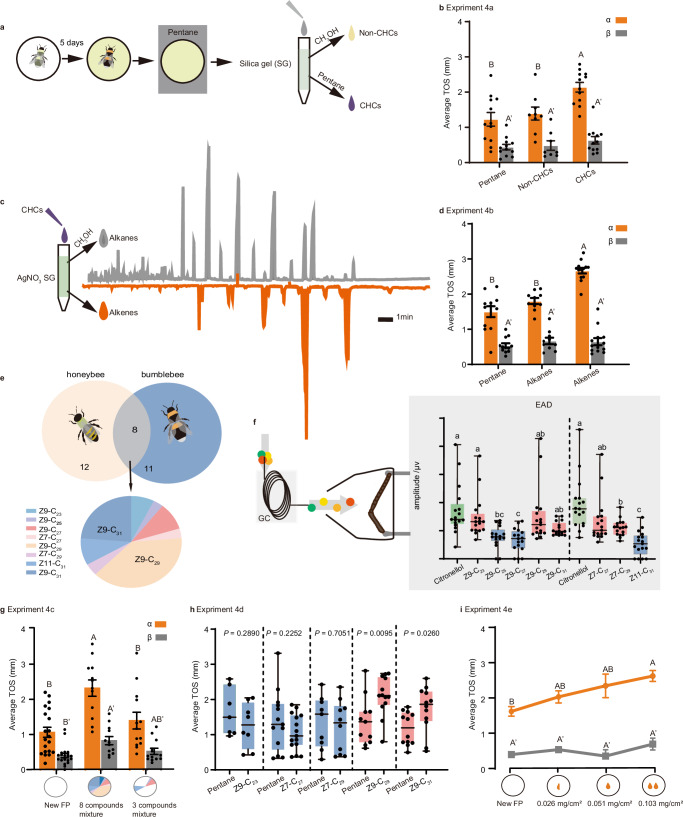
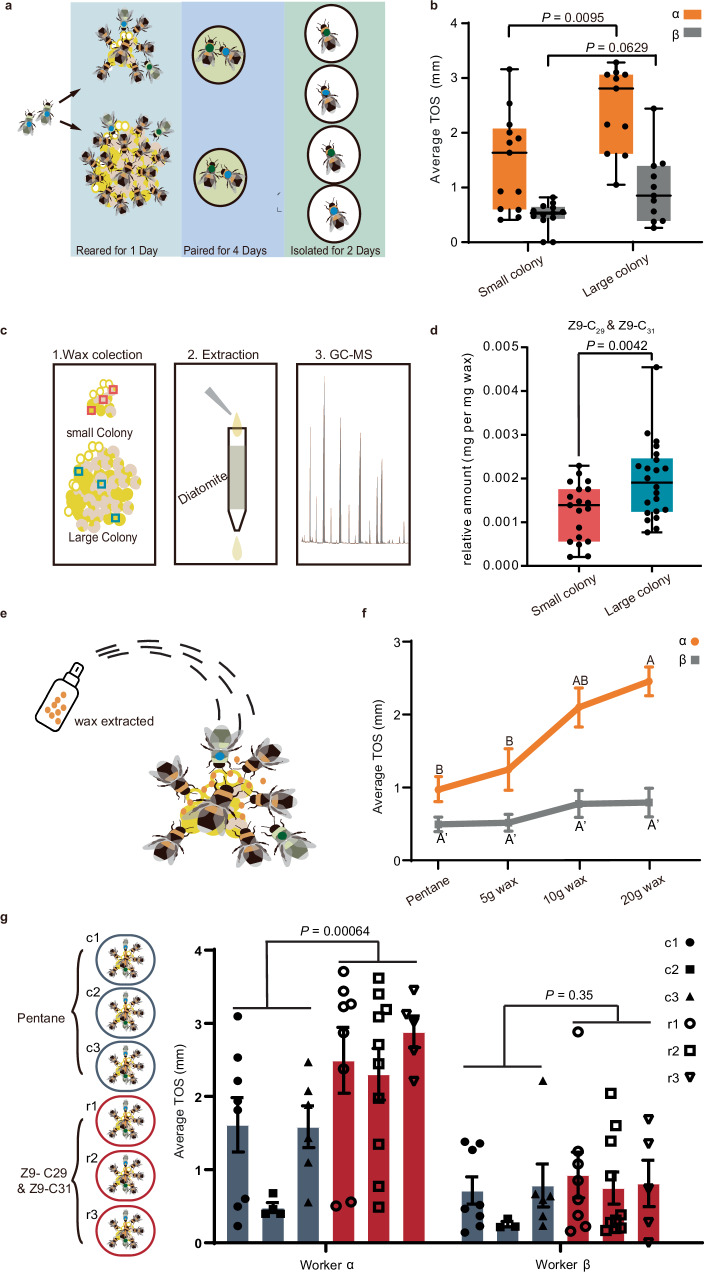
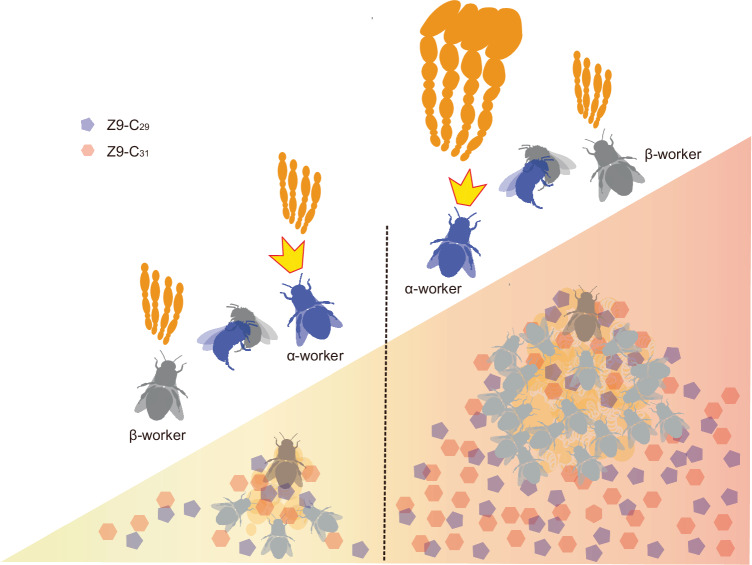
) in the activation of ovarian development. These alkenes are found throughout the queenright bumble bee colony, including wax, workers, drones, and gynes, and their levels are positively correlated with colony size. They act as quorum-sensing pheromones that facilitate ovary maturation in a threshold-dependent manner under queenright conditions. A synergistic interaction between the perception of these two alkenes and the occurrence of dominance contests is essential for the ovary development of worker bumble bees, independent of temporal sequence. Artificial addition of these two alkenes into colonies confirms their stimulatory effects on the ovarian developmental potential of worker bees, even in the presence of a queen. Our findings highlight a quorum-sensing-like mechanism that primes the initiation of worker ovary development, providing insights into the complex regulation of context-dependent reproductive plasticity in social insects.
Overview
The claims and statistics of this paper haven’t been checked yet.
Free: it reads the open-access text and checks the first 5 claims that cite a source we can check. Create a free account to check every claim.
Integrity signals
Registry
Cites
Statistics
Figures
Verification
Claims the paper makes
The claims and statistics of this paper haven’t been checked yet.
Free: it reads the open-access text and checks the first 5 claims that cite a source we can check. Create a free account to check every claim.
Self-check
Percentages, sums and reported differences re-computed from the paper’s own numbers.
The self-check needs the paper’s full text.
Citations
Cites
The genetical evolution of social behaviour. I
Hamilton, W. D. (1964) · Journal of Theoretical Biology · doi:10.1016/0022-5193(64)90038-4 · Cited by 15,725
Bacterial Quorum Sensing: Its Role in Virulence and Possibilities for Its Control
Rutherford, S. T., & Bassler, B. L. (2012) · Cold Spring Harbor Perspectives in Medicine · doi:10.1101/cshperspect.a012427 · Cited by 2,129 · cited 1×
“This mechanism has been extensively studied in bacteria, where gene expression is triggered in response to chemical signals secreted by individual bacteria to assess population density 57,58 .”
Trivers, R. L., & Hare, H. (1976) · Science · doi:10.1126/science.1108197 · Cited by 1,247
Altruism and Related Phenomena, Mainly in Social Insects
Hamilton, W. D. (1972) · Annual Review of Ecology and Systematics · doi:10.1146/annurev.es.03.110172.001205 · Cited by 1,143
Reproductive Harmony via Mutual Policing by Workers in Eusocial Hymenoptera
(1988) · The American Naturalist · doi:10.1086/284846 · Cited by 727
Buser, H. R., Arn, H., Guerin, P., & Rauscher, S. (1983) · Analytical Chemistry · doi:10.1021/ac00257a003 · Cited by 432
Worker Reproduction in the Higher Eusocial Hymenoptera
(1988) · The Quarterly Review of Biology · doi:10.1086/415930 · Cited by 388
Development and Reproductive Strategies in Bombus Terrestris Colonies
Duchateau, M. J., & Velthuis, H. H. W. (1988) · Behaviour · doi:10.1163/156853988x00340 · Cited by 354 · cited 6×
“This suggested the rapid effect of thesealkene pheromones in workers withina day, even under the inhibitory in fl uence of young queens in Pre-Competition Phase (Pre-CPh) colonies.”
InfluentialConserved Class of Queen Pheromones Stops Social Insect Workers from Reproducing
Van Oystaeyen, A., Oliveira, R. C., Holman, L., van Zweden, J. S., Romero, C., Oi, C. A., d'Ettorre, P., Khalesi, M., Billen, J., Wäckers, F., et al. (2014) · Science · doi:10.1126/science.1244899 · Cited by 350 · cited 1×
“While queen-controlled inhibition of worker reproduction has been emphasized 31 , evidence suggests its diminishing role in colonies during the CPh 32,33 , with other social cues becoming more signi fi cant.”
Self-citationLiebig, J., Peeters, C., Oldham, N. J., Markstädter, C., & Hölldobler, B. (2000) · Proceedings of the National Academy of Sciences · doi:10.1073/pnas.97.8.4124 · Cited by 281
Research works printed but not linked: 4
- Michener, C. D. The Social Behavior of the Bees. (Harvard University Press, Cambridge, 1974).
- Wilson, E. O. The Insect Societies Illustrated edition, Vol. 562 (Harvard University Press, Cambridge, 1971).
- Free, J. B. The effect of social facilitation on the ovarial development of bumble-bee workers. Proc. R. Ent. Soc. Lon. 32, 182–184 (1957).
- Velthuis, H. H. W. The Historical Background Of The Domestication Of The Bumble-bee, Bombus Terrestris. https://www.semanticscholar.org/paper/THE-HISTORICAL-BACKGROUND-OF-THE-DOMESTICATION-OF-Velthuis/5a933c348e4fbebcea88be93a85a5815df935416 (2002).
Cited by
Bumble bee species display contrasting phenological responses to climate variation
Elshoff, K. C. E. K. C., Finn, S. R., Treanore, E. D., Richardson, L. L., & Crone, E. E. (2026) · Ecology · doi:10.1002/ecy.70385 · Cited by 1
Regulation of reproductive and behavioral plasticity in social insects
Ding, L., Liu, Y., Lee, C.-H., & Desplan, C. (2026) · Current Opinion in Insect Science · doi:10.1016/j.cois.2026.101561
Zhuang, M., Xia, Z., Zhang, Z., Yang, F., Liu, F., Dai, X., & Li, J. (2026) · Journal of Economic Entomology · doi:10.1093/jee/toag198
Zhang, Y., Chen, Y., Chen, W., Xing, S., Jin, X., Long, Y., Xu, Z., Zhong, G., & Yi, X. (2026) · Proceedings of the National Academy of Sciences · doi:10.1073/pnas.2605503123
Bumble bee queen egg laying is facilitated by both social conditions and nest cavity size
Moore, M. E., Costa, C. P., Fujinaga, D., Mauck, K. E., Yamanaka, N., Bloch, G., & Woodard, S. H. (2026) · Apidologie · doi:10.1007/s13592-026-01301-4
“Thus, it is entirely possible that multiple mechanisms, including contact and long-distance chemical cues, and also non-phe-romonal cues ( B. terrestris: Ge et al. 2025), contribute to the socially mediated onset of queen reproduction.”
Self-citationAKT-like kinase regulates early steps in the Trypanosoma brucei quorum sensing signalling pathwayPreprint
McWilliam, K. R., Archivio, S. D., Rojas, F., Mendive‐Tapia, L., Dluzniewska, O., Spanos, C., Kim, P., Cayla, M., Vendrell, M., Gadelha, C., et al. (2026) · bioRxiv (Cold Spring Harbor Laboratory) · doi:10.64898/2026.10.13.758553
Metadata
- Authors
- Ge, Z., Ge, J., Zhu, D., Nie, X., Millar, J. G., Bloch, G., & Wang, X.
- Affiliations
- Chinese Academy of Sciences (CN)
- University of California, Riverside (US)
- Hebrew University of Jerusalem (IL)
- Corresponding author
- Wang, Xianhui
- Venue
- Nature Communications
- Published
- 2025-11-28
- Volume
- 16
- Issue
- 1
- Pages
- 10770-10770
- ISSN
- 2041-1723 (ISSN-L)
- PMC
- PMC12663348
- OpenAlex
- W4416794160
- Semantic Scholar
- a3779c9ef98942e3f1cbaa49b88ebbf7d24ced1c
- Cited by
- 5
- References
- 73
- Citations by year
- 2026: 5
- FWCI
- 2.94
- Type
- journal article
- Language
- en
- Open access
- gold
- doi.org
- Licence
- cc-by-nc-nd
- creativecommons.org/licenses/by-nc-nd/4.0 (tdm)
- creativecommons.org/licenses/by-nc-nd/4.0 (vor)
- Locations
- Nature Communications (publishedVersion, cc-by-nc-nd)
- Europe PMC (PubMed Central) (publishedVersion, cc-by-nc-nd)
- PubMed (publishedVersion)
- DOAJ (DOAJ: Directory of Open Access Journals) (submittedVersion, cc-by-sa)
- Funders
- National Natural Science Foundation of China (32061143002, 32200392)
- Chinese Academy of Sciences
- Israel Science Foundation (3391/20)
- Hebei University
- Institute of Zoology, Chinese Academy of Sciences
- Topics
- Life Sciences › Agricultural and Biological Sciences › Insect Science › Insect and Arachnid Ecology and Behavior
- Life Sciences › Agricultural and Biological Sciences › Insect Science › Insect Pheromone Research and Control
- Life Sciences › Agricultural and Biological Sciences › Insect Science › Insect and Pesticide Research
- Keywords
- quorum sensing, pheromones, alkenes, worker reproduction, ovarian development, Bombus terrestris, bumblebees, colony size, reproductive plasticity, social insects, queenright colonies
- MeSH terms
- Alkenes, Animals, Bees, Female, Ovary, Pheromones, Reproduction, Quorum Sensing
About these checks
Registry, retraction, Cites and statistics results are computed, not judged, with one exception: a printed reference that no index lists is read once by a model before it counts as a citation error. Claims are extracted by a model and kept only when their quote appears verbatim in the text; each cited source is then checked, with a model’s help, for whether it says what the claim relies on. Those verdicts can be wrong — read the claim’s quote and the cited source before relying on one.
Statistics and arithmetic are recomputed, not judged.
Confidence bands are shown only for fields calibrated on our annotated test set. None is calibrated yet, so no band is shown.
What counts as a claim ›How we measure confidence ›How we check this ›
Are you an author, or do you see a problem with this page? Request a review
Data sources
Bibliographic data: Semantic Scholar, OpenAlex, Crossref.
Contains information from the Semantic Scholar Academic Graph Datasets, made available under the ODC Attribution License (ODC-BY 1.0).
Semantic Scholar’s data is described in: Kinney, R., et al. (2023). The Semantic Scholar Open Data Platform. arXiv:2301.10140.
