

The alkenes Z9-C29 and Z9-C31 function as quorum-sensing pheromones stimulating worker reproduction in the bumble bee Bombus terrestris
Open accessThe DOI matches its Crossref record; 75 of the 75 references it cites were found in a registry or an index.
Abstract
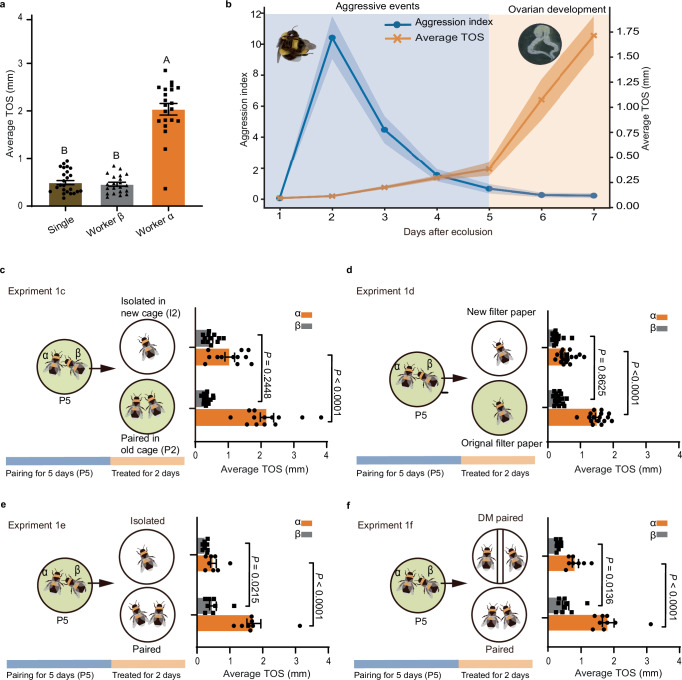
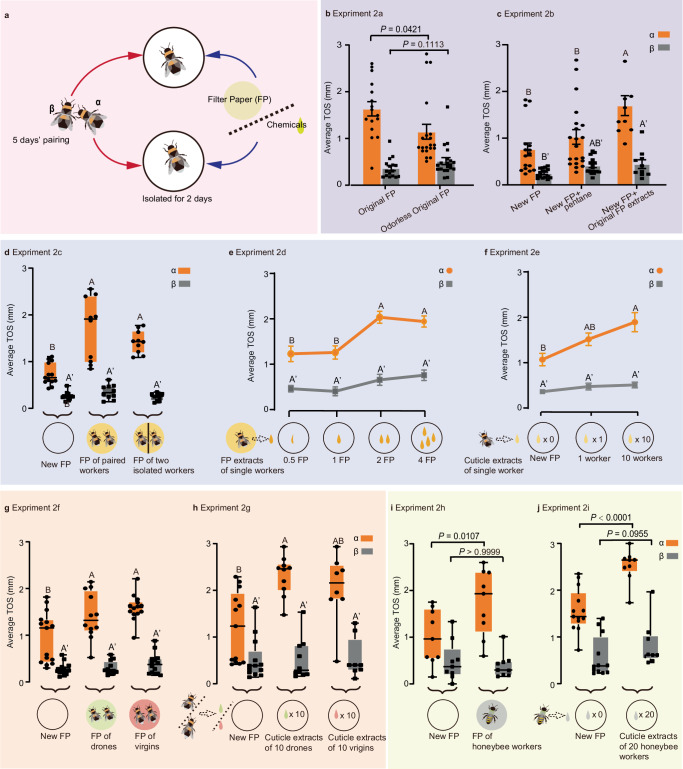
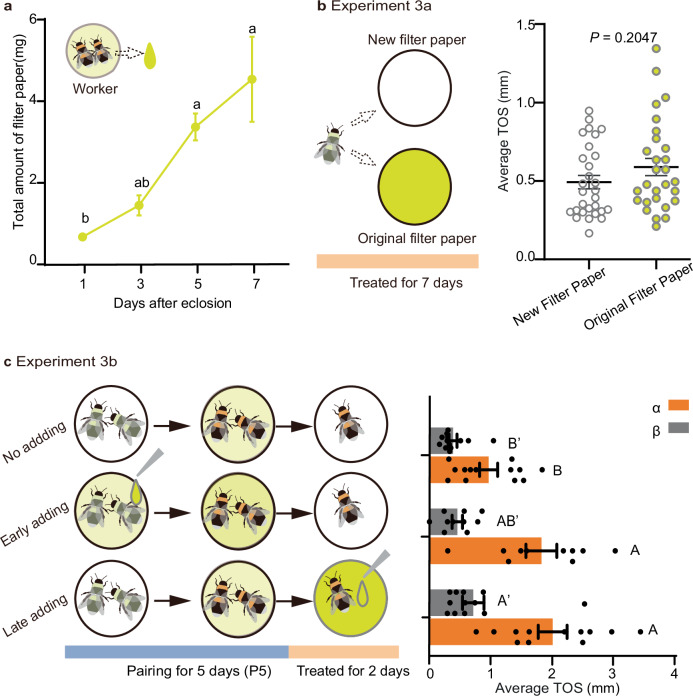
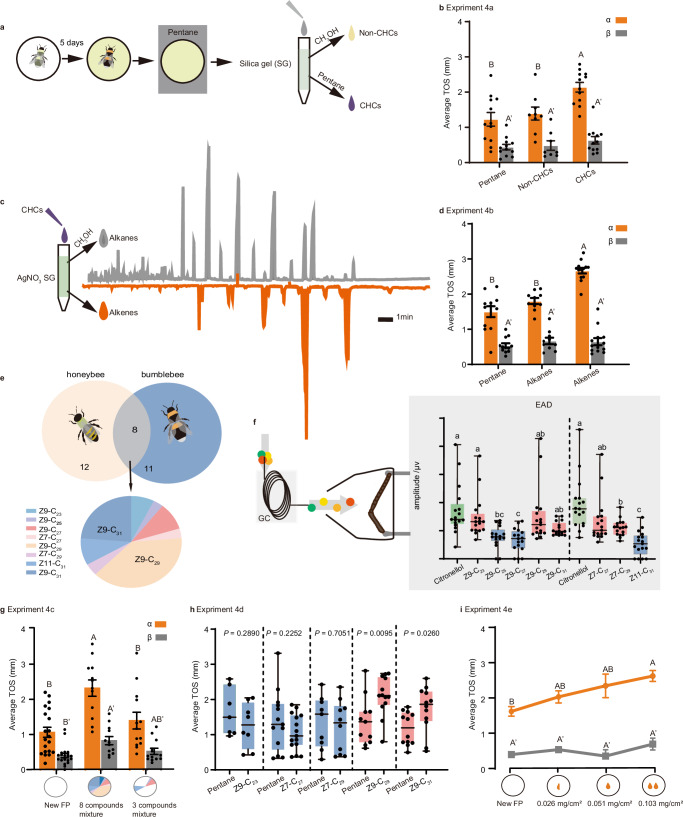
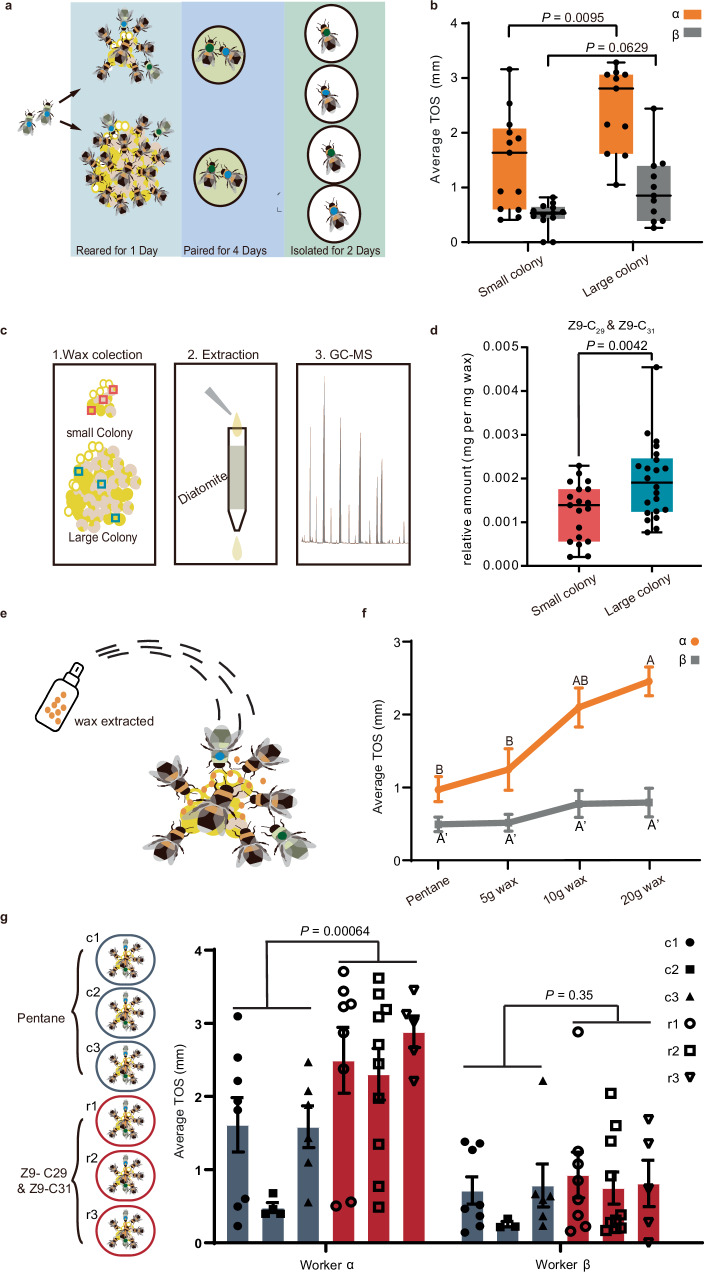
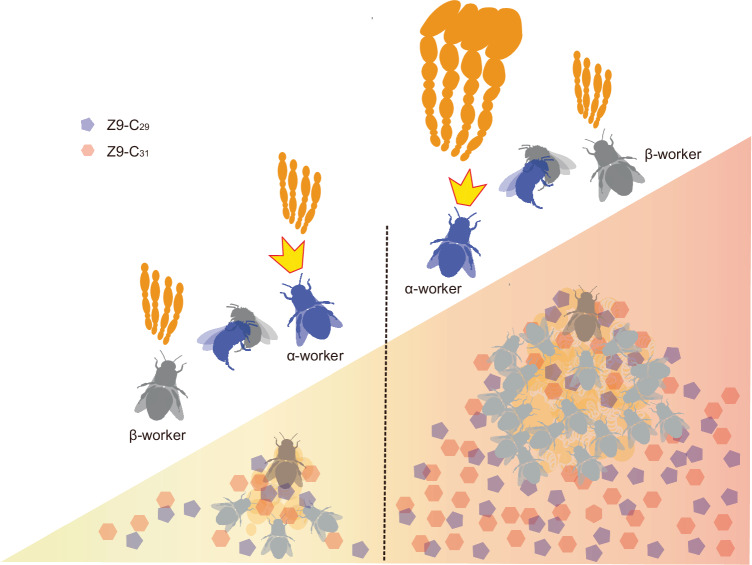
) in the activation of ovarian development. These alkenes are found throughout the queenright bumble bee colony, including wax, workers, drones, and gynes, and their levels are positively correlated with colony size. They act as quorum-sensing pheromones that facilitate ovary maturation in a threshold-dependent manner under queenright conditions. A synergistic interaction between the perception of these two alkenes and the occurrence of dominance contests is essential for the ovary development of worker bumble bees, independent of temporal sequence. Artificial addition of these two alkenes into colonies confirms their stimulatory effects on the ovarian developmental potential of worker bees, even in the presence of a queen. Our findings highlight a quorum-sensing-like mechanism that primes the initiation of worker ovary development, providing insights into the complex regulation of context-dependent reproductive plasticity in social insects.
Overview
The claims and statistics of this paper haven’t been checked yet.
Free: it reads the open-access text and checks the first 5 claims that cite a source we can check. Create a free account to check every claim.
Integrity signals
Registry
Cites
Statistics
Figures
Verification
Claims the paper makes
The claims and statistics of this paper haven’t been checked yet.
Free: it reads the open-access text and checks the first 5 claims that cite a source we can check. Create a free account to check every claim.
Self-check
Percentages, sums and reported differences re-computed from the paper’s own numbers.
The self-check needs the paper’s full text.
Citations
Cites
The genetical evolution of social behaviour. I
Hamilton, W. D. (1964) · Journal of Theoretical Biology · doi:10.1016/0022-5193(64)90038-4 · Cited by 15,725
Bacterial Quorum Sensing: Its Role in Virulence and Possibilities for Its Control
Rutherford, S. T., & Bassler, B. L. (2012) · Cold Spring Harbor Perspectives in Medicine · doi:10.1101/cshperspect.a012427 · Cited by 2,129 · cited 1×
“This mechanism has been extensively studied in bacteria, where gene expression is triggered in response to chemical signals secreted by individual bacteria to assess population density 57,58 .”
Trivers, R. L., & Hare, H. (1976) · Science · doi:10.1126/science.1108197 · Cited by 1,247
Altruism and Related Phenomena, Mainly in Social Insects
Hamilton, W. D. (1972) · Annual Review of Ecology and Systematics · doi:10.1146/annurev.es.03.110172.001205 · Cited by 1,143
Reproductive Harmony via Mutual Policing by Workers in Eusocial Hymenoptera
(1988) · The American Naturalist · doi:10.1086/284846 · Cited by 727
Buser, H. R., Arn, H., Guerin, P., & Rauscher, S. (1983) · Analytical Chemistry · doi:10.1021/ac00257a003 · Cited by 432
Worker Reproduction in the Higher Eusocial Hymenoptera
(1988) · The Quarterly Review of Biology · doi:10.1086/415930 · Cited by 388
Development and Reproductive Strategies in Bombus Terrestris Colonies
Duchateau, M. J., & Velthuis, H. H. W. (1988) · Behaviour · doi:10.1163/156853988x00340 · Cited by 354 · cited 6×
“This suggested the rapid effect of thesealkene pheromones in workers withina day, even under the inhibitory in fl uence of young queens in Pre-Competition Phase (Pre-CPh) colonies.”
InfluentialConserved Class of Queen Pheromones Stops Social Insect Workers from Reproducing
Van Oystaeyen, A., Oliveira, R. C., Holman, L., van Zweden, J. S., Romero, C., Oi, C. A., d'Ettorre, P., Khalesi, M., Billen, J., Wäckers, F., et al. (2014) · Science · doi:10.1126/science.1244899 · Cited by 350 · cited 1×
“While queen-controlled inhibition of worker reproduction has been emphasized 31 , evidence suggests its diminishing role in colonies during the CPh 32,33 , with other social cues becoming more signi fi cant.”
Self-citationLiebig, J., Peeters, C., Oldham, N. J., Markstädter, C., & Hölldobler, B. (2000) · Proceedings of the National Academy of Sciences · doi:10.1073/pnas.97.8.4124 · Cited by 281
E., M., S., P., & N., F. (2001) · Behavioral Ecology and Sociobiology · doi:10.1007/s002650100377 · Cited by 248
Wenseleers, T., & Ratnieks, F. L. W. (2006) · The American Naturalist · doi:10.1086/508619 · Cited by 225
Lupp, C., Urbanowski, M., Greenberg, E. P., & Ruby, E. G. (2003) · Molecular Microbiology · doi:10.1046/j.1365-2958.2003.t01-1-03585.x · Cited by 223
Quorum sensing by encounter rates in the ant Temnothorax albipennis
Pratt, S. C. (2005) · Behavioral Ecology · doi:10.1093/beheco/ari020 · Cited by 211
A quantitative study of worker reproduction in honey bee colonies
Visscher, P. K. (1989) · Behavioral Ecology and Sociobiology · doi:10.1007/bf00300050 · Cited by 181
Worker reproduction in honey-bees ( Apis ) and the anarchic syndrome: a review
Barron, A., Oldroyd, B., & Ratnieks, F. (2001) · Behavioral Ecology and Sociobiology · doi:10.1007/s002650100362 · Cited by 181
Social regulation of aggression by pheromonal activation of Or65a olfactory neurons in Drosophila
Liu, W., Liang, X., Gong, J., Yang, Z., Zhang, Y.-H., Zhang, J.-X., & Rao, Y. (2011) · Nature Neuroscience · doi:10.1038/nn.2836 · Cited by 169
Bloch, G., Borst, D. W., Huang, Z.-Y., Robinson, G. E., Cnaani, J., & Hefetz, A. (2000) · Journal of Insect Physiology · doi:10.1016/s0022-1910(99)00101-8 · Cited by 158 · cited 1×
“While queen-controlled inhibition of worker reproduction has been emphasized 31 , evidence suggests its diminishing role in colonies during the CPh 32,33 , with other social cues becoming more signi fi cant.”
Self-citationGroup decision making in nest-site selection by honey bees
Seeley, T. D., & Visscher, P. K. (2004) · Apidologie · doi:10.1051/apido:2004004 · Cited by 154 · cited 1×
“Quorum sensing is recognized as a self-organizing behavior used by social insects to mediate decisions such as nest site selection or nest emigration without the need for central control 54 – 56 .”
Cooperation, Conflict, and the Evolution of Queen Pheromones
Kocher, S. D., & Grozinger, C. M. (2011) · Journal of Chemical Ecology · doi:10.1007/s10886-011-0036-z · Cited by 153
Colony development, larval development and worker reproduction in Bombus impatiens Cresson
Cnaani, J., Schmid‐Hempel, R., & Schmidt, J. O. (2002) · Insectes Sociaux · doi:10.1007/s00040-002-8297-8 · Cited by 153 · cited 1×
“Exposure to chemical cues alone was insuf fi cient to induce ovarian activation, suggesting that while aggression primarily acts as an arousal stimulus at the level of bipartite interactions 40,49 , pheromones also play a key role in triggering ovarian activation in workers.”
Pask, G. M., Slone, J. D., Millar, J. G., et al. (2017) · Nature Communications · doi:10.1038/s41467-017-00099-1 · Cited by 150
Self-citationBody size variation in bees: regulation, mechanisms, and relationship to social organization
Cholé, H., Woodard, S. H., & Bloch, G. (2019) · Current Opinion in Insect Science · doi:10.1016/j.cois.2019.07.006 · Cited by 144 · cited 1×
“Furthermore, physical attributes contribute signi fi cantly to reproductive division of laboramongworkersinsomesocialinsectssuchaswasp,carpenterbees and bumble bee 24 .”
Self-citationOvarian development and egg laying in workers of Bombus terrestris
Duchateau, M. J., & Velthuis, H. H. W. (1989) · Entomologia Experimentalis et Applicata · doi:10.1111/j.1570-7458.1989.tb01231.x · Cited by 141 · cited 1×
“Studies show that factors such as colony size and social interactions among workers promote reproduction 34,35 , with dominance hierarchies forming among competing workers in queenless colonies 36,37 .”
Bloch, G., & Hefetz, A. (1999) · Behavioral Ecology and Sociobiology · doi:10.1007/s002650050546 · Cited by 138 · cited 1×
“In small queen-less groups, dominant workers ( α -workers) rapidly activate their ovaries and inhibit the ovarian activity in subordinate workers 38 , highlighting the importance of dominance contest.”
Self-citationWorker policing limits the number of reproductives in a ponerine ant
Liebig, J., Peeters, C., & Hölldobler, B. (1999) · Proceedings of the Royal Society of London. Series B: Biological Sciences · doi:10.1098/rspb.1999.0858 · Cited by 137 · cited 1×
“For example, in Harpegnathos saltator ants, continuous antennal dueling establishes hierarchies, enabling dominant workers to transition into reproductive gamergates under queen-less conditions 22,23 .”
Factors influencing the egg laying of workers in a captive Bombus terrestris colony
van Honk, C. G. J., Röseler, P.-F., Velthuis, H. H. W., & Hoogeveen, J. C. (1981) · Behavioral Ecology and Sociobiology · doi:10.1007/bf00299847 · Cited by 122
Review: Allee effects in social species
Angulo, E., Luque, G. M., Gregory, S. D., Wenzel, J. W., Bessa‐Gomes, C., Berec, L., & Courchamp, F. (2017) · Journal of Animal Ecology · doi:10.1111/1365-2656.12759 · Cited by 115
The Physiological and Genomic Bases of Bumble Bee Social Behaviour
Amsalem, E., Grozinger, C. M., Padilla, M., & Hefetz, A. (2015) · Advances in insect physiology · doi:10.1016/bs.aiip.2015.01.001 · Cited by 110 · cited 1×
“Given that the dyadic arrangement provided both clear evidence of socially facilitated reproduction and a simpli fi ed context for studying social interactions 44 , we established this con fi guration as our experimental paradigm for subsequent investigations.”
Fuxjager, M. J., Mast, G., Becker, E. A., & Marler, C. A. (2009) · Hormones and Behavior · doi:10.1016/j.yhbeh.2009.04.009 · Cited by 105 · cited 1×
“Our fi ndings are consistent with multimodal reproductive regulation observed in territorial mammals and fi sh 50,51 , implying the universality of the intricately fi ne-tuned modulation of reproduction in social animals through the integration of pheromones and behavior.”
The Role of Brood in Eusocial Hymenoptera
Schultner, E., Oettler, J., & Helanterä, H. (2017) · The Quarterly Review of Biology · doi:10.1086/690840 · Cited by 91
How and why the winner effect forms: influences of contest environment and species differences
Fuxjager, M. J., & Marler, C. A. (2009) · Behavioral Ecology · doi:10.1093/beheco/arp148 · Cited by 90
Insect repellents mediate species-specific olfactory behaviours in mosquitoes
Afify, A., & Potter, C. J. (2020) · Malaria Journal · doi:10.1186/s12936-020-03206-8 · Cited by 90
Funaro, C. F., Böröczky, K., Vargo, E. L., & Coby Schal, A. (2018) · Proceedings of the National Academy of Sciences · doi:10.1073/pnas.1721419115 · Cited by 89
Factors influencing dominance behaviour in queenless bumblebee workers (Bombus terrestris)
van Doorn, A. (1989) · Physiological Entomology · doi:10.1111/j.1365-3032.1989.tb00954.x · Cited by 81
Shpigler, H. Y., Amsalem, E., Huang, Z., Cohen, M., Siegel, A. J., Hefetz, A., & Bloch, G. (2014) · PLoS ONE · doi:10.1371/journal.pone.0100650 · Cited by 75 · cited 1×
“Regarding physiological pathways, juvenile hormone (JH) plays a key role in the regulation of reproduction in B. terrestris by enhancing the transcription of metabolism-related genes and vitellogenin in both the fat body and hemolymph 76,77 .”
Self-citationThe appeasement effect of sterility signaling in dominance contests among Bombus terrestris workers
Amsalem, E., & Hefetz, A. (2010) · Behavioral Ecology and Sociobiology · doi:10.1007/s00265-010-0982-4 · Cited by 73 · cited 2×
“To further test whether contest-induced chemicals 39,45 were involved in the ovarian development of α -workers, we determined the 7day TOS of workers provided with the fi lter paper on which paired workers or isolated workers had been reared for 5days (Experiment 2c), following the standard paradigm…”
Not everything that counts can be counted: ants use multiple metrics for a single nest trait
Franks, N. R., Dornhaus, A., Metherell, B. G., Nelson, T. R., Lanfear, S. A. J., & Symes, W. S. (2006) · Proceedings of the Royal Society B: Biological Sciences · doi:10.1098/rspb.2005.3312 · Cited by 72
Vernier, C., Krupp, J. J., Marcus, K., Hefetz, A., Levine, J. D., & Ben‐Shahar, Y. (2019) · eLife · doi:10.7554/elife.41855 · Cited by 70 · cited 1×
“…diverse effects, such as the maintenance of water balance and the encode of speci fi c information about the identity of species, sex, or nestmates 48,73,74 , these distinct roles of CHCs underscore the signi fi cance of individual-speci fi c cues that enable reliable identity differentiation among…”
The Effect of Group Size on the Interplay between Dominance and Reproduction in Bombus terrestris
Amsalem, E., & Hefetz, A. (2011) · PLoS ONE · doi:10.1371/journal.pone.0018238 · Cited by 69 · cited 1×
“Studies show that factors such as colony size and social interactions among workers promote reproduction 34,35 , with dominance hierarchies forming among competing workers in queenless colonies 36,37 .”
Falcón, T., Ferreira‐Caliman, M. J., Nunes, F. M. F., Tanaka, É. D., do Nascimento, F. S., & Bitondi, M. M. G. (2014) · Insect Biochemistry and Molecular Biology · doi:10.1016/j.ibmb.2014.04.006 · Cited by 68
Hogendoorn, K., & Velthuis, H. H. W. (1999) · Insectes Sociaux · doi:10.1007/s000400050135 · Cited by 67 · cited 1×
“Morphological variation predicts reproductive outcomes — larger-bodied workers consistently achieve higher positions in dominance hierarchies and consequently secure greater reproductive opportunities 25 .”
Fertility signals in the bumblebee Bombus terrestris (Hymenoptera: Apidae)
Sramkova, A., Schulz, C. M., Twele, R., Francke, W., & Ayasse, M. (2008) · Die Naturwissenschaften · doi:10.1007/s00114-008-0353-4 · Cited by 67
Alaux, C., Savarit, F., Jaisson, P., & Hefetz, A. (2004) · Die Naturwissenschaften · doi:10.1007/s00114-004-0547-3 · Cited by 67
Tomb evaders: house-hunting hygiene in ants
Franks, N. R., Hooper, J., Webb, C. L., & Dornhaus, A. (2005) · Biology Letters · doi:10.1098/rsbl.2005.0302 · Cited by 54 · cited 1×
“Quorum sensing is recognized as a self-organizing behavior used by social insects to mediate decisions such as nest site selection or nest emigration without the need for central control 54 – 56 .”
A social insect fertility signal is dependent on chemical context
Smith, A. A., Millar, J. G., & Suarez, A. V. (2015) · Biology Letters · doi:10.1098/rsbl.2014.0947 · Cited by 51
Self-citationLuque, G. M., Giraud, T., & Courchamp, F. (2013) · Journal of Animal Ecology · doi:10.1111/1365-2656.12091 · Cited by 49 · cited 1×
“Beyond these factors, the Allee effect has also been observed in social insects 26 , where group size in fl uences worker reproduction:largergroupsaccelerateovariandevelopmentandincreaseegg production 27,28 .”
A Simple Behavioral Model Predicts the Emergence of Complex Animal Hierarchies
Sasaki, T., Penick, C. A., Shaffer, Z., Haight, K. L., Pratt, S. C., & Liebig, J. (2016) · The American Naturalist · doi:10.1086/686259 · Cited by 48 · cited 1×
“For example, in Harpegnathos saltator ants, continuous antennal dueling establishes hierarchies, enabling dominant workers to transition into reproductive gamergates under queen-less conditions 22,23 .”
Genetic studies on pheromone production in Drosophila
Jallon, J. M., & Wicker, C. (2003) · Elsevier eBooks · doi:10.1016/b978-012107151-6/50011-6 · Cited by 47 · cited 1×
“…effects, such as the maintenance of water balance and the encode of speci fi c information about the identity of species, sex, or nestmates 48,73,74 , these distinct roles of CHCs underscore the signi fi cance of individual-speci fi c cues that enable reliable identity differentiation among…”
The origin and evolution of queen and fertility signals in Corbiculate bees
Oliveira, R. C., Oi, C. A., do Nascimento, M., Vollet-Neto, A., Alves, D. A., Campos, M. C. G., do Nascimento, F. S., & Wenseleers, T. (2015) · BMC Evolutionary Biology · doi:10.1186/s12862-015-0509-8 · Cited by 46 · cited 1×
“In ants and honeybees, the levels of these alkenes are associated with fertility, with queens or dominant workers displaying higher concentrations ofthesecompounds 66,68 .”
da Cruz‐Landim, C. (2000) · Genetics and Molecular Biology · doi:10.1590/s1415-47572000000100015 · Cited by 44
Emergence of cooperation and division of labor in the primitively eusocial wasp Ropalidia marginata
Brahma, A., Mandal, S., & Gadagkar, R. (2018) · Proceedings of the National Academy of Sciences · doi:10.1073/pnas.1714006115 · Cited by 43
Specialization in policing behaviour among workers in the ant Pachycondyla inversa
van Zweden, J. S., Fürst, M. A., Heınze, J., & d’Ettorre, P. (2007) · Proceedings of the Royal Society B Biological Sciences · doi:10.1098/rspb.2007.0113 · Cited by 41
Nest wax triggers worker reproduction in the bumblebee Bombus terrestris
Rottler‐Hoermann, A., Schulz, S., & Ayasse, M. (2016) · Royal Society Open Science · doi:10.1098/rsos.150599 · Cited by 34
Juvenile hormone functions as a metabolic rate accelerator in bumble bees (Bombus terrestris)
Shpigler, H. Y., Cohen, T. M., Ben-Shimol, E., Ben-Betzalel, R., & Levin, E. (2021) · Hormones and Behavior · doi:10.1016/j.yhbeh.2021.105073 · Cited by 34 · cited 1×
“Regarding physiological pathways, juvenile hormone (JH) plays a key role in the regulation of reproduction in B. terrestris by enhancing the transcription of metabolism-related genes and vitellogenin in both the fat body and hemolymph 76,77 .”
Separation of polyunsaturated fatty acid esters by argentation column chromatography on silicic acid
Ghosh, A., Hoqui, M., & Dutta, J. (1972) · Journal of Chromatography A · doi:10.1016/s0021-9673(00)83102-7 · Cited by 32
Sarro, E., Sun, P., Mauck, K. E., Rodriguez-Arellano, D., Yamanaka, N., & Woodard, S. H. (2021) · Conservation Physiology · doi:10.1093/conphys/coab047 · Cited by 32 · cited 1×
“Given these complexities, further investigation into the underlying factors — beyond these two alkenes — of conspeci fi c-induced reproductive stimulation discovered in other social Hyme-noptera is warranted 70 – 72 .”
Villalta, I., Abril, S., Cerdá, X., & Boulay, R. (2018) · Journal of Chemical Ecology · doi:10.1007/s10886-018-0974-9 · Cited by 31
Haplodiploidy and the Evolution of Eusociality: Worker Reproduction
Alpedrinha, J., West, S. A., & Gardner, A. (2013) · The American Naturalist · doi:10.1086/671994 · Cited by 30 · cited 1×
“thecolony'sworkforce 13,14 ,orbene fi tthecolonybyalteringoffspringsex ratio, providing alternative reproductive strategies after the queen's death, and increasing genetic diversity 4,15 .”
The critical role of primer pheromones in maintaining insect sociality
Hefetz, A. (2019) · Zeitschrift für Naturforschung C · doi:10.1515/znc-2018-0224 · Cited by 29 · cited 2×
“Traditionally, workers are viewed as sterile, with divergent reproductive interests from queens, leading to extensive research on the inhibitory effects of breeding queens, reproductive dominant workers, or brood on worker fertility 17 – 20 .”
Measuring the cost of worker reproduction in honeybees: work tempo in an "anarchic" line
Dampney, J. R., Barron, A. B., & Oldroyd, B. P. (2004) · Apidologie · doi:10.1051/apido:2003067 · Cited by 28
Amsalem, E., Shamia, D., & Hefetz, A. (2013) · Insectes Sociaux · doi:10.1007/s00040-013-0285-7 · Cited by 24 · cited 1×
“Exposure to chemical cues alone was insuf fi cient to induce ovarian activation, suggesting that while aggression primarily acts as an arousal stimulus at the level of bipartite interactions 40,49 , pheromones also play a key role in triggering ovarian activation in workers.”
Cnaani, J., Wong, A., & Thomson, J. D. (2007) · Entomologia Generalis · doi:10.1127/entom.gen/29/2007/305 · Cited by 24
Oocyte resorption in termite queens: Seasonal dynamics and controlling factors
Nozaki, T., & Matsuura, K. (2021) · Journal of Insect Physiology · doi:10.1016/j.jinsphys.2021.104242 · Cited by 19 · cited 1×
“Given these complexities, further investigation into the underlying factors — beyond these two alkenes — of conspeci fi c-induced reproductive stimulation discovered in other social Hyme-noptera is warranted 70 – 72 .”
Epigenetic mechanisms regulate cue memory underlying discriminative behavior
Shang, A., & Bieszczad, K. M. (2022) · Neuroscience & Biobehavioral Reviews · doi:10.1016/j.neubiorev.2022.104811 · Cited by 18 · cited 1×
“Despite the unobservable effect of pheromones on ovariesintheabsenceofcontests,earlypheromonalstimulationmight be stored and affect reproduction at the molecular level, especially including epigenetic regulation of sensory neuroplasticity through histone acetylation or DNA methylation 63,64 .”
Pheromonal Regulation of the Reproductive Division of Labor in Social Insects
Ge, J., Ge, Z., Zhu, D., & Wang, X. (2020) · Frontiers in Cell and Developmental Biology · doi:10.3389/fcell.2020.00837 · Cited by 16 · cited 2×
“Whereas many studies have emphasized inhibitory pheromonal effects on worker fertility 16,17,20 , the current study revealed the existence of fertility-stimulating social cues in social insects.”
Self-citationWang, Y., Sun, W., Fleischmann, S., Millar, J. G., Rüther, J., & Verhulst, E. C. (2022) · Proceedings of the Royal Society B Biological Sciences · doi:10.1098/rspb.2021.2002 · Cited by 16 · cited 1×
“However, in the jewelry wasp, Nasonia vitri-pennis , Z9-C 31 is involved in in sexual communication by preventing male-male courtship 67 .”
Self-citationPrincen, S. A., Oystaeyen, A. V., van Zweden, J. S., & Wenseleers, T. (2020) · Animal Behaviour · doi:10.1016/j.anbehav.2020.05.007 · Cited by 13 · cited 2×
“The change of reproductive potential in response to alkenes and their associated colony status may elucidate the earlier onset of the competition phase when additional workers are introduced into Pre -CPh colonies 62 .”
Phenomenon of reproductive plasticity in ants
Carmona-Aldana, F., Yong, L. W., Reinberg, D., & Desplan, C. (2024) · Current Opinion in Insect Science · doi:10.1016/j.cois.2024.101197 · Cited by 12
Ptácek, V. (1991) · Acta Horticulturae · doi:10.17660/actahortic.1991.288.18 · Cited by 9
Ge, J., Shalem, Y., Ge, Z., Liu, J., Wang, X., & Bloch, G. (2023) · Current Opinion in Insect Science · doi:10.1016/j.cois.2023.101115 · Cited by 9 · cited 1×
“Evidently, the regulation of worker reproduction in bumble bees is a multifaceted process in fl uenced by a variety of factors, suggesting the involvementofintricateandinterconnectedmechanismsthatrespond to social contexts 43 .”
Self-citationPhased contests allow rapid hierarchy formation in paired bumble bee workers
Ge, J., Zhou, X., Ge, Z., Zhu, D., Nie, X., & Wang, X. (2021) · Animal Behaviour · doi:10.1016/j.anbehav.2021.06.027 · Cited by 8
Self-citationHaga‐Yamanaka, S., Nuñez‐Flores, R., Scott, C. A., Perry, S., Chen, S. T., Pontrello, C. G., Nair, M. G., & Ray, A. (2024) · eLife · doi:10.7554/elife.86823 · Cited by 8
Steitz, I., Paxton, R. J., Schulz, S., & Ayasse, M. (2021) · Journal of Chemical Ecology · doi:10.1007/s10886-021-01267-w · Cited by 7 · cited 1×
“…effects, such as the maintenance of water balance and the encode of speci fi c information about the identity of species, sex, or nestmates 48,73,74 , these distinct roles of CHCs underscore the signi fi cance of individual-speci fi c cues that enable reliable identity differentiation among…”
Queen fecundity, worker entourage and cuticular chemistry in the antFormica fusca
Ozan, M., Helanterä, H., d’Ettorre, P., & Sundström, L. (2023) · Proceedings of the Royal Society B Biological Sciences · doi:10.1098/rspb.2023.0861 · Cited by 2
Research works printed but not linked: 4
- Michener, C. D. The Social Behavior of the Bees. (Harvard University Press, Cambridge, 1974).
- Wilson, E. O. The Insect Societies Illustrated edition, Vol. 562 (Harvard University Press, Cambridge, 1971).
- Free, J. B. The effect of social facilitation on the ovarial development of bumble-bee workers. Proc. R. Ent. Soc. Lon. 32, 182–184 (1957).
- Velthuis, H. H. W. The Historical Background Of The Domestication Of The Bumble-bee, Bombus Terrestris. https://www.semanticscholar.org/paper/THE-HISTORICAL-BACKGROUND-OF-THE-DOMESTICATION-OF-Velthuis/5a933c348e4fbebcea88be93a85a5815df935416 (2002).
Cited by
Bumble bee species display contrasting phenological responses to climate variation
Elshoff, K. C. E. K. C., Finn, S. R., Treanore, E. D., Richardson, L. L., & Crone, E. E. (2026) · Ecology · doi:10.1002/ecy.70385 · Cited by 1
Regulation of reproductive and behavioral plasticity in social insects
Ding, L., Liu, Y., Lee, C.-H., & Desplan, C. (2026) · Current Opinion in Insect Science · doi:10.1016/j.cois.2026.101561
Zhuang, M., Xia, Z., Zhang, Z., Yang, F., Liu, F., Dai, X., & Li, J. (2026) · Journal of Economic Entomology · doi:10.1093/jee/toag198
Zhang, Y., Chen, Y., Chen, W., Xing, S., Jin, X., Long, Y., Xu, Z., Zhong, G., & Yi, X. (2026) · Proceedings of the National Academy of Sciences · doi:10.1073/pnas.2605503123
Bumble bee queen egg laying is facilitated by both social conditions and nest cavity size
Moore, M. E., Costa, C. P., Fujinaga, D., Mauck, K. E., Yamanaka, N., Bloch, G., & Woodard, S. H. (2026) · Apidologie · doi:10.1007/s13592-026-01301-4
“Thus, it is entirely possible that multiple mechanisms, including contact and long-distance chemical cues, and also non-phe-romonal cues ( B. terrestris: Ge et al. 2025), contribute to the socially mediated onset of queen reproduction.”
Self-citation
Metadata
- Authors
- Ge, Z., Ge, J., Zhu, D., Nie, X., Millar, J. G., Bloch, G., & Wang, X.
- Affiliations
- Chinese Academy of Sciences (CN)
- University of California, Riverside (US)
- Hebrew University of Jerusalem (IL)
- Corresponding author
- Wang, Xianhui
- Venue
- Nature Communications
- Published
- 2025-11-28
- Volume
- 16
- Issue
- 1
- Pages
- 10770-10770
- ISSN
- 2041-1723 (ISSN-L)
- PMC
- PMC12663348
- OpenAlex
- W4416794160
- Cited by
- 5
- References
- 73
- Citations by year
- 2026: 5
- FWCI
- 2.94
- Type
- journal article
- Language
- en
- Open access
- gold
- doi.org
- Licence
- cc-by-nc-nd
- creativecommons.org/licenses/by-nc-nd/4.0 (tdm)
- creativecommons.org/licenses/by-nc-nd/4.0 (vor)
- Locations
- Nature Communications (publishedVersion, cc-by-nc-nd)
- Europe PMC (PubMed Central) (publishedVersion, cc-by-nc-nd)
- PubMed (publishedVersion)
- DOAJ (DOAJ: Directory of Open Access Journals) (submittedVersion, cc-by-sa)
- Funders
- National Natural Science Foundation of China (32061143002, 32200392)
- Chinese Academy of Sciences
- Israel Science Foundation (3391/20)
- Hebei University
- Institute of Zoology, Chinese Academy of Sciences
- Topics
- Life Sciences › Agricultural and Biological Sciences › Insect Science › Insect and Arachnid Ecology and Behavior
- Life Sciences › Agricultural and Biological Sciences › Insect Science › Insect Pheromone Research and Control
- Life Sciences › Agricultural and Biological Sciences › Insect Science › Insect and Pesticide Research
- Keywords
- quorum sensing, pheromones, alkenes, worker reproduction, ovarian development, Bombus terrestris, bumblebees, colony size, reproductive plasticity, social insects, queenright colonies
- MeSH terms
- Alkenes, Animals, Bees, Female, Ovary, Pheromones, Reproduction, Quorum Sensing
About these checks
Registry, retraction, Cites and statistics results are computed, not judged, with one exception: a printed reference that no index lists is read once by a model before it counts as a citation error. Claims are extracted by a model and kept only when their quote appears verbatim in the text; each cited source is then checked, with a model’s help, for whether it says what the claim relies on. Those verdicts can be wrong — read the claim’s quote and the cited source before relying on one.
Statistics and arithmetic are recomputed, not judged.
Confidence bands are shown only for fields calibrated on our annotated test set. None is calibrated yet, so no band is shown.
What counts as a claim ›How we measure confidence ›How we check this ›
Are you an author, or do you see a problem with this page? Request a review
Data sources
Bibliographic data: Semantic Scholar, OpenAlex, Crossref.
Contains information from the Semantic Scholar Academic Graph Datasets, made available under the ODC Attribution License (ODC-BY 1.0).
Semantic Scholar’s data is described in: Kinney, R., et al. (2023). The Semantic Scholar Open Data Platform. arXiv:2301.10140.
