

CO2 enhances the formation, nutrient scavenging and drug resistance properties of C. albicans biofilms
Open accessThe DOI matches its Crossref record; 79 of the 79 references it cites were found in a registry or an index.
Abstract
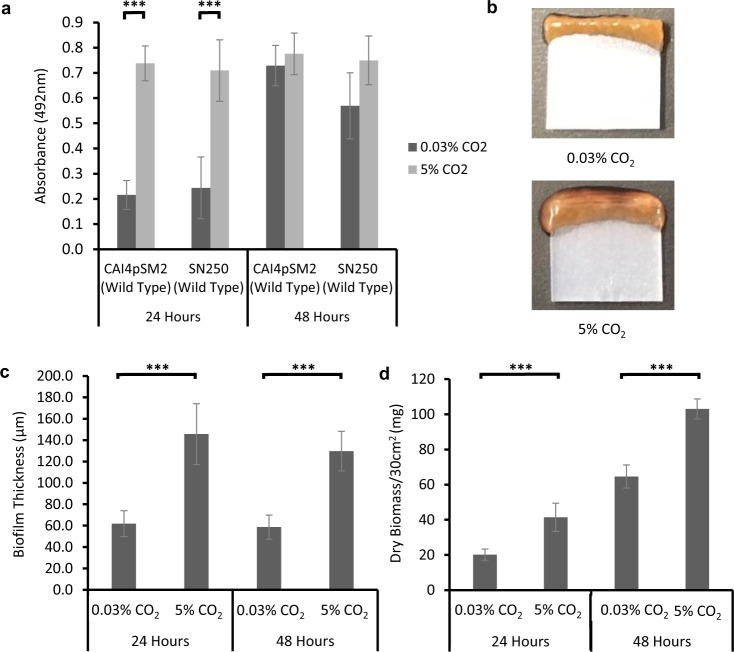
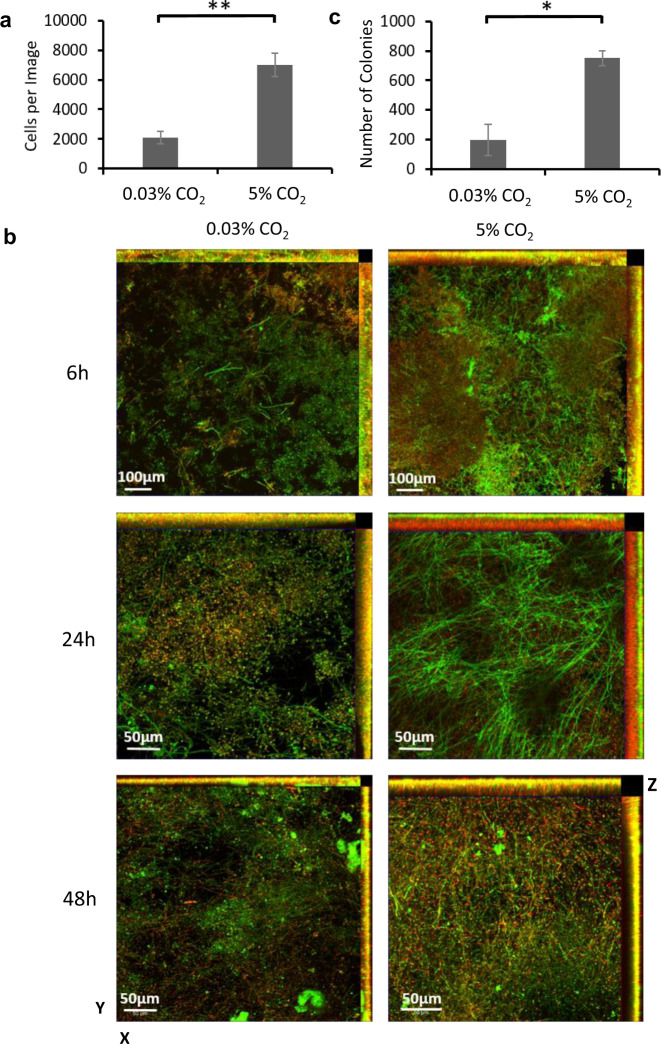
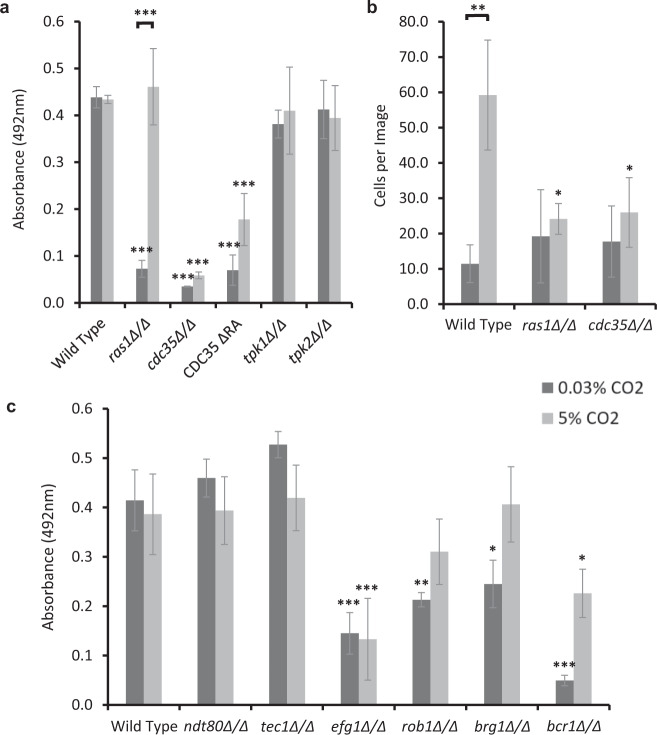
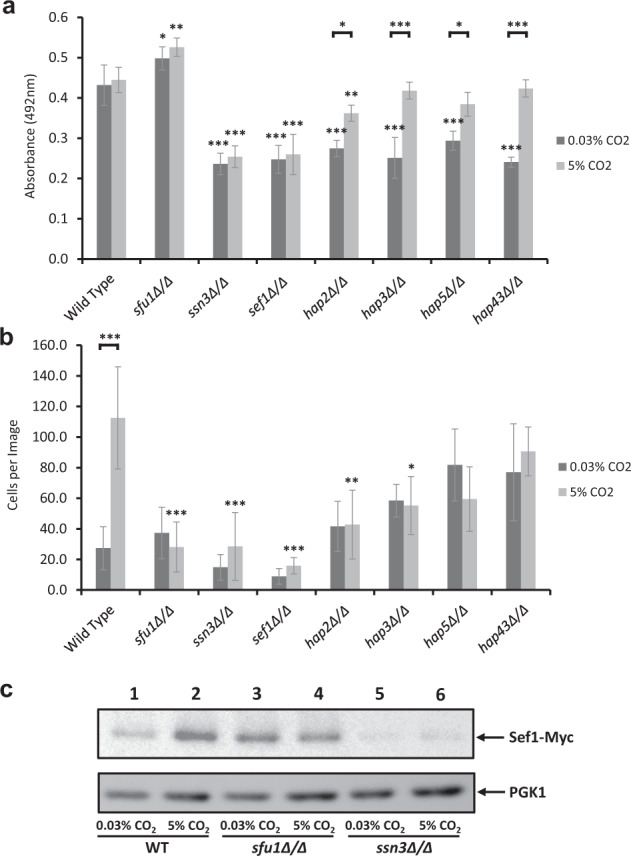
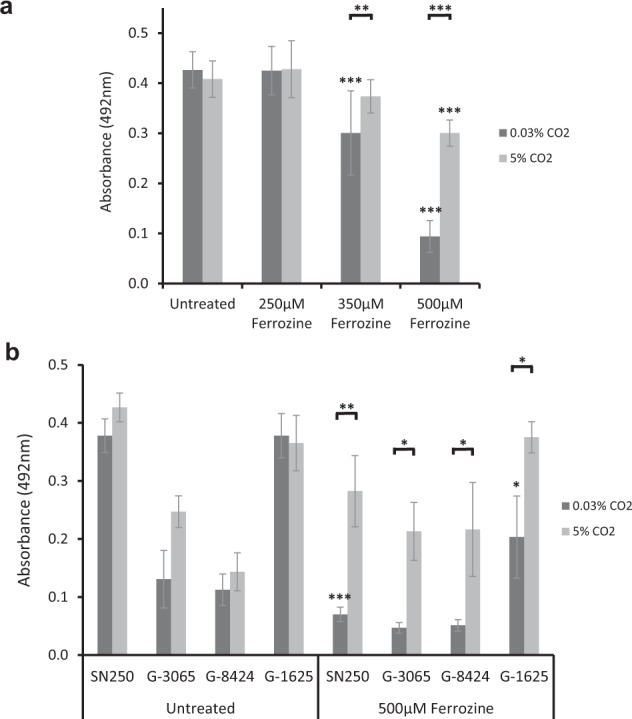
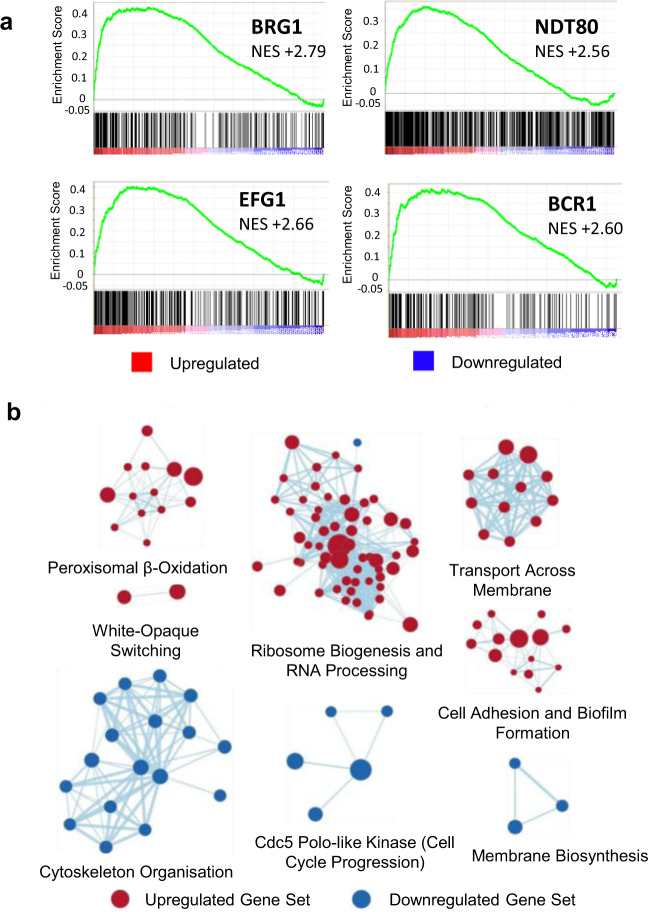
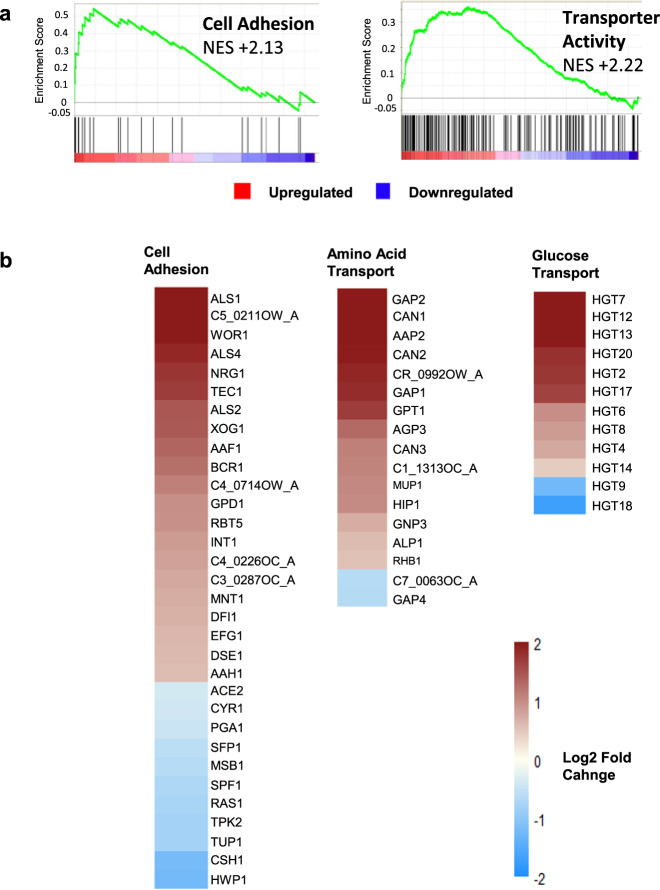
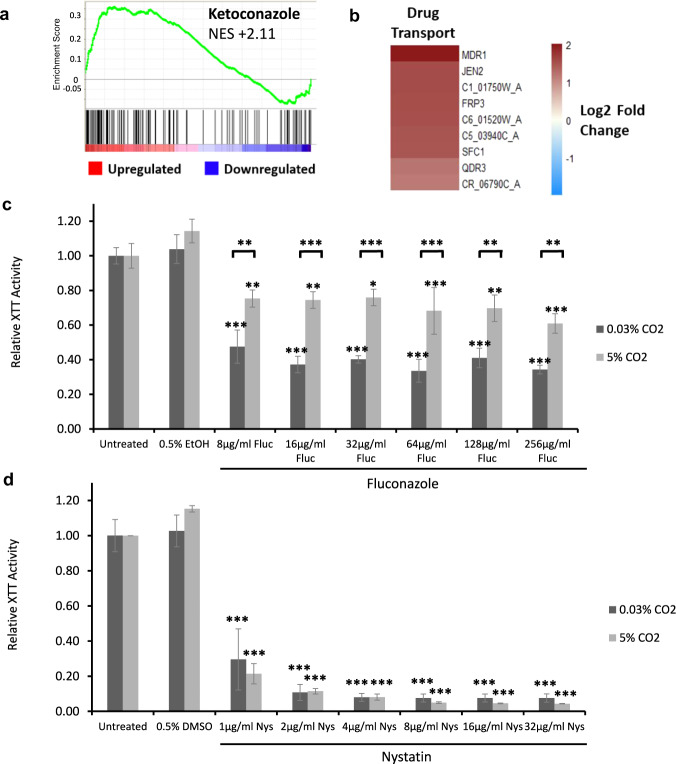
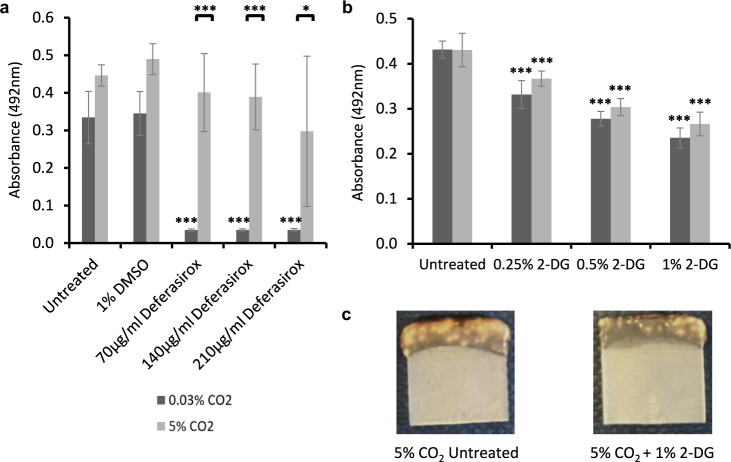
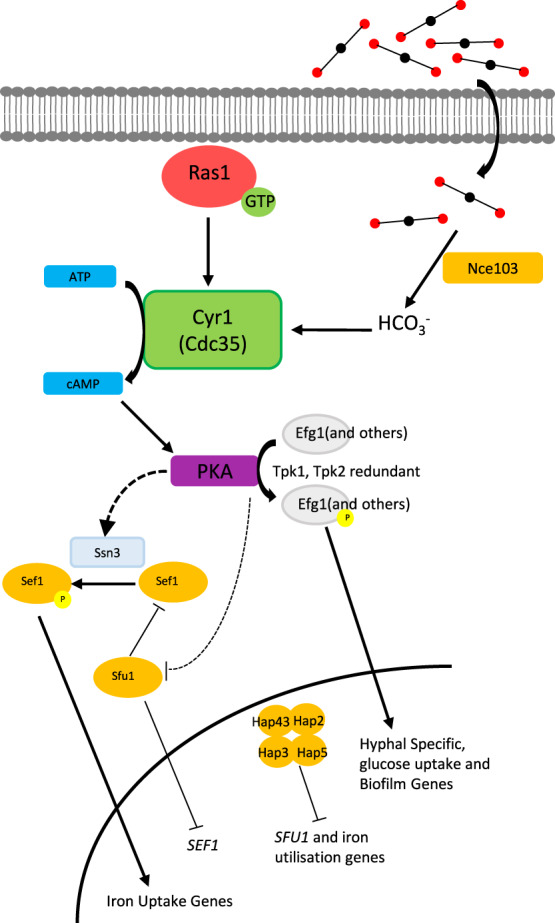
C. albicans is the predominant human fungal pathogen and frequently colonises medical devices, such as voice prostheses, as a biofilm. It is a dimorphic yeast that can switch between yeast and hyphal forms in response to environmental cues, a property that is essential during biofilm establishment and maturation. One such cue is the elevation of CO 2 levels, as observed in exhaled breath for example. However, despite the clear medical relevance, the effect of CO 2 on C. albicans biofilm growth has not been investigated to date. Here we show that physiologically relevant CO 2 elevation enhances each stage of the C. albicans biofilm-forming process: from attachment through maturation to dispersion. The effects of CO 2 are mediated via the Ras/cAMP/PKA signalling pathway and the central biofilm regulators Efg1, Brg1, Bcr1 and Ndt80. Biofilms grown under elevated CO 2 conditions also exhibit increased azole resistance, increased Sef1-dependent iron scavenging and enhanced glucose uptake to support their rapid growth. These findings suggest that C. albicans has evolved to utilise the CO 2 signal to promote biofilm formation within the host. We investigate the possibility of targeting CO 2-activated processes and propose 2-deoxyglucose as a drug that may be repurposed to prevent C. albicans biofilm formation on medical airway management implants. We thus characterise the mechanisms by which CO 2 promotes C. albicans biofilm formation and suggest new approaches for future preventative strategies.
Overview
The claims and statistics of this paper haven’t been checked yet.
Free: it reads the open-access text and checks the first 5 claims that cite a source we can check. Create a free account to check every claim.
Integrity signals
Registry
Cites
Statistics
Figures
Verification
Claims the paper makes
The claims and statistics of this paper haven’t been checked yet.
Free: it reads the open-access text and checks the first 5 claims that cite a source we can check. Create a free account to check every claim.
Claims other papers make about this one
Each is checked against this paper’s own text: does it say what the citing paper says it does?
The cited source says what the claim attributes to it.
In the citing paper
“The Ras/cAMP/PKA signaling pathway is an important signaling pathway (30); it plays a central role in hyphal formation (13), biofilm development (31), and host adhesion (14).”
From Mitochondrial complex III subunit Qcr8 regulates the virulence and adhesion of Candida albicans by modulating mitochondrial function (2026) · cites this paper as [31]
Self-check
Percentages, sums and reported differences re-computed from the paper’s own numbers.
The self-check needs the paper’s full text.
Citations
Cites
Moderated estimation of fold change and dispersion for RNA-seq data with DESeq2
Love, M. I., Huber, W., & Anders, S. (2014) · Genome Biology · doi:10.1186/s13059-014-0550-8 · Cited by 95,106
Subramanian, A., Tamayo, P., Mootha, V. K., Mukherjee, S., Ebert, B. L., Gillette, M. A., Paulovich, A., Pomeroy, S. L., Golub, T. R., Lander, E. S., et al. (2005) · Proceedings of the National Academy of Sciences · doi:10.1073/pnas.0506580102 · Cited by 53,625
HISAT: a fast spliced aligner with low memory requirements
Kim, D., Langmead, B., & Salzberg, S. L. (2015) · Nature Methods · doi:10.1038/nmeth.3317 · Cited by 24,112
HTSeq—a Python framework to work with high-throughput sequencing data
Anders, S., Pyl, P. T., & Huber, W. (2015) · Bioinformatics · doi:10.1093/bioinformatics/btu638 · Cited by 21,464
Bacterial Biofilms: A Common Cause of Persistent Infections
Costerton, J. W., Stewart, P. S., & Greenberg, E. P. (1999) · Science · doi:10.1126/science.284.5418.1318 · Cited by 12,167
The Galaxy platform for accessible, reproducible and collaborative biomedical analyses: 2018 update
Afgan, E., Baker, D., Batut, B., van den Beek, M., Bouvier, D., Čech, M., Chilton, J., Clements, D., Coraor, N., Grüning, B. A., et al. (2018) · Nucleic Acids Research · doi:10.1093/nar/gky379 · Cited by 3,662
Enrichment Map: A Network-Based Method for Gene-Set Enrichment Visualization and Interpretation
Merico, D., Isserlin, R., Stueker, O., Emili, A., & Bader, G. D. (2010) · PLoS ONE · doi:10.1371/journal.pone.0013984 · Cited by 2,235
The Galaxy platform for accessible, reproducible and collaborative biomedical analyses: 2016 update
Afgan, E., Baker, D., van den Beek, M., Blankenberg, D., Bouvier, D., Čech, M., Chilton, J., Clements, D., Coraor, N., Eberhard, C., et al. (2016) · Nucleic Acids Research · doi:10.1093/nar/gkw343 · Cited by 2,148
Saccharomyces Genome Database: the genomics resource of budding yeast
Cherry, J. M., Hong, E. L., Amundsen, C., Balakrishnan, R., Binkley, G., Chan, E. T., Christie, K. R., Costanzo, M. C., Dwight, S. S., Engel, S. R., et al. (2012) · Nucleic Acids Research · doi:10.1093/nar/gkr1029 · Cited by 1,796
Chandra, J., Kuhn, D. M., Mukherjee, P. K., Hoyer, L. L., McCormick, T., & Ghannoum, M. A. (2001) · Journal of Bacteriology · doi:10.1128/jb.183.18.5385-5394.2001 · Cited by 1,578
Cited by
Biofilm Resilience: Molecular Mechanisms Driving Antibiotic Resistance in Clinical Contexts
Almatroudi, A. (2025) · Biology · doi:10.3390/biology14020165 · Cited by 303
Fungal biofilms in human health and disease
Ramage, G., Kean, R., Rautemaa-Richardson, R., Williams, C., & Lopez-Ribot, J. L. (2025) · Nature Reviews Microbiology · doi:10.1038/s41579-025-01147-0 · Cited by 72
Impaired amino acid uptake leads to global metabolic imbalance of Candida albicans biofilms
Böttcher, B., Driesch, D., Krüger, T., Garbe, E., Gerwien, F., Kniemeyer, O., Brakhage, A. A., & Vylkova, S. (2022) · npj Biofilms and Microbiomes · doi:10.1038/s41522-022-00341-9 · Cited by 22
Mourer, T., Ghalid, M. E., Pehau‐Arnaudet, G., Kauffmann, B., Loquet, A., Brûlé, S., Cabral, V., d’Enfert, C., & Bachellier‐Bassi, S. (2023) · npj Biofilms and Microbiomes · doi:10.1038/s41522-023-00371-x · Cited by 32
A CO 2 sensing module modulates β-1,3-glucan exposure in Candida albicans
Avelar, G. M., Pradhan, A., Ma, Q., Hickey, E., Leaves, I., Liddle, C., Rodriguez Rondon, A. V., Kaune, A.-K., Shaw, S., Maufrais, C., et al. (2024) · mBio · doi:10.1128/mbio.01898-23 · Cited by 15
Vandermeulen, M. D., Lorenz, M. C., & Cullen, P. J. (2024) · Genetics · doi:10.1093/genetics/iyae122 · Cited by 15
Wei, P.-W., Song, C.-R., Wang, X., Chen, M., Yang, Y.-X., Wang, C., Hu, Z., Liu, H., & Wang, B. (2022) · LWT · doi:10.1016/j.lwt.2022.113883 · Cited by 15
Kulig, K., Bednaruk, K., Rudolphi-Skórska, E., Barbasz, A., Wronowska, E., Woźnicka, O., Karnas, E., Pyza, E., Zuba‐Surma, E. K., Rąpała‐Kozik, M., et al. (2023) · International Journal of Molecular Sciences · doi:10.3390/ijms242417179 · Cited by 12
Mechanisms and regulation of iron uptake and the role of iron in pathogenesis of Candida albicans
Zheng, D., Zhang, X., Ding, J., Yue, D., Yang, F., & Li, Y. (2025) · Critical reviews in microbiology · doi:10.1080/1040841x.2025.2510256 · Cited by 10
“Pentland et al. (2021) further showed that deleting HAP43 and SEF1 reduces biofilm formation by ~50%, and the biofilm growth defects caused by SEF1 deletion cannot be rescued by cO 2 , a biofilm enhancer.”
Chai, X., Jiang, Y., Lu, H. J., & Huang, X. (2025) · Frontiers in Pharmacology · doi:10.3389/fphar.2025.1574990 · Cited by 9
The pathogenicity and future treatment strategies of Candida albicans
Wu, J., Jiang, C., Wang, H., Chen, T., Chen, X., & Da, W. (2026) · Frontiers in Cellular and Infection Microbiology · doi:10.3389/fcimb.2026.1752304 · Cited by 10
Advances in understanding microbial corrosion of oil pipelines
Arroussi, M., Toor, I., Ma, W., Shams, A., & Al-Athel, K. S. (2026) · Discover Bacteria. · doi:10.1007/s44351-026-00046-w · Cited by 5
“However, some studies showed that CO 2 enhanced the growth of SRB [95, 96] and NRB [97].”
Fungal Attachment-Resistant Polymers for the Additive Manufacture of Medical Devices
Yong, L. X., Sefton, J., Vallières, C., Rance, G. A., Hill, J., Crucitti, V. C., Dundas, A. A., Rose, F. R. A. J., Alexander, M. R., Wildman, R. D., et al. (2024) · ACS Applied Materials & Interfaces · doi:10.1021/acsami.4c04833 · Cited by 4
Genome-wide transcriptional regulation in Saccharomyces cerevisiae in response to carbon dioxide
Tan, L.-R., Liu, J.-J., Deewan, A., Lee, J. W., Xia, P.-F., Rao, C. V., Jin, Y.-S., & Wang, S.-G. (2022) · FEMS Yeast Research · doi:10.1093/femsyr/foac032 · Cited by 4
Jena, B., Singh, S. S., Chakrabortty, S., Behera, S. K., Tripathy, S. K., Lundborg, C. S., Kumar, R., Khan, M. A., Jeon, B., & Mishra, A. (2024) · Journal of Industrial and Engineering Chemistry · doi:10.1016/j.jiec.2024.04.049 · Cited by 5
Minimal domain peptides derived from enterocins exhibit potent antifungal activity
Cohen, D. G., Heidenreich, T. M., Schorey, J. W., Ross, J. N., Hammers, D. E., Vu, H. M., Moran, T. E., Winski, C. J., Stuckey, P. V., Ross, R. L., et al. (2024) · Frontiers in Fungal Biology · doi:10.3389/ffunb.2024.1506315 · Cited by 3
“The difference in CO 2 was to prevent formation of C. albicans bio fi lms (Pentland et al., 2021).”
Accidental and Regulated Cell Death in Yeast Colony Biofilms
Netherwood, D. J., Tam, A., Gourlay, C. W., Knežević, T., Gardner, J. M., Jiranek, V., Binder, B. J., & Green, J. E. F. (2025) · Bulletin of Mathematical Biology · doi:10.1007/s11538-025-01470-w · Cited by 2
Self-citationFungal‐Bacterial Interactions in Polymicrobial Infections: Hidden Threats
Gourabi, M. J. R., Kargar, M., Kamali, A., & Sharahi, J. Y. (2026) · MicrobiologyOpen · doi:10.1002/mbo3.70320 · Cited by 2
de Mello, T. P., Barcellos, I. C., Branquinha, M. H., & dos Santos, A. L. S. (2023) · Current Research in Microbial Sciences · doi:10.1016/j.crmicr.2023.100191 · Cited by 3
A quantitative framework for multiscale analysis of Candida albicans biofilm development
Li, K., Skivens, S., Green, J. E. F., Tam, A., Pentland, D. R., Baumann, H., Gourlay, C. W., Binder, B. J., & Laissue, P. P. (2026) · Biofilm · doi:10.1016/j.bioflm.2026.100356 · Cited by 1
“A major challenge for example is the pathogenic yeast Candida albicans , which can colonize abiotic surfaces of airway management devices — including voice prostheses, tracheostomy tubes, and endotracheal tubing — leading to increased infection rates [1].”
Self-citationWang, S., Tian, L., Li, F., Wang, Q., Tan, Y., Ning, Y., Cao, X., Liu, Y., Shangguan, J., Li, H., et al. (2026) · Food Research International · doi:10.1016/j.foodres.2026.119570 · Cited by 1
Formation and Prevention of Biofilms on Airway Management Devices
Deshmukh‐Reeves, E., Ryan, F., & Gourlay, C. W. (2025) · Springer series on biofilms · doi:10.1007/978-3-031-93315-8_3 · Cited by 1
Self-citationSupporting the strategic pillars of translational research in biofilms
Cámara, M., & Filloux, A. (2022) · npj Biofilms and Microbiomes · doi:10.1038/s41522-022-00354-4 · Cited by 1
“In another study, Pentland et al.(4) show that C.”
BackgroundZhao, Q., Huang, X., Liu, Q., Cao, Y., Yu, X., Liu, Y., Hu, N., Han, Z., Tan, J., Li, X., et al. (2026) · Microbiology Spectrum · doi:10.1128/spectrum.01672-25
Multiscale Analysis of Candida albicans BiofilmsPreprint
Li, K., Skivens, S., Green, J. E. F., Tam, A., Pentland, D. R., Baumann, H., Gourlay, C. W., Binder, B. J., & Laissue, P. P. (2025) · bioRxiv (Cold Spring Harbor Laboratory) · doi:10.1101/2025.09.18.677201
“A major challenge for example is the pathogenic yeast Candida albicans , which can colonize abiotic surfaces of airway management devices — including voice prostheses, tracheostomy tubes, and endotracheal tubing — leading to increased infection rates (Pentland et al. 2021).”
Self-citationMello, T. R. C., Ramos, L. S., Branquinha, M. H., & Santos, A. L. S. (2026) · Medical Gas Research · doi:10.4103/mgr.medgasres-d-26-00038
“27 Interestingly, exposure to high CO 2 levels enhanced the capacity of C. albicans biofilm to acquire iron and glucose, two key nutrients required for proliferation and biofilm development.”
InfluentialMODELLING THE EMERGENCE OF SPIRAL COLONY MORPHOLOGY IN THE YEAST MAGNUSIOMYCES MAGNUSII
LI, K., Black, A. J., Knežević, T., Gardner, J. M., ZHANG, J., Jiranek, V., Green, J. E. F., Binder, B. J., & Tam, A. (2026) · The ANZIAM Journal · doi:10.1017/s1446181126100340 · Cited by 1
“Interestingly, Tronnolone et al. [68] found that yeasts, which are nonmotile, also cannot respond actively to nutrient gradients.”
Salve, S., Shende, H., Desai, N., Doh, J., Qureshi, N., Borkar, M. R., Mhapankar, R., Sharbidre, A. A., Kumbhar, V., Khairnar, B., et al. (2026) · Microbial Pathogenesis · doi:10.1016/j.micpath.2026.108676
Carbon and nitrogen sources can fuel fungal virulence
Patiño-Medina, J. A., & Casadevall, A. (2026) · Infection and Immunity · doi:10.1128/iai.00460-26
Metadata
- Authors
- Pentland, D. R., Davis, J., Mühlschlegel, F. A., & Gourlay, C. W.
- Affiliations
- University of Kent (GB)
- Laboratoire National de Santé (LU)
- Corresponding author
- Gourlay, Campbell W.
- Venue
- npj Biofilms and Microbiomes
- Published
- 2021-08-12
- Volume
- 7
- Issue
- 1
- Pages
- 67-67
- ISSN
- 2055-5008 (ISSN-L)
- PMC
- PMC8361082
- OpenAlex
- W3189504479
- Cited by
- 28
- References
- 76
- Citations by year
- 2026: 9 · 2025: 7 · 2024: 5 · 2023: 3 · 2022: 4
- FWCI
- 0.95
- Type
- journal article
- Language
- en
- Open access
- gold
- doi.org
- Licence
- cc-by
- creativecommons.org/licenses/by/4.0 (tdm)
- creativecommons.org/licenses/by/4.0 (vor)
- Locations
- npj Biofilms and Microbiomes (publishedVersion, cc-by)
- PubMed Central (publishedVersion, cc-by)
- PubMed (publishedVersion)
- Kent Academic Repository (University of Kent) (acceptedVersion)
- DOAJ (DOAJ: Directory of Open Access Journals) (submittedVersion, cc-by-sa)
- Funders
- Biotechnology and Biological Sciences Research Council (BB/R012415/1)
- Topics
- Health Sciences › Medicine › Infectious Diseases › Antifungal resistance and susceptibility
- Life Sciences › Biochemistry, Genetics and Molecular Biology › Molecular Biology › Fungal and yeast genetics research
- Life Sciences › Biochemistry, Genetics and Molecular Biology › Molecular Biology › Bacterial biofilms and quorum sensing
- Keywords
- Candida albicans, carbon dioxide, biofilm formation, nutrient scavenging, azole resistance, iron scavenging, glucose uptake, EFG1, SMARCA4, BCR1, Ndt80, 2-deoxyglucose, medical device colonization, voice prosthesis, biofilm dispersal
- MeSH terms
- Nutrients, Candida albicans, Carbon Dioxide, DNA-Binding Proteins, Fungal Proteins, Humans, Transcription Factors, Signal Transduction, Gene Expression Regulation, Fungal, Biofilms, Drug Resistance, Fungal, Hyphae
About these checks
Registry, retraction, Cites and statistics results are computed, not judged, with one exception: a printed reference that no index lists is read once by a model before it counts as a citation error. Claims are extracted by a model and kept only when their quote appears verbatim in the text; each cited source is then checked, with a model’s help, for whether it says what the claim relies on. Those verdicts can be wrong — read the claim’s quote and the cited source before relying on one.
Statistics and arithmetic are recomputed, not judged.
Confidence bands are shown only for fields calibrated on our annotated test set. None is calibrated yet, so no band is shown.
What counts as a claim ›How we measure confidence ›How we check this ›
Are you an author, or do you see a problem with this page? Request a review
Data sources
Bibliographic data: Semantic Scholar, OpenAlex, Crossref.
Contains information from the Semantic Scholar Academic Graph Datasets, made available under the ODC Attribution License (ODC-BY 1.0).
Semantic Scholar’s data is described in: Kinney, R., et al. (2023). The Semantic Scholar Open Data Platform. arXiv:2301.10140.
