

Microbiome meets immunotherapy: unlocking the hidden predictors of immune checkpoint inhibitors
Open accessThe DOI matches its Crossref record; 153 of the 157 references it cites were found in a registry or an index; 29 of the 42 sources its claims cite were checked for support.
Abstract
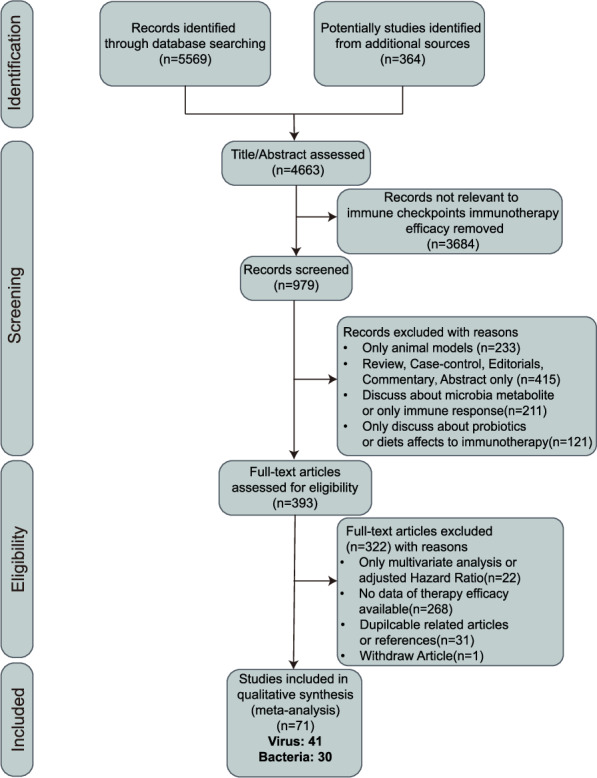
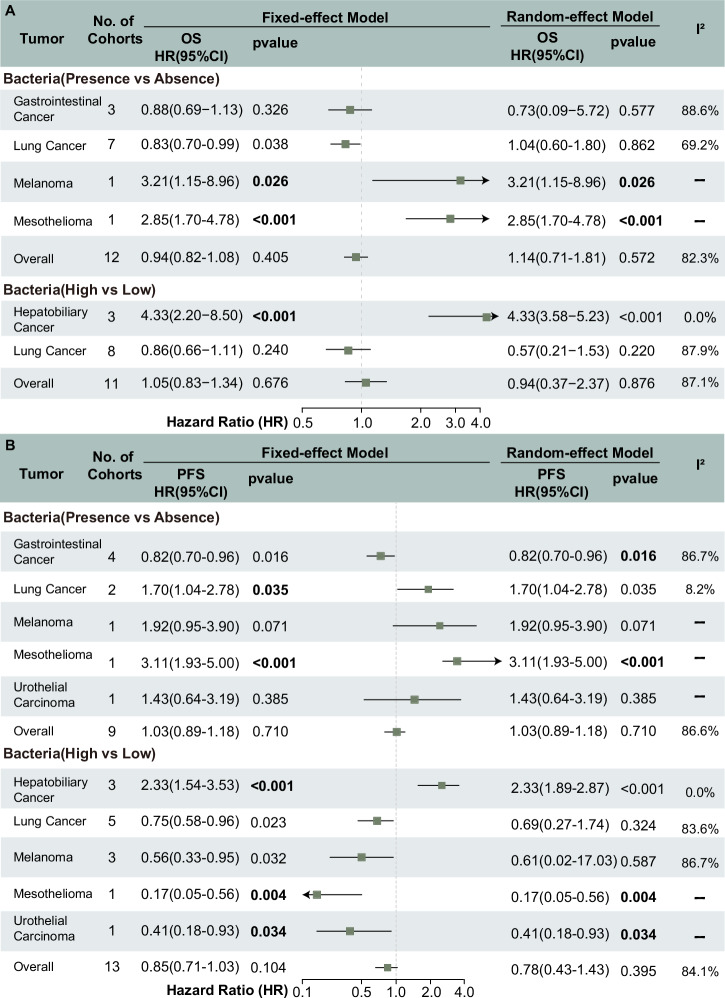
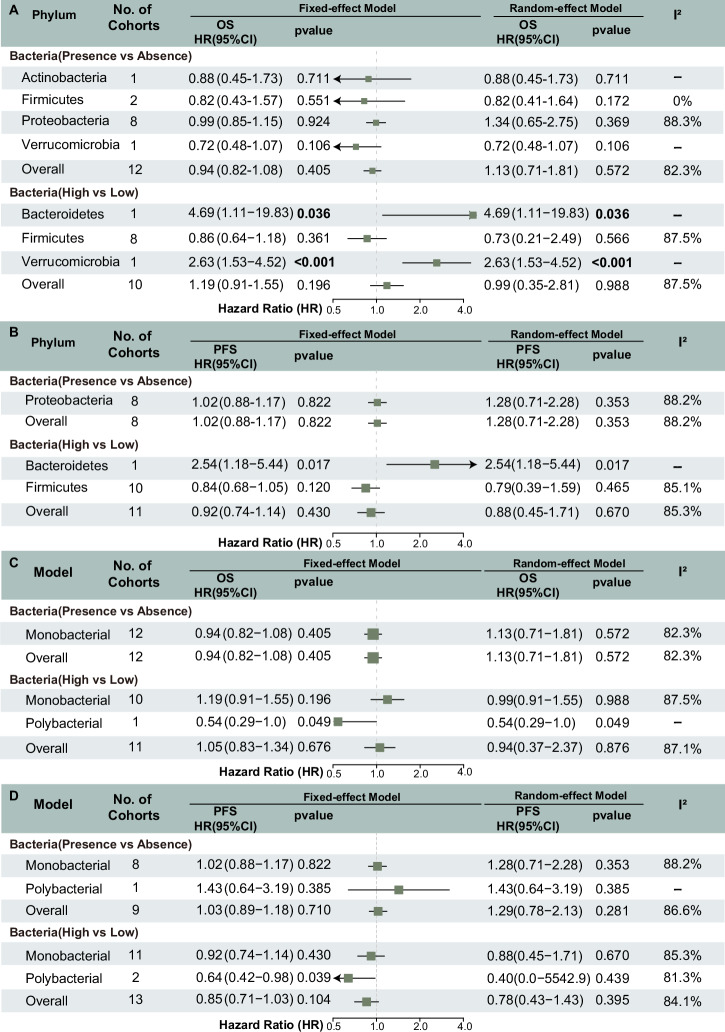
Immune checkpoint inhibitors (ICIs) have revolutionized cancer immunotherapy, with the microbiome significantly influencing treatment outcomes. Analysis of 4663 studies (2014.01-2024.10) identified 71 eligible randomized controlled trials (RCTs) and cohort studies (41 viral, 30 bacterial). Analyses included subgroup assessments by cancer type, microbial taxa, and ICI regimens. Among 4663 identified studies, 71 met inclusion criteria (41 viral, 30 bacterial). Viral status, particularly hepatitis B virus (HBV) and human papillomavirus (HPV), significantly associated with ORR and DCR. Bacterial enrichment correlated with improved survival in hepatobiliary (OS: HR = 4.33, 95%CI: 2.20-8.50) and lung cancers (PFS: HR = 1.70, 95%CI: 1.04-2.78). Multi-microbiome models demonstrated superior outcome prediction, with microbial diversity correlating with improved PFS (HR = 0.64, 95%CI: 0.42-0.98). Viral status showed cancer-specific associations with SAEs. The microbiome serves as a valuable predictor of ICI outcomes. Future studies should emphasize large-scale RCTs, standardized assessment methods, and host-microbiome interactions.
Overview
CoChat Summary
TL;DR
This PRISMA meta-analysis of 71 studies (41 viral, 30 bacterial) found baseline microbiome status predicts ICI efficacy, especially viral status for ORR, with cancer- and regimen-specific effects. Bacterial enrichment and multi-microbiome models showed tumor-specific survival associations, while safety associations were limited and heterogeneous.
Key findings
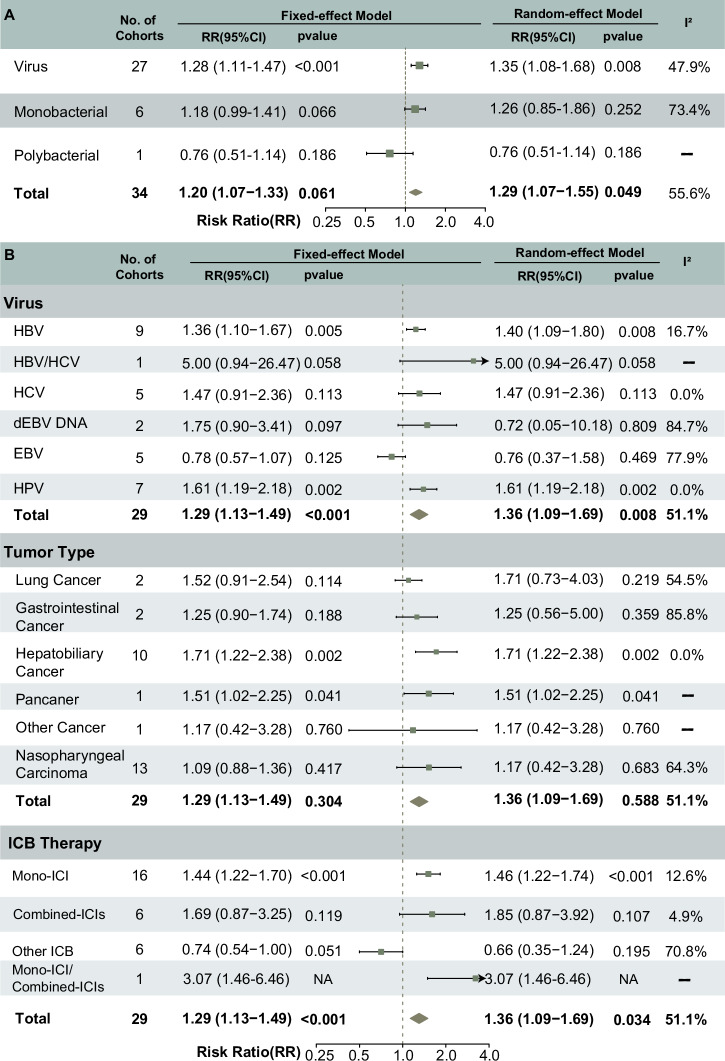
- Among 71 included studies (41 viral, 30 bacterial), baseline microbiota was associated with ORR: pooled RR 1.29 (95% CI 1.07–1.55, P = 0.049, N = 34, I² = 55.6%); virus-related cohorts had RR 1.28 (95% CI 1.11–1.47, P < 0.001, N = 27, I² = 47.9%).
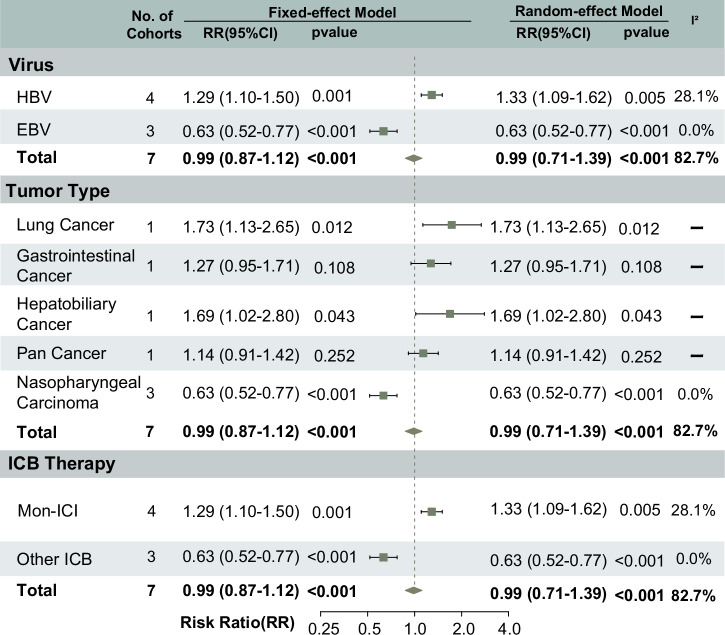
- Viral status predicted ORR (RR 1.36, 95% CI 1.09–1.69, P = 0.008, N = 29), with HBV RR 1.36 (95% CI 1.10–1.67, P = 0.005, N = 9) and HPV RR 1.61 (95% CI 1.19–2.18, P = 0.002, N = 7); hepatobiliary cancers RR 1.71 (95% CI 1.22–2.38, P = 0.002) and monotherapy RR 1.46 (95% CI 1.22–1.74, P < 0.001, N = 16). DCR pooled RR was 0.99 (95% CI 0.71–1.39, I² = 82.7%), but HBV was positive (RR 1.29, 95% CI 1.10–1.50, P = 0.001, N = 4) and EBV negative (RR 0.63, 95% CI 0.52–0.77, P < 0.001, N = 3).
- Bacterial enrichment was associated with OS in hepatobiliary cancers (HR 4.33, 95% CI 2.20–8.50, P < 0.001, N = 3) and PFS in hepatobiliary cancers (HR 2.33, 95% CI 1.54–3.53, P < 0.001, N = 3) and lung cancer (HR 1.70, 95% CI 1.04–2.78, P = 0.035, N = 2); gastrointestinal cancer PFS was negatively associated (HR 0.82, 95% CI 0.70–0.96, P = 0.016, N = 4). Multi-microbiome models were associated with PFS (HR 0.64, 95% CI 0.42–0.98, P = 0.039, N = 2).
- Safety: viral status was not significantly associated with overall irAEs (RR 1.04, 95% CI 0.92–1.17, P > 0.05) or SAEs (RR 1.10, 95% CI 0.57–2.25, P = 0.570, I² = 72.8%); hepatobiliary SAEs showed RR 0.62 (95% CI 0.39–1.00, P = 0.048, N = 3) and monotherapy SAEs RR 2.31 (95% CI 1.35–3.94, P = 0.002, N = 2).
Methods
- PRISMA-compliant meta-analysis registered in PROSPERO (CRD42025630951); searched PubMed, Web of Science, Medline, Embase, Cochrane Library, Wiley Online Library, ClinicalTrials.gov, and ESMO/ASCO/AACR conference abstracts from January 1, 2014, to October 9, 2024; human studies only, with no restrictions on publication type or language.
- Included RCTs or cohort studies of pathologically confirmed malignancies with in vivo microbiome profiling and associations with ICI outcomes; required ORR, DCR, PR, CR, SD, PFS, OS, or unadjusted HRs, and/or irAEs/SAEs; excluded animal studies, studies lacking pre-treatment microbiome profiles or specific microbiome classifications, and studies reporting only adjusted HRs.
- Three researchers independently screened and extracted data; quality assessed with Newcastle–Ottawa Scale for cohorts and Cochrane ROB for RCTs; publication bias assessed with funnel plots and Egger’s test; pooled RRs for ORR/DCR and HRs for PFS/OS using RevMan 5.4 and R 4.4.1, with fixed-effect models for I² < 50% and random-effect models for I² > 50%, significance at P < 0.05.
Limitations
- Stated: the analysis primarily included moderate- to high-quality cohort studies with a lack of RCTs, limiting confounding control and causal inference; endpoints were incomplete and heterogeneous across studies (viral studies lacked long-term follow-up; bacterial studies lacked AE data); bacterial presence/enrichment was often analyzed using binary classifications without standardized sequencing or categorization; sample sizes and cohorts were limited, most bacterial samples were fecal, and few were from extracellular vesicles or tumor tissues; subgroup analyses were insufficiently deep.
- Evident: many subgroup estimates relied on single cohorts (e.g., hepatobiliary DCR, melanoma/mesothelioma OS, phylum-level bacterial results), and some findings had confidence intervals whose upper bound equaled 1.0 (hepatobiliary SAEs RR 0.62, 95% CI 0.39–1.00; multiple bacterial taxa OS HR 0.54, 95% CI 0.29–1.0), requiring validation. High heterogeneity was present in some pooled analyses (DCR I² = 82.7%; SAEs I² = 72.8%; multiple bacterial communities PFS I² = 81.3%).
- Evident: publication bias tests were not statistically significant for ORR/OS/PFS, but funnel plots showed asymmetry and substantial between-study heterogeneity (τ² values), so results should be interpreted cautiously.
Model-written summary. Check it against the paper before relying on it.
Integrity signals
Registry
Cites
Statistics
Figures
Verification
Claims the paper makes
21 Valid · 4 Not valid · 4 Not checked · 81 Own results and interpretations
At least one cited source doesn’t support this claim or points to a different paper, and none confirmed it — see the verdicts below.
In the paper
“Furthermore, patients demonstrating response to anti-PD-1 therapy exhibited significantly enhanced clinical benefits compared to those characterized by Epstein-Barr virus progression (defined as viral DNA load exceeding 1.5-fold baseline), viral response (defined as DNA load below 0.5-fold baseline), or early clearance of plasma EBV DNA50.”
§ Microbiome meets immunotherapy: unlocking the hidden predictors of immune checkpoint inhibitors > Discussion
What the sources say
- Disputedcites [50] Lin, S. et al. Early change of plasma Epstein-Barr virus DNA load and the viral lytic genome level could positively predict clinical outcome in recurrent or metastatic nasopharyngeal carcinoma receiving anti-programmed cell death 1 monotherapy. BMC Cancer 24, 797 (2024). 38961378 PMC11223362 sourceExperimental — accuracy not yet measured
The Results section (page unavailable) reports significantly better overall survival for EBV responders than for patients with EBV progression—not better outcomes for anti-PD-1 responders than for EBV responders. The Discussion also identifies early plasma EBV DNA clearance as EBV response and associates it with superior survival, contrary to treating those patients as a poorer-outcome comparison group. (LLM, conf=0.88)
Checked by a reasoning model — may be wrong.
boostedstates an association- Asserted: passes — The authors put it forward as true.
- Checkable: passes — It can be checked against evidence.
- Load-bearing: passes — The paper’s conclusions depend on it.
- Based: passes — The paper gives a reason why it holds.
- Disputed
The cited sources that could be checked couldn’t confirm or dispute this claim.
In the paper
“These findings support the hypothesis that specific viruses can enhance antitumor immune responses102.”
§ Microbiome meets immunotherapy: unlocking the hidden predictors of immune checkpoint inhibitors > Discussion
What the sources say
- Could not verifycites [102] Song, G. et al. Global immune characterization of HBV/HCV-related hepatocellular carcinoma identifies macrophage and T-cell subsets associated with disease progression. Cell Discov. 6, 90 (2020). 33298893 PMC7721904 sourceExperimental — accuracy not yet measured
The Introduction identifies HBV and HCV infection as risk factors for hepatocellular carcinoma. The Results section on intercellular communication reports increased interactions involved in antitumor responses, but attributes them partly to tumor antigens, not to viruses. Searches for viral enhancement of antitumor immunity found no passage making that connection; page numbers were unavailable in our copy. (LLM, conf=0.74)
plainstates a cause- Asserted: passes — The authors put it forward as true.
- Checkable: passes — It can be checked against evidence.
- Load-bearing: passes — The paper’s conclusions depend on it.
- Based: passes — The paper gives a reason why it holds.
- Could not verify
The cited sources support only part of this claim — read each source’s verdict below.
In the paper
“Ho et al. compared the clinical benefits of PD-1/PD-L1 inhibitors in HCC patients with and without HBV/HCV infections, finding no significant differences in TME immune cell infiltration subtypes or immune checkpoint molecule expression levels108.”
§ Microbiome meets immunotherapy: unlocking the hidden predictors of immune checkpoint inhibitors > Discussion
What the sources say
- Partly supportedcites [108] Ho, W. J. et al. Viral status, immune microenvironment and immunological response to checkpoint inhibitors in hepatocellular carcinoma. J. Immunother. Cancer 8, e000394 (2020). 32303615 PMC7204805 sourceExperimental — accuracy not yet measured
The Results section, “Tumor immune microenvironment in HCV, HBV, and uninfected HCC” (page unavailable), reports no significant association of viral etiology with markers of several infiltrating immune-cell types or with tumor immune-checkpoint expression. But those TME findings came from TCGA tumor data, not from the patients treated with PD-1/PD-L1 inhibitors; the paper analyzed treatment responses separately. The claim incorrectly presents the TME comparison as a finding in treated patients. (LLM, conf=0.88)
plain- Asserted: passes — The authors put it forward as true.
- Checkable: passes — It can be checked against evidence.
- Load-bearing: unclear — It is unclear whether the paper’s conclusions depend on it.
- Based: passes — The paper gives a reason why it holds.
- Partly supported
The cited sources support only part of this claim — read each source’s verdict below.
In the paper
“Virus-associated tumor microenvironment (TME) may be related to the dynamic transformation and activity of immune cells103.”
§ Microbiome meets immunotherapy: unlocking the hidden predictors of immune checkpoint inhibitors > Discussion
What the sources say
- Partly supportedcites [103] Liu, L. et al. HPVTIMER: a shiny web application for tumor immune estimation in human papillomavirus-associated cancers. iMeta 2, e130 (2023). 38867938 PMC10989930 sourceExperimental — accuracy not yet measured
The Introduction (page unavailable) links the HPV-associated tumor immune microenvironment to altered immune-cell activation, trafficking, and abundance. It does not establish dynamic transformation over time, and its discussion is limited to HPV-associated cancers rather than virus-associated tumors generally. (LLM, conf=0.82)
hedgedstates an association- Asserted: passes — The authors put it forward as true.
- Checkable: passes — It can be checked against evidence.
- Load-bearing: unclear — It is unclear whether the paper’s conclusions depend on it.
- Based: passes — The paper gives a reason why it holds.
- Partly supported
The sources with a verdict support this claim; the rest weren’t checked yet, have no full text we could read, or their verdicts aren’t rated yet.
In the paper
“This discrepancy may be related to the balance of inflammation and immune recognition mechanisms within the TME108,109.”
§ Microbiome meets immunotherapy: unlocking the hidden predictors of immune checkpoint inhibitors > Discussion
What the sources say
- Supportedcites [108] Ho, W. J. et al. Viral status, immune microenvironment and immunological response to checkpoint inhibitors in hepatocellular carcinoma. J. Immunother. Cancer 8, e000394 (2020). 32303615 PMC7204805 source
The Discussion (page unavailable) proposes that viral antigens may affect antitumor responses, but virus-specific T cells in HCC may not distinguish infected tumor cells from infected normal liver cells. It also contrasts virus-specific responses with underlying cirrhosis; the Background (page unavailable) identifies chronic inflammation as a likely contributor to HCV-associated HCC. Together, these passages support the citing sentence’s hedged explanation of the discrepancy. (LLM, conf=0.84)
- Not checked — no full text of the sourcecites [109] Li, X., Liu, X., Tian, L. & Chen, Y. Cytokine-mediated immunopathogenesis of Hepatitis B virus infections. Clin. Rev. Allergy Immunol. 50, 41–54 (2016). 25480494 source
hedgedstates a possible cause- Asserted: passes — The authors put it forward as true.
- Checkable: passes — It can be checked against evidence.
- Load-bearing: unclear — It is unclear whether the paper’s conclusions depend on it.
- Based: passes — The paper gives a reason why it holds.
- Rests on 3 assumptions not shown here.
- Supported
54 more claims · 7 with their cited sources checked
Create a free account to see all 110 claims and to verify the 2 references still open.
- It may state two separate claims as one. 42
- Probably not a substantial claim. 14
- Borderline: one of the tests for a substantial claim is unclear. 1
Statistics that don’t add up
Each reported p-value recomputed from its test statistic and degrees of freedom, each partial η² from its F, and each ratio, mean difference or B printed with a p checked against its own confidence interval.
Rated minor: it would not touch a result — a value no result rests on, a p-value that stays on the same side of the significance level, or a conflict that is clerical, resolved elsewhere in the paper, or outside its own findings.
In the paper
“RR = 11.76) (95% CI: 1.33–2.33, P < 0.001”
§ Microbiome meets immunotherapy: unlocking the hidden predictors of immune checkpoint inhibitors > Discussion
Self-check
Percentages, sums and reported differences re-computed from the paper’s own numbers.
Each contradiction between two passages listed here was confirmed by an independent check.
Rated minor: it would not touch a result — a value no result rests on, a p-value that stays on the same side of the significance level, or a conflict that is clerical, resolved elsewhere in the paper, or outside its own findings.
In the paper
§ Microbiome meets immunotherapy: unlocking the hidden predictors of immune checkpoint inhibitors > Discussion
“tumor tissue sampling appeared to enhance the predictive value of viral biomarkers for ORR(RR = 11.76) (95% CI: 1.33–2.33, P < 0.001, N = 8)”
§ Microbiome meets immunotherapy: unlocking the hidden predictors of immune checkpoint inhibitors > Results > Virus-associated efficacy analysis with ORR
“tissue-derived samples exhibited a pooled RR of 1.76 (95% CI: 1.33–2.33, P < 0.001, N = 8)”
Rated minor: it would not touch a result — a value no result rests on, a p-value that stays on the same side of the significance level, or a conflict that is clerical, resolved elsewhere in the paper, or outside its own findings.
In the paper
§ Microbiome meets immunotherapy: unlocking the hidden predictors of immune checkpoint inhibitors > Results > Virus-associated efficacy analysis with DCR
“a combined RR of 0.99 (95% CI: 0.71–1.39, P < 0.001)”
§ Microbiome meets immunotherapy: unlocking the hidden predictors of immune checkpoint inhibitors > Results > Virus-associated efficacy analysis with DCR
“The pooled analysis revealed significant heterogeneity (I2 = 82.7%) and a combined RR of 0.99 (95% CI: 0.71–1.39, P < 0.001), indicating substantial variability in the predictive value of viral status for DCR, which may limit its utility as an independent prognostic marker.”
Citations
Cites
Gut microbiome influences efficacy of PD-1-based immunotherapy against epithelial tumors
Routy, B., Le Chatelier, E., Derosa, L., Duong, C. P. M., Alou, M. T., Daillère, R., Fluckiger, A., Messaoudene, M., Rauber, C., Roberti, M. P., et al. (2018) · Science · doi:10.1126/science.aan3706 · Cited by 5,671 · cited 1×
“However,FMTfromICIrespondershasdemonstratedthe ability to restore microbial diversity and re-establish antitumor activity 139,141,142 .”
Gut microbiome modulates response to anti-PD-1 immunotherapy in melanoma patients
Gopalakrishnan, V., Spencer, C. N., Nezi, L., Reuben, A., Andrews, M. C., Karpinets, T. V., Prieto, P. A., Vicente, D., Hoffman, K., Wei, S. C., et al. (2018) · Science · doi:10.1126/science.aan4236 · Cited by 4,812
Self-citationCommensal Bifidobacterium promotes antitumor immunity and facilitates anti–PD-L1 efficacy
Sivan, A., Corrales, L., Hubert, N., Williams, J. B., Aquino-Michaels, K., Earley, Z. M., Benyamin, F. W., Man Lei, Y., Jabri, B., Alegre, M.-L., et al. (2015) · Science · doi:10.1126/science.aac4255 · Cited by 3,888
The impact of the gut microbiota on human health: an integrative view
Clemente, J. C., Ursell, L. K., Parfrey, L. W., & Knight, R. (2012) · Cell · doi:10.1016/j.cell.2012.01.035 · Cited by 3,710 · cited 1×
“The therapeutic effectiveness of ICIs depends on a healthy gut microbiota, which requires microbial diversity and dynamic equilibrium with the immune system 135,136 .”
Anticancer immunotherapy by CTLA-4 blockade relies on the gut microbiota
Vétizou, M., Pitt, J. M., Daillère, R., Lepage, P., Waldschmitt, N., Flament, C., Rusakiewicz, S., Routy, B., Roberti, M. P., Duong, C. P. M., et al. (2015) · Science · doi:10.1126/science.aad1329 · Cited by 3,488 · cited 2×
“Preclinical studies have shown that speci fi c gut microbiota, such as Bacteroides fragilis and Bi fi dobacterium , enhance CD8 + T cell in fi ltration and effectorfunctions,improvingmelanomaresponsestoICIs 21,22 .”
Fecal microbiota transplant overcomes resistance to anti–PD-1 therapy in melanoma patients
Davar, D., Dzutsev, A. K., McCulloch, J. A., Rodrigues, R. R., Chauvin, J.-M., Morrison, R. M., Deblasio, R. N., Menna, C., Ding, Q., Pagliano, O., et al. (2021) · Science · doi:10.1126/science.abf3363 · Cited by 1,781
Fecal microbiota transplant promotes response in immunotherapy-refractory melanoma patients
Baruch, E. N., Youngster, I., Ben-Betzalel, G., Ortenberg, R., Lahat, A., Katz, L., Adler, K., Dick-Necula, D., Raskin, S., Bloch, N., et al. (2021) · Science · doi:10.1126/science.abb5920 · Cited by 1,757 · cited 1×
“Furthermore, fecal microbiota transplantation (FMT) from ICI responders has shown potential to restore gut microbial balance and enhance therapeutic ef fi cacy 131 – 133 .”
Seiwert, T. Y., Burtness, B., Mehra, R., Weiss, J., Berger, R., Eder, J. P., Heath, K., McClanahan, T., Lunceford, J., Gause, C., et al. (2016) · The Lancet Oncology · doi:10.1016/s1470-2045(16)30066-3 · Cited by 1,745
Tremelimumab plus durvalumab in unresectable hepatocellular carcinoma
Abou-Alfa, G. K., Lau, G., Kudo, M., Chan, S. L., Kelley, R. K., Furuse, J., Sukeepaisarnjaroen, W., Kang, Y.-K., Van Dao, T., De Toni, E. N., et al. (2022) · NEJM Evidence · doi:10.1056/evidoa2100070 · Cited by 1,576
PD-L1 as a biomarker of response to immune-checkpoint inhibitors
Doroshow, D. B., Bhalla, S., Beasley, M. B., Sholl, L. M., Kerr, K. M., Gnjatic, S., Wistuba, I. I., Rimm, D. L., Tsao, M. S., & Hirsch, F. R. (2021) · Nature Reviews Clinical Oncology · doi:10.1038/s41571-021-00473-5 · Cited by 1,575
Chaput, N., Lepage, P., Coutzac, C., Soularue, E., Le Roux, K., Monot, C., Boselli, L., Routier, E., Cassard, L., Collins, M., et al. (2017) · Annals of Oncology · doi:10.1093/annonc/mdx108 · Cited by 1,310 · cited 1×
“Speci fi cally, patients with Faecalibacter-ium -enriched microbiota exhibited enhanced cellular immunity following ipilimumab administration, characterized by elevated expression of co-stimulatory molecules on CD4 + T cells 100 .”
Yau, T., Kang, Y.-K., Kim, T.-Y., El-Khoueiry, A. B., Santoro, A., Sangro, B., Melero, I., Kudo, M., Hou, M.-M., Matilla, A., et al. (2020) · JAMA Oncology · doi:10.1001/jamaoncol.2020.4564 · Cited by 1,273
The Challenges of Tumor Mutational Burden as an Immunotherapy Biomarker
Jardim, D. L., Goodman, A., de Melo Gagliato, D., & Kurzrock, R. (2021) · Cancer Cell · doi:10.1016/j.ccell.2020.10.001 · Cited by 1,192
Ren, Z., Xu, J., Bai, Y., Xu, A., Cang, S., Du, C., Li, Q., Lu, Y., Chen, Y., Guo, Y., et al. (2021) · The Lancet Oncology · doi:10.1016/s1470-2045(21)00252-7 · Cited by 1,124
Yau, T., Park, J.-W., Finn, R. S., Cheng, A.-L., Mathurin, P., Edeline, J., Kudo, M., Harding, J. J., Merle, P., Rosmorduc, O., et al. (2022) · The Lancet Oncology · doi:10.1016/s1470-2045(21)00604-5 · Cited by 1,106
Analysis of the microbiome: Advantages of whole genome shotgun versus 16S amplicon sequencing
Ranjan, R., Rani, A., Metwally, A., McGee, H. S., & Perkins, D. L. (2016) · Biochemical and Biophysical Research Communications · doi:10.1016/j.bbrc.2015.12.083 · Cited by 981 · cited 1×
“However, these methodologies diverge substantially when characterizing fi ne-scale diversity patterns and community structural attributes, with shotgun metagenomic approaches offering enhanced taxonomic resolution, sensitivity, and speci fi city at species-level identi fi cation 149 .”
Sangro, B., Gomez-Martin, C., de la Mata, M., Iñarrairaegui, M., Garralda, E., Barrera, P., Riezu-Boj, J. I., Larrea, E., Alfaro, C., Sarobe, P., et al. (2013) · Journal of Hepatology · doi:10.1016/j.jhep.2013.02.022 · Cited by 980
Yau, T. (., Park, J. W. (.-W., Finn, R. S. (. S. )., Cheng, A. L. (.-L., Mathurin, P., Edeline, J., Kudo, M. (., Harding, J. J., Merle, P., Rosmorduc, O., et al. (2022) · Deposito Adademico Digital Universidad De Navarra (University of Navarra) · Cited by 934
Chow, L. Q. M., Haddad, R., Gupta, S., Mahipal, A., Mehra, R., Tahara, M., Berger, R., Eder, J. P., Burtness, B., Lee, S.-H., et al. (2016) · Journal of Clinical Oncology · doi:10.1200/jco.2016.68.1478 · Cited by 857
Ferris, R. L., Blumenschein, G., Fayette, J., Guigay, J., Colevas, A. D., Licitra, L., Harrington, K. J., Kasper, S., Vokes, E. E., Even, C., et al. (2018) · Oral Oncology · doi:10.1016/j.oraloncology.2018.04.008 · Cited by 804
Lenz, H.-J., Van Cutsem, E., Luisa Limon, M., Wong, K. Y. M., Hendlisz, A., Aglietta, M., García-Alfonso, P., Neyns, B., Luppi, G., Cardin, D. B., et al. (2022) · Journal of Clinical Oncology · doi:10.1200/jco.21.01015 · Cited by 728
Frankel, A. E., Coughlin, L. A., Kim, J., Froehlich, T. W., Xie, Y., Frenkel, E. P., & Koh, A. Y. (2017) · Neoplasia · doi:10.1016/j.neo.2017.08.004 · Cited by 709
Derosa, L., Routy, B., Thomas, A. M., Iebba, V., Zalcman, G., Friard, S., Mazieres, J., Audigier-Valette, C., Moro-Sibilot, D., Goldwasser, F., et al. (2022) · Nature Medicine · doi:10.1038/s41591-021-01655-5 · Cited by 685
Bauml, J., Seiwert, T. Y., Pfister, D. G., Worden, F., Liu, S. V., Gilbert, J., Saba, N. F., Weiss, J., Wirth, L., Sukari, A., et al. (2017) · Journal of Clinical Oncology · doi:10.1200/jco.2016.70.1524 · Cited by 663
Current challenges and best-practice protocols for microbiome analysis
Bharti, R., & Grimm, D. G. (2021) · Briefings in Bioinformatics · doi:10.1093/bib/bbz155 · Cited by 592
Jin, Y., Dong, H., Xia, L., Yang, Y., Zhu, Y., Shen, Y., Zheng, H., Yao, C., Wang, Y., & Lu, S. (2019) · Journal of Thoracic Oncology · doi:10.1016/j.jtho.2019.04.007 · Cited by 573 · cited 15×
“This study systematically evaluated the predictive value of the microbiome for the ef fi cacy and safety of ICIs in cancer treatment.”
InfluentialCheng, Y., Han, L., Wu, L., Chen, J., Sun, H., Wen, G., Ji, Y., Dvorkin, M., Shi, J., Pan, Z., et al. (2022) · JAMA · doi:10.1001/jama.2022.16464 · Cited by 492
McCulloch, J. A., Davar, D., Rodrigues, R. R., Badger, J. H., Fang, J. R., Cole, A. M., Balaji, A. K., Vetizou, M., Prescott, S. M., Fernandes, M. R., et al. (2022) · Nature Medicine · doi:10.1038/s41591-022-01698-2 · Cited by 472
Yang, Y., Qu, S., Li, J., Hu, C., Xu, M., Li, W., Zhou, T., Shen, L., Wu, H., Lang, J., et al. (2021) · The Lancet Oncology · doi:10.1016/s1470-2045(21)00302-8 · Cited by 462
Mehra, R., Seiwert, T. Y., Gupta, S., Weiss, J., Gluck, I., Eder, J. P., Burtness, B., Tahara, M., Keam, B., Kang, H., et al. (2018) · British Journal of Cancer · doi:10.1038/s41416-018-0131-9 · Cited by 454
Gut microbiota signatures are associated with toxicity to combined CTLA-4 and PD-1 blockade
Andrews, M. C., Duong, C. P. M., Gopalakrishnan, V., Iebba, V., Chen, W.-S., Derosa, L., Khan, M. A. W., Cogdill, A. P., White, M. G., Wong, M. C., et al. (2021) · Nature Medicine · doi:10.1038/s41591-021-01406-6 · Cited by 437 · cited 3×
“This phenomenon is particularly pronounced in dual ICI combination therapies, where it has been associated with an increased incidence of severe AEs 30 .”
Self-citationDerosa, L., Routy, B., Fidelle, M., Iebba, V., Alla, L., Pasolli, E., Segata, N., Desnoyer, A., Pietrantonio, F., Ferrere, G., et al. (2020) · European Urology · doi:10.1016/j.eururo.2020.04.044 · Cited by 398 · cited 1×
“Additionally, ICI responders often exhibit higher gut microbiome diversity, strongly associated with sustained clinical bene fi t 23 – 27 .”
The role of gut microbiota in cancer treatment: friend or foe?
Cheng, W. Y., Wu, C.-Y., & Yu, J. (2020) · Gut · doi:10.1136/gutjnl-2020-321153 · Cited by 384 · cited 1×
“Conversely, in microsatellite instability-high CRC patients, Fusobacterium nucleatum abundance demonstrated inverse correlation with tumor-in fi ltrating lymphocyte immunological status 114 .”
Colorectal Cancer and the Human Gut Microbiome: Reproducibility with Whole-Genome Shotgun Sequencing
Vogtmann, E., Hua, X., Zeller, G., Sunagawa, S., Voigt, A. Y., Hercog, R., Goedert, J. J., Shi, J., Bork, P., & Sinha, R. (2016) · PLOS ONE · doi:10.1371/journal.pone.0155362 · Cited by 366 · cited 1×
“The shotgun metagenome sequencing facilitate identi fi cation and characterization of low-abundance viral populations and taxonomically challenging bacterial communities that remain undetectable through single-marker gene methodologies 146,147 .”
Peng, Z., Cheng, S., Kou, Y., Wang, Z., Jin, R., Hu, H., Zhang, X., Gong, J.-F., Li, J., Lu, M., et al. (2020) · Cancer Immunology Research · doi:10.1158/2326-6066.cir-19-1014 · Cited by 361 · cited 1×
“Severalstudieshavereportedcompositionaldifferencesin gutmicrobiotabetweenICIrespondersandnon-responders,underscoring thesigni fi cant impact of microbiota variability on ICI ef fi cacy 24,122 – 125 .”
Tumour burden and efficacy of immune-checkpoint inhibitors
Dall’Olio, F. G., Marabelle, A., Caramella, C., Garcia, C., Aldea, M., Chaput, N., Robert, C., & Besse, B. (2022) · Nature Reviews Clinical Oncology · doi:10.1038/s41571-021-00564-3 · Cited by 350
Development of Immunotherapy Combination Strategies in Cancer
Yap, T. A., Parkes, E. E., Peng, W., Moyers, J. T., Curran, M. A., & Tawbi, H. A. (2021) · Cancer Discovery · doi:10.1158/2159-8290.cd-20-1209 · Cited by 330
Hakozaki, T., Richard, C., Elkrief, A., Hosomi, Y., Benlaïfaoui, M., Mimpen, I., Terrisse, S., Derosa, L., Zitvogel, L., Routy, B., et al. (2020) · Cancer Immunology Research · doi:10.1158/2326-6066.cir-20-0196 · Cited by 316
Siu, L. L., Even, C., Mesía, R., Remenar, E., Daste, A., Delord, J.-P., Krauss, J., Saba, N. F., Nabell, L., Ready, N. E., et al. (2019) · JAMA Oncology · doi:10.1001/jamaoncol.2018.4628 · Cited by 309
Frameshift events predict anti–PD-1/L1 response in head and neck cancer
Hanna, G. J., Lizotte, P., Cavanaugh, M., Kuo, F. C., Shivdasani, P., Frieden, A., Chau, N. G., Schoenfeld, J. D., Lorch, J. H., Uppaluri, R., et al. (2018) · JCI Insight · doi:10.1172/jci.insight.98811 · Cited by 275
Mao, J., Wang, D., Long, J., Yang, X., Lin, J., Song, Y., Xie, F., Xun, Z., Wang, Y., Wang, Y., et al. (2021) · Journal for ImmunoTherapy of Cancer · doi:10.1136/jitc-2021-003334 · Cited by 275
Self-citationZandberg, D. P., Algazi, A. P., Jimeno, A., Good, J. S., Fayette, J., Bouganim, N., Ready, N. E., Clement, P. M., Even, C., Jang, R. W., et al. (2019) · European Journal of Cancer · doi:10.1016/j.ejca.2018.11.015 · Cited by 271
A pan-cancer analysis of the microbiome in metastatic cancer
Battaglia, T. W., Mimpen, I. L., Traets, J. J. H., van Hoeck, A., Zeverijn, L. J., Geurts, B. S., de Wit, G. F., Noë, M., Hofland, I., Vos, J. L., et al. (2024) · Cell · doi:10.1016/j.cell.2024.03.021 · Cited by 218 · cited 1×
“Multiple studies have successively demonstrated that intratumoral microbiota produce multiple effects including metabolic remodeling and immune regulation, thereby in fl uencing tumor immunotherapy responses 27,115 – 118 .”
Lee, P.-C., Wu, C.-J., Hung, Y.-W., Lee, C. J., Chi, C.-T., Lee, I.-C., Yu-Lun, K., Chou, S.-H., Luo, J.-C., Hou, M.-C., et al. (2022) · Journal for ImmunoTherapy of Cancer · doi:10.1136/jitc-2022-004779 · Cited by 217 · cited 1×
“Severalstudieshavereportedcompositionaldifferencesin gutmicrobiotabetweenICIrespondersandnon-responders,underscoring thesigni fi cant impact of microbiota variability on ICI ef fi cacy 24,122 – 125 .”
Tinsley, N., Zhou, C., Tan, G., Rack, S., Lorigan, P., Blackhall, F., Krebs, M., Carter, L., Thistlethwaite, F., Graham, D., et al. (2020) · The Oncologist · doi:10.1634/theoncologist.2019-0160 · Cited by 201 · cited 1×
“Conversely, the useofantibioticsduringICItreatmenthasbeencon fi rmedasanindependent risk factor for poor clinical outcomes, likely due to persistent microbiota diversityloss 139,140 .”
Derosa, L., Iebba, V., Silva, C. A. C., Piccinno, G., Wu, G., Lordello, L., Routy, B., Zhao, N., Thelemaque, C., Birebent, R., et al. (2024) · Cell · doi:10.1016/j.cell.2024.05.029 · Cited by 198 · cited 1×
“They identi fi ed two competing multi-microbiome groups with distinct functionalandmetabolicpatterns,whichdroveclinicalresponsestoICIsand demonstratedexceptionalpredictivevalue 145 .”
Wang, J., Ge, J., Wang, Y., Xiong, F., Guo, J., Jiang, X., Zhang, L., Deng, X., Gong, Z., Zhang, S., et al. (2022) · Nature Communications · doi:10.1038/s41467-022-28479-2 · Cited by 195
Salgia, N. J., Bergerot, P. G., Maia, M. C., Dizman, N., Hsu, J., Gillece, J. D., Folkerts, M., Reining, L., Trent, J., Highlander, S. K., et al. (2020) · European Urology · doi:10.1016/j.eururo.2020.07.011 · Cited by 194
Zhang, X., Zhou, Y., Chen, C., Fang, W., Cai, X., Zhang, X., Zhao, M., Zhang, B., Jiang, W., Lin, Z., et al. (2019) · Journal for ImmunoTherapy of Cancer · doi:10.1186/s40425-019-0808-5 · Cited by 185 · cited 1×
“Early studies have demonstrated that in patients with chronic HBV infection undergoing ICI therapy, the addition of intensi fi ed antiviral treatment can signi fi cantly reduce the risk of viral reactivation 150,151 .”
Helicobacter pylori infection has a detrimental impact on the efficacy of cancer immunotherapies
Oster, P., Vaillant, L., Riva, E., McMillan, B., Begka, C., Truntzer, C., Richard, C., Leblond, M. M., Messaoudene, M., Machremi, E., et al. (2022) · Gut · doi:10.1136/gutjnl-2020-323392 · Cited by 176
Song, G., Shi, Y., Zhang, M., Goswami, S., Afridi, S., Meng, L., Ma, J., Chen, Y., Lin, Y., Zhang, J., et al. (2020) · Cell Discovery · doi:10.1038/s41421-020-00214-5 · Cited by 175 · cited 1×
“These fi ndings support the hypothesis that speci fi c viruses can enhance antitumor immune responses 102 .”
Self-citationWang, F., He, M.-M., Yao, Y.-C., Zhao, X., Wang, Z.-Q., Jin, Y., Luo, H.-Y., Li, J.-B., Wang, F.-H., Qiu, M.-Z., et al. (2021) · Cell Reports Medicine · doi:10.1016/j.xcrm.2021.100383 · Cited by 167
Self-citationIntestinal bacteria and colorectal cancer: etiology and treatment
Dougherty, M. W., & Jobin, C. (2023) · Gut Microbes · doi:10.1080/19490976.2023.2185028 · Cited by 160 · cited 1×
“Complex host-microbiota interactions are recognized as correlating with cancer progression, with bacterial toxins and metabolites directly activating oncogenic pathways or suppressing immune-regulatory signals, particularly in color-ectal cancer 126 .”
CAMOIP: a web server for comprehensive analysis on multi-omics of immunotherapy in pan-cancer
Lin, A., Qi, C., Wei, T., Li, M., Cheng, Q., Liu, Z., Luo, P., & Zhang, J. (2022) · Briefings in Bioinformatics · doi:10.1093/bib/bbac129 · Cited by 152
Self-citationDietary Lactobacillus -Derived Exopolysaccharide Enhances Immune-Checkpoint Blockade Therapy
Kawanabe-Matsuda, H., Takeda, K., Nakamura, M., Makino, S., Karasaki, T., Kakimi, K., Nishimukai, M., Ohno, T., Omi, J., Kano, K., et al. (2022) · Cancer Discovery · doi:10.1158/2159-8290.cd-21-0929 · Cited by 150 · cited 1×
“Evidence suggests that dietary interventions and supplementation with probiotics or prebiotics may improve antitumor immune responses 129,130 .”
Wu, H., Leng, X., Liu, Q., Mao, T., Jiang, T., Liu, Y., Li, F., Cao, C., Fan, J., Chen, L., et al. (2023) · Cancer Research · doi:10.1158/0008-5472.can-22-2593 · Cited by 144 · cited 3×
“Similarly, immune responses within EBV gastric cancer subtypes are associated with EBV-related CD8 + T cells, regulatory T cells(Treg), NK cells, and macrophage in fi ltration, accompanied by abundant PD-L1 expression.”
InfluentialCheng, Y., Gunasegaran, B., Singh, H. D., Dutertre, C.-A., Loh, C. Y., Lim, J. Q., Crawford, J. C., Lee, H. K., Zhang, X., Lee, B., et al. (2021) · Immunity · doi:10.1016/j.immuni.2021.06.013 · Cited by 142 · cited 4×
“…HBV-associated TME, effector CD8 + T cells undergo function evolution, correlating with improved survival in advanced HCC. Enrichment and activation of HBV-speci fi c tissue-resident memory CD8 + T cells have also been identi fi ed as critical mechanisms for effective immunotherapy in HCC 104 .”
InfluentialZhang, J., Zhou, N., Lin, A., Luo, P., Chen, X., Deng, H., Kang, S., Guo, L., Zhu, W., & Zhang, J. (2020) · Cancer Immunology Immunotherapy · doi:10.1007/s00262-020-02668-8 · Cited by 135
Self-citationEfficacy and predictive biomarkers of immunotherapy in Epstein-Barr virus-associated gastric cancer
Bai, Y., Xie, T., Wang, Z., Tong, S., Zhao, X., Zhao, F., Cai, J., Wei, X., Peng, Z., & Shen, L. (2022) · Journal for ImmunoTherapy of Cancer · doi:10.1136/jitc-2021-004080 · Cited by 131
Tio, M., Rai, R., Ezeoke, O. M., McQuade, J. L., Zimmer, L., Khoo, C., Park, J. J., Spain, L., Turajlic, S., Ardolino, L., et al. (2018) · European Journal of Cancer · doi:10.1016/j.ejca.2018.09.017 · Cited by 129
Zhang, T., Li, Y., Zhai, E., Zhao, R., Qian, Y., Huang, Z., Liu, Y., Zhao, Z., Xu, X., Liu, J., et al. (2025) · Cancer Research · doi:10.1158/0008-5472.can-24-2580 · Cited by 127
Self-citationJenkins, B. H., Tracy, I., Rodrigues, M. F. S. D., Smith, M. J. L., Martinez, B. R., Edmond, M., Mahadevan, S. K., Rao, A. S., Zong, H., Liu, K., et al. (2025) · Molecular Cancer · doi:10.1186/s12943-024-02191-9 · Cited by 112 · cited 1×
“…fi broblasts (iCAFs) associated with in fl ammatorystimuliandCCL19 + fi broblasticreticularcell-like(FRC)cells related to the activation of CD4 + T cells and B cells through lymphotoxin signaling, both of which researchers consider to be associated with positive immunotherapeutic responses 107 .”
Advancing pharmaceutical research: A comprehensive review of cutting-edge tools and technologies
Chen, J., Lin, A., & Luo, P. (2024) · Current Pharmaceutical Analysis · doi:10.1016/j.cpan.2024.11.001 · Cited by 112
Self-citationTosi, A., Parisatto, B., Menegaldo, A., Spinato, G., Guido, M., Del Mistro, A., Bussani, R., Zanconati, F., Tofanelli, M., Tirelli, G., et al. (2022) · Journal of Experimental & Clinical Cancer Research · doi:10.1186/s13046-022-02481-4 · Cited by 104 · cited 1×
“Immune-related gene expression pro fi ling in HPV-positive oropharyngeal squamous cell carcinoma has revealed CD8 + T cell enrichmentandhighcheckpointproteinexpressionintheTME, suggesting that ICIs may activate potent antitumor immunity in these patients 106 .”
Cytokine-Mediated Immunopathogenesis of Hepatitis B Virus Infections
Li, X., Liu, X., Tian, L., & Chen, Y. (2016) · Clinical Reviews in Allergy & Immunology · doi:10.1007/s12016-014-8465-4 · Cited by 104 · cited 1×
“This discrepancy may be related to the balance of in fl ammation and immune recognitionmechanismswithintheTME 108,109 .”
Guo, X., Nie, H., Zhang, W., Li, J., Ge, J., Xie, B., Hu, W., Zhu, Y., Zhong, N., Zhang, X., et al. (2025) · Cancer Cell · doi:10.1016/j.ccell.2025.01.001 · Cited by 100 · cited 1×
“Compared to HBV-T cells, HBV + T cells demonstrate greater potential for migration, in fi ltration, memory response, and clonal expansion, supporting enhanced immunotherapeutic responses 105 .”
Tomita, Y., Goto, Y., Sakata, S., Imamura, K., Minemura, A., Oka, K., Hayashi, A., Jodai, T., Akaike, K., Anai, M., et al. (2022) · OncoImmunology · doi:10.1080/2162402x.2022.2081010 · Cited by 100
Katayama, Y., Yamada, T., Shimamoto, T., Iwasaku, M., Kaneko, Y., Uchino, J., & Takayama, K. (2019) · Translational Lung Cancer Research · doi:10.21037/tlcr.2019.10.23 · Cited by 95
Glitza, I. C., Seo, Y. D., Spencer, C. N., Wortman, J. R., Burton, E. M., Alayli, F. A., Loo, C. P., Gautam, S., Damania, A., Densmore, J., et al. (2024) · Cancer Discovery · doi:10.1158/2159-8290.cd-24-0066 · Cited by 87 · cited 1×
“However,FMTfromICIrespondershasdemonstratedthe ability to restore microbial diversity and re-establish antitumor activity 139,141,142 .”
The role of DNA damage repair (DDR) system in response to immune checkpoint inhibitor (ICI) therapy
Shi, C., Qin, K., Lin, A., Jiang, A., Cheng, Q., Liu, Z., Zhang, J., & Luo, P. (2022) · Journal of Experimental & Clinical Cancer Research · doi:10.1186/s13046-022-02469-0 · Cited by 85 · cited 1×
“Notably, this investigation extended to unconventional immune checkpoint blockers (ICBs), including KL-A167 (Shi et al. 10 ) and Bintrafusp alfa (Chiang et al. 67 ).”
Self-citationLin, A., Jiang, A., Huang, L., Yu, H., Zhang, C., Zhu, L., Mou, W., Liu, Z., Zhang, J., Cheng, Q., et al. (2025) · Gut Microbes · doi:10.1080/19490976.2025.2452277 · Cited by 82
Self-citationZhang, C., Wang, J., Sun, Z., Cao, Y., Mu, Z., & Ji, X. (2021) · Cancer Science · doi:10.1111/cas.14979 · Cited by 79
Self-citationLi, L., He, S., Liao, B., Wang, M., Lin, H., Hu, B., Lan, X., Shu, Z., Zhang, C., Yu, M., et al. (2024) · Research · doi:10.34133/research.0364 · Cited by 79
Self-citationHelicobacter pylori and immunotherapy for gastrointestinal cancer
Jia, K., Chen, Y., Xie, Y., Wang, X., Hu, Y., Sun, Y., Cao, Y., Zhang, L., Wang, Y., Wang, Z., et al. (2024) · The Innovation · doi:10.1016/j.xinn.2023.100561 · Cited by 74
Che, H., Xiong, Q., Ma, J., Chen, S., Wu, H., Xu, H., & Hou, B. (2022) · BMC Cancer · doi:10.1186/s12885-022-10004-9 · Cited by 74
Yoo, S., Lee, D., Shim, J. H., Kim, K. M., Lim, Y.-S., Lee, H. C., Yoo, C., Ryoo, B.-Y., & Choi, J. (2022) · Clinical Gastroenterology and Hepatology · doi:10.1016/j.cgh.2021.06.019 · Cited by 73
Wind, T. T., Gacesa, R., Vich Vila, A., de Haan, J. J., Jalving, M., Weersma, R. K., & Hospers, G. A. P. (2020) · Melanoma Research · doi:10.1097/cmr.0000000000000656 · Cited by 73 · cited 1×
“Despitethese fi ndings,somestudieshavereportedcon fl icting results regarding the direct association between microbiota diversity and ICI ef fi cacy 30,143 .”
Intratumoral Immune Response to Gastric Cancer Varies by Molecular and Histologic Subtype
Kim, T. S., da Silva, E. M., Coit, D. G., & Tang, L. H. (2019) · The American Journal of Surgical Pathology · doi:10.1097/pas.0000000000001253 · Cited by 73 · cited 1×
“However, current research fi ndings on the correlation between PD-L1 expression levels and patient survival remain highly controversial, indicating signi fi cant heterogeneity in EBV gastric cancer subtype responses to anti-PD-1/PD-L1 immunotherapy 119 .”
Grenda, A., Iwan, E., Chmielewska, I., Krawczyk, P. A., Giza, A., Bomba, A., Frąk, M., Rolska-Kopińska, A., Szczyrek, M., Kieszko, R., et al. (2022) · AMB Express · doi:10.1186/s13568-022-01428-4 · Cited by 71
Zhu, C., Zhang, C., Wang, S., Xun, Z., Zhang, D., Lan, Z., Zhang, L., Chao, J., Liang, Y., Pu, Z., et al. (2024) · Journal for ImmunoTherapy of Cancer · doi:10.1136/jitc-2023-008686 · Cited by 71
Self-citationHo, W. J., Danilova, L., Lim, S. J., Verma, R., Xavier, S., Leatherman, J. M., Sztein, M. B., Fertig, E. J., Wang, H., Jaffee, E., et al. (2020) · Journal for ImmunoTherapy of Cancer · doi:10.1136/jitc-2019-000394 · Cited by 66 · cited 2×
“This discrepancy may be related to the balance of in fl ammation and immune recognitionmechanismswithintheTME 108,109 .”
Gut Microbiota in Lung Cancer: Where Do We Stand?
Georgiou, K. E., Marinov, B. I., Farooqi, A. A., & Gazouli, M. (2021) · International Journal of Molecular Sciences · doi:10.3390/ijms221910429 · Cited by 65 · cited 1×
“Emerging concepts such as the gut-lung axis 127 and gut-liver axis 128 highlightinter-organfeedbackmechanismsmediatedbymicrobiota-immune system interactions.”
Magahis, P. T., Maron, S. B., Cowzer, D., King, S., Schattner, M. A., Janjigian, Y. Y., Faleck, D. M., & Laszkowska, M. (2023) · Journal for ImmunoTherapy of Cancer · doi:10.1136/jitc-2023-007699 · Cited by 64
Breaking Boundaries: Chronic Diseases and the Frontiers of Immune Microenvironments
Li, G., Wan, Y., Jiao, A., Jiang, K., Cui, G., Tang, J., Yu, S., Hu, Z., Zhao, S., Yi, Z., et al. (2025) · Med Research · doi:10.1002/mdr2.70007 · Cited by 63
Self-citationHepatocellular Carcinoma Immunotherapy and the Potential Influence of Gut Microbiome
Temraz, S. N., Nassar, F. J., Kreidieh, F., Mukherji, D., Shamseddine, A. I., & Nasr, R. (2021) · International Journal of Molecular Sciences · doi:10.3390/ijms22157800 · Cited by 63
Liu, L., Xie, Y., Yang, H., Lin, A., Dong, M., Wang, H., Zhang, C., Liu, Z., Cheng, Q., Zhang, J., et al. (2023) · iMeta · doi:10.1002/imt2.130 · Cited by 62 · cited 1×
“Virus-associated tumor micro-environment (TME) may be related to the dynamic transformation and activityofimmunecells 103 .”
Self-citationMustafayev, K., & Torres, H. A. (2022) · Clinical Microbiology and Infection · doi:10.1016/j.cmi.2022.02.042 · Cited by 61 · cited 1×
“WhilesystemicICItherapymayleadtoviral reactivation 31 , studies suggest that certain viral infections not only fail to increasetheriskofvirus-associatedcomplicationsbutmayalsoenhanceICI ef fi cacybysuppressingviralreplication 32,33 .”
Dora, D., Ligeti, B., Kovacs, T., Revisnyei, P., Galffy, G., Dulka, E., Krizsán, D., Kalcsevszki, R., Megyesfalvi, Z., Dome, B., et al. (2023) · OncoImmunology · doi:10.1080/2162402x.2023.2204746 · Cited by 61
Yi, R., Lin, A., Cao, M., Xu, A., Luo, P., & Zhang, J. (2020) · Frontiers in Genetics · doi:10.3389/fgene.2020.00933 · Cited by 60
Self-citationHimmelsbach, V., Pinter, M., Scheiner, B., Venerito, M., Sinner, F., Zimpel, C., Marquardt, J. U., Trojan, J., Waidmann, O., & Finkelmeier, F. (2022) · Cancers · doi:10.3390/cancers14071722 · Cited by 60
Qiu, M.-Z., Wang, C., Wu, Z., Zhao, Q., Zhao, Z., Huang, C.-Y., Wu, W., Yang, L.-Q., Zhou, Z.-W., Zheng, Y., et al. (2023) · Signal Transduction and Targeted Therapy · doi:10.1038/s41392-023-01622-1 · Cited by 58
Gao, Z., Jiang, A., Li, Z., Zhu, L., Mou, W., Shen, W., Luo, P., Tang, B., Zhang, J., & Lin, A. (2025) · Med Research · doi:10.1002/mdr2.70006 · Cited by 51 · cited 1×
“Evidence suggests that variations in microbiome composition, diversity, and metabolic products profoundly regulate immune cell responses and in fi ltration, thereby in fl uencing ICI ef fi cacy 16 – 20 .”
Self-citationSun, Y., Guan, W., Zhao, Q., Wang, D., Lu, S., He, C., Chen, S.-Z., Wang, F., Li, Y., Zhou, Z., et al. (2021) · American Journal of Cancer Research · Cited by 51
Self-citationLee, C.-H., Yeh, T.-H., Lai, H.-C., Wu, S.-Y., Su, I.-J., Takada, K., & Chang, Y. (2011) · Journal of Virology · doi:10.1128/jvi.00182-11 · Cited by 51 · cited 1×
“These fi ndings align with prior studies indicating that EBV reduces ICI effectiveness through mechanisms such as increasing PD-L1 expression, linking to CD8 + T cell exhaustion, and recruiting immunosuppressive factors 110 – 113 .”
Zhao, H., Li, D., Liu, J., Zhou, X., Han, J., Wang, L., Fan, Z., Feng, L., Zuo, J., & Wang, Y. (2023) · Cancer Medicine · doi:10.1002/cam4.5312 · Cited by 49
Zhu, C., Wang, Y., Zhu, R., Wang, S., Xue, J., Zhang, D., Lan, Z., Zhang, C., Liang, Y., Zhang, N., et al. (2024) · Biomarker Research · doi:10.1186/s40364-024-00607-8 · Cited by 49
Self-citationElkrief, A., Montesion, M., Sivakumar, S., Hale, C. R., Bowman, A. S., Bektaş, A. B., Bradić, M., Kang, W., Chan, E., Gogia, P., et al. (2024) · Journal of Clinical Oncology · doi:10.1200/jco.23.01488 · Cited by 46
Self-citationPertejo-Fernandez, A., Ricciuti, B., Hammond, S. P., Marty, F. M., Recondo, G., Rangachari, D., Costa, D. B., & Awad, M. M. (2020) · Lung Cancer · doi:10.1016/j.lungcan.2020.02.013 · Cited by 46
Lin, A., Huang, L., Jiang, A., Zhu, L., Mou, W., Li, Y., Zhang, C., Liu, Z., Zhang, J., Cheng, Q., et al. (2025) · BMC Medicine · doi:10.1186/s12916-025-04183-y · Cited by 46 · cited 1×
“Further analysis indicated that treatment ef fi cacy potentially correlates with ICI regimens, FMT donor sources, and FMT administration methods 134 .”
Self-citationGut microbial structural variation associates with immune checkpoint inhibitor response
Liu, R., Zou, Y., Wang, W.-Q., Chen, J.-H., Zhang, L., Feng, J., Yin, J.-Y., Mao, X.-Y., Li, Q., Luo, Z.-Y., et al. (2023) · Nature Communications · doi:10.1038/s41467-023-42997-7 · Cited by 45 · cited 1×
“Forinstance,Liuetal.using metagenomicsequencing,identi fi ed highly variable structural variations in microbial genomes, which were associated with ICI treatment outcomes in patients with renal cell carcinoma, non-small cell lung cancer (NSCLC), and melanoma 144 .”
The metabolic dialogue between intratumoural microbes and cancer: implications for immunotherapy
Situ, Y., Zhang, P., Zhang, C., Jiang, A., Zhang, N., Zhu, L., Mou, W., Liu, Z., Wong, H. Z. H., Zhang, J., et al. (2025) · eBioMedicine · doi:10.1016/j.ebiom.2025.105708 · Cited by 45 · cited 2×
“Additionally, ICI responders often exhibit higher gut microbiome diversity, strongly associated with sustained clinical bene fi t 23 – 27 .”
Self-citationShoji, F., Yamaguchi, M., Okamoto, M., Takamori, S., Yamazaki, K., Okamoto, T., & Maehara, Y. (2022) · Frontiers in Molecular Biosciences · doi:10.3389/fmolb.2022.1040424 · Cited by 44
Zhang, F., Ferrero, M., Dong, N., D’Auria, G., Reyes-Prieto, M., Herreros-Pomares, A., Calabuig-Fariñas, S., Duréndez, E., Aparisi, F., Blasco, A., et al. (2021) · Cancers · doi:10.3390/cancers13112514 · Cited by 43
Liu, N., Chen, L., Yan, M., Tao, Q., Wu, J., Chen, J., Chen, X., Zhang, W., & Peng, C. (2023) · Research · doi:10.34133/research.0127 · Cited by 41
Yin, H., Yang, L., Peng, G., Yang, K., Mi, Y., Hu, X., Hao, X., Jiao, Y., Wang, X., & Wang, Y. (2021) · Cancer Biology and Medicine · doi:10.20892/j.issn.2095-3941.2020.0450 · Cited by 40
Facts and Hopes for Gut Microbiota Interventions in Cancer Immunotherapy
Davar, D., & Zarour, H. M. (2022) · Clinical Cancer Research · doi:10.1158/1078-0432.ccr-21-1129 · Cited by 40 · cited 1×
“This may involve mechanisms such as microbiota-induced T cell responses, molecular mimicry between microbial and tumor antigens, and microbial metabolite regulation of immune homeostasis 28 .”
Gut microbial metabolites in cancer therapy
Song, P., Peng, Z., & Guo, X. (2025) · Trends in Endocrinology & Metabolism · doi:10.1016/j.tem.2024.06.016 · Cited by 38 · cited 1×
“Evidence suggests that variations in microbiome composition, diversity, and metabolic products profoundly regulate immune cell responses and in fi ltration, thereby in fl uencing ICI ef fi cacy 16 – 20 .”
Mou, W., Deng, Z., Zhu, L., Jiang, A., Lin, A., Xu, L., Deng, G., Huang, H., Guo, Z., Zhu, B., et al. (2025) · Science Advances · doi:10.1126/sciadv.adu1727 · Cited by 38 · cited 1×
“Multiple studies have successively demonstrated that intratumoral microbiota produce multiple effects including metabolic remodeling and immune regulation, thereby in fl uencing tumor immunotherapy responses 27,115 – 118 .”
Self-citationTricarico, P., Chardin, D., Martin, N., Contu, S., Hugonnet, F., Otto, J., & Humbert, O. (2024) · Journal for ImmunoTherapy of Cancer · doi:10.1136/jitc-2023-007628 · Cited by 38
A gut microbiota rheostat forecasts responsiveness to PD-L1 and VEGF blockade in mesothelioma
Zhang, M., Bzura, A., Baitei, E. Y., Zhou, Z., Spicer, J., Poile, C., Rogel, J., Branson, A., King, A., Barber, S. R., et al. (2024) · Nature Communications · doi:10.1038/s41467-024-49842-5 · Cited by 38
Yi, R., Hong, S., Zhang, Y., Lin, A., Ying, H., Zou, W., Wang, Q., Wei, T., Cheng, Q., Zhu, W., et al. (2022) · Frontiers in Cell and Developmental Biology · doi:10.3389/fcell.2022.757137 · Cited by 37
Self-citationGuillot, N., Roméo, B., Manesh, S. S., Milano, G., Brest, P., Zitvogel, L., Hofman, P., & Mograbi, B. (2023) · Trends in Molecular Medicine · doi:10.1016/j.molmed.2023.08.004 · Cited by 36
Tonneau, M., Nolin-Lapalme, A., Kazandjian, S., Auclin, E., Panasci, J., Benlaifaoui, M., Ponce, M., Al-Saleh, A., Belkaid, W., Naimi, S., et al. (2022) · OncoImmunology · doi:10.1080/2162402x.2022.2096535 · Cited by 34
Pederzoli, F., Riba, M., Venegoni, C., Marandino, L., Bandini, M., Alchera, E., Locatelli, I., Raggi, D., Giannatempo, P., Provero, P., et al. (2024) · European Urology · doi:10.1016/j.eururo.2023.12.014 · Cited by 33 · cited 1×
“Numerous studies have shown that increased gut microbiome diversity is closely associated with improved responses to ICIs 25,123,137,138 .”
Takada, K., Buti, S., Bersanelli, M., Shimokawa, M., Takamori, S., Matsubara, T., Takenaka, T., Okamoto, T., Hamatake, M., Tsuchiya‐Kawano, Y., et al. (2022) · European Journal of Cancer · doi:10.1016/j.ejca.2022.06.002 · Cited by 32
Lin, A., Zhang, H., Meng, H., Deng, Z., Gu, T., Luo, P., & Zhang, J. (2021) · Frontiers in Immunology · doi:10.3389/fimmu.2021.667875 · Cited by 27
Self-citationAhmed, L. A., & Al‐Massri, K. F. (2022) · Current Molecular Pharmacology · doi:10.2174/1874467215666220222105004 · Cited by 26 · cited 1×
“Severalstudieshavereportedcompositionaldifferencesin gutmicrobiotabetweenICIrespondersandnon-responders,underscoring thesigni fi cant impact of microbiota variability on ICI ef fi cacy 24,122 – 125 .”
Zhang, X., Tian, D., Chen, Y., Chen, C., He, L.-N., Zhou, Y., Li, H., Lin, Z., Chen, T., Wang, Y., et al. (2021) · Translational Lung Cancer Research · doi:10.21037/tlcr-21-455 · Cited by 25
Pan, S., Yu, Y., Wang, S., Tu, B., Shen, Y., Qiu, Q., Liu, X., Su, N., Zuo, Y., Luan, J., et al. (2022) · Frontiers in Immunology · doi:10.3389/fimmu.2022.892618 · Cited by 25
Self-citationBiegert, G., El Alam, M. B., Karpinets, T., Wu, X., Sims, T. T., Yoshida-Court, K., Lynn, E. J., Yue, J., Medrano, A. D., Petrosino, J., et al. (2021) · Journal of Microbiological Methods · doi:10.1016/j.mimet.2021.106213 · Cited by 24
Shi, Y., Qin, X., Peng, X., et al. (2022) · The Lancet Regional Health - Western Pacific · doi:10.1016/j.lanwpc.2022.100617 · Cited by 23
Chiang, C., Lam, T., Li, J. C. B., Chan, S.-K., Helali, A. E., Lee, Y. Y. P., Law, L. H. T., Zheng, D., Lo, A. W. I., Kam, N., et al. (2023) · The Lancet Regional Health - Western Pacific · doi:10.1016/j.lanwpc.2023.100898 · Cited by 22
Liu, L., Liang, L., Luo, Y., Han, J., Lu, D., Cai, R., Sethi, G., & Mai, S. (2024) · Research · doi:10.34133/research.0529 · Cited by 22
Du, Q., Yuan, J., & Ren, Z. (2024) · Liver Cancer · doi:10.1159/000534446 · Cited by 20 · cited 2×
“WhilesystemicICItherapymayleadtoviral reactivation 31 , studies suggest that certain viral infections not only fail to increasetheriskofvirus-associatedcomplicationsbutmayalsoenhanceICI ef fi cacybysuppressingviralreplication 32,33 .”
Fluctuations in Gut Microbiome Composition During Immune Checkpoint Inhibitor Therapy
Sarkar, J., Gomez, E. C., Oba, T., Chen, H., Dy, G. K., Segal, B. H., Ernstoff, M. S., & Ito, F. (2023) · World Journal of Oncology · doi:10.14740/wjon1587 · Cited by 20
Yibirin, M., Mustafayev, K., Hosry, J., Pundhir, P., Klingen, J. T., Guevara, E. Y., Granwehr, B. P., Kaseb, A. O., Naing, A., Patel, S. P., et al. (2023) · The American Journal of Gastroenterology · doi:10.14309/ajg.0000000000002361 · Cited by 18 · cited 1×
“WhilesystemicICItherapymayleadtoviral reactivation 31 , studies suggest that certain viral infections not only fail to increasetheriskofvirus-associatedcomplicationsbutmayalsoenhanceICI ef fi cacybysuppressingviralreplication 32,33 .”
McMiller, T. L., Besharati, S., Yarchoan, M., Zhu, Q., Ünsal-Kaçmaz, K., Xu, K., Lee, J., Bhaijee, F., Engle, L. L., Taube, J. M., et al. (2024) · Journal for ImmunoTherapy of Cancer · doi:10.1136/jitc-2024-010201 · Cited by 16 · cited 2×
“Interestingly, McMiller et al. found that EBV-negative gastric cancer exhibited activation of the COX-2/PGE2 pro-in fl ammatory pathway, signi fi cantly suppressing responses to anti-PD-1/PD-L1 therapy 110 .”
Jingushi, K., Kawashima, A., Saito, T., Kanazawa, T., Motooka, D., Kimura, T., Mita, M., Yamamoto, A., Uemura, T., Yamamichi, G., et al. (2022) · Cancer Immunology Immunotherapy · doi:10.1007/s00262-022-03213-5 · Cited by 16
Chen, C., An, L., Cheng, Y., Luo, X., Li, Z., & Liu, X. (2020) · Frontiers in Oncology · doi:10.3389/fonc.2020.01404 · Cited by 16
Yuan, G., Li, R., Li, Q., Hu, X., Ruan, J., Fan, W., Wang, J., Huang, W. M., Zang, M., & Chen, J. (2021) · Annals of Translational Medicine · doi:10.21037/atm-21-3020 · Cited by 15
Oey, O., Liu, Y.-Y., Sunjaya, A. F., Simadibrata, D. M., Khattak, M. A., & Gray, E. (2022) · World Journal of Clinical Oncology · doi:10.5306/wjco.v13.i11.929 · Cited by 15
Probiotic immunonutrition impacts on colon cancer immunotherapy and prevention
Nami, Y., Hejazi, S., Geranmayeh, M. H., Shahgolzari, M., & Khosroushahi, A. Y. (2022) · European Journal of Cancer Prevention · doi:10.1097/cej.0000000000000738 · Cited by 14 · cited 1×
“Evidence suggests that dietary interventions and supplementation with probiotics or prebiotics may improve antitumor immune responses 129,130 .”
Liu, H., Qin, X., Xu, Z., Wu, M. Y., Lu, T., Zhou, S. Y., Yao, N., Liu, S., Shao, Y., & Han, Z. (2022) · Frontiers in Genetics · doi:10.3389/fgene.2022.1000448 · Cited by 14
Ramadoss, T., Nichols, M., Palacios, C., Eroglu, Z., Markowitz, J., Karapetyan, L., Tarhini, A. A., Wuthrick, E. J., Sondak, V. K., Khushalani, N. I., et al. (2024) · Journal for ImmunoTherapy of Cancer · doi:10.1136/jitc-2024-009816 · Cited by 14
Zhang, K., Zuo, D., Wang, Z., Ding, J., Xu, J., Liu, Y., Zhong, Y., & Jia, W. W.-G. (2025) · Cell Reports · doi:10.1016/j.celrep.2025.115745 · Cited by 13 · cited 1×
“The development and ef fi cacy evaluation of therapeutic vaccines targeting the TME and its surrounding immune responses further con fi rm that virus in fi ltration within tumors can enhance host responses to initial immunotherapy 120 .”
Nivolumab in patients with metastatic renal cell carcinoma and chronic hepatitis C virus infection
Tsimafeyeu, I. V., Gafanov, R. A., Анатольевна, П. С., Semenova, A. I. S., Oganesyan, A., Nurgaliyev, N., Krasny, S. A., Bondarenko, A., Safina, S., & Александровна, З. К. (2020) · Cancer Immunology Immunotherapy · doi:10.1007/s00262-020-02521-y · Cited by 13
MicroEpitope: an atlas of immune epitopes derived from cancer microbiomes
Li, D., Cai, Y., Liu, K., Lv, D., Zeng, M., Wen, L., Lv, C., Guo, J., Xu, K., Ding, N., et al. (2024) · Nucleic Acids Research · doi:10.1093/nar/gkae877 · Cited by 13 · cited 2×
“…AEMLREEGY ” derived from Mycobacterium tuberculosis is recognized by T cells after presentation by HLA-I molecules, effectively inducing T cell immune responses; while in chronic lymphocytic leukemia, the EBV-derived epitope “ LLDFVRFMGV ” can speci fi cally activate cytotoxic T cell responses 121 .”
Self-citationXu, F., Zeng, Z., Yan, B., et al. (2021) · Translational Lung Cancer Research · doi:10.21037/tlcr-21-79 · Cited by 11
Zhao, H., Cai, S., Xiao, Y., et al. (2024) · Cancer Medicine · doi:10.1002/cam4.7195 · Cited by 10
Lin, S., Zhou, H., Chen, G., Xue, J., Liu, Q., Li, J., Yang, Y., Zhao, Y., Bao, H., Huang, Y., et al. (2024) · BMC Cancer · doi:10.1186/s12885-024-12564-4 · Cited by 10
Rojas, L., Mayorga, D., Ruíz-Patiño, A., Rodríguez, J. K., Cardona, A. F., Archila, P., Avila, J. T., Bravo, M., Ricaurte, L., Sotelo, C., et al. (2022) · ESMO Open · doi:10.1016/j.esmoop.2022.100500 · Cited by 10
He, W., Huang, Y., Hu, W., Wang, F., Yu-xia, X., Yi, J., Xue, J., Yang, Y., Chao, X.-Y., Lin, H.-B., et al. (2023) · European Journal of Cancer · doi:10.1016/j.ejca.2023.113337 · Cited by 10
Zhong, L., Zhong, P., Liu, J., Li, Z., Nie, Q., & Peng, W. (2021) · Medicine · doi:10.1097/md.0000000000028113 · Cited by 9
Zeng, Y., Huang, J., Pang, J., Pan, S., Wu, Y., Jie, Y., Li, X., & Chong, Y. (2024) · Frontiers in Immunology · doi:10.3389/fimmu.2024.1330644 · Cited by 9 · cited 1×
“Notably,studieshavereportedthattheoccurrenceof irAEsisassociatedwithincreasedhepatitisBsurfaceantigen(HBsAg) levelsandahigherriskofHBVreplication 152 .”
Lü, S., Cheng, Y., Zhou, J., Wang, M., Zhao, J., Wang, B., Chen, G., Feng, J., Ma, Z., Wu, L., et al. (2022) · Therapeutic Advances in Medical Oncology · doi:10.1177/17588359221138380 · Cited by 8
Cheng, Y., Chen, P., Chen, D.-W., Lin, Z.-S., Ye, S., & Lan, P. (2022) · Clinical and Translational Gastroenterology · doi:10.14309/ctg.0000000000000475 · Cited by 8
Casadei, B., Conti, G., Barone, M., Turroni, S., Guadagnuolo, S., Broccoli, A., Brigidi, P., Argnani, L., & Zinzani, P. L. (2024) · Hematological Oncology · doi:10.1002/hon.3301 · Cited by 8
Harnessing Microbiota to Improve Immunotherapy for Gastrointestinal Cancers
Goc, J., & Sonnenberg, G. F. (2022) · Cancer Immunology Research · doi:10.1158/2326-6066.cir-22-0164 · Cited by 8 · cited 1×
“However, controversies remain regarding the key microbial species in fl uencing ICI ef fi cacy, the role of microbiome diversity inprognosis,andbalancingtherapeuticbene fi tswithadverseeventrisks 29,30 .”
Immunotherapy Meets Microbiota
(2015) · Cell · doi:10.1016/j.cell.2015.12.009 · Cited by 5 · cited 1×
“The therapeutic effectiveness of ICIs depends on a healthy gut microbiota, which requires microbial diversity and dynamic equilibrium with the immune system 135,136 .”
Chang, C., Pei, Y., Xu, J., Zhang, W., Zhang, J., & Shi, S. (2022) · Frontiers in Oncology · doi:10.3389/fonc.2022.949941 · Cited by 4
Self-citationEffects of antibiotics on the anti-tumor efficacy of immune checkpoint inhibitor therapy
Nie, F., Guo, J., Pan, J., Guo, Z., Wang, C., Yan, J., & Ma, W. (2024) · Clinical and Translational Oncology · doi:10.1007/s12094-024-03615-0 · Cited by 4 · cited 2×
“However,FMTfromICIrespondershasdemonstratedthe ability to restore microbial diversity and re-establish antitumor activity 139,141,142 .”
Gut Microbiota May Mediate AEs
(2021) · Cancer Discovery · doi:10.1158/2159-8290.cd-nb2021-0371 · Cited by 3
Research works printed but not linked: 1
- Routy, B. et al. Gut microbiome influences efficacy of PD-1–based immunotherapy against epithelial tumors. Science 359, 91–97 (2018). 29097494 · DOI · Paper page
Cited by
Nourazarain, A., & Vaziri, Y. (2025) · Genes & Nutrition · doi:10.1186/s12263-025-00790-9 · Cited by 92
“Immuno-nutrition is a particularly active area of research, with studies focusing on how specific nutrients and dietary patterns can optimize immune responses to immunotherapy [311].”
Susiriwatananont, T., Eiamprapaporn, P., Roque, M. V., Farraye, F. A., Pearlman, A., & Chumsri, S. (2025) · Cells · doi:10.3390/cells14221779 · Cited by 21
“A meta-analysis reported that greater microbial diversity correlated with improved PFS (HR = 0.64, 95% CI 0.42–0.98), although heterogeneity across studies was high [92].”
InfluentialGuo, X., Zhang, H., Yao, L., & Ma, W. (2025) · Critical Reviews in Oncology/Hematology · doi:10.1016/j.critrevonc.2025.105076 · Cited by 10
Messina, B. M., Polizzi, A., Panuzzo, C., Belmonte, A., Angjelova, A., Fuochi, V., Annunziata, M., & Isola, G. (2025) · Life · doi:10.3390/life15121862 · Cited by 6
“Furthermore, chemotherapy or immunotherapy-induced neutropenia may reduce microbial clearance, facilitating overgrowth of dysbiotic biofilms [85].”
Zhang, Y., Chen, X., Wang, D., Zhou, X., Wang, Y., Zhang, G., & Liu, X. (2025) · Frontiers in Oncology · doi:10.3389/fonc.2025.1680921 · Cited by 4
Metadata
- Authors
- Huang, L., Li, Y., Zhang, C., Jiang, A., Zhu, L., Mou, W., Li, K., Zhang, J., Cui, C., Cui, X., Lin, A., Luo, P., & Wei, T.
- Affiliations
- Zhujiang Hospital (CN)
- Second Military Medical University (CN)
- Shanghai Jiao Tong University (CN)
- Sun Yat-sen University Cancer Center (CN)
- Corresponding author
- Lin, Anqi
- Luo, Peng
- Wei, Ting
- Venue
- npj Biofilms and Microbiomes
- Published
- 2025-09-02
- Volume
- 11
- Issue
- 1
- Pages
- 180-180
- ISSN
- 2055-5008 (ISSN-L)
- PMC
- PMC12405452
- OpenAlex
- W4413903278
- Cited by
- 28
- References
- 157
- Citations by year
- 2026: 21 · 2025: 7
- FWCI
- 11.50
- Type
- journal article
- Language
- en
- Open access
- gold
- doi.org
- Licence
- cc-by-nc-nd
- creativecommons.org/licenses/by-nc-nd/4.0 (tdm)
- creativecommons.org/licenses/by-nc-nd/4.0 (vor)
- Locations
- npj Biofilms and Microbiomes (publishedVersion, cc-by-nc-nd)
- Europe PMC (PubMed Central) (publishedVersion, cc-by-nc-nd)
- PubMed (publishedVersion)
- PubMed Central (publishedVersion, cc-by-nc-nd)
- DOAJ (DOAJ: Directory of Open Access Journals) (submittedVersion, cc-by-sa)
- Funders
- Guangdong Provincial Medical Science and Technology Research (B2023341)
- National Natural Science Foundation of China (82172750)
- Topics
- Health Sciences › Medicine › Oncology › Cancer Immunotherapy and Biomarkers
- Life Sciences › Biochemistry, Genetics and Molecular Biology › Molecular Biology › Gut microbiota and health
- Life Sciences › Immunology and Microbiology › Immunology › Immunotherapy and Immune Responses
- Keywords
- gut microbiota, immune checkpoint inhibitors, cancer immunotherapy, treatment response prediction, hepatitis B virus, human papillomavirus, bacterial flora, hepatobiliary cancer, lung cancer, microbiome diversity, progression-free survival, overall survival, adverse events, host-microbiome interactions
- MeSH terms
- Immune Checkpoint Inhibitors, Bacteria, Humans, Immunotherapy, Neoplasms, Randomized Controlled Trials as Topic, Treatment Outcome, Microbiota
About these checks
Registry, retraction, Cites and statistics results are computed, not judged, with one exception: a printed reference that no index lists is read once by a model before it counts as a citation error. Claims are extracted by a model and kept only when their quote appears verbatim in the text; each cited source is then checked, with a model’s help, for whether it says what the claim relies on. Those verdicts can be wrong — read the claim’s quote and the cited source before relying on one.
The claim verdicts this report counts are experimental: their accuracy is not yet measured.
A language model drew the claims from the paper on 2026-10-10, under version 3 of the claim definition (model deepseek-v4.1-flash, prompt extract-v3).
A second model labelled each claim on 2026-10-10 (model jev-1.13-20260917, definition revision gold-guideline-v0.2).
Cited sources are checked with a language model’s help (gpt-6-sol).
Statistics and arithmetic are recomputed, not judged.
Confidence bands are shown only for fields calibrated on our annotated test set. None is calibrated yet, so no band is shown.
What counts as a claim ›How we measure confidence ›How we check this ›
Are you an author, or do you see a problem with this page? Request a review
Data sources
Bibliographic data: Semantic Scholar, OpenAlex, Crossref.
Contains information from the Semantic Scholar Academic Graph Datasets, made available under the ODC Attribution License (ODC-BY 1.0).
Semantic Scholar’s data is described in: Kinney, R., et al. (2023). The Semantic Scholar Open Data Platform. arXiv:2301.10140.
