

Effects of centrifugation and whole-body vibrations on blood–brain barrier permeability in mice
Open accessThe DOI matches its Crossref record; 43 of the 43 references it cites were found in a registry or an index.
Abstract
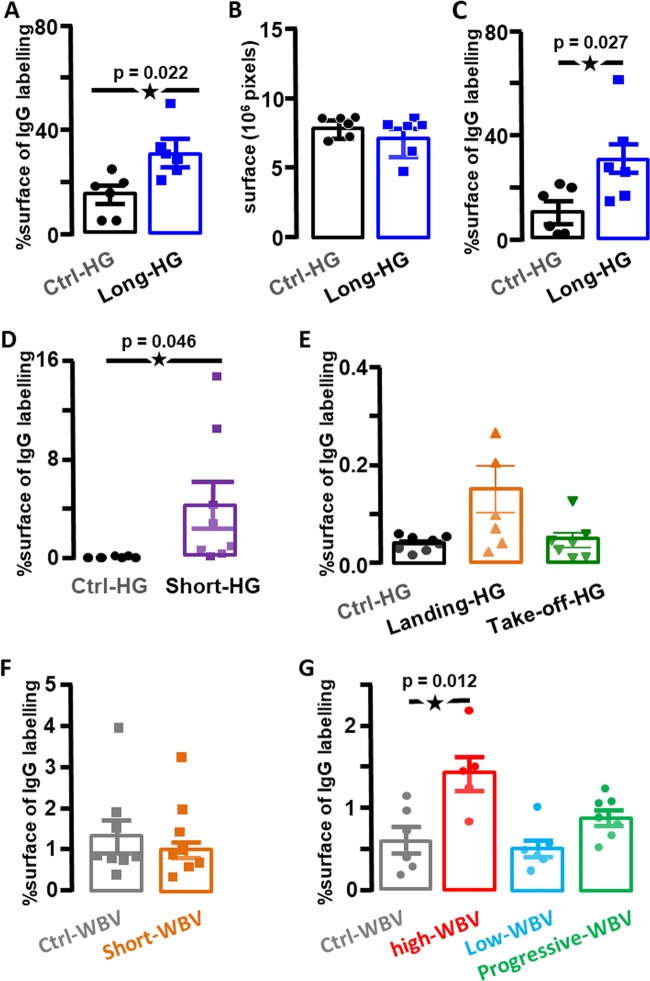
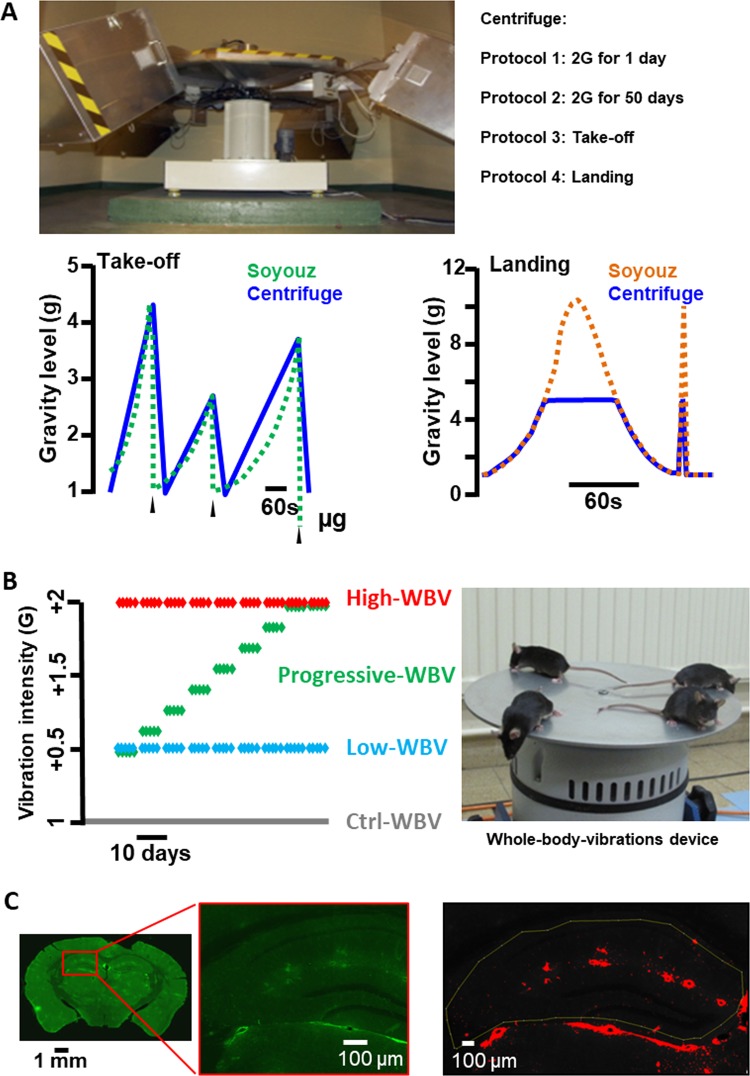
Modifications of gravity levels induce generalized adaptation of mammalian physiology, including vascular, brain, muscle, bone and immunity functions. As a crucial interface between the vascular system and the brain, the blood–brain barrier (BBB) acts as a filter to protect neurons from pathogens and inflammation. Here we compare the effects of several protocols of hypergravity induced by centrifugation and whole-body vibrations (WBV) on BBB integrity. The immunohistochemistry revealed immunoglobulin G (IgG) extravasation from blood to hippocampal parenchyma of mice centrifuged at 2 × g during 1 or 50 days, whereas short exposures to higher hypergravity mimicking the profiles of spaceflight landing and take-off (short exposures to 5 × g) had no effects. These results suggest prolonged centrifugation (>1 days) at 2 × g induced a BBB leakage. Moreover, WBV were similarly tested. The short exposure to +2 × g vibrations (900 s/day at 90 Hz) repeated for 63 days induced IgG extravasation in hippocampal parenchyma, whereas the progressive increase of vibrations from +0.5 to +2 × g for 63 days was not able to affect the IgG crossing through the BBB. Overall, these results suggest that the BBB permeability is sensitive to prolonged external accelerations. In conclusion, we advise that the protocols of WBV and centrifugation, proposed as countermeasure to spaceflight, should be designed with progressively increasing exposure to reduce potential side effects on the BBB.
Overview
The claims and statistics of this paper haven’t been checked yet.
Free: it reads the open-access text and checks the first 5 claims that cite a source we can check. Create a free account to check every claim.
Integrity signals
Registry
Cites
Statistics
Figures
Verification
Claims the paper makes
The claims and statistics of this paper haven’t been checked yet.
Free: it reads the open-access text and checks the first 5 claims that cite a source we can check. Create a free account to check every claim.
Claims other papers make about this one
Each is checked against this paper’s own text: does it say what the citing paper says it does?
The check wasn’t confident either way, so it gives no verdict — never disputed.
In the citing paper
“From a short-term perspective (e.g., a 6-month ISS deployment), SANS presents four main risks to crewmembers and their mission: optic disc edema (ODE), chorioretinal folds, shifts in refractive error, and globe flattening49.”
From Red risks for a journey to the red planet: The highest priority human health risks for a mission to Mars (2020) · cites this paper as [49]
Experimental — accuracy not yet measured
Self-check
Percentages, sums and reported differences re-computed from the paper’s own numbers.
The self-check needs the paper’s full text.
Citations
Cites
Blood-Brain Barrier: From Physiology to Disease and Back
Sweeney, M. D., Zhao, Z., Montagne, A., Nelson, A. R., & Zlokovic, B. V. (2019) · Physiological Reviews · doi:10.1152/physrev.00050.2017 · Cited by 2,312 · cited 2×
“As also proposed in the field of neurodegenerative disorders, an impairment of the BBB is suggested to induce or accelerate the processes of the memory impairments.(17) Our work participates to confirm the link between BBB dysfunction induced by gravity changes and putative memory impairments hypothesized recently,(15…”
BackgroundFriedman, A., Kaufer, D., Shemer, J., Hendler, I., Soreq, H., & Tur-Kaspa, I. (1996) · Nature Medicine · doi:10.1038/nm1296-1382 · Cited by 360
Delp, M. D., Charvat, J. M., Limoli, C. L., Globus, R. K., & Ghosh, P. (2016) · Scientific Reports · doi:10.1038/srep29901 · Cited by 216
The effect of spaceflight and microgravity on the human brain
Van Ombergen, A., Demertzi, A., Tomilovskaya, E., Jeurissen, B., Sijbers, J., Kozlovskaya, I. B., Parizel, P. M., Van de Heyning, P. H., Sunaert, S., Laureys, S., et al. (2017) · Journal of Neurology · doi:10.1007/s00415-017-8427-x · Cited by 175
Centrifugation as a countermeasure during actual and simulated microgravity: a review
Clement, G. R., & Traon, A. P. (2004) · European Journal of Applied Physiology · doi:10.1007/s00421-004-1118-1 · Cited by 154
Lee, J. K., Koppelmans, V., Riascos, R. F., Hasan, K. M., Pasternak, O., Mulavara, A. P., Bloomberg, J. J., & Seidler, R. D. (2019) · JAMA Neurology · doi:10.1001/jamaneurol.2018.4882 · Cited by 149
Brain ventricular volume changes induced by long-duration spaceflight
Van Ombergen, A., Jillings, S., Jeurissen, B., Tomilovskaya, E., Rumshiskaya, A., Litvinova, L., Nosikova, I., Pechenkova, E., Rukavishnikov, I., Manko, O., et al. (2019) · Proceedings of the National Academy of Sciences · doi:10.1073/pnas.1820354116 · Cited by 148
The Impact of Microgravity and Hypergravity on Endothelial Cells
Maier, J. A. M., Cialdai, F., Monici, M., & Morbidelli, L. (2015) · BioMed Research International · doi:10.1155/2015/434803 · Cited by 143
Brain Tissue–Volume Changes in Cosmonauts
Van Ombergen, A., Jillings, S., Jeurissen, B., Tomilovskaya, E., Rühl, R. M., Rumshiskaya, A., Nosikova, I., Litvinova, L., Annen, J., Pechenkova, E. V., et al. (2018) · New England Journal of Medicine · doi:10.1056/nejmc1809011 · Cited by 124
Increased permeability of blood–brain barrier on the hippocampus of a murine model of senescence
Pelegrí, C., Canudas, A. M., del Valle, J., Casadesús, G., Smith, M. A., Camins, A., Pallàs, M., & Vilaplana, J. (2007) · Mechanisms of Ageing and Development · doi:10.1016/j.mad.2007.07.002 · Cited by 108 · cited 1×
“Immunoglobulin G (IgG) extravasation is commonly used as an index of BBB disruption.(19) Because centrifugation and WBV are proposed as countermeasures to microgravity, we have tested several protocols of centrifugation and WBV on the BBB integrity by measuring the presence of immunoglobulins in the hippocampal parenc…”
MethodSharma, H. S., Nyberg, F., Cervós‐Navarro, J., & Dey, P. K. (1992) · Neuroscience · doi:10.1016/0306-4522(92)90436-6 · Cited by 94
Beghdadi, W., Porcherie, A., Schneider, B. S., Dubayle, D., Peronet, R., Huerre, M., Watanabe, T., Ohtsu, H., Louis, J., & Mécheri, S. (2008) · The Journal of Experimental Medicine · doi:10.1084/jem.20071548 · Cited by 88 · cited 1×
“Moreover, the breaking of the BBB has been implicated in the transfer of the malaria parasite into the brain.(18) Immunoglobulin G (IgG) extravasation is commonly used as an index of BBB disruption.”
BackgroundSelf-citationEvans, J. M., Knapp, C. F., & Goswami, N. (2018) · Frontiers in Physiology · doi:10.3389/fphys.2018.00716 · Cited by 73
Blood pressure regulation IV: adaptive responses to weightlessness
Norsk, P. (2014) · European Journal of Applied Physiology · doi:10.1007/s00421-013-2797-2 · Cited by 71
Stress response and humoral immune system alterations related to chronic hypergravity in mice
Guéguinou, N., Bojados, M., Jamon, M., Derradji, H., Baatout, S., Tschirhart, E., Frippiat, J.-P., & Legrand-Frossi, C. (2012) · Psychoneuroendocrinology · doi:10.1016/j.psyneuen.2011.05.015 · Cited by 70 · cited 1×
“The 50-day duration was chosen to match previous longterm studies performed in this centrifuge,(41) while the level of HG of 2 × g was preferred because of its limited effect on stress as revealed by blood corticosterone measurements.(20) To change water and food, the centrifuge was stopped 4 times every 10 days durin…”
MethodMendes, N. F., Pansani, A. P., Carmanhães, E. R. F., Tange, P., Meireles, J. V., Ochikubo, M., Chagas, J. R., da Silva, A. V., de Castro, G. M., & Sueur, L. D. P. L. (2019) · Frontiers in Neurology · doi:10.3389/fneur.2019.00382 · Cited by 66 · cited 2×
“Moreover, if we consider that this leakage is also possible just after 24 h of exposure to 2 × g, we confirm that an alteration of the BBB could be a rapid, localized and reversible process, as recently reported during epileptic seizure.(25) Finally, the BBB leakage induced by gravity changes could be temporary and th…”
BackgroundDysfunctional vestibular system causes a blood pressure drop in astronauts returning from space
Hallgren, E., Migeotte, P.-F., Kornilova, L., Delière, Q., Fransen, E., Glukhikh, D., Moore, S. T., Clément, G., Diedrich, A., MacDougall, H., et al. (2015) · Scientific Reports · doi:10.1038/srep17627 · Cited by 64
Beraneck, M., Bojados, M., Séac’h, A. L., Jamon, M., & Vidal, P. (2012) · PLoS ONE · doi:10.1371/journal.pone.0040414 · Cited by 57 · cited 4×
“Mice were divided into five different groups as follows: —Ctrl-HG (n= 8): controls, not exposed to HG. —Long-HG (n= 8): centrifuged at 2 × g during 50 days.”
ResultInfluentialSelf-citationBellone, J. A., Gifford, P. S., Nishiyama, N. C., Hartman, R. E., & Mao, X. W. (2016) · npj Microgravity · doi:10.1038/npjmgrav.2016.19 · Cited by 55 · cited 7×
“Our study indicates new research pathways to reveal how vestibulo-sympathetic alteration, nature of stress, vascular status and metabolism might synergistically act on the BBB. Finally, although the impairment in memory processes in people exposed to WBV are not clearly demonstrated,32,33 several studies in mice have…”
BackgroundMethodInfluentialStress does not increase blood–brain barrier permeability in mice
Roszkowski, M., & Bohacek, J. (2016) · Journal of Cerebral Blood Flow & Metabolism · doi:10.1177/0271678x16647739 · Cited by 54 · cited 1×
“The role of stress on BBB function is controversial: several types of stress can induce an impairment of the BBB permeability,(28,29) whereas glucocorticoids reinforce the BBB efficacy by increasing the synthesis of tight-junction proteins.(30) Considering all the protocols of our study, we have tested several HG chal…”
BackgroundIs Vibration Training Good for Your Bones? An Overview of Systematic Reviews
Marín-Puyalto, J., Gómez‐Cabello, A., González‐Agüero, A., Gómez‐Bruton, A., Matute-Llorente, Á., Casajús, J. A., & Vicente‐Rodríguez, G. (2018) · BioMed Research International · doi:10.1155/2018/5178284 · Cited by 49 · cited 1×
“In mouse models as in humans, the WBV has been reported to increase bone and muscle recovery after traumatic injury or to reduce the impact of aging.(9,26) Depending on the g level, HG has similar effects on mineral density of bone or muscle phenotypes.”
BackgroundLongitudinal Analysis of Quantitative Brain MRI in Astronauts Following Microgravity Exposure
Riascos, R. F., Kamali, A., Hakimelahi, R., Mwangi, B., Rabiei, P., Seidler, R. D., Behzad, B. B., Keser, Z., Kramer, L. A., & Hasan, K. M. (2019) · Journal of Neuroimaging · doi:10.1111/jon.12609 · Cited by 49
Morel, J., Fritz, N., Lavie, J.-L., & Mironneau, J. (2003) · Arteriosclerosis Thrombosis and Vascular Biology · doi:10.1161/01.atv.0000089013.82552.5d · Cited by 48
Self-citationSofronova, S. I., Tarasova, O. S., Gaynullina, D., Borzykh, A. A., Behnke, B. J., Stabley, J. N., McCullough, D. J., Maraj, J. J., Hanna, M., Muller-Delp, J. M., et al. (2015) · Journal of Applied Physiology · doi:10.1152/japplphysiol.00976.2014 · Cited by 46
Centrifuges for Microgravity Simulation. The Reduced Gravity Paradigm
van Loon, J. J. W. A. (2016) · Frontiers in Astronomy and Space Sciences · doi:10.3389/fspas.2016.00021 · Cited by 45
Wang, Y., Javed, I., Liu, Y., Lu, S., Peng, G., Zhang, Y., Qing, H., & Deng, Y. (2016) · Journal of Proteome Research · doi:10.1021/acs.jproteome.5b00777 · Cited by 43
Centrifugation as a countermeasure during bed rest and dry immersion: What has been learned?
Clement, G. R., Paloski, W. H., Rittweger, J., Linnarsson, D., Bareille, M., Mulder, E. R., Wuyts, F. L., & Zange, J. (2016) · Institutional Repository University of Antwerp (University of Antwerp) · Cited by 42
Wang, T., Chen, H., Lv, K., Ji, G., Zhang, Y., Wang, Y., Li, Y., & Qu, L. (2017) · Journal of Proteomics · doi:10.1016/j.jprot.2017.03.013 · Cited by 40
Lee, M. R., & Jayant, R. D. (2019) · Cell and Tissue Research · doi:10.1007/s00441-018-2959-y · Cited by 38 · cited 1×
“BBB destabilization has been demonstrated to increase the incidence of stroke and neurodegenerative diseases as vascular dementia.(16,17) Moreover, the breaking of the BBB has been implicated in the transfer of the malaria parasite into the brain.”
BackgroundNo Gain No Pain: Relations Between Vestibulo-Ocular Reflexes and Motion Sickness in Mice
Idoux, E., Tagliabue, M., & Beraneck, M. (2018) · Frontiers in Neurology · doi:10.3389/fneur.2018.00918 · Cited by 36
Self-citationGnyubkin, V., Guignandon, A., Laroche, N., Vanden‐Bossche, A., Malaval, L., & Vico, L. (2016) · Journal of Biomechanics · doi:10.1016/j.jbiomech.2016.04.031 · Cited by 35 · cited 6×
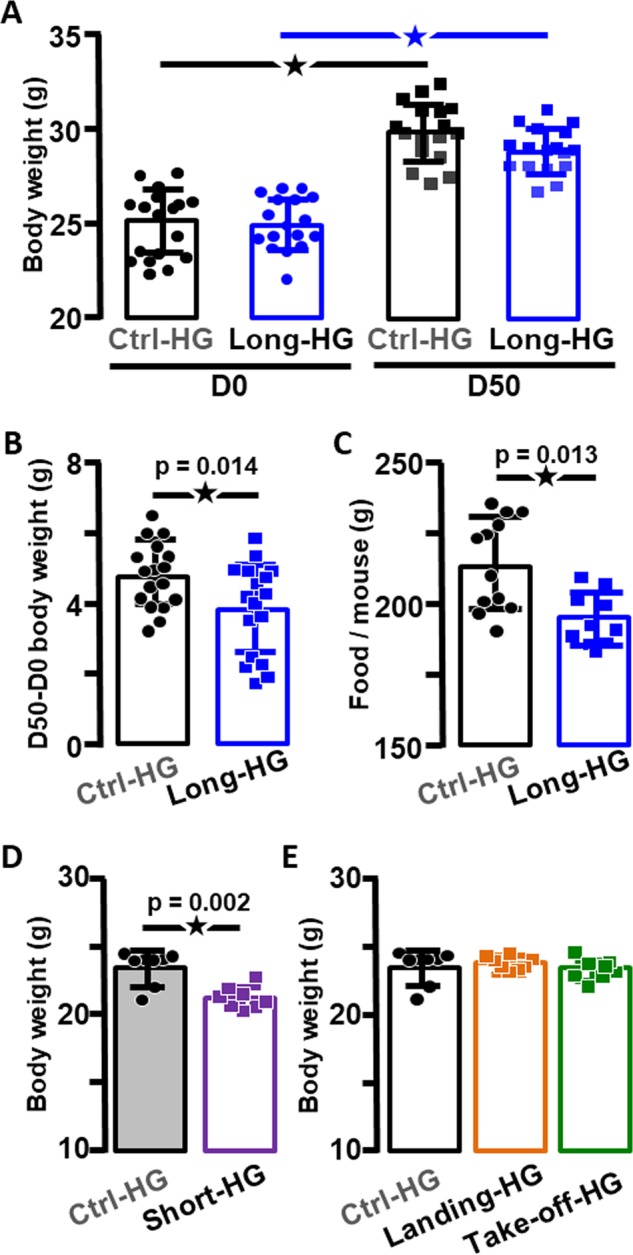
“The exposure to 63 days to WBV did not have any effect on the body weight of mice (as already published in Gnyubkin et al.9), including the Short-WBV group (26.6 ± 0.37 × g, n= 8 versus 27.1 ± 0.59 × g, n= 8 for the Ctrl-WBV group, p= 0.48, not illustrated).”
BackgroundMethodInfluentialSelf-citationEffects of chronic hypergravity: from adaptive to deleterious responses in growing mouse skeleton
Gnyubkin, V., Guignandon, A., Laroche, N., Vanden-Bossche, A., Normand, M., Lafage-Proust, M.-H., & Vico, L. (2015) · Journal of Applied Physiology · doi:10.1152/japplphysiol.00364.2015 · Cited by 30
Self-citationEffects of prolonged head-down bed rest on working memory
Liu, Q., Zhou, R., Zhao, X., & Oei, T. P. S. (2015) · Neuropsychiatric Disease and Treatment · doi:10.2147/ndt.s76292 · Cited by 29
Szulcek, R., van Bezu, J. S. M., Boonstra, J., van Loon, J. J. W. A., & Amerongen, G. P. V. N. (2015) · PLoS ONE · doi:10.1371/journal.pone.0144269 · Cited by 29
Bojados, M., & Jamon, M. (2014) · Behavioural Brain Research · doi:10.1016/j.bbr.2014.01.018 · Cited by 26
Porte, Y., & Morel, J. (2012) · Frontiers in Behavioral Neuroscience · doi:10.3389/fnbeh.2012.00064 · Cited by 26
Self-citationEffect of a 14-day hindlimb suspension on cytosolic Ca2+concentration in rat portal vein myocytes
Morel, J., Boittin, F.-X., Halet, G., Arnaudeau, S., Mironneau, C., & Mironneau, J. (1997) · American Journal of Physiology-Heart and Circulatory Physiology · doi:10.1152/ajpheart.1997.273.6.h2867 · Cited by 26
Self-citationDabertrand, F., Porte, Y., Macrez, N., & Morel, J. (2011) · Journal of Applied Physiology · doi:10.1152/japplphysiol.00733.2011 · Cited by 24
Self-citationBeijer, Å., Degens, H., Weber, T., Rosenberger, A., Gehlert, S., Herrera, F., Kohl‐Bareis, M., Zange, J., Bloch, W., & Rittweger, J. (2014) · Clinical Physiology and Functional Imaging · doi:10.1111/cpf.12180 · Cited by 22
Morel, J., & Porte, Y. (2012) · HAL (Le Centre pour la Communication Scientifique Directe) · Cited by 17
Self-citationPulga, A., Porte, Y., & Morel, J. (2016) · Frontiers in Molecular Neuroscience · doi:10.3389/fnmol.2016.00153 · Cited by 15
Self-citationWhole-body vibration as a potential countermeasure for dynapenia and arterial stiffness
Figueroa, A., Jaime, S. J., & Alvarez‐Alvarado, S. (2016) · Integrative Medicine Research · doi:10.1016/j.imr.2016.06.004 · Cited by 13
Mirzoev, T. M., Tyganov, S. A., Petrova, I. O., Gnyubkin, V., Laroche, N., Vico, L., & Shenkman, B. S. (2017) · Scientific Reports · doi:10.1038/s41598-017-03758-x · Cited by 9 · cited 1×
“Depending on the g level, HG has similar effects on mineral density of bone or muscle phenotypes.(10,27) Our data on BBB opening and body weight show that the effects of daily applications of WBV were different to those observed after continuous centrifugation, suggesting different adaptive mechanisms in both conditio…”
BackgroundSelf-citation
Cited by
Fundamental Biological Features of Spaceflight: Advancing the Field to Enable Deep-Space Exploration
Afshinnekoo, E., Scott, R. T., MacKay, M. J., Pariset, E., Cekanaviciute, E., Barker, R., Gilroy, S., Hassane, D., Smith, S. M., Zwart, S. R., et al. (2020) · Cell · doi:10.1016/j.cell.2020.10.050 · Cited by 478
Patel, Z. S., Brunstetter, T. J., Tarver, W. J., Whitmire, A. M., Zwart, S. R., Smith, S. M., & Huff, J. L. (2020) · npj Microgravity · doi:10.1038/s41526-020-00124-6 · Cited by 373
Microbial applications for sustainable space exploration beyond low Earth orbit
Koehle, A. P., Brumwell, S. L., Seto, E. P., Lynch, A. M., & Urbaniak, C. (2023) · npj Microgravity · doi:10.1038/s41526-023-00285-0 · Cited by 117
Janigro, D., Bailey, D. M., Lehmann, S., Badaut, J., O’flynn, R., Hirtz, C., & Marchi, N. (2021) · Frontiers in Neurology · doi:10.3389/fneur.2020.577312 · Cited by 106
“At the cellular level, microgravity has been associated with a loss of cytoskeletal integrity through dissociation of actin and tubulin bundles (227), and evidence obtained using animal models suggests that BBB disruption may occur during the early phases of unloading induced by suspension or microgravity (228) and du…”
BackgroundPhysiological and Pathological Factors Affecting Drug Delivery to the Brain by Nanoparticles
Islam, Y., Leach, A. G., Smith, J. A., Pluchino, S., Coxon, C. R., Sivakumaran, M., Downing, J. E., Fatokun, A. A., Teixidò, M., & Ehtezazi, T. (2021) · Advanced Science · doi:10.1002/advs.202002085 · Cited by 57
Metadata
- Authors
- Dubayle, D., Vanden-Bossche, A., Beraneck, M., Vico, L., & Morel, J.-L.
- Affiliations
- Centre National de la Recherche Scientifique (FR)
- Inserm (FR)
- Corresponding author
- Morel, Jean-Luc
- Venue
- npj Microgravity
- Published
- 2020-01-07
- Volume
- 6
- Issue
- 1
- Pages
- 1-1
- ISSN
- 2373-8065 (ISSN-L)
- PMC
- PMC6946672
- OpenAlex
- W2999585543
- Semantic Scholar
- 2d794c9dd396647122fcd60ac13e62d0886a01c3
- Cited by
- 44
- References
- 43
- Citations by year
- 2026: 2 · 2025: 5 · 2024: 6 · 2023: 9 · 2022: 5 · 2021: 14 · 2020: 3
- FWCI
- 4.66
- Type
- journal article
- Language
- en
- Open access
- gold
- doi.org
- Licence
- cc-by
- creativecommons.org/licenses/by/4.0 (tdm)
- creativecommons.org/licenses/by/4.0 (vor)
- Locations
- npj Microgravity (publishedVersion, cc-by)
- Europe PMC (PubMed Central) (publishedVersion, cc-by)
- PubMed Central (publishedVersion, cc-by)
- PubMed (publishedVersion)
- HAL (submittedVersion)
- HAL (submittedVersion, other-oa)
- DOAJ (DOAJ: Directory of Open Access Journals) (submittedVersion)
- Funders
- Agence Nationale de la Recherche (ANR-09-BLAN-0148)
- Centre National d'Etudes Spatiales
- Centre National de la Recherche Scientifique
- Université de Bordeaux
- Université Paris Descartes
- Institut National de la Santé et de la Recherche Médicale
- Université de Lyon
- Topics
- Health Sciences › Medicine › Physiology (medical) › Spaceflight effects on biology
- Life Sciences › Neuroscience › Neurology › Barrier Structure and Function Studies
- Health Sciences › Medicine › Orthopedics and Sports Medicine › Effects of Vibration on Health
- Keywords
- blood-brain barrier permeability, hypergravity, centrifugation, whole-body vibration, hippocampus, spaceflight countermeasures, gravity adaptation, microgravity
About these checks
Registry, retraction, Cites and statistics results are computed, not judged, with one exception: a printed reference that no index lists is read once by a model before it counts as a citation error. Claims are extracted by a model and kept only when their quote appears verbatim in the text; each cited source is then checked, with a model’s help, for whether it says what the claim relies on. Those verdicts can be wrong — read the claim’s quote and the cited source before relying on one.
Statistics and arithmetic are recomputed, not judged.
Confidence bands are shown only for fields calibrated on our annotated test set. None is calibrated yet, so no band is shown.
What counts as a claim ›How we measure confidence ›How we check this ›
Are you an author, or do you see a problem with this page? Request a review
Data sources
Bibliographic data: Semantic Scholar, OpenAlex, Crossref.
Contains information from the Semantic Scholar Academic Graph Datasets, made available under the ODC Attribution License (ODC-BY 1.0).
Semantic Scholar’s data is described in: Kinney, R., et al. (2023). The Semantic Scholar Open Data Platform. arXiv:2301.10140.
