

Towards sustainable human space exploration—priorities for radiation research to quantify and mitigate radiation risks
Open accessThe DOI matches its Crossref record; 48 of the 49 references it cites were found in a registry or an index; 18 of the 35 sources its claims cite were checked for support.
Abstract
Human spaceflight is entering a new era of sustainable human space exploration. By 2030 humans will regularly fly to the Moon's orbit, return to the Moon's surface and preparations for crewed Mars missions will intensify. In planning these undertakings, several challenges will need to be addressed in order to ensure the safety of astronauts during their space travels. One of the important challenges to overcome, that could be a major showstopper of the space endeavor, is the exposure to the space radiation environment. There is an urgent need for quantifying, managing and limiting the detrimental health risks and electronics damage induced by space radiation exposure. Such risks raise key priority topics for space research programs. Risk limitation involves obtaining a better understanding of space weather phenomena and the complex radiation environment in spaceflight, as well as developing and applying accurate dosimetric instruments, understanding related short- and long-term health risks, and strategies for effective countermeasures to minimize both exposure to space radiation and the remaining effects post exposure. The ESA/SciSpacE Space Radiation White Paper identifies those topics and underlines priorities for future research and development, to enable safe human and robotic exploration of space beyond Low Earth Orbit.
Overview
CoChat Summary
TL;DR
This paper is a white-paper-style overview of radiation priorities for sustainable human and robotic space exploration beyond Low Earth Orbit. It argues that safe Moon and Mars missions require better measurement, forecasting, dosimetry, risk modeling, and both physical and biological countermeasures against galactic cosmic rays and solar particle events.
Key findings
- Deep-space missions will face a harsher radiation environment than the ISS, with Galactic Cosmic Rays and Solar Particle Events; a full Mars mission is described as having dose estimates that exceed most agency limits of 0.6–1 Sv.
- The paper reports that a 1000-day Mars mission with an effective dose of about 1 Sv at age 40 would reduce the probability of surviving free of all solid cancer and leukemia until age 65 by 4.2% (95% CI: 3.2; 5.3) for males and 5.8% (95% CI: 4.8; 7.0) for females.
- It states astronauts in the ISS receive about 0.5–1 mSv/day, while the RAD instrument measured 1.84 mSv/day in free space for Mars-mission-relevant GCR and an estimated 0.64 mSv/day on the Martian surface.
- For a 1000-day Mars mission, astronauts may accrue about ~1 Sv in chronic exposure, and a large unpredicted SPE during EVA could deliver ~2 Gy within several hours or days.
Methods
- Not stated in the paper.
- The paper synthesizes previously published measurements, simulation work, epidemiology, animal and cell studies, and ESA/SciSpacE white-paper priorities rather than reporting a new experiment or cohort.
- It discusses an ESA radiation risk module and compares it conceptually with the NASA Space Cancer Risk Model, including Monte Carlo uncertainty propagation in the ESA approach.
Limitations
- The paper states that major uncertainty remains because knowledge of the biological mechanisms and effects, especially of very heavy ions, is insufficient.
- It says astronaut cancer studies are limited by a small cohort, mostly short LEO missions and Apollo missions, long latency, low statistics, and low doses, which preclude assessing ISS missions of about half a year.
- Evident from the text: this is a perspective/white-paper summary, so its recommendations are not based on a single new dataset or direct experimental test.
Model-written summary. Check it against the paper before relying on it.
Integrity signals
Registry
Cites
Statistics
Figures
Verification
Claims the paper makes
16 Valid · 4 Not valid · 12 Not checked · 24 Own results and interpretations
The cited sources support only part of this claim — read each source’s verdict below.
In the paper
“Based on these dose rates, which are mainly delivered by GCR and can be further increased by potential SPEs, the current estimates for a full Mars mission are critically high, exceeding most space agency limits that are set at 0.6–1 Sv38.”
§ Towards sustainable human space exploration—priorities for radiation research to quantify and mitigate radiation risks > Risk mitigation: physics
What the sources say
- Partly supportedcites [38] Boscolo D Durante M Dose limits and countermeasures for mitigating radiation risk in moon and Mars exploration Physics 2022 4 172 184 sourceExperimental — accuracy not yet measured
Section 3 (ICRP; page not provided) says a Mars mission would approach 1 Sv and that essentially no NASA astronauts could join under the limits discussed, while ESA and RSA astronauts would be close to their maximum dose. Sections 2.2–2.3 give the RSA and ESA limits as 1 Sv. The source therefore supports the dose concern and the approximate 0.6–1 Sv limits, but not the claim that a full Mars mission would exceed most agencies’ limits; it also cautions that no agency had established limits for missions beyond low Earth orbit. (LLM, conf=0.88)
plain- Asserted: passes — The authors put it forward as true.
- Checkable: passes — It can be checked against evidence.
- Load-bearing: passes — The paper’s conclusions depend on it.
- Based: passes — The paper gives a reason why it holds.
- Partly supported
The cited sources support only part of this claim — read each source’s verdict below.
In the paper
“In this dose range, acute radiation syndrome with the hematopoietic system as main target can be expected31.”
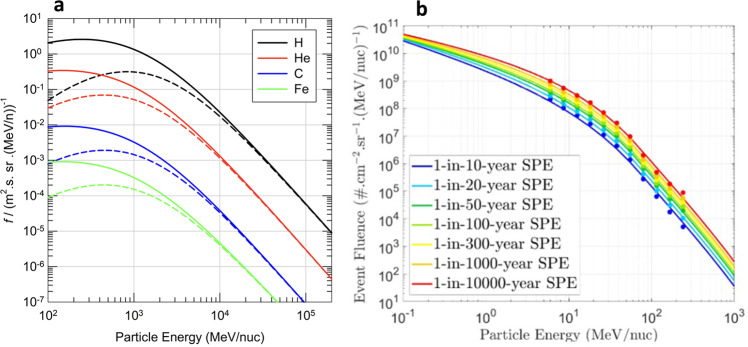
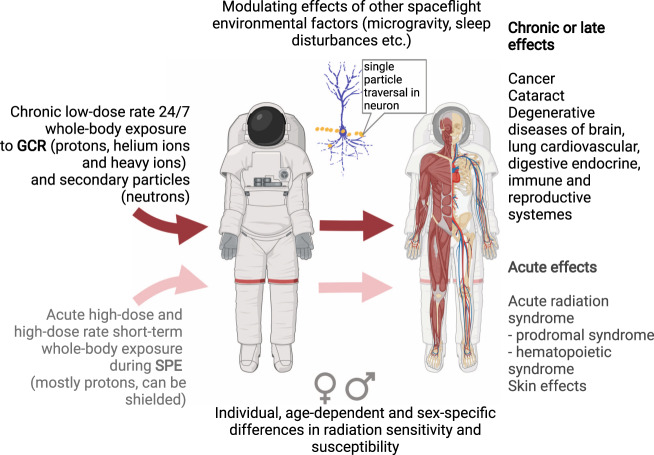
§ Towards sustainable human space exploration—priorities for radiation research to quantify and mitigate radiation risks > Radiation risks During deep space exploration, astronauts experience a chronic, low-dose-rate whole-body exposure to GCR (Fig. 2), which can accrue to ~1 Sv during a 1000-day Mars mission13–15. Due to the physical properties of the particle radiation and the heavy ion component of the exposure, high doses can be reached at a microscopic level, resulting in complex, difficult to repair DNA damages. Unrepaired or misrepaired DNA lesions are responsible for cell death and mutations and eventually late effects such as cancer16 or normal tissue degenerative processes including cardiovascular disease17 or central nervous system (CNS) damage18. Increased cancer risk is the endpoint generally considered in assessing the lifetime exposure limits in LEO19,20. The attempts to understand the space radiation-induced cancer risk encompass multiple levels:Cancer mortality studies among astronauts: The cohort is small, and the current studies cover mostly short missions in LEO and the Apollo missions. The long latency periods, low statistics, and low doses preclude currently the assessment of the effect of the ISS missions of ~ half a year duration. Furthermore, a strong healthy worker effect21 was observed in the NASA Longitudinal Study of Astronaut Health, masking possible radiation-induced cancer risks22. In fact, even if there is an apparent increase in melanoma and prostate cancer, this is likely to result from increased cancer screening.Exposure of animals (wildtype and genetically altered rodent models, mostly mice) to space-relevant radiation qualities experiments and follow-up of cancer induction, and mechanistic studies at molecular, cellular, tissue, organ, or organismal level. The relative biological effectiveness (RBE) for cancer induction by a specific GCR component, e.g., iron or silicon ions, can be the result of such studies. Such RBE values are helpful to extrapolate cancer risk from larger radiation-exposed populations (the atomic bomb survivors are the most prominent example) which experienced acute radiation exposure (mostly γ-rays, also neutrons) to GCR-exposed astronauts. Rather than studying single ions it is now possible to simulate the full GCR spectrum on Earth both in USA23 and European24 accelerators and this will pave the way to realistic RBE estimation of the full GCR. In addition, experiments to quantify the effect of low dose rates as expected for GCR-exposure compared to the high-dose rate exposure by the atomic bombs are performed to determine the dose-rate reduction factor, but these experiments are almost impossible at particle accelerators as they would require long exposure times. The uncertainties of cancer risk assessment are still unacceptably high25.Spaceflight experiments using different biological models help to clarify the role of other space environmental factors such as microgravity in the modulation of GCR-induced cancer risk. A cell hit by an energetic particle experiences DNA damage that might be mis- or unrepaired as well as induce changes in gene expression depending on the dose and the linear energy transfer of the heavy ions26. These changes can be perpetuated by epigenetic alterations, high oxidative stress levels27 and senescence. Damage can be transmitted in the progeny of irradiated cells and chromosomal instability can occur28. These might contribute to carcinogenesis and could be the basis for late degenerative processes in several organs. Currently, CNS, eye lens, lung, cardiovascular, digestive, endocrine and immune systems, and the reproductive organs are considered to be at risk for space radiation-induced degenerative processes. Calculations suggest that for a three-year mission to Mars at a solar minimum, 2–13% of the “critical sites” of cells in the CNS would be directly hit at least once by iron ions, and roughly 20 million out of 43 million hippocampal cells and 230,000 out of 1.8 million thalamus cell nuclei would be directly hit by one or more particles with Z > 15 on such a mission29—in combination with the extremely low regenerative potential of the brain, this is a reason for concern. Also, earlier or more frequent cataract formation was observed in astronauts on higher inclination LEO missions30. The RBEs of heavy ions for these endpoints are scarcely known. Further accelerator-based studies are required to include the risk of degenerative diseases in the space radiation risk assessment. In case of a large, unpredicted SPEs and a low shielding situation (e.g., during an EVA), astronauts can experience an acute whole-body exposure to energetic protons and accumulate high skin doses and effective doses of ~2 Gy within several hours or days. In this dose range, acute radiation syndrome with the hematopoietic system as main target can be expected31. Such exposures have to be prevented by the space weather forecast, nowcast, active dosimetry, and appropriate shielding. SPEs, therefore, mainly represent an operational medical problem, but can contribute to the late health risk if shielding does not reduce the accumulated dose to a negligible level.
What the sources say
- Partly supportedcites [31] Carnell LS Spaceflight medical countermeasures: a strategic approach for mitigating effects from solar particle events Int. J. Radiat. Biol. 2021 97 S125 S131 32946313 sourceExperimental — accuracy not yet measured
The “Treatments for hematopoietic acute radiation syndrome (H-ARS)” section says H-ARS can occur at relatively low doses and that bone marrow may be compromised at doses as low as 0.5 Gy. It describes H-ARS as a concern, however, rather than establishing that it can be expected throughout the unspecified dose range in the citing sentence. The supplied copy does not give a page number for this passage. (LLM, conf=0.82)
plainstates a cause- Asserted: passes — The authors put it forward as true.
- Checkable: passes — It can be checked against evidence.
- Load-bearing: passes — The paper’s conclusions depend on it.
- Based: passes — The paper gives a reason why it holds.
- Partly supported
The cited sources support only part of this claim — read each source’s verdict below.
In the paper
“The uncertainties of cancer risk assessment are still unacceptably high25.”
§ Towards sustainable human space exploration—priorities for radiation research to quantify and mitigate radiation risks > Radiation risks During deep space exploration, astronauts experience a chronic, low-dose-rate whole-body exposure to GCR (Fig. 2), which can accrue to ~1 Sv during a 1000-day Mars mission13–15. Due to the physical properties of the particle radiation and the heavy ion component of the exposure, high doses can be reached at a microscopic level, resulting in complex, difficult to repair DNA damages. Unrepaired or misrepaired DNA lesions are responsible for cell death and mutations and eventually late effects such as cancer16 or normal tissue degenerative processes including cardiovascular disease17 or central nervous system (CNS) damage18. Increased cancer risk is the endpoint generally considered in assessing the lifetime exposure limits in LEO19,20. The attempts to understand the space radiation-induced cancer risk encompass multiple levels:Cancer mortality studies among astronauts: The cohort is small, and the current studies cover mostly short missions in LEO and the Apollo missions. The long latency periods, low statistics, and low doses preclude currently the assessment of the effect of the ISS missions of ~ half a year duration. Furthermore, a strong healthy worker effect21 was observed in the NASA Longitudinal Study of Astronaut Health, masking possible radiation-induced cancer risks22. In fact, even if there is an apparent increase in melanoma and prostate cancer, this is likely to result from increased cancer screening.Exposure of animals (wildtype and genetically altered rodent models, mostly mice) to space-relevant radiation qualities experiments and follow-up of cancer induction, and mechanistic studies at molecular, cellular, tissue, organ, or organismal level. The relative biological effectiveness (RBE) for cancer induction by a specific GCR component, e.g., iron or silicon ions, can be the result of such studies. Such RBE values are helpful to extrapolate cancer risk from larger radiation-exposed populations (the atomic bomb survivors are the most prominent example) which experienced acute radiation exposure (mostly γ-rays, also neutrons) to GCR-exposed astronauts. Rather than studying single ions it is now possible to simulate the full GCR spectrum on Earth both in USA23 and European24 accelerators and this will pave the way to realistic RBE estimation of the full GCR. In addition, experiments to quantify the effect of low dose rates as expected for GCR-exposure compared to the high-dose rate exposure by the atomic bombs are performed to determine the dose-rate reduction factor, but these experiments are almost impossible at particle accelerators as they would require long exposure times. The uncertainties of cancer risk assessment are still unacceptably high25.Spaceflight experiments using different biological models help to clarify the role of other space environmental factors such as microgravity in the modulation of GCR-induced cancer risk. A cell hit by an energetic particle experiences DNA damage that might be mis- or unrepaired as well as induce changes in gene expression depending on the dose and the linear energy transfer of the heavy ions26. These changes can be perpetuated by epigenetic alterations, high oxidative stress levels27 and senescence. Damage can be transmitted in the progeny of irradiated cells and chromosomal instability can occur28. These might contribute to carcinogenesis and could be the basis for late degenerative processes in several organs. Currently, CNS, eye lens, lung, cardiovascular, digestive, endocrine and immune systems, and the reproductive organs are considered to be at risk for space radiation-induced degenerative processes. Calculations suggest that for a three-year mission to Mars at a solar minimum, 2–13% of the “critical sites” of cells in the CNS would be directly hit at least once by iron ions, and roughly 20 million out of 43 million hippocampal cells and 230,000 out of 1.8 million thalamus cell nuclei would be directly hit by one or more particles with Z > 15 on such a mission29—in combination with the extremely low regenerative potential of the brain, this is a reason for concern. Also, earlier or more frequent cataract formation was observed in astronauts on higher inclination LEO missions30. The RBEs of heavy ions for these endpoints are scarcely known. Further accelerator-based studies are required to include the risk of degenerative diseases in the space radiation risk assessment. In case of a large, unpredicted SPEs and a low shielding situation (e.g., during an EVA), astronauts can experience an acute whole-body exposure to energetic protons and accumulate high skin doses and effective doses of ~2 Gy within several hours or days. In this dose range, acute radiation syndrome with the hematopoietic system as main target can be expected31. Such exposures have to be prevented by the space weather forecast, nowcast, active dosimetry, and appropriate shielding. SPEs, therefore, mainly represent an operational medical problem, but can contribute to the late health risk if shielding does not reduce the accumulated dose to a negligible level.
What the sources say
- Partly supportedcites [25] Cucinotta FA Cacao E Kim M-HY Saganti PB Benchmarking risk predictions and uncertainties in the NSCR model of GCR cancer risks with revised low let risk coefficients Life Sci. Space Res. 2020 27 64 73 34756232 sourceExperimental — accuracy not yet measured
The Conclusions (page unavailable) identify major remaining uncertainties in predicting cancer risk from high-LET space radiation and call for studies to reduce them. The claim broadens this to cancer risk assessment generally and calls the uncertainties “unacceptably high”; the same section says uncertainties for low-LET total solid cancer and leukemia risks are now modest. (LLM, conf=0.84)
plain- Asserted: passes — The authors put it forward as true.
- Checkable: passes — It can be checked against evidence.
- Load-bearing: passes — The paper’s conclusions depend on it.
- Based: passes — The paper gives a reason why it holds.
- Partly supported
Every source the paper cites for this claim was checked and supports it.
In the paper
“Increased cancer risk is the endpoint generally considered in assessing the lifetime exposure limits in LEO19,20.”
§ Towards sustainable human space exploration—priorities for radiation research to quantify and mitigate radiation risks > Radiation risks During deep space exploration, astronauts experience a chronic, low-dose-rate whole-body exposure to GCR (Fig. 2), which can accrue to ~1 Sv during a 1000-day Mars mission13–15. Due to the physical properties of the particle radiation and the heavy ion component of the exposure, high doses can be reached at a microscopic level, resulting in complex, difficult to repair DNA damages. Unrepaired or misrepaired DNA lesions are responsible for cell death and mutations and eventually late effects such as cancer16 or normal tissue degenerative processes including cardiovascular disease17 or central nervous system (CNS) damage18. Increased cancer risk is the endpoint generally considered in assessing the lifetime exposure limits in LEO19,20. The attempts to understand the space radiation-induced cancer risk encompass multiple levels:Cancer mortality studies among astronauts: The cohort is small, and the current studies cover mostly short missions in LEO and the Apollo missions. The long latency periods, low statistics, and low doses preclude currently the assessment of the effect of the ISS missions of ~ half a year duration. Furthermore, a strong healthy worker effect21 was observed in the NASA Longitudinal Study of Astronaut Health, masking possible radiation-induced cancer risks22. In fact, even if there is an apparent increase in melanoma and prostate cancer, this is likely to result from increased cancer screening.Exposure of animals (wildtype and genetically altered rodent models, mostly mice) to space-relevant radiation qualities experiments and follow-up of cancer induction, and mechanistic studies at molecular, cellular, tissue, organ, or organismal level. The relative biological effectiveness (RBE) for cancer induction by a specific GCR component, e.g., iron or silicon ions, can be the result of such studies. Such RBE values are helpful to extrapolate cancer risk from larger radiation-exposed populations (the atomic bomb survivors are the most prominent example) which experienced acute radiation exposure (mostly γ-rays, also neutrons) to GCR-exposed astronauts. Rather than studying single ions it is now possible to simulate the full GCR spectrum on Earth both in USA23 and European24 accelerators and this will pave the way to realistic RBE estimation of the full GCR. In addition, experiments to quantify the effect of low dose rates as expected for GCR-exposure compared to the high-dose rate exposure by the atomic bombs are performed to determine the dose-rate reduction factor, but these experiments are almost impossible at particle accelerators as they would require long exposure times. The uncertainties of cancer risk assessment are still unacceptably high25.Spaceflight experiments using different biological models help to clarify the role of other space environmental factors such as microgravity in the modulation of GCR-induced cancer risk. A cell hit by an energetic particle experiences DNA damage that might be mis- or unrepaired as well as induce changes in gene expression depending on the dose and the linear energy transfer of the heavy ions26. These changes can be perpetuated by epigenetic alterations, high oxidative stress levels27 and senescence. Damage can be transmitted in the progeny of irradiated cells and chromosomal instability can occur28. These might contribute to carcinogenesis and could be the basis for late degenerative processes in several organs. Currently, CNS, eye lens, lung, cardiovascular, digestive, endocrine and immune systems, and the reproductive organs are considered to be at risk for space radiation-induced degenerative processes. Calculations suggest that for a three-year mission to Mars at a solar minimum, 2–13% of the “critical sites” of cells in the CNS would be directly hit at least once by iron ions, and roughly 20 million out of 43 million hippocampal cells and 230,000 out of 1.8 million thalamus cell nuclei would be directly hit by one or more particles with Z > 15 on such a mission29—in combination with the extremely low regenerative potential of the brain, this is a reason for concern. Also, earlier or more frequent cataract formation was observed in astronauts on higher inclination LEO missions30. The RBEs of heavy ions for these endpoints are scarcely known. Further accelerator-based studies are required to include the risk of degenerative diseases in the space radiation risk assessment. In case of a large, unpredicted SPEs and a low shielding situation (e.g., during an EVA), astronauts can experience an acute whole-body exposure to energetic protons and accumulate high skin doses and effective doses of ~2 Gy within several hours or days. In this dose range, acute radiation syndrome with the hematopoietic system as main target can be expected31. Such exposures have to be prevented by the space weather forecast, nowcast, active dosimetry, and appropriate shielding. SPEs, therefore, mainly represent an operational medical problem, but can contribute to the late health risk if shielding does not reduce the accumulated dose to a negligible level.
What the sources say
- Supportedcites [19] Walsh L Research plans in Europe for radiation health hazard assessment in exploratory space missions Life Sci. Space Res. 2019 21 73 82 31101157 source
The Introduction describes career exposure limits for astronauts in LEO as targeting stochastic effects. Table 1 specifically says the NASA and JAXA limits are based on a maximum risk of exposure-induced death from cancer, supporting the claim that cancer risk is generally considered; it does not say every agency uses the same cancer-risk criterion. (LLM, conf=0.88)
- Supportedcites [20] Simonsen LC Slaba TC Improving astronaut cancer risk assessment from space radiation with an ensemble model framework Life Sci. Space Res. 2021 31 14 28 34689946 source
Section III.I.I, “Space radiation permissible exposure limits,” states that limits for low Earth orbit are defined by a maximum risk of exposure-induced death from cancer mortality over an astronaut’s career. This directly supports the claim that cancer risk is the endpoint considered for lifetime exposure limits in LEO. (LLM, conf=0.94)
plain- Asserted: passes — The authors put it forward as true.
- Checkable: passes — It can be checked against evidence.
- Load-bearing: unclear — It is unclear whether the paper’s conclusions depend on it.
- Based: passes — The paper gives a reason why it holds.
- Supported
The sources with a verdict support this claim; the rest weren’t checked yet, have no full text we could read, or their verdicts aren’t rated yet.
In the paper
“In contrast, the ESA module fully accounts for the published uncertainties in β and the uncertainties on the attained age and age at exposure risk effect modifiers via Monte-Carlo simulation, considering all the correlations between these quantities (see e.g.,34,36).”
§ Towards sustainable human space exploration—priorities for radiation research to quantify and mitigate radiation risks > Risk estimations
What the sources say
- Supportedcites [34] Hafner L Walsh L Schneider U Cancer incidence risks above and below 1 Gy for radiation protection in space Life Sci. Space Res. 2021 28 41 56 33612179 source
Section 2.8 (Uncertainties; page not provided) says the dose-response and risk-effect-modifier fit parameters are sampled in Monte Carlo simulations using their covariance matrix. Section 2.2 identifies β as the dose-response slope and the age-at-exposure and attained-age modifiers; the reported covariance matrices include their cross-terms. The paper notes that uncertainties not published for the NCM and ARM models could not be included, which does not conflict with the claim about published uncertainties. (LLM, conf=0.88)
- Not checked — no full text of the sourcecites [36] Committee on Assessment of Strategies for Managing Cancer Risks Associated with Radiation Exposure During Crewed Space Missions, et al. Space Radiation and Astronaut Health: Managing and Communicating Cancer Risks. 26155 (National Academies Press, 2021). 10.17226/26155. source
plain- Asserted: passes — The authors put it forward as true.
- Checkable: passes — It can be checked against evidence.
- Load-bearing: passes — The paper’s conclusions depend on it.
- Based: passes — The paper gives a reason why it holds.
- Supported
23 more claims · 3 with their cited sources checked
Create a free account to see all 56 claims and to verify the 1 reference still open.
- It may state two separate claims as one. 16
- Probably not a substantial claim. 12
Citations
Cites
Mars' surface radiation environment measured with the Mars Science Laboratory's Curiosity rover
Hassler, D. M., Zeitlin, C., Wimmer-Schweingruber, R. F., Ehresmann, B., Rafkin, S., Eigenbrode, J. L., Brinza, D. E., Weigle, G., Böttcher, S., Böhm, E., et al. (2014) · Science · doi:10.1126/science.1244797 · Cited by 727
Self-citationMeasurements of energetic particle radiation in transit to Mars on the Mars Science Laboratory
Zeitlin, C., Hassler, D. M., Cucinotta, F. A., Ehresmann, B., Wimmer-Schweingruber, R. F., Brinza, D. E., Kang, S., Weigle, G., Böttcher, S., Böhm, E., et al. (2013) · Science · doi:10.1126/science.1235989 · Cited by 641
Heavy ion carcinogenesis and human space exploration
Durante, M., & Cucinotta, F. A. (2008) · Nature Reviews Cancer · doi:10.1038/nrc2391 · Cited by 578
Self-citationPhysical basis of radiation protection in space travel
Durante, M., & Cucinotta, F. A. (2011) · Reviews of Modern Physics · doi:10.1103/revmodphys.83.1245 · Cited by 528
Self-citationSpace Radiation and Cataracts in Astronauts
Cucinotta, F. A., Manuel, F. K., Jones, J., Iszard, G., Murrey, J., Djojonegro, B., & Wear, M. (2001) · Radiation Research · doi:10.1667/0033-7587(2001)156[0460:sracia]2.0.co;2 · Cited by 391
Space Radiation Cancer Risks and Uncertainties for Mars Missions
Cucinotta, F. A., Schimmerling, W., Wilson, J. W., Peterson, L. E., Badhwar, G. D., Saganti, P. B., & Dicello, J. F. (2001) · Radiation Research · doi:10.1667/0033-7587(2001)156[0682:srcrau]2.0.co;2 · Cited by 328
Simonsen, L. C., Slaba, T. C., Guida, P., & Rusek, A. (2020) · PLOS Biology · doi:10.1371/journal.pbio.3000669 · Cited by 263
Heart in space: effect of the extraterrestrial environment on the cardiovascular system
Hughson, R. L., Helm, A., & Durante, M. (2018) · Nature Reviews Cardiology · doi:10.1038/nrcardio.2017.157 · Cited by 257
Self-citationFirst measurements of the radiation dose on the lunar surface
Zhang, S., Wimmer-Schweingruber, R. F., Yu, J., Wang, C., Fu, Q., Zou, Y., Sun, Y., Wang, C., Hou, D., Böttcher, S. I., et al. (2020) · Science Advances · doi:10.1126/sciadv.aaz1334 · Cited by 184
A ready-to-use galactic cosmic ray model
Matthiä, D., Berger, T., Mrigakshi, A. I., & Reitz, G. (2013) · Advances in Space Research · doi:10.1016/j.asr.2012.09.022 · Cited by 172
Self-citation
Cited by
Sawik, B. (2023) · Sustainability · doi:10.3390/su151411002 · Cited by 56
“Risk analysis techniques [70], contingency planning, and reliability assessments are employed to minimize the likelihood of mission failure [71].”
Shavers, M., Semones, E., Tomi, L., Chen, J., Straube, U., Komiyama, T., Shurshakov, V., Li, C., & Rühm, W. (2024) · Zeitschrift für Medizinische Physik · doi:10.1016/j.zemedi.2023.06.005 · Cited by 41
“ESA roadmap for space radiation research includes spaceflight and ground-based experiments, as well as risk modelling studies [25,26].”
BackgroundSelf-citationEvaluation of deep space exploration risks and mitigations against radiation and microgravity
Dobney, W., Mols, L., Mistry, D., Tabury, K., Baselet, B., & Baatout, S. (2023) · Frontiers in Nuclear Medicine · doi:10.3389/fnume.2023.1225034 · Cited by 86
Self-citationMetal halide perovskite polymer composites for indirect X-ray detection
Saiji, S. J., Tang, Y., Wu, S.-T. T., Stand, L., Tratsiak, Y. V., & Dong, Y. (2024) · Nanoscale · doi:10.1039/d4nr02716g · Cited by 30
Design of thick-panel origami-inspired deployable protective shields for spacecraft
Zhang, X., Gao, C., Chen, W., et al. (2024) · Thin-Walled Structures · doi:10.1016/j.tws.2024.112069 · Cited by 27
Synthetic biology for space exploration
Onofri, S., Moeller, R., Billi, D., Balsamo, M., Becker, A., Benvenuto, E., Cassaro, A., Catanzaro, I., Cockell, C. S., Desiderio, A., et al. (2025) · npj Microgravity · doi:10.1038/s41526-025-00488-7 · Cited by 29
“To protectthe astronauts, radiation protectionmeasuresand radiation damage mitigation strategies are being developed 89 .”
Hosseinzadeh, P., Boubrahimi, S. F., & Hamdi, S. M. (2024) · The Astrophysical Journal Supplement Series · doi:10.3847/1538-4365/ad1de0 · Cited by 29
Bioprinting of Cardiac Tissue in Space: Where Are We?
Tabury, K., Rehnberg, E., Baselet, B., Baatout, S., & Moroni, L. (2023) · Advanced Healthcare Materials · doi:10.1002/adhm.202203338 · Cited by 20
Self-citationArchitectural approach for evaluation of radiation shielding integration in space habitats
Bannova, O., & Gulacsi, E. (2024) · Acta Astronautica · doi:10.1016/j.actaastro.2024.04.022 · Cited by 14
Hosseinzadeh, P., Boubrahimi, S. F., & Hamdi, S. M. (2024) · Space Weather · doi:10.1029/2024sw003982 · Cited by 13
“These particles, when they interact with astronauts, present health risks such as cancer and skin reactions (Fogtman et al., 2023; Simonsen & Slaba, 2021; Walsh et al., 2019).”
BackgroundBarchetti, K., Derobertmasure, A., Boutouyrie, P., & Sestili, P. (2024) · Frontiers in Space Technologies · doi:10.3389/frspt.2024.1456614 · Cited by 17
Spaceflight Induces Strength Decline in Caenorhabditis elegans
Soni, P., Edwards, H., Anupom, T., Rahman, M., Lesanpezeshki, L., Bławzdziewicz, J., Cope, H., Gharahdaghi, N., Scott, D., Toh, L. S., et al. (2023) · Cells · doi:10.3390/cells12202470 · Cited by 13
“These hazards include distance from Earth, confinement, being in a hostile and closed environment, altered gravity, and increased and altered radiation exposure [12–14].”
BackgroundPredicting the Energetic Proton Flux with a Machine Learning Regression Algorithm
Stumpo, M., Laurenza, M., Benella, S., & Marcucci, M. F. (2024) · The Astrophysical Journal · doi:10.3847/1538-4357/ad7734 · Cited by 15
“The need of forecasting systems or at least monitoring of the radiation environment is increasingly growing also in view of the new era of sustainable human space exploration (e.g. Moon and Mars; Zhang et al. 2023; Fogtman et al. 2023).”
Backgroundde Oliveira, D. M., Allen, R. C., Alves, L. R., Blake, S. P., Carter, B. A., Chakrabarty, D., D’Angelo, G., Delano, K., ECHER, E., Ferradas, C. P., et al. (2024) · Space Weather · doi:10.1029/2024sw003964 · Cited by 9
“Moreover, the assessment of space weather phenomena is clearly highly relevant for sustainable lunar exploration activities (Fogtman et al., 2023) but are also required for future missions to Mars (Green et al., 2022).”
BackgroundHabSim-HMS: A Systems Testbed to Investigate Situational Awareness for Extraterrestrial Habitation
Pillai, M. K. R., Zhang, Z., Hao, K., Manikkan, S., Parsons, P., Dyke, S. J., Bilionis, I., Wang, J., Xue, C., Han, S., et al. (2024) · AIAA Journal · doi:10.2514/1.j064693 · Cited by 12
Spaceflight associated dry eye syndrome (SADES): Radiation, stressors, and ocular surface health
Lee, R. S., Ong, J., Waisberg, E., & Lee, A. G. (2024) · Life Sciences in Space Research · doi:10.1016/j.lssr.2024.08.007 · Cited by 11
3D bioprinting meniscus tissue onboard the International Space Station
Klarmann, G. J., Rogers, A. J., Gilchrist, K. H., & Ho, V. B. (2024) · Life Sciences in Space Research · doi:10.1016/j.lssr.2024.09.004 · Cited by 25
Triboelectric Nanogenerators for Future Space Missions
Shaukat, R. A., Rehman, M. M., Khan, M., Chang, R., Iorio, C. S., Samad, Y. A., & Shi, Y. (2026) · Nano-Micro Letters · doi:10.1007/s40820-025-01944-5 · Cited by 11
Advanced Technologies in Radiation Research
Rios, C. I., DiCarlo, A. L., Harrison, L., Prasanna, P. G. S., Buchsbaum, J. C., Rudokas, M. W., Gomes, L. A., & Winters, T. A. (2024) · Radiation Research · doi:10.1667/rade-24-00003.1 · Cited by 13
“…at effective doses as low as 200 mSv ( 20 ) and radiation health effects for astronauts include but are not limited to accelerated aging of tissues, an increased risk of cardiovascular disease, cancer, and neurodegeneration ( 21 , 22 ), radiation countermeasures are needed to protect astronauts.”
Possible impacts of cosmic radiation on leukemia development during human deep space exploration
Ghani, F., & Zubair, A. C. (2025) · Leukemia · doi:10.1038/s41375-025-02624-4 · Cited by 7
Cerbone, L. A. (2025) · Physica Medica · doi:10.1016/j.ejmp.2025.105197 · Cited by 6
Concept and preliminary structural analysis of a crater-covering dome for future lunar habitats
Mrozek, M., Mrozek, D., Smolana, M., & Anguilano, L. (2025) · Scientific Reports · doi:10.1038/s41598-025-07901-x · Cited by 6
“Both primary and secondary particles are ionising radiation that can, at the microscopic level, lead to complex and difficult to repair DNA damage responsible for degenerative processes, cell death, or long-term cancer mutations 82 .”
Radiation in human space exploration: Detectors and measurements, today and tomorrow
Narici, L., & Berger, T. (2023) · Life Sciences in Space Research · doi:10.1016/j.lssr.2023.10.002 · Cited by 5
Self-citationPirone, D., Verde, G. L., Běhal, J., Arrichiello, C., Muto, P., Kurelac, I., Bagnale, L., Sirico, D. G., Medugno, M., del Giudice, D., et al. (2024) · Journal of Physics D Applied Physics · doi:10.1088/1361-6463/ad7c56 · Cited by 3
NASA's impact on medical innovation: Breakthrough technologies from space research
Jaber, J. M., Ong, J., Waisberg, E., Sarker, P., Zaman, N., Tavakkoli, A., & Lee, A. G. (2024) · Acta Astronautica · doi:10.1016/j.actaastro.2024.10.026 · Cited by 4
Effects of ionizing radiations of different qualities and delivery types on blood cells
Alet, A. I., Porini, S., Riquelme, B. D., Bisio, A., Scifoni, E., & Galassi, M. E. (2025) · Biophysical Reviews · doi:10.1007/s12551-025-01302-0 · Cited by 6
“For example, knowing how protons and heavy ions provoke damage in biological tissue is a subject of current interest for radiation protection on Earth and in space (considering the ions as carcinogenic agents) and radiotherapy treatment planning (Fogtman et al. 2023).”
Measuring Cosmic Rays with the RadMap Telescope on the International Space Station
Losekamm, M. J., Berger, T., Hinderberger, P., Kasemann, M., Kendelbacher, T., Kuehnel, C., Maršálek, K., Matthiä, D., Meyer-Hetling, L., Paul, S. M., et al. (2023) · International Cosmic Ray Conference · doi:10.22323/1.444.0099 · Cited by 4
Self-citationSystem of radiological protection: Towards a consistent framework on Earth and in space
Rühm, W., Ban, N., Chen, J., Li, C., Dobynde, M. I., Durante, M., El-Jaby, S., Komiyama, T., Ozasa, K., Sato, T., et al. (2024) · Zeitschrift für Medizinische Physik · doi:10.1016/j.zemedi.2024.01.004 · Cited by 4
“These effects have been reviewed by various space agencies in several papers, e.g. [6,7].”
BackgroundSelf-citationNeutron spectrometry in space and aviation with a compact scintillator-based detector
Hutton, T., Buffler, A., Kidson, M. B., Fairall, E., & Babut, R. (2025) · Applied Radiation and Isotopes · doi:10.1016/j.apradiso.2025.111917 · Cited by 3
Ferraro, S., Sengupta, S., Shaw, J. L. V., Dave, A., Cheli, M., Colon, R. A., Zuccotti, G., Mason, C. E., & Marcovina, S. M. (2025) · Clinical Chemistry and Laboratory Medicine (CCLM) · doi:10.1515/cclm-2025-0526 · Cited by 3
“GCR, and other ionizing radiation types are major limiting factors for human deep space exploration, particularly given their unpredictable interplay with microgravity, which may exacerbate cardiovascular complications [25].”
Pettinau, F., & Orrù, A. (2026) · Applied Sciences · doi:10.3390/app16041860 · Cited by 3
Design of New Shielding Materials for Space Reactor Shielding Structure Optimization
Han, Y., Qinjian, C., Chi, X., et al. (2025) · IEEE Access · doi:10.1109/access.2025.3610902 · Cited by 2
“…for the energy supply of spacecraft are shifting from ‘‘meeting basic survival’’ to ‘‘supporting high-reliability scientific research The associate editor coordinating the review of this manuscript and approving it for publication was Yang Tang . and emergency redundancy’’ [1], [2], [3].”
Special Issue: ‘Advances in Space Biology’
Pacelli, C., Ferranti, F., & Bianco, M. D. (2024) · Life · doi:10.3390/life14080931 · Cited by 1
A strategic lifecycle sustainability framework for cislunar habitat deployment
Maldonado-Romo, J., Ponce, P., & Montesinos, L. (2026) · Futures · doi:10.1016/j.futures.2026.103818 · Cited by 1
Characterization of radiophotoluminescence properties of Sm-doped Ca2P2O7
Aoki, M., Nanto, H., & Okada, G. (2026) · Journal of Materials Science Materials in Electronics · doi:10.1007/s10854-026-17281-1 · Cited by 1
Djouiai, B., Rapp, F., Köhler, F., Gaunitz, F., Rosahl, S. K., Gerlach, R., Dehghani, F., Bechmann, I., Heß, K., Winter, K., et al. (2026) · Methods in cell biology · doi:10.1016/bs.mcb.2026.07.001 · Cited by 1
Development and Benchmarking of Charged Particle Propagation Methods in G4-ASPP
Stegeman, L., Fry, D. J., & Bahadori, A. A. (2023) · Journal of Computational and Theoretical Transport · doi:10.1080/23324309.2023.2240578 · Cited by 1
Lee, R. S., Ong, J., Waisberg, E., Suh, A., Kadipasaoglu, C. M., Mader, T. H., Gibson, C. R., Berdahl, J. P., Lee, A. G., Lee, A. G., et al. (2025) · Experimental Eye Research · doi:10.1016/j.exer.2025.110513 · Cited by 3
Label-free imaging and microfluidics to diagnose space-induced effects on blood components
Miccio, L., Běhal, J., Pirone, D., Memmolo, P., Bianco, V., Mugnano, M., Villone, M. M., Ferranti, F., Marí, S. M., & Maffettone, P. L. (2023) · Optical Methods for Inspection, Characterization, and Imaging of Biomaterials · doi:10.1117/12.2675596
“One of the main risk for humans in space is connected to the exposure to Galactic Cosmic Rays [1] that can cause damages to the central nervous system (CNS), can induce circulatory diseases and cancer [2,3].”
Background(2023) · REST Journal on Banking Accounting and Business · doi:10.46632/jbab/2/4/3
A no-fault risk compensation approach for radiation risks incurred in space travel
Cucinotta, F. A., & Schimmerling, W. (2024) · Life Sciences in Space Research · doi:10.1016/j.lssr.2024.03.002 · Cited by 2
MINI REVIEW ABOUT RISKS OF RADIATION IN MEDICINE
Sattar, F., Amer, A. R., Jabbar, D. K., Raziq, Z. A., & Mahdi, S. Y. (2024) · Journal of Medical Genetics and Clinical Biology · doi:10.61796/jmgcb.v1i5.421
“Data from several nations show that entrance doses that is, doses measured at the place where the x-ray beam enters the body variate significantly when given to patients; in certain situations, these differences can reach a factor of 100 (Fogtman et al., 2023).”
BackgroundCompact Label-free Microfluidic System for Single Cell Imaging and Diagnosis
Wang, Z., Villone, M. M., Maffettone, P. L., Valentino, M., Marí, S. M., Miccio, L., Běhal, J., & Ferranti, F. (2024) · IEEE International Workshop on Metrology for AeroSpace (MetroAeroSpace) · doi:10.1109/metroaerospace61015.2024.10591566
“To preserve human safety during long term missions in space, there is the need to develop compact point of care devices to monitor the health conditions of astronauts and, in future, of tourists [1].”
BackgroundAdvances in Space Astroparticle Physics: Frontier Technologies for Particle Measurements in Space
Duranti, M., & Vagelli, V. (2024) · Instruments · doi:10.3390/instruments8040045
“…properties of low-energy and highly penetrating cosmic radiation is also a major requirement for enhancing radiation risk models and developing countermeasures to minimize the risks posed by radiation exposure to humans and instrumentation in space, ultimately enabling safe space colonization [12].”
Vafapour, H., Moradgholi, J., Rafiepour, P., & Mortazavi, S. M. J. (2024) · SSRN Electronic Journal · doi:10.2139/ssrn.5055596
Yang, J., Zhang, Y. L., Tao, W., et al. (2025) · Advances in Space Research · doi:10.1016/j.asr.2025.02.051
Rosa, F. D., & Laurenzi, S. (2025) · Aerospace · doi:10.3390/aerospace12060530 · Cited by 1
Compact tracking calorimeters for the detection of low-energy cosmic-ray (anti-)nuclei
Losekamm, M. J., Eckert, L., Hinderberger, P., Meyer-Hetling, L., Paul, S. M., & Poeschl, T. (2025) · Nuclear Instruments and Methods in Physics Research Section A Accelerators Spectrometers Detectors and Associated Equipment · doi:10.1016/j.nima.2025.170982
A neural-network framework for tracking and identifying cosmic-ray nuclei in the RadMap Telescope
Meyer-Hetling, L., Losekamm, M. J., Paul, S. M., & Pöschl, T. (2026) · Journal of Space Weather and Space Climate · doi:10.1051/swsc/2026001
“We are developing a new class of radiation monitors to help address the shortage of in-situ data on the space radiation environment (Walsh et al., 2019; Fogtman et al., 2023).”
Laurenza, M., Shiokawa, K., Molina, M. G., Liu, H., Krivova, N. A., Funke, B., Kusano, K., Habarulema, J. B., Burešová, D., West, M. J., et al. (2025) · Earth Planets and Space · doi:10.1186/s40623-025-02283-w · Cited by 1
“Achieving these objectives requires advancements in knowledge, the development of effective counter-measures to limit the detrimental health risks and electronics damage induced by space radiation exposure (Fogtman et al. 2023), and innovative space infrastructures.”
Comparison of different quality factor models for space radiation protection
Papadopoulos, A., Kyriakou, I., Santin, G., Nieminen, P. J., Pang, D., Li, W. B., Daglis, I. A., Incerti, S., & Emfietzoglou, D. (2026) · Radiation and Environmental Biophysics · doi:10.1007/s00411-025-01186-4
Self-citationInvestigation of Graphene as a Shielding Material for Space Environments
BaniHani, A. M., Hill, D., Pan, V. A., Vohradsky, J., Bennett, D. J., Bolst, D., Peracchi, S., Povoli, M., Kok, A., Lee, S. H., et al. (2026) · IEEE Transactions on Nuclear Science · doi:10.1109/tns.2026.3660310
“I N DEEP space environments, radiation hazard still represents a limiting factor for crewed explorations [1].”
Vagelli, V. (2026) · Journal of Instrumentation · doi:10.1088/1748-0221/21/02/c02005
“…CR spectra and composition at energies relevant for space dosimetry (MeV/n to GeV/n) is a fundamental input to optimize the development of radiation exposure mitigation techniques through passive and active shieldings in order to improve the risks on health of astronauts beyond low earth orbit [1].”
Pierobon, E., Lunati, L., Wagner, T., Durante, M., & Schuy, C. (2026) · Life Sciences in Space Research · doi:10.1016/j.lssr.2026.02.004 · Cited by 3
“Space radiation is acknowledged as one of the main hindrances to manned exploration of the Solar system and poses one of the major scientific challenges for planned long-term missions to Moon and Mars [1, 2, 3, 4, 5, 6].”
Self-citationHybrid active–passive Galactic Cosmic Ray simulator: In-silico design and optimization
Lunati, L., Pierobon, E., Weber, U. A., Wagner, T., Pfuhl, T., Durante, M., & Schuy, C. (2026) · Life Sciences in Space Research · doi:10.1016/j.lssr.2026.02.003 · Cited by 2
“…and mitigating these risks is essential to enable a safe and sustainable human presence in space, and is only possible after characterizing and reducing current biological and physical uncertainties associated with prolonged exposure to the complex mixed field of space radiation [4, 5].”
Self-citationPatil, P., Ji, A., & Aydin, B. (2025) · IEEE International Conference on Big Data (BigData) · doi:10.1109/bigdata66926.2025.11401907 · Cited by 1
“The process evolves a population of candidate solutions from the original SEP event instance, optimizing for proximity, validity, and domain-specific physical constraints as described in Algorithm [1].”
Immediate management of medical emergencies in space: A scoping review
Alves, S. D., Peyroteo, M., & Lapão, L. V. (2026) · Acta Astronautica · doi:10.1016/j.actaastro.2026.03.037
NADPH Oxidase/Antioxidant Dual-Target Intervention Reduces Radiation-Induced Embryo Defects in Mice
Ma, C., Li, Q., Zhang, Y., Yang, Y., Wang, J., Li, D., Xie, J.-T., Men, Y.-F., Li, Y., Wang, H., et al. (2026) · Space Science & Technology · doi:10.34133/space.0478
Vafapour, H., Rafiepour, P., Khajehazad, H., Moradgholi, J., & Mortazavi, S. M. J. (2026) · Radiation Protection Dosimetry · doi:10.1093/rpd/ncaf164 · Cited by 1
Yu, F., Ma, X., Liu, Y., Wang, R., Wang, Y., Qiao, P., Zheng, W., Hu, X., Qian, L., Ren, P., et al. (2026) · Life Sciences in Space Research · doi:10.1016/j.lssr.2026.04.010
A wire-based capillary ratchet biosensor for microgravity applications
Wu, S., Liu, X., Gao, G., et al. (2026) · Scientia Sinica Chimica · doi:10.1360/ssc-2025-0299
Gundapaneni, N., Hill, I., Cheung, L. W. T., Koushki, K., Fausnaught, A. B., Quan, P., Vasan, A. B., Biswal, P., Tripathi, A., Pillai, A., et al. (2026) · Biomedical Microdevices · doi:10.1007/s10544-026-00818-w · Cited by 2
“With growing interest in human space exploration, especially long-duration missions into deep space, radiation exposure has become a major concern (Fogtman et al. 2023 ).”
Souza, M. T. (2026) · Acta Astronautica · doi:10.1016/j.actaastro.2026.05.055 · Cited by 1
Martella, C. M., Stefano, G. D., Chirico, A., D’Agostino, A., D’Andrea, M. M., Colini, F., Iacovelli, F., Falconi, M., Verna, A., Scifo, J., et al. (2026) · Frontiers in Microbiology · doi:10.3389/fmicb.2026.1842062
“Human and robotic exploration of space beyond low Earth orbit (LEO) is entering a new phase with recent advances in constructing the Moon-orbiting Gateway and planned human missions to the Moon as a test bed for future missions to Mars (Fogtman et al., 2023).”
Zanon, C., Basilicata, M., Chiaravalloti, A., Giannotti, N., Lupi, A., Crimì, F., & Quaia, E. (2026) · Tomography · doi:10.3390/tomography12070106 · Cited by 1
“Human space exploration beyond low Earth orbit exposes astronauts to radiation environment that differs substantially from that encountered on Earth [1].”
An integrated simulation study of a compact accelerator-based neutron source
Yamani, Z., Anghel, V. N. P., Seydaliev, M., Cui, J., Huang, X., Fritzsche, H., Song, X., & Rogge, R. B. (2026) · Nuclear Instruments and Methods in Physics Research Section A Accelerators Spectrometers Detectors and Associated Equipment · doi:10.1016/j.nima.2026.171904
Vaezzadeh, S. S., Rahman, M., Kota, K. R., et al. (2026) · Nanomaterials · doi:10.3390/nano16191198
Radiation adaptive hydrogel via incorporating radiation sensitive bonds
Chen, X., Huang, Z., Liu, Q., Dou, R., Huang, W., Mozhen, W., & Chen, H. (2026) · Polymer Degradation and Stability · doi:10.1016/j.polymdegradstab.2026.112508
Metadata
- Authors
- Fogtman, A., Baatout, S., Baselet, B., Berger, T., Hellweg, C. E., Jiggens, P., La Tessa, C., Narici, L., Nieminen, P., Sabatier, L., Santin, G., Schneider, U., Straube, U., Tabury, K., Tinganelli, W., Walsh, L., & Durante, M.
- Affiliations
- European Space Agency (FR)
- Belgian Nuclear Research Centre (BE)
- Deutsches Zentrum für Luft- und Raumfahrt e. V. (DLR) (DE)
- European Space Research and Technology Centre (NL)
- University of Rome Tor Vergata (IT)
- Commissariat à l'Énergie Atomique et aux Énergies Alternatives (FR)
- Klinik Hirslanden (CH)
- GSI Helmholtz Centre for Heavy Ion Research (DE)
- University of Zurich (CH)
- Corresponding author
- Durante, Marco
- ORCID
- Venue
- npj Microgravity
- Published
- 2023-01-27
- Volume
- 9
- Issue
- 1
- Pages
- 8-8
- ISSN
- 2373-8065 (ISSN-L)
- PMC
- PMC9883222
- OpenAlex
- W4318319311
- Cited by
- 70
- References
- 49
- Citations by year
- 2026: 23 · 2025: 16 · 2024: 21 · 2023: 10
- FWCI
- 2.49
- Type
- journal article
- Language
- en
- Open access
- gold
- doi.org
- Licence
- cc-by
- creativecommons.org/licenses/by/4.0 (tdm)
- creativecommons.org/licenses/by/4.0 (vor)
- Locations
- npj Microgravity (publishedVersion, cc-by)
- PubMed Central (publishedVersion, cc-by)
- PubMed (publishedVersion)
- Ghent University Academic Bibliography (Ghent University) (publishedVersion)
- elib (German Aerospace Center) (acceptedVersion)
- Zurich Open Repository and Archive (University of Zurich) (acceptedVersion, cc-by-nc-nd)
- Ghent University Academic Bibliography (Ghent University) (submittedVersion, cc-by)
- Lirias (KU Leuven) (submittedVersion, cc-by)
- GSI Repository (German Federal Government) (submittedVersion, cc-by)
- Cineca Institutional Research Information System (Tor Vergata University) (submittedVersion)
- DOAJ (DOAJ: Directory of Open Access Journals) (submittedVersion, cc-by-sa)
- Institutional Research Information System (Università degli Studi di Trento) (submittedVersion)
- Zurich Open Repository and Archive (University of Zurich) (submittedVersion, cc-by)
- Zurich Open Repository and Archive (University of Zurich)
- Funders
- European Space Agency (BELSPO, CO-90-11-2801-04)
- Topics
- Health Sciences › Medicine › Physiology (medical) › Spaceflight effects on biology
- Health Sciences › Medicine › Radiology, Nuclear Medicine and Imaging › Effects of Radiation Exposure
- Physical Sciences › Physics and Astronomy › Radiation › Radiation Therapy and Dosimetry
- Keywords
- space radiation, human spaceflight, astronaut health risk, space weather, dosimetry, radiation countermeasures, lunar exploration, Mars missions
About these checks
Registry, retraction, Cites and statistics results are computed, not judged, with one exception: a printed reference that no index lists is read once by a model before it counts as a citation error. Claims are extracted by a model and kept only when their quote appears verbatim in the text; each cited source is then checked, with a model’s help, for whether it says what the claim relies on. Those verdicts can be wrong — read the claim’s quote and the cited source before relying on one.
The claim verdicts this report counts are experimental: their accuracy is not yet measured.
A language model drew the claims from the paper on 2026-10-10, under version 3 of the claim definition (model deepseek-v4.1-flash, prompt extract-v3).
A second model labelled each claim on 2026-10-10 (model jev-1.13-20260917, definition revision gold-guideline-v0.2).
Cited sources are checked with a language model’s help (gpt-6-sol).
Statistics and arithmetic are recomputed, not judged.
Confidence bands are shown only for fields calibrated on our annotated test set. None is calibrated yet, so no band is shown.
What counts as a claim ›How we measure confidence ›How we check this ›
Are you an author, or do you see a problem with this page? Request a review
Data sources
Bibliographic data: Semantic Scholar, OpenAlex, Crossref.
Contains information from the Semantic Scholar Academic Graph Datasets, made available under the ODC Attribution License (ODC-BY 1.0).
Semantic Scholar’s data is described in: Kinney, R., et al. (2023). The Semantic Scholar Open Data Platform. arXiv:2301.10140.
