

Path toward manufacturable superconducting qubits with relaxation times exceeding 0.1 ms
Open accessThe DOI matches its Crossref record; 73 of the 73 references it cites were found in a registry or an index.
Abstract
As the superconducting qubit platform matures towards ever-larger scales in the race towards a practical quantum computer, limitations due to qubit inhomogeneity through lack of process control become apparent. To benefit from the advanced process control in industry-scale CMOS fabrication facilities, different processing methods will be required. In particular, the double-angle evaporation and lift-off techniques used for current, state-of-the-art superconducting qubits are generally incompatible with modern-day manufacturable processes. Here, we demonstrate a fully CMOS compatible qubit fabrication method, and show results from overlap Josephson junction devices with long coherence and relaxation times, on par with the state-of-the-art. We experimentally verify that Argon milling—the critical step during junction fabrication—and a subtractive-etch process nevertheless result in qubits with average qubit energy relaxation times T 1 reaching 70 µs, with maximum values exceeding 100 µs. Furthermore, we show that our results are still limited by surface losses and not, crucially, by junction losses. The presented fabrication process, therefore, heralds an important milestone towards a manufacturable 300 mm CMOS process for high-coherence superconducting qubits and has the potential to advance the scaling of superconducting device architectures.
Overview
The claims and statistics of this paper haven’t been checked yet.
Free: it reads the open-access text and checks the first 5 claims that cite a source we can check. Create a free account to check every claim.
Integrity signals
Registry
Cites
Statistics
Figures
Verification
Claims the paper makes
The claims and statistics of this paper haven’t been checked yet.
Free: it reads the open-access text and checks the first 5 claims that cite a source we can check. Create a free account to check every claim.
Claims other papers make about this one
Each is checked against this paper’s own text: does it say what the citing paper says it does?
The source backs part of the claim, not all of it — or backs it for a different population, condition or comparison.
In the citing paper
“Here we demonstrate superconducting transmon qubits manufactured in a 300 mm complementary metal–oxide–semiconductor (CMOS) pilot line using industrial fabrication methods, with resulting relaxation and coherence times exceeding 100 μs.”
From Advanced CMOS manufacturing of superconducting qubits on 300 mm wafers (2024) · cites this paper as [30]
Experimental — accuracy not yet measuredThe cited source says what the claim attributes to it.
In the citing paper
“32 subdies D1 and 24 subdies D2 from across a single 300 mm wafer were measured at 10 mK in a dilution refrigerator (see our previous work30 for set-up details) without being screened or pre-selected.”
From Advanced CMOS manufacturing of superconducting qubits on 300 mm wafers (2024) · cites this paper as [30]
The cited source says what the claim attributes to it.
In the citing paper
“The fabrication process for the overlap JJ described in this work is an extension of the methodology described in our previous research30,34, with the addition of all-optical lithography and the native incorporation of advanced metrology structures in the mask design for process control and monitoring, which resulted in better devices with more consistent behaviour.”
From Advanced CMOS manufacturing of superconducting qubits on 300 mm wafers (2024) · cites this paper as [30]
Self-check
Percentages, sums and reported differences re-computed from the paper’s own numbers.
The self-check needs the paper’s full text.
Citations
Cites
Quantum supremacy using a programmable superconducting processor
Arute, F., Arya, K., Babbush, R., Bacon, D., Bardin, J. C., Barends, R., Biswas, R., Boixo, S., Brandao, F. G. S. L., Buell, D. A., et al. (2019) · Nature · doi:10.1038/s41586-019-1666-5 · Cited by 7,720
Hardware-efficient variational quantum eigensolver for small molecules and quantum magnets
Kandala, A., Mezzacapo, A., Temme, K., Takita, M., Brink, M., Chow, J. M., & Gambetta, J. M. (2017) · Nature · doi:10.1038/nature23879 · Cited by 2,982 · cited 1×
“The improvements in qubit coherence times [1] and gate fidelities [2–5] enabled the demonstration of quantum simulators [6,7], small-scale quantum algorithms [8,9] and even the elusive demonstration of quantum supremacy [10,11].”
BackgroundSupervised learning with quantum-enhanced feature spaces
Havlíček, V., Córcoles, A. D., Temme, K., Harrow, A. W., Kandala, A., Chow, J. M., & Gambetta, J. M. (2019) · Nature · doi:10.1038/s41586-019-0980-2 · Cited by 2,572 · cited 1×
“The improvements in qubit coherence times [1] and gate fidelities [2–5] enabled the demonstration of quantum simulators [6,7], small-scale quantum algorithms [8,9] and even the elusive demonstration of quantum supremacy [10,11].”
BackgroundSuperconducting quantum circuits at the surface code threshold for fault tolerance
Barends, R., Kelly, J., Megrant, A., Veitia, A., Sank, D., Jeffrey, E., White, T. C., Mutus, J., Fowler, A. G., Campbell, B., et al. (2014) · Nature · doi:10.1038/nature13171 · Cited by 1,733 · cited 1×
“rg 1⁄4 rClifford 1:875 1⁄4 ð1 pÞðd 1Þ 1:875d (2)”
Superconducting Qubits: Current State of Play
Kjaergaard, M., Schwartz, M. E., Braumüller, J., Krantz, P., Wang, J. I.-J., Gustavsson, S., & Oliver, W. D. (2020) · Annual Review of Condensed Matter Physics · doi:10.1146/annurev-conmatphys-031119-050605 · Cited by 1,544 · cited 1×
“The improvements in qubit coherence times [1] and gate fidelities [2–5] enabled the demonstration of quantum simulators [6,7], small-scale quantum algorithms [8,9] and even the elusive demonstration of quantum supremacy [10,11].”
BackgroundSuperconducting Qubits: Current State of PlayPreprint
Kjærgaard, M., Schwartz, M. E., Braumüller, J., Krantz, P., Wang, J. I.-J., Gustavsson, S., & Oliver, W. D. (2020) · DSpace@MIT (Massachusetts Institute of Technology) · Cited by 1,192
Strong Quantum Computational Advantage Using a Superconducting Quantum Processor
Wu, Y., Bao, W.-S., Cao, S., Chen, F., Chen, M.-C., Chen, X., Chung, T.-H., Deng, H., Du, Y., Fan, D., et al. (2021) · Physical Review Letters · doi:10.1103/physrevlett.127.180501 · Cited by 1,059
Coherent Josephson Qubit Suitable for Scalable Quantum Integrated Circuits
Barends, R., Kelly, J., Megrant, A., Sank, D., Jeffrey, E., Chen, Y., Yin, Y., Chiaro, B., Mutus, J., Neill, C., et al. (2013) · Physical Review Letters · doi:10.1103/physrevlett.111.080502 · Cited by 779
The flux qubit revisited to enhance coherence and reproducibility
Yan, F., Gustavsson, S., Kamal, A., Birenbaum, J., Sears, A. P., Hover, D., Gudmundsen, T. J., Rosenberg, D., Samach, G., Weber, S., et al. (2016) · Nature Communications · doi:10.1038/ncomms12964 · Cited by 587 · cited 2×
“The residual loss is associated with the junction and constitutes a combination of losses coming from the Josephson junction and interfaces at its vicinity [42,55], the stray junction [56], or quasiparticle tunnelling [48].”
BackgroundPlace, A. P. M., Rodgers, L. V. H., Mundada, P., Smitham, B. M., Fitzpatrick, M., Leng, Z., Premkumar, A., Bryon, J., Vrajitoarea, A., Sussman, S., et al. (2021) · Nature Communications · doi:10.1038/s41467-021-22030-5 · Cited by 563
Cited by
Acharya, R., Brebels, S., Grill, A., Verjauw, J., Ivanov, T., Lozano, D. P., Wan, D., Damme, J. V., Vadiraj, A. M., Mongillo, M., et al. (2023) · Nature Electronics · doi:10.1038/s41928-023-01033-8 · Cited by 97
Self-citationElectron charge qubit with 0.1 millisecond coherence time
Zhou, X., Li, X., Chen, Q., Koolstra, G., Yang, G., Dizdar, B., Huang, Y., Wang, C. S., Han, X., Zhang, X., et al. (2023) · Nature Physics · doi:10.1038/s41567-023-02247-5 · Cited by 69
“To our knowledge, this is the longest observed charge-qubit dephasing time, compared with all the existing semiconductor quantum-dot and superconducting Cooper-pair-box charge qubits 2,3,11,44 .”
Advanced CMOS manufacturing of superconducting qubits on 300 mm wafers
Van Damme, J., Massar, S., Acharya, R., Ivanov, T., Perez Lozano, D., Canvel, Y., Demarets, M., Vangoidsenhoven, D., Hermans, Y., Lai, J. G., et al. (2024) · Nature · doi:10.1038/s41586-024-07941-9 · Cited by 63
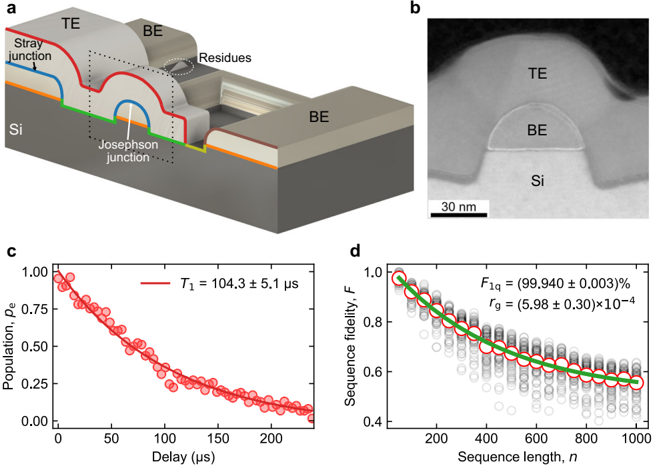
“An example Al/AlO x /Al overlap JJ is visualized with a scanning electron microscopy (SEM) image in Fig.”
BackgroundMethodInfluentialSelf-citationHigh-Coherence Kerr-Cat Qubit in 2D Architecture
Hajr, A., Qing, B., Wang, K., Koolstra, G., Pedramrazi, Z., Kang, Z., Chen, L., Nguyen, L. B., Jünger, C., Goss, N., et al. (2024) · Physical Review X · doi:10.1103/physrevx.14.041049 · Cited by 56
Moskalev, D. O., Zikiy, E. V., Pishchimova, A. A., Ezenkova, D. A., Smirnov, N. S., Ivanov, A. I., Korshakov, N. D., & Rodionov, I. A. (2023) · Scientific Reports · doi:10.1038/s41598-023-31003-1 · Cited by 40
Mitigation of frequency collisions in superconducting quantum processors
Osman, A., Fernández-Pendás, J., Warren, C., Kosen, S., Scigliuzzo, M., Frisk Kockum, A., Tancredi, G., Fadavi Roudsari, A., & Bylander, J. (2023) · Physical Review Research · doi:10.1103/physrevresearch.5.043001 · Cited by 41
Pishchimova, A. A., Smirnov, N. S., Ezenkova, D. A., Krivko, E. A., Zikiy, E. V., Moskalev, D. O., Ivanov, A. I., Korshakov, N. D., & Rodionov, I. A. (2023) · Scientific Reports · doi:10.1038/s41598-023-34051-9 · Cited by 39
Muthusubramanian, N., Finkel, M. I., Duivestein, P., Zachariadis, C., van der Meer, S. L. M., Veen, H. M., Beekman, M., Stavenga, T., Bruno, A., & DiCarlo, L. (2023) · Quantum Science and Technology · doi:10.1088/2058-9565/ad199c · Cited by 39
Baity, P., Maclean, C., Seferai, V., Bronstein, J., Shu, Y., Hemakumara, T., & Weides, M. P. (2024) · Physical Review Research · doi:10.1103/physrevresearch.6.013329 · Cited by 33
“If Q l is the total resonance efficiency (i.e., quality factor) and Q c is the coupling efficiency to the measurement line, then the circle diameter is d = Q l / | Q c | .”
Torres‐Castanedo, C. G., Goronzy, D. P., Pham, T., McFadden, A., Materise, N., Das, P. M., Cheng, M., Lebedev, D., Ribet, S. M., Walker, M. J., et al. (2024) · Advanced Functional Materials · doi:10.1002/adfm.202401365 · Cited by 32
High-coherence fluxonium qubits manufactured with a wafer-scale-uniformity process
Wang, F., Lu, K., Zhan, H., Ma, L., Wu, F., Sun, H., Deng, H., Bai, Y., Bao, F., Chang, X., et al. (2025) · Physical Review Applied · doi:10.1103/physrevapplied.23.044064 · Cited by 32
Chemical and structural identification of material defects in superconducting quantum circuits
de Graaf, S. E., Un, S., Shard, A. G., & Lindström, T. (2022) · Materials for Quantum Technology · doi:10.1088/2633-4356/ac78ba · Cited by 25
Classical interfaces for controlling cryogenic quantum computing technologies
Brennan, J. C., Barbosa, J., Li, C., Ahmad, M., Imroze, F., Rose, C., Karar, W., Stanley, M., Heidari, H., Ridler, N., et al. (2025) · APL Quantum · doi:10.1063/5.0273490 · Cited by 23
Performance Stabilization of High-Coherence Superconducting QubitsPreprint
Dane, A. E., Balakrishnan, K., Wacaser, B. A., Hung, L.-W., Mamin, H. J., Rugar, D., Shelby, R. M., Murray, C., Rodbell, K. P., & Sleight, J. W. (2025) · arXiv (Cornell University) · doi:10.48550/arxiv.2503.12514 · Cited by 23
Josephson Junctions, Superconducting Circuits, and Qubit for Quantum Technologies
Citro, R., Guarcello, C., & Pagano, S. (2024) · Lecture notes in physics · doi:10.1007/978-3-031-55657-9_1 · Cited by 22
Decay-protected superconducting qubit with fast control enabled by integrated on-chip filters
Sah, A., Kundu, S., Suominen, H., Chen, Q., & Möttönen, M. (2024) · Communications Physics · doi:10.1038/s42005-024-01733-3 · Cited by 21
“…[37–45] and mitigating these internal losses through the implementation of high-coherence materials [21, 22, 46–49], fabrication recipes [19, 20, 50, 51], and improved qubit geometry [52, 53], leading to a situation where the external coupling should be made very weak not to limit qubit…”
BackgroundHeisenberg-limited Bayesian phase estimation with low-depth digital quantum circuits
Direkci, S., Finkelstein, R., Endres, M., & Gefen, T. (2026) · npj Quantum Information · doi:10.1038/s41534-025-01177-9 · Cited by 20
Influence of pinholes and weak-points in aluminum-oxide Josephson junctions
Bayros, K., Cyster, M. J., Smith, J. S., & Cole, J. H. (2024) · Physical Review Materials · doi:10.1103/physrevmaterials.8.046202 · Cited by 17
Wang, Z., Yu, C. C., & Wu, R. (2025) · Physical Review Applied · doi:10.1103/physrevapplied.23.024017 · Cited by 17
Single-Flux-Quantum-Activated Controlled- Z Gate for Transmon Qubits
Wang, Y., Gao, W., Liu, K., Ji, B., Wang, Z., & Lin, Z. (2023) · Physical Review Applied · doi:10.1103/physrevapplied.19.044031 · Cited by 16
300 mm CMOS-compatible superconducting HfN and ZrN thin films for quantum applications
Potjan, R., Wislicenus, M., Ostien, O., Hoffmann, R., Lederer, M., Reck, A., Emara, J., Roy, L., Uhlig, B., & Wosnitza, J. (2023) · Applied Physics Letters · doi:10.1063/5.0176060 · Cited by 15
Argon-Milling-Induced Decoherence Mechanisms in Superconducting Quantum Circuits
Van Damme, J., Ivanov, T., Favia, P., Conard, T., Verjauw, J., Acharya, R., Perez Lozano, D., Raes, B., Van de Vondel, J., Vadiraj, A. M., et al. (2023) · Physical Review Applied · doi:10.1103/physrevapplied.20.014034 · Cited by 14
Self-citationIs there a Moore's law for quantum computing?Preprint
Ezratty, O. (2023) · arXiv (Cornell University) · doi:10.48550/arxiv.2303.15547 · Cited by 13
Scaffold-assisted window junctions for superconducting qubit fabrication
Ke, C.-T., Tsai, J.-Y., Chen, Y.-C., Xu, Z., Blackwell, E. J., Snyder, M. A., Weeden, S., Chen, P.-S., Lai, C., Sheu, S.-S., et al. (2026) · npj Quantum Information · doi:10.1038/s41534-026-01249-4 · Cited by 12
“More advanced fabrication methods including trilayer 21 and overlap junction processes 20,23 are among the attempts to replace the double-angle evaporation technique.”
Advances in Josephson Junction Materials and Processes Toward Practical Quantum Computing
Kim, H. L., Jang, G., Jin, S., An, J., Shin, H., Shin, H., Luo, J., Hashim, A., Siddiqi, I. A., Kim, Y., et al. (2026) · Advanced Science · doi:10.1002/advs.78427 · Cited by 12
Improving the performance of transmon qubits with fluorine-based surface treatments
Gingras, M., Niedzielski, B. M., Grossklaus, K. A., Miller, D., Contipelli, F., Azar, K., Burkhart, L., Calusine, G., Davis, D., Pinero, R. D., et al. (2026) · Physical Review Applied · doi:10.1103/x1gl-mx6f · Cited by 12
Material-Inherent Noise Sources in Quantum Information Architecture
Yang, H., & Kim, N. Y. (2023) · Materials · doi:10.3390/ma16072561 · Cited by 12
“Upon this remarkable progress, researchers have laid out a manufacturing blueprint to demonstrate superconducting qubit circuits with the help of mature industry-scale CMOS facilities toward practical large-scale superconducting quantum architectures [113].”
BackgroundMayer, T., Bender, H., Lang, S., Luo, Z., Weber, J., Guizán, C. M., Dhieb, C., Zahn, D., Schwarzenbach, L., Hell, W., et al. (2025) · arXiv (Cornell University) · doi:10.48550/arxiv.2505.04337 · Cited by 9
“…approach, the utilization of CMOS industry-style tooling and methods has played an increasingly prominent role in the community recently, as it promises high precision device fabrication on large wafer scales ( ≥ 200 mm) and superior repeatability and process control and monitoring[8, 9].”
Robust quality factor assessment of high-coherence superconducting qubits
Dane, A. E., Balakrishnan, K., Wacaser, B. A., Hung, L.-W., Mamin, H. J., Rugar, D., Shelby, R. M., Murray, C. E., Rodbell, K. P., & Sleight, J. W. (2026) · npj Quantum Information · doi:10.1038/s41534-026-01199-x · Cited by 7
Enabling 300 mm Wafer-Scale Fabrication of Superconducting Quantum Devices
Bhatia, E., Frost, H., Pieniazek, N., Nalaskowski, J., Mucci, J., Collison, W. Z., Martinick, B., Telhu, G., Egan, B., Olson, S., et al. (2024) · ASMC proceedings · doi:10.1109/asmc61125.2024.10545509 · Cited by 7
“The influence of the substrate on qubit performance is still under investigation [7], with silicon substrates of varying resistivity being utilized for qubit fabrication [8].”
MethodLang, S., Mayer, T., Weber, J., Dhieb, C., Eisele, I., Lerch, W., Luo, Z., Guizán, C. M., Music, E., Sturm-Rogon, L., et al. (2025) · Physical Review Applied · doi:10.1103/42nj-fjg8 · Cited by 6
Enhancing the yield of bucket brigade quantum random access memory using redundancy repair
Kim, D., Heng, S., Lee, S., & Han, Y. (2025) · Scientific Reports · doi:10.1038/s41598-025-32955-2 · Cited by 5
A General and Modular Approach to Solid-State Integration of Zero-Dimensional Quantum Systems
Kavand, M., Phillips, Z., Koll, W., Hamilton, M., Perez-Hoyos, E., Greer, R., Ara, F., Pharis, D. A., Maleki, K., Xu, M., et al. (2025) · Nano Letters · doi:10.1021/acs.nanolett.5c03125 · Cited by 5
Active Electron Cooling of Graphene
Paolucci, F., Bianco, F., Giazotto, F., & Roddaro, S. (2025) · Advanced Functional Materials · doi:10.1002/adfm.202418456 · Cited by 5
“In particular, local electron cooling in hybrid superconducting DOI: 10.1002/adfm.202418456 systems opens the way to the creation of solid-state heat engines, [9] by electrical con-trol of the thermal cycles, and to an increase the qubit lifetime, [10] by mastering the quasiparticle population.”
InfluentialWang, J., Park, J., Chong, Z. X., Kim, R. H. J., Haeuser, S., Chan, R. K., Murthy, A. A., Grassellino, A., Romanenko, A., Kopas, C., et al. (2025) · Materials · doi:10.3390/ma18030569 · Cited by 5
“Significant efforts have been made to study pair-breaking and loss mechanisms to extend T 1 and T 2 [1,13,14].”
Quantifying surface losses in superconducting aluminum microwave resonators
Hedrick, E., Bahrami, F., Pakpour‐Tabrizi, A. C., Joshi, A., Rahman, Q. R., Yang, A., Chang, R., Bland, M. P., Jindal, A., Cheng, G., et al. (2026) · MRS Bulletin · doi:10.1557/s43577-026-01147-2 · Cited by 4
Engineering Si-Qubit MOSFET: Quantum-Electrostatic Integration at Cryogenic Temperatures
Pandey, N., Basu, D., Chauhan, Y. S., Register, L. F., & Banerjee, S. K. (2025) · IEEE Transactions on Electron Devices · doi:10.1109/ted.2025.3570285 · Cited by 4
Building compact superconducting microwave resonators with Hilbert space-filling curves
Jiang, J., Li, Z., Guo, T., Xu, W., Wei, X., Zhang, K., Zhou, T., Sheng, Y., Cao, C., Sun, G., et al. (2022) · Applied Physics Letters · doi:10.1063/5.0128964 · Cited by 4
Ta-based Josephson junctions using insulating ALD TaN tunnel barriersPreprint
Bhatia, E., Lombardi, J., Vo, T., Senatore, M., Madden, A., Kar, S., Frost, H., Olson, S., Nalaskowski, J., Mucci, J., et al. (2025) · arXiv (Cornell University) · doi:10.48550/arxiv.2511.20266 · Cited by 4
“There are differences in fabrication processes and data presentation practices across groups [23,24].”
InfluentialCharge Trapping and Variability in CMOS Technologies at Cryogenic Temperatures
Michl, J. D. (2022) · reposiTUm (TU Wien) · doi:10.34726/hss.2022.105545 · Cited by 4
Han, C., Sun, H., Shen, Y., Qiu, J., Xu, P., Liu, F., Zhao, B., Yu, X., Wang, W., Wang, S., et al. (2026) · npj Computational Materials · doi:10.1038/s41524-025-01941-7 · Cited by 3
Kim, D.-Y., Kwon, H., Han, D. S., Kim, K., Kim, H. K., Lee, C., Kim, G., Lee, J.-Y. M., Kim, D., Kim, E.-A., et al. (2026) · Scientific Reports · doi:10.1038/s41598-026-46352-w · Cited by 3
Fast CZ gate via energy-level engineering in superconducting qubits with a tunable coupler
Yuan, B., Zhang, C., Han, C., Wang, S., Xu, P., Sun, H., Mu, Q., Wang, L., Zhao, B., Wang, W., et al. (2026) · Physical Review A · doi:10.1103/kc8w-nvnn · Cited by 2
Towards Fabrication of Sub-Micrometer Cross-Type Aluminum Josephson Junctions
Mechold, S., Peiselt, K., Schmelz, M., Oelsner, G., Ziegler, M., Hübner, U., Kunert, J., & Stolz, R. (2023) · IEEE Transactions on Applied Superconductivity · doi:10.1109/tasc.2023.3343681 · Cited by 2
“Both represent lift-offbasedadditivefabricationtechnologies[5],[6],[7].”
The Coherence Challenge: Foundations and Advancements in Superconducting Quantum Circuits
Rao, S. G. (2026) · Arabian Journal for Science and Engineering · doi:10.1007/s13369-025-10979-0 · Cited by 1
“4c and d.[131] In addition to reducing TLS and non-TLS losses, recent research has addressed the microscopic sources of loss and noise within the constituent materials, leading to reliable, high T 1 lifetimes of over 100 μ s.”
Banerjee, T., Funni, S. D., Roy, S., Cha, J. J., & Fatemi, V. (2026) · Nano Letters · doi:10.1021/acs.nanolett.6c02734 · Cited by 1
Estimating local observables via cluster-level light-cone decomposition
Huang, J., Tang, Y., & Yuan, X. (2026) · Physical Review A · doi:10.1103/rzhg-szgj · Cited by 1
Implementing Josephson Junction spectroscopy in a scanning tunneling microscopePreprint
Fortman, M., Harrison, D. C., Rodriguez, R. H., Krebs, Z. J., Han, S., Jang, M. S., McDermott, R., Girit, Ç., & Brar, V. W. (2024) · HAL · doi:10.48550/arxiv.2410.03009 · Cited by 1
Almansouri, M., Alhuwaymel, U. T., AlYousef, I., Shafi, A., Albogime, A., Getmanov, I., Hajr, A., & Shamim, A. (2026) · arXiv (Cornell University) · doi:10.48550/arxiv.2607.22265 · Cited by 1
Preparation of Al2O3 tunnel barrier layer in atome-level controlled Josephson junction
Li, Z., Wang, S., Huang, Z., Wang, C., & Mu, Q. (2022) · Acta Physica Sinica · doi:10.7498/aps.71.20220820
Odate, S., Saito, N., Suzuki, K., Aoyama, H., Kusuyama, K., Nakamura, Y., & Tsukamoto, H. (2023) · UV and Higher Energy Photonics: From Materials to Applications · doi:10.1117/12.2675964
“Therefore, it is desirable to be able to fabricate JJs using a fabrication process based on sputtering and dry etching instead, as shown in Figure 5 [7, 8].”
MethodSuperconducting route to quantum computing
Abe, E. (2023) · International Conference on Simulation of Semiconductor Processes and Devices · doi:10.23919/sispad57422.2023.10319629
“Importantly, a recent report has shown that the manufacturing process using overlap junctions can produce high-quality transmons [23].”
BackgroundOdate, S., Saito, N., Aoyama, H., Kusuyama, K., Nakamura, Y., & Tsukamoto, H. (2024) · UV and Higher Energy Photonics: From Materials to Applications · doi:10.1117/12.3027297
Non-Interactive Oblivious Transfer and One-Time Programs from Noisy Quantum StoragePreprint
Faleiro, R., Goulão, M., Novo, L., & Cruzeiro, E. Z. (2024) · arXiv (Cornell University) · doi:10.48550/arxiv.2410.08367
Tecnologías para procesadores cuánticos
Espinosa Rodríguez, M. (2023) · Deposito de Investigacion Universidad de Sevilla (University of Seville)
From NISQ to Scalable Architectures: Challenges and Prospects for Practical Quantum Computing
Galappaththi, K. (2025) · International Conference on Advancements in Computing (ICAC) · doi:10.1109/icac69156.2025.11361428
Vanniappan, M., Reddy, R. A., & Mateti, J. (2026) · International Conference on Next-Gen Quantum and Advanced Computing: Algorithms, Security, and Beyond (NQComp) · doi:10.1109/nqcomp68334.2026.11497736
“It is based on the concepts of quantum mechanics superposition, entanglement, and quantum interference, which enable quantum systems to encode and compute information in radically new ways (Verjauw et al., 2022).”
Li, B., Sun, X., Zhuo, E., Lyu, Z., Zhang, Y., Huang, Y., Wang, D., Wang, X., Shi, Y., Yang, X., et al. (2026) · Physical Review Applied · doi:10.1103/rtwk-dyzh
SPICE-Q and Large-Scale Quantum Chip ProductionPreprint
Cai, Qiao, L., Yang, B., Luo, F., Liu, C., Guo, W., Zhang, G. M., Liu, X., Guo, Q., & Wu, B. (2026) · arXiv (Cornell University) · doi:10.48550/arxiv.2606.17907
Liang, S., Wang, J., Wang, Z., Wang, F., Li, X., Li, L., Liu, F., & Shan, Z. (2026) · arXiv (Cornell University) · doi:10.48550/arxiv.2606.18642
“Therefore, most of the research in this field focus on improving qubit design and control techniques to maintain coherence for longer periods and execute gates with high precision [14],[15] .”
Materials for Quantum Information Science: Roles in the Quantum Evolution 2.0Preprint
Pham, T., Ivanov, V., Goronzy, D. P., Devata, A., Feldon, J., Barton, D., & Zhou, Y. (2026) · arXiv (Cornell University) · doi:10.48550/arxiv.2609.09371
Programmable CMOS DAC Operating in Cryogenic Environments for Controlling Superconducting QubitsPreprint
Pelteku, A., Reitz, D., Covington, M., Frederick, A., Adebayo, H., Hillaire, K. D., Mitran, N., Steffen, Z., Schwartz, R., Stegen, Z., et al. (2026) · arXiv (Cornell University) · doi:10.48550/arxiv.2609.10834
“…industry standards for building scalable quantum processing units [4], [5] owing to advantages in speed [6], [7], and manufacturing maturity [8], [9] with the promise to solve the wiring bottleneck by incorporating either superconducting digital logic [10], [11], [12] or cryo-CMOS control…”
Inang, T., Janmathong, K., Chudpooti, N., Tantraviwat, D., Oberhammer, J., Zhang, W., & Somjit, N. (2026) · IEEE Access · doi:10.1109/access.2026.3734374
“For this reason, recent work has investigated industry-compatible 300-mm wafer optical lithography and CMOS-compatible subtractive-etch processes [70], [71].”
Measurement-free Preparation of Surface-Code States with Digital-Analog Counterdiabatic DrivingsPreprint
Bhargava, S. K. B. A., Bhargava, B. A., Erdman, P. A., Visuri, A.-M., Martín-Guerrero, J. D., Vives‐Gilabert, Y., Solano, E., & Hegade, N. N. (2026) · arXiv (Cornell University) · doi:10.48550/arxiv.2610.06697
“We further use which represent an optimistic but experimentally accessible high-coherence regime, superconducting devices with coherence times exceeding 100 µ s, and in some cases several hundred microseconds, have been demonstrated [34, 35].”
Honda, K., Kurihara, D., Kutsuma, H., Terai, H., & Taro, Y. (2026) · arXiv (Cornell University) · doi:10.48550/arxiv.2610.04820
“…has been carried out toward large-scale integration, leading to highly reproducible fabrication processes [15], post-fabrication critical current tuning techniques for correcting qubit frequencies [16, 17], and lift-o ff -free fabrication processes compatible with mature CMOS technology [18, 19].”
Hettiarachchi, A., Dissanayaka, K. D., & Bamunusinghe, J. (2026) · IEEE Access · doi:10.1109/access.2026.3741621
“Dephasing times remain even more restrictive, with free-induction dephasing time T 2 ≈ 20–60 µ s for most transmons [9], [28], [57], [86], [87], though spin-echo techniques can extend the coherence to T echo2 ≈ 100–300 µ s [1], [53], [57].”
Sidewall Metrology Protocol for Superconducting Qubit DevicesPreprint
Garnæs, J., Guttesen, H. S., Rømer, A. T., Danielsson, O., Duggan, E. P., Sun, Z., Georgiev, A. L., Chang, L. W., Kjærgaard, M., Bieler, M., et al. (2026) · arXiv (Cornell University) · doi:10.48550/arxiv.2610.26223
“Although these techniques provide high-resolution two-dimensional imaging, obtaining statistically representative quantitative information across devices remains challenging, making it difficult to establish statistically meaningful correlations with qubit performance [13–15].”
Metadata
- Authors
- Verjauw, J., Acharya, R., Van Damme, J., Ivanov, T., Lozano, D. P., Mohiyaddin, F. A., Wan, D., Jussot, J., Vadiraj, A. M., Mongillo, M., Heyns, M., Radu, I., Govoreanu, B., & Potočnik, A.
- Affiliations
- IMEC (BE)
- Corresponding author
- Potočnik, A.
- ORCID
- Venue
- npj Quantum Information
- Published
- 2022-08-09
- Volume
- 8
- Issue
- 1
- ISSN
- 2056-6387 (ISSN-L)
- OpenAlex
- W4291736966
- Cited by
- 45
- References
- 71
- Citations by year
- 2026: 11 · 2025: 10 · 2024: 8 · 2023: 13 · 2022: 3
- FWCI
- 2.80
- Type
- journal article
- Language
- en
- Open access
- gold
- doi.org
- Licence
- cc-by
- creativecommons.org/licenses/by/4.0 (tdm)
- creativecommons.org/licenses/by/4.0 (vor)
- Locations
- npj Quantum Information (publishedVersion, cc-by)
- Lirias (KU Leuven) (acceptedVersion, cc-by)
- arXiv (Cornell University) (submittedVersion)
- DOAJ (DOAJ: Directory of Open Access Journals) (submittedVersion, cc-by-sa)
- arXiv (Cornell University)
- Topics
- Physical Sciences › Physics and Astronomy › Atomic and Molecular Physics, and Optics › Quantum Information and Cryptography
- Physical Sciences › Engineering › Electrical and Electronic Engineering › Superconducting and THz Device Technology
- Physical Sciences › Computer Science › Artificial Intelligence › Quantum Computing Algorithms and Architecture
- Keywords
- superconducting qubits, CMOS-compatible fabrication, qubit coherence time, energy relaxation time, surface loss, 300 mm wafer fabrication
About these checks
Registry, retraction, Cites and statistics results are computed, not judged, with one exception: a printed reference that no index lists is read once by a model before it counts as a citation error. Claims are extracted by a model and kept only when their quote appears verbatim in the text; each cited source is then checked, with a model’s help, for whether it says what the claim relies on. Those verdicts can be wrong — read the claim’s quote and the cited source before relying on one.
Statistics and arithmetic are recomputed, not judged.
Confidence bands are shown only for fields calibrated on our annotated test set. None is calibrated yet, so no band is shown.
What counts as a claim ›How we measure confidence ›How we check this ›
Are you an author, or do you see a problem with this page? Request a review
Data sources
Bibliographic data: Semantic Scholar, OpenAlex, Crossref.
Contains information from the Semantic Scholar Academic Graph Datasets, made available under the ODC Attribution License (ODC-BY 1.0).
Semantic Scholar’s data is described in: Kinney, R., et al. (2023). The Semantic Scholar Open Data Platform. arXiv:2301.10140.
