

Cardiopoietic stem cell therapy restores infarction-altered cardiac proteome
Open accessThe DOI matches its Crossref record; 69 of the 69 references it cites were found in a registry or an index.
Abstract
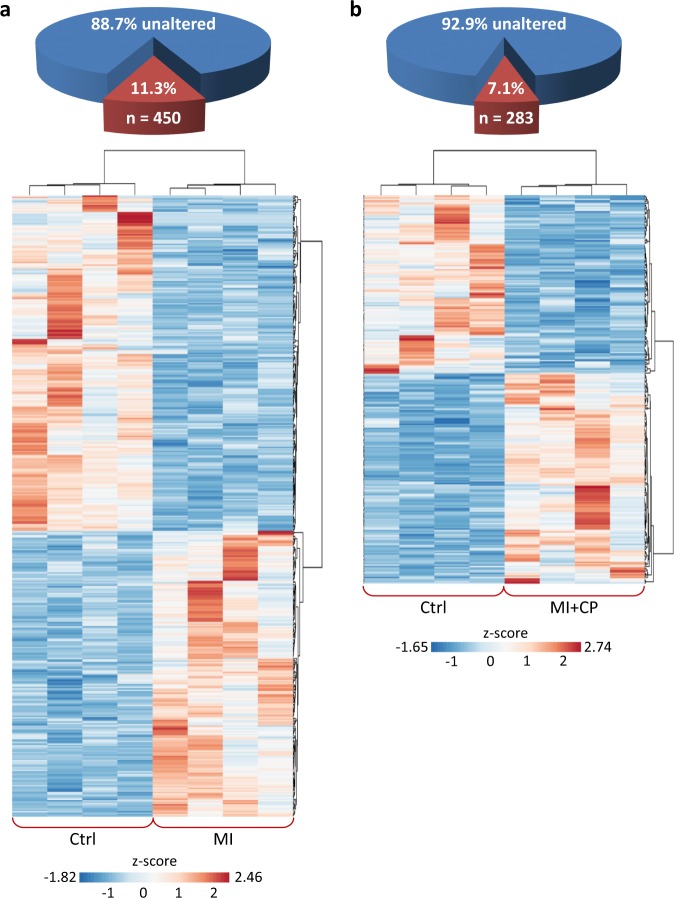
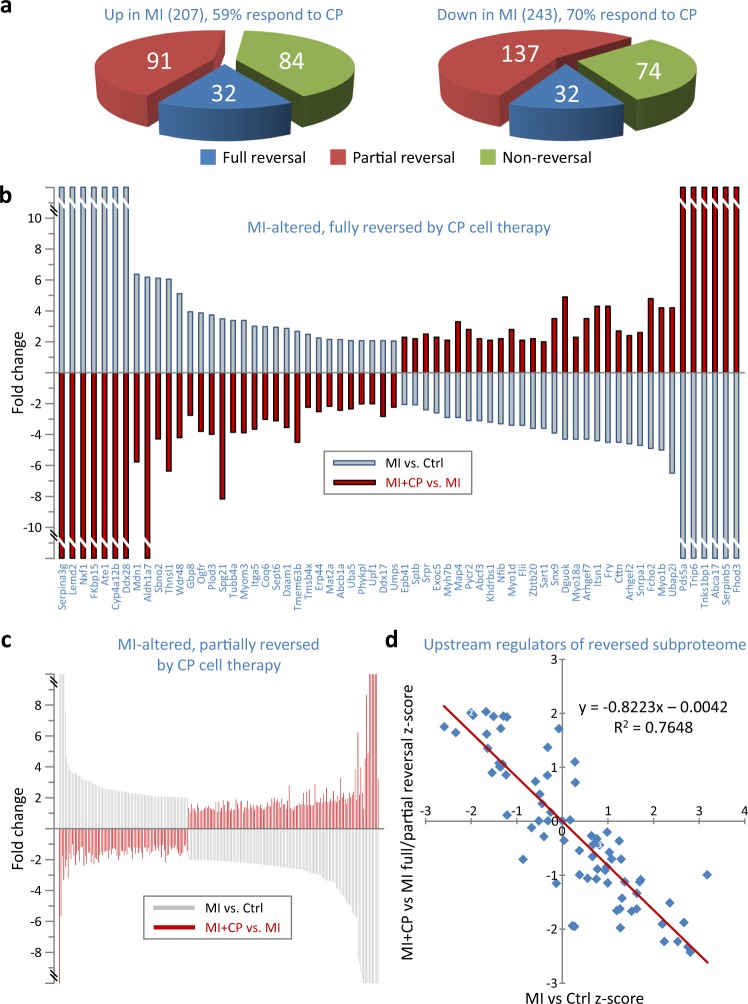
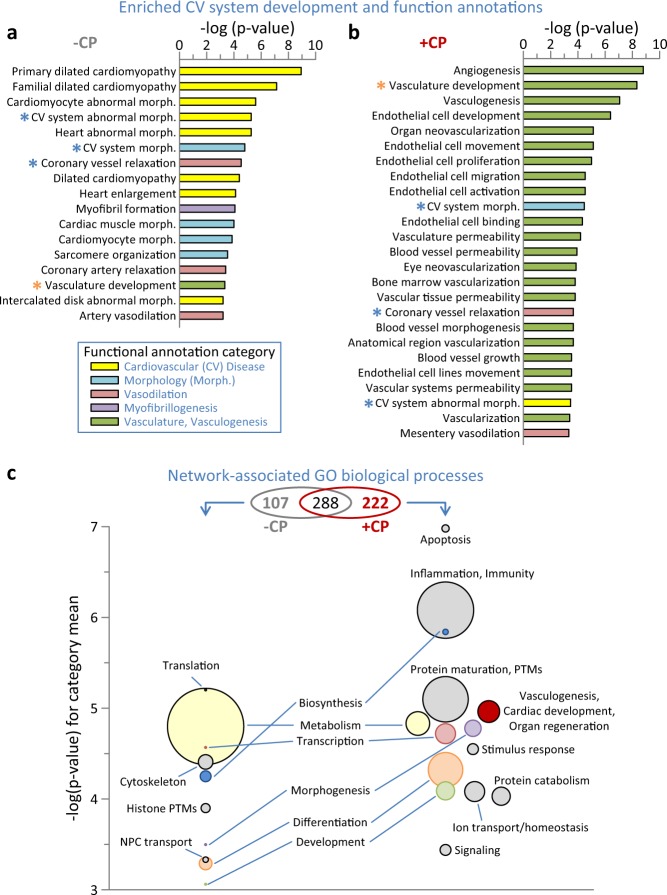
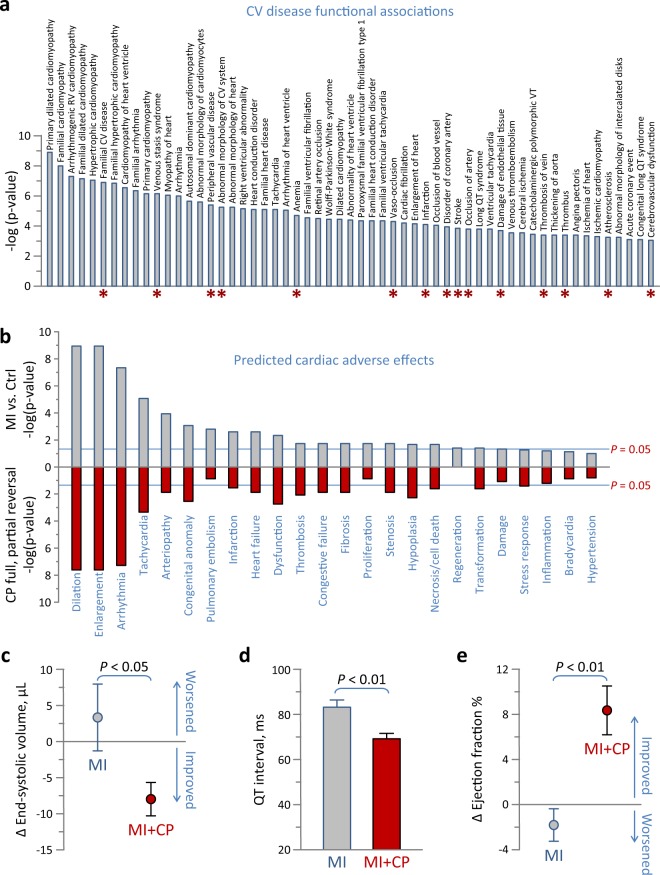
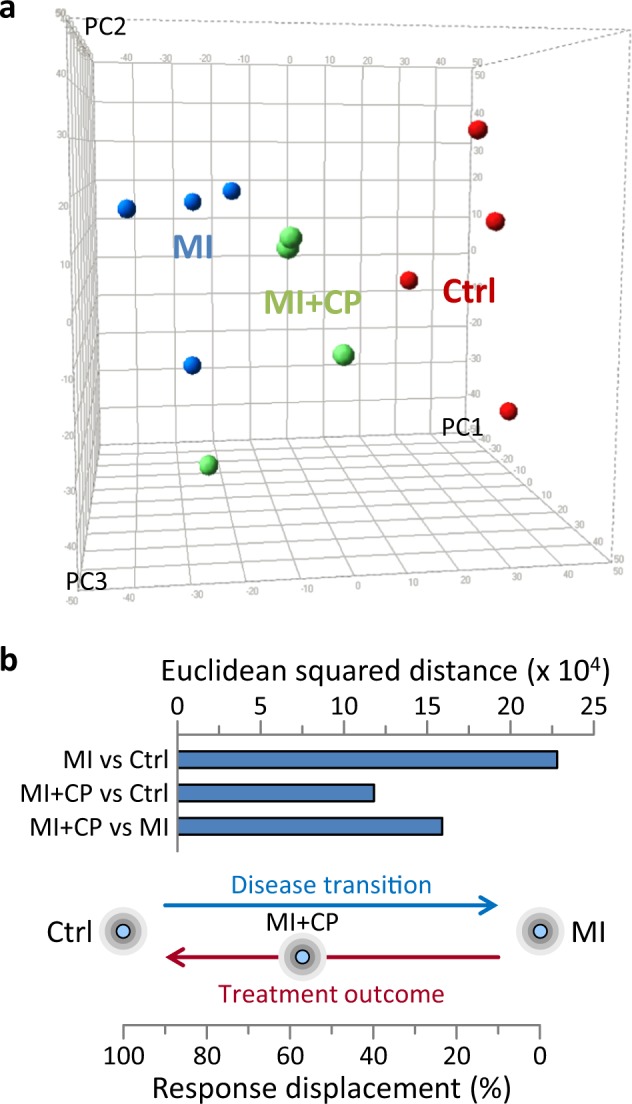
Cardiopoietic stem cells have reached advanced clinical testing for ischemic heart failure. To profile their molecular influence on recipient hearts, systems proteomics was here applied in a chronic model of infarction randomized with and without human cardiopoietic stem cell treatment. Multidimensional label-free tandem mass spectrometry resolved and quantified 3987 proteins constituting the cardiac proteome. Infarction altered 450 proteins, reduced to 283 by stem cell treatment. Notably, cell therapy non-stochastically reversed a majority of infarction-provoked changes, remediating 85% of disease-affected protein clusters. Pathway and network analysis decoded functional reorganization, distinguished by prioritization of vasculogenesis, cardiac development, organ regeneration, and differentiation. Subproteome restoration nullified adverse ischemic effects, validated by echo-/electro-cardiographic documentation of improved cardiac chamber size, reduced QT prolongation and augmented ejection fraction post-cell therapy. Collectively, cardiopoietic stem cell intervention transitioned infarcted hearts from a cardiomyopathic trajectory towards pre-disease. Systems proteomics thus offers utility to delineate and interpret complex molecular regenerative outcomes.
Overview
The claims and statistics of this paper haven’t been checked yet.
Free: it reads the open-access text and checks the first 5 claims that cite a source we can check. Create a free account to check every claim.
Integrity signals
Registry
Cites
Statistics
Figures
Verification
Claims the paper makes
The claims and statistics of this paper haven’t been checked yet.
Free: it reads the open-access text and checks the first 5 claims that cite a source we can check. Create a free account to check every claim.
Claims other papers make about this one
Each is checked against this paper’s own text: does it say what the citing paper says it does?
In the citing paper
“proximity labelling to assess protein–protein interactions involved in β-adrenergic signalling of contractility in cardiac fight-or-flight responses124 and evaluation of regenerative stem cell therapy efficacy in post-infarct hearts125.”
From A high-stringency blueprint of the human proteome (2020) · cites this paper as [125]
Self-check
Percentages, sums and reported differences re-computed from the paper’s own numbers.
The self-check needs the paper’s full text.
Citations
Cites
Cytoscape: A software Environment for integrated models of biomolecular interaction networks
Shannon, P., Markiel, A., Ozier, O., Baliga, N. S., Wang, J. T., Ramage, D., Amin, N., Schwikowski, B., & Ideker, T. (2003) · Genome Research · doi:10.1101/gr.1239303 · Cited by 51,888
Perez-Riverol, Y., Csordas, A., Bai, J., Bernal-Llinares, M., Hewapathirana, S., Kundu, D. J., Inuganti, A., Griss, J., Mayer, G., Eisenacher, M., et al. (2019) · Nucleic Acids Research · doi:10.1093/nar/gky1106 · Cited by 6,693
The MaxQuant computational platform for mass spectrometry-based shotgun proteomics
Tyanova, S., Temu, T., & Cox, J. (2016) · Nature Protocols · doi:10.1038/nprot.2016.136 · Cited by 4,797
Maere, S., Heymans, K., & Kuiper, M. (2005) · Bioinformatics · doi:10.1093/bioinformatics/bti551 · Cited by 4,155
Metsalu, T., & Vilo, J. (2015) · Nucleic Acids Research · doi:10.1093/nar/gkv468 · Cited by 3,709
Mass-spectrometric exploration of proteome structure and function
Aebersold, R., & Mann, M. (2016) · Nature · doi:10.1038/nature19949 · Cited by 2,334
Hass, R., Kasper, C., Böhm, S., & Jacobs, R. (2011) · Cell Communication and Signaling · doi:10.1186/1478-811x-9-12 · Cited by 1,748
Proteogenomics connects somatic mutations to signalling in breast cancer
CPTAC, N., Mertins, P., Mani, D. R., Ruggles, K. V., Gillette, M. A., Clauser, K. R., Wang, P., Wang, X., Qiao, J. W., Cao, S., et al. (2016) · Nature · doi:10.1038/nature18003 · Cited by 1,676
The Translational Landscape of the Human Heart
van Heesch, S., Witte, F., Schneider-Lunitz, V., Schulz, J. F., Adami, E., Faber, A. B., Kirchner, M., Maatz, H., Blachut, S., Sandmann, C.-L., et al. (2019) · Cell · doi:10.1016/j.cell.2019.05.010 · Cited by 626
An acute immune response underlies the benefit of cardiac stem cell therapy
Vagnozzi, R. J., Maillet, M., Sargent, M. A., Khalil, H., Johansen, A. K. Z., Schwanekamp, J. A., York, A. J., Huang, V., Nahrendorf, M., Sadayappan, S., et al. (2020) · Nature · doi:10.1038/s41586-019-1802-2 · Cited by 554
Cited by
A high-stringency blueprint of the human proteome
Adhikari, S., Nice, E. C., Deutsch, E. W., Lane, L., Omenn, G. S., Pennington, S. R., Paik, Y.-K., Overall, C. M., Corrales, F. J., Cristea, I. M., et al. (2020) · Nature Communications · doi:10.1038/s41467-020-19045-9 · Cited by 210
Minimally invasive delivery of a hydrogel-based exosome patch to prevent heart failure
Cheng, G., Zhu, D., Huang, K., & Caranasos, T. G. (2022) · Journal of Molecular and Cellular Cardiology · doi:10.1016/j.yjmcc.2022.04.020 · Cited by 69
Jiang, F.-Q., Liu, K., Chen, J., Cao, Y., Chen, W.-Y., Zhao, W.-L., Song, G., Liang, C.-Q., Zhou, Y.-M., Huang, H., et al. (2022) · eLife · doi:10.7554/elife.77014 · Cited by 47
Emerging technologies for cardiac tissue engineering and artificial hearts
Sun, L., Wang, Y., Xu, D., & Zhao, Y. (2023) · Smart Medicine · doi:10.1002/smmd.20220040 · Cited by 44
Regenerative Medicine Clinical Readiness
Yamada, S., Behfar, A., & Terzic, A. (2021) · Regenerative Medicine · doi:10.2217/rme-2020-0178 · Cited by 38
Self-citationCardiopoietic Stem Cell Therapy in Ischaemic Heart Failure: Long-Term Clinical Outcomes
Bartúnek, J., Terzic, A., Davison, B. A., Behfar, A., y, R. S.-R., Wojakowski, W., Sherman, W., Heyndrickx, G. R., Metra, M., Filippatos, G. S., et al. (2020) · ESC Heart Failure · doi:10.1002/ehf2.13031 · Cited by 37
“from a cardiomyopathic trajectory towards pre‐disease likely through paracrine mode of action.(28)”
BackgroundSelf-citationRegeneration of the heart: from molecular mechanisms to clinical therapeutics
Guo, Q., Yang, J., Feng, X., & Zhou, Y. (2023) · Military Medical Research · doi:10.1186/s40779-023-00452-0 · Cited by 42
Fosl1 is vital to heart regeneration upon apex resection in adult Xenopus tropicalis
Wu, H., Zhou, Y.-M., Liao, Z.-Q., Zhong, J.-W., Liu, Y.-B., Zhao, H., Liang, C., Huang, R., Park, K., Feng, S., et al. (2021) · npj Regenerative Medicine · doi:10.1038/s41536-021-00146-y · Cited by 33
Artificial intelligence powers regenerative medicine into predictive realm
Garmany, A., & Terzic, A. (2024) · Regenerative Medicine · doi:10.1080/17460751.2024.2437281 · Cited by 25
Self-citation[89Zr]Zr-DBN labeled cardiopoietic stem cells proficient for heart failure
Bansal, A., Pandey, M. K., Yamada, S., Goyal, R., Schmit, N. R., Jeon, R., Nesbitt, J. J., Witt, T. A., Singh, R. D., Gunderson, T. M., et al. (2020) · Nuclear Medicine and Biology · doi:10.1016/j.nucmedbio.2020.09.001 · Cited by 22
“employed as a cell prototype with the capacity to transition a heart failure trajectory towards pre-disease [37].”
MethodSelf-citationUsing Omics to Identify Novel Therapeutic Targets in Heart Failure
Lteif, C., Huang, Y., Guerra, L. A., Gawronski, B. E., & Duarte, J. D. (2024) · Circulation Genomic and Precision Medicine · doi:10.1161/circgen.123.004398 · Cited by 22
“One of the identified potential therapeutic targets was ubiquitin C-terminal hydrolase L1 ( UCHL1 ), a deubiquitinase that regulates protein homeostasis and appears upregulated in cardiomyocytes post-MI.”
InfluentialAdenylate kinase AK2 isoform integral in embryo and adult heart homeostasis
Zhang, S., Yamada, S., Park, S., Klepinin, A., Käämbre, T., Terzic, A., & Dzeja, P. P. (2021) · Biochemical and Biophysical Research Communications · doi:10.1016/j.bbrc.2021.01.097 · Cited by 24
“Left ventricular chamber size and contractility were prospectively followed [22, 23].”
BackgroundSelf-citationBrachyury engineers cardiac repair competent stem cells
Li, M., Yamada, S., Shi, A., Singh, R. D., Rolland, T. J., Jeon, R., Lopez, N., Shelerud, L. M., Terzic, A., & Behfar, A. (2020) · Stem Cells Translational Medicine · doi:10.1002/sctm.20-0193 · Cited by 14
“Stem cell-based therapies, in principle, may readjudicate the broadly compromised molecular substrate.(18,42) Transformation of the mesenchymal stem cell transcriptome, following M(3)RNA-encoded Brachyury transfec-”
BackgroundMethodSelf-citationKhammash, D., Rajagopal, S. K., & Polk, T. A. (2022) · Elsevier eBooks · doi:10.1016/b978-0-323-85654-6.00057-5 · Cited by 14
Olatunji, G. D., Kokori, E., Yusuf, I. A., Ayanleke, E., Damilare, O., Afolabi, S. A., Adetunji, B., Mohammed, S., Akinmoju, O. D., Aboderin, G., et al. (2023) · Heart Failure Reviews · doi:10.1007/s10741-023-10351-0 · Cited by 14
“These cells can differentiate into various cardiac cell types, making them ideal candidates for regenerating damaged heart tissue [18, 19].”
Screening for Regenerative Therapy Responders in Heart Failure
Yamada, S., Jeon, R., Garmany, A., Behfar, A., & Terzic, A. (2021) · Biomarkers in Medicine · doi:10.2217/bmm-2020-0683 · Cited by 12
Self-citationMass Customized Outlook for Regenerative Heart Failure Care
Yamada, S., Bartúnek, J., Behfar, A., & Terzic, A. (2021) · International Journal of Molecular Sciences · doi:10.3390/ijms222111394 · Cited by 10
“By profiling the molecular influence on recipient hearts, high throughput systems biology revealed that cardiopoietic cell therapy transitions diseased hearts from their cardiomyopathic trajectory toward pre-disease [72].”
BackgroundSelf-citationBanovic, M. D., Poglajen, G., Vrtovec, B., & Ristić, A. D. (2022) · Journal of Cardiovascular Development and Disease · doi:10.3390/jcdd9120429 · Cited by 14
“Recent data suggest that [37,39,52] cardiopoietic cell-mediated proteome alteration could augment smooth muscle and endothelial cell protein expression, induce the development of vascular components (endothelial and smooth muscle cells), and restitute the metabolic profile of the myocardium [53].”
BackgroundCells or drugs? The race to regenerate the heart
Plackett, B. (2021) · Nature · doi:10.1038/d41586-021-01457-2 · Cited by 9
Makkaoui, N., Prasad, V., Bagchi, P., Carmona, T., Li, L., Latham, O., Zhang, Y., Lee, J., Furdui, C. M., & Maxwell, J. T. (2024) · Stem Cell Research & Therapy · doi:10.1186/s13287-024-04009-3 · Cited by 9
“In contrast, MSC samples clustered slightly towards the CTL groups, indicating a redirection of the MSC-treated proteomes towards the pre-disease (CTL) state. nCPCs and ES-CPCs shifted their respective proteomes slightly away from the diseased proteome.”
InfluentialSecretome Signature of Cardiopoietic Cells Echoed in Rescued infarcted Heart Proteome
Arrell, D. K., Crespo‐Diaz, R. J., Yamada, S., Jeon, R., Garmany, A., Park, S., Adolf, J. P., Livia, C., Hillestad, M. L., Bartúnek, J., et al. (2021) · Stem Cells Translational Medicine · doi:10.1002/sctm.20-0509 · Cited by 7
“quantification following nano-flow liquid chromatography electrospray tandem mass spectrometry.(17) Protein identities were assigned and quantified using MaxQuant v.”
MethodSelf-citationKATP channel dependent heart multiome atlas
Arrell, D. K., Park, S., Yamada, S., Alekseev, A. E., Garmany, A., Jeon, R., Vučković, I., Lindor, J. Z., & Terzic, A. (2022) · Scientific Reports · doi:10.1038/s41598-022-11323-4 · Cited by 6
Self-citationA ratiometric catalog of protein isoform shifts in the cardiac fetal gene program
Han, Y., Binti, S., Wennersten, S. A., Pandi, B., Ng, D. C. M., Lau, E., & Lam, M. P. Y. (2025) · JCI Insight · doi:10.1172/jci.insight.184309 · Cited by 5
“To corroborate this partial reversal, we applied the protein ratio calculations to a label-free mass spectrometry dataset by Arrell et al. (77) who performed left anterior descending coronary artery ligation to induce myocardial infarction in mice and then measured cardiac remodeling after 4 weeks.”
A Ratiometric Catalog of Protein Isoform Shifts in the Cardiac Fetal Gene Program
Han, Y., Binti, S., Wennersten, S. A., Pandi, B., Ng, D. C. M., Lau, E., & Lam, M. P. Y. (2024) · doi:10.1101/2024.04.09.588716 · Cited by 5
Decoded cardiopoietic cell secretome linkage to heart repair biosignature
Garmany, A., Arrell, D. K., Yamada, S., Jeon, R., Behfar, A., Park, S., & Terzic, A. (2024) · Stem Cells Translational Medicine · doi:10.1093/stcltm/szae067 · Cited by 4
“40,41 Left ventricular ejection fraction was calculated per the American Society of Echocardiography as follows: 100 × (LV end-diastolic volume − LV end-systolic volume)/LV end-diastolic volume with volume measurements abstracted from 2D images.”
InfluentialSelf-citationHabib, S. M., Martini, M. F., Abu-Hamdan, Y. N. H., Shrebaty, O. M. M., & Haider, K. H. (2026) · World Journal of Stem Cells · doi:10.4252/wjsc.v18.i3.113871 · Cited by 3
Atrial Appendage-Derived Cardiac Micrografts: An Emerging Cellular Therapy for Heart Failure
Kankuri, E. M., Karjalainen, P. P., & Vento, A. E. (2023) · Springer eBooks · doi:10.1007/978-981-99-0722-9_7
Treatment of Myocardial Infarction and Nonischemic Cardiomyopathies by Stem Cells
Klein, H.-M., & Laßner, D. (2025) · Springer eBooks · doi:10.1007/978-981-96-1261-1_16
Heart Regeneration With Stem Cell Therapies
Clavellina, D., Marasigan, N., Balkan, W., & Hare, J. M. (2025) · Elsevier eBooks · doi:10.1016/b978-0-443-15734-9.00056-x
Nandi, A., Sharma, G., Verma, E., Alagarsamy, K. N., & Dhingra, S. (2026) · Canadian Journal of Physiology and Pharmacology · doi:10.1139/cjpp-2026-0173
Metadata
- Authors
- Arrell, D. K., Rosenow, C. S., Yamada, S., Behfar, A., & Terzic, A.
- Affiliations
- Mayo Clinic (US)
- Venue
- npj Regenerative Medicine
- Published
- 2020-03-12
- Volume
- 5
- Issue
- 1
- Pages
- 5-5
- ISSN
- 2057-3995 (ISSN-L)
- PMC
- PMC7067830
- OpenAlex
- W3012451848
- Semantic Scholar
- 62d71164b23842bdc19d5834bdbe5ce55eed31cf
- Cited by
- 30
- References
- 69
- Citations by year
- 2026: 3 · 2025: 3 · 2024: 4 · 2023: 4 · 2022: 5 · 2021: 7 · 2020: 4
- FWCI
- 2.59
- Type
- journal article
- Language
- en
- Open access
- gold
- doi.org
- Licence
- cc-by
- creativecommons.org/licenses/by/4.0 (tdm)
- creativecommons.org/licenses/by/4.0 (vor)
- Locations
- npj Regenerative Medicine (publishedVersion, cc-by)
- Europe PMC (PubMed Central) (publishedVersion, cc-by)
- PubMed Central (publishedVersion, cc-by)
- PubMed (publishedVersion)
- Funders
- Regenerative Medicine Minnesota (021218BT001)
- National Institutes of Health (HL-07111)
- National Heart, Lung, and Blood Institute (R01HL134664, T32HL007111)
- Topics
- Life Sciences › Biochemistry, Genetics and Molecular Biology › Cell Biology › Mesenchymal stem cell research
- Life Sciences › Biochemistry, Genetics and Molecular Biology › Molecular Biology › Congenital heart defects research
- Health Sciences › Medicine › Surgery › Tissue Engineering and Regenerative Medicine
- Keywords
- stem cell therapy, myocardial infarction, cardiac proteome, ischemic heart failure, vasculogenesis, cardiac regeneration, heart development, ejection fraction, QT prolongation
About these checks
Registry, retraction, Cites and statistics results are computed, not judged, with one exception: a printed reference that no index lists is read once by a model before it counts as a citation error. Claims are extracted by a model and kept only when their quote appears verbatim in the text; each cited source is then checked, with a model’s help, for whether it says what the claim relies on. Those verdicts can be wrong — read the claim’s quote and the cited source before relying on one.
Statistics and arithmetic are recomputed, not judged.
Confidence bands are shown only for fields calibrated on our annotated test set. None is calibrated yet, so no band is shown.
What counts as a claim ›How we measure confidence ›How we check this ›
Are you an author, or do you see a problem with this page? Request a review
Data sources
Bibliographic data: Semantic Scholar, OpenAlex, Crossref.
Contains information from the Semantic Scholar Academic Graph Datasets, made available under the ODC Attribution License (ODC-BY 1.0).
Semantic Scholar’s data is described in: Kinney, R., et al. (2023). The Semantic Scholar Open Data Platform. arXiv:2301.10140.
