

A two-way street - cellular metabolism and myofibroblast contraction
Open accessThe DOI matches its Crossref record; 117 of the 117 references it cites were found in a registry or an index.
Abstract
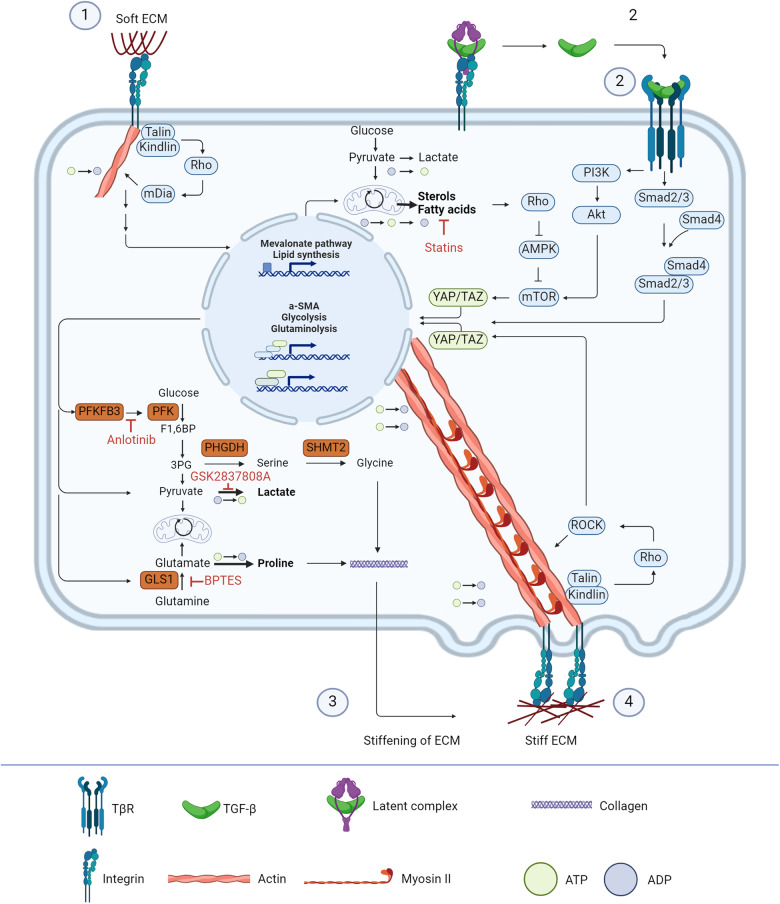
Tissue fibrosis is characterised by the high-energy consumption associated with myofibroblast contraction. Although myofibroblast contraction relies on ATP production, the role of cellular metabolism in myofibroblast contraction has not yet been elucidated. Studies have so far only focused on myofibroblast contraction regulators, such as integrin receptors, TGF-β and their shared transcription factor YAP/TAZ, in a fibroblast-myofibroblast transition setting. Additionally, the influence of the regulators on metabolism and vice versa have been described in this context. However, this has so far not yet been connected to myofibroblast contraction. This review focuses on the known and unknown of how cellular metabolism influences the processes leading to myofibroblast contraction and vice versa. We elucidate the signalling cascades responsible for myofibroblast contraction by looking at FMT regulators, mechanical cues, biochemical signalling, ECM properties and how they can influence and be influenced by cellular metabolism. By reviewing the existing knowledge on the link between cellular metabolism and the regulation of myofibroblast contraction, we aim to pinpoint gaps of knowledge and eventually help identify potential research targets to identify strategies that would allow switching tissue fibrosis towards tissue regeneration.
Overview
The claims and statistics of this paper haven’t been checked yet.
Free: it reads the open-access text and checks the first 5 claims that cite a source we can check. Create a free account to check every claim.
Integrity signals
Registry
Cites
Statistics
Figures
Verification
Claims the paper makes
The claims and statistics of this paper haven’t been checked yet.
Free: it reads the open-access text and checks the first 5 claims that cite a source we can check. Create a free account to check every claim.
Claims other papers make about this one
Each is checked against this paper’s own text: does it say what the citing paper says it does?
The source backs part of the claim, not all of it — or backs it for a different population, condition or comparison.
In the citing paper
“During the amplification phase, mechanotransductive signals converge with inflammatory pathways, YAP/TAZ activation synergizes with TGF-b signaling to promote myofibroblast transition and immune polarization (167-169).”
From The mechanotransduction-immune axis in organ fibrosis: dual regulatory mechanisms and translational therapeutic perspectives (2025) · doi:10.3389/fimmu.2025.1670213 · cites this paper as [168]
Experimental — accuracy not yet measuredIn the citing paper
“In the late stage, extensive ECM crosslinking induces irreversible stiffening and “mechanical memory,” sustaining a-SMA myofibroblast activation and impeding immunomodulation and tissue repair (168).”
From The mechanotransduction-immune axis in organ fibrosis: dual regulatory mechanisms and translational therapeutic perspectives (2025) · doi:10.3389/fimmu.2025.1670213 · cites this paper as [168]
Self-check
Percentages, sums and reported differences re-computed from the paper’s own numbers.
The self-check needs the paper’s full text.
Citations
Cites
Role of YAP/TAZ in mechanotransduction
Dupont, S., Morsut, L., Aragona, M., Enzo, E., Giulitti, S., Cordenonsi, M., Zanconato, F., Le Digabel, J., Forcato, M., Bicciato, S., et al. (2011) · Nature · doi:10.1038/nature10137 · Cited by 5,979
Cellular and molecular mechanisms of fibrosis
Wynn, T. (2008) · The Journal of Pathology · doi:10.1002/path.2277 · Cited by 4,495
TGF-β: the master regulator of fibrosis
Meng, X.-M., Nikolic-Paterson, D. J., & Lan, H. Y. (2016) · Nature Reviews Nephrology · doi:10.1038/nrneph.2016.48 · Cited by 3,528
Fibrotic disease and the TH1/TH2 paradigm
Wynn, T. A. (2004) · Nature Reviews Immunology · doi:10.1038/nri1412 · Cited by 1,765 · cited 1×
“Cardiac, lung and liver fi brosis are, for instance, responsible for 45 percent of all mortalities in the United States 1,3,4 .”
BackgroundNanoscale architecture of integrin-based cell adhesions
Kanchanawong, P., Shtengel, G., Pasapera, A. M., Ramko, E. B., Davidson, M. W., Hess, H. F., & Waterman, C. M. (2010) · Nature · doi:10.1038/nature09621 · Cited by 1,567 · cited 1×
“Similarly, binding to the RGD sequence in FN can switch on the intracellular signalling cascade by activating focal adhesionkinasesthatassociatewiththeC-terminaltailofintegrins,referred toasoutside-insignalling 27,28 .”
BackgroundTargeting cancer metabolism: a therapeutic window opens
Vander Heiden, M. G. (2011) · Nature Reviews Drug Discovery · doi:10.1038/nrd3504 · Cited by 1,411 · cited 1×
“Inoncology,theknowledgeabout metabolicdependenciesforcancercellshasledtonoveldrugdevelopment thattargetsmetabolicvulnerabilities 24 .”
New insights into TGF-β/Smad signaling in tissue fibrosis
Hu, H.-H., Chen, D.-Q., Wang, Y.-N., Feng, Y.-L., Cao, G., Vaziri, N. D., & Zhao, Y.-Y. (2018) · Chemico-Biological Interactions · doi:10.1016/j.cbi.2018.07.008 · Cited by 1,179
Metabolic control of YAP and TAZ by the mevalonate pathway
Sorrentino, G., Ruggeri, N., Specchia, V., Cordenonsi, M., Mano, M., Dupont, S., Manfrin, A., Ingallina, E., Sommaggio, R., Piazza, S., et al. (2014) · Nature Cell Biology · doi:10.1038/ncb2936 · Cited by 776 · cited 2×
“Oneofthe fi rst to be reported as a link between YAP/TAZ and cellular metabolism was an activated mevalonate pathway 101,102 .”
BackgroundThe Impact of TGF-β on Lung Fibrosis: From Targeting to Biomarkers
Fernandez, I. E., & Eickelberg, O. (2012) · Proceedings of the American Thoracic Society · doi:10.1513/pats.201203-023aw · Cited by 679 · cited 1×
“The canonical signalling is well known for enhancing α -smooth muscle actin ( α SMA) expression and thereby causing FMT (extensively reviewed for renal 53 , hepatic 54 , lung 55 and cardiac fi brosis 56 ) 57 .”
BackgroundTherapy for Fibrotic Diseases: Nearing the Starting Line
Friedman, S. L., Sheppard, D., Duffield, J. S., & Violette, S. (2013) · Science Translational Medicine · doi:10.1126/scitranslmed.3004700 · Cited by 655
Cited by
Fibroblasts in immune responses, inflammatory diseases and therapeutic implications
Zou, A. E., Kongthong, S., Mueller, A. A., & Brenner, M. B. (2025) · Nature Reviews Rheumatology · doi:10.1038/s41584-025-01259-0 · Cited by 69
“The metabolic regulation of fibroblasts is also altered in disease, presumably owing to the energetic and biosynthetic demands of sustained activation and the changes in nutrient and oxygen content in diseased tissues 219–225 .”
(2025) · doi:10.3389/fimmu.2025.1670213 · Cited by 29
Liu, Q., Li, J., Li, X., Zhang, L., Yao, S., Wang, Y., Tuo, B., & Jin, H. (2024) · International Journal of Molecular Medicine · doi:10.3892/ijmm.2024.5429 · Cited by 24
“The activation of HScs is characterized by accelerated cell proliferation and increased EcM secretion, with aerobic glycolysis providing the substances and energy required for cell proliferation and phenotypic transformation (64,75).”
BackgroundDermal white adipose tissue: A new modulator in wound healing and regeneration
Wu, Z., Wang, Z., Chen, T., Wang, D., Zhou, F., Zhang, G., Wei, S., & Wu, Y. (2024) · Regenerative Therapy · doi:10.1016/j.reth.2024.11.015 · Cited by 20
Fibroblasts as regulators of lung immunity, repair and fibrosis
Bell, P. T., & Belz, G. T. (2026) · Nature reviews. Immunology · doi:10.1038/s41577-026-01268-4 · Cited by 22
“The transition of fibroblasts into contractile myofibroblasts is energetically demanding, requiring a metabolic shift to support proliferation and protein synthesis 146 .”
Chen, L., Huang, Y., Zhang, N., Qu, J., Fang, Y., Fu, J., Yuan, Y., Zhang, Q., Li, H., Wen, Z., et al. (2024) · MedComm · doi:10.1002/mco2.654 · Cited by 15
“74 Recently, Wei et al. 75 found that β 1 integrin ( Itgb1 ) is the key and conserved molecule for cell surface interactions and transitional information in regulating ECM signaling between embryonic and extraembryonic lineages with stem cell coculture.”
BackgroundCellular cross-talk drives mesenchymal transdifferentiation in diabetic kidney disease
Chatterjee, A., Tumarin, J., & Prabhakar, S. S. (2025) · Frontiers in Medicine · doi:10.3389/fmed.2024.1499473 · Cited by 18
Sbrana, F., Chellini, F., Tani, A., Parigi, M., Garella, R., Palmieri, F., Zecchi‐Orlandini, S., Squecco, R., & Sassoli, C. (2024) · Microscopy Research and Technique · doi:10.1002/jemt.24648 · Cited by 11
“…were confirmed here and documented in the literature (Cappitti et al., 2023; Chellini, Tani, Vallone, Nosi, Pavan, Bambi, & Sassoli, 2018; Noom et al., 2024; Pakshir et al., 2020; Sassoli et al., 2013; Sassoli et al., 2016; Sassoli, Garella, et al., 2022; Squecco et al., 2015; Younesi et…”
Yan, H., Jian, Z., & Wu, T. (2025) · Oral Science and Homeostatic Medicine · doi:10.26599/oshm.2025.9610025 · Cited by 14
Hydrogel‐Mediated Preservation of Live Tumor Explants for Drug Development in Peritoneal Metastases
Wu, Z., Ding, R. H., Zhao, Z., Chong, C. Y. L., You, R., Zhou, H., Seah, D. H., Leow, W. Q., Lim, H. K., Shyamasundar, S., et al. (2025) · Advanced Materials · doi:10.1002/adma.202418647 · Cited by 13
Gudiño, V., Cho, J. W., Caballol, B., Corraliza, A. M., Veny, M., Dotti, I., Genaro, L. M., Sanzo-Machuca, Á., Melón-Ardanaz, E., Masamunt, M. C., et al. (2025) · Gut · doi:10.1136/gutjnl-2025-336246 · Cited by 15
D’Urso, M., van den Bersselaar, P., Pragnère, S., Maiuri, P., Bouten, C. V. C., & Kurniawan, N. A. (2025) · Mechanobiology in Medicine · doi:10.1016/j.mbm.2025.100158 · Cited by 10
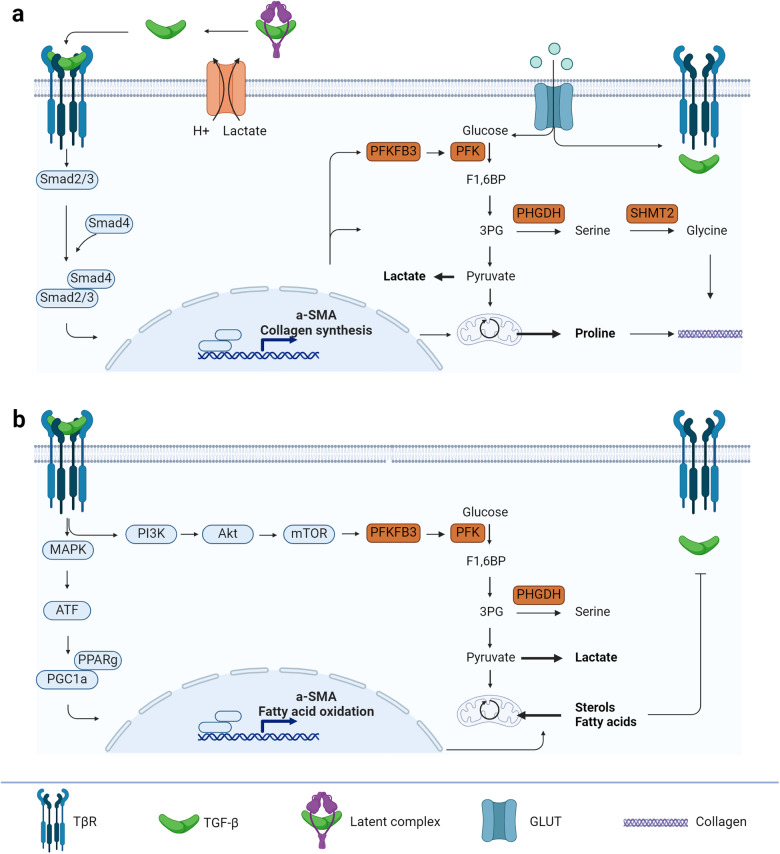
“First, fibroblasts and myofibroblasts produce and release TGF-β in a closed, inactive conformation, which is then embedded in the ECM as a large latent complex.”
InfluentialTargeting endothelial cells: A novel strategy for pulmonary fibrosis treatment
Zhang, X., Sha, Y., Wu, Y., Guan, H., Xu, Y., Wang, W., Zhang, W., Liu, Y., Zhu, L., & Li, H. (2025) · European Journal of Pharmacology · doi:10.1016/j.ejphar.2025.177472 · Cited by 9
Zhao, Q., Liu, H., Yang, Z., Han, X., Kang, A., Li, H., Ren, W., Chen, Q., Huan, Y., Xu, Y., et al. (2025) · Hepatology · doi:10.1097/hep.0000000000001302 · Cited by 14
Pan-Cancer Single-Cell RNA Sequencing Analysis Refines Multi-Origin Monocyte and Macrophage Lineages
Nguyen, T. D. T., Lee, A., Park, H. J., Shah, N., Mandzhieva, B., Lee, D., Jung, I., & Park, W. (2025) · Cancer Immunology Research · doi:10.1158/2326-6066.cir-24-1255 · Cited by 14
“Specifically, the Smad2/3 axis (activated by collagen/integrin signaling) supports fibroblast– myofibroblast transition and ECM deposition via FN1/collagen– CD44 interactions (68).”
Metabolic reprogramming in fibrosis-related diseases: underlying mechanisms and therapeutics
Feng, Y., Zhang, X., Wang, X., & Chen, C. (2026) · Molecular Biomedicine · doi:10.1186/s43556-026-00490-9 · Cited by 7
“Fibroblasts (Fbs), along with other mesenchymal cells, such as lung epithelial cells and hepatic stellate cells, are the major cell types responsible for maintaining ECM homeostasis [3].”
Müller, W. E. G., Schepler, H., Neufurth, M., Dobmeyer, R., Batel, R., Schröder, H. C., & Wang, X. (2024) · Theranostics · doi:10.7150/thno.100622 · Cited by 7
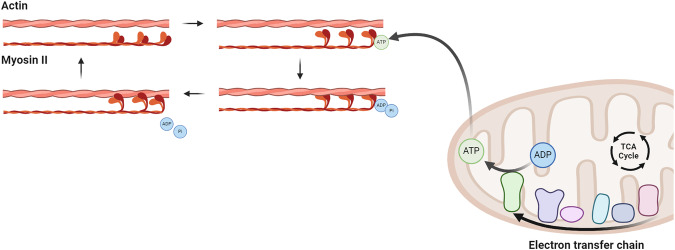
“The contraction and migration of myofibroblasts requires a considerable amount of ATP originating from cell metabolism [96].”
BackgroundMarradi, M., van Griensven, M., Beijer, N. R. M., de Boer, J., & Carlier, A. (2025) · Computational and Structural Biotechnology Journal · doi:10.1016/j.csbj.2025.07.022 · Cited by 6
“C C represents the local mechanical stimuli, which are induced by the stiffness mismatch with respect to native ECM at the implantation site (soft tissues) and, if present, by α SMA stress fibers contraction and excessive collagen deposition [33].”
Nicholas, S. E., Basu, S. K., Mandal, N. A., & Karamichos, D. (2024) · International Journal of Molecular Sciences · doi:10.3390/ijms25126560 · Cited by 4
“Previous studies have investigated the role of transforming growth factor beta (TGF-β ) isoforms in cells and fibrotic tissues [7–13].”
BackgroundZhang, L., Lin, W. H., Di, C., Hou, H. T., Chen, H. X., Zhou, J., Yang, Q., & He, G. (2025) · Journal of Pharmaceutical and Biomedical Analysis · doi:10.1016/j.jpba.2025.117211 · Cited by 5
Hermann, H. J., Wuebbles, R. D., Dagda, M., Muñoz, A., Parker, L. L., Guzman, P. C. C., Byrne, L. T., Moore, S. A., & Burkin, D. J. (2025) · JCI Insight · doi:10.1172/jci.insight.194581 · Cited by 2
“Similarly, the elevated GLUT1 signal may reflect contributions from proliferative myofibroblasts, which rely heavily on aerobic glycolysis (39, 40).”
YANG, Z., Tong, W., Zhang, K., & Guo-xin, H. (2026) · Liver Research · doi:10.1016/j.livres.2026.03.001 · Cited by 3
Xu, Y., Karbasion, N., Toure, T. A., Esche, J. A., Otani, B. K., Snider, J. C., & Bersi, M. R. (2025) · Cellular and Molecular Bioengineering · doi:10.1007/s12195-025-00864-z · Cited by 2
“Even though BAT and T-PVAT secretomes enhance fibroblast stiffness and viscous resistance, mechano-phenotyping further demonstrated that RAGE-DPP4 interactions in T-PVAT may engage novel mechanotransduction pathways to induce excessive fibroblast activation and stiffening [13, 39, 51].”
Amino acid metabolism-related model for prognosis and immunity in gastric cancer
Zhang, H., Ye, W., Zeng, L., Wang, L., & Gui, L. (2026) · Amino Acids · doi:10.1007/s00726-026-03507-3 · Cited by 2
“Myofibroblasts, which share functional char - acteristics with cancer-associated fibroblasts (CAFs), are known to participate in metabolic symbiosis by supply - ing nutrients such as amino acids, lactate, or glutamine to tumor cells (Noom et al. 2024).”
Delean, S., Goetz, C., Zevering, Y., & Perone, J. (2026) · Cornea · doi:10.1097/ico.0000000000004144 · Cited by 1
Zanin-Silva, D. C., van Kooten, N. J. T., Papadimitriou, T. I., Dorst, D. N., Walgreen, B., Vitters, E. L., van den Bosch, M. H. J., Koenders, M., & van Caam, A. (2026) · bioRxiv (Cold Spring Harbor Laboratory) · doi:10.64898/2026.02.12.705496
Khantham, C., Rodriguez‐Martin, I., Kerick, M., Villanueva-Martín, G., Callejas, J. L., Ortego‐Centeno, N., del Castillo, A. G., Simeón‐Aznar, C. P., Ruíz‐Villaverde, R., Andrés‐León, E., et al. (2026) · bioRxiv (Cold Spring Harbor Laboratory) · doi:10.64898/2026.05.06.723148
Lipid-Regulated State Transitions in Inflammation, Regeneration, and Chronic Disease
Al-Ewaidat, O. A., & Naffaa, M. M. (2026) · Lipidology · doi:10.3390/lipidology3020020 · Cited by 2
“The relevant state transition is therefore not simply “lipid dysregulation causes fibrosis,” but rather that lipid-associated changes may help bias the repair environment away from adaptive restoration and toward sustained remodeling [161,172,228].”
Generative Modeling of Mouse Embryogenesis for Fate and Disease PredictionPreprint
Fan, Y., Liu, X., Wang, Y., Zeng, Z., Li, L., Qiu, X., & Li, Y. (2026) · bioRxiv (Cold Spring Harbor Laboratory) · doi:10.64898/2026.06.18.733286 · Cited by 1
Cao, B., Liu, P., Tan, Y., & Wei, Y. (2026) · Frontiers in Oncology · doi:10.3389/fonc.2026.1871514
A PIEZO ‐Gated Mechanotransduction Timing Window Governs Scar Commitment in Wound Healing
Hamad, R. S., Ali, M. A. M., Chaudhary, A. A., Elmorsy, E. A., Amer, M. M., Abdel-Hamed, M. R., El-kott, A. F., Eltantawy, W., AlShehri, M. A., Eissa, H., et al. (2026) · Wound Repair and Regeneration · doi:10.1111/wrr.70205
Metadata
- Authors
- Noom, A., Sawitzki, B., Knaus, P., & Duda, G. N.
- Affiliations
- Berlin-Brandenburger Centrum für Regenerative Therapien (DE)
- Humboldt-Universität zu Berlin (DE)
- Freie Universität Berlin (DE)
- Corresponding author
- Duda, Georg N.
- Venue
- npj Regenerative Medicine
- Published
- 2024-04-03
- Volume
- 9
- Issue
- 1
- Pages
- 15-15
- ISSN
- 2057-3995 (ISSN-L)
- PMC
- PMC10991391
- OpenAlex
- W4393902108
- Cited by
- 31
- References
- 116
- Citations by year
- 2026: 11 · 2025: 14 · 2024: 6
- FWCI
- 1.35
- Type
- journal article
- Language
- en
- Open access
- gold
- doi.org
- Licence
- cc-by
- creativecommons.org/licenses/by/4.0 (tdm)
- creativecommons.org/licenses/by/4.0 (vor)
- Locations
- npj Regenerative Medicine (publishedVersion, cc-by)
- PubMed Central (publishedVersion, cc-by)
- PubMed (publishedVersion)
- Informationszentrum Lebenswissenschaften (ZB MED) (submittedVersion, cc-by)
- Refubium (Universitätsbibliothek der Freien Universität Berlin) (submittedVersion, cc-by)
- DOAJ (DOAJ: Directory of Open Access Journals) (submittedVersion, cc-by-sa)
- Universitätsbibliothek der FU Berlin Hochschulschriftenstelle u. Dokumentenserver (cc-by)
- Funders
- Deutsche Forschungsgemeinschaft (CRC 1444)
- Topics
- Health Sciences › Medicine › Surgery › Wound Healing and Treatments
- Health Sciences › Medicine › Hepatology › Liver physiology and pathology
- Life Sciences › Biochemistry, Genetics and Molecular Biology › Molecular Biology › TGF-β signaling in diseases
- Keywords
- cellular metabolism, fibrosis, myofibroblast differentiation, YAP/TAZ, TGF-beta, integrin signaling, extracellular matrix, mechanical cues, ATP production, tissue regeneration
About these checks
Registry, retraction, Cites and statistics results are computed, not judged, with one exception: a printed reference that no index lists is read once by a model before it counts as a citation error. Claims are extracted by a model and kept only when their quote appears verbatim in the text; each cited source is then checked, with a model’s help, for whether it says what the claim relies on. Those verdicts can be wrong — read the claim’s quote and the cited source before relying on one.
Statistics and arithmetic are recomputed, not judged.
Confidence bands are shown only for fields calibrated on our annotated test set. None is calibrated yet, so no band is shown.
What counts as a claim ›How we measure confidence ›How we check this ›
Are you an author, or do you see a problem with this page? Request a review
Data sources
Bibliographic data: Semantic Scholar, OpenAlex, Crossref.
Contains information from the Semantic Scholar Academic Graph Datasets, made available under the ODC Attribution License (ODC-BY 1.0).
Semantic Scholar’s data is described in: Kinney, R., et al. (2023). The Semantic Scholar Open Data Platform. arXiv:2301.10140.
