

A two-way street - cellular metabolism and myofibroblast contraction
Open accessThe DOI matches its Crossref record; 117 of the 117 references it cites were found in a registry or an index.
Abstract
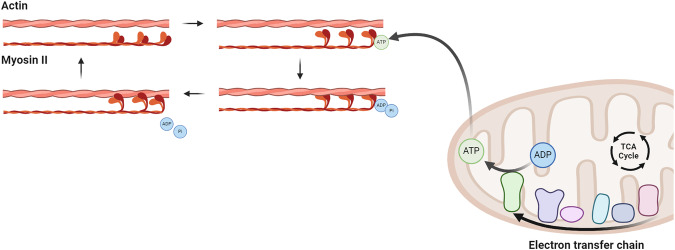
Tissue fibrosis is characterised by the high-energy consumption associated with myofibroblast contraction. Although myofibroblast contraction relies on ATP production, the role of cellular metabolism in myofibroblast contraction has not yet been elucidated. Studies have so far only focused on myofibroblast contraction regulators, such as integrin receptors, TGF-β and their shared transcription factor YAP/TAZ, in a fibroblast-myofibroblast transition setting. Additionally, the influence of the regulators on metabolism and vice versa have been described in this context. However, this has so far not yet been connected to myofibroblast contraction. This review focuses on the known and unknown of how cellular metabolism influences the processes leading to myofibroblast contraction and vice versa. We elucidate the signalling cascades responsible for myofibroblast contraction by looking at FMT regulators, mechanical cues, biochemical signalling, ECM properties and how they can influence and be influenced by cellular metabolism. By reviewing the existing knowledge on the link between cellular metabolism and the regulation of myofibroblast contraction, we aim to pinpoint gaps of knowledge and eventually help identify potential research targets to identify strategies that would allow switching tissue fibrosis towards tissue regeneration.
Overview
The claims and statistics of this paper haven’t been checked yet.
Free: it reads the open-access text and checks the first 5 claims that cite a source we can check. Create a free account to check every claim.
Integrity signals
Registry
Cites
Statistics
Figures
Verification
Claims the paper makes
The claims and statistics of this paper haven’t been checked yet.
Free: it reads the open-access text and checks the first 5 claims that cite a source we can check. Create a free account to check every claim.
Claims other papers make about this one
Each is checked against this paper’s own text: does it say what the citing paper says it does?
The source backs part of the claim, not all of it — or backs it for a different population, condition or comparison.
In the citing paper
“During the amplification phase, mechanotransductive signals converge with inflammatory pathways, YAP/TAZ activation synergizes with TGF-b signaling to promote myofibroblast transition and immune polarization (167-169).”
From The mechanotransduction-immune axis in organ fibrosis: dual regulatory mechanisms and translational therapeutic perspectives (2025) · doi:10.3389/fimmu.2025.1670213 · cites this paper as [168]
Experimental — accuracy not yet measuredIn the citing paper
“In the late stage, extensive ECM crosslinking induces irreversible stiffening and “mechanical memory,” sustaining a-SMA myofibroblast activation and impeding immunomodulation and tissue repair (168).”
From The mechanotransduction-immune axis in organ fibrosis: dual regulatory mechanisms and translational therapeutic perspectives (2025) · doi:10.3389/fimmu.2025.1670213 · cites this paper as [168]
Self-check
Percentages, sums and reported differences re-computed from the paper’s own numbers.
The self-check needs the paper’s full text.
Citations
Cites
Role of YAP/TAZ in mechanotransduction
Dupont, S., Morsut, L., Aragona, M., Enzo, E., Giulitti, S., Cordenonsi, M., Zanconato, F., Le Digabel, J., Forcato, M., Bicciato, S., et al. (2011) · Nature · doi:10.1038/nature10137 · Cited by 5,979
Cellular and molecular mechanisms of fibrosis
Wynn, T. (2008) · The Journal of Pathology · doi:10.1002/path.2277 · Cited by 4,495
TGF-β: the master regulator of fibrosis
Meng, X.-M., Nikolic-Paterson, D. J., & Lan, H. Y. (2016) · Nature Reviews Nephrology · doi:10.1038/nrneph.2016.48 · Cited by 3,528
Fibrotic disease and the TH1/TH2 paradigm
Wynn, T. A. (2004) · Nature Reviews Immunology · doi:10.1038/nri1412 · Cited by 1,765 · cited 1×
“Cardiac, lung and liver fi brosis are, for instance, responsible for 45 percent of all mortalities in the United States 1,3,4 .”
BackgroundNanoscale architecture of integrin-based cell adhesions
Kanchanawong, P., Shtengel, G., Pasapera, A. M., Ramko, E. B., Davidson, M. W., Hess, H. F., & Waterman, C. M. (2010) · Nature · doi:10.1038/nature09621 · Cited by 1,567 · cited 1×
“Similarly, binding to the RGD sequence in FN can switch on the intracellular signalling cascade by activating focal adhesionkinasesthatassociatewiththeC-terminaltailofintegrins,referred toasoutside-insignalling 27,28 .”
BackgroundTargeting cancer metabolism: a therapeutic window opens
Vander Heiden, M. G. (2011) · Nature Reviews Drug Discovery · doi:10.1038/nrd3504 · Cited by 1,411 · cited 1×
“Inoncology,theknowledgeabout metabolicdependenciesforcancercellshasledtonoveldrugdevelopment thattargetsmetabolicvulnerabilities 24 .”
New insights into TGF-β/Smad signaling in tissue fibrosis
Hu, H.-H., Chen, D.-Q., Wang, Y.-N., Feng, Y.-L., Cao, G., Vaziri, N. D., & Zhao, Y.-Y. (2018) · Chemico-Biological Interactions · doi:10.1016/j.cbi.2018.07.008 · Cited by 1,179
Metabolic control of YAP and TAZ by the mevalonate pathway
Sorrentino, G., Ruggeri, N., Specchia, V., Cordenonsi, M., Mano, M., Dupont, S., Manfrin, A., Ingallina, E., Sommaggio, R., Piazza, S., et al. (2014) · Nature Cell Biology · doi:10.1038/ncb2936 · Cited by 776 · cited 2×
“Oneofthe fi rst to be reported as a link between YAP/TAZ and cellular metabolism was an activated mevalonate pathway 101,102 .”
BackgroundThe Impact of TGF-β on Lung Fibrosis: From Targeting to Biomarkers
Fernandez, I. E., & Eickelberg, O. (2012) · Proceedings of the American Thoracic Society · doi:10.1513/pats.201203-023aw · Cited by 679 · cited 1×
“The canonical signalling is well known for enhancing α -smooth muscle actin ( α SMA) expression and thereby causing FMT (extensively reviewed for renal 53 , hepatic 54 , lung 55 and cardiac fi brosis 56 ) 57 .”
BackgroundTherapy for Fibrotic Diseases: Nearing the Starting Line
Friedman, S. L., Sheppard, D., Duffield, J. S., & Violette, S. (2013) · Science Translational Medicine · doi:10.1126/scitranslmed.3004700 · Cited by 655
Cao, W., Daniel, K. W., Robidoux, J., Puigserver, P., Medvedev, A. V., Bai, X., Floering, L. M., Spiegelman, B. M., & Collins, S. (2004) · Molecular and Cellular Biology · doi:10.1128/mcb.24.7.3057-3067.2004 · Cited by 605 · cited 1×
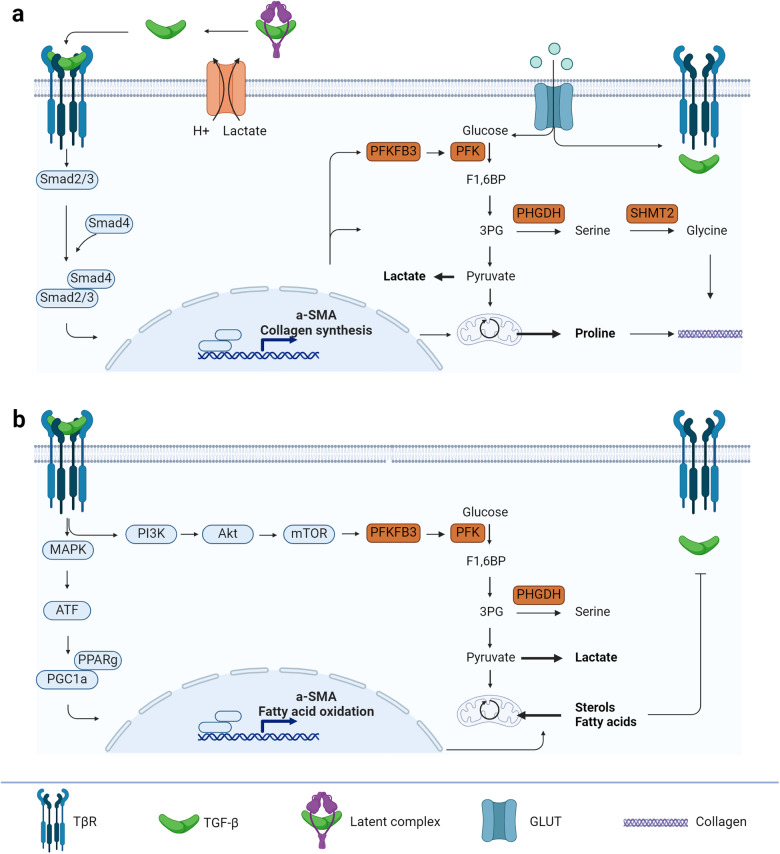
“Likewise, MAPK was shown to phosphorylate activating transcription factor 2 (ATF2) in a redox-dependent manner, and consequently induce transcriptional activation of peroxisome proliferator-activator receptor (PPAR) gamma co-activator-1a (PGC-1a) 74 .”
BackgroundZiyadeh, F. N., Sharma, K., Ericksen, M., & Wolf, G. (1994) · Journal of Clinical Investigation · doi:10.1172/jci117004 · Cited by 597 · cited 2×
“It started with exposure to high glucose concentrations, which enhanced TGF-β production 80,81 .”
BackgroundGlycolytic Reprogramming in Myofibroblast Differentiation and Lung Fibrosis
Xie, N., Tan, Z., Banerjee, S., Cui, H., Ge, J., Liu, R.-M., Bernard, K., Thannickal, V. J., & Liu, G. (2015) · American Journal of Respiratory and Critical Care Medicine · doi:10.1164/rccm.201504-0780oc · Cited by 582
Mechanical regulation of glycolysis via cytoskeleton architecture
Park, J. S., Burckhardt, C. J., Lazcano, R., Solis, L. M., Isogai, T., Li, L., Chen, C. S., Gao, B., Minna, J. D., Bachoo, R., et al. (2020) · Nature · doi:10.1038/s41586-020-1998-1 · Cited by 575
Cellular energy stress induces AMPK-mediated regulation of YAP and the Hippo pathway
Mo, J.-S., Meng, Z., Kim, Y. C., Park, H. W., Hansen, C. G., Kim, S., Lim, D.-S., & Guan, K.-L. (2015) · Nature Cell Biology · doi:10.1038/ncb3111 · Cited by 557 · cited 1×
“For example, AMPK inhibits YAP/TAZ activity upon glucose star-vation, whereas mTOR promotesYAP/TAZ nuclear localisation upon high glucose concentrations 98,99 .”
BackgroundAMPK modulates Hippo pathway activity to regulate energy homeostasis
Wang, W., Xiao, Z.-D., Li, X., Aziz, K. E., Gan, B., Johnson, R. L., & Chen, J. (2015) · Nature Cell Biology · doi:10.1038/ncb3113 · Cited by 549
Targeting fibrosis: mechanisms and clinical trials
Zhao, M., Wang, L., Wang, M., Zhou, S., Lu, Y., Cui, H., Racanelli, A. C., Zhang, L., Ye, T., Ding, B., et al. (2022) · Signal Transduction and Targeted Therapy · doi:10.1038/s41392-022-01070-3 · Cited by 547
Rho signaling, ROCK and mDia1, in transformation, metastasis and invasion
Narumiya, S., Tanji, M., & Ishizaki, T. (2009) · Cancer and Metastasis Reviews · doi:10.1007/s10555-008-9170-7 · Cited by 530 · cited 2×
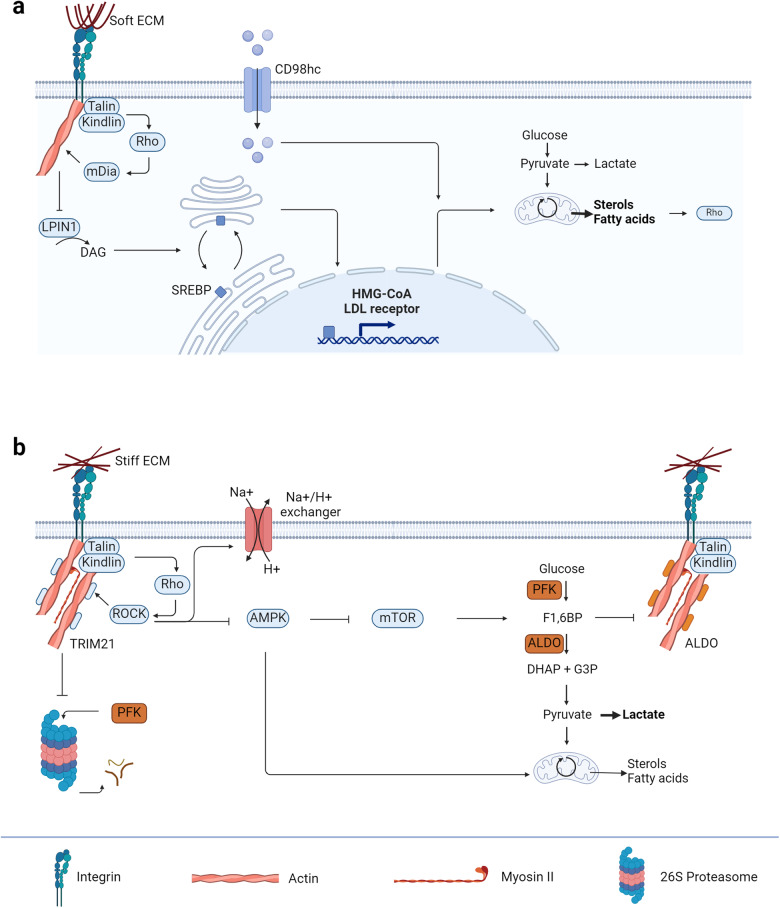
“First, soft ECM de fi ned with Young ’ s modulus ( E ) around 2 kPa 29 , such as FN, is mainly bound by α v integrins, whereas stiff ECM de fi ned with E above 35 kPa 29 , like collagen, is bound by β 1 integrins 30 .”
BackgroundLeahy, D. J., Hendrickson, W. A., Aukhil, L., & Erickson, H. P. (1992) · Science · doi:10.1126/science.1279805 · Cited by 503 · cited 1×
“Similarly, binding to the RGD sequence in FN can switch on the intracellular signalling cascade by activating focal adhesionkinasesthatassociatewiththeC-terminaltailofintegrins,referred toasoutside-insignalling 27,28 .”
BackgroundYAP/TAZ Are Mechanoregulators of TGF-β-Smad Signaling and Renal Fibrogenesis
Szeto, S. G., Narimatsu, M., Lu, M., He, X., Sidiqi, A. M., Tolosa, M. F., Chan, L., De Freitas, K., Bialik, J. F., Majumder, S., et al. (2016) · Journal of the American Society of Nephrology · doi:10.1681/asn.2015050499 · Cited by 462 · cited 1×
“Soft ECM inhibits TGF-β -induced Smad signalling by controlling Smad2/3 localisation, which is in turn regulated by YAP/TAZ 89,90 .”
BackgroundDenton (2007) · doi:10.1002/art.22289 · Cited by 447
Kolm-Litty, V, Sauer, U., Nerlich, A., Lehmann, R., & Schleicher, E. D. (1998) · Journal of Clinical Investigation · doi:10.1172/jci119875 · Cited by 430 · cited 1×
“Indeed, inhibition of glutamine:fructose-6-phosphate amidotransferase negatively impacted TGF-β production 82 .”
BackgroundCrosstalk between mechanotransduction and metabolism
Romani, P., Valcarcel-Jimenez, L., Frezza, C., & Dupont, S. (2021) · Nature Reviews Molecular Cell Biology · doi:10.1038/s41580-020-00306-w · Cited by 403
Asymmetric division of contractile domains couples cell positioning and fate specification
Maître, J.-L., Turlier, H., Illukkumbura, R., Eismann, B., Niwayama, R., Nédélec, F., & Hiiragi, T. (2016) · Nature · doi:10.1038/nature18958 · Cited by 381
Du, K., Hyun, J., Premont, R. T., Choi, S. S., Michelotti, G. A., Swiderska-Syn, M., Dalton, G. D., Thelen, E., Rizi, B. S., Jung, Y., et al. (2018) · Gastroenterology · doi:10.1053/j.gastro.2017.12.022 · Cited by 339 · cited 1×
“This was shown by inhibition of YAP, which led to inhibited glutaminolysis and suppression of fi brosis 94,95 .”
BackgroundWang, Z., Wu, Y., Wang, H., Zhang, Y., Mei, L., Fang, X., Zhang, X., Zhang, F., Chen, H., Liu, Y., et al. (2014) · Proceedings of the National Academy of Sciences · doi:10.1073/pnas.1319190110 · Cited by 316 · cited 2×
“Oneofthe fi rst to be reported as a link between YAP/TAZ and cellular metabolism was an activated mevalonate pathway 101,102 .”
BackgroundSterol regulatory element binding protein 1 couples mechanical cues and lipid metabolism
Bertolio, R., Napoletano, F., Mano, M., Maurer-Stroh, S., Fantuz, M., Zannini, A., Bicciato, S., Sorrentino, G., & Del Sal, G. (2019) · Nature Communications · doi:10.1038/s41467-019-09152-7 · Cited by 297
D'Urso, M., & Kurniawan, N. A. (2020) · Frontiers in Bioengineering and Biotechnology · doi:10.3389/fbioe.2020.609653 · Cited by 280
Theodosiou, M., Widmaier, M., Böttcher, R. T., Rognoni, E., Veelders, M., Bharadwaj, M., Lambacher, A., Austen, K., Müller, D. J., Zent, R., et al. (2016) · eLife · doi:10.7554/elife.10130 · Cited by 279 · cited 1×
“The inside-out signalling is the binding of actin to integrin receptors facilitated by Talin and Kindlinthatactivatesthereceptorfromthecytosolicside,causingittoreach outandgrabontoFNorcollagen 26 .”
BackgroundThe Influence of Metabolism on Drug Response in Cancer
Zaal, E. A., & Berkers, C. R. (2018) · Frontiers in Oncology · doi:10.3389/fonc.2018.00500 · Cited by 272
Inhibiting aerobic glycolysis suppresses renal interstitial fibroblast activation and renal fibrosis
Ding, H., Jiang, L., Xu, J., Bai, F., Zhou, Y., Yuan, Q., Luo, J., Zen, K., & Yang, J. (2017) · American Journal of Physiology-Renal Physiology · doi:10.1152/ajprenal.00036.2017 · Cited by 250
Hu, X., Xu, Q., Wan, H., Hu, Y., Xing, S., Yang, H., Gao, Y., & He, Z. (2020) · Laboratory Investigation · doi:10.1038/s41374-020-0404-9 · Cited by 244
TGFβ-induced metabolic reprogramming during epithelial-to-mesenchymal transition in cancer
Hua, W., ten Dijke, P., Kostidis, S., Giera, M., & Hornsveld, M. (2020) · Cellular and Molecular Life Sciences · doi:10.1007/s00018-019-03398-6 · Cited by 238
Extracellular matrix mechanical cues regulate lipid metabolism through Lipin-1 and SREBP
Romani, P., Brian, I., Santinon, G., Pocaterra, A., Audano, M., Pedretti, S., Mathieu, S., Forcato, M., Bicciato, S., Manneville, J.-B., et al. (2019) · Nature Cell Biology · doi:10.1038/s41556-018-0270-5 · Cited by 234 · cited 10×
“Fascinatingly, FAO enhanced the expression of TGF-β 85 , whereas its counterpart fatty acid synthesis reduced the TbRI and TbRII levels at the cell membrane.”
BackgroundInfluentialMetabolic Reprogramming Is Required for Myofibroblast Contractility and Differentiation
Bernard, K., Logsdon, N. J., Ravi, S., Xie, N., Persons, B. P., Rangarajan, S., Zmijewski, J. W., Mitra, K., Liu, G., Darley-Usmar, V. M., et al. (2015) · Journal of Biological Chemistry · doi:10.1074/jbc.m115.646984 · Cited by 224 · cited 1×
“This stimulates not only glycolysis but also mitochondrial biogenesis which is required for the expression of a-SMA 75 .”
BackgroundYap reprograms glutamine metabolism to increase nucleotide biosynthesis and enable liver growth
Cox, A. G., Hwang, K. L., Brown, K. K., Evason, K. J., Beltz, S., Tsomides, A., O’Connor, K., Galli, G. G., Yimlamai, D., Chhangawala, S., et al. (2016) · Nature Cell Biology · doi:10.1038/ncb3389 · Cited by 215 · cited 2×
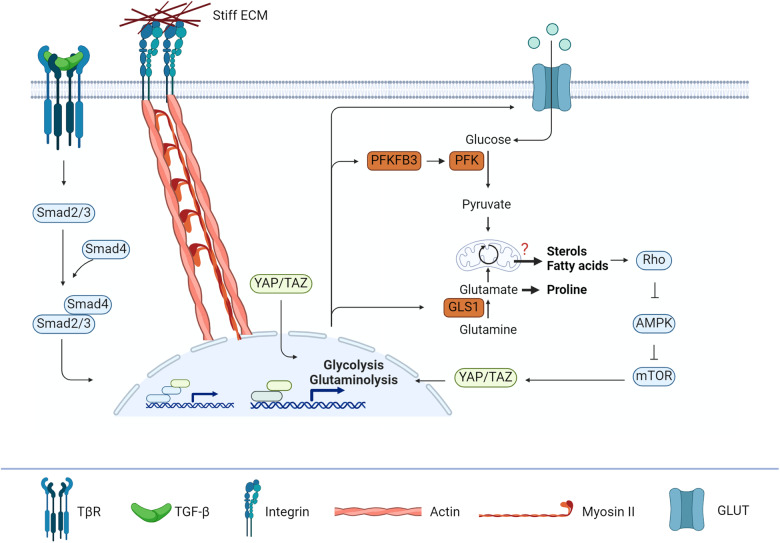
“Additionally, TGF-β enhances the glutaminolysis activity of myo fi broblasts 21,23 , which can also be observed by YAP/TAZ stimulation 94 .”
BackgroundTeixeira, A. F., ten Dijke, P., & Zhu, H.-J. (2020) · Frontiers in Cell and Developmental Biology · doi:10.3389/fcell.2020.00605 · Cited by 211 · cited 1×
“Although promising, no effective drugs are currently in clinical use 12 .”
BackgroundMetabolic heterogeneity of idiopathic pulmonary fibrosis: a metabolomic study
Zhao, Y. D., Yin, L., Archer, S., Lu, C., Zhao, G., Yao, Y., Wu, L., Hsin, M., Waddell, T. K., Keshavjee, S., et al. (2017) · BMJ Open Respiratory Research · doi:10.1136/bmjresp-2017-000183 · Cited by 208
TGF-β2 is an exercise-induced adipokine that regulates glucose and fatty acid metabolism
Takahashi, H., Alves, C. R. R., Stanford, K. I., Middelbeek, R. J. W., Nigro, P., Ryan, R. E., Xue, R., Sakaguchi, M., Lynes, M. D., So, K., et al. (2019) · Nature Metabolism · doi:10.1038/s42255-018-0030-7 · Cited by 204
p160ROCK mediates RhoA activation of Na-H exchange
Tominaga, T. (1998) · The EMBO Journal · doi:10.1093/emboj/17.16.4712 · Cited by 202 · cited 1×
“Moreover, Rock promotes the activity of Na/H exchanger since high glycolytic rates lead to intracellular accumulation of lactate and acidi fi cation of cells, which negatively regulates enzymes and focal adhesions at integrins 38,39 .”
BackgroundNa–H Exchange Acts Downstream of RhoA to Regulate Integrin-induced Cell Adhesion and Spreading
Tominaga, T., & Barber, D. L. (1998) · Molecular Biology of the Cell · doi:10.1091/mbc.9.8.2287 · Cited by 199 · cited 1×
“Moreover, Rock promotes the activity of Na/H exchanger since high glycolytic rates lead to intracellular accumulation of lactate and acidi fi cation of cells, which negatively regulates enzymes and focal adhesions at integrins 38,39 .”
BackgroundTGF-β in fibrosis by acting as a conductor for contractile properties of myofibroblasts
Vallée, A., & Lecarpentier, Y. (2019) · Cell & Bioscience · doi:10.1186/s13578-019-0362-3 · Cited by 194
Glutamine Metabolism Is Required for Collagen Protein Synthesis in Lung Fibroblasts
Hamanaka, R. B., O’Leary, E. M., Witt, L. J., Tian, Y., Gökalp, G. A., Meliton, A. Y., Dulin, N. O., & Mutlu, G. M. (2019) · American Journal of Respiratory Cell and Molecular Biology · doi:10.1165/rcmb.2019-0008oc · Cited by 193 · cited 5×
“…convert glutamate to proline and a knockdown of pyrroline-5-carboxylate synthase (P5CS), the enzyme responsible for this conversion, attenuated the collagen production induced by TGF-β and even supplementing the medium with extracellular proline did not rescue the collagen production 23,63 .”
BackgroundInfluentialProline biosynthesis is a vent for TGFβ‐induced mitochondrial redox stress
Schwörer, S., Berisa, M., Violante, S., Qin, W., Zhu, J., Hendrickson, R. C., Cross, J. R., & Thompson, C. B. (2020) · The EMBO Journal · doi:10.15252/embj.2019103334 · Cited by 193
Lnc RNA wires up Hippo and Hedgehog signaling to reprogramme glucose metabolism
Zheng, X., Han, H., Liu, G., Ma, Y., Pan, R., Sang, L., Li, R., Yang, L., Marks, J. R., Wang, W., et al. (2017) · The EMBO Journal · doi:10.15252/embj.201797609 · Cited by 191 · cited 1×
“Additionally, hexokinase and PFKB3 are induced by YAP/TAZ 92 , which together with GLUT1 expression causes increased glycolytic activity in fi broblasts.”
BackgroundPivotal Role of TGF-β/Smad Signaling in Cardiac Fibrosis: Non-coding RNAs as Effectual Players
Saadat, S., Noureddini, M., Mahjoubin-Tehran, M., Nazemi, S., Shojaie, L., Aschner, M., Maleki, B., Abbasi-kolli, M., Rajabi Moghadam, H., Alani, B., et al. (2021) · Frontiers in Cardiovascular Medicine · doi:10.3389/fcvm.2020.588347 · Cited by 179 · cited 1×
“The canonical signalling is well known for enhancing α -smooth muscle actin ( α SMA) expression and thereby causing FMT (extensively reviewed for renal 53 , hepatic 54 , lung 55 and cardiac fi brosis 56 ) 57 .”
BackgroundPalomer, X., Álvarez-Guardia, D., Rodríguez-Calvo, R., Coll, T., Laguna, J. C., Davidson, M. M., Chan, T. O., Feldman, A. M., & Vázquez-Carrera, M. (2009) · Cardiovascular Research · doi:10.1093/cvr/cvn327 · Cited by 177
Asano, Y., Ihn, H., Yamane, K., Jinnin, M., & Tamaki, K. (2006) · The American Journal of Pathology · doi:10.2353/ajpath.2006.041306 · Cited by 175
Regulation of ATP utilization during metastatic cell migration by collagen architecture
Zanotelli, M. R., Goldblatt, Z. E., Miller, J. P., Bordeleau, F., Li, J., VanderBurgh, J. A., Lampi, M. C., King, M. R., & Reinhart-King, C. A. (2018) · Molecular Biology of the Cell · doi:10.1091/mbc.e17-01-0041 · Cited by 174 · cited 1×
“Although not known for contractility, migration studieshave shown that the ATP-to-ADP ratio increases when fi broblasts are migrating to a denser collagen matrix 43 .”
BackgroundBernard, K., Logsdon, N. J., Benavides, G. A., Sanders, Y., Zhang, J., Darley-Usmar, V. M., & Thannickal, V. J. (2018) · Journal of Biological Chemistry · doi:10.1074/jbc.ra117.000444 · Cited by 174 · cited 4×
“Myo fi broblasts convert pyruvate to lactate for ATP production 19,20 and thereby resemble another cancer characteristic, namely enhanced glutaminolysis 21 – 23 .”
BackgroundInfluentialDrp1-mediated mitochondrial fission promotes renal fibroblast activation and fibrogenesis
Wang, Y., Lu, M., Xiong, L., Fan, J., Zhou, Y., Li, H., Peng, X., Zhong, Z., Wang, Y., Huang, F., et al. (2020) · Cell Death and Disease · doi:10.1038/s41419-019-2218-5 · Cited by 174
The integrin αVβ6 binds and activates latent TGFβ3
Annes, J. P., Rifkin, D. B., & Munger, J. S. (2002) · FEBS Letters · doi:10.1016/s0014-5793(01)03280-x · Cited by 173 · cited 2×
“Only after release the mature homodimeric ligand binds to their respective receptors on the cell membrane 8,9 .”
BackgroundTransforming Growth Factor (TGF)-β Promotes de Novo Serine Synthesis for Collagen Production
Nigdelioglu, R., Hamanaka, R. B., Meliton, A. Y., O'Leary, E., Witt, L. J., Cho, T., Sun, K., Bonham, C., Wu, D., Woods, P. S., et al. (2016) · Journal of Biological Chemistry · doi:10.1074/jbc.m116.756247 · Cited by 169 · cited 3×
“…Smad3 reduced the TGF-β -induced expression of the rate-limiting enzyme of glycolysis 6-phosphofructo-2-kinase/fructose-2,6-bisphosphatase 3 (PFKFB3) 69 and the rate-limiting enzyme of serine synthesis pathway phosphoglycerate dehydrogenase (PHGDH) and serine hydroxymethyltransferase 2 (SHMT2) 70 .”
BackgroundEssential Role of TGF-β Signaling in Glucose-Induced Cell Hypertrophy
Wu, L., & Derynck, R. (2009) · Developmental Cell · doi:10.1016/j.devcel.2009.05.010 · Cited by 167 · cited 1×
“Never-theless, high glucose concentrations do stimulate higher TbRI and TbRII levels at the cell membrane 83 .”
BackgroundThe influence of fatty acids on model cholesterol/phospholipid membranes
Hąc-Wydro, K., & Wydro, P. (2007) · Chemistry and Physics of Lipids · doi:10.1016/j.chemphyslip.2007.06.213 · Cited by 166
Ge, J., Cui, H., Xie, N., Banerjee, S., Guo, S., Dubey, S., Barnes, S., & Liu, G. (2018) · American Journal of Respiratory Cell and Molecular Biology · doi:10.1165/rcmb.2017-0238oc · Cited by 166 · cited 2×
“Smad4-knockdowninhibited directlytheTGF-β -induced TCA cycle activity and proline synthesis 21,22,63 .”
BackgroundThe bright side of fibroblasts: molecular signature and regenerative cues in major organs
Gomes, R. N., Manuel, F., & Nascimento, D. S. (2021) · npj Regenerative Medicine · doi:10.1038/s41536-021-00153-z · Cited by 156
Cancer Energy Metabolism: Shutting Power off Cancer Factory
Kim, S. (2017) · Biomolecules & Therapeutics · doi:10.4062/biomolther.2017.184 · Cited by 154 · cited 1×
“This includes the fermentation of lactate, even in the presence of oxygen, and is characterised by high glycolytic rates 15,18 .”
BackgroundYAP-Mediated Mechanotransduction in Skeletal Muscle
Fischer, M., Rikeit, P., Knaus, P., & Coirault, C. (2016) · Frontiers in Physiology · doi:10.3389/fphys.2016.00041 · Cited by 145
Self-citationThe role of Smad signaling cascades in cardiac fibrosis
Hanna, A., Humeres, C., & Frangogiannis, N. G. (2021) · Cellular Signalling · doi:10.1016/j.cellsig.2020.109826 · Cited by 132
Wong, S. W., Lenzini, S. B., Cooper, M. H., Mooney, D. J., & Shin, J. (2020) · Science Advances · doi:10.1126/sciadv.aaw0158 · Cited by 129
The Molecular Nature of the F-actin Binding Activity of Aldolase Revealed with Site-directed Mutants
Wang, J., Morris, A. J., Tolan, D. R., & Pagliaro, L. (1996) · Journal of Biological Chemistry · doi:10.1074/jbc.271.12.6861 · Cited by 125
Muir, A., Danai, L. V., & Vander Heiden, M. G. (2018) · Disease Models & Mechanisms · doi:10.1242/dmm.035758 · Cited by 121 · cited 1×
“Arecent developmentincancerresearchistheuseof3Dspheroidsthathaverevealed3D-speci fi c behaviours 114,115 .”
Yap regulates glucose utilization and sustains nucleotide synthesis to enable organ growth
Cox, A. G., Tsomides, A., Yimlamai, D., Hwang, K. L., Miesfeld, J. B., Galli, G. G., Fowl, B. H., Fort, M. W., Kimberly, Y., Sullivan, M. R., et al. (2018) · The EMBO Journal · doi:10.15252/embj.2018100294 · Cited by 120 · cited 1×
“Here, YAP/TAZ stimulate glucose transporter 1 (GLUT1) transcription 91 .”
BackgroundThe Metabolic Microenvironment Steers Bone Tissue Regeneration
Loeffler, J., Duda, G. N., Sass, F. A., & Dienelt, A. (2018) · Trends in Endocrinology & Metabolism · doi:10.1016/j.tem.2017.11.008 · Cited by 113
Self-citationActomyosin-Mediated Tension Orchestrates Uncoupled Respiration in Adipose Tissues
Tharp, K. M., Kang, M. S., Timblin, G. A., Dempersmier, J. M., Dempsey, G., Zushin, P. H., Benavides, J., Choi, C., Li, C. X., Jha, A. K., et al. (2018) · Cell Metabolism · doi:10.1016/j.cmet.2018.02.005 · Cited by 111 · cited 1×
“Ononehand,YAP/TAZwasfoundtodecreaselipiddeposition 96 .”
Mode of Interactions of Human Aldolase Isozymes with Cytoskeletons
Kusakabe, T., Motoki, K., & Hori, K. (1997) · Archives of Biochemistry and Biophysics · doi:10.1006/abbi.1997.0204 · Cited by 109 · cited 2×
“By binding to actin, aldolase inhibits cell motility and spreadingandtherebyisnotaccessibleforitsroleinglycolysis 44,45 .”
BackgroundTGF-β Promotes Metabolic Reprogramming in Lung Fibroblasts via mTORC1-dependent ATF4 Activation
O’Leary, E. M., Tian, Y., Niğdelioğlu, R., Witt, L. J., Çetin-Atalay, R., Meliton, A. Y., Woods, P. S., Kimmig, L. M., Sun, K. A., Gökalp, G. A., et al. (2020) · American Journal of Respiratory Cell and Molecular Biology · doi:10.1165/rcmb.2020-0143oc · Cited by 109 · cited 2×
“Additionally, higher expression levels were found for the serine synthesis pathway due to an accumulation of ATF4 through the PI3K-Akt-mTOR pathway 72 .”
BackgroundThe LATS2 tumor suppressor inhibits SREBP and suppresses hepatic cholesterol accumulation
Aylon, Y., Gershoni, A., Rotkopf, R., Koh, A., Sun, X., Fiel, M. I., Hoshida, Y., Friedman, S., Johnson, R., & Oren, M. (2016) · European Journal of Cancer · doi:10.1016/s0959-8049(16)61580-0 · Cited by 108
The LATS2 tumor suppressor inhibits SREBP and suppresses hepatic cholesterol accumulationPreprint
Aylon, Y., Gershoni, A., Rotkopf, R., Biton, I., Porat, Z., Koh, A. P., Sun, X., Lee, Y. A., Fiel, M., Hoshida, Y., et al. (2016) · Genes & Development · doi:10.1101/gad.274167.115 · Cited by 104 · cited 1×
“On the other hand, it was shown that YAP/TAZ accelerated lipid accumulation 97 .”
BackgroundGlutamine‐utilizing transaminases are a metabolic vulnerability of TAZ/YAP‐activated cancer cells
Yang, C., Stampouloglou, E., Kingston, N. M., Zhang, L., Monti, S., & Varelas, X. (2018) · EMBO Reports · doi:10.15252/embr.201643577 · Cited by 103
Liu, Q., Chu, H., Ma, Y., Wu, T., Qian, F., Ren, X., Tu, W., Zhou, X., Li, J., Wu, W., et al. (2016) · Scientific Reports · doi:10.1038/srep27610 · Cited by 102
Collagen Fibrils Mechanically Contribute to Tissue Contraction in an In Vitro Wound Healing Scenario
Brauer, E., Lippens, E., Klein, O., Nebrich, G., Schreivogel, S., Korus, G., Duda, G. N., & Petersen, A. (2019) · Advanced Science · doi:10.1002/advs.201801780 · Cited by 102
Self-citationGu, L., Larson Casey, J. L., Andrabi, S. A., Lee, J. H., Meza-Perez, S., Randall, T. D., & Carter, A. B. (2019) · Redox Biology · doi:10.1016/j.redox.2019.101307 · Cited by 100
Antibody-targeted myofibroblast apoptosis reduces fibrosis during sustained liver injury
Douglass, A., Wallace, K., Parr, R., Park, J., Durward, E., Broadbent, I. D., Barelle, C. J., Porter, A. J., & Wright, M. C. (2008) · Journal of Hepatology · doi:10.1016/j.jhep.2008.01.032 · Cited by 97
Geranylgeranylation signals to the Hippo pathway for breast cancer cell proliferation and migration
Mi, W., Lin, Q., Childress, C., Sudol, M., Robishaw, J. D., Berlot, C. H., Shabahang, M. M., & Yang, W. (2014) · Oncogene · doi:10.1038/onc.2014.251 · Cited by 89 · cited 1×
“Additionally, multiple studies showed that this inhibition was due to Rho inhibition, linking YAP/TAZ back to integrinsignalling 101 – 103 .”
BackgroundGencer, S., Oleinik, N., Kim, J., Panneer Selvam, S., De Palma, R., Dany, M., Nganga, R., Thomas, R. J., Senkal, C. E., Howe, P. H., et al. (2017) · Science Signaling · doi:10.1126/scisignal.aam7464 · Cited by 83
Kwan, B., Fuhrer, T., Zhang, J., Darshi, M., Van Espen, B., Montemayor, D., de Boer, I. H., Dobre, M., Hsu, C.-Y., Kelly, T. N., et al. (2020) · American Journal of Kidney Diseases · doi:10.1053/j.ajkd.2020.01.019 · Cited by 83
Taylor, K. A., & Taylor, D. W. (1994) · Biophysical Journal · doi:10.1016/s0006-3495(94)80680-0 · Cited by 78 · cited 1×
“Thelatter is regulated by the abundance of glycolytic intermediates 44 – 46 , suggesting a potential in fl uence of metabolism on actin dynamics.”
BackgroundMetabolic Features of Multiple Myeloma
El Arfani, C., De Veirman, K., Maes, K., De Bruyne, E., & Menu, E. (2018) · International Journal of Molecular Sciences · doi:10.3390/ijms19041200 · Cited by 75
Hewitson, T. D., & Smith, E. R. (2021) · Frontiers in Physiology · doi:10.3389/fphys.2021.645857 · Cited by 75 · cited 1×
“Remarkable, TGF-β also increased the labelling of multiple TCA cycle metabolites from glucose 63 , whereas it has been implied that TGF-β decouples the TCA cycle from the glycolysis to produce more ATP 19,20,64,65 .”
BackgroundChen, Z.-T., Gao, Q., Wu, M., Wang, M., Sun, R., Jiang, Y., Guo, Q., Guo, D.-C., Liu, C.-Y., Chen, S., et al. (2021) · Frontiers in Cardiovascular Medicine · doi:10.3389/fcvm.2021.701745 · Cited by 74 · cited 1×
“Indeed, glycolysis inhibition alleviated cardiac fi brosis 104 and joint osteoarthritis 105,106 .”
BackgroundIntegrin activation by the lipid molecule 25-hydroxycholesterol induces a proinflammatory response
Pokharel, S. M., Shil, N. K., GC, J. B., Colburn, Z. T., Tsai, S.-Y., Segovia, J. A., Chang, T.-H., Bandyopadhyay, S., Natesan, S., Jones, J. C. R., et al. (2019) · Nature Communications · doi:10.1038/s41467-019-09453-x · Cited by 73
Hasan, P., Saotome, M., Ikoma, T., Iguchi, K., Kawasaki, H., Iwashita, T., Hayashi, H., & Maekawa, Y. (2018) · Journal of Molecular and Cellular Cardiology · doi:10.1016/j.yjmcc.2018.07.004 · Cited by 72
Screening for YAP inhibitors identifies statins as modulators of fibrosis
Santos, D. M., Pantano, L., Pronzati, G., Grasberger, P., Probst, C. K., Black, K. E., Spinney, J. J., Hariri, L. P., Nichols, R., Lin, Y., et al. (2020) · American Journal of Respiratory Cell and Molecular Biology · doi:10.1165/rcmb.2019-0296oc · Cited by 72 · cited 2×
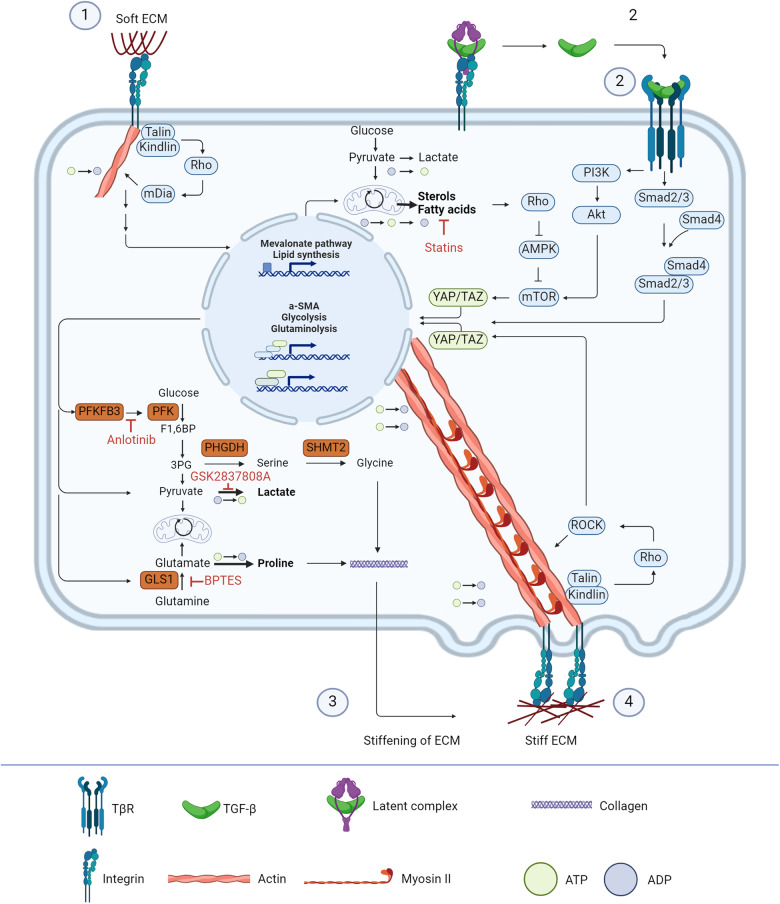
“By inhibiting key points in the feedforward loop, such as the mevalonate pathway with statins 109 – 112 , glycolysis with Anlotinib 104 , lactate production by GSK2837808A 106 , or glutaminolysis with BPTES 107,108 , it might be possible to break the loop and thereby switch the fi brotic cascades…”
BackgroundAnlotinib Inhibits PFKFB3-Driven Glycolysis in Myofibroblasts to Reverse Pulmonary Fibrosis
Chen, W., Zhang, J., Zhong, W., Liu, Y., Lu, Y., Zeng, Z., Huang, H., Wan, X., Meng, X., Zou, F., et al. (2021) · Frontiers in Pharmacology · doi:10.3389/fphar.2021.744826 · Cited by 68
Rho-Kinase Inhibition Ameliorates Metabolic Disorders through Activation of AMPK Pathway in Mice
Noda, K., Nakajima, S., Godo, S., Saito, H., Ikeda, S., Shimizu, T., Enkhjargal, B., Fukumoto, Y., Tsukita, S., Yamada, T., et al. (2014) · PLoS ONE · doi:10.1371/journal.pone.0110446 · Cited by 67 · cited 7×
“Nutrient availability regulates YAP/TAZ localisation through AMPK and mTOR in a similar manner as the ECM properties The in fl uence of cellular metabolism on YAP/TAZ has been known for a while.”
BackgroundInfluentialAbdalla, M., Goc, A., Segar, L., & Somanath, P. R. (2013) · Journal of Biological Chemistry · doi:10.1074/jbc.m113.504290 · Cited by 67 · cited 2×
“The inhibition of both pathways resulted in reduced contraction and could even attenuate fi brosis 58 – 62 .”
BackgroundMetabolic Reprogramming and Renal Fibrosis
Zhu, X., Jiang, L., Long, M., Wei, X. S., Hou, Y., & Du, Y. (2021) · Frontiers in Medicine · doi:10.3389/fmed.2021.746920 · Cited by 66 · cited 1×
“Consequently,anincreaseinfattyacid synthesis, in TGF-β production and a decrease in ECM degradation could be observed 79 .”
BackgroundRizzieri, D., Paul, B. A., & Kang, Y. (2019) · Journal of Cancer Metastasis and Treatment · doi:10.20517/2394-4722.2019.05 · Cited by 65
PHGDH as a mechanism for resistance in metabolically-driven cancers
Rathore, R., Schutt, C. R., & Tine, B. A. V. (2020) · Cancer Drug Resistance · doi:10.20517/cdr.2020.46 · Cited by 61 · cited 1×
“The last one is responsible for the conversion of serine into glycine 71 , which is known to get incorporated into collagen upon TGF-β stimulationandisametaboliccharacteristicformyo fi broblasts 23,70,72 .”
BackgroundMolecular Profiling Reveals a Common Metabolic Signature of Tissue Fibrosis
Zhang, J., Muise, E. S., Han, S., Kutchukian, P. S., Costet, P., Zhu, Y., Kan, Y., Zhou, H., Shah, V., Huang, Y., et al. (2020) · Cell Reports Medicine · doi:10.1016/j.xcrm.2020.100056 · Cited by 60
Effects of estradiol on corticosterone secretion in ovariectomized rats
Lo, M.-J., Chang, L.-L., & Wang, P. S. (2000) · Journal of Cellular Biochemistry · doi:10.1002/(sici)1097-4644(20000615)77:4<624::aid-jcb10>3.0.co;2-m · Cited by 60
Steffen, J., Ngo, J., Wang, S.-P., Williams, K., Kramer, H. F., Ho, G., Rodríguez, C. J., Yekkala, K., Amuzie, C. J., Bialecki, R., et al. (2022) · Molecular Metabolism · doi:10.1016/j.molmet.2022.101566 · Cited by 59
High glucose-induced TGF-beta 1 regulates mesangial production of heparan sulfate proteoglycan
Kolm-Litty, V., Sauer, U., Olgemooller, B., & Schleicher, E. D. (1996) · American Journal of Physiology-Renal Physiology · doi:10.1152/ajprenal.1996.270.5.f812 · Cited by 58 · cited 1×
“It started with exposure to high glucose concentrations, which enhanced TGF-β production 80,81 .”
BackgroundTGF-β1 modifies histone acetylation and acetyl-coenzyme A metabolism in renal myofibroblasts
Smith, E. R., Wigg, B., Holt, S. G., & Hewitson, T. D. (2019) · American Journal of Physiology-Renal Physiology · doi:10.1152/ajprenal.00513.2018 · Cited by 58
Li, H. M., Guo, H. L., Xu, C., Liu, L., Hu, S. Y., Hu, Z. H., Jiang, H., He, Y., Li, Y. J., Ke, J., et al. (2020) · Bone · doi:10.1016/j.bone.2020.115584 · Cited by 56
Pleiotropic effects of statins in the diseases of the liver
Janicko, M., Drazilova, S., Pella, D., Fedacko, J., & Jarcuska, P. (2016) · World Journal of Gastroenterology · doi:10.3748/wjg.v22.i27.6201 · Cited by 53 · cited 2×
“By inhibiting key points in the feedforward loop, such as the mevalonate pathway with statins 109 – 112 , glycolysis with Anlotinib 104 , lactate production by GSK2837808A 106 , or glutaminolysis with BPTES 107,108 , it might be possible to break the loop and thereby switch the fi brotic cascades…”
BackgroundGuh, J., Chuang, T., Chen, H.-C., Hung, W.-C., Lai, Y., Shin, S.-J., & Chuang, L.-Y. (2003) · Kidney International · doi:10.1046/j.1523-1755.2003.00330.x · Cited by 49 · cited 1×
“Fascinatingly, FAO enhanced the expression of TGF-β 85 , whereas its counterpart fatty acid synthesis reduced the TbRI and TbRII levels at the cell membrane.”
BackgroundGopalakrishna, P., Chaubey, S. K., Manogaran, P. S., & Pande, G. (2000) · PubMed · Cited by 46
Walker, M., Godin, M., & Pelling, A. E. (2020) · Integrative Biology · doi:10.1093/intbio/zyaa015 · Cited by 44
Michalik, M., Soczek, E., Kosińska, M., Rak, M., Wójcik‐Pszczoła, K., Lasota, S., Pierzchalska, M., Czyż, J., & Madeja, Z. (2013) · European Journal of Pharmacology · doi:10.1016/j.ejphar.2013.02.023 · Cited by 42
Boulter, E., Estrach, S., Tissot, F. S., Hennrich, M. L., Tosello, L., Cailleteau, L., de la Ballina, L. R., Pisano, S., Gavin, A.-C., & Féral, C. C. (2018) · Nature Communications · doi:10.1038/s41467-018-07268-w · Cited by 40
Regulation of SREBP-Mediated Gene Expression
Zhao, X., & Yang, F. (2012) · Acta Biophysica Sinica · doi:10.3724/sp.j.1260.2012.20034 · Cited by 39 · cited 1×
“…domain of SREBP is thereby released and shuttles into the nucleus where it drives the expression of fatty acids and cholesterol biosynthetic enzymes, such as fatty acid synthase, β -hydroxy β -methylglutaryl-CoA (HMG-CoA) reductase, and the low-density lipoprotein (LDL) receptor 32 – 35 .”
BackgroundSingh, V., Erady, C., & Balasubramanian, N. (2018) · Journal of Cell Science · doi:10.1242/jcs.215855 · Cited by 39
Cancer metabolism gets physical
DelNero, P., Hopkins, B. D., Cantley, L. C., & Fischbach, C. (2018) · Science Translational Medicine · doi:10.1126/scitranslmed.aaq1011 · Cited by 39
TGF-β1 is a regulator of the pyruvate dehydrogenase complex in fibroblasts
Smith, E. R., & Hewitson, T. D. (2020) · Scientific Reports · doi:10.1038/s41598-020-74919-8 · Cited by 35
Inhibition of glutaminase 1-mediated glutaminolysis improves pathological cardiac remodeling
Yoshikawa, S., Nagao, M., Toh, R., Shinohara, M., Iino, T., Irino, Y., Nishimori, M., Tanaka, H., Satomi‐Kobayashi, S., Ishida, T., et al. (2022) · American Journal of Physiology-Heart and Circulatory Physiology · doi:10.1152/ajpheart.00692.2021 · Cited by 29 · cited 2×
“…the fi brotic cascades back to regenerative cascades. https://doi.org/10.1038/s41536-024-00359-x fi broblast proliferation and function and targeting the glutaminolysis in heart tissue has been shown to reverse fi brosis 107,108 , demonstrating the critical role of GLS and glutaminolysis as well.”
BackgroundInfluentialApamin inhibits renal fibrosis via suppressing TGF-β1 and STAT3 signaling in vivo and in vitro
Gwon, M., An, H., Gu, H., Kim, Y.-A., Han, S. M., & Park, K. (2021) · Journal of Molecular Medicine · doi:10.1007/s00109-021-02087-x · Cited by 26
Brief Report: Statin Effects on Myocardial Fibrosis Markers in People Living With HIV
deFilippi, C. R., Christenson, R. H., Joyce, J. M., Park, J., Wu, A. Y., Fitch, K. V., Looby, S. E. D., Lu, M. T., Hoffmann, U., Grinspoon, S. K., et al. (2018) · JAIDS Journal of Acquired Immune Deficiency Syndromes · doi:10.1097/qai.0000000000001644 · Cited by 23 · cited 1×
“Similarly, cardiac and liver fi brosis improved by statin treatment 111,112 .”
BackgroundHui, S. T. Y., Wang, F., Stappenbeck, F., French, S. W., Magyar, C. E., Parhami, F., & Lusis, A. J. (2021) · Endocrinology Diabetes & Metabolism · doi:10.1002/edm2.296 · Cited by 23
Smoktunowicz, N. K., Alexander, R., Franklin, L., Williams, A. E., Holman, B. F., Mercer, P. F., Járai, G., Scotton, C. J., & Chambers, R. C. (2015) · Disease Models & Mechanisms · doi:10.1242/dmm.019984 · Cited by 22 · cited 1×
“Their receptors are transmembrane proteins and include a type I receptor (T β RI), also known as activin receptor-like kinase 5 (ALK5) 52 , and a type II receptor (T β RII), each carrying a serine/threonine kinase domain.”
BackgroundShapira, K. E., Ehrlich, M., & Henis, Y. I. (2018) · Molecular Biology of the Cell · doi:10.1091/mbc.e18-03-0175 · Cited by 22 · cited 1×
“However, it is worth mentioning that depletion of cholesterol does result in enhanced TGF-β sensitivity due to increased Smad2/3 expression and phosphorylation 113 .”
BackgroundLu, Y.-Y., Fang, C.-C., Hong, C., Wu, C., Lin, Y., Chang, K., & Lee, C. (2020) · Advances in Wound Care · doi:10.1089/wound.2019.0944 · Cited by 19
Inhibition of glutaminase to reverse fibrosis in iatrogenic laryngotracheal stenosis
Tsai, H., Motz, K., Ding, D., Lina, I. A., Murphy, M. K., Benner, D., Feeley, M., Hooper, J. E., & Hillel, A. T. (2020) · The Laryngoscope · doi:10.1002/lary.28493 · Cited by 18
He, Z., Yuan, X., Lu, Z., Li, Y., Li, Y., Liu, X., Wang, L., Zhang, Y., Zhou, Q., & Li, W. (2021) · Fundamental Research · doi:10.1016/j.fmre.2021.11.033 · Cited by 11
Metabolomic Profiling for Histologically Fibrotic Stage in Chronic Drug-Induced Liver Injury
He, X., Zhou, M.-X., Cheng, C., Li, S.-S., Gao, Y., Ma, Z.-T., Song, X.-H., Bai, Z.-F., Zou, Z.-S., Xiao, X.-H., et al. (2022) · Frontiers in Pharmacology · doi:10.3389/fphar.2022.896198 · Cited by 9
Cited by
Fibroblasts in immune responses, inflammatory diseases and therapeutic implications
Zou, A. E., Kongthong, S., Mueller, A. A., & Brenner, M. B. (2025) · Nature Reviews Rheumatology · doi:10.1038/s41584-025-01259-0 · Cited by 69
“The metabolic regulation of fibroblasts is also altered in disease, presumably owing to the energetic and biosynthetic demands of sustained activation and the changes in nutrient and oxygen content in diseased tissues 219–225 .”
(2025) · doi:10.3389/fimmu.2025.1670213 · Cited by 29
Liu, Q., Li, J., Li, X., Zhang, L., Yao, S., Wang, Y., Tuo, B., & Jin, H. (2024) · International Journal of Molecular Medicine · doi:10.3892/ijmm.2024.5429 · Cited by 24
“The activation of HScs is characterized by accelerated cell proliferation and increased EcM secretion, with aerobic glycolysis providing the substances and energy required for cell proliferation and phenotypic transformation (64,75).”
BackgroundDermal white adipose tissue: A new modulator in wound healing and regeneration
Wu, Z., Wang, Z., Chen, T., Wang, D., Zhou, F., Zhang, G., Wei, S., & Wu, Y. (2024) · Regenerative Therapy · doi:10.1016/j.reth.2024.11.015 · Cited by 20
Fibroblasts as regulators of lung immunity, repair and fibrosis
Bell, P. T., & Belz, G. T. (2026) · Nature reviews. Immunology · doi:10.1038/s41577-026-01268-4 · Cited by 22
“The transition of fibroblasts into contractile myofibroblasts is energetically demanding, requiring a metabolic shift to support proliferation and protein synthesis 146 .”
Metadata
- Authors
- Noom, A., Sawitzki, B., Knaus, P., & Duda, G. N.
- Affiliations
- Berlin-Brandenburger Centrum für Regenerative Therapien (DE)
- Humboldt-Universität zu Berlin (DE)
- Freie Universität Berlin (DE)
- Corresponding author
- Duda, Georg N.
- Venue
- npj Regenerative Medicine
- Published
- 2024-04-03
- Volume
- 9
- Issue
- 1
- Pages
- 15-15
- ISSN
- 2057-3995 (ISSN-L)
- PMC
- PMC10991391
- OpenAlex
- W4393902108
- Cited by
- 31
- References
- 116
- Citations by year
- 2026: 11 · 2025: 14 · 2024: 6
- FWCI
- 1.35
- Type
- journal article
- Language
- en
- Open access
- gold
- doi.org
- Licence
- cc-by
- creativecommons.org/licenses/by/4.0 (tdm)
- creativecommons.org/licenses/by/4.0 (vor)
- Locations
- npj Regenerative Medicine (publishedVersion, cc-by)
- PubMed Central (publishedVersion, cc-by)
- PubMed (publishedVersion)
- Informationszentrum Lebenswissenschaften (ZB MED) (submittedVersion, cc-by)
- Refubium (Universitätsbibliothek der Freien Universität Berlin) (submittedVersion, cc-by)
- DOAJ (DOAJ: Directory of Open Access Journals) (submittedVersion, cc-by-sa)
- Universitätsbibliothek der FU Berlin Hochschulschriftenstelle u. Dokumentenserver (cc-by)
- Funders
- Deutsche Forschungsgemeinschaft (CRC 1444)
- Topics
- Health Sciences › Medicine › Surgery › Wound Healing and Treatments
- Health Sciences › Medicine › Hepatology › Liver physiology and pathology
- Life Sciences › Biochemistry, Genetics and Molecular Biology › Molecular Biology › TGF-β signaling in diseases
- Keywords
- cellular metabolism, fibrosis, myofibroblast differentiation, YAP/TAZ, TGF-beta, integrin signaling, extracellular matrix, mechanical cues, ATP production, tissue regeneration
About these checks
Registry, retraction, Cites and statistics results are computed, not judged, with one exception: a printed reference that no index lists is read once by a model before it counts as a citation error. Claims are extracted by a model and kept only when their quote appears verbatim in the text; each cited source is then checked, with a model’s help, for whether it says what the claim relies on. Those verdicts can be wrong — read the claim’s quote and the cited source before relying on one.
Statistics and arithmetic are recomputed, not judged.
Confidence bands are shown only for fields calibrated on our annotated test set. None is calibrated yet, so no band is shown.
What counts as a claim ›How we measure confidence ›How we check this ›
Are you an author, or do you see a problem with this page? Request a review
Data sources
Bibliographic data: Semantic Scholar, OpenAlex, Crossref.
Contains information from the Semantic Scholar Academic Graph Datasets, made available under the ODC Attribution License (ODC-BY 1.0).
Semantic Scholar’s data is described in: Kinney, R., et al. (2023). The Semantic Scholar Open Data Platform. arXiv:2301.10140.
