

Autonomic nervous system dysfunction in schizophrenia: impact on cognitive and metabolic health
Open accessThe DOI matches its Crossref record; 112 of the 112 references it cites were found in a registry or an index; 53 of the 149 sources its claims cite were checked for support.
Abstract
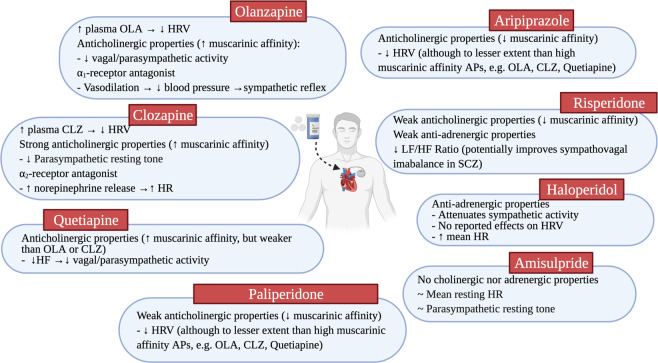
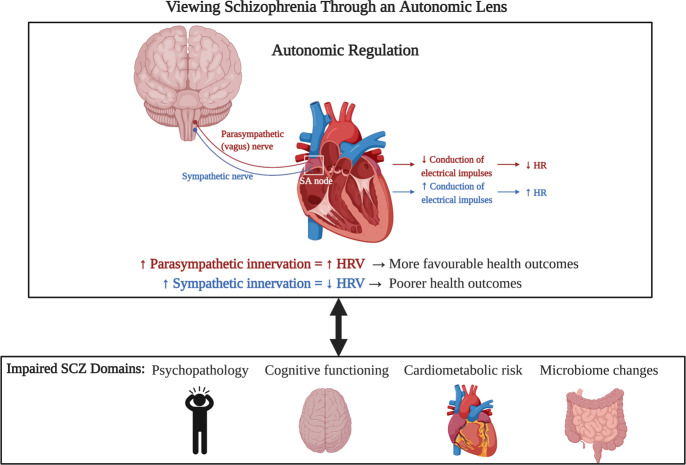
Schizophrenia (SCZ) is a psychiatric disorder characterized by a wide range of positive, negative and cognitive symptoms, along with an increased risk of metabolic syndrome and cardiovascular disease that contribute to a 15-20-year reduced life expectancy. Autonomic dysfunction, in the form of increased sympathetic activity and decreased parasympathetic activity, is postulated to be implicated in SCZ and its treatment. The aim of this narrative review is to view SCZ through an autonomic lens and synthesize the evidence relating autonomic dysfunction to different domains of SCZ. Using various methods of assessing autonomic activity, autonomic dysfunction was found to be associated with multiple aspects of SCZ pathophysiology, including symptom severity, cognitive impairment, and the development of cardiometabolic comorbidities, such as metabolic syndrome and high BMI. The strongest association of low heart rate variability was noted among patients on antipsychotic treatment with high-affinity muscarinic antagonism (i.e., clozapine, olanzapine and quetiapine). The review will also suggest ways in which studying autonomic dysfunction can help reduce morbidity and mortality associated with SCZ and its treatment.
Overview
CoChat Summary
## TL;DR
This is a narrative review synthesizing evidence that schizophrenia is associated with autonomic nervous system dysfunction, especially reduced parasympathetic/vagal activity as measured by heart rate variability (HRV). The review argues that this dysfunction is linked to symptom severity, cognitive impairment, and cardiometabolic risk, with stronger HRV reductions often seen in patients taking clozapine, olanzapine, or quetiapine.
## Key findings
- Across studies, patients with schizophrenia had reduced HRV and vagal cardiac control compared with healthy controls; a meta-analytic review of 34 studies found significantly lower HF-HRV and RMSSD in schizophrenia.
- Autonomic dysfunction was associated with symptom severity: higher PANSS scores were negatively correlated with SDNN and RMSSD, and negative symptoms were inversely related to RMSSD and HF while positively associated with LF/HF.
- For cognition, one EDA study found that EDA non-responders had worse performance on verbal comprehension/fluency, memory, perceptual organization, psychomotor function, abstract reasoning, and executive function; another study found no significant difference on MATRICS between responders and non-responders.
- For cardiometabolic outcomes, lower HRV was linked to risk factors such as hypertension, diabetes, and high cholesterol in schizophrenia samples, but one large correlational study found no HRV difference between schizophrenia patients with versus without metabolic syndrome.
## Methods
- Narrative review of the literature on autonomic dysfunction in schizophrenia, with emphasis on HRV and, where relevant, other autonomic measures such as EDA, SAA, catecholamines, and orthostatic cardiovascular responses.
- The review synthesized studies comparing schizophrenia vs healthy controls and, where available, medicated vs unmedicated patients, including evidence on symptom severity, cognition, and cardiometabolic comorbidity.
- Main analysis was qualitative synthesis of prior studies and meta-analytic findings; no new primary sample or original statistical analysis was reported.
## Limitations
- The paper states that the evidence base is limited by the largely cross-sectional nature of the literature, making causality difficult to determine.
- It also notes that whether autonomic dysfunction is intrinsic to schizophrenia or secondary to antipsychotic treatment “has yet to be fully elucidated.”
- Evident from the text: findings across autonomic measures are inconsistent in places (for example, EDA responder/non-responder results and some HRV-symptom correlations), which weakens certainty about some associations.
Model-written summary. Check it against the paper before relying on it.
Integrity signals
Registry
Cites
Statistics
Figures
Verification
Claims the paper makes
49 Valid · 1 Not valid · 64 Not checked · 13 Own results and interpretations
At least one cited source doesn’t support this claim or points to a different paper, and none confirmed it — see the verdicts below.
In the paper
“However, the representativeness of SNS output through HRV is somewhat controversial as the LF peak consists of both SNS and PSNS output, making it difficult to separate the dominating system21,25.”
§ Autonomic nervous system dysfunction in schizophrenia: impact on cognitive and metabolic health > Assessing ANS activity in SCZ
What the sources say
- Not matchedcites [21] Heart rate variability: standards of measurement, physiological interpretation and clinical use. Task Force of the European Society of Cardiology and the North American Society of Pacing and Electrophysiology. Circulation93, 1043–1065 (1996). 8598068
Its entry has no title and year that we can search by.
- Disputedcites [25] Thomas BL Claassen N Becker P Viljoen M Validity of commonly used heart rate variability markers of autonomic nervous system function Neuropsychobiology 2019 78 14 26 10.1159/000495519 30721903 sourceExperimental — accuracy not yet measured
Split into 2 atoms — 0 confirmed, 1 partially supported, 1 disputed, 0 misattributed, 0 unverifiable. Expand the claim to see per-atom verdicts.
Checked by a reasoning model — may be wrong.
hedged- Asserted: passes — The authors put it forward as true.
- Checkable: passes — It can be checked against evidence.
- Load-bearing: unclear — It is unclear whether the paper’s conclusions depend on it.
- Based: passes — The paper gives a reason why it holds.
- Not matched
The sources with a verdict support this claim; the rest weren’t checked yet, have no full text we could read, or their verdicts aren’t rated yet.
In the paper
“In comparison to non-psychiatric HCs, patients with SCZ exhibit reduced HRV and vagal cardiac control26.”
- Also stated in: § Characterizing autonomic dysfunction in SCZ · plain
“Their findings revealed significantly lower measures of HF-HRV and RMSSD in SCZ, both of which are an estimate of efferent vagal activity of the PSNS.”
§ Autonomic nervous system dysfunction in schizophrenia: impact on cognitive and metabolic health > Characterizing autonomic dysfunction in SCZ
What the sources say
- Not checked — no full text of the sourcecites [26] Montaquila JM Trachik BJ Bedwell JS Heart rate variability and vagal tone in schizophrenia: a review J. Psychiatr. Res. 2015 69 57 66 10.1016/j.jpsychires.2015.07.025 26343595 source
- Supportedcites [27] Clamor A Lincoln TM Thayer JF Koenig J Resting vagal activity in schizophrenia: meta-analysis of heart rate variability as a potential endophenotype Br. J. Psychiatry 2016 208 9 16 10.1192/bjp.bp.114.160762 26729841 source
The Results report significantly lower high-frequency HRV and RMSSD in individuals with schizophrenia than in healthy controls, indicating lower vagal activity. The Discussion describes this as strong evidence of reduced vagal activity across more than a thousand individuals with schizophrenia and an equally large control group. Page numbers were not supplied. (LLM, conf=0.94)
plainstates an association- Asserted: passes — The authors put it forward as true.
- Checkable: passes — It can be checked against evidence.
- Load-bearing: passes — The paper’s conclusions depend on it.
- Based: passes — The paper gives a reason why it holds.
- Also stated in: § Characterizing autonomic dysfunction in SCZ · plain
The sources with a verdict support this claim; the rest weren’t checked yet, have no full text we could read, or their verdicts aren’t rated yet.
In the paper
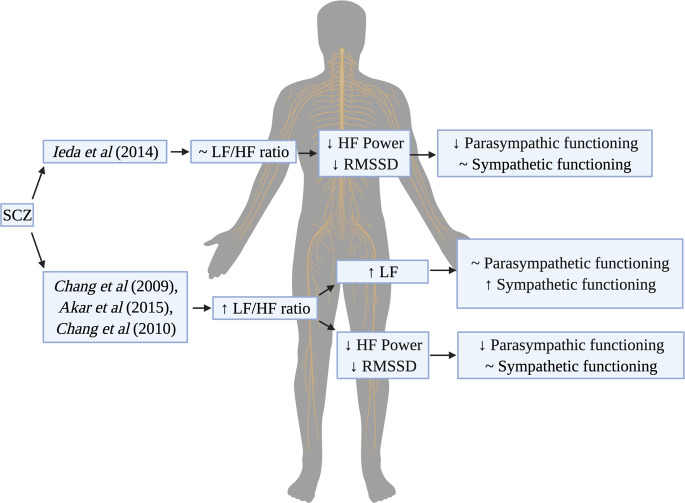
“For instance, in two studies that assessed SAA in SCZ, SAA activity levels were significantly higher in a group of SCZ outpatients compared to HC’s14,15.”
§ Autonomic nervous system dysfunction in schizophrenia: impact on cognitive and metabolic health > Characterizing autonomic dysfunction in SCZ
What the sources say
- Supportedcites [14] Inagaki T High salivary alpha-amylase levels in patients with schizophrenia: a pilot study Prog. Neuropsychopharmacol. Biol. Psychiatry 2010 34 688 691 10.1016/j.pnpbp.2010.03.024 20347911 source
The Results (p. 10) compare schizophrenia outpatients with healthy controls and report significantly higher salivary alpha-amylase activity in the patient group (p<0.001). The Discussion (p. 12) states the same finding. (LLM, conf=0.95)
- Not checked — no full text of the sourcecites [15] Ieda M Evaluation of autonomic nervous system by salivary alpha-amylase level and heart rate variability in patients with schizophrenia Eur. Arch. Psychiatry Clin. Neurosci. 2014 264 83 87 10.1007/s00406-013-0411-6 23645102 source
plainstates an association- Asserted: passes — The authors put it forward as true.
- Checkable: passes — It can be checked against evidence.
- Load-bearing: unclear — It is unclear whether the paper’s conclusions depend on it.
- Based: passes — The paper gives a reason why it holds.
- Supported
The cited sources support only part of this claim — read each source’s verdict below.
In the paper
“As mentioned earlier, the meta-analysis did not find any difference in HRV markers of parasympathetic functioning between AP-naïve and medicated patients with SCZ.”
§ Autonomic nervous system dysfunction in schizophrenia: impact on cognitive and metabolic health > Autonomic dysfunction in SCZ: illness related or AP induced? SCZ is undoubtedly associated with autonomic dysfunction. However, whether it is an intrinsic characteristic of the illness itself or the result of AP treatment has yet to be fully elucidated. This relationship can be teased out by comparing medicated versus unmedicated patients. As mentioned earlier, the meta-analysis did not find any difference in HRV markers of parasympathetic functioning between AP-naïve and medicated patients with SCZ. However, given that both first-generation and second-generation APs modulate serotonergic, dopaminergic, cholinergic and adrenergic neurotransmitter systems, it is likely that APs influence autonomic neurocardiac functioning42 Chang et al.43 conducted a case-control analysis of cardiac autonomic dysfunction in a group of 314 unmedicated patients with acute SCZ and 409 HCs. Frequency domain indices of HRV revealed that unmedicated patients had consistently faster mean heart rates and reduced HF-HRV levels compared to HCs. Similarly, another study examining HRV in acute first-episode drug naïve psychotic patients also found reduced RMSSD, indicating decreased variation in consecutive heartbeats, as well as significantly less HF power during psychosis compared to HCs44. Elsewhere, another study did not show any significant differences in the amount of HRV reduction exhibited by a group of medicated and unmedicated first-episode psychosis patients29. These findings imply that impaired neurocardiac regulation may be related to the illness itself and not secondary to the chronicity of the illness or AP treatment. Low resting-state vagal modulation/parasympathetic activity is also observed in a variety of other psychiatric conditions, such as mood disorders, anxiety disorders and autism spectrum disorder30,45. To this point, many scholars have suggested that reduced HRV may be a transdiagnostic factor associated with baseline psychological discomfort, reduced mental flexibility, stress, and other behavioural factors46,47.
What the sources say
- Partly supportedcites [27] Clamor A Lincoln TM Thayer JF Koenig J Resting vagal activity in schizophrenia: meta-analysis of heart rate variability as a potential endophenotype Br. J. Psychiatry 2016 208 9 16 10.1192/bjp.bp.114.160762 26729841 sourceExperimental — accuracy not yet measured
The Meta-regressions and subgroup analyses section reports no significant effect of medication status on high-frequency HRV or RMSSD findings, and the Discussion says reduced vagal activity was found in both medicated and unmedicated groups. But the claim specifies antipsychotic-naïve patients: the Discussion cautions that, except in two first-episode studies, some participants in the unmedicated studies had previously received antipsychotics. The analysis also compared medication-status effects on patient-versus-control differences, not HRV directly between the two patient groups. (LLM, conf=0.88)
plain- Asserted: passes — The authors put it forward as true.
- Checkable: passes — It can be checked against evidence.
- Load-bearing: passes — The paper’s conclusions depend on it.
- Based: passes — The paper gives a reason why it holds.
- Partly supported
Every source the paper cites for this claim was checked and supports it.
In the paper
“Within the SCZ group there were no significant differences in SAA levels between medicated and unmedicated patients14.”
§ Autonomic nervous system dysfunction in schizophrenia: impact on cognitive and metabolic health > Characterizing autonomic dysfunction in SCZ
What the sources say
- Supportedcites [14] Inagaki T High salivary alpha-amylase levels in patients with schizophrenia: a pilot study Prog. Neuropsychopharmacol. Biol. Psychiatry 2010 34 688 691 10.1016/j.pnpbp.2010.03.024 20347911 source
The Discussion (p. 12) directly compares five unmedicated patients with 20 sampled from the 49 medicated patients in the schizophrenia group. It reports no statistically significant difference in salivary alpha-amylase levels between them (p=0.06). (LLM, conf=0.94)
plain- Asserted: passes — The authors put it forward as true.
- Checkable: passes — It can be checked against evidence.
- Load-bearing: unclear — It is unclear whether the paper’s conclusions depend on it.
- Based: passes — The paper gives a reason why it holds.
- Supported
67 more claims · 25 with their cited sources checked
Create a free account to see all 127 claims and to verify the 6 references still open.
- It may state two separate claims as one. 45
- Probably not a substantial claim. 18
Citations
Cites
Heart Rate Variability: Standards of Measurement, Physiological Interpretation, and Clinical Use
Electrophysiology, T. F. O. T. E. S. O. C. T. N. A. (1996) · Circulation · doi:10.1161/01.cir.93.5.1043 · Cited by 17,159
An overview of heart rate variability metrics and norms
Shaffer, F., & Ginsberg, J. P. (2017) · Frontiers in Public Health · doi:10.3389/fpubh.2017.00258 · Cited by 7,185
Porges, S. W. (2007) · Biological Psychology · doi:10.1016/j.biopsycho.2006.06.009 · Cited by 3,415
Thayer, J. F., Åhs, F., Fredrikson, M., Sollers, J. J., & Wager, T. D. (2012) · Neuroscience & Biobehavioral Reviews · doi:10.1016/j.neubiorev.2011.11.009 · Cited by 3,224
A model of neurovisceral integration in emotion regulation and dysregulation
Thayer, J. F., & Lane, R. D. (2000) · Journal of Affective Disorders · doi:10.1016/s0165-0327(00)00338-4 · Cited by 3,092
Heart rate variability: measurement and clinical utility.
Kleiger, R. E., Stein, P. K., & Bigger, J. T. (2005) · Annals of Noninvasive Electrocardiology · doi:10.1111/j.1542-474x.2005.10101.x · Cited by 1,290
Martin, C. R., Osadchiy, V., Kalani, A., & Mayer, E. A. (2018) · Cellular and Molecular Gastroenterology and Hepatology · doi:10.1016/j.jcmgh.2018.04.003 · Cited by 1,284
Metabolic and cardiovascular adverse effects associated with antipsychotic drugs.
De Hert, M., Detraux, J., van Winkel, R., Yu, W., & Correll, C. U. (2012) · Nature Reviews Endocrinology · doi:10.1038/nrendo.2011.156 · Cited by 1,145
Schizophrenia and increased risks of cardiovascular disease
Hennekens, C. H., Hennekens, A. R., Hollar, D., & Casey, D. E. (2005) · American Heart Journal · doi:10.1016/j.ahj.2005.02.007 · Cited by 1,070
The role of vagal function in the risk for cardiovascular disease and mortality
Thayer, J. F., & Lane, R. D. (2007) · Biological Psychology · doi:10.1016/j.biopsycho.2005.11.013 · Cited by 1,033
Cited by
The brain–heart axis: integrative cooperation of neural, mechanical and biochemical pathways
Valenza, G., Matić, Z., & Catrambone, V. (2025) · Nature Reviews Cardiology · doi:10.1038/s41569-025-01140-3 · Cited by 168
“been observed in acute and chronic stress 15 , neurological injury 19 , epilepsy 20,21 , parkinsonisms 22–24 , Alzheimer disease 25 , psychosomatic disorders 26,27 , schizophrenia 28,29 , anxiety 30 and mood disorders 31–34 .”
Heart Rate Variability in Psychiatric Disorders: A Systematic Review
Ramesh, A., Nayak, T., Beestrum, M., Quer, G., & Pandit, J. A. (2023) · Neuropsychiatric Disease and Treatment · doi:10.2147/ndt.s429592 · Cited by 79
“8 HRV remains highly debated in its use as a diagnostic tool due to its variation based on the individual person, as there are differences within patient populations based on sex, age, and BMI; however, with the increasing number of wearable devices with HRV measuring capability, it is imperative…”
Gangopadhyay, A., Ibrahim, R., Theberge, K., May, M. A., & Houseknecht, K. L. (2022) · Frontiers in Neuroscience · doi:10.3389/fnins.2022.1042442 · Cited by 58
Crosstalk between Schizophrenia and Metabolic Syndrome: The Role of Oxytocinergic Dysfunction
Goh, K. K., Chen, C. Y.-A., Wu, T., Chen, C.-H., & Lu, M. (2022) · International Journal of Molecular Sciences · doi:10.3390/ijms23137092 · Cited by 49
“Preceding autonomic nervous system dysfunction in persons with metabolic syndrome [306] as well as in those with schizophrenia [307] is another neurobiological factor that is common to schizophrenia and metabolic syndrome.”
BackgroundLonghitano, C., Finlay, S., Peachey, I., Swift, J.-L., Fayet‐Moore, F., Bartle, T., Vos, G., Rudd, D., Shareef, O., Gordon, S., et al. (2024) · Frontiers in Nutrition · doi:10.3389/fnut.2024.1444483 · Cited by 42
Zhang, Y., Zhang, H., Xiao, L., Bai, Y., Calhoun, V. D., & Wang, Y.-P. (2022) · IEEE Transactions on Medical Imaging · doi:10.1109/tmi.2022.3161828 · Cited by 41
“The ‘positive regulation of nervous system development’ pathway is significantly related to the development and formation of neurons, and the dysfunction of the autonomic nervous system in SZ has a major impact on cognitive and metabolic health [58].”
BackgroundKerzner, J., Liu, H., Demchenko, I., Sussman, D., Wijeysundera, D. N., Kennedy, S. H., Ladha, K. S., & Bhat, V. (2021) · Chronic Stress · doi:10.1177/24705470211055176 · Cited by 40
Mechanistic insights into the liver–brain axis during chronic liver disease
Siddle, M. R., Durán, R. G., Goel, D., Renquist, B. J., Holt, M. K., & Hadjihambi, A. (2025) · Nature Reviews Gastroenterology & Hepatology · doi:10.1038/s41575-025-01142-z · Cited by 41
“…autonomic dysfunction seems to correlate with the level of fatigue in patients with either MASLD 155 or primary biliary cirrhosis 156 , and it is well established that autonomic dysfunction is correlated with mood 157,158 and psychiatric disorders 159,160 as well as with cognitive function 161 .”
Almulla, A. F., & Maes, M. H. J. (2025) · CNS Drugs · doi:10.1007/s40263-025-01195-3 · Cited by 33
Heart Rate Variability in Schizophrenia and Autism
Haigh, S. M., Walford, T. P., & Brosseau, P. (2021) · Frontiers in Psychiatry · doi:10.3389/fpsyt.2021.760396 · Cited by 27
Potential diagnostic biomarkers for schizophrenia
Yue, W., Huang, H., & Duan, J. (2022) · Medical Review · doi:10.1515/mr-2022-0009 · Cited by 30
Alshanskaia, E. I., Portnova, G. V., Liaukovich, K. M., & Martynova, O. (2024) · Frontiers in Neuroscience · doi:10.3389/fnins.2024.1445697 · Cited by 35
“…are investigated to gain a better understanding of their distinct properties in depression, epilepsy, schizophrenia, post-Covid conditions, and healthy volunteers (Asarcikli et al., 2022; Buchholz et al., 2017; McCraty and Zayas, 2014; Sgoifo et al., 2015; Stogios et al., 2021; Udupa et al., 2007).”
BackgroundZhu, B., Liang, L., Huang, Y., Wang, H., Zhou, J., Xiong, D., Li, S., Li, H., Li, X., Chen, S., et al. (2025) · Schizophrenia Research · doi:10.1016/j.schres.2025.04.017 · Cited by 23
Epigenetic Targets in Schizophrenia Development and Therapy
Wawrzczak‐Bargieła, A., Bilecki, W., & Maćkowiak, M. (2023) · Brain Sciences · doi:10.3390/brainsci13030426 · Cited by 29
Semaphorin 6D tunes amygdalar circuits for emotional, metabolic, and inflammatory outputs
Nakanishi, Y., Izumi, M., Matsushita, H., Koyama, Y., Díez, D., Takamatsu, H., Koyama, S., Nishide, M., Naito, M., Mizuno, Y., et al. (2024) · Neuron · doi:10.1016/j.neuron.2024.06.017 · Cited by 20
“Autonomic and immune abnormalities were also implicated in schizophrenia, 64–67 yet it remains unknown whether an upstream regulator of these abnormalities exists.”
BackgroundMini-Review on the Harlequin Syndrome—A Rare Dysautonomic Manifestation Requiring Attention
Mavroudis, I. A., Balmuș, I.-M., Ciobica, A. S., Luca, A.-C., Chowdhury, R., Iordache, A.-C., Gorgan, L., & Radu, I. (2022) · Medicina · doi:10.3390/medicina58070938 · Cited by 19
Smyrnis, N., Kalipserakis, E., Καραντινός, Θ., Lazaridi, M., Garyfali, V., Filntisis, P., Zlatintsi, A., Efthymiou, N., Mantas, A., Mantonakis, L., et al. (2023) · Frontiers in Psychiatry · doi:10.3389/fpsyt.2023.1024965 · Cited by 33
“The negative symptom domain of PANSS, which largely focuses on distortions in emotional, social, and thinking processes, has been inversely related to HRV parameters in groups of patients with schizophrenia (28, 31, 34).”
BackgroundSudarshan, Y., & Cheung, B. M. Y. (2022) · Postgraduate Medical Journal · doi:10.1136/postgradmedj-2021-141386 · Cited by 27
Panov, G., & Panova, P. (2023) · Frontiers in Psychiatry · doi:10.3389/fpsyt.2023.1120974 · Cited by 18
A Potential Interface between the Kynurenine Pathway and Autonomic Imbalance in Schizophrenia
Büki, A., Kékesi, G., Horváth, G., & Vécsei, L. (2021) · International Journal of Molecular Sciences · doi:10.3390/ijms221810016 · Cited by 18
“The vagus nerve is the chief mediator of the bidirectional communication along the gut-brain axis through cholinergic activation of nicotinic receptors on myenteric neurons [14,89].”
BackgroundMethodInfluentialTownsend, K. L. (2024) · Diabetes · doi:10.2337/dbi24-0004 · Cited by 22
Yang, Z., Heaukulani, C., Sim, A., Buddhika, T., Rashid, N. A. A., Wang, X., Zheng, S., Quek, Y. F., Basu, S., Lee, K. W., et al. (2025) · JMIR mhealth and uhealth · doi:10.2196/56185 · Cited by 19
SigA: rPPG-based Authentication for Virtual Reality Head-mounted Display
Li, L., Chen, C., Pan, L., Zhang, L. Y., Zhang, J., & Xiang, Y. (2023) · International Symposium on Research in Attacks, Intrusions and Defenses (RAID) · doi:10.1145/3607199.3607209 · Cited by 17
“Autonomic nervous system activity is a major component of the emotional response [58].”
BackgroundMultimodal Physiological Analysis of Impact of Emotion on Cognitive Control in VR
Li, M., Pan, J., Li, Y., Gao, Y., Qin, H., & Shen, Y. (2024) · IEEE Transactions on Visualization and Computer Graphics · doi:10.1109/tvcg.2024.3372101 · Cited by 23
Kwon, P. M., Lawrence, S., Mueller, B. R., Thayer, J. F., Benn, E. K. T., & Robinson‐Papp, J. (2022) · Clinical Autonomic Research · doi:10.1007/s10286-022-00865-2 · Cited by 16
Xiang, M., Zheng, L., Pu, D., Lin, F., Ma, X., Ye, H., Pu, D., Zhang, Y., Wang, D., Wang, X., et al. (2022) · Frontiers in Microbiology · doi:10.3389/fmicb.2022.909729 · Cited by 16
“, 2017) and a shorter life expectancy (Stogios et al., 2021).”
BackgroundSchizophrenia Hypothesis: Autonomic Nervous System Dysregulation of Fetal and Adult Immune Tolerance
Carnac, T. (2022) · Frontiers in Systems Neuroscience · doi:10.3389/fnsys.2022.844383 · Cited by 20
“An autonomic hypothesis of schizophrenia has been proposed before, suggesting that a dysregulation of vagus nerve control of immune cells may contribute to schizophrenia pathophysiology (das Graças Corsi-Zuelli et al., 2017; Stogios et al., 2021).”
BackgroundHeart Rate Variability Applications in Medical Specialties: A Narrative Review
Addleman, J. S., Lackey, N. S., Tobin, M. A., Lara, G. A., Sinha, S., Morse, R. M., HAJDUCZOK, A. G., Gharbo, R. S., & Gevirtz, R. (2025) · Applied Psychophysiology and Biofeedback · doi:10.1007/s10484-025-09708-y · Cited by 20
“…because of the difficulties in translating emotional and cognitive states through vagal afferents into changes in HRV and heterogenous methodologies (Bassett, 2016 ; Dormal et al., 2021 ; Jenkins et al., 2021 ; Jung et al., 2019 ; Linder et al., 2014 ; Ramesh et al., 2023 ; Stogios et al., 2021 ).”
InfluentialMa, J., & Song, X. (2023) · World Journal of Psychiatry · doi:10.5498/wjp.v13.i10.724 · Cited by 13
Moon, E., Yang, M. L., Seon, Q., & Mantere, O. (2021) · Current Psychiatry Reports · doi:10.1007/s11920-021-01291-3 · Cited by 15
Sargent, K., Martinez, E., Reed, A. C., Guha, A., Bartholomew, M. E., Diehl, C., Chang, C. S., Salama, S., Subotnik, K. L., Ventura, J., et al. (2025) · Psychological Medicine · doi:10.1017/s0033291724003428 · Cited by 18
“Reports of autonomic changes in SZ date to Kraepelin, who described alterations in heart rate, skin conductance, and pupillary function as prominent characteristics of the disorder (Kraepelin, 1899; Stogios et al., 2021).”
Identification of Immune-Linked Hub Genes and Diagnostic Model Construction in Schizophrenia
Lian, K., Shen, Z., Yang, R., Ye, J., Shang, B., Dong, L., Li, H., Wu, J., Cheng, Y., & Xu, X. (2023) · Journal of Molecular Neuroscience · doi:10.1007/s12031-023-02138-7 · Cited by 12
“Immune system dysfunction, including inflammatory processes and abnormal immune cell blood parameters, has been observed in individuals with SCZ (Michel et al. 2012; Stogios 2021).”
BackgroundAutonomic Dysfunction in Psychiatric Disorders
Göçen, H. B., & Özden, A. V. (2024) · Psikiyatride Guncel Yaklasimlar - Current Approaches in Psychiatry · doi:10.18863/pgy.1329118 · Cited by 16
Lazaridi, M., Panagiotaropoulou, G., Covanis, P., Karantinos, T., Aggelopoulos, E., Klein, C., & Smyrnis, N. (2022) · Schizophrenia Bulletin · doi:10.1093/schbul/sbac033 · Cited by 14
Chen, P., Kao, Y., & Chen, Y. (2024) · Reviews in Cardiovascular Medicine · doi:10.31083/j.rcm2509343 · Cited by 10
“The dysregulation of the autonomic nervous sys-tem in individuals with MD is characterized by the predominance of the sympathetic nervous system, either in the form of increased sympathetic tone or decreased parasympathetic activity [36].”
BackgroundChen, H., Lu, J., Zou, T., Teng, Z., Qin, Y., Wu, R., Yan, Y., Fu, K., Jiang, W., Ju, Y., et al. (2025) · Journal of Psychiatric Research · doi:10.1016/j.jpsychires.2025.03.023 · Cited by 10
FABP3, FABP4, and heart rate variability among patients with chronic schizophrenia
Hung, W., Yu, T., Wu, C., Lee, T., Tsai, I., Hsuan, C., Chen, C., Chung, F., Lee, Y., & Tang, W.-H. (2023) · Frontiers in Endocrinology · doi:10.3389/fendo.2023.1165621 · Cited by 9
Refisch, A., Komatsuzaki, S., Ungelenk, M., Schumann, A., Chung, H., Schilling, S. S., Jantzen, W., Schröder, S., Nöthen, M. M., Mühleisen, T. W., et al. (2022) · Genes · doi:10.3390/genes13112132 · Cited by 11
“In this regard, CADF, which is associated with multiple aspects of schizophrenia pathology and the development of cardiometabolic comorbidities, may have the potential to uncover genetic connections between cardiac and neural phenotypes in schizophrenia [74].”
BackgroundKsiążek, K., Masarczyk, W., Głomb, P., Romaszewski, M., Stokłosa, I., Ścisło, P., Dębski, P. G., Pudło, R., Búza, K., Gorczyca, P. W., et al. (2024) · Computers in Biology and Medicine · doi:10.1016/j.compbiomed.2024.108544 · Cited by 15
GONÇALVES, A. J., Braga, M. V. A., Santana, P. H., RESENDE, L. A. P. R. D., da Silva, V. J. D., & Correia, D. (2021) · BMC Infectious Diseases · doi:10.1186/s12879-021-06648-w · Cited by 10
Adverse Cardiovascular Effects of Psychotropic Medications
Androshchuk, V., Montarello, N., & Rajani, R. (2025) · British Journal of Hospital Medicine · doi:10.12968/hmed.2024.0773 · Cited by 15
Garyfalli, V., Kalisperakis, E., Smrynis, A., Lazaridi, M., Karantinos, T., Mantas, A., Filntisis, P. P., Efthymiou, N., Zlatintsi, A., Maragos, P. A., et al. (2025) · JMIR Mental Health · doi:10.2196/75774 · Cited by 12
“In a related review [39], no studies examining heart-related autonomic dysregulation in mental processes such as attention or memory are cited.”
Waddington, J. L. (2022) · Schizophrenia Research · doi:10.1016/j.schres.2022.10.001 · Cited by 7
“Notably, heart rate variability, the most widely investigated index of autonomic dysregulation, is also reduced not just in schizophrenia (Montaquila et al., 2015; Alvares et al., 2016; Stogios et al., 2021) but also in bipolar disorder, major depressive disorder and autism spectrum disorder (Kemp et al.”
Potential Application of Brainwaves to Optimise Evacuation Wayfinding Performance During Fires
Othman, F. Z., Taib, M. N., Shaari, M. F., & Zaiki, Y. (2023) · IEEE International Colloquium on Signal Processing & Its Applications (CSPA) · doi:10.1109/cspa57446.2023.10087615 · Cited by 5
“In fact, recent neuroscientific studies of human autonomic nervous system function report that adrenaline-induced fight-or-flight responses significantly boost short-term cognitive performances by triggering sympathetic activity in the prefrontal cortex while exerting tonic inhibition of limbic system functions result…”
BackgroundTsakmaki, P. V., Tasoulis, S. K., Georgakopoulos, S. V., & Plagianakos, V. P. (2025) · International Journal of Neural Systems · doi:10.1142/s0129065725500649 · Cited by 5
Portnova, G. V., Khayrullina, G., & Martynova, O. (2024) · Psychophysiology · doi:10.1111/psyp.14549 · Cited by 5
Huang, L., Chaoyang, W., & Qin, Q. (2024) · The International Journal of Psychiatry in Medicine · doi:10.1177/00912174241293650 · Cited by 4
Refisch, A., Schumann, A., Gupta, Y., Schulz, S., Voss, A., Malchow, B., & Bär, K. (2025) · Schizophrenia · doi:10.1038/s41537-025-00589-y · Cited by 6
“On the other hand, while general contributors such as smoking 20 , BMI 21 , and age 22 – 24 are well-documented, more speci fi c SCZ-associated factors such as chronic stress, systemic in fl ammation, and metabolic dysregulation may further exacerbate CADF 25 .”
InfluentialKsiążek, K., Masarczyk, W., Głomb, P., Romaszewski, M., Búza, K., Sekuła, P., Cholewa, M., Kołodziej, K., Gorczyca, P. W., & Piegza, M. J. (2025) · PLoS Computational Biology · doi:10.1371/journal.pcbi.1012983 · Cited by 9
Employing graph attention networks to decode psycho-metabolic interactions in Schizophrenia
Yang, H., Zhu, D., Liu, Y., Xu, Z., Liu, Z., Zhang, W., & Cai, J. (2024) · Psychiatry Research · doi:10.1016/j.psychres.2024.115841 · Cited by 4
Altered cardiac autonomic functioning associates with self-disorders in schizophrenia
Sandsten, K. E., Jensen, M. T., Sæbye, D., Null, K. E., Northoff, G., & Parnas, J. (2024) · Schizophrenia Research · doi:10.1016/j.schres.2024.06.003 · Cited by 5
“In particular findings of increased RHR and reduced HRV suggest that ANS imbalance in schizophrenia is characterized by elevated sympathetic arousal and reduced cardiovagal modulation (Stogios et al., 2021).”
Schizophrenia: advances in pathophysiology, management, and precision medicine
Sawa, A., Chiappelli, J., Hamrah, O., & Cascella, N. G. (2026) · BMJ · doi:10.1136/bmj-2026-635470 · Cited by 4
Bayesian Rare Variant Analysis Identifies Novel Schizophrenia Putative Risk Genes
Han, S. (2024) · Journal of Personalized Medicine · doi:10.3390/jpm14080822 · Cited by 4
“Comparing to 110 MIRAGE FDR genes, import into cell (GO:0098657) and nervous system development (R-HSA-9675108) are slightly more enriched in 88 MIRAGE new genes; this is supported by evidence in multiple studies [52,53].”
ResultSchizophrenia: Genetics, neurological mechanisms, and therapeutic approaches
Lim, D. X. E., Yeo, S. Y., Chia, Z. Y. A., Fernandis, A. Z., Lee, J., & Chua, J. J. E. (2025) · Neural Regeneration Research · doi:10.4103/nrr.nrr-d-24-01375 · Cited by 15
Lian, K., Yang, W. H., Yang, R., Xu, X., & Guan, J. (2025) · Molecular Neurobiology · doi:10.1007/s12035-025-05221-9 · Cited by 4
Osaka, K., Matsumoto, K., Akiyama, T., Tanioka, R., Betriana, F., Zhao, Y., Yoshihiro, K. A. I., Miyagawa, M., Tanioka, T., & Locsin, R. C. (2022) · Healthcare · doi:10.3390/healthcare10050848 · Cited by 4
“It has been reported that indicators of parasympathetic functioning, such as HF HRV and the root mean square of successive R–R interval differences (RMSSD), are reduced [39,40].”
BackgroundKassar, O., Mansour, M. E. M., Farag, N., Selim, A., Kewiaa, Y., Yousef, O., & Hassan, O. (2025) · BMC Psychiatry · doi:10.1186/s12888-025-07515-7 · Cited by 3
“Also, approximately 30% of patients undergo treatment resistance in addition to the different side effects, such as extrapyramidal symptoms, sedation, and various metabolic changes [11–13].”
Au, E., Panganiban, K. J., Wu, S., Sun, K., Humber, B. E., Remington, G. J., Agarwal, S. M., Giacca, A., Pereira, S., & Hahn, M. (2024) · Biological Psychiatry Cognitive Neuroscience and Neuroimaging · doi:10.1016/j.bpsc.2024.10.001 · Cited by 9
Self-citationPirim, D., & Bağcı, F. A. (2025) · Systems Biology in Reproductive Medicine · doi:10.1080/19396368.2025.2499475 · Cited by 2
“In addition, abnormal activity of autonomic nervous system and immune system has been implicated in the development of both diseases (Stogios et al. 2021; Ermakov et al. 2022; Yu et al. 2023; Wang et al. 2023b).”
Ma, W., Lei, R., Sun, Y., Liang, X., Zhang, S., Wang, C., Tang, Y., Wang, G., Li, H., & Yu, Z. (2023) · Brain and Behavior · doi:10.1002/brb3.2963 · Cited by 2
“Autonomic nervous system dysfunction may contribute to both PTSD and schizophrenia, potentially impacting the body’s immune system and lessening its ability to fight off infection or illness (Morris & Rao, 2013; Stogios et al., 2021).”
BackgroundEditorial: Cardiovascular and Physical Health in Severe Mental Illness
Agarwal, S. M., Vernon, A. C., Venkatasubramanian, G., & Hahn, M. (2021) · Frontiers in Psychiatry · doi:10.3389/fpsyt.2021.760250 · Cited by 3
Self-citationKsiążek, K., Masarczyk, W., Głomb, P., Romaszewski, M., Stokłosa, I., Ścisło, P., Dębski, P. G., Pudło, R., Búza, K., Gorczyca, P. W., et al. (2023) · medRxiv · doi:10.1101/2023.08.04.23293640 · Cited by 2
“In general, our results are consistent with the literature that suggests a relationship between psychosis severity and HRV as a marker of significantly impaired ANS functioning [Stogios et al., 2021].”
BackgroundResultA vagal influence on schizophrenia? A nationwide retrospective cohort of vagotomized individualsPreprint
Richter, C., Skibicka, K. P., Meyer, U., Rohrmann, S., & Krieger, J.-P. (2024) · medRxiv · doi:10.1101/2024.01.30.24301418 · Cited by 2
Cardiac interoception impacts behavior and brain-wide neuronal dynamicsPreprint
Herrera, K. J., Zarghani-Shiraz, A., Ahrens, M. B., Engert, F., & Fishman, M. C. (2025) · bioRxiv (Cold Spring Harbor Laboratory) · doi:10.1101/2025.04.25.650721 · Cited by 2
Understanding the interoception in schizophrenia through the window of Vagus Nerve Stimulation
Nayok, S. B., Sreeraj, V. S., Shivakumar, V., & Venkatasubramanian, G. (2022) · Neuroscience & Biobehavioral Reviews · doi:10.1016/j.neubiorev.2022.104844 · Cited by 2
Chang, C., Hayes, R. D., Broadbent, M. T. M., Shetty, H., Su, Y., Meesters, P. D., & Stewart, R. J. (2024) · BJPsych Open · doi:10.1192/bjo.2024.765 · Cited by 2
“48 The vagus nerve could be of particular importance with respect to digestive comorbidities in the SMI population, as it is part of the ANS and functions as a major mediator of bidirectional communication in the gut – brain axis, regulating the digestive functions of regional gut motility,…”
BackgroundWu, J., Wang, T., & Jiang, X. (2025) · Frontiers in Neurology · doi:10.3389/fneur.2025.1601319 · Cited by 2
Interaction between the brain and multiple organ systems in schizophrenia
Lin, J. S., Feng, S., Wu, Z.-Y., Dong, L., Yin, D., Hong, Z., Jia, H., & Ning, Y. (2025) · World Journal of Psychiatry · doi:10.5498/wjp.v15.i8.107696 · Cited by 2
Chang, C.-H., Tsai, H.-C., Wu, S., Tan, H.-R., & Liu, W. (2025) · Journal of Psychiatric Research · doi:10.1016/j.jpsychires.2025.09.025 · Cited by 1
Rohde, J., Weber, S., de Bardeci, M., Ertuğrul, A., Amexi, G., Schultz, E., & Olbrich, S. (2025) · Schizophrenia Bulletin · doi:10.1093/schbul/sbaf191 · Cited by 1
“32 , 44 , 47 In addition, further factors may influence HRV values and should be considered when interpreting these results.”
Iannotta, F., Iasevoli, F., Caiazza, C., Fornaro, M., Nolano, M., & de Bartolomeis, A. (2025) · Journal of Psychiatric Research · doi:10.1016/j.jpsychires.2025.12.041 · Cited by 3
Rabkin, S. W. (2026) · Bioengineering · doi:10.3390/bioengineering13050554 · Cited by 3
“Schizophrenia and bipolar disorders both share a common trait of autonomic dysregulation, which is purported to be detectable through an assessment of heart rate variability [105,106].”
Sangeeta, S., Sawant, B. S., Vedavathi, S., Sreenithya, M., Chikkanna, U., Sreeraj, V. S., Kumar, V., Holla, B., Shivakumar, V., & Kishore Kumar, R. (2026) · Asian Journal of Psychiatry · doi:10.1016/j.ajp.2026.105037 · Cited by 1
Trustworthiness judgments and pupil-size in individuals with schizophrenia
Ivančík, V., Čavojská, N., Straková, A., Januška, J., Kraus, J., Pečeňák, J., Heretik, A., & Hajdúk, M. (2024) · Behavioural Brain Research · doi:10.1016/j.bbr.2024.115141 · Cited by 1
Yoshida, N., Miyajima, M., Suzuki, Y., Matsushima, E., Watanabe, T., Omoya, R., Fujiwara, M., Nakamura, M., Takahashi, H., & Takeuchi, T. (2024) · Psychiatry and Clinical Neurosciences Reports · doi:10.1002/pcn5.70030 · Cited by 3
Tamura, R., Yamamoto, M., Ujihara, Y., et al. (2024) · bioRxiv (Cold Spring Harbor Laboratory) · doi:10.1101/2024.08.25.609588 · Cited by 1
Chattopadhyay, S., & Das, R. (2022) · Research Square · doi:10.21203/rs.3.rs-1532601/v1
Smyrnis, N., Kalipserakis, E., Karantinos, T., Lazaridi, M., Garyfalli, V., Filntisis, P. P., Zlatintsi, A., Efthymiou, N., Mantas, A., Mantonakis, L., et al. (2022) · Research Square · doi:10.21203/rs.3.rs-1803398/v1
Cardiac Dysfunction in People with Schizophrenia: Linking Clinical Outcome, the Heart, and the Brain
Nyveld, M. (2022) · Carleton University's Institutional Repository (MacOdrum Library, Carleton University) · doi:10.22215/etd/2022-15252
“Moreover, this decrease in HRV has frequently been associated with clinical symptoms (K. J. Bär, 2015; K. J. Bär et al., 2017; K.-J. Bär et al., 2008; Benjamin et al., 2020; J.-H. Kim et al., 2011; Stogios et al., 2021).”
BackgroundChattopadhyay, S., & Das, R. (2022) · Journal of Nanotechnology in Diagnosis and Treatment · doi:10.12974/2311-8792.2022.08.2
“, generalized anxiety disorders [28], schizophrenia [29], obsessivecompulsive disorders [30], bipolar disorders [31], and in many other illnesses.”
BackgroundThe Challenges of Studying Cognition and Autonomic Nervous System Dysregulation in Psychosis
Ursu, S. (2023) · Biological Psychiatry Cognitive Neuroscience and Neuroimaging · doi:10.1016/j.bpsc.2022.12.011
Waddington, J. L., & Zhen, X. (2024) · Royal Society of Chemistry eBooks · doi:10.1039/9781837672059-00019 · Cited by 1
Krieger, J.-P., & Meyer, U. (2024) · Royal Society of Chemistry eBooks · doi:10.1039/9781837672059-00057
Garyfalli, V., Kalisperakis, E., Smrynis, A., Lazaridi, M., Karantinos, T., Mantas, A., Filntisis, P. P., Efthymiou, N., Zlatintsi, A., Maragos, P. A., et al. (2025) · doi:10.2196/preprints.75774
López, C. P. (2025) · Journal of the American Psychiatric Nurses Association · doi:10.1177/10783903251356693
“Altered ANS activity has been well established in patients diagnosed with schizophrenia (Stogios et al., 2021).”
Plakoutsis, M., Bechlioulis, A., Rammos, A., Sioros, S.-A., Karampas, A., Georgiou, G., Michalis, L. K., Naka, K. Κ., & Petrikis, P. (2025) · Journal of Psychiatric Research · doi:10.1016/j.jpsychires.2025.07.022
Heart rate variability in unstably housed Veterans with mental health conditions
Austin, T. A., Keller, A. V., Minassian, A., Zakrzewski, J. J., Pickell, D., Clark, J. M. R., Maye, J. E., Ettenhofer, M. L., & Twamley, E. W. (2025) · Journal of Clinical and Experimental Neuropsychology · doi:10.1080/13803395.2025.2547738
“…impact cognition, including major depressive disorder (e.g., Duschek et al., 2021; Hoffmann et al., 2017; Koch et al., 2019), schizophrenia (e.g., Stogios et al., 2021), bipolar disorder (e.g., Stautland et al., 2023), post-CONTACT traumatic stress disorder (PTSD; e.g., Ge et al., 2020), chronic…”
Witt, K. M., Kidwell, M., Doorduin, J., de Vries, E. F. J., Sommer, I. E., Day, D. J., Ellenbroek, B. A., & Guerrin, C. G. J. (2025) · Progress in Neuro-Psychopharmacology and Biological Psychiatry · doi:10.1016/j.pnpbp.2025.111490
Gerra, M. L., Ardizzi, M., Ossola, P., Martorana, S., Leoni, V., Riva, P., Preti, E., Marchesi, C., Panfilis, C. D., & Gallese, V. (2025) · The Journal of Nervous and Mental Disease · doi:10.1097/nmd.0000000000001864 · Cited by 1
Valenzuela‐Pascual, C., Garriga, M., Borràs, R., et al. (2026) · doi:10.2196/preprints.94737
Sokrut, M. V., Klymovytskyi, F. V., Ivniev, B. B., Сокрут, О. П., Lytvynova, O., Sokrut, V. M., Popov, V. M., & Mullakhmetov, A. G. (2026) · TRAUMA · doi:10.22141/1608-1706.2.27.2026.1078
Nemes, A., Halcsik, R., Kormányos, Á., Gyenes, N., Keifari, A., Lázár, B. A., Lengyel, C., & Kálmán, J. (2026) · Biomedicines · doi:10.3390/biomedicines14051088
“This could involve genetic predisposition, as well as neurohormonal and immunological dysregulation of the heart–brain axis, leading to autonomic nervous system dysfunction [25–27].”
Özyagcilar, M., Ahrens-Demirdal, N. E., Riesel, A., Lonsdorf, T. B., & Lincoln, T. M. (2026) · Schizophrenia · doi:10.1038/s41537-026-00761-y
“However, our exploratory subgroup analysis did not indicate that LPP aberrancies during acquisition were more pronounced in the CHR subsample either (see Supplement 6).”
InfluentialBahmania, A., Kar, M., Biswas, T., Maiti, R., Mohapatra, D., Behera, S. K., Mishra, A., & Mishra, B. R. (2026) · Psychiatry Research · doi:10.1016/j.psychres.2026.117341
Çınaroğlu, M., Yılmazer, E., Ülker, S. V., & Sayar, G. H. (2026) · BMC Psychiatry · doi:10.1186/s12888-026-08491-2
“…important dissociation: tonic baseline SCL did not show a meaningful CRT-related interaction, while SCR to negative stimuli exhibited a moderate CRT-related reduction (η² p ≈.16 ), suggesting a shift in stimulus-elicited emotional reactivity rather than nonspecific suppression of arousal [66].”
Photobiomodulation for autonomic rebalancing in myocardial infarction prevention
Imani, M. (2026) · Lasers in Medical Science · doi:10.1007/s10103-026-05003-2
“Metabolically, it promotes insulin resistance and type 2 diabetes via chronic catecholamine excess [ 5, 7, 10].”
Gao, L., Zhang, M., Li, Y., Wang, L., Qian, P., Tong, J., Fu, H., Sun, X., & Li, F. (2026) · Behavioral Sciences · doi:10.3390/bs16081442
“Depression and schizophrenia differ not only in core psychopathological symptoms, but also in typical patterns of psychomotor activity, autonomic regulation, sleep disturbance, medication exposure, self-care, and broader physiological burden (Stogios et al., 2021).”
The Effect of Bipolar Disorder Illness Course on Physiological Digital Signals: Observational Study
Valenzuela‐Pascual, C., Garriga, M., Borràs, R., Voltà-Solerdelcoll, R., Korniyenko, M., Mas, A., Escala, C., de Looff, P. C., Anmella, G., Benabarre, A., et al. (2026) · JMIR Mental Health · doi:10.2196/94737
Metadata
- Authors
- Stogios, N., Gdanski, A., Gerretsen, P., Chintoh, A. F., Graff-Guerrero, A., Rajji, T. K., Remington, G., Hahn, M. K., & Agarwal, S. M.
- Affiliations
- Centre for Addiction and Mental Health (CA)
- University of Toronto (CA)
- Corresponding author
- Agarwal, Sri Mahavir
- ORCID
- Venue
- npj Schizophrenia
- Published
- 2021-04-26
- Volume
- 7
- Issue
- 1
- Pages
- 22-22
- ISSN
- 2334-265X (ISSN-L)
- PMC
- PMC8076312
- OpenAlex
- W3157256311
- Cited by
- 98
- References
- 112
- Citations by year
- 2026: 13 · 2025: 29 · 2024: 20 · 2023: 12 · 2022: 18 · 2021: 6
- FWCI
- 2.50
- Type
- journal article
- Language
- en
- Open access
- gold
- doi.org
- Licence
- cc-by
- creativecommons.org/licenses/by/4.0 (tdm)
- creativecommons.org/licenses/by/4.0 (vor)
- Locations
- Schizophrenia (publishedVersion, cc-by)
- PubMed Central (publishedVersion, cc-by)
- PubMed (publishedVersion)
- DOAJ (DOAJ: Directory of Open Access Journals) (submittedVersion, cc-by-sa)
- Funders
- Physicians' Services Incorporated Foundation
- University of Toronto
- Department of Psychiatry, University of Toronto (PJT-153262)
- Canadian Institutes of Health Research (153262_1)
- Banting and Best Diabetes Centre, University of Toronto (PJT-153262)
- Topics
- Health Sciences › Medicine › Psychiatry and Mental health › Schizophrenia research and treatment
- Health Sciences › Medicine › Cardiology and Cardiovascular Medicine › Heart Rate Variability and Autonomic Control
- Health Sciences › Medicine › Clinical Neurology › Parkinson's Disease Mechanisms and Treatments
- Keywords
- autonomic dysfunction, cognitive impairment, metabolic syndrome, cardiometabolic comorbidities, heart rate variability, sympathetic activity, parasympathetic activity, antipsychotic drugs, muscarinic antagonism, clozapine, olanzapine, quetiapine, body mass index, cardiovascular disease, life expectancy
About these checks
Registry, retraction, Cites and statistics results are computed, not judged, with one exception: a printed reference that no index lists is read once by a model before it counts as a citation error. Claims are extracted by a model and kept only when their quote appears verbatim in the text; each cited source is then checked, with a model’s help, for whether it says what the claim relies on. Those verdicts can be wrong — read the claim’s quote and the cited source before relying on one.
The claim verdicts this report counts are experimental: their accuracy is not yet measured.
A language model drew the claims from the paper on 2026-10-11, under version 3 of the claim definition (model deepseek-v4.1-flash, prompt extract-v3).
A second model labelled each claim on 2026-10-11 (model jev-1.13-20260917, definition revision gold-guideline-v0.2).
Cited sources are checked with a language model’s help (gpt-6-sol).
Statistics and arithmetic are recomputed, not judged.
Confidence bands are shown only for fields calibrated on our annotated test set. None is calibrated yet, so no band is shown.
What counts as a claim ›How we measure confidence ›How we check this ›
Are you an author, or do you see a problem with this page? Request a review
Data sources
Bibliographic data: Semantic Scholar, OpenAlex, Crossref.
Contains information from the Semantic Scholar Academic Graph Datasets, made available under the ODC Attribution License (ODC-BY 1.0).
Semantic Scholar’s data is described in: Kinney, R., et al. (2023). The Semantic Scholar Open Data Platform. arXiv:2301.10140.
