

Autonomic nervous system dysfunction in schizophrenia: impact on cognitive and metabolic health
Open accessThe DOI matches its Crossref record; 112 of the 112 references it cites were found in a registry or an index; 53 of the 149 sources its claims cite were checked for support.
Abstract
Schizophrenia (SCZ) is a psychiatric disorder characterized by a wide range of positive, negative and cognitive symptoms, along with an increased risk of metabolic syndrome and cardiovascular disease that contribute to a 15-20-year reduced life expectancy. Autonomic dysfunction, in the form of increased sympathetic activity and decreased parasympathetic activity, is postulated to be implicated in SCZ and its treatment. The aim of this narrative review is to view SCZ through an autonomic lens and synthesize the evidence relating autonomic dysfunction to different domains of SCZ. Using various methods of assessing autonomic activity, autonomic dysfunction was found to be associated with multiple aspects of SCZ pathophysiology, including symptom severity, cognitive impairment, and the development of cardiometabolic comorbidities, such as metabolic syndrome and high BMI. The strongest association of low heart rate variability was noted among patients on antipsychotic treatment with high-affinity muscarinic antagonism (i.e., clozapine, olanzapine and quetiapine). The review will also suggest ways in which studying autonomic dysfunction can help reduce morbidity and mortality associated with SCZ and its treatment.
Overview
CoChat Summary
## TL;DR
This is a narrative review synthesizing evidence that schizophrenia is associated with autonomic nervous system dysfunction, especially reduced parasympathetic/vagal activity as measured by heart rate variability (HRV). The review argues that this dysfunction is linked to symptom severity, cognitive impairment, and cardiometabolic risk, with stronger HRV reductions often seen in patients taking clozapine, olanzapine, or quetiapine.
## Key findings
- Across studies, patients with schizophrenia had reduced HRV and vagal cardiac control compared with healthy controls; a meta-analytic review of 34 studies found significantly lower HF-HRV and RMSSD in schizophrenia.
- Autonomic dysfunction was associated with symptom severity: higher PANSS scores were negatively correlated with SDNN and RMSSD, and negative symptoms were inversely related to RMSSD and HF while positively associated with LF/HF.
- For cognition, one EDA study found that EDA non-responders had worse performance on verbal comprehension/fluency, memory, perceptual organization, psychomotor function, abstract reasoning, and executive function; another study found no significant difference on MATRICS between responders and non-responders.
- For cardiometabolic outcomes, lower HRV was linked to risk factors such as hypertension, diabetes, and high cholesterol in schizophrenia samples, but one large correlational study found no HRV difference between schizophrenia patients with versus without metabolic syndrome.
## Methods
- Narrative review of the literature on autonomic dysfunction in schizophrenia, with emphasis on HRV and, where relevant, other autonomic measures such as EDA, SAA, catecholamines, and orthostatic cardiovascular responses.
- The review synthesized studies comparing schizophrenia vs healthy controls and, where available, medicated vs unmedicated patients, including evidence on symptom severity, cognition, and cardiometabolic comorbidity.
- Main analysis was qualitative synthesis of prior studies and meta-analytic findings; no new primary sample or original statistical analysis was reported.
## Limitations
- The paper states that the evidence base is limited by the largely cross-sectional nature of the literature, making causality difficult to determine.
- It also notes that whether autonomic dysfunction is intrinsic to schizophrenia or secondary to antipsychotic treatment “has yet to be fully elucidated.”
- Evident from the text: findings across autonomic measures are inconsistent in places (for example, EDA responder/non-responder results and some HRV-symptom correlations), which weakens certainty about some associations.
Model-written summary. Check it against the paper before relying on it.
Integrity signals
Registry
Cites
Statistics
Figures
Verification
Claims the paper makes
49 Valid · 1 Not valid · 64 Not checked · 13 Own results and interpretations
At least one cited source doesn’t support this claim or points to a different paper, and none confirmed it — see the verdicts below.
In the paper
“However, the representativeness of SNS output through HRV is somewhat controversial as the LF peak consists of both SNS and PSNS output, making it difficult to separate the dominating system21,25.”
§ Autonomic nervous system dysfunction in schizophrenia: impact on cognitive and metabolic health > Assessing ANS activity in SCZ
What the sources say
- Not matchedcites [21] Heart rate variability: standards of measurement, physiological interpretation and clinical use. Task Force of the European Society of Cardiology and the North American Society of Pacing and Electrophysiology. Circulation93, 1043–1065 (1996). 8598068
Its entry has no title and year that we can search by.
- Disputedcites [25] Thomas BL Claassen N Becker P Viljoen M Validity of commonly used heart rate variability markers of autonomic nervous system function Neuropsychobiology 2019 78 14 26 10.1159/000495519 30721903 sourceExperimental — accuracy not yet measured
Split into 2 atoms — 0 confirmed, 1 partially supported, 1 disputed, 0 misattributed, 0 unverifiable. Expand the claim to see per-atom verdicts.
Checked by a reasoning model — may be wrong.
hedged- Asserted: passes — The authors put it forward as true.
- Checkable: passes — It can be checked against evidence.
- Load-bearing: unclear — It is unclear whether the paper’s conclusions depend on it.
- Based: passes — The paper gives a reason why it holds.
- Not matched
The sources with a verdict support this claim; the rest weren’t checked yet, have no full text we could read, or their verdicts aren’t rated yet.
In the paper
“In comparison to non-psychiatric HCs, patients with SCZ exhibit reduced HRV and vagal cardiac control26.”
- Also stated in: § Characterizing autonomic dysfunction in SCZ · plain
“Their findings revealed significantly lower measures of HF-HRV and RMSSD in SCZ, both of which are an estimate of efferent vagal activity of the PSNS.”
§ Autonomic nervous system dysfunction in schizophrenia: impact on cognitive and metabolic health > Characterizing autonomic dysfunction in SCZ
What the sources say
- Not checked — no full text of the sourcecites [26] Montaquila JM Trachik BJ Bedwell JS Heart rate variability and vagal tone in schizophrenia: a review J. Psychiatr. Res. 2015 69 57 66 10.1016/j.jpsychires.2015.07.025 26343595 source
- Supportedcites [27] Clamor A Lincoln TM Thayer JF Koenig J Resting vagal activity in schizophrenia: meta-analysis of heart rate variability as a potential endophenotype Br. J. Psychiatry 2016 208 9 16 10.1192/bjp.bp.114.160762 26729841 source
The Results report significantly lower high-frequency HRV and RMSSD in individuals with schizophrenia than in healthy controls, indicating lower vagal activity. The Discussion describes this as strong evidence of reduced vagal activity across more than a thousand individuals with schizophrenia and an equally large control group. Page numbers were not supplied. (LLM, conf=0.94)
plainstates an association- Asserted: passes — The authors put it forward as true.
- Checkable: passes — It can be checked against evidence.
- Load-bearing: passes — The paper’s conclusions depend on it.
- Based: passes — The paper gives a reason why it holds.
- Also stated in: § Characterizing autonomic dysfunction in SCZ · plain
The sources with a verdict support this claim; the rest weren’t checked yet, have no full text we could read, or their verdicts aren’t rated yet.
In the paper
“For instance, in two studies that assessed SAA in SCZ, SAA activity levels were significantly higher in a group of SCZ outpatients compared to HC’s14,15.”
§ Autonomic nervous system dysfunction in schizophrenia: impact on cognitive and metabolic health > Characterizing autonomic dysfunction in SCZ
What the sources say
- Supportedcites [14] Inagaki T High salivary alpha-amylase levels in patients with schizophrenia: a pilot study Prog. Neuropsychopharmacol. Biol. Psychiatry 2010 34 688 691 10.1016/j.pnpbp.2010.03.024 20347911 source
The Results (p. 10) compare schizophrenia outpatients with healthy controls and report significantly higher salivary alpha-amylase activity in the patient group (p<0.001). The Discussion (p. 12) states the same finding. (LLM, conf=0.95)
- Not checked — no full text of the sourcecites [15] Ieda M Evaluation of autonomic nervous system by salivary alpha-amylase level and heart rate variability in patients with schizophrenia Eur. Arch. Psychiatry Clin. Neurosci. 2014 264 83 87 10.1007/s00406-013-0411-6 23645102 source
plainstates an association- Asserted: passes — The authors put it forward as true.
- Checkable: passes — It can be checked against evidence.
- Load-bearing: unclear — It is unclear whether the paper’s conclusions depend on it.
- Based: passes — The paper gives a reason why it holds.
- Supported
The cited sources support only part of this claim — read each source’s verdict below.
In the paper
“As mentioned earlier, the meta-analysis did not find any difference in HRV markers of parasympathetic functioning between AP-naïve and medicated patients with SCZ.”
§ Autonomic nervous system dysfunction in schizophrenia: impact on cognitive and metabolic health > Autonomic dysfunction in SCZ: illness related or AP induced? SCZ is undoubtedly associated with autonomic dysfunction. However, whether it is an intrinsic characteristic of the illness itself or the result of AP treatment has yet to be fully elucidated. This relationship can be teased out by comparing medicated versus unmedicated patients. As mentioned earlier, the meta-analysis did not find any difference in HRV markers of parasympathetic functioning between AP-naïve and medicated patients with SCZ. However, given that both first-generation and second-generation APs modulate serotonergic, dopaminergic, cholinergic and adrenergic neurotransmitter systems, it is likely that APs influence autonomic neurocardiac functioning42 Chang et al.43 conducted a case-control analysis of cardiac autonomic dysfunction in a group of 314 unmedicated patients with acute SCZ and 409 HCs. Frequency domain indices of HRV revealed that unmedicated patients had consistently faster mean heart rates and reduced HF-HRV levels compared to HCs. Similarly, another study examining HRV in acute first-episode drug naïve psychotic patients also found reduced RMSSD, indicating decreased variation in consecutive heartbeats, as well as significantly less HF power during psychosis compared to HCs44. Elsewhere, another study did not show any significant differences in the amount of HRV reduction exhibited by a group of medicated and unmedicated first-episode psychosis patients29. These findings imply that impaired neurocardiac regulation may be related to the illness itself and not secondary to the chronicity of the illness or AP treatment. Low resting-state vagal modulation/parasympathetic activity is also observed in a variety of other psychiatric conditions, such as mood disorders, anxiety disorders and autism spectrum disorder30,45. To this point, many scholars have suggested that reduced HRV may be a transdiagnostic factor associated with baseline psychological discomfort, reduced mental flexibility, stress, and other behavioural factors46,47.
What the sources say
- Partly supportedcites [27] Clamor A Lincoln TM Thayer JF Koenig J Resting vagal activity in schizophrenia: meta-analysis of heart rate variability as a potential endophenotype Br. J. Psychiatry 2016 208 9 16 10.1192/bjp.bp.114.160762 26729841 sourceExperimental — accuracy not yet measured
The Meta-regressions and subgroup analyses section reports no significant effect of medication status on high-frequency HRV or RMSSD findings, and the Discussion says reduced vagal activity was found in both medicated and unmedicated groups. But the claim specifies antipsychotic-naïve patients: the Discussion cautions that, except in two first-episode studies, some participants in the unmedicated studies had previously received antipsychotics. The analysis also compared medication-status effects on patient-versus-control differences, not HRV directly between the two patient groups. (LLM, conf=0.88)
plain- Asserted: passes — The authors put it forward as true.
- Checkable: passes — It can be checked against evidence.
- Load-bearing: passes — The paper’s conclusions depend on it.
- Based: passes — The paper gives a reason why it holds.
- Partly supported
Every source the paper cites for this claim was checked and supports it.
In the paper
“Within the SCZ group there were no significant differences in SAA levels between medicated and unmedicated patients14.”
§ Autonomic nervous system dysfunction in schizophrenia: impact on cognitive and metabolic health > Characterizing autonomic dysfunction in SCZ
What the sources say
- Supportedcites [14] Inagaki T High salivary alpha-amylase levels in patients with schizophrenia: a pilot study Prog. Neuropsychopharmacol. Biol. Psychiatry 2010 34 688 691 10.1016/j.pnpbp.2010.03.024 20347911 source
The Discussion (p. 12) directly compares five unmedicated patients with 20 sampled from the 49 medicated patients in the schizophrenia group. It reports no statistically significant difference in salivary alpha-amylase levels between them (p=0.06). (LLM, conf=0.94)
plain- Asserted: passes — The authors put it forward as true.
- Checkable: passes — It can be checked against evidence.
- Load-bearing: unclear — It is unclear whether the paper’s conclusions depend on it.
- Based: passes — The paper gives a reason why it holds.
- Supported
67 more claims · 25 with their cited sources checked
Create a free account to see all 127 claims and to verify the 6 references still open.
- It may state two separate claims as one. 45
- Probably not a substantial claim. 18
Citations
Cites
Heart Rate Variability: Standards of Measurement, Physiological Interpretation, and Clinical Use
Electrophysiology, T. F. O. T. E. S. O. C. T. N. A. (1996) · Circulation · doi:10.1161/01.cir.93.5.1043 · Cited by 17,159
An overview of heart rate variability metrics and norms
Shaffer, F., & Ginsberg, J. P. (2017) · Frontiers in Public Health · doi:10.3389/fpubh.2017.00258 · Cited by 7,185
Porges, S. W. (2007) · Biological Psychology · doi:10.1016/j.biopsycho.2006.06.009 · Cited by 3,415
Thayer, J. F., Åhs, F., Fredrikson, M., Sollers, J. J., & Wager, T. D. (2012) · Neuroscience & Biobehavioral Reviews · doi:10.1016/j.neubiorev.2011.11.009 · Cited by 3,224
A model of neurovisceral integration in emotion regulation and dysregulation
Thayer, J. F., & Lane, R. D. (2000) · Journal of Affective Disorders · doi:10.1016/s0165-0327(00)00338-4 · Cited by 3,092
Heart rate variability: measurement and clinical utility.
Kleiger, R. E., Stein, P. K., & Bigger, J. T. (2005) · Annals of Noninvasive Electrocardiology · doi:10.1111/j.1542-474x.2005.10101.x · Cited by 1,290
Martin, C. R., Osadchiy, V., Kalani, A., & Mayer, E. A. (2018) · Cellular and Molecular Gastroenterology and Hepatology · doi:10.1016/j.jcmgh.2018.04.003 · Cited by 1,284
Metabolic and cardiovascular adverse effects associated with antipsychotic drugs.
De Hert, M., Detraux, J., van Winkel, R., Yu, W., & Correll, C. U. (2012) · Nature Reviews Endocrinology · doi:10.1038/nrendo.2011.156 · Cited by 1,145
Schizophrenia and increased risks of cardiovascular disease
Hennekens, C. H., Hennekens, A. R., Hollar, D., & Casey, D. E. (2005) · American Heart Journal · doi:10.1016/j.ahj.2005.02.007 · Cited by 1,070
The role of vagal function in the risk for cardiovascular disease and mortality
Thayer, J. F., & Lane, R. D. (2007) · Biological Psychology · doi:10.1016/j.biopsycho.2005.11.013 · Cited by 1,033
Cognitive Impairment in Schizophrenia Is the Core of the Disorder
Elvevag, B., & Goldberg, T. E. (2000) · Critical Reviews™ in Neurobiology · doi:10.1615/critrevneurobiol.v14.i1.10 · Cited by 835
Heart Rate Variability ? A Historical Perspective
Billman, G. E. (2011) · Frontiers in Physiology · doi:10.3389/fphys.2011.00086 · Cited by 786
Beyond Heart Rate Variability: Vagal Regulation of Allostatic Systems
THAYER, J. F., & STERNBERG, E. (2006) · Annals of the New York Academy of Sciences · doi:10.1196/annals.1366.014 · Cited by 703
Sympathetic Nervous System Overactivity and Its Role in the Development of Cardiovascular Disease
Malpas, S. C. (2010) · Physiological Reviews · doi:10.1152/physrev.00007.2009 · Cited by 699
Nater, U. M., La Marca, R., Florin, L., Moses, A., Langhans, W., Koller, M. M., & Ehlert, U. (2006) · Psychoneuroendocrinology · doi:10.1016/j.psyneuen.2005.05.010 · Cited by 630
Catecholamine metabolism: basic aspects and clinical significance.
Kopin, I. J. (1985) · Pharmacological Reviews · doi:10.1016/s0031-6997(25)06859-0 · Cited by 582
Regulation of Plasma Triglycerides in Insulin Resistance and Diabetes
Ginsberg, H. N., Zhang, Y.-L., & Hernandez-Ono, A. (2005) · Archives of Medical Research · doi:10.1016/j.arcmed.2005.01.005 · Cited by 531
Masuo, K., Kawaguchi, H., Mikami, H., Ogihara, T., & Tuck, M. L. (2003) · Hypertension · doi:10.1161/01.hyp.0000091371.53502.d3 · Cited by 516
Alvares, G. A., Quintana, D. S., Hickie, I. B., & Guastella, A. J. (2016) · Journal of Psychiatry and Neuroscience · doi:10.1503/jpn.140217 · Cited by 503
A meta-analysis of heart rate variability in major depression
Koch, C., Wilhelm, M., Salzmann, S., Rief, W., & Euteneuer, F. (2019) · Psychological Medicine · doi:10.1017/s0033291719001351 · Cited by 474
Social Engagement and Attachment: A Phylogenetic Perspective
PORGES, S. W. (2003) · Annals of the New York Academy of Sciences · doi:10.1196/annals.1301.004 · Cited by 472
Improvements in heart rate variability with exercise therapy
Routledge, F. S., Campbell, T. S., McFetridge-Durdle, J. A., & Bacon, S. L. (2010) · Canadian Journal of Cardiology · doi:10.1016/s0828-282x(10)70395-0 · Cited by 381
LANDSBERG, L. (1986) · QJM: An International Journal of Medicine · doi:10.1093/oxfordjournals.qjmed.a068066 · Cited by 373
Quintana, D. S., Guastella, A. J., Outhred, T., Hickie, I. B., & Kemp, A. H. (2012) · International Journal of Psychophysiology · doi:10.1016/j.ijpsycho.2012.08.012 · Cited by 367
Pickar, D. (1992) · Archives of General Psychiatry · doi:10.1001/archpsyc.1992.01820050009001 · Cited by 354
Methods of evaluation of autonomic nervous system function
Zygmunt, A., & Stanczyk, J. (2010) · Archives of Medical Science · doi:10.5114/aoms.2010.13500 · Cited by 346
Dysregulation of Arousal and Amygdala-Prefrontal Systems in Paranoid Schizophrenia
Williams, L. M., Das, P., Harris, A. W. F., Liddell, B. B., Brammer, M. J., Olivieri, G., Skerrett, D., Phillips, M. L., David, A. S., Peduto, A., et al. (2004) · American Journal of Psychiatry · doi:10.1176/appi.ajp.161.3.480 · Cited by 337
Cognition in Schizophrenia: Impairments, Determinants, and Functional Importance
Bowie, C. R., & Harvey, P. D. (2005) · Psychiatric Clinics of North America · doi:10.1016/j.psc.2005.05.004 · Cited by 280
Autonomic neuropathy: its diagnosis and prognosis
Ewing, D. J., & Clarke, B. F. (1986) · Clinics in Endocrinology and Metabolism · doi:10.1016/s0300-595x(86)80078-0 · Cited by 259
Role of the vagus nerve in the development and treatment of diet‐induced obesity
de Lartigue, G. (2016) · The Journal of Physiology · doi:10.1113/jp271538 · Cited by 238
Association of cardiac automatic function and the development of hypertensionThe ARIC study
LIAO, D., CAI, J., BARNES, R., TYROLER, H., RAUTAHARJU, P., HOLME, I., & HEISS, G. (1996) · American Journal of Hypertension · doi:10.1016/s0895-7061(96)00249-x · Cited by 220
Electrodermal activity and vulnerability to schizophrenia: A review
Öhman, A. (1981) · Biological Psychology · doi:10.1016/0301-0511(81)90008-9 · Cited by 206
Heart rate variability in bipolar mania and schizophrenia
Henry, B. L., Minassian, A., Paulus, M. P., Geyer, M. A., & Perry, W. (2010) · Journal of Psychiatric Research · doi:10.1016/j.jpsychires.2009.07.011 · Cited by 197 · cited 2×
“However, while Henry et al.(32) failed to note any correlations between HRV and BPRS scores among a group of SCZ patients, they did find a significant negative correlation between HF-HRV as well as a significant positive correlation with the total score on the Young Mania Rating Score (YMRS).”
ResultBahr, S. M., Tyler, B. C., Wooldridge, N., Butcher, B. D., Burns, T. L., Teesch, L. M., Oltman, C. L., Azcarate-Peril, M. A., Kirby, J. R., & Calarge, C. A. (2015) · Translational Psychiatry · doi:10.1038/tp.2015.135 · Cited by 197
Validity of Commonly Used Heart Rate Variability Markers of Autonomic Nervous System Function
Thomas, B. L., Claassen, N., Becker, P., & Viljoen, M. (2019) · Neuropsychobiology · doi:10.1159/000495519 · Cited by 195
Bodily Reactions to People and Events in Schizophrenics
Tarrier, N. (1979) · Archives of General Psychiatry · doi:10.1001/archpsyc.1979.01780030077007 · Cited by 182
Clamor, A., Lincoln, T. M., Thayer, J. F., & Koenig, J. (2016) · British Journal of Psychiatry · doi:10.1192/bjp.bp.114.160762 · Cited by 167
Agelink, M. W., Majewski, T., Wurthmann, C., Lukas, K., Ullrich, H., Linka, T., & Klieser, E. (2001) · Journal of Clinical Psychopharmacology · doi:10.1097/00004714-200102000-00003 · Cited by 166
Cardiovascular side-effects of antipsychotic drugs: The role of the autonomic nervous system
Leung, J. Y. T., Barr, A. M., Procyshyn, R. M., Honer, W. G., & Pang, C. C. Y. (2012) · Pharmacology & Therapeutics · doi:10.1016/j.pharmthera.2012.04.003 · Cited by 163
Association of vagal tone with serum insulin, glucose, and diabetes mellitus — The ARIC Study
Liao, D., Cai, J., Brancati, F. L., Folsom, A., Barnes, R. W., Tyroler, H. A., & Heiss, G. (1995) · Diabetes Research and Clinical Practice · doi:10.1016/0168-8227(95)01190-0 · Cited by 159
Vagus Nerve Stimulation for Epilepsy and Depression
Milby, A. H., Halpern, C. H., & Baltuch, G. H. (2008) · Neurotherapeutics · doi:10.1016/j.nurt.2007.10.071 · Cited by 141
The metabolic role of vagal afferent innervation
Waise, T. M. Z., Dranse, H. J., & Lam, T. K. T. (2018) · Nature Reviews Gastroenterology & Hepatology · doi:10.1038/s41575-018-0062-1 · Cited by 140
Rajkumar, A. P., Horsdal, H. T., Wimberley, T., Cohen, D., Mors, O., Børglum, A. D., & Gasse, C. (2017) · American Journal of Psychiatry · doi:10.1176/appi.ajp.2016.16040442 · Cited by 137
Focusing neurovisceral integration: Cognition, heart rate variability, and cerebral blood flow
Jennings, J. R., Allen, B., Gianaros, P. J., Thayer, J. F., & Manuck, S. B. (2015) · Psychophysiology · doi:10.1111/psyp.12319 · Cited by 134
Cardiac Autonomic Neuropathy in Obesity, the Metabolic Syndrome and Prediabetes: A Narrative Review
Williams, S. M., Eleftheriadou, A., Alam, U., Cuthbertson, D. J., & Wilding, J. P. H. (2019) · Diabetes Therapy · doi:10.1007/s13300-019-00693-0 · Cited by 128
Heart rate variability during adolescent and adult social interactions: A meta-analysis
Shahrestani, S., Stewart, E. M., Quintana, D. S., Hickie, I. B., & Guastella, A. J. (2015) · Biological Psychology · doi:10.1016/j.biopsycho.2014.12.012 · Cited by 126
Heart Rate Variability in Individuals with Autism Spectrum Disorders: a Meta-analysis
Cheng, Y.-C., Huang, Y.-C., & Huang, W.-L. (2020) · Neuroscience & Biobehavioral Reviews · doi:10.1016/j.neubiorev.2020.08.007 · Cited by 125
The influence of psychotic states on the autonomic nervous system in schizophrenia
Toichi, M., Kubota, Y., Murai, T., Kamio, Y., Sakihama, M., Toriuchi, T., Inakuma, T., Sengoku, A., & Miyoshi, K. (1999) · International Journal of Psychophysiology · doi:10.1016/s0167-8760(98)00047-6 · Cited by 118
Anticholinergic Drug Burden in Older People's Brain - How well is it Measured?
Kersten, H., & Wyller, T. B. (2014) · Basic & Clinical Pharmacology & Toxicology · doi:10.1111/bcpt.12140 · Cited by 112
Mujica-Parodi, L. R., Yeragani, V., & Malaspina, D. (2005) · Neuropsychobiology · doi:10.1159/000082850 · Cited by 107
Heart rate variability and vagal tone in schizophrenia: A review
Montaquila, J. M., Trachik, B. J., & Bedwell, J. S. (2015) · Journal of Psychiatric Research · doi:10.1016/j.jpsychires.2015.07.025 · Cited by 100
Kakihara, S., Yoshimura, R., Shinkai, K., Matsumoto, C., Goto, M., Kaji, K., Yamada, Y., Ueda, N., Ohmori, O., & Nakamura, J. (2005) · International Clinical Psychopharmacology · doi:10.1097/00004850-200503000-00002 · Cited by 95
Heart rate variability in acute psychosis
Valkonen‐Korhonen, M., Tarvainen, M. P., Ranta‐Aho, P., Karjalainen, P. A., Partanen, J., Karhu, J., & Lehtonen, J. (2003) · Psychophysiology · doi:10.1111/1469-8986.00072 · Cited by 94
Scigliano, G., & Ronchetti, G. (2013) · CNS Drugs · doi:10.1007/s40263-013-0054-1 · Cited by 92 · cited 2×
“Scigliano et al.(101) have proposed a pathogenic hypothesis that centres around autonomic dysfunction due to chronic D2 receptor blockade by APs.”
BackgroundAntipsychotics and glucose metabolism: how brain and body collide
Kowalchuk, C., Castellani, L. N., Chintoh, A., Remington, G., Giacca, A., & Hahn, M. K. (2019) · American Journal of Physiology-Endocrinology and Metabolism · doi:10.1152/ajpendo.00164.2018 · Cited by 85
Self-citationJung, W., Jang, K.-I., & Lee, S.-H. (2019) · Clinical Psychopharmacology and Neuroscience · doi:10.9758/cpn.2019.17.4.459 · Cited by 81
Hasan, A., Wolff-Menzler, C., Pfeiffer, S., Falkai, P., Weidinger, E., Jobst, A., Hoell, I., Malchow, B., Yeganeh-Doost, P., Strube, W., et al. (2015) · European Archives of Psychiatry and Clinical Neuroscience · doi:10.1007/s00406-015-0618-9 · Cited by 80
Heart rate variability and plasma lipids in men with and without ischaemic heart disease
Christensen, J. H., Toft, E., Christensen, M. S., & Schmidt, E. B. (1999) · Atherosclerosis · doi:10.1016/s0021-9150(99)00052-0 · Cited by 80
Gidron, Y., Deschepper, R., Couck, M., Thayer, J. F., & Velkeniers, B. (2018) · Journal of Clinical Medicine · doi:10.3390/jcm7100371 · Cited by 80
The microbiome-gut-brain axis: implications for schizophrenia and antipsychotic induced weight gain
Kanji, S., Fonseka, T. M., Marshe, V. S., Sriretnakumar, V., Hahn, M. K., & Müller, D. J. (2018) · European Archives of Psychiatry and Clinical Neuroscience · doi:10.1007/s00406-017-0820-z · Cited by 79
Self-citationClozapine-Induced Cardiovascular Side Effects and Autonomic Dysfunction: A Systematic Review
Yuen, J. W. Y., Kim, D. D., Procyshyn, R. M., White, R. F., Honer, W. G., & Barr, A. M. (2018) · Frontiers in Neuroscience · doi:10.3389/fnins.2018.00203 · Cited by 79
Bär, K.-J., Wernich, K., Boettger, S., Cordes, J., Boettger, M. K., Löffler, S., Kornischka, J., & Agelink, M.-W. (2008) · Psychiatry Research · doi:10.1016/j.psychres.2007.04.021 · Cited by 76
BERNSTEIN, A. S., TAYLOR, K. W., STARKEY, P., JUNI, S., LUBOWSKY, J., & PALEY, H. (1981) · The Journal of Nervous and Mental Disease · doi:10.1097/00005053-198108000-00007 · Cited by 76
Reduced heart rate variability in schizophrenia and bipolar disorder compared to healthy controls
Quintana, D. S., Westlye, L. T., Kaufmann, T., Rustan, Ø. G., Brandt, C. L., Haatveit, B., Steen, N. E., & Andreassen, O. A. (2016) · Acta Psychiatrica Scandinavica · doi:10.1111/acps.12498 · Cited by 73
Bär, K.-J. (2015) · Frontiers in Neurology · doi:10.3389/fneur.2015.00139 · Cited by 71
Electrodermal predictors of functional outcome and negative symptoms in schizophrenia
Schell, A. M., Dawson, M. E., Rissling, A., Ventura, J., Subotnik, K. L., Gitlin, M. J., & Nuechterlein, K. H. (2005) · Psychophysiology · doi:10.1111/j.1469-8986.2005.00300.x · Cited by 68
Gut microbial changes of patients with psychotic and affective disorders: A systematic review
Vindegaard, N., Speyer, H., Nordentoft, M., Rasmussen, S., & Benros, M. E. (2021) · Schizophrenia Research · doi:10.1016/j.schres.2019.12.014 · Cited by 66
Autonomic nervous system activity and psychiatric severity in schizophrenia
Fujibayashi, M., Matsumoto, T., Kishida, I., Kimura, T., Ishii, C., Ishii, N., & Moritani, T. (2009) · Psychiatry and Clinical Neurosciences · doi:10.1111/j.1440-1819.2009.01983.x · Cited by 65
Differential pattern of heart rate variability in patients with schizophrenia
Chang, J. S., Yoo, C. S., Yi, S. H., Hong, K. H., Oh, H. S., Hwang, J. Y., Kim, S.-G., Ahn, Y. M., & Kim, Y. S. (2009) · Progress in Neuro-Psychopharmacology and Biological Psychiatry · doi:10.1016/j.pnpbp.2009.05.004 · Cited by 65
Cholinergic double duty: cue detection and attentional control
Sarter, M., & Lustig, C. (2019) · Current Opinion in Psychology · doi:10.1016/j.copsyc.2018.12.026 · Cited by 64
Goukasian, N., Hwang, K. S., Romero, T., Grotts, J., Do, T. M., Groh, J. R., Bateman, D. R., & Apostolova, L. G. (2019) · BMJ Open · doi:10.1136/bmjopen-2019-031947 · Cited by 64
The Role of the Autonomic Nervous System in Hypertension.
Amerena, J., & Julius, S. (1995) · Hypertension Research · doi:10.1291/hypres.18.99 · Cited by 63
Schaich, C. L., Malaver, D., Chen, H., Shaltout, H. A., Zeki Al Hazzouri, A., Herrington, D. M., & Hughes, T. M. (2020) · Journal of the American Heart Association · doi:10.1161/jaha.119.013827 · Cited by 62
Howells, F. M., Laurie Rauch, H. G., Ives-Deliperi, V. L., Horn, N. R., & Stein, D. J. (2014) · Metabolic Brain Disease · doi:10.1007/s11011-013-9462-7 · Cited by 59
Clinical attributes of schizophrenic skin conductance responders and non-responders
Gruzelier, J. H. (1976) · Psychological Medicine · doi:10.1017/s0033291700013787 · Cited by 58
Dose-dependent effect of antipsychotic drugs on autonomic nervous system activity in schizophrenia
Iwamoto, Y., Kawanishi, C., Kishida, I., Furuno, T., Fujibayashi, M., Ishii, C., Ishii, N., Moritani, T., Taguri, M., & Hirayasu, Y. (2012) · BMC Psychiatry · doi:10.1186/1471-244x-12-199 · Cited by 56
Heart rate variability is associated with disease severity in psychosis spectrum disorders
Benjamin, B. R., Valstad, M., Elvsåshagen, T., Jönsson, E. G., Moberget, T., Winterton, A., Haram, M., Høegh, M. C., Lagerberg, T. V., Steen, N. E., et al. (2021) · Progress in Neuro-Psychopharmacology and Biological Psychiatry · doi:10.1016/j.pnpbp.2020.110108 · Cited by 52
Impact of Antipsychotics and Anticholinergics on Autonomic Modulation in Patients With Schizophrenia
Huang, W.-L., Chang, L.-R., Kuo, T. B. J., Lin, Y.-H., Chen, Y.-Z., & Yang, C. C. H. (2013) · Journal of Clinical Psychopharmacology · doi:10.1097/jcp.0b013e3182839052 · Cited by 46
Changes in heart rate dynamics of patients with schizophrenia treated with risperidone
Chang, J. S., Yoo, C. S., Yi, S. H., Hong, K. H., Lee, Y.-S., Oh, H. S., Jung, D. C., Kim, Y. S., & Ahn, Y. M. (2010) · Progress in Neuro-Psychopharmacology and Biological Psychiatry · doi:10.1016/j.pnpbp.2010.04.017 · Cited by 43
ZAHN, T., & PICKAR, D. (2005) · Schizophrenia Research · doi:10.1016/j.schres.2005.05.025 · Cited by 43
Gruzelier, J. H. (1972) · Archives of General Psychiatry · doi:10.1001/archpsyc.1972.01750230037007 · Cited by 42
Ieda, M., Miyaoka, T., Wake, R., Liaury, K., Tsuchie, K., Fukushima, M., Araki, T., Ezoe, S., Inagaki, T., & Horiguchi, J. (2014) · European Archives of Psychiatry and Clinical Neuroscience · doi:10.1007/s00406-013-0411-6 · Cited by 41 · cited 2×
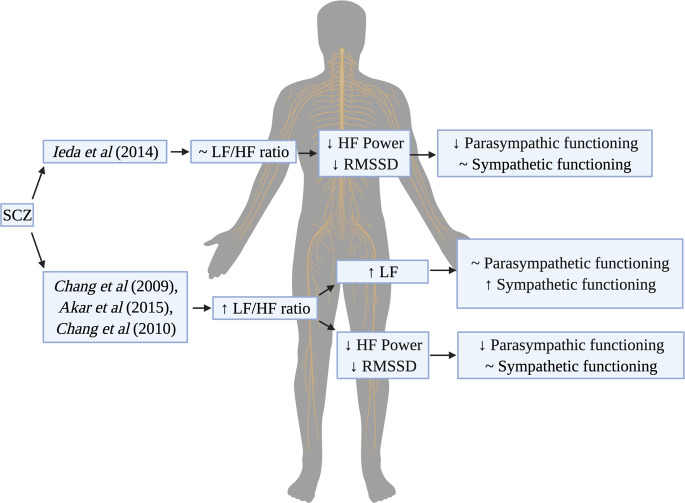
“In the study by Ieda et al.(15), there were significant reductions in HF-HRV in SCZ compared to the HC group; however, there were no significant differences in LF/HF ratio, which can be taken as an estimate of sympathetic activity(15).”
BackgroundA randomized-controlled trial of heart rate variability biofeedback for psychotic symptoms
Clamor, A., Koenig, J., Thayer, J. F., & Lincoln, T. M. (2016) · Behaviour Research and Therapy · doi:10.1016/j.brat.2016.10.003 · Cited by 40
Brown, A. S., Gewirtz, G., Harkavy-Friedman, J., Cooper, T., Brébion, G., Amador, X. F., Malaspina, D., & Gorman, J. M. (1997) · Neuropsychopharmacology · doi:10.1016/s0893-133x(97)00073-0 · Cited by 38
Okada, T., Toichi, M., & Sakihama, M. (2003) · Journal of Clinical Psychopharmacology · doi:10.1097/01.jcp.0000088901.24613.b8 · Cited by 37
Biofeedback to treat anxiety in young people at clinical high risk for developing psychosis
McAusland, L., & Addington, J. (2018) · Early Intervention in Psychiatry · doi:10.1111/eip.12368 · Cited by 37
Akar, S. A., Kara, S., Latifoğlu, F., & Bilgiç, V. (2015) · Journal of Clinical Monitoring and Computing · doi:10.1007/s10877-014-9580-8 · Cited by 35
Electrodermal activity as a prodromal sign in schizophrenia
Hazlett, H., Dawson, M. E., Schell, A. M., & Nuechterlein, K. H. (1997) · Biological Psychiatry · doi:10.1016/s0006-3223(96)00351-4 · Cited by 34
Chung, M.-S., Yang, A. C., Lin, Y.-C., Lin, C.-N., Chang, F.-R., Shen, S.-H., Ouyang, W.-C., Loh, E.-W., & Chiu, H.-J. (2013) · Psychiatry Research · doi:10.1016/j.psychres.2013.07.034 · Cited by 34
Jáuregui, O. I., Costanzo, E. Y., de Achával, D., Villarreal, M. F., Chu, E., Mora, M. C., Vigo, D. E., Castro, M. N., Leiguarda, R. C., Bär, K.-J., et al. (2011) · Cognitive and Behavioral Neurology · doi:10.1097/wnn.0b013e31824007e9 · Cited by 33 · cited 2×
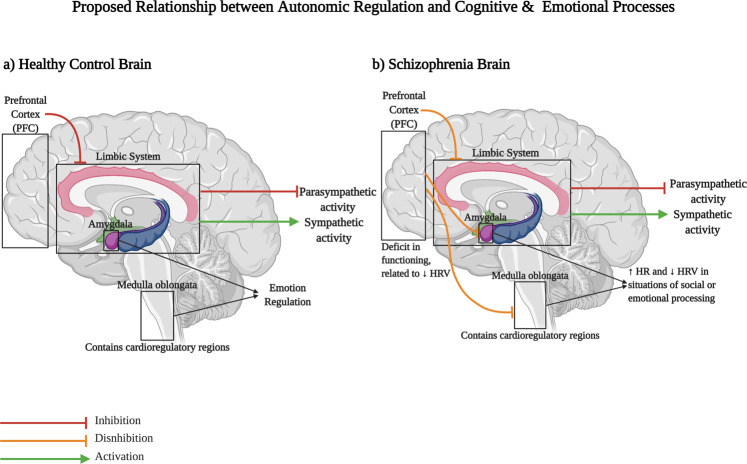
“For instance, Jauregui et al.(80) found that patients with SCZ displayed abnormal decreases in both HF-HRV and LF-HRV in response to a variety of social cognition tasks, as compared to HCs and unaffected first degree relatives.”
BackgroundThe role of psychophysiology in clinical assessment: ERPs in the evaluation of memory
Allen, J. J. B. (2002) · Psychophysiology · doi:10.1017/s0048577201393034 · Cited by 32
Cardiac autonomic dysregulation in acute schizophrenia
Chang, H.-A., Chang, C.-C., Tzeng, N.-S., Kuo, T. B. J., Lu, R.-B., & Huang, S.-Y. (2013) · Acta Neuropsychiatrica · doi:10.1111/acn.12014 · Cited by 30 · cited 2×
“However, given that both first-generation and second-generation APs modulate serotonergic, dopaminergic, cholinergic and adrenergic neurotransmitter systems, it is likely that APs influence autonomic neurocardiac functioning(42) Chang et al.(43) conducted a case-control analysis of cardiac autonomic dysfunction in a g…”
BackgroundHigh salivary alpha-amylase levels in patients with schizophrenia: a pilot study.
Inagaki, T., Miyaoka, T., Okazaki, S., Yasuda, H., Kawamukai, T., Utani, E., Wake, R., Hayashida, M., Horiguchi, J., & Tsuji, S. (2010) · Progress in Neuro-Psychopharmacology and Biological Psychiatry · doi:10.1016/j.pnpbp.2010.03.024 · Cited by 29
Effects of four atypical antipsychotics on autonomic nervous system activity in schizophrenia
Hattori, S., Kishida, I., Suda, A., Miyauchi, M., Shiraishi, Y., Fujibayashi, M., Tsujita, N., Ishii, C., Ishii, N., Moritani, T., et al. (2018) · Schizophrenia Research · doi:10.1016/j.schres.2017.07.004 · Cited by 29
Effectiveness of long-acting injectable antipsychotics: a clinical perspective
Castillo, E. G., & Stroup, T. S. (2015) · Evidence Based Mental Health · doi:10.1136/eb-2015-102086 · Cited by 28
Khan, W. U., Ghazala, Z., Brooks, H. J., Subramaniam, P., Mulsant, B. H., Kumar, S., Voineskos, A. N., Blumberger, D. M., Kern, R. S., & Rajji, T. K. (2021) · Schizophrenia Bulletin · doi:10.1093/schbul/sbaa093 · Cited by 27
Self-citationRelationship between heart rate variability and the severity of psychotic symptoms in schizophrenia
Kim, J.-H., Ann, J.-H., & Lee, J. (2011) · Acta Neuropsychiatrica · doi:10.1111/j.1601-5215.2011.00549.x · Cited by 24
Kim, Y., Kwon, A., Min, D., Kim, S., Jin, M. J., & Lee, S.-H. (2019) · Psychiatry Investigation · doi:10.30773/pi.2019.07.28 · Cited by 24
Association between dysfunction of autonomic nervous system activity and mortality in schizophrenia
Hattori, S., Suda, A., Kishida, I., Miyauchi, M., Shiraishi, Y., Fujibayashi, M., Tsujita, N., Ishii, C., Ishii, N., Moritani, T., et al. (2018) · Comprehensive Psychiatry · doi:10.1016/j.comppsych.2018.08.002 · Cited by 23
Nilsson, B. M., Holm, G., Hultman, C. M., & Ekselius, L. (2015) · European Psychiatry · doi:10.1016/j.eurpsy.2014.06.004 · Cited by 21
Okruszek, Ł., Dolan, K., Lawrence, M., & Cella, M. (2017) · Social Neuroscience · doi:10.1080/17470919.2016.1244113 · Cited by 18
Reduced heart rate variability in a treatment-seeking early psychosis sample
Cacciotti-Saija, C., Quintana, D. S., Alvares, G. A., Hickie, I. B., & Guastella, A. J. (2018) · Psychiatry Research · doi:10.1016/j.psychres.2018.08.068 · Cited by 18
Empathy in electrodermal responsive and nonresponsive patients with schizophrenia
Ikezawa, S., Corbera, S., Liu, J., & Wexler, B. E. (2012) · Schizophrenia Research · doi:10.1016/j.schres.2012.09.011 · Cited by 16
Electrodermal activity and clinical status in chronic schizophrenia.
Katsanis, J., & Iacono, W. G. (1994) · Journal of Abnormal Psychology · doi:10.1037/0021-843x.103.4.777 · Cited by 16
Altered balance in the autonomic nervous system in schizophrenic patients
Nielsen, B. M., Mehlsen, J., & Behnke, K. (1988) · Clinical Physiology · doi:10.1111/j.1475-097x.1988.tb00208.x · Cited by 15
Heart Rate Variability and Metabolic Syndrome in Hospitalized Patients with Schizophrenia
Lee, K., Park, J., Choi, J., & Park, C. G. (2011) · Journal of Korean Academy of Nursing · doi:10.4040/jkan.2011.41.6.788 · Cited by 15
Huang, W., Liu, W., Chen, T., Chen, W., & Huang, W. (2020) · Asia-Pacific Psychiatry · doi:10.1111/appy.12392 · Cited by 10 · cited 2×
“For example, Huang et al.61 have suggested that the use of HRV may be an applicable biomarker for treatment response on negative symptoms, given the well-reported inverse association between HRV and negative symptom severity, as well as a screening tool for cardiovascular risk stratification and early intervention.”
BackgroundSchlenker, R., Cohen, R., Hubmann, W., Mohr, F., Wahlheim, C., Watzl, H., & Werther, P. (1995) · European Archives of Psychiatry and Clinical Neuroscience · doi:10.1007/bf02193088 · Cited by 8
Suda, A., Hattori, S., Kishida, I., Miyauchi, M., Shiraishi, Y., Fujibayashi, M., Tsujita, N., Ishii, C., Ishii, N., Moritani, T., et al. (2018) · Neuropsychiatric Disease and Treatment · doi:10.2147/ndt.s173617 · Cited by 5
Effects of four atypical antipsychotics on autonomic nervous system activity in schizophrenia
Hattori, S., Suda, A., Kishida, I., Miyauchi, M., Fujibayashi, M., Tsujita, N., Ishii, C., Ishii, N., Moritani, T., & Hirayasu, Y. (2018) · Proceedings for Annual Meeting of The Japanese Pharmacological Society · doi:10.1254/jpssuppl.wcp2018.0_po3-1-99 · Cited by 3
Musa, Z., Shabiti, A., Aizezi, Z., & Yi, P. (2016) · Clinical Laboratory · doi:10.7754/clin.lab.2015.150611 · Cited by 2
(1996) · PubMed
Cited by
The brain–heart axis: integrative cooperation of neural, mechanical and biochemical pathways
Valenza, G., Matić, Z., & Catrambone, V. (2025) · Nature Reviews Cardiology · doi:10.1038/s41569-025-01140-3 · Cited by 168
“been observed in acute and chronic stress 15 , neurological injury 19 , epilepsy 20,21 , parkinsonisms 22–24 , Alzheimer disease 25 , psychosomatic disorders 26,27 , schizophrenia 28,29 , anxiety 30 and mood disorders 31–34 .”
Heart Rate Variability in Psychiatric Disorders: A Systematic Review
Ramesh, A., Nayak, T., Beestrum, M., Quer, G., & Pandit, J. A. (2023) · Neuropsychiatric Disease and Treatment · doi:10.2147/ndt.s429592 · Cited by 79
“8 HRV remains highly debated in its use as a diagnostic tool due to its variation based on the individual person, as there are differences within patient populations based on sex, age, and BMI; however, with the increasing number of wearable devices with HRV measuring capability, it is imperative…”
Gangopadhyay, A., Ibrahim, R., Theberge, K., May, M. A., & Houseknecht, K. L. (2022) · Frontiers in Neuroscience · doi:10.3389/fnins.2022.1042442 · Cited by 58
Crosstalk between Schizophrenia and Metabolic Syndrome: The Role of Oxytocinergic Dysfunction
Goh, K. K., Chen, C. Y.-A., Wu, T., Chen, C.-H., & Lu, M. (2022) · International Journal of Molecular Sciences · doi:10.3390/ijms23137092 · Cited by 49
“Preceding autonomic nervous system dysfunction in persons with metabolic syndrome [306] as well as in those with schizophrenia [307] is another neurobiological factor that is common to schizophrenia and metabolic syndrome.”
BackgroundLonghitano, C., Finlay, S., Peachey, I., Swift, J.-L., Fayet‐Moore, F., Bartle, T., Vos, G., Rudd, D., Shareef, O., Gordon, S., et al. (2024) · Frontiers in Nutrition · doi:10.3389/fnut.2024.1444483 · Cited by 42
Metadata
- Authors
- Stogios, N., Gdanski, A., Gerretsen, P., Chintoh, A. F., Graff-Guerrero, A., Rajji, T. K., Remington, G., Hahn, M. K., & Agarwal, S. M.
- Affiliations
- Centre for Addiction and Mental Health (CA)
- University of Toronto (CA)
- Corresponding author
- Agarwal, Sri Mahavir
- ORCID
- Venue
- npj Schizophrenia
- Published
- 2021-04-26
- Volume
- 7
- Issue
- 1
- Pages
- 22-22
- ISSN
- 2334-265X (ISSN-L)
- PMC
- PMC8076312
- OpenAlex
- W3157256311
- Cited by
- 98
- References
- 112
- Citations by year
- 2026: 13 · 2025: 29 · 2024: 20 · 2023: 12 · 2022: 18 · 2021: 6
- FWCI
- 2.50
- Type
- journal article
- Language
- en
- Open access
- gold
- doi.org
- Licence
- cc-by
- creativecommons.org/licenses/by/4.0 (tdm)
- creativecommons.org/licenses/by/4.0 (vor)
- Locations
- Schizophrenia (publishedVersion, cc-by)
- PubMed Central (publishedVersion, cc-by)
- PubMed (publishedVersion)
- DOAJ (DOAJ: Directory of Open Access Journals) (submittedVersion, cc-by-sa)
- Funders
- Physicians' Services Incorporated Foundation
- University of Toronto
- Department of Psychiatry, University of Toronto (PJT-153262)
- Canadian Institutes of Health Research (153262_1)
- Banting and Best Diabetes Centre, University of Toronto (PJT-153262)
- Topics
- Health Sciences › Medicine › Psychiatry and Mental health › Schizophrenia research and treatment
- Health Sciences › Medicine › Cardiology and Cardiovascular Medicine › Heart Rate Variability and Autonomic Control
- Health Sciences › Medicine › Clinical Neurology › Parkinson's Disease Mechanisms and Treatments
- Keywords
- autonomic dysfunction, cognitive impairment, metabolic syndrome, cardiometabolic comorbidities, heart rate variability, sympathetic activity, parasympathetic activity, antipsychotic drugs, muscarinic antagonism, clozapine, olanzapine, quetiapine, body mass index, cardiovascular disease, life expectancy
About these checks
Registry, retraction, Cites and statistics results are computed, not judged, with one exception: a printed reference that no index lists is read once by a model before it counts as a citation error. Claims are extracted by a model and kept only when their quote appears verbatim in the text; each cited source is then checked, with a model’s help, for whether it says what the claim relies on. Those verdicts can be wrong — read the claim’s quote and the cited source before relying on one.
The claim verdicts this report counts are experimental: their accuracy is not yet measured.
A language model drew the claims from the paper on 2026-10-11, under version 3 of the claim definition (model deepseek-v4.1-flash, prompt extract-v3).
A second model labelled each claim on 2026-10-11 (model jev-1.13-20260917, definition revision gold-guideline-v0.2).
Cited sources are checked with a language model’s help (gpt-6-sol).
Statistics and arithmetic are recomputed, not judged.
Confidence bands are shown only for fields calibrated on our annotated test set. None is calibrated yet, so no band is shown.
What counts as a claim ›How we measure confidence ›How we check this ›
Are you an author, or do you see a problem with this page? Request a review
Data sources
Bibliographic data: Semantic Scholar, OpenAlex, Crossref.
Contains information from the Semantic Scholar Academic Graph Datasets, made available under the ODC Attribution License (ODC-BY 1.0).
Semantic Scholar’s data is described in: Kinney, R., et al. (2023). The Semantic Scholar Open Data Platform. arXiv:2301.10140.
