

Expert-level detection of pathologies from unannotated chest X-ray images via self-supervised learning
Open accessThe DOI matches its Crossref record; 47 of the 48 references it cites were found in a registry or an index.
Abstract
In tasks involving the interpretation of medical images, suitably trained machine-learning models often exceed the performance of medical experts. Yet such a high-level of performance typically requires that the models be trained with relevant datasets that have been painstakingly annotated by experts. Here we show that a self-supervised model trained on chest X-ray images that lack explicit annotations performs pathology-classification tasks with accuracies comparable to those of radiologists. On an external validation dataset of chest X-rays, the self-supervised model outperformed a fully supervised model in the detection of three pathologies (out of eight), and the performance generalized to pathologies that were not explicitly annotated for model training, to multiple image-interpretation tasks and to datasets from multiple institutions.
Overview
The claims and statistics of this paper haven’t been checked yet.
Free: it reads the open-access text and checks the first 5 claims that cite a source we can check. Create a free account to check every claim.
Integrity signals
Registry
Cites
Statistics
Figures
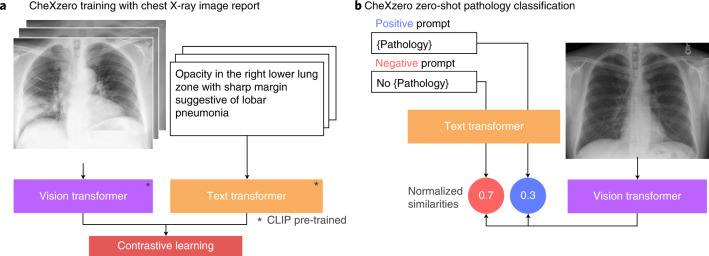
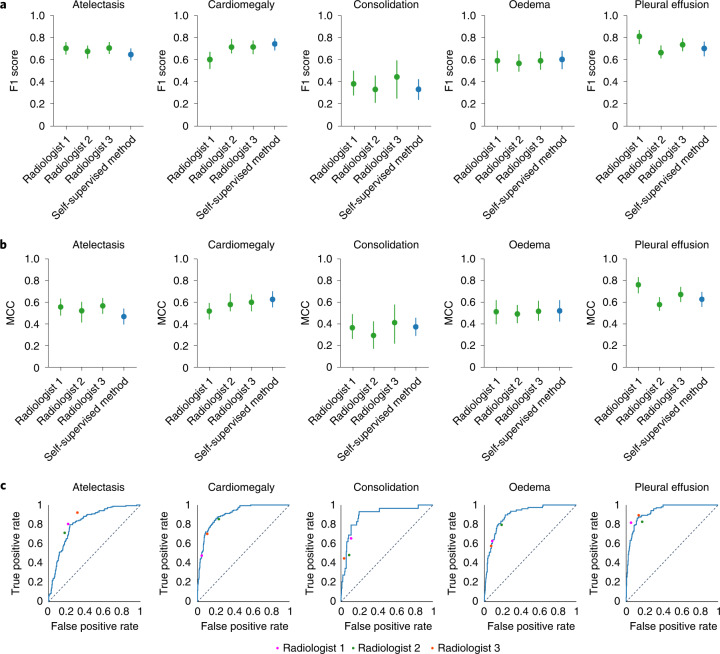
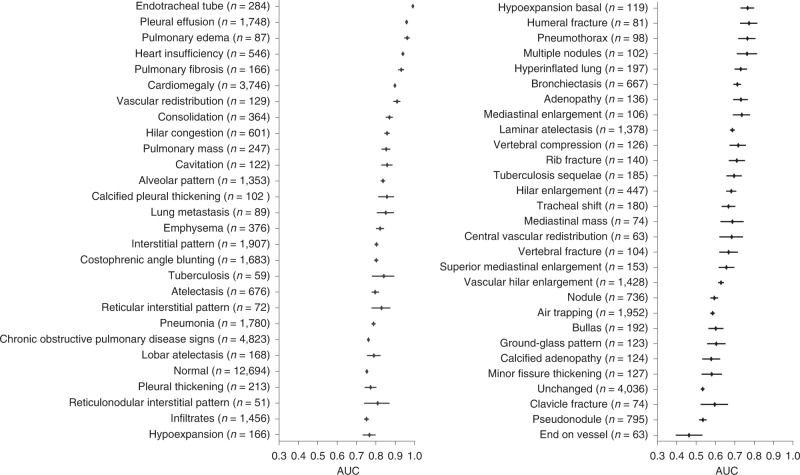
Verification
Claims the paper makes
The claims and statistics of this paper haven’t been checked yet.
Free: it reads the open-access text and checks the first 5 claims that cite a source we can check. Create a free account to check every claim.
Claims other papers make about this one
Each is checked against this paper’s own text: does it say what the citing paper says it does?
The source backs part of the claim, not all of it — or backs it for a different population, condition or comparison.
In the citing paper
“For instance, linking images from chest X-rays to corresponding report text data, and foundation models can alleviate the need for time-consuming and laborious manual annotation while preserving human-level accuracies and outperforming supervised methods18.”
From Large language models and multimodal foundation models for precision oncology (2024) · cites this paper as [18]
Experimental — accuracy not yet measuredThe source backs part of the claim, not all of it — or backs it for a different population, condition or comparison.
In the citing paper
“Although gathering such large datasets will pose a substantial challenge, these data will generally not require costly expert labels, given the success of self-supervision 9,54 .”
From Foundation models for generalist medical artificial intelligence (2023) · cites this paper as [9]
Experimental — accuracy not yet measuredThe cited source says what the claim attributes to it.
In the citing paper
“CheXzero can be applied to detect dozens of diseases in chest X-rays without being trained on explicit labels for these diseases 9 .”
From Foundation models for generalist medical artificial intelligence (2023) · cites this paper as [9]
Self-check
Percentages, sums and reported differences re-computed from the paper’s own numbers.
The self-check needs the paper’s full text.
Citations
Cites
A survey on deep learning in medical image analysis
Litjens, G., Kooi, T., Bejnordi, B. E., Setio, A. A. A., Ciompi, F., Ghafoorian, M., van der Laak, J. A. W. M., van Ginneken, B., & Sánchez, C. I. (2017) · Medical Image Analysis · doi:10.1016/j.media.2017.07.005 · Cited by 15,332
Learning Transferable Visual Models From Natural Language Supervision
Radford, A., Kim, J. W., Hallacy, C., Ramesh, A., Goh, G., Agarwal, S., Sastry, G., Askell, A., Mishkin, P., Clark, J., et al. (2021) · arXiv · doi:10.48550/arxiv.2103.00020 · Cited by 15,293
Momentum Contrast for Unsupervised Visual Representation Learning
He, K., Fan, H., Wu, Y., Xie, S., & Girshick, R. (2020) · 2020 IEEE/CVF Conference on Computer Vision and Pattern Recognition (CVPR) · doi:10.1109/cvpr42600.2020.00975 · Cited by 13,347
A simple framework for contrastive learning of visual representations
Chen, T., Kornblith, S., Norouzi, M., & Hinton, G. (2020) · arXiv · doi:10.48550/arxiv.2002.05709 · Cited by 10,857
Deep learning in medical image analysis
Shen, D., Wu, G., & Suk, H.-I. (2017) · Annual Review of Biomedical Engineering · doi:10.1146/annurev-bioeng-071516-044442 · Cited by 4,968
Liu, P., Yuan, W., Fu, J., Jiang, Z., Hayashi, H., & Neubig, G. (2023) · ACM Computing Surveys · doi:10.1145/3560815 · Cited by 4,361
Liu, P., Yuan, W., Fu, J., Jiang, Z., Hayashi, H., & Neubig, G. (2021) · arXiv · doi:10.48550/arxiv.2107.13586 · Cited by 4,352
A Survey on Deep Transfer Learning
Tan, C., Sun, F., Kong, T., Zhang, W., Yang, C., & Liu, C. (2018) · Lecture Notes in Computer Science · doi:10.1007/978-3-030-01424-7_27 · Cited by 3,165
Understanding deep learning (still) requires rethinking generalization
Zhang, C., Bengio, S., Hardt, M., Recht, B., & Vinyals, O. (2021) · Communications of the ACM · doi:10.1145/3446776 · Cited by 2,400
An overview of deep learning in medical imaging focusing on MRI
Lundervold, A. S., & Lundervold, A. (2019) · Zeitschrift für Medizinische Physik · doi:10.1016/j.zemedi.2018.11.002 · Cited by 2,058
Research works printed but not linked: 5
- Erhan, D., A. Courville, Y. Bengio, and P. Vincent. Why does unsupervised pre-training help deep learning? In Proc. Thirteenth International Conference on Artificial Intelligence and Statistics (eds Teh, Y. W. & Titterington, T.) 9:201–208 (PMLR, 2010).
- Radford, A., Kim, J. W., Hallacy, C., Ramesh, A., Goh, G., Agarwal, S.,... & Sutskever, I. Learning transferable visual models from natural language supervision. In Proc. 38th International Conference on Machine Learning 39:8748–8763 (PMLR, 2021).
- Avdic, A., Marovac, U. & Jankovic, D. Automated labeling of terms in medical reports in Serbian. Turk. J. Electr. Eng. Comput. Sci. 28, 3285–3303 (2020).
- Arjovsky, M.. Out of Distribution Generalization in Machine Learning (ed. Bottou, L.) PhD thesis, New York Univ. https://www.proquest.com/dissertations-theses/out-distribution-generalization-machine-learning/docview/2436913706/se-2 (2020).
- Xian, Y., Lampert, C. H., Schiele, B. & Akata, Z. Zero-shot learning—a comprehensive evaluation of the good, the bad and the ugly. IEEE Trans. Pattern Anal. Mach. Intell. 41, 2251–2265 (2018). 30028691 · DOI · Paper page
Cited by
Items 101–200 of 524
Rethinking masked image modelling for medical image representation
Xie, Y., Gu, L., Harada, T., Zhang, J., Xia, Y., & Wu, Q. (2024) · Medical Image Analysis · doi:10.1016/j.media.2024.103304 · Cited by 42
Tavakoli, N., Abad, Z. S. H., Gowda, V., Samsel, K., Bedayat, A., Ghasemiesfe, A., Bağcı, U., Hsiao, A., Leiner, T., Carr, J., et al. (2025) · Radiology · doi:10.1148/radiol.242961 · Cited by 38
Read like a radiologist: Efficient vision-language model for 3D medical imaging interpretation
Lee, C., Park, S. J., Shin, C., Choi, W. H., Park, H. J., Lee, J. E., & Ye, J. C. (2026) · Medical Image Analysis · doi:10.1016/j.media.2026.104077 · Cited by 33
Timilsina, M., Buosi, S., Razzaq, M. A., Haque, R., Judge, C. S., & Curry, E. (2025) · Computers in Biology and Medicine · doi:10.1016/j.compbiomed.2025.109925 · Cited by 32
UniDCP: Unifying Multiple Medical Vision-Language Tasks via Dynamic Cross-Modal Learnable Prompts
Zhan, C., Zhang, Y., Lin, Y., Wang, G., & Wang, H. (2024) · IEEE Transactions on Multimedia · doi:10.1109/tmm.2024.3397191 · Cited by 28
Deep learning helps discriminate between autoimmune hepatitis and primary biliary cholangitis
Gerussi, A., Saldanha, O. L., Cazzaniga, G., Verda, D., Carrero, Z. I., Engel, B., Taubert, R., Bolis, F., Cristoferi, L., Malinverno, F., et al. (2024) · JHEP Reports · doi:10.1016/j.jhepr.2024.101198 · Cited by 34
Park, S. J., Lee, E. S., Shin, K. S., Lee, J. E., & Ye, J. C. (2023) · Medical Image Analysis · doi:10.1016/j.media.2023.103021 · Cited by 36
UniBrain: Universal Brain MRI diagnosis with hierarchical knowledge-enhanced pre-training
Lei, J., Dai, L., Jiang, H., Wu, C., Zhang, X., Zhang, Y., Yao, J., Xie, W., Zhang, Y., Li, Y., et al. (2025) · Computerized Medical Imaging and Graphics · doi:10.1016/j.compmedimag.2025.102516 · Cited by 35
Leveraging foundation and large language models in medical artificial intelligence
Wong, I. N., Monteiro, O., Baptista‐Hon, D. T., Wang, K., Lu, W.-Y., Sun, Z., Nie, S., & Yin, Y. (2024) · Chinese Medical Journal · doi:10.1097/cm9.0000000000003302 · Cited by 31
D’Antonoli, T. A., Blüthgen, C., Cuocolo, R., Klontzas, M. E., Ponsiglione, A., & Koçak, B. (2025) · Diagnostic and Interventional Radiology · doi:10.4274/dir.2025.253445 · Cited by 43
“FMs have the potential to create synthetic medical images, such as CT scans, MRIs, and X-rays, that resemble real-world data.”
InfluentialArtificial Intelligence in the Management of Heart Failure
Cheema, B. S., Hourmozdi, J., Kline, A. S., Ahmad, F. S., & Khera, R. (2025) · Journal of Cardiac Failure · doi:10.1016/j.cardfail.2025.02.020 · Cited by 24
Chest X-Ray Foundation Model With Global and Local Representations Integration
Yang, Z., Xu, X., Zhang, J., Wang, G., Kalra, M. K., & Yan, P. (2025) · IEEE Transactions on Medical Imaging · doi:10.1109/tmi.2025.3581907 · Cited by 41
“CheXzero [13], BiomedCLIP [38], PubMedCLIP [39] use contrastive vision-language pretraining, which is effective in zero-shot classification.”
InfluentialFoundation models for radiology—the position of the AI for Health Imaging (AI4HI) network
de Almeida, J. G., Alberich, L. C., Tsakou, G., Marias, K., Tsiknakis, M., Lekadir, K., Martí‐Bonmatí, L., & Papanikolaou, N. K. (2025) · Insights into Imaging · doi:10.1186/s13244-025-02056-9 · Cited by 27
“2) [58, 59], masked auto-encoders, (parts of the image are removed and a model is trained to predict the missing parts; Fig.”
Chen, X., Li, Y., Hu, M., Salari, E., Chen, X., Qiu, R. L. J., Zheng, B., & Yang, X. (2026) · Medical Physics · doi:10.1002/mp.70261 · Cited by 25
“17 In radiology, for instance, CLIP has been preliminarily applied to disease diagnosis tasks in chest X-rays, 13 organ segmentation,and tumor detection in CT scans, 34 etc.”
Bootstrapping Chest CT Image Understanding by Distilling Knowledge from X-Ray Expert Models
Cao, W., Zhang, J., Xia, Y., Mok, T. C. W., Li, Z., Ye, X., Lü, L., Zheng, J., Tang, Y., & Zhang, L. (2024) · IEEE Computer Society Conference on Computer Vision and Pattern Recognition/Proceedings - IEEE Computer Society Conference on Computer Vision and Pattern Recognition/Proceedings · doi:10.1109/cvpr52733.2024.01068 · Cited by 53
“However, most research has concentrated on 2D chest X-ray scenarios [31, 34, 42, 43], with limited exploration in 3D imaging.”
BackgroundMethodInfluentialLiu, F., Zhou, H., Wang, K., Yu, Y., Gao, Y., Sun, Z., Liu, S., Sun, S., Zou, Z., Li, Z., et al. (2025) · Cell Reports Medicine · doi:10.1016/j.xcrm.2025.102056 · Cited by 22
“16 These models, trained on specialized datasets such as PubMed articles, EHRs, medical textbooks, and imaging data, 19,20 have advanced capabilities in tasks like clinical QA and medical report generation.”
Reddy, K. D., & Patil, A. (2025) · Scientific Reports · doi:10.1038/s41598-025-16669-z · Cited by 22
“Tiu et al. 53 demonstrated expert-level detection of chest pathologies using self-supervised learning on unannotated X-rays, highlighting the scalability of unsupervised feature learning.”
Controllable Text-to-Image Synthesis for Multi-Modality MR Images
Kim, K., Na, Y., Ye, S., Lee, J., Ahn, S. S., Park, J. E., & Kim, H. (2024) · IEEE Winter Conference on Applications of Computer Vision · doi:10.1109/wacv57701.2024.00775 · Cited by 30
“Additionally, with publicly available datasets such as MIMIC, most studies are often limited to chest X-rays (CXRs) [11,30,34,40].”
MethodFrom ChatGPT to Treatment: the Future of AI and Large Language Models in Surgical Oncology
Ramamurthi, A., Are, C., & Kothari, A. N. (2023) · Indian Journal of Surgical Oncology · doi:10.1007/s13193-023-01836-3 · Cited by 22
Kargarandehkordi, A., Slade, C. R., & Washington, P. Y. (2024) · JMIR Research Protocols · doi:10.2196/55615 · Cited by 28
“In prior work by other researchers, SSL pretraining approaches have repeatedly demonstrated improved performance over pure supervised learning in a variety of contexts [20-23].”
HuBERT-ECG as a self-supervised foundation model for broad and scalable cardiac applicationsPreprint
Coppola, E., Savardi, M., Massussi, M., Adamo, M., Metra, M., & Signoroni, A. (2024) · medRxiv · doi:10.1101/2024.11.14.24317328 · Cited by 52
Emulating human-like adaptive vision for efficient and flexible machine visual perception
Wang, Y., Yang, Y., Yue, Y., Wang, H., Jiang, H., Han, Y., Ni, Z., Pu, Y., Shi, M., Lu, R., et al. (2025) · Nature Machine Intelligence · doi:10.1038/s42256-025-01130-7 · Cited by 39
“3b,c, Supplementary Tables 32 and 33 and Supplementary Figs.”
Avram, O., Durmus, B., Rakocz, N., Corradetti, G., An, U., Nittala, M. G., Terway, P., Rudas, Á., Chen, Z. J., Wakatsuki, Y., et al. (2024) · Nature Biomedical Engineering · doi:10.1038/s41551-024-01257-9 · Cited by 25
“Some methods used self-supervised-based transfer learning techniques relying mainly on unlabelled biomedical data 17–19 , and others combined both natural and biomedical images 7,20 .”
ChEX: Interactive Localization and Region Description in Chest X-Rays
Müller, P., Kaissis, G. A., & Rueckert, D. (2024) · Lecture notes in computer science · doi:10.1007/978-3-031-72664-4_6 · Cited by 37
Huang, W., Li, C., Yang, H., Liu, J., Liang, Y., Zheng, H., & Wang, S. (2024) · Medical Image Analysis · doi:10.1016/j.media.2024.103299 · Cited by 24
“Similarly, Tiu et al. [13] proposed CheXzero, which achieved expert-level detection of pathologies without fine-tuning using labeled data.”
BackgroundMethodSuo, X., Chen, M., Chen, L., Luo, C., Kemp, G. J., Lui, S., & Sun, H. (2025) · EBioMedicine · doi:10.1016/j.ebiom.2025.105773 · Cited by 22
“24,25 Self-supervised learning has been applied to research in natural language processing (NLP), computer vision, and medical data analysis, 24,26,27 where labelled data are particularly scarce or expensive.”
Learning neuroimaging models from health system-scale data
Lyu, Y., Harake, E. S., Chowdury, A., Banerjee, S., Gologorsky, R., Liu, S., Meißner, A.-K., Rao, A., Zhao, C., Kondepudi, A., et al. (2026) · Nature Biomedical Engineering · doi:10.1038/s41551-025-01608-0 · Cited by 29
Watson, E. ‘., Viana, T., & Zhang, S. (2023) · AI · doi:10.3390/ai4010007 · Cited by 24
“CheXzero can analyze chest X-rays and associated medical reports to identify issues such as pneumonia, collapsed lungs, and lesions with accuracy comparable to human radiologists, without explicit labels [59].”
BackgroundAgarwal, S., Arya, K. V., & Meena, Y. K. (2024) · IEEE Transactions on Medical Imaging · doi:10.1109/tmi.2024.3416744 · Cited by 21
Mahapatra, D., Yepes, A. J., Bozorgtabar, B., Roy, S. S., Ge, Z., & Reyes, M. (2024) · IEEE Transactions on Medical Imaging · doi:10.1109/tmi.2024.3429471 · Cited by 21
Pawelczyk, J., Kraus, M., Eckl, L., Nehrer, S., Aurich, M. E., Izadpanah, K., Siebenlist, S., & Rupp, M. (2024) · Archives of Orthopaedic and Trauma Surgery · doi:10.1007/s00402-024-05408-0 · Cited by 19
ECAMP: Entity-centered Context-aware Medical Vision Language Pre-training
Wang, R., Yao, Q., Jiang, Z., Lai, H., He, Z., Tao, X., & Zhou, S. K. (2025) · Medical Image Analysis · doi:10.1016/j.media.2025.103690 · Cited by 22
From Traditional Machine Learning Models to Multimodal Large Models: A Review of Aquaculture
Liu, S., Du, Z., Wang, G., Zhang, P., Xu, W., Yu, J., & Li, D. (2025) · Reviews in Aquaculture · doi:10.1111/raq.70111 · Cited by 19
Obaido, G., Mienye, I. D., Aruleba, K. D., Chukwu, C., Esenogho, E., & Modisane, C. (2026) · Bioengineering · doi:10.3390/bioengineering13020176 · Cited by 14
“Tiu et al. [69] introduced CheXzero, a CLIP-based model trained on unannotated chest X-rays and reports.”
InfluentialUnderstanding pre-training data effects in retinal foundation models using two large fundus cohorts
Zhou, Y., Wang, Z., Wu, Y., Ong, A. Y., Wagner, S. K., Ruffell, E., Chia, M. A., Guan, Z., Ju, L., Engelmann, J., et al. (2026) · Nature Communications · doi:10.1038/s41467-026-70077-z · Cited by 23
MedVersa: A Generalist Foundation Model for Diverse Medical Imaging Tasks
Zhou, H.-Y., Acosta, J., Adithan, S., Datta, S., Topol, E. J., & Rajpurkar, P. (2026) · NEJM AI · doi:10.1056/aioa2500595 · Cited by 22
Self-citationCross-Modal Knowledge Diffusion-Based Generation for Difference-Aware Medical VQA
Lin, Q., He, K., Zhu, Y., Xu, F., Cambria, E., & Feng, M. (2025) · IEEE Transactions on Image Processing · doi:10.1109/tip.2025.3558446 · Cited by 22
“…knowledge in its network parameters, we implement ViT with the ViT-B / 32 architecture [34], and initialize it with the visual part of CheXzero [35] , and E w diffv denote textual description corresponding to the reference and main image as well as their di ff erence, which has direct guiding…”
A generalizable deep learning system for cardiac MRI
Shad, R., Zakka, C., Kaur, D., Mathur, M., Fong, R., Cho, J., Filice, R., Mongan, J., Kallianos, K., Khandwala, N., et al. (2023) · Nature Biomedical Engineering · doi:10.1038/s41551-026-01637-3 · Cited by 23
“We built on previous attempts at learning visual representations using naturally occurring pairing of 2D medical imaging and textual data, extending these concepts to the spatiotemporal video-like nature of cardiac MRI scans 14–17, 19 , 20 .”
InfluentialSelf-citationADFound: A Foundation Model for Diagnosis and Prognosis of Alzheimer’s Disease
Yang, G., Du, K., Yang, Z., Du, Y., Cheung, E. Y., Zheng, Y., Yang, M., Kourtzi, Z., Schönlieb, C., & Wang, S. (2025) · IEEE Journal of Biomedical and Health Informatics · doi:10.1109/jbhi.2025.3576436 · Cited by 18
“These models are tailored to specific pathologies and data modalities, including retinal images [13], ultrasound [20], whole-slide images (WSIs) [17], computed tomography (CT) [21], endoscopy [39], and X-ray images [40].”
Multimodal deep learning for enhanced breast cancer diagnosis on sonography
Wei, T.-R., Chang, A., Kang, Y., Patel, M. R., Fang, Y. Q., & Yan, Y. (2025) · Computers in Biology and Medicine · doi:10.1016/j.compbiomed.2025.110466 · Cited by 17
Wang, S., Zhu, Y., Yang, Z., Luo, X., Zhang, Y., Fu, P., Wang, H., Wang, M., Song, Z., Li, Q., et al. (2025) · Nature Biomedical Engineering · doi:10.1038/s41551-025-01500-x · Cited by 19
“This approach has succeeded in X-ray diagnosis (for example, CheXzero 16 , KAD 17 ) by learning from radiology reports in which each image is matched to a descriptive text.”
A multimodal vision–language model for generalizable annotation-free pathology localization
Yang, H., Zhou, H.-Y., Liu, J., Huang, W., Li, C., Li, Z., Gao, Y., Liu, Q., Liang, Y., Yang, Q., et al. (2026) · Nature Biomedical Engineering · doi:10.1038/s41551-025-01574-7 · Cited by 25
“This requirement is particularly challenging in flexible and dynamic clinical environments, especially for emerging diseases (for example, COVID-19), where deployed models may fail to perform effectively 18–20 .”
Xu, S., Li, W., Li, Z., Zhao, T., & Zhang, B. (2024) · IEEE Transactions on Medical Imaging · doi:10.1109/tmi.2024.3461231 · Cited by 17
PairAug: What Can Augmented Image-Text Pairs Do for Radiology?
Xie, Y., Chen, Q., Wang, S., To, M., Lee, I., Khoo, E. W., Hendy, K., Koh, D., Xia, Y., & Wu, Q. (2024) · IEEE Computer Society Conference on Computer Vision and Pattern Recognition/Proceedings - IEEE Computer Society Conference on Computer Vision and Pattern Recognition/Proceedings · doi:10.1109/cvpr52733.2024.01107 · Cited by 25
“The compared methods include ImageNet pre-training [9], popular medical image-report pre-training approaches MGCA [15], CXR-CLIP [44] and CheXzero (our base model) [34].”
A review and systematic guide to counteracting medical data scarcity for AI applications
Gröger, F., Amruthalingam, L., Lionetti, S., Navarini, A. A., Ille, F., & Pouly, M. (2025) · Computer Methods and Programs in Biomedicine Update · doi:10.1016/j.cmpbup.2025.100220 · Cited by 25
Zhang, S., Liu, X., Zhou, L., Wang, K., Shao, J., Shi, J., Wang, X., Mu, J., Gao, T., Jiang, Z., et al. (2023) · EClinicalMedicine · doi:10.1016/j.eclinm.2023.102270 · Cited by 14
“In recent study, self-supervised learning-based pre-training has shown the potential to learn general representations for disease diagnosis by utilizing unlabeled data, 38 which inspired us self-supervised pre-training may also have the ability to provide medical knowledge for prognosis prediction.”
BackgroundMpox-AISM: AI-mediated super monitoring for mpox and like-mpox
Yue, Y., Li, Z., Zhang, X., Wang, Z., Zhang, X., Zhang, F., Saravanakumar, S., Xu, J., Zhao, W., Liu, J., et al. (2024) · iScience · doi:10.1016/j.isci.2024.109766 · Cited by 14
“Our experimental results show that the performance of the deep learning model using SSL in diagnosing various types of images has been significantly improved, which is consistent with the previous research results [21, 22, 23].”
ResultLeveraging Generative AI Models in Urban Science
Balsa‐Barreiro, J., Cebrián, M., Menéndez, M., & Axhausen, K. W. (2024) · Current topics in behavioral neurosciences · doi:10.1007/7854_2024_482 · Cited by 16
Recent Advances in Medical Image Classification
Dao, L., & Ly, N. Q. (2024) · International Journal of Advanced Computer Science and Applications · doi:10.14569/ijacsa.2024.0150727 · Cited by 17
“ Some remarkable methods: o Few-shot learning : BioViL-T [5], PM2 [6], and DeViDe [7]. o Zero-shot learning: MedCLIP [8], CheXZero [9], and MedKLIP [10].”
BackgroundMethodTowards a general computed tomography image segmentation model for anatomical structures and lesions
Ouyang, X., Gu, D., Li, X., Zhou, W., Chen, Q., Zhan, Y., Zhou, X. S., Shi, F., Xue, Z., & Shen, D. G. (2024) · Communications Engineering · doi:10.1038/s44172-024-00287-0 · Cited by 17
Enhancing Medical Vision-Language Contrastive Learning via Inter-Matching Relation Modeling
Li, M., Meng, M., FULHAM, M. J., Feng, D. D., Bi, L., & Kim, J. (2025) · IEEE Transactions on Medical Imaging · doi:10.1109/tmi.2025.3534436 · Cited by 19
“This design provoked great interest in the community given the transferability of the learned image representations to the downstream tasks such as disease classification, lesion detection and segmentation [2], [3], [4], [5], [6].”
Can Large Language Models Challenge CNNs in Medical Image Analysis?
Ahmed, S., Sakib, S. K., & Das, A. B. (2025) · Proceedings - International Conference on Image Processing · doi:10.1109/icip55913.2025.11084721 · Cited by 14
Yousefirizi, F., Shiri, I., Joo Hyun, O., Bloise, I., Martineau, P., Wilson, D., Bénard, F., Sehn, L. H., Savage, K. J. J., Zaidi, H., et al. (2024) · Physical and Engineering Sciences in Medicine · doi:10.1007/s13246-024-01408-x · Cited by 17
“The choice of loss function plays a pivotal role in defining the optimization problem and directly impacts the convergence of the segmentation model during training.”
Moroianu, S. L., Blüthgen, C., Chambon, P., Cherti, M., Delbrouck, J.-B., Paschali, M., Price, B., Gichoya, J. W., Jitsev, J., Langlotz, C. P., et al. (2025) · Research Square · doi:10.21203/rs.3.rs-7687810/v1 · Cited by 17
“Such models have demonstrated strong performance across a wide range of tasks, including disease classification [4–7], worklist prioritization [8], visual grounding [9, 10], and automatic report generation [11–13], with many systems obtaining regulatory clearances [14].”
Self-citationGeneralist versus Specialist Vision Foundation Models for Ocular Disease and OculomicsPreprint
Zhou, Y.-K., Nderitu, P., Goh, J. H. L., Engelmann, J., Wagner, S. K., Ran, E. A., Jiang, H.-Y., Ju, L., Zou, K., Srinivasan, S., et al. (2025) · arXiv.org · doi:10.48550/arxiv.2509.03421 · Cited by 12
“These include disease detection, prognosis, and risk stratification across multiple specialities such as ophthalmology [7–9], radiology [10–12], and pathology [13–15].”
Foundation models in biomedical imaging: turning hype into reality
Muneer, A., Zhang, K., Hamdi, I., Qureshi, R., Waqas, M., Fouad, S., Ali, H., Anwar, S. M., & Wu, J. (2026) · Nature Biomedical Engineering · doi:10.1038/s41551-026-01762-z · Cited by 18
“This capability allows for highly accurate zero-shot classification of pathologies, such as classifying chest X-rays for pneumonia, pneumothorax or cardiomegaly 39 , even when the model has never explicitly been trained on labelled images for all three conditions.”
Classification of Caries Based on CBCT: A Deep Learning Network Interpretability Study
Chen, S., Yang, Y. J., Wu, W., Wei, R., Wang, Z., Tay, F. R., Hu, J., & Ma, J. (2024) · Journal of Imaging Informatics in Medicine · doi:10.1007/s10278-024-01143-5 · Cited by 14
“Examples include evaluation of cardiac function using echocardiograms, screening for lung cancer using low-dose CT, and diagnosis of lung diseases using chest radiographs [10–12].”
Sharpness-aware gradient guidance for few-shot class-incremental learning
Chen, R., Jing, X., Wu, F., & Chen, H. (2024) · Knowledge-Based Systems · doi:10.1016/j.knosys.2024.112030 · Cited by 16
MAGDA: Multi-agent Guideline-Driven Diagnostic Assistance
Bani-Harouni, D., Navab, N., & Keicher, M. (2024) · Lecture notes in computer science · doi:10.1007/978-3-031-73471-7_17 · Cited by 21
“Recent explorations have successfully employed contrastive language-image pretraining (CLIP) [10] for few-and zero-shot classification of common diseases in chest X-rays [2, 13, 16, 20, 22, 23].”
BackgroundMethodChandrashekar, M., Goethert, I., Haque, M. I. U., McMahon, B., Dhaubhadel, S., Knight, K., Erdos, J., Reagan, D., Taylor, C., Kuzmak, P. M., et al. (2025) · Journal of Imaging Informatics in Medicine · doi:10.1007/s10278-025-01494-7 · Cited by 13
Zhao, H., Zhang, C.-W., Chen, J., Li, Z.-T., Wang, F., & Gao, S. (2025) · IEEE journal of biomedical and health informatics · doi:10.1109/jbhi.2025.3569726 · Cited by 13
“Specifically, the application of CLIP in medical imaging predominantly revolves around harnessing its robust pre-trained model to forge critical components for diverse medical tasks, encompassing zero-shot classification [42], context optimization [43], and organ segmentation [44], [45].”
Mlip: Medical Language-Image Pre-Training With Masked Local Representation Learning
Liu, J., Zhou, H.-Y., Li, C., Huang, W., Yang, H., Liang, Y., Shi, G., Zheng, H., & Wang, S. (2024) · IEEE International Symposium on Biomedical Imaging (ISBI) · doi:10.1109/isbi56570.2024.10635357 · Cited by 13
“With sufficient pre-training, the model can achieve comparable performance with minimal or even no labeling compared with fully-supervised approaches[1, 2].”
InfluentialSex estimation from maxillofacial radiographs using a deep learning approach
Hiroki, H. A. S. E., Mine, Y., Okazaki, S., Yoshimi, Y., Ito, S., Peng, T., Mizuho, S. A. N. O., KOIZUMI, Y., Kakimoto, N., Tanimoto, K., et al. (2024) · Dental Materials Journal · doi:10.4012/dmj.2023-253 · Cited by 12
The Role of Artificial Intelligence in Theranostics
Currie, G. M., & ROHREN, E. M. (2025) · Journal of Nuclear Medicine Technology · doi:10.2967/jnmt.125.270251 · Cited by 12
“Among various general biomedical VLMs, CheXZero uses a contrastive language – image pretraining (CLIP) – based image encoder and text encoder for zero-shot learning to accurately identify pathology on chest radiograph ( 96 ).”
Connor, C. W. (2024) · Anesthesiology · doi:10.1097/aln.0000000000004841 · Cited by 12
Lanfredi, R. B., Mukherjee, P., & Summers, R. M. (2024) · Medical Image Analysis · doi:10.1016/j.media.2024.103383 · Cited by 16
Yuan, H., Hong, C., Jiang, P.-T., Zhao, G., Tran, N. T. A., Xu, X., Yan, Y. Y., & Liu, N. (2024) · Journal of Biomedical Informatics · doi:10.1016/j.jbi.2024.104673 · Cited by 11
Zero-Shot Pediatric Tuberculosis Detection in Chest X-Rays Using Self-Supervised Learning
Capellán-Martín, D., Parida, A., Gómez-Valverde, J. J., Sanchez, R., Roshanitabrizi, P., Linguraru, M. G., Ledesma‐Carbayo, M. J., & Anwar, S. M. (2024) · IEEE International Symposium on Biomedical Imaging (ISBI) · doi:10.1109/isbi56570.2024.10635520 · Cited by 15
“Finally, although limited, some recent studies [21, 22, 23, 24, 25] verse about the application of self-supervised techniques to improve the detection of diverse lung diseases on CXR images, moving towards the concept of foundation medical image analysis models.”
BackgroundMultimodal masked siamese network improves chest X-ray representation learning
Shurrab, S., Guerra-Manzanares, A., & Shamout, F. E. (2024) · Scientific Reports · doi:10.1038/s41598-024-74043-x · Cited by 13
“Tiu et al 50 . achieved expert-level performance using raw radiology reports associated with CXR as supervisory signals during self-supervised pretraining.”
Position-Guided Prompt Learning for Anomaly Detection in Chest X-Rays
Sun, Z., Gu, Y., Liu, Y., Zhang, Z., Zhao, Z., & Xu, Y. (2024) · Lecture notes in computer science · doi:10.1007/978-3-031-72378-0_53 · Cited by 15
Adem, A. M., Kant, R., Sonia, S., Kumar, K., Mittal, V., Jain, P., & Joshi, K. K. (2025) · Biomedical & Pharmacology Journal · doi:10.13005/bpj/3073 · Cited by 11
Semantic Consistency-Based Uncertainty Quantification for Factuality in Radiology Report Generation
Wang, C., Zhou, W., Ghosh, S., Batmanghelich, K. N., & Li, W. (2025) · Findings of the Association for Computational Linguistics: NAACL · doi:10.18653/v1/2025.findings-naacl.95 · Cited by 20
Robust and explainable framework to address data scarcity in diagnostic imaging
Zhao, Z., Alzubaidi, L., Zhang, J., Duan, Y., Naseem, U., & Gu, Y. (2025) · Computers in Biology and Medicine · doi:10.1016/j.compbiomed.2025.111052 · Cited by 13
Foundation Models in Medical Image Analysis: A Systematic Review and Quantitative Analysis
Rajendran, P., Safari, M., He, W.-F., Hu, M.-Z., Shah, K., Wang, S.-S., Zhou, J., & Yang, X.-F. (2025) · Medical Image Analysis · doi:10.1016/j.media.2026.104293 · Cited by 8
A Representation Fusion Framework for Decoupling Diagnostic Information in Multimodal Learning
Tonekaboni, S., Friedman, S. F., Zhang, X., Maddah, M., & Uhler, C. (2025) · npj Digital Medicine · doi:10.1038/s41746-025-02144-6 · Cited by 17
Vavekanand, R., & Kumar, T. (2026) · Signal Image and Video Processing · doi:10.1007/s11760-026-05214-8 · Cited by 14
A foundation generative model for breast ultrasound image analysis
Yu, H., Li, Y., Zhang, N., Niu, Z., Gong, X., Luo, Y., Ye, H., He, S., Wu, Q., Qin, W., et al. (2026) · Nature Biomedical Engineering · doi:10.1038/s41551-026-01639-1 · Cited by 16
Sun, Y., Kargarandehkordi, A., Slade, C. R., Jaiswal, A., Busch, G., Guerrero, A. P. S., Phillips, K. T., & Washington, P. Y. (2023) · JMIR Research Protocols · doi:10.2196/46493 · Cited by 14
Mishra, A., Mittal, R., Jestin, C., Tingos, K., & Rajpurkar, P. (2023) · arXiv (Cornell University) · doi:10.48550/arxiv.2306.08000 · Cited by 13
Self-citationBedi, P., Thukral, A., & Dhiman, S. (2025) · Knowledge and Information Systems · doi:10.1007/s10115-025-02465-8 · Cited by 10
Multi-modal learning methods in medical imaging area: A survey
Sun, Y., Chen, W., & Sun, Z. (2025) · Digital Signal Processing · doi:10.1016/j.dsp.2025.105441 · Cited by 14
Zhong, J., Xing, Y., Hu, Y., Lu, J. A., Yang, J., Zhang, G., Mao, S., Chen, H., Yin, Q., Cen, Q., et al. (2024) · Insights into Imaging · doi:10.1186/s13244-024-01769-7 · Cited by 11
Learning-on-the-Drive: Self-supervised Adaptive Long-range Perception for High-speed Offroad Driving
Chen, E., Ho, C., Maulimov, M., Wang, C., & Scherer, S. (2024) · IEEE/RSJ International Conference on Intelligent Robots and Systems (IROS) · doi:10.1109/iros58592.2024.10801365 · Cited by 14
“Cross-modal Self-supervised Learning: To alleviate the need for hard-to-acquire human annotation, self-supervised learning (SSL) is often employed to generate labeled data automatically, with applications in healthcare [16] and robotics [17].”
SupReMix: Supervised contrastive learning for medical imaging regression with mixup
Wu, Y., Dong, Z., Chen, C., Zhou, W., & Zhou, J. H. (2025) · Medical Image Analysis · doi:10.1016/j.media.2025.103909 · Cited by 14
CLIFS: Clip-Driven Few-Shot Learning for Baggage Threat Classification
Ahmed, A. H., Velayudhan, D., Elmezain, M., Radi, M. A., Boudiaf, A., Hassan, T., Deriche, M. A., Bennamoun, M., & Werghi, N. (2024) · Proceedings - International Conference on Image Processing · doi:10.1109/icip51287.2024.10647879 · Cited by 10
Özkan, E., & Boix, X. (2024) · Scientific Reports · doi:10.1038/s41598-024-73561-y · Cited by 12
Sato, J., Sugimoto, K., Suzuki, Y., Wataya, T., Kita, K., Nishigaki, D., Tomiyama, M., Hiraoka, Y., Hori, M., Takeda, T., et al. (2024) · EBioMedicine · doi:10.1016/j.ebiom.2024.105463 · Cited by 11
He, Z., Wong, A. N. N., & Yoo, J. S. (2025) · Computers in Biology and Medicine · doi:10.1016/j.compbiomed.2025.110625 · Cited by 11
Foundation models for exploration geophysics
Liu, Q., Chen, Z., & Ma, J. (2025) · Geophysics · doi:10.1190/geo2024-0916.1 · Cited by 11
Yu, M., Kim, Y., Nam, S., Cha, G. D., & Kim, D. (2025) · Health Nanotechnology · doi:10.1186/s44301-025-00012-6 · Cited by 10
“11g) [62].”
Al-Jebrni, A. H., Jiang, Z., Qin, Y., Qiu, Y., Jiang, N., Li, G., Zheng, Y., Wong, T. Y., Kim, S., Jung, Y., et al. (2026) · Computational Visual Media · doi:10.26599/cvm.2026.9450530 · Cited by 11
Advanced Artificial Intelligence Methods for Medical Applications
Siriborvornratanakul, T. (2023) · Lecture notes in computer science · doi:10.1007/978-3-031-35748-0_24 · Cited by 9
Han, T., Žigutytė, L., Huck, L. C., Huppertz, M., Siepmann, R. M., Gandelsman, Y., Blüthgen, C., Khader, F., Kuhl, C. K., Nebelung, S., et al. (2024) · Cell Reports Medicine · doi:10.1016/j.xcrm.2024.101713 · Cited by 11
“To ensurea fair comparison, we trained a linear classifier on the latent space of CheXzero using the same labels as DiffChest.”
InfluentialPrompt mechanisms in medical imaging: A comprehensive survey
Yang, H., Liang, X., Li, Z., Sun, Y., Hu, Z., Xie, X., Dashtbozorg, B., Huang, J., Zhu, S., Han, L., et al. (2026) · The Innovation · doi:10.1016/j.xinn.2026.101271 · Cited by 10
Local Contrastive Learning for Medical Image RecognitionPreprint
Rizvi, S. A., Tang, R., Jiang, X., Ma, X., & Hu, X. (2023) · PubMed Central · doi:10.48550/arxiv.2303.14153 · Cited by 20
“CheXzero [16] is a direct application of the CLIP model on large-scale chest X-ray datasets to enable zero-shot classification of unseen findings in images.”
BackgroundMethodInfluentialA Dataset for Understanding Radiologist-Artificial Intelligence Collaboration
Moehring, A., Kutwal, M., Huang, R., Banerjee, O., Jacobi, A., Eber, C. D., Mendoza, D. P., Chung, M., Dayan, E., Gupta, Y., et al. (2025) · Scientific Data · doi:10.1038/s41597-025-05054-0 · Cited by 12
“Past studies on AI for radiology have typically compared AI performance with radiologist performance, pitting humans against AI for a small set of diseases and with fewer experimental participants 7–11 .”
Self-citationDiagnosis of cardiac conditions from 12-lead electrocardiogram through natural language supervision
Zhou, X., Li, T., Hayama, H., Nakamura, K., Liu, S.-H., Chen, W., & Zhu, X. (2025) · npj Digital Medicine · doi:10.1038/s41746-025-02074-3 · Cited by 8
Zhao, F., Liu, M., Xiang, M., Li, D., Jiang, X., Jin, X., Lin, C., & Wang, R. (2024) · Journal of Imaging Informatics in Medicine · doi:10.1007/s10278-024-01213-8 · Cited by 10
Leveraging Vision-Language Embeddings for Zero-Shot Learning in Histopathology Images
Rahaman, M. M., Millar, E. K. A., & Meijering, E. H. W. (2025) · IEEE Journal of Biomedical and Health Informatics · doi:10.1109/jbhi.2025.3584802 · Cited by 12
“In both the natural image domain [23], [29], [30], [31], [32] and medical imaging [33], [34], [35], considerable research has focused on using these pretrained models for ZSL, which circumvents the need for labeled data while still achieving strong performance.”
Bradshaw, T., Brosch-Lenz, J., Uribe, C., Karakatsanis, N. A., Bruce, R. J., Strigari, L., Jha, A. K., Dutta, J., Schwartz, J., Fakhri, G. E., et al. (2025) · Journal of Nuclear Medicine · doi:10.2967/jnumed.124.269424 · Cited by 8
“This is especially critical in the emerging era of AI and large language models, where imaging and text datasets from different institutions must be combined and their metadata automatically scraped from electronic medical records (EMRs) to support algorithm development and testing ( 18 , 19 ).”
Metadata
- Authors
- Tiu, E., Talius, E., Patel, P., Langlotz, C. P., Ng, A. Y., & Rajpurkar, P.
- Affiliations
- Harvard University (US)
- Stanford University (US)
- Corresponding author
- Rajpurkar, Pranav
- Venue
- Nature Biomedical Engineering
- Published
- 2022-09-15
- Volume
- 6
- Issue
- 12
- Pages
- 1399-1406
- ISSN
- 2157-846X (ISSN-L)
- PMC
- PMC9792370
- OpenAlex
- W4296027312
- Cited by
- 442
- References
- 43
- Citations by year
- 2026: 130 · 2025: 147 · 2024: 120 · 2023: 45
- FWCI
- 44.36
- Type
- journal article
- Language
- en
- Open access
- hybrid
- doi.org
- Licence
- cc-by
- creativecommons.org/licenses/by/4.0 (tdm)
- creativecommons.org/licenses/by/4.0 (vor)
- Locations
- Nature Biomedical Engineering (publishedVersion, cc-by)
- PubMed Central (publishedVersion, cc-by)
- PubMed (publishedVersion)
- Funders
- National Heart, Lung, and Blood Institute
- Topics
- Health Sciences › Medicine › Radiology, Nuclear Medicine and Imaging › COVID-19 diagnosis using AI
- Health Sciences › Medicine › Health Informatics › Artificial Intelligence in Healthcare and Education
- Health Sciences › Medicine › Radiology, Nuclear Medicine and Imaging › Radiomics and Machine Learning in Medical Imaging
- Keywords
- chest radiography, pathology detection, self-supervised learning, external validation, multi-institutional data, image interpretation, transfer learning
- MeSH terms
- Machine Learning, Supervised Machine Learning, X-Rays
About these checks
Registry, retraction, Cites and statistics results are computed, not judged, with one exception: a printed reference that no index lists is read once by a model before it counts as a citation error. Claims are extracted by a model and kept only when their quote appears verbatim in the text; each cited source is then checked, with a model’s help, for whether it says what the claim relies on. Those verdicts can be wrong — read the claim’s quote and the cited source before relying on one.
Statistics and arithmetic are recomputed, not judged.
Confidence bands are shown only for fields calibrated on our annotated test set. None is calibrated yet, so no band is shown.
What counts as a claim ›How we measure confidence ›How we check this ›
Are you an author, or do you see a problem with this page? Request a review
Data sources
Bibliographic data: Semantic Scholar, OpenAlex, Crossref.
Contains information from the Semantic Scholar Academic Graph Datasets, made available under the ODC Attribution License (ODC-BY 1.0).
Semantic Scholar’s data is described in: Kinney, R., et al. (2023). The Semantic Scholar Open Data Platform. arXiv:2301.10140.
