

Expert-level detection of pathologies from unannotated chest X-ray images via self-supervised learning
Open accessThe DOI matches its Crossref record; 47 of the 48 references it cites were found in a registry or an index.
Abstract
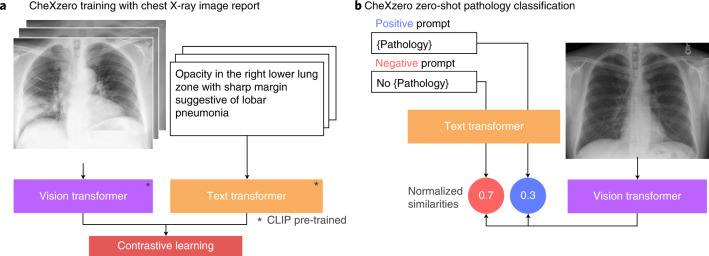
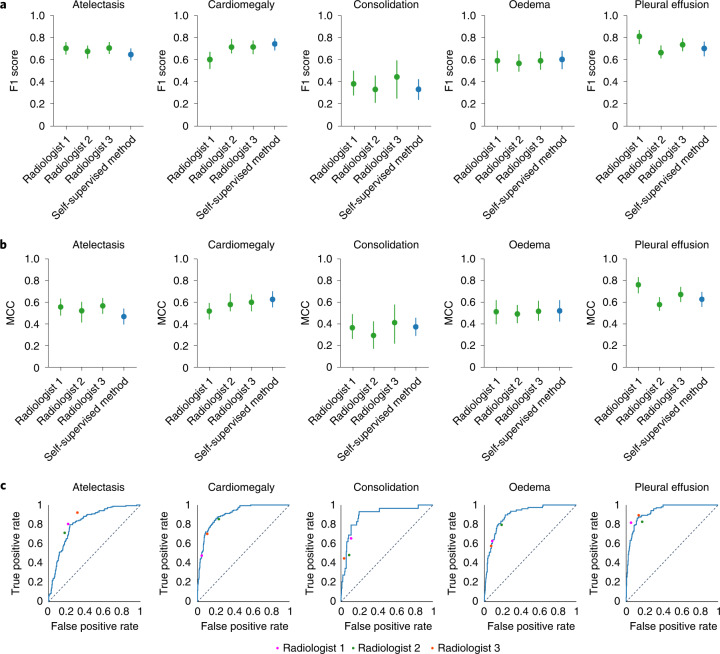
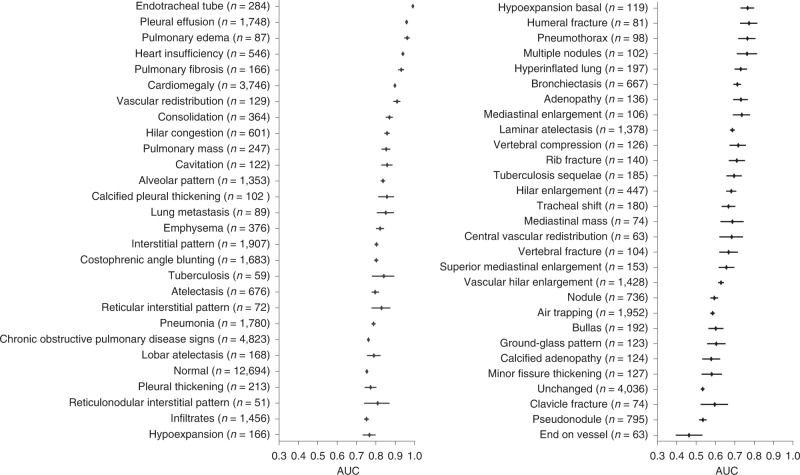
In tasks involving the interpretation of medical images, suitably trained machine-learning models often exceed the performance of medical experts. Yet such a high-level of performance typically requires that the models be trained with relevant datasets that have been painstakingly annotated by experts. Here we show that a self-supervised model trained on chest X-ray images that lack explicit annotations performs pathology-classification tasks with accuracies comparable to those of radiologists. On an external validation dataset of chest X-rays, the self-supervised model outperformed a fully supervised model in the detection of three pathologies (out of eight), and the performance generalized to pathologies that were not explicitly annotated for model training, to multiple image-interpretation tasks and to datasets from multiple institutions.
Overview
The claims and statistics of this paper haven’t been checked yet.
Free: it reads the open-access text and checks the first 5 claims that cite a source we can check. Create a free account to check every claim.
Integrity signals
Registry
Cites
Statistics
Figures
Verification
Claims the paper makes
The claims and statistics of this paper haven’t been checked yet.
Free: it reads the open-access text and checks the first 5 claims that cite a source we can check. Create a free account to check every claim.
Claims other papers make about this one
Each is checked against this paper’s own text: does it say what the citing paper says it does?
The source backs part of the claim, not all of it — or backs it for a different population, condition or comparison.
In the citing paper
“For instance, linking images from chest X-rays to corresponding report text data, and foundation models can alleviate the need for time-consuming and laborious manual annotation while preserving human-level accuracies and outperforming supervised methods18.”
From Large language models and multimodal foundation models for precision oncology (2024) · cites this paper as [18]
Experimental — accuracy not yet measuredThe source backs part of the claim, not all of it — or backs it for a different population, condition or comparison.
In the citing paper
“Although gathering such large datasets will pose a substantial challenge, these data will generally not require costly expert labels, given the success of self-supervision 9,54 .”
From Foundation models for generalist medical artificial intelligence (2023) · cites this paper as [9]
Experimental — accuracy not yet measuredThe cited source says what the claim attributes to it.
In the citing paper
“CheXzero can be applied to detect dozens of diseases in chest X-rays without being trained on explicit labels for these diseases 9 .”
From Foundation models for generalist medical artificial intelligence (2023) · cites this paper as [9]
Self-check
Percentages, sums and reported differences re-computed from the paper’s own numbers.
The self-check needs the paper’s full text.
Citations
Cites
A survey on deep learning in medical image analysis
Litjens, G., Kooi, T., Bejnordi, B. E., Setio, A. A. A., Ciompi, F., Ghafoorian, M., van der Laak, J. A. W. M., van Ginneken, B., & Sánchez, C. I. (2017) · Medical Image Analysis · doi:10.1016/j.media.2017.07.005 · Cited by 15,332
Learning Transferable Visual Models From Natural Language Supervision
Radford, A., Kim, J. W., Hallacy, C., Ramesh, A., Goh, G., Agarwal, S., Sastry, G., Askell, A., Mishkin, P., Clark, J., et al. (2021) · arXiv · doi:10.48550/arxiv.2103.00020 · Cited by 15,293
Momentum Contrast for Unsupervised Visual Representation Learning
He, K., Fan, H., Wu, Y., Xie, S., & Girshick, R. (2020) · 2020 IEEE/CVF Conference on Computer Vision and Pattern Recognition (CVPR) · doi:10.1109/cvpr42600.2020.00975 · Cited by 13,347
A simple framework for contrastive learning of visual representations
Chen, T., Kornblith, S., Norouzi, M., & Hinton, G. (2020) · arXiv · doi:10.48550/arxiv.2002.05709 · Cited by 10,857
Deep learning in medical image analysis
Shen, D., Wu, G., & Suk, H.-I. (2017) · Annual Review of Biomedical Engineering · doi:10.1146/annurev-bioeng-071516-044442 · Cited by 4,968
Liu, P., Yuan, W., Fu, J., Jiang, Z., Hayashi, H., & Neubig, G. (2023) · ACM Computing Surveys · doi:10.1145/3560815 · Cited by 4,361
Liu, P., Yuan, W., Fu, J., Jiang, Z., Hayashi, H., & Neubig, G. (2021) · arXiv · doi:10.48550/arxiv.2107.13586 · Cited by 4,352
A Survey on Deep Transfer Learning
Tan, C., Sun, F., Kong, T., Zhang, W., Yang, C., & Liu, C. (2018) · Lecture Notes in Computer Science · doi:10.1007/978-3-030-01424-7_27 · Cited by 3,165
Understanding deep learning (still) requires rethinking generalization
Zhang, C., Bengio, S., Hardt, M., Recht, B., & Vinyals, O. (2021) · Communications of the ACM · doi:10.1145/3446776 · Cited by 2,400
An overview of deep learning in medical imaging focusing on MRI
Lundervold, A. S., & Lundervold, A. (2019) · Zeitschrift für Medizinische Physik · doi:10.1016/j.zemedi.2018.11.002 · Cited by 2,058
Research works printed but not linked: 5
- Erhan, D., A. Courville, Y. Bengio, and P. Vincent. Why does unsupervised pre-training help deep learning? In Proc. Thirteenth International Conference on Artificial Intelligence and Statistics (eds Teh, Y. W. & Titterington, T.) 9:201–208 (PMLR, 2010).
- Radford, A., Kim, J. W., Hallacy, C., Ramesh, A., Goh, G., Agarwal, S.,... & Sutskever, I. Learning transferable visual models from natural language supervision. In Proc. 38th International Conference on Machine Learning 39:8748–8763 (PMLR, 2021).
- Avdic, A., Marovac, U. & Jankovic, D. Automated labeling of terms in medical reports in Serbian. Turk. J. Electr. Eng. Comput. Sci. 28, 3285–3303 (2020).
- Arjovsky, M.. Out of Distribution Generalization in Machine Learning (ed. Bottou, L.) PhD thesis, New York Univ. https://www.proquest.com/dissertations-theses/out-distribution-generalization-machine-learning/docview/2436913706/se-2 (2020).
- Xian, Y., Lampert, C. H., Schiele, B. & Akata, Z. Zero-shot learning—a comprehensive evaluation of the good, the bad and the ugly. IEEE Trans. Pattern Anal. Mach. Intell. 41, 2251–2265 (2018). 30028691 · DOI · Paper page
Cited by
Items 301–400 of 524
BioFuse: an embedding fusion framework for biomedical foundation models
Hossain, M. N., & Harris‐Birtill, D. (2026) · PLoS ONE · doi:10.1371/journal.pone.0320989 · Cited by 2
AI‐Driven Cancer Multi‐Omics: A Review From the Data Pipeline Perspective
Liu, S., Li, S. X., & Qian, K. (2026) · Advanced Intelligent Discovery · doi:10.1002/aidi.202500249 · Cited by 2
Deep Learning Technology in Genomics, Radiotherapy, and Ophthalmology for Precision Medicine
Pratap, A., Huang, Y.-J., Chiang, C.-K., Liu, W., Lin, W.-Y., Hsu, H.-C., & Hsiung, P. (2026) · Journal of physiological investigation. · doi:10.4103/ejpi.ejpi-d-25-00069 · Cited by 3
Dong, J., Liu, J., Qu, X., & Ong, Y.-S. (2025) · IEEE/CVF International Conference on Computer Vision (ICCV) · doi:10.1109/iccv51701.2025.00066 · Cited by 22
“Following CheXzero [42], we adopt a radiology-specific CLIP model and report the AUC scores on clean and adversarial (PGD-20, ϵ I =1 / 255 ) medical data on ChestX-ray14 [44], CheXpert [27], and PadChest [3].”
Shabina, S., & Kalyani, S. (2026) · Engineering Research Express · doi:10.1088/2631-8695/ae68bb · Cited by 2
CXR-LT 2026 Challenge: Projection-Aware Multi-Label and Zero-Shot Chest X-Ray Classification
Cho, J., Kim, D., Kim, M., Jang, H.-K., Lee, C.-S., & Ye, J. (2026) · IEEE International Symposium on Biomedical Imaging · doi:10.1109/isbi61048.2026.11515904 · Cited by 2
“CLIP [14] and its medical adaptation CheXzero [15] align images and text in a shared embedding space for zero-shot inference.”
Matsuo, H., Nishio, M., Fujimoto, K., Deperrois, N., Matsunaga, T., Nooralahzadeh, F., Krauthammer, M., & Murakami, T. (2026) · npj Health Systems · doi:10.1038/s44401-026-00087-y · Cited by 4
“Effects may vary across institutions and subgroups; therefore strati fi ed external evaluation is required to detect domain ‑ shift ampli fi cation rather than mitigation 79,91 .”
InfluentialA large-scale vision foundation model for musculoskeletal radiographs
Kim, S., Lee, S. W., Shin, K., Kim, H., Kim, Y. W., Kim, M., Nam, J., Ko, S., Kwon, D., Huh, W., et al. (2026) · npj Digital Medicine · doi:10.1038/s41746-026-02826-9 · Cited by 2
“In other medical imaging domains, such as pathology 20,21 , chest radiography 22 – 28 , and retinal imaging 29 , FMs .”
Bi-MCQ: Reformulating Vision–Language Alignment for Negation Understanding
Kim, T. H., & Lee, H. G. (2026) · Lecture notes in computer science · doi:10.1007/978-3-032-31397-3_13 · Cited by 2
Ye, Y., Zhang, J., & Shi, H. (2024) · Lecture notes in computer science · doi:10.1007/978-981-97-8496-7_20 · Cited by 7
Vo, T.-T., & Do, T. (2024) · Communications in computer and information science · doi:10.1007/978-981-96-0434-0_11 · Cited by 2
Ren, X., Ji, G., Chu, S., Yoshida, S., Zhao, J., Jia, B., & Qiang, Y. (2025) · Journal of X-Ray Science and Technology · doi:10.1177/08953996241296400 · Cited by 2
Bhat, S., Panambur, A. B., Mansoor, A., Georgescu, B., Grbić, S., & Maier, A. (2025) · Informatik aktuell · doi:10.1007/978-3-658-47422-5_42 · Cited by 2
Ren, Y., Li, Y., Sun, J., Chen, H., Ma, X., & Chen, Z. (2025) · IEEE Transactions on Instrumentation and Measurement · doi:10.1109/tim.2025.3548070 · Cited by 2
“Self-supervised learning has been an active research topic, which is widely used across several areas such as computer vision, natural language processing, and speech processing [45], [46], [47].”
A Narrative Review of Artificial Intelligence in Medical Education of Surgical Oncology
Hu, H., & Wu, Z. (2025) · Indian Journal of Surgery · doi:10.1007/s12262-025-04365-1 · Cited by 2
Focus on Texture: Rethinking Pre-training in Masked Autoencoders for Medical Image Classification
Madan, C., Satia, A., Basu, S., Gupta, P., Dutta, U., & Arora, C. (2025) · Lecture notes in computer science · doi:10.1007/978-3-032-04965-0_20 · Cited by 6
Washington, P. Y. (2023) · medRxiv · doi:10.1101/2023.08.24.23294587 · Cited by 2
“The motivation for this approach is that the biometrics of interest recorded by FitBit are correlated [58-61].”
BackgroundAdapting Multi-view Correlation Learning for Enhanced Cervical Dysplasia Diagnosis
Bai, G., Wei, X., & Zhuo, J. (2024) · IEEE International Conference on Bioinformatics and Biomedicine (BIBM) · doi:10.1109/bibm62325.2024.10821724 · Cited by 1
“With the widespread success of large-scale pre-trained vision-language models (VLMs), such as CLIP [7], have recently been applied to various visual tasks [12], including the medical domain [13]–[17].”
PedCLIP: A Vision-Language Model for Pediatric X-Rays with Mixture of Body Part Experts
Huy, T. D., Shoby, A., Tran, S., Xie, Y., Chen, Q., Nguyen, P. L., Gole, A., Liu, L., Perperidis, A., Friswell, M., et al. (2025) · Lecture notes in computer science · doi:10.1007/978-3-032-04971-1_46 · Cited by 1
SimCroP: Radiograph Representation Learning with Similarity-Driven Cross-Granularity Pre-training
Wang, R., Tang, F., Yao, Q., Yan, R., Zhang, X., Huang, Z., Lai, H., He, Z., Tao, X., Jiang, Z., et al. (2025) · Lecture notes in computer science · doi:10.1007/978-3-032-04971-1_53 · Cited by 5
“Medical vision-language pre-training (Med-VLP) [12,30] seeks to capi-talize on the detailed textual interpretations provided by radiograph-report pairs to assist radiograph representation learning, which has emerged as a prominent focus in contemporary researcher [29,17,31,32,33,13].”
Park, J., Moon, C., Lee, D., Kim, K., & Hwang, M. (2025) · Lecture notes in computer science · doi:10.1007/978-3-032-04981-0_36 · Cited by 1
Díaz, E., Lakshminarayanan, V., & Calderón-Benavides, L. (2026) · Machine Learning Health · doi:10.1088/3049-477x/ae209d · Cited by 2
Guo, F., Liu, J., Hu, F., Feng, X., Hu, Y., & Gao, Z. (2025) · Small Methods · doi:10.1002/smtd.202501975 · Cited by 1
TransFair: Transferring fairness from ocular disease classification to progression prediction
Shi, M., Gheisi, L., Chu, C. H., Gottumukkala, R. N., Luo, Y., Wang, M., & Zhu, X. (2025) · Artificial Intelligence in Medicine · doi:10.1016/j.artmed.2025.103331 · Cited by 2
Intra-Class Probabilistic Embeddings for Uncertainty Estimation in Vision-Language Models
Lin, Z., Haghighat, M., Browne, W. N., & Miller, D. (2026) · IEEE Winter Conference on Applications of Computer Vision · doi:10.1109/wacv61042.2026.00230 · Cited by 2
“This has led to rapid adoption for open-vocabulary perception in safety-critical applications, such as medical diagnostics [46, 58], robot navigation [14, 24] and robot action planning [9, 26].”
A Self-Supervised Multi-Scale Fusion Framework for Accurate and Efficient Image Segmentation
Yusifova, E. H., Osmanov, F. F., Azizov, E., & Azizli, K. (2025) · Techcomp Innovations · doi:10.70063/techcompinnovations.v2i2.125 · Cited by 2
Chest X-ray foundation models: A survey and future directions
Wang, A., Yang, Z., Rais-Bahrami, S., & Yan, P. (2025) · Meta-Radiology · doi:10.1016/j.metrad.2025.100203 · Cited by 2
Li, Z., Zheng, X., Su, D., & Zhang, M. (2026) · Biomedical Signal Processing and Control · doi:10.1016/j.bspc.2026.109585 · Cited by 1
Li, J., Li, Z., Chi, J., & Bi, Z. (2025) · IEEE International Conference on Bioinformatics and Biomedicine (BIBM) · doi:10.1109/bibm66473.2025.11356033 · Cited by 1
Beyond pixels: Zero-shot classification of chest X-ray reports via prompt engineering and LLMs
Katal, H., Ghasemi, J., & Roostaee, M. (2026) · Alexandria Engineering Journal · doi:10.1016/j.aej.2026.01.022 · Cited by 1
HF-VLP: A multimodal vision-language pre-trained model for diagnosing heart failure
Ma, H., Li, D., Zhao, G., Liu, L., Fu, J., Fan, X., Zhang, Z., & Liang, Y. (2026) · Computerized Medical Imaging and Graphics · doi:10.1016/j.compmedimag.2026.102719 · Cited by 3
Chiang, L.-F. (2026) · Cureus · doi:10.7759/cureus.103134 · Cited by 1
“By requiring that disease confidence decreases when lesion evidence is removed, CXR-NeXus discourages exploitation of confounders such as text markers, borders, or scanner-specific artifacts, which have been documented as failure modes in CXR models [16,24].”
InfluentialSeverity‑aware multimodal network for chest x‑ray triage and disease captioning
Ghulam, Z., Mittal, R., & Ukwatta, E. (2026) · SPIE Medical Imaging: Computer-Aided Diagnosis · doi:10.1117/12.3082906 · Cited by 1
Sushma, E., & Satapathy, S. (2026) · International journal of intelligent engineering and systems · doi:10.22266/ijies2026.0331.18 · Cited by 2
Enhancing Radiography-Report foundation model via Multi-View masked contrastive learning
Li, X., Wang, M., Huang, Z., Wang, S., Liu, Z., Yu, Z. H., Hou, M., Wang, J., Yan, Y., & Liu, Y.-S. (2026) · Pattern Recognition · doi:10.1016/j.patcog.2026.113322 · Cited by 1
Li, S.-Q., Zhen, C., Li, B., Zhao, J.-G., & Huang, J.-S. (2026) · Expert Systems with Applications · doi:10.1016/j.eswa.2026.131921 · Cited by 1
CheX-PD: Chest X-rays Diagnosis Using Selfsupervised learning for General Pneumonia Detection
Yu, Y., Tang, T., Tian, Z., Li, P., & Su, J. (2025) · doi:10.1145/3783862.3783887 · Cited by 1
“The implicit need for meticulously labeled data, even in semi-self-supervised methods that leverage unstructured reports, remains a significant barrier, as these models may struggle with pathologies not explicitly mentioned in their training data [9].”
Ahmad, I. S., Suleiman, R. B., Yu, T., Lin, R., Zhao, C., Liao, J., Wu, B., Xie, Y., Liang, X., Wang, H., et al. (2026) · Quantitative Imaging in Medicine and Surgery · doi:10.21037/qims-2025-1-2782 · Cited by 1
“However, the emergence of large-scale, multimodal resources like MIMIC-CXR (68) and CheXpert (53) has been instrumental in advancing the field.”
InfluentialMinoccheri, C., Wittrup, E. M., Najarian, K., & Stidham, R. (2026) · Journal of medical imaging · doi:10.1117/1.jmi.13.6.064501 · Cited by 1
CXR-LT 2026 challenge: Multi-center long-tailed and zero shot chest X-ray classification
Dong, H., Lin, Y., Zhou, P., Zhao, F., Legasto, A. C., Cho, J., Kim, D., Kim, J. N., Kim, M., Kwak, S., et al. (2026) · Medical Image Analysis · doi:10.1016/j.media.2026.104340 · Cited by 1
Mihăiţă, T.-O. (2025) · International Symposium on Symbolic and Numeric Algorithms for Scientific Computing (SYNASC) · doi:10.1109/synasc69064.2025.00074 · Cited by 1
“In classification, methods such as CheXzero [6] utilize CLIP-based encoders for zero-shot prediction of CheXpert labels by prompting the model with condition-specific textual queries, enabling inference without explicit task-specific fine-tuning, and achieving impressive performance.”
ProbMED: A Probabilistic Framework for Medical Multimodal Binding
Gao, Y., Kim, S., You, J., & McIntosh, C. (2025) · IEEE/CVF International Conference on Computer Vision (ICCV) · doi:10.1109/iccv51701.2025.01875 · Cited by 4
“…vision language pretraining models (Med-VLPM) in extracting embeddings from paired modalities, typically chest radiographs (CXR) with corresponding reports, these approaches operate primarily under a deterministic embedding framework that enforces one-to-one mappings [8, 16, 22, 50, 61, 62].”
A deep learning model for automated identification of age-related macular degeneration atrophy
Avram, O., Shwartz, Y., Green, A., Bloom, R., Corradetti, G., Wu, A., Chen, Z. J., Eshkoly-Lior, T., Durmus, B., Rudas, Á., et al. (2026) · Graefe s Archive for Clinical and Experimental Ophthalmology · doi:10.1007/s00417-026-07205-4 · Cited by 1
Bhat, S., Mansoor, A., Georgescu, B., Zinnen, M., Sahu, P., Panambur, A. B., Ghesu, F. C., Grbić, S., & Maier, A. (2026) · Scientific Reports · doi:10.1038/s41598-026-52235-x · Cited by 1
“Previous VL approaches 6 have largely ignored these feature embeddings; however, our hypothesis is that these patch embeddings inherently encode the location information while enabling classification.”
KEPIL: Knowledge-Enhanced Prompt-Image Learning for Prompt-Robust Disease Detection
Luo, H., Shu, S. Z., Zhou, Z., Berke, R., & Reyes, M. (2026) · Lecture notes in computer science · doi:10.1007/978-3-032-38062-3_29 · Cited by 1
CausalCompNet: Causal intervention meets vision-language priors for robust CXR diagnosis
Liu, M., Li, Q., Chang, R., Xu, Z., Zhou, C., & Nie, W. (2026) · Biomedical Signal Processing and Control · doi:10.1016/j.bspc.2026.110554 · Cited by 4
Phillips, V., & Woodwal, P. (2026) · Discover Artificial Intelligence · doi:10.1007/s44163-026-01194-3 · Cited by 1
“Radiology studies show that zero-shot thresholds optimized on internal datasets often over-call pathology on external cohorts, requiring post-hoc recalibration [33].”
InfluentialEvaluating Explainability: Metrics, Benchmarks, and Human-Centered Evaluation Methods
Yousefi, N., & Zamanifar, A. (2026) · Springer eBooks · doi:10.1007/978-3-032-15088-2_10 · Cited by 1
PneumoDetect: AI-Assisted Chest Radiograph Analyzer
Vimaladevi, M., Thangamani, R., Dhivyasubashini, K., Kandavel, G., & Aravind, S. (2026) · International Conference on Artificial Intelligence and Machine Learning Applications Theme: Healthcare and Internet of Things (AIMLA) · doi:10.1109/aimla67915.2026.11522463 · Cited by 1
CheXanatomy: Anatomy–Aware Vision–Language Modeling for Chest Radiographs
Gatidis, S., Langlotz, C. P., & Blüthgen, C. (2026) · Lecture notes in computer science · doi:10.1007/978-3-032-38062-3_10 · Cited by 1
Self-citationRazzaq, T., Taj, M., & Iqbal, A. (2026) · Journal of Biomedical Informatics · doi:10.1016/j.jbi.2026.105075 · Cited by 2
Ahmmed, F., Antik, A. R., Mehnaj, S., Alaly, A., & Mridha, M. F. (2026) · Artificial Intelligence in Medicine · doi:10.1016/j.artmed.2026.103499 · Cited by 1
HarMoE: Multi-Source Chest Radiograph Pretraining with Dataset-Disentangled Experts
Luo, H., Zhou, Z., Shu, S. Z., & Reyes, M. (2026) · ACM International Conference on Multimedia (ACM MM) · doi:10.1145/3767308.3835205 · Cited by 1
Li, J., Xiao, L., Qu, X., Du, L., Gong, T., Yu, Y., Li, Y., 谢鹏飞, Chu, G., Li, H., et al. (2026) · Radiology · doi:10.1148/radiol.253579 · Cited by 1
Bravo-Villasante, M. Á. (2023) · Cuestiones de género/Cuestiones de género · doi:10.18002/cg.i18.7573 · Cited by 2
Radiology Reports Improve Visual Representations Learned from Radiographs.
Huang, H., Rawlekar, S., Chopra, S., & Deniz, C. M. (2023) · PubMed · Cited by 7
Wang, J., Wang, T., Xu, J., Zhang, Z., Wang, H., & Li, H. (2024) · IEEE International Conference on Bioinformatics and Biomedicine (BIBM) · doi:10.1109/bibm62325.2024.10822114 · Cited by 4
Medical Transformer With Mix Mask Generation for Thorax Disease Classification
Liu, Z., Wang, Z., & Du, B. (2025) · IEEE Transactions on Multimedia · doi:10.1109/tmm.2025.3543003 · Cited by 5
Liao, H.-C., Tsai, D., Chang, S., Lin, C., Lin, S.-H., & Fang, W. (2026) · BioData Mining · doi:10.1186/s13040-026-00588-4 · Cited by 1
“The design of PASTER is conceptually related to earlier image–text contrastive learning frameworks, such as CheXzero [21], which align radiographic images with textual descriptions to learn meaningful visual representations from radiology reports [17].”
Zavar, M., Ghaffary, H. R., & Tabatabaee, H. (2023) · Research Square · doi:10.21203/rs.3.rs-3721755/v1 · Cited by 1
Vavekanand, R., & Danish, R. (2024) · SSRN Electronic Journal · doi:10.2139/ssrn.4839988 · Cited by 1
Applications of GPT in Cancer for Screening, Diagnosis and Treatment - A Global Comprehensive ReviewPreprint
Xu, P., Xu, A., Chai, Z., Xu, H., Xu, A., Huang, J., Kong, X., Huo, Y., Ge, Z., & Zhang, L. (2024) · SSRN Electronic Journal · doi:10.2139/ssrn.4885555 · Cited by 1
Sangha, V., & Khera, R. (2024) · Circulation Cardiovascular Quality and Outcomes · doi:10.1161/circoutcomes.124.011483 · Cited by 1
Farquhar, H. (2026) · medRxiv · doi:10.64898/2026.01.25.26344809 · Cited by 1
Delzer, O., & Bender, S. (2026) · arXiv (Cornell University) · doi:10.48550/arxiv.2604.04518 · Cited by 1
ProtoCLIP: Prototype-Aligned Latent Refinement for Robust Zero-Shot Chest X-Ray ClassificationPreprint
Kittler, F., Bhat, S., & Maier, A. (2026) · arXiv (Cornell University) · doi:10.48550/arxiv.2604.18444 · Cited by 1
“Recent advances in vision–language models (VLMs), supported by large-scale CXR datasets such as MIMIC-CXR [4], have accelerated data-driven radiograph interpretation [5, 7].”
Generating Chest X-Ray Counterfactuals by Specialising Foundation Image ModelsPreprint
Xing, X., Rasal, R., Meister, J. A., Ghorayeb, S., Khara, G. S., & Schrouff, J. (2026) · arXiv (Cornell University) · doi:10.48550/arxiv.2609.24879 · Cited by 1
“…impact on our results, we additionally re-scored every counterfactual with six independently trained public evaluators spanning different backbones, training paradigms and resolutions: four TorchXRayVision models [10], CheXzero [65], and a linear classifier fitted on frozen RAD-DINO features [45].”
History of AI and Its Promise in Healthcare
Razmi, R. M. (2024) · Wiley eBooks · doi:10.1002/9781394240197.ch1
Comparison of self-supervised learning methods for optical coherence tomography image classification
Shim, S., Yang, H.-L., & Kim, M. (2024) · International Conference on Medical and Health Informatics (ICMHI) · doi:10.1145/3673971.3673989 · Cited by 1
Tang, S. (2024) · International Conference on Smart Healthcare and Wearable Intelligent Devices (SHWID) · doi:10.1145/3703847.3703857
“Techniques such as Contrastive Language-Image Pre-training (CLIP) models and zero-shot approaches leverage radiology reports for self-supervised training [ 21 ] .”
Peng, 费. F., Wentian, 思. S., & Minchao, 张. Z. (2024) · Acta Optica Sinica (Online) · doi:10.3788/aosol240448 · Cited by 1
Multi-Modality Knowledge Transfer for Generalizable Chest Radiograph Interpretation
Hou, X., Li, Y., Mei, Y., Liu, D., & Wang, S. (2024) · International Conference on Biomedical and Bioinformatics Engineering (ICBBE) · doi:10.1145/3707127.3707128
Vo, T.-T., & Do, T. (2025) · Lecture notes in networks and systems · doi:10.1007/978-3-031-80943-9_81
Bochicchio, M. A., Gure, A. T., & Zeleke, S. N. (2025) · Lecture notes on data engineering and communications technologies · doi:10.1007/978-3-031-87778-0_26 · Cited by 2
Medical Visual Question Answering: A Review
Yang, G., Liang, K., Liu, X., Liu, J., & Liu, Y. (2025) · Recent Advances in Computer Science and Communications · doi:10.2174/0126662558373783250404150025
Injecting Visual Prototypes into CLIP-driven Long-Tailed Skin Lesion Classification
Pan, Y. (2025) · Applied and Computational Engineering · doi:10.54254/2755-2721/2025.tj22275
Self-supervise Learning for Medical Image Segmentation Using Barlow Twins Model
Meng, Z., Huo, J., Huang, W., Bajaj, N., & Fan, P. (2024) · Asia Symposium on Image and Graphics (ASIG) · doi:10.1145/3718441.3718461
HOT-FIT-Based Evaluation of the Outpatient Registration System at RSUD Komodo
Pandur, F. D. N., & Widiyanto, W. W. (2025) · International Journal of Health and Social Behavior · doi:10.62951/ijhsb.v2i2.387
Hegde, S., Ninan, M., Dillman, J. R., Hayatghaibi, S. E., Babcock, L., & Somasundaram, E. (2025) · Research Square · doi:10.21203/rs.3.rs-6772394/v1
Interpreting Chest X-ray with ChatGPT: Can It Serve as a Tool for Justifying Computed Tomography?
Hürsoy, N., Kolluk, H., Solak, M., Budak, K. K., & Kaba, E. (2025) · Cerasus journal of medicine. · doi:10.70058/cjm.1633438
Uessl-Net: Uncertainty Estimation Based Semi-Supervised Learning for Lymphoma SegmentationPreprint
Zhao, K., Ye, Z., Ren, T., Wang, K., & Ye, F. (2025) · SSRN Electronic Journal · doi:10.2139/ssrn.5343500
Momenian, M., & Shojaedini, S. V. (2025) · Research Square · doi:10.21203/rs.3.rs-7166904/v1
Neighborhood-Consistent Binary Transformation for Domain-Invariant Chest X-Ray Diagnosis
Liu, Z., Zhu, H., Sun, Z., Zou, Y., Gu, Y., Du, B., & Xu, Y. (2025) · Lecture notes in computer science · doi:10.1007/978-3-032-04971-1_44
The multiomics breakthrough in the new age of data
Jiménez-Pastor, A., & Vergara-Richart, A. (2025) · Elsevier eBooks · doi:10.1016/b978-0-443-29242-2.00010-0
Improving Cross-Modal Consistency in Multimodal Biomedical AI: A Comprehensive Review of Techniques
Basak, A., Choudhury, S. N., & Garai, P. (2025) · International Conference on Computing, Intelligence, and Application (CIACON) · doi:10.1109/ciacon65473.2025.11189769
Qiao, L., Gao, S., Shu, Y., Xiao, B., Li, W., & Gao, X. (2025) · ACM International Conference on Multimedia (ACM MM) · doi:10.1145/3746027.3755336
CLIP-based Chest X-ray Anomaly Detection
Baek, S., Moon, K., & Shin, J. (2025) · IEEE International Conference on Consumer Electronics-Asia (ICCE-Asia) · doi:10.1109/icce-asia67487.2025.11263601
“In medical imaging, CheXzero leveraged report–image pairs for contrastive pretraining and used disease-specific positive/negative prompts to perform classification on CXRs [6].”
Tabatabaee, S., & Khasawneh, M. T. (2025) · SSRN Electronic Journal · doi:10.2139/ssrn.5864720
Artificial Intelligence in Pulmonary Imaging: A Review of Techniques
Jamrozik, E. (2025) · Journal of Education Health and Sport · doi:10.12775/jehs.2025.85.66817
“In addition, several studies have adopted the CheXpert dataset - CheXbert [153] using a pretrained BERT model, or CheXzero [154], a zero-shot method using a fully self-supervised-learning procedure that was also checked with the MIMIC-CXR dataset.”
Xiao, H., Ye, Q., Shu, Y., Li, B., Li, Y., & Huang, W. (2025) · Concurrency and Computation Practice and Experience · doi:10.1002/cpe.70482
de Haro, C., Santos-Pulpón, V., Telías, I., Xifra‐Porxas, A., Subirá, C., Batlle, M., Fernández, R., Murias, G. E., Albaiceta, G. M., Fernández‐Gonzalo, S., et al. (2024) · Figshare · doi:10.6084/m9.figshare.25414853
Busch, F., Hoffmann, L., Truhn, D., Ortiz-Prado, E., Makowski, M. R., Bressem, K. K., & Adams, L. C. (2024) · Figshare · doi:10.6084/m9.figshare.27129365
Busch, F., Hoffmann, L., Truhn, D., Ortiz-Prado, E., Makowski, M. R., Bressem, K. K., & Adams, L. C. (2024) · Figshare · doi:10.6084/m9.figshare.27129362
Healthy Behavior: Essays in Health and Behavioral Economics
Shreekumar, A. (2025) · DSpace@MIT (Massachusetts Institute of Technology)
Ma, D., Pang, J., Zhou, Z., Gotway, M. B., & Liang, J. (2025) · Lecture notes in computer science · doi:10.1007/978-3-032-07845-2_16
Tan, M., Wu, Q., Zhang, B., Ren, G., Nie, J., Xue, Z., Cao, X., & Shen, D. G. (2025) · Lecture notes in computer science · doi:10.1007/978-3-032-07845-2_8
Benchmarking CXR Foundation Models With Publicly Available MIMIC-CXR and NIH-CXR14 DatasetsPreprint
Shin, J., Marshall, D. C., & Komorowski, M. (2025) · arXiv (Cornell University) · doi:10.13140/rg.2.2.19709.42725
Longjiang, E., Cai, Y., Zhao, B., Zhang, M., Lin, J., & Wang, T. (2025) · Journal of King Saud University - Computer and Information Sciences · doi:10.1007/s44443-025-00402-x
Using Large Language Models To Translate Machine Results To Human ResultsPreprint
Niraula, T., & Stubblefield, J. (2025) · arXiv (Cornell University) · doi:10.48550/arxiv.2512.24518
Elangovan, A., Xu, L., Elyasi, M., Akdulum, I., Aksakal, M., Gürün, E., Hur, B., Mansour, S., Shwartz-Ziv, R., Verspoor, K., et al. (2026) · arXiv (Cornell University) · doi:10.48550/arxiv.2601.05500
“Large models today can analyze a wide variety of information from X-rays, CT Scans to Ultrasounds [1], with models seemingly capable of achieving expert level performance [34, 26, 37].”
Influential
Metadata
- Authors
- Tiu, E., Talius, E., Patel, P., Langlotz, C. P., Ng, A. Y., & Rajpurkar, P.
- Affiliations
- Harvard University (US)
- Stanford University (US)
- Corresponding author
- Rajpurkar, Pranav
- Venue
- Nature Biomedical Engineering
- Published
- 2022-09-15
- Volume
- 6
- Issue
- 12
- Pages
- 1399-1406
- ISSN
- 2157-846X (ISSN-L)
- PMC
- PMC9792370
- OpenAlex
- W4296027312
- Cited by
- 442
- References
- 43
- Citations by year
- 2026: 130 · 2025: 147 · 2024: 120 · 2023: 45
- FWCI
- 44.36
- Type
- journal article
- Language
- en
- Open access
- hybrid
- doi.org
- Licence
- cc-by
- creativecommons.org/licenses/by/4.0 (tdm)
- creativecommons.org/licenses/by/4.0 (vor)
- Locations
- Nature Biomedical Engineering (publishedVersion, cc-by)
- PubMed Central (publishedVersion, cc-by)
- PubMed (publishedVersion)
- Funders
- National Heart, Lung, and Blood Institute
- Topics
- Health Sciences › Medicine › Radiology, Nuclear Medicine and Imaging › COVID-19 diagnosis using AI
- Health Sciences › Medicine › Health Informatics › Artificial Intelligence in Healthcare and Education
- Health Sciences › Medicine › Radiology, Nuclear Medicine and Imaging › Radiomics and Machine Learning in Medical Imaging
- Keywords
- chest radiography, pathology detection, self-supervised learning, external validation, multi-institutional data, image interpretation, transfer learning
- MeSH terms
- Machine Learning, Supervised Machine Learning, X-Rays
About these checks
Registry, retraction, Cites and statistics results are computed, not judged, with one exception: a printed reference that no index lists is read once by a model before it counts as a citation error. Claims are extracted by a model and kept only when their quote appears verbatim in the text; each cited source is then checked, with a model’s help, for whether it says what the claim relies on. Those verdicts can be wrong — read the claim’s quote and the cited source before relying on one.
Statistics and arithmetic are recomputed, not judged.
Confidence bands are shown only for fields calibrated on our annotated test set. None is calibrated yet, so no band is shown.
What counts as a claim ›How we measure confidence ›How we check this ›
Are you an author, or do you see a problem with this page? Request a review
Data sources
Bibliographic data: Semantic Scholar, OpenAlex, Crossref.
Contains information from the Semantic Scholar Academic Graph Datasets, made available under the ODC Attribution License (ODC-BY 1.0).
Semantic Scholar’s data is described in: Kinney, R., et al. (2023). The Semantic Scholar Open Data Platform. arXiv:2301.10140.
