

LIANA+ provides an all-in-one framework for cell–cell communication inference
Open accessThe DOI matches its Crossref record; 124 of the 125 references it cites were found in a registry or an index.
Abstract
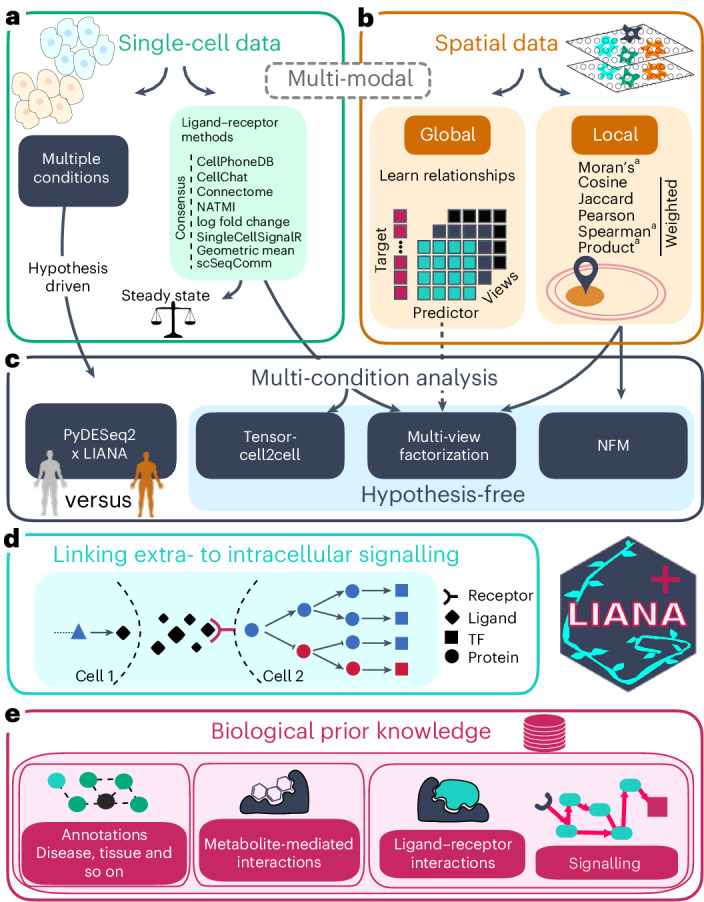
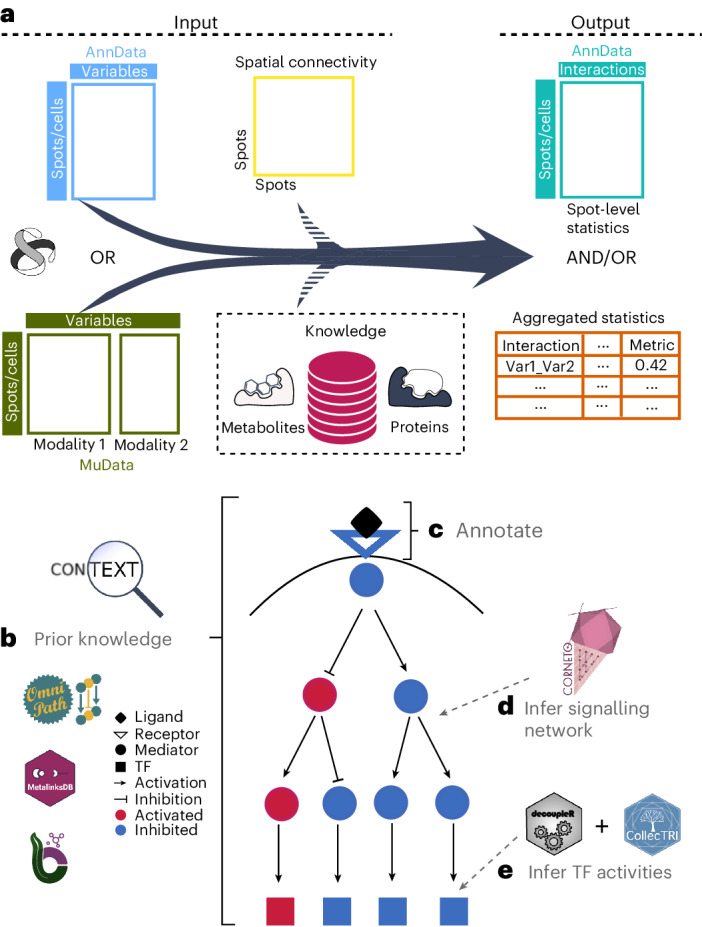
The growing availability of single-cell and spatially resolved transcriptomics has led to the development of many approaches to infer cell–cell communication, each capturing only a partial view of the complex landscape of intercellular signalling. Here we present LIANA+, a scalable framework built around a rich knowledge base to decode coordinated inter- and intracellular signalling events from single- and multi-condition datasets in both single-cell and spatially resolved data. By extending and unifying established methodologies, LIANA+ provides a comprehensive set of synergistic components to study cell–cell communication via diverse molecular mediators, including those measured in multi-omics data. LIANA+ is accessible at https://github.com/saezlab/liana-py with extensive vignettes ( https://liana-py.readthedocs.io/ ) and provides an all-in-one solution to intercellular communication inference.
Overview
The claims and statistics of this paper haven’t been checked yet.
Free: it reads the open-access text and checks the first 5 claims that cite a source we can check. Create a free account to check every claim.
Integrity signals
Registry
Cites
Statistics
Figures
Verification
Claims the paper makes
The claims and statistics of this paper haven’t been checked yet.
Free: it reads the open-access text and checks the first 5 claims that cite a source we can check. Create a free account to check every claim.
Self-check
Percentages, sums and reported differences re-computed from the paper’s own numbers.
The self-check needs the paper’s full text.
Citations
Cites
Moderated estimation of fold change and dispersion for RNA-seq data with DESeq2
Love, M. I., Huber, W., & Anders, S. (2014) · Genome Biology · doi:10.1186/s13059-014-0550-8 · Cited by 95,106 · cited 5×
“Then we estimated TF activities using the Wald statistics from PyDeSeq2 with univariate linear regression 81 and CollecTRI 80 .”
InfluentialScikit-learn: Machine Learning in Python
Pedregosa, F., Varoquaux, G., Gramfort, A., Michel, V., Thirion, B., Grisel, O., Blondel, M., Müller, A., Nothman, J., Louppe, G., et al. (2012) · arXiv · doi:10.48550/arxiv.1201.0490 · Cited by 71,016 · cited 1×
“By default, models are based on random forests 84 and can capture complex non-linear relationships.”
Cytoscape: A software Environment for integrated models of biomolecular interaction networks
Shannon, P., Markiel, A., Ozier, O., Baliga, N. S., Wang, J. T., Ramage, D., Amin, N., Schwikowski, B., & Ideker, T. (2003) · Genome Research · doi:10.1101/gr.1239303 · Cited by 51,888 · cited 1×
“Then the acyclic subnetworks obtained by each iteration were concatenated, such that edges from any solution were kept, and the network union was visualized with CytoScape 91 .”
SciPy 1.0: fundamental algorithms for scientific computing in Python
Virtanen, P., Gommers, R., Oliphant, T. E., Haberland, M., Reddy, T., Cournapeau, D., Burovski, E., Peterson, P., Weckesser, W., Bright, J., et al. (2020) · Nature Methods · doi:10.1038/s41592-019-0686-2 · Cited by 38,430 · cited 1×
“For linear models, which were used throughout this manuscript, we calculate the ordinary least squares t -statistics of the estimated parameters under the zero value null hypothesis 83 .”
SciPy 1.0: fundamental algorithms for scientific computing in Python
Virtanen, P., Gommers, R., Oliphant, T. E., Haberland, M., Reddy, T., Cournapeau, D., Burovski, E., Peterson, P., Weckesser, W., Bright, J., et al. (2019) · Apollo - University of Cambridge Repository · doi:10.17863/cam.64134 · Cited by 10,460
Inference and analysis of cell-cell communication using CellChat
Jin, S., Guerrero-Juarez, C. F., Zhang, L., Chang, I., Ramos, R., Kuan, C.-H., Myung, P., Plikus, M. V., & Nie, Q. (2021) · Nature Communications · doi:10.1038/s41467-021-21246-9 · Cited by 8,409 · cited 5×
“Most curation efforts have focused on annotating ligand– receptor interactions 19,21 , and additional prior knowledge efforts are needed in particular for the inference of CCC beyond protein-mediated events.”
InfluentialCellular and molecular mechanisms of fibrosis
Wynn, T. (2008) · The Journal of Pathology · doi:10.1002/path.2277 · Cited by 4,495 · cited 1×
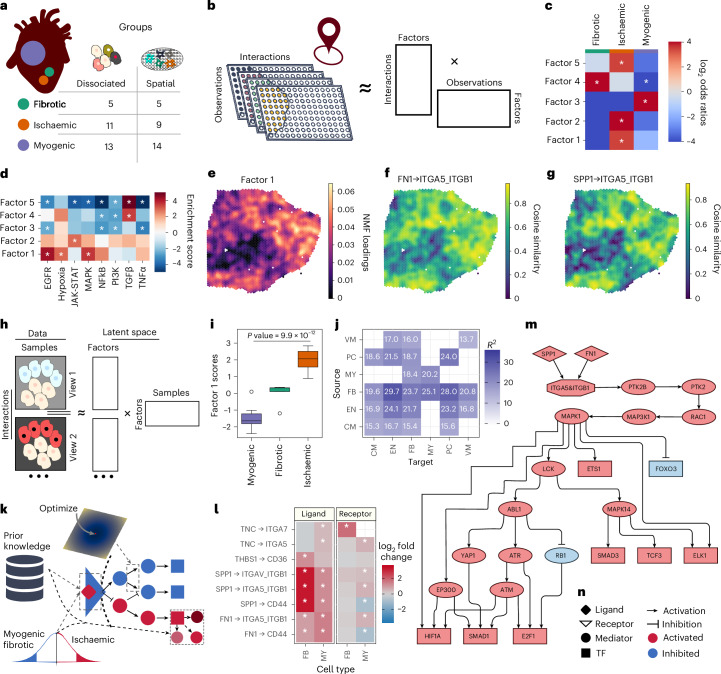
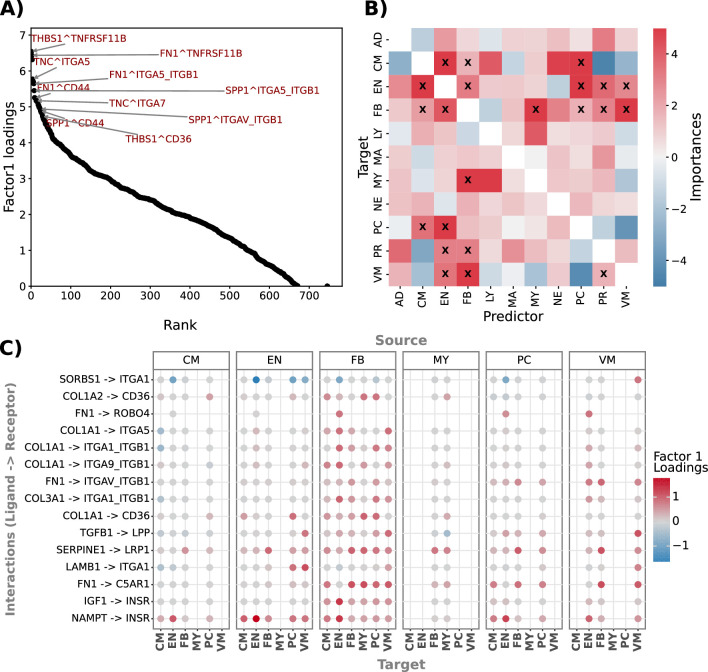
“Moreover, we noted that interactions in both the ischaemia-associated factor 4 and the fibrosis-associated factor 5 were enriched in transforming growth factor (TGF)-β signalling—a well-known driver of fibrosis 52 .”
Efremova, M., Vento-Tormo, M., Teichmann, S. A., & Vento-Tormo, R. (2020) · Nature Protocols · doi:10.1038/s41596-020-0292-x · Cited by 3,449 · cited 2×
“Most curation efforts have focused on annotating ligand– receptor interactions 19,21 , and additional prior knowledge efforts are needed in particular for the inference of CCC beyond protein-mediated events.”
D 1 and D 2 Dopamine Receptor-regulated Gene Expression of Striatonigral and Striatopallidal Neurons
Gerfen, C. R., Engber, T. M., Mahan, L. C., Susel, Z., Chase, T. N., Monsma, F. J., & Sibley, D. R. (1990) · Science · doi:10.1126/science.2147780 · Cited by 2,967 · cited 1×
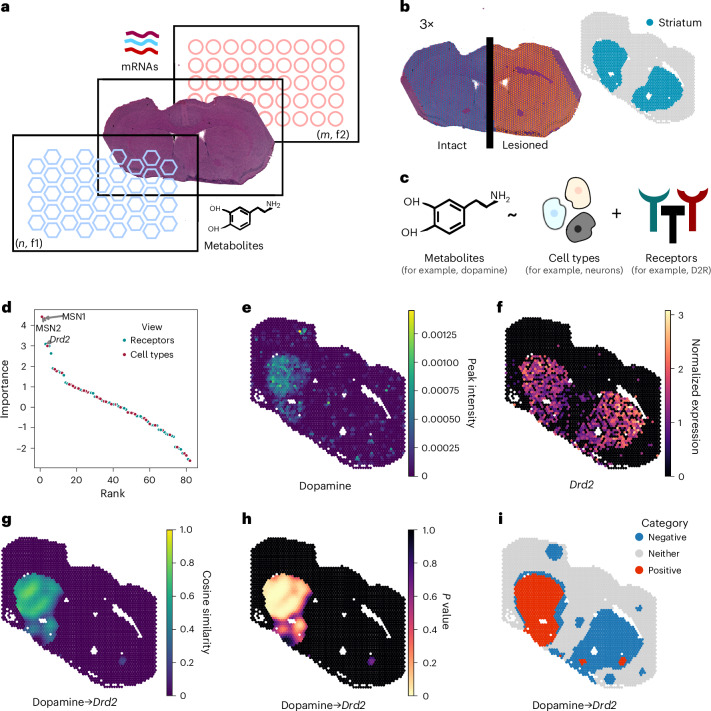
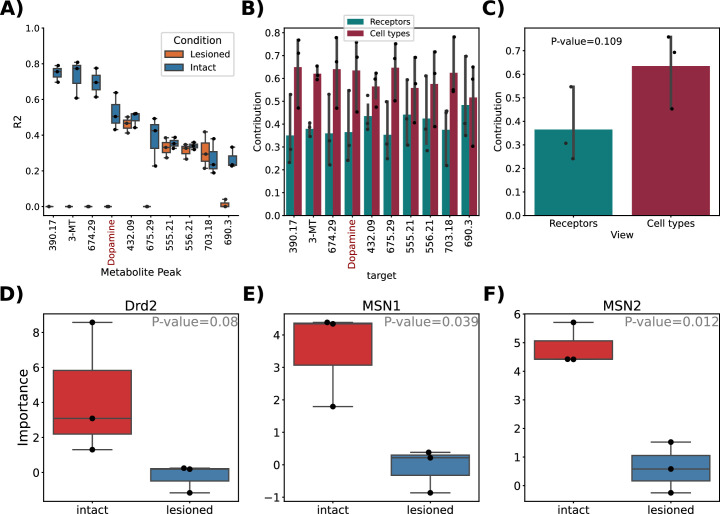
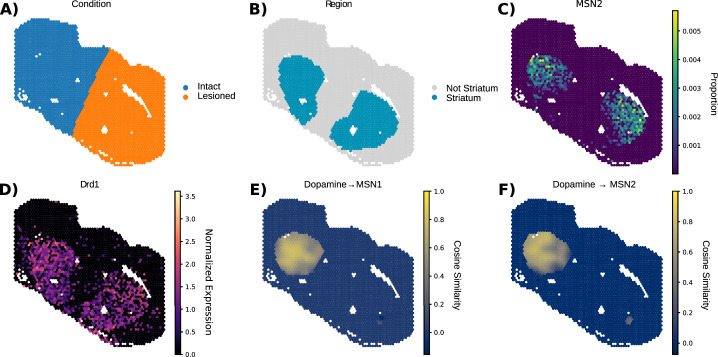
“Our analysis additionally hinted at an anticipated asymmetry following uni-hemispheric lesion 38 : while the interaction between D2R and dopamine was present in the intact hemisphere (Fig.”
Molecular Architecture of the Mouse Nervous System
Zeisel, A., Hochgerner, H., Lönnerberg, P., Johnsson, A., Memic, F., van der Zwan, J., Häring, M., Braun, E., Borm, L. E., La Manno, G., et al. (2018) · Cell · doi:10.1016/j.cell.2018.06.021 · Cited by 2,552
Research works printed but not linked: 1
- Saarenpää, S. et al. Spatial metatranscriptomics resolves host–bacteria–fungi interactomes. Nat. Biotechnol.10.1038/s41587-023-01979-2 (2023). PMC11392817 37985875 · DOI
Cited by
Items 101–200 of 262
Follicular lymphoma research: an open dialogue for a collaborative roadmap
Collin, M., Gagey, G., Shanmugam, V., Louissaint, A., Okosun, J., Sarkozy, C., & Nadel, B. (2024) · Histopathology · doi:10.1111/his.15344 · Cited by 2
Mini Review: Spatial Transcriptomics to Decode the Central Nervous System
Pesti, B., Langa, X., Kumpesa, N., Valdeolivas, A., Sultan, M., Rottenberg, S., & Hahn, K. (2025) · Toxicologic Pathology · doi:10.1177/01926233251325204 · Cited by 3
“5 Figure 2 illustrates the application of above described ST analysis concepts in the CNS, with a particular focus on neurodegenerative diseases.”
Cesaro, G., Baruzzo, G., Tussardi, G., & Camillo, B. D. (2025) · NAR Genomics and Bioinformatics · doi:10.1093/nargab/lqaf084 · Cited by 7
Sun, C., Li, T., Jin, X., Xiu, Z., Su, H., Yang, H., Liu, M., & Wu, K. (2025) · Clinical and Translational Medicine · doi:10.1002/ctm2.70415 · Cited by 1
Koelsch, N. J., Mirshahi, F., Aqbi, H. F., Seneshaw, M., Idowu, M. O., Olex, A. L., Sanyal, A. J., & Manjili, M. H. (2024) · bioRxiv (Cold Spring Harbor Laboratory) · doi:10.1101/2024.06.12.598563 · Cited by 2
Hallmarks of uterine receptivity predate placental mammalsPreprint
Basanta, S., Stadtmauer, D. J., Maziarz, J. D., McDonough-Goldstein, C. E., Cole, A. G., Dagdas, G., Wagner, G. P., & Pavličev, M. (2024) · bioRxiv (Cold Spring Harbor Laboratory) · doi:10.1101/2024.11.04.621939 · Cited by 3
Yu, X., Wan, X., Tian, L., Chen, Y., Liu, Y., Yu, T., Yang, C., & Xiao, J. (2025) · bioRxiv (Cold Spring Harbor Laboratory) · doi:10.1101/2025.08.21.671426 · Cited by 4
“For the OpenST primary HNSCC and lymph node metastatic sections, which provide whole-795 transcriptome coverage, we employed the liana Python package [113] to perform ligand-receptor inference.”
APOE E4 Alzheimer’s Risk Converges on an Oligodendrocyte Subtype in the Human Entorhinal CortexPreprint
Huuki-Myers, L. A., Divecha, H. R., Bach, S. V., Valentine, M. R., Eagles, N. J., Mulvey, B., Bharadwaj, R. A., Zhang, R., Evans, J. R., Grant‐Peters, M., et al. (2025) · bioRxiv (Cold Spring Harbor Laboratory) · doi:10.1101/2025.11.20.689483 · Cited by 4
“To quantify ligand-receptor (LR) interactions by sample and cell type pair, LIANA+ v1.”
InfluentialCellWHISPER Disentangles Direct Cell–Cell Communication from Structural ProximityPreprint
Kumar, A., Rivera, F., Aggarwal, B., Zhang, N. Y., Coskun, A. F., & Sinha, S. (2026) · SSRN Electronic Journal · doi:10.2139/ssrn.6815051 · Cited by 2
Yang, C., Zhang, X., & Chen, J. (2026) · bioRxiv (Cold Spring Harbor Laboratory) · doi:10.64898/2026.02.26.708361 · Cited by 9
Túrós, D., Decollogny, M., Moyseos, A., Chanfon, A., Siffert, M., Bousmar, J., Romanens, L., Tille, J., Trédan, O., Labidi‐Galy, S. I., et al. (2026) · Nature Communications · doi:10.1038/s41467-026-74125-6 · Cited by 2
“Ligand-receptor interactions were analysed from the spatial transcriptomics dataset using LIANA+ 55 .”
Myasthenia thymus reprograms class-switched B cells into BAFF-dependent survivors
Yan, Y., Patino, D. M. A., Zhao, Y., Wu, X., Budinger, G. R. S., & Bharat, A. (2026) · Science Advances · doi:10.1126/sciadv.aec3842 · Cited by 2
Friedrich, V. D., Neier, K. E., Müller, K., Fogal, B., Loncová, Z., Rade, M., Shoaib, M., Koehl, U., Hoyt, K., Pande, P., et al. (2025) · Frontiers in Immunology · doi:10.3389/fimmu.2025.1603716 · Cited by 1
Karam, J., Hoffman, S. E., Garza, A., Gui, D. Y., Hoffman, H. I., Titchen, B. M., Tanaka, Y., Pimenta, E. M., Παππά, Θ., Valderrábano, L., et al. (2026) · Journal of Clinical Investigation · doi:10.1172/jci204119 · Cited by 5
“Related-ly, the ligand-receptor interaction analysis within the snRNA-seq data predicted tumor-endothelial communication, with conserved ligand-receptor pairs that promote neovascularization and vascular permeability (Supplemental Figure 4) (29).”
InfluentialHuman Single-cell Atlas Analysis Reveals Heterogeneous Endothelial Signaling
Zhu, Z., Zheng, R., Yu, Y., Zhang, L., & Chen, K. (2026) · Genomics Proteomics & Bioinformatics · doi:10.1093/gpbjnl/qzag025 · Cited by 1
Jin, Z., Tang, Z., Li, X., Zhang, K., Xie, Z., & Zhang, N. (2026) · Genome biology · doi:10.1186/s13059-026-04043-9 · Cited by 2
Single-nucleus brain transcriptomics reveals microglia dysfunction in multiple system atrophy
Rydbirk, R., Sørensen, F. N. F., Folke, J., Haukedal, H., Asenjo-Martínez, A., Vargas, I. L., McGarry, S., Hollmann, O. C., Gherardelli, C., Sepulveda, S. E., et al. (2026) · Nature Communications · doi:10.1038/s41467-026-71525-6 · Cited by 4
iS2C2: a cointelligent platform for mechanistic discovery of disease cellular crosstalk
Sheng, J., Ahn, J. Y., Yang, L., Wan, Z., Qi, S., Yu, X., Xu, Z., Cao, Y., Vasquez, M., Irfan, A., et al. (2026) · Signal Transduction and Targeted Therapy · doi:10.1038/s41392-026-02691-8 · Cited by 2
“To assess concordance among different crosstalk inference algorithms, we applied S2C2, NicheNet, 15 and various LIANA +-based 17,30 – 34 methods to Tsai ’ s AD dataset.”
Jenkins, E., Fellermeyer, M., Heraghty, D. F., Sharma, S., Mitra, T., Kotowski, M., Clarke, J., Lui, Y., Daly, S., Marin, Z., et al. (2026) · Science Immunology · doi:10.1126/sciimmunol.adz4983 · Cited by 3
Mandal, S., Hasan, S. R., Dhali, A., & Maji, M. (2026) · Cancers · doi:10.3390/cancers18111723 · Cited by 1
“Ligand-receptor inference using CellChat [44] and LIANA [45] provided additional hypothesis-generating support for HLA-E– KLRC1/KLRD1 communication in the PDAC microenvironment.”
Kövér, B., Willis, T. L., Sherwin, O., Kaufman-Cook, J., Kemkem, Y., Segoviano, M. V., Lodge, E. J., Zamojski, M., Mendelev, N., Zhang, Z., et al. (2026) · Yearbook of pediatric endocrinology · doi:10.1016/j.celrep.2026.117407 · Cited by 4
Identifying condition-related cell-cell communication events using supervised tensor analysis
Dai, Q., Yang, J., & Epstein, M. P. (2026) · The American Journal of Human Genetics · doi:10.1016/j.ajhg.2026.05.005 · Cited by 3
Single-Cell Studies Advance Understanding of the Genetic and Molecular Basis of Atherosclerosis
Li, D. Y., Monteiro, J. P., Zhao, Q., Stitziel, N. O., & Quertermous, T. (2026) · Circulation Research · doi:10.1161/circresaha.125.327472 · Cited by 5
TREM2 restrains myeloid inflammasome activation to protect against photoreceptor degeneration
wang, T., Su, L., Szczepan, M., Wang, X., Gregg, A. T., Guo, J., Smith, L. E. H., & Sun, Y. (2026) · Journal of Neuroinflammation · doi:10.1186/s12974-026-03903-2 · Cited by 1
“Intercellular communication was inferred using LIANA+ [72, 73] to identify robust ligand-receptor interactions.”
Multiscale systems modelling of communication networks in brain metastasis
Ahn, J. Y., Dong, W., Wong, S. T. C., & Zhao, H. (2026) · Experimental & Molecular Medicine · doi:10.1038/s12276-026-01774-4 · Cited by 2
“LIANA+ provides a scalable framework built around a rich knowledge base to decode coordinated inter-and intracellular signalling events from multi-condition datasets in both single-cell and spatially resolved data 72 .”
Händler, K., Sreenivasan, V. K. A., Pilorz, V., Martinez-Perez, C., Elorduy, I., Casas, T. J., Lehmann, M., Olano-Bringas, J., Escobar, L., Bengoa‐Vergniory, N., et al. (2026) · PLoS Biology · doi:10.1371/journal.pbio.3003870 · Cited by 1
“The mouse regulon data for GR was obtained using the CollecTRI database [98] using the decoupleR::get_collectri function with split complexes parameter set to false (S10c Fig).”
InfluentialWang, X., Tao, D., Xu, J., Liu, W. Y., Ji, Z., Zhou, H., & Wang, Z. (2026) · Frontiers in Immunology · doi:10.3389/fimmu.2026.1904196 · Cited by 1
“Ligand-receptor tools such as CellChat and LIANA+ can rank candidate interactions and compare signaling patterns across cell states (99, 100).”
Spatial ecology of breast cancer reveals co-evolution of proliferative and dormant niches
Celik, C., Weston, W. A., Moraes-Lacerda, T., Withnell, E., Shi, P., Chu, T. M., Labbadia, J. P., Barr, A. R., & Secrier, M. (2026) · Genome Medicine · doi:10.1186/s13073-026-01711-0 · Cited by 1
“In spatial transcriptomics, we applied the LIANA+ package’s CellPhoneDB module [63] to identify spatially relevant ligand-receptor pairs.”
Kirchmair, A., Galassi, C., Torralba, E. G., Trajanoski, Z., Buqué, A., & Galluzzi, L. (2026) · Genes and Immunity · doi:10.1038/s41435-026-00409-y · Cited by 1
“Previous work based on immunohistochemical markers of mast cell in fi ltration globally points to a detrimental impact for this cell population on disease outcome in patients with breast cancer at large [40], but most of these studies were not poised to differentiate between resting and activated…”
Wilson, C. G., Acharya, M. P., Karsch, L., Duck, L. W., Twumasi-Ankrah, N., Wang, Y., Shen, H., Frey, B. F., McKee, A. R., Oza, V. H., et al. (2026) · Nature Immunology · doi:10.1038/s41590-026-02656-7 · Cited by 3
“Cell–cell communication was inferred using LIANA+ (v.1.5.1) 54,116 , using the rank_aggregate method to score ligand–receptor interactions.”
InfluentialAmberg, B., Köchl, F., Kumpesa, N., Prasad, M. K., Bochner, F., Hernandez-Obiols, M., Otteneder, M. B., Stalder, L., Shaffo, F. C., Nowrouzi, A., et al. (2026) · Gene Therapy · doi:10.1038/s41434-026-00600-w · Cited by 2
“To investigate potential factors mediating rAAV entry into the cell, we employed LIANA+ [24] with the goal of identifying spatially co-expressed transgene-receptor pairs.”
Limber, C., Wagner, G. P., & Prum, R. O. (2025) · Evolution & Development · doi:10.1111/ede.70016 · Cited by 3
“To better understand the functions of paracrine signaling in the development of feather cell types, we used known ligand ‐ receptor pairs (Stadtmauer et al. 2024; Troulé et al. 2025) to model cell ‐ cell signaling interactions (Dimitrov et al. 2024) in developing feather germs.”
InfluentialZuo, Y., Libster, A. M., Gurha, A., Formoli, N., Liaw, L., Sun, D., Turner, A. V., Iemolo, A., & Telese, F. (2025) · bioRxiv (Cold Spring Harbor Laboratory) · doi:10.1101/2025.04.03.646846 · Cited by 1
“To investigate how adolescent THC exposure and Reln haploinsufficiency may alter signaling to NB-1 neurons, we performed cell-to-cell communication analysis using LIANA, a computational framework that integrates multiple ligand–receptor inference methods 62 .”
A Transcriptomic Roadmap of Parkinson’s Disease Progression at Single Cell ResolutionPreprint
Clarence, T., Masse, N. Y., Porras, C., Nm, P., Berretta, S., Haroutunian, V. H., Davis, D. A., Scott, W. K., Hoffman, G. E., Fullard, J. F., et al. (2025) · medRxiv · doi:10.1101/2025.07.30.25332436 · Cited by 5
Testa, V., Montero-Muñoz, J., Baruffi, V., Alzeer, M., Mularoni, L., Fernández‐Carasa, I., Simmini, G., Comellas-Comaposada, N., Ake, F. A., Richaud, Y., et al. (2025) · SSRN Electronic Journal · doi:10.1101/2025.08.01.668099 · Cited by 1
“To investigate how the LRRK2 -PD mutation in glial cells alters their crosstalk, we used LIANA + , a recently developed tool for inferring cell-to-cell communication 33 , to assess ligand–receptor interactions across the three conditions at the latest timepoint.”
Communication Breakdown and Evolution of the Cancer CellPreprint
Fard, L. A. N., Arora, C., Miglionico, P., Varisco, M., Bisceglia, L., Vukotic, R., & Raimondi, F. (2025) · bioRxiv (Cold Spring Harbor Laboratory) · doi:10.1101/2025.08.15.670478 · Cited by 1
Bleckwehl, T., Schumacher, D., Heymanns, C., Maryam, S., Andries, A.-S., Jurgens, S. J., Amrute, J., Hoeft, K., Wu, X., Liu, Y., et al. (2025) · medRxiv · doi:10.1101/2025.10.09.25337646 · Cited by 5
Early-life stromal niches orchestrate B lymphopoiesis at the brain’s bordersPreprint
Walker, A. J., Fisher, T. M., Caldwell, S. K., Gupte, A. S., Reimertz, J. M., Sabikunnahar, B., Marsh, S. E., de Soysa, Y., Gazestani, V., Walker, A. C., et al. (2025) · bioRxiv (Cold Spring Harbor Laboratory) · doi:10.1101/2025.11.27.690844 · Cited by 2
Lévy-Lambert, D., Ramirez, J. L., Shaikh, S., Diaz, C. D. J., Huang, A. G., Combes, A. J., Fragiadakis, G. K., Fidler, T. P., & Oskowitz, A. (2025) · bioRxiv (Cold Spring Harbor Laboratory) · doi:10.1101/2025.11.24.690328 · Cited by 2
Georgopoulou, M., Hobin, F., Dubin, J., Masrori, P., Arekatla, G., Poesen, K., Cruz, S. D., Bosch, L. V. D., Thal, D. R., Sifrim, A., et al. (2025) · bioRxiv (Cold Spring Harbor Laboratory) · doi:10.64898/2025.12.09.693234 · Cited by 1
Trimbour, R., Flores, R. O. R., Sáez-Rodríguez, J., & Cantini, L. (2026) · bioRxiv (Cold Spring Harbor Laboratory) · doi:10.64898/2026.01.20.700561 · Cited by 3
“Some methods further extend this framework by predicting downstream intracellular targets of receptor activation 8–11 , partially bridging the gap between extracellular signaling and gene regulation.”
Martí-Sarrias, A., Puertas, M. C., Turpín, I., Garrido-Sanz, L., Bayón-Gil, Á., Resa‐Infante, P., Chojnacki, J., García-Guerrero, M. C., Urrea, V., Lorenzo-Redondo, R., et al. (2026) · bioRxiv (Cold Spring Harbor Laboratory) · doi:10.64898/2026.02.13.705720 · Cited by 1
“LIANA+ uses ligand–receptor (LR) interactions as inputs and TFs as outputs to identify the most plausible molecular intermediates connecting both elements (Dimitrov et al., 2024).”
Gleitz, H. F. E., Segura, M. L. R. T., Nagai, J. S., Fuchs, S. N. R., de Wei, G. V. I., Snoeren, I., Cesaro, G., Bakker, I. A. J. M., Garasa, M. G., Pritchard, J. E., et al. (2026) · bioRxiv (Cold Spring Harbor Laboratory) · doi:10.64898/2026.03.16.711605 · Cited by 1
Liñares-Blanco, J., Schäfer, P. S. L., Zimmermann, L., Ferreira, R. M., Toro‐Domínguez, D., Carmona‐Sáez, P., Tanevski, J., Alarcón-Riquelme, M. E., Eadon, M. T., Flores, R. O. R., et al. (2026) · bioRxiv (Cold Spring Harbor Laboratory) · doi:10.64898/2026.04.28.721379 · Cited by 3
Self-citationSchilling, B., Byrne, J., Martin, N., Watson, M., Soygur, B., Devrukhkar, P., Tran, T., Shanes, E., Pavone, M., & Duncan, F. E. (2026) · Research Square · doi:10.64898/2026.05.11.724381 · Cited by 2
Canny, S., DeBerg, H. A., Kuan, E. L., Moss, N., Gessay, G. M., Lu, A., Huang, A., O’Rourke, A. R., Layton, E. D., Bouvatte, P. L., et al. (2026) · bioRxiv (Cold Spring Harbor Laboratory) · doi:10.64898/2026.05.23.727321 · Cited by 1
Draganić, K., Isaev, S., Pototschnig, I., Valcanover, D., Pfneissl, J., Stadler, M., Hocevar, M., Lotz, V., Wasinger, G., Pisibon, C., et al. (2026) · bioRxiv (Cold Spring Harbor Laboratory) · doi:10.64898/2026.05.28.728363 · Cited by 1
A single-cell atlas of cancer-educated ecotypes across high-risk pediatric sarcomasPreprint
Seitz, C. M., Catacora, K., Scheuermann, S., Fischer, T. T., Engelmann, F., King, A., Imle, R., Nuernbergk, A., Kristmann, B., Mallm, J., et al. (2026) · Research Square · doi:10.21203/rs.3.rs-10374394/v1 · Cited by 1
Invasion status stratifies the composition of the human pancreatic cancer perineural nichePreprint
Hussain, Z., Yarlagadda, D. V. K., Li, Q., Tezcan, N., Stupakov, P., Sadatrezaei, G., Wong, R. J., Massagué, J., Tarcan, Z. C., Baştürk, O., et al. (2026) · bioRxiv (Cold Spring Harbor Laboratory) · doi:10.64898/2026.08.05.743048 · Cited by 1
Stefanska, M., Kot, M., Koterba, D., & Zeyland, J. (2026) · Cells · doi:10.3390/cells15121110
“Ligand–receptor interactions were inferred per timepoint using the LIANA library’s rank aggregate method and the mouse consensus database [29].”
Petrenko, O., Sorz, T., Bilban, M., Derdak, S. V., Melkebeke, L. V., Huang, W., Verbeek, J., der Merwe, V., Hofer, B., Simbrunner, B., et al. (2025) · SSRN Electronic Journal · doi:10.1101/2025.03.15.643421
“4.0) 43 interaction ranking in the consensus mode for the single-cell-compliant approach, with a minimum expression proportion for the ligands and receptors, including subunits, of 0.1.”
InfluentialKiselev, A. M., Schmitter-Sánchez, A. D., Mishra, S., Kim, H., Williams, S., & Park, S. (2026) · Advanced Science · doi:10.1101/2025.05.29.656912
Phaeochromocytomas and paragangliomas harbour tumour-initiating SOX2+ stem cells
Kemkem, Y., Quinn, M., Kövér, B., Santambrogio, A., Kaufman-Cook, J., Sherwin, O., Scriba, L. D., Brempou, D., Segoviano, M. V., Cameron, D., et al. (2026) · Endocrine Related Cancer · doi:10.1530/erc-25-0242 · Cited by 2
“To further investigate the relationships of chromaf fi n cells with the other tumourigenic populations, we carried out ligand – receptor analysis framework (LIANA+) analysis (20).”
El‐Ghazawi, K., Aberra, Y. T., Veeramasu, Y., Fares, W. A., Isakson, B. E., Sontheimer, H. W., Eyo, U. B., & Peirce, S. M. (2025) · bioRxiv (Cold Spring Harbor Laboratory) · doi:10.1101/2025.08.06.668915
“To infer communication networks, we applied Ligand-Receptor Inference Analysis (LIANA), 13,14 a consensus framework that integrates multiple published ligand-receptor resources and scoring methods to robustly infer cell-cell interactions based on transcriptomic data.”
OmniPath: integrated knowledgebase for multi-omics analysisPreprint
Türei, D., Schaul, J., Palacio‐Escat, N., Bohár, B., Bai, Y., Ceccarelli, F., Çevrim, E., Daley, M., Darcan, M., Dimitrov, D., et al. (2025) · bioRxiv (Cold Spring Harbor Laboratory) · doi:10.1101/2025.09.11.675512
Self-citationCosta-da-Silva, A. C., Sharma, R., Aure, M. H., Martín, D., Kedei, N., Killanin, D. F., Javaid, A., Boksa, F. A., Mody, D. P., Nguyen, J. T., et al. (2025) · bioRxiv (Cold Spring Harbor Laboratory) · doi:10.1101/2025.09.11.675642 · Cited by 1
Wu, J., & Liu, W. (2025) · Genes · doi:10.3390/genes16101146
“NCAM1 , a cell adhesion protein, may reduce cell invasion and potentially contribute to bladder cancer recurrence [28].”
Schachter, L. Z., Pinhasi, A., & Yizhak, K. (2025) · bioRxiv (Cold Spring Harbor Laboratory) · doi:10.1101/2025.09.26.678647
“To identify cell–cell communication signals within the TME, we performed ligand–receptor interaction analysis using the “LIANA” (LIgand-receptor ANalysis frAmework) algorithm 75 .”
Nakao, Y., Sakaue, T., Ito, J., Hamaguchi, M., Takahashi, K., Kukida, M., Seike, F., Aono, J., Omiya, S., Sakahashi, Y., et al. (2025) · bioRxiv (Cold Spring Harbor Laboratory) · doi:10.1101/2025.10.28.684711 · Cited by 1
Kövér, B., Willis, T. L., Sherwin, O., Kaufman-Cook, J., Kemkem, Y., Segoviano, M. V., Lodge, E. J., Zamojski, M., Mendelev, N., Zhang, Z., et al. (2025) · bioRxiv (Cold Spring Harbor Laboratory) · doi:10.1101/2025.10.28.685060
Jian, X., Zheng, X., Jiao, K., Li, W., & Li, X. (2025) · STAR Protocols · doi:10.1016/j.xpro.2025.104183
“Load single-cell data and splits into CD4/CD8 subsets and visualize cellular composition via UMAP. troubleshooting 3, troubleshooting 4.”
HeartMAP: A multi-chamber spatial framework for cardiac cell-cell communication
Kgabeng, T., Wang, L., Ngwangwa, H., & Pandelani, T. (2025) · Computational and Structural Biotechnology Journal · doi:10.1016/j.csbj.2025.11.015
“The communication analysis module implements both LIANA (Ligand-Receptor Inference and Analysis) [21] based analysis for ligand-receptor pair identification and mock communication analysis for scenarios where specialised tools are not available, regardless of the limitations of the computational…”
QuiCAT: a scalable and flexible framework for mapping synthetic sequences
Lucarelli, D., Kos, T., Shull, C. A., Jiménez, S., Öllinger, R., Rad, R., Saur, D., & Theis, F. J. (2025) · Bioinformatics · doi:10.1093/bioinformatics/btaf607
“2022) and Liana (Dimitrov et al .”
Zhou, H., Chen, H., Rudnick, Z., Baalbaki, S. I., Shao, Y., Lee, Y. J., & Lugo-Martinez, J. (2025) · bioRxiv (Cold Spring Harbor Laboratory) · doi:10.1101/2025.11.20.689569
“5 (three batches), comprising 26,738 cells and 24,045 genes.”
Sensorineural regulation of skull healing implicates FGF1 signaling in non-healing bonePreprint
Horenberg, A. L., Villapudua, C. U., Xu, M., Zeng, E. Z., Dias, S., Sinha, T., Archer, M., Scheller, E. L., Pathak, A. P., James, A. W., et al. (2025) · bioRxiv (Cold Spring Harbor Laboratory) · doi:10.1101/2025.11.24.690319
Toward mechanisms underlying the developmental hourglass: evolvability and phylotypic conservation
Uchida, Y., & Irie, N. (2025) · Developmental Biology Advances · doi:10.1186/s13227-025-00255-5 · Cited by 1
“…advances in spatial transcriptomics, including multi-slice pseudo-3D approaches [74], and tools such as CellChat [75], COMMOT [76], and LIANA [77] enable us to objectively define organ modules within and across developmental stages, and further to estimate potential signaling interactions…”
Hong, S., Park, S., Kim, S., Park, Y. I., Kang, M., Lee, J., Hemberg, M., Kim, S. E., & Kim, K. (2025) · Research Square · doi:10.21203/rs.3.rs-8267774/v1
AXL governs axolotl cardiac regeneration and directs mammalian cardiomyocyte dedifferentiationPreprint
Bassat, E., Wang, J., Peña-Peña, J., Rivero-García, I., Piszczek, A., Falcon, F., Taniguchi‐Sugiura, Y., Yang, J., Fernández-Montes, P., Lendl, T., et al. (2025) · bioRxiv (Cold Spring Harbor Laboratory) · doi:10.64898/2025.12.21.695613 · Cited by 1
Steier, M., Rivero-García, I., Flores, R. O. R., Deshpande, A., Aijaz, I., Poetzsch, J., Nazir, S., Talamini, M., Ast, V., Mößinger, K., et al. (2026) · bioRxiv (Cold Spring Harbor Laboratory) · doi:10.64898/2026.01.12.699040 · Cited by 1
Cho, B., Lee, G.-Y., Jung, J., Kim, J., Park, G., Martin, P. C. N., Kim, H., Oh, J., Kim, J.-S., Kim, J., et al. (2026) · bioRxiv (Cold Spring Harbor Laboratory) · doi:10.64898/2026.01.16.699755 · Cited by 1
“…visualization; (Wolf et al., 2018) (3) Aging CCI Analysis MCP: LIANA implementation with pseudobulk DESeq2 for cell-cell interaction analysis; (Dimitrov et al., 2024) (4) Aging Trajectory MCP: Slingshot and PAGA algorithms for lineage inference; (Street et al., 2018; Wolf et al., 2019) (5)…”
Hashemi, M., Mustafa, S., Ngom, A., & Rueda, L. (2025) · IEEE International Conference on Bioinformatics and Biomedicine (BIBM) · doi:10.1109/bibm66473.2025.11356374
“We import the LIANA consensus ligand–receptor reference [16], which provides a curated set of interaction pairs , where each L k and R k denotes a ligand and its corresponding receptor.”
Sirc, N., Smolander, J., Kumari, A. N., Liu, J., Lee, M. H., Lahdensuo, K., Järvinen, R., Tornberg, S., Lin, L., Laitinen, H. K., et al. (2026) · Cancer Research Communications · doi:10.1158/2767-9764.crc-25-0447 · Cited by 3
“We then examined putatively deregulated ligand–receptor pairs in response to the treatments across CD4 + and CD8 + T, NK, B, and myeloid cell populations using LIANA+ (23, 24).”
Bridging cancer cell-intrinsic driver genes and -extrinsic cell-cell communication with Driver2Comm
Xie, R., Li, J., Hu, Y., & Gao, L. (2026) · PLoS Computational Biology · doi:10.1371/journal.pcbi.1013973
“MultiNicheNet [28] and LIANA+ [32] inferred differential expressed ligand-receptor pairs between conditions.”
A lipid-laden macrophage niche drives immunosuppression in primary central nervous system lymphomaPreprint
Hong, L., Joshi, S., Liu, M., Sridhar, S., Revuelta, M. V., Ong, Z. Y. C., Tay, N. S. C., Lai, W. X. C., Tipgomut, C., Jaynes, P. W., et al. (2026) · bioRxiv (Cold Spring Harbor Laboratory) · doi:10.64898/2026.02.19.705289
Traeuble, K., Träuble, J., Schierle, G. S. K., & Heinig, M. (2026) · bioRxiv (Cold Spring Harbor Laboratory) · doi:10.64898/2026.02.26.708154 · Cited by 1
“To systematically map the intercellular signaling networks driving tumor progression, we performed ligand-receptor (L-R) interaction analysis using the LIANA (Ligand-Receptor Analysis) framework 62,63 .”
Fallegger, R., Gómez‐Ochoa, S. A., Boys, C., Flores, R. O. R., Tanevski, J., Pashos, E. E., Féliers, D., Piper, M. E., Schaub, J. A., Zhou, Z., et al. (2026) · medRxiv · doi:10.64898/2026.03.05.26347522 · Cited by 4
Self-citationRiddell, M. R., Wilson, B., Wiredu, E., Rivas, J. F. G., & Gnecco, J. S. (2026) · Research Square · doi:10.21203/rs.3.rs-8971723/v1 · Cited by 1
Lin, J., Xun, Z., Qian, F., Chen, Z., Hu, W., Liu, W., Wu, Y., Yuan, H., Yin, L., Wang, Y., et al. (2026) · bioRxiv (Cold Spring Harbor Laboratory) · doi:10.64898/2026.03.05.709991
Cellular transcriptomics reveals evolutionary adaptation and rumination of vertebrate stomachsPreprint
Huang, Q.-X., Xu, S., Jia, S., Wei, W.-T., Zhang, Y., Zhou, J., Huang, J.-H., & Li, M.-H. (2026) · bioRxiv (Cold Spring Harbor Laboratory) · doi:10.64898/2026.03.09.710455
Xue, A. G., Cai, B., Xue, Q., Liu, N., Qiu, X., Hernández-López, R. A., & Ting, A. Y. (2026) · bioRxiv (Cold Spring Harbor Laboratory) · doi:10.64898/2026.03.17.712496 · Cited by 2
“We also applied LIANA+, which predicts ligand–receptor interactions from scRNA-seq data 29 , and found that scAPEX-seq produced many more unique interactions between cell types than scRNA-seq or Supernatant-seq did ( Fig.”
Yuan, Z., Zhiwei, Y. U., Xu, Q., Huang, D., & Cui, D. (2026) · Frontiers in Immunology · doi:10.3389/fimmu.2026.1791707
“Cell-cell communication was inferred with LIANA + by meta-aggregating six methods (SingleCellSignalR, Connectome, CellPhoneDB, NATMI, logFC, and CellChat) with 1,000 permutations (39); signi fi cant ligand-receptor pairs were de fi ned as those with all pvals < 0.05 and ligand-receptor logfc > 1.”
InfluentialWang, X., Hou, R., Chen, J., He, B., Liu, P., Zhu, G., Lan, H., & Zhu, W. (2026) · Journal of Clinical Laboratory Analysis · doi:10.1002/jcla.70196
Wilson, C. G., Acharya, P., Karsch, L., Duck, L. W., Twumasi-Ankrah, N., Wang, Y., Shen, H., Xing, C., Frey, B. F., Oza, V. H., et al. (2026) · bioRxiv (Cold Spring Harbor Laboratory) · doi:10.64898/2026.03.27.714828
BDCD: a comprehensive Brain Disease Cell-cell communication Database
Liu, X., Citu, C., Qu, G., Liu, W., Enduru, N., Liu, A., Tung, C.-H., & Zhao, Z. (2026) · Database · doi:10.1093/database/baag017
“Along-side these technologies, a growing number of c omput ational tools, such as CellChat [ 20 ], CellPhoneDB [ 21 ], NicheNet [ 22 ], and LIANA + [ 23 ], have been developed to systematic ally inf er C C C event s be tween cell types based on transcriptomic data.”
Obwegs, D., Oschwald, A., Koetter, L. M., Crisand, C., Doerr, S., Bruder, K., Runge, S., Ghanem, N., Fuchs, V., Eckert, M., et al. (2026) · bioRxiv (Cold Spring Harbor Laboratory) · doi:10.64898/2026.04.05.716534
Dissecting molecular heterogeneity in primary gastric cancer by IGFBP7-related analysis
Liu, Y.-J., Ye, Q., Zhang, W., Li, J.-P., Ji, L.-P., Liu, S.-L., & Zou, X. (2026) · Journal of Translational Medicine · doi:10.1186/s12967-026-08110-4
“1.12) [42], a computational framework that aggregates predictions from a suite of independent ligand-receptor inference methods.”
InfluentialMICRON learns outcome-associated representations of spatial immune microenvironmentsPreprint
Chen, C., George, B., Dhawka, L., Evangelista, B., & Stanley, N. (2026) · bioRxiv (Cold Spring Harbor Laboratory) · doi:10.64898/2026.04.14.718488
“Using LIANA [23], a consensus tool for identifying enriched ligand-receptor interactions, significant interactions were predicted between NK cells and astrocytes (Fig.”
Single-cell transcriptomics of human brain disorders
Arbabi, K., Carito, G., Luquez, T., & Wainberg, M. (2026) · Molecular Psychiatry · doi:10.1038/s41380-026-03573-9 · Cited by 2
“● Cell-cell communication analysis infers signaling pathways by identifying the expression of known ligand-receptor pairs between cell types in a dataset [102].”
Martinez-Mayer, J., Balakrishnan, M., Cheung, L., Günther, S., Medan, V., Stainier, D. Y. R., & Millan, M. I. P. (2026) · Endocrinology · doi:10.1210/endocr/bqag043
Robust identification of cell-cell communication heterogeneity in single cells
Bocci, F., Jia, Y. Y., Atwood, S. X., & Nie, Q. H. (2026) · Cell Systems · doi:10.1016/j.cels.2026.101703
Postnatal Reprogramming Shapes Human Intestinal Epithelial Immune CompetencyPreprint
Lee, C. H.-J., Fawkner-Corbett, D., Christoforidou, Z., Gerós, A. S., Lentsch, V., Sheikh, L., Bridges, E., Jagielowicz, M., Deng, L., Qin, X., et al. (2026) · bioRxiv (Cold Spring Harbor Laboratory) · doi:10.64898/2026.05.05.722861
InterScale reveals multi-scale cellular interaction programs in spatial transcriptomicsPreprint
Drummer, F., Jiménez, S., Marco, F. D., Schaar, A. C., Pentimalli, T. M., Beckmann, J., Rajewsky, N., & Theis, F. J. (2026) · bioRxiv (Cold Spring Harbor Laboratory) · doi:10.64898/2026.05.07.723456
Shree, A., Aditya, V., Kumar, T., & Zafar, H. (2026) · bioRxiv (Cold Spring Harbor Laboratory) · doi:10.64898/2026.05.11.724248
Sahoo, S., Khanna, S., Senapati, S., Kumar, H., Prabhu, J. S., Notani, D., Hannenhalli, S. S., & Jolly, M. K. (2026) · bioRxiv (Cold Spring Harbor Laboratory) · doi:10.64898/2026.05.11.724242 · Cited by 1
Xie, Q., Lin, T., Jang, S., Jan, C. H., Selahi, A., Nyberg, K. D., Wendorff, A. A., Hake, K., Lefebvre, A. E. Y. T., Jin, M., et al. (2026) · bioRxiv (Cold Spring Harbor Laboratory) · doi:10.64898/2026.05.13.724992
MetaCCI: meta cell–cell interaction inference and its application to CCIs characteristics of MDS
Park, H. S., Imoto, S., & Miyano, S. (2026) · Bioinformatics · doi:10.1093/bioinformatics/btag313
“Interaction scores were defined based on the edge-specificity metric (Dimitrov et al. 2024).”
Deciphering interaction syntax via decoupling intrinsic lineages and niche pressurePreprint
Guo, Q., Zhong, W., Zeng, Z. Q., Nie, Q. H., Zhou, P., & Zhang, L. (2026) · bioRxiv (Cold Spring Harbor Laboratory) · doi:10.64898/2026.05.18.725889
Tian, Y., Liang, Y., & Zheng, H. (2026) · Chemical Engineering Journal · doi:10.1016/j.cej.2026.177599
Hill, J. D., Dong, A. H. W., Liu, J., Barbezani, M. D., Andrews, T. S., & Klein, R. S. (2026) · bioRxiv (Cold Spring Harbor Laboratory) · doi:10.64898/2026.05.19.726300
Metadata
- Authors
- Dimitrov, D., Schäfer, P. S. L., Farr, E., Rodriguez-Mier, P., Lobentanzer, S., Badia-i-Mompel, P., Dugourd, A., Tanevski, J., Ramirez Flores, R. O., & Saez-Rodriguez, J.
- Affiliations
- Heidelberg University (DE)
- ORCID
- Venue
- Nature Cell Biology
- Published
- 2024-09
- Volume
- 26
- Issue
- 9
- Pages
- 1613-1622
- ISSN
- 1465-7392 (ISSN-L)
- 1476-4679
- PMC
- PMC11392821
- OpenAlex
- W4402135155
- Cited by
- 263
- References
- 94
- Citations by year
- 2026: 161 · 2025: 91 · 2024: 10
- FWCI
- 35.29
- Type
- journal article
- Language
- en
- Open access
- hybrid
- doi.org
- Licence
- cc-by
- creativecommons.org/licenses/by/4.0 (tdm)
- creativecommons.org/licenses/by/4.0 (vor, 1 d)
- Locations
- Nature Cell Biology (publishedVersion, cc-by)
- PubMed Central (publishedVersion, cc-by)
- PubMed (publishedVersion)
- Funders
- Pfizer
- European Commission (HORIZON2020, 860329, 965193, 951773)
- Deutsche Forschungsgemeinschaft (SFB1550, SPP 2395, CRC/SFB 1550)
- Topics
- Life Sciences › Biochemistry, Genetics and Molecular Biology › Molecular Biology › Single-cell and spatial transcriptomics
- Life Sciences › Biochemistry, Genetics and Molecular Biology › Molecular Biology › Gene Regulatory Network Analysis
- Life Sciences › Biochemistry, Genetics and Molecular Biology › Molecular Biology › Bioinformatics and Genomic Networks
- Keywords
- intercellular communication, lianas, single-cell transcriptomics, spatial transcriptomics, multi-omics integration, knowledge base
- MeSH terms
- Animals, Cell Communication, Humans, Software, Signal Transduction, Computational Biology, Gene Expression Profiling, Single-Cell Analysis, Transcriptome
About these checks
Registry, retraction, Cites and statistics results are computed, not judged, with one exception: a printed reference that no index lists is read once by a model before it counts as a citation error. Claims are extracted by a model and kept only when their quote appears verbatim in the text; each cited source is then checked, with a model’s help, for whether it says what the claim relies on. Those verdicts can be wrong — read the claim’s quote and the cited source before relying on one.
Statistics and arithmetic are recomputed, not judged.
Confidence bands are shown only for fields calibrated on our annotated test set. None is calibrated yet, so no band is shown.
What counts as a claim ›How we measure confidence ›How we check this ›
Are you an author, or do you see a problem with this page? Request a review
Data sources
Bibliographic data: Semantic Scholar, OpenAlex, Crossref.
Contains information from the Semantic Scholar Academic Graph Datasets, made available under the ODC Attribution License (ODC-BY 1.0).
Semantic Scholar’s data is described in: Kinney, R., et al. (2023). The Semantic Scholar Open Data Platform. arXiv:2301.10140.
