

No phenotypic or genotypic evidence for a link between sleep duration and brain atrophy
Open accessPublished version of a preprint
The DOI matches its Crossref record; 132 of the 132 references it cites were found in a registry or an index.
Abstract
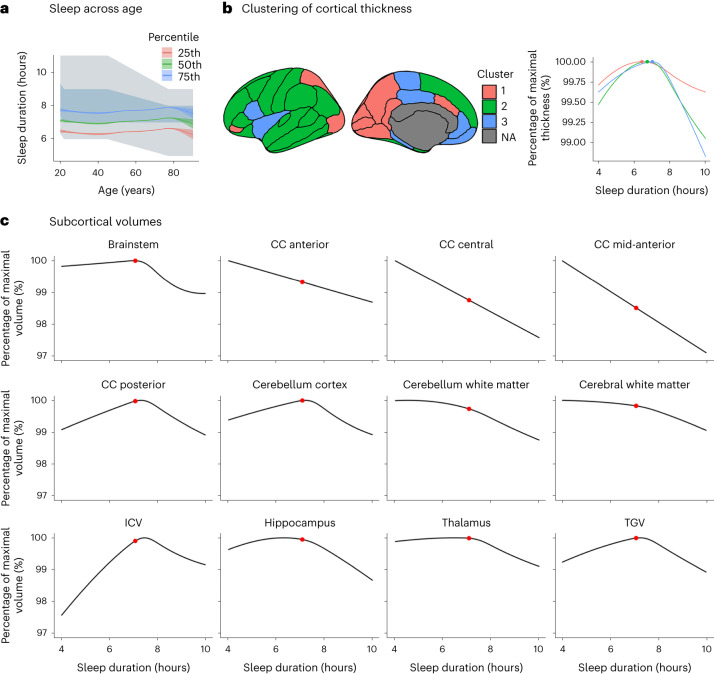
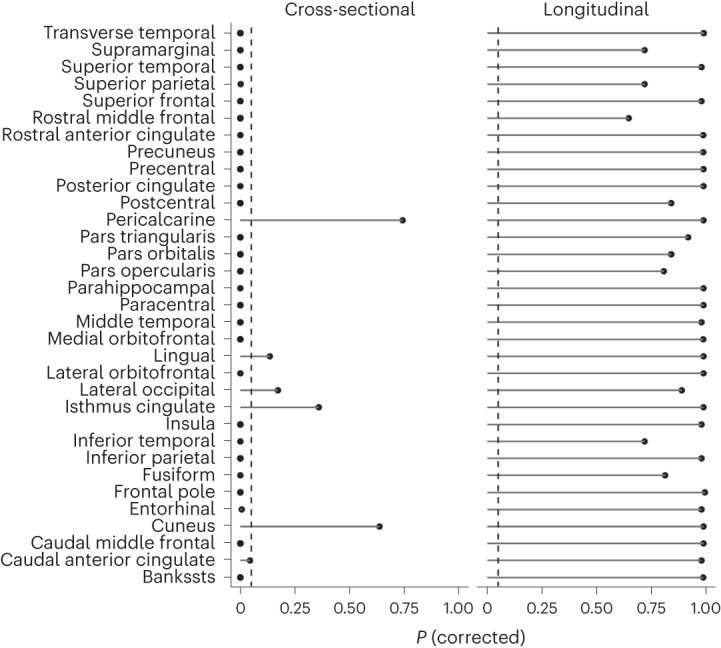
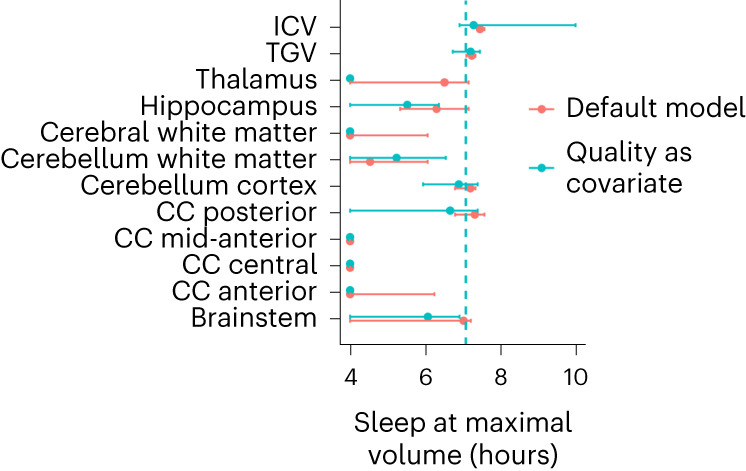
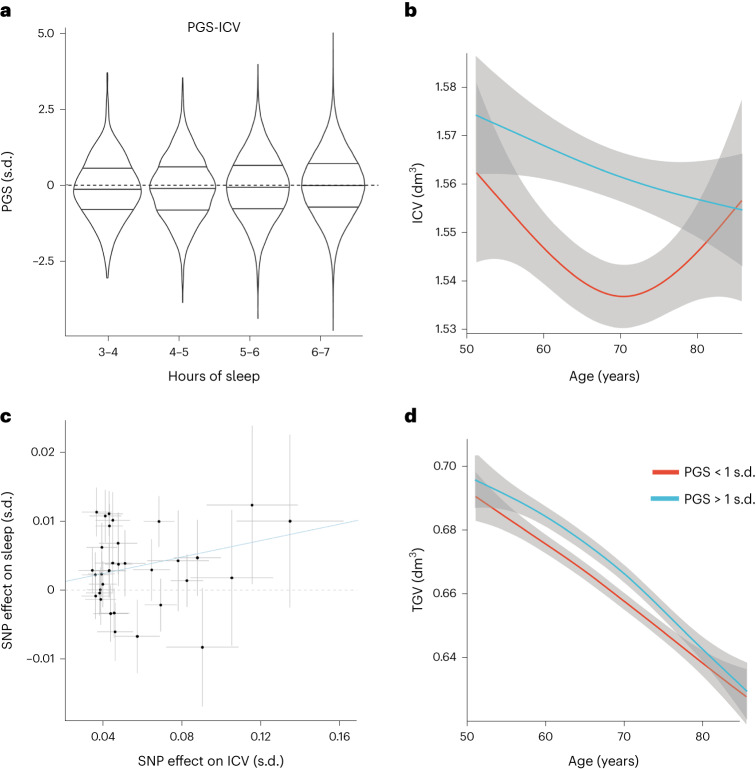
Short sleep is held to cause poorer brain health, but is short sleep associated with higher rates of brain structural decline? Analysing 8,153 longitudinal MRIs from 3,893 healthy adults, we found no evidence for an association between sleep duration and brain atrophy. In contrast, cross-sectional analyses (51,295 observations) showed inverse U-shaped relationships, where a duration of 6.5 (95% confidence interval, (5.7, 7.3)) hours was associated with the thickest cortex and largest volumes relative to intracranial volume. This fits converging evidence from research on mortality, health and cognition that points to roughly seven hours being associated with good health. Genome-wide association analyses suggested that genes associated with longer sleep for below-average sleepers were linked to shorter sleep for above-average sleepers. Mendelian randomization did not yield evidence for causal impacts of sleep on brain structure. The combined results challenge the notion that habitual short sleep causes brain atrophy, suggesting that normal brains promote adequate sleep duration—which is shorter than current recommendations.
Overview
The claims and statistics of this paper haven’t been checked yet.
Free: it reads the open-access text and checks the first 5 claims that cite a source we can check. Create a free account to check every claim.
Integrity signals
Registry
Cites
Statistics
Figures
Verification
Claims the paper makes
The claims and statistics of this paper haven’t been checked yet.
Free: it reads the open-access text and checks the first 5 claims that cite a source we can check. Create a free account to check every claim.
Claims other papers make about this one
Each is checked against this paper’s own text: does it say what the citing paper says it does?
The source backs part of the claim, not all of it — or backs it for a different population, condition or comparison.
In the citing paper
“The reverse causation hypothesis is supported by a longitudinal MRI brain imaging study of 3893 healthy adults which found that brain atrophy rates were not associated with either longer or shorter sleep duration nor quality of sleep when controlling for BMI, socio-economic status and mood.(302)”
From Dementia prevention, intervention, and care: 2024 report of the Lancet standing Commission (2024) · cites this paper as [302]
Experimental — accuracy not yet measuredThe cited source says what the claim attributes to it.
In the citing paper
“However cross -sectionally sleep duration was associated with cortical thickness”
From Dementia prevention, intervention, and care: 2024 report of the Lancet standing Commission (2024) · cites this paper as [302]
Self-check
Percentages, sums and reported differences re-computed from the paper’s own numbers.
The self-check needs the paper’s full text.
Citations
Cites
2 retracted
Dementia prevention, intervention, and care: 2020 report of the Lancet Commission
Livingston, G., Huntley, J., Sommerlad, A., Ames, D., Ballard, C., Banerjee, S., Brayne, C., Burns, A., Cohen-Mansfield, J., Cooper, C., et al. (2020) · The Lancet · doi:10.1016/s0140-6736(20)30367-6 · Cited by 10,430 · cited 1×
“…not considered sufficiently strong to include sleep among the 12 potentially modifiable risk factors by the Lancet Commission on dementia prevention 23 , the World Health Organization guidelines on the risk reduction of cognitive decline and dementia 24 do not mention sleep, and only a few studies…”
BackgroundRetractedRETRACTED: A Societal Sleep Prescription
Walker, M. P. (2019) · Neuron · doi:10.1016/j.neuron.2019.06.015 · Cited by 22
RetractedThe Pittsburgh Sleep Quality Index: a new instrument for psychiatric practice and research
Buysse, D. J., Reynolds, C. F., Monk, T. H., Berman, S. R., & Kupfer, D. J. (1989) · Psychiatry Research · doi:10.1016/0165-1781(89)90047-4 · Cited by 35,234 · cited 3×
“For the Human Connectome Project and the Lifebrain samples except Betula, sleep duration and other characteristics were measured by the Pittsburgh Sleep Quality Index (PSQI) 113 .”
MethodGeneralized Additive Models: An Introduction with R
Wood, S. N. (2017) · doi:10.1201/9781315370279 · Cited by 13,852
Desikan, R. S., Ségonne, F., Fischl, B., Quinn, B. T., Dickerson, B. C., Blacker, D., Buckner, R. L., Dale, A. M., Maguire, R. P., Hyman, B. T., et al. (2006) · NeuroImage · doi:10.1016/j.neuroimage.2006.01.021 · Cited by 13,324 · cited 1×
“We analysed 19 volumetric brain variables and 32 cortical regions 67 , summed across the hemispheres.”
MethodSecond-generation PLINK: rising to the challenge of larger and richer datasets
Chang, C. C., Chow, C. C., Tellier, L. C., Vattikuti, S., Purcell, S. M., & Lee, J. J. (2015) · Gigascience · doi:10.1186/s13742-015-0047-8 · Cited by 12,709
Cortical Surface-Based Analysis
Dale, A. M., Fischl, B., & Sereno, M. I. (1999) · NeuroImage · doi:10.1006/nimg.1998.0395 · Cited by 10,910
Bowden, J., Davey Smith, G., & Burgess, S. (2015) · International Journal of Epidemiology · doi:10.1093/ije/dyv080 · Cited by 9,816
Fischl, B., Salat, D. H., Busa, E., Albert, M., Dieterich, M., Haselgrove, C., van der Kouwe, A., Killiany, R., Kennedy, D., Klaveness, S., et al. (2002) · Neuron · doi:10.1016/s0896-6273(02)00569-x · Cited by 8,610
Davey Smith, G., & Ebrahim, S. (2003) · International Journal of Epidemiology · doi:10.1093/ije/dyg070 · Cited by 5,882 · cited 1×
“We took advantage of measured variation in genes for each trait of interest and used MR 61 to explore the associations between sleep duration and brain structure.”
MethodLD Score regression distinguishes confounding from polygenicity in genome-wide association studies
Schizophrenia Working Group of the Psychiatric Genomics Consortium, Bulik-Sullivan, B. K., Loh, P.-R., Finucane, H. K., Ripke, S., Yang, J., Patterson, N., Daly, M. J., Price, A. L., & Neale, B. M. (2015) · Nature Genetics · doi:10.1038/ng.3211 · Cited by 5,559 · cited 1×
“The LD score regression model (ldsc) 77 was used to estimate SNP-h 2 for each trait and genetic correlation between sleep duration and hippocampal volume, TGV and ICV.”
MethodFunctional mapping and annotation of genetic associations with FUMA
Watanabe, K., Taskesen, E., van Bochoven, A., & Posthuma, D. (2017) · Nature Communications · doi:10.1038/s41467-017-01261-5 · Cited by 4,083 · cited 1×
“The FUMA server 126 was used to annotate the GWAS results to genomic regions and nearby genes with the default parameters.”
MethodOhayon, M. M., Carskadon, M. A., Guilleminault, C., & Vitiello, M. V. (2004) · Sleep · doi:10.1093/sleep/27.7.1255 · Cited by 3,349 · cited 1×
“Fourth, the samples were not thoroughly screened for sleep disorders such as sleep apnea 112 .”
BackgroundWhy do many psychiatric disorders emerge during adolescence?
Paus, T., Keshavan, M., & Giedd, J. N. (2008) · Nature Reviews Neuroscience · doi:10.1038/nrn2513 · Cited by 3,123 · cited 2×
“Some of these, however, such as synaptic density, will have minute effects on volumetric measures because their total volume is very small 93,95 .”
BackgroundThe Role of Actigraphy in the Study of Sleep and Circadian Rhythms
Ancoli-Israel, S., Cole, R., Alessi, C., Chambers, M., Moorcroft, W., & Pollak, C. P. (2003) · Sleep · doi:10.1093/sleep/26.3.342 · Cited by 2,751 · cited 1×
“However, although actigraph results often correlate highly with polysomnography 104 , they tend to overestimate sleep duration 104–108 , and it is not known how well actigraphs perform outside a sleep lab setting.”
BackgroundSynaptic density in human frontal cortex —Developmental changes and effects of aging
Peter R., H. (1979) · Brain Research · doi:10.1016/0006-8993(79)90349-4 · Cited by 2,645 · cited 1×
“Processes such as synaptogenesis and synapse elimination/pruning 91 , dendritic and axonal growth 92,93 , and intracortical myelinization 94 can be involved in morphometric changes in childhood development.”
BackgroundWithin-subject template estimation for unbiased longitudinal image analysis
Reuter, M., Schmansky, N. J., Rosas, H. D., & Fischl, B. (2012) · NeuroImage · doi:10.1016/j.neuroimage.2012.02.084 · Cited by 2,356
National Sleep Foundation’s updated sleep duration recommendations: final report
Hirshkowitz, M., Whiton, K., Albert, S. M., Alessi, C., Bruni, O., DonCarlos, L., Hazen, N., Herman, J., Adams Hillard, P. J., Katz, E. S., et al. (2015) · Sleep Health · doi:10.1016/j.sleh.2015.10.004 · Cited by 2,348 · cited 5×
“We did not find evidence suggesting that sleep duration was related to the rate of atrophy or that sleep shorter than the recommended duration 1,66 was associated with smaller regional brain volumes, thinner cortex or smaller ventricles.”
BackgroundInfluentialIrwin, M. R., Olmstead, R., & Carroll, J. E. (2016) · Biological Psychiatry · doi:10.1016/j.biopsych.2015.05.014 · Cited by 2,085 · cited 2×
“Previous research has established associations between long sleep and poorer brain 48 , cognitive 25,26,29,49,80 and somatic health 81 .”
BackgroundPolygenic prediction via Bayesian regression and continuous shrinkage priors
Ge, T., Chen, C.-Y., Ni, Y., Feng, Y.-C. A., & Smoller, J. W. (2019) · Nature Communications · doi:10.1038/s41467-019-09718-5 · Cited by 1,922 · cited 2×
“The polygenic risk score via continuous shrinkage priors (PRS-CS) model is a widely used method for computing PGSs for highly polygenic traits 127 .”
MethodHastie, T., & Tibshirani, R. (1993) · Journal of the Royal Statistical Society Series B: Statistical Methodology · doi:10.1111/j.2517-6161.1993.tb01939.x · Cited by 1,902
Self-Reported and Measured Sleep Duration: How Similar Are They?
Lauderdale, D. S., Knutson, K. L., Yan, L. L., Liu, K., & Rathouz, P. J. (2008) · Epidemiology · doi:10.1097/ede.0b013e318187a7b0 · Cited by 1,565 · cited 2×
“Self-reports are only moderately correlated with actigraph measures 102,103 .”
BackgroundParuthi, S., Brooks, L. J., D’Ambrosio, C., Hall, W. A., Kotagal, S., Lloyd, R. M., Malow, B. A., Maski, K., Nichols, C., Quan, S. F., et al. (2016) · Journal of Clinical Sleep Medicine · doi:10.5664/jcsm.5866 · Cited by 1,562 · cited 2×
“Adults are advised to sleep at least seven to eight hours each night 1–4 , and it is widely perceived that shorter sleep could be a pervasive negative factor for physical, mental and cognitive health 5–8 , yielding increased risk of Alzheimer’s disease (AD) and other dementias 9–15 .”
BackgroundInfluentialImage processing and Quality Control for the first 10,000 brain imaging datasets from UK Biobank
Alfaro-Almagro, F., Jenkinson, M., Bangerter, N. K., Andersson, J. L. R., Griffanti, L., Douaud, G., Sotiropoulos, S. N., Jbabdi, S., Hernandez-Fernandez, M., Vallee, E., et al. (2018) · NeuroImage · doi:10.1016/j.neuroimage.2017.10.034 · Cited by 1,557
Watson, N. F., Badr, M. S., Belenky, G., Bliwise, D. L., Buxton, O. M., Buysse, D., Dinges, D. F., Gangwisch, J., Grandner, M. A., Kushida, C., et al. (2015) · SLEEP · doi:10.5665/sleep.4716 · Cited by 1,453
Watson, N. F., Badr, M. S., Belenky, G., Bliwise, D. L., Buxton, O. M., Buysse, D., Dinges, D. F., Gangwisch, J., Grandner, M. A., Kushida, C., et al. (2015) · Journal of Clinical Sleep Medicine · doi:10.5664/jcsm.4758 · Cited by 1,320 · cited 5×
“Adults are advised to sleep at least seven to eight hours each night 1–4 , and it is widely perceived that shorter sleep could be a pervasive negative factor for physical, mental and cognitive health 5–8 , yielding increased risk of Alzheimer’s disease (AD) and other dementias 9–15 .”
BackgroundInfluentialThe sleep-deprived human brain
Krause, A. J., Simon, E. B., Mander, B. A., Greer, S. M., Saletin, J. M., Goldstein-Piekarski, A. N., & Walker, M. P. (2017) · Nature Reviews Neuroscience · doi:10.1038/nrn.2017.55 · Cited by 1,200 · cited 1×
“Adults are advised to sleep at least seven to eight hours each night 1–4 , and it is widely perceived that shorter sleep could be a pervasive negative factor for physical, mental and cognitive health 5–8 , yielding increased risk of Alzheimer’s disease (AD) and other dementias 9–15 .”
BackgroundMander, B. A., Winer, J. R., & Walker, M. P. (2017) · Neuron · doi:10.1016/j.neuron.2017.02.004 · Cited by 1,185
Structural Brain Changes in Aging: Courses, Causes and Cognitive Consequences
Fjell, A. M., & Walhovd, K. B. (2010) · Reviews in the Neurosciences · doi:10.1515/revneuro.2010.21.3.187 · Cited by 1,074 · cited 1×
“Important aspects can be indexed by rate of atrophy, which increases in normal ageing 17 , in cognitive decline 18 , in AD 19 and with, for example, cardiovascular risk factors 20 .”
BackgroundSelf-citationSleep disturbances increase the risk of dementia: a systematic review and meta-analysis
Shi, L., Chen, S.-J., Ma, M.-Y., Bao, Y.-P., Han, Y., Wang, Y.-M., Shi, J., Vitiello, M. V., & Lu, L. (2018) · Sleep Medicine Reviews · doi:10.1016/j.smrv.2017.06.010 · Cited by 1,009 · cited 1×
“Adults are advised to sleep at least seven to eight hours each night 1–4 , and it is widely perceived that shorter sleep could be a pervasive negative factor for physical, mental and cognitive health 5–8 , yielding increased risk of Alzheimer’s disease (AD) and other dementias 9–15 .”
BackgroundSelf-citationPanel, C. C., Watson, N. F., Badr, M. S., Belenky, G., Bliwise, D. L., Buxton, O. M., Buysse, D., Dinges, D. F., Gangwisch, J., Grandner, M. A., et al. (2015) · Sleep · doi:10.5665/sleep.4886 · Cited by 906 · cited 3×
“Sleep duration is the most widely studied, best supported and most straightforward sleep measure to address in relation to health 7 .”
BackgroundThe 23andMe Research Team, Jansen, P. R., Watanabe, K., Stringer, S., Skene, N., Bryois, J., Hammerschlag, A. R., de Leeuw, C. A., Benjamins, J. S., Muñoz-Manchado, A. B., et al. (2019) · Nature Genetics · doi:10.1038/s41588-018-0333-3 · Cited by 857
Paruthi, S., Brooks, L. J., D'Ambrosio, C., Hall, W. A., Kotagal, S., Lloyd, R. M., Malow, B. A., Maski, K., Nichols, C., Quan, S. F., et al. (2016) · Journal of Clinical Sleep Medicine · doi:10.5664/jcsm.6288 · Cited by 837
Zhao, Q., Wang, J., Hemani, G., Bowden, J., & Small, D. S. (2020) · The Annals of Statistics · doi:10.1214/19-aos1866 · Cited by 836 · cited 1×
“We therefore performed a robust MR analysis using the robust adjusted profile score 79 for the direction from sleep to brain traits, but we did not detect significant relationships for the directionality of effects by this even more liberal threshold.”
MethodFjell, A. M., McEvoy, L., Holland, D., Dale, A. M., & Walhovd, K. B. (2014) · Progress in Neurobiology · doi:10.1016/j.pneurobio.2014.02.004 · Cited by 799 · cited 2×
“…could show different sensitivity to sleep duration, such as white matter microstructure 109 or Aβ accumulation 110 , brain morphometry is sensitive to normal and pathological brain changes 19 , and atrophy has consistently been identified as a factor governing age-related sleep changes 111 .”
BackgroundSelf-citationLDpred2: better, faster, stronger
Privé, F., Arbel, J., & Vilhjálmsson, B. J. (2021) · Bioinformatics · doi:10.1093/bioinformatics/btaa1029 · Cited by 726
High Consistency of Regional Cortical Thinning in Aging across Multiple Samples
Fjell, A. M., Westlye, L. T., Amlien, I., Espeseth, T., Reinvang, I., Raz, N., Agartz, I., Salat, D. H., Greve, D. N., Fischl, B., et al. (2009) · Cerebral Cortex · doi:10.1093/cercor/bhn232 · Cited by 695
Self-citationNeocortical cell counts in normal human adult aging
Terry, R. D., DeTeresa, R., & Hansen, L. A. (1987) · Annals of Neurology · doi:10.1002/ana.410210603 · Cited by 685 · cited 2×
“…arborizations 84,85 , reduced spine numbers and density 86 , loss of synapses and dendritic branches 87 , and, in degenerative conditions such as AD, also neuronal loss 84 , although neuronal 85,88,89 or glial 90 loss probably plays a limited role in the volumetric reductions seen in normal ageing.”
BackgroundSleep, Cognitive impairment, and Alzheimer's disease: a systematic review and meta-analysis
Bubu, O. M., Brannick, M., Mortimer, J., Umasabor-Bubu, O., Sebastião, Y. V., Wen, Y., Schwartz, S., Borenstein, A. R., Wu, Y., Morgan, D., et al. (2017) · Sleep · doi:10.1093/sleep/zsw032 · Cited by 673 · cited 1×
“Adults are advised to sleep at least seven to eight hours each night 1–4 , and it is widely perceived that shorter sleep could be a pervasive negative factor for physical, mental and cognitive health 5–8 , yielding increased risk of Alzheimer’s disease (AD) and other dementias 9–15 .”
BackgroundDashti, H. S., Jones, S. E., Wood, A. R., Lane, J. M., van Hees, V. T., Wang, H., Rhodes, J. A., Song, Y., Patel, K., Anderson, S. G., et al. (2019) · Nature Communications · doi:10.1038/s41467-019-08917-4 · Cited by 609 · cited 8×
“One study reported that the same genetic loci were related to sleep duration whether it was measured by acti-graphs or self-reports 51 .”
BackgroundInfluentialFurther Validation of Actigraphy for Sleep Studies
de Souza, L., Benedito-Silva, A. A., Pires, M. L. N., Poyares, D., Tufik, S., & Calil, H. M. (2003) · Sleep · doi:10.1093/sleep/26.1.81 · Cited by 587
Implications of sleep disturbance and inflammation for Alzheimer's disease dementia
Irwin, M. R., & Vitiello, M. V. (2019) · The Lancet Neurology · doi:10.1016/s1474-4422(18)30450-2 · Cited by 578
β-amyloid disrupts human NREM slow waves and related hippocampus-dependent memory consolidation
Mander, B. A., Marks, S. M., Vogel, J. W., Rao, V., Lu, B., Saletin, J. M., Ancoli-Israel, S., Jagust, W. J., & Walker, M. P. (2015) · Nature Neuroscience · doi:10.1038/nn.4035 · Cited by 569
Bourgeois, J., & Rakic, P. (1993) · The Journal of Neuroscience · doi:10.1523/jneurosci.13-07-02801.1993 · Cited by 567 · cited 1×
“Some of these, however, such as synaptic density, will have minute effects on volumetric measures because their total volume is very small 93,95 .”
BackgroundStorsve, A. B., Fjell, A. M., Tamnes, C. K., Westlye, L. T., Overbye, K., Aasland, H. W., & Walhovd, K. B. (2014) · Journal of Neuroscience · doi:10.1523/jneurosci.0391-14.2014 · Cited by 542 · cited 1×
“The cortical analyses focused on thickness, which changes considerably with age 69–71 , but the results for area and volume are reported for completeness.”
BackgroundSelf-citationAssociation between sleep duration and cognitive decline
Ma, Y., Liang, L., Zheng, F., Shi, L., Zhong, B., & Xie, W. (2020) · JAMA Network Open · doi:10.1001/jamanetworkopen.2020.13573 · Cited by 535 · cited 2×
“Previous research has established associations between long sleep and poorer brain 48 , cognitive 25,26,29,49,80 and somatic health 81 .”
BackgroundPakkenberg, B. (2003) · Experimental Gerontology · doi:10.1016/s0531-5565(02)00151-1 · Cited by 485 · cited 1×
“…arborizations 84,85 , reduced spine numbers and density 86 , loss of synapses and dendritic branches 87 , and, in degenerative conditions such as AD, also neuronal loss 84 , although neuronal 85,88,89 or glial 90 loss probably plays a limited role in the volumetric reductions seen in normal ageing.”
BackgroundKocevska, D., Lysen, T. S., Dotinga, A., Koopman-Verhoeff, M. E., Luijk, M. P. C. M., Antypa, N., Biermasz, N. R., Blokstra, A., Brug, J., Burk, W. J., et al. (2020) · Nature Human Behaviour · doi:10.1038/s41562-020-00965-x · Cited by 473 · cited 2×
“It is noteworthy that the resulting 6.5 hours is relatively well aligned with the average reported sleep duration of 7 hours and similar to the results of a recent meta-analysis of more than one million participants 36 .”
BackgroundResultInfluentialMander, B. A., Winer, J. R., Jagust, W. J., & Walker, M. P. (2016) · Trends in Neurosciences · doi:10.1016/j.tins.2016.05.002 · Cited by 471
'The clocks that time us'—circadian rhythms in neurodegenerative disorders
Videnovic, A., Lazar, A. S., Barker, R. A., & Overeem, S. (2014) · Nature Reviews Neurology · doi:10.1038/nrneurol.2014.206 · Cited by 373
Statistical analysis of longitudinal neuroimage data with Linear Mixed Effects models
Bernal-Rusiel, J. L., Greve, D. N., Reuter, M., Fischl, B., & Sabuncu, M. R. (2013) · NeuroImage · doi:10.1016/j.neuroimage.2012.10.065 · Cited by 360
Lane, J. M., Liang, J., Vlasac, I., Anderson, S. G., Bechtold, D. A., Bowden, J., Emsley, R., Gill, S., Little, M. A., Luik, A. I., et al. (2017) · Nature Genetics · doi:10.1038/ng.3749 · Cited by 350
Apparent thinning of human visual cortex during childhood is associated with myelination
Natu, V. S., Gomez, J., Barnett, M., Jeska, B., Kirilina, E., Jaeger, C., Zhen, Z., Cox, S., Weiner, K. S., Weiskopf, N., et al. (2019) · Proceedings of the National Academy of Sciences · doi:10.1073/pnas.1904931116 · Cited by 335 · cited 1×
“Processes such as synaptogenesis and synapse elimination/pruning 91 , dendritic and axonal growth 92,93 , and intracortical myelinization 94 can be involved in morphometric changes in childhood development.”
BackgroundXu, W., Tan, C.-C., Zou, J.-J., Cao, X.-P., & Tan, L. (2020) · Journal of Neurology, Neurosurgery & Psychiatry · doi:10.1136/jnnp-2019-321896 · Cited by 330 · cited 1×
“There seems to be an inverted U-shaped relationship between sleep duration and brain health, since both long and short sleep are associated with increased risk of cognitive decline 30,31 and smaller regional brain volumes 26 .”
BackgroundSleep, EEG and mental function changes in senile dementia of the Alzheimer's type
Prinz, P. N., Vitaliano, P. P., Vitiello, M. V., Bokan, J., Raskind, M., Peskind, E., & Gerber, C. (1982) · Neurobiology of Aging · doi:10.1016/0197-4580(82)90024-0 · Cited by 326
Hatfield, C. F. (2004) · Brain · doi:10.1093/brain/awh129 · Cited by 324
Jackson, C. L., Patel, S. R., Jackson, W. B., Lutsey, P. L., & Redline, S. (2018) · Sleep · doi:10.1093/sleep/zsy057 · Cited by 321
Genetic studies of accelerometer-based sleep measures yield new insights into human sleep behaviour
Jones, S. E., van Hees, V. T., Mazzotti, D. R., Marques-Vidal, P., Sabia, S., van der Spek, A., Dashti, H. S., Engmann, J., Kocevska, D., Tyrrell, J., et al. (2019) · Nature Communications · doi:10.1038/s41467-019-09576-1 · Cited by 300
Visualization of Brain Statistics With R Packages ggseg and ggseg3d
Mowinckel, A. M., & Vidal-Piñeiro, D. (2020) · Advances in Methods and Practices in Psychological Science · doi:10.1177/2515245920928009 · Cited by 259
Self-citationGenetic and Environmental Determination of Human Sleep
Partinen, M., Kaprio, J., Koskenvuo, M., Putkonen, P., & Langinvainio, H. (1983) · Sleep · doi:10.1093/sleep/6.3.179 · Cited by 257 · cited 2×
“Previous studies have reported GWAS heritability to be modest 51–57 , which limits the power of the MR approach.”
BackgroundFeature article: are neurons lost from the primate cerebral cortex during normal aging?
Peters, A. (1998) · Cerebral Cortex · doi:10.1093/cercor/8.4.295 · Cited by 244 · cited 1×
“…arborizations 84,85 , reduced spine numbers and density 86 , loss of synapses and dendritic branches 87 , and, in degenerative conditions such as AD, also neuronal loss 84 , although neuronal 85,88,89 or glial 90 loss probably plays a limited role in the volumetric reductions seen in normal ageing.”
BackgroundPoor sleep quality is associated with increased cortical atrophy in community-dwelling adults
Sexton, C. E., Storsve, A. B., Walhovd, K. B., Johansen-Berg, H., & Fjell, A. M. (2014) · Neurology · doi:10.1212/wnl.0000000000000774 · Cited by 238 · cited 1×
“One study reported durations shorter and longer than seven hours to be associated with more frontotemporal grey matter loss 25 , while three others found no relationships 26–28 .”
BackgroundSelf-citationWhen does brain aging accelerate? Dangers of quadratic fits in cross-sectional studies
Fjell, A. M., Walhovd, K. B., Westlye, L. T., Østby, Y., Tamnes, C. K., Jernigan, T. L., Gamst, A., & Dale, A. M. (2010) · NeuroImage · doi:10.1016/j.neuroimage.2010.01.061 · Cited by 236 · cited 1×
“Because the relationships between sleep duration and a range of health-related measures typically form an inverted U-shape, this approach allows us to accurately estimate the number of hours of sleep associated with the largest regional brain volumes and thickest cortex 64 .”
Self-citationFalse positive rates in surface-based anatomical analysis
Greve, D. N., & Fischl, B. (2018) · NeuroImage · doi:10.1016/j.neuroimage.2017.12.072 · Cited by 232
A Novel Adaptive Wrist Actigraphy Algorithm for Sleep-Wake Assessment in Sleep Apnea Patients
Hedner, J., Pillar, G., Pittman, S. D., Zou, D., Grote, L., & White, D. P. (2004) · Sleep · doi:10.1093/sleep/27.8.1560 · Cited by 214 · cited 1×
“However, although actigraph results often correlate highly with polysomnography 104 , they tend to overestimate sleep duration 104–108 , and it is not known how well actigraphs perform outside a sleep lab setting.”
BackgroundFreeman, S. H., Kandel, R., Cruz, L., Rozkalne, A., Newell, K., Frosch, M. P., Hedley-Whyte, E. T., Locascio, J. J., Lipsitz, L. A., & Hyman, B. T. (2008) · Journal of Neuropathology & Experimental Neurology · doi:10.1097/nen.0b013e31818fc72f · Cited by 212 · cited 1×
“…arborizations 84,85 , reduced spine numbers and density 86 , loss of synapses and dendritic branches 87 , and, in degenerative conditions such as AD, also neuronal loss 84 , although neuronal 85,88,89 or glial 90 loss probably plays a limited role in the volumetric reductions seen in normal ageing.”
BackgroundNeurodevelopmental origins of lifespan changes in brain and cognition
Walhovd, K. B., Krogsrud, S. K., Amlien, I. K., Bartsch, H., Bjørnerud, A., Due-Tønnessen, P., Grydeland, H., Hagler, D. J., Håberg, A. K., Kremen, W. S., et al. (2016) · Proceedings of the National Academy of Sciences · doi:10.1073/pnas.1524259113 · Cited by 208 · cited 4×
“Impor-tantly, such results cannot be used to make inferences about atrophy and brain change, as inter-individual brain volumetric differences even in adults mainly reflect early developmental processes 17,37 .”
BackgroundInfluentialSelf-citationNordin, M., Åkerstedt, T., & Nordin, S. (2013) · Sleep and Biological Rhythms · doi:10.1111/sbr.12024 · Cited by 200 · cited 1×
“For Betula, sleep characteristics were measured by the Karolinska Sleep Questionnaire 114,115 , which can be used to extract the same information covered by the PSQI 116 .”
MethodA Comparison of Actigraphy and Polysomnography in Older Adults Treated for Chronic Primary Insomnia
Sivertsen, B., Omvik, S., Havik, O. E., Pallesen, S., Bjorvatn, B., Nielsen, G. H., Straume, S., & Nordhus, I. H. (2006) · Sleep · doi:10.1093/sleep/29.10.1353 · Cited by 200
Sleep Duration and Age-Related Changes in Brain Structure and Cognitive Performance
Lo, J. C., Loh, K. K., Zheng, H., Sim, S. K. Y., & Chee, M. W. L. (2014) · Sleep · doi:10.5665/sleep.3832 · Cited by 196
Straightforward intermediate rank tensor product smoothing in mixed models
Wood, S. N., Scheipl, F., & Faraway, J. J. (2013) · Statistics and Computing · doi:10.1007/s11222-012-9314-z · Cited by 194
Prolonged sleep duration as a marker of early neurodegeneration predicting incident dementia
Westwood, A. J., Beiser, A., Jain, N., Himali, J. J., DeCarli, C., Auerbach, S. H., Pase, M. P., & Seshadri, S. (2017) · Neurology · doi:10.1212/wnl.0000000000003732 · Cited by 192 · cited 1×
“Previous research has established associations between long sleep and poorer brain 48 , cognitive 25,26,29,49,80 and somatic health 81 .”
BackgroundBranger, P., Arenaza-Urquijo, E. M., Tomadesso, C., Mézenge, F., André, C., de Flores, R., Mutlu, J., de La Sayette, V., Eustache, F., Chételat, G., et al. (2016) · Neurobiology of Aging · doi:10.1016/j.neurobiolaging.2016.02.009 · Cited by 186 · cited 1×
“Cross-sectional sleep–volume relationships 26,40–50 therefore represent mostly stable factors, not brain changes 26 (for an overview of previous studies, see Supplementary Information, ‘Reviewed studies’).”
BackgroundJovicich, J., Marizzoni, M., Sala-Llonch, R., Bosch, B., Bartrés-Faz, D., Arnold, J., Benninghoff, J., Wiltfang, J., Roccatagliata, L., Nobili, F., et al. (2013) · NeuroImage · doi:10.1016/j.neuroimage.2013.05.007 · Cited by 183
Power and sample size calculations for Mendelian randomization studies using one genetic instrument
Freeman, G., Cowling, B. J., & Schooling, C. M. (2013) · International Journal of Epidemiology · doi:10.1093/ije/dyt110 · Cited by 183 · cited 1×
“%) to detect a true causal effect for hippocampal volume and ICV of 0.3 or larger, the low heritability for sleep in the study required a much larger sample size, on the basis of the Freeman model for power calculations in MR studies 78 .”
InfluentialEsiri, M. (2007) · The Journal of Pathology · doi:10.1002/path.2089 · Cited by 180 · cited 2×
“…arborizations 84,85 , reduced spine numbers and density 86 , loss of synapses and dendritic branches 87 , and, in degenerative conditions such as AD, also neuronal loss 84 , although neuronal 85,88,89 or glial 90 loss probably plays a limited role in the volumetric reductions seen in normal ageing.”
BackgroundLi, Y., Sahakian, B. J., Kang, J., Langley, C., Zhang, W., Xie, C., Xiang, S., Yu, J., Cheng, W., & Feng, J. (2022) · Nature Aging · doi:10.1038/s43587-022-00210-2 · Cited by 178 · cited 1×
“Cross-sectional sleep–volume relationships 26,40–50 therefore represent mostly stable factors, not brain changes 26 (for an overview of previous studies, see Supplementary Information, ‘Reviewed studies’).”
BackgroundSocioeconomic status and sleep health: a narrative synthesis of 3 decades of empirical research
Papadopoulos, D., & Sosso, F. A. E. (2022) · Journal of Clinical Sleep Medicine · doi:10.5664/jcsm.10336 · Cited by 165 · cited 1×
“…were run controlling for socio-economic status (SES: income and education), body mass index (BMI), depression symptoms and a measure of global sleep quality in turn as covariates, as these variables may affect sleep duration, brain structure and possibly the relationship between them 72–74 .”
BackgroundVidal-Pineiro, D., Wang, Y., Krogsrud, S. K., Amlien, I. K., Baaré, W. F., Bartres-Faz, D., Bertram, L., Brandmaier, A. M., Drevon, C. A., Düzel, S., et al. (2021) · eLife · doi:10.7554/elife.69995 · Cited by 160 · cited 1×
“Impor-tantly, such results cannot be used to make inferences about atrophy and brain change, as inter-individual brain volumetric differences even in adults mainly reflect early developmental processes 17,37 .”
BackgroundSelf-citationSleep Duration and Subsequent Cortical Thinning in Cognitively Normal Older Adults
Spira, A. P., Gonzalez, C. E., Venkatraman, V. K., Wu, M. N., Pacheco, J., Simonsick, E. M., Ferrucci, L., & Resnick, S. M. (2016) · Sleep · doi:10.5665/sleep.5768 · Cited by 158 · cited 2×
“One study reported durations shorter and longer than seven hours to be associated with more frontotemporal grey matter loss 25 , while three others found no relationships 26–28 .”
BackgroundSignificant sparse polygenic risk scores across 813 traits in UK Biobank
Tanigawa, Y., Qian, J., Venkataraman, G., Justesen, J. M., Li, R., Tibshirani, R., Hastie, T., & Rivas, M. A. (2022) · PLOS Genetics · doi:10.1371/journal.pgen.1010105 · Cited by 138
Huang, S., Li, Y., Zhang, Y.-R., Huang, Y., Wu, B., Zhang, W., Deng, Y., Chen, S.-D., He, X., Chen, S., et al. (2022) · Molecular Psychiatry · doi:10.1038/s41380-022-01655-y · Cited by 137 · cited 3×
“Furthermore, this corresponds with the conclusion of a meta-analysis of 35 studies of sleep duration and mortality, where 7 hours of sleep was associated with lowest risk of premature death among adults 32 .”
BackgroundResultThe relationship between sleep duration, cognition and dementia: a Mendelian randomization study
Henry, A., Katsoulis, M., Masi, S., Fatemifar, G., Denaxas, S., Acosta, D., Garfield, V., & Dale, C. E. (2019) · International Journal of Epidemiology · doi:10.1093/ije/dyz071 · Cited by 132 · cited 1×
“Still, an MR study from UKB found that both short and long sleep were related to poorer visual memory and longer reaction time 97 .”
BackgroundShen, X., Wu, Y., & Zhang, D. (2016) · Scientific Reports · doi:10.1038/srep21480 · Cited by 125 · cited 3×
“Furthermore, this corresponds with the conclusion of a meta-analysis of 35 studies of sleep duration and mortality, where 7 hours of sleep was associated with lowest risk of premature death among adults 32 .”
BackgroundMethodResultBernal-Rusiel, J. L., Reuter, M., Greve, D. N., Fischl, B., & Sabuncu, M. R. (2013) · NeuroImage · doi:10.1016/j.neuroimage.2013.05.049 · Cited by 125
A Twin Study of Sleep Duration and Body Mass Index
Watson, N. F., Buchwald, D., Vitiello, M. V., Noonan, C., & Goldberg, J. (2010) · Journal of Clinical Sleep Medicine · doi:10.5664/jcsm.27704 · Cited by 116
Stoffers, D., Moens, S., Benjamins, J., van Tol, M.-J., Penninx, B. W. J. H., Veltman, D. J., Van der Wee, N. J. A., & Van Someren, E. J. W. (2012) · Frontiers in Neurology · doi:10.3389/fneur.2012.00105 · Cited by 115
Study, F. T. A., Grau‐Rivera, O., Operto, G., Falcón, C., Sánchez‐Benavides, G., Cacciaglia, R., Brugulat‐Serrat, A., Gramunt, N., Salvadó, G., Suárez‐Calvet, M., et al. (2020) · Alzheimer s Research & Therapy · doi:10.1186/s13195-019-0547-3 · Cited by 115
Walhovd, K., Storsve, A. B., Westlye, L., Drevon, C., & Fjell, A. (2014) · Neurobiology of Aging · doi:10.1016/j.neurobiolaging.2013.11.011 · Cited by 108 · cited 1×
“Lower rates of atrophy are related to healthy lifestyle 21 and better maintained cognitive function 22 .”
BackgroundSelf-citationSleep Duration: A Consensus Conference
Watson, N. F. (2015) · Sleep · doi:10.5665/sleep.4310 · Cited by 106
Reported sleep duration reveals segmentation of the adult life-course into three phases
Coutrot, A., Lázár, A. S., Richards, M., Manley, E., Wiener, J. M., Dalton, R., Hornberger, M., & Spiers, H. J. (2022) · Nature Communications · doi:10.1038/s41467-022-34624-8 · Cited by 105 · cited 1×
“Two recent very large studies found seven hours of sleep to be associated with the highest cognitive performance 33,34 and lowest dementia risk 35 .”
BackgroundEducational attainment does not influence brain aging
Nyberg, L., Magnussen, F., Lundquist, A., Baaré, W., Bartrés-Faz, D., Bertram, L., Boraxbekk, C. J., Brandmaier, A. M., Drevon, C. A., Ebmeier, K., et al. (2021) · Proceedings of the National Academy of Sciences · doi:10.1073/pnas.2101644118 · Cited by 97 · cited 1×
“Accordingly, larger brain volumes are positively and stably related to lifelong higher cognitive function and demographic variables such as education 17,38,39 .”
BackgroundSelf-citationFan, L., Xu, W., Cai, Y., Hu, Y., & Wu, C. (2019) · Journal of the American Medical Directors Association · doi:10.1016/j.jamda.2019.06.009 · Cited by 96 · cited 1×
“There seems to be an inverted U-shaped relationship between sleep duration and brain health, since both long and short sleep are associated with increased risk of cognitive decline 30,31 and smaller regional brain volumes 26 .”
BackgroundThe influence of heredity on self-reported sleep patterns in free-living humans
de Castro, J. M. (2002) · Physiology & Behavior · doi:10.1016/s0031-9384(02)00699-6 · Cited by 94
The role of sleep and wakefulness in myelin plasticity
de Vivo, L., & Bellesi, M. (2019) · Glia · doi:10.1002/glia.23667 · Cited by 93 · cited 1×
“For example, we have previously shown that sleep disturbances are associated with spatial expression patterns of oligodendrocytes and S1 pyramidal cell genes 71 , in line with theories of relationships between myelination and sleep 96 .”
BackgroundRegional Neocortical Gray Matter Structure and Sleep Fragmentation in Older Adults
Lim, A. S. P., Fleischman, D. A., Dawe, R. J., Yu, L., Arfanakis, K., Buchman, A. S., & Bennett, D. A. (2016) · Sleep · doi:10.5665/sleep.5354 · Cited by 92
Self-reported sleep in postmenopausal women
Regestein, Q. R., Friebely, J., Shifren, J. L., Scharf, M. B., Wiita, B., Carver, J., & Schiff, I. (2004) · Menopause · doi:10.1097/01.gme.0000097741.18446.3e · Cited by 91 · cited 1×
“Self-reports are only moderately correlated with actigraph measures 102,103 .”
BackgroundSleep, major depressive disorder, and Alzheimer disease: A Mendelian randomization study
Huang, J., Zuber, V., Matthews, P. M., Elliott, P., Tzoulaki, J., & Dehghan, A. (2020) · Neurology · doi:10.1212/wnl.0000000000010463 · Cited by 82
Walhovd, K. B., Fjell, A. M., Wang, Y., Amlien, I. K., Mowinckel, A. M., Lindenberger, U., Düzel, S., Bartrés-Faz, D., Ebmeier, K. P., Drevon, C. A., et al. (2022) · Cerebral Cortex · doi:10.1093/cercor/bhab248 · Cited by 80 · cited 1×
“Accordingly, larger brain volumes are positively and stably related to lifelong higher cognitive function and demographic variables such as education 17,38,39 .”
BackgroundSelf-citationFjell, A. M., Sørensen, Ø., Amlien, I. K., Bartrés-Faz, D., Bros, D. M., Buchmann, N., Demuth, I., Drevon, C. A., Düzel, S., Ebmeier, K. P., et al. (2020) · Sleep · doi:10.1093/sleep/zsz280 · Cited by 79 · cited 3×
“For the Human Connectome Project and the Lifebrain samples except Betula, sleep duration and other characteristics were measured by the Pittsburgh Sleep Quality Index (PSQI) 113 .”
MethodSelf-citationHealthy minds 0–100 years: Optimising the use of European brain imaging cohorts (“Lifebrain”)
Walhovd, K. B., Fjell, A. M., Westerhausen, R., Nyberg, L. H., Ebmeier, K. P., Lindenberger, U., Bartrés‐Faz, D., Baaré, W. F. C., Siebner, H. R., Henson, R. N., et al. (2018) · European Psychiatry · doi:10.1016/j.eurpsy.2017.12.006 · Cited by 77 · cited 1×
“Longitudinal data from the Lifebrain consortium 60 constructed with cubic regression splines and penalized on the basis of their squared second derivatives.”
MethodSelf-citationAssociations between sleep variability and cardiometabolic health: A systematic review
Zhu, B., Wang, Y., Yuan, J., Mu, Y., Chen, P., Srimoragot, M., Li, Y., Park, C. G., & Reutrakul, S. (2022) · Sleep Medicine Reviews · doi:10.1016/j.smrv.2022.101688 · Cited by 77 · cited 1×
“…were run controlling for socio-economic status (SES: income and education), body mass index (BMI), depression symptoms and a measure of global sleep quality in turn as covariates, as these variables may affect sleep duration, brain structure and possibly the relationship between them 72–74 .”
BackgroundSelf-citationThe end of sleep: ‘Sleep debt’ versus biological adaptation of human sleep to waking needs
Horne, J. (2010) · Biological Psychology · doi:10.1016/j.biopsycho.2010.10.004 · Cited by 73 · cited 1×
“Unfortunately, experimental sleep deprivation does not resemble habitual variations in sleep duration, and the long-term consequences on the brain from sleep deprivation, taking adaptations into account 101 , are not known.”
BackgroundRecent advances in sleep and depression
Mirchandaney, R., Asarnow, L. D., & Kaplan, K. A. (2023) · Current Opinion in Psychiatry · doi:10.1097/yco.0000000000000837 · Cited by 61
Alperin, N., Wiltshire, J., Lee, S. H., Ramos, A. R., Hernandez-Cardenache, R., Rundek, T., Curiel Cid, R., & Loewenstein, D. (2019) · Sleep · doi:10.1093/sleep/zsy254 · Cited by 59
The Effects of Age on the Cells in Layer 1 of Primate Cerebral Cortex
Peters, A. (2002) · Cerebral Cortex · doi:10.1093/cercor/12.1.27 · Cited by 57 · cited 1×
“…the shrinkage of neurons, dendrites and axonal arborizations 84,85 , reduced spine numbers and density 86 , loss of synapses and dendritic branches 87 , and, in degenerative conditions such as AD, also neuronal loss 84 , although neuronal 85,88,89 or glial 90 loss probably plays a limited role in…”
BackgroundZitser, J., Anatürk, M., Zsoldos, E., Mahmood, A., Filippini, N., Suri, S., Leng, Y., Yaffe, K. S., Singh‐Manoux, A., Kivimäki, M., et al. (2020) · SLEEP · doi:10.1093/sleep/zsz290 · Cited by 57
Self-citationGorbach, T., Pudas, S., Bartrés‐Faz, D., Brandmaier, A. M., Düzel, S., Henson, R. N., Idland, A., Lindenberger, U., Macià, D., Mowinckel, A. M., et al. (2020) · Alzheimer s & Dementia Diagnosis Assessment & Disease Monitoring · doi:10.1002/dad2.12110 · Cited by 50
Self-citationSørensen, Ø., Walhovd, K. B., & Fjell, A. M. (2021) · NeuroImage · doi:10.1016/j.neuroimage.2020.117596 · Cited by 46 · cited 2×
“GAMMs offer an attractive alternative to linear mixed models in that a priori specifications of polynomial functional forms are not necessary, and GAMMs are able to accurately fit trajectories of different forms and complexities 63 .”
BackgroundMethodSelf-citationSleep and brain morphological changes in the eighth decade of life
Aribisala, B. S., Riha, R. L., Hernández, M. V., Maniega, S. M., Cox, S. R., Radaković, R., Taylor, A. M., Pattie, A., Corley, J., Redmond, P. H., et al. (2019) · Sleep Medicine · doi:10.1016/j.sleep.2019.07.015 · Cited by 45
Nyberg, L. H., Andersson, M., Lundquist, A., Baaré, W. F. C., Bartrés‐Faz, D., Bertram, L., Boraxbekk, C., Brandmaier, A. M., Demnitz, N., Drevon, C. A., et al. (2022) · Cerebral Cortex · doi:10.1093/cercor/bhac400 · Cited by 40
Self-citationFjell, A. M., Sørensen, Ø., Amlien, I. K., Bartrés‐Faz, D., Brandmaier, A. M., Buchmann, N., Demuth, I., Drevon, C. A., Düzel, S., Ebmeier, K. P., et al. (2020) · Cerebral Cortex · doi:10.1093/cercor/bhaa332 · Cited by 39 · cited 3×
“The cortical analyses focused on thickness, which changes considerably with age 69–71 , but the results for area and volume are reported for completeness.”
BackgroundSelf-citationFjell, A. M., Chen, C., Sederevičius, D., Sneve, M. H., Grydeland, H., Krogsrud, S. K., Amlien, I. K., Ferschmann, L., Ness, H. T., Folvik, L., et al. (2018) · Cerebral Cortex · doi:10.1093/cercor/bhy266 · Cited by 38
Self-citationSleep duration: A review of genome-wide association studies (GWAS) in adults from 2007 to 2020
Garfield, V. (2020) · Sleep Medicine Reviews · doi:10.1016/j.smrv.2020.101413 · Cited by 38 · cited 1×
“58).”
Pediatric Sleep Duration Consensus Statement: A Step Forward
Paruthi, S., Brooks, L. J., D’Ambrosio, C. M., Hall, W. A., Kotagal, S., Lloyd, R. M., Malow, B. A., Maski, K. P., Nichols, C. D., Quan, S. F., et al. (2016) · Journal of Clinical Sleep Medicine · doi:10.5664/jcsm.6368 · Cited by 32
Fjell, A., Chen, C.-H., Sederevičius, D., Sneve, M., Gryde, H., Krogsrud, S. K., Amlien, I., Ferschmann, L., Ness, H. T., Folvik, L., et al. (2018) · bioRxiv · doi:10.1101/329680 · Cited by 32
Self-citationSleep, hippocampal volume, and cognition in adults over 90 years old
Sabeti, S., Al‐Darsani, Z., Mander, B. A., Corrada, M. M., & Kawas, C. H. (2018) · Aging Clinical and Experimental Research · doi:10.1007/s40520-018-1030-x · Cited by 28
Nyberg, C. K., Fjell, A. M., & Walhovd, K. B. (2019) · Neurobiology of Aging · doi:10.1016/j.neurobiolaging.2019.10.005 · Cited by 27 · cited 2×
“A higher rate of atrophy was regarded as a marker of declining brain health 17–20 .”
BackgroundSelf-citationStructural brain alterations in older adults exposed to early-life adversity
Ancelin, M.-L., Carrière, I., Artero, S., Maller, J. J., Meslin, C., Dupuy, A.-M., Ritchie, K., Ryan, J., & Chaudieu, I. (2021) · Psychoneuroendocrinology · doi:10.1016/j.psyneuen.2021.105272 · Cited by 27 · cited 1×
“All statistical tests were two-tailed, and P values were adjusted according to the Benjamini–Hochberg procedure 65 .”
MethodPark, J. E., Lee, Y. J., Byun, M. S., Yi, D., Lee, J. H., Jeon, S. Y., Hwang, J. Y., Yoon, H., Choe, Y. M., Kim, Y. K., et al. (2021) · Neurobiology of Aging · doi:10.1016/j.neurobiolaging.2021.01.006 · Cited by 25 · cited 1×
“Previous research has established associations between long sleep and poorer brain 48 , cognitive 25,26,29,49,80 and somatic health 81 .”
BackgroundLooze, C. D., Feeney, J. C., Scarlett, S., Hirst, R. J., Knight, S. P., Carey, D., Meaney, J. F., & Kenny, R. A. (2021) · SLEEP · doi:10.1093/sleep/zsab241 · Cited by 24 · cited 1×
“Previous research has established associations between long sleep and poorer brain 48 , cognitive 25,26,29,49,80 and somatic health 81 .”
BackgroundWesterlund, A., Brandt, L., Harlid, R., Åkerstedt, T., & Lagerros, Y. T. (2014) · The Clinical Respiratory Journal · doi:10.1111/crj.12095 · Cited by 20 · cited 1×
“For Betula, sleep characteristics were measured by the Karolinska Sleep Questionnaire 114,115 , which can be used to extract the same information covered by the PSQI 116 .”
MethodIs an epidemic of sleeplessness increasing the incidence of Alzheimer’s disease?
Lyon, L. (2019) · Brain · doi:10.1093/brain/awz087 · Cited by 15 · cited 1×
“Adults are advised to sleep at least seven to eight hours each night 1–4 , and it is widely perceived that shorter sleep could be a pervasive negative factor for physical, mental and cognitive health 5–8 , yielding increased risk of Alzheimer’s disease (AD) and other dementias 9–15 .”
BackgroundSignificant Sparse Polygenic Risk Scores across 813 traits in UK BiobankPreprint
Tanigawa, Y., Qian, J., Venkataraman, G. R., et al. (2021) · medRxiv · doi:10.1101/2021.09.02.21262942 · Cited by 15
Lasconi, C., Pahl, M. C., Pippin, J. A., Su, C., Johnson, M. E., Chesi, A., Boehm, K. D., Manduchi, E., Ou, K., Golson, M. L., et al. (2022) · SLEEP · doi:10.1093/sleep/zsac109 · Cited by 14 · cited 1×
“Genetic and cellular links between sleep and metabolism are a focus of current research 99,100 , although a further investigation into the details of these relationships is beyond the scope of this paper.”
BackgroundZheng, Q., Ma, Y., Chen, S., Che, Q., Zhou, Z., & Chen, D. (2020) · Sleep Medicine · doi:10.1016/j.sleep.2020.06.027 · Cited by 11 · cited 1×
“Besides gene discovery, genetic overlaps between sleep duration and other conditions have been studied 51,53,59 , suggesting pleiotropy between sleep duration, somatic disorders and neuropsychiatric health.”
BackgroundRegional neocortical gray matter structure and sleep fragmentation in older adults
Lim, A. S. P., Fleischman, D. A., Dawe, R. J., Yu, L., Arfanaki, K., Buchman, A. S., & Bennett, D. A. (2015) · Sleep Medicine · doi:10.1016/j.sleep.2015.02.077 · Cited by 10
Grydeland, H., Sederevičius, D., Wang, Y., Bartrés‐Faz, D., Bertram, L., Dobričić, V., Düzel, S., Ebmeier, K. P., Lindenberger, U., Nyberg, L. H., et al. (2021) · SLEEP · doi:10.1093/sleep/zsab110 · Cited by 9 · cited 1×
“Although other measures could show different sensitivity to sleep duration, such as white matter microstructure 109 or Aβ accumulation 110 , brain morphometry is sensitive to normal and pathological brain changes 19 , and atrophy has consistently been identified as a factor governing age-related…”
BackgroundSelf-citationPinpointing the genetic and cellular links between sleep and metabolism
Harbison, S. T. (2022) · SLEEP · doi:10.1093/sleep/zsac128 · Cited by 2 · cited 1×
“Genetic and cellular links between sleep and metabolism are a focus of current research 99,100 , although a further investigation into the details of these relationships is beyond the scope of this paper.”
Background(1997) · doi:10.1002/(sici)1096-9861(19971006)386:4<661::aid-cne11>3.0.co;2-n · cited 1×
“…during adulthood may be associated with the shrinkage of neurons, dendrites and axonal arborizations 84,85 , reduced spine numbers and density 86 , loss of synapses and dendritic branches 87 , and, in degenerative conditions such as AD, also neuronal loss 84 , although neuronal 85,88,89 or…”
BackgroundNeocortical neuron number in humans: Effect of sex and age
(1997) · doi:10.1002/(sici)1096-9861(19970728)384:2<312::aid-cne10>3.0.co;2-k · cited 1×
“Underlying neurobiology cannot be directly inferred from MRIs, but the number of neurons has been shown to correlate with regional 82 and global 83 brain volumes cross-sectionally.”
BackgroundHuttenlocher (1997) · doi:10.1002/(sici)1096-9861(19971020)387:2<167::aid-cne1>3.0.co;2-z · cited 1×
“Processes such as synaptogenesis and synapse elimination/pruning 91 , dendritic and axonal growth 92,93 , and intracortical myelinization 94 can be involved in morphometric changes in childhood development.”
Background
Research works printed but not linked: 2
- 34. Coutrot, A. et al. Sleep segments the adult life-course into three phases. Nat. Comm.13, 7697 (2022). 10.1038/s41467-022-34624-8 PMC9744828 36509747 · DOI
- 116. Fjell, A. M. et al. Self-reported sleep relates to hippocampal atrophy across the adult lifespan: results from the Lifebrain consortium. Sleep10.1093/sleep/zsz280 (2020). 10.1093/sleep/zsz280 PMC7215271 31738420 · DOI · Paper page
Cited by
Dementia prevention, intervention, and care: 2024 report of the Lancet standing Commission
Livingston, G., Huntley, J., Liu, K. Y., Costafreda, S. G., Selbæk, G., Alladi, S., Ames, D., Banerjee, S., Burns, A., Brayne, C., et al. (2024) · The Lancet · doi:10.1016/s0140-6736(24)01296-0 · Cited by 3,860
Individual sleep need is flexible and dynamically related to cognitive function
Fjell, A. M., & Walhovd, K. B. (2024) · Nature Human Behaviour · doi:10.1038/s41562-024-01827-6 · Cited by 43
“In a recent study, sleeping less than six hours entailed very modest increases in risks, and even less than five hours was not associated with higher rates of brain atrophy 15 .”
Self-citationIs Short Sleep Bad for the Brain? Brain Structure and Cognitive Function in Short Sleepers
Fjell, A. M., Sørensen, Ø., Wang, Y., Amlien, I. K., Baaré, W. F. C., Bartrés‐Faz, D., Boraxbekk, C., Brandmaier, A. M., Demuth, I., Drevon, C. A., et al. (2023) · Journal of Neuroscience · doi:10.1523/jneurosci.2330-22.2023 · Cited by 32
Self-citationStankeviciute, L. S., Tort‐Colet, N., Fernández‐Arcos, A., Sánchez‐Benavides, G., Minguillón, C., Fauria, K., Holst, S. C., Garcés, P., Mueggler, T., Zetterberg, H., et al. (2025) · Alzheimer s & Dementia · doi:10.1002/alz.70353 · Cited by 13
The combined effects of sleep and extreme heat exposure on cognitive function among older adults
Zhou, W., Li, X., Wang, Q., Ling, L., & Zhang, H. (2025) · Ecotoxicology and Environmental Safety · doi:10.1016/j.ecoenv.2025.117683 · Cited by 13
Metadata
- Authors
- Fjell, A. M., Sørensen, Ø., Wang, Y., Amlien, I. K., Baaré, W. F. C., Bartrés-Faz, D., Bertram, L., Boraxbekk, C.-J., Brandmaier, A. M., Demuth, I., Drevon, C. A., Ebmeier, K. P., Ghisletta, P., Kievit, R., Kühn, S., Madsen, K. S., Mowinckel, A. M., Nyberg, L., Sexton, C. E., Solé-Padullés, C., Vidal-Piñeiro, D., Wagner, G., Watne, L. O., & Walhovd, K. B.
- Affiliations
- Oslo University Hospital (NO)
- University of Oslo (NO)
- Amager Hospital (DK)
- MSB Medical School Berlin (DE)
- Humboldt-Universität zu Berlin (DE)
- University of Oxford (GB)
- University of Geneva (CH)
- Radboud University Medical Center (NL)
- University Medical Center Hamburg-Eppendorf (DE)
- Alzheimer's Association (US)
- Jena University Hospital (DE)
- Corresponding author
- Fjell, Anders M.
- ORCID
- Fjell, Anders M.
- Sørensen, Øystein
- Wang, Yunpeng
- Amlien, Inge K.
- Baaré, William F. C.
- Bartrés-Faz, David
- Bertram, Lars
- Boraxbekk, Carl-Johan
- Brandmaier, Andreas M.
- Demuth, Ilja
- Drevon, Christian A.
- Ebmeier, Klaus P.
- Ghisletta, Paolo
- Kievit, Rogier
- Kühn, Simone
- Madsen, Kathrine Skak
- Mowinckel, Athanasia M.
- Nyberg, Lars
- Sexton, Claire E.
- Vidal-Piñeiro, Didac
- Wagner, Gerd
- Watne, Leiv Otto
- Walhovd, Kristine B.
- Venue
- Nature Human Behaviour
- Published
- 2023-10-05
- Volume
- 7
- Issue
- 11
- Pages
- 2008-2022
- ISSN
- 2397-3374 (ISSN-L)
- PMC
- PMC10663160
- OpenAlex
- W4387378717
- Semantic Scholar
- 6da1c40e093504beedd748abd73e7b078cfe3ed7
- Cited by
- 29
- References
- 131
- Citations by year
- 2026: 7 · 2025: 12 · 2024: 7 · 2023: 2
- FWCI
- 7.22
- Type
- journal article
- Language
- en
- Open access
- hybrid
- doi.org
- Licence
- cc-by
- creativecommons.org/licenses/by/4.0 (tdm)
- creativecommons.org/licenses/by/4.0 (vor)
- Locations
- Nature Human Behaviour (publishedVersion, cc-by)
- Research Square (acceptedVersion, cc-by)
- PubMed Central (publishedVersion, cc-by)
- PubMed (publishedVersion)
- Research at the University of Copenhagen (University of Copenhagen) (publishedVersion, cc-by)
- KTH Publication Database DiVA (KTH Royal Institute of Technology) (submittedVersion, other-oa)
- Radboud Repository (Radboud University) (submittedVersion)
- Archive ouverte UNIGE (University of Geneva) (submittedVersion, cc-by)
- RePEc: Research Papers in Economics (submittedVersion)
- MPG.PuRe (Max Planck Society) (submittedVersion, other-oa)
- NORA - Norwegian Open Research Archives (submittedVersion, cc-by)
- Funders
- Wellcome Trust (203139/Z/16/Z, 1U54MH091657, 203139, 203139/Z/16)
- California Walnut Commission (NCT01634841)
- Bundesministerium für Bildung und Forschung (16SV5837, 01GL1716B, 16SV5537, #01GL1716A and #01GL1716B, 16SV5536K, 01UW0706, 01GL1716A, 16SV5538, 01UW0808)
- Ministerio de Economía y Competitividad (1U54MH091657, PSI2015-64227-R)
- Institució Catalana de Recerca i Estudis Avançats (Academia 2019 award, ICREA ACADEMIA 2019)
- Knut och Alice Wallenbergs Stiftelse (1U54MH091657)
- Norges Forskningsråd (283634)
- National Institutes of Health (5u54mh091657-05, 203139/Z/16/Z, 1U54‐MH‐091657)
- McDonnell Center for Systems Neuroscience (1U54MH091657, 203139/Z/16/Z)
- Medical Research Council (203139/Z/16/Z, G1001354, 1U54MH091657)
- Agencia Estatal de Investigación
- National Institute of Mental Health (U54-MH091657)
- NIH Blueprint for Neuroscience Research (203139/Z/16/Z, 1U54-MH-091657)
- H2020 European Research Council (725025, 677804)
- FP7 Ideas: European Research Council (313440, 283634)
- Topics
- Social Sciences › Psychology › Experimental and Cognitive Psychology › Sleep and related disorders
- Life Sciences › Neuroscience › Cognitive Neuroscience › Sleep and Wakefulness Research
- Health Sciences › Medicine › Psychiatry and Mental health › Dementia and Cognitive Impairment Research
- Keywords
- sleep duration, brain atrophy, cortical thickness, brain volume, sleep and health, sleep and cognition
- MeSH terms
- Sleep Duration, Adult, Atrophy, Brain, Cross-Sectional Studies, Humans, Sleep Wake Disorders, Genome-Wide Association Study
About these checks
Registry, retraction, Cites and statistics results are computed, not judged, with one exception: a printed reference that no index lists is read once by a model before it counts as a citation error. Claims are extracted by a model and kept only when their quote appears verbatim in the text; each cited source is then checked, with a model’s help, for whether it says what the claim relies on. Those verdicts can be wrong — read the claim’s quote and the cited source before relying on one.
Statistics and arithmetic are recomputed, not judged.
Confidence bands are shown only for fields calibrated on our annotated test set. None is calibrated yet, so no band is shown.
What counts as a claim ›How we measure confidence ›How we check this ›
Are you an author, or do you see a problem with this page? Request a review
Data sources
Bibliographic data: Semantic Scholar, OpenAlex, Crossref.
Contains information from the Semantic Scholar Academic Graph Datasets, made available under the ODC Attribution License (ODC-BY 1.0).
Semantic Scholar’s data is described in: Kinney, R., et al. (2023). The Semantic Scholar Open Data Platform. arXiv:2301.10140.
