

A biophysical account of multiplication by a single neuron
Open accessThe DOI matches its Crossref record; 55 of the 55 references it cites were found in a registry or an index.
Abstract
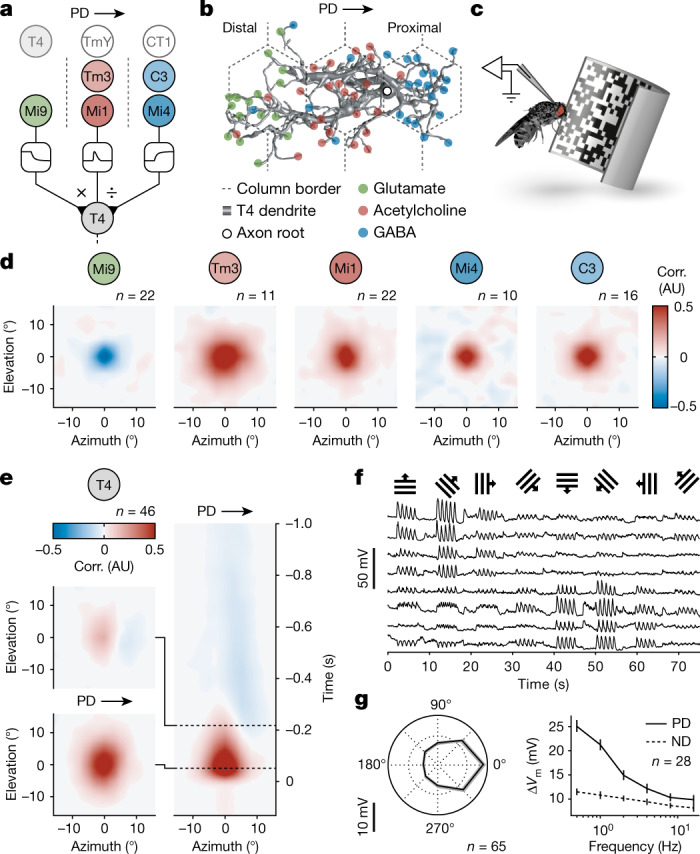
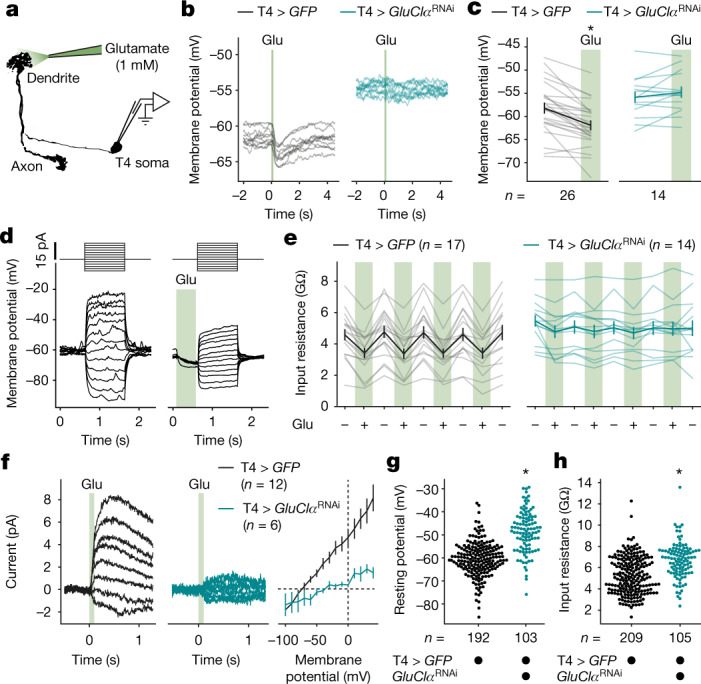
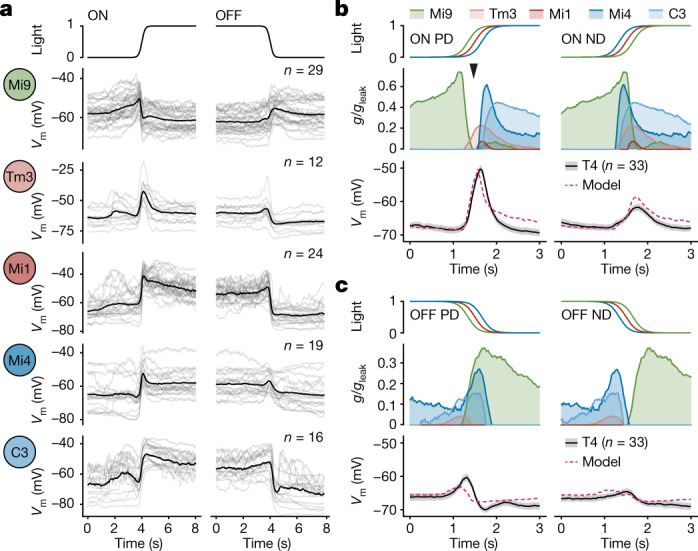
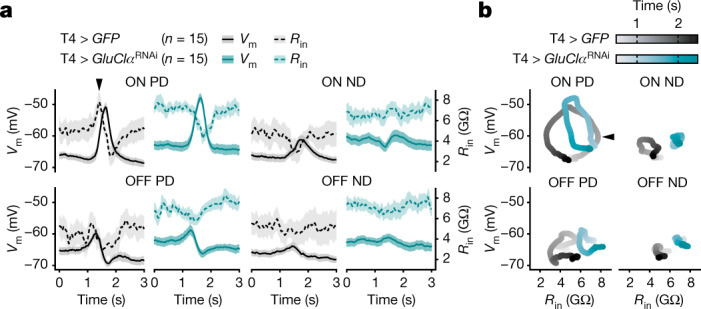
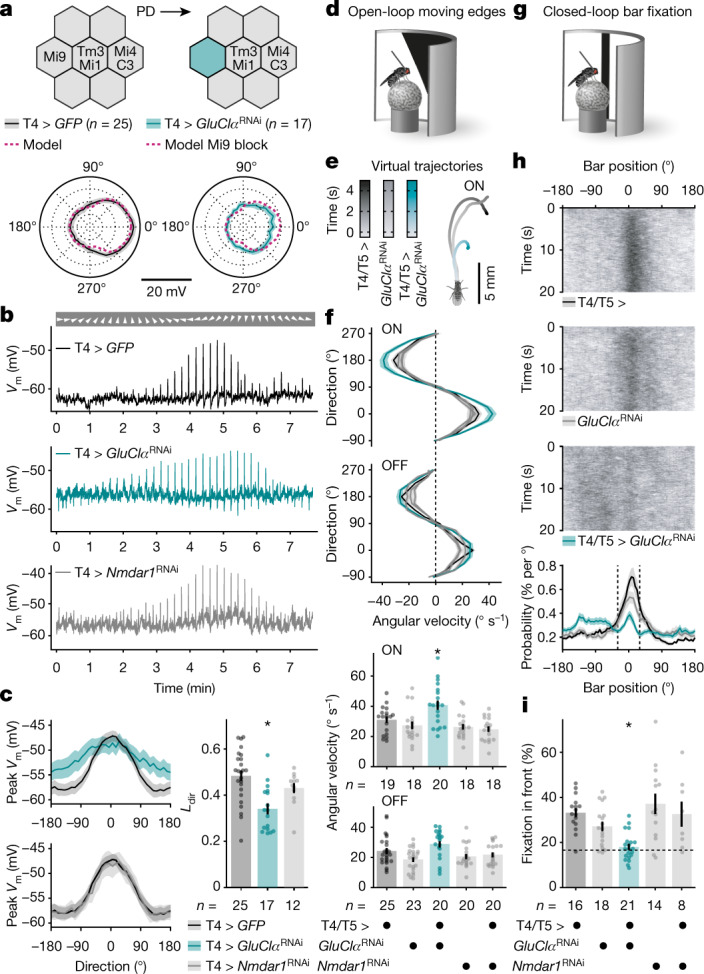
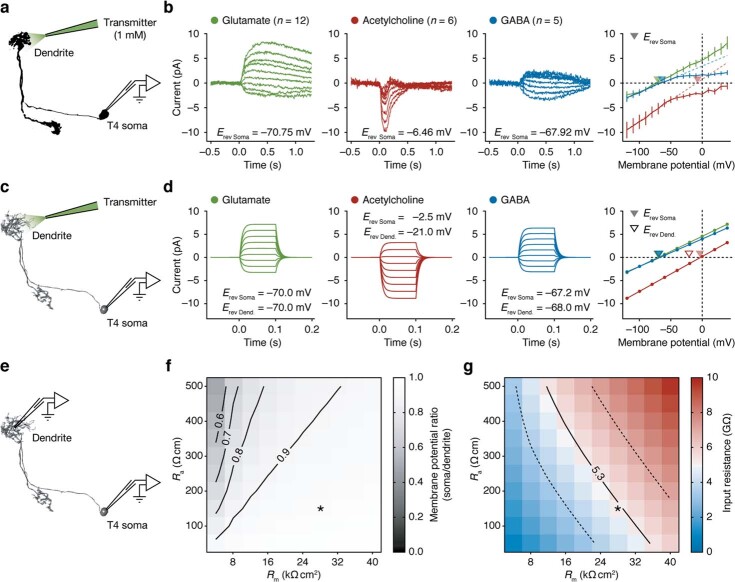
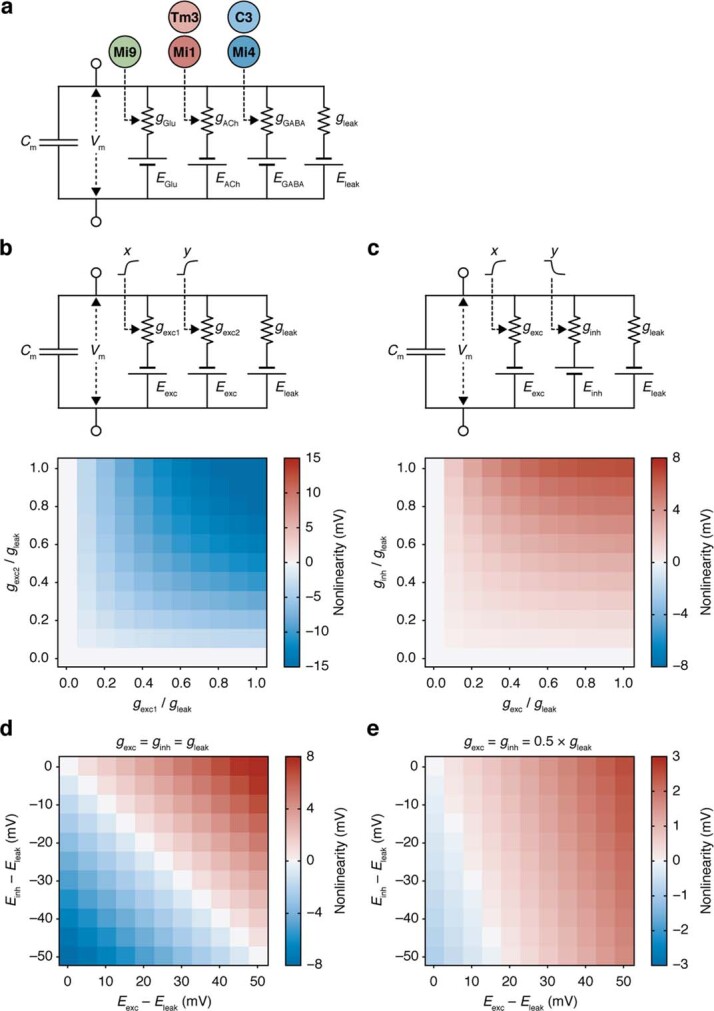
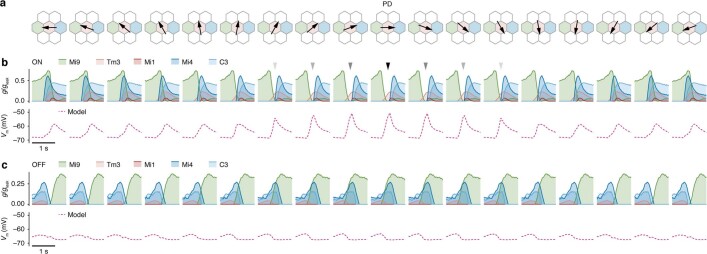
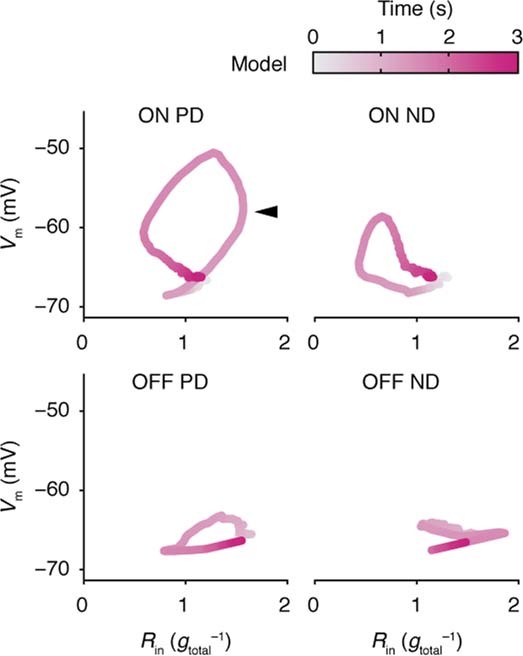
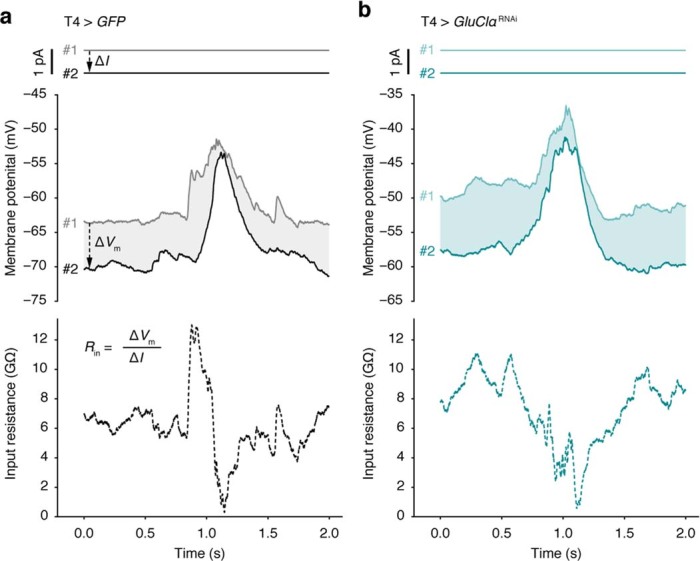
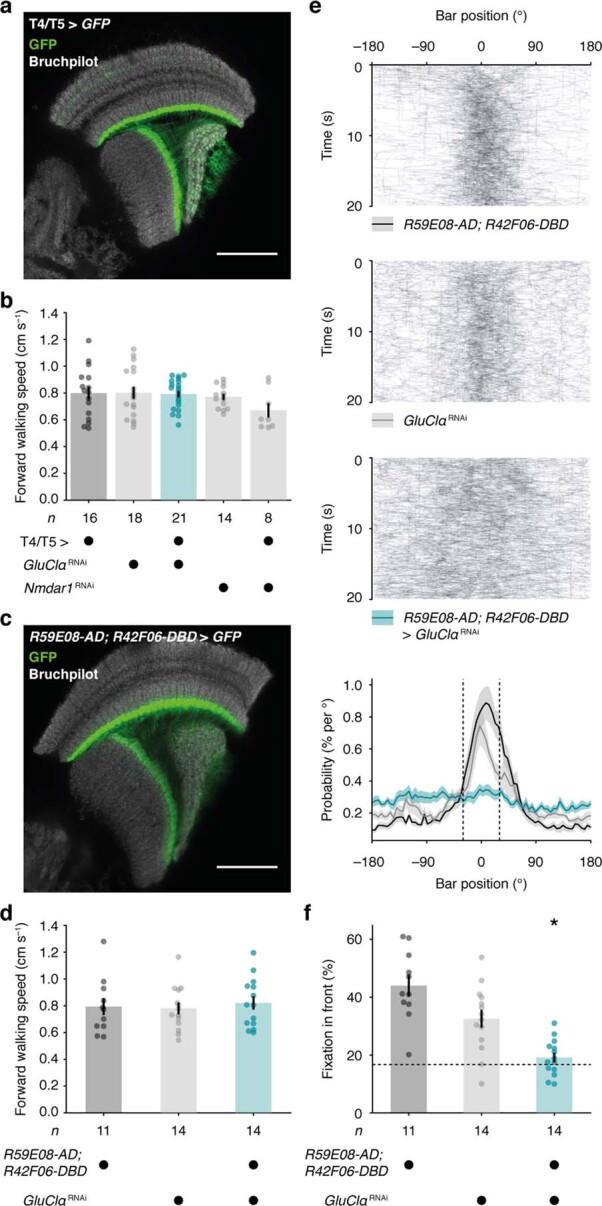
Nonlinear, multiplication-like operations carried out by individual nerve cells greatly enhance the computational power of a neural system 1–3, but our understanding of their biophysical implementation is scant. Here we pursue this problem in the Drosophila melanogaster ON motion vision circuit 4,5, in which we record the membrane potentials of direction-selective T4 neurons and of their columnar input elements 6,7 in response to visual and pharmacological stimuli in vivo. Our electrophysiological measurements and conductance-based simulations provide evidence for a passive supralinear interaction between two distinct types of synapse on T4 dendrites. We show that this multiplication-like nonlinearity arises from the coincidence of cholinergic excitation and release from glutamatergic inhibition. The latter depends on the expression of the glutamate-gated chloride channel GluClα 8,9 in T4 neurons, which sharpens the directional tuning of the cells and shapes the optomotor behaviour of the animals. Interacting pairs of shunting inhibitory and excitatory synapses have long been postulated as an analogue approximation of a multiplication, which is integral to theories of motion detection 10,11, sound localization 12 and sensorimotor control 13.
Overview
The claims and statistics of this paper haven’t been checked yet.
Free: it reads the open-access text and checks the first 5 claims that cite a source we can check. Create a free account to check every claim.
Integrity signals
Registry
Cites
Statistics
Figures
Verification
Claims the paper makes
The claims and statistics of this paper haven’t been checked yet.
Free: it reads the open-access text and checks the first 5 claims that cite a source we can check. Create a free account to check every claim.
Claims other papers make about this one
Each is checked against this paper’s own text: does it say what the citing paper says it does?
The source backs part of the claim, not all of it — or backs it for a different population, condition or comparison.
In the citing paper
“In the D. melanogaster central brain, most reported examples for glutamate are of inhibition via GluClAlpha channels.89,90,91,92,115”
From Neurotransmitter classification from electron microscopy images at synaptic sites in Drosophila melanogaster (2024) · cites this paper as [115]
Experimental — accuracy not yet measuredThe cited source says what the claim attributes to it.
In the citing paper
“However our reductionist model cannot, for example, account for the role played in this circuit by electrical synapses 109 , complex chemical synapse dynamics 96 , and neuromodulation 110 .”
From Connectome-constrained deep mechanistic networks predict neural responses across the fly visual system at single-neuron resolution (2023) · cites this paper as [96]
The cited source says what the claim attributes to it.
In the citing paper
“Our reductionist model cannot, for example, account for the role played in this circuit by electrical synapses46, nonlinear chemical synapses47 and neuromodulation48.”
From Connectome-constrained networks predict neural activity across the fly visual system (2024) · cites this paper as [47]
The cited source says what the claim attributes to it.
In the citing paper
“For example, inhibition can be shunting rather than subtractive in some fly neurons100, and the conductance of an inhibitory synapse can be ten times higher than that of an excitatory synapse101.”
From Neuronal wiring diagram of an adult brain (2024) · cites this paper as [100]
Self-check
Percentages, sums and reported differences re-computed from the paper’s own numbers.
The self-check needs the paper’s full text.
Citations
Cites
Fiji: an open-source platform for biological-image analysis
Schindelin, J., Arganda-Carreras, I., Frise, E., Kaynig, V., Longair, M., Pietzsch, T., Preibisch, S., Rueden, C., Saalfeld, S., Schmid, B., et al. (2012) · Nature Methods · doi:10.1038/nmeth.2019 · Cited by 66,890
The mechanism of directionally selective units in rabbit's retina.
Barlow, H. B., & Levick, W. R. (1965) · The Journal of Physiology · doi:10.1113/jphysiol.1965.sp007638 · Cited by 1,576
Encoding of Spatial Location by Posterior Parietal Neurons
Andersen, R. A., Essick, G. K., & Siegel, R. M. (1985) · Science · doi:10.1126/science.4048942 · Cited by 1,402
London, M., & Häusser, M. (2005) · Annual Review of Neuroscience · doi:10.1146/annurev.neuro.28.061604.135703 · Cited by 1,149
Cortical interneurons that specialize in disinhibitory control
Pi, H.-J., Hangya, B., Kvitsiani, D., Sanders, J. I., Huang, Z. J., & Kepecs, A. (2013) · Nature · doi:10.1038/nature12676 · Cited by 1,136
Hassenstein, B., & Reichardt, W. (1956) · Zeitschrift für Naturforschung B · doi:10.1515/znb-1956-9-1004 · Cited by 869
A genome-scale shRNA resource for transgenic RNAi in Drosophila
Ni, J.-Q., Zhou, R., Czech, B., Liu, L.-P., Holderbaum, L., Yang-Zhou, D., Shim, H.-S., Tao, R., Handler, D., Karpowicz, P., et al. (2011) · Nature Methods · doi:10.1038/nmeth.1592 · Cited by 809
The optic lobe of Drosophila melanogaster. I. A Golgi analysis of wild-type structure
Fischbach, K.-F., & Dittrich, A. P. M. (1989) · Cell and Tissue Research · doi:10.1007/bf00218858 · Cited by 709
Land, M. F. (1997) · Annual Review of Entomology · doi:10.1146/annurev.ento.42.1.147 · Cited by 666
Transformation of Olfactory Representations in the Drosophila Antennal Lobe
Wilson, R. I., Turner, G. C., & Laurent, G. (2004) · Science · doi:10.1126/science.1090782 · Cited by 554
The role of single neurons in information processing
Koch, C., & Segev, I. (2000) · Nature Neuroscience · doi:10.1038/81444 · Cited by 526
Efficient codes and balanced networks
Denève, S., & Machens, C. K. (2016) · Nature Neuroscience · doi:10.1038/nn.4243 · Cited by 471
Optomotorische Untersuchung des visuellen systems einiger Augenmutanten der Fruchtfliege Drosophila
Götz, K. G. (1964) · Kybernetik · doi:10.1007/bf00288561 · Cited by 467
Multiplicative computation in a visual neuron sensitive to looming
Gabbiani, F., Krapp, H. G., Koch, C., & Laurent, G. (2002) · Nature · doi:10.1038/nature01190 · Cited by 394
A directional tuning map of Drosophila elementary motion detectors
Maisak, M. S., Haag, J., Ammer, G., Serbe, E., Meier, M., Leonhardt, A., Schilling, T., Bahl, A., Rubin, G. M., Nern, A., et al. (2013) · Nature · doi:10.1038/nature12320 · Cited by 390
Self-citationON and OFF pathways in Drosophila motion vision
Joesch, M., Schnell, B., Raghu, S. V., Reiff, D. F., & Borst, A. (2010) · Nature · doi:10.1038/nature09545 · Cited by 352
Self-citationTwo-photon calcium imaging from head-fixed Drosophila during optomotor walking behavior
Seelig, J. D., Chiappe, M. E., Lott, G. K., Dutta, A., Osborne, J. E., Reiser, M. B., & Jayaraman, V. (2010) · Nature Methods · doi:10.1038/nmeth.1468 · Cited by 345
Borst, A., Haag, J., & Reiff, D. F. (2010) · Annual Review of Neuroscience · doi:10.1146/annurev-neuro-060909-153155 · Cited by 342
Self-citationA synaptic mechanism possibly underlying directional selectivity to motion
Torre, V., & Poggio, T. (1978) · Proceedings of the Royal Society of London. Series B. Biological Sciences · doi:10.1098/rspb.1978.0075 · Cited by 306
Glutamate is an inhibitory neurotransmitter in the Drosophila olfactory system
Liu, W. W., & Wilson, R. I. (2013) · Proceedings of the National Academy of Sciences · doi:10.1073/pnas.1220560110 · Cited by 297
Cully, D. F., Paress, P. S., Liu, K. K., Schaeffer, J. M., & Arena, J. P. (1996) · Journal of Biological Chemistry · doi:10.1074/jbc.271.33.20187 · Cited by 290
sbi: A toolkit for simulation-based inference
Tejero-Cantero, A., Boelts, J., Deistler, M., Lueckmann, J.-M., Durkan, C., Gonçalves, P., Greenberg, D., & Macke, J. (2020) · Journal of Open Source Software · doi:10.21105/joss.02505 · Cited by 286
A genetic, genomic, and computational resource for exploring neural circuit function
Davis, F. P., Nern, A., Picard, S., Reiser, M. B., Rubin, G. M., Eddy, S. R., & Henry, G. L. (2020) · eLife · doi:10.7554/elife.50901 · Cited by 268
Nonlinear dendritic processing determines angular tuning of barrel cortex neurons in vivo
Lavzin, M., Rapoport, S., Polsky, A., Garion, L., & Schiller, J. (2012) · Nature · doi:10.1038/nature11451 · Cited by 266
Contributions of the 12 Neuron Classes in the Fly Lamina to Motion Vision
Tuthill, J. C., Nern, A., Holtz, S. L., Rubin, G. M., & Reiser, M. B. (2013) · Neuron · doi:10.1016/j.neuron.2013.05.024 · Cited by 248
Training deep neural density estimators to identify mechanistic models of neural dynamics
Gonçalves, P. J., Lueckmann, J.-M., Deistler, M., Nonnenmacher, M., Öcal, K., Bassetto, G., Chintaluri, C., Podlaski, W. F., Haddad, S. A., Vogels, T. P., et al. (2020) · eLife · doi:10.7554/elife.56261 · Cited by 239
Neuronal diversity and convergence in a visual system developmental atlas
Özel, M. N., Simon, F., Jafari, S., Holguera, I., Chen, Y.-C., Benhra, N., El-Danaf, R. N., Kapuralin, K., Malin, J. A., Konstantinides, N., et al. (2021) · Nature · doi:10.1038/s41586-020-2879-3 · Cited by 237
Auditory Spatial Receptive Fields Created by Multiplication
Peña, J. L., & Konishi, M. (2001) · Science · doi:10.1126/science.1059201 · Cited by 222
The comprehensive connectome of a neural substrate for ‘ON’ motion detection in Drosophila
Takemura, S.-Y., Nern, A., Chklovskii, D. B., Scheffer, L. K., Rubin, G. M., & Meinertzhagen, I. A. (2017) · eLife · doi:10.7554/elife.24394 · Cited by 210
The Emergence of Directional Selectivity in the Visual Motion Pathway of Drosophila
Strother, J. A., Wu, S.-T., Wong, A. M., Nern, A., Rogers, E. M., Le, J. Q., Rubin, G. M., & Reiser, M. B. (2017) · Neuron · doi:10.1016/j.neuron.2017.03.010 · Cited by 188
Signal Propagation in Drosophila Central Neurons
Gouwens, N. W., & Wilson, R. I. (2009) · The Journal of Neuroscience · doi:10.1523/jneurosci.0764-09.2009 · Cited by 156
Multiplying with Synapses and Neurons
Koch, C., & Poggio, T. (1992) · Elsevier eBooks · doi:10.1016/b978-0-12-484815-3.50019-0 · Cited by 153
Object tracking in motion-blind flies
Bahl, A., Ammer, G., Schilling, T., & Borst, A. (2013) · Nature Neuroscience · doi:10.1038/nn.3386 · Cited by 153
Self-citationComparisons between the ON- and OFF-edge motion pathways in the Drosophila brain
Shinomiya, K., Huang, G., Lu, Z., Parag, T., Xu, C. S., Aniceto, R., Ansari, N., Cheatham, N., Lauchie, S., Neace, E., et al. (2019) · eLife · doi:10.7554/elife.40025 · Cited by 140
Arenz, A., Drews, M. S., Richter, F. G., Ammer, G., & Borst, A. (2017) · Current Biology · doi:10.1016/j.cub.2017.01.051 · Cited by 137
Self-citationOrientation Selectivity Sharpens Motion Detection in Drosophila
Fisher, Y. E., Silies, M., & Clandinin, T. R. (2015) · Neuron · doi:10.1016/j.neuron.2015.09.033 · Cited by 117
Nonlinear Integration of Visual and Haltere Inputs in Fly Neck Motor Neurons
Huston, S. J., & Krapp, H. G. (2009) · The Journal of Neuroscience · doi:10.1523/jneurosci.2915-09.2009 · Cited by 107
Complementary mechanisms create direction selectivity in the fly
Haag, J., Arenz, A., Serbe, E., Gabbiani, F., & Borst, A. (2016) · eLife · doi:10.7554/elife.17421 · Cited by 104
Self-citationA proposed mechanism for multiplication of neural signals
Srinivasan, M. V., & Bernard, G. D. (1976) · Biological Cybernetics · doi:10.1007/bf00344168 · Cited by 94
Gruntman, E., Romani, S., & Reiser, M. B. (2018) · Nature Neuroscience · doi:10.1038/s41593-017-0046-4 · Cited by 92
Luo, L. (2020) · Garland Science eBooks · doi:10.1201/9781003053972 · Cited by 88
Dendritic Integration of Sensory Evidence in Perceptual Decision-Making
Groschner, L. N., Chan Wah Hak, L., Bogacz, R., DasGupta, S., & Miesenböck, G. (2018) · Cell · doi:10.1016/j.cell.2018.03.075 · Cited by 76
Self-citationCentral gating of fly optomotor response
Haag, J., Wertz, A., & Borst, A. (2010) · Proceedings of the National Academy of Sciences · doi:10.1073/pnas.1009381107 · Cited by 74
Self-citationExtreme Compartmentalization in a Drosophila Amacrine Cell
Meier, M., & Borst, A. (2019) · Current Biology · doi:10.1016/j.cub.2019.03.070 · Cited by 69
Self-citationA minimal synaptic model for direction selective neurons in Drosophila
Zavatone-Veth, J. A., Badwan, B. A., & Clark, D. A. (2020) · Journal of Vision · doi:10.1167/jov.20.2.2 · Cited by 62
Reliability of an interneuron response depends on an integrated sensory state
Dobosiewicz, M., Liu, Q., & Bargmann, C. I. (2019) · eLife · doi:10.7554/elife.50566 · Cited by 58
Fendl, S., Vieira, R. M., & Borst, A. (2020) · eLife · doi:10.7554/elife.62953 · Cited by 48
Self-citationPoleg-Polsky, A., & Diamond, J. S. (2016) · Neuron · doi:10.1016/j.neuron.2016.02.013 · Cited by 47
Asymmetric Processing of Visual Motion for Simultaneous Object and Background Responses
Fenk, L. M., Poehlmann, A., & Straw, A. D. (2014) · Current Biology · doi:10.1016/j.cub.2014.10.042 · Cited by 39
A biophysical mechanism for preferred direction enhancement in fly motion vision
Borst, A. (2018) · PLOS Computational Biology · doi:10.1371/journal.pcbi.1006240 · Cited by 35
Self-citationHoermann, N., Schilling, T., Ali, A. H., Serbe-Kamp, E., Mayer, C., Borst, A., & Pujol‐Martí, J. (2020) · Development · doi:10.1242/dev.186296 · Cited by 30
Self-citationWhere Are the Switches on This Thing?
Abbott, L. F. (2006) · Oxford University Press eBooks · doi:10.1093/acprof:oso/9780195148220.003.0021 · Cited by 29
Neural processing: The logic of multiplication in single neurons
Schnupp, J. W. H., & King, A. J. (2001) · Current Biology · doi:10.1016/s0960-9822(01)00381-5 · Cited by 26
RNA-Seq Transcriptome Analysis of Direction-Selective T4/T5 Neurons in Drosophila
Pankova, K., & Borst, A. (2016) · PLoS ONE · doi:10.1371/journal.pone.0163986 · Cited by 26
Self-citationSchilling, T., Ali, A. H., Leonhardt, A., Borst, A., & Pujol‐Martí, J. (2019) · Development · doi:10.1242/dev.169763 · Cited by 24
Self-citation
Cited by
Neuronal wiring diagram of an adult brain
Dorkenwald, S., Matsliah, A., Sterling, A. R., Schlegel, P., Yu, S.-C., McKellar, C. E., Lin, A., Costa, M., Eichler, K., Yin, Y., et al. (2024) · Nature · doi:10.1038/s41586-024-07558-y · Cited by 570
“For example, inhibition can be shunting rather than subtractive in some fly neurons 100 , and the conductance of an inhibitory synapse can be ten times higher than that of an excitatory synapse 101 .”
BackgroundEckstein, N., Bates, A. S., Champion, A., Du, M., Yin, Y., Schlegel, P., Lu, A. K.-Y., Rymer, T., Finley-May, S., Paterson, T., et al. (2024) · Cell · doi:10.1016/j.cell.2024.03.016 · Cited by 277
“Recent work in the visual system has shown that coincident of cholinergic excitation and cessation of glutamatergic inhibition onto the same neuron can result in a non-linear excitatory effect, a “multiplicative dis-inhibition“ (Groschner et al., 2022).”
Eckstein, N., Bates, A. S., Champion, A., Du, M., Yin, Y., Schlegel, P., Lu, A. K.-Y., Rymer, T., Finley-May, S., Paterson, T., et al. (2020) · doi:10.1101/2020.06.12.148775 · Cited by 115
Connectome-constrained networks predict neural activity across the fly visual system
Lappalainen, J. K., Tschopp, F. D., Prakhya, S., McGill, M., Nern, A., Shinomiya, K., Takemura, S.-Y., Gruntman, E., Macke, J. H., & Turaga, S. C. (2024) · Nature · doi:10.1038/s41586-024-07939-3 · Cited by 128
“Our reductionist model cannot, for example, account for the role played in this circuit by electrical synapses 46 , nonlinear chemical synapses 47 and neuromodulation 48 .”
MethodA memristive neuron and its adaptability to external electric field
Yang, F., Xu, Y., & Ma, J. (2023) · Chaos An Interdisciplinary Journal of Nonlinear Science · doi:10.1063/5.0136195 · Cited by 126
Metadata
- Authors
- Groschner, L. N., Malis, J. G., Zuidinga, B., & Borst, A.
- Affiliations
- Max Planck Institute of Neurobiology (DE)
- Corresponding author
- Groschner, Lukas N.
- Borst, Alexander
- Venue
- Nature
- Published
- 2022-02-23
- Volume
- 603
- Issue
- 7899
- Pages
- 119-123
- ISSN
- 0028-0836 (ISSN-L)
- 1476-4687
- PMC
- PMC8891015
- OpenAlex
- W4213435196
- Cited by
- 94
- References
- 55
- Citations by year
- 2026: 7 · 2025: 15 · 2024: 32 · 2023: 29 · 2022: 9
- FWCI
- 9.40
- Type
- journal article
- Language
- en
- Open access
- hybrid
- doi.org
- Licence
- cc-by
- creativecommons.org/licenses/by/4.0 (tdm)
- creativecommons.org/licenses/by/4.0 (vor)
- Locations
- Nature (publishedVersion, cc-by)
- PubMed Central (publishedVersion, cc-by)
- PubMed (publishedVersion)
- Zenodo (CERN European Organization for Nuclear Research) (submittedVersion, cc-by)
- RePEc: Research Papers in Economics (submittedVersion)
- Funders
- European Commission (HORIZON2020, 896143)
- Max-Planck-Gesellschaft
- National Institutes of Health (NIH P40OD018537, P40OD018537)
- Topics
- Life Sciences › Neuroscience › Cellular and Molecular Neuroscience › Neurobiology and Insect Physiology Research
- Life Sciences › Neuroscience › Cellular and Molecular Neuroscience › Neuroscience and Neuropharmacology Research
- Life Sciences › Neuroscience › Cognitive Neuroscience › Visual perception and processing mechanisms
- Keywords
- Drosophila melanogaster, direction selectivity, cholinergic stimulation, glutamatergic inhibition, shunting inhibition, motion detection, dendritic synapses
- MeSH terms
- Animals, Biophysics, Drosophila melanogaster, Models, Neurological, Neurons, Synapses
About these checks
Registry, retraction, Cites and statistics results are computed, not judged, with one exception: a printed reference that no index lists is read once by a model before it counts as a citation error. Claims are extracted by a model and kept only when their quote appears verbatim in the text; each cited source is then checked, with a model’s help, for whether it says what the claim relies on. Those verdicts can be wrong — read the claim’s quote and the cited source before relying on one.
Statistics and arithmetic are recomputed, not judged.
Confidence bands are shown only for fields calibrated on our annotated test set. None is calibrated yet, so no band is shown.
What counts as a claim ›How we measure confidence ›How we check this ›
Are you an author, or do you see a problem with this page? Request a review
Data sources
Bibliographic data: Semantic Scholar, OpenAlex, Crossref.
Contains information from the Semantic Scholar Academic Graph Datasets, made available under the ODC Attribution License (ODC-BY 1.0).
Semantic Scholar’s data is described in: Kinney, R., et al. (2023). The Semantic Scholar Open Data Platform. arXiv:2301.10140.
