

Effective drug combinations in breast, colon and pancreatic cancer cells
Open accessThe DOI matches its Crossref record; 40 of the 43 references it cites were found in a registry or an index.
Abstract
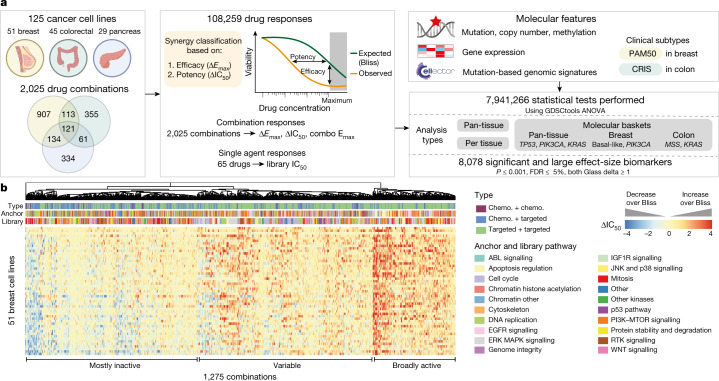
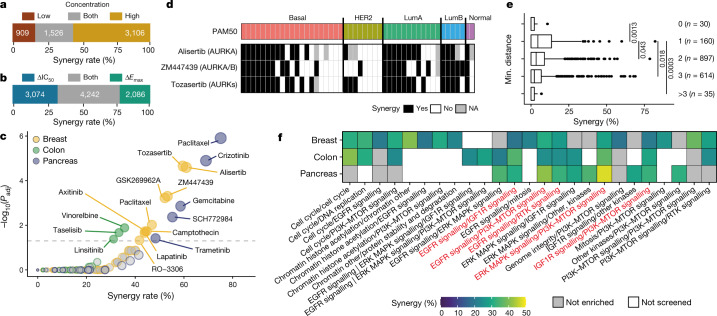
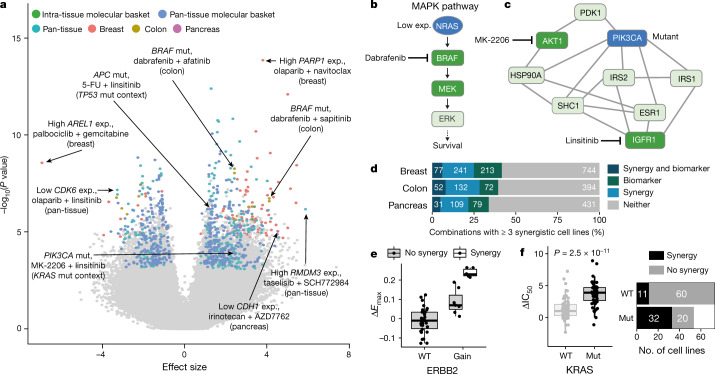
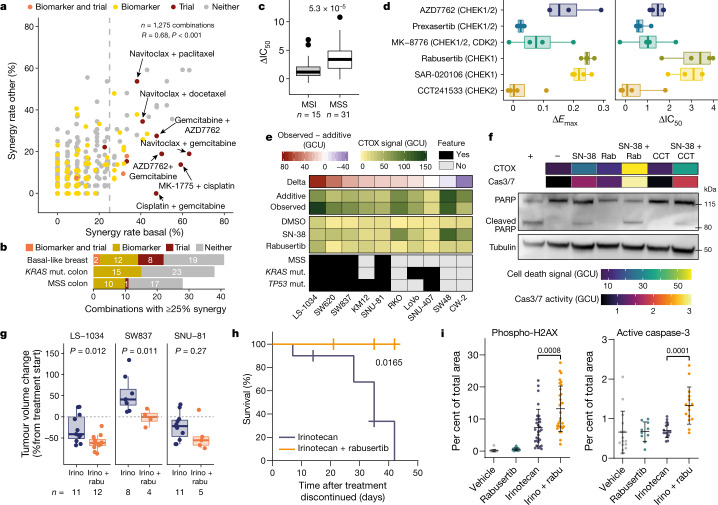
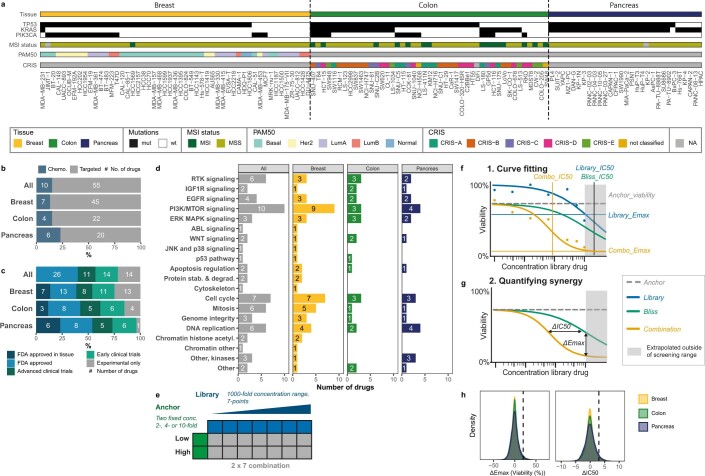
Combinations of anti-cancer drugs can overcome resistance and provide new treatments 1,2 . The number of possible drug combinations vastly exceeds what could be tested clinically. Efforts to systematically identify active combinations and the tissues and molecular contexts in which they are most effective could accelerate the development of combination treatments. Here we evaluate the potency and efficacy of 2,025 clinically relevant two-drug combinations, generating a dataset encompassing 125 molecularly characterized breast, colorectal and pancreatic cancer cell lines. We show that synergy between drugs is rare and highly context-dependent, and that combinations of targeted agents are most likely to be synergistic. We incorporate multi-omic molecular features to identify combination biomarkers and specify synergistic drug combinations and their active contexts, including in basal-like breast cancer, and microsatellite-stable or KRAS -mutant colon cancer. Our results show that irinotecan and CHEK1 inhibition have synergistic effects in microsatellite-stable or KRAS – TP53 double-mutant colon cancer cells, leading to apoptosis and suppression of tumour xenograft growth. This study identifies clinically relevant effective drug combinations in distinct molecular subpopulations and is a resource to guide rational efforts to develop combinatorial drug treatments.
Overview
The claims and statistics of this paper haven’t been checked yet.
Free: it reads the open-access text and checks the first 5 claims that cite a source we can check. Create a free account to check every claim.
Integrity signals
Registry
Cites
Statistics
Figures
Verification
Claims the paper makes
The claims and statistics of this paper haven’t been checked yet.
Free: it reads the open-access text and checks the first 5 claims that cite a source we can check. Create a free account to check every claim.
Claims other papers make about this one
Each is checked against this paper’s own text: does it say what the citing paper says it does?
The source backs part of the claim, not all of it — or backs it for a different population, condition or comparison.
In the citing paper
“Most studies simply compare TV at a single day using t test, or use survival analysis to compare the time-to-event (i.e., time for TV to reach a threshold) between groups (4–6, 23).”
From Statistical Assessment of Drug Synergy from In Vivo Combination Studies Using Mouse Tumor Models (2023) · cites this paper as [4]
Experimental — accuracy not yet measuredThe source backs part of the claim, not all of it — or backs it for a different population, condition or comparison.
In the citing paper
“SN-38, the in vivo active metabolite of TOP1 inhibitor Irinotecan, showed strong synergy with the CHEK1 inhibitor rabusertib under the Bliss model in multiple colon cell lines.”
From Statistical Assessment of Drug Synergy from In Vivo Combination Studies Using Mouse Tumor Models (2023) · cites this paper as [4]
Experimental — accuracy not yet measuredThe source backs part of the claim, not all of it — or backs it for a different population, condition or comparison.
In the citing paper
“However, such in vivo validation studies only showed that synergy exists under the HSA model but not the more stringent Bliss model.”
From Statistical Assessment of Drug Synergy from In Vivo Combination Studies Using Mouse Tumor Models (2023) · cites this paper as [4]
Experimental — accuracy not yet measuredThe cited source says what the claim attributes to it.
In the citing paper
“A recent study systematically evaluated clinically relevant two-drug combinations in cancer cell lines and identified synergistic effects between chemotherapy agents and drugs targeting apoptotic signaling or cell cycle inhibitors in distinct molecular subpopulations [236].”
From Mechanisms and Strategies to Overcome Drug Resistance in Colorectal Cancer (2025) · cites this paper as [236]
The cited source says what the claim attributes to it.
In the citing paper
“In the context of CRC, the study found that irinotecan and CHK1 inhibition had a synergistic anticancer effect in microsatellite stable (MSS) or KRAS-TP53 double-mutant colon cancer cells.”
From Mechanisms and Strategies to Overcome Drug Resistance in Colorectal Cancer (2025) · cites this paper as [236]
2 more claims about this paper
Create a free account to see every claim other papers make about this one.
Self-check
Percentages, sums and reported differences re-computed from the paper’s own numbers.
The self-check needs the paper’s full text.
Citations
Cites
1 retracted
Shi, Y., Yan, H., Frost, P., Gera, J., & Lichtenstein, A. (2005) · Molecular Cancer Therapeutics · doi:10.1158/1535-7163.mct-05-0068 · Cited by 368 · cited 1×
“This combination may work by inhibiting feedback activation of AKT in HER2 breast cancer due to mTOR inhibitor-induced activation of PI3K signalling 13 .”
RetractedUniProt: the universal protein knowledgebase in 2021
The UniProt Consortium, Bateman, A., Martin, M.-J., Orchard, S., Magrane, M., Agivetova, R., Ahmad, S., Alpi, E., Bowler-Barnett, E. H., Britto, R., et al. (2021) · Nucleic Acids Research · doi:10.1093/nar/gkaa1100 · Cited by 6,372
Supervised Risk Predictor of Breast Cancer Based on Intrinsic Subtypes
Parker, J. S., Mullins, M., Cheang, M. C. U., Leung, S., Voduc, D., Vickery, T., Davies, S., Fauron, C., He, X., Hu, Z., et al. (2009) · Journal of Clinical Oncology · doi:10.1200/jco.2008.18.1370 · Cited by 4,721 · cited 6×
“…known to be mutated, amplified or homozygously deleted in human cancers 5 (number of features = 1,073), CELLector signatures 34 ( n = 227 for breast, n = 261 for colon), RNA-seq gene expression 35 ( n = 1,184; original dataset accession number E-MTAB-3983), CRIS 36 and PAM50 37,38 classifications.”
InfluentialYang, W., Soares, J., Greninger, P., Edelman, E. J., Lightfoot, H., Forbes, S., Bindal, N., Beare, D., Smith, J. A., Thompson, I. R., et al. (2012) · Nucleic Acids Research · doi:10.1093/nar/gks1111 · Cited by 4,051 · cited 1×
“…concentrations were selected based on primary literature, in vitro data of minimum concentrations inhibiting relevant target activity and viability 31 , clinical data indicating achievable human plasma concentrations, or where known concentrations that induce sensitivity in a biomarker positive…”
Self-citationTHE TOXICITY OF POISONS APPLIED JOINTLY1
BLISS, C. I. (1939) · Annals of Applied Biology · doi:10.1111/j.1744-7348.1939.tb06990.x · Cited by 2,419
A Landscape of Pharmacogenomic Interactions in Cancer
Iorio, F., Knijnenburg, T. A., Vis, D. J., Bignell, G. R., Menden, M. P., Schubert, M., Aben, N., Gonçalves, E., Barthorpe, S., Lightfoot, H., et al. (2016) · Cell · doi:10.1016/j.cell.2016.06.017 · Cited by 2,090 · cited 3×
“…a curated panel of genes composed of targets of the drugs used, additional members of the BCL2 family and apoptosis-associated genes 39 , genes annotated as clinically relevant for cancer 40 , and genes whose mutations were listed as features in the MOBEMs 5,40 and CELLector 5,34,40 feature files.”
Self-citationUnresponsiveness of colon cancer to BRAF(V600E) inhibition through feedback activation of EGFR
Prahallad, A., Sun, C., Huang, S., Di Nicolantonio, F., Salazar, R., Zecchin, D., Beijersbergen, R. L., Bardelli, A., & Bernards, R. (2012) · Nature · doi:10.1038/nature10868 · Cited by 2,051 · cited 1×
“4f), with synergy occurring exclusively in BRAF -mutant cell lines 16 (4 or 6 synergistic cell lines, respectively).”
The MIntAct project—IntAct as a common curation platform for 11 molecular interaction databases
Orchard, S., Ammari, M., Aranda, B., Breuza, L., Briganti, L., Broackes-Carter, F., Campbell, N. H., Chavali, G., Chen, C., del-Toro, N., et al. (2014) · Nucleic Acids Research · doi:10.1093/nar/gkt1115 · Cited by 1,831
Encorafenib, Binimetinib, and Cetuximab in BRAF V600E–Mutated Colorectal Cancer
Kopetz, S., Grothey, A., Yaeger, R., Van Cutsem, E., Desai, J., Yoshino, T., Wasan, H., Ciardiello, F., Loupakis, F., Hong, Y. S., et al. (2019) · New England Journal of Medicine · doi:10.1056/nejmoa1908075 · Cited by 1,491 · cited 1×
“…using targeted anti-cancer agents have the potential to overcome resistance, enhance the response to existing drugs, reduce dose-limiting single agent toxicity and expand the range of treatments 2 , as exemplified by triple combination therapy for patients with BRAF-mutant colorectal cancer 3 .”
Combinatorial drug therapy for cancer in the post-genomic era
Al-Lazikani, B., Banerji, U., & Workman, P. (2012) · Nature Biotechnology · doi:10.1038/nbt.2284 · Cited by 1,070
Research works printed but not linked: 1
- Jassal B The reactome pathway knowledgebase Nucleic Acids Res. 2020 48 D498 D503 31691815 PMC7145712
Cited by
Items 201–300 of 508
Perspectives of metal-organic framework nanosystem to overcome tumor drug resistance
Wang, H., Li, S., Yang, Y., Zhang, L., Zhang, Y., & Wei, T. (2022) · Cancer Drug Resistance · doi:10.20517/cdr.2022.76 · Cited by 9
Lacroix, A., Farhat, R., Robert, A., Brenner, C., Wiels, J., & Germini, D. (2024) · Frontiers in Pharmacology · doi:10.3389/fphar.2024.1444973 · Cited by 9
Predicting effective drug combinations for cancer treatment using a graph-based approach
Wang, Q., Liu, X., & Yan, G. (2024) · Synthetic and Systems Biotechnology · doi:10.1016/j.synbio.2024.09.003 · Cited by 9
“Notably, effective drug combinations interact with multiple targets within the molecular networks of complex diseases, making them pivotal for treating a wide array of conditions, including various cancers [3], HIV [4], and bacterial infections [5].”
BackgroundAndel, D., Nouwens, A. J., Klaassen, S., Laoukili, J., Viergever, B. J., Verheem, A., Intven, M., Zandvliet, M. M. J. M., Hagendoorn, J., Rinkes, I. H. M. B., et al. (2025) · British Journal of Cancer · doi:10.1038/s41416-025-02989-4 · Cited by 9
Dey, P., Biswas, S., Das, R., Chatterjee, S., & Ghosh, U. (2023) · Biochemical and Biophysical Research Communications · doi:10.1016/j.bbrc.2023.05.116 · Cited by 9
Highlights from the 1st European cancer dependency map symposium and workshop
Trastulla, L., Savino, A., Beltrão, P., Cortés‐Ciriano, I., Fenici, P., Garnett, M. J., Guerini, I., Bigas, N. L., Mattaj, I. W., Petsalaki, E., et al. (2023) · FEBS Letters · doi:10.1002/1873-3468.14699 · Cited by 9
Self-citationSequeira, L., Distinto, S., Meleddu, R., Gaspari, M., Angeli, A., Cottiglia, F., Secci, D., Onali, A., Sanna, E., Borges, F., et al. (2023) · Journal of Enzyme Inhibition and Medicinal Chemistry · doi:10.1080/14756366.2023.2270183 · Cited by 9
Li, B., Qi, Y., Li, B., & Li, X. (2025) · Nature Computational Science · doi:10.1038/s43588-025-00816-7 · Cited by 11
“Detailed information about the KGs used for training and evaluation is provided in Supplementary Tables 3 and 4.”
Romero-Becerra, R., Zhao, Z. Q., Nebdal, D. J. H., Müller, E., Bergholtz, H., Norum, J. H., & Aittokallio, T. A. (2025) · Nature Communications · doi:10.1038/s41467-025-65218-9 · Cited by 8
“As an example, we analyzed the Rabusertib+Irinotecan combinationexperimentintheLS-1034coloncancermodelfromJaaks et al 14 .”
InfluentialThe evolving global landscape of first-in-class oncology drug innovation
Mao, X., Wang, Z., Kong, S., Yang, Y., Dreyer, N. A., Ba, Y., Lotze, M. T., Zhan, Q., & Li, G. (2026) · Signal Transduction and Targeted Therapy · doi:10.1038/s41392-026-02606-7 · Cited by 9
“235,236 Several factors contribute to this gap: pathway redundancy and tumor plasticity can blunt intended synergies; pharmacologic antagonism and overlapping toxicities constrain dosing; and the absence of validated predictive biomarkers hampers patient strati fi cation, masking potential bene fi ts…”
Li, X., Wu, T., Chen, W., Zhang, J., Jiang, Y., Deng, J., Long, W., Qin, X., & Zhou, Y. (2024) · Biomedical Reports · doi:10.3892/br.2024.1731 · Cited by 8
Lin, M., Chen, G.-Y., Yu, H., Hsu, P.-L., Lee, C.-W., Cheng, C., Wu, S.-Y., Pan, B., & Su, B. (2024) · Bone and Joint Research · doi:10.1302/2046-3758.134.bjr-2023-0289.r1 · Cited by 8
“39 Along these lines, we further demonstrated that the anticancer activity of cisplatin and methotrexate may be enhanced by benzamil (Figure 7).”
BackgroundLuo, D., Luo, A., Hu, S., Ye, G., Li, D., Zhao, H., & Peng, B. (2024) · Scientific Reports · doi:10.1038/s41598-024-68648-5 · Cited by 8
“These studies contributed to the development of anti-tumor targeted agents 14,15 .”
Arias, A., Fontova, P., Alonso-Carrillo, D., Carreira‐Barral, I., Duis, J., García‐Valverde, M., Soto‐Cerrato, V., Quesada, R., & Pérez‐Tomás, R. (2024) · Biochemical Pharmacology · doi:10.1016/j.bcp.2024.116469 · Cited by 8
Feng, C., Cheng, J., Sun, M., Qiao, C., Feng, Q., Fang, N., Ge, Y., & Rui, M. (2025) · Frontiers in Pharmacology · doi:10.3389/fphar.2024.1522787 · Cited by 8
Shangguan, F., Ma, N., Chen, Y., Zheng, Y., Ma, T., An, J., Lin, J., & Yang, H. (2025) · International Journal of Oncology · doi:10.3892/ijo.2025.5737 · Cited by 8
“Drug resistance is an inevitable problem of PC (62).”
Khaled, N. B., Hammer, K., Ye, L., Alnatsha, A., Widholz, S. A., Piseddu, I., Sirtl, S., Schneider, J. A., Munker, S., Mahajan, U. M., et al. (2022) · Cancers · doi:10.3390/cancers14215240 · Cited by 8
“I this regard, a recent large combinatorial drug screening study in pancreatic, colon, and breast cancer indicates that the anticancer potential of PARP inhibitors could be enhanced by the combination with drugs capable of impinging on cell death mechanisms [20].”
BackgroundShen, X., Zuo, X., Liang, L., Wang, L., & Luo, B. (2023) · Frontiers in Immunology · doi:10.3389/fimmu.2023.1162843 · Cited by 8
“The immune system is involved in resisting the proliferation and invasion of malignant cells in COAD process, and T-cell depletion is one of the main causes of diminished antitumor immunity (33).”
BackgroundImpact of treatment history on drug resistance of metastatic colorectal cancer organoids
Huismans, M. A., Smabers, L. P., Brunner, S. R., van Hoeck, A., van de Kaa, D., Franken, I. A., Wensink, G. E., Köster, J., Volckmann, R., Kranenburg, O., et al. (2025) · iScience · doi:10.1016/j.isci.2025.113801 · Cited by 7
Thangavelu, P., Gunasekaran, K., Periyathambi, S., Hashem, A., Alotaibi, N. H., Allah, E. F. A., Jayaraj, R., Kalagatur, N. K., & Samiappan, S. (2025) · Artificial Cells Nanomedicine and Biotechnology · doi:10.1080/21691401.2025.2566711 · Cited by 7
“However, the toxicities associated with P-Gp inhibitors necessitate the development of a non-toxic P-Gp modulator that can be combined with PTX [5].”
IBV QX affects the antigen presentation function of BMDCs through nonstructural protein16
Wu, Y., Li, Y., Zhao, J., Wu, Y., Lu, D., Jia, J., Chen, T., He, M., Lin, J., & Yang, Q. (2023) · Poultry Science · doi:10.1016/j.psj.2023.102620 · Cited by 7
Zhang, X., Tao, Y., Xu, Z., Jiang, B., Yang, X., Huang, T., & Tan, W. (2024) · Biochemical Pharmacology · doi:10.1016/j.bcp.2024.116542 · Cited by 7
Synergizing Anti-Cancer Drug Combinations With Dual-View Hypergraph Representation Fusion
Yu, J., Chen, N., Cao, L., Gao, M. Y., Liu, D., Wang, F., Lin, Q., Li, X., & Wong, K. (2024) · IEEE Journal of Biomedical and Health Informatics · doi:10.1109/jbhi.2024.3511657 · Cited by 7
Lomelí, M. L.-C., Sáenz, A., García-Hernández, D. G., Hernández‐Salazar, M., García, R. S., Llerena, J. L. G., Verde‐Star, M. J., Cordero-Díaz, A., & Heya, M. S. (2024) · Scientia Pharmaceutica · doi:10.3390/scipharm93010001 · Cited by 7
“…search for new medicinal sources that are more friendly than conventional ones, in recent decades, research on the healing potential of medicinal plants, as well as the possibility of using them as adjuvants or co-adjuvants in the treatment of various human and animal pathologies, has increased.”
Molecular dynamics and machine learning unlock possibilities in beauty design—A perspective
Xu, Y., Ni, H., Zhao, F., Gao, Q., Zhao, Z., Chang, C.-H., Huo, Y., Hu, S., Zhang, Y., Grovu, R. C., et al. (2025) · AIP Advances · doi:10.1063/5.0245365 · Cited by 7
Heterogeneous entity representation for medicinal synergy prediction
Wu, J., Wen, J., Yan, M., Dong, A., Gao, S., Wang, R., & Chen, C. (2024) · Bioinformatics · doi:10.1093/bioinformatics/btae750 · Cited by 7
Hayashi, Y., Saeki, A., Yoshimoto, S., Yano, E., Yasukochi, A., Kimura, S., Utsunomiya, T., Minami, K., Aso, Y., Hatakeyama, Y., et al. (2025) · Antioxidants and Redox Signaling · doi:10.1089/ars.2024.0629 · Cited by 7
“In addition, previous studies demonstrated that combining two or more different drugs with either a chemotherapy drug or a molecular targeted drug exerts more synergistic antitumor effects than single-drug treatment (Jaaks et al., 2022).”
Scaling up drug combination surface prediction
Huusari, R., Wang, T., Szedmák, S., Dias, D., Aittokallio, T. A., & Rousu, J. (2025) · Briefings in Bioinformatics · doi:10.1093/bib/bbaf099 · Cited by 7
“…2.0 method seems to outperform the other methods, it is important to note that neutral interaction surfaces from Baseline (i.e. additive BRAID surface set without learning) are often extremely competitive: indeed, strong synergism or antagonism is a relatively rare phenomenon [3, 11, 46, 47].”
InfluentialA chemotherapy nano-booster unlocks wider therapeutic window for prostate cancer treatment
Liao, R. J., Wang, Y., Lin, Z., Wang, Y., Zhang, H., Chen, Q., Zhang, S., Sun, J., He, Z., & Luo, C. (2025) · Acta Pharmaceutica Sinica B · doi:10.1016/j.apsb.2025.03.029 · Cited by 7
“However, the risk of overlapping toxicity inevitably increases with multidrug combinations 40 .”
Salimi, S., Motalleb, G., Dehghani, H., Rahdar, A., Dastjerdi, K., Velasco, B., & Taboada, P. (2025) · Journal of Molecular Liquids · doi:10.1016/j.molliq.2025.127570 · Cited by 7
Wang, X., Huang, Y., Shi, J., Cao, Y. J., Chen, H., Li, L., Wang, L., Tang, S., Gong, X., Huang, H., et al. (2025) · Breast Cancer Research · doi:10.1186/s13058-025-02035-4 · Cited by 7
“NAC resistance is considered a complex process that involves both intrinsic and acquired characteristics [29], combinations of clinicopathological characteristics and imaging biomarkers exhibit robust performance [30, 31].”
Zhang, W., Zhan, J., Zhao, R., Xu, Y., Zeng, Y., Xiao, Q., Ye, W., Wu, Y., Cai, Y., & Fang, C. (2022) · Advanced Functional Materials · doi:10.1002/adfm.202203767 · Cited by 7
ODFormer: a Virtual Organoid for Predicting Personalized Therapeutic Responses in Pancreatic CancerPreprint
Xu, J., Yang, X., Li, Y., Wang, H., Li, Y., Tang, S., Guo, S., Zou, J., Shi, X., Chen, Z., et al. (2025) · bioRxiv (Cold Spring Harbor Laboratory) · doi:10.1101/2025.07.08.663664 · Cited by 7
Elkrief, A., Odintsov, I., Smith, R. S., Vojnic, M., Hayashi, T., Khodos, I., Markov, V., Liu, Z., Lui, A. J. W., Bloom, J. L., et al. (2024) · JCO Precision Oncology · doi:10.1200/po.24.00241 · Cited by 6
Zhang, J., Zhang, S., Li, X., Wu, D., Wang, S., Li, L., Du, W., & Wang, Y. (2025) · IEEE Transactions on Computational Biology and Bioinformatics · doi:10.1109/tcbbio.2025.3543884 · Cited by 7
“T HE co-administration of multiple drugs has become a common therapeutic approach in treating patients with complex diseases, aiming to address clinical needs that individual drugs may not meet [1], [2].”
Carbonic anhydrase IX-targeted SMDCs for cancer precision treatment
Zhang, H., Feng, K., Li, G., Chen, W., Shao, Y., Ding, J., Zheng, M., Yuan, K., Sun, X., & Yang, P. (2025) · Chinese Chemical Letters · doi:10.1016/j.cclet.2025.111047 · Cited by 6
Multi-modal contrastive drug synergy prediction model guided by single modality
Luo, T., Zhang, Z., Chen, X.-G., & Li, Z. (2025) · Journal of Cheminformatics · doi:10.1186/s13321-025-01087-0 · Cited by 6
Multiomics Profiling of T-cell Leukemia and Lymphoma Enables Targeted Therapeutic Discovery
Ianevski, A., Nader, K. M., Nguyen, J., Sorger, H., Timonen, S., Julia, E., Pölöske, D., Spirk, K., Wagner, C., Jungherz, D., et al. (2025) · Cancer Research · doi:10.1158/0008-5472.can-25-0881 · Cited by 6
“We next prioritized drugs that showed moderate single-agent responses across the TCL-38 cell lines (median 5 < DSS < 30); this was done to filter out completely inactive drugs and those showing extreme activity alone as those are not expected to lead to combination synergies (12).”
Identification of natural product-based drug combination (NPDC) using artificial intelligence
Niu, T., Zhu, Y., Mou, M., Fu, T., Yang, H., Sun, H., Liu, Y., Zhu, F., Zhang, Y., & Liu, Y. (2025) · Chinese Journal of Natural Medicines · doi:10.1016/s1875-5364(25)60942-3 · Cited by 6
An open-source screening platform accelerates discovery of drug combinations
Wright, W. C., Pan, M., Phelps, G. A., Low, J. A., Currier, D. G., Sanjali, A., Trotter, M., Hwang, J., Chapple, R. H., Liu, X., et al. (2025) · Nature Communications · doi:10.1038/s41467-025-66223-8 · Cited by 6
“However, the Bliss model may have inaccuracies in cases where the drugs are not independent, as the Reviewer has mentioned.”
Nguyen, T. D. T., Wang, Y., Bui, T. N., Lazcano, R., Ingram, D. R., Yi, M., Vakulabharanam, V., Luo, L., Pina, M. A., Karakaş, C., et al. (2023) · Cancer Research · doi:10.1158/0008-5472.can-22-2258 · Cited by 6
CYD0281, a Bcl-2 BH4 domain antagonist, inhibits tumor angiogenesis and breast cancer tumor growth
Lin, Y., Zhao, Y., Chen, M., Li, Z., Liu, Q., Chen, J., Ding, Y., Ding, C., Ding, Y., Qi, C., et al. (2023) · BMC Cancer · doi:10.1186/s12885-023-10974-4 · Cited by 6
“Recently report indicated that combination therapies for breast cancer have the potential to enhance the response to existing drugs [49].”
BackgroundChen, S., Zhao, T., Song, Y., Huang, X., Ni, Y., Ding, L., Fu, Y., Hu, Q., & Wang, Y. (2024) · Frontiers in Cell and Developmental Biology · doi:10.3389/fcell.2024.1458879 · Cited by 6
Kurian, J., Ashtam, A., Kesavan, A., Saheer, V. C., Panda, D., & Muraleedharan, K. M. (2023) · ChemMedChem · doi:10.1002/cmdc.202300081 · Cited by 6
Zuo, Y., Zhang, Y., Wang, L., Jian-ping, Y., Luo, J., & Xiao, Q. (2025) · IEEE Journal of Biomedical and Health Informatics · doi:10.1109/jbhi.2025.3567108 · Cited by 5
“T HE use of drug combination therapy is an essential approach for tackling complex diseases, with cancer being a primary focus [1].”
Gu, Y., Zu, J., Sun, Y., & Zhang, L. (2025) · Bioinformatics · doi:10.1093/bioinformatics/btaf215 · Cited by 5
“Targeting multiple interacting pathways or biological processes (Szumilak et al. 2021), synergistic drug combinations are particularly effective in treating non-Mendelian diseases, such as cancer (Jaaks et al. 2022) and HIV (Tan et al. 2012).”
CDFA: Calibrated deep feature aggregation for screening synergistic drug combinations
Kang, X., Liu, X., Zou, Q., Li, T., & Luo, X. (2025) · Frontiers in Pharmacology · doi:10.3389/fphar.2025.1608832 · Cited by 5
Liu, X., Estarás, M., Cosialls, E., Peng, L., Santofimia‐Castaño, P., & Iovanna, J. (2025) · Cell Death and Disease · doi:10.1038/s41419-025-08178-8 · Cited by 5
Song, D., Li, J., Zhu, Y., Hui, Q., Qi, H., Yu, H., Chen, L., Qian, Y., Guo, Y., Wei, M., et al. (2025) · Journal of Nanobiotechnology · doi:10.1186/s12951-025-03785-1 · Cited by 5
“The optimization of treatment regimens, such as rationally designed combination therapies, has made progress in overcoming chemotherapy resistance [3–6].”
Dual-Targeting Multivalent Aptamer-Drug Hybrids for Synergistic Cancer Immunotherapy
Chi, H., Du, Y., Lv, W., An, K., Lv, X., Zhao, S., Zeng, Y., Liu, X., Li, P., Qu, W., et al. (2026) · Journal of the American Chemical Society · doi:10.1021/jacs.5c21968 · Cited by 6
SynAI: an AI-driven cancer drugs synergism prediction platform
Yan, K., Jia, R., & Guo, S. J. (2023) · Bioinformatics Advances · doi:10.1093/bioadv/vbad160 · Cited by 5
“Searching for synergistic drug combinations can increase the therapeutic efficiency of existing standard-of-care (SOC) and investigational drugs (Jaaks et al. 2022).”
张德楠, Su, Y., Wang, Y., Qu, Z., Liu, J., Ren, X., & Chen, X. (2023) · Frontiers in Pharmacology · doi:10.3389/fphar.2023.1280099 · Cited by 5
Wu, M., Huang, X., Chen, M., & Zhang⋆, Y. (2024) · Frontiers in Oncology · doi:10.3389/fonc.2024.1353067 · Cited by 5
Jin, I., Lee, S., Schmuhalek, M., & Nam, H. (2024) · Briefings in Bioinformatics · doi:10.1093/bib/bbae717 · Cited by 5
Petrauskas, V., Damaseviciute, R., & Gulla, A. (2025) · Medicina · doi:10.3390/medicina61040623 · Cited by 5
“The drug combination screening was performed with breast and pancreatic cancer cell lines [88].”
Chang, J., Jiang, Z., Ma, T., Li, J., Chen, J., Ye, P., & Li, F. (2022) · Frontiers in Immunology · doi:10.3389/fimmu.2022.989972 · Cited by 5
“However, the plasma concentrations of many newly discovered compounds are lower than the required drug concentrations, limiting their direct clinical use (73).”
BackgroundSynBa: improved estimation of drug combination synergies with uncertainty quantification
Zhang, H., Ek, C. H., Rattray, M., & Milo, M. (2023) · Bioinformatics · doi:10.1093/bioinformatics/btad240 · Cited by 5
“Examples include the AstraZeneca-Sanger DREAM challenge (DREAM) (Menden et al. [2019]), NCI-ALMANAC (Holbeck et al. [2017]), DrugComb (Zagidullin et al. [2019]), and the screening data from the Wellcome Sanger Institute (Jaaks et al. [2022]).”
BackgroundA Comprehensive Review of Interventional Clinical Trials in Patients with Bone Metastases
Shen, F., Ji-he, H., Yang, K., & Sun, C. (2023) · OncoTargets and Therapy · doi:10.2147/ott.s415399 · Cited by 5
Harrer, D. C., Lüke, F., Pukrop, T., Ghibelli, L., Gerner, C., Reichle, A., & Heudobler, D. (2024) · Frontiers in Oncology · doi:10.3389/fonc.2023.1289222 · Cited by 5
“Tumor tissue editing as systems-biologic therapy approach targets tumor-speci fi c networks of ligand-receptor crosstalks, i.e., pro-anakoinotic activity, and reprograms complex homeostatic dysbalances of cancer hallmarks in a therapeutically meaningful way (Figure 1) (17, 22, 28, 45).”
Wiraswati, H. L., Bashari, M. H., Alfarafisa, N. M., Ma’ruf, I. F., Sholikhah, E. N., Wahyuningsih, T. D., Satriyo, P. B., Mustofa, M., Satria, D., & Damayanti, E. (2024) · Advances and Applications in Bioinformatics and Chemistry · doi:10.2147/aabc.s452281 · Cited by 5
Shen, H., Zhang, Y., Shao, Y., Chen, S., Yin, P., Liu, X., Wang, L., Zhang, L., Jin, Y., Wang, Y., et al. (2024) · Neuroreport · doi:10.1097/wnr.0000000000002099 · Cited by 5
“[17] have evaluated the potency of 2025 clinically relevant two anticancer drug combinations, generating a dataset encompassing 125 molecularly characterized breast, colorectal, and pancreatic cancer cell lines, and showed that synergy between drugs is rare.”
Synergistic effects of anlotinib and DDP on breast cancer: targeting the VEGF/JAK2/STAT3 axis
Zhang, H., Liu, C., Jin, Y., Wang, Z., Guan, Y., Jia, Z., Cui, T., Zhang, Z., & Zhang, X. (2024) · Frontiers in Pharmacology · doi:10.3389/fphar.2024.1494265 · Cited by 5
Yousefi, B., Valizadeh, A., Molavand, M., & Majidinia, M. (2024) · Studies in Medical Sciences · doi:10.61186/umj.35.6.467 · Cited by 5
Nanoparticle-based Targeted Drug Delivery
(2024) · International Journal of Veterinary Science · doi:10.47278/book.cam/2024.091 · Cited by 5
Towards Graph Prompt Learning: A Survey and BeyondPreprint
Long, Q., Yan, Y., Zhang, P., Fang, C., Cui, W., Ning, Z., Xiao, M., Cao, N., Luo, X., Xu, L., et al. (2024) · arXiv (Cornell University) · doi:10.48550/arxiv.2408.14520 · Cited by 5
“Understanding the combined effects of drugs is crucial for treating complex diseases [81].”
BackgroundA highly annotated drug combination resource for catalyzing precision combinatorial therapy
You, T., Wang, L., Wang, J., Xu, D., Xu, X., Li, N., Li, M. J., Wang, H., & Dong, X. (2025) · Scientific Data · doi:10.1038/s41597-025-05630-4 · Cited by 5
PIPAC Pharmacologic and Clinical Data
Guiral, D. C., Kranenburg, O., Sgarbura, O. A., der Speeten, K. V., Taïbi, A., Hübner, M., & Ben‐Yaacov, A. (2024) · Journal of Surgical Oncology · doi:10.1002/jso.27900 · Cited by 4
“Although this may theoretically yield anti ‐ PM responses using oxaliplatin as a single drug, it is likely that PIPAC efficacy will be increased using (rational) drug combinations [46].”
The functional imperative in high-grade glioma
Goh, L. S. H., Thng, D. K. H., Ang, Y. L. E., Ho, D., Toh, T. B., & Wong, A. L. A. (2026) · Experimental & Molecular Medicine · doi:10.1038/s12276-025-01614-x · Cited by 4
“However, large-scale studies have shown that true synergies are uncommon and challenging to detect 102,103 .”
Parassiadis, C., & Johnsen, S. A. (2026) · Gastroenterology report · doi:10.1093/gastro/goag028 · Cited by 5
“Jaaks et al. [120] reported strong synergy for BET + MEK, CDK9+ gemcitabine, and HDAC + chemotherapy combinations, underscoring the potential of data-driven approaches to rational combination design.”
Kurian, J., & Muraleedharan, K. M. (2023) · European Journal of Organic Chemistry · doi:10.1002/ejoc.202300894 · Cited by 4
Unsupervised cell line embedding using pairwise drug response correlation
Kim, Y., & Lee, D. (2025) · Computational and Structural Biotechnology Journal · doi:10.1016/j.csbj.2025.06.018 · Cited by 4
Yusoh, N. A., Su, L., Chia, S. L., Tian, X., Ahmad, H., & Gill, M. R. (2025) · Molecular Oncology · doi:10.1002/1878-0261.70093 · Cited by 4
“Drug combinations employing synergistic pairs can achieve improved antitumor responses with lower concentrations of single agents and overcome resistance [9,10].”
Hwang, W., Kottmann, D., Guo, W., MacMahon, M., Correia, L. L., Ahmed, S., Harris, R., McCaughan, F., & Han, N. (2025) · Communications Chemistry · doi:10.1038/s42004-025-01778-7 · Cited by 4
Identifying synergistic drug combinations
Crunkhorn, S. (2022) · Nature Reviews Drug Discovery · doi:10.1038/d41573-022-00041-1 · Cited by 4
Subtyping or not subtyping—Quo vadis for precision medicine of colorectal cancer
Avagyan, S., & Binder, H. (2023) · Translational Cancer Research · doi:10.21037/tcr-23-133 · Cited by 4
“…is an experimental validation by modeling human genetic or phenotypic signatures taken from patients in model systems such as cancer cell lines (22), mice, or even non-vertebrate organisms such as flies (23): this approach provides a fruitful ground for existing and novel drug and…”
Ex vivo discovery of synergistic drug combinations for hematologic malignancies
Ali, K. A., Shah, R. D., Dhar, A., Myers, N. M., Nguyen, C., Paul, A., Mancuso, J. E., Patterson, A., Brody, J. P., & Heiser, D. (2023) · SLAS DISCOVERY · doi:10.1016/j.slasd.2023.12.001 · Cited by 4
“As of 2023, HTS of drug combinations has largely been limited to simple bulk readouts of viability and drug sensitivity in in vitro models with cancer cell lines [11,12].”
BackgroundWang, S., Oliveira-Silveira, J., Fang, G., & Kang, J. (2024) · BMC Cancer · doi:10.1186/s12885-024-12057-4 · Cited by 4
“Systematic synergy screening has been carried out mostly by two methods, large-scale high-throughput screens [8–10] or model-based computational approaches [11–13].”
MethodStewart, A., Song, J., Pickard, L., Muggiolu, G., Sauvaigo, S., Brandon, A. D. H., Raynaud, F. I., & Banerji, U. (2024) · BJC Reports · doi:10.1038/s44276-024-00048-8 · Cited by 4
“Unbiased screens of drugs in breast, colon, pancreatic and lung cancers have also shown synergy in CHK1 and WEE1 inhibitors across multiple cell lines [4, 5].”
BackgroundAntimelanoma Effects of Alchemilla vulgaris: A Comprehensive In Vitro and In Vivo Study
Jelača, S., Jovanović, I., Drača, D., Pavlovic, S. M., Gajović, N., Đunđerović, D., Stevanović, Z. D., Acović, A., Mijatović, S., & Maksimović‐Ivanić, D. (2024) · Diseases · doi:10.3390/diseases12060125 · Cited by 4
“This observation can be compared to official protocols where several drugs with different intracellular signaling inputs are combined to avoid the emergence of resistance [13,14].”
Backgrounddos Santos, M. P. S., Bernardo, R. M. C., Vidal, J. V., Moreira, A., Torres, D. F. M., Herdeiro, C., Santos, H. A., & Gonçalves, G. (2024) · Computers in Biology and Medicine · doi:10.1016/j.compbiomed.2024.108961 · Cited by 4
Peng, H., Chen, Q., Ye, L., & Wang, W. (2025) · Biomedicines · doi:10.3390/biomedicines13040894 · Cited by 4
“The CHK1/2 inhibitor AZD7762 has been shown to enhance anticancer efficacy synergistically when combined with other drugs [44].”
Synthesis and Discovery of Ligustrazine–Heterocycle Derivatives as Antitumor Agents
Ma, S., Zhang, N., Hou, J., Liu, S., Wang, J., Lu, B., Zhu, F., Wei, P., Hong, G., & Liu, T. (2022) · Frontiers in Chemistry · doi:10.3389/fchem.2022.941367 · Cited by 4
“Breast cancer is one of the most diagnosed malignant tumors in women worldwide, with high morbidity and mortality (Jaaks et al., 2022; Sammut et al., 2022).”
BackgroundOsorio, D., McGrail, D. J., Sahni, N., & Yi, S. S. (2022) · bioRxiv (Cold Spring Harbor Laboratory) · doi:10.1101/2022.04.06.487357 · Cited by 4
“We downloaded the 296,707 survival statistics generated from the testing of 2,025 clinically relevant two-drug combinations in 51 breast, 45 colorectal, and 29 pancreatic cancer cell lines (28).”
BackgroundMethodInfluentialBLIAM: Literature-based Data Synthesis for Synergistic Drug Combination PredictionPreprint
Yang, C., Woicik, A., Poon, H., & Wang, S. (2023) · arXiv (Cornell University) · doi:10.48550/arxiv.2302.06860 · Cited by 4
STAT1 Promotes PD-L1 Activation and Tumor Growth in LymphangioleiomyomatosisPreprint
Olatoke, T., Zhang, E. Y., Wagner, A. F., He, Q., Li, S., Astrinidis, A., McCormack, F. X., Xu, Y. J., & Yu, J. J. (2024) · bioRxiv (Cold Spring Harbor Laboratory) · doi:10.1101/2024.12.11.627871 · Cited by 4
Kowalewski, K. M., Adair, S. J., Talkington, A., Wieder, J. J., Pitarresi, J. R., Perez-Vale, K. Z., Chu, B., Dolatshahi, S., Sears, R. C., Stanger, B. Z., et al. (2025) · bioRxiv (Cold Spring Harbor Laboratory) · doi:10.1101/2025.01.30.635486 · Cited by 4
John, A. J., Ghose, E. T., Gao, H., Luck, M., Jeong, D., Kalari, K. R., & Wang, L. (2024) · Frontiers in Oncology · doi:10.3389/fonc.2024.1343091 · Cited by 3
Goetz, A., Shanahan, F., Brooks, L., Lin, E., Mroue, R. M., Cruz, D. D., Hunsaker, T., Czech, B., Dixit, P. D., Segal, U., et al. (2024) · Cancers · doi:10.3390/cancers16162914 · Cited by 3
“In vitro drug screens using cancer cell lines represent a primary tool for identifying drug combinations that act beneficially on lines exhibiting traits of interest [6,7].”
MethodBai, C., Han, X., Li, S., & Zhang, Y. (2025) · Computer Methods and Programs in Biomedicine · doi:10.1016/j.cmpb.2025.108933 · Cited by 3
Co-delivery of SN38 and rapamycin albumin bound nanoparticles against breast Cancer
Jamshidfar, S., Ebrahimi, M., Varshochian, R., Goodarzi, N., Firouzi, J., Rezaei, M., Ostad, S. N., Ardakani, Y. H., & Dinarvand, R. (2025) · DARU Journal of Pharmaceutical Sciences · doi:10.1007/s40199-025-00569-8 · Cited by 3
“Previous studies have demonstrated that SN38 and rapamycin inhibit colony formation and sphere formation [ 38, 39].”
Zhou, K., Li, X., Yang, Y., Hou, D., Wang, S., Lin, H., Yin, R., Ju, D., Zeng, X. L., & Wang, S. (2025) · Journal of Molecular Biology · doi:10.1016/j.jmb.2025.169399 · Cited by 3
Chen, X., Zhang, S., Wang, J., Xu, J., & Kou, Y. (2025) · Journal of Drug Delivery Science and Technology · doi:10.1016/j.jddst.2025.107613 · Cited by 3
Xie, C.-L., Zhao, H.-C., & Wang, J.-X. (2025) · Journal of Computer Science and Technology · doi:10.1007/s11390-025-4928-8 · Cited by 3
Tasnina, N., Haghani, M., & Murali, T. M. (2025) · Briefings in Bioinformatics · doi:10.1093/bib/bbaf676 · Cited by 3
“Combination therapy is a cornerstone of cancer treatment, offering increased efficacy [1], reduced side effects [2], and the potential to overcome drug resistance compared with monotherapy [3, 4].”
RADDI: A Retrieval Augmented Framework for Drug-Drug Interaction Prediction
Zhang, H., Wang, Y., Gao, X., & Xiong, Y. (2026) · Big Data Mining and Analytics · doi:10.26599/bdma.2025.9020059 · Cited by 3
Zhao, X., He, C., Zhang, Y., Zhao, X., Wang, J., & Yin, M. (2026) · Knowledge-Based Systems · doi:10.1016/j.knosys.2026.115519 · Cited by 3
Zhang, J., & Chen, Z. (2026) · International Journal of Biological Macromolecules · doi:10.1016/j.ijbiomac.2026.150951 · Cited by 3
Yang, L., & Wang, Z. (2026) · Materials Chemistry Frontiers · doi:10.1039/d6qm00424e · Cited by 3
Cheng, J., Zhu, T., Liu, S., Zhou, J., Wang, X., & Liu, G. (2024) · RSC Medicinal Chemistry · doi:10.1039/d4md00165f · Cited by 3
DeepSynBa: actionable drug combination prediction with complete dose-response profiles
Kuru, H. İ., Zhang, H., Rattray, M., Ek, C. H., Çiçek, A. E., Taştan, Ö., & Milo, M. (2026) · Bioinformatics · doi:10.1093/bioinformatics/btag416 · Cited by 3
“2017), and the Wellcome Sanger Institute (Jaaks et al .”
Metadata
- Authors
- Jaaks, P., Coker, E. A., Vis, D. J., Edwards, O., Carpenter, E. F., Leto, S. M., Dwane, L., Sassi, F., Lightfoot, H., Barthorpe, S., van der Meer, D., Yang, W., Beck, A., Mironenko, T., Hall, C., Hall, J., Mali, I., Richardson, L., Tolley, C., Morris, J., Thomas, F., Lleshi, E., Aben, N., Benes, C. H., Bertotti, A., Trusolino, L., Wessels, L., & Garnett, M. J.
- Affiliations
- Wellcome Sanger Institute (GB)
- Candiolo Cancer Institute (IT)
- The Netherlands Cancer Institute (NL)
- Harvard University (US)
- Corresponding author
- Garnett, Mathew J.
- ORCID
- Jaaks, Patricia
- Coker, Elizabeth A.
- Edwards, Olivia
- Carpenter, Emma F.
- Leto, Simonetta M.
- Sassi, Francesco
- Lightfoot, Howard
- Barthorpe, Syd
- van der Meer, Dieudonne
- Yang, Wanjuan
- Beck, Alexandra
- Mironenko, Tatiana
- Hall, Caitlin
- Hall, James
- Mali, Iman
- Richardson, Laura
- Tolley, Charlotte
- Thomas, Frances
- Benes, Cyril H.
- Bertotti, Andrea
- Trusolino, Livio
- Wessels, Lodewyk
- Garnett, Mathew J.
- Venue
- Nature
- Published
- 2022-02-23
- Volume
- 603
- Issue
- 7899
- Pages
- 166-173
- ISSN
- 0028-0836 (ISSN-L)
- 1476-4687
- PMC
- PMC8891012
- OpenAlex
- W4212966936
- Cited by
- 469
- References
- 43
- Citations by year
- 2026: 87 · 2025: 131 · 2024: 124 · 2023: 88 · 2022: 38
- FWCI
- 51.81
- Type
- journal article
- Language
- en
- Open access
- hybrid
- doi.org
- Licence
- cc-by
- creativecommons.org/licenses/by/4.0 (tdm)
- creativecommons.org/licenses/by/4.0 (vor)
- Locations
- Nature (publishedVersion, cc-by)
- PubMed Central (publishedVersion, cc-by)
- PubMed (publishedVersion)
- Institutional Research Information System University of Turin (University of Turin) (submittedVersion, cc-by)
- RePEc: Research Papers in Economics (submittedVersion)
- Research Repository (Delft University of Technology) (submittedVersion)
- Apollo (University of Cambridge) (submittedVersion, cc-by)
- Data Archiving and Networked Services (DANS) (submittedVersion, cc-by)
- Apollo (cc-by)
- Funders
- Wellcome Trust (206194)
- Cancer Research UK
- Ministero della Salute
- Associazione Italiana per la Ricerca sul Cancro
- Horizon 2020 Framework Programme
- Topics
- Life Sciences › Pharmacology, Toxicology and Pharmaceutics › Drug Discovery › Computational Drug Discovery Methods
- Life Sciences › Biochemistry, Genetics and Molecular Biology › Cancer Research › Cancer Genomics and Diagnostics
- Health Sciences › Medicine › Oncology › Cancer Cells and Metastasis
- Keywords
- drug synergy, breast cancer cell lines, colorectal cancer cell lines, pancreatic cancer cell lines, targeted therapy, combination biomarkers, irinotecan, KRAS mutation, TP53 mutation, microsatellite stable, basal-like breast cancer, apoptosis
- MeSH terms
- Antineoplastic Agents, Antineoplastic Combined Chemotherapy Protocols, Colonic Neoplasms, Drug Combinations, Drug Synergism, Humans, Pancreatic Neoplasms, Proto-Oncogene Proteins p21(ras), Cell Line, Tumor, Cell Proliferation
About these checks
Registry, retraction, Cites and statistics results are computed, not judged, with one exception: a printed reference that no index lists is read once by a model before it counts as a citation error. Claims are extracted by a model and kept only when their quote appears verbatim in the text; each cited source is then checked, with a model’s help, for whether it says what the claim relies on. Those verdicts can be wrong — read the claim’s quote and the cited source before relying on one.
Statistics and arithmetic are recomputed, not judged.
Confidence bands are shown only for fields calibrated on our annotated test set. None is calibrated yet, so no band is shown.
What counts as a claim ›How we measure confidence ›How we check this ›
Are you an author, or do you see a problem with this page? Request a review
Data sources
Bibliographic data: Semantic Scholar, OpenAlex, Crossref.
Contains information from the Semantic Scholar Academic Graph Datasets, made available under the ODC Attribution License (ODC-BY 1.0).
Semantic Scholar’s data is described in: Kinney, R., et al. (2023). The Semantic Scholar Open Data Platform. arXiv:2301.10140.
