

Effective drug combinations in breast, colon and pancreatic cancer cells
Open accessThe DOI matches its Crossref record; 40 of the 43 references it cites were found in a registry or an index.
Abstract
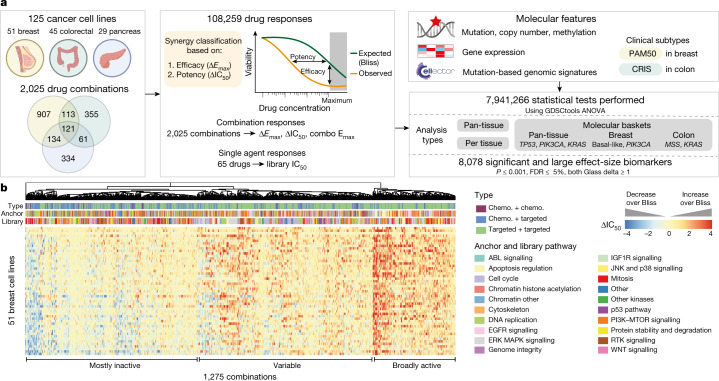
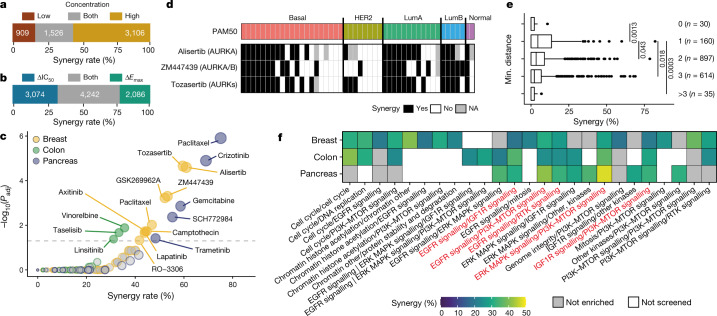
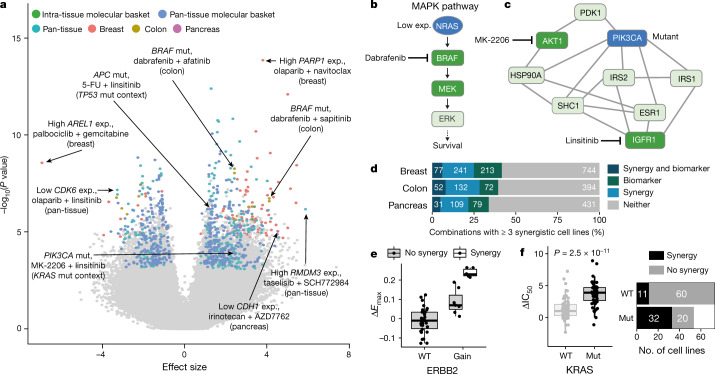
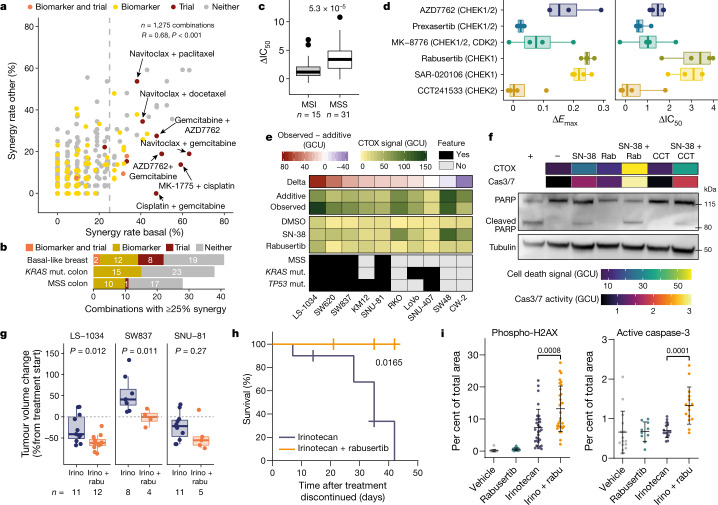
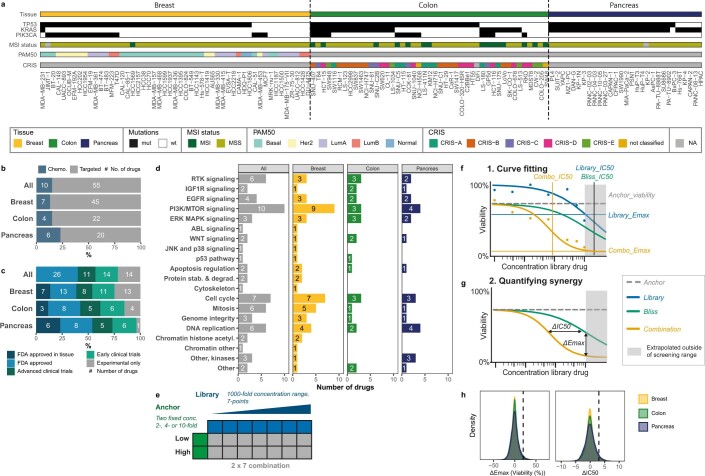
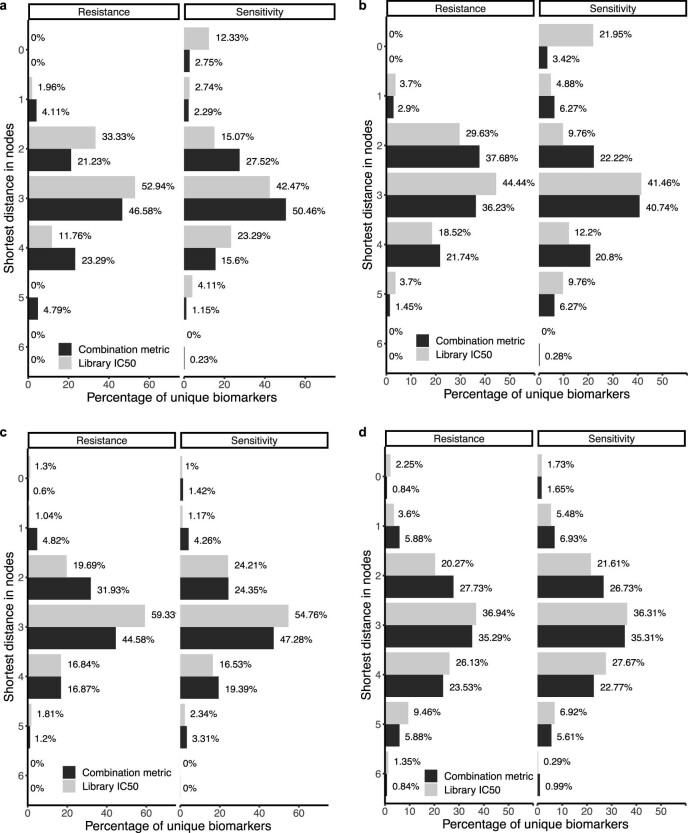
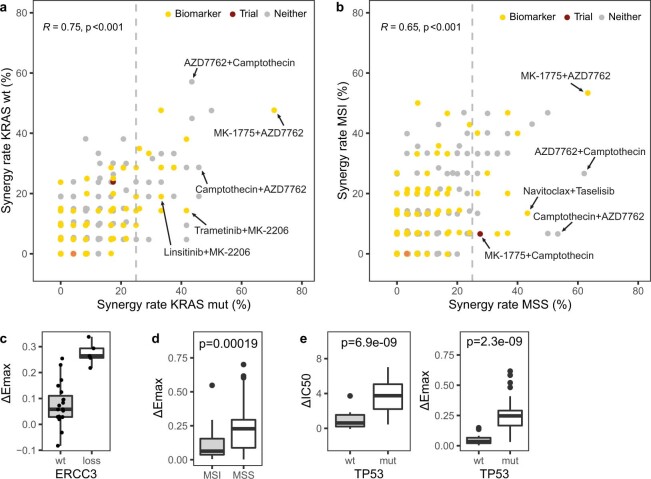
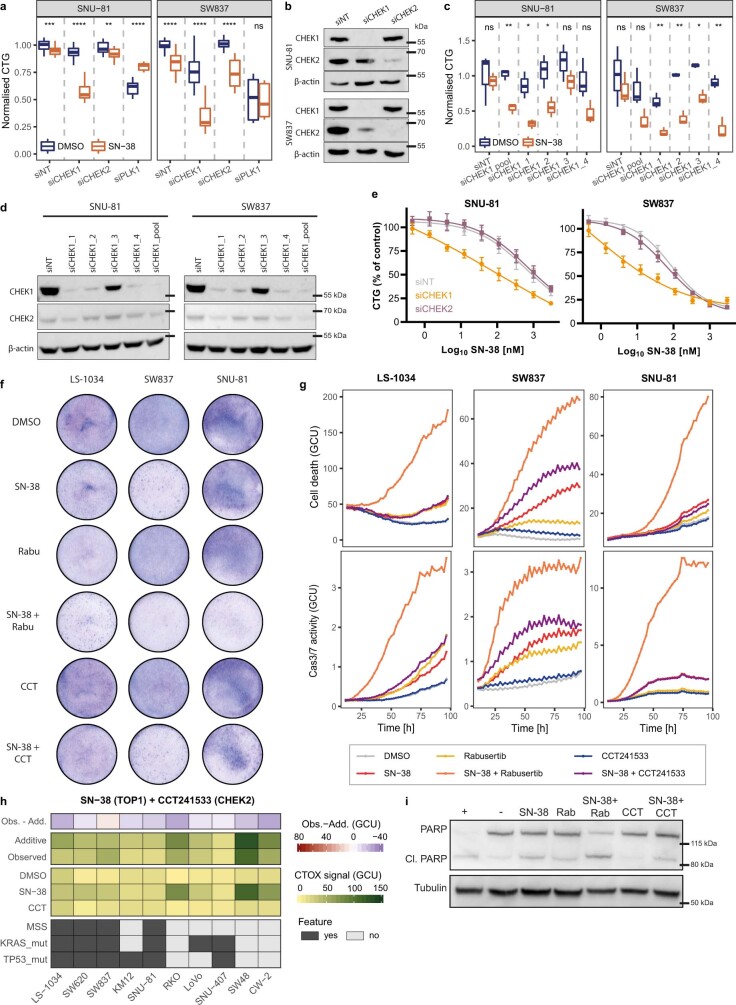
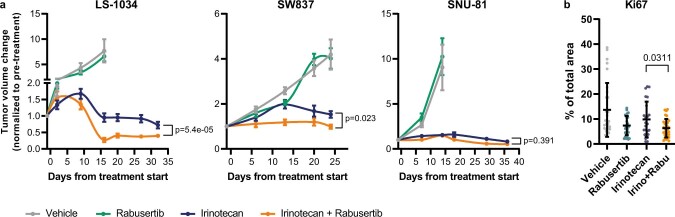
Combinations of anti-cancer drugs can overcome resistance and provide new treatments 1,2 . The number of possible drug combinations vastly exceeds what could be tested clinically. Efforts to systematically identify active combinations and the tissues and molecular contexts in which they are most effective could accelerate the development of combination treatments. Here we evaluate the potency and efficacy of 2,025 clinically relevant two-drug combinations, generating a dataset encompassing 125 molecularly characterized breast, colorectal and pancreatic cancer cell lines. We show that synergy between drugs is rare and highly context-dependent, and that combinations of targeted agents are most likely to be synergistic. We incorporate multi-omic molecular features to identify combination biomarkers and specify synergistic drug combinations and their active contexts, including in basal-like breast cancer, and microsatellite-stable or KRAS -mutant colon cancer. Our results show that irinotecan and CHEK1 inhibition have synergistic effects in microsatellite-stable or KRAS – TP53 double-mutant colon cancer cells, leading to apoptosis and suppression of tumour xenograft growth. This study identifies clinically relevant effective drug combinations in distinct molecular subpopulations and is a resource to guide rational efforts to develop combinatorial drug treatments.
Overview
The claims and statistics of this paper haven’t been checked yet.
Free: it reads the open-access text and checks the first 5 claims that cite a source we can check. Create a free account to check every claim.
Integrity signals
Registry
Cites
Statistics
Figures
Verification
Claims the paper makes
The claims and statistics of this paper haven’t been checked yet.
Free: it reads the open-access text and checks the first 5 claims that cite a source we can check. Create a free account to check every claim.
Claims other papers make about this one
Each is checked against this paper’s own text: does it say what the citing paper says it does?
The source backs part of the claim, not all of it — or backs it for a different population, condition or comparison.
In the citing paper
“Most studies simply compare TV at a single day using t test, or use survival analysis to compare the time-to-event (i.e., time for TV to reach a threshold) between groups (4–6, 23).”
From Statistical Assessment of Drug Synergy from In Vivo Combination Studies Using Mouse Tumor Models (2023) · cites this paper as [4]
Experimental — accuracy not yet measuredThe source backs part of the claim, not all of it — or backs it for a different population, condition or comparison.
In the citing paper
“SN-38, the in vivo active metabolite of TOP1 inhibitor Irinotecan, showed strong synergy with the CHEK1 inhibitor rabusertib under the Bliss model in multiple colon cell lines.”
From Statistical Assessment of Drug Synergy from In Vivo Combination Studies Using Mouse Tumor Models (2023) · cites this paper as [4]
Experimental — accuracy not yet measuredThe source backs part of the claim, not all of it — or backs it for a different population, condition or comparison.
In the citing paper
“However, such in vivo validation studies only showed that synergy exists under the HSA model but not the more stringent Bliss model.”
From Statistical Assessment of Drug Synergy from In Vivo Combination Studies Using Mouse Tumor Models (2023) · cites this paper as [4]
Experimental — accuracy not yet measuredThe cited source says what the claim attributes to it.
In the citing paper
“A recent study systematically evaluated clinically relevant two-drug combinations in cancer cell lines and identified synergistic effects between chemotherapy agents and drugs targeting apoptotic signaling or cell cycle inhibitors in distinct molecular subpopulations [236].”
From Mechanisms and Strategies to Overcome Drug Resistance in Colorectal Cancer (2025) · cites this paper as [236]
The cited source says what the claim attributes to it.
In the citing paper
“In the context of CRC, the study found that irinotecan and CHK1 inhibition had a synergistic anticancer effect in microsatellite stable (MSS) or KRAS-TP53 double-mutant colon cancer cells.”
From Mechanisms and Strategies to Overcome Drug Resistance in Colorectal Cancer (2025) · cites this paper as [236]
2 more claims about this paper
Create a free account to see every claim other papers make about this one.
Self-check
Percentages, sums and reported differences re-computed from the paper’s own numbers.
The self-check needs the paper’s full text.
Citations
Cites
1 retracted
Shi, Y., Yan, H., Frost, P., Gera, J., & Lichtenstein, A. (2005) · Molecular Cancer Therapeutics · doi:10.1158/1535-7163.mct-05-0068 · Cited by 368 · cited 1×
“This combination may work by inhibiting feedback activation of AKT in HER2 breast cancer due to mTOR inhibitor-induced activation of PI3K signalling 13 .”
RetractedUniProt: the universal protein knowledgebase in 2021
The UniProt Consortium, Bateman, A., Martin, M.-J., Orchard, S., Magrane, M., Agivetova, R., Ahmad, S., Alpi, E., Bowler-Barnett, E. H., Britto, R., et al. (2021) · Nucleic Acids Research · doi:10.1093/nar/gkaa1100 · Cited by 6,372
Supervised Risk Predictor of Breast Cancer Based on Intrinsic Subtypes
Parker, J. S., Mullins, M., Cheang, M. C. U., Leung, S., Voduc, D., Vickery, T., Davies, S., Fauron, C., He, X., Hu, Z., et al. (2009) · Journal of Clinical Oncology · doi:10.1200/jco.2008.18.1370 · Cited by 4,721 · cited 6×
“…known to be mutated, amplified or homozygously deleted in human cancers 5 (number of features = 1,073), CELLector signatures 34 ( n = 227 for breast, n = 261 for colon), RNA-seq gene expression 35 ( n = 1,184; original dataset accession number E-MTAB-3983), CRIS 36 and PAM50 37,38 classifications.”
InfluentialYang, W., Soares, J., Greninger, P., Edelman, E. J., Lightfoot, H., Forbes, S., Bindal, N., Beare, D., Smith, J. A., Thompson, I. R., et al. (2012) · Nucleic Acids Research · doi:10.1093/nar/gks1111 · Cited by 4,051 · cited 1×
“…concentrations were selected based on primary literature, in vitro data of minimum concentrations inhibiting relevant target activity and viability 31 , clinical data indicating achievable human plasma concentrations, or where known concentrations that induce sensitivity in a biomarker positive…”
Self-citationTHE TOXICITY OF POISONS APPLIED JOINTLY1
BLISS, C. I. (1939) · Annals of Applied Biology · doi:10.1111/j.1744-7348.1939.tb06990.x · Cited by 2,419
A Landscape of Pharmacogenomic Interactions in Cancer
Iorio, F., Knijnenburg, T. A., Vis, D. J., Bignell, G. R., Menden, M. P., Schubert, M., Aben, N., Gonçalves, E., Barthorpe, S., Lightfoot, H., et al. (2016) · Cell · doi:10.1016/j.cell.2016.06.017 · Cited by 2,090 · cited 3×
“…a curated panel of genes composed of targets of the drugs used, additional members of the BCL2 family and apoptosis-associated genes 39 , genes annotated as clinically relevant for cancer 40 , and genes whose mutations were listed as features in the MOBEMs 5,40 and CELLector 5,34,40 feature files.”
Self-citationUnresponsiveness of colon cancer to BRAF(V600E) inhibition through feedback activation of EGFR
Prahallad, A., Sun, C., Huang, S., Di Nicolantonio, F., Salazar, R., Zecchin, D., Beijersbergen, R. L., Bardelli, A., & Bernards, R. (2012) · Nature · doi:10.1038/nature10868 · Cited by 2,051 · cited 1×
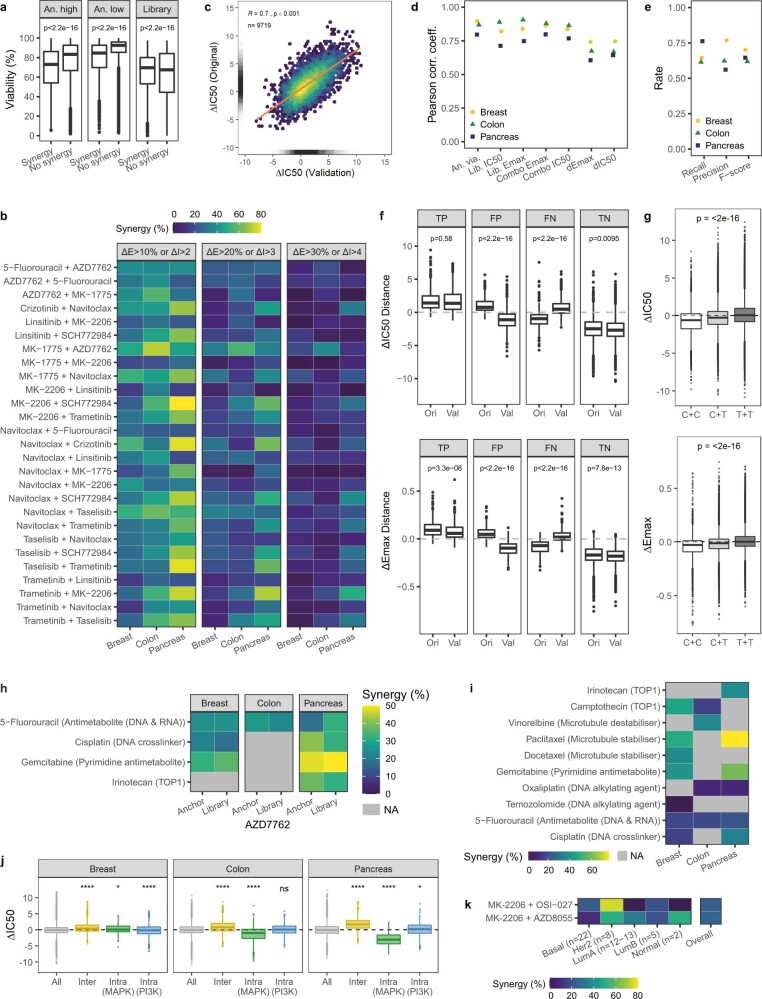
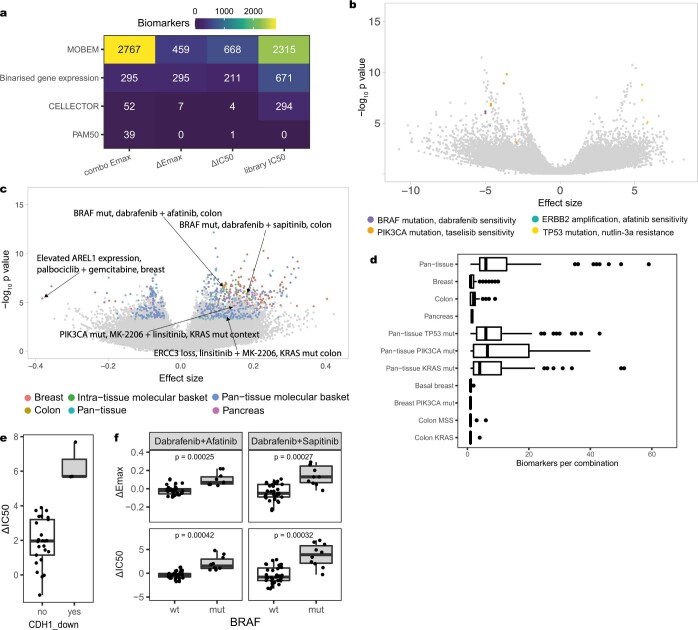
“4f), with synergy occurring exclusively in BRAF -mutant cell lines 16 (4 or 6 synergistic cell lines, respectively).”
The MIntAct project—IntAct as a common curation platform for 11 molecular interaction databases
Orchard, S., Ammari, M., Aranda, B., Breuza, L., Briganti, L., Broackes-Carter, F., Campbell, N. H., Chavali, G., Chen, C., del-Toro, N., et al. (2014) · Nucleic Acids Research · doi:10.1093/nar/gkt1115 · Cited by 1,831
Encorafenib, Binimetinib, and Cetuximab in BRAF V600E–Mutated Colorectal Cancer
Kopetz, S., Grothey, A., Yaeger, R., Van Cutsem, E., Desai, J., Yoshino, T., Wasan, H., Ciardiello, F., Loupakis, F., Hong, Y. S., et al. (2019) · New England Journal of Medicine · doi:10.1056/nejmoa1908075 · Cited by 1,491 · cited 1×
“…using targeted anti-cancer agents have the potential to overcome resistance, enhance the response to existing drugs, reduce dose-limiting single agent toxicity and expand the range of treatments 2 , as exemplified by triple combination therapy for patients with BRAF-mutant colorectal cancer 3 .”
Combinatorial drug therapy for cancer in the post-genomic era
Al-Lazikani, B., Banerji, U., & Workman, P. (2012) · Nature Biotechnology · doi:10.1038/nbt.2284 · Cited by 1,070
Research works printed but not linked: 1
- Jassal B The reactome pathway knowledgebase Nucleic Acids Res. 2020 48 D498 D503 31691815 PMC7145712
Cited by
Smart nanoparticles for cancer therapy
Sun, L., Liu, H., Ye, Y., Lei, Y., Islam, R., Tan, S., Tong, R., Miao, Y.-B., & Cai, L. (2023) · Signal Transduction and Targeted Therapy · doi:10.1038/s41392-023-01642-x · Cited by 1,073
Rational combinations of targeted cancer therapies: background, advances and challenges
Jin, H., Wang, L., & Bernards, R. (2023) · Nature Reviews Drug Discovery · doi:10.1038/s41573-022-00615-z · Cited by 503
Organometallic anti-tumor agents: targeting from biomolecules to dynamic bioprocesses
Peng, K., Zheng, Y., Xia, W., & Mao, Z.-W. (2023) · Chemical Society Reviews · doi:10.1039/d2cs00757f · Cited by 188
Pharmaco-proteogenomic characterization of liver cancer organoids for precision oncology
Ji, S., Li, F., Fu, Z., Wu, G., Wu, Y. C., Lin, Y., Lu, D., Song, Y., Cui, P., Yang, Z., et al. (2023) · Science Translational Medicine · doi:10.1126/scitranslmed.adg3358 · Cited by 158
“Consistently, a recent high-throughput drug combination test also showed the high synergy in targeting receptor tyrosine kinase and PI3K-mTOR pathway across breast, colon, and pancreatic cancer cell lines (46).”
BackgroundLiu, X., Song, C., Liu, S., Li, M., Zhou, X., & Zhang, W. (2022) · Bioinformatics · doi:10.1093/bioinformatics/btac579 · Cited by 116
Heinzelmann, E., Piraino, F., Costa, M., Roch, A., Norkin, M. N., Garnier, V., Homicskó, K., & Brandenberg, N. (2024) · Current Research in Toxicology · doi:10.1016/j.crtox.2024.100197 · Cited by 114
Targeting small GTPases: emerging grasps on previously untamable targets, pioneered by KRAS
Yin, G., Huang, J., Petela, J., Jiang, H., Zhang, Y., Gong, S., Wu, J., Liu, B., Shi, J., & Gao, Y. (2023) · Signal Transduction and Targeted Therapy · doi:10.1038/s41392-023-01441-4 · Cited by 82
“However, the termination of the indicated clinical trials warns us that recognizing and minimizing combination-induced toxicity is one of the main challenges for developing combinatory therapy in clinic.(399,400) Designing trials that reflect toxicity and intermittent dosing in early clinical trials(400) may provide g…”
BackgroundWeng, W., Meng, T., Zhao, Q., Shen, Y., Fu, G., Shi, J., Zhang, Y., Wang, Z., Wang, M., Pan, R., et al. (2023) · Cancer Discovery · doi:10.1158/2159-8290.cd-22-1368 · Cited by 97
Molecular principles underlying aggressive cancers
Nussinov, R., Yavuz, B. R., & Jang, H. (2025) · Signal Transduction and Targeted Therapy · doi:10.1038/s41392-025-02129-7 · Cited by 97
Advances and Prospects in the Treatment of Pancreatic Cancer
Duan, H., li, L., & He, S. (2023) · International Journal of Nanomedicine · doi:10.2147/ijn.s413496 · Cited by 96
Zhao, W., Zhang, L., Zhang, Y., Jiang, Z., Lu, H., Xie, Y., Han, W., Zhao, W., He, J., Shi, Z., et al. (2023) · Cell Death and Disease · doi:10.1038/s41419-022-05528-8 · Cited by 89
Feng, T., Tang, Z., Karges, J., Shen, J., Jin, C., Chen, Y., Pan, Y., He, Y., Ji, L., & Chao, H. (2023) · Biomaterials · doi:10.1016/j.biomaterials.2023.122212 · Cited by 89
Patient-derived mini-colons enable long-term modeling of tumor–microenvironment complexity
Lorenzo‐Martín, L. F., Broguière, N., Langer, J., Tillard, L., Nikolaev, M., Coukos, G., Homicskó, K., & Lütolf, M. P. (2024) · Nature Biotechnology · doi:10.1038/s41587-024-02301-4 · Cited by 85
“The use of SN-38 + AZD7762 was inspired by recent indications that microsatellite-stable (MSS) and KRAS – TP53 double-mutant CRC is susceptible to synergism between irinotecan and CHEK1 inhibitors 21 .”
Complex synthetic lethality in cancer
Ryan, C. J., Devakumar, L. J. P. S., Pettitt, S. J., & Lord, C. J. (2023) · Nature Genetics · doi:10.1038/s41588-023-01557-x · Cited by 83
“Not to be put off by this complexity, Jaaks et al. heroically screened ~2,000 drug combinations in 125 cancer cell lines 55 , finding that synergy between drug combinations is rare and, in general, highly context specific, with many combinations being synergistic in only a small subset of cell…”
BackgroundInfluentialMechanisms and Strategies to Overcome Drug Resistance in Colorectal Cancer
Haynes, J., & Manogaran, P. (2025) · International Journal of Molecular Sciences · doi:10.3390/ijms26051988 · Cited by 82
“A recent study systematically evaluated clinically relevant two-drug combinations in cancer cell lines and identified synergistic effects between chemotherapy agents and drugs targeting apoptotic signaling or cell cycle inhibitors in distinct molecular subpopulations [236].”
Drug-Drug Interactions and Synergy: From Pharmacological Models to Clinical Application
Calzetta, L., Page, C. P., Matera, M. G., Cazzola, M., & Rogliani, P. (2024) · Pharmacological Reviews · doi:10.1124/pharmrev.124.000951 · Cited by 82
Liu, J., Yan, Y., Zhang, Y., Pan, X., Xia, H., Zhou, J., Wan, F., Huang, X., Zhang, W., Zhang, Q., et al. (2024) · Journal of the American Chemical Society · doi:10.1021/jacs.4c12264 · Cited by 80
Novel WRN Helicase Inhibitors Selectively Target Microsatellite-Unstable Cancer Cells
Picco, G., Rao, Y., Saedi, A. A., Lee, Y., Vieira, S. F., Bhosle, S. G., May, K., Herranz, C., Walker, S. J., Shenje≠, R., et al. (2024) · Cancer Discovery · doi:10.1158/2159-8290.cd-24-0052 · Cited by 81
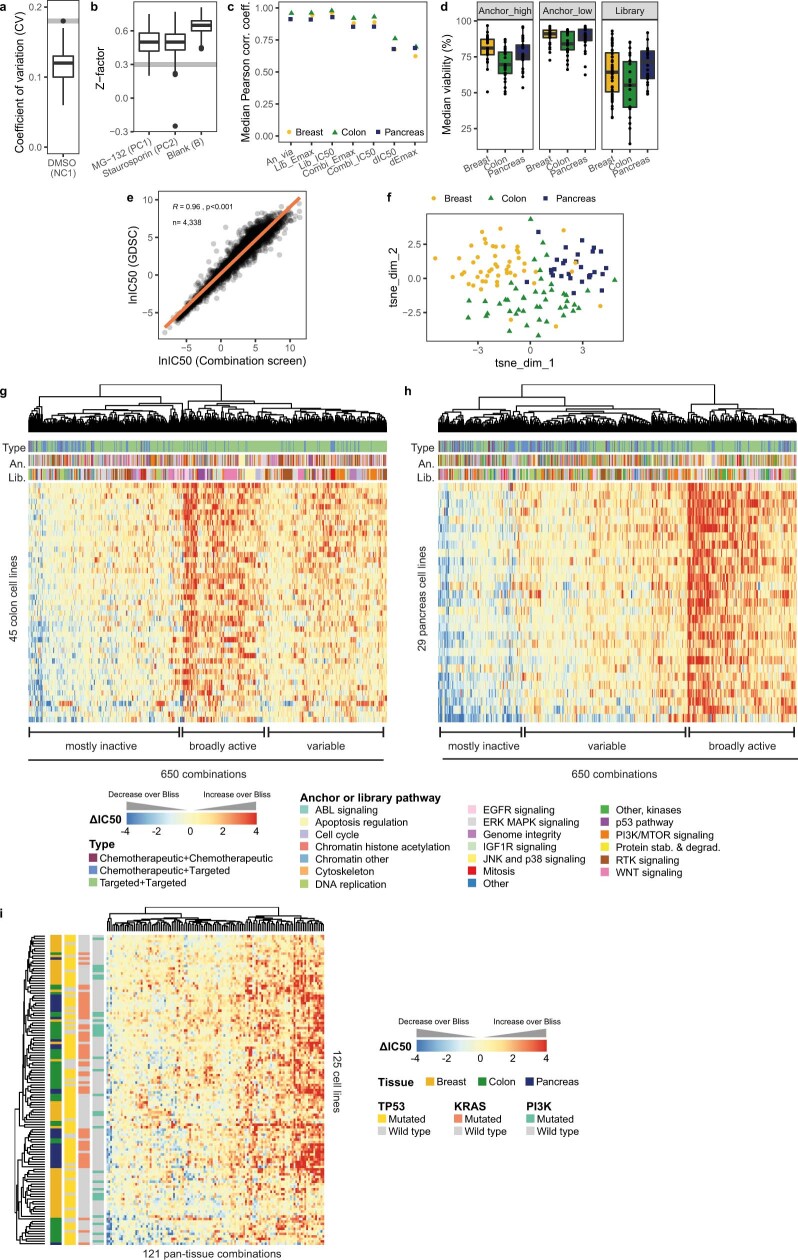
“These control wells were used to evaluate defined quality control criteria, including the coefficient of variation (CV) and Z -factor calculated as previously described (46).”
Self-citationIanevski, A., Nader, K. M., Driva, K., Senkowski, W., Bulanova, D. R., Moyano‐Galceran, L., Ruokoranta, T. M., Kuusanmäki, H. A., Ikonen, N., Sergeev, P., et al. (2024) · Nature Communications · doi:10.1038/s41467-024-52980-5 · Cited by 76
“Such network markers are not limited by the current genetic biomarkers, e.g., oncogenes, that are rare especially for drug combinations 34 . scTherapy can also predict responses to custom compounds, hence facilitating the assessment of novel or less-studied compounds for their patient-speci fi c ef…”
InfluentialZhou, W., Ma, X., Wang, J., Xu, X., Koivisto, O., Feng, J. C., Viitala, T., & Zhang, H. (2022) · Smart Medicine · doi:10.1002/smmd.20220036 · Cited by 75
He, R., Wu, X., Mu, H., Chen, L., Hu, H., Wang, J., Ren, H., & Wu, B. (2023) · Water Research · doi:10.1016/j.watres.2023.120338 · Cited by 77
Systematic review of computational methods for drug combination prediction
Kong, W., Midena, G., Chen, Y., Athanasiadis, P., Wang, T., Rousu, J., He, L., & Aittokallio, T. (2022) · Computational and Structural Biotechnology Journal · doi:10.1016/j.csbj.2022.05.055 · Cited by 62
“Especially in anticancer applications, the inherent genetic and molecular heterogeneity of cancer cells makes drug combination synergy an exceptionally rare and highly context-dependent event[6], hence requiring the testing of the panels of combinations in various cellular contexts and genomic backgrounds to identify…”
BackgroundInfluentialLong-term Multimodal Recording Reveals Epigenetic Adaptation Routes in Dormant Breast Cancer Cells
Rosano, D., Sofyalı, E., Dhiman, H., Ghirardi, C., Ivanoiu, D., Heide, T., Vingiani, A., Bertolotti, A., Pruneri, G., Canale, E., et al. (2024) · Cancer Discovery · doi:10.1158/2159-8290.cd-23-1161 · Cited by 75
“Current strategies have focused on combinatorial treatments with limited success (43).”
Trellis tree-based analysis reveals stromal regulation of patient-derived organoid drug responses
Ramos Zapatero, M., Tong, A., Opzoomer, J. W., O’Sullivan, R., Cardoso Rodriguez, F., Sufi, J., Vlckova, P., Nattress, C., Qin, X., Claus, J., et al. (2023) · Cell · doi:10.1016/j.cell.2023.11.005 · Cited by 72
Tang, Z., Chen, G., Yang, H., Zhong, W., & Chen, C. Y. (2023) · IEEE Transactions on Neural Networks and Learning Systems · doi:10.1109/tnnls.2023.3242656 · Cited by 72
“O NE drug cannot always meet the treatment of multiple complex diseases, and in many cases, two or more drugs are required to treat multiple diseases together [1], [2].”
BackgroundA landscape of response to drug combinations in non-small cell lung cancer
Nair, N. U., Greninger, P., Zhang, X., Friedman, A. A., Amzallag, A., Cortez, E., Sahu, A. D., Lee, J. S., Dastur, A., Egan, R. K., et al. (2023) · Nature Communications · doi:10.1038/s41467-023-39528-9 · Cited by 72
“This is in line with the fi ndings recently reported studying a large drug combination screen of breast, colorectal, and pancreatic cancer cell lines 84 .”
ResultSelf-citationAdditivity predicts the efficacy of most approved combination therapies for advanced cancer
Hwangbo, H., Patterson, S. C., Dai, A., Plana, D., & Palmer, A. C. (2023) · Nature Cancer · doi:10.1038/s43018-023-00667-z · Cited by 70
“…extensive patient-to-patient (or culture-to-culture) variability in drug sensitivity; (2) that additivity is a good predictor of the net efficacy of drug combinations; and (3) that synergy chiefly occurs among weak drugs or over narrow concentrations, and is not predictive of overall efficacy 34 .”
COX 2-inhibitors; a thorough and updated survey into combinational therapies in cancers
Rodrigues, P., Bangali, H., Hammoud, A., Mustafa, Y. F., Al‐Hetty, H. R. A. K., Alkhafaji, A. T., Deorari, M. M., Al‐Taee, M. M., Zabibah, R. S., & Alsalamy, A. (2024) · Medical Oncology · doi:10.1007/s12032-023-02256-7 · Cited by 69
“Patients can receive the most up-to-date information and treatment options regarding COX-2 and angiogenesis inhibitors for cancer by consulting with a healthcare professional and contemplating participation in clinical trials [107, 108].”
Combining cisplatin and a STING agonist into one molecule for metalloimmunotherapy of cancer
Zhang, S., Song, D., Yu, W., Li, J., Wang, X., Li, Y., Zhao, Z., Xue, Q., Zhao, J., Li, J., et al. (2023) · National Science Review · doi:10.1093/nsr/nwae020 · Cited by 70
“As discovered by a recent milestone study of drug combinations, synergy between drugs is rare and highly context-dependent [43 ].”
BackgroundIs chronic pain caused by central sensitization? A review and critical point of view
Velasco, E., Flores-Cortés, M., Guerra-Armas, J., Flix-Díez, L., Gurdiel‐Álvarez, F., Donado-Bermejo, A., van den Broeke, E. N., Pérez-Cervera, L., & Delicado‐Miralles, M. (2024) · Neuroscience & Biobehavioral Reviews · doi:10.1016/j.neubiorev.2024.105886 · Cited by 69
MCFF-MTDDI: multi-channel feature fusion for multi-typed drug–drug interaction prediction
Han, C., Wang, C.-C., Huang, L., & Chen, X. (2023) · Briefings in Bioinformatics · doi:10.1093/bib/bbad215 · Cited by 68
Targeted Therapeutic Strategies for the Treatment of Cancer
Victoir, B., Croix, C., Gouilleux, F., & Prié, G. (2024) · Cancers · doi:10.3390/cancers16020461 · Cited by 69
Zhu, Q., Dai, Q., Zhao, L., Zheng, C., Li, Q., Yuan, Z., Li, L., Xie, Z., Qiu, Z., Huang, W., et al. (2024) · Cell Death and Disease · doi:10.1038/s41419-023-06303-z · Cited by 64
“A recent study suggested that combinations of agents involving different mechanisms of action can overcome acquired resistance and provide new treatments [14].”
AI-driven high-throughput droplet screening of cell-free gene expression
Zhu, J., Meng, Y., Gao, W., Yang, S., Zhu, W., Ji, X., Zhai, X., Liu, W., Luo, Y., Ling, S., et al. (2025) · Nature Communications · doi:10.1038/s41467-025-58139-0 · Cited by 64
“DropAI may also be applied to various other scenarios, such as combinatorial drug screening 52 – 54 , chemical process optimization 25 , and catalyst discovery 55 .”
Wang, W., Yuan, G., Wan, S., Zheng, Z., Liu, D., Zhang, H., Li, J., Zhou, Y., & Wang, X. (2023) · Briefings in Bioinformatics · doi:10.1093/bib/bbad522 · Cited by 62
“It follows thattheidentificationofviabledrugcombinationsholds pivotal significance in disease treatment [4–7].”
BackgroundLiu, K., Sun, Q., Liu, Q., Li, H., Zhang, W., & Sun, C. (2022) · Biomedicine & Pharmacotherapy · doi:10.1016/j.biopha.2022.113618 · Cited by 59
Overcoming cancer therapy resistance: From drug innovation to therapeutics
Wei, J., Lu, M., Wei, T., Fleishman, J. S., Yu, H. J., Chen, X.-L., Kong, X.-T., Sun, S., Li, N., Yang, Y., et al. (2025) · Drug Resistance Updates · doi:10.1016/j.drup.2025.101229 · Cited by 60
Clinical functional proteomics of intercellular signalling in pancreatic cancer
Huang, P., Gao, W., Fu, C., Wang, M., Li, Y., Chu, B., He, A., Li, Y., Deng, X., Zhang, Y., et al. (2024) · Nature · doi:10.1038/s41586-024-08225-y · Cited by 58
“Conceptually, every point on the Bliss dose response curve is defined as the product between the BB-94 viability and the corresponding point on the R428 dose response curve 67 .”
Machine learning model for anti-cancer drug combinations: Analysis, prediction, and validation
Zhou, J., Tang, D., He, L., Lin, S., Lei, J. H., Sun, H., Xu, X., & Deng, C. (2023) · Pharmacological Research · doi:10.1016/j.phrs.2023.106830 · Cited by 57
Breaking the stromal barrier in pancreatic cancer: Advances and challenges
Chakkera, M., Foote, J. B., Farran, B., & Nagaraju, G. P. (2023) · Biochimica et Biophysica Acta (BBA) - Reviews on Cancer · doi:10.1016/j.bbcan.2023.189065 · Cited by 58
Šermukšnytė, A., Kantminienė, K., Jonuškienė, I., Tumosienė, I., & Petrikaitė, V. (2022) · Pharmaceuticals · doi:10.3390/ph15081026 · Cited by 56
“In order to reduce the development of cancer resistance, existing anti-cancer drugs are often combined with novel therapeutics that could improve their penetration into cancer cells, reduce the efflux from the cells, or improve the effectiveness of cancer therapy by affecting different metabolic pathways [45].”
BackgroundMao, X., Wu, S., Huang, D., & Li, C. (2024) · Acta Pharmaceutica Sinica B · doi:10.1016/j.apsb.2024.03.006 · Cited by 57
“Drug combination is another promising therapeutic strategy in cancer treatment in order to magnify efficacy, diminish adverse effects, and even overcome drug resistance 181 .”
BackgroundA hybrid deep forest-based method for predicting synergistic drug combinations
Wu, L., Gao, J., Zhang, Y., Sui, B., Wen, Y., Wu, Q., Liu, K., He, S., & Bo, X. (2023) · Cell Reports Methods · doi:10.1016/j.crmeth.2023.100411 · Cited by 55
“…in different classes, and calculate the overlap area between them (Equation 1): where max ð f i ; c j Þ and min ð f i ; c j Þ refer to the maximum and minimum values of the i -th feature in the j -th class, i = 1 . d , d corresponds to the feature dimension. j ˛ [1,2] corresponds to two classes.”
BackgroundLi, Y., Tang, S., Wang, H., Zhu, H., Lu, Y., Zhang, Y., Guo, S., He, J., Li, Y., Zhang, Y., et al. (2025) · Cell stem cell · doi:10.1016/j.stem.2025.07.008 · Cited by 53
Ma, L., Ma, Y., Gao, Q., Liu, S., Zhu, Z., Shi, X., Dai, F., Reis, R. L., Kundu, S. C., Cai, K., et al. (2024) · Small · doi:10.1002/smll.202307247 · Cited by 49
Tang, Y., & Fan, Y. (2024) · BMC Cancer · doi:10.1186/s12885-024-12776-8 · Cited by 49
“Combining irinotecan with CHEK1 inhibitors has demonstrated synergistic effects in KRAS-TP53 double-mutant colon cancer cells, triggering apoptosis and suppressing tumor xenograft growth [44].”
BackgroundRen, Z.-H., Zeng, X., Lao, Y., You, Z., Shang, Y., Zou, Q., & Chen, L. (2025) · Nature Communications · doi:10.1038/s41467-025-59431-9 · Cited by 50
“With the increasing complexity of clinical diseases and continuous scienti fi c advancements, combination drug therapies offer signi fi cant promise fortreatingchallengingconditions 2 .”
Large-scale Pan-cancer Cell Line Screening Identifies Actionable and Effective Drug Combinations
Cheraghchi-Bashi-Astaneh, A., Coker, E. A., Bulusu, K. C., Jaaks, P., Crafter, C., Lightfoot, H. W., Milo, M., McCarten, K., Jenkins, D. F., van der Meer, D. J., et al. (2024) · Cancer Discovery · doi:10.1158/2159-8290.cd-23-0388 · Cited by 48
“We hypothesize that these emergent biomarkers represent predictors of drug-drug interactions that cannot be readily identified from single agent activity alone, and thus highlight the potential utility of combination screens for biomarker identification over using monotherapy biomarkers alone.”
Self-citationHosseini, S., & Zhou, X. (2022) · Briefings in Bioinformatics · doi:10.1093/bib/bbac588 · Cited by 48
A Bayesian active learning platform for scalable combination drug screens
Tosh, C., Tec, M., White, J. B., Quinn, J. F., Sanchez, G. I., Calder, P., Kung, A. L., Cruz, F. S. D., & Tansey, W. (2025) · Nature Communications · doi:10.1038/s41467-024-55287-7 · Cited by 48
“We first use data from large-scale combination screens 7,5,6 to retrospectively simulate adaptive screens.”
BackgroundMethodResultInfluentialLv, M., Qian, X., Li, S., Jie, G., Wang, Q., Qian, Y., Su, Z. G., Xue, X., & Liu, H. (2022) · Journal of Inorganic Biochemistry · doi:10.1016/j.jinorgbio.2022.112057 · Cited by 44
Recent Trends in anti-tumor mechanisms and molecular targets of celastrol
Zhu, Y., Meng, Y., Zhang, J., Liu, R., Shen, S., Gu, L., Wong, Y., Ma, A., Chai, X., Zhang, Y., et al. (2024) · International Journal of Biological Sciences · doi:10.7150/ijbs.99592 · Cited by 42
“Additionally, the diverse mechanisms of action of different drugs minimize the risk of tumor cells developing resistance, making combination therapy an effective strategy to combat drug resistance [127].”
BackgroundSYNDEEP: a deep learning approach for the prediction of cancer drugs synergy
Torkamannia, A., Omidi, Y., & Ferdousi, R. (2023) · Scientific Reports · doi:10.1038/s41598-023-33271-3 · Cited by 40
Breaking barriers: we need a multidisciplinary approach to tackle cancer drug resistance
Ingham, J., Ruan, J.-L., & Coelho, M. A. (2025) · BJC Reports · doi:10.1038/s44276-025-00129-2 · Cited by 40
Zhang, P., Tu, S., Zhang, W., & Xu, L. (2022) · Briefings in Bioinformatics · doi:10.1093/bib/bbac403 · Cited by 40
A Targeted and Responsive Nanoprodrug Delivery System for Synergistic Glioma Chemotherapy
Zhuo, W., Wang, W., Zhou, W., Duan, Z., Shi, H., Zhang, X., Yi, L., Zhang, R., Guo, A., Gou, X., et al. (2024) · Small · doi:10.1002/smll.202400630 · Cited by 39
Dong, Y., Chang, Y., Wang, Y.-X., Han, Q., Wen, X., Yang, Z., Yan, Z., Yan, Q., Wu, K., Fan, X., et al. (2024) · BMC Bioinformatics · doi:10.1186/s12859-024-05765-y · Cited by 39
Combinatorial drug screening on 3D Ewing sarcoma spheroids using droplet-based microfluidics
Fevre, R., Mary, G., Vertti‐Quintero, N., Durand, A., Tomasi, R. F.-X., Nery, E. D., & Baroud, C. N. (2023) · iScience · doi:10.1016/j.isci.2023.106651 · Cited by 39
“For this reason, drug combinations of such therapies are an important option to overcome resistance to single drug treatments and improve overall survival.(26) Continued efforts are needed to implement cost-effective platforms allowing the evaluation of drug combinations as novel therapeutic strategies for these patie…”
BackgroundChen, Z., Du, Q., Guo, W., Huang, H., Li, H., Zheng, Y., Tan, L., Fu, C., Wu, Q., Ren, X., et al. (2022) · Chemical Engineering Journal · doi:10.1016/j.cej.2022.138092 · Cited by 38
AI-empowered perturbation proteomics for complex biological systems
Qian, L., Sun, R., Aebersold, R. H., Bühlmann, P., Sander, C., & Guo, T. (2024) · Cell Genomics · doi:10.1016/j.xgen.2024.100691 · Cited by 37
“At the cellular level, extensive datasets have been published, including IC50 values and area under the percentage of viability curves (AUC) following drug treatments, 20,127–130 as well as genes essential for cell viability.”
Personalized tumor combination therapy optimization using the single-cell transcriptome
Tang, C., Fu, S., Jin, X., Li, W., Xing, F., Duan, B., Cheng, X., Chen, X., Wang, S., Zhu, C., et al. (2023) · Genome Medicine · doi:10.1186/s13073-023-01256-6 · Cited by 36
“To compare with this transfer learning-based method, we applied com-boSC to a single-cell BRCA dataset [73] analyzed in their study using the same drug candidate combinations [16].”
MethodSynthetic lethality in cancer drug discovery: challenges and opportunities
Gonçalves, E., Ryan, C. J., & Adams, D. J. (2025) · Nature Reviews Drug Discovery · doi:10.1038/s41573-025-01273-7 · Cited by 34
Recent advances in hydrogel-based delivery systems for the treatment of pancreatic cancer
Wang, H., Yu, H., Bai, X., Wang, X., Shao, H., Liao, J., & Yang, X. (2025) · Materials Today Bio · doi:10.1016/j.mtbio.2025.102487 · Cited by 34
Repurposing proteasome inhibitors for improved treatment of triple-negative breast cancer
Larsson, P., Pettersson, D., Olsson, M., Sarathchandra, S., Abramsson, A., Zetterberg, H., Ittner, E., Forssell-Aronsson, E. B., Kovács, A., Karlsson, P., et al. (2024) · Cell Death Discovery · doi:10.1038/s41420-024-01819-5 · Cited by 33
“The Supplementary Materials and Methods describes the experimental procedures in more detail.”
Gemcitabine and ATR inhibitors synergize to kill PDAC cells by blocking DNA damage response
Höfer, S., Frasch, L., Brajkovic, S., Putzker, K., Lewis, J., Schürmann, H., Leone, V., Sakhteman, A., The, M., Bayer, F. P., et al. (2025) · Molecular Systems Biology · doi:10.1038/s44320-025-00085-6 · Cited by 33
“In our screen, WEE1i Adavosertib, as well as Brigatinib and Lestaurtinib, two broad-spectrum inhibitors with off-target activity for CHEK1, also displayed synergy with GEM in nearly half of our PDAC cell line panel.”
InfluentialRECOVER identifies synergistic drug combinations in vitro through sequential model optimization
Bertin, P., Rector-Brooks, J., Sharma, D. K., Gaudelet, T., Anighoro, A., Groß, T., Martínez‐Peña, F., Tang, E. L., Suraj, M. S., Regep, C., et al. (2023) · Cell Reports Methods · doi:10.1016/j.crmeth.2023.100599 · Cited by 33
Biomarker Profile of Colorectal Cancer: Current Findings and Future Perspective
Hoseini, S. H., Enayati, P., Nazari, M., Babakhanzadeh, E., Rastgoo, M., & Sohrabi, N. B. (2024) · Journal of Gastrointestinal Cancer · doi:10.1007/s12029-023-00990-9 · Cited by 33
“In an interesting study, Jaaks et al. used multi-omic molecular features to find drug combinations that exhibit synergistic effects [83].”
The recent progress of deep-learning-based in silico prediction of drug combination
Liu, H., Fan, Z., Lin, J., Yang, Y., Ran, T., & Chen, H. (2023) · Drug Discovery Today · doi:10.1016/j.drudis.2023.103625 · Cited by 32
New methods for drug synergy prediction: A mini-review
Abbasi, F., & Rousu, J. (2024) · Current Opinion in Structural Biology · doi:10.1016/j.sbi.2024.102827 · Cited by 32
Duan, H., Yu, Q., Ni, Y., Li, J., Yu, L., Yan, X., & Fan, L. (2024) · International Journal of Biological Macromolecules · doi:10.1016/j.ijbiomac.2024.135098 · Cited by 32
Šalovská, B., Gao, E., Müller‐Dott, S., Li, W., Cordon, C. C., Wang, S., Dugourd, A. J. F., Rosenberger, G., Sáez-Rodríguez, J., & Liu, Y. (2023) · Clinical and Translational Medicine · doi:10.1002/ctm2.1179 · Cited by 32
Weng, W., Meng, T., Pu, J., Ma, L., Shen, Y., Wang, Z., Pan, R., Wang, M., Chen, C., Wang, L., et al. (2023) · Molecular Cancer Therapeutics · doi:10.1158/1535-7163.mct-23-0198 · Cited by 32
“In colon cancer cells, Top I inhibitors such as SN-38 or exatecan were shown to be synergistic with DNA-damaging pathway mediator inhibitors targeting PARP, ATR, or CHEK1 inhibitors (26, 35).”
BackgroundComputational estimation of quality and clinical relevance of cancer cell lines
Trastulla, L., Noorbakhsh, J., Vazquez, F., McFarland, J., & Iorio, F. (2022) · Molecular Systems Biology · doi:10.15252/msb.202211017 · Cited by 31
“…established and identifying novel genomic (Basu et al , 2013; Seashore-Ludlow et al , 2015; Iorio et al , 2016; Jaaks et al , 2022) as well as transcriptional (Garcia-Alonso et al , 2018; Jaaks et al , 2022) markers of drug sensitivity, leading to new testable hypotheses and clinical trials.”
BackgroundInfluentialFunctional precision cancer medicine: drug sensitivity screening enabled by cell culture models
Flobak, Å., Skånland, S. S., Hovig, E. J., Taskén, K., & Russnes, H. G. (2022) · Trends in Pharmacological Sciences · doi:10.1016/j.tips.2022.08.009 · Cited by 31
Discovery of predictive biomarkers for cancer therapy through computational approaches
Wang, X., Nguyen, J., Nader, K. M., Miihkinen, M., Wall, P., Singhal, A., Bedard, P. L., Ideker, T., Aittokallio, T. A., & Haibe‐Kains, B. (2026) · Nature Reviews Clinical Oncology · doi:10.1038/s41571-025-01109-8 · Cited by 30
Leto, S. M., Ferri, M., Sassi, F., Zanella, E. R., Cottino, F., Vurchio, V., Catalano, I., Ferrero, A., Zingaretti, C. C., Marchiò, C., et al. (2023) · Clinical Cancer Research · doi:10.1158/1078-0432.ccr-22-2550 · Cited by 30
Self-citationLiu, Q., Chen, Z., Wang, B., Pan, B., Zhang, Z., Shen, M., Zhao, W., Zhang, T., Li, S., & Liu, L. (2025) · Advanced Science · doi:10.1002/advs.202409130 · Cited by 29
Advances in cuproptosis harnessing copper-based nanomaterials for cancer therapy
Yang, Y., Dong, C., Ma, X., Wang, Y., Li, Z.-K., Xu, Y., Chen, T., Gao, C., Ye, X., Wu, A., et al. (2025) · Journal of Materials Chemistry B · doi:10.1039/d4tb02746a · Cited by 28
Novel Cyclic Peptides for Targeting EGFR and EGRvIII Mutation for Drug Delivery
Furman, O., Zaporozhets, A., Tobi, D., Bazylevich, A., Firer, M. A., Patsenker, L. D., Gellerman, G., & Lubin, B. C. R. (2022) · Pharmaceutics · doi:10.3390/pharmaceutics14071505 · Cited by 28
DDIPrompt: Drug-Drug Interaction Event Prediction based on Graph Prompt Learning
Wang, Y., Xiong, Y., Wu, X., Sun, X., Zhang, J., & Zheng, G. (2024) · ACM International Conference on Information and Knowledge Management (CIKM) · doi:10.1145/3627673.3679645 · Cited by 29
Statistical Assessment of Drug Synergy from In Vivo Combination Studies Using Mouse Tumor Models
Mao, B., & Guo, S. (2023) · Cancer Research Communications · doi:10.1158/2767-9764.crc-23-0243 · Cited by 27
“Data from all other in vivo combination studies were from cited papers with study details therein (4, 35).”
BackgroundMethodInfluentialVallés‐Martí, A., Mantini, G., Manoukian, P., Waasdorp, C., Sarasqueta, A. F., Haas, R. R. D. G., Henneman, A. A., Piersma, S. R., Pham, T. V., Knol, J. C., et al. (2023) · Cell Reports · doi:10.1016/j.celrep.2023.112581 · Cited by 28
Li, J., Liu, W., Mojumdar, K., Kim, H., Zhou, Z., Ju, Z., Kumar, S. V., Ng, P. K., Chen, H., Davies, M. A., et al. (2024) · Nature Cancer · doi:10.1038/s43018-024-00817-x · Cited by 27
“To validate our predictions, we assessed the efficacy of 2,025 clinically relevant two-drug combinations across 125 cancer cell lines 49 .”
Wang, G., Chen, H., Wang, H., Gao, H., Hu, X., & Cao, C. (2025) · IEEE Journal of Biomedical and Health Informatics · doi:10.1109/jbhi.2025.3550019 · Cited by 26
Hydrogel-based drug delivery systems for enhanced tumor therapy
Tian, S., Yang, S., & Liu, Y. (2026) · RSC Advances · doi:10.1039/d5ra08269b · Cited by 26
Applications of single-cell technologies in drug discovery for tumor treatment
Liu, B., Hu, S., & Wang, X. (2024) · iScience · doi:10.1016/j.isci.2024.110486 · Cited by 25
“139,140 In a recent study, Xie et al. employed oligonucleotides to encode drugs, which were then encapsulated along with cells in separate droplets.”
BackgroundCell Proliferation and Cytotoxicity Assays, The Fundamentals for Drug Discovery
Niu, J., Li, M., & Wang, Y. (2024) · International Journal of Drug Discovery and Pharmacology · doi:10.53941/ijddp.2024.100013 · Cited by 25
Chen, Q., Sun, J., Ling, S., Yang, H., Li, T., Yang, X., Li, M., Du, M., Zhang, Y., Li, C., et al. (2025) · ACS Nano · doi:10.1021/acsnano.4c17899 · Cited by 25
The human proteome with direct physical access to DNA
Trendel, J., Trendel, S., Sha, S., Greulich, F., Goll, S., Wudy, S. I., Kleigrewe, K., Kubicek, S., Uhlenhaut, N. H., & Küster, B. (2025) · Cell · doi:10.1016/j.cell.2025.04.037 · Cited by 26
Few-Shot Drug Synergy Prediction With a Prior-Guided Hypernetwork Architecture
Zhang, Q., Zhang, S., Feng, Y.-H., & Shi, J. (2023) · IEEE Transactions on Pattern Analysis and Machine Intelligence · doi:10.1109/tpami.2023.3248041 · Cited by 24
“[49] to assess the performance of HyperSynergy by taking 51 Breast tissue cell lines and 43 Colon tissue cell lines as the meta-training cell lines, and 28 Pancreas tissue cell lines as the meta-test cell lines (Fig.”
MethodZhang, W., Qi, L., Liu, Z., He, S., Wang, C., Wu, Y., Han, L., Liu, Z., Fu, Z., Tu, C., et al. (2023) · MedComm · doi:10.1002/mco2.317 · Cited by 23
Ariey-Bonnet, J., Bergès, R., Montero, M.-P., Mouysset, B., Piris, P., Müller, K., Pinna, G., Failes, T. W., Arndt, G. M., Morando, P., et al. (2023) · EBioMedicine · doi:10.1016/j.ebiom.2023.104752 · Cited by 23
Lee, H.-M., Wright, W. C., Pan, M., Low, J. A., Currier, D. G., Fang, J., Singh, S. V., Nance, S., Delahunty, I. M., Kim, Y., et al. (2023) · Nature Communications · doi:10.1038/s41467-023-43134-0 · Cited by 24
Wang, Z., Li, W., Jiang, Y., Tran, T. B., Chung, J., Kim, M., Scott, A. J., & Lu, J. (2024) · Biomaterials · doi:10.1016/j.biomaterials.2024.122477 · Cited by 23
Mutually reinforced cancer treatment based on phototherapy combined with ferroptosis
Chen, G., Gan, L., Tian, L.-Y., Huang, B.-X., Xiao, Q., Zhang, Y., Xiao, M., Zheng, B.-D., & Ye, J. (2024) · Chemical Engineering Journal · doi:10.1016/j.cej.2024.152397 · Cited by 23
DrugMAP 2.0: molecular atlas and pharma-information of all drugs
Li, F., Mou, M., Xiao-yi, L., Xu, W., Yin, J., Zhang, Y., & Zhu, F. (2024) · Nucleic Acids Research · doi:10.1093/nar/gkae791 · Cited by 24
Optimizing drug combination and mechanism analysis based on risk pathway crosstalk in pan cancer
Hu, C., Mi, W., Li, F., Zhu, L., Ou, Q., Li, M., Li, T., Ma, Y., Zhang, Y., & Xu, Y. (2024) · Scientific Data · doi:10.1038/s41597-024-02915-y · Cited by 23
Chen, Y., He, L., Ianevski, A., Nader, K. M., Ruokoranta, T. M., Linnavirta, N., Miettinen, J. J., Vähä-Koskela, M. J. V., Vänttinen, I., Kuusanmäki, H. A., et al. (2025) · Cancer Research · doi:10.1158/0008-5472.can-24-3840 · Cited by 22
“As the drug combination responses can vary dramatically between patients and cell lines, even in the same cancer type (20–22), our approach predicts effective and synergistic combinations tailored to each patient’s R/R disease state (output of the approach).”
Abhang, A., Katari, O., Ghadi, R., Chaudhari, D., & Jain, S. (2023) · Drug Delivery and Translational Research · doi:10.1007/s13346-023-01415-7 · Cited by 22
“…the toxic effects related to the high-dose PTX and simultaneously to maintain the therapeutic effect of PTX, synergistic combinatorial regimens such as epigenetic modulators have been employed to attain synergy in therapeutic outcomes over the individual drugs in breast cancer treatment [10].”
Tang, W., Zhang, Y., Li, P., & Li, B. (2023) · Analytical Chemistry · doi:10.1021/acs.analchem.2c03767 · Cited by 21
Metadata
- Authors
- Jaaks, P., Coker, E. A., Vis, D. J., Edwards, O., Carpenter, E. F., Leto, S. M., Dwane, L., Sassi, F., Lightfoot, H., Barthorpe, S., van der Meer, D., Yang, W., Beck, A., Mironenko, T., Hall, C., Hall, J., Mali, I., Richardson, L., Tolley, C., Morris, J., Thomas, F., Lleshi, E., Aben, N., Benes, C. H., Bertotti, A., Trusolino, L., Wessels, L., & Garnett, M. J.
- Affiliations
- Wellcome Sanger Institute (GB)
- Candiolo Cancer Institute (IT)
- The Netherlands Cancer Institute (NL)
- Harvard University (US)
- Corresponding author
- Garnett, Mathew J.
- ORCID
- Jaaks, Patricia
- Coker, Elizabeth A.
- Edwards, Olivia
- Carpenter, Emma F.
- Leto, Simonetta M.
- Sassi, Francesco
- Lightfoot, Howard
- Barthorpe, Syd
- van der Meer, Dieudonne
- Yang, Wanjuan
- Beck, Alexandra
- Mironenko, Tatiana
- Hall, Caitlin
- Hall, James
- Mali, Iman
- Richardson, Laura
- Tolley, Charlotte
- Thomas, Frances
- Benes, Cyril H.
- Bertotti, Andrea
- Trusolino, Livio
- Wessels, Lodewyk
- Garnett, Mathew J.
- Venue
- Nature
- Published
- 2022-02-23
- Volume
- 603
- Issue
- 7899
- Pages
- 166-173
- ISSN
- 0028-0836 (ISSN-L)
- 1476-4687
- PMC
- PMC8891012
- OpenAlex
- W4212966936
- Cited by
- 469
- References
- 43
- Citations by year
- 2026: 87 · 2025: 131 · 2024: 124 · 2023: 88 · 2022: 38
- FWCI
- 51.81
- Type
- journal article
- Language
- en
- Open access
- hybrid
- doi.org
- Licence
- cc-by
- creativecommons.org/licenses/by/4.0 (tdm)
- creativecommons.org/licenses/by/4.0 (vor)
- Locations
- Nature (publishedVersion, cc-by)
- PubMed Central (publishedVersion, cc-by)
- PubMed (publishedVersion)
- Institutional Research Information System University of Turin (University of Turin) (submittedVersion, cc-by)
- RePEc: Research Papers in Economics (submittedVersion)
- Research Repository (Delft University of Technology) (submittedVersion)
- Apollo (University of Cambridge) (submittedVersion, cc-by)
- Data Archiving and Networked Services (DANS) (submittedVersion, cc-by)
- Apollo (cc-by)
- Funders
- Wellcome Trust (206194)
- Cancer Research UK
- Ministero della Salute
- Associazione Italiana per la Ricerca sul Cancro
- Horizon 2020 Framework Programme
- Topics
- Life Sciences › Pharmacology, Toxicology and Pharmaceutics › Drug Discovery › Computational Drug Discovery Methods
- Life Sciences › Biochemistry, Genetics and Molecular Biology › Cancer Research › Cancer Genomics and Diagnostics
- Health Sciences › Medicine › Oncology › Cancer Cells and Metastasis
- Keywords
- drug synergy, breast cancer cell lines, colorectal cancer cell lines, pancreatic cancer cell lines, targeted therapy, combination biomarkers, irinotecan, KRAS mutation, TP53 mutation, microsatellite stable, basal-like breast cancer, apoptosis
- MeSH terms
- Antineoplastic Agents, Antineoplastic Combined Chemotherapy Protocols, Colonic Neoplasms, Drug Combinations, Drug Synergism, Humans, Pancreatic Neoplasms, Proto-Oncogene Proteins p21(ras), Cell Line, Tumor, Cell Proliferation
About these checks
Registry, retraction, Cites and statistics results are computed, not judged, with one exception: a printed reference that no index lists is read once by a model before it counts as a citation error. Claims are extracted by a model and kept only when their quote appears verbatim in the text; each cited source is then checked, with a model’s help, for whether it says what the claim relies on. Those verdicts can be wrong — read the claim’s quote and the cited source before relying on one.
Statistics and arithmetic are recomputed, not judged.
Confidence bands are shown only for fields calibrated on our annotated test set. None is calibrated yet, so no band is shown.
What counts as a claim ›How we measure confidence ›How we check this ›
Are you an author, or do you see a problem with this page? Request a review
Data sources
Bibliographic data: Semantic Scholar, OpenAlex, Crossref.
Contains information from the Semantic Scholar Academic Graph Datasets, made available under the ODC Attribution License (ODC-BY 1.0).
Semantic Scholar’s data is described in: Kinney, R., et al. (2023). The Semantic Scholar Open Data Platform. arXiv:2301.10140.
