

Effective drug combinations in breast, colon and pancreatic cancer cells
Open accessThe DOI matches its Crossref record; 40 of the 43 references it cites were found in a registry or an index.
Abstract
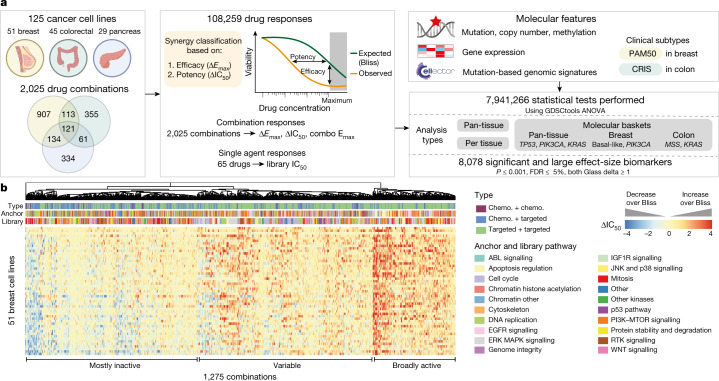
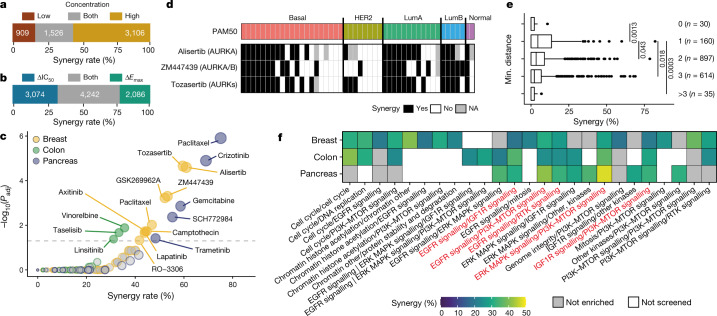
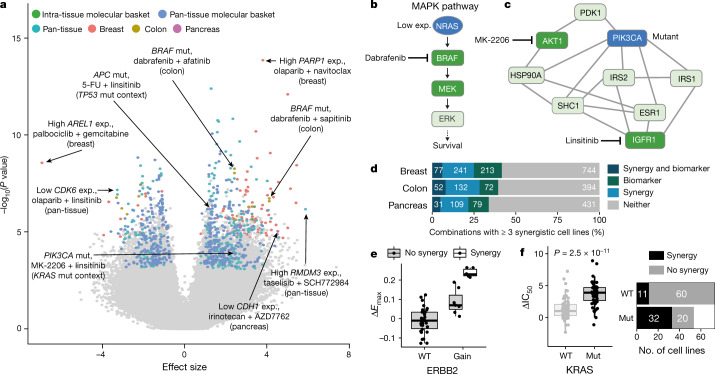
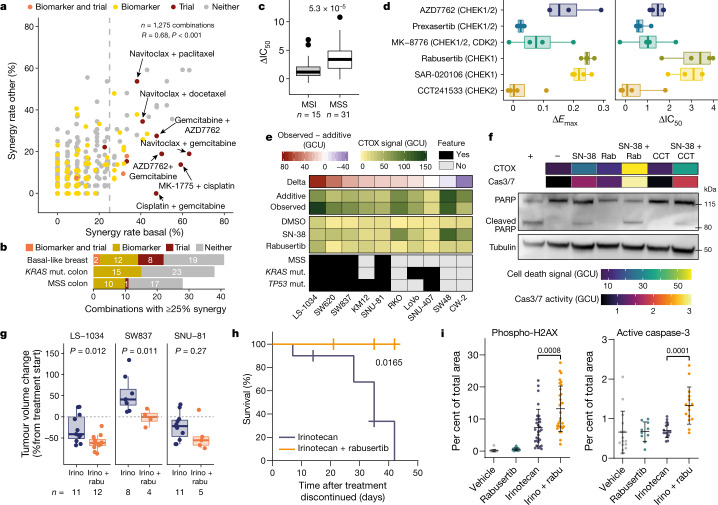
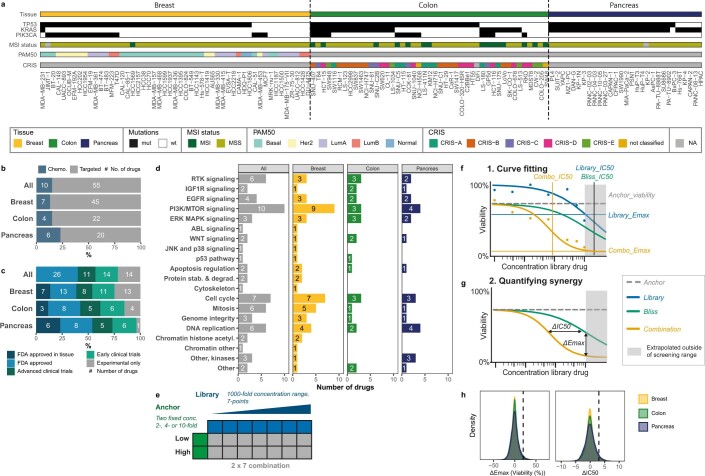
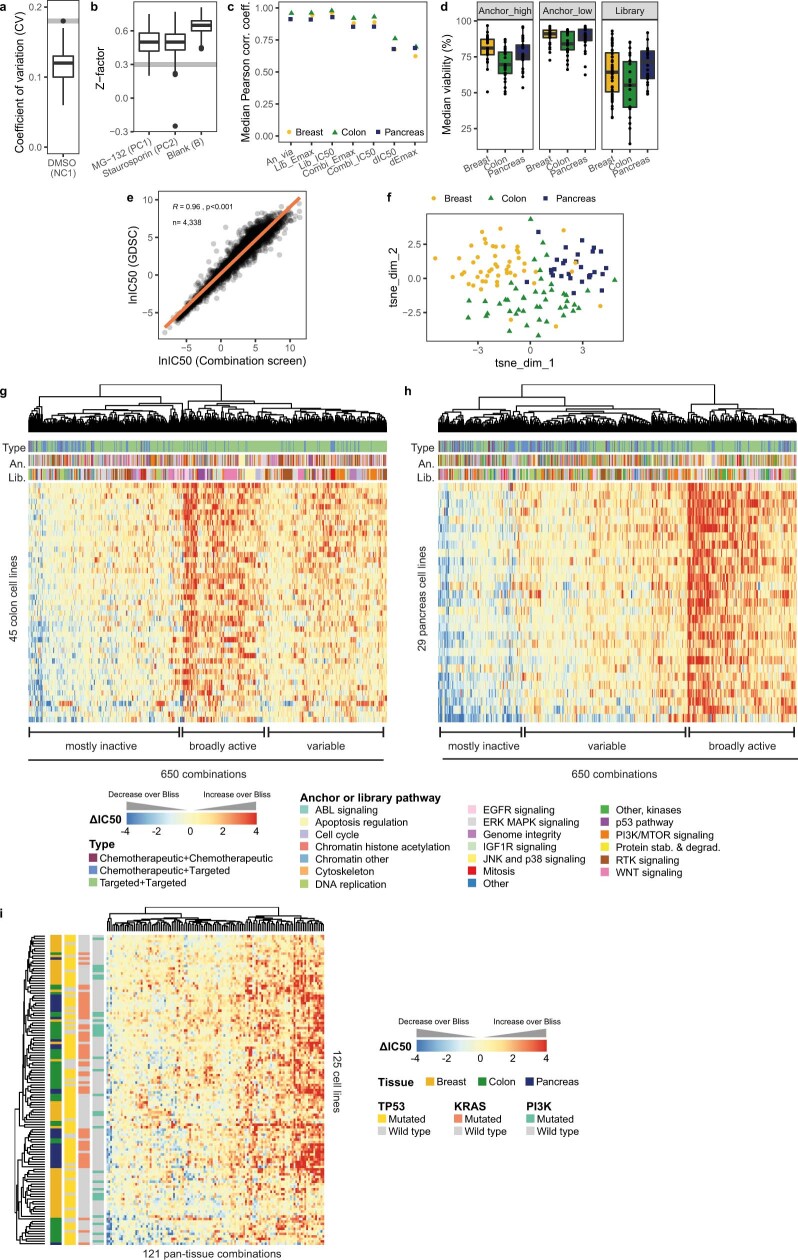
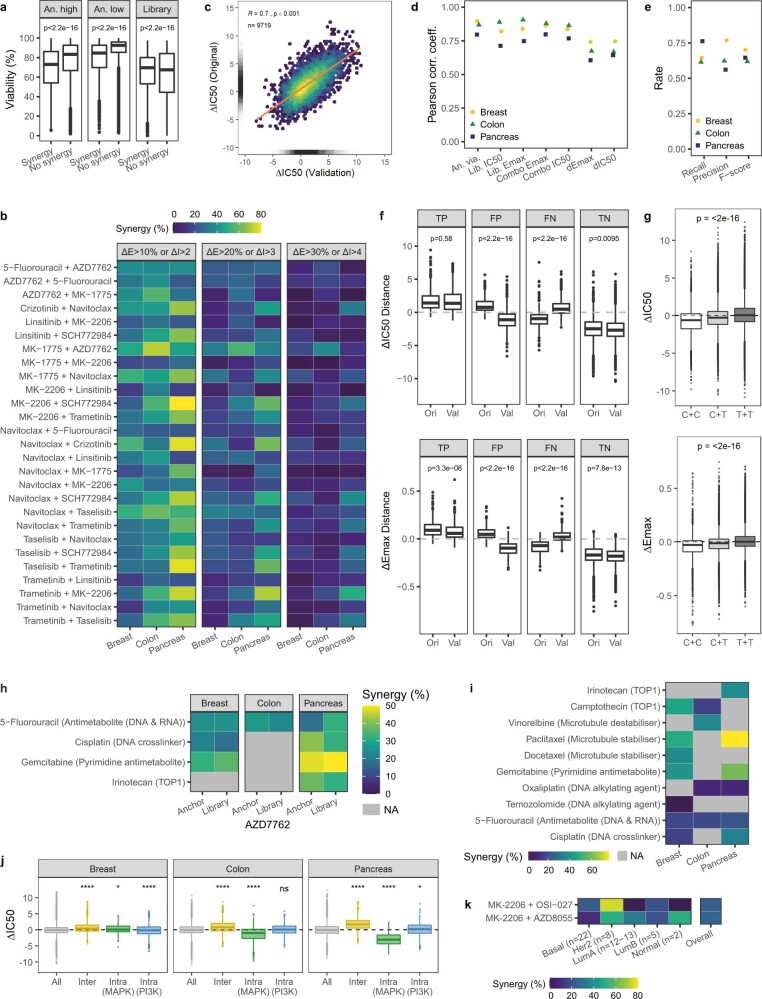
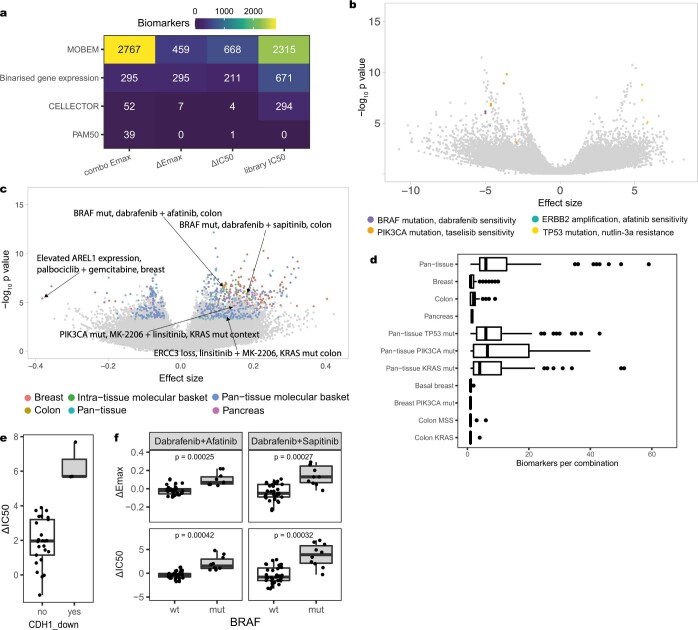
Combinations of anti-cancer drugs can overcome resistance and provide new treatments 1,2 . The number of possible drug combinations vastly exceeds what could be tested clinically. Efforts to systematically identify active combinations and the tissues and molecular contexts in which they are most effective could accelerate the development of combination treatments. Here we evaluate the potency and efficacy of 2,025 clinically relevant two-drug combinations, generating a dataset encompassing 125 molecularly characterized breast, colorectal and pancreatic cancer cell lines. We show that synergy between drugs is rare and highly context-dependent, and that combinations of targeted agents are most likely to be synergistic. We incorporate multi-omic molecular features to identify combination biomarkers and specify synergistic drug combinations and their active contexts, including in basal-like breast cancer, and microsatellite-stable or KRAS -mutant colon cancer. Our results show that irinotecan and CHEK1 inhibition have synergistic effects in microsatellite-stable or KRAS – TP53 double-mutant colon cancer cells, leading to apoptosis and suppression of tumour xenograft growth. This study identifies clinically relevant effective drug combinations in distinct molecular subpopulations and is a resource to guide rational efforts to develop combinatorial drug treatments.
Overview
The claims and statistics of this paper haven’t been checked yet.
Free: it reads the open-access text and checks the first 5 claims that cite a source we can check. Create a free account to check every claim.
Integrity signals
Registry
Cites
Statistics
Figures
Verification
Claims the paper makes
The claims and statistics of this paper haven’t been checked yet.
Free: it reads the open-access text and checks the first 5 claims that cite a source we can check. Create a free account to check every claim.
Claims other papers make about this one
Each is checked against this paper’s own text: does it say what the citing paper says it does?
The source backs part of the claim, not all of it — or backs it for a different population, condition or comparison.
In the citing paper
“Most studies simply compare TV at a single day using t test, or use survival analysis to compare the time-to-event (i.e., time for TV to reach a threshold) between groups (4–6, 23).”
From Statistical Assessment of Drug Synergy from In Vivo Combination Studies Using Mouse Tumor Models (2023) · cites this paper as [4]
Experimental — accuracy not yet measuredThe source backs part of the claim, not all of it — or backs it for a different population, condition or comparison.
In the citing paper
“SN-38, the in vivo active metabolite of TOP1 inhibitor Irinotecan, showed strong synergy with the CHEK1 inhibitor rabusertib under the Bliss model in multiple colon cell lines.”
From Statistical Assessment of Drug Synergy from In Vivo Combination Studies Using Mouse Tumor Models (2023) · cites this paper as [4]
Experimental — accuracy not yet measuredThe source backs part of the claim, not all of it — or backs it for a different population, condition or comparison.
In the citing paper
“However, such in vivo validation studies only showed that synergy exists under the HSA model but not the more stringent Bliss model.”
From Statistical Assessment of Drug Synergy from In Vivo Combination Studies Using Mouse Tumor Models (2023) · cites this paper as [4]
Experimental — accuracy not yet measuredThe cited source says what the claim attributes to it.
In the citing paper
“A recent study systematically evaluated clinically relevant two-drug combinations in cancer cell lines and identified synergistic effects between chemotherapy agents and drugs targeting apoptotic signaling or cell cycle inhibitors in distinct molecular subpopulations [236].”
From Mechanisms and Strategies to Overcome Drug Resistance in Colorectal Cancer (2025) · cites this paper as [236]
The cited source says what the claim attributes to it.
In the citing paper
“In the context of CRC, the study found that irinotecan and CHK1 inhibition had a synergistic anticancer effect in microsatellite stable (MSS) or KRAS-TP53 double-mutant colon cancer cells.”
From Mechanisms and Strategies to Overcome Drug Resistance in Colorectal Cancer (2025) · cites this paper as [236]
2 more claims about this paper
Create a free account to see every claim other papers make about this one.
Self-check
Percentages, sums and reported differences re-computed from the paper’s own numbers.
The self-check needs the paper’s full text.
Citations
Cites
1 retracted
Shi, Y., Yan, H., Frost, P., Gera, J., & Lichtenstein, A. (2005) · Molecular Cancer Therapeutics · doi:10.1158/1535-7163.mct-05-0068 · Cited by 368 · cited 1×
“This combination may work by inhibiting feedback activation of AKT in HER2 breast cancer due to mTOR inhibitor-induced activation of PI3K signalling 13 .”
RetractedUniProt: the universal protein knowledgebase in 2021
The UniProt Consortium, Bateman, A., Martin, M.-J., Orchard, S., Magrane, M., Agivetova, R., Ahmad, S., Alpi, E., Bowler-Barnett, E. H., Britto, R., et al. (2021) · Nucleic Acids Research · doi:10.1093/nar/gkaa1100 · Cited by 6,372
Supervised Risk Predictor of Breast Cancer Based on Intrinsic Subtypes
Parker, J. S., Mullins, M., Cheang, M. C. U., Leung, S., Voduc, D., Vickery, T., Davies, S., Fauron, C., He, X., Hu, Z., et al. (2009) · Journal of Clinical Oncology · doi:10.1200/jco.2008.18.1370 · Cited by 4,721 · cited 6×
“…known to be mutated, amplified or homozygously deleted in human cancers 5 (number of features = 1,073), CELLector signatures 34 ( n = 227 for breast, n = 261 for colon), RNA-seq gene expression 35 ( n = 1,184; original dataset accession number E-MTAB-3983), CRIS 36 and PAM50 37,38 classifications.”
InfluentialYang, W., Soares, J., Greninger, P., Edelman, E. J., Lightfoot, H., Forbes, S., Bindal, N., Beare, D., Smith, J. A., Thompson, I. R., et al. (2012) · Nucleic Acids Research · doi:10.1093/nar/gks1111 · Cited by 4,051 · cited 1×
“…concentrations were selected based on primary literature, in vitro data of minimum concentrations inhibiting relevant target activity and viability 31 , clinical data indicating achievable human plasma concentrations, or where known concentrations that induce sensitivity in a biomarker positive…”
Self-citationTHE TOXICITY OF POISONS APPLIED JOINTLY1
BLISS, C. I. (1939) · Annals of Applied Biology · doi:10.1111/j.1744-7348.1939.tb06990.x · Cited by 2,419
A Landscape of Pharmacogenomic Interactions in Cancer
Iorio, F., Knijnenburg, T. A., Vis, D. J., Bignell, G. R., Menden, M. P., Schubert, M., Aben, N., Gonçalves, E., Barthorpe, S., Lightfoot, H., et al. (2016) · Cell · doi:10.1016/j.cell.2016.06.017 · Cited by 2,090 · cited 3×
“…a curated panel of genes composed of targets of the drugs used, additional members of the BCL2 family and apoptosis-associated genes 39 , genes annotated as clinically relevant for cancer 40 , and genes whose mutations were listed as features in the MOBEMs 5,40 and CELLector 5,34,40 feature files.”
Self-citationUnresponsiveness of colon cancer to BRAF(V600E) inhibition through feedback activation of EGFR
Prahallad, A., Sun, C., Huang, S., Di Nicolantonio, F., Salazar, R., Zecchin, D., Beijersbergen, R. L., Bardelli, A., & Bernards, R. (2012) · Nature · doi:10.1038/nature10868 · Cited by 2,051 · cited 1×
“4f), with synergy occurring exclusively in BRAF -mutant cell lines 16 (4 or 6 synergistic cell lines, respectively).”
The MIntAct project—IntAct as a common curation platform for 11 molecular interaction databases
Orchard, S., Ammari, M., Aranda, B., Breuza, L., Briganti, L., Broackes-Carter, F., Campbell, N. H., Chavali, G., Chen, C., del-Toro, N., et al. (2014) · Nucleic Acids Research · doi:10.1093/nar/gkt1115 · Cited by 1,831
Encorafenib, Binimetinib, and Cetuximab in BRAF V600E–Mutated Colorectal Cancer
Kopetz, S., Grothey, A., Yaeger, R., Van Cutsem, E., Desai, J., Yoshino, T., Wasan, H., Ciardiello, F., Loupakis, F., Hong, Y. S., et al. (2019) · New England Journal of Medicine · doi:10.1056/nejmoa1908075 · Cited by 1,491 · cited 1×
“…using targeted anti-cancer agents have the potential to overcome resistance, enhance the response to existing drugs, reduce dose-limiting single agent toxicity and expand the range of treatments 2 , as exemplified by triple combination therapy for patients with BRAF-mutant colorectal cancer 3 .”
Combinatorial drug therapy for cancer in the post-genomic era
Al-Lazikani, B., Banerji, U., & Workman, P. (2012) · Nature Biotechnology · doi:10.1038/nbt.2284 · Cited by 1,070
Research works printed but not linked: 1
- Jassal B The reactome pathway knowledgebase Nucleic Acids Res. 2020 48 D498 D503 31691815 PMC7145712
Cited by
Items 301–400 of 508
AI-DDI: An Attention-Based Substructure Interactive Model for Predicting Drug-Drug Interaction
Zhang, S., Yang, Z., & Jin, S. (2025) · International Conference on Bioinformatics and Intelligent Computing (BIC) · doi:10.1145/3724979.3725040 · Cited by 3
Mapping cancer gene dynamics through state-specific interactions
Real, A. M., Ollé-Monràs, L., & Park, S. (2025) · Cell Reports · doi:10.1016/j.celrep.2025.115872 · Cited by 3
Romero-Trejo, D., Aguíñiga-Sánchez, I., Velasco-García, A., Rodríguez-Terán, K. M., Flores‐Borja, F., Soto‐Cruz, I., Legorreta‐Herrera, M., Macías-Zaragoza, V. M., Romero-López, E., Weiss‐Steider, B., et al. (2025) · International Journal of Molecular Sciences · doi:10.3390/ijms26157468 · Cited by 3
Precision oncology informatics for anticancer drug combination responses: A systematic review
Rahaman, S., Wang, P., Yu, J., Rahman, T., Toseef, M., Sayem, I. M., Li, X., & Wong, K. (2025) · Computers in Biology and Medicine · doi:10.1016/j.compbiomed.2025.110788 · Cited by 5
Asenso, T. Q., & Zucknick, M. (2025) · Journal of Applied Statistics · doi:10.1080/02664763.2025.2567981 · Cited by 3
“In most of such studies each observation ( patient or cell line) is tested with multiple drugs and the aim is to predict which drug will be suitable for such observation [16].”
Deng, Z., Xu, Y., Cai, Y., Lin, W., Zhang, L., Jiang, A., Zhou, Y., Zhao, R., Zhao, H., Liu, Z., et al. (2023) · International Journal of Molecular Sciences · doi:10.3390/ijms24043528 · Cited by 3
“Although the outcomes of CC patients have achieved marked improvements due to the development of novel therapeutic approaches [2,3], patients’ prognoses remain unsatisfactory.”
BackgroundFour ways research aims to outwit cancer’s evasion tactics
Eisenstein, M. S. (2023) · Nature · doi:10.1038/d41586-023-02607-4 · Cited by 3
DPY19L3 promotes vasculogenic mimicry by its C-mannosyltransferase activity
BAYDOUN, H., Kato, Y., Kamo, H., Hüsch, A., Mizuta, H., Kawahara, R., & Simizu, S. (2024) · Oncology Research Featuring Preclinical and Clinical Cancer Therapeutics · doi:10.32604/or.2023.030304 · Cited by 3
“Metastasis, a crucial cancer step, is the expansion of cancer cells to tissues and organs beyond where the tumor started, and the genesis of new tumors is the single event which outcome is the death of most patients with cancer [25].”
BackgroundOxycodone enhances antitumor effect of paclitaxel on human breast cancer SKBR3 cells in vitro
Liu, F.-F., Yuan, H., Xu, C., Mao, M., & Feng, S. (2024) · Clinics · doi:10.1016/j.clinsp.2024.100458 · Cited by 3
“9,12,13 Among metastasis process, EMT transforms adherent epithelial cells into highly mobile mesenchymal cells.”
BackgroundKoumaki, K., Skarmalioraki, S., Kosmidou, V., Krikoni, L., Goulielmaki, M., Zoumpourlis, V. C., Pintzas, A., & Souliotis, V. L. (2024) · Advanced Therapeutics · doi:10.1002/adtp.202400250 · Cited by 3
Li, H., Chu, Y., Jiang, L., Li, L., Lv, G., Liu, Y., Zheng, C.-H., & Su, Y. (2025) · Frontiers in Genetics · doi:10.3389/fgene.2024.1465368 · Cited by 3
Teicher, B. A., Dexheimer, T. S., Chen, L., Silvers, T. R., Jones, E. M., Coussens, N. P., Eder, J. P., & Doroshow, J. H. (2025) · Experimental and Molecular Pathology · doi:10.1016/j.yexmp.2025.104978 · Cited by 3
Lahiri, H., Israeli, E., Krugliak, M., Basu, K., Britan‐Rosich, E., Yaish, T. R., & Arkin, I. T. (2025) · Proceedings of the National Academy of Sciences · doi:10.1073/pnas.2502240122 · Cited by 3
Nguyen, N. H., Nguyen-Dinh, T.-D., Le, N. T. T., Huynh, T., & Nguyen, D. H. (2025) · ACS Applied Engineering Materials · doi:10.1021/acsaenm.5c00538 · Cited by 3
Clarke, M. A., Barker, C. G., Nicholls, A., Handler, M. P., Pickard, L., Shah, A. Z., Walter, D., Braekeleer, E. D., Banerji, U., Choudhary, J. S., et al. (2026) · Cancer Research · doi:10.1158/0008-5472.can-25-2476 · Cited by 3
Shin, S., & Nguyen, L. K. (2023) · Methods in molecular biology · doi:10.1007/978-1-0716-3008-2_17 · Cited by 3
Picco, G., Rao, Y., Saedi, A. A., Walker, S. J., Bhosle, S. G., Lee, Y., Vieira, S. F., García-Casado, M. A., Garcia, G. V., May, K., et al. (2025) · bioRxiv (Cold Spring Harbor Laboratory) · doi:10.64898/2025.12.23.695783 · Cited by 3
Self-citationLiu, X., Gao, Z., Chen, M., Chen, F., Li, X., & Hu, L. (2025) · Pancreas · doi:10.1097/mpa.0000000000002497 · Cited by 2
Jain, D., Upreti, K., Tak, T. K., Date, S. S., Kshirsagar, P. R., Jain, R., & Agrawal, R. (2025) · American Journal of Clinical Oncology · doi:10.1097/coc.0000000000001244 · Cited by 2
Spatial artifact detection improves the reproducibility of drug screening experiments
Ianevski, A., Nader, K. M., Potdar, S., Gorbonos, A., Ianevski, F., Tanoli, Z., Saarela, J., & Aittokallio, T. A. (2025) · iScience · doi:10.1016/j.isci.2025.113470 · Cited by 2
“First, compound-specific issues - such as drug precipitation, 22 stability changes during storage or assay conditions, 23 carryover between wells during liquid handling 24 or interference with assay readouts 25 – can significantly impact data quality, even when control wells appear adequate.”
Xiong, H., Yan, J., Zhang, J., Jiang, Y., Chi, X., Lin, H., & Gao, J. (2025) · Molecular Pharmaceutics · doi:10.1021/acs.molpharmaceut.5c00778 · Cited by 2
Zeng, B., Tu, S., & Xu, L. (2025) · Journal of Biomedical Informatics · doi:10.1016/j.jbi.2025.104921 · Cited by 2
Li, T., Zhang, Y., Che, S., Zhang, Y., Wu, Y., Zhuo, W., Zhang, X., Wang, W., Zheng, J., Gao, X., et al. (2025) · Chinese Chemical Letters · doi:10.1016/j.cclet.2025.111936 · Cited by 2
A Hypergraph-Based Model for Predicting Potential Drug Combinations in Cancer Therapy
Wang, Q., Zhou, Z., & Yan, G. (2025) · Interdisciplinary Sciences Computational Life Sciences · doi:10.1007/s12539-025-00779-3 · Cited by 2
CombiCTx: screening diffusion gradients of anti-cancer drug combinations
Stelzl, C., Clavero, A. L., Camenisch, S., Simon, B., Eriksson, O., Degerstedt, O., Lennernäs, H., Heindryckx, F., Kreuger, J., & O'Callaghan, P. W. (2026) · Lab on a Chip · doi:10.1039/d5lc00686d · Cited by 2
Schreiber, A., Ambrosy, B., Anhlan, D., Bletz, S., Alexander, M., & Ludwig, S. (2026) · Drug Resistance Updates · doi:10.1016/j.drup.2026.101357 · Cited by 2
Zhang, J., Hu, F., Deng, C., Ding, Y., Yang, Y., Han, S., Liu, J., An, F., & Shi, M. (2026) · International Journal of Pharmaceutics X · doi:10.1016/j.ijpx.2026.100496 · Cited by 2
The application of experimental models for the drug discovery for digestive tumors
Zheng, L., Shuai, W., Liu, Y., Deng, Y., Bao, J., Hu, X., & Wang, G. (2026) · Molecular Cancer · doi:10.1186/s12943-025-02558-6 · Cited by 4
“…colorectal and pancreatic cancer, and identified a synergistic interaction between irinotecan and the CHEK1 inhibitor AZD7762 that elicited marked cytotoxicity in microsatellite-stable colorectal cancer and KRAS/TP53 co-mutant models, with antitumor efficacy corroborated in mouse xenografts [17].”
High-throughput screening for novel drug combinations using patient-derived organoids
Thielen, N., Kuang, C., Chu, E., & Wei, N. (2026) · Biochemical Pharmacology · doi:10.1016/j.bcp.2026.118090 · Cited by 2
SUMO E1 covalent allosteric inhibitors upregulate polyamine synthesis via the MAT2A-AdoMetDC axis
Zhang, S., Li, J., Wang, Z., Jiao, Y., Shi, X., Ai, Y., Wang, J., & Liu, S. (2025) · Bioorganic Chemistry · doi:10.1016/j.bioorg.2025.108930 · Cited by 2
Li, X., Ji, X., Xu, C., Hou, J., Zhao, X., & Peng, G. (2024) · IEEE Access · doi:10.1109/access.2024.3514163 · Cited by 2
Poly(vinylidene fluoride) Membranes for Synergistic Multidrug Delivery in Resistant Breast Cancer
Basha, S. S., Sasmal, A., Vimalraj, S., Ariraman, S., Mukilarasi, B., Sahoo, C. K., Arockiarajan, A., & Swathi, S. (2025) · ACS Applied Polymer Materials · doi:10.1021/acsapm.4c03969 · Cited by 2
Leveraging multi-organ models for drug combination therapy safety
Mieville, V., Gubała, J., Han, S., Ota, M., Andreu‐Carbó, M., Molica, F., Benamran, D. A., Kwak, B. R., Valério, M., & Nowak-Sliwinska, P. M. (2025) · Biomedicine & Pharmacotherapy · doi:10.1016/j.biopha.2025.118847 · Cited by 3
Xie, C., Zhao, H., & Wang, J. (2024) · Lecture notes in computer science · doi:10.1007/978-981-97-5131-0_38 · Cited by 2
PartialFibers: An Efficient Method for Predicting Drug-Drug Interactions
Bumin, A., Huang, K., & Kahveci, T. (2025) · Lecture notes in computer science · doi:10.1007/978-3-031-82768-6_3 · Cited by 2
Heudobler, D., Ghibelli, L., & Reichle, A. (2022) · Frontiers in Oncology · doi:10.3389/fonc.2022.1005381 · Cited by 2
“Synergies of targeted therapies applied at maximum tolerable doses are rare and results are dependent on the stromal context (16).”
BackgroundOhnmacht, A. J., Avar, G., Schübel, M. K., O’Neill, T. J., Krappmann, D., & Menden, M. P. (2024) · bioRxiv (Cold Spring Harbor Laboratory) · doi:10.1101/2024.01.16.575190 · Cited by 2
PAIRWISE: Deep Learning based Prediction of Effective Personalized Drug Combinations in CancerPreprint
Xu, C., Us, I., Cohen-Setton, J., Milo, M., Sidders, B. S., Fitzgibbon, J., Melnick, A. M., Pan, H., Elemento, O., & Bulusu, K. C. (2024) · Research Square · doi:10.1101/2024.11.04.621884 · Cited by 2
Multimodal Activity of a Novel Compound against Prostate and Pancreatic Cancer
dos Santos, F. A., Crispim, J. G., da Silva, E. D. L., Oliveira, A. R., da Fonseca, A. G., Lemos, T. M. A. M., Leite, A. C. L., da Rosa, M. M., Pitta, M. G. D. R., Pereira, M. C., et al. (2025) · Current Topics in Medicinal Chemistry · doi:10.2174/0115680266351687250309020134 · Cited by 1
Phan, Z., Fernandez, K. J., & Caldon, C. E. (2025) · Journal of Cellular and Molecular Medicine · doi:10.1111/jcmm.70845 · Cited by 1
WEE1 inhibition delays resistance to CDK4/6 inhibitor and antiestrogen treatment in ER+ MCF7 cells
He, W., Demas, D. M., Kraikivski, P., Shajahan‐Haq, A. N., & Baumann, W. T. (2025) · npj Systems Biology and Applications · doi:10.1038/s41540-025-00604-z · Cited by 1
“By targeting multiple pathways involved in cell growth and survival, as well as vulnerabilities within cancer cells, combination treatments can reduce the possibility of resistance development 16,17 .”
Durán, P. A., Hanes, R., Rønneberg, L., Alver, T. N., Øy, G. F., Hauge, S., Andersen, A. N., Egeland, E. V., Juell, S., Nakken, S., et al. (2026) · Communications Medicine · doi:10.1038/s43856-026-01583-w · Cited by 1
“These data indicate that the vast majority of drug interactions are additive, and that strong synergistic and antagonistic drug interactions are rare, which is consistent with a recent report 21 .”
InfluentialAddressing Clinical Challenges of Platinum Anticancer Drugs through Rational Chemical Design
Zhang, S., & Guo, Z. (2026) · Accounts of Chemical Research · doi:10.1021/acs.accounts.6c00342 · Cited by 2
Advаnces in fundаmentаl oncology: the yeаr 2022 updаte
Имянитов, Е. Н. (2023) · Practical oncology · doi:10.31917/2401001 · Cited by 1
Wang, N. (2023) · BIO Web of Conferences · doi:10.1051/bioconf/20237202008 · Cited by 1
“Although various treatments including surgery, radiotherapy, chemotherapy, endocrine and targeted therapy have significantly reduced the mortality rate of breast cancer, it still remains a clinically intractable problem due to its chemotherapy-resistance and recurrence [2] .”
BackgroundRajput, D. S. (2024) · Journal of Indian System of Medicine · doi:10.4103/jism.jism_74_23 · Cited by 1
Purification-Free Bortezomib-Drug Conjugates Optimize Drug Economy and Cancer Therapeutic Synergy
Li, M., Wu, W., Gu, M., Chen, S., Wang, X., Pan, D., Xu, Y., Wang, L., Chen, C., Yang, M., et al. (2025) · ACS Applied Materials & Interfaces · doi:10.1021/acsami.5c02160 · Cited by 1
NPCDR 2.0: the activity and structure landscape of natural product-based drug combination
Gao, Q., Yu, X., Liu, K., Zhu, Z., Chen, M., Xiaohong, Z., Liao, Z., Xu, L., Zhou, Y., Zhu, F., et al. (2025) · Nucleic Acids Research · doi:10.1093/nar/gkaf1191 · Cited by 2
“Systematic activity profiling of NPs and approved drugs, which quantifies the protein-and cell-level activities of NP-based drug combinations and their components, holds significant promise for expediting the discovery of synergistic combinations [ 6 , 8 ].”
Gu, Y., Sun, Y., Zhang, L., & Zu, J. (2024) · Bioinformatics Advances · doi:10.1093/bioadv/vbaf269 · Cited by 1
“Compared to single-agent therapy, combination therapy utilizes multiple drugs targeting different biological pathways and mechanisms in the treatment of complex diseases such as cancer, HIV, and diabetes (Bar-On et al. 2018, Fisusi and Akala 2019, Jaaks et al. 2022).”
Cutting-edge drug resistance analysis of major cancers at single-cell level
Liu, T., Cao, Z., Long, W., & Zhao, H. (2025) · Cancer Treatment and Research Communications · doi:10.1016/j.ctarc.2025.101043 · Cited by 1
Targeting energy, nucleotide, and DNA synthesis in cancer
Vider, B. Z. (2025) · Frontiers in Oncology · doi:10.3389/fonc.2025.1736064 · Cited by 1
“Today, large screening projects looking at the effects of many cancer drugs in various combinations on many cancer cell lines are possible (39).”
Wang, E. J., Oğuztüzün, Ç., Xu, R., & Gao, Z. (2026) · Journal of Alzheimer s Disease · doi:10.1177/13872877261415635 · Cited by 1
“14,15 However,identifyingeffective combinationsremainsaconsiderablechallenge,requiringadeep understanding of disease mechanisms, rigorous preclinical validation, and careful assessment of potential adverse interactions.”
Zhang, J., Chen, T., & Gao, Y. (2026) · 3 Biotech · doi:10.1007/s13205-026-04759-2 · Cited by 1
Thielen, N., Wei, N., Nagai, E., Houston, M. A., Augenlicht, L. H., Shin, A. E., Gabre, J. T., Rustgi, A. K., Ha, G., LaFave, L. M., et al. (2026) · npj Precision Oncology · doi:10.1038/s41698-026-01384-3 · Cited by 1
“Similarly, studies involving Osimertinib, Ge fi tinib, and other EGFR inhibitors have shown promising synergy with KRAS-targeted therapies 14,30,33,36,47 .”
Luo, H., Hou, L., Yan, C., Wang, J., Luo, J., & Zhang, G. (2026) · Interdisciplinary Sciences Computational Life Sciences · doi:10.1007/s12539-026-00821-y · Cited by 1
Xin, G., Zhu, Y., Li, Q., Han, J., Xu, Z., Wang, H., & Liu, J. (2026) · Briefings in Bioinformatics · doi:10.1093/bib/bbag205 · Cited by 1
“To evaluate DeepDrugs’ capacity for de novo discovery of therapeutically relevant synergies, we compiled an independent validation set from a large-scale pharmacological screening study [47].”
Леонидович, П. П., Shiabiev, I., Pysin, D., Arshinova, E., Mostovaya, O. A., Khannanov, A., Babaeva, O. B., Ranishenka, B., Stanavaya, A., Abashkin, V., et al. (2026) · Materials Today Chemistry · doi:10.1016/j.mtchem.2026.103664 · Cited by 1
Guo, C., Li, T., Deng, X., Ma, Y., He, F., Diao, L., Wang, Z., Li, D., & Liu, Z. (2026) · Frontiers in Genetics · doi:10.3389/fgene.2026.1811927 · Cited by 1
“Therefore, here we used drug combination response—quantified by CSS and S_sum scores (see Methods)—as the prediction target at the cell-line level, which more closely aligns with patient “response” (Jaaks et al., 2022; Vis et al., 2024).”
Chi, H., An, K., He, J., Du, Y., Yang, S., Wang, Y., Liu, X., Li, Y., Shu, M., Zheng, M., et al. (2026) · Nature Biomedical Engineering · doi:10.1038/s41551-026-01652-4 · Cited by 2
Fan, H., Li, X., Song, H., Zhang, S., Tian, Z., Chen, Y., Zhou, J., Geng, S., Liu, H., Wang, Y., et al. (2026) · Biomaterials · doi:10.1016/j.biomaterials.2026.124406 · Cited by 1
Surface-Confinement Effect Enables Bioorthogonal Drug Release in Tumors
Tu, Z., ZiYang, S., Xu, Y., Ao, J., Chen, Y., Liang, W., Chen, J., & Liu, Z. (2026) · Journal of the American Chemical Society · doi:10.1021/jacs.6c10046 · Cited by 1
Beyond the traditional dish: Advanced 3D ex vivo culture platforms for tumor modelling
Strepi, K., Koppenol, R. F., Jonkers, J., & Houthuijzen, J. M. (2026) · Seminars in Cancer Biology · doi:10.1016/j.semcancer.2026.07.002 · Cited by 1
Nuciforo, S., Blukacz, L., Heusler, M.-A., Booij, T. H., Kübler, L., Trulsson, F., Boldanova, T., Wang, X., Ketterer, S., Matter, M. S., et al. (2026) · Cell Reports · doi:10.1016/j.celrep.2026.117895 · Cited by 1
Martínez-Mateu, S. H., Guillén, Y., Angelats, E., López-Lasanta, M. A., Madonna, S., Jiménez-Gracia, L., Rodríguez-Nunez, I., Álvarez‐Errico, D., Aterido, A., Tortosa, R., et al. (2026) · Cell Reports Medicine · doi:10.1016/j.xcrm.2026.103026 · Cited by 1
“24 In chronic inflammatory diseases like IMIDs, however, large-scale drug screenings in the target tissue are not possible since the inflamed organs cannot be easily reproduced in vitro .”
Zhang, Y., Tang, S., Zhang, Y., Liu, J., Shi, X., Li, Y., Li, Y., Wang, H., Zhong, C., Sun, M., et al. (2026) · Cancer Cell · doi:10.1016/j.ccell.2026.10.003 · Cited by 3
Self-citationKernel-based prediction of a synergistic drug combination
ZHANG, J., Yuan, R., Chen, S., & YongCui, W. A. N. G. (2023) · Scientia Sinica Vitae · doi:10.1360/ssv-2023-0033 · Cited by 1
Su, L., Chen, X., Zhang, J., & Yan, F. (2023) · Journal of Biopharmaceutical Statistics · doi:10.1080/10543406.2023.2292211 · Cited by 1
“However, the emergence of drug combination strategies has multiplied the number of candidate strategies to be explored (Jaaks et al. 2022).”
An introduction to the application of deep learning in the biomedical field
Ruisong, W. A. N. G., Shengnan, W. A. N. G., & Tieliu, S. H. I. (2024) · Scientia Sinica Vitae · doi:10.1360/ssv-2023-0297 · Cited by 1
Jin, J., Hand, R., Meltzer, M., Abate, C., Geva, M., Hayden, M. R., & Ross, C. A. (2025) · Molecular Neurobiology · doi:10.1007/s12035-025-05393-4 · Cited by 1
Pradat, Y. (2024) · theses.fr (ABES) · doi:10.70675/aa9a9c8czf5fdz465fz89e5zd8de2f37b01f · Cited by 1
β-glucan reprograms macrophages to attenuate efferocytosis of cancer cellsPreprint
Chatzis, A., Lukaszonek, J., Lagos, D., Boucher, D., & Kourtzelis, I. (2024) · bioRxiv (Cold Spring Harbor Laboratory) · doi:10.1101/2024.11.11.622862 · Cited by 1
β-glucan reprograms macrophages to attenuate efferocytosis of cancer cellsPreprint
Chatzis, A., Lukaszonek, J., Lagos, D., Boucher, D., & Kourtzelis, I. (2025) · eLife · doi:10.7554/elife.105206.2 · Cited by 1
Addressing the Cold-Start Problem for Personalized Combination Drug ScreeningPreprint
de Mathelin, A., Tosh, C., & Tansey, W. (2025) · arXiv (Cornell University) · doi:10.48550/arxiv.2509.07850 · Cited by 1
“For evaluation, we use the GDSC 2 dataset [12], a well-established pharmacogenomic screen of drug combinations across 126 cancer cell lines and 66 compounds.”
Panacea: Predicting anti-aging combinations from expression analysis
Jatti, A. (2023) · Uppsala University Publications (Uppsala University) · Cited by 1
Disentangling Causal Substructures for Interpretable and Generalizable Drug Synergy PredictionPreprint
Luo, Y., Zhao, H., Liang, X., Liu, Y., Zhang, Y., Li, X., & Wang, J. (2025) · arXiv (Cornell University) · doi:10.48550/arxiv.2511.02146 · Cited by 1
“While Lapatinib or Rapamycin alone exhibits limited therapeutic efficacy, their combination has been reported to significantly enhance the apoptosis of TNBC cells[7, 8].”
Grand, M. L., Buxbaum, C., Kerhervé, M., Gaucher, F., Martinez, A. A., Taha, M., Müller, K., Mouysset, B., Bomane, A., Letard, S., et al. (2026) · bioRxiv (Cold Spring Harbor Laboratory) · doi:10.64898/2026.01.09.697473 · Cited by 1
Clonal morphology-guided combination therapies overcome heterogeneity-driven drug tolerancePreprint
Li, X. W., Liu, L., Yan, Y., Yang, M., Luo, L., Jiang, Y., & Ren, W. (2026) · bioRxiv (Cold Spring Harbor Laboratory) · doi:10.64898/2026.01.31.703021 · Cited by 1
“However, the current paradigm for discovering combinations focuses predominantly on identifying drug synergy 10 , failing to consider the critical influence of tumor heterogeneity.”
A Pan-Cancer Ex Vivo Drug Screen Atlas for Functional Precision OncologyPreprint
Pichotta, K., White, J. B., Quinn, J. F., Markus, A., Tosh, C., de Mathelin, A., Coyne, E. M., Huang, F., & Tansey, W. (2026) · bioRxiv (Cold Spring Harbor Laboratory) · doi:10.64898/2026.02.14.705918 · Cited by 1
Perturbation-guided mapping of colorectal cancer cell states to causal mechanismsPreprint
Hediyeh-zadeh, S., Toh, T. S., Dufva, O., Serra, G., Jakhmola, R., Fourneaux, C., Pinto, G., Fang, Z., Picco, G., Oliver, A. J., et al. (2026) · bioRxiv (Cold Spring Harbor Laboratory) · doi:10.64898/2026.03.03.708171 · Cited by 1
Self-citationAn Initial Assessment of Intercultural Competency Work at the University of Minnesota
Auzenne, V., Blodgett, J., Blomster, A. K., Long, M., & McDaniel, M. A. (2012)
Success Possibilities of Grid Parity in Particular Cases in the New Spanish Regulatory Framework
Valle García, A., Muñoz-García, M. Á., Cantero, G. P. M., & Chenlo, F. (2012) · PubMed Central · doi:10.4229/27theupvsec2012-6cv.3.12
Magnani, L. (2022) · Research Square · doi:10.21203/rs.3.rs-1435182/v1
Zhao, Z., Zhang, S., Li, J., Yang, R., & Guo, Z. (2023) · ChemRxiv · doi:10.26434/chemrxiv-2023-xvl1b
Leto, S. M., Ferri, M., Sassi, F. P., Zanella, E. R., Cottino, F., Vurchio, V., Catalano, I., Ferrero, A., Zingaretti, C. C., Marchiò, C., et al. (2023) · doi:10.1158/1078-0432.c.6533128.v1
Self-citationWang, Y., Sui, Y., Yao, J., Jiang, H., Tian, Q., Tang, Y., Tang, J. P., & Tan, N. (2023) · bioRxiv (Cold Spring Harbor Laboratory) · doi:10.1101/2023.10.19.563046
Yuan, G., Qian, P., Chen, L., & He, N. (2024) · SSRN Electronic Journal · doi:10.2139/ssrn.4703506
Evaluation of In Vitro Efficacy of Vincristine and Cisplatin for Endometrial Cancer
Puneet, B., Indu, S., Suri, V., & Gupta, N. (2024) · International Journal of Biological and Environmental Investigations · doi:10.33745/ijzi.2024.v10i01.021
Ensaios celulares aplicados para o estudo de inibidores de cisteíno proteases e de biomateriais
Valdes, T. A. (2023) · Digital Library of Theses and Dissertations (Universidade de São Paulo) · doi:10.11606/t.82.2023.tde-04072024-113704
Tang, D. G. (2024) · Cancer Heterogeneity and Plasticity · doi:10.47248/chp2401010001
“…high-content and multiplexed imaging analysis, and spatial transcriptomics/proteomics/pathology), high-throughput CRISPR and drug combination [12,13] screening, and utilization of human cancer specimens (archived or live human tumor samples, PDX, CTCs, ctDNA, etc.) to elucidate cancer cell…”
BackgroundMONTOYA, M. S. R., Sánchez‐Zuno, G. A., GONZALEZ, R. M. M., & Muñoz, F. (2024) · The Eurasia Proceedings of Science Technology Engineering and Mathematics · doi:10.55549/epstem.1519145
Tosun, N. G. (2024) · International Advanced Researches and Engineering Journal · doi:10.35860/iarej.1348930
“Combining different drugs in the treatment of breast cancer, for example, using two different chemotherapy drugs or a targeted drug and a chemotherapy drug together to target different biological properties of cancer cells, is one of the effective treatment strategies [11-13].”
BackgroundQsar Modeling of Pancreatic Cancer Drug Combinations: A Machine and Deep Learning StudyPreprint
Donyaee, A., & Amini, A. (2024) · SSRN Electronic Journal · doi:10.2139/ssrn.4934385
Prediction and principle discovery of drug combination based on multimodal friendship featuresPreprint
Chen, H., & Zhou, X. (2024) · bioRxiv (Cold Spring Harbor Laboratory) · doi:10.1101/2024.08.28.610203
Golivi, Y., Behera, S. K., Alam, A., & Peela, S. (2024) · Critical Reviews™ in Oncogenesis · doi:10.1615/critrevoncog.2024056394
Small Molecule Drugs in Cancer Therapy
Beer, P. A., & Okkenhaug, K. (2024) · Elsevier eBooks · doi:10.1016/b978-0-128-24465-4.00135-6
Dual Inhibitors of CDK4 /6 for Treating Cancer
Toogood, P. L. (2024) · Wiley eBooks · doi:10.1002/9781394182862.ch22
Metadata
- Authors
- Jaaks, P., Coker, E. A., Vis, D. J., Edwards, O., Carpenter, E. F., Leto, S. M., Dwane, L., Sassi, F., Lightfoot, H., Barthorpe, S., van der Meer, D., Yang, W., Beck, A., Mironenko, T., Hall, C., Hall, J., Mali, I., Richardson, L., Tolley, C., Morris, J., Thomas, F., Lleshi, E., Aben, N., Benes, C. H., Bertotti, A., Trusolino, L., Wessels, L., & Garnett, M. J.
- Affiliations
- Wellcome Sanger Institute (GB)
- Candiolo Cancer Institute (IT)
- The Netherlands Cancer Institute (NL)
- Harvard University (US)
- Corresponding author
- Garnett, Mathew J.
- ORCID
- Jaaks, Patricia
- Coker, Elizabeth A.
- Edwards, Olivia
- Carpenter, Emma F.
- Leto, Simonetta M.
- Sassi, Francesco
- Lightfoot, Howard
- Barthorpe, Syd
- van der Meer, Dieudonne
- Yang, Wanjuan
- Beck, Alexandra
- Mironenko, Tatiana
- Hall, Caitlin
- Hall, James
- Mali, Iman
- Richardson, Laura
- Tolley, Charlotte
- Thomas, Frances
- Benes, Cyril H.
- Bertotti, Andrea
- Trusolino, Livio
- Wessels, Lodewyk
- Garnett, Mathew J.
- Venue
- Nature
- Published
- 2022-02-23
- Volume
- 603
- Issue
- 7899
- Pages
- 166-173
- ISSN
- 0028-0836 (ISSN-L)
- 1476-4687
- PMC
- PMC8891012
- OpenAlex
- W4212966936
- Cited by
- 469
- References
- 43
- Citations by year
- 2026: 87 · 2025: 131 · 2024: 124 · 2023: 88 · 2022: 38
- FWCI
- 51.81
- Type
- journal article
- Language
- en
- Open access
- hybrid
- doi.org
- Licence
- cc-by
- creativecommons.org/licenses/by/4.0 (tdm)
- creativecommons.org/licenses/by/4.0 (vor)
- Locations
- Nature (publishedVersion, cc-by)
- PubMed Central (publishedVersion, cc-by)
- PubMed (publishedVersion)
- Institutional Research Information System University of Turin (University of Turin) (submittedVersion, cc-by)
- RePEc: Research Papers in Economics (submittedVersion)
- Research Repository (Delft University of Technology) (submittedVersion)
- Apollo (University of Cambridge) (submittedVersion, cc-by)
- Data Archiving and Networked Services (DANS) (submittedVersion, cc-by)
- Apollo (cc-by)
- Funders
- Wellcome Trust (206194)
- Cancer Research UK
- Ministero della Salute
- Associazione Italiana per la Ricerca sul Cancro
- Horizon 2020 Framework Programme
- Topics
- Life Sciences › Pharmacology, Toxicology and Pharmaceutics › Drug Discovery › Computational Drug Discovery Methods
- Life Sciences › Biochemistry, Genetics and Molecular Biology › Cancer Research › Cancer Genomics and Diagnostics
- Health Sciences › Medicine › Oncology › Cancer Cells and Metastasis
- Keywords
- drug synergy, breast cancer cell lines, colorectal cancer cell lines, pancreatic cancer cell lines, targeted therapy, combination biomarkers, irinotecan, KRAS mutation, TP53 mutation, microsatellite stable, basal-like breast cancer, apoptosis
- MeSH terms
- Antineoplastic Agents, Antineoplastic Combined Chemotherapy Protocols, Colonic Neoplasms, Drug Combinations, Drug Synergism, Humans, Pancreatic Neoplasms, Proto-Oncogene Proteins p21(ras), Cell Line, Tumor, Cell Proliferation
About these checks
Registry, retraction, Cites and statistics results are computed, not judged, with one exception: a printed reference that no index lists is read once by a model before it counts as a citation error. Claims are extracted by a model and kept only when their quote appears verbatim in the text; each cited source is then checked, with a model’s help, for whether it says what the claim relies on. Those verdicts can be wrong — read the claim’s quote and the cited source before relying on one.
Statistics and arithmetic are recomputed, not judged.
Confidence bands are shown only for fields calibrated on our annotated test set. None is calibrated yet, so no band is shown.
What counts as a claim ›How we measure confidence ›How we check this ›
Are you an author, or do you see a problem with this page? Request a review
Data sources
Bibliographic data: Semantic Scholar, OpenAlex, Crossref.
Contains information from the Semantic Scholar Academic Graph Datasets, made available under the ODC Attribution License (ODC-BY 1.0).
Semantic Scholar’s data is described in: Kinney, R., et al. (2023). The Semantic Scholar Open Data Platform. arXiv:2301.10140.
