

Effective drug combinations in breast, colon and pancreatic cancer cells
Open accessThe DOI matches its Crossref record; 40 of the 43 references it cites were found in a registry or an index.
Abstract
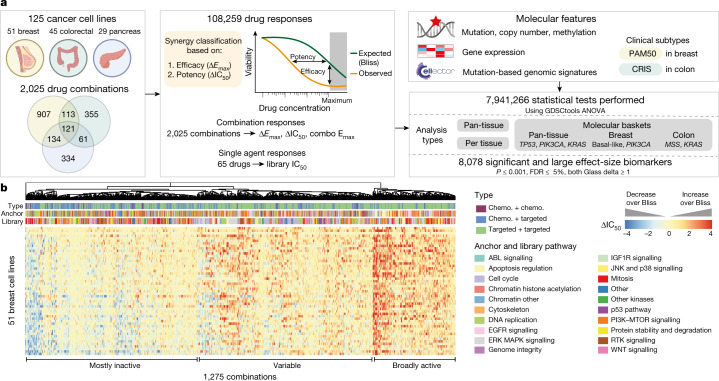
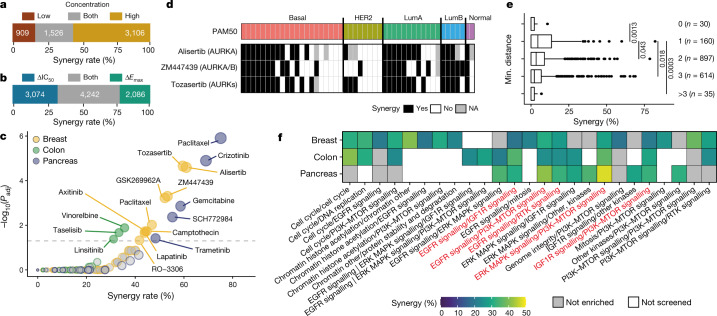
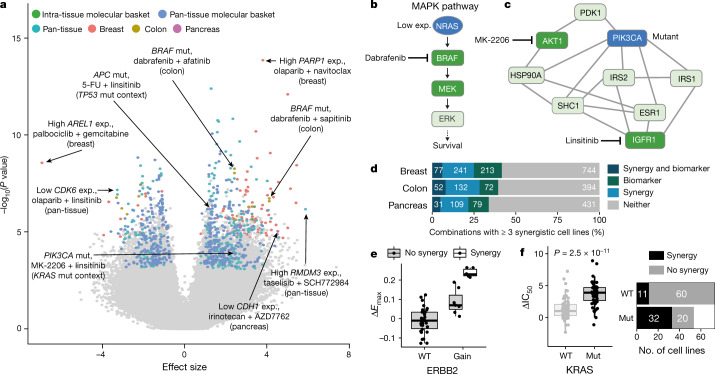
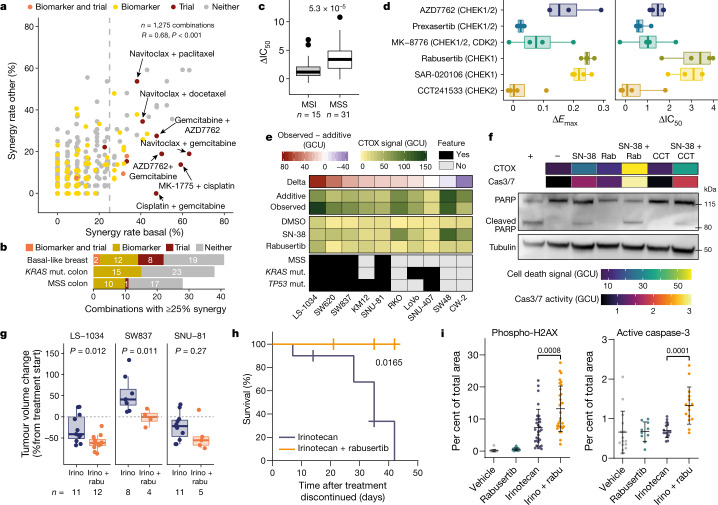
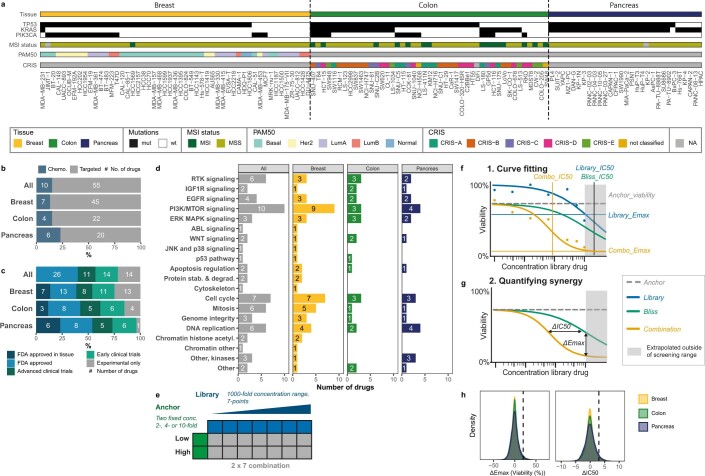
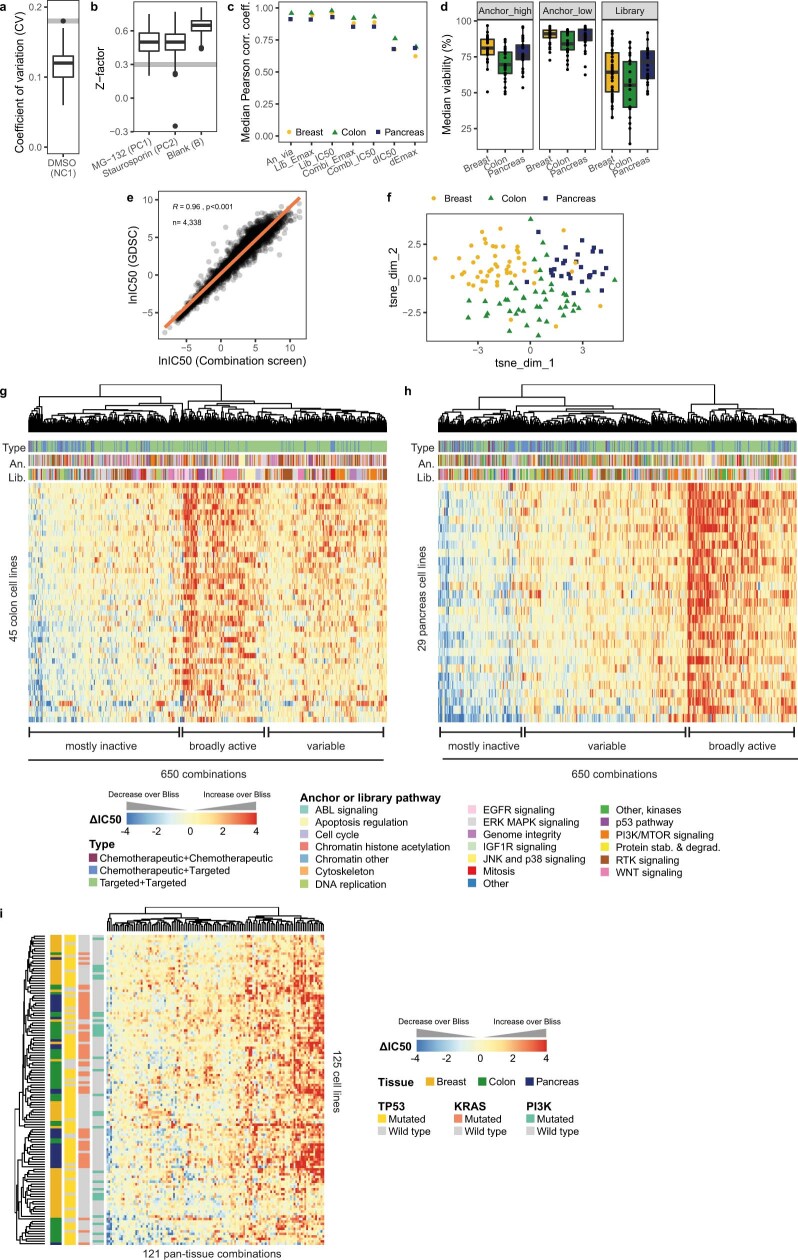
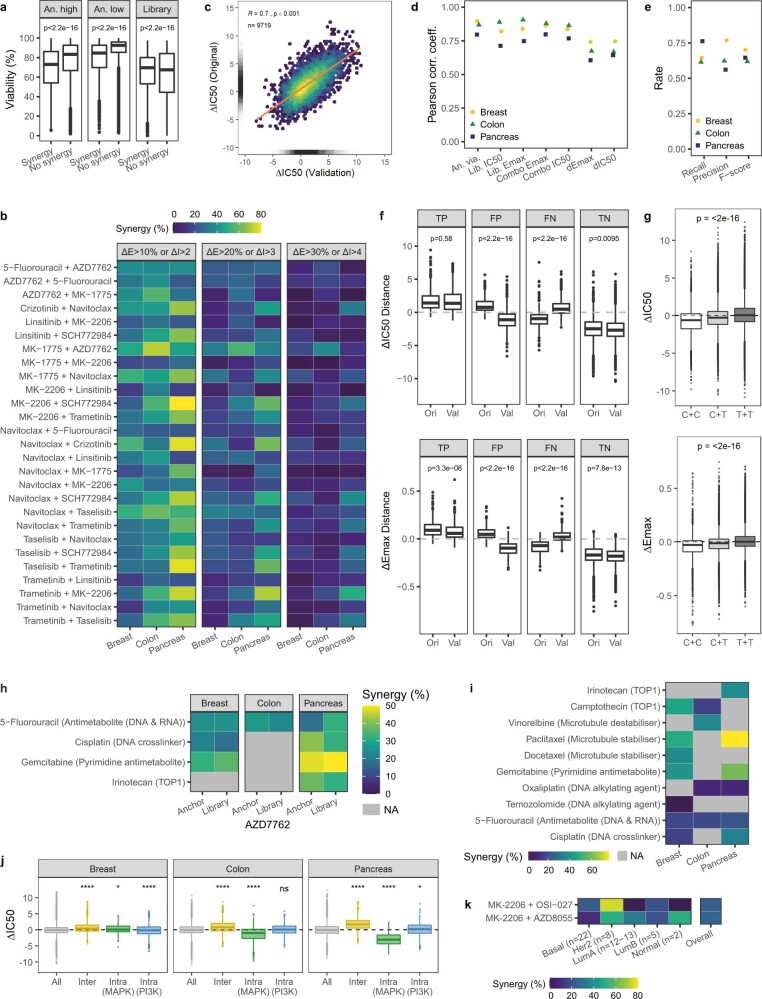
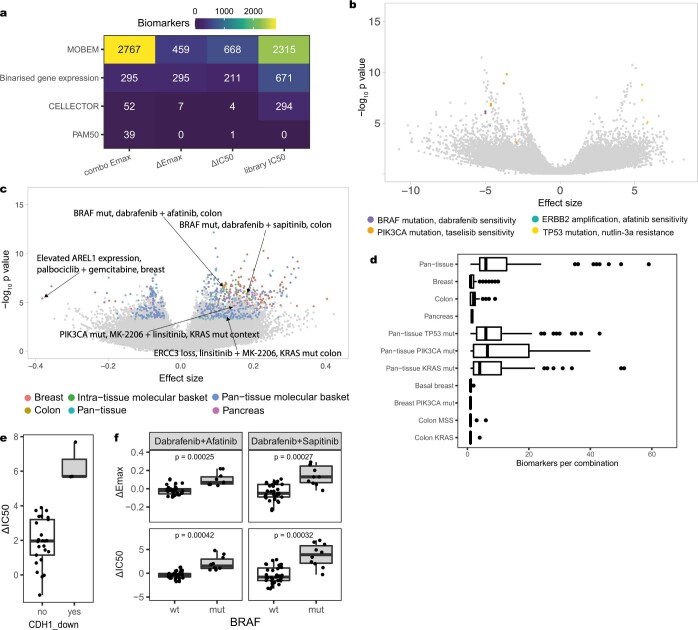
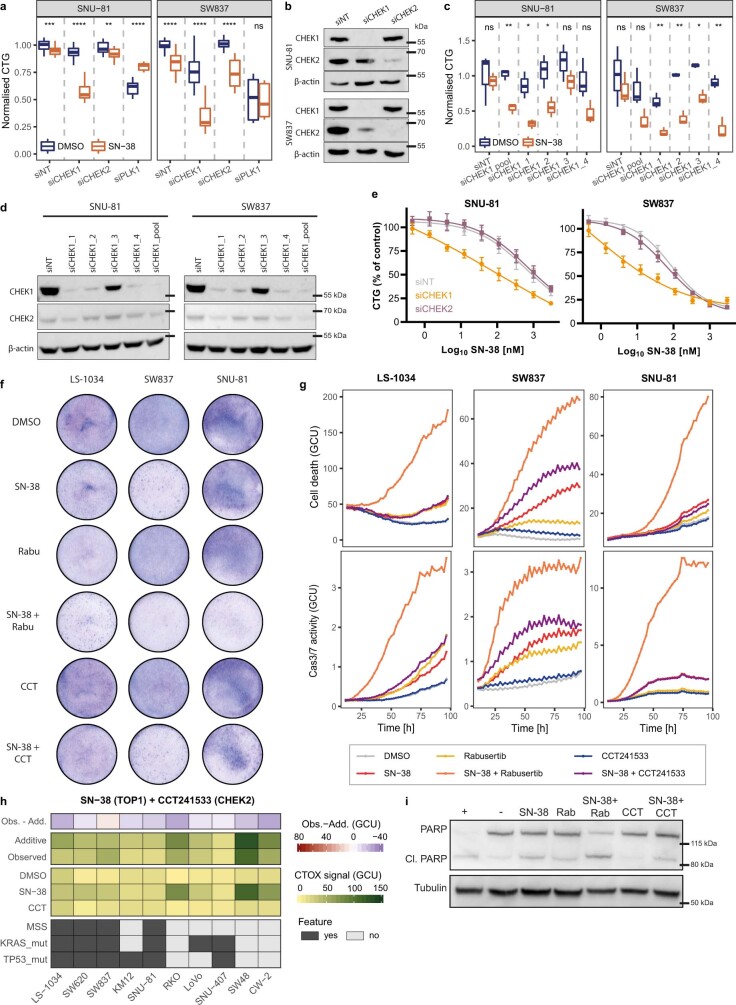
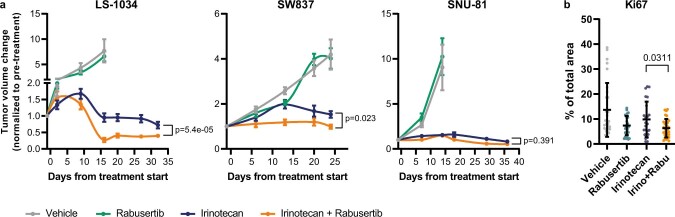
Combinations of anti-cancer drugs can overcome resistance and provide new treatments 1,2 . The number of possible drug combinations vastly exceeds what could be tested clinically. Efforts to systematically identify active combinations and the tissues and molecular contexts in which they are most effective could accelerate the development of combination treatments. Here we evaluate the potency and efficacy of 2,025 clinically relevant two-drug combinations, generating a dataset encompassing 125 molecularly characterized breast, colorectal and pancreatic cancer cell lines. We show that synergy between drugs is rare and highly context-dependent, and that combinations of targeted agents are most likely to be synergistic. We incorporate multi-omic molecular features to identify combination biomarkers and specify synergistic drug combinations and their active contexts, including in basal-like breast cancer, and microsatellite-stable or KRAS -mutant colon cancer. Our results show that irinotecan and CHEK1 inhibition have synergistic effects in microsatellite-stable or KRAS – TP53 double-mutant colon cancer cells, leading to apoptosis and suppression of tumour xenograft growth. This study identifies clinically relevant effective drug combinations in distinct molecular subpopulations and is a resource to guide rational efforts to develop combinatorial drug treatments.
Overview
The claims and statistics of this paper haven’t been checked yet.
Free: it reads the open-access text and checks the first 5 claims that cite a source we can check. Create a free account to check every claim.
Integrity signals
Registry
Cites
Statistics
Figures
Verification
Claims the paper makes
The claims and statistics of this paper haven’t been checked yet.
Free: it reads the open-access text and checks the first 5 claims that cite a source we can check. Create a free account to check every claim.
Claims other papers make about this one
Each is checked against this paper’s own text: does it say what the citing paper says it does?
The source backs part of the claim, not all of it — or backs it for a different population, condition or comparison.
In the citing paper
“Most studies simply compare TV at a single day using t test, or use survival analysis to compare the time-to-event (i.e., time for TV to reach a threshold) between groups (4–6, 23).”
From Statistical Assessment of Drug Synergy from In Vivo Combination Studies Using Mouse Tumor Models (2023) · cites this paper as [4]
Experimental — accuracy not yet measuredThe source backs part of the claim, not all of it — or backs it for a different population, condition or comparison.
In the citing paper
“SN-38, the in vivo active metabolite of TOP1 inhibitor Irinotecan, showed strong synergy with the CHEK1 inhibitor rabusertib under the Bliss model in multiple colon cell lines.”
From Statistical Assessment of Drug Synergy from In Vivo Combination Studies Using Mouse Tumor Models (2023) · cites this paper as [4]
Experimental — accuracy not yet measuredThe source backs part of the claim, not all of it — or backs it for a different population, condition or comparison.
In the citing paper
“However, such in vivo validation studies only showed that synergy exists under the HSA model but not the more stringent Bliss model.”
From Statistical Assessment of Drug Synergy from In Vivo Combination Studies Using Mouse Tumor Models (2023) · cites this paper as [4]
Experimental — accuracy not yet measuredThe cited source says what the claim attributes to it.
In the citing paper
“A recent study systematically evaluated clinically relevant two-drug combinations in cancer cell lines and identified synergistic effects between chemotherapy agents and drugs targeting apoptotic signaling or cell cycle inhibitors in distinct molecular subpopulations [236].”
From Mechanisms and Strategies to Overcome Drug Resistance in Colorectal Cancer (2025) · cites this paper as [236]
The cited source says what the claim attributes to it.
In the citing paper
“In the context of CRC, the study found that irinotecan and CHK1 inhibition had a synergistic anticancer effect in microsatellite stable (MSS) or KRAS-TP53 double-mutant colon cancer cells.”
From Mechanisms and Strategies to Overcome Drug Resistance in Colorectal Cancer (2025) · cites this paper as [236]
2 more claims about this paper
Create a free account to see every claim other papers make about this one.
Self-check
Percentages, sums and reported differences re-computed from the paper’s own numbers.
The self-check needs the paper’s full text.
Citations
Cites
1 retracted
Shi, Y., Yan, H., Frost, P., Gera, J., & Lichtenstein, A. (2005) · Molecular Cancer Therapeutics · doi:10.1158/1535-7163.mct-05-0068 · Cited by 368 · cited 1×
“This combination may work by inhibiting feedback activation of AKT in HER2 breast cancer due to mTOR inhibitor-induced activation of PI3K signalling 13 .”
RetractedUniProt: the universal protein knowledgebase in 2021
The UniProt Consortium, Bateman, A., Martin, M.-J., Orchard, S., Magrane, M., Agivetova, R., Ahmad, S., Alpi, E., Bowler-Barnett, E. H., Britto, R., et al. (2021) · Nucleic Acids Research · doi:10.1093/nar/gkaa1100 · Cited by 6,372
Supervised Risk Predictor of Breast Cancer Based on Intrinsic Subtypes
Parker, J. S., Mullins, M., Cheang, M. C. U., Leung, S., Voduc, D., Vickery, T., Davies, S., Fauron, C., He, X., Hu, Z., et al. (2009) · Journal of Clinical Oncology · doi:10.1200/jco.2008.18.1370 · Cited by 4,721 · cited 6×
“…known to be mutated, amplified or homozygously deleted in human cancers 5 (number of features = 1,073), CELLector signatures 34 ( n = 227 for breast, n = 261 for colon), RNA-seq gene expression 35 ( n = 1,184; original dataset accession number E-MTAB-3983), CRIS 36 and PAM50 37,38 classifications.”
InfluentialYang, W., Soares, J., Greninger, P., Edelman, E. J., Lightfoot, H., Forbes, S., Bindal, N., Beare, D., Smith, J. A., Thompson, I. R., et al. (2012) · Nucleic Acids Research · doi:10.1093/nar/gks1111 · Cited by 4,051 · cited 1×
“…concentrations were selected based on primary literature, in vitro data of minimum concentrations inhibiting relevant target activity and viability 31 , clinical data indicating achievable human plasma concentrations, or where known concentrations that induce sensitivity in a biomarker positive…”
Self-citationTHE TOXICITY OF POISONS APPLIED JOINTLY1
BLISS, C. I. (1939) · Annals of Applied Biology · doi:10.1111/j.1744-7348.1939.tb06990.x · Cited by 2,419
A Landscape of Pharmacogenomic Interactions in Cancer
Iorio, F., Knijnenburg, T. A., Vis, D. J., Bignell, G. R., Menden, M. P., Schubert, M., Aben, N., Gonçalves, E., Barthorpe, S., Lightfoot, H., et al. (2016) · Cell · doi:10.1016/j.cell.2016.06.017 · Cited by 2,090 · cited 3×
“…a curated panel of genes composed of targets of the drugs used, additional members of the BCL2 family and apoptosis-associated genes 39 , genes annotated as clinically relevant for cancer 40 , and genes whose mutations were listed as features in the MOBEMs 5,40 and CELLector 5,34,40 feature files.”
Self-citationUnresponsiveness of colon cancer to BRAF(V600E) inhibition through feedback activation of EGFR
Prahallad, A., Sun, C., Huang, S., Di Nicolantonio, F., Salazar, R., Zecchin, D., Beijersbergen, R. L., Bardelli, A., & Bernards, R. (2012) · Nature · doi:10.1038/nature10868 · Cited by 2,051 · cited 1×
“4f), with synergy occurring exclusively in BRAF -mutant cell lines 16 (4 or 6 synergistic cell lines, respectively).”
The MIntAct project—IntAct as a common curation platform for 11 molecular interaction databases
Orchard, S., Ammari, M., Aranda, B., Breuza, L., Briganti, L., Broackes-Carter, F., Campbell, N. H., Chavali, G., Chen, C., del-Toro, N., et al. (2014) · Nucleic Acids Research · doi:10.1093/nar/gkt1115 · Cited by 1,831
Encorafenib, Binimetinib, and Cetuximab in BRAF V600E–Mutated Colorectal Cancer
Kopetz, S., Grothey, A., Yaeger, R., Van Cutsem, E., Desai, J., Yoshino, T., Wasan, H., Ciardiello, F., Loupakis, F., Hong, Y. S., et al. (2019) · New England Journal of Medicine · doi:10.1056/nejmoa1908075 · Cited by 1,491 · cited 1×
“…using targeted anti-cancer agents have the potential to overcome resistance, enhance the response to existing drugs, reduce dose-limiting single agent toxicity and expand the range of treatments 2 , as exemplified by triple combination therapy for patients with BRAF-mutant colorectal cancer 3 .”
Combinatorial drug therapy for cancer in the post-genomic era
Al-Lazikani, B., Banerji, U., & Workman, P. (2012) · Nature Biotechnology · doi:10.1038/nbt.2284 · Cited by 1,070
Research works printed but not linked: 1
- Jassal B The reactome pathway knowledgebase Nucleic Acids Res. 2020 48 D498 D503 31691815 PMC7145712
Cited by
Items 401–500 of 508
Integrative Approaches: Combining Medicinal Plants and Antiretroviral Therapy
Jemima, A. (2025) · Research Invention Journal of Scientific and Experimental Sciences · doi:10.59298/rijses/2025/51923
Trained innate immunity attenuates macrophage efferocytosis of cancer cellsPreprint
Chatzis, A., Lukaszonek, J., Lagos, D., Boucher, D., & Kourtzelis, I. (2025) · eLife · doi:10.7554/elife.105206.1
β-glucan reprograms macrophages to attenuate efferocytosis of cancer cellsPreprint
Chatzis, A., Lukaszonek, J., Lagos, D., Boucher, D., & Kourtzelis, I. (2025) · eLife · doi:10.7554/elife.105206
Review of In Silico Methods for Multi-drug Combination Discovery
Fan Liu, H. Y. (2025) · Frontiers in Medical Science Research · doi:10.25236/fmsr.2025.070212
García‐Rodríguez, P., Ramiro, L., Simats, A., Ma, F., Rosell, A., & Montaner, J. (2025) · Journal of Cerebral Blood Flow & Metabolism · doi:10.1177/0271678x251340234
“Individually, the anti-inflammatory effect of A1AT therapy has been already demonstrated, showing positive results in chronic pulmonary disease, and other autoimmune and infectious diseases 31,35 A1AT has also shown anti-apoptotic effects by caspase-death inhibition.”
Smart Surface Engineering in Microcarriers: Toward Applications in Cancer Therapy
Rajabasadi, F., Moreno, S., Rico, M. G., Viñola, P., Fichna, K., Hebenstreit, F., Boye, S., Janke, A., Appelhans, D., & Medina‐Sánchez, M. (2025) · Macromolecular Materials and Engineering · doi:10.1002/mame.202500058
Liu, X., Hao, J., Yuan, Y., & Fang, L. (2025) · Naunyn-Schmiedeberg s Archives of Pharmacology · doi:10.1007/s00210-025-04295-5
“Combinatorial drugs targeting several tumorigenic activities, such as cell proliferation, motility, proteostasis, apoptosis, and autophagy, are currently being researched to enhance tumor control (Jaaks et al. 2022; Yip and Papa 2021; Sokolov et al. 2021).”
Mechanistic insights into Telmisartan-enhanced doxorubicin cytotoxicity in cancer cell lines
Hameed, A. I., Abbas, S. F., & Hasan, J. K. (2025) · International Journal of Advanced Biochemistry Research · doi:10.33545/26174693.2025.v9.i5k.4446
Tahvili, M., Nejati, V., & Pazhang, Y. (2025) · Molecular Biology Reports · doi:10.1007/s11033-025-10716-8
Current progress in targeting mitotic kinases in PDAC
Barlow, T. M. A., Rooman, I., & Ballet, S. (2025) · RSC Medicinal Chemistry · doi:10.1039/d5md00162e
Chen, Y., He, L., Ianevski, A., Nader, K. M., Ruokoranta, T. M., Linnavirta, N., Miettinen, J. J., Vähä-Koskela, M. J. V., Vänttinen, I., Kuusanmäki, H. A., et al. (2025) · doi:10.1158/0008-5472.29567999
Chen, Y., He, L., Ianevski, A., Nader, K. M., Ruokoranta, T. M., Linnavirta, N., Miettinen, J. J., Vähä-Koskela, M. J. V., Vänttinen, I., Kuusanmäki, H. A., et al. (2025) · doi:10.1158/0008-5472.29645960
Wang, C., Yuan, P., Dai, Y., Liu, B., & Liang, J. (2025) · Translational Oncology · doi:10.1016/j.tranon.2025.102504
“Our study found that TIMELESS could regulate the DDR pathway, which was the molecular basis of synthetic lethal therapeutics [37,38].”
Erzurumlu, Y., & Doğanlar, Y. (2025) · Ankara Universitesi Eczacilik Fakultesi Dergisi · doi:10.33483/jfpau.1662695
A dual granular balanced deep forest model for effective drug combination prediction
Gong, Z., Li, R., Liu, K., Xu, Y., Bo, X., & He, S. (2026) · iScience · doi:10.1016/j.isci.2026.116014
“We derived our drug combination dataset from the screening study of Jaaks et al. 20 In the original screen, 2025 drug combinations were evaluated on 125 cancer cell lines (breast, colo-rectal, and pancreatic), yielding 108259 drug-combination-cell-line measurements.”
A statistical framework for defining synergistic anticancer drug interactionsPreprint
Dias, D., Zobolas, J., Ianevski, A., & Aittokallio, T. A. (2025) · bioRxiv (Cold Spring Harbor Laboratory) · doi:10.1101/2025.09.29.679166
Li, N., An, J., & Hu, Y. (2025) · Experimental and Therapeutic Medicine · doi:10.3892/etm.2025.13001
“Over the years, CHEK1 has received consider ‑ able attention in the field of tumour biology and the development of therapeutic strategies, emerging as a potential therapeutic target (21,22,28,29).”
Ramarao-Milne, P., Kaphle, A., Reguant, R., Klein, A. H., Kuiper, M. J., Hosking, B., Wenzel, J., Al-Mamun, H. A., Elazab, L., Zhong, Q., et al. (2025) · bioRxiv (Cold Spring Harbor Laboratory) · doi:10.1101/2025.11.05.686871
Sevilla-Carrillo, I., Noblejas‐López, M. D. M., Vázquez, J. A., Ocaña, A., Bravo, I., & Alonso‐Moreno, C. (2025) · Scientific Reports · doi:10.1038/s41598-025-30803-x
Dual Inhibition of PARP and Akt Induces Metabolic Collapse and Apoptosis in Breast Cancer Cells
Adam, N. M. K., Vámos, E., Ahmadi, H., Maloba, G. O., Arshi, A., & Gallyas, F. (2025) · Cancers · doi:10.3390/cancers17233828
“The combination of anticancer drugs can overcome resistance and provide new therapeutic options [25].”
Rahman, H. A. U., Iqbal, N., Fahim, M. A. A., Salman, F., Ahmed, S. H., Asim, O., Mansoor, T., Farooq, M. Z., & Asghar, M. S. (2025) · American Heart Journal Plus Cardiology Research and Practice · doi:10.1016/j.ahjo.2025.100699
“Older adults were defined as individuals aged 65 years and above [2,5].”
Hwangbo, H. (2024) · Carolina Digital Repository (University of North Carolina at Chapel Hill) · doi:10.17615/20wy-h465
Tang, C., Fu, S., Jin, X., Li, W., Xing, F., Duan, B., Cheng, X., Chen, X., Wang, S., Zhu, C., et al. (2023) · Figshare · doi:10.6084/m9.figshare.24715432
Lin, Y., Zhao, Y., Chen, M., Li, Z., Liu, Q., Chen, J., Ding, Y., Ding, C., Ding, Y., 亓翠玲, et al. (2024) · Figshare · doi:10.6084/m9.figshare.26592164
Yau, A. (2023) · Oxford University Research Archive (ORA) (University of Oxford) · doi:10.5287/ora-6rw2ermj9
Lin, Y., Zhao, Y., Chen, M., Li, Z., Liu, Q., Chen, J., Ding, Y., Ding, C., Ding, Y., Qi, C., et al. (2024) · Figshare · doi:10.6084/m9.figshare.26592167
The role of eosinophils in breast cancer
Spisak, L. (2022) · Infoscience (Ecole Polytechnique Fédérale de Lausanne) · doi:10.5075/epfl-thesis-8575
Tang, C., Fu, S., Jin, X., Li, W., Xing, F., Duan, B., Cheng, X., Chen, X., Wang, S., Zhu, C., et al. (2024) · Figshare · doi:10.6084/m9.figshare.24715534
Martin-Tejera, J. F. (2022) · Dipòsit Digital de la Universitat de Barcelona (Universitat de Barcelona)
Germline TGFBR1*6A and colorectal cancer risk
Johansen, A. M. (2025) · WakeSpace Scholarship (Wake Forest University)
Unveiling the true impact of drug and cell linerepresentations in drug synergy prediction
Çandır Soydemir, E. B. (2024) · Sabanci University
Understanding Drug Synergy in Pancreatic Cancer: A Proteomic Study of Gemcitabine and ATR Inhibitors
Höfer, S., Küster, B., & München, T. U. (2024)
Pons, G. (2024) · Tesis Doctorals en Xarxa (Consorci de Serveis Universitaris de Catalunya)
백민준 (2023) · Seoul National University Open Repository (Seoul National University)
4-オクチルイタコン酸はグルタチオン代謝機構の破綻とミトコンドリア機能障害を介して細胞老化を誘導することでメラノーマの増殖を阻害する
SAEKI, A. (2025) · Institutional Repositories DataBase (IRDB)
Combination Therapies Against Pancreatic Cancer for Enhancing Treatment Effectiveness
Usha, N., Gayathri, K., Lokeshwari, B., & Yuvalakshmi, L. (2025) · IGI Global eBooks · doi:10.4018/979-8-3373-1469-3.ch007
de Oliveira, L. M. (2024) · LA Referencia (Red Federada de Repositorios Institucionales de Publicaciones Científicas)
Machado, T. M. (2023) · LA Referencia (Red Federada de Repositorios Institucionales de Publicaciones Científicas)
Man, X., Sun, C., Chen, Z., Ji, Y., Du, J., & Yu, B. (2026) · ACS Synthetic Biology · doi:10.1021/acssynbio.5c00722
Prabakaran, A., & Sinha, H. (2026) · bioRxiv (Cold Spring Harbor Laboratory) · doi:10.64898/2026.01.22.701080
Targeting the DDX3/PAF1 axis enhances chemotherapy efficacy in pancreatic ductal adenocarcinoma
Nallasamy, P., Seshacharyulu, P., Rauth, S., Shah, A., Marimuthu, S., Varadharaj, V., Bommideni, M., Mallya, K. B., Alsafwani, Z. W., Lele, S. M., et al. (2026) · Cancer Letters · doi:10.1016/j.canlet.2026.218276
Zeng, B., Tu, S., Zhang, W., & Xu, L. (2025) · IEEE International Conference on Bioinformatics and Biomedicine (BIBM) · doi:10.1109/bibm66473.2025.11356646
“Machine learning has emerged as a powerful tool for predicting drug synergy by exploiting large-scale pharma-cogenomic data [4].”
Genomic Characterization of Lung Cancer in Never-Smokers Using Deep Learning
Saha, M., Tran, T.-V.-T., Bhawsar, P. M. S., Zhang, T., Zhao, W., Hoang, P. H., Mutreja, K., Lawrence, S. M., Rothman, N., Lan, Q., et al. (2026) · Modern Pathology · doi:10.1016/j.modpat.2026.100973 · Cited by 1
Li, S., Li, Z., Dong, C., & Li, Y. (2026) · Interdisciplinary Sciences Computational Life Sciences · doi:10.1007/s12539-025-00798-0
Rajesh, P., Kaur, H., Kaur, H., & Rajesh, C. (2026) · Polymers for Advanced Technologies · doi:10.1002/pat.70539
“Systemic combinatorial chemotherapy regimens have become core treatment strategies for many cancer types, improving the patient's overall survival rate [59].”
Gall-Mas, L., Kleinmanns, K., Pirttikoski, A., Santarelli, M., Stangeland, G. N., Dai, J., Fontaneda-Arenas, D., Falco, M. M., Doerr, C., Hautaniemi, S., et al. (2026) · bioRxiv (Cold Spring Harbor Laboratory) · doi:10.64898/2026.03.04.709546
“Synergy with pro-apoptotic agents is also frequently observed in large-scale screens (Jaaks et al. 2022), raising the concern that such combinatorial effects may be generic rather than cancer cell-specific.”
Inference of Cancer Drug Cross Resistance Using Only Single-Drug Exposure DataPreprint
Whiting, F. J. H., Mavrommati, I., Acar, A., Garces, A. I., Banerji, U., Sottoriva, A., Natrajan, R., & Graham, T. A. (2026) · bioRxiv (Cold Spring Harbor Laboratory) · doi:10.64898/2026.03.10.709822
Wang, Q., Tian, L., Zhou, Z., & Yan, G. (2026) · Biomedical Signal Processing and Control · doi:10.1016/j.bspc.2026.110119
Du, H., Tian, Y., Wang, W., Wei, B., Mei, T., Zhu, H., Yang, Z., & He, X. (2026) · Health Information Science and Systems · doi:10.1007/s13755-026-00441-2
Elias, A. (2026) · NG Journal of Social Development · doi:10.4314/ngjsd.v19i3.4
Wongwiset, N., Stephens, M., Quiñones-Díaz, B. I., Mehboudi, A., Contreras, L. M., & Sreenivasan, S. V. (2026) · Biomicrofluidics · doi:10.1063/5.0321277
AI and biomedical engineering in chronic disease diagnosis: A multimodal perspective
Singh, V., & Das, A. B. (2026) · Elsevier eBooks · doi:10.1016/b978-0-443-33263-0.00011-5
Improving reproducibility in pharmacogenomic screens through cross-study benchmarkingPreprint
Nader, K. M., Ianevski, F., Ianevski, A., & Aittokallio, T. A. (2026) · bioRxiv (Cold Spring Harbor Laboratory) · doi:10.64898/2026.04.29.721574
“We also incorporated five drug-combination studies: AstraZeneca 37 , Bashi et al. 38 , Jaaks et al. 39 , Nair et al. 40 , and O’Neil et al. 41 ; for these, single-agent responses were extracted from the dose-combination matrix edges, where one compound was titrated while the partner compound was…”
Sun, H., Han, L., Wu, H., Xue, H., Lang, M., & Tan, J. (2026) · Pulmonary Pharmacology & Therapeutics · doi:10.1016/j.pupt.2026.102422
Sun, W., Wang, Y., Qiao, X., Zhou, S., Liu, Z., Yang, S., Zhang, D., Wang, D., Zhou, H., Qi, F., et al. (2026) · Human Mutation · doi:10.1155/humu/5510306
dos Santos, M. P. S., Santos, S. X. F., Bernardo, R. M. C., Vidal, J. V., & Gonçalves, G. (2026) · Frontiers in Oncology · doi:10.3389/fonc.2026.1761791
TRAFIKK: systematic prediction and mechanistic interpretation of anticancer drug synergiesPreprint
Fariñas, M., Bermudez, V., Tsirvouli, E., Lippestad, K., Zobolas, J., Aittokallio, T. A., Lehti, K., & Flobak, Å. (2026) · bioRxiv (Cold Spring Harbor Laboratory) · doi:10.64898/2026.05.08.723755
Cutrona, M. B. (2026) · Methods in molecular biology · doi:10.1007/7651_2026_698
Zhu, J., Kong, W., Do, T. H. L., Kummer, S., Kivioja, J. L., Romero-Becerra, R., Rousu, J., Miihkinen, M., Tyner, J. W., Zenz, T., et al. (2026) · bioRxiv (Cold Spring Harbor Laboratory) · doi:10.64898/2026.05.18.725869
Lidocaine enhances antitumor effects of sorafenib and GW5074 in colorectal cancer cells
Lin, T.-C., Wu, Z.-S., Huang, S., Liu, C.-W., Hu, J., & Wen, C.-C. (2026) · Journal of Enzyme Inhibition and Medicinal Chemistry · doi:10.1080/14756366.2026.2678755
“…drivers, redox status, and stress-response mechanisms. similar context-dependent differences in drug responsiveness have been reported previously 30,31 , including differential sensitivity to 5-FU among cRc cell lines, with sW480 displaying higher sensitivity than ht29 32 . the interplay between…”
Cisplatin-synergistic monoterpene indole alkaloids with diverse scaffolds from Rauvolfia vomitoria
Yang, K., Liu, Z., Ma, X., Wang, N., Qi, Q., Huang, X., Zhan, G., & Guo, Z. (2026) · Bioorganic Chemistry · doi:10.1016/j.bioorg.2026.110120
Shan, X., Cai, Y., Chen, J., Xu, S., Wu, B., Zhao, Z., Jiang, L., Wang, D., & Li, Y. (2026) · Journal of Controlled Release · doi:10.1016/j.jconrel.2026.115123
Technological advances in oncotherapeutics
Srivastav, S., Chaurasia, R., Bansal, H., Santoshi, S., Kumar, J., & Chourasia, M. (2026) · Elsevier eBooks · doi:10.1016/b978-0-443-44181-3.00006-0
Yusoh, N. A., Azil, A., Alkilani, A. Z., Rahman, M. B. A., Asmawi, A. A., Razali, R., Adam, F., & Kamal, N. A. M. A. (2026) · AAPS PharmSciTech · doi:10.1208/s12249-026-03491-7
Cheng, Y., Ye, Q., Jiang, L., Kang, Y., Hsieh, C., & Hou, T. (2026) · Journal of Cheminformatics · doi:10.1186/s13321-026-01242-1
Gao, S., Han, P., He, W., Ge, J., Li, W., Chen, G., Liu, Z., Wang, S., Song, T., & Kang, N. (2026) · Computer Methods and Programs in Biomedicine · doi:10.1016/j.cmpb.2026.109534
Gao, W., Ding, Y., Cui, X., Dai, L., & Zhu, R. (2026) · Lecture notes in computer science · doi:10.1007/978-981-92-3498-1_5
Reliable evaluation and learning in multi-input biological association prediction
Moghadam, S. A., Paoli, L., & Montazeri, H. (2026) · Briefings in Bioinformatics · doi:10.1093/bib/bbag376
Drugging ERK1/2 in Cancer: A Glimpse of Small‐Molecule Inhibitors
Peng, Z., Fu, Y., Chen, Y., Fan, B., & Liu, B. (2026) · Medicinal Research Reviews · doi:10.1002/med.70084
Yang, Z. (2025) · Universiti Putra Malaysia Institutional Repository (Universiti Putra Malaysia)
ZIF-90-PQ-based cascade nanoplatform for multimodal cooperative treatment of breast cancer
Li, P., Liu, Y., Zhang, J., Wang, T., Zhang, S., & Yang, X. (2026) · International Journal of Pharmaceutics · doi:10.1016/j.ijpharm.2026.127255
Alsubait, A., Alghanem, B., Ghadbane, H., Huwaizi, S. M., Almuhalhi, K., Almourfi, F. M., Altolayyan, A., Alanazi, A., Hazazi, B. T., Boudjelal, M., et al. (2026) · Cell Death and Disease · doi:10.1038/s41419-026-09142-w
Zhou, J., Yang, X., Zhang, Y., Hu, F., & Ho, P. (2026) · Intelligent Data Analysis · doi:10.1177/1088467x261474307
Expanding Knowledge Boundaries via LLM-Grounded Alignment for Drug Combination Recommendation
Wen, T., He, Y., Ren, Z.-H., Song, B., Li, Q., & Zeng, X. (2026) · ACM SIGKDD Conference on Knowledge Discovery and Data Mining (KDD) · doi:10.1145/3770855.3818967
Biomimetic delivery systems for overcoming drug resistance in gastrointestinal cancers
Wu, G., Li, A.-X., Gu, Y.-W., Cheng, X.-L., Mao, R.-C., Wang, X.-J., He, M.-Y., Chai, Q., Li, F.-N., Liu, H., et al. (2026) · Drug Resistance Updates · doi:10.1016/j.drup.2026.101465
Kadiatou, D., Camara, F., KEITA, M., & Leclercq, S. (2025) · Pharmacophore · doi:10.51847/a1xh4xuw5o
Drug resistance in cancer radiotherapy: From mechanisms to overcoming strategies
Chen, Y., Cai, C., Xu, X.-C., Yang, Z., Li, J., Pan, Q., Wang, L., Luo, W., Chen, Z., Zeng, L., et al. (2026) · Pharmacological Research · doi:10.1016/j.phrs.2026.108380
ScreenShot: A Foundation Model for Few-Shot Combination Drug ScreeningPreprint
de Mathelin, A., Tosh, C., & Tansey, W. (2026) · arXiv (Cornell University) · doi:10.48550/arxiv.2608.12219
“…and monotherapies: NCI-ALMANAC [16] screens 104 drugs in ∼ 5,000 pairwise combinations across the NCI-60 cancer cell line panel; GDSC-SQ [17] screens 65 drugs in ∼ 1,300 combinations across 126 breast, colorectal, and pancreatic cancer cell lines; and BATCHIE [53] screens 207 drugs in ∼…”
Statins suppress colon tumors by inhibiting KRAS condensates
Yuan, Z., Wang, C., & Xiang, R. (2026) · Trends in Molecular Medicine · doi:10.1016/j.molmed.2026.07.007
Zhang, Q.-Q., Zhang, S., Shi, M.-H., Li, J.-N., Qiang, Y.-R., & Zhang, T. (2026) · bioRxiv (Cold Spring Harbor Laboratory) · doi:10.64898/2026.08.13.744613
Knowledge graph-based screening for synergistic anticancer drug combinations
Bai, C., Wu, L., Yang, J., Wu, Y., Xia, Z., Zhang, Y., Bo, X., & He, S. (2026) · Journal of Pharmaceutical Analysis · doi:10.1016/j.jpha.2026.101752
Xia, C., & Wang, J. (2026) · International Conference on Bioinformatics and Intelligent Computing (BIC) · doi:10.1145/3809986.3810042
Chen, T., & Ho, S. (2026) · Bioinformatics · doi:10.1093/bioinformatics/btag635
“2005, Li 2021, Jaaks et al. 2022, Niu et al .”
Chen, R., Huang, L., Qiao, Y., Mandal, S., Mo, L., Li, L., Leshchiner, D., Zhang, X., Pu, J., Xie, Y., et al. (2026) · bioRxiv (Cold Spring Harbor Laboratory) · doi:10.64898/2026.08.25.746866
Wang, R., Pedrelli, M., Ahmed, O., Garagnani, P., Parini, P., & Loscalzo, J. (2026) · CPT Pharmacometrics & Systems Pharmacology · doi:10.1002/psp4.70329
Fattahi, N., Eslahchi, C., Ghasemi, F., Alipour, P., Heidari, R., Karimipoor, M., Mirzaei, S. A., & Sardari, S. (2026) · npj Systems Biology and Applications · doi:10.1038/s41540-026-00803-2
Protease inhibition: breaking the barriers of chemoresistance in cancer
Kurian, G. A. (2026) · Molecular Biology Reports · doi:10.1007/s11033-026-12659-0
Abdeldjouad, F. Z., & Menaouer, B. (2026) · Interdisciplinary Sciences Computational Life Sciences · doi:10.1007/s12539-026-00877-w
Simões, L. D., Santos, G. L., de Carvalho, P. O., dos Santos, E. X., Canteli, A. R. A., Morales, R., Saccarelli, C. R., Moysés, L. A. J., Yamashita, L. A., Teixeira, P. A. D. C., et al. (2026) · Cancers · doi:10.3390/cancers18193121
“[10].”
InfluentialLin, W., Zhu, G., & Niu, Y. (2026) · Pattern Recognition · doi:10.1016/j.patcog.2026.115050
Breaking carbon-carbon bonds with cytochrome P450s from plants, animals, and bacteria
Miller, J. C. (2022) · Illinois Digital Environment for Access to Learning and Scholarship (University of Illinois at Urbana-Champaign)
Goulding, J. R., Couwenbergh, S. T., Bekaert, S.-L., Sanders, E., Vloed, F. D., Amo-Addae, V., Eggermont, A., Wyn, J. D., Wever, K. D., Vleminckx, L., et al. (2026) · Cell Reports · doi:10.1016/j.celrep.2026.117997
Williams, E. K., Zhang, D. Y., Alese, T. T., Summers, R. J., Musick, J. O., Park, S. I., Tran, R., Kemp, M. L., Porter, C. C., & Lam, W. A. (2026) · Nature Biomedical Engineering · doi:10.1038/s41551-026-01818-0
Tumor digital twins uncover therapeutic strategies in triple-negative breast cancer
Victori, P., Hua, K., Twigger, A., Anand, A., Bose, Z. M., Clarke, M. A., Bell, S., Xian, K. J. Q., Zakarneh, L., Pinilla, K., et al. (2026) · Cell Reports Medicine · doi:10.1016/j.xcrm.2026.103119
Wang, J., He, Y., Ma, T., & Song, B. (2026) · Bioinformatics · doi:10.1093/bioinformatics/btag800
Li, J., Zhang, N., Piao, M., Zhao, J., Wang, Y., Li, C., Li, S., Huang, Z., Li, Y., Xun, Z., et al. (2026) · Cancer and Metastasis Reviews · doi:10.1007/s10555-026-10392-5
“Many targets are not readily druggable, intratumoral heterogeneity limits the durability of single-agent therapy, and high-throughput drug screening frequently identifies combinations not reproducible across models [25–27].”
Sun, X., Balko, J. M., An, H., Ericsson, P. I. G., Jin, H., Sanchez, V., Sheng, Q., Chapman, M. S., Stricker, T. P., Abramson, V. G., et al. (2026) · Cell Reports Medicine · doi:10.1016/j.xcrm.2026.103129
Araki, K., Tsukioka, J., Ohta, T., & Nakamura, S. (2026) · Phytochemistry Letters · doi:10.1016/j.phytol.2026.104277
Gao, Y., Li, J., Jiao, Y., Ji, Y., He, M., Shi, C., & Liu, S. (2026) · bioRxiv (Cold Spring Harbor Laboratory) · doi:10.64898/2026.10.30.763251
Metadata
- Authors
- Jaaks, P., Coker, E. A., Vis, D. J., Edwards, O., Carpenter, E. F., Leto, S. M., Dwane, L., Sassi, F., Lightfoot, H., Barthorpe, S., van der Meer, D., Yang, W., Beck, A., Mironenko, T., Hall, C., Hall, J., Mali, I., Richardson, L., Tolley, C., Morris, J., Thomas, F., Lleshi, E., Aben, N., Benes, C. H., Bertotti, A., Trusolino, L., Wessels, L., & Garnett, M. J.
- Affiliations
- Wellcome Sanger Institute (GB)
- Candiolo Cancer Institute (IT)
- The Netherlands Cancer Institute (NL)
- Harvard University (US)
- Corresponding author
- Garnett, Mathew J.
- ORCID
- Jaaks, Patricia
- Coker, Elizabeth A.
- Edwards, Olivia
- Carpenter, Emma F.
- Leto, Simonetta M.
- Sassi, Francesco
- Lightfoot, Howard
- Barthorpe, Syd
- van der Meer, Dieudonne
- Yang, Wanjuan
- Beck, Alexandra
- Mironenko, Tatiana
- Hall, Caitlin
- Hall, James
- Mali, Iman
- Richardson, Laura
- Tolley, Charlotte
- Thomas, Frances
- Benes, Cyril H.
- Bertotti, Andrea
- Trusolino, Livio
- Wessels, Lodewyk
- Garnett, Mathew J.
- Venue
- Nature
- Published
- 2022-02-23
- Volume
- 603
- Issue
- 7899
- Pages
- 166-173
- ISSN
- 0028-0836 (ISSN-L)
- 1476-4687
- PMC
- PMC8891012
- OpenAlex
- W4212966936
- Cited by
- 469
- References
- 43
- Citations by year
- 2026: 87 · 2025: 131 · 2024: 124 · 2023: 88 · 2022: 38
- FWCI
- 51.81
- Type
- journal article
- Language
- en
- Open access
- hybrid
- doi.org
- Licence
- cc-by
- creativecommons.org/licenses/by/4.0 (tdm)
- creativecommons.org/licenses/by/4.0 (vor)
- Locations
- Nature (publishedVersion, cc-by)
- PubMed Central (publishedVersion, cc-by)
- PubMed (publishedVersion)
- Institutional Research Information System University of Turin (University of Turin) (submittedVersion, cc-by)
- RePEc: Research Papers in Economics (submittedVersion)
- Research Repository (Delft University of Technology) (submittedVersion)
- Apollo (University of Cambridge) (submittedVersion, cc-by)
- Data Archiving and Networked Services (DANS) (submittedVersion, cc-by)
- Apollo (cc-by)
- Funders
- Wellcome Trust (206194)
- Cancer Research UK
- Ministero della Salute
- Associazione Italiana per la Ricerca sul Cancro
- Horizon 2020 Framework Programme
- Topics
- Life Sciences › Pharmacology, Toxicology and Pharmaceutics › Drug Discovery › Computational Drug Discovery Methods
- Life Sciences › Biochemistry, Genetics and Molecular Biology › Cancer Research › Cancer Genomics and Diagnostics
- Health Sciences › Medicine › Oncology › Cancer Cells and Metastasis
- Keywords
- drug synergy, breast cancer cell lines, colorectal cancer cell lines, pancreatic cancer cell lines, targeted therapy, combination biomarkers, irinotecan, KRAS mutation, TP53 mutation, microsatellite stable, basal-like breast cancer, apoptosis
- MeSH terms
- Antineoplastic Agents, Antineoplastic Combined Chemotherapy Protocols, Colonic Neoplasms, Drug Combinations, Drug Synergism, Humans, Pancreatic Neoplasms, Proto-Oncogene Proteins p21(ras), Cell Line, Tumor, Cell Proliferation
About these checks
Registry, retraction, Cites and statistics results are computed, not judged, with one exception: a printed reference that no index lists is read once by a model before it counts as a citation error. Claims are extracted by a model and kept only when their quote appears verbatim in the text; each cited source is then checked, with a model’s help, for whether it says what the claim relies on. Those verdicts can be wrong — read the claim’s quote and the cited source before relying on one.
Statistics and arithmetic are recomputed, not judged.
Confidence bands are shown only for fields calibrated on our annotated test set. None is calibrated yet, so no band is shown.
What counts as a claim ›How we measure confidence ›How we check this ›
Are you an author, or do you see a problem with this page? Request a review
Data sources
Bibliographic data: Semantic Scholar, OpenAlex, Crossref.
Contains information from the Semantic Scholar Academic Graph Datasets, made available under the ODC Attribution License (ODC-BY 1.0).
Semantic Scholar’s data is described in: Kinney, R., et al. (2023). The Semantic Scholar Open Data Platform. arXiv:2301.10140.
