

Brain–phenotype models fail for individuals who defy sample stereotypes
Open accessThe DOI matches its Crossref record; 137 of the 137 references it cites were found in a registry or an index.
Abstract
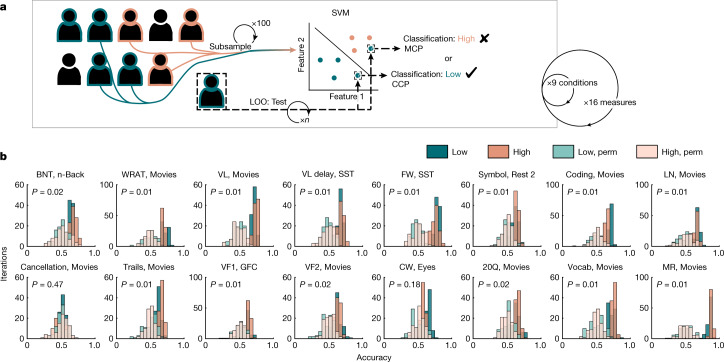
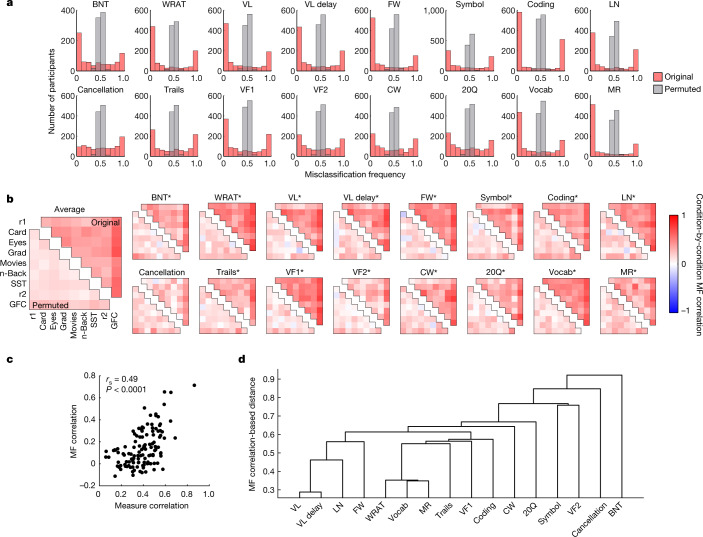
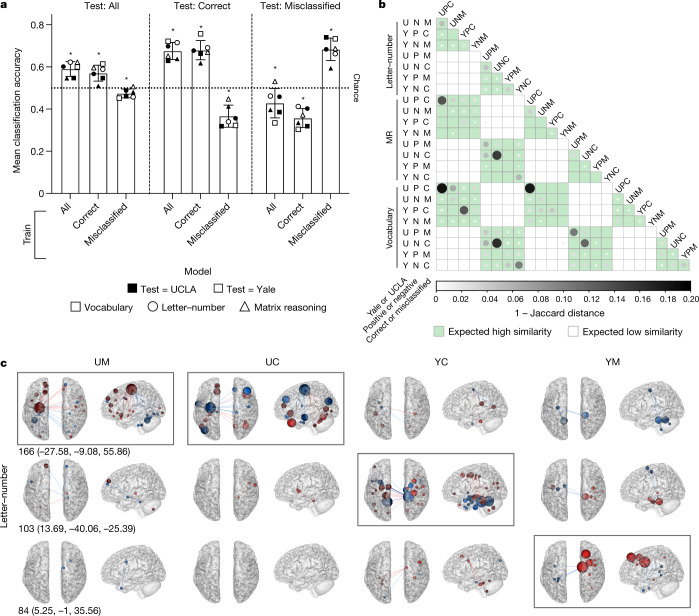
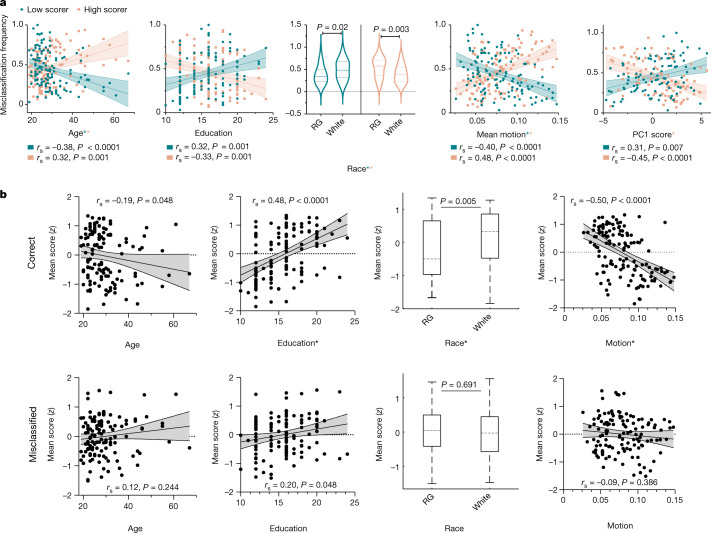
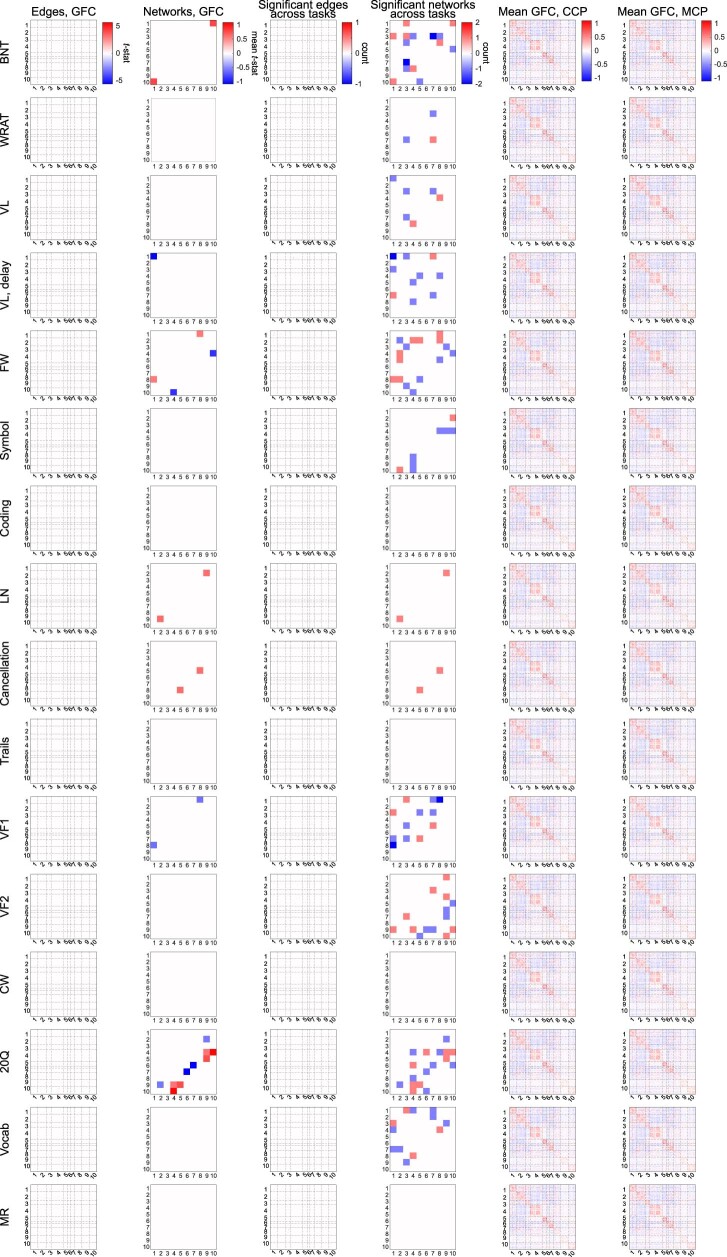
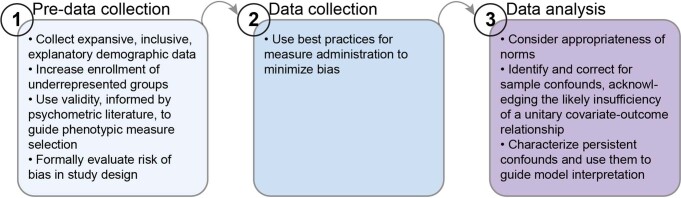
Individual differences in brain functional organization track a range of traits, symptoms and behaviours 1–12 . So far, work modelling linear brain–phenotype relationships has assumed that a single such relationship generalizes across all individuals, but models do not work equally well in all participants 13,14 . A better understanding of in whom models fail and why is crucial to revealing robust, useful and unbiased brain–phenotype relationships. To this end, here we related brain activity to phenotype using predictive models—trained and tested on independent data to ensure generalizability 15 —and examined model failure. We applied this data-driven approach to a range of neurocognitive measures in a new, clinically and demographically heterogeneous dataset, with the results replicated in two independent, publicly available datasets 16,17 . Across all three datasets, we find that models reflect not unitary cognitive constructs, but rather neurocognitive scores intertwined with sociodemographic and clinical covariates; that is, models reflect stereotypical profiles, and fail when applied to individuals who defy them. Model failure is reliable, phenotype specific and generalizable across datasets. Together, these results highlight the pitfalls of a one-size-fits-all modelling approach and the effect of biased phenotypic measures 18–20 on the interpretation and utility of resulting brain–phenotype models. We present a framework to address these issues so that such models may reveal the neural circuits that underlie specific phenotypes and ultimately identify individualized neural targets for clinical intervention.
Overview
The claims and statistics of this paper haven’t been checked yet.
Free: it reads the open-access text and checks the first 5 claims that cite a source we can check. Create a free account to check every claim.
Integrity signals
Registry
Cites
Statistics
Figures
Verification
Claims the paper makes
The claims and statistics of this paper haven’t been checked yet.
Free: it reads the open-access text and checks the first 5 claims that cite a source we can check. Create a free account to check every claim.
Claims other papers make about this one
Each is checked against this paper’s own text: does it say what the citing paper says it does?
The source backs part of the claim, not all of it — or backs it for a different population, condition or comparison.
In the citing paper
“The FCS alterations in these regions have been proven to be related to the regulation of widespread cognitive, emotional, and executive control functions in patients with MDD [6, 42-50].”
From Mapping neurophysiological subtypes of major depressive disorder using normative models of the functional connectome (2023) · cites this paper as [48]
Experimental — accuracy not yet measuredThe cited source says what the claim attributes to it.
In the citing paper
“A recent Nature paper reported that the confounding covariates, especially age and head motion (FD), were associated with worse model accuracy [11] in functional connectivity based neuroimaging classification.”
From Confound Controlled Multimodal Neuroimaging Data Fusion and Its Application to Developmental Disorders (2025) · cites this paper as [11]
The check wasn’t confident either way, so it gives no verdict — never disputed.
In the citing paper
“The two-step process does not guarantee joint optimum and may result in worse performance in either fusion or regression procedures [10, 11].”
From Confound Controlled Multimodal Neuroimaging Data Fusion and Its Application to Developmental Disorders (2025) · cites this paper as [11]
Experimental — accuracy not yet measured
Self-check
Percentages, sums and reported differences re-computed from the paper’s own numbers.
The self-check needs the paper’s full text.
Citations
Cites
The assessment and analysis of handedness: The Edinburgh inventory
Oldfield, R. C. (1971) · Neuropsychologia · doi:10.1016/0028-3932(71)90067-4 · Cited by 35,900
The Pittsburgh Sleep Quality Index: a new instrument for psychiatric practice and research
Buysse, D. J., Reynolds, C. F., Monk, T. H., Berman, S. R., & Kupfer, D. J. (1989) · Psychiatry Research · doi:10.1016/0165-1781(89)90047-4 · Cited by 35,234
A Global Measure of Perceived Stress
Cohen, S., Kamarck, T., & Mermelstein, R. (1983) · Journal of Health and Social Behavior · doi:10.2307/2136404 · Cited by 32,807
Brainard, D. H. (1997) · Spatial Vision · doi:10.1163/156856897x00357 · Cited by 19,702
Breiman, L. (1996) · Machine Learning · doi:10.1007/bf00058655 · Cited by 16,325
Advances in functional and structural MR image analysis and implementation as FSL
Smith, S. M., Jenkinson, M., Woolrich, M. W., Beckmann, C. F., Behrens, T. E. J., Johansen-Berg, H., Bannister, P. R., De Luca, M., Drobnjak, I., Flitney, D. E., et al. (2004) · NeuroImage · doi:10.1016/j.neuroimage.2004.07.051 · Cited by 13,630
The weirdest people in the world?
Henrich, J., Heine, S. J., & Norenzayan, A. (2010) · Behavioral and Brain Sciences · doi:10.1017/s0140525x0999152x · Cited by 12,641
Measuring individual differences in empathy: Evidence for a multidimensional approach.
Davis, M. H. (1983) · Journal of Personality and Social Psychology · doi:10.1037/0022-3514.44.1.113 · Cited by 10,272
(1998) · PubMed · Cited by 10,216
The organization of the human cerebral cortex estimated by intrinsic functional connectivity
Thomas Yeo, B. T., Krienen, F. M., Sepulcre, J., Sabuncu, M. R., Lashkari, D., Hollinshead, M., Roffman, J. L., Smoller, J. W., Zöllei, L., Polimeni, J. R., et al. (2011) · Journal of Neurophysiology · doi:10.1152/jn.00338.2011 · Cited by 9,182
Research works printed but not linked: 7
- Wang L-I Race as proxy: situational racism and self-fulfilling stereotypes DePaul Law Rev. 2004 53 1013 1110
- Wilkinson, G. S. & Robertson, G. J. Wide Range Achievement Test (WRAT5) (Pearson, 2017).
- Derogatis, L. R. Brief Symptom Inventory (Pearson, 1993).
- Watson D Clark L The PANAS-X manual for the Positive and Negative Affect Schedule-Expanded Form Iowa Res. Online 1999 277 1 27
- Sheslow, D. & Adams, W. Wide Range Assessment of Memory and Learning 2nd edn (Pearson, 2003).
- Frackowiak, R. S. J. et al. (eds) Human Brain Function (Academic Press, 2004).
- First, M., Spitzer, R., Gibbon, M. & Williams, J. Structured Clinical Interview for DSM-IV-TR Axis I Disorders, Research Version, Patient Edition (Biometrics Research, New York State Psychiatric Institute, 2002).
Cited by
Confronting racially exclusionary practices in the acquisition and analyses of neuroimaging data
Ricard, J. A., Parker, T., Dhamala, E., Kwasa, J. A. C., Allsop, A. S., & Holmes, A. J. (2022) · Nature Neuroscience · doi:10.1038/s41593-022-01218-y · Cited by 178
Evidence for embracing normative modeling
Rutherford, S., Barkema, P., Tso, I. F., Sripada, C., Beckmann, C. F., Ruhe, H. G., & Marquand, A. F. (2023) · eLife · doi:10.7554/elife.85082 · Cited by 175
A Systematic Evaluation of Machine Learning–Based Biomarkers for Major Depressive Disorder
Winter, N. R., Blanke, J., Leenings, R., Ernsting, J., Fisch, L., Sarink, K., Barkhau, C., Emden, D., Thiel, K., Flinkenflügel, K., et al. (2024) · JAMA Psychiatry · doi:10.1001/jamapsychiatry.2023.5083 · Cited by 158
Factors associated with healthy aging in Latin American populations
Santamaria-Garcia, H., Sainz-Ballesteros, A., Hernandez, H., Moguilner, S., Maito, M., Ochoa-Rosales, C., Corley, M., Valcour, V., Miranda, J. J., Lawlor, B., et al. (2023) · Nature Medicine · doi:10.1038/s41591-023-02495-1 · Cited by 141
Sun, X., Sun, J., Lu, X., Dong, Q., Zhang, L., Wang, W., Liu, J., Ma, Q., Wang, X., Wei, D., et al. (2023) · Biological Psychiatry · doi:10.1016/j.biopsych.2023.05.021 · Cited by 129
Moguilner, S., Baez, S., Hernandez, H., Migeot, J., Legaz, A., Gonzalez-Gomez, R., Farina, F. R., Prado, P., Cuadros, J., Tagliazucchi, E., et al. (2024) · Nature Medicine · doi:10.1038/s41591-024-03209-x · Cited by 128
“The better fit of the non-LAC compared to the LAC models supports the notion that universal models of brain phenotypes do not generalize well to underrepresented populations 24,29,40 .”
ResultLonger scans boost prediction and cut costs in brain-wide association studies
Ooi, L. Q. R., Orbán, C., Zhang, S., Nichols, T. E., Tan, T. W. K., Kong, R., Marek, S. A., Dosenbach, N. U. F., Laumann, T. O., Gordon, E. M., et al. (2025) · Nature · doi:10.1038/s41586-025-09250-1 · Cited by 129
Functional connectomics in depression: insights into therapies
Chai, Y., Sheline, Y. I., Oathes, D. J., Balderston, N. L., Rao, H., & Yu, M. (2023) · Trends in Cognitive Sciences · doi:10.1016/j.tics.2023.05.006 · Cited by 120
Prado, P., Medel, V., Gonzalez-Gomez, R., Sainz-Ballesteros, A., Vidal, V., Santamaría-García, H., Moguilner, S., Mejia, J., Slachevsky, A., Behrens, M. I., et al. (2023) · Scientific Data · doi:10.1038/s41597-023-02806-8 · Cited by 79
Voineskos, A. N., Hawco, C. S., Neufeld, N. H., Turner, J. A., Ameis, S. H., Anticevic, A., Buchanan, R. W., Cadenhead, K. S., Dazzan, P., Dickie, E. W., et al. (2024) · World Psychiatry · doi:10.1002/wps.21159 · Cited by 94
Dhamala, E., Yeo, B. T. T., & Holmes, A. J. (2023) · Biological Psychiatry · doi:10.1016/j.biopsych.2022.09.024 · Cited by 91
“Recent work has shown that general prediction models often fail in individuals who do not fit a sample population’s stereotypical profile for brain-behavior relationships(130).”
Lopez, K. L., Monachino, A. D., Vincent, K. M., Peck, F. C., & Gabard-Durnam, L. J. (2023) · NeuroImage · doi:10.1016/j.neuroimage.2023.120116 · Cited by 84
The tip of the iceberg: A call to embrace anti-localizationism in human neuroscience research
Noble, S., Curtiss, J. E., Pessoa, L., & Scheinost, D. (2024) · Imaging Neuroscience · doi:10.1162/imag_a_00138 · Cited by 76
Self-citationEmbracing variability in the search for biological mechanisms of psychiatric illness
Segal, A., Tiego, J., Parkes, L., Holmes, A. J., Marquand, A. F., & Fornito, A. (2024) · Trends in Cognitive Sciences · doi:10.1016/j.tics.2024.09.010 · Cited by 71
From Puzzle to Progress: How Engaging With Neurodiversity Can Improve Cognitive Science
Manalili, M. A. R., Pearson, A., Sulik, J., Creechan, L., Elsherif, M. M., Murkumbi, I., Azevedo, F., Bonnen, K., Kim, J. S., Kording, K. P., et al. (2023) · Cognitive Science · doi:10.1111/cogs.13255 · Cited by 70
A synergetic turn in cognitive neuroscience of brain diseases
Ibanez, A., Kringelbach, M. L., & Deco, G. (2024) · Trends in Cognitive Sciences · doi:10.1016/j.tics.2023.12.006 · Cited by 65
Addressing the gaps between socioeconomic disparities and biological models of dementia
Ibáñez, A., Legaz, A., & Ruiz-Adame, M. (2023) · Brain · doi:10.1093/brain/awad236 · Cited by 60
The challenges and prospects of brain-based prediction of behaviour
Wu, J., Li, J., Eickhoff, S. B., Scheinost, D., & Genon, S. (2023) · Nature Human Behaviour · doi:10.1038/s41562-023-01670-1 · Cited by 62
Self-citationInsights from Personalized Models of Brain and Behavior for Identifying Biomarkers in PsychiatryPreprint
Kraus, B. T., Zinbarg, R. E., Braga, R. M., Nusslock, R., Mittal, V. A., & Gratton, C. (2023) · PsyArXiv (OSF Preprints) · doi:10.1016/j.neubiorev.2023.105259 · Cited by 55
A longitudinal resource for population neuroscience of school-age children and adolescents in China
Fan, X.-R., Wang, Y., Chang, D., Yang, N., Rong, M.-J., Zhang, Z., He, Y., Hou, X., Zhou, Q., Gong, Z.-Q., et al. (2023) · Scientific Data · doi:10.1038/s41597-023-02377-8 · Cited by 49
Global South research is critical for understanding brain health, ageing and dementia
Baez, S., Alladi, S., & Ibanez, A. (2023) · Clinical and Translational Medicine · doi:10.1002/ctm2.1486 · Cited by 47
Fittipaldi, S., Legaz, A., Maito, M., Hernandez, H., Altschuler, F., Canziani, V., Moguilner, S., Gillan, C. M., Castillo, J., Lillo, P., et al. (2024) · Nature Mental Health · doi:10.1038/s44220-023-00164-3 · Cited by 36
Idiographic artificial intelligence to explain students' self-regulation: Toward precision education
Saqr, M., Cheng, R., López‐Pernas, S., & Beck, E. D. (2024) · Learning and Individual Differences · doi:10.1016/j.lindif.2024.102499 · Cited by 46
Brain health in diverse settings: How age, demographics and cognition shape brain function
Hernandez, H., Baez, S., Medel, V., Moguilner, S., Cuadros, J., Santamaria-Garcia, H., Tagliazucchi, E., Valdes-Sosa, P. A., Lopera, F., OchoaGómez, J. F., et al. (2024) · NeuroImage · doi:10.1016/j.neuroimage.2024.120636 · Cited by 45
Machine Learning and Prediction in Fetal, Infant, and Toddler Neuroimaging: A Review and Primer
Scheinost, D., Pollatou, A., Dufford, A. J., Jiang, R., Farruggia, M. C., Rosenblatt, M., Peterson, H., Rodriguez, R. X., Dadashkarimi, J., Liang, Q., et al. (2022) · Biological Psychiatry · doi:10.1016/j.biopsych.2022.10.014 · Cited by 41
Self-citationMoguilner, S., Whelan, R., Adams, H., Valcour, V., Tagliazucchi, E., & Ibáñez, A. (2023) · eBioMedicine · doi:10.1016/j.ebiom.2023.104540 · Cited by 39
Individual variability in neural representations of mind-wandering
Kucyi, A., Anderson, N. L., Bounyarith, T., Braun, D., Shareef-Trudeau, L., Treves, I. N., Braga, R. M., Hsieh, P., & Hung, S. (2024) · Network Neuroscience · doi:10.1162/netn_a_00387 · Cited by 40
Resting state functional brain connectivity in child and adolescent psychiatry: where are we now?
Uddin, L. Q., Castellanos, F. X., & Menon, V. (2024) · Neuropsychopharmacology · doi:10.1038/s41386-024-01888-1 · Cited by 38
Whitman, E. T., Elliott, M. L., Knodt, A. R., Abraham, W. C., Anderson, T. J., Cutfield, N. J., Hogan, S., Ireland, D., Melzer, T. R., Ramrakha, S., et al. (2025) · Nature Aging · doi:10.1038/s43587-025-00897-z · Cited by 37
“Brain-based predictive algorithms often fail when applied to groups that demographically differ from the training sample 58 .”
Intrinsic timescales and predictive allostatic interoception in brain health and disease
Ibanez, A., & Northoff, G. (2024) · Neuroscience & Biobehavioral Reviews · doi:10.1016/j.neubiorev.2023.105510 · Cited by 36
Chen, Z., Hu, B., Liu, X., Becker, B., Eickhoff, S. B., Miao, K., Gu, X., Tang, Y., Dai, X., Li, C., et al. (2023) · BMC Medicine · doi:10.1186/s12916-023-02941-4 · Cited by 35
Makowski, C., Brown, T. T., Zhao, W., Hagler, D. J., Parekh, P., Garavan, H., Nichols, T. E., Jernigan, T. L., & Dale, A. M. (2024) · Cerebral Cortex · doi:10.1093/cercor/bhae223 · Cited by 34
Biomarkers of neurodegeneration across the Global South
McGlinchey, E., Duran-Aniotz, C., Akinyemi, R., Arshad, F., Zimmer, E. R., Cho, H., Adewale, B. A., & Ibanez, A. (2024) · The Lancet Healthy Longevity · doi:10.1016/s2666-7568(24)00132-6 · Cited by 32
“The Global South is characterised by large heterogeneity within and between regions, 1,3,4,8,17-19 with areas of expertise, disparities, and gaps, suggesting the need for different approaches across different regions to support the development of biomarkers.”
BackgroundConsidering the interconnected nature of social identities in neuroimaging research
Dhamala, E., Ricard, J. A., Uddin, L. Q., Galea, L. A. M., Jacobs, E. G., Yip, S. W., Yeo, B. T. T., Chakravarty, M. M., & Holmes, A. J. (2024) · Nature Neuroscience · doi:10.1038/s41593-024-01832-y · Cited by 32
Computational whole-body-exposome models for global precision brain health
Ibáñez, A. M., Duran-Aniotz, C. A., Migeot, J., Báez, S., Fittipaldi, S., Coronel‐Oliveros, C., Eyre, H. A., Udeh‐Momoh, C. T., Zetterberg, H., Alladi, S., et al. (2025) · Nature Communications · doi:10.1038/s41467-025-67448-3 · Cited by 33
Power and reproducibility in the external validation of brain-phenotype predictions
Rosenblatt, M., Tejavibulya, L., Sun, H., Camp, C., Khaitova, M., Adkinson, B. D., Jiang, R., Westwater, M. L., Noble, S., & Scheinost, D. (2024) · Nature Human Behaviour · doi:10.1038/s41562-024-01931-7 · Cited by 31
Self-citationUsing precision approaches to improve brain-behavior prediction
Lee, H. J., Dworetsky, A., Labora, N., & Gratton, C. (2024) · Trends in Cognitive Sciences · doi:10.1016/j.tics.2024.09.007 · Cited by 30
Connectome‐based predictive modelling of cognitive reserve using task‐based functional connectivity
Boyle, R. T., Connaughton, M., McGlinchey, E., Knight, S. P., Looze, C. D., Carey, D., Stern, Y., Robertson, I. H., Kenny, R. A., & Whelan, R. (2022) · European Journal of Neuroscience · doi:10.1111/ejn.15896 · Cited by 29
Coronel‐Oliveros, C., González-Gómez, R., Ranasinghe, K. G., Sainz‐Ballesteros, A., Legaz, A., Fittipaldi, S., Cruzat, J., Herzog, R. A., Yener, G., Parra, M. A., et al. (2024) · Alzheimer s & Dementia · doi:10.1002/alz.13788 · Cited by 28
Psychiatric neuroimaging designs for individualised, cohort, and population studies
Gell, M., Noble, S., Laumann, T. O., Nelson, S. M., & Tervo‐Clemmens, B. (2024) · Neuropsychopharmacology · doi:10.1038/s41386-024-01918-y · Cited by 28
Self-citationJiang, C., He, Y., Betzel, R. F., Wang, Y., Xing, X.-X., & Zuo, X. (2023) · Network Neuroscience · doi:10.1162/netn_a_00315 · Cited by 27
Prompiengchai, S., & Dunlop, K. (2024) · Neuropsychopharmacology · doi:10.1038/s41386-024-01907-1 · Cited by 26
Harnett, N. G., Merrill, L. C., & Fani, N. (2024) · Neuropsychopharmacology · doi:10.1038/s41386-024-01901-7 · Cited by 21
Rutherford, S. E., Wolfers, T., Fraza, C., Harrnet, N. G., Beckmann, C. F., Ruhé, H. G., & Marquand, A. F. (2024) · Pure Amsterdam UMC · doi:10.48550/arxiv.2407.19114 · Cited by 21
Islam, M., Khan, M. A. M., Rahman, M. S., Acha, S., & Isangadighi, G. E. (2023) · European Journal of Medical and Health Research · doi:10.59324/ejmhr.2023.1(2).24 · Cited by 21
Clinical Promise of Brain-Phenotype Modeling: A Review
Greene, A. S., & Constable, R. T. (2023) · JAMA Psychiatry · doi:10.1001/jamapsychiatry.2023.1419 · Cited by 20
Self-citationLimited generalizability of multivariate brain-based dimensions of child psychiatric symptoms
Xu, B., Dall’Aglio, L., Flournoy, J. C., Bortsova, G., Tervo‐Clemmens, B., Collins, P. F., de Bruijne, M., Luciana, M. M., Marquand, A. F., Wang, H., et al. (2024) · Communications Psychology · doi:10.1038/s44271-024-00063-y · Cited by 21
Connectome-based machine learning models are vulnerable to subtle data manipulations
Rosenblatt, M., Rodriguez, R. X., Westwater, M. L., Dai, W., Horien, C. L., Greene, A. S., Constable, R. T., Noble, S., & Scheinost, D. (2023) · Patterns · doi:10.1016/j.patter.2023.100756 · Cited by 20
Self-citationDiversity-sensitive brain clocks linked to biophysical mechanisms in aging and dementia
Coronel‐Oliveros, C., Moguilner, S., Hernandez, H., Cruzat, J., Báez, S., Medel, V., Cuadros, J., Santamaría‐García, H. A., Valdes-Sosa, P. A., Lopera, F. J., et al. (2025) · Nature Mental Health · doi:10.1038/s44220-025-00502-7 · Cited by 19
Libedinsky, I., Helwegen, K., Boonstra, J. T., Simón, L. G., Gruber, M., Repple, J., Kircher, T. T. J., Dannlowski, U., & van den Heuvel, M. P. (2024) · Biological Psychiatry · doi:10.1016/j.biopsych.2024.10.007 · Cited by 18
Parsing Clinical and Neurobiological Sources of Heterogeneity in Depression
Hannon, K., Easley, T. O., Zhang, W., Lew, D., Sotiras, A., Sheline, Y. I., Marquand, A. F., Barch, D. M., & Bijsterbosch, J. D. (2025) · Biological Psychiatry · doi:10.1016/j.biopsych.2025.04.025 · Cited by 17
Rodriguez, R. X., Noble, S., Camp, C., & Scheinost, D. (2025) · Nature Neuroscience · doi:10.1038/s41593-025-02099-7 · Cited by 18
Self-citationCardin, V., Kremneva, E. I., Komarova, A. V., Vinogradova, V., Davidenko, T., Zmeykina, E., Kopnin, P. N., Ирисханова, К. М., & Woll, B. (2023) · Neuropsychologia · doi:10.1016/j.neuropsychologia.2023.108583 · Cited by 17
Adkinson, B. D., Rosenblatt, M., Dadashkarimi, J., Tejavibulya, L., Jiang, R., Noble, S., & Scheinost, D. (2024) · Developmental Cognitive Neuroscience · doi:10.1016/j.dcn.2024.101464 · Cited by 17
Self-citationMoguilner, S., Herzog, R., Perl, Y. S., Medel, V., Cruzat, J., Coronel, C., Kringelbach, M., Deco, G., Ibáñez, A., & Tagliazucchi, E. (2024) · Alzheimer's Research & Therapy · doi:10.1186/s13195-024-01449-0 · Cited by 16
The biology of mental disorders: progress at last
Hyman, S. E. (2023) · Daedalus · doi:10.1162/daed_a_02038 · Cited by 15
Representing Brain-Behavior Associations by Retaining High-Motion Minoritized Youth
Ramduny, J., Uddin, L. Q., Vanderwal, T., Feczko, E., Fair, D. A., Kelly, C. A. M., & Baskin-sommers, A. R. (2025) · Biological Psychiatry Cognitive Neuroscience and Neuroimaging · doi:10.1016/j.bpsc.2025.01.014 · Cited by 14
The Transition From Homogeneous to Heterogeneous Machine Learning in Neuropsychiatric Research
Zhao, Q., Nooner, K. B., Tapert, S. F., Adeli, E., Pohl, K. M., Kuceyeski, A. F., & Sabuncu, M. R. (2024) · Biological Psychiatry Global Open Science · doi:10.1016/j.bpsgos.2024.100397 · Cited by 13
Ward, J., Simner, J., Simpson, I., Rae, C. L., del Río, M., Eccles, J., & Racey, C. (2024) · Cerebral Cortex · doi:10.1093/cercor/bhae446 · Cited by 13
Brain-based predictive modeling of mind wandering and involuntary thought: The idiographic approach.
Shareef-Trudeau, L., Lydon‐Staley, D. M., Medaglia, J. D., & Kucyi, A. (2025) · Technology Mind and Behavior · doi:10.1037/tmb0000155 · Cited by 13
Sasse, L., Paquola, C., Dukart, J., Hoffstaedter, F., Eickhoff, S. B., & Patil, K. R. (2026) · Communications Biology · doi:10.1038/s42003-025-09509-3 · Cited by 13
Neural Variability and Cognitive Control in Individuals With Opioid Use Disorder
Ye, J., Mehta, S., Peterson, H., Ibrahim, A., Saeed, G., Linsky, S., Kreinin, I., Tsang, S. W., Nwanaji-Enwerem, U., Raso, A., et al. (2025) · JAMA Network Open · doi:10.1001/jamanetworkopen.2024.55165 · Cited by 12
Self-citationFields, C. T., Black, C. G., Thind, J. K., Jegede, O. O., Aksen, D. E., Rosenblatt, M., Assari, S., Bellamy, C. D., Anderson, E., Holmes, A. J., et al. (2025) · Frontiers in Digital Health · doi:10.3389/fdgth.2025.1492736 · Cited by 12
Self-citationFrontotemporal dementia presentation in patients with heterozygous p.H157Y variant of TREM2
Ogonowski, N. S., Santamaría‐García, H. A., Báez, S., López, A., Laserna, A., Garcia-Cifuentes, E. R., Ayala‐Ramírez, P., Zarante, I., Suárez‐Obando, F., Reyes, P. A., et al. (2023) · Journal of Medical Genetics · doi:10.1136/jmg-2022-108627 · Cited by 12
Whole-brain functional connectivity predicts regional tau PET in preclinical Alzheimer’s disease
Abuwarda, H., Trainer, A. E., Horien, C. L., Shen, X., Moret, S., Ju, S., Constable, R. T., & Fredericks, C. A. (2025) · Brain Communications · doi:10.1093/braincomms/fcaf274 · Cited by 11
Self-citationRosenblatt, M., Foster, M. L., Adkinson, B. D., Tejavibulya, L., Khaitova, M., Ye, J., Sun, H., Rodriguez, R. X., Camp, C., Chinta, A., et al. (2026) · Nature Methods · doi:10.1038/s41592-026-03115-9 · Cited by 11
Self-citationGrasso‐Cladera, A., Bremer, M., Ladouce, S., & Parada, F. J. (2024) · Cognitive Affective & Behavioral Neuroscience · doi:10.3758/s13415-024-01190-z · Cited by 11
Racey, C., Kampoureli, C. N., Bowen-Hill, O., Bauer, M., Simpson, I., Rae, C. L., del Río, M., Simner, J., & Ward, J. (2023) · Scientific Data · doi:10.1038/s41597-023-02664-4 · Cited by 11
Innate network mechanisms of temporal pole for semantic cognition in neonatal and adult twin studies
Zhu, Z., Yang, H., Wen, H., Hung, J., Hu, Y., Bi, Y., & Yu, X. (2025) · Nature Communications · doi:10.1038/s41467-025-58896-y · Cited by 10
Translating phenotypic prediction models from big to small anatomical MRI data using meta-matching
Wulan, N., An, L., Zhang, C., Kong, R., Chen, P., Bzdok, D., Eickhoff, S. B., Holmes, A. J., & Yeo, B. T. T. (2024) · Imaging Neuroscience · doi:10.1162/imag_a_00251 · Cited by 10
Methamphetamine‐related working memory difficulties underpinned by reduced frontoparietal responses
Roy, R. J., Parvaz, M. A., Wakabayashi, K. T., Blair, J., & Hubbard, N. A. (2024) · Addiction Biology · doi:10.1111/adb.13444 · Cited by 10
Connectome‐Based Predictive Modeling of Trait Mindfulness
Treves, I. N., Kucyi, A., Park, M. S., Kral, T. R. A., Goldberg, S. B., Davidson, R. J., Rosenkranz, M. A., Whitfield, S., & Gabrieli, J. D. E. (2025) · Human Brain Mapping · doi:10.1002/hbm.70123 · Cited by 10
Poverty, Brain Development, and Mental Health: Progress, Challenges, and Paths Forward
Monk, C. S., & Hardi, F. A. (2023) · Annual Review of Developmental Psychology · doi:10.1146/annurev-devpsych-011922-012402 · Cited by 10
Wang, R., Erus, G., Chaudhari, P., & Davatzikos, C. A. (2023) · PubMed Central · doi:10.48550/arxiv.2308.03175 · Cited by 10
Electroencephalography (EEG) and the Quest for an Inclusive and Global Neuroscience
Mushtaq, F., & Ibáñez, A. M. (2025) · European Journal of Neuroscience · doi:10.1111/ejn.70078 · Cited by 9
Psychiatric neuroimaging at a crossroads: Insights from psychiatric genetics
Dall’Aglio, L., Urbina-Johanson, S., Mallard, T. T., Lamballais, S., Delaney, S., Smoller, J. W., Muetzel, R. L., & Tiemeier, H. W. (2024) · Developmental Cognitive Neuroscience · doi:10.1016/j.dcn.2024.101443 · Cited by 9
Higher amplitudes of visual networks are associated with trait- but not state-depression
Zhang, W., Dutt, R., Lew, D., Barch, D. M., & Bijsterbosch, J. D. (2024) · Psychological Medicine · doi:10.1017/s0033291724003167 · Cited by 9
Enriching population diversity in neuroscience
Han, Z., Yang, G., Liu, T., Funahashi, S., Zuo, X., & Yan, T. (2025) · 中国科学通报:英文版 · doi:10.1016/j.scib.2025.03.037 · Cited by 9
Cognitive neuroscience at the crossroads
(2022) · Nature · doi:10.1038/d41586-022-02283-w · Cited by 9
Cheng, A., Lichenstein, S. D., Chaarani, B., Liang, Q., Babaeianjelodar, M., Riley, S. J., Luo, W., Horien, C. L., Greene, A. S., Banaschewski, T., et al. (2025) · Molecular Psychiatry · doi:10.1038/s41380-025-03196-6 · Cited by 8
Self-citationDigital Mental Health Through an Intersectional Lens: A Narrative Review
Yesha, R., Orezzoli, M. C. E., Sims, K., & Landau, A. Y. (2026) · Healthcare · doi:10.3390/healthcare14020211 · Cited by 8
Linking the exposome to the brain–behaviour phenotype
Genon, S., Ibáñez, A. M., Tahmasian, M., & Eickhoff, S. B. (2026) · Nature reviews. Neuroscience · doi:10.1038/s41583-026-01049-x · Cited by 8
Normative modeling for clinical neuroscience
Marquand, A. F., Rutherford, S. E., & Wolfers, T. (2024) · Elsevier eBooks · doi:10.1016/b978-0-443-13480-7.00014-4 · Cited by 8
Dagnino, P. C., Braboszcz, C., Kroupi, E., Splittgerber, M., Brauer, H., Dempfle, A., Breitling-Ziegler, C., Prehn‐Kristensen, A., Krauel, K., Siniatchkin, M., et al. (2023) · Scientific Reports · doi:10.1038/s41598-023-34724-5 · Cited by 8
Risk factors related to population diversity and disparity determine healthy aging
(2023) · Nature Medicine · doi:10.1038/s41591-023-02531-0 · Cited by 8
Population imaging cerebellar growth for personalized neuroscience
Zhou, Z.-X., & Zuo, X. (2024) · Nature Communications · doi:10.1038/s41467-024-46545-9 · Cited by 8
Gim, S., Lee, D. H., Lee, S., & Woo, C. (2024) · Nature Communications · doi:10.1038/s41467-024-51910-9 · Cited by 9
Moguilner, S., Báez, S., Hernandez, H., Migeot, J., Legaz, A., González-Gómez, R., Farina, F. R., Prado, P., Cuadros, J., Tagliazucchi, E., et al. (2024) · Nature Medicine · doi:10.1038/s41591-024-03294-y · Cited by 8
Samardzija, A., Shen, X., Greene, A. S., Mehta, S., Iannone, S., Simon, A. J., Parra, F., Luo, W., Cutts, S. A., Tang, K., et al. (2026) · Scientific Data · doi:10.1101/2025.07.15.25331595 · Cited by 8
Self-citationA self-supervised graph network with time-varying functional connectivity for seizure prediction
Wei, B., Xu, L., & Zhang, J. (2024) · Biomedical Signal Processing and Control · doi:10.1016/j.bspc.2024.107375 · Cited by 7
The lifespan evolution of individualized neurophysiological traits
Castanheira, J. D. S., Wiesman, A. I., Taylor, M. J., & Baillet, S. (2025) · Cell Reports · doi:10.1016/j.celrep.2025.116657 · Cited by 7
Gard, A. M., Shariq, D. A., Albrecht, A., Lurie, A., Kim, H. C., Mitchell, C. M., & Hyde, L. W. (2025) · Advances in Methods and Practices in Psychological Science · doi:10.1177/25152459251372115 · Cited by 7
Cisler, J. M., Tamman, A. J. F., & Fonzo, G. A. (2023) · Psychological Medicine · doi:10.1017/s0033291723000478 · Cited by 7
Stimulus Selection Influences Prediction of Individual Phenotypes in Naturalistic Conditions
Li, X., Eickhoff, S. B., & Weis, S. (2025) · Human Brain Mapping · doi:10.1002/hbm.70164 · Cited by 6
Katada, S., Takeda, R., & Komatani, K. (2024) · Language Resources and Evaluation Conference (LREC) · doi:10.63317/3vycsecanipj · Cited by 6
Adkinson, B. D., Rosenblatt, M., Sun, H., Dadashkarimi, J., Tejavibulya, L., Horien, C. L., Westwater, M. L., Rodriguez, R. X., Noble, S., & Scheinost, D. (2026) · Nature Human Behaviour · doi:10.1038/s41562-026-02447-y · Cited by 6
Self-citationGuan, Y., Ma, H., Liu, J., Xu, L., Zhang, Y., & Tian, L. (2023) · Brain Imaging and Behavior · doi:10.1007/s11682-023-00785-3 · Cited by 6
An integrated computational approach for diversity-sensitive personalized medicine
Coronel‐Oliveros, C., Gatica, M., Herzog, R. A., & Neri, M. (2025) · Neuroscience · doi:10.1016/j.neuroscience.2025.08.019 · Cited by 5
From Big to Small: Emerging Methods for Enhancing Precision Psychiatry Through Transfer Learning
Wang, Y.-W., Holmes, A. J., Yeo, B. T. T., & Yip, S. W. (2025) · Biological Psychiatry · doi:10.1016/j.biopsych.2025.10.022 · Cited by 5
Brain-Behavior Associations: From Discovery to Clinical Application
Iannone, S., Samardzija, A., Simon, A. J., Parra, F., & Constable, R. T. (2026) · Biological Psychiatry · doi:10.1016/j.biopsych.2026.02.020 · Cited by 5
Self-citation
Metadata
- Authors
- Greene, A. S., Shen, X., Noble, S., Horien, C., Hahn, C. A., Arora, J., Tokoglu, F., Spann, M. N., Carrión, C. I., Barron, D. S., Sanacora, G., Srihari, V. H., Woods, S. W., Scheinost, D., & Constable, R. T.
- Affiliations
- Yale University (US)
- Columbia University Irving Medical Center (US)
- Brigham and Women's Hospital (US)
- Corresponding author
- Greene, Abigail S.
- Constable, R. Todd
- ORCID
- Venue
- Nature
- Published
- 2022-08-24
- Volume
- 609
- Issue
- 7925
- Pages
- 109-118
- ISSN
- 0028-0836 (ISSN-L)
- 1476-4687
- PMC
- PMC9433326
- OpenAlex
- W4293004881
- Semantic Scholar
- d6715d38bdf3f82b173c06d8008f5e0ff6aa9961
- Cited by
- 167
- References
- 129
- Citations by year
- 2026: 26 · 2025: 38 · 2024: 59 · 2023: 36 · 2022: 8
- FWCI
- 18.17
- Type
- journal article
- Language
- en
- Open access
- hybrid
- doi.org
- Licence
- cc-by
- creativecommons.org/licenses/by/4.0 (tdm)
- creativecommons.org/licenses/by/4.0 (vor)
- Locations
- Nature (publishedVersion, cc-by)
- PubMed Central (publishedVersion, cc-by)
- PubMed (publishedVersion)
- RePEc: Research Papers in Economics (submittedVersion)
- Funders
- National Institutes of Health (5u54mh091657-05, 1U54‐MH‐091657, UL1TR001863, TL1TR001864)
- McDonnell Center for Systems Neuroscience (1U54MH091657)
- National Institute on Aging (P30AG066508)
- National Institute of Mental Health (R01MH103831, R01MH121095, MH121095, 1U54 MH091657, U54-MH091657, T32 MH 19961, T32MH019961)
- National Institute of General Medical Sciences (T32GM007205)
- NIH Blueprint for Neuroscience Research (1U54-MH-091657)
- National Center for Advancing Translational Sciences
- Topics
- Life Sciences › Neuroscience › Cognitive Neuroscience › Functional Brain Connectivity Studies
- Health Sciences › Medicine › Radiology, Nuclear Medicine and Imaging › Advanced Neuroimaging Techniques and Applications
- Life Sciences › Neuroscience › Cognitive Neuroscience › Neural and Behavioral Psychology Studies
- Keywords
- model failure, individual differences, neurocognitive measures, clinical covariates, predictive modeling, generalizability, neural circuits
- MeSH terms
- Mental Status and Dementia Tests, Brain, Computer Simulation, Humans, Individuality, Models, Biological, Phenotype, Stereotyping, Datasets as Topic
About these checks
Registry, retraction, Cites and statistics results are computed, not judged, with one exception: a printed reference that no index lists is read once by a model before it counts as a citation error. Claims are extracted by a model and kept only when their quote appears verbatim in the text; each cited source is then checked, with a model’s help, for whether it says what the claim relies on. Those verdicts can be wrong — read the claim’s quote and the cited source before relying on one.
Statistics and arithmetic are recomputed, not judged.
Confidence bands are shown only for fields calibrated on our annotated test set. None is calibrated yet, so no band is shown.
What counts as a claim ›How we measure confidence ›How we check this ›
Are you an author, or do you see a problem with this page? Request a review
Data sources
Bibliographic data: Semantic Scholar, OpenAlex, Crossref.
Contains information from the Semantic Scholar Academic Graph Datasets, made available under the ODC Attribution License (ODC-BY 1.0).
Semantic Scholar’s data is described in: Kinney, R., et al. (2023). The Semantic Scholar Open Data Platform. arXiv:2301.10140.
