

Brain–phenotype models fail for individuals who defy sample stereotypes
Open accessThe DOI matches its Crossref record; 137 of the 137 references it cites were found in a registry or an index.
Abstract
Individual differences in brain functional organization track a range of traits, symptoms and behaviours 1–12 . So far, work modelling linear brain–phenotype relationships has assumed that a single such relationship generalizes across all individuals, but models do not work equally well in all participants 13,14 . A better understanding of in whom models fail and why is crucial to revealing robust, useful and unbiased brain–phenotype relationships. To this end, here we related brain activity to phenotype using predictive models—trained and tested on independent data to ensure generalizability 15 —and examined model failure. We applied this data-driven approach to a range of neurocognitive measures in a new, clinically and demographically heterogeneous dataset, with the results replicated in two independent, publicly available datasets 16,17 . Across all three datasets, we find that models reflect not unitary cognitive constructs, but rather neurocognitive scores intertwined with sociodemographic and clinical covariates; that is, models reflect stereotypical profiles, and fail when applied to individuals who defy them. Model failure is reliable, phenotype specific and generalizable across datasets. Together, these results highlight the pitfalls of a one-size-fits-all modelling approach and the effect of biased phenotypic measures 18–20 on the interpretation and utility of resulting brain–phenotype models. We present a framework to address these issues so that such models may reveal the neural circuits that underlie specific phenotypes and ultimately identify individualized neural targets for clinical intervention.
Overview
The claims and statistics of this paper haven’t been checked yet.
Free: it reads the open-access text and checks the first 5 claims that cite a source we can check. Create a free account to check every claim.
Integrity signals
Registry
Cites
Statistics
Figures
Verification
Claims the paper makes
The claims and statistics of this paper haven’t been checked yet.
Free: it reads the open-access text and checks the first 5 claims that cite a source we can check. Create a free account to check every claim.
Claims other papers make about this one
Each is checked against this paper’s own text: does it say what the citing paper says it does?
The source backs part of the claim, not all of it — or backs it for a different population, condition or comparison.
In the citing paper
“The FCS alterations in these regions have been proven to be related to the regulation of widespread cognitive, emotional, and executive control functions in patients with MDD [6, 42-50].”
From Mapping neurophysiological subtypes of major depressive disorder using normative models of the functional connectome (2023) · cites this paper as [48]
Experimental — accuracy not yet measuredThe cited source says what the claim attributes to it.
In the citing paper
“A recent Nature paper reported that the confounding covariates, especially age and head motion (FD), were associated with worse model accuracy [11] in functional connectivity based neuroimaging classification.”
From Confound Controlled Multimodal Neuroimaging Data Fusion and Its Application to Developmental Disorders (2025) · cites this paper as [11]
The check wasn’t confident either way, so it gives no verdict — never disputed.
In the citing paper
“The two-step process does not guarantee joint optimum and may result in worse performance in either fusion or regression procedures [10, 11].”
From Confound Controlled Multimodal Neuroimaging Data Fusion and Its Application to Developmental Disorders (2025) · cites this paper as [11]
Experimental — accuracy not yet measured
Self-check
Percentages, sums and reported differences re-computed from the paper’s own numbers.
The self-check needs the paper’s full text.
Citations
Cites
The assessment and analysis of handedness: The Edinburgh inventory
Oldfield, R. C. (1971) · Neuropsychologia · doi:10.1016/0028-3932(71)90067-4 · Cited by 35,900
The Pittsburgh Sleep Quality Index: a new instrument for psychiatric practice and research
Buysse, D. J., Reynolds, C. F., Monk, T. H., Berman, S. R., & Kupfer, D. J. (1989) · Psychiatry Research · doi:10.1016/0165-1781(89)90047-4 · Cited by 35,234
A Global Measure of Perceived Stress
Cohen, S., Kamarck, T., & Mermelstein, R. (1983) · Journal of Health and Social Behavior · doi:10.2307/2136404 · Cited by 32,807
Brainard, D. H. (1997) · Spatial Vision · doi:10.1163/156856897x00357 · Cited by 19,702
Breiman, L. (1996) · Machine Learning · doi:10.1007/bf00058655 · Cited by 16,325
Advances in functional and structural MR image analysis and implementation as FSL
Smith, S. M., Jenkinson, M., Woolrich, M. W., Beckmann, C. F., Behrens, T. E. J., Johansen-Berg, H., Bannister, P. R., De Luca, M., Drobnjak, I., Flitney, D. E., et al. (2004) · NeuroImage · doi:10.1016/j.neuroimage.2004.07.051 · Cited by 13,630
The weirdest people in the world?
Henrich, J., Heine, S. J., & Norenzayan, A. (2010) · Behavioral and Brain Sciences · doi:10.1017/s0140525x0999152x · Cited by 12,641
Measuring individual differences in empathy: Evidence for a multidimensional approach.
Davis, M. H. (1983) · Journal of Personality and Social Psychology · doi:10.1037/0022-3514.44.1.113 · Cited by 10,272
(1998) · PubMed · Cited by 10,216
The organization of the human cerebral cortex estimated by intrinsic functional connectivity
Thomas Yeo, B. T., Krienen, F. M., Sepulcre, J., Sabuncu, M. R., Lashkari, D., Hollinshead, M., Roffman, J. L., Smoller, J. W., Zöllei, L., Polimeni, J. R., et al. (2011) · Journal of Neurophysiology · doi:10.1152/jn.00338.2011 · Cited by 9,182
Power, J. D., Barnes, K. A., Snyder, A. Z., Schlaggar, B. L., & Petersen, S. E. (2012) · NeuroImage · doi:10.1016/j.neuroimage.2011.10.018 · Cited by 7,429
The organization of the human cerebellum estimated by intrinsic functional connectivity
Buckner, R. L., Krienen, F. M., Castellanos, A., Diaz, J. C., & Yeo, B. T. T. (2011) · Journal of Neurophysiology · doi:10.1152/jn.00339.2011 · Cited by 7,304
Dissecting racial bias in an algorithm used to manage the health of populations
Obermeyer, Z., Powers, B., Vogeli, C., & Mullainathan, S. (2019) · Science · doi:10.1126/science.aax2342 · Cited by 7,137
Insel, T., Cuthbert, B., Garvey, M., Heinssen, R., Pine, D. S., Quinn, K., Sanislow, C., & Wang, P. (2010) · American Journal of Psychiatry · doi:10.1176/appi.ajp.2010.09091379 · Cited by 7,067
The WU-Minn Human Connectome Project: An overview
Van Essen, D. C., Smith, S. M., Barch, D. M., Behrens, T. E. J., Yacoub, E., & Ugurbil, K. (2013) · NeuroImage · doi:10.1016/j.neuroimage.2013.05.041 · Cited by 5,651
The minimal preprocessing pipelines for the Human Connectome Project
Glasser, M. F., Sotiropoulos, S. N., Wilson, J. A., Coalson, T. S., Fischl, B., Andersson, J. L., Xu, J., Jbabdi, S., Webster, M., Polimeni, J. R., et al. (2013) · NeuroImage · doi:10.1016/j.neuroimage.2013.04.127 · Cited by 5,253
The Hopkins Symptom Checklist (HSCL): A self-report symptom inventory
Derogatis, L. R., Lipman, R. S., Rickels, K., Uhlenhuth, E. H., & Covi, L. (1974) · Behavioral Science · doi:10.1002/bs.3830190102 · Cited by 4,604
Permutation inference for the general linear model
Winkler, A. M., Ridgway, G. R., Webster, M. A., Smith, S. M., & Nichols, T. E. (2014) · NeuroImage · doi:10.1016/j.neuroimage.2014.01.060 · Cited by 3,563 · cited 1×
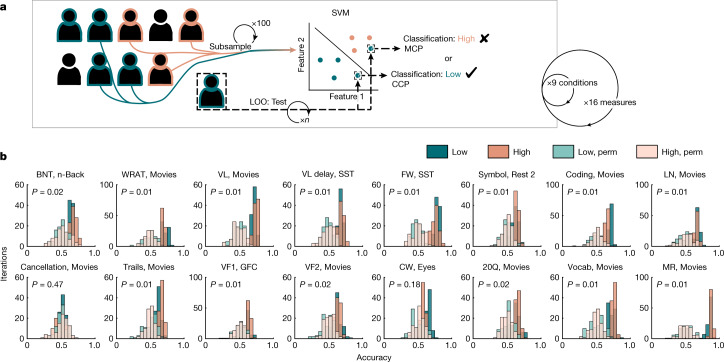
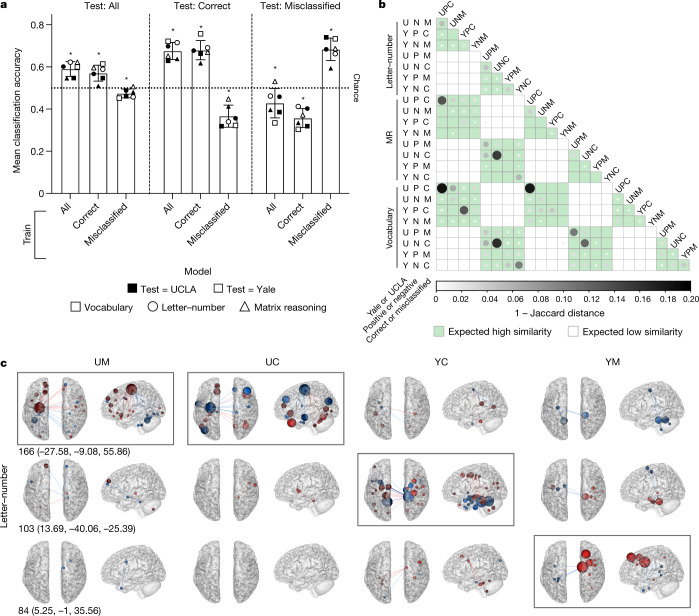
“a, For each of the three measures common to both datasets (LN, MR, vocabulary), six models were trained: one using all Yale participants (training set n: 80, 58, 58 for LN, MR, vocabulary, respectively), one using Yale CCP (50, 40, 40), one using Yale MCP (30, 18, 18), one using all UCLA participants (100, 78, 74), one”
MethodThe NimStim set of facial expressions: Judgments from untrained research participants.
Tottenham, N., Tanaka, J. W., Leon, A. C., McCarry, T., Nurse, M., Hare, T. A., Marcus, D. J., Westerlund, A., Casey, B., & Nelson, C. (2009) · Psychiatry Research · doi:10.1016/j.psychres.2008.05.006 · Cited by 3,454
PROBAST: A Tool to Assess the Risk of Bias and Applicability of Prediction Model Studies
Wolff, R. F., Moons, K. G. M., Riley, R. D., Whiting, P. F., Westwood, M., Collins, G. S., Reitsma, J. B., Kleijnen, J., Mallett, S., & for the PROBAST Group† (2019) · Annals of Internal Medicine · doi:10.7326/m18-1376 · Cited by 2,984
Functional connectome fingerprinting: Identifying individuals using patterns of brain connectivity
Finn, E. S., Shen, X., Scheinost, D., Rosenberg, M. D., Huang, J., Chun, M. M., Papademetris, X., & Constable, R. T. (2015) · Nature Neuroscience · doi:10.1038/nn.4135 · Cited by 2,747
Self-citationDelis-Kaplan Executive Function System
Delis, D. C., Kaplan, E., & Kramer, J. H. (2012) · PsycTESTS Dataset · doi:10.1037/t15082-000 · Cited by 2,683
The influence of head motion on intrinsic functional connectivity MRI
Van Dijk, K. R. A., Sabuncu, M. R., & Buckner, R. L. (2012) · NeuroImage · doi:10.1016/j.neuroimage.2011.07.044 · Cited by 2,344
Wechsler Adult Intelligence Scale--Fourth Edition
Wechsler, D. (2012) · PsycTESTS Dataset · doi:10.1037/t15169-000 · Cited by 2,232
Resting-state connectivity biomarkers define neurophysiological subtypes of depression
Drysdale, A. T., Grosenick, L., Downar, J., Dunlop, K., Mansouri, F., Meng, Y., Fetcho, R. N., Zebley, B., Oathes, D. J., Etkin, A., et al. (2017) · Nature Medicine · doi:10.1038/nm.4246 · Cited by 2,170 · cited 3×
“Cognitive tasks included: (1) balloon analogue risk task (BART); (2) paired-associate memory task (2 scans, one each for the encoding (PAMenc) and retrieval (PAMret) components of the task); (3) spatial working memory capacity (SCAP) task; (4) stop signal task (SST); and (5) task-switching (TS) task(17).”
MethodBaron‐Cohen, S., Jolliffe, T., Mortimore, C., & Robertson, M. (1997) · Journal of Child Psychology and Psychiatry · doi:10.1111/j.1469-7610.1997.tb01599.x · Cited by 1,970
Reproducible brain-wide association studies require thousands of individuals
Marek, S., Tervo-Clemmens, B., Calabro, F. J., Montez, D. F., Kay, B. P., Hatoum, A. S., Donohue, M. R., Foran, W., Miller, R. L., Hendrickson, T. J., et al. (2022) · Nature · doi:10.1038/s41586-022-04492-9 · Cited by 1,928
TEST REVIEW behavior rating inventory of executive function.
Gioia, G. A., Isquith, P. K., Guy, S. C., & Kenworthy, L. (2000) · Child Neuropsychology · doi:10.1076/chin.6.3.235.3152 · Cited by 1,925
Choosing Prediction Over Explanation in Psychology: Lessons From Machine Learning
Yarkoni, T., & Westfall, J. (2017) · Perspectives on Psychological Science · doi:10.1177/1745691617693393 · Cited by 1,916
Satterthwaite, T. D., Elliott, M. A., Gerraty, R. T., Ruparel, K., Loughead, J., Calkins, M. E., Eickhoff, S. B., Hakonarson, H., Gur, R. C., Gur, R. E., et al. (2013) · NeuroImage · doi:10.1016/j.neuroimage.2012.08.052 · Cited by 1,881
An fMRI-Based Neurologic Signature of Physical Pain
Wager, T. D., Atlas, L. Y., Lindquist, M. A., Roy, M., Woo, C.-W., & Kross, E. (2013) · New England Journal of Medicine · doi:10.1056/nejmoa1204471 · Cited by 1,597
Function in the human connectome: task-fMRI and individual differences in behavior
Barch, D. M., Burgess, G. C., Harms, M. P., Petersen, S. E., Schlaggar, B. L., Corbetta, M., Glasser, M. F., Curtiss, S., Dixit, S., Feldt, C., et al. (2013) · NeuroImage · doi:10.1016/j.neuroimage.2013.05.033 · Cited by 1,529
Resting-state fMRI in the human connectome project
Smith, S. M., Beckmann, C. F., Andersson, J., Auerbach, E. J., Bijsterbosch, J., Douaud, G., Duff, E., Feinberg, D. A., Griffanti, L., Harms, M. P., et al. (2013) · NeuroImage · doi:10.1016/j.neuroimage.2013.05.039 · Cited by 1,502
Cognition assessment using the NIH Toolbox
Weintraub, S., Dikmen, S. S., Heaton, R. K., Tulsky, D. S., Zelazo, P. D., Bauer, P. J., Carlozzi, N. E., Slotkin, J., Blitz, D., Wallner-Allen, K., et al. (2013) · Neurology · doi:10.1212/wnl.0b013e3182872ded · Cited by 1,287
Vision assessment using the NIH Toolbox
Varma, R., McKean-Cowdin, R., Vitale, S., Slotkin, J., & Hays, R. D. (2013) · Neurology · doi:10.1212/wnl.0b013e3182876e0a · Cited by 1,178
Wechsler Abbreviated Scale of Intelligence--Second Edition
Wechsler, D. (2018) · PsycTESTS Dataset · doi:10.1037/t15171-000 · Cited by 1,153
Tracking the Hemodynamic Responses to Reward and Punishment in the Striatum
Delgado, M. R., Nystrom, L. E., Fissell, C., Noll, D. C., & Fiez, J. A. (2000) · Journal of Neurophysiology · doi:10.1152/jn.2000.84.6.3072 · Cited by 1,116
Lack of group-to-individual generalizability is a threat to human subjects research
Fisher, A. J., Medaglia, J. D., & Jeronimus, B. F. (2018) · Proceedings of the National Academy of Sciences · doi:10.1073/pnas.1711978115 · Cited by 1,099
Using connectome-based predictive modeling to predict individual behavior from brain connectivity
Shen, X., Finn, E. S., Scheinost, D., Rosenberg, M. D., Chun, M. M., Papademetris, X., & Constable, R. T. (2017) · Nature Protocols · doi:10.1038/nprot.2016.178 · Cited by 1,093
Self-citationThe accuracy, fairness, and limits of predicting recidivism
Dressel, J., & Farid, H. (2018) · Science Advances · doi:10.1126/sciadv.aao5580 · Cited by 1,071
Roberts, M., Driggs, D., Thorpe, M., Gilbey, J., Yeung, M., Ursprung, S., Aviles-Rivero, A. I., Etmann, C., McCague, C., Beer, L., et al. (2021) · Nature Machine Intelligence · doi:10.1038/s42256-021-00307-0 · Cited by 1,044
Groupwise whole-brain parcellation from resting-state fMRI data for network node identification
Shen, X., Tokoglu, F., Papademetris, X., & Constable, R. T. (2013) · NeuroImage · doi:10.1016/j.neuroimage.2013.05.081 · Cited by 1,015
Self-citationA neuromarker of sustained attention from whole-brain functional connectivity
Rosenberg, M. D., Finn, E. S., Scheinost, D., Papademetris, X., Shen, X., Constable, R. T., & Chun, M. M. (2016) · Nature Neuroscience · doi:10.1038/nn.4179 · Cited by 1,014
Self-citationCross-validation failure: Small sample sizes lead to large error bars
Varoquaux, G. (2018) · NeuroImage · doi:10.1016/j.neuroimage.2017.06.061 · Cited by 897
Roberts, M. T., Driggs, D., Thorpe, M., Gilbey, J., Yeung, M., Ursprung, S., Avilés-Rivero, A. I., Etmann, C., McCague, C., Beer, L., et al. (2020) · Apollo (University of Cambridge) · doi:10.17863/cam.64000 · Cited by 895
Sleep disturbance and psychiatric disorders
Freeman, D., Sheaves, B., Waite, F., Harvey, A. G., & Harrison, P. J. (2020) · The Lancet Psychiatry · doi:10.1016/s2215-0366(20)30136-x · Cited by 843
Sleep, insomnia, and depression
Riemann, D., Krone, L. B., Wulff, K., & Nissen, C. (2020) · Neuropsychopharmacology · doi:10.1038/s41386-019-0411-y · Cited by 819
Uğurbil, K., Xu, J., Auerbach, E. J., Moeller, S., Vu, A. T., Duarte-Carvajalino, J. M., Lenglet, C., Wu, X., Schmitter, S., Van de Moortele, P. F., et al. (2013) · NeuroImage · doi:10.1016/j.neuroimage.2013.05.012 · Cited by 812
Developing a model for adult temperament
Evans, D. E., & Rothbart, M. K. (2007) · Journal of Research in Personality · doi:10.1016/j.jrp.2006.11.002 · Cited by 807
Construct Validity: Advances in Theory and Methodology
Strauss, M. E., & Smith, G. T. (2009) · Annual Review of Clinical Psychology · doi:10.1146/annurev.clinpsy.032408.153639 · Cited by 803
Yarkoni, T. (2022) · Behavioral and Brain Sciences · doi:10.1017/s0140525x20001685 · Cited by 701
Use of race and ethnicity in biomedical publication
Kaplan, J. B. (2003) · JAMA · doi:10.1001/jama.289.20.2709 · Cited by 609
MANLY, J. J., JACOBS, D. M., TOURADJI, P., SMALL, S. A., & STERN, Y. (2002) · Journal of the International Neuropsychological Society · doi:10.1017/s1355617702813157 · Cited by 607
Prediction as a Humanitarian and Pragmatic Contribution from Human Cognitive Neuroscience
Gabrieli, J. D. E., Ghosh, S. S., & Whitfield-Gabrieli, S. (2015) · Neuron · doi:10.1016/j.neuron.2014.10.047 · Cited by 535
Face Recognition Performance: Role of Demographic Information
Klare, B. F., Burge, M. J., Klontz, J. C., Vorder Bruegge, R. W., & Jain, A. K. (2012) · IEEE Transactions on Information Forensics and Security · doi:10.1109/tifs.2012.2214212 · Cited by 516
Task-induced brain state manipulation improves prediction of individual traits
Greene, A. S., Gao, S., Scheinost, D., & Constable, R. T. (2018) · Nature Communications · doi:10.1038/s41467-018-04920-3 · Cited by 496
Self-citationSTOP-IT: Windows executable software for the stop-signal paradigm
Verbruggen, F., Logan, G. D., & Stevens, M. A. (2008) · Behavior Research Methods · doi:10.3758/brm.40.2.479 · Cited by 492
Cultural Influences on Neural Substrates of Attentional Control
Hedden, T., Ketay, S., Aron, A., Markus, H. R., & Gabrieli, J. D. E. (2008) · Psychological Science · doi:10.1111/j.1467-9280.2008.02038.x · Cited by 451
Hewitt, P. L., Flett, G. L., & Mosher, S. W. (1992) · Journal of Psychopathology and Behavioral Assessment · doi:10.1007/bf00962631 · Cited by 437
Linked dimensions of psychopathology and connectivity in functional brain networks
Xia, C. H., Ma, Z., Ciric, R., Gu, S., Betzel, R. F., Kaczkurkin, A. N., Calkins, M. E., Cook, P. A., García de la Garza, A., Vandekar, S. N., et al. (2018) · Nature Communications · doi:10.1038/s41467-018-05317-y · Cited by 437
Estimation of brain age delta from brain imaging
Smith, S. M., Vidaurre, D., Alfaro-Almagro, F., Nichols, T. E., & Miller, K. L. (2019) · NeuroImage · doi:10.1016/j.neuroimage.2019.06.017 · Cited by 425
A phenome-wide examination of neural and cognitive function
Poldrack, R. A., Congdon, E., Triplett, W., Gorgolewski, K. J., Karlsgodt, K. H., Mumford, J. A., Sabb, F. W., Freimer, N. B., London, E. D., Cannon, T. D., et al. (2016) · Scientific Data · doi:10.1038/sdata.2016.110 · Cited by 413
Ten simple rules for predictive modeling of individual differences in neuroimaging
Scheinost, D., Noble, S., Horien, C., Greene, A. S., Lake, E. M., Salehi, M., Gao, S., Shen, X., O'Connor, D., Barron, D. S., et al. (2019) · NeuroImage · doi:10.1016/j.neuroimage.2019.02.057 · Cited by 381
Self-citationNoble, S., Spann, M. N., Tokoglu, F., Shen, X., Constable, R. T., & Scheinost, D. (2017) · Cerebral Cortex · doi:10.1093/cercor/bhx230 · Cited by 377
Self-citationGuilmette, T. J., Sweet, J. J., Hebben, N., Koltai, D., Mahone, E. M., Spiegler, B. J., Stucky, K., Westerveld, M., & Participants, C. (2020) · The Clinical Neuropsychologist · doi:10.1080/13854046.2020.1722244 · Cited by 376
Cui, Z., & Gong, G. (2018) · NeuroImage · doi:10.1016/j.neuroimage.2018.06.001 · Cited by 370
A snapshot of the frontiers of fairness in machine learning
Chouldechova, A., & Roth, A. (2020) · Communications of the ACM · doi:10.1145/3376898 · Cited by 354
A distributed brain network predicts general intelligence from resting-state human neuroimaging data
Dubois, J., Galdi, P., Paul, L. K., & Adolphs, R. (2018) · Philosophical Transactions of the Royal Society B: Biological Sciences · doi:10.1098/rstb.2017.0284 · Cited by 316
Elliott, M. L., Knodt, A. R., Cooke, M., Kim, M. J., Melzer, T. R., Keenan, R., Ireland, D., Ramrakha, S., Poulton, R., Caspi, A., et al. (2019) · NeuroImage · doi:10.1016/j.neuroimage.2019.01.068 · Cited by 304
Rivera Mindt, M., Byrd, D., Saez, P., & Manly, J. (2010) · The Clinical Neuropsychologist · doi:10.1080/13854040903058960 · Cited by 296
Recalibrating the use of race in medical research
Ioannidis, J. P. A., Powe, N. R., & Yancy, C. (2021) · JAMA · doi:10.1001/jama.2021.0003 · Cited by 296 · cited 1×
“using UCLA CCP (64, 48, 50) and one using UCLA MCP (36, 30, 24).”
Casaletto, K. B., Umlauf, A., Beaumont, J., Gershon, R., Slotkin, J., Akshoomoff, N., & Heaton, R. K. (2015) · Journal of the International Neuropsychological Society · doi:10.1017/s1355617715000351 · Cited by 271
A Nonlinear Simulation Framework Supports Adjusting for Age When Analyzing BrainAGE
Le, T. T., Kuplicki, R. T., McKinney, B. A., Yeh, H.-W., Thompson, W. K., Paulus, M. P., & Tulsa 1000 Investigators (2018) · Frontiers in Aging Neuroscience · doi:10.3389/fnagi.2018.00317 · Cited by 255
Confound modelling in UK Biobank brain imaging
Alfaro-Almagro, F., McCarthy, P., Afyouni, S., Andersson, J. L. R., Bastiani, M., Miller, K. L., Nichols, T. E., & Smith, S. M. (2021) · NeuroImage · doi:10.1016/j.neuroimage.2020.117002 · Cited by 249
Winkler, A. M., Webster, M. A., Vidaurre, D., Nichols, T. E., & Smith, S. M. (2015) · NeuroImage · doi:10.1016/j.neuroimage.2015.05.092 · Cited by 243
Neuropsychological Assessment: Past and Future
Casaletto, K. B., & Heaton, R. K. (2017) · Journal of the International Neuropsychological Society · doi:10.1017/s1355617717001060 · Cited by 230
Unified Framework for Development, Deployment and Robust Testing of Neuroimaging Algorithms
Joshi, A., Scheinost, D., Okuda, H., Belhachemi, D., Murphy, I., Staib, L. H., & Papademetris, X. (2011) · Neuroinformatics · doi:10.1007/s12021-010-9092-8 · Cited by 227
Self-citationOptimized Brain Extraction for Pathological Brains (optiBET)
Lutkenhoff, E. S., Rosenberg, M., Chiang, J., Zhang, K., Pickard, J. D., Owen, A. M., & Monti, M. M. (2014) · PLoS ONE · doi:10.1371/journal.pone.0115551 · Cited by 226
Comment: abandoning "race" as a variable in public health research--an idea whose time has come.
Fullilove, M. T. (1998) · American Journal of Public Health · doi:10.2105/ajph.88.9.1297 · Cited by 223
Salehi, M., Greene, A. S., Karbasi, A., Shen, X., Scheinost, D., & Constable, R. T. (2020) · NeuroImage · doi:10.1016/j.neuroimage.2019.116366 · Cited by 205
Self-citationExploration, Inference, and Prediction in Neuroscience and Biomedicine
Bzdok, D., & Ioannidis, J. P. A. (2019) · Trends in Neurosciences · doi:10.1016/j.tins.2019.02.001 · Cited by 204
Savoring the past: Positive memories evoke value representations in the striatum
Speer, M. E., Bhanji, J. P., & Delgado, M. R. (2014) · Neuron · doi:10.1016/j.neuron.2014.09.028 · Cited by 194
Rethinking and Updating Demographic Questions: Guidance to Improve Descriptions of Research Samples
Hughes, J. L., Camden, A. A., & Yangchen, T. (2016) · Psi Chi Journal of Psychological Research · doi:10.24839/2164-8204.jn21.3.138 · Cited by 188
Rosenberg, M., Noonan, S., DeGutis, J., & Esterman, M. (2013) · Attention, Perception, & Psychophysics · doi:10.3758/s13414-012-0413-x · Cited by 185
Brain-wide Electrical Spatiotemporal Dynamics Encode Depression Vulnerability
Hultman, R., Ulrich, K., Sachs, B. D., Blount, C., Carlson, D. E., Ndubuizu, N., Bagot, R. C., Parise, E. M., Vu, M.-A. T., Gallagher, N. M., et al. (2018) · Cell · doi:10.1016/j.cell.2018.02.012 · Cited by 183
Resting-state functional connectivity predicts neuroticism and extraversion in novel individuals
Hsu, W.-T., Rosenberg, M. D., Scheinost, D., Constable, R. T., & Chun, M. M. (2018) · Social Cognitive and Affective Neuroscience · doi:10.1093/scan/nsy002 · Cited by 178
Self-citationThe concept of race in Health Services Research: 1966 to 1990.
Williams, D. R. (1994) · Europe PMC (PubMed Central) · Cited by 178
Emerson, J. W., Green, W. A., Schloerke, B., Crowley, J., Cook, D., Hofmann, H., & Wickham, H. (2013) · Journal of Computational and Graphical Statistics · doi:10.1080/10618600.2012.694762 · Cited by 168
MANLY, J. J., MILLER, S. W., HEATON, R. K., BYRD, D., REILLY, J., VELASQUEZ, R. J., SACCUZZO, D. P., GRANT, I., & GROUP, T. H. N. R. C. (. (1998) · Journal of the International Neuropsychological Society · doi:10.1017/s1355617798002914 · Cited by 151
Intrinsic Fluctuations in Sustained Attention and Distractor Processing
Esterman, M., Rosenberg, M. D., & Noonan, S. K. (2014) · The Journal of Neuroscience · doi:10.1523/jneurosci.2658-13.2014 · Cited by 150
The racially diverse affective expression (RADIATE) face stimulus set
Conley, M. I., Dellarco, D. V., Rubien-Thomas, E., Cohen, A. O., Cervera, A., Tottenham, N., & Casey, B. (2018) · Psychiatry Research · doi:10.1016/j.psychres.2018.04.066 · Cited by 150
Manly, J. J., Miller, S. W., Heaton, R. K., Byrd, D., Reilly, J. S., Velasquez, R. J., Saccuzzo, D. P., & Igor Grant, A. (1998) · PubMed · Cited by 149
Bias in cross-cultural neuropsychological testing: problems and possible solutions
Fernández, A. L., & Abe, J. S. (2017) · Culture and Brain · doi:10.1007/s40167-017-0050-2 · Cited by 136
Li, J., Bzdok, D., Chen, J., Tam, A., Ooi, L. Q. R., Holmes, A. J., Ge, T., Patil, K. R., Jabbi, M., Eickhoff, S. B., et al. (2022) · Science Advances · doi:10.1126/sciadv.abj1812 · Cited by 133
Thames, A. D., Hinkin, C. H., Byrd, D. A., Bilder, R. M., Duff, K. J., Mindt, M. R., Arentoft, A., & Streiff, V. (2013) · Journal of the International Neuropsychological Society · doi:10.1017/s1355617713000076 · Cited by 131
Karcher, N. R., O’Brien, K. J., Kandala, S., & Barch, D. M. (2019) · Biological Psychiatry · doi:10.1016/j.biopsych.2019.01.013 · Cited by 131
Catabay, C. J., Stockman, J. K., Campbell, J. C., & Tsuyuki, K. (2019) · Journal of Affective Disorders · doi:10.1016/j.jad.2019.08.037 · Cited by 131
Critical Issues in Cultural Neuropsychology: Profit from Diversity
Manly, J. J. (2008) · Neuropsychology Review · doi:10.1007/s11065-008-9068-8 · Cited by 126
Prediction, Not Association, Paves the Road to Precision Medicine
Bzdok, D., Varoquaux, G. P., & Steyerberg, E. W. (2020) · JAMA Psychiatry · doi:10.1001/jamapsychiatry.2020.2549 · Cited by 124
Predictive modelling using neuroimaging data in the presence of confounds
Rao, A., Monteiro, J. M., & Mourao-Miranda, J. (2017) · NeuroImage · doi:10.1016/j.neuroimage.2017.01.066 · Cited by 114
Avery, E. W., Yoo, K., Rosenberg, M. D., Greene, A. S., Gao, S., Na, D. L., Scheinost, D., Constable, R. T., & Chun, M. M. (2020) · Journal of Cognitive Neuroscience · doi:10.1162/jocn_a_01487 · Cited by 108
Self-citationRace-Norming of Neuropsychological Tests
Gasquoine, P. G. (2009) · Neuropsychology Review · doi:10.1007/s11065-009-9090-5 · Cited by 102
Prediction of stimulus-independent and task-unrelated thought from functional brain networks
Kucyi, A., Esterman, M. S., Capella, J., Green, A., Uchida, M., Biederman, J., Gabrieli, J. D. E., Valera, E. M., & Whitfield, S. (2021) · Nature Communications · doi:10.1038/s41467-021-22027-0 · Cited by 102
Effects of prolonged mental work on functional brain topography
Gevins, A. S., Bressler, S. L., Cutillo, B. A., Illes, J., Miller, J. C., Stern, J. A., & Jex, H. R. (1990) · Electroencephalography and Clinical Neurophysiology · doi:10.1016/0013-4694(90)90035-i · Cited by 96
How Tasks Change Whole-Brain Functional Organization to Reveal Brain-Phenotype Relationships
Greene, A. S., Gao, S., Noble, S., Scheinost, D., & Constable, R. T. (2019) · Cell Reports · doi:10.1016/j.celrep.2020.108066 · Cited by 87
Self-citationControlling for effects of confounding variables on machine learning predictionsPreprint
Dinga, R., Schmaal, L., Penninx, B. W. J. H., Veltman, D. J., & Marquand, A. F. (2020) · bioRxiv (Cold Spring Harbor Laboratory) · doi:10.1101/2020.08.17.255034 · Cited by 83
Supervised machine learning for diagnostic classification from large-scale neuroimaging datasets
Lanka, P., Rangaprakash, D., Dretsch, M. N., Katz, J. S., Denney, T. S., & Deshpande, G. (2020) · Brain Imaging and Behavior · doi:10.1007/s11682-019-00191-8 · Cited by 79
Predicting moment-to-moment attentional state
Rosenberg, M. D., Finn, E. S., Constable, R. T., & Chun, M. M. (2015) · NeuroImage · doi:10.1016/j.neuroimage.2015.03.032 · Cited by 76
Self-citationThe Influence of Culture on Cognition
Pérez-Arce, P. (1999) · Archives of Clinical Neuropsychology · doi:10.1016/s0887-6177(99)00007-4 · Cited by 72
Transdiagnostic, Connectome-Based Prediction of Memory Constructs Across Psychiatric Disorders
Barron, D. S., Gao, S., Dadashkarimi, J., Greene, A. S., Spann, M. N., Noble, S., Lake, E. M. R., Krystal, J. H., Constable, R. T., & Scheinost, D. (2021) · Cerebral Cortex · doi:10.1093/cercor/bhaa371 · Cited by 60
Self-citationOrigins Matter: Culture Impacts Cognitive Testing in Parkinson’s Disease
Statucka, M., & Cohn, M. (2019) · Frontiers in Human Neuroscience · doi:10.3389/fnhum.2019.00269 · Cited by 56
Conceptualizing Race in Research
Corbie-Smith, G., Henderson, G., Blumenthal, C., Dorrance, J., & Estroff, S. (2008) · Journal of the National Medical Association · doi:10.1016/s0027-9684(15)31470-x · Cited by 54
Werry, A. E., Daniel, M., & Bergström, B. (2019) · Neuropsychology · doi:10.1037/neu0000579 · Cited by 54
A phenome-wide examination of neural and cognitive functionPreprint
Poldrack, R. A., Congdon, E. L., Triplett, W. T., et al. (2016) · bioRxiv (Cold Spring Harbor Laboratory) · doi:10.1101/059733 · Cited by 46
Heaton, Grant, and Matthews' Comprehensive Norms: An Overzealous Attempt
Fastenau, P. S., & Adams, K. M. (1996) · Journal of Clinical and Experimental Neuropsychology · doi:10.1080/01688639608409000 · Cited by 44
Addressing Confounding in Predictive Models with an Application to Neuroimaging
Linn, K. A., Gaonkar, B., Doshi, J., Davatzikos, C., & Shinohara, R. T. (2016) · The International Journal of Biostatistics · doi:10.1515/ijb-2015-0030 · Cited by 44
Behavioral and brain signatures of substance use vulnerability in childhood
Rapuano, K. M., Rosenberg, M. D., Maza, M. T., Dennis, N. J., Dorji, M., Greene, A. S., Horien, C. L., Scheinost, D., Constable, R. T., & Casey, B. J. (2020) · Developmental Cognitive Neuroscience · doi:10.1016/j.dcn.2020.100878 · Cited by 43
Self-citationDifferential reward processing in subtypes of adult attention deficit hyperactivity disorder
Edel, M.-A., Enzi, B., Witthaus, H., Tegenthoff, M., Peters, S., Juckel, G., & Lissek, S. (2013) · Journal of Psychiatric Research · doi:10.1016/j.jpsychires.2012.09.026 · Cited by 42
Brain-behaviour modes of covariation in healthy and clinically depressed young people
Mihalik, Á., Ferreira, F. S., Rosa, M. J., Moutoussis, M., Ziegler, G., Monteiro, J. M., Portugal, L. C. L., Adams, R. A., Romero-García, R., Vértes, P. E., et al. (2019) · Scientific Reports · doi:10.1038/s41598-019-47277-3 · Cited by 41
A nonlinear simulation framework supports adjusting for age when analyzing BrainAGEPreprint
Le, T. T., Kuplicki, R., McKinney, B. A., et al. (2018) · bioRxiv (Cold Spring Harbor Laboratory) · doi:10.1101/377648 · Cited by 38
Is the superior verbal memory span of Mandarin speakers due to faster rehearsal?
Mattys, S. L., Baddeley, A., & Trenkic, D. (2017) · Memory & Cognition · doi:10.3758/s13421-017-0770-8 · Cited by 37
Mackenzie, G., & Wonders, E. (2016) · Frontiers in Psychology · doi:10.3389/fpsyg.2016.00794 · Cited by 36
Confound modelling in UK Biobank brain imagingPreprint
Alfaro‐Almagro, F., McCarthy, P., Afyouni, S., et al. (2020) · bioRxiv (Cold Spring Harbor Laboratory) · doi:10.1101/2020.03.11.987693 · Cited by 36
Janus‐faced race: Is race biological, social, or mythical?
Hochman, A. (2021) · American Journal of Physical Anthropology · doi:10.1002/ajpa.24169 · Cited by 35
Image Counterfactual Sensitivity Analysis for Detecting Unintended Bias
Denton, E., Hutchinson, B., Mitchell, M., Gebru, T., & Zaldivar, A. (2019) · arXiv (Cornell University) · doi:10.48550/arxiv.1906.06439 · Cited by 31
Neighborhood disadvantage and children’s cognitive skill trajectories
Vinopal, K. M., & Morrissey, T. W. (2020) · Children and Youth Services Review · doi:10.1016/j.childyouth.2020.105231 · Cited by 30
Elliott, M. L., Knodt, A. R., Cooke, M. E., et al. (2018) · bioRxiv (Cold Spring Harbor Laboratory) · doi:10.1101/330530 · Cited by 28
The Constrained Network-Based Statistic: A New Level of Inference for Neuroimaging
Noble, S., & Scheinost, D. (2020) · Lecture notes in computer science · doi:10.1007/978-3-030-59728-3_45 · Cited by 20
Self-citationNitsch, K. P., Casaletto, K. B., Carlozzi, N. E., Tulsky, D. S., Heinemann, A. W., & Heaton, R. K. (2017) · Rehabilitation Psychology · doi:10.1037/rep0000122 · Cited by 15
The Cost of Untracked Diversity in Brain-Imaging PredictionPreprint
Benkarim, O. M., Paquola, C., Park, B., Kebets, V., Hong, S., de Wael, R. V., Zhang, S., Yeo, B. T. T., Eickenberg, M., Ge, T., et al. (2021) · bioRxiv (Cold Spring Harbor Laboratory) · doi:10.1101/2021.06.16.448764 · Cited by 12
Karr, J. E., Mindt, M. R., & Iverson, G. L. (2021) · Archives of Clinical Neuropsychology · doi:10.1093/arclin/acab064 · Cited by 12
Stark, G. F., Avery, E. W., Rosenberg, M. D., Greene, A. S., Gao, S., Scheinost, D., Constable, R. T., Chun, M. M., & Yoo, K. (2021) · Brain and Behavior · doi:10.1002/brb3.2105 · Cited by 9
Self-citationMacAulay, R. K., Boeve, A. R., & Halpin, A. (2021) · Archives of Clinical Neuropsychology · doi:10.1093/arclin/acab018 · Cited by 9
Brain-behaviour modes of covariation in healthy and clinically depressed young peoplePreprint
Mihalik, Á., Ferreira, F. S., Rosa, M. J., et al. (2018) · bioRxiv (Cold Spring Harbor Laboratory) · doi:10.1101/487421 · Cited by 7
Behavioral and brain signatures of substance use vulnerability in childhoodPreprint
Rapuano, K. M., Rosenberg, M. D., Maza, M. T., et al. (2020) · bioRxiv (Cold Spring Harbor Laboratory) · doi:10.1101/2020.10.19.346403 · Cited by 5
Stereotype Threat and Neuropsychological Test Performance in the U.S. African American Population
Whaley, A. L. (2021) · Archives of Clinical Neuropsychology · doi:10.1093/arclin/acab020 · Cited by 5
The Influence of Culture on Cognition
Perez-Arce, P. (1999) · Archives of Clinical Neuropsychology · doi:10.1093/arclin/14.7.581
Research works printed but not linked: 7
- Wang L-I Race as proxy: situational racism and self-fulfilling stereotypes DePaul Law Rev. 2004 53 1013 1110
- Wilkinson, G. S. & Robertson, G. J. Wide Range Achievement Test (WRAT5) (Pearson, 2017).
- Derogatis, L. R. Brief Symptom Inventory (Pearson, 1993).
- Watson D Clark L The PANAS-X manual for the Positive and Negative Affect Schedule-Expanded Form Iowa Res. Online 1999 277 1 27
- Sheslow, D. & Adams, W. Wide Range Assessment of Memory and Learning 2nd edn (Pearson, 2003).
- Frackowiak, R. S. J. et al. (eds) Human Brain Function (Academic Press, 2004).
- First, M., Spitzer, R., Gibbon, M. & Williams, J. Structured Clinical Interview for DSM-IV-TR Axis I Disorders, Research Version, Patient Edition (Biometrics Research, New York State Psychiatric Institute, 2002).
Cited by
Confronting racially exclusionary practices in the acquisition and analyses of neuroimaging data
Ricard, J. A., Parker, T., Dhamala, E., Kwasa, J. A. C., Allsop, A. S., & Holmes, A. J. (2022) · Nature Neuroscience · doi:10.1038/s41593-022-01218-y · Cited by 178
Evidence for embracing normative modeling
Rutherford, S., Barkema, P., Tso, I. F., Sripada, C., Beckmann, C. F., Ruhe, H. G., & Marquand, A. F. (2023) · eLife · doi:10.7554/elife.85082 · Cited by 175
“This is a major limitation that requires additional future work and should be considered carefully when transferring the model to diverse data ( Benkarim et al., 2022 ; Greene et al., 2022 ; Li et al., 2022 ).”
MethodA Systematic Evaluation of Machine Learning–Based Biomarkers for Major Depressive Disorder
Winter, N. R., Blanke, J., Leenings, R., Ernsting, J., Fisch, L., Sarink, K., Barkhau, C., Emden, D., Thiel, K., Flinkenflügel, K., et al. (2024) · JAMA Psychiatry · doi:10.1001/jamapsychiatry.2023.5083 · Cited by 158
Factors associated with healthy aging in Latin American populations
Santamaria-Garcia, H., Sainz-Ballesteros, A., Hernandez, H., Moguilner, S., Maito, M., Ochoa-Rosales, C., Corley, M., Valcour, V., Miranda, J. J., Lawlor, B., et al. (2023) · Nature Medicine · doi:10.1038/s41591-023-02495-1 · Cited by 141
Sun, X., Sun, J., Lu, X., Dong, Q., Zhang, L., Wang, W., Liu, J., Ma, Q., Wang, X., Wei, D., et al. (2023) · Biological Psychiatry · doi:10.1016/j.biopsych.2023.05.021 · Cited by 129
Metadata
- Authors
- Greene, A. S., Shen, X., Noble, S., Horien, C., Hahn, C. A., Arora, J., Tokoglu, F., Spann, M. N., Carrión, C. I., Barron, D. S., Sanacora, G., Srihari, V. H., Woods, S. W., Scheinost, D., & Constable, R. T.
- Affiliations
- Yale University (US)
- Columbia University Irving Medical Center (US)
- Brigham and Women's Hospital (US)
- Corresponding author
- Greene, Abigail S.
- Constable, R. Todd
- ORCID
- Venue
- Nature
- Published
- 2022-08-24
- Volume
- 609
- Issue
- 7925
- Pages
- 109-118
- ISSN
- 0028-0836 (ISSN-L)
- 1476-4687
- PMC
- PMC9433326
- OpenAlex
- W4293004881
- Semantic Scholar
- d6715d38bdf3f82b173c06d8008f5e0ff6aa9961
- Cited by
- 167
- References
- 129
- Citations by year
- 2026: 26 · 2025: 38 · 2024: 59 · 2023: 36 · 2022: 8
- FWCI
- 18.17
- Type
- journal article
- Language
- en
- Open access
- hybrid
- doi.org
- Licence
- cc-by
- creativecommons.org/licenses/by/4.0 (tdm)
- creativecommons.org/licenses/by/4.0 (vor)
- Locations
- Nature (publishedVersion, cc-by)
- PubMed Central (publishedVersion, cc-by)
- PubMed (publishedVersion)
- RePEc: Research Papers in Economics (submittedVersion)
- Funders
- National Institutes of Health (5u54mh091657-05, 1U54‐MH‐091657, UL1TR001863, TL1TR001864)
- McDonnell Center for Systems Neuroscience (1U54MH091657)
- National Institute on Aging (P30AG066508)
- National Institute of Mental Health (R01MH103831, R01MH121095, MH121095, 1U54 MH091657, U54-MH091657, T32 MH 19961, T32MH019961)
- National Institute of General Medical Sciences (T32GM007205)
- NIH Blueprint for Neuroscience Research (1U54-MH-091657)
- National Center for Advancing Translational Sciences
- Topics
- Life Sciences › Neuroscience › Cognitive Neuroscience › Functional Brain Connectivity Studies
- Health Sciences › Medicine › Radiology, Nuclear Medicine and Imaging › Advanced Neuroimaging Techniques and Applications
- Life Sciences › Neuroscience › Cognitive Neuroscience › Neural and Behavioral Psychology Studies
- Keywords
- model failure, individual differences, neurocognitive measures, clinical covariates, predictive modeling, generalizability, neural circuits
- MeSH terms
- Mental Status and Dementia Tests, Brain, Computer Simulation, Humans, Individuality, Models, Biological, Phenotype, Stereotyping, Datasets as Topic
About these checks
Registry, retraction, Cites and statistics results are computed, not judged, with one exception: a printed reference that no index lists is read once by a model before it counts as a citation error. Claims are extracted by a model and kept only when their quote appears verbatim in the text; each cited source is then checked, with a model’s help, for whether it says what the claim relies on. Those verdicts can be wrong — read the claim’s quote and the cited source before relying on one.
Statistics and arithmetic are recomputed, not judged.
Confidence bands are shown only for fields calibrated on our annotated test set. None is calibrated yet, so no band is shown.
What counts as a claim ›How we measure confidence ›How we check this ›
Are you an author, or do you see a problem with this page? Request a review
Data sources
Bibliographic data: Semantic Scholar, OpenAlex, Crossref.
Contains information from the Semantic Scholar Academic Graph Datasets, made available under the ODC Attribution License (ODC-BY 1.0).
Semantic Scholar’s data is described in: Kinney, R., et al. (2023). The Semantic Scholar Open Data Platform. arXiv:2301.10140.
