

Cortical–hippocampal coupling during manifold exploration in motor cortex
Open accessThe DOI matches its Crossref record; 67 of the 67 references it cites were found in a registry or an index.
Abstract
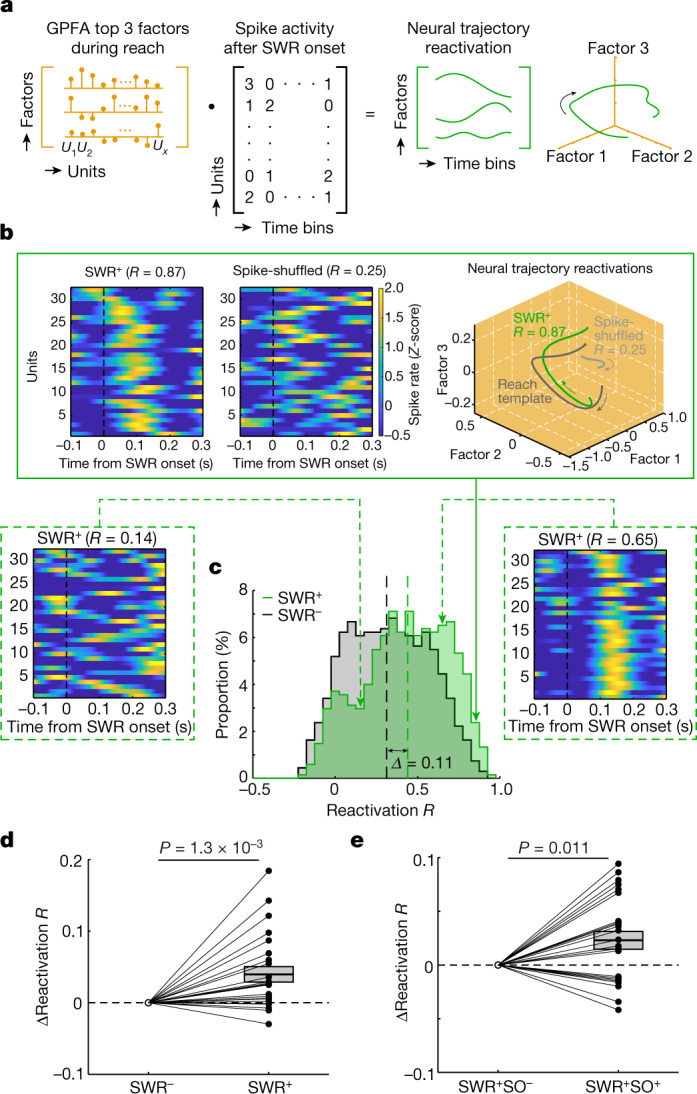
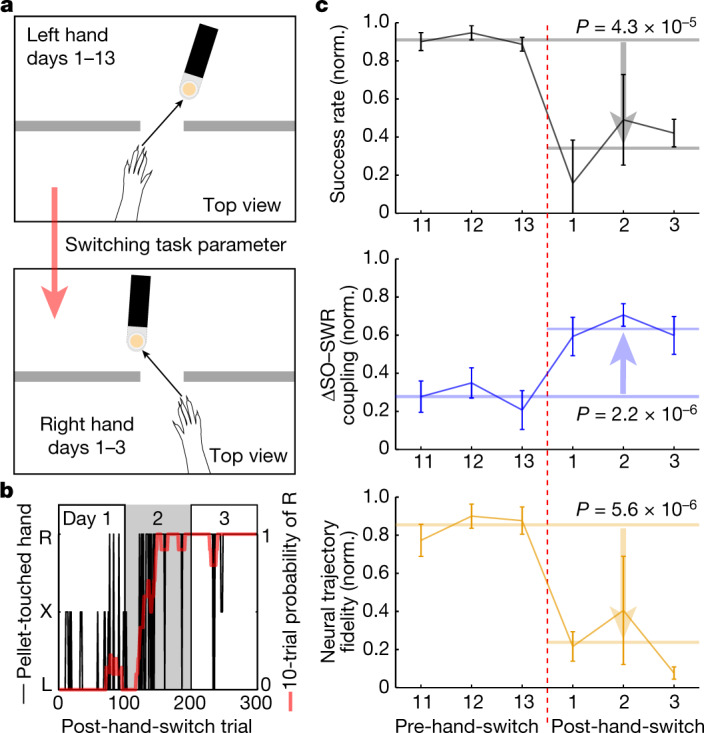
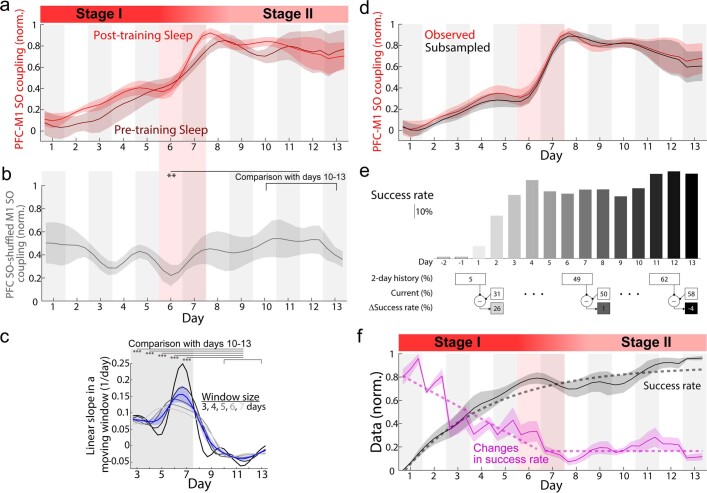
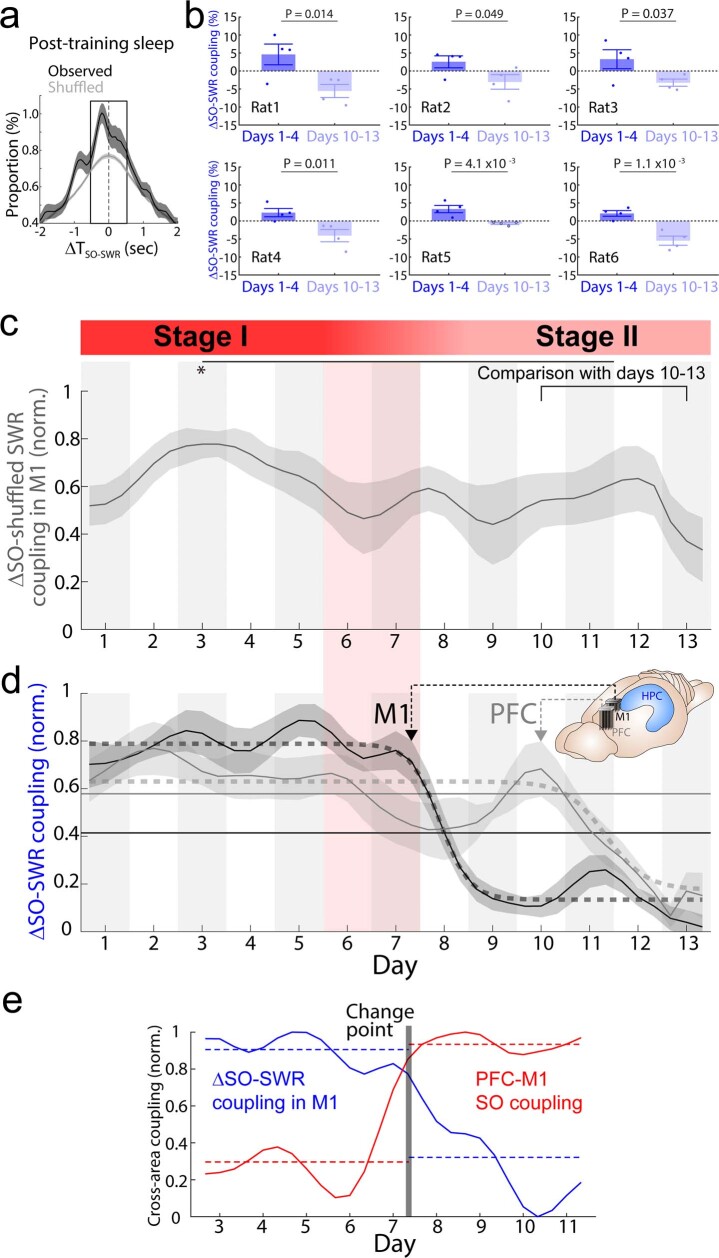
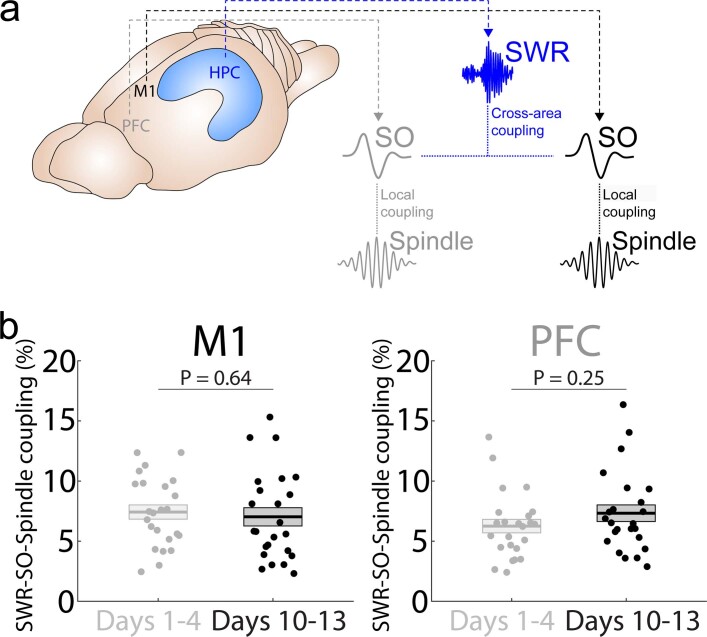
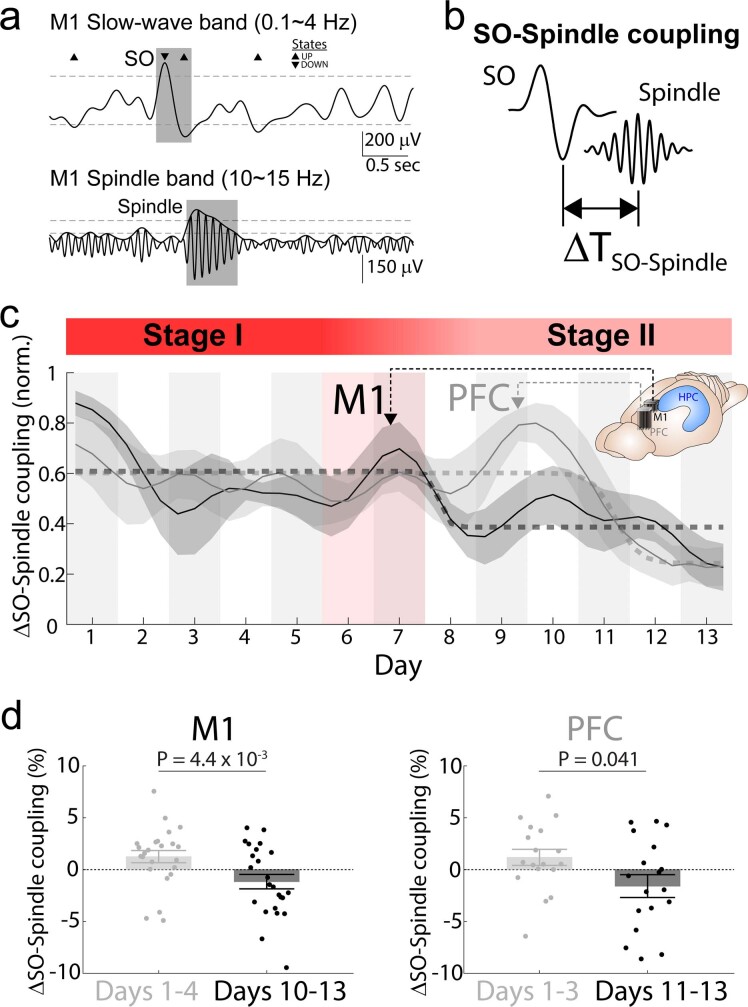
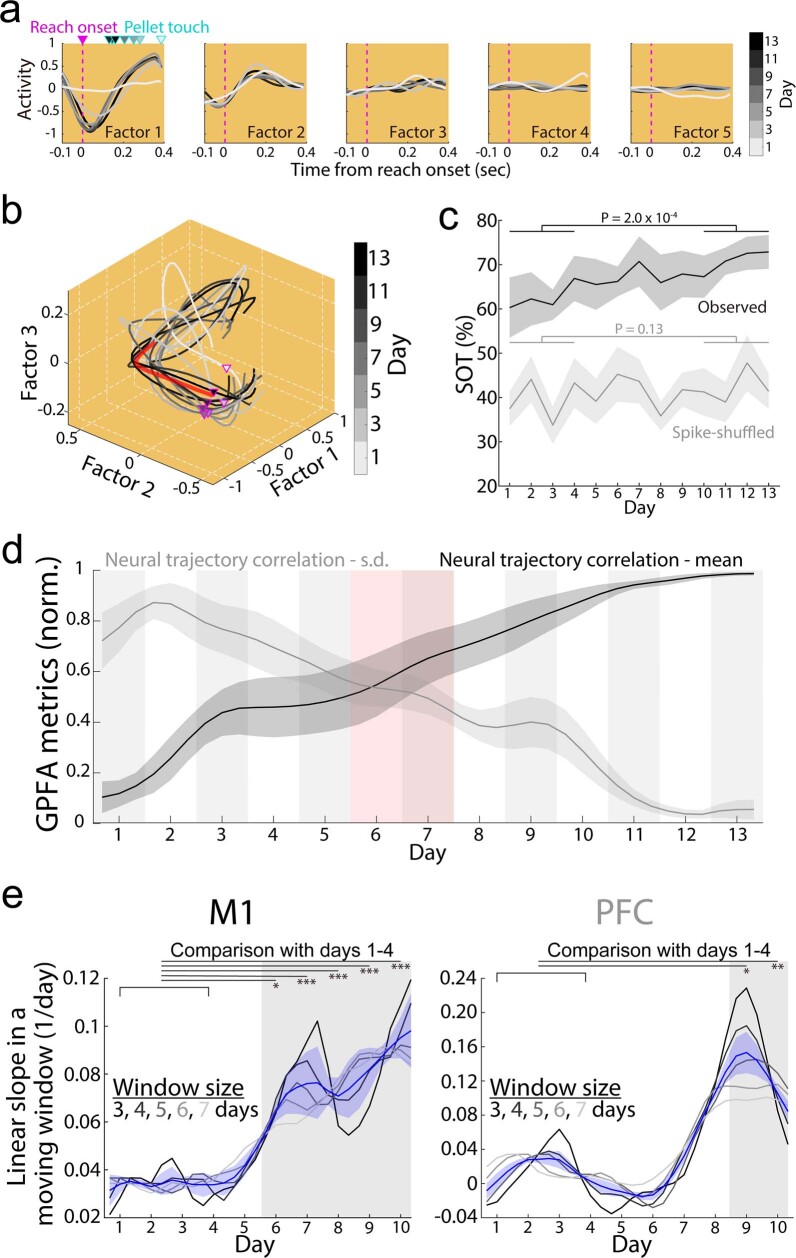
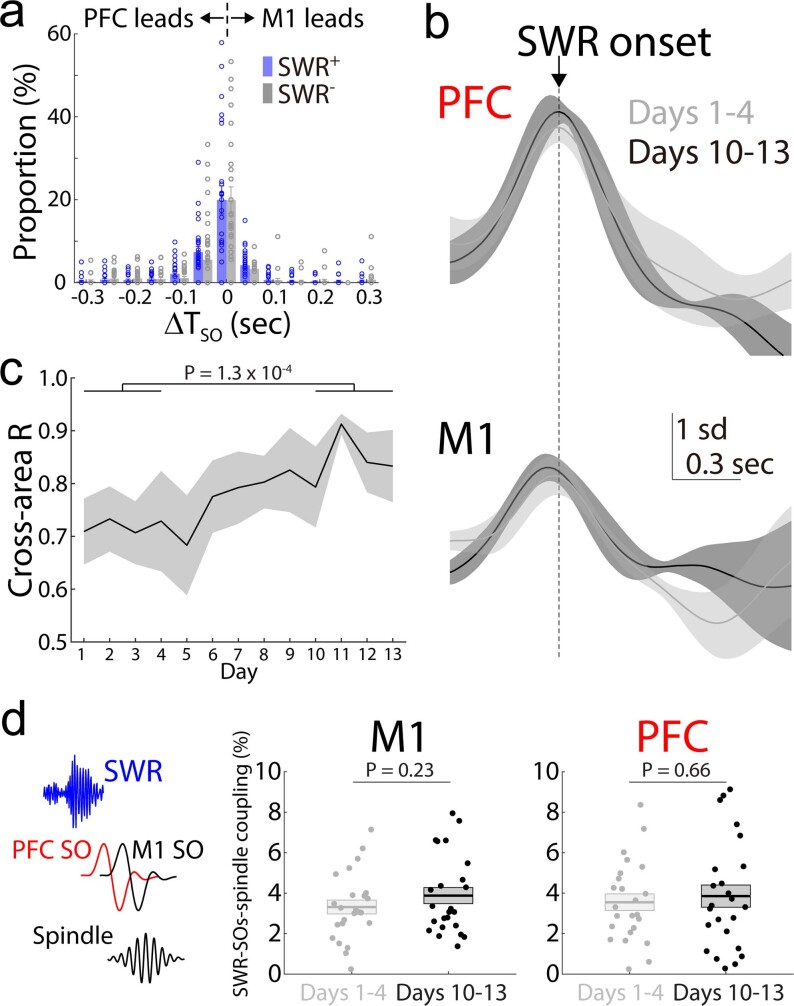
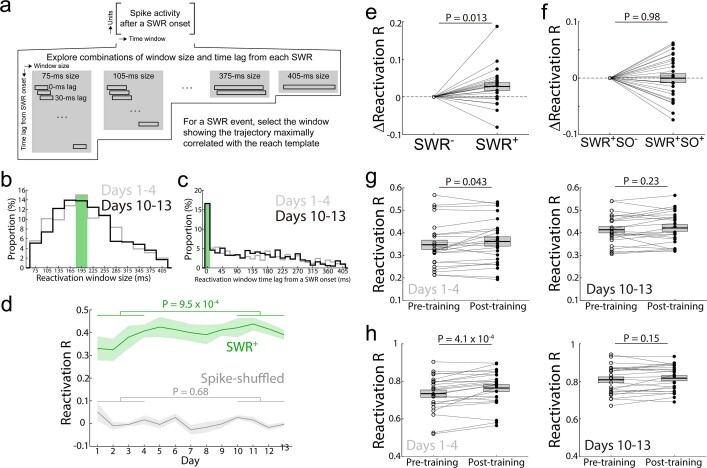
Systems consolidation—a process for long-term memory stabilization—has been hypothesized to occur in two stages 1–4 . Whereas new memories require the hippocampus 5–9 , they become integrated into cortical networks over time 10–12 , making them independent of the hippocampus. How hippocampal–cortical dialogue precisely evolves during this and how cortical representations change in concert is unknown. Here, we use a skill learning task 13,14 to monitor the dynamics of cross-area coupling during non-rapid eye movement sleep along with changes in primary motor cortex (M1) representational stability. Our results indicate that precise cross-area coupling between hippocampus, prefrontal cortex and M1 can demarcate two distinct stages of processing. We specifically find that each animal demonstrates a sharp increase in prefrontal cortex and M1 sleep slow oscillation coupling with stabilization of performance. This sharp increase then predicts a drop in hippocampal sharp-wave ripple (SWR)–M1 slow oscillation coupling—suggesting feedback to inform hippocampal disengagement and transition to a second stage. Notably, the first stage shows significant increases in hippocampal SWR–M1 slow oscillation coupling in the post-training sleep and is closely associated with rapid learning and variability of the M1 low-dimensional manifold. Strikingly, even after consolidation, inducing new manifold exploration by changing task parameters re-engages hippocampal–M1 coupling. We thus find evidence for dynamic hippocampal–cortical dialogue associated with manifold exploration during learning and adaptation.
Overview
The claims and statistics of this paper haven’t been checked yet.
Free: it reads the open-access text and checks the first 5 claims that cite a source we can check. Create a free account to check every claim.
Integrity signals
Registry
Cites
Statistics
Figures
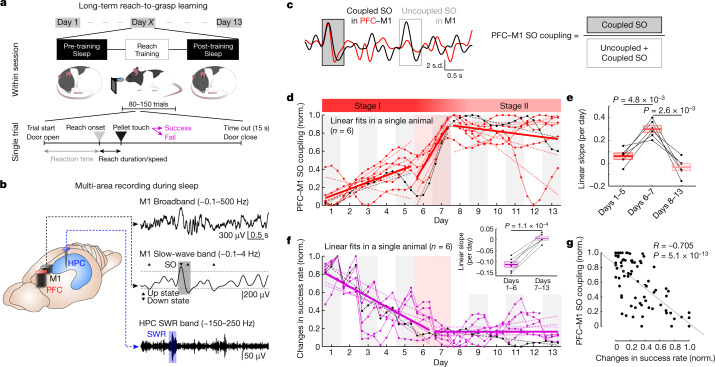
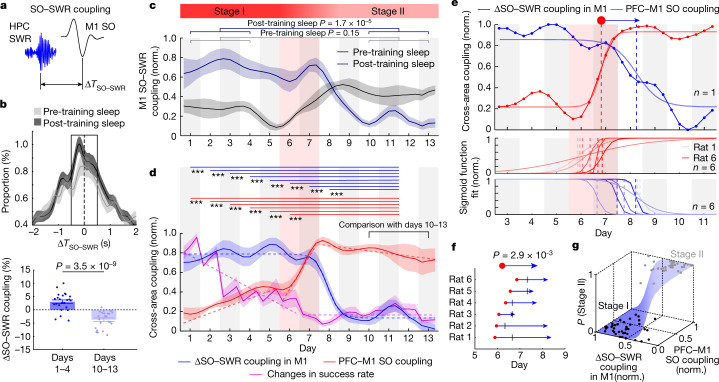
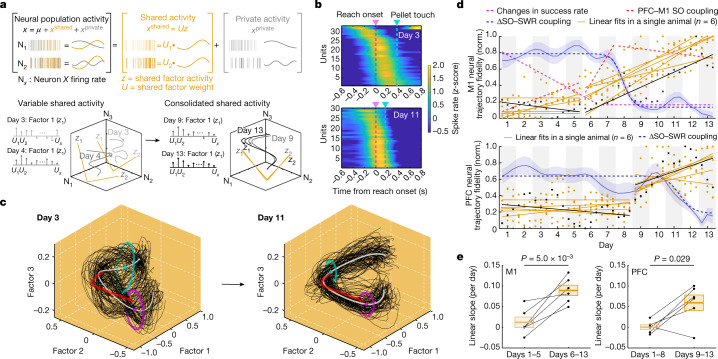
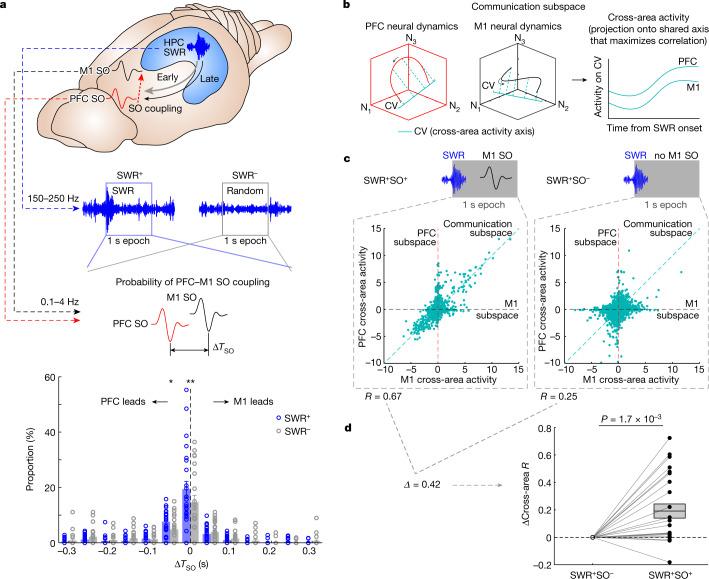
Verification
Claims the paper makes
The claims and statistics of this paper haven’t been checked yet.
Free: it reads the open-access text and checks the first 5 claims that cite a source we can check. Create a free account to check every claim.
Claims other papers make about this one
Each is checked against this paper’s own text: does it say what the citing paper says it does?
The cited source says what the claim attributes to it.
In the citing paper
“Likewise, rats training a prehension skill task initially showed increased hippocampal ripples coupled to SOs in primary motor cortex during post-training SWS.201”
From Sleep—A brain-state serving systems memory consolidation (2023) · cites this paper as [201]
The cited source says what the claim attributes to it.
In the citing paper
“Interestingly, once motor performance stabilized, the rats consistently exhibited a sharp increase in SO coupling between prefrontal and primary motor cortical areas which was accompanied by a drop in the coupling of hippocampal ripples to SOs in primary motor cortex.”
From Sleep—A brain-state serving systems memory consolidation (2023) · cites this paper as [201]
Self-check
Percentages, sums and reported differences re-computed from the paper’s own numbers.
The self-check needs the paper’s full text.
Citations
Cites
McClelland, J. L., McNaughton, B. L., & O'Reilly, R. C. (1995) · Psychological Review · doi:10.1037/0033-295x.102.3.419 · Cited by 5,256
Reactivation of hippocampal ensemble memories during sleep
Wilson, M. A., & McNaughton, B. L. (1994) · Science · doi:10.1126/science.8036517 · Cited by 3,118
Optimal Detection of Changepoints With a Linear Computational Cost
Killick, R., Fearnhead, P., & Eckley, I. A. (2012) · Journal of the American Statistical Association · doi:10.1080/01621459.2012.737745 · Cited by 2,548
The organization of recent and remote memories
Frankland, P. W., & Bontempi, B. (2005) · Nature Reviews Neuroscience · doi:10.1038/nrn1607 · Cited by 2,138
A Generalized Solution of the Orthogonal Procrustes Problem
Schönemann, P. H. (1966) · Psychometrika · doi:10.1007/bf02289451 · Cited by 2,040
Memory consolidation, retrograde amnesia and the hippocampal complex
Nadel, L., & Moscovitch, M. (1997) · Current Opinion in Neurobiology · doi:10.1016/s0959-4388(97)80010-4 · Cited by 1,924
Functional MRI evidence for adult motor cortex plasticity during motor skill learning
Kami, A., Meyer, G., Jezzard, P., Adams, M. M., Turner, R., & Ungerleider, L. G. (1995) · Nature · doi:10.1038/377155a0 · Cited by 1,883
Hippocampal sharp wave-ripple: A cognitive biomarker for episodic memory and planning
Buzsáki, G. (2015) · Hippocampus · doi:10.1002/hipo.22488 · Cited by 1,759
Two-stage model of memory trace formation: A role for “noisy” brain states
Buzsáki, G. (1989) · Neuroscience · doi:10.1016/0306-4522(89)90423-5 · Cited by 1,709
Neural population dynamics during reaching
Churchland, M. M., Cunningham, J. P., Kaufman, M. T., Foster, J. D., Nuyujukian, P., Ryu, S. I., & Shenoy, K. V. (2012) · Nature · doi:10.1038/nature11129 · Cited by 1,626
Research works printed but not linked: 1
- Rieke, F., Warland, D., Van Steveninck, R. D. R. & Bialek, W. Spikes: Exploring the Neural Code (MIT Press, 1999).
Cited by
Sleep—A brain-state serving systems memory consolidation
Brodt, S., Inostroza, M., Niethard, N., & Born, J. (2023) · Neuron · doi:10.1016/j.neuron.2023.03.005 · Cited by 343
Coupled sleep rhythms for memory consolidation
Staresina, B. P. (2024) · Trends in Cognitive Sciences · doi:10.1016/j.tics.2024.02.002 · Cited by 113
Sleep’s contribution to memory formation
Lutz, N. D., Harkotte, M., & Born, J. (2025) · Physiological Reviews · doi:10.1152/physrev.00054.2024 · Cited by 60
Symmetry breaking organizes the brain’s resting state manifold
Fousek, J., Rabuffo, G., Gudibanda, K., Sheheitli, H., Petkoski, S., & Jirsa, V. (2024) · Scientific Reports · doi:10.1038/s41598-024-83542-w · Cited by 36
Learning leaves a memory trace in motor cortex
Losey, D. M., Hennig, J. A., Oby, E. R., Golub, M. D., Sadtler, P. T., Quick, K. M., Ryu, S. I., Tyler‐Kabara, E. C., Batista, A. P., Yu, B. M., et al. (2024) · Current Biology · doi:10.1016/j.cub.2024.03.003 · Cited by 43
“11,44,65 Our results focused on the short-term inception of a motor memory within an hour or so of the learned experience.”
BackgroundLatent learning drives sleep-dependent plasticity in distinct CA1 subpopulations
Guo, W., Zhang, J. J., Newman, J. P., & Wilson, M. A. (2024) · Cell Reports · doi:10.1016/j.celrep.2024.115028 · Cited by 30
Barnaveli, I., Viganò, S., Reznik, D., Haggard, P., & Doeller, C. F. (2025) · Nature Communications · doi:10.1038/s41467-025-59153-y · Cited by 25
“Recent studies suggest a close link between these two systems during skill learning tasks 52,53 .”
Ensemble reactivations during brief rest drive fast learning of sequences
Griffin, S., Khanna, P., Choi, H., Thiesen, K., Novik, L., Morecraft, R. J., & Ganguly, K. (2025) · Nature · doi:10.1038/s41586-024-08414-9 · Cited by 25
“We next evaluated whether reactivations of task-related ensembles in M1—a key driver of offline gains during sleep 4,6,28–30 —are associated with MOGs.”
InfluentialSelf-citationHippocampal replay sequence governed by spontaneous brain-wide dynamics
Yang, Y., Leopold, D. A., Duyn, J. H., & Liu, X. (2024) · PNAS Nexus · doi:10.1093/pnasnexus/pgae078 · Cited by 20
“Hippocampal ripples/replays have been found to be coordinated with cortical activities in the visual cortex (33), the motor cortex (34), and the prefrontal area (35) during sleep and awake rest, playing a critical role in memory consolidation.”
BackgroundFeliciano‐Ramos, P. A., Galazo, M. J., Penagos, H., & Wilson, M. A. (2023) · Learning & Memory · doi:10.1101/lm.053834.123 · Cited by 22
“Inaddition,are-cent study by Kim et al. (2023) found evidence that cortical down states in the motor and PFC, together with hippocampal SWRs, increase theircouplingduringlearninganddisengageduring adaptation.”
BackgroundSignatures of task learning in neural representations
Gurnani, H., & Cayco-Gajic, N. A. (2023) · Current Opinion in Neurobiology · doi:10.1016/j.conb.2023.102759 · Cited by 25
Hippocampal Ripples during Offline Periods Predict Human Motor Sequence Learning
Chen, P., Stritzelberger, J., Walther, K., Hamer, H. M., & Staresina, B. P. (2025) · Journal of Neuroscience · doi:10.1523/jneurosci.1502-25.2025 · Cited by 17
“Interestingly, accumulating evidence points to an important role of hippocampal engagement during o ffl ine periods, even in tasks that seemingly do not require the hippocampus during acquisition (Sawangjit et al., 2018; Schapiro et al., 2019; Kim et al., 2023).”
Applications of Bridgehead Heterocycles in Drug Design and Medicinal Chemistry
Martino, S. D., Amico, P., & Rosa, M. D. (2025) · Topics in Current Chemistry · doi:10.1007/s41061-025-00502-2 · Cited by 20
Systems memory consolidation during sleep: oscillations, neuromodulators, and synaptic remodeling
Kim, J., & Park, M. (2025) · BMB Reports · doi:10.5483/bmbrep.2025-0033 · Cited by 14
“However, recent research has challenged this distinction, revealing that even memories previously thought to be hippocampus-independent, such as procedural or skill-based motor memories, also involve hippocampal activity, particularly during the early stages of consolidation (6, 7).”
Self-citationMahmoodi, A., Luo, S., Harbison, C., Piray, P., & Rushworth, M. F. S. (2024) · Neuron · doi:10.1016/j.neuron.2024.09.001 · Cited by 17
A time window for memory consolidation during NREM sleep revealed by cAMP oscillation
Deng, Z., Fei, X., Zhang, S., & Xu, M. (2025) · Neuron · doi:10.1016/j.neuron.2025.03.020 · Cited by 22
Progress on the hippocampal circuits and functions based on sharp wave ripples
Xie, B., Zhen, Z., Guo, O., Li, H., Guo, M., & Zhen, J. (2023) · Brain Research Bulletin · doi:10.1016/j.brainresbull.2023.110695 · Cited by 13
Communication subspace dynamics of the canonical olfactory pathway
González, J., Torterolo, P., Bolding, K. A., & Tort, A. B. L. (2024) · iScience · doi:10.1016/j.isci.2024.111275 · Cited by 13
“47 14 This analysis allowed us to pinpoint groups of cells across areas that exhibit maximal correlation in time and form functional partnerships following each sniff.”
Amygdalo-cortical dialogue underlies memory enhancement by emotional association
Saito, Y., Osako, Y., Odagawa, M., Oisi, Y., Matsubara, C., Kato, S., Kobayashi, K., Morita, M., Johansen, J. P., & Murayama, M. (2025) · Neuron · doi:10.1016/j.neuron.2025.01.001 · Cited by 18
Replay of procedural memory is independent of the hippocampus
Thompson, E., Rollik, L. B., Waked, B., Mills, G., Pati, S., Kaur, J., Geva, B., Li, H., Carrasco-Davis, R., George, T. M., et al. (2026) · Nature Neuroscience · doi:10.1038/s41593-026-02362-5 · Cited by 12
“…consolidation of all kinds of memory by boosting context-related representations throughout cortical and subcortical circuits 1–3,5,6,9 – 14 However, whether the hippocampus plays an obligatory role in the consolidation of nondeclarative memories is a matter of ongoing debate 6,8,11,13,15–23 .”
From cell types to population dynamics: Making hippocampal manifolds physiologically interpretable
Esparza, J., Sebastian, E. R., & de la Prida, L. M. (2023) · Current Opinion in Neurobiology · doi:10.1016/j.conb.2023.102800 · Cited by 13
“Under this framework, the computational underpinnings of remapping, context and generalization could be evaluated in abstracted representations [42,43].”
Emergence of preparatory dynamics in VIP interneurons during motor learning
Arroyo, S., Barati, S., Kim, K.-S., Aparicio, F., & Ganguly, K. (2023) · Cell Reports · doi:10.1016/j.celrep.2023.112834 · Cited by 12
Self-citationChoi, H., Kim, J., Khanna, P., Griffin, S., Novik, L., Morecraft, R. J., Morrison, J. H., & Ganguly, K. (2025) · Neuron · doi:10.1016/j.neuron.2025.09.013 · Cited by 11
Self-citationSleep fragmentation reduces explorative behaviors and impairs motor coordination in male mice
Xiong, Y., Zhu, J. H., He, Y., Qu, W., Huang, Z., & Ding, F. (2023) · Journal of Neuroscience Research · doi:10.1002/jnr.25268 · Cited by 10
“Cognitive processing is crucial in maintaining motor performance, involving both motor cortex and hippocampus (Kim et al., 2023).”
BackgroundSleep need driven oscillation of glutamate synaptic phenotype
Vogt, K. E., Kulkarni, A., Pandey, R., Dehnad, M., Konopka, G., & Greene, R. W. (2025) · eLife · doi:10.7554/elife.98280.4 · Cited by 10
Sleep Consolidation Potentiates Sensorimotor Adaptation
Solano, A., Lerner, G., Griffa, G., Deleglise, Á., Caffaro, P., Riquelme, L. A., Pérez-Chada, D., & Della‐Maggiore, V. (2024) · Journal of Neuroscience · doi:10.1523/jneurosci.0325-24.2024 · Cited by 11
Theta Frequency Electromagnetic Stimulation Enhances Functional Recovery After Stroke
Okabe, N., Hovanesyan, M., Azarapetian, S., Dai, W., Weisinger, B., Parabucki, A., Balter, S. R., Shohami, E., Segal, Y., & Carmichael, S. T. (2023) · Translational Stroke Research · doi:10.1007/s12975-023-01202-z · Cited by 11
“Recent studies have shown unique brain synchronization in skilled reaching behavior in both execution and learning processes [59, 63].”
Darevsky, D. M., Kim, J., & Ganguly, K. (2024) · Journal of Neuroscience · doi:10.1523/jneurosci.0621-24.2024 · Cited by 9
Self-citationSubspace communication in the hippocampal–retrosplenial axis
Gonzalez, J., Vöröslakos, M., Aykan, D., Soto, N., Nitzan, N., Swanson, R., Karadas, M., Chen, Z. S., & Buzsáki, G. (2026) · Nature · doi:10.1038/s41586-026-10481-z · Cited by 7
“Finally, a fourth level governs these dynamics through time-division multiplexing: wake states prioritize encoding through fast hippocampal plasticity, whereas sleep states drive the gradual modification of cortical circuits 2,24,25 .”
Young, R. A., Shin, J. D., Guo, Z., & Jadhav, S. P. (2025) · eNeuro · doi:10.1523/eneuro.0336-24.2025 · Cited by 8
“To sample the strongest time-varying activity in this communication space, we turned to a technique called CCA (Steinmetz et al., 2019; Veuthey et al., 2020; Kim et al., 2023).”
Anatomically distributed neural representations of instincts in the hypothalamusPreprint
Stagkourakis, S., Spigolon, G., Marks, M., Feyder, M. T., Kim, J. H., Perona, P., Pachitariu, M., & Anderson, D. J. (2023) · bioRxiv (Cold Spring Harbor Laboratory) · doi:10.1101/2023.11.21.568163 · Cited by 10
Self-citationOffline contributions to early skill learning
Brooks, E., Hendrikse, J. J., Buch, E. R., Censor, N., Cohen, L. G., & Coxon, J. D. (2026) · Trends in Cognitive Sciences · doi:10.1016/j.tics.2026.02.006 · Cited by 9
A computational mechanism of cue-stimulus integration for pain in the brain
Kim, J., Gim, S., Yoo, S. B. M., & Woo, C. (2024) · Science Advances · doi:10.1126/sciadv.ado8230 · Cited by 6
“…advancements, trial- by-trial dynamics of pain processing from sophisticated task designs ( 70 , 75 , 76 ) and computational models [e.g., Bayesian models ( 77 )] will offer further insights into the computational mechanisms underlying pain perception, like some recent studies ( 78 , 79 ).”
Self-citationMulti-region processing during sleep for memory and cognition
Said, S. E., & Miyamoto, D. (2025) · Proceedings of the Japan Academy Series B · doi:10.2183/pjab.101.008 · Cited by 6
Petzka, M., Zika, O., Staresina, B. P., & Cairney, S. A. (2023) · Learning & Memory · doi:10.1101/lm.053660.122 · Cited by 5
“Supported by recent work in animals (Sawangjit et al. 2018; Kim et al. 2023) and humans (King et al.”
BackgroundLiu, Y., Chen, S., Li, J., Song, Z., Wang, J., Ren, X., Qian, Y., & Ouyang, W. (2024) · Journal of Applied Physiology · doi:10.1152/japplphysiol.00778.2024 · Cited by 4
Sharpened Visual Memory Representations Are Reflected in Inferotemporal Cortex
Jannuzi, B. G. L., Hacker, C. M., Bohn, S., Meyer, T., Hay, M. L., & Rust, N. C. (2025) · Journal of Neuroscience · doi:10.1523/jneurosci.0833-25.2025 · Cited by 4
“Likewise, memory representations in ITC could re fl ect computations that happen in HC that fed back to cortex, analogous to how other forms of learning are thought to occur (Kim et al., 2023).”
Plastic-elastomer heterostructure for robust flexible brain-computer interfacesPreprint
Lin, X., Zhang, X., Wang, Z., Chen, J., Lee, J., Lee, A. J., Yang, H., Remy, A., Shen, H. Z., He, Y., et al. (2025) · bioRxiv (Cold Spring Harbor Laboratory) · doi:10.1101/2025.04.29.651325 · Cited by 3
Conserved role of primary motor cortex in the control of prehension in mice and macaques
Aparicio, F., Ghuman, H., Khanna, P., Barati, S., Morecraft, R. J., Kirst, C., & Ganguly, K. (2026) · Cell Reports · doi:10.1016/j.celrep.2026.117419 · Cited by 4
Self-citationCortical population codes for embedding sensory inputs into the prior context
Hachen, I., Reinartz, S., Stroligo, A., Pequeño-Zurro, A., & Diamond, M. E. (2026) · Science Advances · doi:10.64898/2026.02.27.707941 · Cited by 2
“Hippocampal output may help initiate or stabilize the coordinate frame transition we observe in vM1 – especially given established loops between hippocampus and frontal/motor areas ( 87 ).”
Beta-band power classification of go/no-go arm-reaching responses in the human hippocampus
Vera, R. M. D. C., Sundaram, S., Lee, R., Lee, Y., Leonor, A., Chung, R. S., Shao, X., Cavaleri, J., Gilbert, Z. D., Zhang, S., et al. (2024) · Journal of Neural Engineering · doi:10.1088/1741-2552/ad5b19 · Cited by 1
Unsilenced inhibitory cortical ensemble gates remote memory retrieval
Wang, S., Sheng, T., Su, F., He, Y., Cao, R., Wang, Q., Fang, W., Zhang, C., & Lu, W. (2025) · Cell Reports · doi:10.1016/j.celrep.2025.116360 · Cited by 2
Durán, E., Novitskaya, Y., & Eschenko, O. (2025) · Neuropharmacology · doi:10.1016/j.neuropharm.2025.110721 · Cited by 1
Jia, T., Jian, H., Wang, Y., Li, C., Hua, Y., & Bai, Y. (2025) · Neuroscience · doi:10.1016/j.neuroscience.2025.11.032 · Cited by 1
Skill Acquisition and Motor Learning
Lundbye‐Jensen, J., & Christiansen, L. (2025) · Springer eBooks · doi:10.1007/978-3-031-81120-3_7 · Cited by 1
Wang, L., Duan, Q., Song, J., Liang, S., Shi, X., Shen, K., Liu, S., Yang, H., Jia, H., Liao, X., et al. (2026) · Neuron · doi:10.1016/j.neuron.2026.05.016 · Cited by 3
Heidari, M. R., Iranpour, A., RahimiNejad, M., & Baghsheikhi, D. (2026) · Safety Science · doi:10.1016/j.ssci.2026.107369 · Cited by 1
Hippocampal skill memory expansion drives online performance dynamics during skill learning
Iwane, F., Hayward, W., Karunathilake, I. M. D., Buch, E. R., & Cohen, L. G. (2026) · Cell Reports · doi:10.1016/j.celrep.2026.117845 · Cited by 2
“82 Altogether, these results are consistent with HIS segment dynamics reflecting expansion of the skill memory capacity in the course of early learning.”
Watanabe, Y., Ikegaya, Y., & Yanagisawa, T. (2023) · bioRxiv (Cold Spring Harbor Laboratory) · doi:10.1101/2023.04.28.538785 · Cited by 2
Neural computation in the brainstem for visceral sensation-driven haemodynamicsPreprint
Lee, J., Mun, J., & Park, S. (2023) · bioRxiv (Cold Spring Harbor Laboratory) · doi:10.1101/2023.08.27.555024 · Cited by 1
Sala, R. W., Ayyaz, A., Léna, C., & Popa, D. (2025) · bioRxiv (Cold Spring Harbor Laboratory) · doi:10.64898/2025.12.09.693142 · Cited by 1
Petzka, M., Staresina, B. P., & Cairney, S. A. (2023) · PsyArXiv (OSF Preprints) · doi:10.31234/osf.io/5dwzx
Cortico-hippocampal representational similarity contributes to learning of multiple motor sequencesPreprint
Yoon, S., & Kim, S. (2023) · bioRxiv (Cold Spring Harbor Laboratory) · doi:10.1101/2023.08.28.555219
Sleep, Spindles, and Emotional Processing in Posttraumatic Stress Disorder
Mishler, J. H., & Ramanathan, D. (2023) · Biological Psychiatry Cognitive Neuroscience and Neuroimaging · doi:10.1016/j.bpsc.2023.07.008
Reviewer #2 (Public Review): Sleep need driven oscillation of glutamate synaptic phenotype
Vogt, K. E., Kulkarni, A., Pandey, R., et al. (2024) · eLife · doi:10.7554/elife.98280.1.sa0
eLife Assessment: Sleep need driven oscillation of glutamate synaptic phenotype
Sehgal, A. (2024) · eLife · doi:10.7554/elife.98280.1.sa2
Reviewer #1 (Public Review): Sleep need driven oscillation of glutamate synaptic phenotype
Vogt, K. E., Kulkarni, A., Pandey, R., et al. (2024) · eLife · doi:10.7554/elife.98280.1.sa1
Sleep need driven oscillation of glutamate synaptic phenotypePreprint
Vogt, K. E., Kulkarni, A., Pandey, R., Dehnad, M., Konopka, G., & Greene, R. W. (2024) · eLife · doi:10.7554/elife.98280.1
Sleep need driven oscillation of glutamate synaptic phenotypePreprint
Vogt, K. E., Kulkarni, A., Pandey, R., Dehnad, M., Konopka, G., & Greene, R. W. (2024) · eLife · doi:10.7554/elife.98280.2
Sleep need driven oscillation of glutamate synaptic phenotypePreprint
Vogt, K. E., Kulkarni, A., Pandey, R., Dehnad, M., Konopka, G., & Greene, R. W. (2025) · eLife · doi:10.7554/elife.98280.3 · Cited by 2
Author response: Sleep need driven oscillation of glutamate synaptic phenotype
Vogt, K. E., Kulkarni, A., Pandey, R., Dehnad, M., Konopka, G., & Greene, R. W. (2025) · eLife · doi:10.7554/elife.98280.4.sa2
Lv, X., Liu, J., Ma, S., Wang, Y., Pan, Y., Qiu, X., Cao, Y., Sun, B., & Zhan, S. (2025) · Journal of Zhejiang University SCIENCE B · doi:10.1631/jzus.b2400048
“…contribute to deep sleep stability and quality but also exhibit temporal coupling with delta oscillation/ SO, mediating the memory reactivation during sleep and thereby promoting emotional-cognitive enhance ‐ ment (Maingret et al., 2016; Mendes et al., 2021; Lv et al., 2022; Kim et al., 2023).”
Yoon, S., Caraballo, A., & Kim, S. (2026) · iScience · doi:10.1016/j.isci.2026.117653
Mouse Hippocampal Sharp-Wave Ripple Dataset Curated From Public Neuropixels Datasets
Callaghan-Campbell, A. G. J., & Murphy, T. H. (2025) · Scientific Data · doi:10.1038/s41597-025-06115-0
“LFP states in the hippocampus are broadly characterized by theta, desynchronized quiescence, and SWRs which correspond to brain wide states 12–15 each with distinct behavioural correlates 11,16–19 .”
The Growth of the Brain in a Changing Environment
Biesalski, H. K. (2025) · Springer eBooks · doi:10.1007/978-3-031-99121-9_10
Sleep-modulated disinhibition enables replay for memory consolidation, accelerated by ripplesPreprint
Dutta, S. (2025) · bioRxiv (Cold Spring Harbor Laboratory) · doi:10.64898/2025.12.09.693276
“Systems consolidation involves the transfer of hippocampal memories to cortical regions (CRs) [39, 123–126], rendering them independent of the hippocampus [11, 38, 127, 128] for endurance despite hippocampal forgetting [13,38,129–131].”
All-optical approaches for investigating downstream readout of hippocampal activity patterns
Bäumler, E. (2024) · UCL Discovery (University College London)
Wu, X., Yang, J., & Du, Z. J. (2026) · Applied Intelligence · doi:10.1007/s10489-025-07070-4
“[16].”
Vulnerability of short-term memory in a mouse model of Alzheimer’s disease
Li, C., Chia, X. W., Xu, G., Ang, L. F., & Makino, H. (2026) · Nature Communications · doi:10.1038/s41467-026-69619-2
“This framework has been explored in sensory processing and sleep 33,34 .”
Wodeyar, A., Chinappen, D. M., Kwon, H., Shi, W., Richardson, R. M., Kramer, M., & Chu, C. J. (2026) · Proceedings of the National Academy of Sciences · doi:10.1073/pnas.2517454123 · Cited by 2
Y-maze performance predicts refined motor learning in mice
Karlsson, I., Malfatti, T., Kullander, K., Siwani, S., & Ciralli, B. (2026) · PLoS ONE · doi:10.1371/journal.pone.0352676
Hippocampal–Cortical Circuits and Memory
Liu, C., Harvey, R. E., & Fernández‐Ruiz, A. (2026) · The Neuroscientist · doi:10.1177/10738584261469147
Wang, R., Liu, G., Wang, S., Zeng, T., Yang, X., Sun, J., Ma, X., Zhu, B., Qiu, M., Wang, H., et al. (2026) · Nature Communications · doi:10.1038/s41467-026-75979-6 · Cited by 1
“Speci fi cally, GPFA is used to obtain the neural population activity matrix X t = x (cid:1) (cid”
InfluentialHippocampal-cortical coupling dynamics drive system consolidation of remote memory
Sheng, T., Wang, S., Zhang, J., Xing, D., Wu, Y., Wang, Q., & Lu, W. (2026) · Cell Reports · doi:10.1016/j.celrep.2026.117810
Sakkas, G. K., & Karatzaferi, C. (2026) · Frontiers in Sports and Active Living · doi:10.3389/fspor.2026.1926470
“Motor skills are supported by distributed cortical, striatal, cerebellar and hippocampal-linked networks (8, 9, 15, 27).”
Manifold view of spinal motor control: A paradigm in motion
Berg, R. W., Winther, A., Muramatsu, K., & Komi, S. (2026) · Current Opinion in Neurobiology · doi:10.1016/j.conb.2026.103284
When brain networks crash: connectivity, slow-wave activity and neural replay in Alzheimer's disease
Pini, L., Campuzano, C., Zhang, L., Imbimbo, B. P., & Allegra, M. (2026) · Neuroscience & Biobehavioral Reviews · doi:10.1016/j.neubiorev.2026.107053
Metadata
- Authors
- Kim, J., Joshi, A., Frank, L., & Ganguly, K.
- Affiliations
- San Francisco VA Medical Center (US)
- Howard Hughes Medical Institute (US)
- Corresponding author
- Ganguly, Karunesh
- Venue
- Nature
- Published
- 2022-12-14
- Volume
- 613
- Issue
- 7942
- Pages
- 103-110
- ISSN
- 0028-0836 (ISSN-L)
- 1476-4687
- PMC
- PMC9812770
- OpenAlex
- W4311436954
- Semantic Scholar
- d51ee3fb345822d922267936fce685b9332d34f5
- Cited by
- 77
- References
- 67
- Citations by year
- 2026: 19 · 2025: 25 · 2024: 19 · 2023: 14
- FWCI
- 7.48
- Type
- journal article
- Language
- en
- Open access
- hybrid
- doi.org
- Licence
- cc-by
- creativecommons.org/licenses/by/4.0 (tdm)
- creativecommons.org/licenses/by/4.0 (vor)
- Locations
- Nature (publishedVersion, cc-by)
- PubMed Central (publishedVersion, cc-by)
- PubMed (publishedVersion)
- RePEc: Research Papers in Economics (submittedVersion)
- eScholarship (California Digital Library) (submittedVersion, cc-by)
- Funders
- U.S. Department of Veterans Affairs (1I01RX001640, I01 RX001640)
- American Heart Association
- National Institute of Neurological Disorders and Stroke (RF1NS132913, K02NS093014, K99NS119737)
- Topics
- Life Sciences › Neuroscience › Cognitive Neuroscience › Memory and Neural Mechanisms
- Life Sciences › Neuroscience › Cognitive Neuroscience › Sleep and Wakefulness Research
- Life Sciences › Neuroscience › Cognitive Neuroscience › Neural dynamics and brain function
- Keywords
- systems consolidation, hippocampus, primary motor cortex, prefrontal cortex, slow oscillations, sharp-wave ripples, sleep, memory stabilization, low-dimensional manifolds, skill acquisition
- MeSH terms
- Memory Consolidation, Animals, Hippocampus, Learning, Motor Cortex, Sleep Stages, Prefrontal Cortex, Memory, Long-Term
About these checks
Registry, retraction, Cites and statistics results are computed, not judged, with one exception: a printed reference that no index lists is read once by a model before it counts as a citation error. Claims are extracted by a model and kept only when their quote appears verbatim in the text; each cited source is then checked, with a model’s help, for whether it says what the claim relies on. Those verdicts can be wrong — read the claim’s quote and the cited source before relying on one.
Statistics and arithmetic are recomputed, not judged.
Confidence bands are shown only for fields calibrated on our annotated test set. None is calibrated yet, so no band is shown.
What counts as a claim ›How we measure confidence ›How we check this ›
Are you an author, or do you see a problem with this page? Request a review
Data sources
Bibliographic data: Semantic Scholar, OpenAlex, Crossref.
Contains information from the Semantic Scholar Academic Graph Datasets, made available under the ODC Attribution License (ODC-BY 1.0).
Semantic Scholar’s data is described in: Kinney, R., et al. (2023). The Semantic Scholar Open Data Platform. arXiv:2301.10140.
