

The DOI matches its Crossref record; 56 of the 57 references it cites were found in a registry or an index.
Structural basis of Gabija anti-phage defence and viral immune evasion
Open accessPublished version of a preprint
Abstract
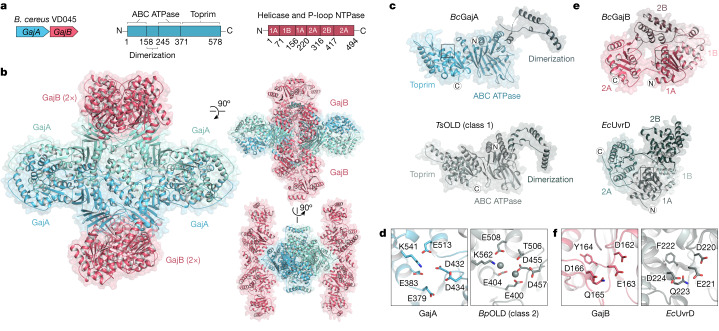
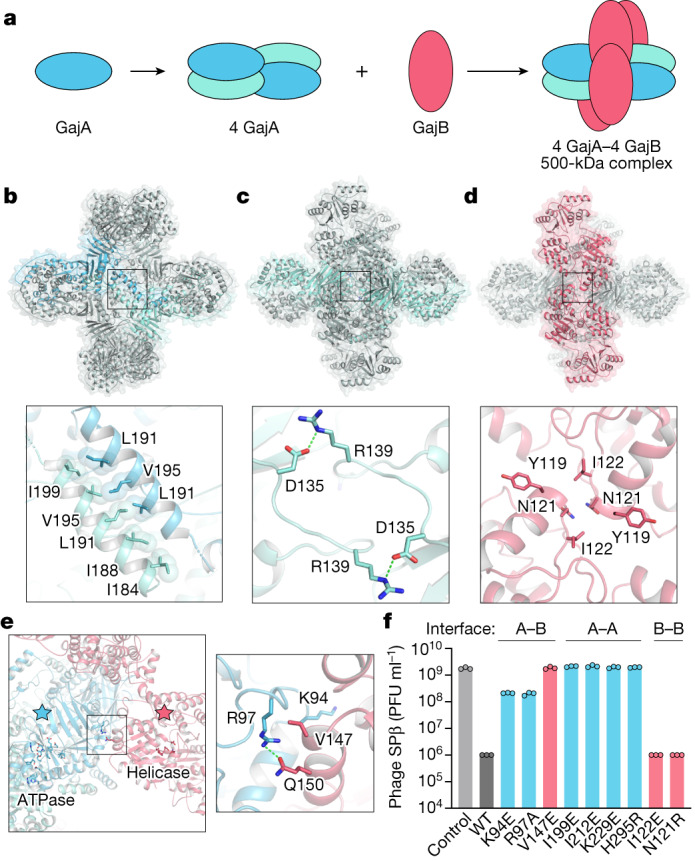
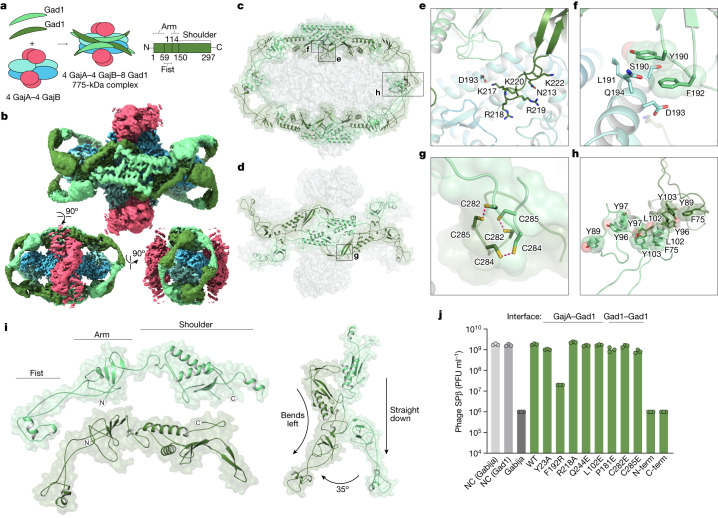
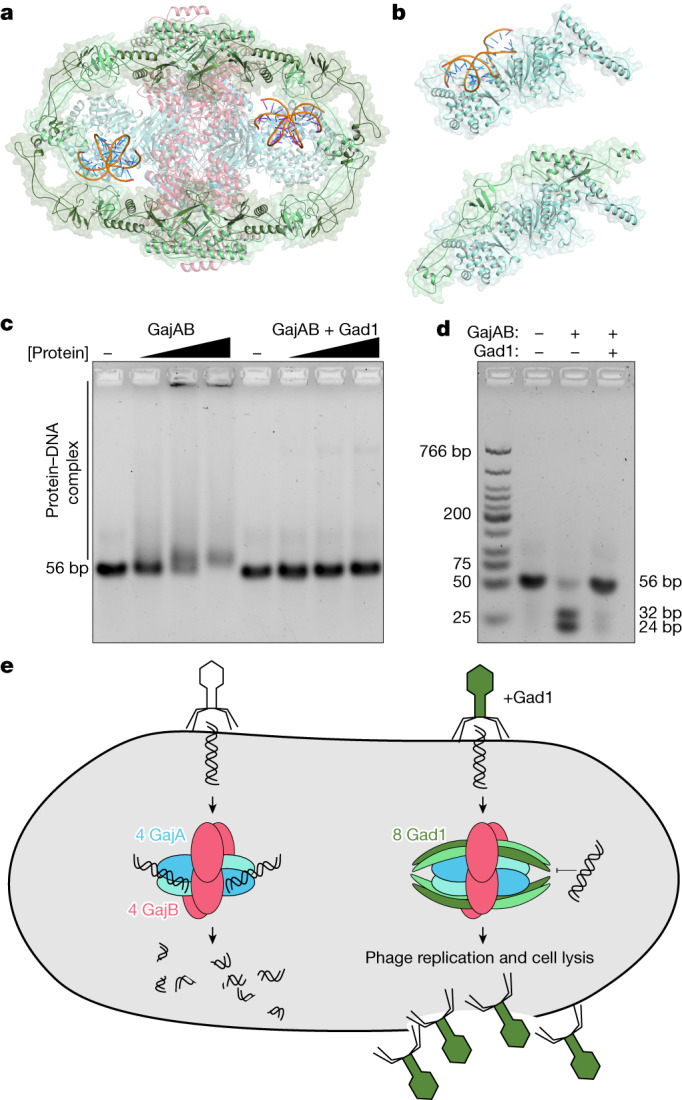
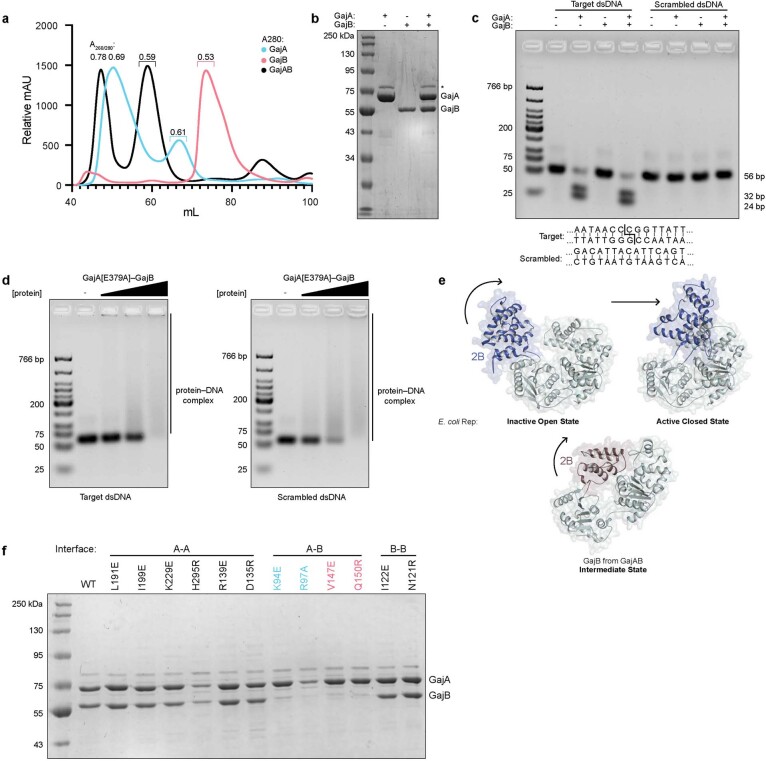
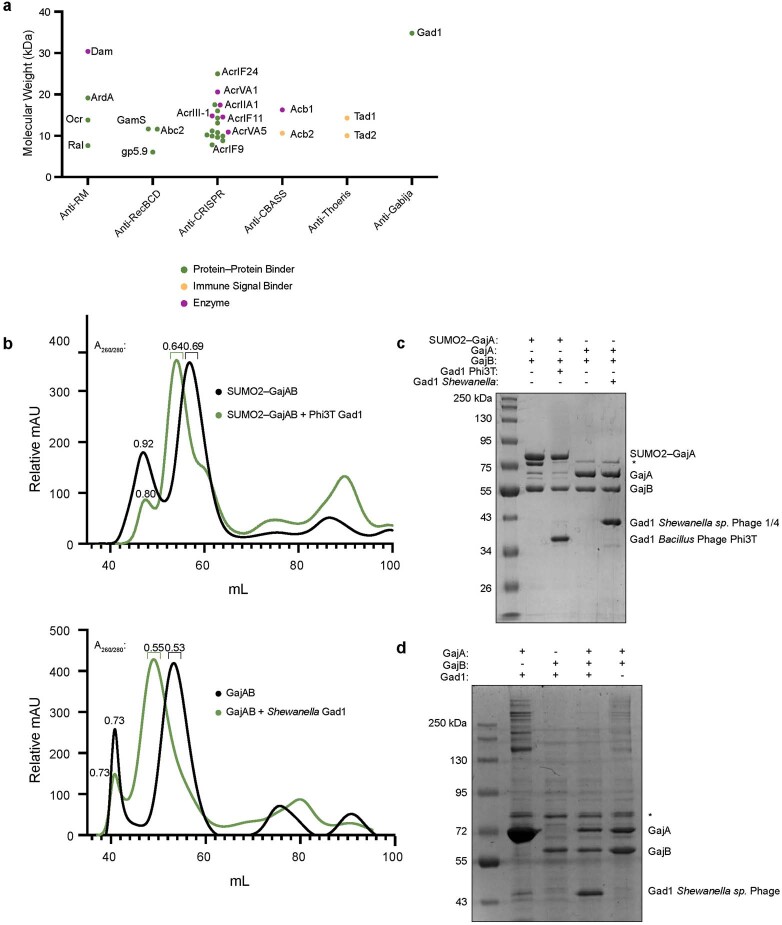
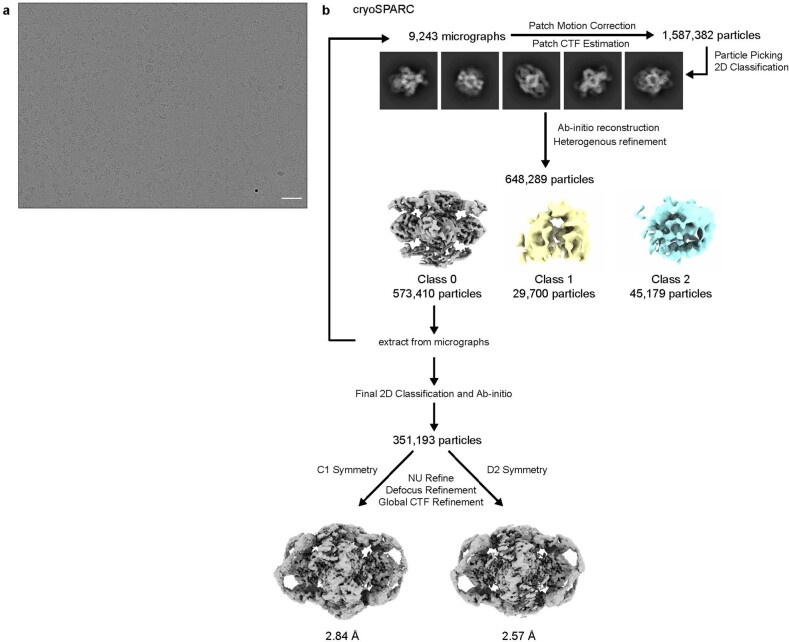
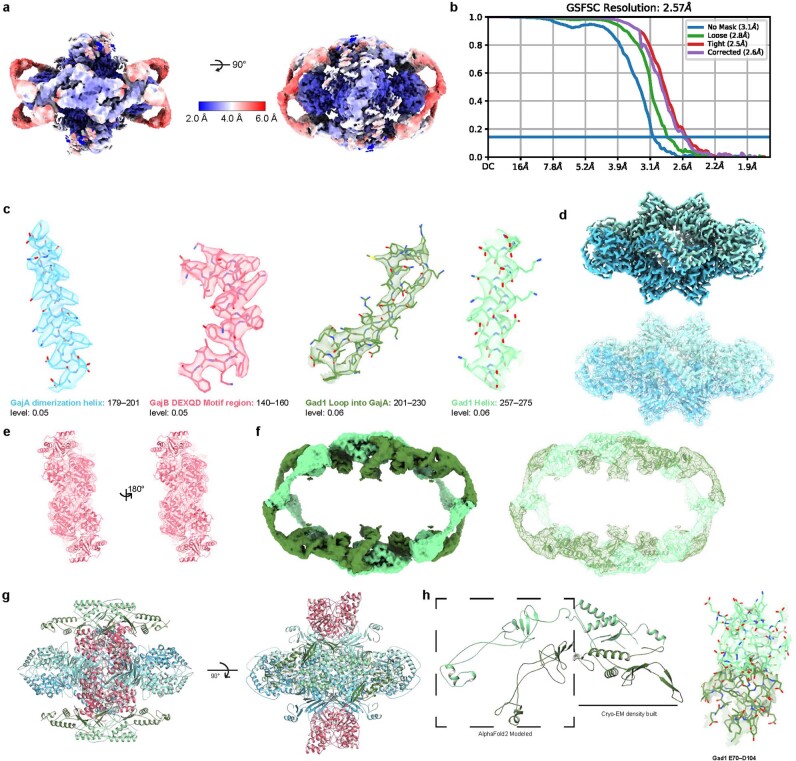
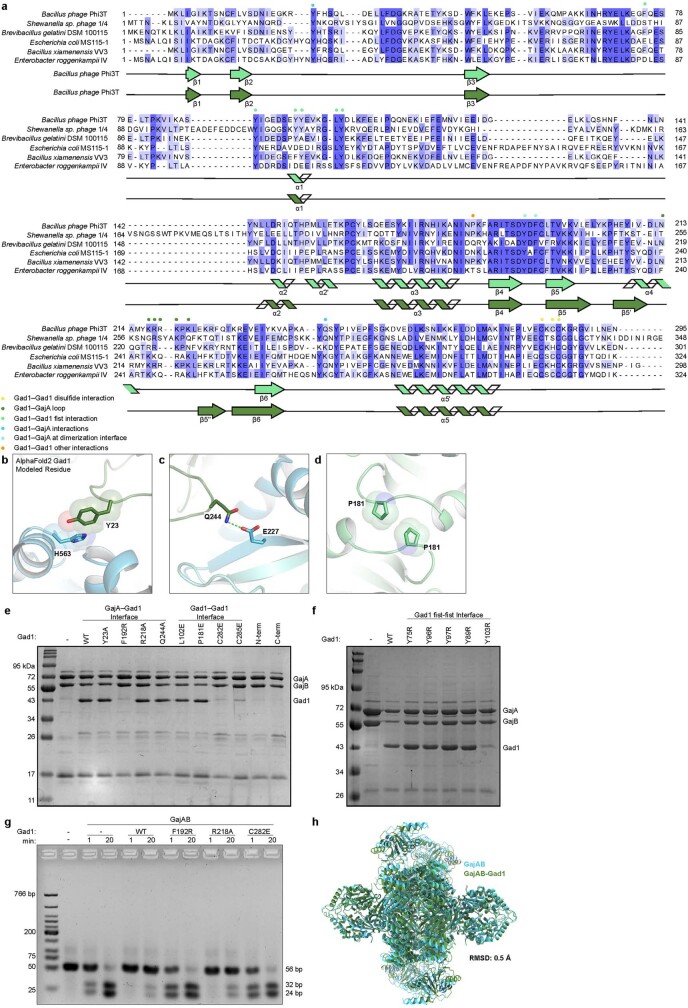
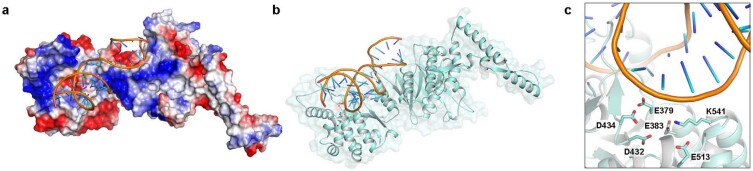
Bacteria encode hundreds of diverse defence systems that protect them from viral infection and inhibit phage propagation 1–5 . Gabija is one of the most prevalent anti-phage defence systems, occurring in more than 15% of all sequenced bacterial and archaeal genomes 1,6,7 , but the molecular basis of how Gabija defends cells from viral infection remains poorly understood. Here we use X-ray crystallography and cryo-electron microscopy (cryo-EM) to define how Gabija proteins assemble into a supramolecular complex of around 500 kDa that degrades phage DNA. Gabija protein A (GajA) is a DNA endonuclease that tetramerizes to form the core of the anti-phage defence complex. Two sets of Gabija protein B (GajB) dimers dock at opposite sides of the complex and create a 4:4 GajA–GajB assembly (hereafter, GajAB) that is essential for phage resistance in vivo. We show that a phage-encoded protein, Gabija anti-defence 1 (Gad1), directly binds to the Gabija GajAB complex and inactivates defence. A cryo-EM structure of the virally inhibited state shows that Gad1 forms an octameric web that encases the GajAB complex and inhibits DNA recognition and cleavage. Our results reveal the structural basis of assembly of the Gabija anti-phage defence complex and define a unique mechanism of viral immune evasion.
Overview
The claims and statistics of this paper haven’t been checked yet.
Run the check — free, no account needed. It reads the open-access text and checks the sources it cites.
Integrity signals
Registry
Cites
Statistics
Figures
Verification
Claims the paper makes
The claims and statistics of this paper haven’t been checked yet.
Run the check — free, no account needed. It reads the open-access text and checks the sources it cites.
Self-check
Percentages, sums and reported differences re-computed from the paper’s own numbers.
The self-check needs the paper’s full text.
Citations
Cites
Highly accurate protein structure prediction with AlphaFold
Jumper, J., Evans, R., Pritzel, A., Green, T., Figurnov, M., Ronneberger, O., Tunyasuvunakool, K., Bates, R., Žídek, A., Potapenko, A., et al. (2021) · Nature · doi:10.1038/s41586-021-03819-2 · Cited by 43,764
Coot : model-building tools for molecular graphics
Emsley, P., & Cowtan, K. (2004) · Acta Crystallographica Section D Biological Crystallography · doi:10.1107/s0907444904019158 · Cited by 30,571
cryoSPARC: algorithms for rapid unsupervised cryo-EM structure determination
Punjani, A., Rubinstein, J. L., Fleet, D. J., & Brubaker, M. A. (2017) · Nature Methods · doi:10.1038/nmeth.4169 · Cited by 11,626
UCSF ChimeraX : Structure visualization for researchers, educators, and developers
Pettersen, E. F., Goddard, T. D., Huang, C. C., Meng, E. C., Couch, G. S., Croll, T. I., Morris, J. H., & Ferrin, T. E. (2020) · Protein Science · doi:10.1002/pro.3943 · Cited by 9,521
ColabFold - Making protein folding accessible to all
Mirdita, M., Schütze, K., Moriwaki, Y., Heo, L., Ovchinnikov, S., & Steinegger, M. (2021) · doi:10.1101/2021.08.15.456425 · Cited by 9,391
Liebschner, D., Afonine, P. V., Baker, M. L., Bunkóczi, G., Chen, V. B., Croll, T. I., Hintze, B., Hung, L.-W., Jain, S., McCoy, A. J., et al. (2019) · Acta Crystallographica Section D Structural Biology · doi:10.1107/s2059798319011471 · Cited by 7,953
Systematic discovery of antiphage defense systems in the microbial pangenome
Doron, S., Melamed, S., Ofir, G., Leavitt, A., Lopatina, A., Keren, M., Amitai, G., & Sorek, R. (2018) · Science · doi:10.1126/science.aar4120 · Cited by 1,242
Self-citationLiu, H., & Naismith, J. H. (2008) · BMC Biotechnology · doi:10.1186/1472-6750-8-91 · Cited by 1,222
Helicases: amino acid sequence comparisons and structure-function relationships
Gorbalenya, A. E., & Koonin, E. V. (1993) · Current Opinion in Structural Biology · doi:10.1016/s0959-440x(05)80116-2 · Cited by 1,160
cGAS in action: Expanding roles in immunity and inflammation
Ablasser, A., & Chen, Z. J. (2019) · Science · doi:10.1126/science.aat8657 · Cited by 1,077
Collaboration gets the most out of software
Morin, A., Eisenbraun, B., Key, J., Sanschagrin, P. C., Timony, M. A., Ottaviano, M., & Piotr Sliz, A. (2013) · eLife · doi:10.7554/elife.01456 · Cited by 1,055
The arms race between bacteria and their phage foes
Hampton, H. G., Watson, B. N. J., & Fineran, P. C. (2020) · Nature · doi:10.1038/s41586-019-1894-8 · Cited by 923
Bacteriophage genes that inactivate the CRISPR/Cas bacterial immune system
Bondy-Denomy, J., Pawluk, A., Maxwell, K. L., & Davidson, A. R. (2012) · Nature · doi:10.1038/nature11723 · Cited by 859
Structure and mechanism of DNA topoisomerase II
Berger, J. M., Gamblin, S. J., Harrison, S. C., & Wang, J. C. (1996) · Nature · doi:10.1038/379225a0 · Cited by 859
Systematic and quantitative view of the antiviral arsenal of prokaryotes
Tesson, F., Hervé, A., Mordret, E., Touchon, M., d’Humières, C., Cury, J., & Bernheim, A. G. (2022) · Nature Communications · doi:10.1038/s41467-022-30269-9 · Cited by 772
Tanner, N. K., & Linder, P. (2001) · Molecular Cell · doi:10.1016/s1097-2765(01)00329-x · Cited by 757
UCSF ChimeraX : Structure Visualization for Researchers, Educators, and Developers
Pettersen, E. F., Goddard, T. D., Huang, C. C., Meng, E. C., Couch, G. S., Croll, T. I., Morris, J. H., & Ferrin, T. E. (2020) · Apollo (University of Cambridge) · doi:10.17863/cam.57077 · Cited by 617
Diverse enzymatic activities mediate antiviral immunity in prokaryotes
Gao, L. A., Altae-Tran, H., Böhning, F., Makarova, K. S., Segel, M., Schmid-Burgk, J. L., Koob, J. G., Wolf, Y. I., Koonin, E. V., & Zhang, F. (2020) · Science · doi:10.1126/science.aba0372 · Cited by 612
The biology of restriction and anti-restriction.
Tock, M. R., & Dryden, D. (2005) · Current Opinion in Microbiology · doi:10.1016/j.mib.2005.06.003 · Cited by 586
Korolev, S., Hsieh, J., Gauss, G. H., Lohman, T. M., & Waksman, G. (1997) · Cell · doi:10.1016/s0092-8674(00)80525-5 · Cited by 496
ColabFold - Making protein folding accessible to allPreprint
Ovchinnikov, S., Steinegger, M., Mirdita, M., konsti, Moriwaki, Y., Kim, R. S., Wang, P., Kosinski, J., Tadej Satler, P., Cha, S., et al. (2021) · bioRxiv (Cold Spring Harbor Laboratory) · doi:10.5281/zenodo.5123296 · Cited by 431
An expanded arsenal of immune systems that protect bacteria from phages
Millman, A., Melamed, S., Leavitt, A., Doron, S., Bernheim, A., Hör, J., Garb, J., Bechon, N., Brandis, A., Lopatina, A., et al. (2022) · Cell Host & Microbe · doi:10.1016/j.chom.2022.09.017 · Cited by 428
Self-citationAravind, L. (1998) · Nucleic Acids Research · doi:10.1093/nar/26.18.4205 · Cited by 401
UvrD Helicase Unwinds DNA One Base Pair at a Time by a Two-Part Power Stroke
Lee, J. Y., & Yang, W. (2006) · Cell · doi:10.1016/j.cell.2006.10.049 · Cited by 389
Structure of the Human cGAS–DNA Complex Reveals Enhanced Control of Immune Surveillance
Zhou, W., Whiteley, A. T., Mann, C. C. D. O., Morehouse, B. R., Nowak, R. P., Fischer, E. S., Gray, N. S., Mekalanos, J. J., & Kranzusch, P. J. (2018) · Cell · doi:10.1016/j.cell.2018.06.026 · Cited by 387
Self-citationPhages and their satellites encode hotspots of antiviral systems
Rousset, F., Depardieu, F., Miele, S., Dowding, J., Laval, A.-L., Lieberman, E., Garry, D. J., Rocha, E. P. C., Bernheim, A. G., & Bikard, D. (2022) · Cell Host & Microbe · doi:10.1016/j.chom.2022.02.018 · Cited by 348
Vassallo, C. N., Doering, C. R., Littlehale, M. L., Teodoro, G. I. C., & Laub, M. T. (2022) · Nature Microbiology · doi:10.1038/s41564-022-01219-4 · Cited by 313
SMOCs: supramolecular organizing centres that control innate immunity
Kagan, J. C., Magupalli, V. G., & Wu, H. (2014) · Nature reviews. Immunology · doi:10.1038/nri3757 · Cited by 310
PADLOC: a web server for the identification of antiviral defence systems in microbial genomes
Payne, L. J., Meaden, S., Mestre, M. R., Palmer, C., Toro, N., Fineran, P. C., & Jackson, S. A. (2022) · Nucleic Acids Research · doi:10.1093/nar/gkac400 · Cited by 227
Enumeration of Bacteriophages Using the Small Drop Plaque Assay System
Mazzocco, A., Waddell, T. E., Lingohr, E. J., & Johnson, R. P. (2009) · Methods in molecular biology · doi:10.1007/978-1-60327-164-6_9 · Cited by 210
Structural biology of CRISPR–Cas immunity and genome editing enzymes
Wang, J. Y., Pausch, P., & Doudna, J. A. (2022) · Nature Reviews Microbiology · doi:10.1038/s41579-022-00739-4 · Cited by 191
An anti-CRISPR viral ring nuclease subverts type III CRISPR immunity
Athukoralage, J. S., McMahon, S. A., Zhang, C., Grüschow, S., Graham, S., Krupovìč, M., Whitaker, R. J., Gloster, T. M., & White, M. F. (2020) · Nature · doi:10.1038/s41586-019-1909-5 · Cited by 186
Phage anti-CBASS and anti-Pycsar nucleases subvert bacterial immunity
Hobbs, S. J., Wein, T., Lu, A., Morehouse, B. R., Schnabel, J., Leavitt, A., Yirmiya, E., Sorek, R., & Kranzusch, P. J. (2022) · Nature · doi:10.1038/s41586-022-04716-y · Cited by 176
Self-citationViruses inhibit TIR gcADPR signalling to overcome bacterial defence
Leavitt, A., Yirmiya, E., Amitai, G., Lu, A., Garb, J., Herbst, E., Morehouse, B. R., Hobbs, S. J., Antine, S. P., Sun, Z.-Y. J., et al. (2022) · Nature · doi:10.1038/s41586-022-05375-9 · Cited by 171
Self-citationPhage-Encoded Anti-CRISPR Defenses
Stanley, S. Y., & Maxwell, K. L. (2018) · Annual Review of Genetics · doi:10.1146/annurev-genet-120417-031321 · Cited by 146
Bacteriophages inhibit and evade cGAS-like immune function in bacteria
Huiting, E. D., Cao, X., Ren, J., Athukoralage, J. S., Luo, Z., Silas, S., An, N., Carion, H., Zhou, Y., Fraser, J. S., et al. (2023) · Cell · doi:10.1016/j.cell.2022.12.041 · Cited by 143
Phages overcome bacterial immunity via diverse anti-defence proteins
(2023) · doi:10.1038/s41586-023-06869-w · Cited by 138
Self-citationCyclic nucleotide-induced helical structure activates a TIR immune effector
Hogrel, G., Guild, A., Graham, S., Rickman, H., Grüschow, S., Bertrand, Q., Spagnolo, L., & White, M. F. (2022) · Nature · doi:10.1038/s41586-022-05070-9 · Cited by 129
Cryo-EM structure of an active bacterial TIR–STING filament complex
Morehouse, B. R., Yip, M. C. J., Keszei, A. F. A., McNamara-Bordewick, N. K., Shao, S., & Kranzusch, P. J. (2022) · Nature · doi:10.1038/s41586-022-04999-1 · Cited by 117
Self-citationUbiquitin-like conjugation by bacterial cGAS enhances anti-phage defence
Jenson, J. M., Li, T., Du, F., Ea, C.-K., & Chen, Z. J. (2023) · Nature · doi:10.1038/s41586-023-05862-7 · Cited by 106
A nucleotide-sensing endonuclease from the Gabija bacterial defense system
Cheng, R., Huang, F., Wu, H. M., Lu, X., Yan, Y., Yu, B., Wang, X., & Zhu, B. (2021) · Nucleic Acids Research · doi:10.1093/nar/gkab277 · Cited by 92
On the control of transcription in bacteriophage P2
Lindahl, G. (1971) · Virology · doi:10.1016/0042-6822(71)90065-1 · Cited by 92
Structure and Mechanisms of SF1 DNA Helicases
Raney, K. D., Byrd, A. K., & Aarattuthodiyil, S. (2012) · Advances in experimental medicine and biology · doi:10.1007/978-1-4614-5037-5_2 · Cited by 90
Mutants of Escherichia coli unable to be lysogenized by the temperate bacteriophage P2
Sironi, G. (1969) · Virology · doi:10.1016/0042-6822(69)90196-2 · Cited by 78
Cryo-EM structure of the RADAR supramolecular anti-phage defense complex
Lowey, B., Tal, N., Johnson, A. G., Rawson, S. D., Mayer, M. L., Doron, S., Millman, A., Melamed, S., Fedorenko, T., Kacen, A., et al. (2023) · Cell · doi:10.1016/j.cell.2023.01.012 · Cited by 72
Self-citationCheng, R., Huang, F., Lu, X., Yan, Y., Yu, B., Wang, X., & Zhu, B. (2023) · Cell Host & Microbe · doi:10.1016/j.chom.2023.06.014 · Cited by 69
Schiltz, C. J., Lee, A., Partlow, E. A., Hosford, C. J., & Chappie, J. S. (2019) · Nucleic Acids Research · doi:10.1093/nar/gkz703 · Cited by 64
Invited review: Architectures and mechanisms of ATP binding cassette proteins
Hopfner, K. (2016) · Biopolymers · doi:10.1002/bip.22843 · Cited by 62
Molecular basis of RADAR anti-phage supramolecular assemblies.
Gao, Y., Luo, X., Li, P., Li, Z.-L., Ye, F., Liu, S., & Gao, P. (2023) · Cell · doi:10.1016/j.cell.2023.01.026 · Cited by 62
Erratum to: Structure and Mechanisms of SF1 DNA Helicases
Raney, K. D., Byrd, A. K., & Aarattuthodiyil, S. (2012) · Advances in experimental medicine and biology · doi:10.1007/978-1-4614-5037-5_14 · Cited by 56
Bacteriophage P2: Interaction with phage lambda and with recombination-deficient bacteria
Sironi, G., Bialy, H., Lozeron, H. A., & Calendar, R. L. (1971) · Virology · doi:10.1016/0042-6822(71)90040-7 · Cited by 54
Magnesium Coordination Controls the Molecular Switch Function of DNA Mismatch Repair Protein MutS
Lebbink, J. H. G., Fish, A., Reumer, A., Natrajan, G., Winterwerp, H. H. K., & Sixma, T. K. (2010) · Journal of Biological Chemistry · doi:10.1074/jbc.m109.066001 · Cited by 53
UvrD helicase activation by MutL involves rotation of its 2B subdomain
Ordabayev, Y. A., Nguyen, B., Kozlov, A. G., Jia, H., & Lohman, T. M. (2019) · Proceedings of the National Academy of Sciences · doi:10.1073/pnas.1905513116 · Cited by 41
Schiltz, C. J., Adams, M. C., & Chappie, J. S. (2020) · Nucleic Acids Research · doi:10.1093/nar/gkaa059 · Cited by 33
Wilkinson, M., Wilkinson, O. J., Feyerherm, C., Fletcher, E. E., Wigley, D., & Dillingham, M. (2022) · bioRxiv · doi:10.7554/elife.83409 · Cited by 27
Yin, P., Zhang, Y., Yang, L., & Feng, Y. (2023) · Journal of Molecular Biology · doi:10.1016/j.jmb.2023.167996 · Cited by 25
Cited by
Sorted by citations
Phages overcome bacterial immunity via diverse anti-defence proteins
(2023) · doi:10.1038/s41586-023-06869-w · Cited by 138
Self-citationBacterial defense systems exhibit synergistic anti-phage activity
Wu, Y., Garushyants, S. K., van den Hurk, A., Aparicio-Maldonado, C., Kushwaha, S. K., King, C. M., Ou, Y., Todeschini, T. C., Clokie, M. R. J., Millard, A. D., et al. (2024) · Cell Host & Microbe · doi:10.1016/j.chom.2024.01.015 · Cited by 139
Tesson, F., Planel, R., Egorov, A. A., Georjon, H., Vaysset, H., Brancotte, B., Néron, B., Mordret, E., Atkinson, G. C., Bernheim, A., et al. (2024) · Peer Community Journal · doi:10.24072/pcjournal.470 · Cited by 120
A host of armor: Prokaryotic immune strategies against mobile genetic elements
Mayo-Muñoz, D., Pinilla‐Redondo, R., Birkholz, N., & Fineran, P. C. (2023) · Cell Reports · doi:10.1016/j.celrep.2023.112672 · Cited by 103
The growing repertoire of phage anti-defence systems
Murtazalieva, K., Mu, A., Petrovskaya, A. V., & Finn, R. D. (2024) · Trends in Microbiology · doi:10.1016/j.tim.2024.05.005 · Cited by 104
Metadata
- Authors
- Antine, S. P., Johnson, A. G., Mooney, S. E., Leavitt, A., Mayer, M. L., Yirmiya, E., Amitai, G., Sorek, R., & Kranzusch, P. J.
- Affiliations
- Harvard University (US)
- Weizmann Institute of Science (IL)
- Corresponding author
- Kranzusch, Philip J.
- ORCID
- Venue
- Nature
- Published
- 2023-11-22
- Volume
- 625
- Issue
- 7994
- Pages
- 360-365
- ISSN
- 0028-0836 (ISSN-L)
- 1476-4687
- PMC
- PMC10781630
- OpenAlex
- W4388913741
- Cited by
- 125
- References
- 57
- Citations by year
- 2026: 40 · 2025: 42 · 2024: 33 · 2023: 9
- FWCI
- 20.06
- Type
- journal article
- Language
- en
- Open access
- hybrid
- doi.org
- Locations
- Nature (publishedVersion, cc-by)
- bioRxiv (Cold Spring Harbor Laboratory) (acceptedVersion, cc-by)
- PubMed Central (publishedVersion, cc-by)
- PubMed (publishedVersion)
- Digital Access to Scholarship at Harvard (DASH) (Harvard University) (submittedVersion, cc-by)
- RePEc: Research Papers in Economics (submittedVersion)
- OSTI OAI (U.S. Department of Energy Office of Scientific and Technical Information) (submittedVersion)
- Funders
- U.S. Department of Energy (DE‐ AC02‐06CH11357, AC02‐06CH11357, grid.436923.9, S10OD021527, P30 GM124165, S10RR029205, 06CH11357, 436923.9, DE-AC02-)
- Burroughs Wellcome Fund (P30 GM124165)
- Cancer Research Institute
- Oregon Health and Science University (grid.436923.9, 436923.9)
- Life Sciences Research Foundation
- G. Harold and Leila Y. Mathers Foundation (P30 GM124165)
- Parker Institute for Cancer Immunotherapy (P30 GM124165)
- Mark Foundation For Cancer Research (P30 GM124165)
- Open Philanthropy Project
- Deutsche Forschungsgemeinschaft (464312965, DE-AC02-06CH11357, SPP2330)
- Israel Science Foundation (MAPATS Grant 2720/22)
- Council for Higher Education
- National Institutes of Health (1dp2gm146250-01, 1s10od021527-01, DE-AC02–06CH11357, GM124165)
- Office of Science (AC02‐06CH11357, DE-AC02, 06CH11357, grid.436923.9, DE-AC02-06CH11357)
- National Institute of General Medical Sciences (DP2 GM146250, U24GM129547, P30GM124165)
- National Center for Research Resources (S10RR029205)
- Division of Chemistry
- Biological and Environmental Research (DEAC0206CH11357, S10OD021527, P30 GM124165, grid.436923.9)
- Argonne National Laboratory (DE- AC02-06-CH11357, DE-AC02, AC02–06CH11357, 06CH11357, P30 GM124165)
- Topics
- Life Sciences › Immunology and Microbiology › Virology › Bacteriophages and microbial interactions
- Life Sciences › Biochemistry, Genetics and Molecular Biology › Molecular Biology › CRISPR and Genetic Engineering
- Life Sciences › Biochemistry, Genetics and Molecular Biology › Genetics › Bacterial Genetics and Biotechnology
- Keywords
- phage resistance, viral immune evasion, protein complex formation, protein tetramerization, phage-host interactions
- MeSH terms
- Bacteria, Bacterial Proteins, Bacteriophages, Deoxyribonucleases, DNA, DNA, Viral, Humans, Virus Diseases, Crystallography, X-Ray, Cryoelectron Microscopy, Protein Multimerization, Immune Evasion
About these checks
Registry, retraction, Cites and statistics results are computed, not judged, with one exception: a printed reference that no index lists is read once by a model before it counts as a citation error. Claims are extracted by a model and kept only when their quote appears verbatim in the text; each cited source is then checked, with a model’s help, for whether it says what the claim relies on. Those verdicts can be wrong — read the claim’s quote and the cited source before relying on one.
Statistics and arithmetic are recomputed, not judged.
Confidence bands are shown only for fields calibrated on our annotated test set. None is calibrated yet, so no band is shown.
What counts as a claim ›How we measure confidence ›How we check this ›
Are you an author, or do you see a problem with this page? Request a review
