

Converting an allocentric goal into an egocentric steering signal
Open accessPublished version of a preprint
The DOI matches its Crossref record; 85 of the 85 references it cites were found in a registry or an index.
Abstract
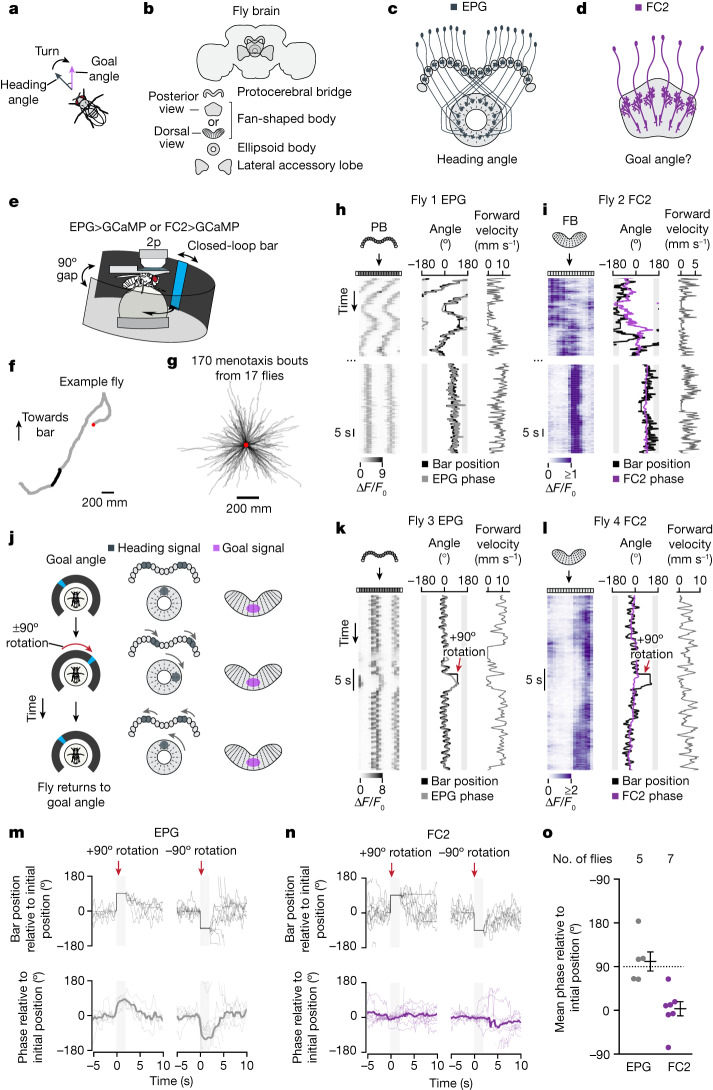
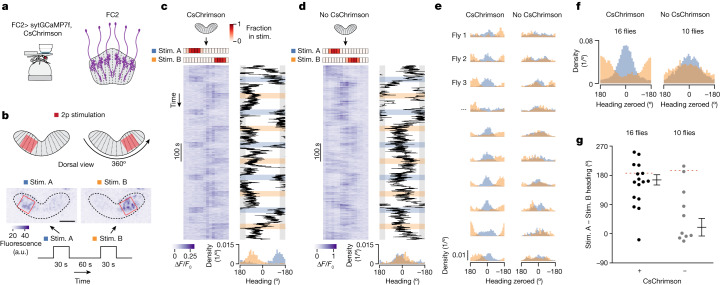
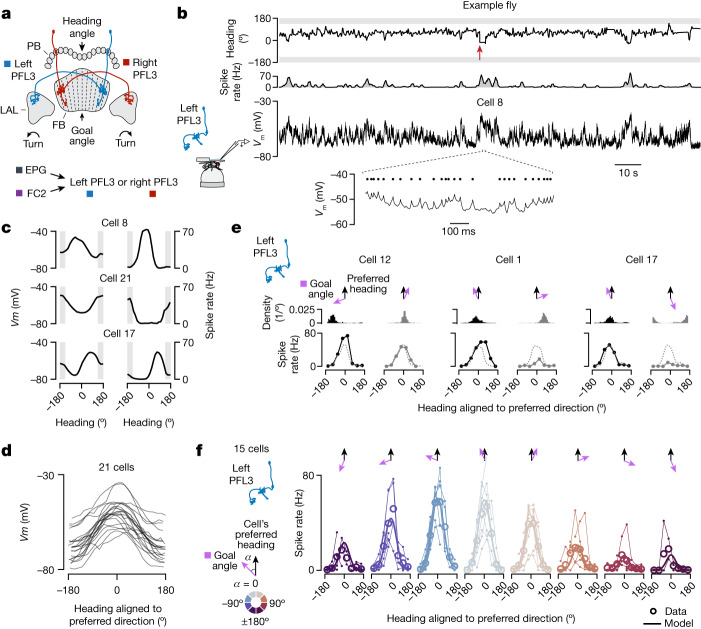
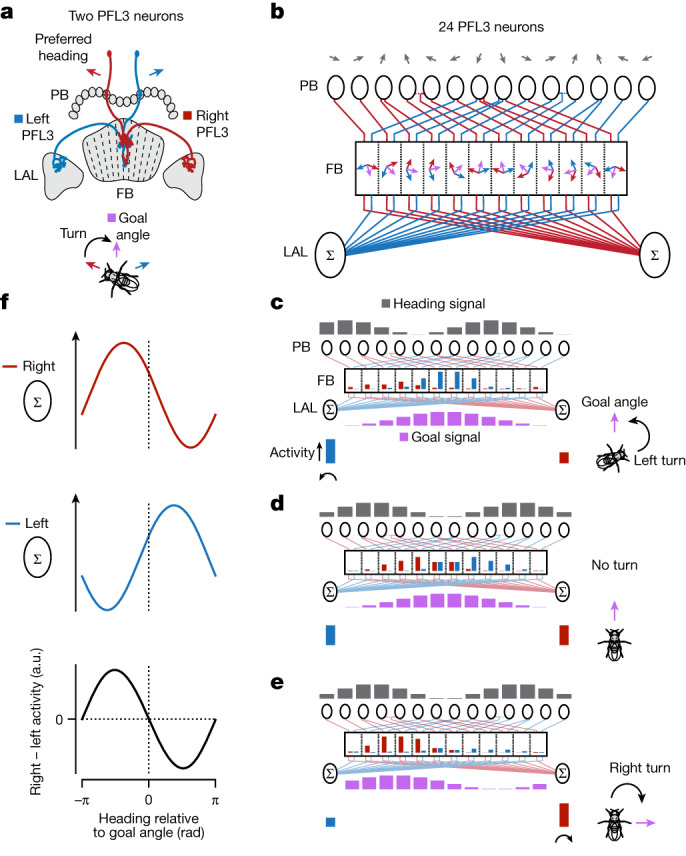
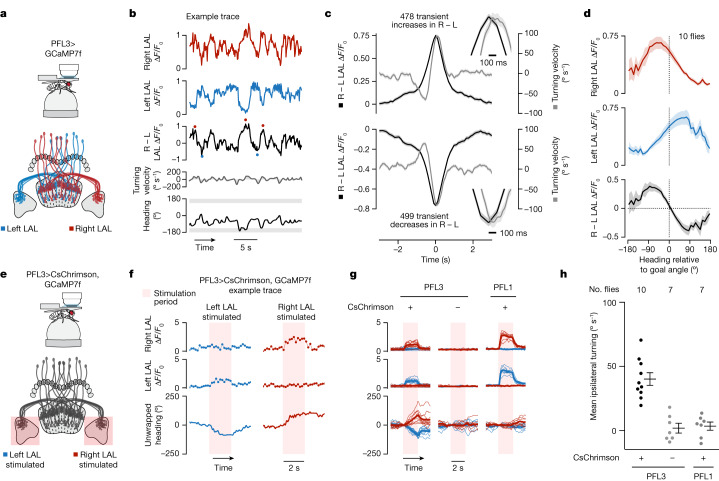
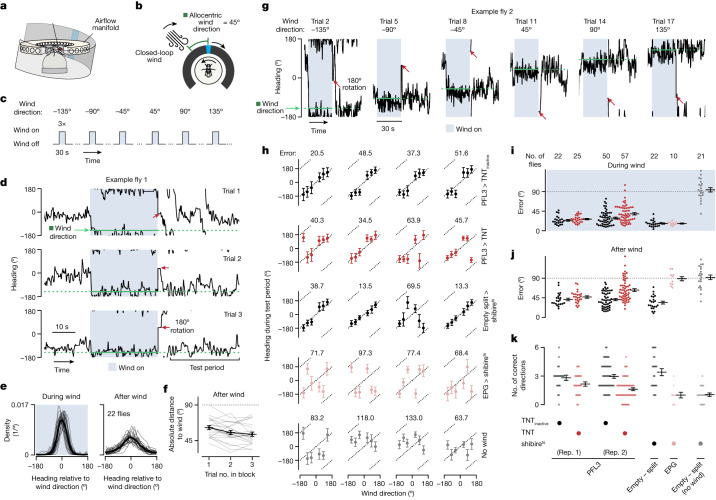
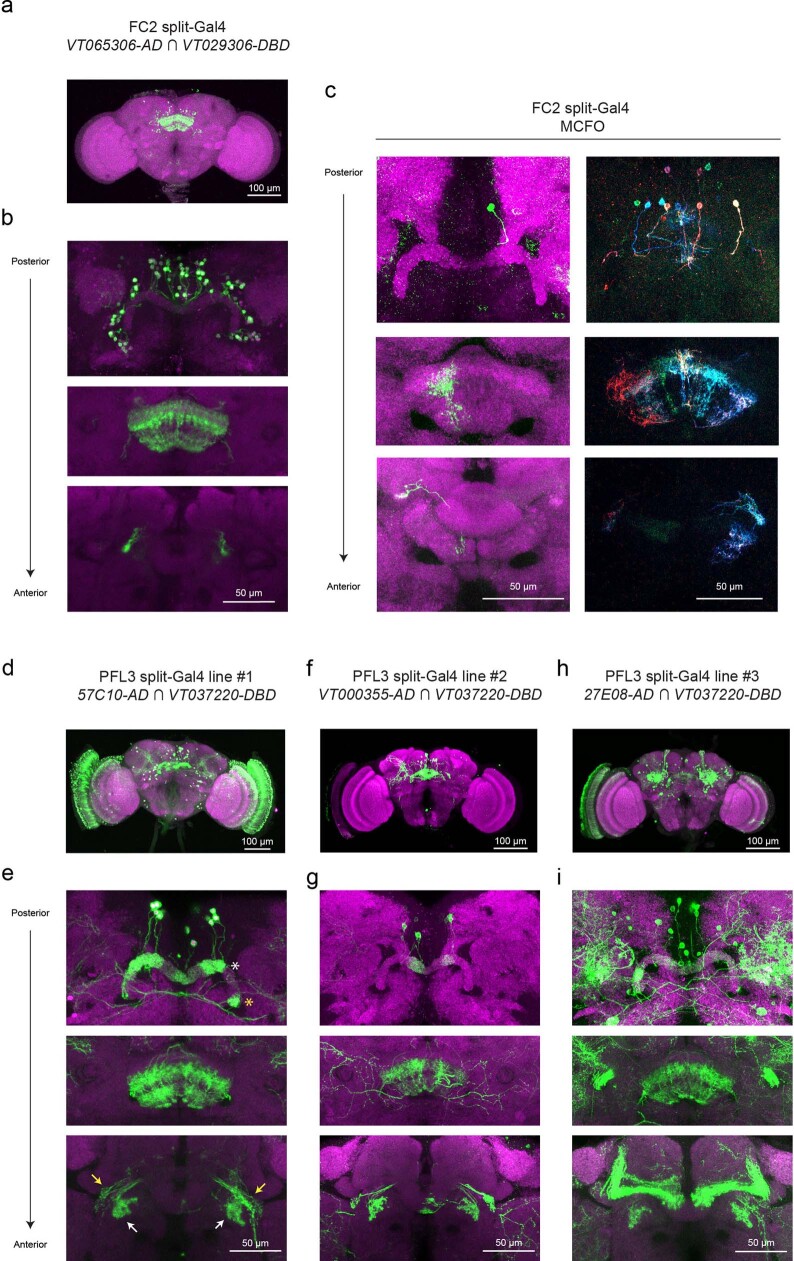
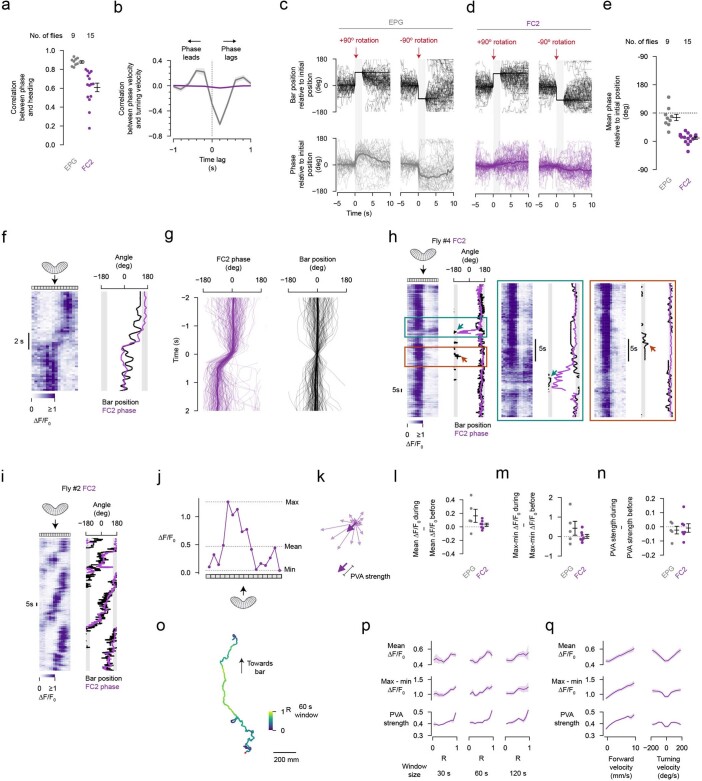
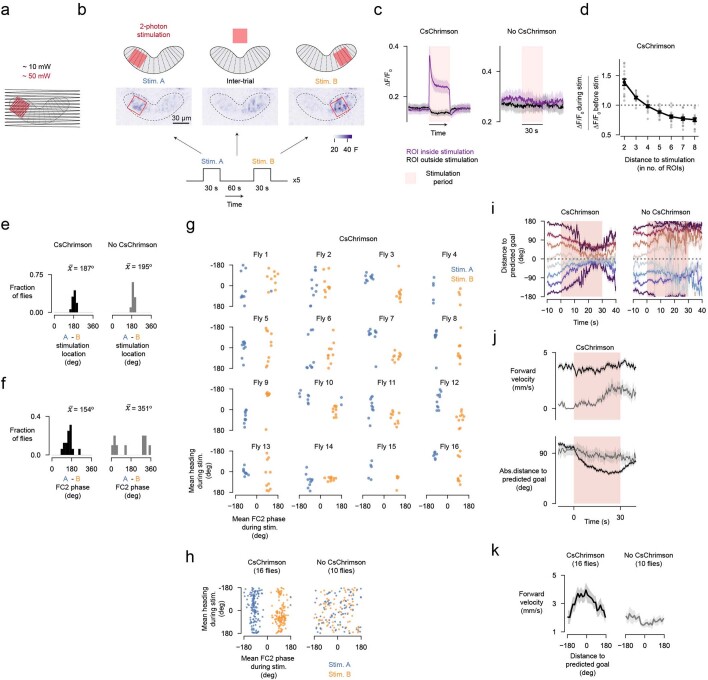
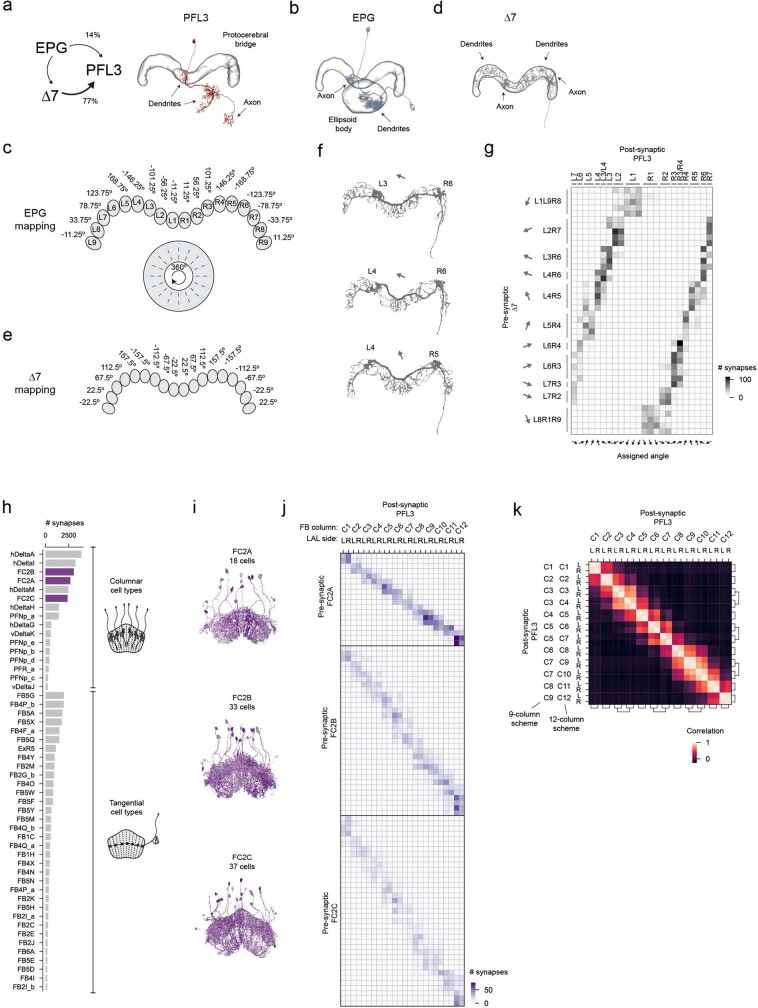
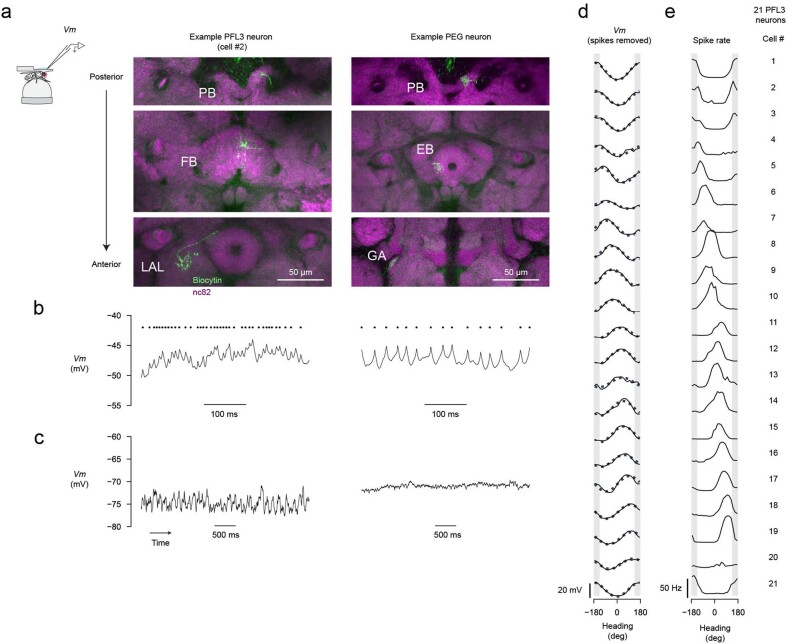
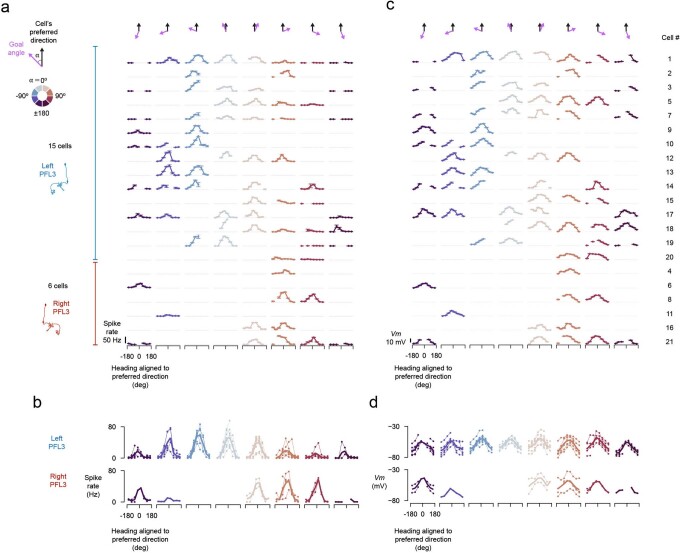
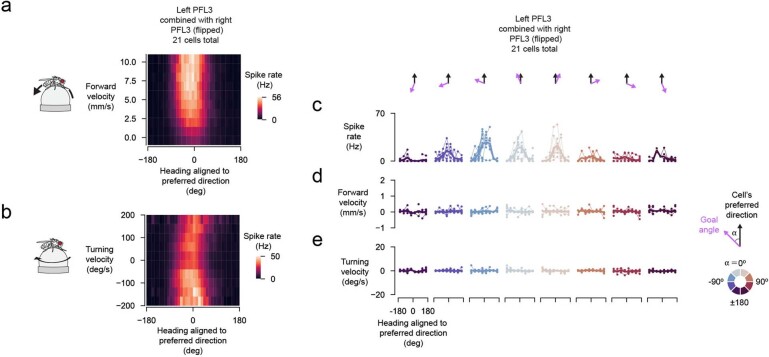
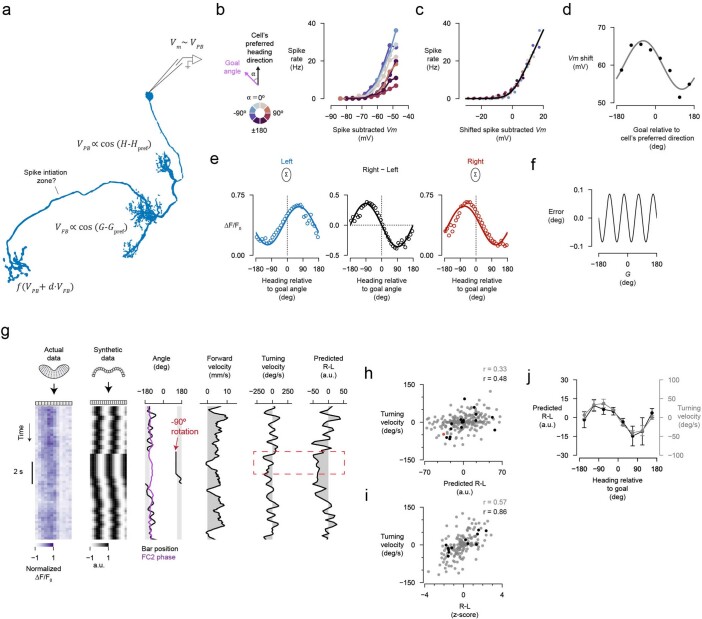
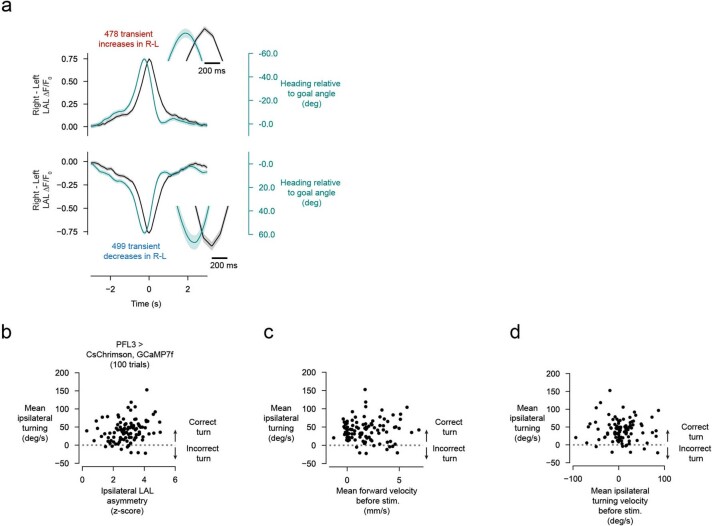
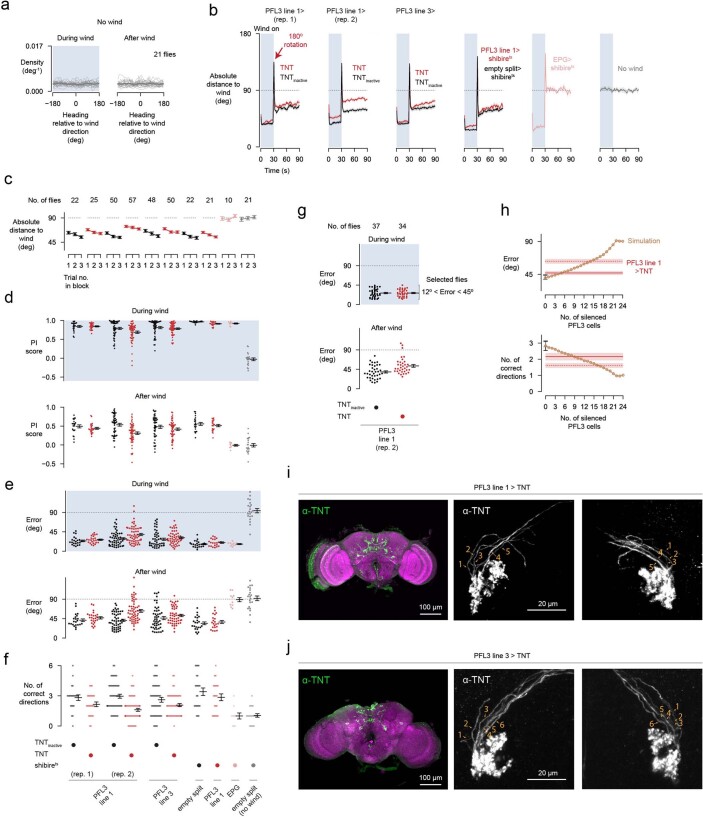
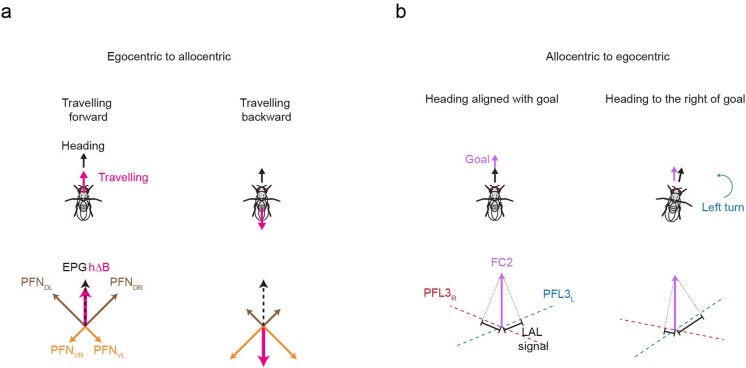
Abstract Neuronal signals that are relevant for spatial navigation have been described in many species1–10. However, a circuit-level understanding of how such signals interact to guide navigational behaviour is lacking. Here we characterize a neuronal circuit in the Drosophila central complex that compares internally generated estimates of the heading and goal angles of the fly—both of which are encoded in world-centred (allocentric) coordinates—to generate a body-centred (egocentric) steering signal. Past work has suggested that the activity of EPG neurons represents the fly’s moment-to-moment angular orientation, or heading angle, during navigation2,11. An animal’s moment-to-moment heading angle, however, is not always aligned with its goal angle—that is, the allocentric direction in which it wishes to progress forward. We describe FC2 cells12, a second set of neurons in the Drosophila brain with activity that correlates with the fly’s goal angle. Focal optogenetic activation of FC2 neurons induces flies to orient along experimenter-defined directions as they walk forward. EPG and FC2 neurons connect monosynaptically to a third neuronal class, PFL3 cells12,13. We found that individual PFL3 cells show conjunctive, spike-rate tuning to both the heading angle and the goal angle during goal-directed navigation. Informed by the anatomy and physiology of these three cell classes, we develop a model that explains how this circuit compares allocentric heading and goal angles to build an egocentric steering signal in the PFL3 output terminals. Quantitative analyses and optogenetic manipulations of PFL3 activity support the model. Finally, using a new navigational memory task, we show that flies expressing disruptors of synaptic transmission in subsets of PFL3 cells have a reduced ability to orient along arbitrary goal directions, with an effect size in quantitative accordance with the prediction of our model. The biological circuit described here reveals how two population-level allocentric signals are compared in the brain to produce an egocentric output signal that is appropriate for motor control.
Overview
The claims and statistics of this paper haven’t been checked yet.
Free: it reads the open-access text and checks the first 5 claims that cite a source we can check. Create a free account to check every claim.
Integrity signals
Registry
Cites
Statistics
Figures
Verification
Claims the paper makes
The claims and statistics of this paper haven’t been checked yet.
Free: it reads the open-access text and checks the first 5 claims that cite a source we can check. Create a free account to check every claim.
Claims other papers make about this one
Each is checked against this paper’s own text: does it say what the citing paper says it does?
The source backs part of the claim, not all of it — or backs it for a different population, condition or comparison.
In the citing paper
“DNa02 is directly targeted by central complex output neurons responsible for feedback control of heading32,62–64”
From Fine-grained descending control of steering in walking Drosophila (2024) · cites this paper as [64]
Experimental — accuracy not yet measuredIn the citing paper
“there are strong anatomical pathways from the central complex to DNa02 (Hulse et al., 2021; Mussells Pires et al., 2024; Rayshubskiy et al., 2020; Westeinde et al., 2024).”
From Neural circuit mechanisms for steering control in walking Drosophila (2025) · cites this paper as Mussells Pires et al., 2024
Self-check
Percentages, sums and reported differences re-computed from the paper’s own numbers.
The self-check needs the paper’s full text.
Citations
Cites
SciPy 1.0: fundamental algorithms for scientific computing in Python
Virtanen, P., Gommers, R., Oliphant, T. E., Haberland, M., Reddy, T., Cournapeau, D., Burovski, E., Peterson, P., Weckesser, W., Bright, J., et al. (2020) · Nature Methods · doi:10.1038/s41592-019-0686-2 · Cited by 38,430
SciPy 1.0: fundamental algorithms for scientific computing in Python
Virtanen, P., Gommers, R., Oliphant, T. E., Haberland, M., Reddy, T., Cournapeau, D., Burovski, E., Peterson, P., Weckesser, W., Bright, J., et al. (2019) · Apollo - University of Cambridge Repository · doi:10.17863/cam.64134 · Cited by 10,460
The hippocampus as a spatial map. Preliminary evidence from unit activity in the freely-moving rat
O'Keefe, J., & Dostrovsky, J. (1971) · Brain Research · doi:10.1016/0006-8993(71)90358-1 · Cited by 6,151
DOUGLAS, D. H., & PEUCKER, T. K. (1973) · Cartographica · doi:10.3138/fm57-6770-u75u-7727 · Cited by 4,229 · cited 1×
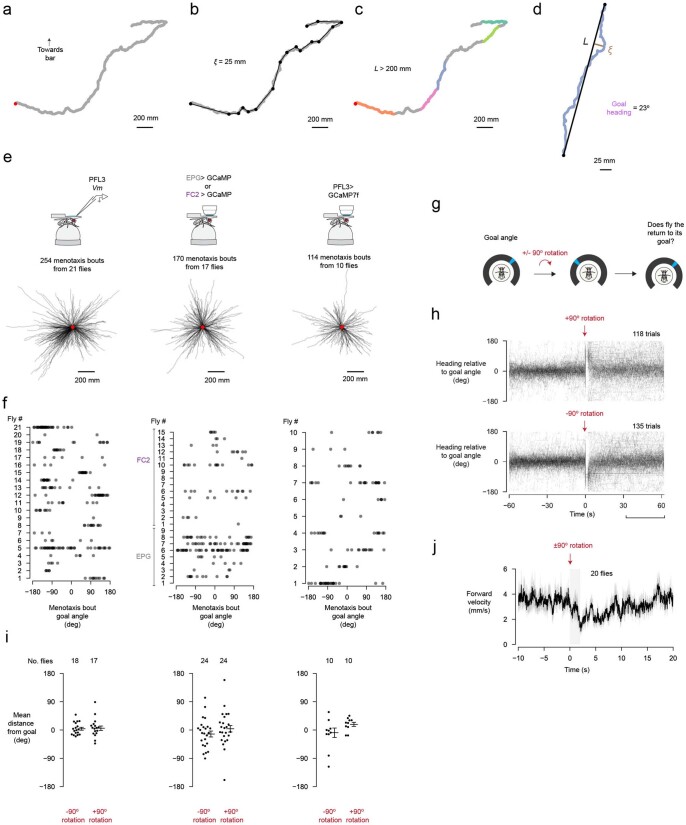
“To analyse the fly’s meno-taxis behaviour, we isolated straight segments (which we call menotaxis bouts) of the fly’s 2D virtual trajectory using the Ramer–Douglas– Peucker algorithm 62,63 (Extended Data Fig.”
MethodIndependent optical excitation of distinct neural populations
Klapoetke, N. C., Murata, Y., Kim, S. S., Pulver, S. R., Birdsey-Benson, A., Cho, Y. K., Morimoto, T. K., Chuong, A. S., Carpenter, E. J., Tian, Z., et al. (2014) · Nature Methods · doi:10.1038/nmeth.2836 · Cited by 2,344
Taube, J., Muller, R., & Ranck, J. (1990) · The Journal of Neuroscience · doi:10.1523/jneurosci.10-02-00420.1990 · Cited by 1,809 · cited 1×
“The fact that these shifts have a cosine shape as a function of the goal angle is consistent with: (1) the existence of a cosine-shaped goal input in the fan-shaped body (as our model assumes) and (2), our hypothesis that the voltage consequences of the goal in the fan-shaped body are not fully evident in the soma, th…”
ResultJammalamadaka, S. R., & SenGupta, A. (2001) · Series on Multivariate Analysis · doi:10.1142/4031 · Cited by 1,779
An iterative procedure for the polygonal approximation of plane curves
Ramer, U. (1972) · Computer Graphics and Image Processing · doi:10.1016/s0146-664x(72)80017-0 · Cited by 1,372
Spatial representation in the entorhinal cortex
Fyhn, M., Molden, S., Witter, M. P., Moser, E. I., & Moser, M.-B. (2004) · Science · doi:10.1126/science.1099901 · Cited by 1,339
ScanImage: Flexible software for operating laser scanning microscopes
Pologruto, T. A., Sabatini, B. L., & Svoboda, K. (2003) · BioMedical Engineering OnLine · doi:10.1186/1475-925x-2-13 · Cited by 1,294
Cited by
Eckstein, N., Bates, A. S., Champion, A., Du, M., Yin, Y., Schlegel, P., Lu, A. K.-Y., Rymer, T., Finley-May, S., Paterson, T., et al. (2024) · Cell · doi:10.1016/j.cell.2024.03.016 · Cited by 277
Transforming a head direction signal into a goal-oriented steering command
Westeinde, E. A., Kellogg, E., Dawson, P. M., Lu, J., Hamburg, L., Midler, B., Druckmann, S., & Wilson, R. I. (2024) · Nature · doi:10.1038/s41586-024-07039-2 · Cited by 85
“Our data demonstrate that these theoretical predictions are largely correct, and we show that the two opponent copies are represented by the PFL3R and PFL3L populations; this conclusion is supported by an independent companion paper 30 .”
Transforming a head direction signal into a goal-oriented steering command
Westeinde, E. A., Kellogg, E., Dawson, P. M., Lu, J., Hamburg, L., Midler, B., Druckmann, S., & Wilson, R. I. (2022) · doi:10.1101/2022.11.10.516039 · Cited by 85
Distributed control circuits across a brain-and-cord connectome
Bates, A. S., Phelps, J. S., Kim, M., Yang, H. H., Matsliah, A., Ajabi, Z., Perlman, E., Delgado, K. M., Osman, M. A. M., Salmon, C. K., et al. (2026) · Nature · doi:10.1038/s41586-026-10735-w · Cited by 100
“7, 80,81), but the DN targets of PFL1 have not been fully identifiable until now.”
Neural circuit mechanisms for steering control in walking Drosophila
Rayshubskiy, A., Holtz, S. L., Bates, A. S., Vanderbeck, Q. X., Capdevila, L. S., Rockwell, V., & Wilson, R. I. (2020) · doi:10.1101/2020.04.04.024703 · Cited by 64
“The central complex itself contains no DNs (Hulse et al., 2021; Namiki et al., 2018), but there are strong anatomical pathways from the central complex to DNa02 (Hulse et al., 2021; Mussells Pires et al., 2024; Rayshubskiy et al., 2020; Westeinde et al., 2024).”
Neural representation of goal direction in the monarch butterfly brain
Beetz, M. J., Kraus, C., & el Jundi, B. (2023) · Nature Communications · doi:10.1038/s41467-023-41526-w · Cited by 65
“Contrastingly, the GD representation was unaffected by compass perturbations 59 .”
InfluentialFine-grained descending control of steering in walking Drosophila
Yang, H. H., Brezovec, B. E., Serratosa Capdevila, L., Vanderbeck, Q. X., Adachi, A., Mann, R. S., & Wilson, R. I. (2024) · Cell · doi:10.1016/j.cell.2024.08.033 · Cited by 55
Fine-grained descending control of steering in walking Drosophila
Yang, H. H., Brezovec, L. E., Serratosa Capdevila, L., Vanderbeck, Q. X., Adachi, A., Mann, R. S., & Wilson, R. I. (2023) · doi:10.1101/2023.10.15.562426 · Cited by 55
“DNa02 is directly targeted by central complex output neurons responsible for feedback control of heading 31,61–63 .”
Bogong moths use a stellar compass for long-distance navigation at night
Dreyer, D., Adden, A. K., Chen, H., Frost, B. J., Mouritsen, H., Xu, J., Green, K., Whitehouse, M., Chahl, J., Wallace, J. R. A., et al. (2025) · Nature · doi:10.1038/s41586-025-09135-3 · Cited by 57
“While head direction is well understood to be encoded by the CX 24,30,32 , our understanding of how desired heading is encoded is only now emerging 33,34 .”
A neural circuit architecture for rapid learning in goal-directed navigation
Dan, C., Hulse, B. K., Kappagantula, R., Jayaraman, V., & Hermundstad, A. M. (2024) · Neuron · doi:10.1016/j.neuron.2024.04.036 · Cited by 51
“…experiments suggest that FC2A neurons, which we hypothesized as candidates to carry a goal signal, 90,91 may be capable of influencing walking flies’ actions in a manner consistent with such a function, 72 while in other experiments, a class of h D neurons have been suggested to store goal headings.”
BackgroundResultInfluentialOlfactory navigation in arthropods
Steele, T., Lanz, A. J., & Nagel, K. I. (2023) · Journal of Comparative Physiology A · doi:10.1007/s00359-022-01611-9 · Cited by 50
“Recent experimental findings support this model, and provide additional detail on how representations in central complex are “read-out” to produce goal-directed steering (Pires et al. 2022; Westeinde et al. 2022).”
ResultThe Budding Neuroscience of Ant Social Behavior
Frank, D. D., & Kronauer, D. J. C. (2024) · Annual Review of Neuroscience · doi:10.1146/annurev-neuro-083023-102101 · Cited by 41
Neural networks for navigation: From connections to computations
Wilson, R. I. (2023) · Annual Review of Neuroscience · doi:10.1146/annurev-neuro-110920-032645 · Cited by 38
Wind gates olfaction-driven search states in free flight
Stupski, S. D., & van Breugel, F. (2024) · Current Biology · doi:10.1016/j.cub.2024.07.009 · Cited by 37
Neural circuits for goal-directed navigation across species
Basu, J., & Nagel, K. I. (2024) · Trends in Neurosciences · doi:10.1016/j.tins.2024.09.005 · Cited by 40
The neuroethology of ant navigation
Collett, T. S., Graham, P., & Heinze, S. (2025) · Current Biology · doi:10.1016/j.cub.2024.12.034 · Cited by 42
Variations on an ancient theme — the central complex across insects
Heinze, S. (2024) · Current Opinion in Behavioral Sciences · doi:10.1016/j.cobeha.2024.101390 · Cited by 36
Neural circuit mechanisms for steering control in walking Drosophila
Rayshubskiy, A., Holtz, S. L., Bates, A. S., Vanderbeck, Q. X., Serratosa Capdevila, L., Rockwell, V., & Wilson, R. (2025) · eLife · doi:10.7554/elife.102230 · Cited by 27
Dopamine biases decisions by limiting temporal integration
Gautham, A. K., Miner, L. E., Franco, M. N., Thornquist, S. C., & Crickmore, M. A. (2024) · Nature · doi:10.1038/s41586-024-07749-7 · Cited by 27
“Extracellular saline was prepared as described 47 , and consisted of the following (numbers correspond to the concentration of the dissolved salts used, in mM): 103 NaCl, 3 KCl, 5 TES, 10 trehalose dihydrate, 10 glucose, 2 sucrose, 26 NaHCO 3 , 1 NaH 2 PO 4 , 1.5 CaCl 2 and 4 MgCl 2 titrated with…”
InfluentialEmergent spatial goals in an integrative model of the insect central complex
Goulard, R., Heinze, S., & Webb, B. H. (2023) · PLoS Computational Biology · doi:10.1371/journal.pcbi.1011480 · Cited by 27
Hamid, A., Gattuso, H., Caglar, A. N., Pillai, M., Steele, T., Gonzalez, A., Nagel, K., & Syed, M. H. (2024) · Current Biology · doi:10.1016/j.cub.2023.12.020 · Cited by 24
“43,46 Transmission electron microscopy (TEM) reconstruction of the hemibrain connectome 49 has identified 224 morphological and 262 connectivity types in the CX, 48 many of which are primarily conserved in other insects such as bees.”
BackgroundInsect Flight: State of the Field and Future Directions
Treidel, L. A., Deem, K. D., Salcedo, M. K., Dickinson, M. H., Bruce, H. S., Darveau, C.-A., Dickerson, B. H., Ellers, O., Glass, J. R., Gordon, C. M., et al. (2024) · Integrative and Comparative Biology · doi:10.1093/icb/icae106 · Cited by 25
Feng (2024) · doi:10.1101/2024.06.27.601106 · Cited by 18
A collicular map for touch-guided tongue control
Ito, B. S., Gao, Y., Kardon, B., & Goldberg, J. H. (2025) · Nature · doi:10.1038/s41586-024-08339-3 · Cited by 18
“Yet spinalized frogs and Drosophila exhibit body-position-dependent responses to stimuli 34,42 , showing that diverse circuit architectures”
Cerebellar output shapes cortical preparatory activity during motor adaptation
Israely, S., Ninou, H., Rajchert, O., Elmaleh, L., Harel, R., Mawase, F., Kadmon, J., & Prut, Y. (2025) · Nature Communications · doi:10.1038/s41467-025-57832-4 · Cited by 21
“…and reward signals from climbing fi ber inputs 10,65 place the cerebellum in an ideal position for structuring the cortical representation and facilitating the embedding of the complex external world into an ego-centric cortical representation, in a process akin to coordinate transformation 66 .”
A vector-based strategy for olfactory navigation in Drosophila
Siliciano, A. F., Minni, S., Morton, C., Dowell, C. K., Eghbali, N. B., Busch, S. E., Rhee, J. Y., Abbott, L. F., & Ruta, V. (2026) · Nature · doi:10.1038/s41586-026-10827-7 · Cited by 18
“PVA was calculated as described previously 6 .”
InfluentialSelf-citationNeural circuit mechanisms for steering control in walking Drosophila
Rayshubskiy, A., Holtz, S. L., Bates, A. S., Vanderbeck, Q. X., Capdevila, L. S., Rockwell, V., & Wilson, R. I. (2025) · eLife · doi:10.7554/elife.102230.3 · Cited by 14
Neuronal calcium spikes enable vector inversion in the Drosophila brain
Ishida, I. G., Sethi, S., Mohren, T. L., Haraguchi, M., Abbott, L. F., & Maimon, G. (2025) · Cell · doi:10.1016/j.cell.2025.11.040 · Cited by 15
Self-citationThe influence of stimulus history on directional coding in the monarch butterfly brain
Beetz, M. J., & el Jundi, B. (2023) · Journal of Comparative Physiology A · doi:10.1007/s00359-023-01633-x · Cited by 14
Kathman, N. D., Lanz, A. J., Freed, J. D., & Nagel, K. I. (2026) · Nature Communications · doi:10.1038/s41467-026-75945-2 · Cited by 17
“If activity bumps in VT062617 neurons represent a goal direction, we would expect bump position to remain stable even when the fl y turns 12,25 .”
InfluentialTheory of morphodynamic information processing: Linking sensing to behaviour
Juusola, M., Takalo, J., Kemppainen, J., Haghighi, K. R., Scales, B., McManus, J., Bridges, A. D., MaBouDi, H., & Chıttka, L. (2025) · Vision Research · doi:10.1016/j.visres.2024.108537 · Cited by 12
Grob, R., Farnworth, M. S., Degen, J., Warrant, E. J., Montgomery, S. H., & el Jundi, B. (2025) · Journal of Comparative Physiology A · doi:10.1007/s00359-025-01780-3 · Cited by 11
“…inputs into the fan-shaped body (TU neurons), where they putatively transmit signals to networks related to ( 1 ) a body-invariant, global directional coding (Lu et al. 2022 ; Lyu et al. 2022 ), ( 2 ) networks associated with the animal’s navigational goal (Mussells Pires et al. 2024 ) and/ al.”
Farnworth, M. S., Toh, Y. P., Loupasaki, T., Hodge, E. A., el Jundi, B., & Montgomery, S. H. (2026) · eLife · doi:10.7554/elife.107589 · Cited by 12
Circuits for self-motion estimation and walking control in Drosophila
Chiappe, M. E. (2023) · Current Opinion in Neurobiology · doi:10.1016/j.conb.2023.102748 · Cited by 11
Building egocentric models of local space from retinal input
Martins, D. M., Manda, J. M., Goard, M. J., & Parker, P. R. L. (2024) · Current Biology · doi:10.1016/j.cub.2024.10.057 · Cited by 11
Neural sequences underlying directed turning in Caenorhabditis elegans
Kramer, T. S., Wan, F. K., Pugliese, S. M., Atanas, A. A., Pradhan, S., Hiser, A. W., Godinez, L., Luo, J., Bueno, E., Felt, T. E., et al. (2026) · Nature Neuroscience · doi:10.1038/s41593-026-02257-5 · Cited by 11
“In Drosophila and other arthropods, the central complex stores information about an animal’s heading direction 2 , which can be updated based on sensory cues 3 to direct navigation 4,5 .”
The neurobiology of the Monarch butterfly compass
Beetz, M. J., & el Jundi, B. (2023) · Current Opinion in Insect Science · doi:10.1016/j.cois.2023.101109 · Cited by 11
Salahshour, M., & Couzin, I. D. (2025) · Nature Communications · doi:10.1038/s41467-025-64676-5 · Cited by 17
Strategy-Dependent Recruitment of Distributed Cortical Circuits during Spatial Navigation
Surinach, D. A., Rynes, M. L., Saxena, K., Ko, E., Juneau, J., Redish, A. D., & Kodandaramaiah, S. B. (2026) · Journal of Neuroscience · doi:10.1523/jneurosci.0674-24.2026 · Cited by 9
A historical perspective on the insect central complex: Anatomy, development, and function
Gillet, V., Kluge, J., & Patel, R. N. (2025) · Molecular Psychology Brain Behavior and Society · doi:10.12688/molpsychol.17564.3 · Cited by 9
A split attractor design for rapidly writing a navigational goal
Lanz, A. J., Kathman, N. D., Hao, E., Ermentrout, B., & Nagel, K. I. (2026) · Nature · doi:10.1038/s41586-026-11144-9 · Cited by 8
Inhibitory control explains locomotor statistics in walking Drosophila
Gattuso, H. C., van Hassel, K. A., Freed, J. D., Nuñez, K. M., de la Rea, B., May, C. E., Ermentrout, B., Victor, J. D., & Nagel, K. I. (2025) · Proceedings of the National Academy of Sciences · doi:10.1073/pnas.2407626122 · Cited by 9
“The LAL is also a major target of Central Complex outputs that drive goal - directed steering (41, 42, 54, 55).”
Monarch butterflies memorize the spatial location of a food source
Konnerth, M. M., Foster, J. J., el Jundi, B., Spaethe, J., & Beetz, M. J. (2023) · Proceedings of the Royal Society B Biological Sciences · doi:10.1098/rspb.2023.1574 · Cited by 9
“As the insect ’ s internal compass, the central complex houses neurons encoding the current heading direction [58,88 – 90], cells that control steering behaviour [79,91,92], and more recently described goal direction neurons [62,93].”
BackgroundFunctional independence of entorhinal grid cell modules enables remapping in hippocampal place cellsPreprint
Lykken, C. M., Kanter, B. R., Nagelhus, A., Carpenter, J., Guardamagna, M., Moser, E. I., & Moser, M. (2025) · bioRxiv (Cold Spring Harbor Laboratory) · doi:10.1101/2025.09.24.677985 · Cited by 10
From skylight cues to magnetic fields: the toolkit of insect long-distance navigation
Goforth, K. M., & Merlin, C. (2025) · Journal of Comparative Physiology A · doi:10.1007/s00359-025-01770-5 · Cited by 9
A green lifetime biosensor for calcium that remains bright over its full dynamic range
van der Linden, F. H., Thornquist, S. C., ter Beek, R. M., Huijts, J. Y., Hink, M. A., Gadella, T. W. J., Maimon, G., & Goedhart, J. (2025) · eLife · doi:10.1101/2024.11.05.622032 · Cited by 8
Self-citationIs this scenery worth exploring? Insight into the visual encoding of navigating ants
Clément, L., Schwarz, S., Mahot‐Castaing, B., & Wystrach, A. (2025) · Journal of Experimental Biology · doi:10.1242/jeb.249935 · Cited by 6
Specialized parallel pathways for adaptive control of visual object pursuit
Collie, M. F., Jin, C., Rockwell, V., Kellogg, E. J., Vanderbeck, Q. X., Hartman, A. K., Holtz, S. L., & Wilson, R. I. (2026) · Neuron · doi:10.1016/j.neuron.2026.01.001 · Cited by 7
Neural circuit mechanisms for steering control in walking Drosophila
Rayshubskiy, A., Holtz, S. L., Bates, A., Vanderbeck, Q. X., Capdevila, L. S., & Wilson, R. I. (2024) · doi:10.7554/elife.102230.1 · Cited by 5
Composing trajectories for rapid inference of navigational goals
Abdelrahman, N. Y., Jiang, W.-C., Coddington, L. T., Gong, S., Dudman, J. T., & Hermundstad, A. M. (2026) · Neuron · doi:10.1016/j.neuron.2026.05.030 · Cited by 6
Emerging tools to advance neuroethology in butterflies and moths
Cicconardi, F., Farnworth, M. S., Grob, R., Shodja, D. N., Bacquet, C. N., el Jundi, B., Martin, A., & Montgomery, S. H. (2025) · Journal of Comparative Physiology A · doi:10.1007/s00359-025-01785-y · Cited by 6
“…driver lines in flies, in conjunction with UAS-mediated expression of genetically encoded calcium indicators even allows imaging the activity of specific cell populations through optical two-photon calcium imaging in virtual reality systems (e.g. Green et al. 2017 ; Mussells Pires et al. 2024).”
A green lifetime biosensor for calcium that remains bright over its full dynamic rangePreprint
van der Linden, F. H., Thornquist, S. C., ter Beek, R. M., Huijts, J. Y., Hink, M. A., Gadella, T. W. J., Maimon, G., & Goedhart, J. (2025) · eLife · doi:10.7554/elife.105086 · Cited by 5
Self-citationDivergence of computational centers within homologous brain domains across Arthropoda
Strausfeld, N. J., Wolff, G. H., & Hirth, F. (2025) · Elsevier eBooks · doi:10.1016/b978-0-443-27380-3.00042-7 · Cited by 5
The CO2 and humidity senses of insects in a changing world
Dahake, A. (2026) · Journal of Experimental Biology · doi:10.1242/jeb.251089 · Cited by 5
The evolution of lepidopteran brain morphology
Adden, A. K., Domínguez, S. G., Kliem, K., Kannan, K., Yuvaraj, J. K., Raif, T., Boronat-García, A., Arganda, S., Talavera, G., Kelber, A., et al. (2025) · Journal of Comparative Physiology A · doi:10.1007/s00359-025-01787-w · Cited by 3
The sensory and neuronal mechanisms underlying long-distance migration in insects
el Jundi, B., & Warrant, E. J. (2026) · Current Opinion in Neurobiology · doi:10.1016/j.conb.2026.103204 · Cited by 4
Head direction and the evolutionary origins of spatial representation
Sayre, M. E., Narendra, A., Heinze, S., & Barron, A. B. (2026) · Trends in Neurosciences · doi:10.1016/j.tins.2026.04.001 · Cited by 3
Functional Logic of a Cognitive Brain System for Navigation
Maimon, G., & Abbott, L. F. (2026) · Annual Review of Neuroscience · doi:10.1146/annurev-neuro-112723-062711 · Cited by 3
Self-citationFarnworth, M. S., Toh, Y. P., Loupasaki, T., Hodge, E. A., el Jundi, B., & Montgomery, S. H. (2026) · eLife · doi:10.7554/elife.107589.3 · Cited by 4
Central complex representations of self-movement are sufficient to compute wind direction in flight
May, C. E., Cellini, B., Stupski, S. D., Lopez, A. P., Mangat, N., van Breugel, F., & Nagel, K. I. (2026) · Science Advances · doi:10.1126/sciadv.aeh7220 · Cited by 3
“This representation allows the fly to associate a particular direction with punishment ( 61 ) or a wind direction with visual landmarks ( 62 ).”
Drosophila maintain a consistent navigational goal angle for days to weeksPreprint
Weisman, J. L., Mohren, T. L., Ryu, J. D., Wyse, M. Z., Dias-Ferreira, E., & Maimon, G. (2025) · bioRxiv (Cold Spring Harbor Laboratory) · doi:10.64898/2025.12.09.693277 · Cited by 3
Self-citationHow the insect brain keeps track of space
Webb, B. H. (2025) · Trends in Cognitive Sciences · doi:10.1016/j.tics.2025.08.006 · Cited by 2
Flexible circuits for visually guided flight control in Drosophila
Schnell, B. (2026) · Trends in Neurosciences · doi:10.1016/j.tins.2025.12.005 · Cited by 2
Convergence-divergence circuits for multimodal integration of innate and learned opponent valences
Wang, W., Yang, Y., Liu, Q., Gao, Y., Lv, Q., Zhang, K., Ning, J., & Sun, Y. (2026) · Frontiers in Systems Neuroscience · doi:10.3389/fnsys.2026.1822122 · Cited by 2
Jahn, S., Althaus, V., Seip, A., Rotella, S., Heckmann, J., Janning, M., Kolano, J., Kaufmann, A., & Homberg, U. (2024) · The Journal of Comparative Neurology · doi:10.1002/cne.70009 · Cited by 2
Drosophila learn to prefer immobile spherical objects through repeated physical interaction
Iwasaki, K., Kawano, S., Cassod, A., Neuhauser, C., & Rayshubskiy, A. (2025) · Current Biology · doi:10.1016/j.cub.2025.09.073 · Cited by 3
Self-generated cues and learned landmarks support spatial learning in DrosophilaPreprint
Chen, Y., Alfredson, R., Zuo, X., Motevalli, D., Fogleman, S., Stern, U., & Yang, C.-H. (2024) · bioRxiv (Cold Spring Harbor Laboratory) · doi:10.1101/2024.09.28.615625 · Cited by 2
“…identified PFL3 and PFL2 neurons that allow flies to steer their movements according to an internal goal heading conveyed in FC2 neurons, and h C/K neurons that signal goal direction gated by odor, might be worth testing 34,36,53 , as are other anatomical targets delineated in the connectome.”
BackgroundA green lifetime biosensor for calcium that remains bright over its full dynamic rangePreprint
van der Linden, F. H., Thornquist, S. C., ter Beek, R. M., Huijts, J. Y., Hink, M. A., Gadella, T. W. J., Maimon, G., & Goedhart, J. (2025) · eLife · doi:10.7554/elife.105086.1 · Cited by 3
Self-citationNeural drift during rest drives walking direction and memory consolidation in DrosophilaPreprint
Flores-Valle, A., Honnef, R., & Seelig, J. D. (2025) · bioRxiv (Cold Spring Harbor Laboratory) · doi:10.1101/2025.03.20.644317 · Cited by 2
Neural circuit mechanisms for steering control in walking DrosophilaPreprint
Rayshubskiy, A., Holtz, S. L., Bates, A. S., Vanderbeck, Q. X., Capdevila, L. S., Rockwell, V., & Wilson, R. I. (2025) · eLife · doi:10.7554/elife.102230.2 · Cited by 2
Farnworth, M. S., Toh, Y. P., Loupasaki, T., Hodge, E. A., el Jundi, B., & Montgomery, S. H. (2025) · eLife · doi:10.7554/elife.107589.1 · Cited by 2
A dedicated brain circuit controls forward walking in DrosophilaPreprint
Dallmann, C. J., Iqbal, F. M., Liebscher, S., Erginkaya, M., Liessem, S., Sauer, E., Soyka, H., Cascino-Milani, F., Goldammer, J., Ito, K., et al. (2026) · bioRxiv (Cold Spring Harbor Laboratory) · doi:10.64898/2026.01.04.697356 · Cited by 3
Predictive pursuit emerges in high-dimensional recurrent neural networksPreprint
Redman, W. T., Dinç, F., Lin, X., Chan, M. G., & Alexander, A. S. (2026) · bioRxiv (Cold Spring Harbor Laboratory) · doi:10.64898/2026.04.23.720457 · Cited by 2
“This demonstrates that the RNNs have learned to perform an allocentric-to-egocentric transformation, a process which has been proposed to be critical for spatial navigation tasks [57–60] and has been found to support multi-agent path integration in RNNs [46].”
A computational model for angular velocity integration in a locust heading circuit
Pabst, K., Gkanias, E., Webb, B. H., Homberg, U., & Endres, D. (2024) · PLoS Computational Biology · doi:10.1371/journal.pcbi.1012155 · Cited by 1
A framework for constructing insect steering circuits
Mitchell, R., & Webb, B. H. (2026) · PLoS Computational Biology · doi:10.1371/journal.pcbi.1014009 · Cited by 1
A Vector-Based Computational Model of Multimodal Insect Learning Walks
Xiang, Z., Sun, X., & Peng, J. (2025) · Biomimetics · doi:10.3390/biomimetics10110736 · Cited by 2
The neurobiology of bee dance communication
Webb, B. H. (2026) · Current Opinion in Neurobiology · doi:10.1016/j.conb.2026.103176 · Cited by 1
Updating an allocentric goal from lateralised egocentric visual memories
Wystrach, A., Moël, F. L., Clément, L., & Schwarz, S. (2026) · Nature Communications · doi:10.1038/s41467-025-67545-3 · Cited by 1
Aleman, A., & Donlea, J. M. (2026) · SLEEP · doi:10.1093/sleep/zsag153 · Cited by 1
“Signals encoding several physiological drives, including sleep pressure [ 14, 24], arousal [ 38, 39], and hunger [ 62– 64], converge on the FB where they may modulate sleep/wake state or inf lu-ence goal-directed navigation [ 65– 68].”
Collective Motion in Danionella Emerges from Discrete Copying Interactions
Anonymous, Meyerhof, G. T., Napoli, J. L., Zada, D., Lovett-Barron, M., & Aljadeff, J. (2026) · Physical Review Letters · doi:10.1103/rlkf-vwlc · Cited by 2
Connectomes: a re-emerging hub dataset for neuroscience
Kyllmann, S., & Keesey, I. W. (2026) · Frontiers in Neuroscience · doi:10.3389/fnins.2026.1911198 · Cited by 1
Liao, C.-C., Chang, N., Liu, Y., & Lo, C. (2025) · bioRxiv (Cold Spring Harbor Laboratory) · doi:10.1101/2025.10.19.683286 · Cited by 1
An indirect wing steering muscle stabilizes flight by regulating wing pitch angle in Drosophila
Teoh, H. K., Biswas, D., Li, H., Leung, A., Ludlow, B. K., Whitehead, S. C., Ehrhard, E., Dickinson, M. H., Beatus, T., Cowan, N. J., et al. (2026) · PLoS Biology · doi:10.1101/2025.11.02.686144 · Cited by 1
“…Beatus et al., 2015; Whitehead et al., 2015, 2022), which is a powerful framework for modeling sensorimotor feedback control in various animals (Mussells Pires et al., 2024; Peterka, 2018; Stöckl et al., 2017; Sutton et al., 2016; Sponberg et al., 2015; Fuller et al., 2014; Schnell et al.,…”
Scanning and active sampling behaviours emerge from conserved insect neural circuitsPreprint
Freas, C. A., & Wystrach, A. (2026) · eLife · doi:10.7554/elife.110165 · Cited by 1
Olfactory Search Behavior Across Flow Regimes Supports a Unifying FrameworkPreprint
Houle, J., Lopez, A. P., Christie, K. W., Kumar, G., Stupski, S. D., Nair, A., & van Breugel, F. (2026) · bioRxiv (Cold Spring Harbor Laboratory) · doi:10.64898/2026.07.21.739673 · Cited by 1
A historical perspective on the insect central complex: Anatomy, development, and function
Gillet, V., Kluge, J., & Patel, R. N. (2023) · Molecular Psychology Brain Behavior and Society · doi:10.12688/molpsychol.17564.1
A neural circuit for navigation keeps flies on target
Nagel, K. I. (2024) · Nature · doi:10.1038/d41586-024-00230-5
Continuous integration of heading and goal directions guides steeringPreprint
Crown, A. M., Wu, A. H., Hofflander, L., & Barnea, G. (2024) · bioRxiv (Cold Spring Harbor Laboratory) · doi:10.1101/2024.10.24.620060
Spatial representation: How fish know their place
Cho, F. S., & Giocomo, L. M. (2024) · Current Biology · doi:10.1016/j.cub.2024.09.038
Buendía, V., Biggiogera, J., & Sanzeni, A. (2024) · bioRxiv (Cold Spring Harbor Laboratory) · doi:10.1101/2024.11.18.624135
Filippi, G., Knight, J. C., Philippides, A. O., & Graham, P. (2025) · PLoS Computational Biology · doi:10.1371/journal.pcbi.1012670
“The integration of contextual (body-centric) information with a world-centric reference frame (and vice versa) has been shown to rely upon the Fanshaped Body (FB) of the Central Complex (CX) in numerous studies [60–64].”
Farnworth, M. S., Toh, Y. P., Loupasaki, T., Hodge, E. A., el Jundi, B., & Montgomery, S. H. (2025) · eLife · doi:10.7554/elife.107589.1.sa0
Scanning and active sampling behaviours emerge from conserved insect neural circuits
Freas, C. A., & Wystrach, A. (2026) · eLife · doi:10.1101/2025.10.13.682010
Deep evolution and conserved brain circuitry across bilaterian animals
Hirth, F., & Strausfeld, N. J. (2025) · Elsevier eBooks · doi:10.1016/b978-0-443-27380-3.00035-x
A green lifetime biosensor for calcium that remains bright over its full dynamic rangePreprint
van der Linden, F. H., Thornquist, S. C., ter Beek, R. M., Huijts, J. Y., Hink, M. A., Gadella, T. W. J., Maimon, G., & Goedhart, J. (2025) · eLife · doi:10.7554/elife.105086.2
Self-citationvan der Linden, F. H., Thornquist, S. C., ter Beek, R. M., Huijts, J. Y., Hink, M. A., Gadella, T. W. J., Maimon, G., & Goedhart, J. (2025) · eLife · doi:10.7554/elife.105086.3.sa4
Self-citationVector coordinate transformation in the Drosophila navigation systemPreprint
Gorko, B., & Kim, S. S. (2025) · bioRxiv (Cold Spring Harbor Laboratory) · doi:10.64898/2025.12.20.695733
Navigation circuits: Calcium spikes know which way the wind blows
Nguyen, T.-L. L., & Fisher, Y. E. (2026) · Current Biology · doi:10.1016/j.cub.2025.12.031
Scanning and active sampling behaviours emerge from conserved insect neural circuitsPreprint
Freas, C. A., & Wystrach, A. (2026) · eLife · doi:10.7554/elife.110165.1 · Cited by 1
Metadata
- Authors
- Mussells Pires, P., Zhang, L., Parache, V., Abbott, L. F., & Maimon, G.
- Affiliations
- Howard Hughes Medical Institute (US)
- Mortimer B. Zuckerman Mind Brain Behavior Institute (US)
- Corresponding author
- Maimon, Gaby
- Venue
- Nature
- Published
- 2024-02-07
- Volume
- 626
- Issue
- 8000
- Pages
- 808-818
- ISSN
- 0028-0836 (ISSN-L)
- 1476-4687
- PMC
- PMC10881393
- OpenAlex
- W4391617402
- Cited by
- 110
- References
- 77
- Citations by year
- 2026: 37 · 2025: 36 · 2024: 27
- FWCI
- 17.50
- Type
- journal article
- Language
- en
- Open access
- hybrid
- doi.org
- Licence
- cc-by
- creativecommons.org/licenses/by/4.0 (tdm)
- creativecommons.org/licenses/by/4.0 (vor)
- Locations
- Nature (publishedVersion, cc-by)
- bioRxiv (Cold Spring Harbor Laboratory) (acceptedVersion, cc-by)
- PubMed Central (publishedVersion, cc-by)
- PubMed (publishedVersion)
- RePEc: Research Papers in Economics (submittedVersion)
- Funders
- National Science Foundation (1707398)
- National Institutes of Health (1707398, NIH P40OD018537, P40OD018537)
- National Institute of Neurological Disorders and Stroke (R01NS104934, R35NS132252)
- Topics
- Life Sciences › Neuroscience › Cellular and Molecular Neuroscience › Neurobiology and Insect Physiology Research
- Life Sciences › Neuroscience › Cognitive Neuroscience › Memory and Neural Mechanisms
- Social Sciences › Psychology › Experimental and Cognitive Psychology › Spatial Cognition and Navigation
- Keywords
- heading angle, goal-directed navigation, optogenetic manipulation, spatial orientation
- MeSH terms
- Orientation, Spatial, Action Potentials, Animals, Brain, Drosophila, Drosophila melanogaster, Goals, Head, Locomotion, Neural Pathways, Synaptic Transmission, Neurons, Space Perception, Optogenetics, Spatial Memory, Spatial Navigation
About these checks
Registry, retraction, Cites and statistics results are computed, not judged, with one exception: a printed reference that no index lists is read once by a model before it counts as a citation error. Claims are extracted by a model and kept only when their quote appears verbatim in the text; each cited source is then checked, with a model’s help, for whether it says what the claim relies on. Those verdicts can be wrong — read the claim’s quote and the cited source before relying on one.
Statistics and arithmetic are recomputed, not judged.
Confidence bands are shown only for fields calibrated on our annotated test set. None is calibrated yet, so no band is shown.
What counts as a claim ›How we measure confidence ›How we check this ›
Are you an author, or do you see a problem with this page? Request a review
Data sources
Bibliographic data: Semantic Scholar, OpenAlex, Crossref.
Contains information from the Semantic Scholar Academic Graph Datasets, made available under the ODC Attribution License (ODC-BY 1.0).
Semantic Scholar’s data is described in: Kinney, R., et al. (2023). The Semantic Scholar Open Data Platform. arXiv:2301.10140.
