

Converting an allocentric goal into an egocentric steering signal
Open accessPublished version of a preprint
The DOI matches its Crossref record; 85 of the 85 references it cites were found in a registry or an index.
Abstract
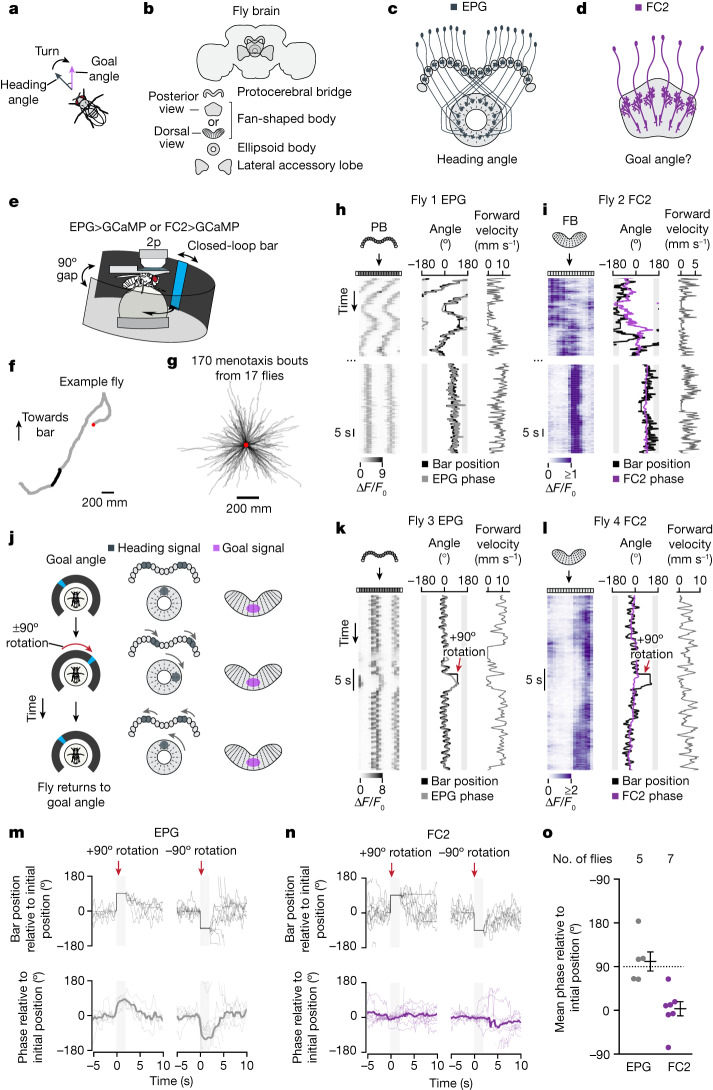
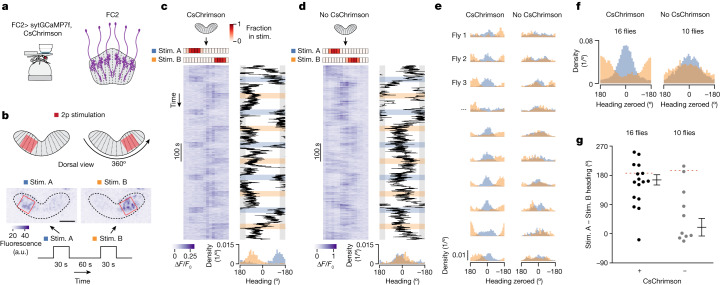
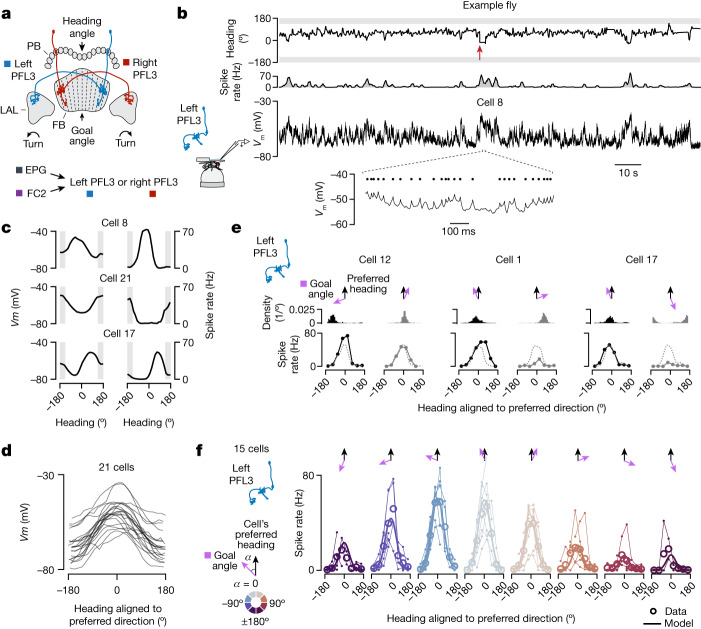
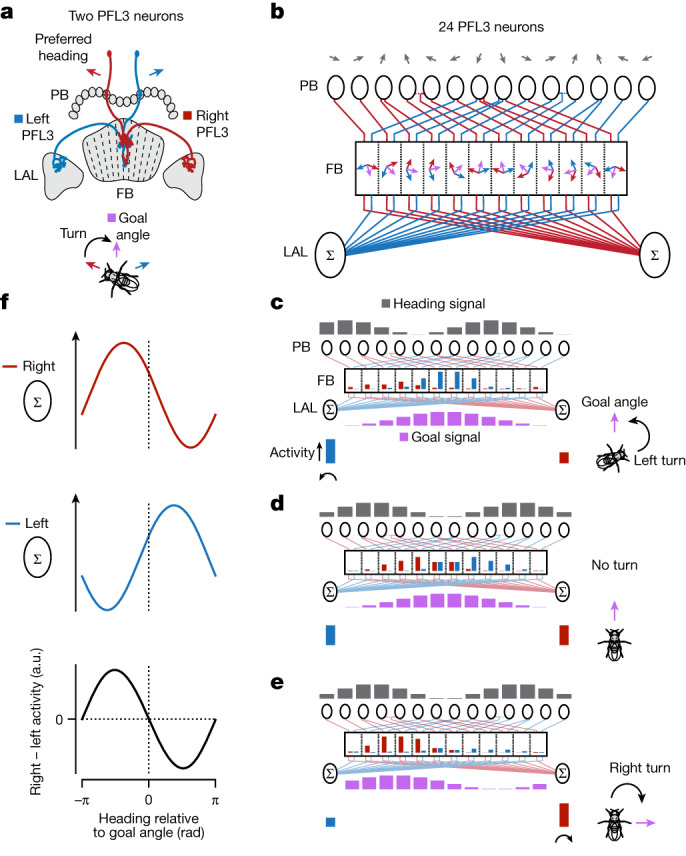
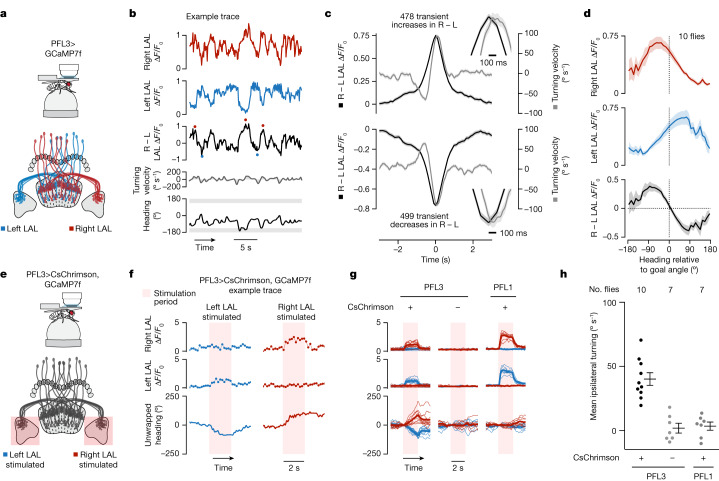
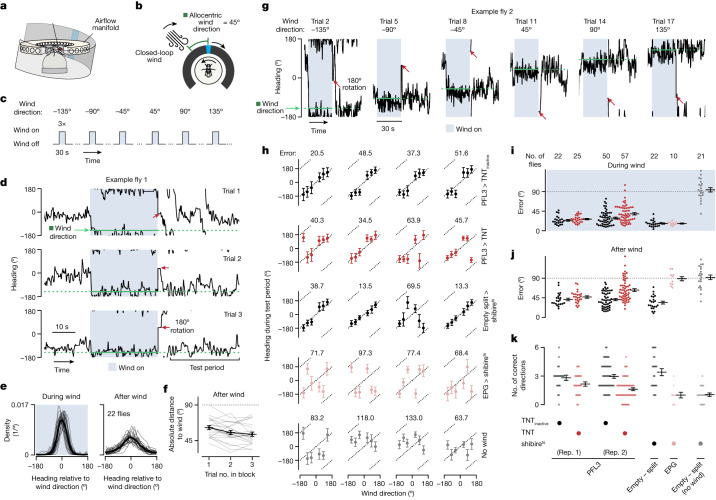
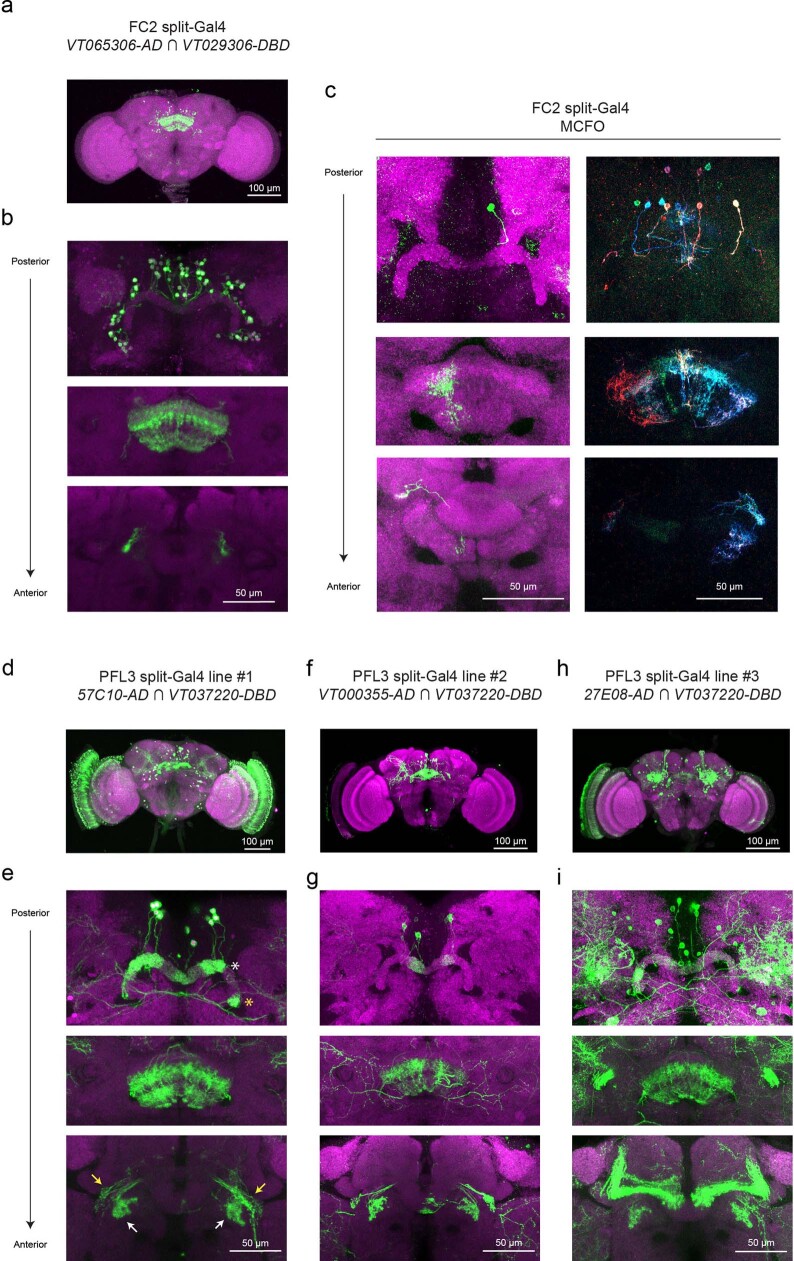
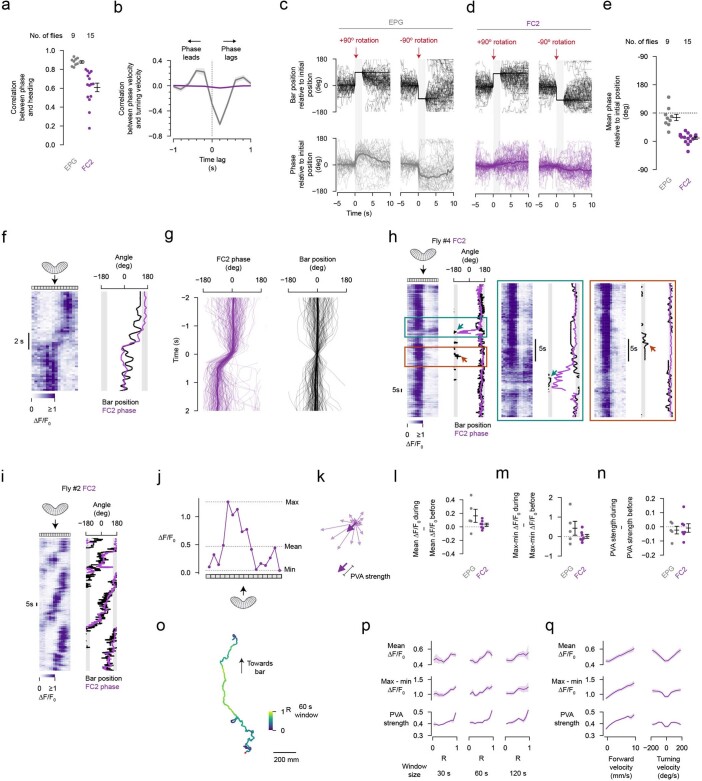
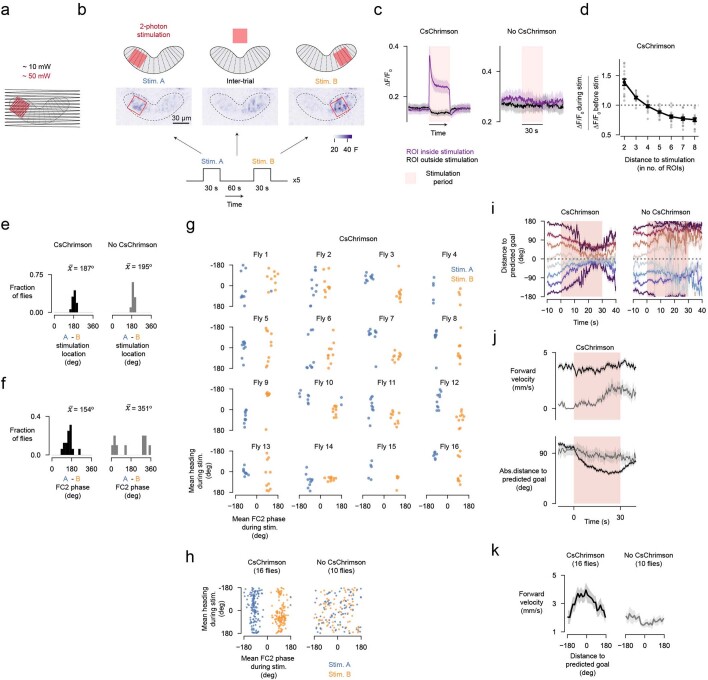
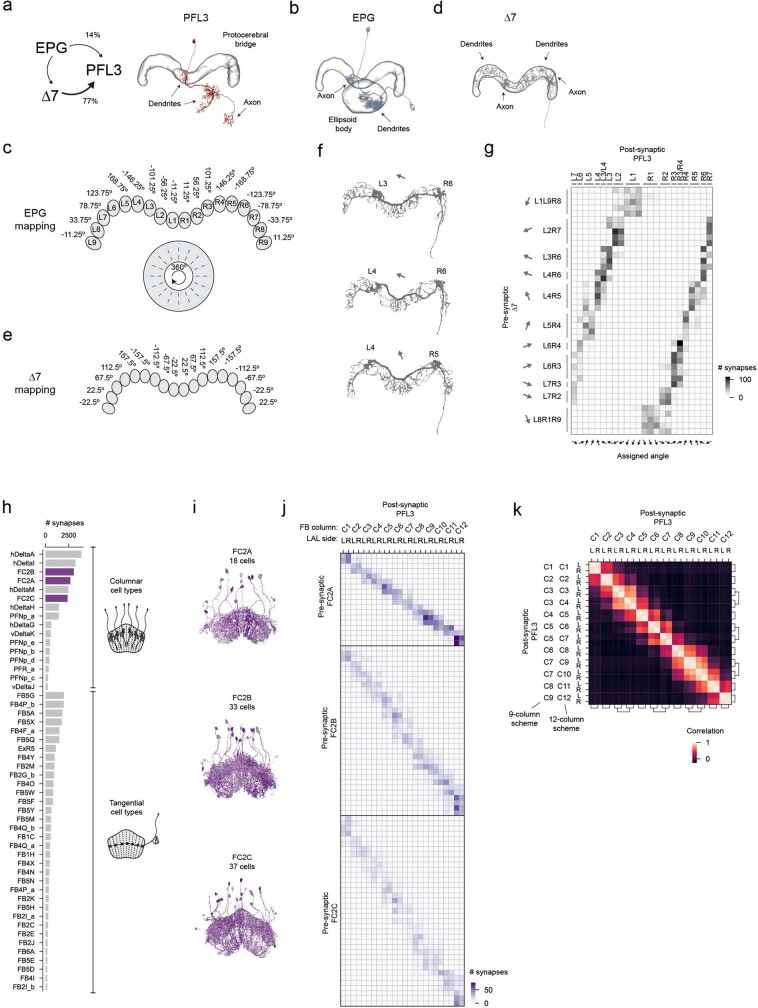
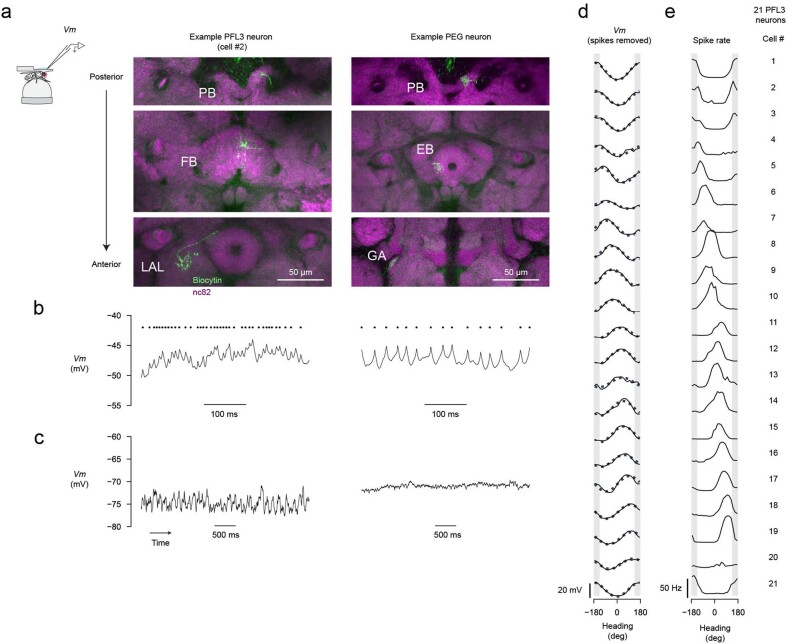
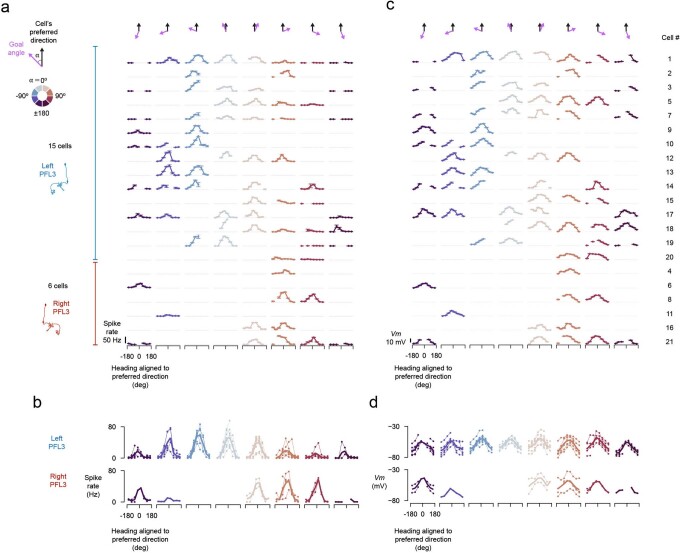
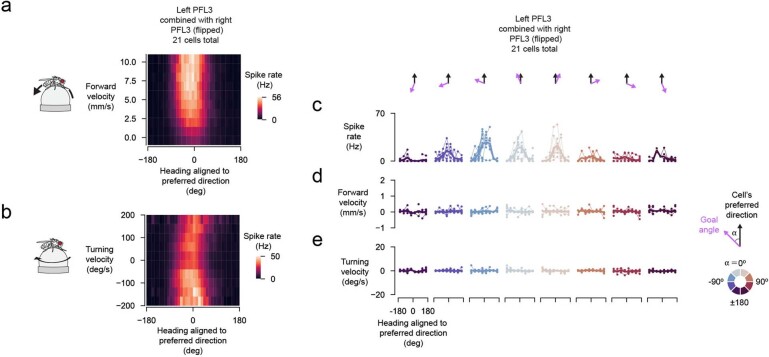
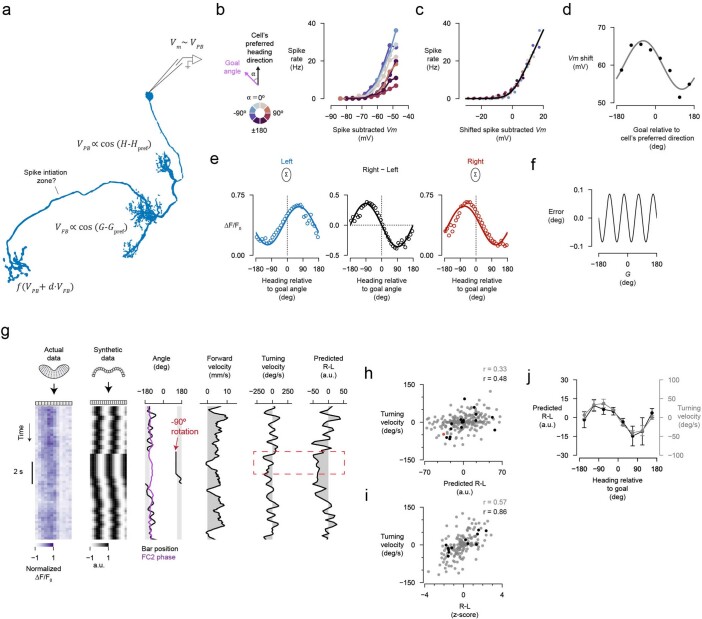
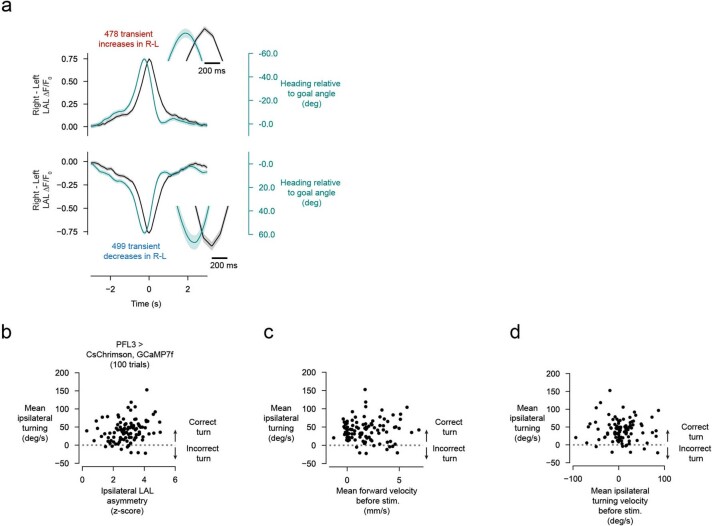
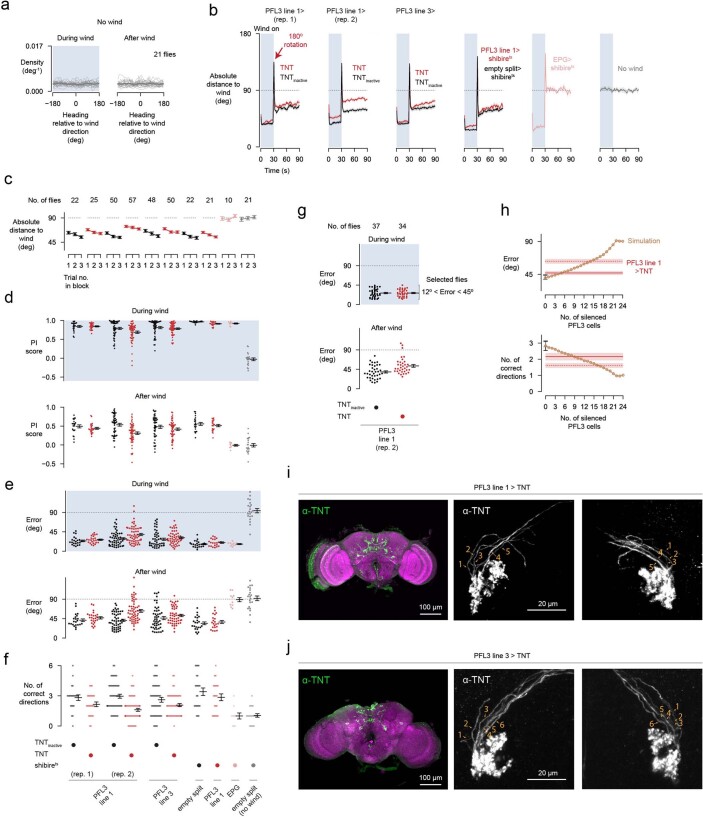
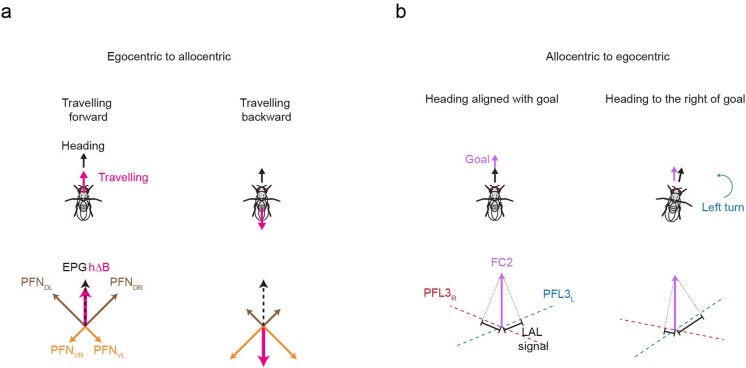
Abstract Neuronal signals that are relevant for spatial navigation have been described in many species1–10. However, a circuit-level understanding of how such signals interact to guide navigational behaviour is lacking. Here we characterize a neuronal circuit in the Drosophila central complex that compares internally generated estimates of the heading and goal angles of the fly—both of which are encoded in world-centred (allocentric) coordinates—to generate a body-centred (egocentric) steering signal. Past work has suggested that the activity of EPG neurons represents the fly’s moment-to-moment angular orientation, or heading angle, during navigation2,11. An animal’s moment-to-moment heading angle, however, is not always aligned with its goal angle—that is, the allocentric direction in which it wishes to progress forward. We describe FC2 cells12, a second set of neurons in the Drosophila brain with activity that correlates with the fly’s goal angle. Focal optogenetic activation of FC2 neurons induces flies to orient along experimenter-defined directions as they walk forward. EPG and FC2 neurons connect monosynaptically to a third neuronal class, PFL3 cells12,13. We found that individual PFL3 cells show conjunctive, spike-rate tuning to both the heading angle and the goal angle during goal-directed navigation. Informed by the anatomy and physiology of these three cell classes, we develop a model that explains how this circuit compares allocentric heading and goal angles to build an egocentric steering signal in the PFL3 output terminals. Quantitative analyses and optogenetic manipulations of PFL3 activity support the model. Finally, using a new navigational memory task, we show that flies expressing disruptors of synaptic transmission in subsets of PFL3 cells have a reduced ability to orient along arbitrary goal directions, with an effect size in quantitative accordance with the prediction of our model. The biological circuit described here reveals how two population-level allocentric signals are compared in the brain to produce an egocentric output signal that is appropriate for motor control.
Overview
The claims and statistics of this paper haven’t been checked yet.
Free: it reads the open-access text and checks the first 5 claims that cite a source we can check. Create a free account to check every claim.
Integrity signals
Registry
Cites
Statistics
Figures
Verification
Claims the paper makes
The claims and statistics of this paper haven’t been checked yet.
Free: it reads the open-access text and checks the first 5 claims that cite a source we can check. Create a free account to check every claim.
Claims other papers make about this one
Each is checked against this paper’s own text: does it say what the citing paper says it does?
The source backs part of the claim, not all of it — or backs it for a different population, condition or comparison.
In the citing paper
“DNa02 is directly targeted by central complex output neurons responsible for feedback control of heading32,62–64”
From Fine-grained descending control of steering in walking Drosophila (2024) · cites this paper as [64]
Experimental — accuracy not yet measuredIn the citing paper
“there are strong anatomical pathways from the central complex to DNa02 (Hulse et al., 2021; Mussells Pires et al., 2024; Rayshubskiy et al., 2020; Westeinde et al., 2024).”
From Neural circuit mechanisms for steering control in walking Drosophila (2025) · cites this paper as Mussells Pires et al., 2024
Self-check
Percentages, sums and reported differences re-computed from the paper’s own numbers.
The self-check needs the paper’s full text.
Citations
Cites
SciPy 1.0: fundamental algorithms for scientific computing in Python
Virtanen, P., Gommers, R., Oliphant, T. E., Haberland, M., Reddy, T., Cournapeau, D., Burovski, E., Peterson, P., Weckesser, W., Bright, J., et al. (2020) · Nature Methods · doi:10.1038/s41592-019-0686-2 · Cited by 38,430
SciPy 1.0: fundamental algorithms for scientific computing in Python
Virtanen, P., Gommers, R., Oliphant, T. E., Haberland, M., Reddy, T., Cournapeau, D., Burovski, E., Peterson, P., Weckesser, W., Bright, J., et al. (2019) · Apollo - University of Cambridge Repository · doi:10.17863/cam.64134 · Cited by 10,460
The hippocampus as a spatial map. Preliminary evidence from unit activity in the freely-moving rat
O'Keefe, J., & Dostrovsky, J. (1971) · Brain Research · doi:10.1016/0006-8993(71)90358-1 · Cited by 6,151
DOUGLAS, D. H., & PEUCKER, T. K. (1973) · Cartographica · doi:10.3138/fm57-6770-u75u-7727 · Cited by 4,229 · cited 1×
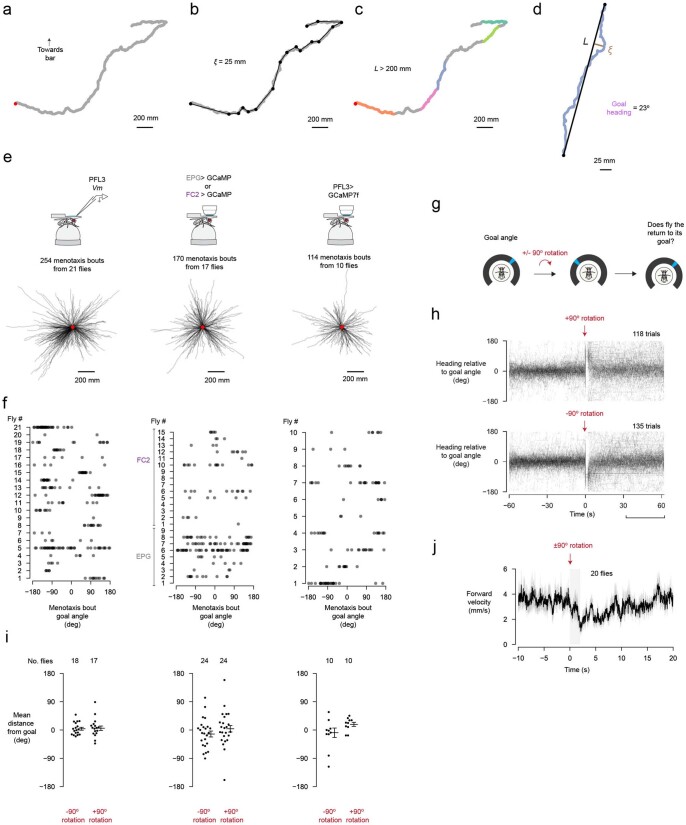
“To analyse the fly’s meno-taxis behaviour, we isolated straight segments (which we call menotaxis bouts) of the fly’s 2D virtual trajectory using the Ramer–Douglas– Peucker algorithm 62,63 (Extended Data Fig.”
MethodIndependent optical excitation of distinct neural populations
Klapoetke, N. C., Murata, Y., Kim, S. S., Pulver, S. R., Birdsey-Benson, A., Cho, Y. K., Morimoto, T. K., Chuong, A. S., Carpenter, E. J., Tian, Z., et al. (2014) · Nature Methods · doi:10.1038/nmeth.2836 · Cited by 2,344
Taube, J., Muller, R., & Ranck, J. (1990) · The Journal of Neuroscience · doi:10.1523/jneurosci.10-02-00420.1990 · Cited by 1,809 · cited 1×
“The fact that these shifts have a cosine shape as a function of the goal angle is consistent with: (1) the existence of a cosine-shaped goal input in the fan-shaped body (as our model assumes) and (2), our hypothesis that the voltage consequences of the goal in the fan-shaped body are not fully evident in the soma, th…”
ResultJammalamadaka, S. R., & SenGupta, A. (2001) · Series on Multivariate Analysis · doi:10.1142/4031 · Cited by 1,779
An iterative procedure for the polygonal approximation of plane curves
Ramer, U. (1972) · Computer Graphics and Image Processing · doi:10.1016/s0146-664x(72)80017-0 · Cited by 1,372
Spatial representation in the entorhinal cortex
Fyhn, M., Molden, S., Witter, M. P., Moser, E. I., & Moser, M.-B. (2004) · Science · doi:10.1126/science.1099901 · Cited by 1,339
ScanImage: Flexible software for operating laser scanning microscopes
Pologruto, T. A., Sabatini, B. L., & Svoboda, K. (2003) · BioMedical Engineering OnLine · doi:10.1186/1475-925x-2-13 · Cited by 1,294
Cited by
Items 101–120 of 120
Individualized decision-making driven by long-term memory retrieval in Drosophila
Feng, K.-L., Wu, M.-C., Charng, C.-C., Chou, C.-Y., Weng, J., & Chiang, A. (2026) · Cell Reports · doi:10.1016/j.celrep.2026.117139
Switching to an allocentric spatial reference frame incurs distinct cognitive processing costs
Starrett, M. J., Stark, C., & Chrastil, L. (2026) · Brain Research · doi:10.1016/j.brainres.2026.150637
Zhang, X., Fan, J., Zhang, Y., Zhang, L., Lan, Y., Song, M., & Jiang, T. (2026) · Neurocomputing · doi:10.1016/j.neucom.2026.133939 · Cited by 1
Self-citationVisual cue properties determine innate orientation strategy in monarch butterflies
Hanslin, F. Ø., Gayler, M., Franzke, M., & el Jundi, B. (2026) · Journal of Experimental Biology · doi:10.1242/jeb.253068
Ballistic food approaches in Parhyale hawaiensis require the antennaePreprint
Steele, T., & Nagel, K. I. (2026) · bioRxiv (Cold Spring Harbor Laboratory) · doi:10.64898/2026.06.16.732625
“…maintenance of a straight course during olfactory navigation is associated with short term representations of a goal direction relative to global environmental cues in the Central Complex (Kathman et al. 2026; Lanz et al. 2025; Westeinde et al. 2024; Stone et al. 2017; Mussells Pires et al. 2024).”
Neurobiological interfaces connecting environmental change to monarch butterfly migration
Goforth, K. M., Shetty, V., Giannuzzi, M. S., & Merlin, C. (2026) · Current Opinion in Neurobiology · doi:10.1016/j.conb.2026.103240
A robot model of compass cue calibration in the insect brainPreprint
Mitchell, R., Dacke, M., & Webb, B. H. (2026) · bioRxiv (Cold Spring Harbor Laboratory) · doi:10.64898/2026.06.25.734539
“We also add a bio-inspired steering circuit, based on the work of Mussells Pires et al. [36] and Mitchell and Webb [34].”
InfluentialHow the fly holds a single goal: normalization, not selection, in Drosophila FC2Preprint
Nanni, G., & Lee, C. (2026) · arXiv (Cornell University) · doi:10.48550/arxiv.2607.18969
“Behaviour anchors are measured signatures from FC2 imaging [Mussells Pires et al., 2024] plus one flagged cross-system analogy [Toepfer et al., 2018], not fits.”
InfluentialScanning and active sampling behaviours emerge from conserved insect neural circuitsPreprint
Freas, C. A., & Wystrach, A. (2026) · eLife · doi:10.7554/elife.110165.3
Lateralized dopaminergic neuron activity encodes goal-directed turningPreprint
Miriyala, A., & Waddell, S. (2026) · bioRxiv (Cold Spring Harbor Laboratory) · doi:10.64898/2026.09.23.753763 · Cited by 1
A network model of path controlPreprint
Osman, M. A. M., Zhang, W., Pehlevan, C., & Wilson, R. I. (2026) · bioRxiv (Cold Spring Harbor Laboratory) · doi:10.64898/2026.10.02.756268
“…addition, recent calcium imaging experiments have found no columnar cell types that encode a classical path integral; instead, many of the relevant cell types seem to encode lagged and smoothed versions of the velocity input [15–18], consistent with relatively transient, leaky integration dynamics.”
InfluentialHebbian learning generates individuality in spatial decision-makingPreprint
Salahshour, M., & Couzin, I. D. (2026) · bioRxiv (Cold Spring Harbor Laboratory) · doi:10.64898/2026.10.12.758645
A Spiking Ring-Attractor Architecture for Representation and Control of Revolute Robot JointsPreprint
Htet, A., Jimenez, A. R., Ma, R., & Nuovo, A. G. D. (2026) · arXiv (Cornell University) · doi:10.48550/arxiv.2610.26027
Selective control of course correction over long timescales in the Drosophila central complex
Crown, A. M., Wu, A. H., Hofflander, L., & Barnea, G. (2026) · Current Biology · doi:10.1016/j.cub.2026.09.069 · Cited by 1
Learning to Navigate a Changing World: From Brain Systems to Novel Algorithms
Lee, J. Q., Zutshi, I., Alexander, A. S., & Hermundstad, A. M. (2026) · Journal of Neuroscience · doi:10.1523/jneurosci.1331-26.2026
Pabst, K., Gkanias, E., Webb, B., Homberg, U., & Endres, D. (2024) · doi:10.1371/journal.pcbi.1012155.r002
A neural circuit architecture for rapid behavioral flexibility in goal-directed navigation
Dan, C., Hulse, B. K., Kappagantula, R., Jayaraman, V., & Hermundstad, A. M. (2021) · doi:10.1101/2021.08.18.456004 · Cited by 51
“Putative CX output neuron types that phase-shift the compass heading, and thus seem ideally suited to serve the role of the action neurons, have been described by us and others [29, 80, 83], and these hypothesized roles have found support in recent physiological data [84, 85].”
BackgroundResultInfluential
Metadata
- Authors
- Mussells Pires, P., Zhang, L., Parache, V., Abbott, L. F., & Maimon, G.
- Affiliations
- Howard Hughes Medical Institute (US)
- Mortimer B. Zuckerman Mind Brain Behavior Institute (US)
- Corresponding author
- Maimon, Gaby
- Venue
- Nature
- Published
- 2024-02-07
- Volume
- 626
- Issue
- 8000
- Pages
- 808-818
- ISSN
- 0028-0836 (ISSN-L)
- 1476-4687
- PMC
- PMC10881393
- OpenAlex
- W4391617402
- Semantic Scholar
- 316376bf74407177e0f693c23a595105d2006f7c
- Cited by
- 110
- References
- 77
- Citations by year
- 2026: 37 · 2025: 36 · 2024: 27
- FWCI
- 17.50
- Type
- journal article
- Language
- en
- Open access
- hybrid
- doi.org
- Licence
- cc-by
- creativecommons.org/licenses/by/4.0 (tdm)
- creativecommons.org/licenses/by/4.0 (vor)
- Locations
- Nature (publishedVersion, cc-by)
- bioRxiv (Cold Spring Harbor Laboratory) (acceptedVersion, cc-by)
- PubMed Central (publishedVersion, cc-by)
- PubMed (publishedVersion)
- RePEc: Research Papers in Economics (submittedVersion)
- Funders
- National Science Foundation (1707398)
- National Institutes of Health (1707398, NIH P40OD018537, P40OD018537)
- National Institute of Neurological Disorders and Stroke (R01NS104934, R35NS132252)
- Topics
- Life Sciences › Neuroscience › Cellular and Molecular Neuroscience › Neurobiology and Insect Physiology Research
- Life Sciences › Neuroscience › Cognitive Neuroscience › Memory and Neural Mechanisms
- Social Sciences › Psychology › Experimental and Cognitive Psychology › Spatial Cognition and Navigation
- Keywords
- heading angle, goal-directed navigation, optogenetic manipulation, spatial orientation
- MeSH terms
- Orientation, Spatial, Action Potentials, Animals, Brain, Drosophila, Drosophila melanogaster, Goals, Head, Locomotion, Neural Pathways, Synaptic Transmission, Neurons, Space Perception, Optogenetics, Spatial Memory, Spatial Navigation
About these checks
Registry, retraction, Cites and statistics results are computed, not judged, with one exception: a printed reference that no index lists is read once by a model before it counts as a citation error. Claims are extracted by a model and kept only when their quote appears verbatim in the text; each cited source is then checked, with a model’s help, for whether it says what the claim relies on. Those verdicts can be wrong — read the claim’s quote and the cited source before relying on one.
Statistics and arithmetic are recomputed, not judged.
Confidence bands are shown only for fields calibrated on our annotated test set. None is calibrated yet, so no band is shown.
What counts as a claim ›How we measure confidence ›How we check this ›
Are you an author, or do you see a problem with this page? Request a review
Data sources
Bibliographic data: Semantic Scholar, OpenAlex, Crossref.
Contains information from the Semantic Scholar Academic Graph Datasets, made available under the ODC Attribution License (ODC-BY 1.0).
Semantic Scholar’s data is described in: Kinney, R., et al. (2023). The Semantic Scholar Open Data Platform. arXiv:2301.10140.
